

The DOI matches its Crossref record; 71 of the 71 references it cites were found in a registry or an index.
Host genetics influence the rumen microbiota and heritable rumen microbial features associate with feed efficiency in cattle
Open accessAbstract
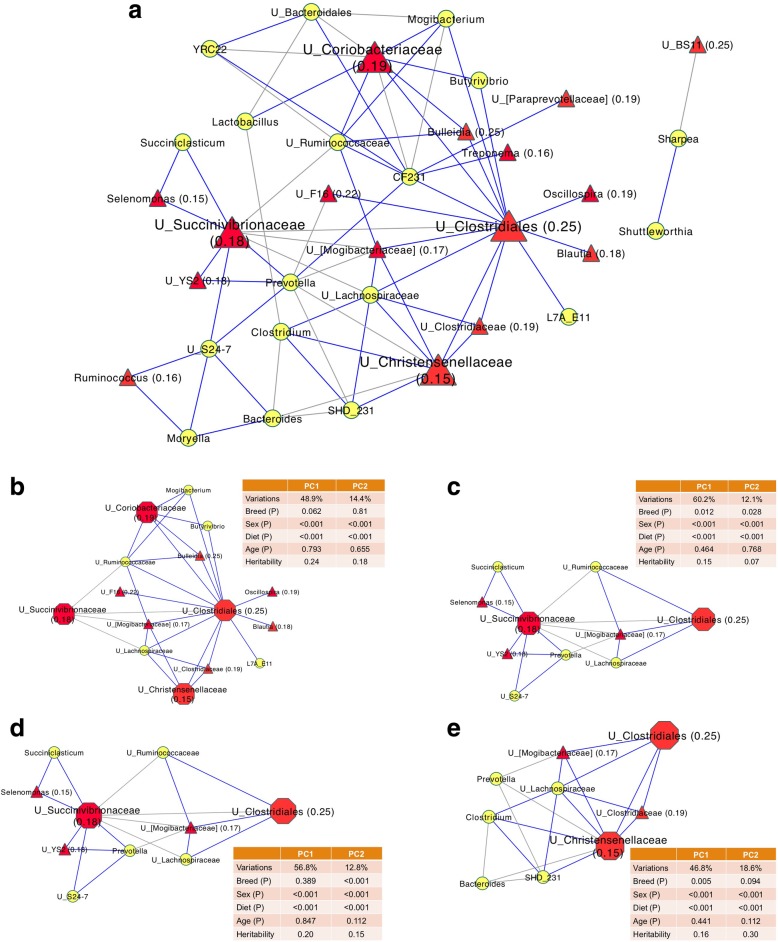
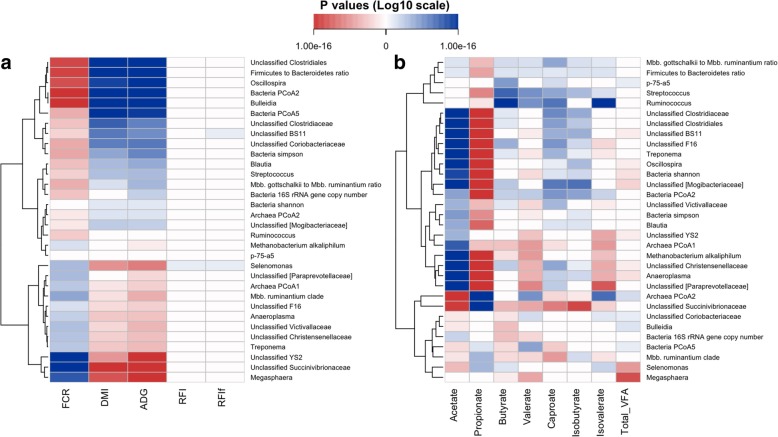
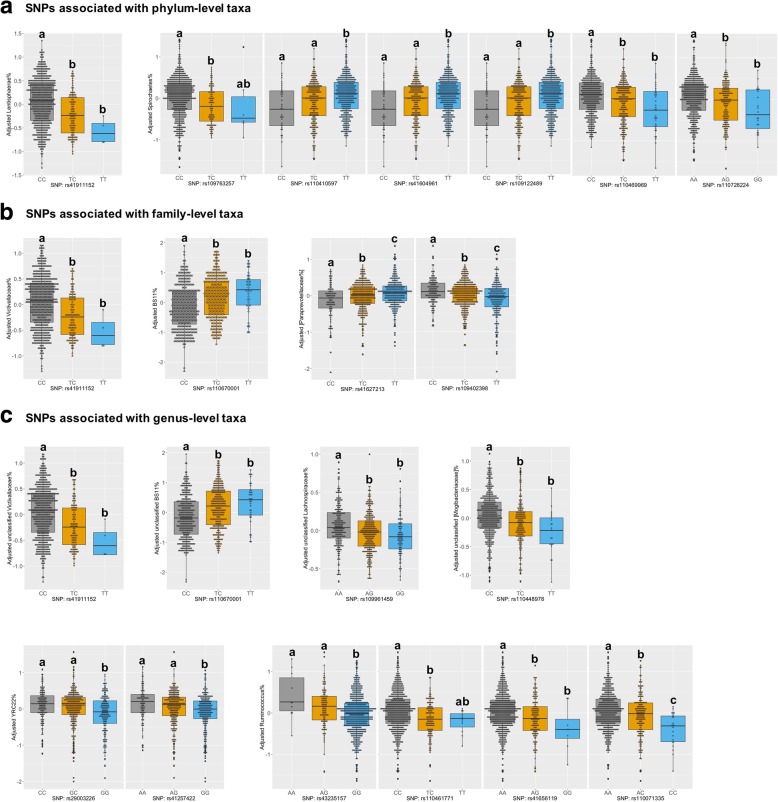
The symbiotic rumen microbiota is essential for the digestion of plant fibers and contributes to the variation of production and health traits in ruminants. However, to date, the heritability of rumen microbial features and host genetic components associated with the rumen microbiota, as well as whether such genetic components are animal performance relevant, are largely unknown. In the present study, we assessed rumen microbiota from a cohort of 709 beef cattle and showed that multiple factors including breed, sex, and diet drove the variation of rumen microbiota among animals. The diversity indices, the relative abundance of ~ 34% of microbial taxa (59 out of 174), and the copy number of total bacteria had a heritability estimate ( h 2 ) ≥ 0.15, suggesting that they are heritable elements affected by host additive genetics. These moderately heritable rumen microbial features were also found to be associated with host feed efficiency traits and rumen metabolic measures (volatile fatty acids). Moreover, 19 single nucleotide polymorphisms (SNPs) located on 12 bovine chromosomes were found to be associated with 14 (12 of them had h 2 ≥ 0.15) rumen microbial taxa, and five of these SNPs were known quantitative trait loci for feed efficiency in cattle. These findings suggest that some rumen microbial features are heritable and could be influenced by host genetics, highlighting a potential to manipulate and obtain a desirable and efficient rumen microbiota using genetic selection and breeding. It could be a useful strategy to further improve feed efficiency and optimize rumen fermentation through targeting both cattle and their rumen microbiota.
Overview
The claims and statistics of this paper haven’t been checked yet.
Run the check — free, no account needed. It reads the open-access text and checks the sources it cites.
Integrity signals
Registry
Cites
Statistics
Figures
Verification
Claims the paper makes
The claims and statistics of this paper haven’t been checked yet.
Run the check — free, no account needed. It reads the open-access text and checks the sources it cites.
Claims other papers make about this one
Each is checked against this paper’s own text: does it say what the citing paper says it does?
The cited source says what the claim attributes to it.
In the citing paper
“However, genetic manipulation of rumen microbiota is also possible through different techniques as host genetics influences some heritable microbial traits (81–83).”
From Phytogenic Additives Can Modulate Rumen Microbiome to Mediate Fermentation Kinetics and Methanogenesis Through Exploiting Diet–Microbe Interaction (2020) · cites this paper as [81]
Self-check
Percentages, sums and reported differences re-computed from the paper’s own numbers.
The self-check needs the paper’s full text.
Citations
Cites
Controlling the False Discovery Rate: A Practical and Powerful Approach to Multiple Testing
Benjamini, Y., & Hochberg, Y. (1995) · Journal of the Royal Statistical Society Series B: Statistical Methodology · doi:10.1111/j.2517-6161.1995.tb02031.x · Cited by 109,482
Basic local alignment search tool
Altschul, S. F., Gish, W., Miller, W., Myers, E. W., & Lipman, D. J. (1990) · Journal of Molecular Biology · doi:10.1006/jmbi.1990.9999 · Cited by 98,669
Cytoscape: A software Environment for integrated models of biomolecular interaction networks
Shannon, P., Markiel, A., Ozier, O., Baliga, N. S., Wang, J. T., Ramage, D., Amin, N., Schwikowski, B., & Ideker, T. (2003) · Genome Research · doi:10.1101/gr.1239303 · Cited by 51,888
Search and clustering orders of magnitude faster than BLAST
Edgar, R. C. (2010) · Bioinformatics · doi:10.1093/bioinformatics/btq461 · Cited by 21,098
Schloss, P. D., Westcott, S. L., Ryabin, T., Hall, J. R., Hartmann, M., Hollister, E. B., Lesniewski, R. A., Oakley, B. B., Parks, D. H., Robinson, C. J., et al. (2009) · Applied and Environmental Microbiology · doi:10.1128/aem.01541-09 · Cited by 19,549
UCHIME improves sensitivity and speed of chimera detection
Edgar, R. C., Haas, B. J., Clemente, J. C., Quince, C., & Knight, R. (2011) · Bioinformatics · doi:10.1093/bioinformatics/btr381 · Cited by 15,114
Diet rapidly and reproducibly alters the human gut microbiome
David, L. A., Maurice, C. F., Carmody, R. N., Gootenberg, D. B., Button, J. E., Wolfe, B. E., Ling, A. V., Devlin, A. S., Varma, Y., Fischbach, M. A., et al. (2014) · Nature · doi:10.1038/nature12820 · Cited by 10,100
Efficient Methods to Compute Genomic Predictions
VanRaden, P. M. (2008) · Journal of Dairy Science · doi:10.3168/jds.2007-0980 · Cited by 6,050
McDonald, D. T., Price, M. N., Goodrich, J. K., Nawrocki, E. P., DeSantis, T. Z., Probst, A. J., Andersen, G. L., Knight, R. D., & Hugenholtz, P. (2011) · The ISME Journal · doi:10.1038/ismej.2011.139 · Cited by 5,144
Human Genetics Shape the Gut Microbiome
Goodrich, J. K., Waters, J. L., Poole, A. C., Sutter, J. L., Koren, O., Blekhman, R., Beaumont, M., Van Treuren, W., Knight, R., Bell, J. T., et al. (2014) · Cell · doi:10.1016/j.cell.2014.09.053 · Cited by 3,164
Inferring Correlation Networks from Genomic Survey Data
Friedman, J., & Alm, E. J. (2012) · PLoS Computational Biology · doi:10.1371/journal.pcbi.1002687 · Cited by 2,765
Ridge Regression and Other Kernels for Genomic Selection with R Package rrBLUP
Endelman, J. B. (2011) · The Plant Genome · doi:10.3835/plantgenome2011.08.0024 · Cited by 2,094
Henderson, G., Cox, F., Ganesh, S., Jonker, A., Young, W., Collaborators, G. R. C., Abecia, L., Angarita, E., Aravena, P., Nora Arenas, G., et al. (2015) · Scientific Reports · doi:10.1038/srep14567 · Cited by 1,682
Self-citationUnravelling the effects of the environment and host genotype on the gut microbiome
Spor, A., Koren, O., & Ley, R. (2011) · Nature Reviews Microbiology · doi:10.1038/nrmicro2540 · Cited by 1,509
Benson, A. K., Kelly, S. A., Legge, R., Ma, F., Low, S. J., Kim, J., Zhang, M., Oh, P. L., Nehrenberg, D., Hua, K., et al. (2010) · Proceedings of the National Academy of Sciences · doi:10.1073/pnas.1007028107 · Cited by 1,314
Genetic determinants of the gut microbiome in UK twins
Goodrich, J. K., Davenport, E. R., Beaumont, M., Jackson, M. A., Knight, R., Ober, C., Spector, T. D., Bell, J. T., Clark, A. G., & Ley, R. E. (2016) · Cell Host & Microbe · doi:10.1016/j.chom.2016.04.017 · Cited by 1,048
Exploring the bovine rumen bacterial community from birth to adulthood
Jami, E., Israel, A., Kotser, A., & Mizrahi, I. (2013) · The ISME Journal · doi:10.1038/ismej.2013.2 · Cited by 963
Factors That Alter Rumen Microbial Ecology
Russell, J. B., & Rychlik, J. L. (2001) · Science · doi:10.1126/science.1058830 · Cited by 954
Gender Bias in Autoimmunity Is Influenced by Microbiota
Yurkovetskiy, L., Burrows, M. P., Khan, A. A., Graham, L., Volchkov, P., Becker, L., Antonopoulos, D. A., Umesaki, Y., & Chervonsky, A. V. (2013) · Immunity · doi:10.1016/j.immuni.2013.08.013 · Cited by 943
Stevenson, D. M., & Weimer, P. J. (2007) · Applied Microbiology and Biotechnology · doi:10.1007/s00253-006-0802-y · Cited by 833
Specific microbiome-dependent mechanisms underlie the energy harvest efficiency of ruminants.
Shabat, S. K. B., Sasson, G., Doron-Faigenboim, A., Durman, T., Yaacoby, S., Berg Miller, M. E., White, B. A., Shterzer, N., & Mizrahi, I. (2016) · The ISME Journal · doi:10.1038/ismej.2016.62 · Cited by 823
Compact graphical representation of phylogenetic data and metadata with GraPhlAn
Asnicar, F., Weingart, G., Tickle, T. L., Huttenhower, C., & Segata, N. (2015) · PeerJ · doi:10.7717/peerj.1029 · Cited by 818
Sex differences and hormonal effects on gut microbiota composition in mice
Org, E., Mehrabian, M., Parks, B. W., Shipkova, P., Liu, X., Drake, T. A., & Lusis, A. J. (2016) · Gut Microbes · doi:10.1080/19490976.2016.1203502 · Cited by 796
Cultivation and sequencing of rumen microbiome members from the Hungate1000 Collection
Hungate1000 project collaborators, Seshadri, R., Leahy, S. C., Attwood, G. T., Teh, K. H., Lambie, S. C., Cookson, A. L., Eloe-Fadrosh, E. A., Pavlopoulos, G. A., Hadjithomas, M., et al. (2018) · Nature Biotechnology · doi:10.1038/nbt.4110 · Cited by 624
Potential role of the bovine rumen microbiome in modulating milk composition and feed efficiency
Jami, E., White, B. A., & Mizrahi, I. (2014) · PLoS ONE · doi:10.1371/journal.pone.0085423 · Cited by 588 · cited 1×
“ca (1)Department of Agricultural, Food and Nutritional Science, University of Alberta, Edmonton, Alberta T6G 2P5, Canada Full list of author information is available at the end of the article have suggested that differences in rumen microbiota are associated with cattle production and health traits, such as feed effic…”
BackgroundAssembly of 913 microbial genomes from metagenomic sequencing of the cow rumen
Stewart, R. D., Auffret, M. D., Warr, A., Wiser, A. H., Press, M. O., Langford, K. W., Liachko, I., Snelling, T. J., Dewhurst, R. J., Walker, A. W., et al. (2018) · Nature Communications · doi:10.1038/s41467-018-03317-6 · Cited by 559 · cited 3×
“genomic characters of these heritable rumen taxa, such as the outcomes of the Hungate 1000 project [51] and the 913 microbial genomes assembled from rumen metagenomes [50], will provide more information to explain how host and rumen microorganisms coevolved at the genomic level and provide a better understanding of ho…”
BackgroundMethodRUMINANT NUTRITION SYMPOSIUM: Role of fermentation acid absorption in the regulation of ruminal pH12
Aschenbach, J. R., Penner, G. B., Stumpff, F., & Gäbel, G. (2010) · Journal of Animal Science · doi:10.2527/jas.2010-3301 · Cited by 524
Association of host genome with intestinal microbial composition in a large healthy cohort
GEM Project Research Consortium, Turpin, W., Espin-Garcia, O., Xu, W., Silverberg, M. S., Kevans, D., Smith, M. I., Guttman, D. S., Griffiths, A., Panaccione, R., et al. (2016) · Nature Genetics · doi:10.1038/ng.3693 · Cited by 460
Asnicar, F., Manara, S., Zolfo, M., Truong, D. T., Scholz, M., Armanini, F., Ferretti, P., Gorfer, V., Pedrotti, A., Tett, A., et al. (2017) · mSystems · doi:10.1128/msystems.00164-16 · Cited by 445
Rumen Microbiome from Steers Differing in Feed Efficiency
Myer, P. R., Smith, T. P. L., Wells, J. E., Kuehn, L. A., & Freetly, H. C. (2015) · PLoS ONE · doi:10.1371/journal.pone.0129174 · Cited by 434
The rumen microbial metagenome associated with high methane production in cattle
Wallace, R. J., Rooke, J. A., McKain, N., Duthie, C.-A., Hyslop, J. J., Ross, D. W., Waterhouse, A., Watson, M., & Roehe, R. (2015) · BMC Genomics · doi:10.1186/s12864-015-2032-0 · Cited by 416
Host genetics and the rumen microbiome jointly associate with methane emissions in dairy cows
Difford, G. F., Plichta, D. R., Løvendahl, P., Lassen, J., Noel, S. J., Højberg, O., Wright, A. G., Zhu, Z., Kristensen, L., Nielsen, H. B., et al. (2018) · PLoS Genetics · doi:10.1371/journal.pgen.1007580 · Cited by 404
Li, F., & Guan, L. L. (2017) · Applied and Environmental Microbiology · doi:10.1128/aem.00061-17 · Cited by 372
Roehe, R., Dewhurst, R. J., Duthie, C.-A., Rooke, J. A., McKain, N., Ross, D. W., Hyslop, J. J., Waterhouse, A., Freeman, T. C., Watson, M., et al. (2016) · PLoS Genetics · doi:10.1371/journal.pgen.1005846 · Cited by 359
Ramayo‐Caldas, Y., Mach, N., Lepage, P., Levenez, F., Denis, C., Lemonnier, G., Leplat, J. J. J. J., Billon, Y., Berri, M., Dore, J. M., et al. (2016) · The ISME Journal · doi:10.1038/ismej.2016.77 · Cited by 352
Zhou, M., Hernandez‐Sanabria, E., & Guan, L. L. (2009) · Applied and Environmental Microbiology · doi:10.1128/aem.02815-08 · Cited by 343
Li, F., Hitch, T. C. A., Chen, Y., Creevey, C. J., & Guan, L. L. (2019) · Microbiome · doi:10.1186/s40168-019-0618-5 · Cited by 337
Guan, L. L., Nkrumah, J. D., Basarab, J. A., & Moore, S. S. (2008) · FEMS Microbiology Letters · doi:10.1111/j.1574-6968.2008.01343.x · Cited by 307
synbreed: a framework for the analysis of genomic prediction data using R
Wimmer, V., Albrecht, T., Auinger, H.-J., & Schön, C. (2012) · Bioinformatics · doi:10.1093/bioinformatics/bts335 · Cited by 297
Jewell, K. A., McCormick, C. A., Odt, C. L., Weimer, P. J., & Suen, G. (2015) · Applied and Environmental Microbiology · doi:10.1128/aem.00720-15 · Cited by 287
Bile acids as metabolic regulators
Li, T., & Chiang, J. Y. L. (2015) · Current Opinion in Gastroenterology · doi:10.1097/mog.0000000000000156 · Cited by 282
Polymerase chain reaction primers miss half of rRNA microbial diversity
Hong, S. H., Bunge, J., Leslin, C. M., Jeon, S., & Epstein, S. S. (2009) · The ISME Journal · doi:10.1038/ismej.2009.89 · Cited by 278
Genome-Wide Association Studies of the Human Gut Microbiota
Davenport, E., Cusanovich, D. A., Michelini, K., Barreiro, L. B., Ober, C., & Gilad, Y. (2015) · PLoS ONE · doi:10.1371/journal.pone.0140301 · Cited by 264
Martinez-Pabon, F., Caicedo-Guerrero, J., Ibarra-Samboni, J. J., Ramírez-González, G., & Hernández Leo, D. (2022) · The Scientific World JOURNAL · doi:10.1155/8086 · Cited by 259
Nkrumah, J. D., Crews, D. H., Basarab, J. A., Price, M. A., Okine, E. K., Wang, Z., Li, C., & Moore, S. S. (2007) · Journal of Animal Science · doi:10.2527/jas.2006-657 · Cited by 235
Isolation of Succinivibrionaceae Implicated in Low Methane Emissions from Tammar Wallabies
Pope, P. B., Smith, W. J. M., Denman, S. E., Tringe, S. G., Barry, K., Hugenholtz, P., McSweeney, C. S., McHardy, A. C., & Morrison, M. (2011) · Science · doi:10.1126/science.1205760 · Cited by 225
Sasson, G., Kruger Ben-Shabat, S., Seroussi, E., Doron-Faigenboim, A., Shterzer, N., Yaacoby, S., Berg Miller, M. E., White, B. A., Halperin, E., & Mizrahi, I. (2017) · mBio · doi:10.1128/mbio.00703-17 · Cited by 219
Huws, S., Kim, E. J., Lee, M. R. F., Scott, M. B., Tweed, J. K. S., Pinloche, E., Wallace, R. J., & Scollan, N. D. (2011) · Environmental Microbiology · doi:10.1111/j.1462-2920.2011.02452.x · Cited by 212
Paz, H. A., Anderson, C. L., Muller, M. J., Kononoff, P. J., & Fernando, S. C. (2016) · Frontiers in Microbiology · doi:10.3389/fmicb.2016.01206 · Cited by 209
Ruminal Acidosis in Feedlot: From Aetiology to Prevention
Bermúdez, J. H., Benedito, J. L., Abuelo, Á., & Castillo, C. (2014) · The Scientific World JOURNAL · doi:10.1155/2014/702572 · Cited by 203
Induction of Subacute Ruminal Acidosis Affects the Ruminal Microbiome and Epithelium
McCann, J. C., Luan, S., Cardoso, F. C., Derakhshani, H., Khafipour, E., & Loor, J. J. (2016) · Frontiers in Microbiology · doi:10.3389/fmicb.2016.00701 · Cited by 193
Seedorf, H., Kittelmann, S., Henderson, G., & Janssen, P. H. (2014) · PeerJ · doi:10.7717/peerj.494 · Cited by 168
Leamy, L. J., Kelly, S. A., Nietfeldt, J. W., Legge, R. M., Ma, F., Hua, K., Sinha, R., Peterson, D. A., Walter, J., Benson, A. K., et al. (2014) · Genome biology · doi:10.1186/s13059-014-0552-6 · Cited by 163
Huber, J. A., Morrison, H. G., Huse, S. M., Neal, P. R., Sogin, M. L., & Welch, D. B. M. (2009) · Environmental Microbiology · doi:10.1111/j.1462-2920.2008.01857.x · Cited by 151
Basarab, J. A., Colazo, M. G., Ambrose, D. J., Novak, S., McCartney, D. H., & Baron, V. S. (2011) · Canadian Journal of Animal Science · doi:10.4141/cjas2011-010 · Cited by 146
Transcriptome profiling of the rumen epithelium of beef cattle differing in residual feed intake
Kong, R. S. G., Liang, G., Chen, Y., Stothard, P., & Guan, L. L. (2016) · BMC Genomics · doi:10.1186/s12864-016-2935-4 · Cited by 128
Firkins, J. L., & Yu, Z. (2015) · Journal of Animal Science · doi:10.2527/jas.2014-8754 · Cited by 120
Genome‐wide association analysis for feed efficiency in Angus cattle
Rolf, M. M., Taylor, J. F., Schnabel, R. D., McKay, S., McClure, M. C., Northcutt, S. L., Kerley, M. S., & Weaber, R. L. (2011) · Animal Genetics · doi:10.1111/j.1365-2052.2011.02273.x · Cited by 120
Nicolazzi, E. L., Caprera, A., Nazzicari, N., Cozzi, P., Strozzi, F., Lawley, C., Pirani, A., Soans, C., Brew, F., Jorjani, H., et al. (2015) · BMC Genomics · doi:10.1186/s12864-015-1497-1 · Cited by 119
Hernandez-Sanabria, E., Guan, L. L., Goonewardene, L. A., Li, M., Mujibi, D. F., Stothard, P., Moore, S. S., & Leon-Quintero, M. C. (2010) · Applied and Environmental Microbiology · doi:10.1128/aem.01052-10 · Cited by 119
Identification of genomic regions associated with feed efficiency in Nelore cattle
Oliveira, P. S., César, A. S. M., do Nascimento, M. L., Chaves, A. S., Tizioto, P. C., Túllio, R. R., Lanna, D. P., Rosa, A. N., Sonstegard, T. S., Mourão, G. B., et al. (2014) · BMC Genetics · doi:10.1186/s12863-014-0100-0 · Cited by 96
Reau, A. J. L., Meier‐Kolthoff, J. P., & Suen, G. (2016) · Microbial Genomics · doi:10.1099/mgen.0.000099 · Cited by 96
Fine mapping quantitative trait loci for feed intake and feed efficiency in beef cattle1
Sherman, E. L., Nkrumah, J. D., Li, C., Bartusiak, R., Murdoch, B. M., & Moore, S. S. (2008) · Journal of Animal Science · doi:10.2527/jas.2008-0876 · Cited by 92
Taxonomic Assessment of Rumen Microbiota Using Total RNA and Targeted Amplicon Sequencing Approaches
Li, F., Henderson, G., Sun, X., Cox, F., Janssen, P. H., & Guan, L. L. (2016) · Frontiers in Microbiology · doi:10.3389/fmicb.2016.00987 · Cited by 89
Hernandez‐Sanabria, E., Goonewardene, L. A., Wang, Z., Zhou, M., Moore, S. S., & Guan, L. L. (2013) · PLoS ONE · doi:10.1371/journal.pone.0058461 · Cited by 82
Klieve, A. V., O’Leary, M. N., McMillen, L., & Ouwerkerk, D. (2007) · Journal of Applied Microbiology · doi:10.1111/j.1365-2672.2007.03492.x · Cited by 66
Li, C., Basarab, J. A., Snelling, W. M., Benkel, B., Murdoch, B. M., & Moore, S. S. (2002) · Journal of Animal Science · doi:10.2527/2002.8051187x · Cited by 55
Racca, A. W., Beck, A. E., McMillin, M., Korte, F. S., Bamshad, M. J., & Regnier, M. (2015) · Human Molecular Genetics · doi:10.1093/hmg/ddv084 · Cited by 54
Kim, M., & Yu, Z. (2014) · The Journal of Microbiology · doi:10.1007/s12275-014-3443-3 · Cited by 44
Li, F., Neves, A. L. A., Ghoshal, B., & Guan, L. L. (2017) · Journal of Dairy Science · doi:10.3168/jds.2017-13356 · Cited by 38
Xiang, R., McNally, J., Rowe, S. J., Jonker, A., Pinares-Patiño, C. S., Oddy, V. H., Vercoe, P. E., McEwan, J. C., & Dalrymple, B. P. (2016) · Scientific Reports · doi:10.1038/srep39022 · Cited by 26
Research works printed but not linked: 3
- Olfert ED, Cross BM, McWilliams AA. Guide to the care and use of experimental steers. Ottawa: Canadian Council on Animal Care; 1993.
- Gilmour AR, Gogel BJ, Cullis BR, Welham SJ, Thompson R, Butler D, Cherry M, Collins D, Dutkowski G, Harding SA. ASReml user guide. Release 4.1 structural specification. Hemel Hempstead: VSN International Ltd; 2014.
- Core R. Team: R: a language and environment for statistical computing. Vienna: R Foundation for Statistical Computing; 2014.
Cited by
Sorted by citations
Targeting circular RNAs as a therapeutic approach: current strategies and challenges
He, A. T., Liu, J., Li, F., & Yang, B. B. (2021) · Signal Transduction and Targeted Therapy · doi:10.1038/s41392-021-00569-5 · Cited by 567
Xue, M., Sun, H., Wu, X., Liu, J., & Guan, L. L. (2020) · Microbiome · doi:10.1186/s40168-020-00819-8 · Cited by 526
The rumen microbiome: balancing food security and environmental impacts
Mizrahi, I., Wallace, R. J., & Moraïs, S. (2021) · Nature Reviews Microbiology · doi:10.1038/s41579-021-00543-6 · Cited by 490
Disease-induced changes in plant microbiome assembly and functional adaptation
Gao, M., Xiong, C., Gao, C. D., Tsui, C. K. M., Wang, M., Zhou, X. M., Zhang, A., & Cai, L. (2021) · Microbiome · doi:10.1186/s40168-021-01138-2 · Cited by 514
The Role of the Gut Microbiome in Cattle Production and Health: Driver or Passenger?
O’Hara, E., Neves, A. L. A., Song, Y., & Guan, L. L. (2020) · Annual Review of Animal Biosciences · doi:10.1146/annurev-animal-021419-083952 · Cited by 254
Metadata
- Authors
- Li, F., Li, C., Chen, Y., Liu, J., Zhang, C., Irving, B., Fitzsimmons, C., Plastow, G., & Guan, L. L.
- Affiliations
- University of Alberta (CA)
- Agriculture and Agri-Food Canada (CA)
- Corresponding author
- Guan, Le Luo
- Venue
- Microbiome
- Published
- 2019-06-13
- Volume
- 7
- Issue
- 1
- Pages
- 92-92
- ISSN
- 2049-2618 (ISSN-L)
- PMC
- PMC6567441
- OpenAlex
- W2953135971
- Cited by
- 530
- References
- 71
- Citations by year
- 2026: 44 · 2025: 77 · 2024: 94 · 2023: 65 · 2022: 62 · 2021: 120 · 2020: 58 · 2019: 10
- FWCI
- 93.43
- Type
- journal article
- Language
- en
- Open access
- gold
- doi.org
- Locations
- Microbiome (publishedVersion, cc-by)
- Europe PMC (PubMed Central) (publishedVersion, cc-by)
- PubMed Central (publishedVersion, cc-by)
- PubMed (publishedVersion)
- Federal Open Science Repository of Canada / Le Dépôt fédéral de science ouverte du Canada (submittedVersion, cc-by)
- DOAJ (DOAJ: Directory of Open Access Journals) (submittedVersion, cc-by-sa)
- Funders
- Alberta Livestock and Meat Agency (2013R029R)
- Natural Sciences and Engineering Research Council of Canada (Discovery)
- Alberta Innovates - Technology Futures (Graduate student scholarship)
- Alberta Agriculture and Forestry (2018F095R)
- Topics
- Life Sciences › Agricultural and Biological Sciences › Animal Science and Zoology › Ruminant Nutrition and Digestive Physiology
- Life Sciences › Biochemistry, Genetics and Molecular Biology › Genetics › Genetic and phenotypic traits in livestock
- Life Sciences › Biochemistry, Genetics and Molecular Biology › Molecular Biology › Gut microbiota and health
- Keywords
- rumen microbiota, host genetics, heritability, feed efficiency, beef cattle, single nucleotide polymorphisms, quantitative trait loci, volatile fatty acids, rumen fermentation, genetic selection
- MeSH terms
- Host Microbial Interactions, Animals, Animal Feed, Animal Nutritional Physiological Phenomena, Archaea, Bacteria, Breeding, Cattle, Female, Fermentation, Genotype, Male, Phylogeny, Rumen, Microbiota
About these checks
Registry, retraction, Cites and statistics results are computed, not judged, with one exception: a printed reference that no index lists is read once by a model before it counts as a citation error. Claims are extracted by a model and kept only when their quote appears verbatim in the text; each cited source is then checked, with a model’s help, for whether it says what the claim relies on. Those verdicts can be wrong — read the claim’s quote and the cited source before relying on one.
Statistics and arithmetic are recomputed, not judged.
Confidence bands are shown only for fields calibrated on our annotated test set. None is calibrated yet, so no band is shown.
What counts as a claim ›How we measure confidence ›How we check this ›
Are you an author, or do you see a problem with this page? Request a review
