

Macronutrient metabolism by the human gut microbiome: major fermentation by-products and their impact on host health
Open accessThe DOI matches its Crossref record; 188 of the 188 references it cites were found in a registry or an index.
Abstract
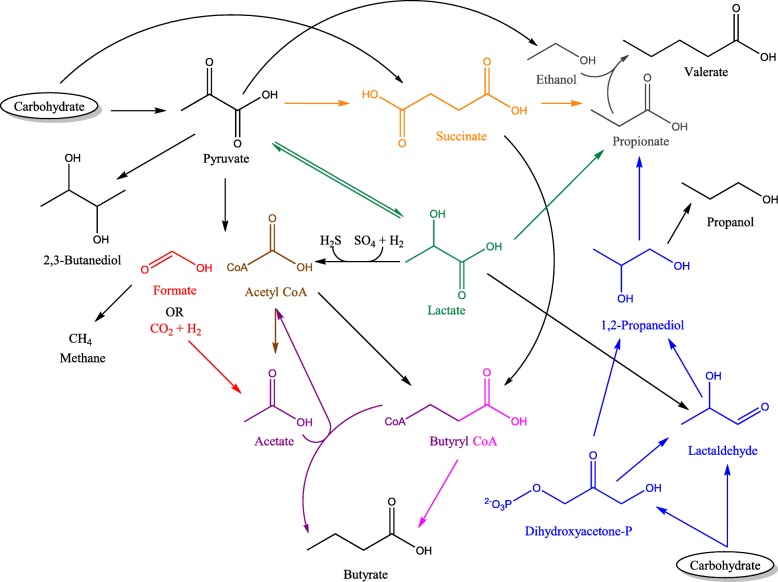
The human gut microbiome is a critical component of digestion, breaking down complex carbohydrates, proteins, and to a lesser extent fats that reach the lower gastrointestinal tract. This process results in a multitude of microbial metabolites that can act both locally and systemically (after being absorbed into the bloodstream). The impact of these biochemicals on human health is complex, as both potentially beneficial and potentially toxic metabolites can be yielded from such microbial pathways, and in some cases, these effects are dependent upon the metabolite concentration or organ locality. The aim of this review is to summarize our current knowledge of how macronutrient metabolism by the gut microbiome influences human health. Metabolites to be discussed include short-chain fatty acids and alcohols (mainly yielded from monosaccharides); ammonia, branched-chain fatty acids, amines, sulfur compounds, phenols, and indoles (derived from amino acids); glycerol and choline derivatives (obtained from the breakdown of lipids); and tertiary cycling of carbon dioxide and hydrogen. Key microbial taxa and related disease states will be referred to in each case, and knowledge gaps that could contribute to our understanding of overall human wellness will be identified.
Overview
The claims and statistics of this paper haven’t been checked yet.
Free: it reads the open-access text and checks the first 5 claims that cite a source we can check. Create a free account to check every claim.
Integrity signals
Registry
Cites
Statistics
Figures
Verification
Claims the paper makes
The claims and statistics of this paper haven’t been checked yet.
Free: it reads the open-access text and checks the first 5 claims that cite a source we can check. Create a free account to check every claim.
Claims other papers make about this one
Each is checked against this paper’s own text: does it say what the citing paper says it does?
The source backs part of the claim, not all of it — or backs it for a different population, condition or comparison.
In the citing paper
“Many bacteria associated with ICI response have known dietary associations, such that specific dietary patterns (e.g., plant-based versus western diet) are associated with increased or decreased relative abundances of these candidate taxa.131–135”
From Melanoma and microbiota: Current understanding and future directions (2024) · cites this paper as [132]
Experimental — accuracy not yet measuredThe cited source says what the claim attributes to it.
In the citing paper
“These differences are biologically relevant because carbohydrate utilization shapes bacterial growth, gut niche preference, and downstream metabolite production, which may influence host physiology. 34”
In the citing paper
“For example, the gut microbiota can ferment polysaccharides or proteins to produce short-chain fatty acids (SCFAs) [35].”
From Role of the gut microbiota in nutrient competition and protection against intestinal pathogen colonization (2023) · cites this paper as [35]
Self-check
Percentages, sums and reported differences re-computed from the paper’s own numbers.
The self-check needs the paper’s full text.
Citations
Cites
KEGG: Kyoto Encyclopedia of Genes and Genomes
Kanehisa, M. (2000) · Nucleic Acids Research · doi:10.1093/nar/28.1.27 · Cited by 37,077
KEGG: Kyoto Encyclopedia of Genes and Genomes
Ogata, H., Goto, S., Sato, K., Fujibuchi, W., Bono, H., & Kanehisa, M. (1999) · Nucleic Acids Research · doi:10.1093/nar/27.1.29 · Cited by 31,232
Structure, function and diversity of the healthy human microbiome
The Human Microbiome Project Consortium (2012) · Nature · doi:10.1038/nature11234 · Cited by 11,726
From Dietary Fiber to Host Physiology: Short-Chain Fatty Acids as Key Bacterial Metabolites
Koh, A., De Vadder, F., Kovatcheva-Datchary, P., & Bäckhed, F. (2016) · Cell · doi:10.1016/j.cell.2016.05.041 · Cited by 7,070
Turnbaugh, P. J., Ley, R. E., Hamady, M., Fraser-Liggett, C. M., Knight, R., & Gordon, J. I. (2007) · Nature · doi:10.1038/nature06244 · Cited by 6,091
Gut flora metabolism of phosphatidylcholine promotes cardiovascular disease
Wang, Z., Klipfell, E., Bennett, B. J., Koeth, R., Levison, B. S., DuGar, B., Feldstein, A. E., Britt, E. B., Fu, X., Chung, Y.-M., et al. (2011) · Nature · doi:10.1038/nature09922 · Cited by 5,597
Role of the microbiota in immunity and inflammation.
Belkaid, Y., & Hand, T. W. (2014) · Cell · doi:10.1016/j.cell.2014.03.011 · Cited by 5,385
den Besten, G., van Eunen, K., Groen, A. K., Venema, K., Reijngoud, D.-J., & Bakker, B. M. (2013) · Journal of Lipid Research · doi:10.1194/jlr.r036012 · Cited by 5,048
Cross-talk between Akkermansia muciniphila and intestinal epithelium controls diet-induced obesity
Everard, A., Belzer, C., Geurts, L., Ouwerkerk, J. P., Druart, C., Bindels, L. B., Guiot, Y., Derrien, M., Muccioli, G. G., Delzenne, N. M., et al. (2013) · Proceedings of the National Academy of Sciences · doi:10.1073/pnas.1219451110 · Cited by 4,511
Intestinal microbiota metabolism of l-carnitine, a nutrient in red meat, promotes atherosclerosis
Koeth, R. A., Wang, Z., Levison, B. S., Buffa, J. A., Org, E., Sheehy, B. T., Britt, E. B., Fu, X., Wu, Y., Li, L., et al. (2013) · Nature Medicine · doi:10.1038/nm.3145 · Cited by 4,386
Cited by
Items 201–300 of 1,001
Microbiota-Associated Metabolites and Related Immunoregulation in Colorectal Cancer
Chen, Y., & Chen, Y. (2021) · Cancers · doi:10.3390/cancers13164054 · Cited by 58
Dynamic Changes in the Human Milk Metabolome Over 25 Weeks of Lactation
Poulsen, K. O., Meng, F., Lanfranchi, E., Young, J. F., Stanton, C., Ryan, C. A., Kelly, A. L., & Sundekilde, U. K. (2022) · Frontiers in Nutrition · doi:10.3389/fnut.2022.917659 · Cited by 63
Dietary protein source alters gut microbiota composition and function
Blakeley‐Ruiz, J. A., Bartlett, A., McMillan, A. S., Awan, A., Vanhoy, M. E., Meyerhoffer, A. K., Vintila, S., Maier, J. L., Richie, T. G., Theriot, C. M., et al. (2025) · The ISME Journal · doi:10.1093/ismejo/wraf048 · Cited by 58
“For example, protein fermentation by the gut microbiota generates toxins including ammonia, putrescine, and hydrogen sulfide [6, 11], whereas fermentation of fiber and certain amino acids produces anti-inflammatory short-chain fatty acids [12].”
Colonization resistance: metabolic warfare as a strategy against pathogenic Enterobacteriaceae
Shealy, N. G., Yoo, W., & Byndloss, M. X. (2021) · Current Opinion in Microbiology · doi:10.1016/j.mib.2021.09.014 · Cited by 58
Recent insights of obesity-induced gut and adipose tissue dysbiosis in type 2 diabetes
Patra, D., Banerjee, D., Ramprasad, P., Roy, S., Pal, D., & Dasgupta, S. (2023) · Frontiers in Molecular Biosciences · doi:10.3389/fmolb.2023.1224982 · Cited by 77
“The gut microbiota involves in carbohydrate and fat metabolism, vitamin and amino acid production, the proliferation of epithelial cells, defense against infections, and hormone regulation in the host body (Oliphant and Allen-Vercoe, 2019) and also helps in the digestion of plant polysaccharides, complex nutrients, an…”
BackgroundHaange, S., Jehmlich, N., Krügel, U., Hintschich, C. A., Wehrmann, D., Hankir, M. K., Seyfried, F., Froment, J., Hübschmann, T., Müller, S., et al. (2020) · Microbiome · doi:10.1186/s40168-020-0788-1 · Cited by 60
Borsom, E. M., Lee, K., & Cope, E. K. (2020) · Brain Sciences · doi:10.3390/brainsci10110814 · Cited by 61
“These microbes aid in digestion [6], vitamin synthesis [9], and development of the nervous, endocrine, and immune system [3,4].”
BackgroundMachine Learning Uncovers Adverse Drug Effects on Intestinal Bacteria
McCoubrey, L. E., Elbadawi, M., Orlu, M., Gaisford, S., & Basit, A. W. (2021) · Pharmaceutics · doi:10.3390/pharmaceutics13071026 · Cited by 59
The link between broiler flock heterogeneity and cecal microbiome composition
Lundberg, R., Scharch, C., & Sandvang, D. (2021) · Animal Microbiome · doi:10.1186/s42523-021-00110-7 · Cited by 64
“Blautia metabolize undigested carbohydrates resulting in the production of acetate [27, 41].”
BackgroundModulating Microbiota as a New Strategy for Breast Cancer Prevention and Treatment
Wu, H., Ganguly, S., & Tollefsbol, T. O. (2022) · Microorganisms · doi:10.3390/microorganisms10091727 · Cited by 57
Diet-Related Changes of Short-Chain Fatty Acids in Blood and Feces in Obesity and Metabolic Syndrome
Ilyés, T., Silaghi, C. N., & Craciun, A. M. (2022) · Biology · doi:10.3390/biology11111556 · Cited by 67
“This, however, should not come as a surprise, given the fact that the main source of SCFAs is the bacterial fermentation of fibers and resistant sugars [176].”
BackgroundWang, Z., Li, L., Wang, S., Wei, J., Qu, L., Pan, L., & Xu, K. (2022) · Frontiers in Pharmacology · doi:10.3389/fphar.2022.1025860 · Cited by 64
Ali, R., Quinn, G. M., Umarova, R., Haddad, J. A., Zhang, G. Y., Townsend, E. C., Scheuing, L., Hill, K., Gewirtz, M. A., Rampertaap, S., et al. (2022) · Nature Microbiology · doi:10.1038/s41564-022-01273-y · Cited by 77
Childhood respiratory viral infections and the microbiome
Kloepfer, K. M., & Kennedy, J. L. (2023) · Journal of Allergy and Clinical Immunology · doi:10.1016/j.jaci.2023.08.008 · Cited by 67
Traditional Chinese medicine improved diabetic kidney disease through targeting gut microbiota
Wu, X., Zhao, L., Zhao, Y., He, X.-Y., Zou, L., Zhao, Y.-Y., & Li, X. (2024) · Pharmaceutical Biology · doi:10.1080/13880209.2024.2351946 · Cited by 57
“Limited studies have explored phenylalanine-derived metabolites (phenyl-ethylamine, transcinnamic acid) produced by Clostridium and Peptostreptococcus (Oliphant and Allen-Vercoe 2019).”
BackgroundVoigt, R. M., Wang, Z., Brown, J. M., Engen, P. A., Naqib, A., Goetz, C. G., Hall, D. A., Metman, L. V., Shaikh, M., Forsyth, C. B., et al. (2022) · Neurobiology of Disease · doi:10.1016/j.nbd.2022.105780 · Cited by 51
“SCFA (predominantly acetic, butyric, propionic acid), lactic acid, and succinic acid are the products of catabolism of carbohydrates (RiosCovian et al., 2016; Oliphant and Allen-Vercoe, 2019).”
BackgroundOrtega, V. A., Mercer, E. M., Giesbrecht, G. F., & Arrieta, M. (2021) · Frontiers in Microbiology · doi:10.3389/fmicb.2021.634539 · Cited by 59
“This includes, but is not limited to, extensive metabolic activities (Oliphant and Allen-Vercoe, 2019), directing immune system development and responses (Martin et al.”
BackgroundEffects of High-Fat Diet During Childhood on Precocious Puberty and Gut Microbiota in Mice
Bo, T., Liu, M., Tang, L., Lv, J., Wen, J., & Wang, D. (2022) · Frontiers in Microbiology · doi:10.3389/fmicb.2022.930747 · Cited by 55
“Studies showed the gut microbiota modulates local and systemic levels of sex steroids by producing special enzymes, for example, the microbiome can modify host-derived molecules such as bile and sex steroids (Ridlon and Bajaj, 2015; Oliphant and Allen-Vercoe, 2019; Ridlon, 2020).”
BackgroundAtzeni, A., Bastiaanssen, T. F. S., Cryan, J. F., Tinahones, F. J., Vioqué, J., Corella, D., Fitó, M., Vidal, J., Moreno‐Indias, I., Gómez‐Pérez, A. M., et al. (2022) · Frontiers in Endocrinology · doi:10.3389/fendo.2022.804455 · Cited by 62
The Evolution of Ketosis: Potential Impact on Clinical Conditions
Dilliraj, L. N., Schiuma, G., Lara, D., Strazzabosco, G., Clement, J., Giovannini, P. P., Trapella, C., Narducci, M., & Rizzo, R. (2022) · Nutrients · doi:10.3390/nu14173613 · Cited by 57
Chi, Y., Wu, Z., Du, C., Zhang, M., Wang, X., Xie, A., Wang, P., & Li, R. (2022) · Carbohydrate Polymers · doi:10.1016/j.carbpol.2022.120249 · Cited by 53
Functional constipation and the effect of prebiotics on the gut microbiota: a review
Erhardt, R., Harnett, J., Steels, E., & Steadman, K. J. (2022) · British Journal Of Nutrition · doi:10.1017/s0007114522003853 · Cited by 56
“Various species of bacteria have been identified as utilising this fibre as fuel to produce metabolites that contribute to the energy balance of the host and confer colonic and extraintestinal health benefits such as production of B vitamins(9).”
Alsharairi, N. A. (2023) · Life · doi:10.3390/life13020561 · Cited by 62
Zhang, X., Irajizad, E., Hoffman, K. L., Fahrmann, J. F., Li, F., Seo, Y. D., Browman, G. J., Dennison, J. B., Vykoukal, J. V., Luna, P. N., et al. (2023) · EBioMedicine · doi:10.1016/j.ebiom.2023.104873 · Cited by 61
Dietary fiber and polyphenols from whole grains: effects on the gut and health improvements
Wei, X., Wang, J., Wang, Y., Zhao, Y., Long, Y., Tan, B., Li, Q. X., Dong, Z., & Wan, X. (2024) · Food & Function · doi:10.1039/d4fo00715h · Cited by 63
Zeibich, L., Koebele, S. V., Bernaud, V. E., Ilhan, Z. E., Dirks, B., Northup-Smith, S. N., Neeley, R., Maldonado, J., Nirmalkar, K., Files, J. A., et al. (2021) · Frontiers in Cellular and Infection Microbiology · doi:10.3389/fcimb.2021.702628 · Cited by 65
Iribarren, C., Magnusson, M. K., Vigsnæs, L. K., Aziz, I., Amundsen, I. D., Šuligoj, T., Juge, N., Patel, P., Sapnara, M., Johnsen, L. G., et al. (2021) · Nutrients · doi:10.3390/nu13113836 · Cited by 53
“Host–microbiota interactions are central for maintaining gut health [12], and the gut microbiota participates in the fermentation of undigested dietary components [13,14] and modulation of neuro-immune interactions [15].”
Tissue-wide metabolomics reveals wide impact of gut microbiota on mice metabolite composition
Zarei, I., Koistinen, V., Kokla, M., Klåvus, A., Babu, A. F., Lehtonen, M., Auriola, S. O. K., & Hanhineva, K. (2022) · Scientific Reports · doi:10.1038/s41598-022-19327-w · Cited by 52
“Lower levels of 377 N-acetyllysine, pipecolic acid, methyllysine, acetylhydroxylysine, 5-acetamidovaleric acid, 5378 AVAB, 2-piperidinone, cadaverine, N-acetylcadaverine, and glutarate from lysine pathway in the GF 379 mice may be explained by the lack of gut microbiota, as the bacterial catabolism of lysine is shown…”
BackgroundLi, X., Peng, B., Cheung, P. C. K., Wang, J., Zheng, X., & You, L. (2022) · Food Hydrocolloids · doi:10.1016/j.foodhyd.2022.107687 · Cited by 50
Ruthes, A. C., Cantu-Jungles, T. M., Cordeiro, L. M. C., & Iacomini, M. (2021) · Carbohydrate Polymers · doi:10.1016/j.carbpol.2021.117940 · Cited by 54
Squillario, M., Bonaretti, C., Valle, A. L., Marco, E. D., Piccolo, G., Minuto, N., Patti, G., Napoli, F., Bassi, M., Maghnie, M., et al. (2023) · Scientific Reports · doi:10.1038/s41598-023-36533-2 · Cited by 59
Ke, W., Saba, J. A., Yao, C.-H., Hilzendeger, M. A., Drangowska-Way, A., Joshi, C. J., Mony, V. K., Benjamin-Davalos, S., Zhang, S., Locasale, J. W., et al. (2020) · Nature Communications · doi:10.1038/s41467-020-16220-w · Cited by 53
Marangon, E., Laffy, P. W., Bourne, D. G., & Webster, N. S. (2021) · Marine Biology · doi:10.1007/s00227-021-03893-0 · Cited by 49
“2018; Oliphant and Allen-Vercoe 2019; Tianero et al.”
Krbcová, M., Budínská, E., Kuzma, M., Pelantová, H., Hradecký, J., Heczková, M., Ďásková, N., Brátová, M., Módos, I., Videnska, P., et al. (2022) · Frontiers in Nutrition · doi:10.3389/fnut.2021.783302 · Cited by 53
The role of optical fiber sensors in the new generation of healthcare devices: a review
Junior, A. G. L., da Silva, J. S., Macedo, L. G. C., Marchesi, A., Morau, S., Camargos, J. C. V., Valentim, F., & Costa, M. B. (2024) · Sensors & Diagnostics · doi:10.1039/d4sd00032c · Cited by 58
Stothart, M. R., Greuel, R. J., Gavriliuc, S., Henry, A., Wilson, A. J., McLoughlin, P. D., & Poissant, J. (2020) · Molecular Ecology · doi:10.1111/mec.15747 · Cited by 57
“3 (Paradis & Schliep, 2019).”
Tong, L., Xiao, T., Wang, L., Lü, C., Liu, L., Zhou, X., Wang, A., Qin, W., & Wang, F. (2021) · iScience · doi:10.1016/j.isci.2021.103435 · Cited by 53
Liu, Z., Liu, M., Meng, J., Wang, L., & Chen, M. (2023) · Journal of Future Foods · doi:10.1016/j.jfutfo.2023.07.004 · Cited by 48
Alsharairi, N. A. (2020) · International Journal of Molecular Sciences · doi:10.3390/ijms21249580 · Cited by 57
“belonging to the Firmicutes phyla are also able to produce butyrate through the butyrate kinase pathway [66,74].”
BackgroundCancer cachexia as a multiorgan failure: Reconstruction of the crime scene
Ferrara, M., Samaden, M., Ruggieri, E., & Vénéreau, E. (2022) · Frontiers in Cell and Developmental Biology · doi:10.3389/fcell.2022.960341 · Cited by 49
“Gut microbiota dysbiosis highly affect blood metabolome (Oliphant and Allen-Vercoe, 2019), and, accordingly, restoration of gut microbiota reduces systemic levels of inflammatory cytokines and relieves muscle wasting in mice (Bindels et al.”
BackgroundBorsom, E. M., Conn, K. A., Keefe, C. R., Herman, C., Orsini, G. M., Hirsch, A. H., Avila, M. P., Testo, G., Jaramillo, S. A., Bolyen, E. K., et al. (2023) · Microbiology Spectrum · doi:10.1128/spectrum.03458-22 · Cited by 47
“nutrient metabolism (5), and maintenance of overall health (6).”
BackgroundGut microbiota and cardiac arrhythmia
Fan, H., Liu, X., Ren, Z., Fei, X., Luo, J., Yang, X., Xue, Y., Zhang, F., & Liang, B. (2023) · Frontiers in Cellular and Infection Microbiology · doi:10.3389/fcimb.2023.1147687 · Cited by 51
“By further metabolizing these intermediate metabolites, short chain fatty acids (SCFAs) can be produced (Oliphant and Allen-Vercoe, 2019).”
BackgroundLiu, W., Wang, J., Yang, H., Li, C., Lan, W., Chen, T., & Tang, Y. (2025) · Advanced Science · doi:10.1002/advs.202413010 · Cited by 65
Review of structure and bioactivity of the Plantago (Plantaginaceae) polysaccharides
Zhang, S., Hu, J., Sun, Y., Tan, H., Yin, J., Geng, F., & Nie, S. (2021) · Food Chemistry X · doi:10.1016/j.fochx.2021.100158 · Cited by 55
“Therefore, polysaccharides are usually resistant to digestion in the gastrointestinal tract and could reach the colon (Wong & Jenkins, 2007, 2007; Oliphant & Allen-vercoe, 2019).”
BackgroundMetabolic immunity against microbes
Kreimendahl, S., & Pernas, L. F. (2023) · Trends in Cell Biology · doi:10.1016/j.tcb.2023.10.013 · Cited by 48
Wang, Y., Wang, H., Howard, A. G., Meyer, K. A., Tsilimigras, M. C. B., Avery, C. L., Sha, W., Sun, S., Zhang, J., Su, C., et al. (2020) · Nutrients · doi:10.3390/nu12072127 · Cited by 48
“Although we focused on well-established dietary precursors like fiber and carbohydrates, our results in butyrate/isobutyrate and isovalerate suggest that higher protein catabolism may be associated with higher adiposity, given that isobutyrate and isovalerate are major fermentation products of amino acids valine and l…”
ResultThe Many Faces of Microbiota-Gut-Brain Axis in Autism Spectrum Disorder
Gonçalves, C. L., Doifode, T., Rezende, V. L., Costa, M. A., Rhoads, J. M., & Soutullo, C. A. (2024) · Life Sciences · doi:10.1016/j.lfs.2023.122357 · Cited by 42
Depth-depended quality comparison of light-flavor fermented grains from two fermentation rounds
Cai, W., Wang, Y., Liu, Z., Liu, J., Zhong, J. Q., Hou, Q., Yang, X., Shan, C., & Guo, Z. (2022) · Food Research International · doi:10.1016/j.foodres.2022.111587 · Cited by 45
Sun, Y., Zhang, S., He, H., Chen, H., Nie, Q., Li, S., Cheng, J., Zhang, B., Zheng, Z., Pan, S., et al. (2023) · International Journal of Biological Macromolecules · doi:10.1016/j.ijbiomac.2023.127326 · Cited by 47
A Role for Gut Microbiome Fermentative Pathways in Fatty Liver Disease Progression
Iruzubieta, P., Medina, J. M., Fernández-López, R., Crespo, J., & de la Cruz, F. (2020) · Journal of Clinical Medicine · doi:10.3390/jcm9051369 · Cited by 47
“The GM exhibits an array of metabolic pathways that generate multiple final products able to cross the intestinal barrier [46].”
BackgroundEffects of vegetarian diet-associated nutrients on gut microbiota and intestinal physiology
Xiao, W., Zhang, Q., Yu, L., Tian, F., Chen, W., & Zhai, Q. (2021) · Food Science and Human Wellness · doi:10.1016/j.fshw.2021.11.002 · Cited by 47
Isobutyric acid enhances the anti-tumour effect of anti-PD-1 antibody
Murayama, M., Hosonuma, M., Kuramasu, A., Kobayashi, S., Sasaki, A., Baba, Y., Narikawa, Y., Toyoda, H., Isobe, J., Funayama, E., et al. (2024) · Scientific Reports · doi:10.1038/s41598-024-59677-1 · Cited by 41
Growth Hormone Deficiency and Excess Alter the Gut Microbiome in Adult Male Mice
Jensen, E., Young, J. A., Jackson, Z., Busken, J., List, E. O., Carroll, R. K., Kopchick, J. J., Murphy, E. R., & Berryman, D. E. (2020) · Endocrinology · doi:10.1210/endocr/bqaa026 · Cited by 42
Li, J., Cao, Y., Lu, R., Li, H., Pang, Y., Fu, H., Fang, G., Chen, Q., Liu, B., Wu, J., et al. (2021) · Frontiers in Pharmacology · doi:10.3389/fphar.2020.606689 · Cited by 48
“…microbiota plays a pivotal part in the metabolic activities of the host, including digestion of complex polysaccharides, modulation of the immune system, synthesis of certain endogenous vitamins and amino acids, and metabolism of bile acids (Nicholson et al., 2012; Oliphant and Allen-Vercoe, 2019).”
BackgroundNOD1 in the interplay between microbiota and gastrointestinal immune adaptations
Fernández-García, V., González-Ramos, S., Martín‐Sanz, P., del Portillo, F. G., Laparra, J. M., & Boscá, L. (2021) · Pharmacological Research · doi:10.1016/j.phrs.2021.105775 · Cited by 43
“Whereas the gut microbiota alters the absorption, storage, and metabolism of nutrients, the macro and micronutrients modify the gastrointestinal microbiota composition [24,39,91 – 93].”
BackgroundA critical analysis of eating disorders and the gut microbiome
Terry, S. M., Barnett, J. A., & Gibson, D. L. (2022) · Journal of Eating Disorders · doi:10.1186/s40337-022-00681-z · Cited by 40
“Indeed, macronutrient bioavailability is influenced by gut microbial metabolic processes [25].”
BackgroundLi, G., Liu, Z., Ren, F., Shi, H., Zhao, Q., Song, Y., Fan, X., Ma, X., & Qin, G. (2022) · Frontiers in Microbiology · doi:10.3389/fmicb.2022.911992 · Cited by 52
“Alistipes are producers of both propionate acid and acetate, which may contribute to SCFA reduction (Polansky et al., 2015; Oliphant and Allen-Vercoe, 2019).”
BackgroundKreuzer, K., Reiter, A., Birkl-Toeglhofer, A. M., Dalkner, N., Mörkl, S., Mairinger, M., Fleischmann, E., Fellendorf, F. T., Platzer, M., Lenger, M., et al. (2022) · Metabolites · doi:10.3390/metabo12080770 · Cited by 46
“Bacteria in the gut play a major role in the macronutrient catabolism of proteins, carbohydrates, and lipids [48].”
BackgroundKurt, F., Leventhal, G. E., Spalinger, M. R., Anthamatten, L., von Bieberstein, P. R., Menzi, C., Reichlin, M., Meola, M., Rosenthal, F., Rogler, G., et al. (2023) · Gut Microbes · doi:10.1080/19490976.2023.2177486 · Cited by 45
Intestinal bacteria associated with irritable bowel syndrome and chronic fatigue
El‐Salhy, M. (2023) · Neurogastroenterology & Motility · doi:10.1111/nmo.14621 · Cited by 47
Role of Gut Microbial Metabolites in Cardiovascular Diseases—Current Insights and the Road Ahead
Datta, S., Pasham, S., Sandeep, I. S., Boini, K. M., & Koka, S. (2024) · International Journal of Molecular Sciences · doi:10.3390/ijms251810208 · Cited by 46
Gut Microbiota at the Intersection of Alcohol, Brain, and the Liver
Gupta, H., Suk, K. T., & Kim, D. J. (2021) · Journal of Clinical Medicine · doi:10.3390/jcm10030541 · Cited by 47
“Such progression is supported by various factors and including bile acids and their conjugates resulting from bacterial action in the intestine and enterohepatic circulation back to the liver via the hepatic portal vein [35,39].”
BackgroundPeroumal, D., Sahu, S. R., Kumari, P., Utkalaja, B. G., & Acharya, N. (2022) · Microbiology Spectrum · doi:10.1128/spectrum.02462-22 · Cited by 46
Ashniev, G. A., Petrov, S. N., Iablokov, S. N., & Rodionov, D. A. (2022) · Microorganisms · doi:10.3390/microorganisms10040740 · Cited by 47
“, generation of bioactive compounds from tryptophan); and (iv) host absorption [1,4,11,79].”
BackgroundRole of the Gut Microbiome in Skeletal Muscle Physiology and Pathophysiology
Lefevre, C., & Bindels, L. B. (2022) · Current Osteoporosis Reports · doi:10.1007/s11914-022-00752-9 · Cited by 43
Microbial metabolites are involved in tumorigenesis and development by regulating immune responses
Liu, J., Tian, R., Sun, C., Guo, Y., Dong, L., Li, Y., & Song, X. (2023) · Frontiers in Immunology · doi:10.3389/fimmu.2023.1290414 · Cited by 41
“Compared with other microbial metabolites, such as vitamin and histidine, SCFAs, MTCs, PAs, hydrogen sul fi de and secondary bile acids have signi fi cant impacts on tumor development (1, 14, 23).”
BackgroundValiei, A., Dickson, A. M., Aminian-Dehkordi, J., & Mofrad, M. R. K. (2024) · npj Biofilms and Microbiomes · doi:10.1038/s41522-024-00572-y · Cited by 42
“The digestive action of the microbiome maximizes energy absorption during metabolism, and, in addition, metabolites derived from microbespromotehumanhomeostasis 4,5 .”
Yan, Y., Xu, B., Yin, B., Xu, X., Niu, Y., Tang, Y., Wang, X., Xie, C., Yang, T., Zhou, S., et al. (2020) · Frontiers in Microbiology · doi:10.3389/fmicb.2019.03125 · Cited by 43
Rew, L., Harris, M. D., & Goldie, J. H. (2022) · Gastroenterology and hepatology from bed to bench. · doi:10.22037/ghfbb.v15i4.2600 · Cited by 73
Biomarkers of moderate alcohol intake and alcoholic beverages: a systematic literature review
Trius‐Soler, M., Praticò, G., Gürdeniz, G., Garcia‐Aloy, M., Canali, R., Natella, F., Brouwer-Brolsma, E. M., Andrés‐Lacueva, C., & Dragsted, L. O. (2023) · Genes & Nutrition · doi:10.1186/s12263-023-00726-1 · Cited by 46
“The half-life of 1-propanol, which is also a potential microbial metabolite [27], is similar to that of ethanol, while methanol has a longer half-life making it useful for examining high drinking episodes within 1–2 days.”
BackgroundInterplay between Phytochemicals and the Colonic Microbiota
Kwon, C., Ediriweera, M. K., & Cho, S. K. (2023) · Nutrients · doi:10.3390/nu15081989 · Cited by 48
Li, D., Cheng, Y., Zeng, X., Li, Y., Xia, Z., Yang, X., & Ren, D. (2023) · Journal of Agricultural and Food Chemistry · doi:10.1021/acs.jafc.3c04193 · Cited by 40
Gut Microbiota-Derived Metabolites in Atherosclerosis: Pathways, Biomarkers, and Targets
Tonch-Cerbu, A.-K., Boicean, A., Stoia, O., & Teodoru, M. (2025) · International Journal of Molecular Sciences · doi:10.3390/ijms26178488 · Cited by 47
“While their anti-inflammatory effects are well established, the impact of protein and lipid metabolites on cardiovascular and metabolic disease remains less clear [105].”
Bush, J., & Alfa, M. J. (2020) · BMC Nutrition · doi:10.1186/s40795-020-00398-9 · Cited by 40
Barnett, M. P. G., Young, W., Armstrong, K., Brewster, D. T., Cooney, J. M., Ellett, S., Espley, R. V., Laing, W. A., Maclean, P. H., McGhie, T. K., et al. (2021) · Nutrients · doi:10.3390/nu13041092 · Cited by 39
“degrade some digestion resistant carbohydrates in vitro [46], and is responsive to dietary carbohydrate levels [47,48].”
BackgroundUntargeted Stable Isotope Probing of the Gut Microbiota Metabolome Using 13C-Labeled Dietary Fibers
Deng, P., Valentino, T. R., Flythe, M. D. D., Moseley, H., Leachman, J. R., Morris, A. J., & Hennig, B. (2021) · Journal of Proteome Research · doi:10.1021/acs.jproteome.1c00124 · Cited by 52
Badri, D. V., Jackson, M. I., & Jewell, D. E. (2021) · Journal of Nutrition · doi:10.1093/jn/nxab308 · Cited by 51
“Bacteroides and Ruminococcus, greater with P55, may have been shunted toward foraging mucin; these genera harbor genetic elements competent to degrade mucin (68).”
BackgroundStavroulaki, E. M., Suchodolski, J. S., Pilla, R., Fosgate, G. T., Sung, C., Lidbury, J. A., Steiner, J. M., & Xenoulis, P. G. (2021) · PLoS ONE · doi:10.1371/journal.pone.0253031 · Cited by 47
Shen, Y., An, Z., Huyan, Z., Shu, X., Wu, D., Zhang, N., Pellegrini, N., & Rubert, J. (2023) · npj Science of Food · doi:10.1038/s41538-023-00230-1 · Cited by 42
“After pyruvate is produced, the gut microbiota can catabolize pyruvate into lactate, succinate, and acetyl-CoA and fi nally, these intermediates will be metabolized into SCFAs 19 .”
InfluentialCircadian influence on the microbiome improves heart failure outcomes
Mistry, P., Reitz, C. J., Khatua, T. N., Rasouli, M., Oliphant, K., Young, M. E., Allen‐Vercoe, E., & Martino, T. A. (2020) · Journal of Molecular and Cellular Cardiology · doi:10.1016/j.yjmcc.2020.09.006 · Cited by 39
Self-citationChoo, J. M., Tran, C. D., Luscombe‐Marsh, N. D., Stonehouse, W., Bowen, J., Johnson, N. A., Thompson, C. H., Watson, E.-J., Brinkworth, G. D., & Rogers, G. B. (2020) · Nutrition Research · doi:10.1016/j.nutres.2020.11.005 · Cited by 43
Yin, H., Zhong, Y., Wang, H., Hu, J., Xia, S., Xiao, Y., Nie, S., & Xie, M. (2021) · Journal of Advanced Research · doi:10.1016/j.jare.2021.03.004 · Cited by 38
“Although little is known about the impact of BCFAs on host health, the negative impacts of proinflammatory, cytotoxic, and neuroactive compounds produced from the sulfur-containing, basic and aromatic amino acids has been confirmed [40].”
BackgroundIsoflavone consumption reduces inflammation through modulation of phenylalanine and lipid metabolism
Shrode, R. L., Cady, N. M., Jensen, S. N., Borcherding, N. C., & Mangalam, A. K. (2022) · Metabolomics · doi:10.1007/s11306-022-01944-1 · Cited by 48
Candeliere, F., Simone, M., Leonardi, A., Rossi, M., Amaretti, A., & Raimondi, S. (2022) · Frontiers in Molecular Medicine · doi:10.3389/fmmed.2022.959189 · Cited by 45
Gut microbial response to host metabolic phenotypes
Hou, J., Xiang, J., Li, D., Liu, X., & Pan, W. (2022) · Frontiers in Nutrition · doi:10.3389/fnut.2022.1019430 · Cited by 40
Effects of modification on plant protein digestion and absorption
Wang, Y., Zheng, Z., & Liu, Y. (2024) · Food Bioscience · doi:10.1016/j.fbio.2024.105761 · Cited by 41
Exploring novel systemic biomarker approaches in grass‐pollen sublingual immunotherapy using omics
Barker‐Tejeda, T. C., Bazire, R., Obeso, D., Mera‐Berriatua, L., Rosace, D., Vázquez‐Cortés, S., Ramos, T., Rico, M. D. P., Chivato, T., Barbas, C., et al. (2020) · Allergy · doi:10.1111/all.14565 · Cited by 38
Jaimes, J. D. C., Slavíčková, A., Hurych, J., Cinek, O., Nichols, B., Vodolánová, L., Černý, K., & Havlík, J. (2021) · PLoS ONE · doi:10.1371/journal.pone.0247378 · Cited by 45
“The excess non-metabolized SCFAs reach the liver via the portal system, where they may serve as precursors for gluconeogenesis in case of propionate, and lipogenesis for acetate and butyrate [47, 48].”
BackgroundZhou, P., Hao, X., Liu, Y., Yang, Z., Xu, M., Liu, S., Zhang, S., Yang, T., Wang, X., & Wang, Y. (2021) · Chinese Medicine · doi:10.1186/s13020-021-00445-y · Cited by 36
Gao, J., Ma, L., Yin, J., Liu, G., Ma, J., Xia, S., Gong, S., Han, Q., Li, T., Chen, Y., et al. (2022) · Food & Function · doi:10.1039/d1fo04075h · Cited by 36
A mechanism of gene evolution generating mucin function
Pajic, P., Shen, S., Qu, J., May, A. J., Knox, S. M., Rühl, S., & Gökçümen, Ö. (2022) · Science Advances · doi:10.1126/sciadv.abm8757 · Cited by 39
Lugli, G. A., Mancabelli, L., Milani, C., Fontana, F., Tarracchini, C., Alessandri, G., van Sinderen, D., Turroni, F., & Ventura, M. (2023) · npj Biofilms and Microbiomes · doi:10.1038/s41522-023-00392-6 · Cited by 38
Neuroprotection by agmatine: Possible involvement of the gut microbiome?
Saha, P., Panda, S., Holkar, A., Vashishth, R., Rana, S. S., Arumugam, M., Ashraf, G. M., Haque, S., & Ahmad, F. (2023) · Ageing Research Reviews · doi:10.1016/j.arr.2023.102056 · Cited by 38
Dietary Patterns, Gut Microbiota and Sports Performance in Athletes: A Narrative Review
Chen, Y., Yang, K., Xu, M., Zhang, Y., Weng, X., Luo, J., Li, Y., & Mao, Y.-H. (2024) · Nutrients · doi:10.3390/nu16111634 · Cited by 53
“Amino acids can be metabolized into branched-chain fatty acids and SCFAs, ammonia, sulfides, indole, and phenolic compounds via the gut microbiota [112].”
BackgroundGu, X., Zhou, Y., Zhang, Y., Wang, L., Gao, W., Luo, K., Sun, B., Li, T., Wang, H., Si, N., et al. (2024) · Alzheimer s Research & Therapy · doi:10.1186/s13195-024-01587-5 · Cited by 41
Maternal administration of probiotics promotes gut development in mouse offsprings
Yu, Y., Lu, J. N., Oliphant, K., Gupta, N., Claud, K., & Lu, L. (2020) · PLoS ONE · doi:10.1371/journal.pone.0237182 · Cited by 37
Self-citationJiang, P., Wu, S., Luo, Q., Zhao, X., & Chen, W.-H. (2021) · mSystems · doi:10.1128/msystems.00112-21 · Cited by 42
A Catalog of Natural Products Occurring in Watermelon—Citrullus lanatus
Sorokina, M., McCaffrey, K. S., Deaton, E. E., Ma, G., Ordovás, J. M., Perkins-Veazie, P. M., Steinbeck, C., Levi, A., & Parnell, L. D. (2021) · Frontiers in Nutrition · doi:10.3389/fnut.2021.729822 · Cited by 51
“That complexity expands when considering processing (4), the food matrix (5, 6), or byproducts, such as those derived from both human and microbial metabolism (7), as well as taints and off-flavors derived from degradation and packaging (8).”
BackgroundHallmarks of the human intestinal microbiome on liver maturation and function
Almeida, J. I., Tenreiro, M. F., Martínez‐Santamaría, L., Guerrero‐Aspizua, S., Gisbert, J. P., Alves, P. M., Serra, M., & Baptista, P. M. (2021) · Journal of Hepatology · doi:10.1016/j.jhep.2021.10.015 · Cited by 42
Hu, Y., Pan, Z., Huang, Z., Li, Y., Han, N., Zhuang, X., Peng, H., Gao, Q., Wang, Q., Lee, B. J. Y., et al. (2022) · Microbiology Spectrum · doi:10.1128/spectrum.01053-21 · Cited by 38
Metadata
- Authors
- Oliphant, K., & Allen-Vercoe, E.
- Affiliations
- University of Guelph (CA)
- Corresponding author
- Oliphant, Kaitlyn
- ORCID
- Oliphant, Kaitlyn
- Venue
- Microbiome
- Published
- 2019-06-13
- Volume
- 7
- Issue
- 1
- Pages
- 91-91
- ISSN
- 2049-2618 (ISSN-L)
- PMC
- PMC6567490
- OpenAlex
- W2952437732
- Cited by
- 1,327
- References
- 188
- Citations by year
- 2026: 155 · 2025: 218 · 2024: 218 · 2023: 225 · 2022: 200 · 2021: 204 · 2020: 100 · 2019: 6
- FWCI
- 11.32
- Type
- journal article
- Language
- en
- Open access
- gold
- doi.org
- Licence
- cc-by
- creativecommons.org/licenses/by/4.0/ (tdm)
- creativecommons.org/licenses/by/4.0/ (vor)
- Locations
- Microbiome (publishedVersion, cc-by)
- Europe PMC (PubMed Central) (publishedVersion, cc-by)
- PubMed Central (publishedVersion, cc-by)
- PubMed (publishedVersion)
- DOAJ (DOAJ: Directory of Open Access Journals) (submittedVersion, cc-by-sa)
- Funders
- National Institutes of Health (4R33AI121575-03)
- Topics
- Life Sciences › Biochemistry, Genetics and Molecular Biology › Molecular Biology › Gut microbiota and health
- Health Sciences › Medicine › Gastroenterology › Gastrointestinal motility and disorders
- Health Sciences › Dentistry › Periodontics › Oral microbiology and periodontitis research
- Keywords
- gut microbiota, macronutrient metabolism, microbial fermentation, short-chain fatty acids, microbial metabolites, ammonia, branched-chain fatty acids, amines, sulfur compounds, phenols, indole, glycerol, choline derivatives, hydrogen cycling, host health, disease states
- MeSH terms
- Gastrointestinal Microbiome, Host Microbial Interactions, Nutrients, Alcohols, Animals, Bacteria, Dietary Carbohydrates, Fatty Acids, Fermentation, Health, Humans, Mice, Rats
About these checks
Registry, retraction, Cites and statistics results are computed, not judged, with one exception: a printed reference that no index lists is read once by a model before it counts as a citation error. Claims are extracted by a model and kept only when their quote appears verbatim in the text; each cited source is then checked, with a model’s help, for whether it says what the claim relies on. Those verdicts can be wrong — read the claim’s quote and the cited source before relying on one.
Statistics and arithmetic are recomputed, not judged.
Confidence bands are shown only for fields calibrated on our annotated test set. None is calibrated yet, so no band is shown.
What counts as a claim ›How we measure confidence ›How we check this ›
Are you an author, or do you see a problem with this page? Request a review
Data sources
Bibliographic data: Semantic Scholar, OpenAlex, Crossref.
Contains information from the Semantic Scholar Academic Graph Datasets, made available under the ODC Attribution License (ODC-BY 1.0).
Semantic Scholar’s data is described in: Kinney, R., et al. (2023). The Semantic Scholar Open Data Platform. arXiv:2301.10140.
