

Macronutrient metabolism by the human gut microbiome: major fermentation by-products and their impact on host health
Open accessThe DOI matches its Crossref record; 188 of the 188 references it cites were found in a registry or an index.
Abstract
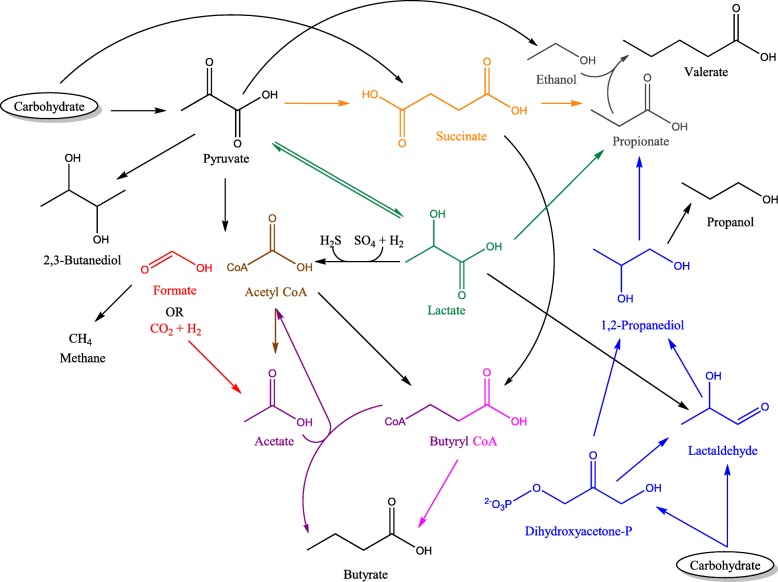
The human gut microbiome is a critical component of digestion, breaking down complex carbohydrates, proteins, and to a lesser extent fats that reach the lower gastrointestinal tract. This process results in a multitude of microbial metabolites that can act both locally and systemically (after being absorbed into the bloodstream). The impact of these biochemicals on human health is complex, as both potentially beneficial and potentially toxic metabolites can be yielded from such microbial pathways, and in some cases, these effects are dependent upon the metabolite concentration or organ locality. The aim of this review is to summarize our current knowledge of how macronutrient metabolism by the gut microbiome influences human health. Metabolites to be discussed include short-chain fatty acids and alcohols (mainly yielded from monosaccharides); ammonia, branched-chain fatty acids, amines, sulfur compounds, phenols, and indoles (derived from amino acids); glycerol and choline derivatives (obtained from the breakdown of lipids); and tertiary cycling of carbon dioxide and hydrogen. Key microbial taxa and related disease states will be referred to in each case, and knowledge gaps that could contribute to our understanding of overall human wellness will be identified.
Overview
The claims and statistics of this paper haven’t been checked yet.
Free: it reads the open-access text and checks the first 5 claims that cite a source we can check. Create a free account to check every claim.
Integrity signals
Registry
Cites
Statistics
Figures
Verification
Claims the paper makes
The claims and statistics of this paper haven’t been checked yet.
Free: it reads the open-access text and checks the first 5 claims that cite a source we can check. Create a free account to check every claim.
Claims other papers make about this one
Each is checked against this paper’s own text: does it say what the citing paper says it does?
The source backs part of the claim, not all of it — or backs it for a different population, condition or comparison.
In the citing paper
“Many bacteria associated with ICI response have known dietary associations, such that specific dietary patterns (e.g., plant-based versus western diet) are associated with increased or decreased relative abundances of these candidate taxa.131–135”
From Melanoma and microbiota: Current understanding and future directions (2024) · cites this paper as [132]
Experimental — accuracy not yet measuredThe cited source says what the claim attributes to it.
In the citing paper
“These differences are biologically relevant because carbohydrate utilization shapes bacterial growth, gut niche preference, and downstream metabolite production, which may influence host physiology. 34”
In the citing paper
“For example, the gut microbiota can ferment polysaccharides or proteins to produce short-chain fatty acids (SCFAs) [35].”
From Role of the gut microbiota in nutrient competition and protection against intestinal pathogen colonization (2023) · cites this paper as [35]
Self-check
Percentages, sums and reported differences re-computed from the paper’s own numbers.
The self-check needs the paper’s full text.
Citations
Cites
KEGG: Kyoto Encyclopedia of Genes and Genomes
Kanehisa, M. (2000) · Nucleic Acids Research · doi:10.1093/nar/28.1.27 · Cited by 37,077
KEGG: Kyoto Encyclopedia of Genes and Genomes
Ogata, H., Goto, S., Sato, K., Fujibuchi, W., Bono, H., & Kanehisa, M. (1999) · Nucleic Acids Research · doi:10.1093/nar/27.1.29 · Cited by 31,232
Structure, function and diversity of the healthy human microbiome
The Human Microbiome Project Consortium (2012) · Nature · doi:10.1038/nature11234 · Cited by 11,726
From Dietary Fiber to Host Physiology: Short-Chain Fatty Acids as Key Bacterial Metabolites
Koh, A., De Vadder, F., Kovatcheva-Datchary, P., & Bäckhed, F. (2016) · Cell · doi:10.1016/j.cell.2016.05.041 · Cited by 7,070
Turnbaugh, P. J., Ley, R. E., Hamady, M., Fraser-Liggett, C. M., Knight, R., & Gordon, J. I. (2007) · Nature · doi:10.1038/nature06244 · Cited by 6,091
Gut flora metabolism of phosphatidylcholine promotes cardiovascular disease
Wang, Z., Klipfell, E., Bennett, B. J., Koeth, R., Levison, B. S., DuGar, B., Feldstein, A. E., Britt, E. B., Fu, X., Chung, Y.-M., et al. (2011) · Nature · doi:10.1038/nature09922 · Cited by 5,597
Role of the microbiota in immunity and inflammation.
Belkaid, Y., & Hand, T. W. (2014) · Cell · doi:10.1016/j.cell.2014.03.011 · Cited by 5,385
den Besten, G., van Eunen, K., Groen, A. K., Venema, K., Reijngoud, D.-J., & Bakker, B. M. (2013) · Journal of Lipid Research · doi:10.1194/jlr.r036012 · Cited by 5,048
Cross-talk between Akkermansia muciniphila and intestinal epithelium controls diet-induced obesity
Everard, A., Belzer, C., Geurts, L., Ouwerkerk, J. P., Druart, C., Bindels, L. B., Guiot, Y., Derrien, M., Muccioli, G. G., Delzenne, N. M., et al. (2013) · Proceedings of the National Academy of Sciences · doi:10.1073/pnas.1219451110 · Cited by 4,511
Intestinal microbiota metabolism of l-carnitine, a nutrient in red meat, promotes atherosclerosis
Koeth, R. A., Wang, Z., Levison, B. S., Buffa, J. A., Org, E., Sheehy, B. T., Britt, E. B., Fu, X., Wu, Y., Li, L., et al. (2013) · Nature Medicine · doi:10.1038/nm.3145 · Cited by 4,386
Cited by
Items 101–200 of 1,001
Luo, Z., Xu, W., Zhang, Y., Di, L., & Shan, J. (2020) · Pharmacological Research · doi:10.1016/j.phrs.2020.105088 · Cited by 104
Wu, T. H., Xu, F., Su, C., Li, H., Lv, N., Liu, Y., Gao, Y., Lan, Y., & Li, J.-B. (2020) · Frontiers in Immunology · doi:10.3389/fimmu.2020.01331 · Cited by 104
Zhang, M., Yang, L., Zhu, M., Yang, B., Yang, Y.-J., Jia, X., & Feng, L. (2022) · International Journal of Biological Macromolecules · doi:10.1016/j.ijbiomac.2022.03.077 · Cited by 101
Yip, A. Y. G., King, O. G., Omelchenko, O., Kurkimat, S., Horrocks, V., Mostyn, P., Danckert, N., Ghani, R., Satta, G., Jauneikaite, E., et al. (2023) · doi:10.1101/2023.03.25.533086 · Cited by 91
Solito, A., Cionci, N. B., Calgaro, M., Caputo, M., Vannini, L., Hasballa, I., Archero, F., Giglione, E., Ricotti, R., Walker, G. E., et al. (2021) · Clinical Nutrition · doi:10.1016/j.clnu.2021.06.002 · Cited by 109
The Metabolism of Glucosinolates by Gut Microbiota
Sikorska-Zimny, K. M., & Beneduce, L. (2021) · Nutrients · doi:10.3390/nu13082750 · Cited by 108
Fajstova, A., Galanova, N., Coufal, S., Malkova, J., Kostovcik, M., Cermakova, M., Pelantova, H., Kuzma, M., Sediva, B., Hudcovic, T., et al. (2020) · Cells · doi:10.3390/cells9122701 · Cited by 90
“They are crucial energy sources for colonic epithelial cells, but also can influence the host immune system [72,73].”
BackgroundMechanisms of the intestinal and urinary microbiome in kidney stone disease
Miller, A. W., Penniston, K. L., Fitzpatrick, K., Agudelo, J., Tasian, G., & Lange, D. (2022) · Nature Reviews Urology · doi:10.1038/s41585-022-00647-5 · Cited by 89
Melanoma and microbiota: Current understanding and future directions
Routy, B., Jackson, T., Mählmann, L., Baumgartner, C. K., Blaser, M., Byrd, A., Corvaia, N., Couts, K., Davar, D., Derosa, L., et al. (2024) · Cancer Cell · doi:10.1016/j.ccell.2023.12.003 · Cited by 89
Zhao, T.-S., Xie, L., Cai, S., Xu, J., Zhou, H., Tang, L., Yang, C., Fang, S., Li, M., & Tian, Y. (2021) · Frontiers in Cellular and Infection Microbiology · doi:10.3389/fcimb.2021.717636 · Cited by 96
“Under normal circumstances, the microbes in gut persistently colonize intestine and perform symbiotic functions (Lynch and Pedersen, 2016; Oliphant and Allen-Vercoe, 2019; Dupont et al., 2020).”
BackgroundInterrelation between gut microbiota, SCFA, and fatty acid composition in pigs
Sebastià, C., Folch, J. M., Ballester, M., Estellé, J., Passols, M., Muñoz, M., Casco, J. M. G., Fernández, A. I., Castelló, A., Sánchez, A., et al. (2023) · mSystems · doi:10.1128/msystems.01049-23 · Cited by 106
“P. copri is the most abundant species of the Prevotella genus in the gut of adult pigs (52) and produces succinate as a metabolite, which can be transformed to butyrate through its conversion to butyryl coenzyme A (butyryl-CoA) (53).”
BackgroundTamburini, F. B., Maghini, D., Oduaran, O. H., Brewster, R., Hulley, M. R., Sahibdeen, V., Norris, S. A., Tollman, S., Kahn, K., Wagner, R. G., et al. (2022) · Nature Communications · doi:10.1038/s41467-021-27917-x · Cited by 88
Yoha, K. S., Moses, J. A., & Anandharamakrishnan, C. (2020) · Journal of Food Engineering · doi:10.1016/j.jfoodeng.2020.110033 · Cited by 94
Liu, Y., Jin, X., Hong, H. G., Xiang, L., Jiang, Q., Ma, Y., Chen, Z., Cheng, L., Jian, Z., Wei, Z., et al. (2020) · The FASEB Journal · doi:10.1096/fj.202000786r · Cited by 94
“They were Blautia, Anaerostipes, Coprococcus, Fusobacterium, Ruminococcus, and Lachnospiraceae, of which the common abundant metabolic products were SCFAs.14,15 SCFAs were known to be the energy sources for enterocytes, which can maintain gut barrier function and in turn decrease permeability of gut, circulating LPS,…”
BackgroundShi, J., Zhao, D., Song, S., Zhang, M., Zamaratskaia, G., Xu, X., Zhou, G., & Li, C. (2020) · Journal of Agricultural and Food Chemistry · doi:10.1021/acs.jafc.0c00245 · Cited by 93
Inflammatory Bowel Disease and Sarcopenia: Its Mechanism and Clinical Importance
Nishikawa, H., Nakamura, S., Miyazaki, T., Kakimoto, K., Fukunishi, S., Asai, A., Nishiguchi, S., & Higuchi, K. (2021) · Journal of Clinical Medicine · doi:10.3390/jcm10184214 · Cited by 97
“The gut microbiota has a direct influence on the bioavailability of amino acids [71], and some gut bacteria are derived from oral intake, which plays an essential role in the quantity and diversity of the gut microbiota [71].”
BackgroundAntibiotics, gut microbiota, and irritable bowel syndrome: What are the relations?
Mamieva, Z. A., Poluektova, E. A., Свистушкин, В. М., Sobolev, V., Shifrin, O. S., Guarner, F., & Ivashkin, V. T. (2022) · World Journal of Gastroenterology · doi:10.3748/wjg.v28.i12.1204 · Cited by 110
Jang, D., Shin, J., Shim, E., Ohtani, N., & Jeon, O. H. (2024) · Aging Cell · doi:10.1111/acel.14315 · Cited by 84
“The gut microbiome is crucial in metabolizing dietary nutri - ents to produce various bioactive metabolites, such as SCFAs, amino acids, and hormones through fermentation processes (Bernalier-Donadille, 2010 ; Fernández et al., 2016 ; Oliphant & Allen-Vercoe, 2019).”
BackgroundDietary compounds in modulation of gut microbiota-derived metabolites
Feng, W., Liu, J., Cheng, H., Zhang, D., Tan, Y., & Peng, C. Y. (2022) · Frontiers in Nutrition · doi:10.3389/fnut.2022.939571 · Cited by 108
The microbiome: an integral player in immune homeostasis and inflammation in the respiratory tract
Perdijk, O., Azzoni, R., & Marsland, B. J. (2023) · Physiological Reviews · doi:10.1152/physrev.00020.2023 · Cited by 105
Muthu, C. M. M., Vickram, A. S., Bhavani Sowndharya, B., Saravanan, A., Kamalesh, R., & Dinakarkumar, Y. (2024) · Fish & Shellfish Immunology · doi:10.1016/j.fsi.2024.109459 · Cited by 107
The fate of dietary polysaccharides in the digestive tract
Yang, Q., Chang, S., Zhang, X., Luo, F., Li, W., & Ren, J. (2024) · Trends in Food Science & Technology · doi:10.1016/j.tifs.2024.104606 · Cited by 96
Elmassry, M. M., Zayed, A., & Farag, M. A. (2020) · Critical Reviews in Food Science and Nutrition · doi:10.1080/10408398.2020.1828263 · Cited by 90
Zhang, H., van der Wielen, N., van der Hee, B., Wang, J., Hendriks, W. H., & Gilbert, M. S. (2020) · Microorganisms · doi:10.3390/microorganisms8111735 · Cited by 104
“This dissimilatory metabolism is less energetically favourable compared to carbohydrate catabolism [3] and leads to a series of metabolites of which several have the potential to negatively affect the gut in vitro [4].”
BackgroundPredicting drug-microbiome interactions with machine learning
McCoubrey, L. E., Gaisford, S., Orlu, M., & Basit, A. W. (2022) · Biotechnology Advances · doi:10.1016/j.biotechadv.2021.107797 · Cited by 79
Dietary manipulation of the gut microbiome in inflammatory bowel disease patients: Pilot study
Olendzki, B. C., Bucci, V., Cawley, C., Maserati, R., McManus, M. M., Olednzki, E., Madziar, C., Chiang, D., Ward, D. V., Pellish, R. S., et al. (2022) · Gut Microbes · doi:10.1080/19490976.2022.2046244 · Cited by 87
The Core Human Microbiome: Does It Exist and How Can We Find It? A Critical Review of the Concept
Sharon, I., Quijada, N. M., Pasolli, E., Fabbrini, M., Vitali, F., Agamennone, V., Dötsch, A., Selberherr, E., Grau, J. H., Meixner, M., et al. (2022) · Nutrients · doi:10.3390/nu14142872 · Cited by 98
“Our microbiome is involved in various processes in our body including nutrient uptake [1,2], defense against pathogens [3], and the development of the immune system in newborns [4].”
BackgroundPuhlmann, M.-L., & de Vos, W. M. (2022) · Frontiers in Immunology · doi:10.3389/fimmu.2022.954845 · Cited by 87
“Information on lipid-degrading gut bacteria is limited and, generally, the amount of fat reaching the colon is believed to be low as most fats we consume are of animal origin or extracted from plants (oil) (127).”
BackgroundMicrobiota-Derived Short-Chain Fatty Acids Promote LAMTOR2-Mediated Immune Responses in Macrophages
Wu, T., Li, H., Su, C., Xu, F., Yang, G., Sun, K., Xu, M., Lv, N., Meng, B., Liu, Y., et al. (2020) · mSystems · doi:10.1128/msystems.00587-20 · Cited by 78
The Interplay of Sex Steroids, the Immune Response, and the Intestinal Microbiota
de Pace, F., & Watnick, P. I. (2020) · Trends in Microbiology · doi:10.1016/j.tim.2020.11.001 · Cited by 86
Pancreatic cancer cachexia: three dimensions of a complex syndrome
Kordes, M., Larsson, L., Engstrand, L., & Löhr, M. J. (2021) · British Journal of Cancer · doi:10.1038/s41416-021-01301-4 · Cited by 93
Sharma, R. (2022) · Probiotics and Antimicrobial Proteins · doi:10.1007/s12602-021-09903-3 · Cited by 75
Recurrent neural networks enable design of multifunctional synthetic human gut microbiome dynamics
Baranwal, M., Clark, R. L., Thompson, J. C., Sun, Z., Hero, A. O., & Venturelli, O. S. (2022) · eLife · doi:10.7554/elife.73870 · Cited by 86
The Role of Diet and Gut Microbiota in Alzheimer’s Disease
Dissanayaka, D. M. S., Jayasena, V., Rainey‐Smith, S. R., Martins, R. N., & Fernando, W. M. A. D. B. (2024) · Nutrients · doi:10.3390/nu16030412 · Cited by 102
“…that alteration of gut microbiota due to diets rich in vegetables, legumes, grains, nuts, and fish, with a preference for plant-based foods over animal products, holds the potential to prevent the intestinal inflammatory processes that underlie many chronic diseases including AD [101,102].”
BackgroundTang, S., Chen, Y., Deng, F., Yan, X., Zhong, R., Meng, Q., Liu, L., Zhao, Y. M., Zhang, S., Liang, C., et al. (2022) · Carbohydrate Polymers · doi:10.1016/j.carbpol.2022.119776 · Cited by 82
Regulation of endocrine systems by the microbiome: Perspectives from comparative animal models
Williams, C. L., García‐Reyero, N., Martyniuk, C. J., Tubbs, C. W., & Bisesi, J. H. (2020) · General and Comparative Endocrinology · doi:10.1016/j.ygcen.2020.113437 · Cited by 80
Castro-López, C., Romero‐Luna, H. E., Garcia, H. S., Vallejo‐Córdoba, B., González-Córdova, A. F., & Hernández‐Mendoza, A. (2022) · Probiotics and Antimicrobial Proteins · doi:10.1007/s12602-022-09981-x · Cited by 95
Selma‐Royo, M., Dubois, L., Manara, S., Armanini, F., Cabrera‐Rubio, R., Valles‐Colomer, M., González, S., Llorca, A. P., Escuriet, R., Bode, L., et al. (2024) · Cell Host & Microbe · doi:10.1016/j.chom.2024.05.005 · Cited by 84
Seasonal variation in gut microbiota composition: cross-sectional evidence from Ukrainian population
Koliada, A., Moseiko, V., Romanenko, M., Piven, L., Lushchak, O., Kryzhanovska, N., Guryanov, V., & Vaiserman, A. (2020) · BMC Microbiology · doi:10.1186/s12866-020-01786-8 · Cited by 75
“acquisition and xenobiotic processing, including the metabolism of undigested carbohydrates and vitamin biosynthesis [5, 6].”
BackgroundKumpitsch, C., Fischmeister, F. P. S., Mahnert, A., Lackner, S., Wilding, M., Sturm, C., Springer, A., Madl, T., Holasek, S. J., Högenauer, C., et al. (2021) · Microbiome · doi:10.1186/s40168-021-01130-w · Cited by 81
“Moreover, indoles are important, dose-dependent signaling molecules for bacteria, with effect on motility, biofilm formation, antibiotic resistances and virulence [52, 74].”
BackgroundMetatranscriptomics-guided genome-scale metabolic modeling of microbial communities
Zampieri, G., Campanaro, S., Angione, C., & Treu, L. (2023) · Cell Reports Methods · doi:10.1016/j.crmeth.2022.100383 · Cited by 94
“Short-chain fatty acids (SCFA) are among the main fermentation products in the gut, resulting from the catabolism of carbohydrates and proteins.(39) Specifically, butyrate and propionate were identified and tracked in the considered cohort via untargeted metabolomics.”
BackgroundZhang, L., Liu, J., Jin, T. Y., Qin, N., Ren, X., & Xia, X. (2022) · Food & Function · doi:10.1039/d2fo02702j · Cited by 83
Deciphering the gut microbiome of grass carp through multi-omics approach
Li, M., Liang, H., Yang, H., Ding, Q., Xia, R., Chen, J., Zhou, W., Yang, Y., Zhang, Z., Yao, Y., et al. (2024) · Microbiome · doi:10.1186/s40168-023-01715-7 · Cited by 88
Yadav, M., Lomash, A., Kapoor, S., Pandey, R., & Chauhan, N. S. (2021) · Scientific Reports · doi:10.1038/s41598-021-84964-6 · Cited by 81
Jensen, E., Young, J. A., Mathes, S. C., List, E. O., Carroll, R. K., Kuhn, J., Onusko, M., Kopchick, J. J., Murphy, E. R., & Berryman, D. E. (2020) · Growth Hormone & IGF Research · doi:10.1016/j.ghir.2020.101333 · Cited by 86
Dietary Influences on the Microbiota–Gut–Brain Axis
Barber, T. M., Valsamakis, G., Mastorakos, G. P., Hanson, P., Kyrou, I., Randeva, H. S., & Weickert, M. O. (2021) · International Journal of Molecular Sciences · doi:10.3390/ijms22073502 · Cited by 86
“Furthermore, direct links between the gut microbiota and the brain may occur through the release and absorption of the metabolic by-products of the microbiota within the gut [23].”
BackgroundBeyond butyrate: microbial fiber metabolism supporting colonic epithelial homeostasis
Fagundes, R. R., Belt, S. C., Bakker, B. M., Dijkstra, G. D. H., Harmsen, H. J. M., & Faber, K. N. (2023) · Trends in Microbiology · doi:10.1016/j.tim.2023.07.014 · Cited by 79
“Other described end-products from secondary fermentation are alcohols, CO2, methane, H2S, and H2 [30].”
BackgroundRosario, D., Boren, J., Uhlen, M., Proctor, G., Aarsland, D., Mardinoglu, A., & Shoaie, S. (2020) · Frontiers in Neuroscience · doi:10.3389/fnins.2020.00716 · Cited by 67
“INFLUENCE OF DIET-BASED THERAPEUTIC APPROACHES WITH IMPACT ON THE GUT-BRAIN AXIS IN NDDs The gut microbiota plays a critical role in human digestion, mainly through the breaking down of complex carbohydrates and proteins (Oliphant and Allen-Vercoe, 2019).”
BackgroundAssociations between the gut microbiome and metabolome in early life
Nguyen, Q. P., Karagas, M. R., Madan, J. C., Dade, E. F., Palys, T. J., Morrison, H. G., Pathmasiri, W., McRitche, S., Sumner, S., Frost, H. R., et al. (2021) · BMC Microbiology · doi:10.1186/s12866-021-02282-3 · Cited by 81
“These low molecular weight molecules can either be nutrients that shape the composition of the microbiome [10] or”
BackgroundThe Role of Gut Microbiota and Metabolites in Obesity-Associated Chronic Gastrointestinal Disorders
Islam, M. R., Arthur, S., Haynes, J., Butts, M. R., Nepal, N., & Sundaram, U. (2022) · Nutrients · doi:10.3390/nu14030624 · Cited by 77
HPLC-MS-MS quantification of short-chain fatty acids actively secreted by probiotic strains
Calvigioni, M., Bertolini, A., Codini, S., Mazzantini, D., Panattoni, A., Massimino, M., Celandroni, F., Zucchi, R., Saba, A., & Ghelardi, E. (2023) · Frontiers in Microbiology · doi:10.3389/fmicb.2023.1124144 · Cited by 81
Food and human health applications of edible mushroom by-products
Navarro-Simarro, P., Gómez‐Gómez, L., Ahrazem, O., & Rubio‐Moraga, Á. (2024) · New Biotechnology · doi:10.1016/j.nbt.2024.03.003 · Cited by 80
Zhang, Y., Chen, T., Zhang, Y., Hu, Q., Wang, X., Chang, H., Mao, J., Snijders, A. M., & Xia, Y. (2021) · Environment International · doi:10.1016/j.envint.2021.106520 · Cited by 70
Ratajczak, W., Mizerski, A., Rył, A., Słojewski, M., Sipak‐Szmigiel, O., Piasecka, M., & Laszczyńska, M. (2021) · Aging · doi:10.18632/aging.202968 · Cited by 71
Newsome, R. C., Gauthier, J., Hernandez, M. C., Abraham, G., Robinson, T. O., Williams, H. B., Sloan, M., Owings, A. H., Laird, H., Christian, T., et al. (2021) · Gut Microbes · doi:10.1080/19490976.2021.1926840 · Cited by 74
“Furthermore, Blautia and Faecalibacterium were found to be enriched in the recovered patients versus infected subjects, and are associated with beneficial fermentation products and short chain fatty acids, respectively, indicating better gut health being associated with recovery.(46) Further investigation would be nee…”
BackgroundWang, Z., Bai, Y., Pi, Y., Gerrits, W. J. J., de Vries, S., Shang, L., Tao, S., Zhang, S., Han, D., Zhu, Z., et al. (2021) · Microbiome · doi:10.1186/s40168-021-01175-x · Cited by 71
Roager, H. M., Stanton, C., & Hall, L. J. (2023) · Gut Microbes · doi:10.1080/19490976.2023.2192151 · Cited by 75
Understanding the Effects of Antipsychotics on Appetite Control
Mukherjee, S., Skrede, S., Milbank, E., Andriantsitohaina, R., López, M., & Fernø, J. (2022) · Frontiers in Nutrition · doi:10.3389/fnut.2021.815456 · Cited by 84
“Also, gut microbes regulate bile acid metabolism to produce a range of metabolites, including short-chain fatty acids (SCFAs), neurotransmitters, tiny protein molecules, and toxins (181).”
BackgroundPötgens, S. A., Thibaut, M. M., Joudiou, N., Sboarina, M., Neyrinck, A. M., Cani, P. D., Claus, S. P., Delzenne, N. M., & Bindels, L. B. (2021) · Journal of Cachexia Sarcopenia and Muscle · doi:10.1002/jcsm.12684 · Cited by 75
Wu, Q., Wu, S., Yang, C., Zhang, Z., Mao, G., Li, S., Yang, Y., Zhang, X., Wu, M., & Tong, H. (2021) · Food & Function · doi:10.1039/d0fo03329d · Cited by 73
Monoterpenes: current knowledge on food source, metabolism, and health effects
de Alvarenga, J. F. R., Genaro, B., Costa, B. L., Purgatto, E., Manach, C., & Fiamoncini, J. (2021) · Critical Reviews in Food Science and Nutrition · doi:10.1080/10408398.2021.1963945 · Cited by 75
“…such as short-chain fatty acids, ammonia, branchedchain amino acids, bioactive amines and sulfur compounds are some examples of metabolic functions of the gut microbiota that have been related to the health status of the host (Oliphant and Allen-Vercoe 2019; Dabke, Hendrick, and Devkota 2019).”
BackgroundYuan, C., Hu, R., Li, H., Hu, J., & Liu, H. (2023) · Food Hydrocolloids · doi:10.1016/j.foodhyd.2023.108520 · Cited by 71
Shaw, C. A., Hess, M., & Weimer, B. C. (2023) · Microorganisms · doi:10.3390/microorganisms11071825 · Cited by 77
“In the colon, Trp plays a major role as a primary substrate for microbial metabolism [17], since easily digested carbohydrates have been utilized early on after indigestion and are in short supply in the distal portion of the digestive system.”
BackgroundNiu, B., Pan, T., Xiao, Y., Wang, H., Zhu, J., Tian, F., Lu, W., & Chen, W. (2024) · Critical Reviews in Food Science and Nutrition · doi:10.1080/10408398.2023.2299744 · Cited by 70
“Plant-derived foods feeding (such as seaweed and mushrooms) results in a low level of TRP metabolites in the feces (Huang et al. 2023), which means that gut microbiota in the ileum and colon tend to exploit fermentable carbohydrates as food rather than proteins (Oliphant and Allen-Vercoe 2019).”
Mechanisms of Food-Induced Symptom Induction and Dietary Management in Functional Dyspepsia
Duncanson, K., Burns, G. L., Pryor, J., Keely, S., & Talley, N. J. (2021) · Nutrients · doi:10.3390/nu13041109 · Cited by 78
“This is key as appropriate digestion of dietary proteins is necessary to prevent inappropriate immune activation towards foods [14,15].”
BackgroundReichard, C. A., Naelitz, B. D., Wang, Z., Jia, X., Li, J., Stampfer, M. J., Klein, E. A., Hazen, S. L., & Sharifi, N. (2021) · Cancer Epidemiology Biomarkers & Prevention · doi:10.1158/1055-9965.epi-21-0766 · Cited by 74
Wang, S., Dhital, S., Wang, K., Fu, X., Zhang, B., & Huang, Q. (2021) · Carbohydrate Polymers · doi:10.1016/j.carbpol.2021.118003 · Cited by 66
Bacteria and Methanogens in the Human Microbiome: a Review of Syntrophic Interactions
Djemai, K., Drancourt, M., & Alou, M. T. (2021) · Microbial Ecology · doi:10.1007/s00248-021-01796-7 · Cited by 72
A short chain fatty acid–centric view of Clostridioides difficile pathogenesis
Gregory, A. L., Pensinger, D. A., & Hryckowian, A. J. (2021) · PLoS Pathogens · doi:10.1371/journal.ppat.1009959 · Cited by 69
“The gut microbiome produces a vast array of molecules, which have local and systemic effects on our biology (reviewed in [1,2]).”
BackgroundPan, Z., Hu, Y., Huang, Z., Han, N., Li, Y., Zhuang, X., Yin, J., Peng, H., Gao, Q., Zhang, W., et al. (2022) · Science China Life Sciences · doi:10.1007/s11427-021-2056-1 · Cited by 68
“participants (Kim et al., 2020; Oliphant and Allen-Vercoe, 2019), it is likely that the rapid decline of fecal butyrate and propionate levels in rats fails to provide sufficient substrate for host energy harvest during the acute hypoxia stage.”
BackgroundPalmas, V., Pisanu, S., Madau, V., Casula, E., Deledda, A., Cusano, R., Uva, P., Loviselli, A., Velluzzi, F., & Manzin, A. (2022) · Nutrients · doi:10.3390/nu14122436 · Cited by 69
“When in its dysbiotic state, the GM is capable of affecting the homeostatic systems of the individual [20] and has been associated with diseases (and/or their progression), such as pro-inflammatory conditions [21], cardiovascular [22], neurological [23–26], hepatic [27], autoimmune diseases [28], as well as metabolic…”
BackgroundInfluentialGut Microbiome Dysbiosis in Alcoholism: Consequences for Health and Recovery
Day, A. W., & Kumamoto, C. A. (2022) · Frontiers in Cellular and Infection Microbiology · doi:10.3389/fcimb.2022.840164 · Cited by 66
“…in the alcoholic GI tract as the gut microbiome plays vital roles in metabolism of SCFAs, amino acids, and other carbon sources (Oliphant and Allen-Vercoe, 2019) Frontiers in Cellular and Infection Microbiology | www.frontiersin.org 5 Faecalibacterium prausnitzii is not the only bacterium…”
BackgroundGuthrie, L., Spencer, S. P., Perelman, D., Treuren, W. V., Han, S., Yu, F. B., Sonnenburg, E. D., Fischbach, M. A., Meyer, T. W., & Sonnenburg, J. L. (2022) · Cell Host & Microbe · doi:10.1016/j.chom.2022.05.003 · Cited by 66
Farup, P. G., & Valeur, J. (2020) · Nutrients · doi:10.3390/nu12030802 · Cited by 66
“The microbial fermentation metabolites are markers for health, but the impact of these products on human health is complex, and the clinical consequences of the changes in faecal SCFA levels are not fully understood [1,9].”
BackgroundAluthge, N. D., van Sambeek, D. M., Hinkle, E., Li, Y. S., Fernando, S. C., & Burkey, T. E. (2019) · Journal of Animal Science · doi:10.1093/jas/skz208 · Cited by 67
Muhialdin, B. J., Zawawi, N., Razis, A. F. A., Bakar, J., & Zarei, M. (2021) · Food Control · doi:10.1016/j.foodcont.2021.108140 · Cited by 66
“Fermented foods are rich source of bioavailable nutrients that will provide the building blocks for producing new immune cells by the specialised organs (Oliphant & Allen-Vercoe, 2019).”
BackgroundComparison of Different Soluble Dietary Fibers during the In Vitro Fermentation Process
Bai, J., Li, Y., Li, T., Zhang, W., Fan, M., Zhang, K., Qian, H., Zhang, H., Qi, X., & Wang, L. (2021) · Journal of Agricultural and Food Chemistry · doi:10.1021/acs.jafc.1c00237 · Cited by 65
Silamiķele, L., Silamiķelis, I., Ustinova, M., Kalniņa, Z., Elbere, I., Petrovska, R., Kalniņa, I., & Kloviņš, J. (2021) · Frontiers in Endocrinology · doi:10.3389/fendo.2021.626359 · Cited by 68
“Functional Analysis We focused the functional analysis on the hierarchies related to the three main macronutrients consumed in the diet – carbohydrates, lipids, and proteins, which can reach the colon due to their structural complexity or ingested amount, which surpasses the possibilities of primary digestion (63).”
BackgroundYadav, M., & Chauhan, N. S. (2020) · Journal of Applied Microbiology · doi:10.1111/jam.14883 · Cited by 61
“Within this mutualistic relationship, the human receives the metabolites from the digested food and the bacteria use the space and nutrition provided by the human body (Oliphant and Allen-Vercoe 2019).”
BackgroundPredigestion as an Evolutionary Impetus for Human Use of Fermented Food
Amato, K. R., Mallott, E. K., Maia, P. D., & Sardaro, M. L. S. (2021) · Current Anthropology · doi:10.1086/715238 · Cited by 66
Candeliere, F., Raimondi, S., Ranieri, R., Musmeci, E., Zambon, A., Amaretti, A., & Rossi, M. (2022) · Frontiers in Microbiology · doi:10.3389/fmicb.2022.826994 · Cited by 56
Huang, Z., Boekhorst, J., Fogliano, V., Capuano, E., & Wells, J. M. (2023) · Journal of Agricultural and Food Chemistry · doi:10.1021/acs.jafc.2c08953 · Cited by 65
Mansour, S., Alkhaaldi, S. M. I., Sammanasunathan, A. F., Ibrahim, S. M., Farhat, J., & Al‐Omari, B. (2024) · Nutrients · doi:10.3390/nu16050581 · Cited by 80
“Thus, the inter-individual changes in gut microbiota should always be considered when structuring a nutritional plan, since it can directly influence metabolism, resulting in either weight loss or gain [142].”
BackgroundYan, Z., Gui, Y., Liu, C., Zhang, X., Wen, C., Olatunji, O. J., Suttikhana, I., & Ashaolu, T. J. (2024) · Food Research International · doi:10.1016/j.foodres.2024.114573 · Cited by 64
Wang, L., Ren, B., Yan, H., Chu, C., Zhao, Z., Zhang, Y., Zhao, B., Shi, R., Ren, J., Dai, X., et al. (2020) · Molecular Nutrition & Food Research · doi:10.1002/mnfr.202000190 · Cited by 61
Lee, H., Slupsky, C. M., Heckmann, A. B., Christensen, B., Peng, Y., Li, X., Hernell, O., Lönnerdal, B. L., & Li, Z. (2020) · Molecular Nutrition & Food Research · doi:10.1002/mnfr.202000603 · Cited by 59
Sun, Y., Hu, J., Zhang, S., He, H., Nie, Q., Zhang, Y., Chen, C., Geng, F., & Nie, S. (2021) · Food and Chemical Toxicology · doi:10.1016/j.fct.2021.112522 · Cited by 64
Maternal gut microbiome regulates immunity to RSV infection in offspring
Fonseca, W., Malinczak, C., Fujimura, K. E., Li, D., McCauley, K. E., Li, J., Best, S. K. K., Zhu, D., Rasky, A. J., Johnson, C. C., et al. (2021) · The Journal of Experimental Medicine · doi:10.1084/jem.20210235 · Cited by 59
Huang, Z., Boekhorst, J., Fogliano, V., Capuano, E., & Wells, J. M. (2022) · Food Chemistry · doi:10.1016/j.foodchem.2022.133801 · Cited by 62
Jayachandran, M., & Qu, S. (2023) · Reviews in Endocrine and Metabolic Disorders · doi:10.1007/s11154-023-09843-z · Cited by 68
“TMAO is a toxic compound that initiates inflammation in hepatocytes, promoting the advancement of NAFLD to NASH [87].”
BackgroundThe impact of intermittent fasting on gut microbiota: a systematic review of human studies
Paukkonen, I., Törrönen, E.-N., Lok, J., Schwab, U., & El-Nezami, H. S. (2024) · Frontiers in Nutrition · doi:10.3389/fnut.2024.1342787 · Cited by 71
“In future research, it would be important to place more focus on measuring various gut microbiota-derived metabolites, as they are known to have several different local and systemic effects (76, 77).”
BackgroundZhang, Y., Zhang, J., Yan, J., Qi, X., Wang, Y., Zheng, Z., Liang, J., Ling, J., Chen, Y., Tang, X., et al. (2024) · Trends in Food Science & Technology · doi:10.1016/j.tifs.2024.104410 · Cited by 62
Wu, X., Unno, T., Kang, S., & Park, S. (2021) · Nutrients · doi:10.3390/nu13020495 · Cited by 57
“In addition to the production of SCFAs, intestinal microorganisms also play a role in the vitamin B biosynthesis, metabolism of proteins and branched-chain amino acids, lipid metabolism, and other nutrient-related functions [4].”
BackgroundNutrition, gut microbiota, and alzheimer’s disease
Romanenko, M., Kholin, V., Koliada, A., & Vaiserman, A. (2021) · Frontiers in Psychiatry · doi:10.3389/fpsyt.2021.712673 · Cited by 56
“Animal protein food is of interest as it is a significant source for the formation of neurotransmitters or neurotoxic substances by the GM (17).”
BackgroundIntestinal protein uptake and IgE-mediated food allergy
Ballegaard, A. R., & Bøgh, K. L. (2022) · Food Research International · doi:10.1016/j.foodres.2022.112150 · Cited by 68
An evaluation of the prebiotic potential of microbial levans from Erwinia sp. 10119
Liu, C., Kolida, S., Charalampopoulos, D., & Rastall, R. A. (2019) · Journal of Functional Foods · doi:10.1016/j.jff.2019.103668 · Cited by 61
Gut Microbiota-Derived Metabolite Signature in Suckling and Weaned Piglets
Beaumont, M., Cauquil, L., Bertide, A., Ahn, I., Barilly, C., Gil, L., Canlet, C., Zemb, O., Pascal, G., Samson, A., et al. (2020) · Journal of Proteome Research · doi:10.1021/acs.jproteome.0c00745 · Cited by 67
Wu, C., Mori, M., Abele, M., Banaei-Esfahani, A., Zhang, Z., Okano, H., Aebersold, R., Ludwig, C., & Hwa, T. (2023) · Nature Microbiology · doi:10.1038/s41564-022-01310-w · Cited by 53
“(2) Here, λ (t) ≡ d dt lnM(t) is the instantaneous growth rate during the shift, with M(t) being the total protein mass at time t after the shift.”
BackgroundGut microbiota metabolic reprogramming drives the development of metabolic diseases in the host
Wang, Y., Huang, B., Wei, X., Guan, Y., Li, L., Zheng, Y., & Sun, W. (2026) · Gut Microbes · doi:10.1080/19490976.2026.2644681 · Cited by 62
“121,122 Acetate is produced mainly by microorganisms such as Bacteroides and Bifidobacterium .”
Yadav, M., Pandey, R., & Chauhan, N. S. (2020) · Frontiers in Microbiology · doi:10.3389/fmicb.2020.588545 · Cited by 56
“The human gut microbiome enriches the host gene pool with additional 300,000 + genetic features to enrich the metabolic potential of the host (Qin et al., 2010; Oliphant and Allen-Vercoe, 2019).”
Background
Metadata
- Authors
- Oliphant, K., & Allen-Vercoe, E.
- Affiliations
- University of Guelph (CA)
- Corresponding author
- Oliphant, Kaitlyn
- ORCID
- Oliphant, Kaitlyn
- Venue
- Microbiome
- Published
- 2019-06-13
- Volume
- 7
- Issue
- 1
- Pages
- 91-91
- ISSN
- 2049-2618 (ISSN-L)
- PMC
- PMC6567490
- OpenAlex
- W2952437732
- Cited by
- 1,327
- References
- 188
- Citations by year
- 2026: 155 · 2025: 218 · 2024: 218 · 2023: 225 · 2022: 200 · 2021: 204 · 2020: 100 · 2019: 6
- FWCI
- 11.32
- Type
- journal article
- Language
- en
- Open access
- gold
- doi.org
- Licence
- cc-by
- creativecommons.org/licenses/by/4.0/ (tdm)
- creativecommons.org/licenses/by/4.0/ (vor)
- Locations
- Microbiome (publishedVersion, cc-by)
- Europe PMC (PubMed Central) (publishedVersion, cc-by)
- PubMed Central (publishedVersion, cc-by)
- PubMed (publishedVersion)
- DOAJ (DOAJ: Directory of Open Access Journals) (submittedVersion, cc-by-sa)
- Funders
- National Institutes of Health (4R33AI121575-03)
- Topics
- Life Sciences › Biochemistry, Genetics and Molecular Biology › Molecular Biology › Gut microbiota and health
- Health Sciences › Medicine › Gastroenterology › Gastrointestinal motility and disorders
- Health Sciences › Dentistry › Periodontics › Oral microbiology and periodontitis research
- Keywords
- gut microbiota, macronutrient metabolism, microbial fermentation, short-chain fatty acids, microbial metabolites, ammonia, branched-chain fatty acids, amines, sulfur compounds, phenols, indole, glycerol, choline derivatives, hydrogen cycling, host health, disease states
- MeSH terms
- Gastrointestinal Microbiome, Host Microbial Interactions, Nutrients, Alcohols, Animals, Bacteria, Dietary Carbohydrates, Fatty Acids, Fermentation, Health, Humans, Mice, Rats
About these checks
Registry, retraction, Cites and statistics results are computed, not judged, with one exception: a printed reference that no index lists is read once by a model before it counts as a citation error. Claims are extracted by a model and kept only when their quote appears verbatim in the text; each cited source is then checked, with a model’s help, for whether it says what the claim relies on. Those verdicts can be wrong — read the claim’s quote and the cited source before relying on one.
Statistics and arithmetic are recomputed, not judged.
Confidence bands are shown only for fields calibrated on our annotated test set. None is calibrated yet, so no band is shown.
What counts as a claim ›How we measure confidence ›How we check this ›
Are you an author, or do you see a problem with this page? Request a review
Data sources
Bibliographic data: Semantic Scholar, OpenAlex, Crossref.
Contains information from the Semantic Scholar Academic Graph Datasets, made available under the ODC Attribution License (ODC-BY 1.0).
Semantic Scholar’s data is described in: Kinney, R., et al. (2023). The Semantic Scholar Open Data Platform. arXiv:2301.10140.
