

Fecal microbiota transplantation to maintain remission in Crohn's disease: A pilot randomized controlled study
Open accessThe DOI matches its Crossref record; 32 of the 33 references it cites were found in a registry or an index.
Abstract
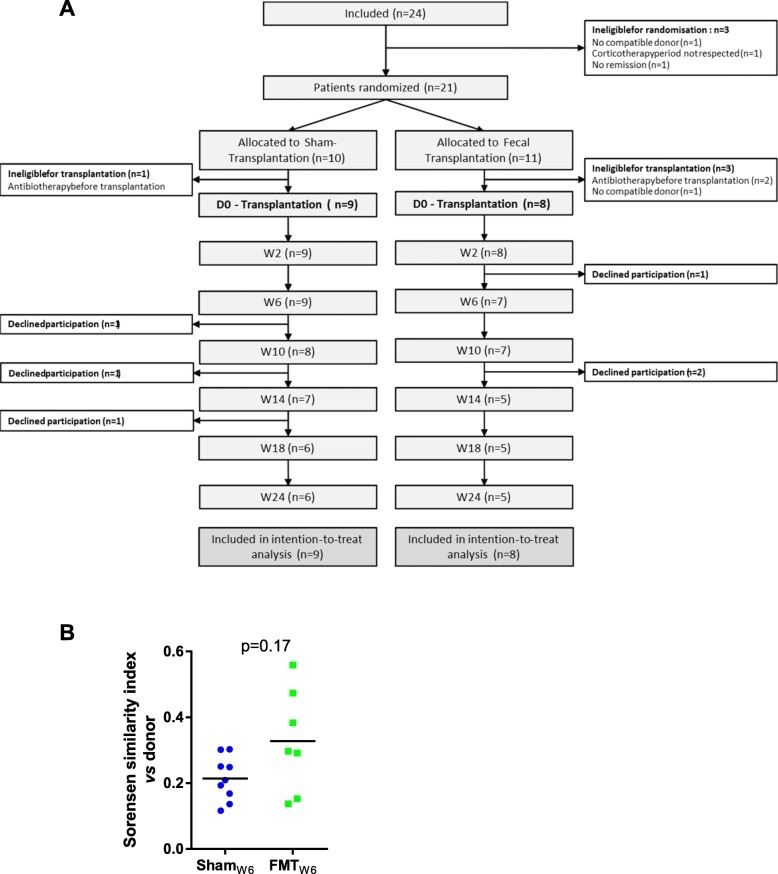
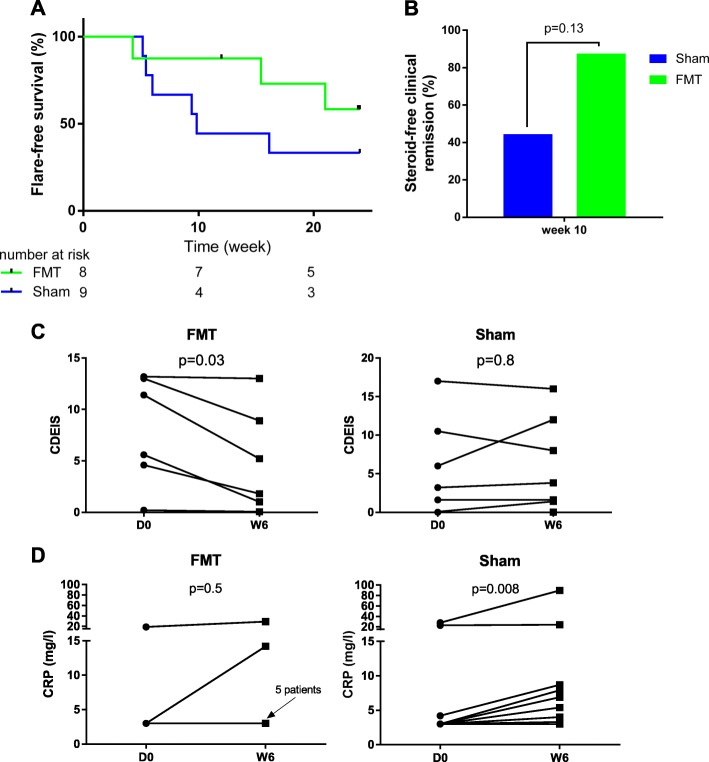
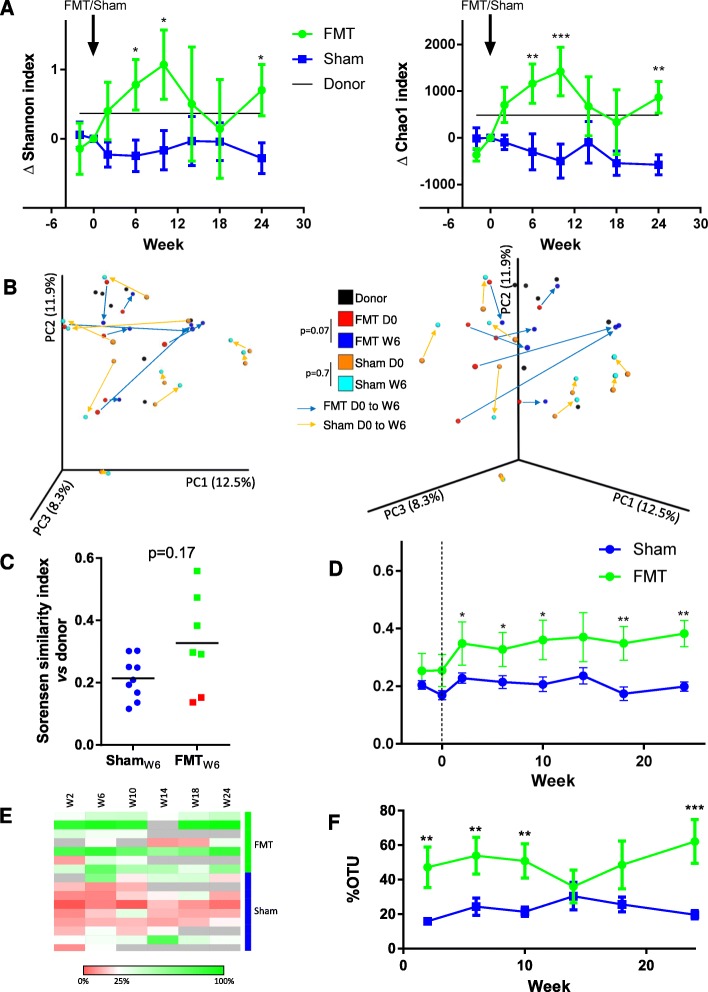
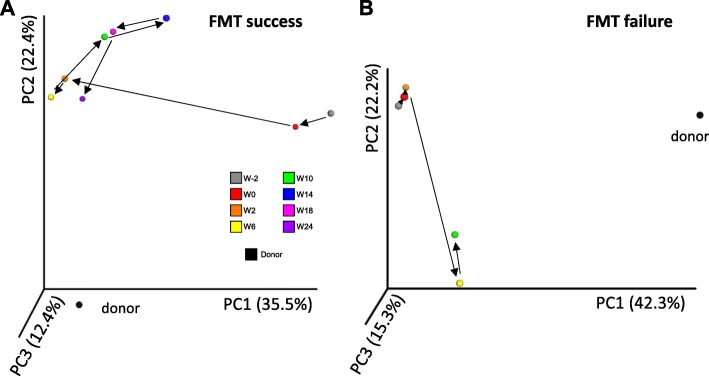
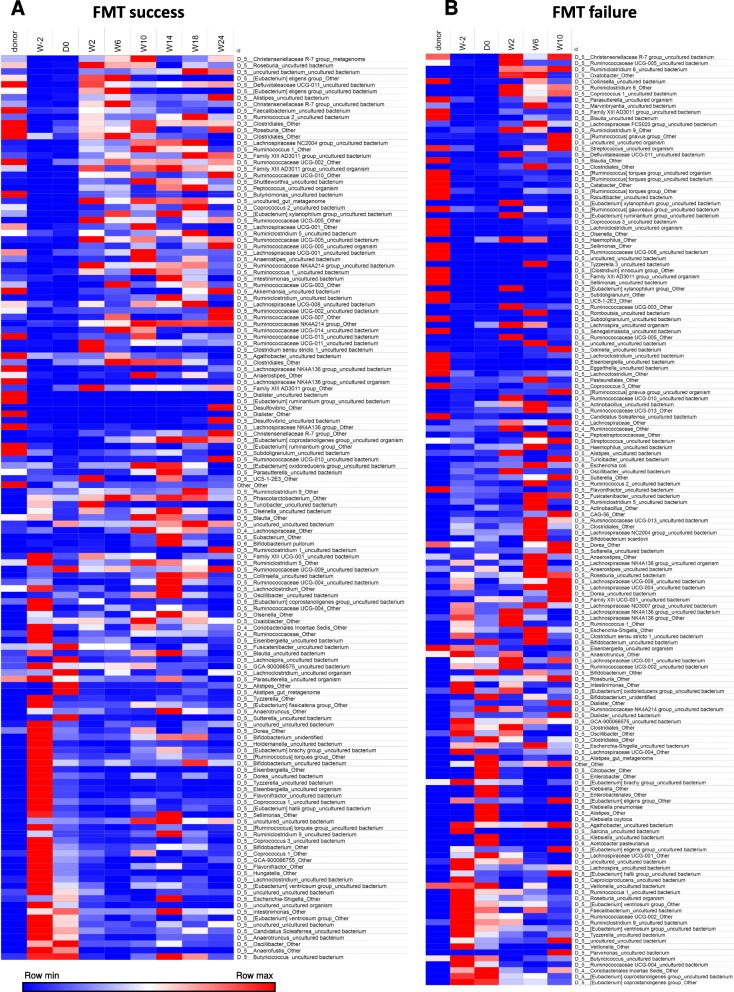
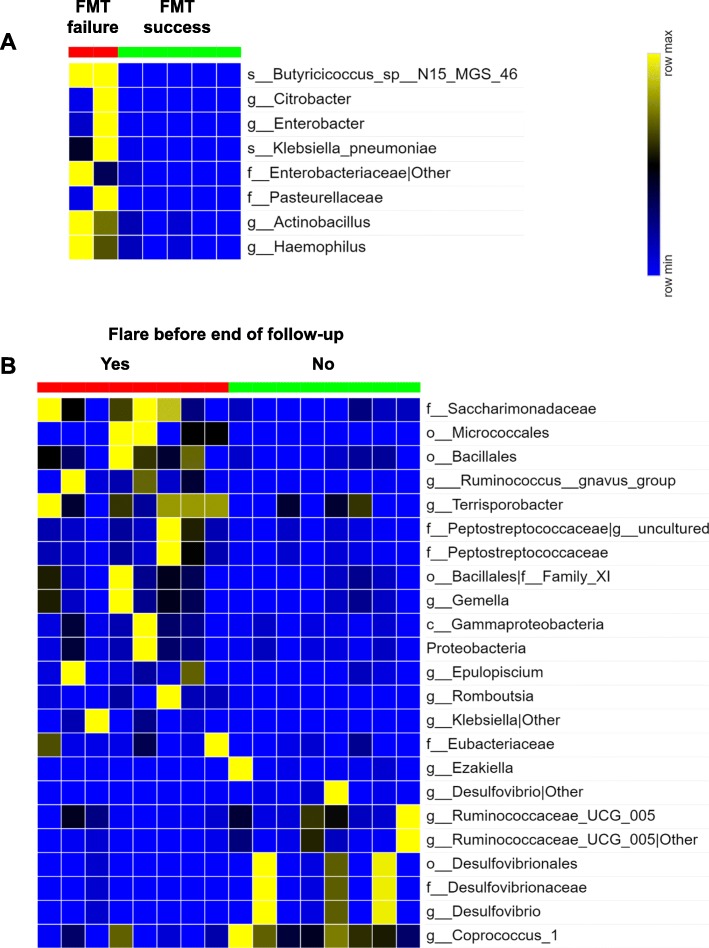
Background: The role of the gut microbiota in Crohn’s disease (CD) is established and fecal microbiota transplantation (FMT) is an attractive therapeutic strategy. No randomized controlled clinical trial results are available. We performed a randomized, single-blind, sham-controlled pilot trial of FMT in adults with colonic or ileo-colonic CD. Method: Patients enrolled while in flare received oral corticosteroid. Once in clinical remission, patients were randomized to receive either FMT or sham transplantation during a colonoscopy. Corticosteroids were tapered and a second colonoscopy was performed at week 6. The primary endpoint was the implantation of the donor microbiota at week 6 (Sorensen index > 0.6). Results: Eight patients received FMT and nine sham transplantation. None of the patients reached the primary endpoint. The steroid-free clinical remission rate at 10 and 24 weeks was 44.4% (4/9) and 33.3% (3/9) in the sham transplantation group and 87.5% (7/8) and 50.0% (4/8; one patient loss of follow-up while in remission at week 12 and considered in flare at week 24) in the FMT group. Crohn’s Disease Endoscopic Index of Severity decreased 6 weeks after FMT (p = 0.03) but not after sham transplantation (p = 0.8). Conversely, the CRP level increased 6 weeks after sham transplantation (p = 0.008) but not after FMT (p = 0.5). Absence of donor microbiota engraftment was associated with flare. No safety signal was identified. Conclusion: The primary endpoint was not reached for any patient. In this pilot study, higher colonization by donor microbiota was associated with maintenance of remission. These results must be confirmed in larger studies (NCT02097797).
Overview
The claims and statistics of this paper haven’t been checked yet.
Free: it reads the open-access text and checks the first 5 claims that cite a source we can check. Create a free account to check every claim.
Integrity signals
Registry
Cites
Statistics
Figures
Verification
Claims the paper makes
The claims and statistics of this paper haven’t been checked yet.
Free: it reads the open-access text and checks the first 5 claims that cite a source we can check. Create a free account to check every claim.
Claims other papers make about this one
Each is checked against this paper’s own text: does it say what the citing paper says it does?
The cited source says what the claim attributes to it.
In the citing paper
“The results of a recent randomized, single-blind and controlled trial demonstrated that the endoscopic index of Crohn's disease severity decreased 6 weeks after FMT.267”
From The role of gut dysbiosis in Parkinson’s disease: mechanistic insights and therapeutic options (2021) · cites this paper as [267]
Self-check
Percentages, sums and reported differences re-computed from the paper’s own numbers.
The self-check needs the paper’s full text.
Citations
Cites
QIIME allows analysis of high-throughput community sequencing data
Caporaso, J. G., Kuczynski, J., Stombaugh, J., Bittinger, K., Bushman, F. D., Costello, E. K., Fierer, N., Peña, A. G., Goodrich, J. K., Gordon, J. I., et al. (2010) · Nature Methods · doi:10.1038/nmeth.f.303 · Cited by 34,887
The SILVA ribosomal RNA gene database project: improved data processing and web-based tools
Quast, C., Pruesse, E., Yilmaz, P., Gerken, J., Schweer, T., Yarza, P., Peplies, J., & Glöckner, F. O. (2012) · Nucleic Acids Research · doi:10.1093/nar/gks1219 · Cited by 33,055
Search and clustering orders of magnitude faster than BLAST
Edgar, R. C. (2010) · Bioinformatics · doi:10.1093/bioinformatics/btq461 · Cited by 20,826
Metagenomic biomarker discovery and explanation
Segata, N., Izard, J., Waldron, L., Gevers, D., Miropolsky, L., Garrett, W. S., & Huttenhower, C. (2011) · Genome Biology · doi:10.1186/gb-2011-12-6-r60 · Cited by 16,192
Quality control and preprocessing of metagenomic datasets
Schmieder, R., & Edwards, R. (2011) · Bioinformatics · doi:10.1093/bioinformatics/btr026 · Cited by 5,072
McDonald, L. C., Gerding, D. N., Johnson, S., Bakken, J. S., Carroll, K. C., Coffin, S. E., Dubberke, E. R., Garey, K. W., Gould, C. V., Kelly, C., et al. (2018) · Clinical Infectious Diseases · doi:10.1093/cid/cix1085 · Cited by 2,690
Genetics and pathogenesis of inflammatory bowel disease
Khor, B., Gardet, A., & Xavier, R. J. (2011) · Nature · doi:10.1038/nature10209 · Cited by 2,614
Dietary emulsifiers impact the mouse gut microbiota promoting colitis and metabolic syndrome
Chassaing, B., Koren, O., Goodrich, J. K., Poole, A. C., Srinivasan, S., Ley, R. E., & Gewirtz, A. T. (2015) · Nature · doi:10.1038/nature14232 · Cited by 2,055 · cited 1×
“Indeed, several studies in mice have demonstrated that genetic defects in innate immunity genes [4, 27] or environmental factor [28] can induce alteration in gut microbiota composition and/or functions leading to deleterious effects on the host and favoring intestinal inflammation.”
BackgroundBayesian community-wide culture-independent microbial source tracking
Knights, D., Kuczynski, J., Charlson, E. S., Zaneveld, J., Mozer, M. C., Collman, R. G., Bushman, F. D., Knight, R., & Kelley, S. T. (2011) · Nature Methods · doi:10.1038/nmeth.1650 · Cited by 1,856
Moayyedi, P., Surette, M. G., Kim, P. T., Libertucci, J., Wolfe, M., Onischi, C., Armstrong, D., Marshall, J. K., Kassam, Z., Reinisch, W., et al. (2015) · Gastroenterology · doi:10.1053/j.gastro.2015.04.001 · Cited by 1,499 · cited 2×
“Patients received FMT enemas once a week for 6 weeks in the first study [16], 1 FMT via colonoscopy, followed by 5 FMT enemas per week for 8 weeks in the second study [17] and 1 FMT via colonoscopy, followed by 2 FMT enemas over 7 days in the third study [17].”
BackgroundMethodLamas, B., Richard, M. L., Leducq, V., Pham, H.-P., Michel, M.-L., Da Costa, G., Bridonneau, C., Jegou, S., Hoffmann, T. W., Natividad, J. M., et al. (2016) · Nature Medicine · doi:10.1038/nm.4102 · Cited by 1,482
Self-citationFungal microbiota dysbiosis in IBD
Sokol, H., Leducq, V., Aschard, H., Pham, H.-P., Jegou, S., Landman, C., Cohen, D., Liguori, G., Bourrier, A., Nion-Larmurier, I., et al. (2017) · Gut · doi:10.1136/gutjnl-2015-310746 · Cited by 1,314
Self-citationLupp, C., Robertson, M. L., Wickham, M. E., Sekirov, I., Champion, O. L., Gaynor, E. C., & Finlay, B. B. (2007) · Cell Host & Microbe · doi:10.1016/j.chom.2007.06.010 · Cited by 1,307
Paramsothy, S., Kamm, M. A., Kaakoush, N. O., Walsh, A. J., van den Bogaerde, J., Samuel, D., Leong, R. W. L., Connor, S., Ng, W., Paramsothy, R., et al. (2017) · The Lancet · doi:10.1016/s0140-6736(17)30182-4 · Cited by 1,276 · cited 2×
“The relatively low similarity between donor and recipient microbiota at W6 suggest that a higher number of FMTs per patient and/or the use of multidonor infusions might be associated with better outcome, as suggested by other investigators in UC [17, 30].”
MethodResultLow counts of Faecalibacterium prausnitzii in colitis microbiota
Sokol, H., Seksik, P., Furet, J. P., Firmesse, O., Nion-Larmurier, I., Beaugerie, L., Cosnes, J., Corthier, G., Marteau, P., & Doré, J. (2009) · Inflammatory Bowel Diseases · doi:10.1002/ibd.20903 · Cited by 1,275 · cited 1×
“inflammatory bacteria such as Faecalibacterium prausnitzii [2, 3].”
Self-citationDebast, S. B., Bauer, M. P., & Kuijper, E. J. (2014) · Clinical Microbiology and Infection · doi:10.1111/1469-0691.12418 · Cited by 1,215
European consensus conference on faecal microbiota transplantation in clinical practice
Cammarota, G., Ianiro, G., Tilg, H., Rajilić-Stojanović, M., Kump, P., Satokari, R., Sokol, H., Arkkila, P., Pintus, C., Hart, A., et al. (2017) · Gut · doi:10.1136/gutjnl-2016-313017 · Cited by 1,207
Self-citationMcDonald, L. C., Gerding, D. N., Johnson, S., Bakken, J. S., Carroll, K. C., Coffin, S. E., Dubberke, E. R., Garey, K. W., Gould, C. V., Kelly, C., et al. (2018) · Clinical Infectious Diseases · doi:10.1093/cid/ciy149 · Cited by 1,160
Risk Factors for Opportunistic Infections in Patients With Inflammatory Bowel Disease
Toruner, M., Loftus, E. V., Harmsen, W. S., Zinsmeister, A. R., Orenstein, R., Sandborn, W. J., Colombel, J., & Egan, L. J. (2008) · Gastroenterology · doi:10.1053/j.gastro.2008.01.012 · Cited by 1,017
Rossen, N. G., Fuentes, S., van der Spek, M. J., Tijssen, J. G., Hartman, J. H. A., Duflou, A., Löwenberg, M., van den Brink, G. R., Mathus-Vliegen, E. M. H., de Vos, W. M., et al. (2015) · Gastroenterology · doi:10.1053/j.gastro.2015.03.045 · Cited by 921 · cited 1×
“Three studies demonstrated the superiority of FMT compared to placebo [16–18] and one did not show significant differences between the two groups studied [19].”
ResultCostello, S. P., Hughes, P. A., Waters, O., Bryant, R. V., Vincent, A. D., Blatchford, P., Katsikeros, R., Makanyanga, J., Campaniello, M. A., Mavrangelos, C., et al. (2019) · JAMA · doi:10.1001/jama.2018.20046 · Cited by 842
Cancers Complicating Inflammatory Bowel Disease
Beaugerie, L., & Itzkowitz, S. H. (2015) · New England Journal of Medicine · doi:10.1056/nejmra1403718 · Cited by 678
Self-citationKirchgesner, J., Lemaitre, M., Carrat, F., Zureik, M., Carbonnel, F., & Dray-Spira, R. (2018) · Gastroenterology · doi:10.1053/j.gastro.2018.04.012 · Cited by 609
Self-citationNOD2-mediated dysbiosis predisposes mice to transmissible colitis and colorectal cancer
Couturier-Maillard, A., Secher, T., Rehman, A., Normand, S., De Arcangelis, A., Haesler, R., Huot, L., Grandjean, T., Bressenot, A., Delanoye-Crespin, A., et al. (2013) · Journal of Clinical Investigation · doi:10.1172/jci62236 · Cited by 572
Lupp, C., Robertson, M. L., Wickham, M. E., Sekirov, I., Champion, O. L., Gaynor, E. C., & Finlay, B. B. (2007) · Cell Host & Microbe · doi:10.1016/j.chom.2007.08.002 · Cited by 501
Colman, R. J., & Rubin, D. T. (2014) · Journal of Crohn's and Colitis · doi:10.1016/j.crohns.2014.08.006 · Cited by 475
Cui, B., Feng, Q., Wang, H., Wang, M., Peng, Z., Li, P., Huang, G., Liu, Z., Wu, P., Fan, Z., et al. (2015) · Journal of Gastroenterology and Hepatology · doi:10.1111/jgh.12727 · Cited by 298
Nagao-Kitamoto, H., Shreiner, A. B., Gillilland, M. G., Kitamoto, S., Ishii, C., Hirayama, A., Kuffa, P., El-Zaatari, M., Grasberger, H., Seekatz, A. M., et al. (2016) · Cellular and Molecular Gastroenterology and Hepatology · doi:10.1016/j.jcmgh.2016.02.003 · Cited by 248
Suskind, D. L., Brittnacher, M. J., Wahbeh, G., Shaffer, M. L., Hayden, H. S., Qin, X., Singh, N., Damman, C. J., Hager, K. R., Nielson, H., et al. (2015) · Inflammatory Bowel Diseases · doi:10.1097/mib.0000000000000307 · Cited by 243
Fecal microbiota transplantation in inflammatory bowel disease: the quest for the holy grail
Pigneur, B., & Sokol, H. (2016) · Mucosal Immunology · doi:10.1038/mi.2016.67 · Cited by 97
Self-citationHe, Z., Li, P., Zhu, J., Cui, B., Xu, L., Xiang, J., Zhang, T., Long, C., Huang, G., Ji, G., et al. (2017) · Scientific Reports · doi:10.1038/s41598-017-04984-z · Cited by 92
Is intensity the solution for FMT in ulcerative colitis?
Siegmund, B. (2017) · The Lancet · doi:10.1016/s0140-6736(17)30313-6 · Cited by 21
Cited by
Federici, S., Kredo-Russo, S., Valdés-Mas, R., Kviatcovsky, D., Weinstock, E., Matiuhin, Y., Silberberg, Y., Atarashi, K., Furuichi, M., Oka, A., et al. (2022) · Cell · doi:10.1016/j.cell.2022.07.003 · Cited by 542
Self-citationSorbara, M. T., & Pamer, E. G. (2022) · Nature Reviews Microbiology · doi:10.1038/s41579-021-00667-9 · Cited by 468
ESPEN guideline on Clinical Nutrition in inflammatory bowel disease
Bischoff, S. C., Bager, P., Escher, J., Forbes, A., Hébuterne, X., Hvas, C. L., Joly, F., Klek, S., Krznaric, Z., Ockenga, J., et al. (2023) · Clinical Nutrition · doi:10.1016/j.clnu.2022.12.004 · Cited by 367
The role of gut dysbiosis in Parkinson’s disease: mechanistic insights and therapeutic options
Wang, Q., Luo, Y., Ray Chaudhuri, K., Reynolds, R., Tan, E.-K., & Pettersson, S. (2021) · Brain · doi:10.1093/brain/awab156 · Cited by 281
Salliss, M. E., Farland, L. V., Mahnert, N. D., & Herbst-Kralovetz, M. M. (2021) · Human Reproduction Update · doi:10.1093/humupd/dmab035 · Cited by 274
Metadata
- Authors
- Saint-Antoine IBD Network, Sokol, H., Landman, C., Seksik, P., Berard, L., Montil, M., Nion-Larmurier, I., Bourrier, A., Le Gall, G., Lalande, V., De Rougemont, A., Kirchgesner, J., Daguenel, A., Cachanado, M., Rousseau, A., Drouet, É., Rosenzwajg, M., Hagege, H., Dray, X., Klatzman, D., Marteau, P., Beaugerie, L., & Simon, T.
- Affiliations
- Inserm (FR)
- Assistance Publique – Hôpitaux de Paris (FR)
- Sorbonne Université (FR)
- Corresponding author
- Sokol, Harry
- ORCID
- Venue
- Microbiome
- Published
- 2020-02-03
- Volume
- 8
- Issue
- 1
- Pages
- 12-12
- ISSN
- 2049-2618 (ISSN-L)
- PMC
- PMC6998149
- OpenAlex
- W3010294184
- Semantic Scholar
- befb9b8b77bad49c2d4fa1851defbecc617024a9
- Cited by
- 378
- References
- 33
- Citations by year
- 2026: 38 · 2025: 54 · 2024: 75 · 2023: 62 · 2022: 65 · 2021: 54 · 2020: 27
- FWCI
- 30.44
- Type
- journal article
- Language
- en
- Open access
- gold
- doi.org
- Licence
- cc-by
- creativecommons.org/licenses/by/4.0/ (tdm)
- creativecommons.org/licenses/by/4.0/ (vor)
- Locations
- Microbiome (publishedVersion, cc-by)
- PubMed Central (publishedVersion, cc-by)
- PubMed (publishedVersion)
- HAL (submittedVersion, other-oa)
- DOAJ (DOAJ: Directory of Open Access Journals) (submittedVersion, cc-by-sa)
- Funders
- Ministère de l’Enseignement Supérieur, de la Recherche Scientifique et des Technologies de l'Information et de la Communication (PHRCR-13-029)
- Fondation de France (Fond Inkermann)
- Assistance Publique - Hôpitaux de Paris (CRC1-)
- Association Francois Aupetit (2018)
- Topics
- Health Sciences › Medicine › Gastroenterology › Inflammatory Bowel Disease
- Life Sciences › Biochemistry, Genetics and Molecular Biology › Molecular Biology › Gut microbiota and health
- Health Sciences › Medicine › Infectious Diseases › Clostridium difficile and Clostridium perfringens research
- Keywords
- fecal microbiota transplantation, Crohn's disease, remission maintenance, gut microbiota, Crohn's Disease Endoscopic Index of Severity, C-reactive protein, corticosteroid tapering, ileocolonic Crohn's disease
- MeSH terms
- Fecal Microbiota Transplantation, Adrenal Cortex Hormones, Adult, Crohn Disease, Feces, Female, Humans, Male, Pilot Projects, Remission Induction, Research Design, Severity of Illness Index, Single-Blind Method, Treatment Outcome, Microbiota
About these checks
Registry, retraction, Cites and statistics results are computed, not judged, with one exception: a printed reference that no index lists is read once by a model before it counts as a citation error. Claims are extracted by a model and kept only when their quote appears verbatim in the text; each cited source is then checked, with a model’s help, for whether it says what the claim relies on. Those verdicts can be wrong — read the claim’s quote and the cited source before relying on one.
Statistics and arithmetic are recomputed, not judged.
Confidence bands are shown only for fields calibrated on our annotated test set. None is calibrated yet, so no band is shown.
What counts as a claim ›How we measure confidence ›How we check this ›
Are you an author, or do you see a problem with this page? Request a review
Data sources
Bibliographic data: Semantic Scholar, OpenAlex, Crossref.
Contains information from the Semantic Scholar Academic Graph Datasets, made available under the ODC Attribution License (ODC-BY 1.0).
Semantic Scholar’s data is described in: Kinney, R., et al. (2023). The Semantic Scholar Open Data Platform. arXiv:2301.10140.
