

Does a lower self-concept contribute to mental health disparities of diverse immigrant youth from middle childhood to late adolescence?
Open accessPublished version of a preprint
The DOI matches its Crossref record; 67 of the 72 references it cites were found in a registry or an index.
Abstract
Background: Three out of ten children in Germany have immigrant backgrounds and this proportion is expected to further increase in subsequent years. While immigrant youth have been found more vulnerable to developing symptoms of depression and anxiety, the underlying mechanisms of how such disparities unfold during youth development are still understudied. Some previous research has found that immigrant youth are at risk of experiencing a less positive self-concept compared to non-immigrant youth. We investigated whether the self-concept mediates mental health disparities and explored variability in such associations from middle childhood to late adolescence. Methods: Overall 1839 children and adolescents aged 6–21 years ( M = 14.05 years, SD = 3.03, 49.8% female, n = 782 with immigrant status) participated in a cross-sectional self-report survey in classroom settings using scales from the Beck Youth Inventories II (Beck et al. in Beck Youth Inventories - Second Edition, Psychological Corporation, San Antonio, 2005) to assess self-concept and symptoms of depression and anxiety. Links between immigrant status, age, self-concept and symptom levels of depression as well as anxiety were examined using hierarchical regression and moderated mediation models. Results: Immigrant youth reported higher symptom levels of depression and anxiety than their non-immigrant peers but did not differ in their self-concepts. Hypothesized moderated mediation models were not fully supported and self-concept neither mediated the link between immigrant status and depression nor immigrant status and anxiety. However, self-concept was a significant predictor for symptom levels of depression as well as anxiety, with stronger associations in adolescents. Conclusions: Our study substantiates previous findings that immigrant youth in Germany have overall increased symptom levels of depression and anxiety compared to non-immigrant youth. Our study however does not support that immigrant youth have a more negative self-concept and that the self-concept mediates such internalizing mental health disparities. Findings match previous evidence that developing a positive attitude towards the self is linked to better mental health. Beyond that, our findings suggest that mental health interventions addressing the self-concept could be especially relevant when targeting adolescents. Further research is needed to deepen the understanding of the mediating processes between migration status and mental health variables.
Overview
The claims and statistics of this paper haven’t been checked yet.
Free: it reads the open-access text and checks the first 5 claims that cite a source we can check. Create a free account to check every claim.
Integrity signals
Registry
Cites
Statistics
Figures
Verification
Claims the paper makes
The claims and statistics of this paper haven’t been checked yet.
Free: it reads the open-access text and checks the first 5 claims that cite a source we can check. Create a free account to check every claim.
Claims other papers make about this one
Each is checked against this paper’s own text: does it say what the citing paper says it does?
The cited source says what the claim attributes to it.
In the citing paper
“Moreover, children with a migration background in Germany show higher levels of internalizing problems39,40, which could take the form of worse prosocial behavior or social adjustment.”
From Adolescent leisure reading and its longitudinal association with prosocial behavior and social adjustment (2023) · cites this paper as [40]
Self-check
Percentages, sums and reported differences re-computed from the paper’s own numbers.
The self-check needs the paper’s full text.
Citations
Cites
Controlling the False Discovery Rate: A Practical and Powerful Approach to Multiple Testing
Benjamini, Y., & Hochberg, Y. (1995) · Journal of the Royal Statistical Society Series B: Statistical Methodology · doi:10.1111/j.2517-6161.1995.tb02031.x · Cited by 109,482
Baron, R. M., & Kenny, D. A. (1986) · Journal of Personality and Social Psychology · doi:10.1037/0022-3514.51.6.1173 · Cited by 91,532 · cited 3×
“1b, and contrary to the widely used historical method by Baron and Kenny [57], the regression-based approach quantifies the indirect effect between the antecedent X, the mediator M and the consequent Y itself and does not require an association between X and Y as a precondition [56].”
Method(2013) · Cited by 44,563
A Simple Sequentially Rejective Multiple Test Procedure
(1979) · Scandinavian Journal of Statistics · doi:10.2307/4615733 · Cited by 21,526 · cited 3×
“We adjusted for multiple comparisons using the “Multiple Comparisons Calculator” [53] in accordance with the procedure established by Bonferroni and Holm [54].”
MethodAsymptotic Confidence Intervals for Indirect Effects in Structural Equation Models
Sobel, M. E. (1982) · Sociological Methodology · doi:10.2307/270723 · Cited by 12,810 · cited 1×
“The bootstrapping method is also superior to the Sobel test [58] due to higher statistical power and independency of the normal distribution of the underlying data [56].”
MethodBundesgesundheitsblatt - Gesundheitsforschung - Gesundheitsschutz
(2013) · Bundesgesundheitsblatt - Gesundheitsforschung - Gesundheitsschutz · doi:10.1007/103.1437-1588 · Cited by 11,796
Edwards, J. R., & Lambert, L. S. (2007) · Psychological Methods · doi:10.1037/1082-989x.12.1.1 · Cited by 4,711 · cited 1×
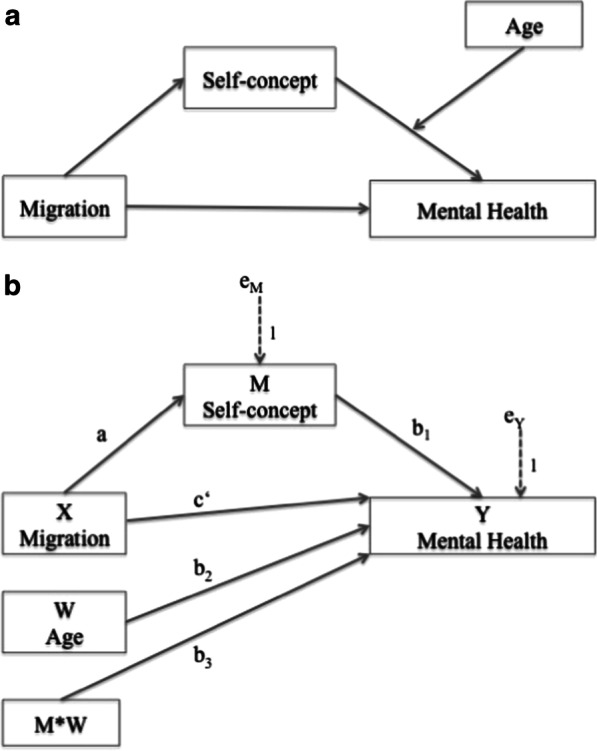
“Hypotheses 3 and 4 We used second stage moderated mediation models [55] to test H3 and H4 as theoretically illustrated in Fig.”
MethodA standard international socio-economic index of occupational status
Ganzeboom, H. B. G., De Graaf, P. M., & Treiman, D. J. (1992) · Social Science Research · doi:10.1016/0049-089x(92)90017-b · Cited by 3,129 · cited 1×
“The highest number of parental school years and parents’ profession according to the International Socio-Economic Index of Occupational Status [48] were used to assess the familial socio-economic status of the sample.”
MethodPine, D. S., Cohen, P., Gurley, D., Brook, J., & Ma, Y. (1998) · Archives of General Psychiatry · doi:10.1001/archpsyc.55.1.56 · Cited by 1,753 · cited 1×
“Background About one-fifth of all children and adolescents in Germany experience mental health problems [2, 3] with symptoms of depression and anxiety being among the most common in these age groups [4].”
BackgroundBicultural Identity Integration (BII): Components and Psychosocial Antecedents
Benet‐Martínez, V., & Haritatos, J. (2005) · Journal of Personality · doi:10.1111/j.1467-6494.2005.00337.x · Cited by 1,384
(2015) · Wiley eBooks · doi:10.1002/9781118900772 · Cited by 956
Review of Child and Adolescent Refugee Mental Health
Lustig, S. L., Kia-Keating, M., Knight, W. G., Geltman, P., Ellis, H., Kinzie, J. D., Keane, T., & Saxe, G. N. (2004) · Journal of the American Academy of Child & Adolescent Psychiatry · doi:10.1097/00004583-200401000-00012 · Cited by 788 · cited 2×
“We included immigrant youth of the second- and third-generations from multiple origin countries to acknowledge youth’s diversity in current German society, while past research on adolescent mental health has extensively focused on first-generation immigrant populations [7, 20].”
BackgroundSherman, L. E., Payton, A. A., Hernandez, L. M., Greenfield, P. M., & Dapretto, M. (2016) · Psychological Science · doi:10.1177/0956797616645673 · Cited by 627
The Study of Adolescent Identity Formation 2000–2010: A Review of Longitudinal Research
Meeus, W. (2011) · Journal of Research on Adolescence · doi:10.1111/j.1532-7795.2010.00716.x · Cited by 601 · cited 1×
“Socio-cultural discontinuities that immigrant youth likely experience between the family context and the host country’s society can impede the formation of a positive and integrative self-concept throughout youth development [35, 38, 39].”
BackgroundFamily psychology and cultural diversity: Opportunities for theory, research, and application.
Szapocznik, J., & Kurtines, W. M. (1993) · American Psychologist · doi:10.1037//0003-066x.48.4.400 · Cited by 583 · cited 1×
“Comparing the reviewed studies on withinfamily conflicts between first- and second-generation immigrants yielded that such findings could be at least partially confounded with age [13].”
BackgroundA meta-analysis of the risk for psychotic disorders among first- and second-generation immigrants
Bourque, F., van der Ven, E., & Malla, A. (2011) · Psychological Medicine · doi:10.1017/s0033291710001406 · Cited by 566 · cited 2×
“Even for those immigrant children and adolescents without personal migration experiences, their origin culture as conveyed by relatives and the migration experience of parents or grandparents still forms the children’s and adolescents’ self-ascriptions [33, 34].”
BackgroundTrautwein, U., Lüdtke, O., Köller, O., & Baumert, J. (2006) · Journal of Personality and Social Psychology · doi:10.1037/0022-3514.90.2.334 · Cited by 387 · cited 1×
“aspects such as one’s academic abilities, physical performance or self-regulation capacities [21, 22].”
BackgroundThe immigrant paradox in children and adolescents: Is becoming American a developmental risk?
(2012) · American Psychological Association eBooks · doi:10.1037/13094-000 · Cited by 384
Carta, M. G., Bernal, M., Hardoy, M. C., & Haro, J. M. (2005) · Clinical Practice and Epidemiology in Mental Health · doi:10.1186/1745-0179-1-13 · Cited by 384
Cole, D. A., Maxwell, S. E., Martin, J. M., Peeke, L. G., Seroczynski, A. D., Tram, J. M., Hoffman, K. B., Ruiz, M. D., Jacquez, F., & Maschman, T. (2001) · Child Development · doi:10.1111/1467-8624.00375 · Cited by 368 · cited 2×
“Adding a developmental perspective, an inner focus on the emerging self-concept arises with the beginning of puberty and peaks during adolescence [38].”
BackgroundCrocetti, E., Rubini, M., Luyckx, K., & Meeus, W. (2008) · Journal of Youth and Adolescence · doi:10.1007/s10964-007-9222-2 · Cited by 346
Mental health in migrant children
Stevens, G. W. J. M., & Vollebergh, W. A. M. (2008) · Journal of Child Psychology and Psychiatry · doi:10.1111/j.1469-7610.2007.01848.x · Cited by 339 · cited 3×
“A literature review including twenty global studies on immigrant youth in resettlement countries [12] suggested a lower socio-economic status as a mediator for increased levels of mental health problems among young immigrant populations.”
BackgroundInfluentialSelf esteem: the costs and causes of low self worth
Emler, N. (2001) · OpenGrey (Institut de l'Information Scientifique et Technique) · Cited by 306
Marsh, H. W., Ellis, L. A., & Craven, R. G. (2002) · Developmental Psychology · doi:10.1037//0012-1649.38.3.376 · Cited by 302 · cited 1×
“For young children, the self-concept is less validated by outside cues and tends to be more positive in general [68].”
BackgroundUnderstanding the U.S. Immigrant Paradox in Childhood and Adolescence
Marks, A. K., Ejesi, K., & García Coll, C. (2014) · Child Development Perspectives · doi:10.1111/cdep.12071 · Cited by 268
Babiker, I. E., Cox, J. L., & Miller, P. M. (1980) · Social Psychiatry · doi:10.1007/bf00578141 · Cited by 260 · cited 1×
“Other studies adopting ecocultural perspectives found cultural distance to the host community [18, 19], social stress [6] and acculturative stress [20] to be linked to increased levels of especially internalizing mental health problems among immigrant youth.”
BackgroundEmotional and behavioral problems in migrant children and adolescents in Europe: a systematic review
Belhadj Kouider, E., Koglin, U., & Petermann, F. (2014) · European Child & Adolescent Psychiatry · doi:10.1007/s00787-013-0485-8 · Cited by 241
Is there heightened sensitivity to social reward in adolescence?
Foulkes, L., & Blakemore, S.-J. (2016) · Current Opinion in Neurobiology · doi:10.1016/j.conb.2016.06.016 · Cited by 240 · cited 1×
“Adolescence marks a hypersensitive period to all kinds of social stimuli when a coherent self-concept is formed via information seeking [40, 41].”
BackgroundMental Health Problems in a School Setting in Children and Adolescents
Schulte-Körne, G. (2016) · Deutsches Ärzteblatt international · doi:10.3238/arztebl.2016.0183 · Cited by 220 · cited 1×
“Our findings moreover emphasized that a positive self-concept is especially relevant during adolescence [71].”
BackgroundStructural models for the mediation of salience effects on attribution
Fiske, S. T., Kenny, D. A., & Taylor, S. E. (1982) · Journal of Experimental Social Psychology · doi:10.1016/0022-1031(82)90046-4 · Cited by 216
Rousseau, C., Drapeau, A., Lacroix, L., Bagilishya, D., & Heusch, N. (2005) · Journal of Child Psychology and Psychiatry · doi:10.1111/j.1469-7610.2004.00344.x · Cited by 174 · cited 1×
“[72] evaluated a school-based prevention program that uses arts and selfexpression to strengthen the self-concept of immigrant and multi-ethnic youth.”
BackgroundAdjustment Outcomes of Immigrant Children and Youth in Europe: A Meta-Analysis
Dimitrova, R., Chasiotis, A., & van de Vijver, F. (2016) · European Psychologist · doi:10.1027/1016-9040/a000246 · Cited by 171 · cited 1×
“Our evidence is supported by a stream of literature on the “mental health gap” between immigrant and non-immigrant youth [63, 64].”
The relation between self-concept and social functioning in adolescence
Ybrandt, H. (2008) · Journal of Adolescence · doi:10.1016/j.adolescence.2007.03.004 · Cited by 157 · cited 1×
“In further studies a lower self-concept was correspondingly considered a socially-determined and multi-directional pathogenic influence [45, 46], also impacting internalizing mental health problems [47].”
BackgroundCoelho, V. A., Marchante, M., & Jimerson, S. R. (2016) · Journal of Youth and Adolescence · doi:10.1007/s10964-016-0510-6 · Cited by 156 · cited 2×
“the immigrant group in our sample reflects the general population with immigrant backgrounds in Germany [47].”
BackgroundMarsh, H. W., Parada, R. H., & Ayotte, V. (2004) · Psychological Assessment · doi:10.1037/1040-3590.16.1.27 · Cited by 152 · cited 2×
“In further studies a lower self-concept was correspondingly considered a socially-determined and multi-directional pathogenic influence [45, 46], also impacting internalizing mental health problems [47].”
BackgroundMethodSelf-esteem: The Costs and Causes of Low Self-worth
Elmer, N. (2001) · Cited by 137
Schunck, R., Reiss, K., & Razum, O. (2015) · Ethnicity & Health · doi:10.1080/13557858.2014.932756 · Cited by 126 · cited 2×
“For example, Schunck, Reiss and Razum [70] provided evidence that perceived discrimination could mediate mental health disparities between immigrant and non-immigrant adults in Germany.”
BackgroundMarsh, H. W., Parada, R. H., Yeung, A. S., & Healey, J. (2001) · Journal of Educational Psychology · doi:10.1037//0022-0663.93.2.411 · Cited by 111 · cited 3×
“Marsh, Parada, Yeung and Healey [69] postulated that younger children defend their self-concept with “troublemaking behavior” (i.e., socially directed strategies).”
BackgroundInfluentialJekauc, D., Wagner, M. O., Herrmann, C., Hegazy, K., & Wöll, A. (2017) · PLoS ONE · doi:10.1371/journal.pone.0168539 · Cited by 111
Psychosocial aspects of health in adolescence: the influence of gender, and general self-concept
Räty, L., Larsson, G., Söderfeldt, B. A., & Wilde‐Larsson, B. (2005) · Journal of Adolescent Health · doi:10.1016/j.jadohealth.2004.10.006 · Cited by 107
Self-Structure and Self-Esteem Stability: The Hidden Vulnerability of Compartmentalization
Zeigler-Hill, V., & Showers, C. J. (2007) · Personality and Social Psychology Bulletin · doi:10.1177/0146167206294872 · Cited by 104
Krannich, M., Goetz, T., Lipnevich, A. A., Bieg, M., Roos, A., Becker, E. S., & Morger, V. (2018) · Learning and Individual Differences · doi:10.1016/j.lindif.2018.10.004 · Cited by 103 · cited 1×
“In a school context, compartments of the self-concept relating to academic components [66] likely influence cognitions when examining oneself.”
BackgroundPrevalence of Psychiatric Disorders Among Children of Different Ethnic Origin
Zwirs, B. W. C., Burger, H., Schulpen, T. W. J., Wiznitzer, M., Fedder, H., & Buitelaar, J. K. (2007) · Journal of Abnormal Child Psychology · doi:10.1007/s10802-007-9112-9 · Cited by 101
Sam, D. L., & Virta, E. (2003) · Journal of Adolescence · doi:10.1016/s0140-1971(02)00129-x · Cited by 92 · cited 1×
“When immigrant youth are compared to non-immigrant youth of the same age group disparities seem to diminish [14].”
BackgroundMurad, S. D., Joung, I. M. A., van Lenthe, F. J., Bengi‐Arslan, L., & Crijnen, A. A. M. (2003) · Journal of Child Psychology and Psychiatry · doi:10.1111/1469-7610.00131 · Cited by 85 · cited 2×
“Such potentially opposing contexts can result in the development of a fragmented "self-culture" whose principles are ambiguous, context-dependent, conflicting and which can be accompanied by symptoms of withdrawal and self-insecurity [8, 37].”
BackgroundMarkides, K. S., & Rote, S. M. (2015) · Wiley eBooks · doi:10.1002/9781118900772.etrds0174 · Cited by 82
Self‐Concept Structure and the Quality of Self‐Knowledge
Showers, C. J., Ditzfeld, C. P., & Zeigler‐Hill, V. (2014) · Journal of Personality · doi:10.1111/jopy.12130 · Cited by 81 · cited 1×
“Evidence that links the structure of the self-concept to self-esteem suggests that individuals who tend to compartmentalize their self-concept may experience difficulties in accessing coherent information about oneself, leading to an overall more negative evaluation of the self [25].”
BackgroundMental health problems of second generation children and adolescents with migration background
Çeri, V., Özlü-Erkilic, Z., Özer, Ü., Kadak, T., Winkler, D., Doğangün, B., & Akkaya-Kalayci, T. (2017) · International Journal of Psychiatry in Clinical Practice · doi:10.1080/13651501.2017.1291820 · Cited by 74 · cited 1×
“Even for those immigrant children and adolescents without personal migration experiences, their origin culture as conveyed by relatives and the migration experience of parents or grandparents still forms the children’s and adolescents’ self-ascriptions [33, 34].”
BackgroundSelf-Concept in Children and Adolescents With Attention Deficit Hyperactivity Disorder
Houck, G., Kendall, J., Miller, A., Morrell, P., & Wiebe, G. (2011) · Journal of Pediatric Nursing · doi:10.1016/j.pedn.2010.02.004 · Cited by 65
Ethnic differences in parental detection of externalizing disorders
Zwirs, B. W. C., Burger, H., Buitelaar, J. K., & Schulpen, T. W. J. (2006) · European Child & Adolescent Psychiatry · doi:10.1007/s00787-006-0550-7 · Cited by 65 · cited 1×
“For example, both lower and higher levels of mental health problems in immigrant youth when compared to non-immigrant youth were found in some studies [15, 16].”
ResultImmigrant Integration and Youth Mental Health in Four European Countries
Mood, C., Jonsson, J. O., & Låftman, S. B. (2016) · European Sociological Review · doi:10.1093/esr/jcw027 · Cited by 64
Self-reported quality of life and self-esteem in sad and anxious school children
Martinsen, K. D., Neumer, S.-P., Holen, S., Waaktaar, T., Sund, A. M., & Kendall, P. C. (2016) · BMC Psychology · doi:10.1186/s40359-016-0153-0 · Cited by 59 · cited 1×
“Such links were stronger in older children of the sample [31].”
BackgroundDifferent Treatment Thresholds in Non-Western Children With Behavioral Problems
Zwirs, B. W. C., Burger, H., Schulpen, T. W. J., & Buitelaar, J. K. (2006) · Journal of the American Academy of Child & Adolescent Psychiatry · doi:10.1097/01.chi.0000192251.46023.5a · Cited by 55 · cited 1×
“For example, both lower and higher levels of mental health problems in immigrant youth when compared to non-immigrant youth were found in some studies [15, 16].”
ResultKashima, E. S., & Abu‐Rayya, H. M. (2014) · Journal of Cross-Cultural Psychology · doi:10.1177/0022022113519857 · Cited by 53 · cited 1×
“Other studies adopting ecocultural perspectives found cultural distance to the host community [18, 19], social stress [6] and acculturative stress [20] to be linked to increased levels of especially internalizing mental health problems among immigrant youth.”
BackgroundSelf-concept and Anxiety in Immigrant Children
Roebers, C. M., & Schneider, W. (1999) · International Journal of Behavioral Development · doi:10.1080/016502599384035 · Cited by 48 · cited 2×
“adolescents can experience between home and school contexts [32].”
BackgroundDepressive Kinder und Jugendliche
Petermann, F. (2011) · Monatsschrift Kinderheilkunde · doi:10.1007/s00112-011-2474-7 · Cited by 46 · cited 2×
“Evidence is alarming, as developing a clinically relevant anxiety or depressive disorder during childhood and adolescence impairs the unfolding of developmental potentials and increases the risk for mental health problems during adulthood [2].”
BackgroundSelf-image and depressive symptoms among adolescents in a non-clinical sample
Erkolahti, R., Ilonen, T., Saarijärvi, S., & Terho, P. (2003) · Nordic Journal of Psychiatry · doi:10.1080/08039480310003461 · Cited by 41
Plener, P. L., Munz, L. M., Allroggen, M., Kapusta, N. D., Fegert, J. M., & Groschwitz, R. C. (2015) · Child and Adolescent Psychiatry and Mental Health · doi:10.1186/s13034-015-0065-4 · Cited by 40 · cited 1×
“[9] found a higher prevalence of suicide attempts compared to their nonimmigrant counterparts, van Oort et al.”
ResultVaage, A. B., Tingvold, L., Hauff, E., Van Ta, T., Wentzel-Larsen, T., Clench-Aas, J., & Thomsen, P. H. (2009) · Child and Adolescent Psychiatry and Mental Health · doi:10.1186/1753-2000-3-34 · Cited by 40
Brettschneider, A.-K., Hölling, H., Schlack, R., & Ellert, U. (2015) · Bundesgesundheitsblatt - Gesundheitsforschung - Gesundheitsschutz · doi:10.1007/s00103-015-2129-2 · Cited by 37 · cited 1×
“Our evidence is supported by a stream of literature on the “mental health gap” between immigrant and non-immigrant youth [63, 64].”
Koch-Institut, R. (2018) · PubMed Central · doi:10.17886/rki-gbe-2018-034 · Cited by 37
Thomsen, T., Lessing, N., Greve, W., & Dresbach, S. (2018) · Springer-Lehrbuch · doi:10.1007/978-3-662-55792-1_5 · Cited by 36 · cited 1×
“The selfconcept constitutes intrinsic cognitive schemata mainly determined by feedback from social environments [23].”
BackgroundImprovisational theater classes improve self-concept.
DeBettignies, B. H., & Goldstein, T. R. (2019) · Psychology of Aesthetics Creativity and the Arts · doi:10.1037/aca0000260 · Cited by 36 · cited 2×
“De Bettignies BH & Goldstein TR. Improvisational theater classes improve self-concept.”
BackgroundPraxis der Interkulturellen Psychiatrie und Psychotherapie
(2018) · Elsevier eBooks · doi:10.1016/c2016-0-01667-4 · Cited by 32
Factors affecting health literacy among immigrants - systematic review
Sy, P., Lee, H., & Kang, M. (2018) · European Journal of Public Health · doi:10.1093/eurpub/cky214.283 · Cited by 29 · cited 2×
“Another recent literature review distinctively studied potential mechanisms and discussed pathways of how mental health disparities between immigrant and nonimmigrant populations could unfold [17].”
BackgroundGutmann, M. T., Aysel, M., Özlü-Erkilic, Z., Popow, C., & Akkaya-Kalayci, T. (2019) · Child and Adolescent Psychiatry and Mental Health · doi:10.1186/s13034-019-0295-y · Cited by 27
Mitchell, N. (2005) · Professional School Counseling · Cited by 24
Ravens‐Sieberer, U., Klasen, F., & Petermann, F. (2016) · Kindheit und Entwicklung · doi:10.1026/0942-5403/a000183 · Cited by 21
Koch-Institut, R. (2018) · Publication server of the Robert Koch Institute (Robert Kock Institute) · doi:10.17886/rki-gbe-2018-017 · Cited by 20
Kinder und Jugendliche mit Migrationshintergrund
Griese, H. M. (2013) · VS Verlag für Sozialwissenschaften eBooks · doi:10.1007/978-3-531-18921-5_15 · Cited by 15
van Oort, F. V. A., van der Ende, J., Crijnen, A. A. M., Verhulst, F. C., Mackenbach, J. P., & Joung, I. M. A. (2006) · Social Psychiatry and Psychiatric Epidemiology · doi:10.1007/s00127-006-0129-0 · Cited by 8 · cited 1×
“[10] substantiated links to the emergence of socio-economic disparities between immigrant and non-immigrant populations during adulthood.”
BackgroundSchepker, R. (2011) · Elsevier eBooks · doi:10.1016/b978-3-437-24570-1.10022-4 · Cited by 1 · cited 1×
“Since immigrant youth are at heightened risk to experience cultural discontinuities between school and non-school contexts, forming a coherent and positive self-concept in schools could be particularly challenging for this group [42, 43].”
Background
Research works printed but not linked: 6
- Beck JS Beck AT Jolly JB Beck youth inventories 2005 2 San Antonio Psychological Corporation 42
- Möller, J & Trautwein, U. Selbstkonzept. In: Pädagogische Psychologie. Heidelberg: Springer, 2009.
- Kizilhan JI Borde T Davis M Potenziale und Belastungen psychosozialer Netzwerke in der Migration Migration und seelische Gesundheit, psychische Belastungen und Potenziale 2007 Frankfurt Mabuse 53 68
- Odag-Wieacker I Burkhart-Mußmann C Dammach B Schwierigkeiten in der Identitätsbildung bei Kindern und Jugendlichen in Folge der Migration ihrer Elterngeneration Migration, Flucht & Kindesentwicklung 2016 Frankfurt Brandes und Apsel
- Uslucan HH Lebensweltliche Verunsicherung türkischer Migranten Psychosozial 2005 28 111 122
- Siefen RG Busch J Beck youth inventories 2018 2 Frankfurt Pearson Assessment
Cited by
Lenhart, J., Richter, T., Appel, M., & Mar, R. A. (2023) · Scientific Reports · doi:10.1038/s41598-023-35346-7 · Cited by 29
Association Between Diet and Mental Health Outcomes in a Sample of 13,887 Adolescents in Canada
Dabravolskaj, J., Patte, K. A., Yamamoto, S. S., Leatherdale, S. T., Veugelers, P. J., & Maximova, K. (2024) · Preventing Chronic Disease · doi:10.5888/pcd21.240187 · Cited by 37
Art therapy for immigrant Korean youth: indications of outcomes, acceptability and satisfaction
Kim, S., Lee, Y.-O., Lee, S., Kim, M. S., & Choi, H. N. (2022) · International Journal of Art Therapy · doi:10.1080/17454832.2022.2066144 · Cited by 25
“…et al., 2020; Kowitt et al., 2016; Lustig et al., 2004; Morris et al., 2009; Wagner et al., 2005) and school-based mental health programmes (Busch et al., 2021; Lewis et al., 2018; Van Wyk et al., 2012) are provided for immigrant youths, these are implemented in the short term and in a…”
BackgroundQian, Y., Yu, X., & Liu, F. (2022) · Frontiers in Psychology · doi:10.3389/fpsyg.2022.877737 · Cited by 24
Herrera, E. R.-V., Roque, I. M. S., & Franco, M. A. R. (2024) · European Child & Adolescent Psychiatry · doi:10.1007/s00787-024-02412-y · Cited by 9
“…[47] Depressive and anxious symptomatology Other origins M/N Depressive and anxious symptomatology Asian M > N [26] Depressive symptomatology M/N [49] Depressive symptomatology M > N Anxiety symptomatology M > N [30] AnxietyM/N DepressionM > N [53] DepressionTurkish M > N State Anxiety Turkish M…”
Influential
Metadata
- Authors
- Busch, J., Claus, C., Schneider, S., & Siefen, R. G.
- Affiliations
- Ruhr University Bochum (DE)
- University Hospitals of the Ruhr-University of Bochum (DE)
- Corresponding author
- Busch, J.
- Venue
- BMC Psychology
- Published
- 2021-04-23
- Volume
- 9
- Issue
- 1
- Pages
- 59-59
- ISSN
- 2050-7283 (ISSN-L)
- PMC
- PMC8063459
- OpenAlex
- W3152899941
- Cited by
- 17
- References
- 70
- Citations by year
- 2026: 2 · 2025: 3 · 2024: 6 · 2023: 3 · 2022: 3
- FWCI
- 2.05
- Type
- journal article
- Language
- en
- Open access
- gold
- doi.org
- Licence
- cc-by
- creativecommons.org/licenses/by/4.0/ (tdm)
- creativecommons.org/licenses/by/4.0/ (vor)
- Locations
- BMC Psychology (publishedVersion, cc-by)
- Research Square (acceptedVersion, cc-by)
- PubMed Central (publishedVersion, cc-by)
- PubMed (publishedVersion)
- Dokumentenrepositorium der RUB (Ruhr University Bochum) (submittedVersion, cc-by)
- DOAJ (DOAJ: Directory of Open Access Journals) (submittedVersion, cc-by-sa)
- Funders
- Pearson Assessment & Information GmbH, Germany
- Ruhr-Universität Bochum
- Topics
- Social Sciences › Psychology › Clinical Psychology › Migration, Health and Trauma
- Social Sciences › Psychology › Clinical Psychology › Child and Adolescent Psychosocial and Emotional Development
- Social Sciences › Psychology › Developmental and Educational Psychology › Psychosocial Factors Impacting Youth
- Keywords
- immigrant youth, self-concept, mental health disparities, depressive symptoms, anxiety symptoms, internalizing problems, moderated mediation, middle childhood, late adolescence, migration status
- MeSH terms
- Adolescent, Adult, Anxiety, Child, Cross-Sectional Studies, Depression, Female, Germany, Humans, Male, Mental Health, Emigrants and Immigrants, Young Adult
About these checks
Registry, retraction, Cites and statistics results are computed, not judged, with one exception: a printed reference that no index lists is read once by a model before it counts as a citation error. Claims are extracted by a model and kept only when their quote appears verbatim in the text; each cited source is then checked, with a model’s help, for whether it says what the claim relies on. Those verdicts can be wrong — read the claim’s quote and the cited source before relying on one.
Statistics and arithmetic are recomputed, not judged.
Confidence bands are shown only for fields calibrated on our annotated test set. None is calibrated yet, so no band is shown.
What counts as a claim ›How we measure confidence ›How we check this ›
Are you an author, or do you see a problem with this page? Request a review
Data sources
Bibliographic data: Semantic Scholar, OpenAlex, Crossref.
Contains information from the Semantic Scholar Academic Graph Datasets, made available under the ODC Attribution License (ODC-BY 1.0).
Semantic Scholar’s data is described in: Kinney, R., et al. (2023). The Semantic Scholar Open Data Platform. arXiv:2301.10140.
