

Adaptation and validation of the Online-Fear of Missing Out Inventory into Turkish and the association with social media addiction, smartphone addiction, and life satisfaction
Open accessThe DOI matches its Crossref record; 40 of the 40 references it cites were found in a registry or an index.
Abstract
Background: In online environments, fear of missing out (FoMO) is where individuals become constantly preoccupied with what others are doing online and feel unable to log off in case they miss something. FoMO is a concept associated with the use of online social media (OSM; e.g., Facebook use, Instagram use) and various scales have been developed to assess the concept. One such scale is the Online Fear of Missing Out (On-FoMO) Inventory. The present study translated the On-FoMO Inventory into Turkish and its main aim was to test the validity and reliability of the scale. The secondary aim was to investigate the relationships between FoMO, social media addiction, smartphone addiction, and life satisfaction. Methods: A total of 419 participants (289 females and 130 males, mean age = 25.43 years, SD = 6.37) completed a self-report questionnaire including the On-FoMO Inventory, Fear of Missing Out Scale, Bergen Social Media Addiction Scale, Smartphone Addiction Scale-Short Version, and Satisfaction with Life Scale. In the adaptation process of the On-FoMO Inventory, confirmatory factor analysis, concurrent validity, and reliability analyses were performed. Results: The four-factor structure of the On-FoMO Inventory was confirmed and the Turkish version of the scale demonstrated good reliability. Online FoMO was positively related to social media addiction and smartphone addiction, and negatively related to life satisfaction. Conclusion: The results showed that the Turkish version of the On-FoMO Inventory has strong psychometric properties.
Overview
The claims and statistics of this paper haven’t been checked yet.
Free: it reads the open-access text and checks the first 5 claims that cite a source we can check. Create a free account to check every claim.
Integrity signals
Registry
Cites
Statistics
Figures
Verification
Claims the paper makes
The claims and statistics of this paper haven’t been checked yet.
Free: it reads the open-access text and checks the first 5 claims that cite a source we can check. Create a free account to check every claim.
Claims other papers make about this one
Each is checked against this paper’s own text: does it say what the citing paper says it does?
The cited source says what the claim attributes to it.
In the citing paper
“By definition, FoMO has a direct influence on the usage rate of social media, just as Bakioğlu [85] indicated that FoMO has a direct effect on SMAs.”
From Correlations between social media addiction and anxiety, depression, FoMO, loneliness and self-esteem among students: A systematic review and meta-analysis (2025) · cites this paper as [85]
Self-check
Percentages, sums and reported differences re-computed from the paper’s own numbers.
The self-check needs the paper’s full text.
Citations
Cites
Hu, L., & Bentler, P. M. (1999) · Structural Equation Modeling A Multidisciplinary Journal · doi:10.1080/10705519909540118 · Cited by 108,788
Principles and Practice of Structural Equation Modeling
Tabri, N., & Elliott, C. M. (2012) · Canadian Graduate Journal of Sociology and Criminology · doi:10.15353/cgjsc-rcessc.v1i1.25 · Cited by 38,891
The satisfaction with life scale
Diener, E., Emmons, R. A., Larsen, R. J., & Griffin, S. (1985) · Journal of Personality Assessment · doi:10.1207/s15327752jpa4901_13 · Cited by 31,768 · cited 2×
“The five-item unidimensional SWLS [41, 42] was used to assess life satisfaction.”
MethodGuidelines for the process of cross-cultural adaptation of self-report measures
Beaton, D. E., Bombardier, C., Guillemin, F., & Ferraz, M. B. (2000) · Spine · doi:10.1097/00007632-200012150-00014 · Cited by 14,542 · cited 1×
“Translation process Turkish adaptation of the online FoMO scale was performed using a standard procedure [36].”
MethodFactor analysis in the development and refinement of clinical assessment instruments.
Floyd, F. J., & Widaman, K. F. (1995) · Psychological Assessment · doi:10.1037/1040-3590.7.3.286 · Cited by 3,970 · cited 1×
“40 and above are considered sufficient [46, 47].”
Motivational, emotional, and behavioral correlates of fear of missing out
Przybylski, A. K., Murayama, K., DeHaan, C. R., & Gladwell, V. (2013) · Computers in Human Behavior · doi:10.1016/j.chb.2013.02.014 · Cited by 3,932 · cited 9×
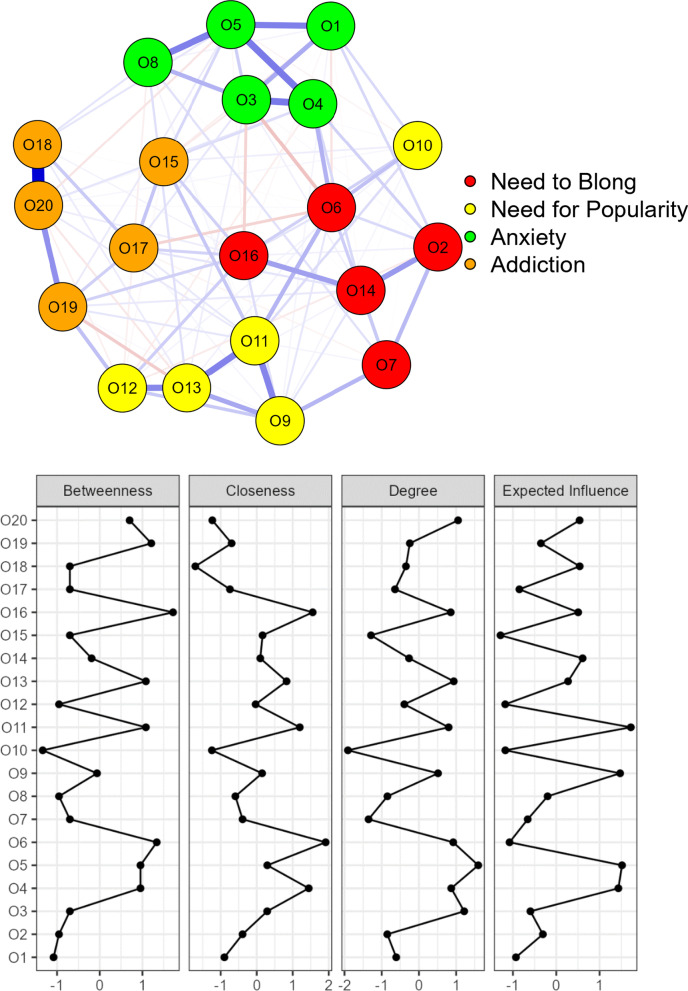
“More specifically, in relation to FoMO, (i) the need to belong refers to being a part of the group [5, 31]; (ii) the need for popularity refers to seeking approval from others and having high self-esteem [4, 27], (iii) anxiety refers to the emotional problems faced in situations where access to OSM is blocked or impos…”
BackgroundMethodInfluentialRelation of sample size to the stability of component patterns.
Guadagnoli, E., & Velicer, W. F. (1988) · Psychological Bulletin · doi:10.1037/0033-2909.103.2.265 · Cited by 2,880 · cited 1×
“40 and above are considered sufficient [46, 47].”
The Smartphone addiction scale: development and validation of a short version for adolescents
Kwon, M., Kim, D.-J., Cho, H., & Yang, S. (2013) · PLoS ONE · doi:10.1371/journal.pone.0083558 · Cited by 2,177 · cited 2×
“Smartphone Addiction Scale‐Short Version (SAS‐SV) The 10-item unidimensional SAS-SV [39, 40] was used to assess the risk of smartphone addiction.”
MethodDhir, A., Yossatorn, Y., Kaur, P., & Chen, S. (2018) · International Journal of Information Management · doi:10.1016/j.ijinfomgt.2018.01.012 · Cited by 1,033 · cited 1×
“Moreover, positive correlations have been found between FoMO and social media fatigue [18, 19], social media stalking, social comparison [18, 20], gaming disorder [21, 22], and impulsivity [21].”
BackgroundElhai, J. D., Levine, J. C., Dvorak, R. D., & Hall, B. J. (2016) · Computers in Human Behavior · doi:10.1016/j.chb.2016.05.079 · Cited by 1,020 · cited 1×
“More specifically, in relation to FoMO, (i) the need to belong refers to being a part of the group [5, 31]; (ii) the need for popularity refers to seeking approval from others and having high self-esteem [4, 27], (iii) anxiety refers to the emotional problems faced in situations where access to OSM is blocked or impos…”
BackgroundBlackwell, D., Leaman, C., Tramposch, R., Osborne, C., & Liss, M. (2017) · Personality and Individual Differences · doi:10.1016/j.paid.2017.04.039 · Cited by 897
Beyens, I., Frison, E., & Eggermont, S. (2016) · Computers in Human Behavior · doi:10.1016/j.chb.2016.05.083 · Cited by 847 · cited 1×
“More specifically, in relation to FoMO, (i) the need to belong refers to being a part of the group [5, 31]; (ii) the need for popularity refers to seeking approval from others and having high self-esteem [4, 27], (iii) anxiety refers to the emotional problems faced in situations where access to OSM is blocked or impos…”
BackgroundSocial network site addiction - An overview
Andreassen, C., & Pallesen, S. (2014) · Current Pharmaceutical Design · doi:10.2174/13816128113199990616 · Cited by 840 · cited 3×
“Measurement invariance across young adults from Hong Kong and Taiwan among three internet-related addiction scales: Bergen social media addiction scale (BSMAS), smartphone application-based addiction scale (SABAS), and internet gaming disorder scale-short form (IGDS-SF9) (study Part A).”
MethodFox, J., & Moreland, J. J. (2015) · Computers in Human Behavior · doi:10.1016/j.chb.2014.11.083 · Cited by 763 · cited 1×
“In modern society, young people spend a lot of time posting things on social media, following current trends with their friends, and constantly updating their status [6, 7].”
BackgroundInfluentialCheever, N. A., Rosen, L. D., Carrier, L. M., & Chavez, A. (2014) · Computers in Human Behavior · doi:10.1016/j.chb.2014.05.002 · Cited by 589 · cited 1×
“More specifically, in relation to FoMO, (i) the need to belong refers to being a part of the group [5, 31]; (ii) the need for popularity refers to seeking approval from others and having high self-esteem [4, 27], (iii) anxiety refers to the emotional problems faced in situations where access to OSM is blocked or impos…”
BackgroundFear of missing out: prevalence, dynamics, and consequences of experiencing FOMO
Milyavskaya, M., Saffran, M., Hope, N., & Koestner, R. (2018) · Motivation and Emotion · doi:10.1007/s11031-018-9683-5 · Cited by 408 · cited 1×
“When individuals choose a specific activity to participate in, the thought that they might have enjoyed another activity may also cause anxiety and lead to FoMO among some individuals [5, 9].”
BackgroundReer, F., Tang, W. Y., & Quandt, T. (2019) · New Media & Society · doi:10.1177/1461444818823719 · Cited by 335 · cited 1×
“Moreover, positive correlations have been found between FoMO and social media fatigue [18, 19], social media stalking, social comparison [18, 20], gaming disorder [21, 22], and impulsivity [21].”
BackgroundLeung, H., Pakpour, A. H., Strong, C., Lin, Y.-C., Tsai, M.-C., Griffiths, M. D., Lin, C.-Y., & Chen, I.-H. (2020) · Addictive Behaviors · doi:10.1016/j.addbeh.2019.04.027 · Cited by 290
Self-citationFabris, M. A., Marengo, D., Longobardi, C., & Settanni, M. (2020) · Addictive Behaviors · doi:10.1016/j.addbeh.2020.106364 · Cited by 287
Addiction to Social Media and Attachment Styles: A Systematic Literature Review
D’Arienzo, M. C., Boursier, V., & Griffiths, M. D. (2019) · International Journal of Mental Health and Addiction · doi:10.1007/s11469-019-00082-5 · Cited by 283
Self-citationNoyan, C., Darcin, A., Nurmedov, S., Yilmaz, O., & Dilbaz, N. (2015) · Anatolian Journal of Psychiatry · doi:10.5455/apd.176101 · Cited by 283 · cited 2×
“Smartphone Addiction Scale‐Short Version (SAS‐SV) The 10-item unidimensional SAS-SV [39, 40] was used to assess the risk of smartphone addiction.”
MethodCasale, S., Rugai, L., & Fioravanti, G. (2018) · Addictive Behaviors · doi:10.1016/j.addbeh.2018.05.020 · Cited by 219 · cited 1×
“For example, in a study conducted of Italian undergraduates, FoMO was positively associated with problematic internet addiction, and It has been found that there is a mediating role of positive metacognitions between FoMO and problematic social media addiction [12].”
BackgroundTandon, A., Dhir, A., Talwar, S., Kaur, P., & Mäntymäki, M. (2021) · Technological Forecasting and Social Change · doi:10.1016/j.techfore.2021.120931 · Cited by 207 · cited 1×
“Moreover, positive correlations have been found between FoMO and social media fatigue [18, 19], social media stalking, social comparison [18, 20], gaming disorder [21, 22], and impulsivity [21].”
BackgroundUnderstanding antecedents of continuance intention in social-networking services
Kim, B. (2011) · Cyberpsychology Behavior and Social Networking · doi:10.1089/cyber.2010.0009 · Cited by 201 · cited 1×
“Since the use of OSM meets the needs of the individuals such as socializing and becoming popular, they may choose to stay in touch with others so that they do not miss out on social media updates [26].”
Li, L., Griffiths, M. D., Mei, S., & Niu, Z. (2020) · Frontiers in Psychiatry · doi:10.3389/fpsyt.2020.00877 · Cited by 185
Self-citationLaor, T. (2022) · Technology in Society · doi:10.1016/j.techsoc.2022.101922 · Cited by 181
Li, L., Niu, Z., Mei, S., & Griffiths, M. D. (2022) · Computers in Human Behavior · doi:10.1016/j.chb.2021.107086 · Cited by 179 · cited 3×
“This scale is a uni-dimensional self-report scale and has been used in many studies [16], but only one item in the scale is relates specifically to online behavior (i.”
BackgroundMethodSelf-citationYuan, G., Elhai, J. D., & Hall, B. J. (2021) · Addictive Behaviors · doi:10.1016/j.addbeh.2020.106648 · Cited by 165
The development of a single item FoMO (Fear of Missing Out) scale
Riordan, B. C., Cody, L., Flett, J. A. M., Conner, T. S., Hunter, J., & Scarf, D. (2018) · Current Psychology · doi:10.1007/s12144-018-9824-8 · Cited by 155 · cited 2×
“[4] developed a single-item FoMO measure (e.”
BackgroundThe Online Fear of Missing Out Inventory (ON-FoMO): Development and Validation of a New Tool
Sette, C. P., Lima, N. R. S., Queluz, F. N. F. R., Ferrari, B., & Filho, N. H. (2019) · Journal of Technology in Behavioral Science · doi:10.1007/s41347-019-00110-0 · Cited by 151 · cited 9×
“More specifically, in relation to FoMO, (i) the need to belong refers to being a part of the group [5, 31]; (ii) the need for popularity refers to seeking approval from others and having high self-esteem [4, 27], (iii) anxiety refers to the emotional problems faced in situations where access to OSM is blocked or impos…”
BackgroundMethodResultInfluentialDetermining validity and reliability of Turkish version of Fear of Missing out Scale
Gokler, M., Aydin, R., nal, E., & Metintas, S. (2016) · Anatolian Journal of Psychiatry · doi:10.5455/apd.195843 · Cited by 116 · cited 4×
“The 10-item unidimensional FoMOS [5, 7] was used to assess fear of missing out.”
BackgroundMethodInfluentialUram, P., & Skalski, S. (2022) · Psychological Reports · doi:10.1177/0033294120980970 · Cited by 94
Rozgonjuk, D., Sindermann, C., Elhai, J. D., & Montag, C. (2021) · Cyberpsychology, Behavior, and Social Networking · doi:10.1089/cyber.2020.0156 · Cited by 86 · cited 5×
“Online platforms (Facebook, Instagram, Twitter, and WhatsApp) were used to recruit the participants.”
BackgroundInfluentialFear of missing out (FoMO) mediate relations between social self-efficacy and life satisfaction
Deniz, M. (2021) · Psicologia Reflexão e Crítica · doi:10.1186/s41155-021-00193-w · Cited by 81
Self-citationLi, L., Griffiths, M. D., Mei, S., & Niu, Z. (2021) · Cyberpsychology Behavior and Social Networking · doi:10.1089/cyber.2020.0283 · Cited by 80 · cited 1×
“Moreover, positive correlations have been found between FoMO and social media fatigue [18, 19], social media stalking, social comparison [18, 20], gaming disorder [21, 22], and impulsivity [21].”
BackgroundSelf-citationYin, F.-S., Liu, M.-L., & Lin, C. (2015) · Technological Forecasting and Social Change · doi:10.1016/j.techfore.2015.07.019 · Cited by 76 · cited 1×
“, sleeping, eating, fulfilling educational and occupational-related responsibilities) [7, 27, 34, 35].”
Hamutoğlu, N. B., Topal, M., & Gezgin, D. M. (2020) · International Journal of Progressive Education · doi:10.29329/ijpe.2020.241.17 · Cited by 62
Traş, Z., & Öztemel, K. (2019) · Addicta: The Turkish Journal on Addictions · doi:10.15805/addicta.2019.6.1.0063 · Cited by 43
Internet addiction and Facebook addiction in Spanish women with eating disorders
Panea-Pizarro, I., López‐Espuela, F., Sánchez, A. M., Domínguez-Martín, A. T., Beato‐Fernández, L., & Morán, J. M. (2020) · Archives of Psychiatric Nursing · doi:10.1016/j.apnu.2020.07.023 · Cited by 35
Poorebrahim, A., Lin, C., Imani, V., Kolvani, S. S., Alaviyoun, S. A., Ehsani, N., & Pakpour, A. H. (2021) · PLoS ONE · doi:10.1371/journal.pone.0254333 · Cited by 18
Self-citation
Research works printed but not linked: 7
- Taylor DG Social media usage, FOMO, and conspicuous consumption: an exploratory study: an abstract Academy of Marketing Science World Marketing Congress 2018 Cham Springer 857 858
- Gemmill EL Peterson M Technology use among college students: implications for student affairs professionals J Student Affairs Res Practice 2006 43 2 482 502
- Jood TE. Missing the present for the unknown: the relationship between fear of missing out (FoMO) and life satisfaction. Unpublished master thesis. University of South Africa. 2017.
- Demirci İ The adaptation of the Bergen Social Media Addiction Scale to Turkish and its evaluation of relationship with depression and anxiety symptoms Anatolian J Psychiatry 2019 20 15 22
- Dağlı A Baysal N Adaptation of the satisfaction with life scale into Turkish: The study of validity and reliability Electron J Soc Sci 2016 15 59 1250 1262
- Nunnally JC Psychometric theory 1978 New York McGraw-Hill Book Company
- Al-Menayes J The fear of missing out scale: validation of the Arabic version and correlation with social media addiction Int J Appl Psychol 2016 6 2 41 46
Cited by
Du, M., Zhao, C., Hu, H., Ding, N., He, J., Tian, W., Zhao, W., Lin, X., Liu, G., Chen, W., et al. (2024) · BMC Psychology · doi:10.1186/s40359-024-01705-w · Cited by 47
Gao, B., Shen, Q., Luo, G., & Xu, Y. (2023) · BMC Psychology · doi:10.1186/s40359-023-01231-1 · Cited by 71
“These effects encompass disruptions to studying, undermined academic performance [19], reduced selfesteem and life satisfaction [8, 20], compromised sleep quality due to increased cognitive pre-sleep arousal and increased time expended on social media during nighttime [21], and the promotion of problematic internet te…”
BackgroundJing, Z., Yang, W., Lei, Z., Junmei, W., Hui, L., & Tianmin, Z. (2025) · PLOS One · doi:10.1371/journal.pone.0329466 · Cited by 33
“By definition, FoMO has a direct influence on the usage rate of social media, just as Bakio ğ lu [85] indicated that FoMO has a direct effect on SMAs.”
Sommantico, M., Ramaglia, F., & Lacatena, M. (2023) · Healthcare · doi:10.3390/healthcare11121667 · Cited by 54
Mao, J., & Zhang, B. (2023) · Psychology Research and Behavior Management · doi:10.2147/prbm.s404063 · Cited by 34
Metadata
- Authors
- Bakioğlu, F., Deniz, M., Griffiths, M. D., & Pakpour, A. H.
- Affiliations
- Karamanoğlu Mehmetbey University (TR)
- Bartin University (TR)
- Nottingham Trent University (GB)
- Jönköping University (SE)
- Corresponding author
- Pakpour, Amir H.
- Venue
- BMC Psychology
- Published
- 2022-06-18
- Volume
- 10
- Issue
- 1
- Pages
- 154-154
- ISSN
- 2050-7283 (ISSN-L)
- PMC
- PMC9206422
- OpenAlex
- W4283074235
- Cited by
- 36
- References
- 40
- Citations by year
- 2026: 8 · 2025: 10 · 2024: 12 · 2023: 6
- FWCI
- 10.07
- Type
- journal article
- Language
- en
- Open access
- gold
- doi.org
- Licence
- cc-by
- creativecommons.org/licenses/by/4.0 (tdm)
- creativecommons.org/licenses/by/4.0 (vor)
- Locations
- BMC Psychology (publishedVersion, cc-by)
- PubMed Central (publishedVersion, cc-by)
- PubMed (publishedVersion)
- Nottingham Trent University's Institutional Repository (Nottingham Trent Repository) (acceptedVersion)
- DOAJ (DOAJ: Directory of Open Access Journals) (submittedVersion)
- eArşiv - KMÜ (Karamanoğlu Mehmetbey University) (submittedVersion, cc-by-nc-nd)
- Funders
- Jönköping University
- Topics
- Social Sciences › Sociology and Political Science › Impact of Technology on Adolescents
- Social Sciences › Business, Management and Accounting › Organizational Behavior and Human Resource Management › Cyberloafing and Workplace Behavior
- Social Sciences › Communication › Digital Media and Philosophy
- Keywords
- fear of missing out, Turkish adaptation, scale validation, psychometric properties, social media addiction, smartphone addiction, life satisfaction, social media use
- MeSH terms
- Internet Addiction Disorder, Adult, Fear, Female, Humans, Male, Personal Satisfaction, Reproducibility of Results, Social Media
About these checks
Registry, retraction, Cites and statistics results are computed, not judged, with one exception: a printed reference that no index lists is read once by a model before it counts as a citation error. Claims are extracted by a model and kept only when their quote appears verbatim in the text; each cited source is then checked, with a model’s help, for whether it says what the claim relies on. Those verdicts can be wrong — read the claim’s quote and the cited source before relying on one.
Statistics and arithmetic are recomputed, not judged.
Confidence bands are shown only for fields calibrated on our annotated test set. None is calibrated yet, so no band is shown.
What counts as a claim ›How we measure confidence ›How we check this ›
Are you an author, or do you see a problem with this page? Request a review
Data sources
Bibliographic data: Semantic Scholar, OpenAlex, Crossref.
Contains information from the Semantic Scholar Academic Graph Datasets, made available under the ODC Attribution License (ODC-BY 1.0).
Semantic Scholar’s data is described in: Kinney, R., et al. (2023). The Semantic Scholar Open Data Platform. arXiv:2301.10140.
