

Mindfulness among lebanese university students and its indirect effect between mental health and wellbeing
Open accessThe DOI matches its Crossref record; 82 of the 82 references it cites were found in a registry or an index; 5 of the 13 sources its claims cite were checked for support.
Abstract
Background: University students are a high-risk population for developing mental health issues. Mindfulness, the non-judgmental awareness of the present moment, has an effective role in numerous psychological contexts among students. However, no previous studies have investigated the association between mindfulness, mental health and wellbeing among Lebanese university students. Therefore, this study aimed to assess the mediating effect of mindfulness in the association between mental health and wellbeing in this population. Methods: This cross-sectional study enrolled 363 Lebanese university students recruited through convenience sampling (July-September 2021). The Wellbeing Index Scale, Lebanese Anxiety Scale, Patient Health Questionnaire and Freiburg Mindfulness Inventory were used to assess subjective well-being, anxiety, depression and mindfulness respectively. Results: Our findings showed that higher mindfulness (Beta = 0.18; p < 0.001) was significantly correlated with a higher wellbeing, whereas more depression (Beta=-0.36; p < 0.001) was significantly associated with a lower wellbeing. The results of the indirect effect analysis showed that mindfulness mediated the association between anxiety and wellbeing and between depression and wellbeing. Higher anxiety/depression were significantly associated with lower mindfulness and a lower wellbeing (direct effect). Moreover, higher mindfulness was significantly associated with a higher wellbeing. Conclusion: Mindfulness is associated with improved wellbeing and plays an indirect role between mental health issues and wellbeing. Our results suggest that mindfulness presents an adaptive approach and coping method associated with improved students’ wellbeing. © 2023, The Author(s).
Overview
CoChat Summary
TL;DR
This cross-sectional study of 363 Lebanese university students found that higher mindfulness was associated with higher wellbeing, while depression was associated with lower wellbeing. Mindfulness also mediated the associations between anxiety and wellbeing and between depression and wellbeing.
Key findings
- In bivariate analysis, higher mindfulness correlated with higher wellbeing (r = 0.430; p < 0.001), while higher anxiety (r = -0.407; p < 0.001) and depression (r = -0.488; p < 0.001) correlated with lower wellbeing.
- In multivariable analysis, higher mindfulness was positively associated with wellbeing (Beta = 0.18; p < 0.001) and depression was negatively associated with wellbeing (Beta = -0.31; p < 0.001).
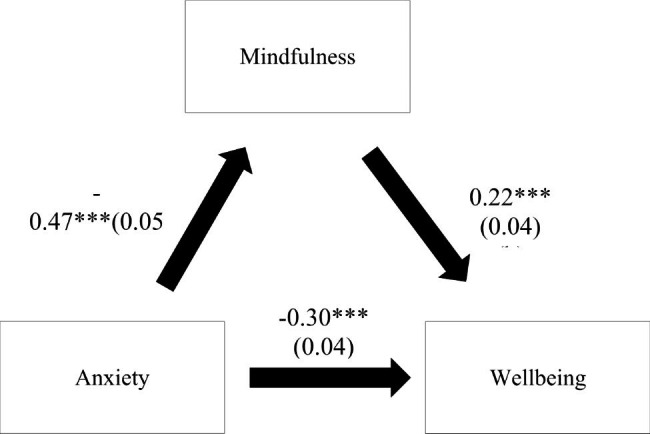
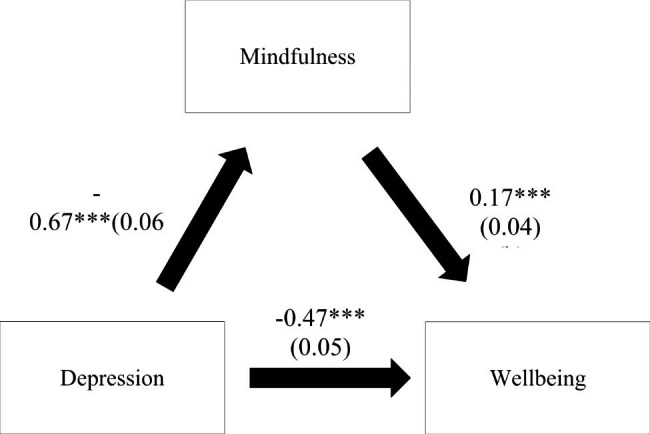
- Indirect effect analysis showed that mindfulness mediated the association between anxiety and wellbeing and between depression and wellbeing; the confidence interval of the indirect effect did not pass through zero.
- Married students had a higher mean wellbeing score than single students (16.80 vs. 13.31; p = 0.015).
Methods
- Cross-sectional design conducted in Lebanon from July to September 2021.
- Convenience sample of 363 university students from Beirut, Mount Lebanon, South, North, and Beqaa; students were recruited online via WhatsApp and snowballing, and all participants were over 18.
- Measures included the WHO-5 Well-Being Index, Lebanese Anxiety Scale (LAS-10), PHQ-9 for depression, and Freiburg Mindfulness Inventory (FMI); analyses used t tests, Pearson correlations, forward linear regression, and PROCESS Model 4 mediation with bootstrapped 95% CIs.
Limitations
- The paper states that the cross-sectional design does not allow causal inference.
- Self-reported responses may have produced information bias.
- The questionnaire did not assess potentially relevant factors such as year of study, major, type of university, type of faculty, or practicing meditation/yoga/mindfulness, creating possible confounding bias.
- The sample was recruited conveniently and the response rate was unknown, so the authors note the results may not be generalizable to the whole population; this limitation is evident from the sampling approach.
Model-written summary. Check it against the paper before relying on it.
Integrity signals
Registry
Cites
Statistics
Figures
Verification
Claims the paper makes
4 Valid · 0 Not valid · 4 Not checked · 15 Own results and interpretations
Every source the paper cites for this claim was checked and supports it.
In the paper
“The Arabic version of this scale has been validated in Lebanon [51].”
§ Mindfulness among lebanese university students and its indirect effect between mental health and wellbeing > Methods > Mediating variable
What the sources say
- Supportedcites [51] Hallit S, Bitar Z, Rogoza R, Obeid S. Validation of the Arabic Version of the Freiburg Mindfulness Inventory (FMI-Ar) Among a Sample of Lebanese University Students [Internet]. In Review; 2022 Jan [cited 2022 Jul 4]. Available from: https://www.researchsquare.com/article/rs-1255958/v1 source
The Abstract’s conclusion reports that the study verified its validity hypotheses for the Arabic FMI and calls it suitable for measuring mindfulness among Lebanese university students. The validation was of the short form and was conducted in that student sample. (LLM, conf=0.94)
plain- Asserted: passes — The authors put it forward as true.
- Checkable: passes — It can be checked against evidence.
- Load-bearing: passes — The paper’s conclusions depend on it.
- Based: passes — The paper gives a reason why it holds.
- Supported
A result the paper reports from its own data — it cites no other source for it, so there is none to check. The quote shows it is in the paper.
In the paper
“Higher anxiety/depression were significantly associated with lower mindfulness and a lower wellbeing (direct effect).”
- Also stated in: § Indirect effect analysis · plain
“Higher anxiety/depression were significantly associated with lower mindfulness and a lower wellbeing (direct effect).”
§ Mindfulness among lebanese university students and its indirect effect between mental health and wellbeing > Abstract > Results
plainstates an association- Asserted: passes — The authors put it forward as true.
- Checkable: passes — It can be checked against evidence.
- Load-bearing: passes — The paper’s conclusions depend on it.
- Based: passes — The paper gives a reason why it holds.
- Also stated in: § Indirect effect analysis · plain
A result the paper reports from its own data — it cites no other source for it, so there is none to check. The quote shows it is in the paper.
In the paper
“Our findings showed that higher mindfulness (Beta = 0.18; p < 0.001) was significantly correlated with a higher wellbeing, whereas more depression (Beta=-0.36; p < 0.001) was significantly associated with a lower wellbeing.”
- Also stated in: § Bivariate analysis · plain
“Older age (r = 0.130; p = 0.013) and higher mindfulness (r = 0.430; p < 0.001) were significantly associated with higher wellbeing, whereas higher anxiety (r=-0.407; p < 0.001) and depression (r=-0.488; p < 0.001) were significantly associated with lower wellbeing.”
- Also stated in: § Multivariable analysis · plain
“A forward linear regression taking the wellbeing as the dependent variable, showed that higher mindfulness (Beta = 0.18; p < 0.001) was significantly associated with a higher wellbeing, whereas more depression (Beta=-0.31; p < 0.001) was significantly associated with a lower wellbeing (Table 4).”
§ Mindfulness among lebanese university students and its indirect effect between mental health and wellbeing > Abstract > Results
plainstates an association- Asserted: passes — The authors put it forward as true.
- Checkable: passes — It can be checked against evidence.
- Load-bearing: passes — The paper’s conclusions depend on it.
- Based: passes — The paper gives a reason why it holds.
- Also stated in: § Bivariate analysis · plain
A result the paper reports from its own data — it cites no other source for it, so there is none to check. The quote shows it is in the paper.
In the paper
“The results of the indirect effect analysis showed that mindfulness mediated the association between anxiety and wellbeing and between depression and wellbeing.”
- Also stated in: § Indirect effect analysis · plain
“The results of the indirect effect analysis showed that mindfulness played an indirect role in the association between anxiety and wellbeing and between depression and wellbeing since the confidence interval of the indirect effect did not pass by zero (Table 5).”
- Also stated in: § Mediating effect of mindfulness · plain
“The association between anxiety and wellbeing has been found to be mediated by mindfulness in our study, in accordance with previous findings [27, 28].”
§ Mindfulness among lebanese university students and its indirect effect between mental health and wellbeing > Abstract > Results
plainstates a cause- Asserted: passes — The authors put it forward as true.
- Checkable: passes — It can be checked against evidence.
- Load-bearing: passes — The paper’s conclusions depend on it.
- Based: passes — The paper gives a reason why it holds.
- Also stated in: § Indirect effect analysis · plain
A result the paper reports from its own data — it cites no other source for it, so there is none to check. The quote shows it is in the paper.
In the paper
“Higher anxiety/depression were significantly associated with lower mindfulness and a lower wellbeing (direct effect).”
- Also stated in: § Indirect effect analysis · plain
“Higher anxiety/depression were significantly associated with lower mindfulness and a lower wellbeing (direct effect).”
§ Mindfulness among lebanese university students and its indirect effect between mental health and wellbeing > Abstract > Results
plainstates an association- Asserted: passes — The authors put it forward as true.
- Checkable: passes — It can be checked against evidence.
- Load-bearing: passes — The paper’s conclusions depend on it.
- Based: passes — The paper gives a reason why it holds.
- Also stated in: § Indirect effect analysis · plain
2 more claims
Create a free account to see all 23 claims and every source verdict.
- Probably not a substantial claim. 9
- It may state two separate claims as one. 7
- The quote only partly states this claim. 1
Claims other papers make about this one
Each is checked against this paper’s own text: does it say what the citing paper says it does?
The source backs part of the claim, not all of it — or backs it for a different population, condition or comparison.
In the citing paper
“The study showed that the intervention of mindfulness has a positive effect on improving anxiety symptoms, consistent with previous studies (Armstrong & Rimes, 2016;Bhattacharya & Hofmann, 2023;Bitar et al., 2023;Burgess et al., 2021).”
From Mindfulness and anxiety among medicine college students: a moderated mediation model of intolerance of uncertainty and neuroticism. (2026) · cites this paper as Bitar et al., 2023
Experimental — accuracy not yet measuredIn the citing paper
“Mindfulness-based interventions (MBIs) represent an effective approach for managing anxiety (Bhattacharya & Hofmann, 2023;Bitar et al., 2023;Chen et al., 2022;Yu et al., 2021).”
From Mindfulness and anxiety among medicine college students: a moderated mediation model of intolerance of uncertainty and neuroticism. (2026) · cites this paper as Bitar et al., 2023
Self-check
Percentages, sums and reported differences re-computed from the paper’s own numbers.
Each contradiction between two passages listed here was confirmed by an independent check.
Rated minor: it would not touch a result — a value no result rests on, a p-value that stays on the same side of the significance level, or a conflict that is clerical, resolved elsewhere in the paper, or outside its own findings.
In the paper
§ Mindfulness among lebanese university students and its indirect effect between mental health and wellbeing > Results > Multivariable analysis
“A forward linear regression taking the wellbeing as the dependent variable, showed that higher mindfulness (Beta = 0.18; p < 0.001) was significantly associated with a higher wellbeing, whereas more depression (Beta=-0.31; p < 0.001) was significantly associated with a lower wellbeing (Table 4).”
§ Mindfulness among lebanese university students and its indirect effect between mental health and wellbeing > Abstract > Results
“Our findings showed that higher mindfulness (Beta = 0.18; p < 0.001) was significantly correlated with a higher wellbeing, whereas more depression (Beta=-0.36; p < 0.001) was significantly associated with a lower wellbeing.”
Citations
Cites
Faul, F., Erdfelder, E., Lang, A.-G., & Buchner, A. (2007) · Behavior Research Methods · doi:10.3758/bf03193146 · Cited by 65,971 · cited 1×
“Statistical analysis A minimum of 316 university students was deemed necessary to have enough statistical power according to the G-power software (multiple regression; R2 deviation from zero) [52], based on a 5% risk of error, 80% power, f2 = 2.”
MethodThe PHQ-9: Validity of a brief depression severity measure
Kroenke, K., Spitzer, R. L., & Williams, J. B. W. (2001) · Journal of General Internal Medicine · doi:10.1046/j.1525-1497.2001.016009606.x · Cited by 44,910
The benefits of being present: Mindfulness and its role in psychological well-being
Brown, K. W., & Ryan, R. M. (2003) · Journal of Personality and Social Psychology · doi:10.1037/0022-3514.84.4.822 · Cited by 13,448 · cited 1×
“Mindfulness and wellbeing Findings in our study showed that mindfulness was positively associated with a higher wellbeing among Lebanese university students, in accordance with previous studies highlighting this positive association among the general healthy population [56, 57].”
ResultCohen, J. (1992) · Psychological Bulletin · doi:10.1037//0033-2909.112.1.155 · Cited by 8,771
Mindfulness-based interventions in context: Past, present, and future
Kabat-Zinn, J. (2003) · Clinical Psychology: Science and Practice · doi:10.1093/clipsy.bpg016 · Cited by 8,615 · cited 2×
“In order to protect students’ mental health, numerous preventative interventions were made; MindfulnessBased Interventions (MBIs) were provided by a huge number of universities [16], as well as Mindfulness-Based Stress Reduction (MBSR) programs consisting of meditation, body scanning, breathing and yoga were adopted […”
BackgroundThe psychological impact of the COVID-19 epidemic on college students in China
Cao, W., Fang, Z., Hou, G., Han, M., Xu, X., Dong, J., & Zheng, J. (2020) · Psychiatry Research · doi:10.1016/j.psychres.2020.112934 · Cited by 5,843 · cited 1×
“Universities worldwide faced the risk of missing a whole academic year; therefore, many institutions in the world and in Lebanon switched to online learning [35], which has been associated with many maladaptive behaviors among Lebanese (i.”
BackgroundShapiro, S. L., Carlson, L. E., Astin, J. A., & Freedman, B. (2006) · Journal of Clinical Psychology · doi:10.1002/jclp.20237 · Cited by 4,002 · cited 1×
“[59] explained that the person practicing mindfulness perceives his thoughts nonjudgmentally and therefore, will be more functionally adaptive.”
BackgroundMindfulness: Theoretical Foundations and Evidence for its Salutary Effects
Brown, K. W., Ryan, R. M., & Creswell, J. D. (2007) · Psychological Inquiry · doi:10.1080/10478400701598298 · Cited by 3,654
Beyond money: toward an economy of well-being
Diener, E., & Seligman, M. E. P. (2004) · Psychological Science in the Public Interest · doi:10.1111/j.0963-7214.2004.00501001.x · Cited by 2,555
Auerbach, R. P., Collaborators, W. W.-I., Mortier, P., Bruffaerts, R., Alonso, J., Benjet, C., Cuijpers, P., Demyttenaere, K., Ebert, D. D., Green, J. G., et al. (2018) · Journal of Abnormal Psychology · doi:10.1037/abn0000362 · Cited by 2,522 · cited 1×
“A survey enrolling 13,984 students around the world revealed that 35% reported at least one mental health problem [4].”
BackgroundGarnefski, N., Kraaij, V., Schroevers, M. J., & Somsen, G. A. (2008) · Journal of Clinical Psychology in Medical Settings · doi:10.1007/s10880-008-9136-5 · Cited by 2,479
Gu, J., Strauss, C., Bond, R., & Cavanagh, K. (2015) · Clinical Psychology Review · doi:10.1016/j.cpr.2015.01.006 · Cited by 1,712 · cited 1×
“revealed that mindfulness mediates wellbeing and mental health outcomes [75].”
BackgroundMeasuring mindfulness—The Freiburg Mindfulness Inventory (FMI)
Walach, H., Buchheld, N., Buttenmüller, V., Kleinknecht, N., & Schmidt, S. (2006) · Personality and Individual Differences · doi:10.1016/j.paid.2005.11.025 · Cited by 1,475
A Multicomponent Conceptualization of Authenticity: Theory and Research
Kernis, M. H., & Goldman, B. M. (2006) · Advances in Experimental Social Psychology · doi:10.1016/s0065-2601(06)38006-9 · Cited by 1,244
Interventions to reduce stress in university students: A review and meta-analysis
Regehr, C., Glancy, D., & Pitts, A. (2013) · Journal of Affective Disorders · doi:10.1016/j.jad.2012.11.026 · Cited by 956 · cited 1×
“In order to protect students’ mental health, numerous preventative interventions were made; MindfulnessBased Interventions (MBIs) were provided by a huge number of universities [16], as well as Mindfulness-Based Stress Reduction (MBSR) programs consisting of meditation, body scanning, breathing and yoga were adopted […”
BackgroundCultivating mindfulness: effects on well‐being
Shapiro, S. L., Oman, D., Thoresen, C. E., Plante, T. G., & Flinders, T. (2008) · Journal of Clinical Psychology · doi:10.1002/jclp.20491 · Cited by 699
Building bridges: understanding student transition to university
Briggs, A. R. J., Clark, J., & Hall, I. (2012) · Quality in Higher Education · doi:10.1080/13538322.2011.614468 · Cited by 495
Fawaz, M., & Samaha, A. (2021) · Nursing Forum · doi:10.1111/nuf.12521 · Cited by 473
Sawaya, H., Atoui, M., Hamadeh, A., Zeinoun, P., & Nahas, Z. (2016) · Psychiatry Research · doi:10.1016/j.psychres.2016.03.030 · Cited by 450 · cited 11×
“The Arabic version of PHQ-9 was previously validated in Lebanon [46].”
InfluentialMelki, I. S., Beydoun, H. A., Khogali, M., Tamim, H., & Yunis, K. A. (2004) · Journal of Epidemiology and Community Health · doi:10.1136/jech.2003.012690 · Cited by 387 · cited 1×
“The household crowding index reflects the socioeconomic status of the family, and was calculated by dividing the number of persons by the number of rooms in the house excluding the bathrooms and kitchen [42].”
MethodValidity of the five-item WHO Well-Being Index (WHO-5) in an elderly population
Heun, R., Bonsignore, M., Barkow, K., & Jessen, F. (2001) · European Archives of Psychiatry and Clinical Neuroscience · doi:10.1007/bf03035123 · Cited by 380 · cited 1×
“The total raw score, ranging from 0 to 25, is multiplied by 4 to obtain the final score, with 0 meaning the worst imaginable wellbeing and 100 reflecting the best imaginable wellbeing [47, 48].”
BackgroundPandey, A., Hale, D., Das, S., Goddings, A.-L., Blakemore, S.-J., & Viner, R. M. (2018) · JAMA Pediatrics · doi:10.1001/jamapediatrics.2018.0232 · Cited by 358 · cited 1×
“executive functions and self-regulation skills) [86]; hence, it can be adopted as a healthy behavior and an important self-care tool associated with improved mental health, which might consequently prevent future maladaptive behaviors such as substance abuse [86].”
BackgroundThe mental health of university students in the United Kingdom
Macaskill, A. (2013) · British Journal of Guidance & Counselling · doi:10.1080/03069885.2012.743110 · Cited by 357 · cited 1×
“Background University students are considered a high-risk population for developing mental health issues, due to maladaptive health behaviors and stressing circumstances accompanying them during their academic programs [1, 2].”
BackgroundLombardo, P., Jones, W., Wang, L., Shen, X., & Goldner, E. M. (2018) · BMC Public Health · doi:10.1186/s12889-018-5235-x · Cited by 333 · cited 1×
“, trait mindfulness) within this relationship [38].”
Psychological Functioning in a Sample of Long-Term Practitioners of Mindfulness Meditation
Lykins, E. L. B., & Baer, R. A. (2009) · Journal of Cognitive Psychotherapy · doi:10.1891/0889-8391.23.3.226 · Cited by 268 · cited 1×
“Additionally, the individual practicing mindfulness can feel high levels of self-confidence, optimism and can be more successful [60, 61]; these feelings will consequently lead to a better wellbeing.”
BackgroundCoping Style as a Predictor of Health and Well-Being Across the First Year of Medical School.
Park, C. L., & Adler, N. E. (2003) · Health Psychology · doi:10.1037/0278-6133.22.6.627 · Cited by 230 · cited 1×
“This association can be explained by the personal and academic stressing circumstances among students, which enhance fear, ineptitude, anger and uselessness; consequently, they can lead to psychological and physical conditions affecting students’ wellbeing [66, 67].”
BackgroundHealth‐related quality of life of medical students
Paro, H. B. M. S., Morales, N. M. O., Silva, C. H. M., Rezende, C. H. A., Pinto, R. M. C., Morales, R. R., Mendonça, T. M. S., & Prado, M. M. (2010) · Medical Education · doi:10.1111/j.1365-2923.2009.03587.x · Cited by 225
The relationship between gender, age, anxiety, depression, and academic achievement among teenagers
Khesht-Masjedi, M. F., Shokrgozar, S., Abdollahi, E., Habibi, B., Asghari, T., Ofoghi, R., & Pazhooman, S. (2019) · Journal of Family Medicine and Primary Care · doi:10.4103/jfmpc.jfmpc_103_18 · Cited by 210 · cited 1×
“Depression and anxiety have been correlated with a negative impact on students’ academic achievement [10], low energy, social dysfunction and psychological distress [11].”
BackgroundEffects of Mindfulness Meditation on college student anxiety: a meta-analysis
Bamber, M. D., & Morpeth, E. (2019) · Mindfulness · doi:10.1007/s12671-018-0965-5 · Cited by 198 · cited 1×
“Studies revealed that mindfulness-based interventions have been found to significantly reduce college students’ anxiety [69, 70], since mindful students are more optimistic, aware of the present moment and are not distracted by future or past stressing experiences [71–74].”
BackgroundHanley, A. W., Warner, A. R., & Garland, E. L. (2014) · Journal of Happiness Studies · doi:10.1007/s10902-014-9569-5 · Cited by 184 · cited 1×
“Mindfulness is also related to cognitive reappraisal, wisdom, appreciation of important things, and ignorance of traumatic experiences in life [80, 81], which may explain its mediating effect between depression and wellbeing.”
BackgroundRoth, B., & Robbins, D. (2004) · Psychosomatic Medicine · doi:10.1097/01.psy.0000097337.00754.09 · Cited by 177
Anxiety, depression and quality of life of medical students in Malaysia.
Gan, G. G., & Yuen Ling, H. (2019) · PubMed · Cited by 175
Arch, J. J., & Craske, M. G. (2010) · Behaviour Research and Therapy · doi:10.1016/j.brat.2010.02.005 · Cited by 174
Parmentier, F. B. R., García-Toro, M., García-Campayo, J., Yañez, A. M., Andrés, P., & Gili, M. (2019) · Frontiers in Psychology · doi:10.3389/fpsyg.2019.00506 · Cited by 172 · cited 2×
“For instance, mindfulness skills allow people to get rid of various forms of maladaptive psychological conditions such as anxiety, depression, fear, anger, worry [19] and impulsivity [20].”
BackgroundRoberts, L. W., Warner, T. D., Lyketsos, C., Frank, E., Ganzini, L., & Carter, D. (2001) · Comprehensive Psychiatry · doi:10.1053/comp.2001.19747 · Cited by 169 · cited 1×
“This association can be explained by the personal and academic stressing circumstances among students, which enhance fear, ineptitude, anger and uselessness; consequently, they can lead to psychological and physical conditions affecting students’ wellbeing [66, 67].”
BackgroundInternal and external validity of the WHO Well‐Being Scale in the elderly general population
Heun, R., Burkart, M., Maier, W., & Bech, P. (1999) · Acta Psychiatrica Scandinavica · doi:10.1111/j.1600-0447.1999.tb00973.x · Cited by 160 · cited 1×
“The total raw score, ranging from 0 to 25, is multiplied by 4 to obtain the final score, with 0 meaning the worst imaginable wellbeing and 100 reflecting the best imaginable wellbeing [47, 48].”
BackgroundJenkins, P. E., Ducker, I., Gooding, R., James, M., & Rutter-Eley, E. (2021) · Journal of American College Health · doi:10.1080/07448481.2019.1709474 · Cited by 147 · cited 1×
“Depression and anxiety have been correlated with a negative impact on students’ academic achievement [10], low energy, social dysfunction and psychological distress [11].”
BackgroundDisabato, D. J., Kashdan, T., Short, J. L., & Jarden, A. (2017) · Cognitive Therapy and Research · doi:10.1007/s10608-016-9785-x · Cited by 144 · cited 1×
“The latter has been found to be negatively associated with many psychological illnesses such as depression [78, 79].”
BackgroundArslan, G., Ayranci, U., Unsal, A., & Arslantas, D. (2009) · Upsala Journal of Medical Sciences · doi:10.1080/03009730903174339 · Cited by 120
Pearson, M. R., Brown, D. B., Bravo, A. J., & Witkiewitz, K. A. (2014) · Mindfulness · doi:10.1007/s12671-014-0300-8 · Cited by 119 · cited 1×
“The latter has been found to be negatively associated with many psychological illnesses such as depression [78, 79].”
BackgroundShort, M. M., & Mazmanian, D. S. (2013) · Personality and Individual Differences · doi:10.1016/j.paid.2013.05.026 · Cited by 119
Validation of the Arabic version of the 5‐item WHO well being index in elderly population
Sibai, A. M., Chaaya, M., Tohme, R. A., Mahfoud, Z., & Al‐Amin, H. (2009) · International Journal of Geriatric Psychiatry · doi:10.1002/gps.2079 · Cited by 115 · cited 11×
“The Arabic version of PHQ-9 was previously validated in Lebanon [46].”
MethodInfluentialMoutinho, I. L. D., Lucchetti, A. L. G., Ezequiel, O. D. S., & Lucchetti, G. (2019) · Psychiatry Research · doi:10.1016/j.psychres.2019.02.041 · Cited by 111 · cited 1×
“Moreover, low income among medical students can affect their mental health and consequently their wellbeing [14]; authors justified this association by the fact that low economic levels can lead to increased stress [15].”
BackgroundConnecting Mindfulness and Meaning in Life: Exploring the Role of Authenticity
Allan, B. A., Bott, E. M., & Suh, H. (2014) · Mindfulness · doi:10.1007/s12671-014-0341-z · Cited by 110
Mindfulness in Schools: a Health Promotion Approach to Improving Adolescent Mental Health
Sapthiang, S., Gordon, W. V., & Shonin, E. (2018) · International Journal of Mental Health and Addiction · doi:10.1007/s11469-018-0001-y · Cited by 103 · cited 1×
“The fact that it appears mindfulness can also be delivered in an efficacious manner as an internet-mediated intervention further increases its appeal given the cost-effectiveness of this delivery mode [85].”
BackgroundCoping With COVID-19: Mindfulness-Based Approaches for Mitigating Mental Health Crisis
Antonova, E., Schlosser, K., Pandey, R., & Kumari, V. (2021) · Frontiers in Psychiatry · doi:10.3389/fpsyt.2021.563417 · Cited by 89
Bernier, A., Larose, S., & Whipple, N. (2005) · Attachment & Human Development · doi:10.1080/14616730500147565 · Cited by 87 · cited 1×
“Students’ transition from high school to university is challenging, despite its important role in personal growth [3].”
BackgroundAlexithymia, aggressive behavior and depression among Lebanese adolescents: A cross-sectional study
Sfeir, E., Geara, C., Hallit, S. R., & Obeïd, S. (2020) · Child and Adolescent Psychiatry and Mental Health · doi:10.1186/s13034-020-00338-2 · Cited by 84
Self-citationMindfulness-based interventions in undergraduate students: a systematic review
Chiodelli, R., Mello, L. T. N. D., Jesus, S. N. D., Beneton, E. R., Russel, T., & Andretta, I. (2022) · Journal of American College Health · doi:10.1080/07448481.2020.1767109 · Cited by 78 · cited 1×
“Also, it improves detection, increases awareness and perceived positive emotions that will directly improve students’ mental health [32].”
BackgroundCOVID-19 pandemic and mental health in Lebanon: a cross-sectional study
El Othman, R., Touma, E., El Othman, R., Haddad, C., Hallit, R., Obeid, S., Salameh, P., & Hallit, S. (2021) · International Journal of Psychiatry in Clinical Practice · doi:10.1080/13651501.2021.1879159 · Cited by 78 · cited 1×
“Rationale and aims of the study The COVID-19 pandemic since its emergence and Lebanon’s financial crisis have shown to be detrimental on the psychological wellbeing of the undergraduate students by swelling the levels of stress, anxiety, and depression [6, 34].”
BackgroundSelf-citationConstruction of the Lebanese Anxiety Scale (LAS-10): a new scale to assess anxiety in adult patients
Hallit, S., Obeid, S., Haddad, C., Hallit, R., Akel, M., Haddad, G., Soufia, M., Khansa, W., Khoury, R., Kheir, N., et al. (2020) · International Journal of Psychiatry in Clinical Practice · doi:10.1080/13651501.2020.1744662 · Cited by 77 · cited 2×
“The first seven items are graded on a five-point Likert scale, not present to very severe [43].”
BackgroundSelf-citationBurns, J. L., Lee, R. M., & Brown, L. J. (2011) · Journal of College Student Psychotherapy · doi:10.1080/87568225.2011.556947 · Cited by 76 · cited 1×
“Studies revealed that mindfulness-based interventions have been found to significantly reduce college students’ anxiety [69, 70], since mindful students are more optimistic, aware of the present moment and are not distracted by future or past stressing experiences [71–74].”
BackgroundVu, T., Vo‐Thanh, T., Chi, H., Nguyen, N. P., Nguyen, D. V., & Zaman, M. (2022) · Human Resource Management · doi:10.1002/hrm.22101 · Cited by 71
Blanke, E. S., Riediger, M., & Brose, A. (2018) · Emotion · doi:10.1037/emo0000323 · Cited by 69
Medlicott, E., Phillips, A., Crane, C., Hinze, V., Taylor, L., Tickell, A., Montero-Marin, J., & Kuyken, W. (2021) · International Journal of Environmental Research and Public Health · doi:10.3390/ijerph18116023 · Cited by 67 · cited 1×
“Mediating effect of mindfulness The association between anxiety and wellbeing has been found to be mediated by mindfulness in our study, in accordance with previous findings [27, 28].”
ResultMcBride, E. E., & Greeson, J. M. (2021) · Current Psychology · doi:10.1007/s12144-021-02340-z · Cited by 65 · cited 1×
“Previous studies explained that mindfulness can enhance cognitive functions and therefore academic achievements [31].”
BackgroundObeïd, S., Akel, M., Haddad, C., Fares, K., Sacre, H., Salameh, P., & Hallit, S. R. (2019) · BMC Psychology · doi:10.1186/s40359-019-0353-5 · Cited by 63
Self-citationMarais, G. A. B., Lantheaume, S., Fiault, R., & Shankland, R. (2020) · European Journal of Investigation in Health, Psychology and Education · doi:10.3390/ejihpe10040073 · Cited by 58 · cited 1×
“Additionally, some studies revealed that mindfulness lead to efficient time management among students by controlling emotions and reducing worrying [25].”
BackgroundXu, Y., Yu, Y., Xie, Y., Li, P., Liu, B., Xie, J., Bian, C., & Li, M. (2015) · Psychiatry Research · doi:10.1016/j.psychres.2015.06.011 · Cited by 57 · cited 1×
“association has been found between mindfulness and positive affect [61], which has been known as an important factor enhancing wellbeing [62].”
BackgroundHanley, A. W., Peterson, G. W., Canto, A. I., & Garland, E. L. (2014) · Mindfulness · doi:10.1007/s12671-014-0302-6 · Cited by 56
Mindfulness for irritable bowel syndrome: protocol development for a controlled clinical trial
Gaylord, S. A., Whitehead, W. E., Coble, R. S., Faurot, K. R., Palsson, O. S., Garland, E. L., Frey, W., & Mann, J. D. (2009) · BMC Complementary and Alternative Medicine · doi:10.1186/1472-6882-9-24 · Cited by 53
Assana, S., Laohasiriwong, W., & Rangseekajee, P. (2017) · JOURNAL OF CLINICAL AND DIAGNOSTIC RESEARCH · doi:10.7860/jcdr/2017/29209.10429 · Cited by 53 · cited 2×
“A previous study revealed that a good wellbeing is associated with the absence of stress among students [13].”
BackgroundAnxiety among Lebanese adolescents: scale validation and correlates
Merhy, G., Azzi, V., Salameh, P., Obeid, S., & Hallit, S. (2021) · BMC Pediatrics · doi:10.1186/s12887-021-02763-4 · Cited by 48 · cited 1×
“Lebanese anxiety scale (LAS-10) It consists of 10 items such as “I have intellectual problems (Difficulty in concentration, poor memory); I feel indecisive” assessing the severity of anxiety symptoms among Lebanese adults [43] and adolescents [44].”
BackgroundSelf-citationMindfulness and anxiety among university students: Moderating role of cognitive emotion regulation
Malik, S., & Perveen, A. (2023) · Current Psychology · doi:10.1007/s12144-021-01906-1 · Cited by 47 · cited 1×
“Also, findings suggest that mindfulness represents a positive effect on mental health by the process of adaptive emotional regulation leading to reduced anxiety and depression [22].”
BackgroundAwad, E., Rogoza, R., Gerges, S., Obeïd, S., & Hallit, S. R. (2022) · Psychological Reports · doi:10.1177/00332941221132985 · Cited by 45 · cited 1×
“The same methodology has been used in previous papers [39, 40].”
MethodSelf-citationBitar, Z., Hallit, S. R., Khansa, W., & Obeïd, S. (2021) · BMC Psychology · doi:10.1186/s40359-021-00594-7 · Cited by 43
Self-citationWang, H., Yang, X. Y., Yang, T., Cottrell, R. R., Yu, L., Feng, X., & Jiang, S. (2015) · International Journal for Equity in Health · doi:10.1186/s12939-015-0152-4 · Cited by 42 · cited 1×
“Moreover, low income among medical students can affect their mental health and consequently their wellbeing [14]; authors justified this association by the fact that low economic levels can lead to increased stress [15].”
BackgroundThe bidirectional associations between state anger and rumination and the role of trait mindfulness
Borders, A., & Lu, S. (2017) · Aggressive Behavior · doi:10.1002/ab.21693 · Cited by 41
Beirut Explosion Effects on COVID-19 Situation in Lebanon
Hashim, H. T., Uakkas, S., Reda, A., Ramadhan, M. A., & Mostafa, M. Y. A. (2021) · Disaster Medicine and Public Health Preparedness · doi:10.1017/dmp.2021.56 · Cited by 31 · cited 1×
“In particular, this had a significant impact on people’s mental health and living situations [37].”
BackgroundTıngaz, E. O., Solmaz, S., Ekiz, M. A., & Güvendi, B. (2021) · Journal of Rational-Emotive & Cognitive-Behavior Therapy · doi:10.1007/s10942-021-00397-0 · Cited by 25 · cited 1×
“Different studies conducted among athletes’ students showed that mindfulness may positively affect perceived performance by reducing depression, anxiety, and stress [23]; as well mindfulness is positively correlated with self-compassion and happiness [24].”
BackgroundYibin, W., Tian, T., & Wang, J. (2022) · BMC Psychology · doi:10.1186/s40359-022-00799-4 · Cited by 24 · cited 1×
“Consequently, when peoples’ stress is released and negative emotions are regulated, wellbeing improves [33].”
BackgroundValidation of the Arabic version of the ORTO-R among a sample of Lebanese young adults
Rogoza, R., Mhanna, M., Gerges, S., Donini, L. M., Obeïd, S., & Hallit, S. R. (2022) · Eating and Weight Disorders - Studies on Anorexia Bulimia and Obesity · doi:10.1007/s40519-021-01350-x · Cited by 23 · cited 1×
“The same methodology has been used in previous papers [39, 40].”
MethodSelf-citationChalhoub, C., Obeïd, S., Hallit, R. R., Salameh, P., & Hallit, S. R. (2021) · Environmental Science and Pollution Research · doi:10.1007/s11356-021-14751-3 · Cited by 22 · cited 1×
“Rationale and aims of the study The COVID-19 pandemic since its emergence and Lebanon’s financial crisis have shown to be detrimental on the psychological wellbeing of the undergraduate students by swelling the levels of stress, anxiety, and depression [6, 34].”
BackgroundSelf-citationTingaz, E. O., Solmaz, S., Ekiz, M. A., & Atasoy, M. (2023) · Sport Sciences for Health · doi:10.1007/s11332-022-00935-y · Cited by 21 · cited 1×
“Different studies conducted among athletes’ students showed that mindfulness may positively affect perceived performance by reducing depression, anxiety, and stress [23]; as well mindfulness is positively correlated with self-compassion and happiness [24].”
BackgroundPenberthy, J. K., Williams, S., Hook, J. N., Le, N., Bloch, J., Forsyth, J., Penberthy, J. M., Germano, D., Schaeffer, K., & Schorling, J. (2017) · Mindfulness · doi:10.1007/s12671-016-0665-y · Cited by 17 · cited 2×
“Mediating effect of mindfulness The association between anxiety and wellbeing has been found to be mediated by mindfulness in our study, in accordance with previous findings [27, 28].”
BackgroundResultRava, J. A., & Hotez, E. (2021) · Cureus · doi:10.7759/cureus.20755 · Cited by 17 · cited 1×
“A qualitative study revealed that students practicing mindfulness activities are more relaxed, less anxious and less stressed [19, 21].”
BackgroundThe health benefits of mindfulness-based interventions for children and adolescents
Shonin, E., Gordon, W. V., & Griffiths, M. D. (2012) · Nottingham Trent University's Institutional Repository (Nottingham Trent Repository) · Cited by 14
Hallit, S., Bitar, Z., Rogoza, R., & Obeid, S. (2022) · doi:10.21203/rs.3.rs-1255958/v1 · Cited by 13
Self-citationMindfulness-based stress reduction improves distress in two different chronic illnesses
Zernicke, K. A., Lawlor‐Savage, L., Lounsberry, J. J., Zhong, L., Blustein, P. K., Campbell, T. S., & Carlson, L. E. (2012) · Journal of Behavioral Health · doi:10.5455/jbh.20120628011441 · Cited by 10 · cited 2×
“Additionally, the individual practicing mindfulness can feel high levels of self-confidence, optimism and can be more successful [60, 61]; these feelings will consequently lead to a better wellbeing.”
BackgroundFreiburg Mindfulness Inventory
Walach, H., Buchheld, N., Buttenmüller, V., Kleinknecht, N., & Schmidt, S. (2006) · PsycTESTS Dataset · doi:10.1037/t04847-000 · Cited by 4
Hallit, S., Obeid, S., Haddad, C., Hallit, R., Akel, M., Haddad, G., Soufia, M., Khansa, W., Khoury, R., Kheir, N., et al. (2022) · PsycTESTS Dataset · doi:10.1037/t84716-000 · Cited by 1
Self-citationConnecting Mindfulness and Meaning in Life: Exploring the Role of Authenticity: (555152014-001)
Allan, B. A., Bott, E. M., & Suh, H. (2014) · PsycEXTRA Dataset · doi:10.1037/e555152014-001
Research works printed but not linked: 4
- Kabat-Zinn J, Kabat-Zinn. Wherever you go, there you are: Mindfulness… Google Scholar [Internet]. 1994 [cited 2021 Nov 29]. Available from: https://scholar.google.com/scholar_lookup?title=Wherever+You+Go,+There+You+Are:+Mindfulness+Meditation+in+Everyday+life.&author=J.+Kabat-Zinn&publication_year=1994&
- Hair JF, editor., editor. A primer on partial least squares structural equation modeling (PLS-SEM). Second edition. Los Angeles: Sage; 2017. 363 p.
- Hayes AF. Introduction to mediation, moderation, and conditional process analysis: a regression-based approach. Second edition. New York: Guilford Press; 2018. 692 p. (Methodology in the social sciences).
- Agarwal A Dixit V The role of meditation on mindful awareness and life satisfaction of adolescents J Psychosocial Res 2017 12 59 70
Cited by
Zewude, G. T., Natnael, T., Woreta, G. T., & Bezie, A. E. (2025) · International Journal of Environmental Research and Public Health · doi:10.3390/ijerph22010057 · Cited by 49
“Due in large part to their demanding academic programs and maladaptive health habits, university students are widely recognized as a vulnerable population susceptible to psychological health difficulties [123].”
Zewude, G. T., Bereded, D. G., Dawed, S., Nega, T., Tessema, G. W., & Eshetu, A. A. (2024) · PLOS Digital Health · doi:10.1371/journal.pdig.0000639 · Cited by 23
Akram, H., & Oteir, I. N. (2025) · BMC Psychology · doi:10.1186/s40359-024-02338-9 · Cited by 44
The Relationship among Internet Addiction, Moral Potency, Mindfulness, and Psychological Capital
Zewude, G. T., Oo, T. Z., Józsa, G., & Józsa, K. (2024) · European Journal of Investigation in Health Psychology and Education · doi:10.3390/ejihpe14060115 · Cited by 16
“These findings align with previous research, indicating that sociodemographic factors, such as university classification, significantly affect the well-being of university students [8,15,69].”
BackgroundResultInfluentialYang, F., Xu, K., Huang, Y., Pu, K., & Lin, J. (2025) · BMC Public Health · doi:10.1186/s12889-025-22894-y · Cited by 9
“It is worth noting that university students are considered a high-risk population for developing mental health issues due to maladaptive health behaviors and the stress associated with their academic programs [9–11].”
Metadata
- Authors
- Bitar, Z., Rogoza, R., Hallit, S., & Obeid, S.
- Affiliations
- Université Paris-Saclay (FR)
- Universitat de Lleida (ES)
- Applied Science Private University (JO)
- Corresponding author
- Hallit, Souheil
- Venue
- BMC Psychology
- Published
- 2023-04-13
- Volume
- 11
- Issue
- 1
- Pages
- 114-114
- ISSN
- 2050-7283 (ISSN-L)
- PMC
- PMC10100626
- OpenAlex
- W4365446684
- Semantic Scholar
- 0f78c24d68d5cef93bb75de91f5d622deded8add
- Cited by
- 12
- References
- 82
- Citations by year
- 2026: 2 · 2025: 7 · 2024: 3
- FWCI
- 3.48
- Type
- journal article
- Language
- en
- Open access
- gold
- doi.org
- Licence
- cc-by
- creativecommons.org/licenses/by/4.0 (tdm)
- creativecommons.org/licenses/by/4.0 (vor)
- Locations
- BMC Psychology (publishedVersion, cc-by)
- PubMed Central (publishedVersion, cc-by)
- PubMed (publishedVersion)
- DOAJ (DOAJ: Directory of Open Access Journals) (submittedVersion, cc-by-sa)
- Repositori ObertUDL (University of Lleida) (submittedVersion, cc-by)
- Greater South Information System
- Topics
- Social Sciences › Psychology › Clinical Psychology › Mindfulness and Compassion Interventions
- Social Sciences › Psychology › Social Psychology › Psychological Well-being and Life Satisfaction
- Social Sciences › Psychology › Developmental and Educational Psychology › Student Stress and Coping
- Keywords
- mindfulness, university students, mental health, well-being, anxiety, depression, mediating effect, Lebanese students
- MeSH terms
- Cross-Sectional Studies, Depression, Humans, Mental Health, Stress, Psychological, Students, Universities, Mindfulness
About these checks
Registry, retraction, Cites and statistics results are computed, not judged, with one exception: a printed reference that no index lists is read once by a model before it counts as a citation error. Claims are extracted by a model and kept only when their quote appears verbatim in the text; each cited source is then checked, with a model’s help, for whether it says what the claim relies on. Those verdicts can be wrong — read the claim’s quote and the cited source before relying on one.
The claim verdicts this report counts are experimental: their accuracy is not yet measured.
A language model drew the claims from the paper on 2026-10-11, under version 3 of the claim definition (model deepseek-v4.1-flash, prompt extract-v3).
A second model labelled each claim on 2026-10-11 (model jev-1.13-20260917, definition revision gold-guideline-v0.2).
Cited sources are checked with a language model’s help (gpt-6-sol).
Statistics and arithmetic are recomputed, not judged.
Confidence bands are shown only for fields calibrated on our annotated test set. None is calibrated yet, so no band is shown.
What counts as a claim ›How we measure confidence ›How we check this ›
Are you an author, or do you see a problem with this page? Request a review
Data sources
Bibliographic data: Semantic Scholar, OpenAlex, Crossref.
Contains information from the Semantic Scholar Academic Graph Datasets, made available under the ODC Attribution License (ODC-BY 1.0).
Semantic Scholar’s data is described in: Kinney, R., et al. (2023). The Semantic Scholar Open Data Platform. arXiv:2301.10140.
