

The DOI matches its Crossref record; 82 of the 83 references it cites were found in a registry or an index; 10 of the 13 sources its claims cite were checked for support.
miR-21: a non‐specific biomarker of all maladies
Open accessAbstract
miRNA-21 is among the most abundant and highly conserved microRNAs (miRNAs) recognized. It is expressed in essentially all cells where it performs vital regulatory roles in health and disease. It is also frequently claimed to be a biomarker of diseases such as cancer and heart disease in bodily-fluid based miRNA studies. Here we dissociate its contributions to cellular physiology and pathology from its potential as a biomarker. We show how it has been claimed as a specific predictive or prognostic biomarker by at least 29 diseases. Thus, it has no specificity to any one disease. As a result, it should not be considered a viable candidate to be a biomarker, despite its continued evaluation as such. This theme of multiple assignments of a miRNA as a biomarker is shared with other common, ubiquitous miRNAs and should be concerning for them as well.
Overview
AI snapshot
Written from the paper’s full text.
TL;DR
miR-21 is a highly conserved, abundant miRNA with important regulatory roles, but it has been claimed as a predictive or prognostic biomarker for at least 29 diseases. Because it lacks specificity to any one disease, the authors argue it should not be pursued as a fluid-based biomarker.
Key findings
- miR-21 is implicated as a biomarker in no less than 29 diseases or processes, with 45 publications spanning 2008–2020 and over 5,000 collective citations (median 68).
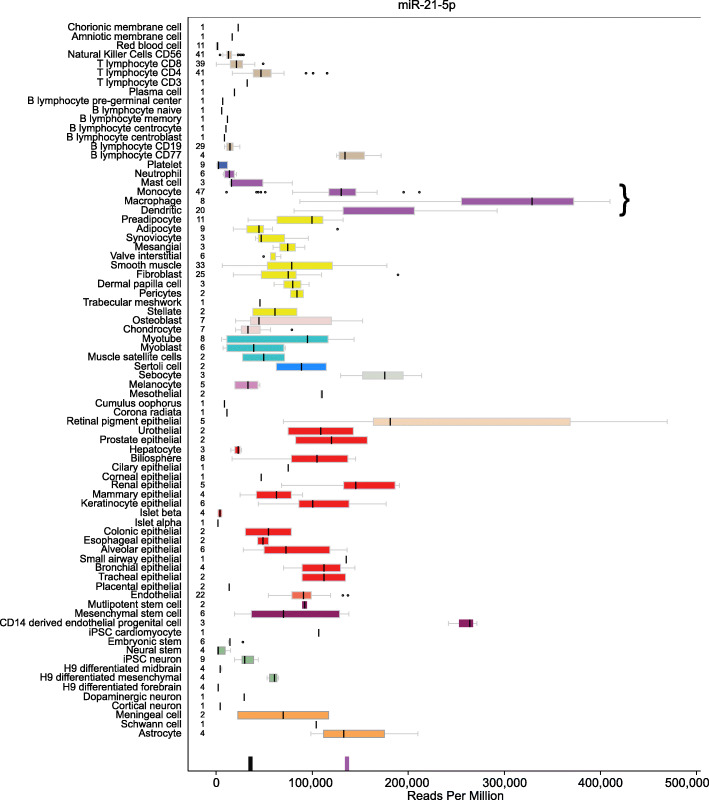
- miR-21 expression is highest in macrophages, monocytes, and dendritic cells: median 137,021 RPM among 75 combined macrophage, monocyte, and dendritic cell samples versus 38,281 RPM among 470 other cells from a combined 75 cell types.
- The authors argue that if miR-21 is elevated across many diseases—ranging from cardiovascular disease to cancer—it cannot be a specific biomarker for any one disease, and its use alongside other common miRNAs such as miR-155, miR-92a, and miR-122 further decreases specificity.
- They conclude that miR-21 remains functionally important and may be therapeutically targetable, but it is not a useful fluid-based biomarker; future work should focus on more cell-type-specific miRNAs such as miR-371a-3p for testicular cancer or miR-122 for liver injury.
Methods
- Narrative review/commentary dissociating miR-21’s cellular physiology and pathology from its potential as a biomarker.
- Data include two tables of published biomarker studies: Table 1 lists a subset of 16 non-neoplastic diseases, and Table 2 lists 13 neoplasias, with sample sizes, fluid sources, additional miRNA biomarkers, and predictive/prognostic status.
- Expression analysis uses the University of California, Santa Clara (UCSC) Genome Browser Human cellular microRNAome barCharts to compare miR-21 levels across cell types; no primary experimental data are reported.
Limitations
- The paper does not state a formal limitations section.
- Evident from the text: the biomarker tables are described as a “subset” of studies rather than a systematic or exhaustive review, and no primary validation or meta-analysis is performed.
- The argument focuses on miR-21 but notes that other ubiquitous miRNAs, such as let-7 family, miR-10a, and miR-22, may share the same biomarker-specificity concern.
Model-written summary. Check it against the paper before relying on it.
Integrity signals
Registry
Cites
Statistics
Figures
Verification
Claims the paper makes
9 Own interpretation · 4 Partly supported · 4 No basis given · 2 Not checked yet · 2 Own result · 1 Supported so far · 1 Couldn’t confirm · accuracy not yet measured
The cited sources support only part of this claim — read each source’s verdict below.
In the paper
“One important point about all of these studies is that there is ample evidence that miR-21 expression really is altered in many disease states [11, 20, 77, 78].”
§ miR-21: a non‐specific biomarker of all maladies > What do all of these biomarker studies tell us?
What the sources say
- Supportedcites [11] Meng F, Henson R, Wehbe-Janek H, Ghoshal K, Jacob ST, Patel T. MicroRNA-21 regulates expression of the PTEN tumor suppressor gene in human hepatocellular cancer. Gastroenterology. 2007;133(2):647–58. source
The Results report significantly increased miR-21 expression in 14 of 20 primary human HCC samples compared with matched nontumoral tissue. The Discussion also reports miR-21 overexpression in many other solid tumors, supporting the broad statement that its expression is altered in multiple disease states. (LLM, conf=0.87)
- Supportedcites [20] Liu G, Friggeri A, Yang Y, Milosevic J, Ding Q, Thannickal VJ, Kaminski N, Abraham E. miR-21 mediates fibrogenic activation of pulmonary fibroblasts and lung fibrosis. The Journal of experimental medicine. 2010;207(8):1589–97. source
The Results and Discussion report increased miR-21 expression in patients with idiopathic pulmonary fibrosis and in mice with bleomycin-induced lung fibrosis. The paper also discusses miR-21 regulation in cancer cells and its role in myocardial infarction models. It therefore supports the broad, multiply cited statement that miR-21 expression is altered in disease states. (LLM, conf=0.88)
- Partly supportedcites [77] Ribas J, Ni X, Haffner M, Wentzel EA, Salmasi AH, Chowdhury WH, Kudrolli TA, Yegnasubramanian S, Luo J, Rodriguez R, et al. miR-21: an androgen receptor-regulated microRNA that promotes hormone-dependent and hormone-independent prostate cancer growth. Cancer Res. 2009;69(18):7165–9. sourceExperimental — accuracy not yet measured
The Results and Discussion section, “Androgen-induced miR-21 in Prostate Cancer” (page not provided), reports significantly increased miR-21 expression in 6 of 10 prostate tumors compared with matched normal tissue. That supports altered expression in prostate cancer, but this paper’s reported expression findings do not establish the claim across many disease states. (LLM, conf=0.85)
- Not checked — no full text of the sourcecites [78] Jazbutyte V, Thum T. MicroRNA-21: from cancer to cardiovascular disease. Curr Drug Targets. 2010;11(8):926–35. source
boostedcorrelational- Asserted: passes — The authors put it forward as true.
- Checkable: passes — It can be checked against evidence.
- Load-bearing: passes — The paper’s conclusions depend on it.
- Based: passes — The paper gives a reason why it holds.
- Supported
The sources with a verdict support this claim; the rest weren’t checked yet, have no full text we could read, or their verdicts aren’t rated yet.
In the paper
“miR-21 is clearly involved in key regulatory pathways.”
§ miR-21: a non‐specific biomarker of all maladies > Need to separate the functional importance of a miRNA from its value as a biomarker
What the sources say
- Supportedcites [25] Sheedy FJ. Turning 21: Induction of miR-21 as a Key Switch in the Inflammatory Response. Frontiers in immunology. 2015;6:19. source
The Conclusion describes miR-21 as linked to key processes in inflammation and as regulating the balance between pro-inflammatory and immunosuppressive states. It also explicitly refers to signaling pathways and cellular processes regulated by miR-21, supporting the broad claim. (LLM, conf=0.92)
- Not checked — no full text of the sourcecites [26] Pfeffer SR, Yang CH, Pfeffer LM. The Role of miR-21 in Cancer. Drug development research. 2015;76(6):270–7. source
- Supportedcites [27] Kura B, Kalocayova B, Devaux Y, Bartekova M. Potential Clinical Implications of miR-1 and miR-21 in Heart Disease and Cardioprotection. International journal of molecular sciences 2020, 21(3). source
Section 2 describes miR-21 as involved in many biological processes. Section 5.2 identifies specific regulatory pathways involving miR-21, including JNK/SAPK and p38 signaling in cardiac fibroblasts, supporting the broad claim. (LLM, conf=0.93)
boostedcorrelational- Asserted: passes — The authors put it forward as true.
- Checkable: passes — It can be checked against evidence.
- Load-bearing: unclear — It is unclear whether the paper’s conclusions depend on it.
- Based: passes — The paper gives a reason why it holds.
- Supported
The cited sources support only part of this claim — read each source’s verdict below.
In the paper
“Modulating its expression in in vivo and in vitro studies show clear and important phenotype changes.”
§ miR-21: a non‐specific biomarker of all maladies > Need to separate the functional importance of a miRNA from its value as a biomarker
What the sources say
- Partly supportedcites [16] Yang CH, Yue J, Fan M, Pfeffer LM. IFN induces miR-21 through a signal transducer and activator of transcription 3-dependent pathway as a suppressive negative feedback on IFN-induced apoptosis. Cancer Res. 2010;70(20):8108–16. sourceExperimental — accuracy not yet measured
The Results section, “miR-21 expression suppresses IFN-induced apoptosis” (page unavailable), reports clear changes in apoptosis after miR-21 overexpression or knockdown in cultured cancer cells. Our copy does not report an in vivo experiment showing a phenotype change, so it supports only the in vitro part of the claim. (LLM, conf=0.87)
- Partly supportedcites [18] Liu Y, Nie H, Zhang K, Ma D, Yang G, Zheng Z, Liu K, Yu B, Zhai C, Yang S. A feedback regulatory loop between HIF-1alpha and miR-21 in response to hypoxia in cardiomyocytes. FEBS Lett. 2014;588(17):3137–46. sourceExperimental — accuracy not yet measured
Section 3.6 reports that inhibiting miR-21 increased apoptosis in hypoxic cardiomyocyte cells, supporting an in vitro phenotype change. The experiments described use cultured cells; our copy does not support the claim that this study also demonstrated phenotype changes in vivo. No page number is available in the indexed passage. (LLM, conf=0.88)
- Not checked — no full text of the sourcecites [19] Si ML, Zhu S, Wu H, Lu Z, Wu F, Mo YY. miR-21-mediated tumor growth. Oncogene. 2007;26(19):2799–803. source
boosteddirect- Asserted: passes — The authors put it forward as true.
- Checkable: passes — It can be checked against evidence.
- Load-bearing: passes — The paper’s conclusions depend on it.
- Based: passes — The paper gives a reason why it holds.
- Partly supported
The cited sources support only part of this claim — read each source’s verdict below.
In the paper
“It would seem to suggest that miR-21 is commonly upregulated in a stress environment [1].”
§ miR-21: a non‐specific biomarker of all maladies > What do all of these biomarker studies tell us?
What the sources say
- Partly supportedcites [1] Mendell JT, Olson EN. MicroRNAs in stress signaling and human disease. Cell. 2012;148(6):1172–87. sourceExperimental — accuracy not yet measured
The ‘MicroRNAs in Cardiovascular Disease’ section states that miR-21 is upregulated in response to cardiac stress. It does not establish that miR-21 is commonly upregulated across stress environments generally; the cited evidence is specific to cardiac stress. (LLM, conf=0.84)
hedgedcorrelational- Asserted: passes — The authors put it forward as true.
- Checkable: passes — It can be checked against evidence.
- Load-bearing: passes — The paper’s conclusions depend on it.
- Based: passes — The paper gives a reason why it holds.
- Partly supported
The cited sources support only part of this claim — read each source’s verdict below.
In the paper
“Unfortunately, many miRNAs, such as the let-7 family, miR-10a, miR-22, and others are also both commonly identified as disease biomarkers and common to many different cell types [79].”
§ miR-21: a non‐specific biomarker of all maladies > What do all of these biomarker studies tell us?
What the sources say
- Partly supportedcites [79] McCall MN, Kim MS, Adil M, Patil AH, Lu Y, Mitchell CJ, Leal-Rojas P, Xu J, Kumar M, Dawson VL, et al. Toward the human cellular microRNAome. Genome Res. 2017;27(10):1769–81. sourceExperimental — accuracy not yet measured
The Results section (‘Diverse microRNAs expression patterns’; page unavailable) reports that several let-7 family members were found in all sampled tissues, and the Abstract discusses why cellular localization matters for candidate miRNA biomarkers. But the paper does not establish that let-7, miR-10a, and miR-22 are all commonly identified disease biomarkers and common to many cell types; it cautions that presence across tissues can reflect a cell-specific miRNA. (LLM, conf=0.85)
plaincorrelational- Asserted: passes — The authors put it forward as true.
- Checkable: passes — It can be checked against evidence.
- Load-bearing: passes — The paper’s conclusions depend on it.
- Based: passes — The paper gives a reason why it holds.
- Partly supported
The paper states this without a source or data behind it here, so there is nothing to check it against. The quote shows it is in the paper.
In the paper
“As well, miR-21 levels are frequently used in conjunction with other common miRNAs such as miR-155, miR-92a, and miR-122, which also decreases specificity towards a particular disease (Table 1).”
§ miR-21: a non‐specific biomarker of all maladies > What do all of these biomarker studies tell us?
plaindirect- Asserted: passes — The authors put it forward as true.
- Checkable: passes — It can be checked against evidence.
- Load-bearing: passes — The paper’s conclusions depend on it.
- Based: passes — The paper gives a reason why it holds.
A result the paper reports from its own data — it cites no other source for it, so there is none to check. The quote shows it is in the paper.
In the paper
“As one can see from the data, miR-21 is implicated as a biomarker in no less than 29 diseases or processes.”
§ miR-21: a non‐specific biomarker of all maladies > miR-21: a biomarker across a spectrum of diseases
plaincorrelational- Asserted: passes — The authors put it forward as true.
- Checkable: passes — It can be checked against evidence.
- Load-bearing: passes — The paper’s conclusions depend on it.
- Based: passes — The paper gives a reason why it holds.
The paper states this without a source or data behind it here, so there is nothing to check it against. The quote shows it is in the paper.
In the paper
“Of note, miR-21 is elevated in each of these disease states ranging from cardiovascular disease to cancer.”
§ miR-21: a non‐specific biomarker of all maladies > miR-21: a biomarker across a spectrum of diseases
plaincorrelational- Asserted: passes — The authors put it forward as true.
- Checkable: passes — It can be checked against evidence.
- Load-bearing: passes — The paper’s conclusions depend on it.
- Based: passes — The paper gives a reason why it holds.
A conclusion the paper draws from its own results — it cites no other source for it, so there is none to check. The quote shows it is in the paper.
In the paper
“Again, there are too many reasons why miR-21 levels may change to be comfortably assigned to the disease of interest.”
§ miR-21: a non‐specific biomarker of all maladies > What do all of these biomarker studies tell us?
plain- Asserted: passes — The authors put it forward as true.
- Checkable: unclear — It is unclear whether it could be checked against evidence.
- Load-bearing: passes — The paper’s conclusions depend on it.
- Based: passes — The paper gives a reason why it holds.
A conclusion the paper draws from its own results — it cites no other source for it, so there is none to check. The quote shows it is in the paper.
In the paper
“Thus, it has no specificity to any one disease.”
- Also stated in: § Conclusions · plain
“While its levels may genuinely vary across bodily fluids in disease states, these variations have no specificity.”
§ miR-21: a non‐specific biomarker of all maladies > Abstract
plain- Asserted: passes — The authors put it forward as true.
- Checkable: passes — It can be checked against evidence.
- Load-bearing: passes — The paper’s conclusions depend on it.
- Based: passes — The paper gives a reason why it holds.
- Also stated in: § Conclusions · plain
- It may state two separate claims as one. 6
- Probably not a substantial claim. 4
The cited sources that could be checked couldn’t confirm or dispute this claim.
In the paper
“Each of these three miRNAs are also implicated in a range of neoplastic and non-neoplastic disorders.”
§ miR-21: a non‐specific biomarker of all maladies > What do all of these biomarker studies tell us?
What the sources say
- Could not verifycites [79] McCall MN, Kim MS, Adil M, Patil AH, Lu Y, Mitchell CJ, Leal-Rojas P, Xu J, Kumar M, Dawson VL, et al. Toward the human cellular microRNAome. Genome Res. 2017;27(10):1769–81. sourceExperimental — accuracy not yet measured
The Results section on diverse microRNA expression patterns reports that several let-7 family members occur across tissues, and the isomiR section discusses miR-10a-5p sequence variation. Neither passage links those miRNAs—or miR-22—to a range of neoplastic and non-neoplastic disorders. Searches for the three miRNAs and disease associations found no passage establishing the claimed links. (LLM, conf=0.74)
plaincorrelational- Asserted: passes — The authors put it forward as true.
- Checkable: passes — It can be checked against evidence.
- Load-bearing: unclear — It is unclear whether the paper’s conclusions depend on it.
- Based: passes — The paper gives a reason why it holds.
It may state two separate claims as one.
- Could not verify
The paper states this without a source or data behind it here, so there is nothing to check it against. The quote shows it is in the paper.
In the paper
“Amongst miRNAs, miR-21-5p (miR-21) is one of the most highly-expressed and highly-studied.”
§ miR-21: a non‐specific biomarker of all maladies > Introduction
plain- Asserted: passes — The authors put it forward as true.
- Checkable: passes — It can be checked against evidence.
- Load-bearing: fails — The paper’s conclusions may not depend on it.
- Based: fails — The paper may give no reason why it holds.
Probably not a substantial claim. The paper’s conclusions may not depend on it. The paper may give no reason why it holds. It may state two separate claims as one.
A result the paper reports from its own data — it cites no other source for it, so there is none to check. The quote shows it is in the paper.
In the paper
“These 45 publications span from 2008 to 2020 and have over 5,000 collective citations (median 68) indicating they are well-known studies and that miR-21 is continued to be pursued as a biomarker.”
§ miR-21: a non‐specific biomarker of all maladies > miR-21: a biomarker across a spectrum of diseases
boosted- Asserted: passes — The authors put it forward as true.
- Checkable: passes — It can be checked against evidence.
- Load-bearing: fails — The paper’s conclusions may not depend on it.
- Based: passes — The paper gives a reason why it holds.
Probably not a substantial claim. The paper’s conclusions may not depend on it. It may state two separate claims as one.
None of the sources cited for this claim have been checked yet.
In the paper
“While miR-21 is robustly expressed in most cell types, its highest expression levels appear in macrophages, monocytes, and dendritic cells.”
§ miR-21: a non‐specific biomarker of all maladies > miR-21: a biomarker across a spectrum of diseases
hedged- Asserted: passes — The authors put it forward as true.
- Checkable: passes — It can be checked against evidence.
- Load-bearing: passes — The paper’s conclusions depend on it.
- Based: passes — The paper gives a reason why it holds.
It may state two separate claims as one.
None of the sources cited for this claim have been checked yet.
In the paper
“From the University of California, Santa Clara (UCSC) Genome Browser Human cellular microRNAome barCharts, the median reads per million (RPM) of miR-21 amongst 75 combined macrophage, monocyte and dendritic cells was 137,021 RPM whereas it was only 38,281 RPM amongst 470 other cells of a combined 75 cell types (Fig. 1).”
§ miR-21: a non‐specific biomarker of all maladies > miR-21: a biomarker across a spectrum of diseases
plain- Asserted: passes — The authors put it forward as true.
- Checkable: passes — It can be checked against evidence.
- Load-bearing: unclear — It is unclear whether the paper’s conclusions depend on it.
- Based: passes — The paper gives a reason why it holds.
It may state two separate claims as one.
The paper states this without a source or data behind it here, so there is nothing to check it against. The quote shows it is in the paper.
In the paper
“It is also frequently claimed to be a biomarker of diseases such as cancer and heart disease in bodily-fluid based miRNA studies.”
§ miR-21: a non‐specific biomarker of all maladies > Abstract
plaincorrelational- Asserted: passes — The authors put it forward as true.
- Checkable: passes — It can be checked against evidence.
- Load-bearing: passes — The paper’s conclusions depend on it.
- Based: passes — The paper gives a reason why it holds.
Probably not a substantial claim.
A conclusion the paper draws from its own results — it cites no other source for it, so there is none to check. The quote shows it is in the paper.
In the paper
“If miR-21 is a marker of at least 29 diseases, then it cannot be a specific biomarker for any disease.”
§ miR-21: a non‐specific biomarker of all maladies > What do all of these biomarker studies tell us?
plain- Asserted: passes — The authors put it forward as true.
- Checkable: passes — It can be checked against evidence.
- Load-bearing: passes — The paper’s conclusions depend on it.
- Based: unclear — It is unclear why the paper says it holds.
It may state two separate claims as one.
A conclusion the paper draws from its own results — it cites no other source for it, so there is none to check. The quote shows it is in the paper.
In the paper
“This theme of multiple assignments of a miRNA as a biomarker is shared with other common, ubiquitous miRNAs and should be concerning for them as well.”
§ miR-21: a non‐specific biomarker of all maladies > Abstract
plaincorrelational- Asserted: passes — The authors put it forward as true.
- Checkable: passes — It can be checked against evidence.
- Load-bearing: passes — The paper’s conclusions depend on it.
- Based: fails — The paper may give no reason why it holds.
Probably not a substantial claim. The paper may give no reason why it holds.
The paper relies on this without support.
A biomarker must be specific to a single disease to be a viable candidate.
“As a result, it should not be considered a viable candidate to be a biomarker, despite its continued evaluation as such.”
Claims other papers make about this one
Each is checked against this paper’s own text: does it say what the citing paper says it does?
The cited source says what the claim attributes to it.
In the citing paper
“Despite its nonspecificity [33], miR-21 is considered a versatile regulator in the progression of CNS disorders [34] and was suggested to have both harmful and beneficial effects [35,36,37].”
From Emerging Role of miR-21-5p in Neuron–Glia Dysregulation and Exosome Transfer Using Multiple Models of Alzheimer’s Disease (2022) · cites this paper as [33]
Citations
Cites
Bartel (2004) · doi:10.1016/s0092-8674(04)00045-5 · Cited by 34,714
Circulating microRNAs as stable blood-based markers for cancer detection
Mitchell, P. S., Parkin, R. K., Kroh, E. M., Fritz, B. R., Wyman, S. K., Pogosova-Agadjanyan, E. L., Peterson, A., Noteboom, J., O'Briant, K. C., Allen, A., et al. (2008) · Proceedings of the National Academy of Sciences · doi:10.1073/pnas.0804549105 · Cited by 7,969
miRBase: annotating high confidence microRNAs using deep sequencing data
Kozomara, A., & Griffiths-Jones, S. (2014) · Nucleic Acids Research · doi:10.1093/nar/gkt1181 · Cited by 5,073
Identification of Novel Genes Coding for Small Expressed RNAs
Lagos-Quintana, M., Rauhut, R., Lendeckel, W., & Tuschl, T. (2001) · Science · doi:10.1126/science.1064921 · Cited by 4,956
Chen, X., Ba, Y., Ma, L., Cai, X., Yin, Y., Wang, K., Guo, J., Zhang, Y., Chen, J., Guo, X., et al. (2008) · Cell Research · doi:10.1038/cr.2008.282 · Cited by 4,560
MicroRNA-21 Regulates Expression of the PTEN Tumor Suppressor Gene in Human Hepatocellular Cancer
Meng, F., Henson, R., Wehbe–Janek, H., Ghoshal, K., Jacob, S. T., & Patel, T. (2007) · Gastroenterology · doi:10.1053/j.gastro.2007.05.022 · Cited by 2,773
Lawrie, C. H., Gal, S., Dunlop, H. M., Pushkaran, B., Liggins, A. P., Pulford, K. A. F., Banham, A. H., Pezzella, F., Boultwood, J., Wainscoat, J. S., et al. (2008) · British Journal of Haematology · doi:10.1111/j.1365-2141.2008.07077.x · Cited by 1,757
MicroRNAs in Stress Signaling and Human Disease
Mendell, J. T., & Olson, E. N. (2012) · Cell · doi:10.1016/j.cell.2012.02.005 · Cited by 1,673
Si, M.-L., Zhu, S., Wu, H., Lu, Z., Wu, F., & Mo, Y.-Y. (2007) · Oncogene · doi:10.1038/sj.onc.1210083 · Cited by 1,600
SMAD proteins control DROSHA-mediated microRNA maturation
Davis‐Dusenbery, B. N., Hilyard, A. C., Lagna, G., & Hata, A. (2008) · Nature · doi:10.1038/nature07086 · Cited by 1,287
Cited by
Sorted by citations
Items 101–200 of 248
Kalhori, M. R., Soleimani, M., Alibakhshi, R., Kalhori, A. A., Mohammadi, P., Azreh, R., & Farzaei, M. H. (2023) · Stem Cell Reviews and Reports · doi:10.1007/s12015-023-10510-8 · Cited by 11
A systematic review of micro‐RNAs in aortic stenosis and cardiac fibrosis
Adewuyi, J. O., Patel, R., Abbasciano, R. G., et al. (2022) · Clinical and Translational Science · doi:10.1111/cts.13303 · Cited by 10
Maruoka, H., Tanaka, T., Murakami, H., Tsuchihashi, H., Toji, A., Nunode, M., Daimon, A., Miyamoto, S., Nishie, R., Ueda, S., et al. (2022) · International Journal of Molecular Sciences · doi:10.3390/ijms232415715 · Cited by 10
Cheng, Y., Xue, G., Lan, L., Xu, H. Y., Cheng, R., Song, Q., Li, C., Zhang, J., Huang, G., Shen, Z., et al. (2023) · Biosensors and Bioelectronics · doi:10.1016/j.bios.2023.115501 · Cited by 10
Xue, G., Cheng, Y., Xu, H. Y., & Xue, C. (2023) · Analytical Chemistry · doi:10.1021/acs.analchem.3c01863 · Cited by 11
Onișor, D. M., Brusnic, O., Bănescu, C. V., Claudia, C., Săsăran, M. O., Stoian, M., Avram, C., Boicean, A., Boeriu, A. M., & Dobru, D. E. (2024) · Biomedicines · doi:10.3390/biomedicines12061315 · Cited by 10
Lundy, D. J., Szomolay, B., & Liao, C. (2024) · Function · doi:10.1093/function/zqae012 · Cited by 10
MicroRNAs in metabolism for precision treatment of lung cancer
Carrà, G., Petiti, J., Tolino, F., Vacca, R., & Orso, F. (2024) · Cellular & Molecular Biology Letters · doi:10.1186/s11658-024-00632-3 · Cited by 10
Sič, A., Atanasković, M., Ahmed, A., Petrović, I., Simović, F., Burnjaković, B., Tonković, U., Manzar, A., Shadab, S., Gajić, S., et al. (2025) · Medical Sciences · doi:10.3390/medsci13030172 · Cited by 9
Unlocking the power of non-coding RNAs: toward real-time cancer monitoring in precision oncology
Chang, M., Papazyan, T., Tostivint, E. P., & Fradin, D. (2026) · Molecular Cancer · doi:10.1186/s12943-025-02536-y · Cited by 14
Induction of Cardiac Pathology: Endogenous versus Exogenous Nrf2 Upregulation
Mathis, B. J., Kato, H., & Hiramatsu, Y. (2022) · Cells · doi:10.3390/cells11233855 · Cited by 9
Biß, S., Teschler, M., Heimer, M., Thum, T., Bär, C., Mooren, F. C., & Schmitz, B. (2023) · Journal of Applied Physiology · doi:10.1152/japplphysiol.00557.2022 · Cited by 10
Nikanfar, M., Nouri, M., Hassanpour, M., Rezaei, J., & Nourazarian, A. (2025) · Scientific Reports · doi:10.1038/s41598-025-05372-8 · Cited by 8
Lynch Syndrome Biopathology and Treatment: The Potential Role of microRNAs in Clinical Practice
Ascrizzi, S., Arillotta, G. M., Grillone, K., Caridà, G., Signorelli, S., Ali, A., Romeo, C., Tassone, P., & Tagliaferri, P. (2023) · Cancers · doi:10.3390/cancers15153930 · Cited by 8
Carmona‐Maurici, J., Ricart-Jané, D., Viñas, A., López-Tejero, M. D., Eskubi-Turró, I., Miñarro, A., Baena‐Fustegueras, J. A., Peinado‐Onsurbe, J., & Pardina, E. (2024) · Obesity Facts · doi:10.1159/000541175 · Cited by 8
Risk factors influencing chronic inflammation in neoplastic transition to prostate cancer
Prakash, P., Verma, S., & Gupta, S. (2024) · Journal of Translational Genetics and Genomics · doi:10.20517/jtgg.2024.52 · Cited by 8
Kanavarioti, A., Rehman, M. H., Qureshi, S., et al. (2024) · Non-Coding RNA · doi:10.3390/ncrna10040042 · Cited by 8
Zhu, Z., Zhang, H., Dong, X., Lin, M. S., & Yang, C. (2022) · Biosensors · doi:10.3390/bios12080557 · Cited by 10
Non-Coding Ribonucleic Acids as Diagnostic and Therapeutic Targets in Cardiac Fibrosis
Olson, S. R., Tang, W. H. W., & Liu, C. (2024) · Current Heart Failure Reports · doi:10.1007/s11897-024-00653-1 · Cited by 7
Challenges of using microRNAs as potential disease biomarkers. A review
Zinovkin, R. A., & Sakharov, I. Y. (2024) · Microchemical Journal · doi:10.1016/j.microc.2024.111379 · Cited by 7
Vandenhoeck, J., Ibrahim, J., Meulenaere, N. D., Peeters, D. J. E., Raskin, J., Hendriks, J. M. H., Schil, P. E. V., van Meerbeeck, J. P., Camp, G. V., & de Beeck, K. O. (2024) · Clinical Epigenetics · doi:10.1186/s13148-024-01790-z · Cited by 8
Tang, L., Yang, Y., Yang, M., et al. (2024) · Cell Biology and Toxicology · doi:10.1007/s10565-024-09946-6 · Cited by 7
Balan, A. I., Halațiu, V.-B., Comșulea, E., et al. (2025) · International Journal of Molecular Sciences · doi:10.3390/ijms26073049 · Cited by 7
Li, C., Xue, G., Wu, R., et al. (2023) · ACS Applied Materials & Interfaces · doi:10.1021/acsami.3c14718 · Cited by 7
Scuruchi, M., Avenoso, A., Aliquò, F., Pantano, A., Campo, G. M., Campo, S., & D’Ascola, A. (2024) · Archives of Biochemistry and Biophysics · doi:10.1016/j.abb.2024.110112 · Cited by 7
Solakoğlu, Ö., Steinbach, B., Götz, W., et al. (2022) · BMC Oral Health · doi:10.1186/s12903-021-02036-7 · Cited by 7
Pusta, A., Tertiş, M., Graur, F., et al. (2022) · Current Medicinal Chemistry · doi:10.2174/0929867329666220222113707 · Cited by 7
A Review of IsomiRs in Colorectal Cancer
Lausten, M. A., & Boman, B. M. (2023) · Non-Coding RNA · doi:10.3390/ncrna9030034 · Cited by 7
Qin, Y., Jiang, L., Sun, R., et al. (2024) · Chemosensors · doi:10.3390/chemosensors12040066 · Cited by 6
miRNA-21, an Important Regulator of Autoimmune Diseases
Tofigh, R., Safaralizadeh, R., Hosseinpourfeizi, M., Hemmat, N., & Baradaran, B. (2024) · Current Molecular Medicine · doi:10.2174/0115665240290075240514164601 · Cited by 6
Abbasifarid, A., Dorostkar, R., & Ghalavand, M. (2025) · Heliyon · doi:10.1016/j.heliyon.2025.e42961 · Cited by 6
The Potential and Limitations of the MinION/Yenos Platform for miRNA-Enabled Early Cancer Detection
Kanavarioti, A., & Rafiq, A. (2025) · International Journal of Molecular Sciences · doi:10.3390/ijms26083822 · Cited by 6
Lawarde, A., Khatun, M., Lingasamy, P., Salumets, A., & Modhukur, V. (2025) · Frontiers in Bioinformatics · doi:10.3389/fbinf.2025.1571476 · Cited by 7
The Antiviral Drug Efavirenz in Breast Cancer Stem Cell Therapy
Chiou, P.-T., Ohms, S., Philip G. Board, Dahlstrom, J. E., Rangasamy, D., & Casarotto, M. G. (2021) · Cancers · doi:10.3390/cancers13246232 · Cited by 6
Paediatrics congenital heart disease is associated with plasma miRNAs
González-Moyotl, N. J., Huesca‐Gómez, C., Torres-Paz, Y. E., Fuentevilla-Álvarez, G., Romero-Maldonado, S., Sámano, R., Soto, M. E., Rosas, M., Domínguez‐López, A., & Gamboa, R. (2024) · Pediatric Research · doi:10.1038/s41390-024-03230-3 · Cited by 6
Extracellular Vesicle miRNAs in Diagnostics of Gastric Cancer
Skryabin, G. O., Beliaeva, A. A., Enikeev, A. D., & Tchevkina, E. M. (2024) · Biochemistry (Moscow) · doi:10.1134/s0006297924070058 · Cited by 6
Extracellular Vesicles in Aging and Age‐Related Diseases. How Important Are They?
Lundy, D. J., & Liao, C. (2025) · Advanced Biology · doi:10.1002/adbi.202400656 · Cited by 7
Diagnostic and Therapeutic Potential of Selected microRNAs in Colorectal Cancer: A Literature Review
Sychowski, G., Romanowicz, H., Ciesielski, W., Hogendorf, P., Durczyński, A., & Smolarz, B. (2025) · Cancers · doi:10.3390/cancers17132135 · Cited by 6
Biener, M., Giannitsis, E., Thum, T., et al. (2021) · Clinical Biochemistry · doi:10.1016/j.clinbiochem.2021.09.009 · Cited by 6
Bielak, C., Arya, A. K., & Savill, S. A. (2023) · Cancer Biomarkers · doi:10.3233/cbm-210504 · Cited by 6
Bonab, R. A., Asfa, S., Kontou, P. I., Karakülah, G., & Pavlopoulou, A. (2022) · PeerJ · doi:10.7717/peerj.14149 · Cited by 6
Brown, S. R., Radcliffe, M. E., Danner, J. T., Andújar-Cruz, W. J., Lackey, K., Park, H., Weinman, S. T., & Kim, Y. (2024) · Biomolecules · doi:10.3390/biom14070757 · Cited by 6
Stanić, J., Šović, I., Jovanovic, L., Matić, I. Z., Nikić, P., & Nikitović, M. (2025) · Life · doi:10.3390/life15071062 · Cited by 6
Chen, Y., Cheng, C., & Chen, L. (2024) · Cancer Gene Therapy · doi:10.1038/s41417-024-00832-1 · Cited by 5
Potential roles of exosomes in the initiation and metastatic progression of lung cancer
Liang, H., Zhang, L., & Rong, J. (2023) · Biomedicine & Pharmacotherapy · doi:10.1016/j.biopha.2023.115222 · Cited by 5
Zhou, M., Xu, H., Zhang, Y., et al. (2026) · Biosensors and Bioelectronics · doi:10.1016/j.bios.2026.118646 · Cited by 4
Rahimah, S., Tallei, T. E., Savitri, M., Yamada, C., Kim, H. J., CHOI, M. H., Park, M. N., Ophinni, Y., & Kim, B. (2026) · Food Chemistry Molecular Sciences · doi:10.1016/j.fochms.2026.100411 · Cited by 7
Text Mining Strategy Identifies Gene Networks Under Control of miR ‐21 in Breast Cancer Development
Hong, Y., Wu, Y., Tran, R., & Wang, J. (2025) · Cancer Medicine · doi:10.1002/cam4.70986 · Cited by 3
The Prognostic Role of Micro-RNAs in Head and Neck Cancers: An Umbrella Review
Mariani, M., Castagna, C., Boccia, S., et al. (2021) · Journal of Personalized Medicine · doi:10.3390/jpm11080821 · Cited by 4
Möhl, W., Kiseleva, Z., Jusić, A., et al. (2023) · Frontiers in Cardiovascular Medicine · doi:10.3389/fcvm.2023.1030842 · Cited by 4
Melatonin affects the expression of microRNA-21: A mini-review of current evidence
Rafiyan, M., Gouyandeh, F., Saati, M., Davoodvandi, A., Manesh, S. M. R., Asemi, R., Sharifi, M., & Asemi, Z. (2024) · Pathology - Research and Practice · doi:10.1016/j.prp.2024.155160 · Cited by 4
False discovery rate control: Moving beyond the Benjamini–Hochberg methodPreprint
Koner, S., Sarkar, N. D., & Laha, N. (2024) · Research Square · doi:10.21203/rs.3.rs-3861673/v1 · Cited by 5
Vargas, A., Galan, J., Reddy, K. P., et al. (2025) · Pediatric Cardiology · doi:10.1007/s00246-025-03935-0 · Cited by 3
Luxen, M., van der Aart, T. J., Jongman, R. M., Zwiers, P. J., Moser, J., Pultar, M., Skalicky, S., Diendorfer, A. B., Bouma, H. R., Koeze, J., et al. (2025) · Scientific Reports · doi:10.1038/s41598-025-17319-0 · Cited by 4
Deiana, M., Vezzelli, E., Mazzi, C., Lavezzari, D., Manfredi, M., Moretta, F., Piubelli, C., Gobbi, F. G., & Tiberti, N. (2026) · International Journal of Molecular Sciences · doi:10.3390/ijms27020892 · Cited by 3
Gherman, L.-M., Tomuleasa, D., Cismaru, C. A., Nutu, A. M., & Berindan‐Neagoe, I. (2024) · Medicine and Pharmacy Reports · doi:10.15386/mpr-2733 · Cited by 4
Non-coding RNAs in alcohol-associated liver disease
Zeng, G., Gao, H., Jiang, Y., Huda, N., Thoudam, T., Yang, Z., Ma, J., Sun, J., & Liangpunsakul, S. (2025) · Liver Research · doi:10.1016/j.livres.2025.04.007 · Cited by 3
Epigenetic Biomarkers of Cardiovascular Risk in Frail Patients—A Scope Review
Wawrzyniak, S., Cieśla, J., Woś, M., Wołoszyn-Horák, E., Masternak, M. M., Kukulski, T., Stępień, E. Ł., & Tomasik, A. R. (2025) · Current Issues in Molecular Biology · doi:10.3390/cimb47060422 · Cited by 3
Xu, J., Qin, Y., Liang, Q., et al. (2022) · Chemical Communications · doi:10.1039/d2cc03980j · Cited by 3
Leventić, M., Opačak‐Bernardi, T., Rastija, V., Matić, J., Saftić, D., Ban, Ž., Žinić, M., & Glavaš‐Obrovac, L. (2023) · Molecules · doi:10.3390/molecules28166136 · Cited by 3
Jimbu, L., Mesaros, O., Joldes, C., Neaga, A., Zaharie, L. C., & Zdrenghea, M. (2024) · Biomedicines · doi:10.3390/biomedicines12010121 · Cited by 3
An extracellular vesicle microRNA-initiated 3D DNAzyme motor for colorectal cancer diagnosis
Fan, Q., Sun, X., Wu, N., et al. (2024) · The Analyst · doi:10.1039/d4an00635f · Cited by 3
Hohmann, T., Hohmann, U., Dehghani, F., Grisk, O., & Jasinski‐Bergner, S. (2024) · International Journal of Molecular Sciences · doi:10.3390/ijms25147838 · Cited by 3
Femtomolar-level PCR-free quantification of microRNA cancer biomarkers in serumPreprint
Kanavarioti, A. (2023) · bioRxiv (Cold Spring Harbor Laboratory) · doi:10.1101/2022.12.30.522268 · Cited by 3
Wang, K. R., Hecker, J., & McGeachie, M. J. (2024) · SSRN Electronic Journal · doi:10.1101/2024.07.08.602488 · Cited by 3
Jallod, I. M. S., Abbas, A. K., Yaqoob, F. I., & Aziz, A.-A. A. (2025) · Naunyn-Schmiedeberg s Archives of Pharmacology · doi:10.1007/s00210-025-04209-5 · Cited by 3
Hörauf, J.-A., Leppik, L. P., Weber, B., Hildebrand, F., Störmann, P., Henrich, D. M., Marzi, İ., & Schindler, C. R. (2025) · Brain Communications · doi:10.1093/braincomms/fcaf242 · Cited by 2
Garehbaghi, S., Richtera, L., Altıntaş, Z., et al. (2025) · ACS Omega · doi:10.1021/acsomega.5c05564 · Cited by 2
van der Aart, T. J., Luxen, M., Koeze, J., van Londen, M., Hackl, M., ter Maaten, J. C., van Meurs, M., & Bouma, H. R. (2025) · PLoS ONE · doi:10.1371/journal.pone.0331442 · Cited by 4
Santos, A. A., Pires, D., Marques, V., Alesina, N., Rodrigues, P. M., Bravo, A. C., Gouveia, C., Saraiva, S., Correia, L., Crespo, R., et al. (2025) · Experimental and Molecular Pathology · doi:10.1016/j.yexmp.2025.105013 · Cited by 2
Quiroz-Reyes, A. G., González, P. D., Islas, J. F., Loaiza-Gutiérrez, V. L., Santoyo-Suárez, M. G., García-Loredo, J. A., González-Villarreal, C. A., Ramirez-Fernandez, F., & Garza-Treviño, E. N. (2026) · World Journal of Gastrointestinal Oncology · doi:10.4251/wjgo.v18.i1.113553 · Cited by 2
Advances in lipids design for LNP-mediated DNA and RNA delivery
Zhi, D., Halemaimaiti, A., Dai, B., Li, H., Wang, H., Zhang, Z., Yu, J., & Zhang, S. (2026) · Advances in Colloid and Interface Science · doi:10.1016/j.cis.2026.103897 · Cited by 2
Zeng, H., Zhou, H., Lin, J.-L., et al. (2023) · ACS Omega · doi:10.1021/acsomega.2c06532 · Cited by 2
Combining serum microRNAs and machine learning algorithms for diagnosing infectious fever after HSCT
Shao, W., Wang, Y., Liu, L.-Z., Ren, Y., Wang, J., Cui, Y., Liu, J., Zhang, X., Zhang, S., Liu, S., et al. (2024) · Annals of Hematology · doi:10.1007/s00277-024-05755-3 · Cited by 2
Nissen, P. H., & Pedersen, O. B. (2025) · Seminars in Thrombosis and Hemostasis · doi:10.1055/s-0045-1805041 · Cited by 2
MicroRNAs in acute kidney injury
Zhang, M., Wang, Y., Zhou, Y., Wang, X., & Wu, X. (2025) · Clinica Chimica Acta · doi:10.1016/j.cca.2025.120301 · Cited by 2
Microglia modulate concussion biomarkers and cognitive recovery in male mice
Anderson, E. D., Augustin, D. V., Georges, A. P., Kim, T., Issadore, D., & Meaney, D. F. (2026) · Journal of Neuroinflammation · doi:10.1186/s12974-026-03999-6 · Cited by 1
Prodan, M., Costescu, S., Elagez, A., et al. (2024) · Current Oncology · doi:10.3390/curroncol31050220 · Cited by 2
A microRNA Signature of Metastatic Colorectal CancerPreprint
Høye, E., Fromm, B., Böttger, P. H. M., Domańska, D., Torgunrud, A., Lund‐Andersen, C., Abrahamsen, T. W., Fretland, Å. A., Dagenborg, V. J., Lorenz, S., et al. (2020) · bioRxiv (Cold Spring Harbor Laboratory) · doi:10.1101/2020.06.01.127647 · Cited by 2
Parichehreh, E., Kiaei, A. A., Boush, M., Safaei, D., Bahadori, R., Salari, N., Mohammadi, M., & Khorram, A. (2024) · medRxiv · doi:10.1101/2024.02.18.24302988 · Cited by 2
Carlos, F.-M. J., Gabriel, D. L. T.-C. C., Genoveva, P.-P. A., et al. (2022) · Environmental Toxicology and Pharmacology · doi:10.1016/j.etap.2022.104032 · Cited by 1
Nayer, S., Khalil, G. I., Kandil, M. A. E.-H., Dwedar, F., Shehata, G. M., Elrachidy, D., & Arafa, N. (2022) · Medicine Updates · doi:10.21608/muj.2022.181558.1120 · Cited by 1
Mihaljević, J., Mihaljević, D., Drenjančević, I., & Sitaš, Z. (2024) · Proceedings of the Shevchenko Scientific Society Medical Sciences · doi:10.25040/ntsh2024.01.06 · Cited by 1
Extracellular vesicles in kidney disease – A veterinary perspective
Lawson, J. S., & Williams, T. L. (2024) · The Veterinary Journal · doi:10.1016/j.tvjl.2024.106247 · Cited by 1
Negative energy balance by feed deprivation affects the adipose miRNome in the lactating goat
Faulconnier, Y., Ye, T., & Leroux, C. (2025) · Journal of Animal Science · doi:10.1093/jas/skaf044 · Cited by 1
Akshaya, J., Victor, D. J., Appukuttan, D., Venkadassalapathy, S., Subramanian, S., & Prakash, P. S. G. (2025) · Gene Reports · doi:10.1016/j.genrep.2025.102213 · Cited by 1
Magazova, A., Ashirbekov, Y., Abaildayev, A., Satken, K., Utegenova, G., MARATOVICH, B. A., Balmukhanova, A., Dzhumataeva, Z., Айдарбековна, Б. А., Shargorodska, I. V., et al. (2025) · PeerJ · doi:10.7717/peerj.19259 · Cited by 3
Long non-coding RNA GAS5 promotes neuronal apoptosis in spinal cord injury via the miR-21/PTEN axis
Wang, Y., Zhi, Z., Liu, T., et al. (2025) · World Journal of Orthopedics · doi:10.5312/wjo.v16.i5.106183 · Cited by 1
Ghobrial, M., Fouda, A., Elwafa, S. A., et al. (2025) · Zagazig Journal of Forensic Medicine · doi:10.21608/zjfm.2025.329684.1203 · Cited by 1
Dual-regulatory miRNAs: master regulators and therapeutic targets in bone-metastatic breast cancer
Meng, F., Zhang, M., Pu, D., Shi, G., & Li, J. (2025) · Frontiers in Molecular Biosciences · doi:10.3389/fmolb.2025.1680908 · Cited by 1
Huang, J., Chi, Z., Lin, X., et al. (2025) · Scientific Reports · doi:10.1038/s41598-025-29568-0 · Cited by 1
Role of micro RNA 21 (miR-21) in dengue disease progression and cross talk with target proteins
Datta, D., & Ghosh, S. (2025) · Computational Biology and Chemistry · doi:10.1016/j.compbiolchem.2025.108861 · Cited by 1
Izzo, F., Mazumder, A., de Gannes, F. P., et al. (2025) · Proceedings of IEEE Sensors/Proceedings of IEEE Sensors ... · doi:10.1109/sensors59705.2025.11330985 · Cited by 1
Brunekreef, T. E., Otten, H. G., van Laar, J. M., & Limper, M. (2026) · EULAR Rheumatology Open · doi:10.1016/j.ero.2025.11.025 · Cited by 2
Gold Nanoparticle-Assisted Multiharmonic and Multivariate QCM Sensing of miRNA-21
Izzo, F., Mazumder, A., de Gannes, F. P., et al. (2026) · IEEE Sensors Journal · doi:10.1109/jsen.2026.3673862 · Cited by 1
Knyazeva, M. S., Zagoruiko, V. A., Khokhlova, A. V., Nazarova, I. V., Shalaev, A., Sidina, E., Zabegina, L., Artemyeva, A. S., Носов, А. К., Анатольевна, П. С., et al. (2022) · Advances in molecular oncology · doi:10.17650/2313-805x-2022-9-1-20-32 · Cited by 1
Cellular Chitchatting: Exploring the Role of Exosomes as Cardiovascular Risk Factors
Germena, G., Zelarayan, L. C., & Hinkel, R. (2022) · Frontiers in Cell and Developmental Biology · doi:10.3389/fcell.2022.860005 · Cited by 1
Research Progress of miR-21 in Non-Alcoholic Fatty Liver Disease
彭, 冉. (2022) · Advances in Clinical Medicine · doi:10.12677/acm.2022.12121673 · Cited by 1
Maries, L., Moatăr, A. I., Sala-Cîrtog, M., et al. (2023) · Biomedicines · doi:10.3390/biomedicines11102738 · Cited by 1
Li, C., Yang, K., Song, H., et al. (2024) · Virus Research · doi:10.1016/j.virusres.2024.199396 · Cited by 1
Metadata
- Authors
- Jenike, A. E., & Halushka, M. K.
- Affiliations
- Johns Hopkins University (US)
- Corresponding author
- Halushka, Marc K.
- ORCID
- Halushka, Marc K.
- Venue
- Biomarker Research
- Published
- 2021-03-12
- Volume
- 9
- Issue
- 1
- Pages
- 18-18
- ISSN
- 2050-7771 (ISSN-L)
- PMC
- PMC7953557
- OpenAlex
- W3133811159
- Cited by
- 248
- References
- 83
- Citations by year
- 2026: 32 · 2025: 48 · 2024: 68 · 2023: 43 · 2022: 38 · 2021: 17
- FWCI
- 13.66
- Type
- journal article
- Language
- en
- Open access
- gold
- doi.org
- Locations
- Biomarker Research (publishedVersion, cc-by)
- PubMed (publishedVersion)
- PubMed Central (submittedVersion, cc-by)
- DOAJ (DOAJ: Directory of Open Access Journals) (submittedVersion, cc-by-sa)
- Funders
- National Institute of General Medical Sciences (R01GM130564)
- National Heart, Lung, and Blood Institute (1R01HL137811)
- Topics
- Life Sciences › Biochemistry, Genetics and Molecular Biology › Cancer Research › MicroRNA in disease regulation
- Life Sciences › Biochemistry, Genetics and Molecular Biology › Molecular Biology › Extracellular vesicles in disease
- Life Sciences › Biochemistry, Genetics and Molecular Biology › Cancer Research › Cancer-related molecular mechanisms research
- Keywords
- miR-21, microRNA, biomarkers, biomarker specificity, disease biomarkers, cancer, heart disease, biological fluids, miRNA expression regulation
About these checks
Registry, retraction, Cites and statistics results are computed, not judged, with one exception: a printed reference that no index lists is read once by a model before it counts as a citation error. Claims are extracted by a model and kept only when their quote appears verbatim in the text; each cited source is then checked, with a model’s help, for whether it says what the claim relies on. Those verdicts can be wrong — read the claim’s quote and the cited source before relying on one.
A language model drew the claims from the paper on 2026-10-19, under version 3 of the claim definition (model deepseek-v4.1-flash, prompt extract-v3).
A second model labelled each claim on 2026-10-19 (model jev-1.13-20260917, definition revision gold-guideline-v0.2).
Cited sources are checked with a language model’s help (gpt-6-sol).
Statistics and arithmetic are recomputed, not judged.
Confidence bands are shown only for fields calibrated on our annotated test set. None is calibrated yet, so no band is shown.
What counts as a claim ›How we measure confidence ›How we check this ›
Are you an author, or do you see a problem with this page? Request a review
