

Single-cell sequencing to multi-omics: technologies and applications
Open accessThe DOI matches its Crossref record; 249 of the 251 references it cites were found in a registry or an index; 126 of the 175 sources its claims cite were checked for support.
Abstract
Cells, as the fundamental units of life, contain multidimensional spatiotemporal information. Single-cell RNA sequencing (scRNA-seq) is revolutionizing biomedical science by analyzing cellular state and intercellular heterogeneity. Undoubtedly, single-cell transcriptomics has emerged as one of the most vibrant research fields today. With the optimization and innovation of single-cell sequencing technologies, the intricate multidimensional details concealed within cells are gradually unveiled. The combination of scRNA-seq and other multi-omics is at the forefront of the single-cell field. This involves simultaneously measuring various omics data within individual cells, expanding our understanding across a broader spectrum of dimensions. Single-cell multi-omics precisely captures the multidimensional aspects of single-cell transcriptomes, immune repertoire, spatial information, temporal information, epitopes, and other omics in diverse spatiotemporal contexts. In addition to depicting the cell atlas of normal or diseased tissues, it also provides a cornerstone for studying cell differentiation and development patterns, disease heterogeneity, drug resistance mechanisms, and treatment strategies. Herein, we review traditional single-cell sequencing technologies and outline the latest advancements in single-cell multi-omics. We summarize the current status and challenges of applying single-cell multi-omics technologies to biological research and clinical applications. Finally, we discuss the limitations and challenges of single-cell multi-omics and potential strategies to address them.
Overview
CoChat Summary
TL;DR
This review summarizes single-cell sequencing and single-cell multi-omics technologies across temporal, spatial, genome, epigenome, proteome, immune repertoire, microbiome, and metabolome dimensions, and their biological and clinical applications. It also outlines current challenges, including high cost, strict sample requirements, computational integration, missing or mismatched information, and doublets.
Key findings
- Single-cell multi-omics extends scRNA-seq by simultaneously measuring multiple modalities in the same cell, with the review cataloging technologies for time (metabolic RNA labeling, fluorescent timers, CRISPR/Cas9 lineage tracing), space (ISH/ISS, ROI selection, spatial barcoding), genome, epigenome, protein/epitope, immune repertoire, microbiome, and metabolome.
- Reported cell/feature numbers include scSLAM-seq at 110 cells, scNT-seq at ∼55,000 cells, Well-TEMP-seq at 16,000 cells, TrackerSci at ∼800,000 cells, Zmen-seq at 8,976 cells, microSPLiT detecting subpopulations down to 0.142%, Microbe-seq with most single-amplified genomes over 95% purity, and mass spectrometry-based single-cell proteomics at about 1,500–2,500 proteins.
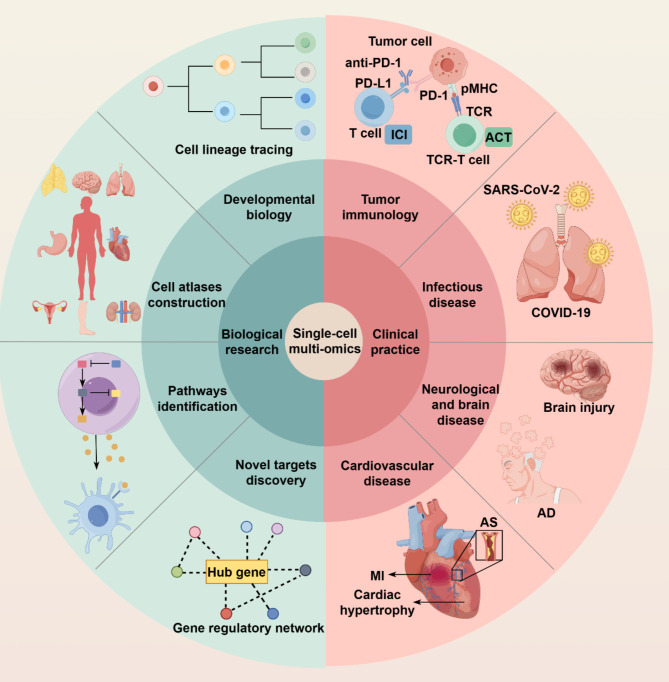
- Applications span cell atlas construction, developmental biology, pathway identification, and novel target discovery, as well as clinical areas such as tumor immunology, host-microbe interactions, infectious diseases, cardiovascular disease, and neurological/brain disease. For example, scTrio-seq was applied to 25 cancer cells and identified two distinct subsets, and an integrated human single-cell eQTL database comprises ∼16 million SNPs and ∼0.69 million sceQTLs.
- The review highlights that single-cell multi-omics can reveal cell states and targets not captured by transcriptomics alone, but also notes persistent challenges in cost, sample quality, data integration, sequencing depth, immune repertoire chain matching, and doublet removal.
Methods
- Narrative review; no original experiments or new primary data are reported. It synthesizes published single-cell sequencing and single-cell multi-omics technologies and their biological/clinical applications.
- Tables summarize time-resolved single-cell technologies (e.g., scSLAM-seq, NASC-seq, Sci-fate, scNT-seq, Well-TEMP-seq, scEU-seq, TrackerSci, Zmen-seq, CARLIN) and spatial transcriptomics/multi-omics technologies (e.g., smFISH, seqFISH+, MERFISH, STARmap PLUS, Geo-seq, DSP, 10× Visium, Slide-seq, Stereo-seq, DBiT-seq, spatial CITE-seq, Slide-tags) with resolution, data type, sample type, and genes/transcripts detected.
- The review also discusses computational analysis tools and workflows, including Seurat, Scanpy, Monocle, RNA velocity, Palantir, CytoTRACE, SCENIC, CellChat, CellPhoneDB, and batch-correction methods such as CCA, MNN, and Harmony.
Limitations
- The paper states that high cost and strict sample requirements discourage many researchers and restrict large-scale cohorts and clinical application; fresh tissue is generally preferred, freeze-thaw samples are usually recommended for snRNA-seq, and cell suspension quantity and viability affect data quality.
- The paper states that robust computational methods for integrating multi-dimensional single-cell data are still needed, that inconsistencies can occur among omics measured simultaneously in the same cells, and that sequencing depth, missing or incorrectly matched TCR chains, and doublets can confound downstream analyses.
- Evident from the text: as a narrative review, it does not perform a systematic search or quantitative synthesis and reports no primary validation data.
Model-written summary. Check it against the paper before relying on it.
Integrity signals
Registry
Cites
Statistics
Figures
Verification
Claims the paper makes
98 Valid · 9 Not valid · 33 Not checked · 20 Own results and interpretations
Every source the paper cites for this claim was checked and supports it.
In the paper
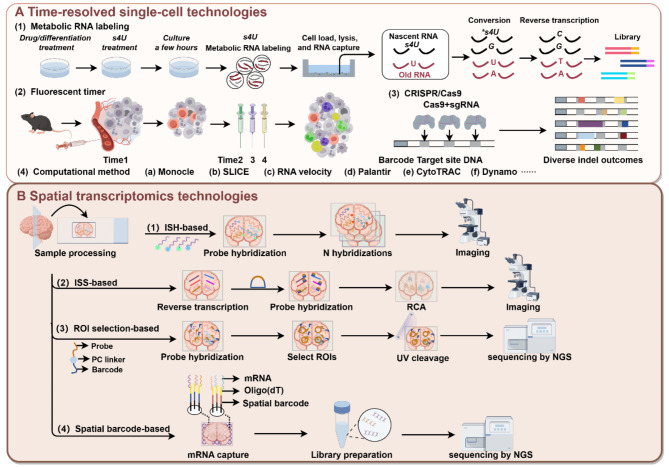
“The emergence of CRISPR/Cas9 technology facilitates the deliberate introduction of mutations using guide RNAs (gRNAs) [40].”
§ Single-cell sequencing to multi-omics: technologies and applications > New advances in single-cell sequencing > CRISPR/Cas9
What the sources say
- Supportedcites [40] McKenna A, Findlay GM, Gagnon JA, Horwitz MS, Schier AF, Shendure J. Whole-organism lineage tracing by combinatorial and cumulative genome editing. Science. 2016;353:aaf7907. 27229144 PMC4967023 source
In the Results section on barcode editing in cultured cells, the authors describe deliberately editing a CRISPR/Cas9 target array by introducing Cas9 and a single guide RNA. They then report mutations in the edited barcodes. The supplied passage does not specify a page number. (LLM, conf=0.94)
plainstates a cause- Asserted: passes — The authors put it forward as true.
- Checkable: passes — It can be checked against evidence.
- Load-bearing: unclear — It is unclear whether the paper’s conclusions depend on it.
- Based: passes — The paper gives a reason why it holds.
- Supported
The cited sources support only part of this claim — read each source’s verdict below.
In the paper
“Sample multiplexed scRNA-seq is another solution, establishing an efficient method for massively parallel species-mixing experiments [18–22].”
§ Single-cell sequencing to multi-omics: technologies and applications > Conventional single-cell sequencing
What the sources say
- Supportedcites [18] Cao J, Packer JS, Ramani V, Cusanovich DA, Huynh C, Daza R, Qiu X, Lee C, Furlan SN, Steemers FJ, et al. Comprehensive single-cell transcriptional profiling of a multicellular organism. Science. 2017;357:661–7. 28818938 PMC5894354 source
The Overview of sci-RNA-seq says multiple samples can be processed concurrently. The Scalability section reports a human–mouse mixing experiment that recovered 15,997 single-cell transcriptomes, and the Discussion describes the method as scalable and low-cost. These passages support the characterization of an efficient, massively parallel method for species-mixing experiments; page numbers were not provided. (LLM, conf=0.90)
- Not checked — no full text of the sourcecites [19] Gehring J, Hwee Park J, Chen S, Thomson M, Pachter L. Highly multiplexed single-cell RNA-seq by DNA oligonucleotide tagging of cellular proteins. Nat Biotechnol. 2020;38:35–8. 31873215 source
- Partly supportedcites [20] Shin D, Lee W, Lee JH, Bang D. Multiplexed single-cell RNA-seq via transient barcoding for simultaneous expression profiling of various drug perturbations. Sci Adv. 2019;5:eaav2249. 31106268 PMC6520024 sourceExperimental — accuracy not yet measured
The Results section (page unavailable) reports a six-sample human–mouse species-mixing experiment that validated the multiplexing method. The Discussion describes cost advantages and high multiplexing capacity, but the paper does not establish massively parallel species-mixing experiments: the species-mixing demonstration was six-plex. (LLM, conf=0.82)
- Partly supportedcites [21] McGinnis CS, Patterson DM, Winkler J, Conrad DN, Hein MY, Srivastava V, Hu JL, Murrow LM, Weissman JS, Werb Z, et al. MULTI-seq: sample multiplexing for single-cell RNA sequencing using lipid-tagged indices. Nat Methods. 2019;16:619–26. 31209384 PMC6837808 sourceExperimental — accuracy not yet measured
The Results section on demultiplexing reports species-specific classification of mixed human and mouse nuclei. The Results section on doublets demonstrates efficient, large-scale multiplexing of 96 human mammary epithelial cell samples, but our copy does not demonstrate a massively parallel species-mixing experiment; the claim combines features shown in separate experiments. Page numbers are unavailable in our copy. (LLM, conf=0.82)
- Supportedcites [22] Zhao X, Sun S, Yu W, Zhu W, Zhao Z, Zhou Y, Ding X, Fang N, Yang R, Li JP. Improved ClickTags enable live-cell barcoding for highly multiplexed single cell sequencing. RSC Chem Biol. 2022;3:1052–60. 35975006 PMC9347365 source
The paper describes sample multiplexing as a way to achieve massively parallel analysis in a single experiment (passage 6, indexed under Abstract). It also reports pooling 16 barcoded human and mouse cell samples for scRNA-seq and accurately assigning cells to their samples (passage 3). No page numbers are provided in our copy. (LLM, conf=0.88)
boostedstates a cause- Asserted: passes — The authors put it forward as true.
- Checkable: passes — It can be checked against evidence.
- Load-bearing: unclear — It is unclear whether the paper’s conclusions depend on it.
- Based: passes — The paper gives a reason why it holds.
- Supported
The cited sources support only part of this claim — read each source’s verdict below.
In the paper
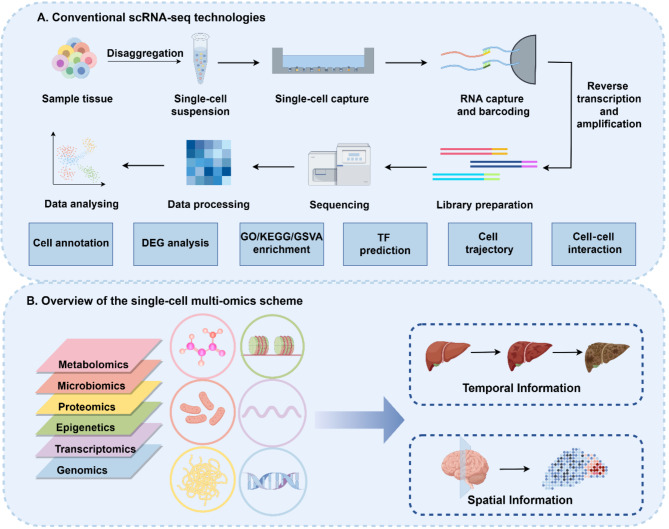
“Integrating data from multiple experiments requires the use of employ algorithms such as Seurat’s canonical correlation analysis (CCA), mutual nearest neighbors (MNN), or Harmony to batch correction [16, 17].”
§ Single-cell sequencing to multi-omics: technologies and applications > Conventional single-cell sequencing
What the sources say
- Supportedcites [16] Korsunsky I, Millard N, Fan J, Slowikowski K, Zhang F, Wei K, Baglaenko Y, Brenner M, Loh PR, Raychaudhuri S. Fast, sensitive and accurate integration of single-cell data with Harmony. Nat Methods. 2019;16:1289–96. 31740819 PMC6884693 source
The Online Methods (Harmony) describe Harmony as producing a batch-corrected embedding. The Online Methods (Analysis Details) identify MNN Correct and Seurat MultiCCA as comparison integration algorithms, supporting the cited examples of methods for integrating data across experiments. (LLM, conf=0.89)
- Partly supportedcites [17] Buttner M, Miao Z, Wolf FA, Teichmann SA, Theis FJ. A test metric for assessing single-cell RNA-seq batch correction. Nat Methods. 2019;16:43–9. 30573817 sourceExperimental — accuracy not yet measured
Our copy supports the general point and two of the three named algorithms: the Introduction states that 'various methods have been proposed to remove or reduce cell-specific bias and batch effects in single-cell data... ranging from linear regression models such as ComBat to nonlinear models such as Seurat's canonical correlation analysis (CCA) and projection of mutual nearest neighbors (MNNs)', and the Results section 'Beyond replicates: dataset integration across studies' plus the Discussion treat CCA and MNN as integration tools, noting that 'batch-effect correction tools play a key role in data integration'. However, Harmony is never mentioned anywhere in our copy (searched 'Harmony', 'integration of data from multiple studies'), so attributing that algorithm to this source is not supported; the paper's method inventory stops at ComBat, limma/MAST/DESeq2, Seurat CCA, MNN, RUV and imputation approaches. (LLM, conf=0.78)
plainstates a cause- Asserted: passes — The authors put it forward as true.
- Checkable: passes — It can be checked against evidence.
- Load-bearing: unclear — It is unclear whether the paper’s conclusions depend on it.
- Based: passes — The paper gives a reason why it holds.
- Supported
Every source the paper cites for this claim was checked and supports it.
In the paper
“Integration with single-cell proteomics (CITE-seq) enriches the information with proteomics that is both similarities and discrepancies with the transcriptome [7].”
§ Single-cell sequencing to multi-omics: technologies and applications > Introduction
What the sources say
- Supportedcites [7] Hao Y, Hao S, Andersen-Nissen E, Mauck WM 3rd, Zheng S, Butler A, Lee MJ, Wilk AJ, Darby C, Zager M, et al. Integrated analysis of multimodal single-cell data. Cell. 2021;184:3573–e35873529. 34062119 PMC8238499 source
The Results section reports that RNA and protein data from a CITE-seq dataset produced largely consistent cell classifications but also revealed differences: protein measurements distinguished CD4+ from CD8+ T cells more clearly, while RNA distinguished some other cell types more clearly. This supports the claim that integrating protein measurements adds information while revealing both similarities and discrepancies with the transcriptome. (LLM, conf=0.93)
plainstates a cause- Asserted: passes — The authors put it forward as true.
- Checkable: passes — It can be checked against evidence.
- Load-bearing: unclear — It is unclear whether the paper’s conclusions depend on it.
- Based: passes — The paper gives a reason why it holds.
- Supported
Every source the paper cites for this claim was checked and supports it.
In the paper
“The study highlighted a critical insight: most DEGs are primarily detectable in new RNA, eluding detection in analyses of old or total RNA.”
§ Single-cell sequencing to multi-omics: technologies and applications > New advances in single-cell sequencing > Metabolic RNA labeling
What the sources say
- Supportedcites [32] Erhard F, Baptista MAP, Krammer T, Hennig T, Lange M, Arampatzi P, Jurges CS, Theis FJ, Saliba AE, Dolken L. scSLAM-seq reveals core features of transcription dynamics in single cells. Nature. 2019;571:419–23. 31292545 source
In “CMV transcriptional regulation” (p. 5), the paper reports that more than 60% of both upregulated and downregulated genes in CMV-infected versus mock-infected single cells could only be uncovered using new RNA. This supports the claim as a description of that study’s findings; the result is specific to that comparison. (LLM, conf=0.94)
plainstates an association- Asserted: passes — The authors put it forward as true.
- Checkable: passes — It can be checked against evidence.
- Load-bearing: passes — The paper’s conclusions depend on it.
- Based: passes — The paper gives a reason why it holds.
- Supported
53 more claims · 32 with their cited sources checked
Create a free account to see all 160 claims and to verify the 6 references still open.
- It may state two separate claims as one. 65
- Probably not a substantial claim. 50
- The quote only partly states this claim. 3
Citations
Cites
Integrated analysis of multimodal single-cell data
Hao, Y., Hao, S., Andersen-Nissen, E., Mauck, W. M., Zheng, S., Butler, A., Lee, M. J., Wilk, A. J., Darby, C., Zagar, M., et al. (2020) · doi:10.1101/2020.10.12.335331 · Cited by 15,508 · cited 4×
“( B ) Overview of the single-cell multi-omics scheme proteomics that is both similarities and discrepancies with the transcriptome [7].”
BackgroundMethodInfluentialFast, sensitive and accurate integration of single-cell data with Harmony
Korsunsky, I., Millard, N., Fan, J., Slowikowski, K., Zhang, F., Wei, K., Baglaenko, Y., Brenner, M., Loh, P.-R., & Raychaudhuri, S. (2019) · Nature Methods · doi:10.1038/s41592-019-0619-0 · Cited by 10,488 · cited 1×
“Integrating data from multiple experiments requires the use of employ algorithms such as Seurat’s canonical correlation analysis (CCA), mutual nearest neighbors (MNN), or Harmony to batch correction [16, 17].”
MethodInference and analysis of cell-cell communication using CellChat
Jin, S., Guerrero-Juarez, C. F., Zhang, L., Chang, I., Ramos, R., Kuan, C.-H., Myung, P., Plikus, M. V., & Nie, Q. (2021) · Nature Communications · doi:10.1038/s41467-021-21246-9 · Cited by 8,409 · cited 1×
“With the advancement of bioinformatic analysis, tools developed based on scRNA-seq for inferring cell-cell communications, such as CellChat [168], CellPhoneDB [13], NicheNet [169], and CellCall [170], have become mainstreams.”
MethodTrapnell, C., Cacchiarelli, D., Grimsby, J., Pokharel, P., Li, S., Morse, M., Lennon, N. J., Livak, K. J., Mikkelsen, T. S., & Rinn, J. L. (2014) · Nature Biotechnology · doi:10.1038/nbt.2859 · Cited by 7,314 · cited 3×
“The latest version, Monocle3, utilizes UMAP for trajectory inference [14].”
MethodScenic: single-cell regulatory network inference and clustering.
Aibar, S., González-Blas, C. B., Moerman, T., Huynh-Thu, V. A., Imrichova, H., Hulselmans, G., Rambow, F., Marine, J.-C., Geurts, P., Aerts, J., et al. (2017) · Nature Methods · doi:10.1038/nmeth.4463 · Cited by 6,520 · cited 1×
“Inferring TFs by single-cell regulatory network inference and clustering (SCENIC) provides the essential gene regulatory network [12].”
BackgroundBuenrostro, J. D., Giresi, P. G., Zaba, L. C., Chang, H. Y., & Greenleaf, W. J. (2013) · Nature Methods · doi:10.1038/nmeth.2688 · Cited by 6,422 · cited 1×
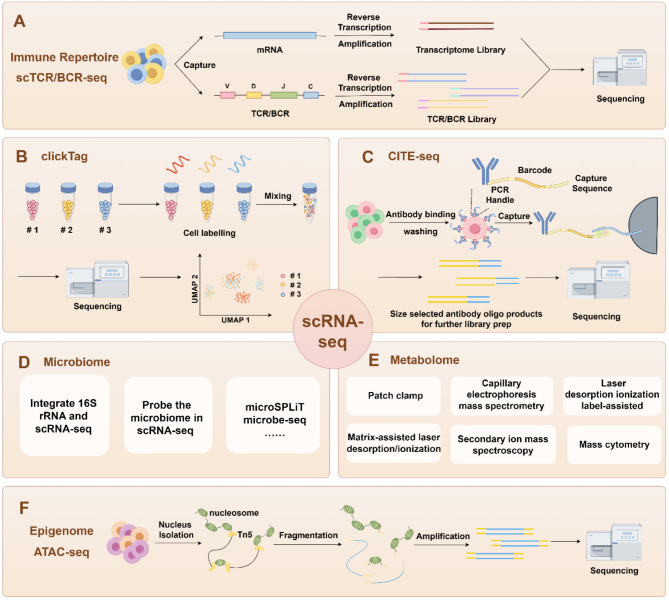
“Recently a variety of technologies have been developed to interrogate chromatin accessibility [107–109], whereas ATAC-seq barges to the forefront as a landmark break-through that utilizes the Tn5 transposase to fragment open chromatin and labels the genome with sequencing adaptors [110].”
BackgroundGut microbiome influences efficacy of PD-1-based immunotherapy against epithelial tumors
Routy, B., Le Chatelier, E., Derosa, L., Duong, C. P. M., Alou, M. T., Daillère, R., Fluckiger, A., Messaoudene, M., Rauber, C., Roberti, M. P., et al. (2018) · Science · doi:10.1126/science.aan3706 · Cited by 5,671 · cited 1×
“The intratumor microbiome has emerged as a novel and rapidly evolving research frontier, with the discovery of microorganisms in various cancer types, including in some organs traditionally considered to be sterile, primarily in gastrointestinal cancers [155–157].”
BackgroundSingle-cell RNA-seq highlights intratumoral heterogeneity in primary glioblastoma
Patel, A. P., Tirosh, I., Trombetta, J. J., Shalek, A. K., Gillespie, S. M., Wakimoto, H., Cahill, D. P., Nahed, B. V., Curry, W. T., Martuza, R. L., et al. (2014) · Science · doi:10.1126/science.1254257 · Cited by 5,063 · cited 1×
“Furthermore, inferring copy number variations (CNVs) with inferCNV analysis by comparing gene expression levels in cells with those in a reference genome is particularly crucial in cancer biology [15].”
BackgroundKraken: ultrafast metagenomic sequence classification using exact alignments
Wood, D. E., & Salzberg, S. L. (2014) · Genome Biology · doi:10.1186/gb-2014-15-3-r46 · Cited by 4,521 · cited 1×
“It is worth mentioning that Chai et al. employed the Kraken method [217, 218] to process scRNA-seq to obtain the bacterial population corresponding to specific cell types [214].”
MethodLa Manno, G., Soldatov, R., Zeisel, A., Braun, E., Hochgerner, H., Petukhov, V., Lidschreiber, K., Kastriti, M. E., Lönnerberg, P., Furlan, A., et al. (2018) · Nature · doi:10.1038/s41586-018-0414-6 · Cited by 4,118 · cited 2×
“RNA velocity is a prevalent technology in scRNA-seq analysis [26].”
BackgroundMethod
Research works printed but not linked: 1
- Galeano Nino JL, Wu H, LaCourse KD, Kempchinsky AG, Baryiames A, Barber B, Futran N, Houlton J, Sather C, Sicinska E, et al. Effect of the intratumoral microbiota on spatial and cellular heterogeneity in cancer. Nature. 2022;611:810–7. 36385528 PMC9684076 · DOI · Paper page
Cited by
Tumor-Associated Macrophages: Polarization, Immunoregulation, and Immunotherapy
Saeed, A. F. U. H. (2025) · Cells · doi:10.3390/cells14100741 · Cited by 113
“This approach is applied to study lung adenocarcinoma and pancreatic ductal adenocarcinoma [37].”
Advances in single-cell omics: Transformative applications in basic and clinical research
Inayatullah, M., Dwivedi, A. K., & Tiwari, V. K. (2025) · Current Opinion in Cell Biology · doi:10.1016/j.ceb.2025.102548 · Cited by 48
Artificial Intelligence Drives Advances in Multi-Omics Analysis and Precision Medicine for Sepsis
Shen, Y., Zhang, P., Luo, J., Chen, S., Gu, S., Lin, Z., & Tang, Z. (2026) · Biomedicines · doi:10.3390/biomedicines14020261 · Cited by 45
Navigating Cancer Complexity: Integrative Multi-Omics Methodologies for Clinical Insights
Catalano, M., D’Angelo, A., Logu, F. D., Nassini, R., Generali, D., & Roviello, G. (2025) · Clinical Medicine Insights Oncology · doi:10.1177/11795549251384582 · Cited by 39
“38 The resulting data reveal cell states and intercellular dynamics that are obscured in bulk analyses.”
Ebrahim, N. A. A., Soliman, S. M. A., Othman, M. O., & Tahoun, N. S. (2025) · Medical Oncology · doi:10.1007/s12032-025-02729-x · Cited by 32
“Computational platforms capable of integrating these datasets are being developed to generate predictive models that guide therapeutic decisions in real time [90, 91].”
Translational Advances in Oncogene and Tumor-Suppressor Gene Research
Stojchevski, R., Sutanto, E. A., Sutanto, R., Hadzi‐Petrushev, N., Mladenov, M. I., Singh, S. P., Sinha, J. K., Ghosh, S., Yarlagadda, B., Singh, K. K., et al. (2025) · Cancers · doi:10.3390/cancers17061008 · Cited by 38
“This approach is especially powerful in oncogene and tumor-suppressor research when combined with single-cell sequencing, as it allows researchers to observe molecular changes at a single-cell resolution [295].”
Guo, X., Ma, S., Wang, J., Fu, Y., & Ma, W. (2026) · Frontiers in Immunology · doi:10.3389/fimmu.2025.1709852 · Cited by 54
“…such as Cellular Indexing of Transcriptomes and Epitopes by sequencing (CITE-seq) or Cytometry by time-of-fl ight (CyTOF) offers even deeper resolution, capturing the transcriptional continuum from naïve to Tpex and Ttex states, as well as clonal relationships and functional potential (107).”
Yan, Y., Lu, J., Luo, H., Wang, Z., Xu, K., Wang, L., & Wang, Q. (2025) · Frontiers in Immunology · doi:10.3389/fimmu.2025.1667464 · Cited by 29
Advancing human health risk assessment: the role of new approach methodologies
Deepika, D., Bharti, K., Sharma, S., Kumar, S., Pathak, R. K., Biosca-Brull, J., Sabuz, Ó., Vilana, S. G., & Kumar, V. (2025) · Frontiers in Toxicology · doi:10.3389/ftox.2025.1632941 · Cited by 29
“Wu et al., used single-cell RNA sequencing and multi-omics analyses to characterize a novel signature comprising 33 genes related to tobacco carcinogens to elucidate the progression of bladder cancer through fi broblasts-induced immune invasion and epithelial mesenchymal transition (Wu et al., 2024).”
Application of spatial and single-cell omics in tumor immunotherapy biomarkers
Zhang, C., Feng, H.-R., Zhu, J., & Hong, W. (2025) · LabMed discovery. · doi:10.1016/j.lmd.2025.100076 · Cited by 22
Self-citationShahid, U. (2025) · The Journal of Precision Medicine Health and Disease · doi:10.1016/j.premed.2025.100018 · Cited by 35
Single-cell sequencing and organoids: applications in organ development and disease
Li, T., Yin, J., Hao, Y., Gao, W., Li, Q., Feng, Q., Tao, B., Hao, M., Liu, Y., Lin, C., et al. (2025) · Molecular Biomedicine · doi:10.1186/s43556-025-00364-6 · Cited by 21
“Its core advantage lies in its ability to uncover the heterogeneity masked by traditional bulk sequencing within cell populations [45, 46].”
Single‐Cell and Spatial Multiomics: Applications for Diseases
Li, W., Chen, C., Zhu, X., & Zhang, C. (2025) · MedComm · doi:10.1002/mco2.70553 · Cited by 20
“Genetic mutations and changes that might occur during cell division and proliferation are the cause of genetic heterogeneity [ 18–21 ].”
Gao, Q., Wu, H., Duan, L., Lv, G., & Quan, D. (2025) · Frontiers in Immunology · doi:10.3389/fimmu.2025.1648987 · Cited by 20
“This mapping provides crucial insights into microenvironment formation and intercellular signaling (16, 79).”
Rhythms in Remodeling: Posttranslational Regulation of Bone by the Circadian Clock
Yuan, G. (2025) · Biomedicines · doi:10.3390/biomedicines13030705 · Cited by 14
“Single-cell multiomics, integrating transcriptomics and proteomics, allows for the cell-type-specific analysis of PTMs, elucidating how osteoblasts, osteoclasts, and osteocytes differentially respond to circadian cues [136].”
Jo, H.-G., Seo, J., Jang, B., Kim, Y., Kim, H., Baek, E., Park, S.-Y., & Lee, D. (2025) · Autoimmunity Reviews · doi:10.1016/j.autrev.2025.103836 · Cited by 20
Lammi, M. J., & Qu, C. (2024) · Bioengineering · doi:10.3390/bioengineering11121235 · Cited by 15
Ma, S., Lu, Y., Sui, S., Yang, J.-S., Fu, B., Tan, P.-X., Chai, Y., Lv, J., Kong, L., Wu, X., et al. (2025) · Frontiers in Immunology · doi:10.3389/fimmu.2025.1572821 · Cited by 17
Self-citationOmics and rare diseases: challenges, applications, and future perspectives
Braconi, D., Nadwa, H., Bernardini, G., & Santucci, A. (2025) · Expert Review of Proteomics · doi:10.1080/14789450.2025.2468300 · Cited by 22
“Examples of single-cell genomic, transcriptomic [180] and metabolomic [181] studies are already available for RDs, while single-cell proteomics is more of a nascent field even for more common diseases [179].”
InfluentialMapping the tumor immune landscape: single-cell RNA sequencing in cancer immunotherapy
Huang, Y., Zhang, M., & Gao, Q. (2025) · Cancer Letters · doi:10.1016/j.canlet.2025.218012 · Cited by 15
Evaluation and preservation of fertility in patients with hematologic malignancies
Wang, X., Huang, R., Liu, L., Wang, X., & Zhang, X. (2025) · Cancer Letters · doi:10.1016/j.canlet.2025.217569 · Cited by 11
Direct fibroblast reprogramming: an emerging strategy for treating organic fibrosis
Lin, H., Wang, X., Chung, M., Cai, S., & Pan, Y. (2025) · Journal of Translational Medicine · doi:10.1186/s12967-024-06060-3 · Cited by 14
“Other single-cell multi-omics technologies, including genomics, proteomics, and epigenomics, provide complementary information from different perspectives to precisely identify suitable cell subpopulations [149].”
Wu, Z., Hu, Y., Hao, R., Li, R., Lu, X., Itale, M. W., Yuan, Y., Zhu, X., Zhang, J., Wang, L., et al. (2025) · International Journal of Molecular Sciences · doi:10.3390/ijms26083867 · Cited by 14
Diagnostics and Therapy for Malignant Tumors
Tsai, C.-C., Wang, C., Chang, H.-H., Chang, P. T. S., Chang, C., Chu, T. Y., Hsu, P.-C., & Kuo, C. (2024) · Biomedicines · doi:10.3390/biomedicines12122659 · Cited by 15
Farhat, J., Alzyoud, L., Alwahsh, M., Acharjee, A., & Al‐Omari, B. (2025) · Cancer Medicine · doi:10.1002/cam4.70853 · Cited by 20
Applications and advances of multi-omics technologies in gastrointestinal tumors
Liu, Y., Gao, F., Cheng, Y., Qi, L., & Yu, H. (2025) · Frontiers in Medicine · doi:10.3389/fmed.2025.1630788 · Cited by 21
“Additionally, single-cell genomics can detect rare tumor cell populations, such as circulating tumor cells (CTCs) or drug-resistant subpopulations, which play critical roles in tumor recurrence and treatment resistance (96).”
Nasb, M., Dayoub, L., & Chen, N. (2025) · Advanced Exercise and Health Science · doi:10.1016/j.aehs.2025.09.001 · Cited by 10
Luo, H., Hussain, A., Abbas, M., Yuan, L., Shen, Y., Zhang, Z., Sun, G., Yin, X., & HUANG, S. H. (2025) · Journal of Translational Medicine · doi:10.1186/s12967-025-06996-0 · Cited by 18
Song, D., Zhang, J., Zhou, J., Yuan, X., Tang, L., Sun, K., Shi, Q., Sun, H., & Zhao, W. (2025) · Current Proteomics · doi:10.1016/j.curpro.2025.100060 · Cited by 13
Ning, M., Lu, D., Liang, D., & Ren, P. (2025) · Frontiers in Molecular Biosciences · doi:10.3389/fmolb.2025.1513993 · Cited by 11
“…levels, data sparsity) as well as what we discussed above the biological limitations (isolation disturbance, cell capture preference) and Limited Multi-Omic Integration (immature single cell proteomics and metabolomics) (Sun et al., 2021; Duhan et al., 2024; Fan et al., 2020; Wu et al., 2024).”
Sutanto, H., Pratiwi, L., Romadhon, P. Z., & Bintoro, S. U. Y. (2025) · Human Genetics · doi:10.1007/s00439-025-02745-x · Cited by 9
“For example, scRNA-seq can uncover variations in BCR::ABL1 expression and detect minor subpopulations harboring mutations like T315I before they become dominant clones (Wu et al. 2024; Zhang and Sukumaran 2023).”
Song, C., Lin, T.-H., Huang, H.-T., & Yao, J.-Y. (2025) · World Journal of Diabetes · doi:10.4239/wjd.v16.i7.106218 · Cited by 14
Guo, X., Zhang, H., Yao, L., & Ma, W. (2025) · Critical Reviews in Oncology/Hematology · doi:10.1016/j.critrevonc.2025.105076 · Cited by 10
The tumor microenvironment in leukemia: molecular pathways of immune evasion
Zhu, Y., Liu, J., Qiu, F., You, Z., Liu, Z., Zeng, J., Zhong, J., Song, Z., Zhang, S., Lu, J., et al. (2026) · Frontiers in Immunology · doi:10.3389/fimmu.2026.1743920 · Cited by 16
Colorectal cancer pathogenesis, oncogenic signaling networks and targeted therapeutic advances
Chen, Y., Zhang, J., Ding, Y., Zhu, F., & Chen, Y. (2026) · Molecular Biomedicine · doi:10.1186/s43556-026-00433-4 · Cited by 17
“3) Transcriptomic heterogeneity: a high-resolution analysis using single-cell RNA sequencing systematically depicted the dynamic changes and molecular profiles of up to 48 distinct cell subtypes during CRC progression [293].”
Decoding the NRF2–NOTCH Crosstalk in Lung Cancer—An Update
Sparaneo, A., Torrisi, F., D’Angeli, F., Giurdanella, G., Bravaccini, S., Muscarella, L. A., & Fabrizio, F. P. (2025) · Antioxidants · doi:10.3390/antiox14060657 · Cited by 12
Epigenetic Regulation in the Pathogenesis of Periodontitis
Dommisch, H., Schäefer, A. S., Kuzmanova, D., & Michaud, D. S. (2025) · Journal of Periodontal Research · doi:10.1111/jre.70036 · Cited by 10
Snake venom-derived peptides as anticancer candidates: Pioneering next-generation therapies
Almeida, J. R., Pinos-Tamayo, E. A., Mendes, B. D. S., Robles-Loaiza, A. A., Syahputra, R. A., Oliveira, A. G. S., & Ribeiro, R. I. M. D. A. (2025) · Biochimica et Biophysica Acta (BBA) - Reviews on Cancer · doi:10.1016/j.bbcan.2025.189479 · Cited by 13
Zhang, N., Li, J., Ma, W., & Zhou, J. (2025) · Biomedicine & Pharmacotherapy · doi:10.1016/j.biopha.2025.118688 · Cited by 10
Wei, Y., Hong, F., Xie, S., Luo, X., Li, X., Dao, F., Deng, K., Lin, H., & Lv, H. (2025) · International Journal of Molecular Sciences · doi:10.3390/ijms262211005 · Cited by 9
“The high cost of sequencing platforms and reagents presents a primary barrier to widespread clinical adoption, particularly in resource-limited settings [143].”
Shukla, A. K., Shukla, S., Suryawanshi, S. P., Upadhyay, A. M., Ray, N., Thiruppathi, G., Dutta, S. D., & Mongre, R. K. (2025) · Current Oncology · doi:10.3390/curroncol32120653 · Cited by 10
“By bridging advanced omics technologies with 3D bioprinted tumor platforms, this integrative approach not only improves mechanistic insights but also substantially increases the translational potential of organoid-based models for precision oncology and clinical decision-making [83,191–194].”
Osório, T. G., Pavesi, E., Abou‐El‐Ardat, K., Qureshi, N., Cassidy, L., John, T. L. S., Sirotin, N., & Piechowski‐Jóźwiak, B. (2025) · Frontiers in Aging · doi:10.3389/fragi.2025.1656727 · Cited by 13
Wu, X., Zhao, Z., Yu, W., Liu, S., Zhou, M. R., Jiang, N., Du, X., Yang, X., Chen, J., Guo, H., et al. (2024) · ACS Chemical Biology · doi:10.1021/acschembio.4c00635 · Cited by 8
Self-citationGu, Y., Zhu, W., Zhang, Z., Shu, H., Huang, H., & Sun, X. S. (2025) · Genes · doi:10.3390/genes16070817 · Cited by 8
“…single-cell ATAC sequencing (scATAC-seq), have expanded the understanding of the cellular composition and gene expression characteristics in the TME [14,15]. scRNA-seq provides a detailed transcriptomic map, enabling the identification of diverse subpopulations based on expression profiles [16].”
Sahu, P., Satapathy, A., Satapathy, A., & Satapathy, T. (2025) · Letters in Drug Design & Discovery · doi:10.1016/j.lddd.2026.100286 · Cited by 10
Breast cancer pathogenesis, diagnosis and treatment: a comprehensive review
Pasi, D., Aswathy, B., Das, M., & Agrawal, P. (2026) · Frontiers in Oncology · doi:10.3389/fonc.2026.1773232 · Cited by 13
“These tools perform high-throughput sequencing analysis of multiple omics data types (transcriptome, epigenome, proteome, and metabolome), single-cell data, gene enrichment analysis such as pathway mapping, in silico drug discovery, and predictive modeling (20, 21).”
From multi‐omics to cancer digital twins: Novel paradigm in cancer research and treatment response
Aghamiri, S. S., & Amin, R. (2025) · Clinical and Translational Discovery · doi:10.1002/ctd2.70035 · Cited by 8
Lian, K., Yang, W., Ye, J., Chen, Y., Zhang, L., & Xu, X. (2025) · BMC Psychiatry · doi:10.1186/s12888-025-06542-8 · Cited by 6
“Enriched patterns were predicted using pre-computed databases from cisTargetDB and the SCE-NIC ctx function, with regulon activity scores calculated per cell using AUCell [34].”
Tao, R., Chen, X., Wang, Y., Li, S., Zhou, S., Aghayants, S., Yan, L., Zhang, Q., & Zhu, Z. (2025) · Clinical Cosmetic and Investigational Dermatology · doi:10.2147/ccid.s506139 · Cited by 5
“13,14 For example, the latest single-cell multi-omics technologies can simultaneously detect gene expression, chromatin states, and protein expression within individual cells, providing a more comprehensive perspective for uncovering the molecular characteristics of cells.”
Zhang, H., Liu, Y., Liu, W., Lin, A., Fang, Y., Qu, L., Zhang, X., Luo, P., Wang, L., & Jiang, A. (2025) · Biomarker Research · doi:10.1186/s40364-025-00811-0 · Cited by 10
Cao, Z., Bai, X., Li, J., Cai, J., Cao, G., Xiao, Y., & Zhou, W. (2025) · Frontiers in Immunology · doi:10.3389/fimmu.2025.1735459 · Cited by 7
“ScRNA-seq facilitates comprehensive transcriptome pro fi ling at the single-cell resolution with an unbiased catalog of cellular diversity and is a promising tool for extensively investigating immune heterogeneity in the TME (13, 14).”
Multiomics: the intersection of personalized nutrition in cardiometabolic diseases
Çelik, E., Koçyiğit, E., Bingöl, F. G., Karaçolak, C., Cemali, Ö., Simonelli, M., Ağagündüz, D., & Capasso, R. (2026) · Journal of Translational Medicine · doi:10.1186/s12967-026-07836-5 · Cited by 8
“From an economic perspective, multiomics analyses are mostly costly [344].”
Wang, J., Luo, Y., Wu, Y., Du, F., Shi, S., Duan, Y., Chen, A., Zhang, J., & Yu, S. (2025) · Talanta · doi:10.1016/j.talanta.2025.127933 · Cited by 6
Single-cell epigenetics and multiomics analysis in kidney research
Aihara, S., & Muto, Y. (2025) · Clinical and Experimental Nephrology · doi:10.1007/s10157-025-02679-8 · Cited by 8
“Sample multiplexing, now commercially available, offers a strategy to mitigate these issues, especially in scRNA-seq [73].”
InfluentialCurrent status of transcriptome sequencing technology in ruminants
JiaYu, C., Lili, S., Dawei, W., ZhiLin, L., Zhang, X., Zelin, J., Yuhang, Z., Huisheng, X., & Xueli, W. (2025) · Frontiers in Veterinary Science · doi:10.3389/fvets.2025.1558799 · Cited by 6
Dietary microbes and functional dyspepsia: modulating the gut microecology for therapeutic benefit
Huang, Q., You, F., Liang, F.-X., & Ma, C. (2025) · Frontiers in Nutrition · doi:10.3389/fnut.2025.1625987 · Cited by 6
“…but advances in single-cell analysis technologies will also facilitate the acquisition of multidimensional information at the single-cell level (123, 124), precisely resolving the heterogeneity of different cell types and their specific roles in the microbiota-host interactions network (125).”
Li, Y., Shi, J., Yu, T., Piao, M., Jin, T., Miao, Y., Gong, L., Dong, S., Li, X., Liu, H., et al. (2025) · Respiratory Research · doi:10.1186/s12931-025-03385-5 · Cited by 7
“Single-cell RNA sequencing (scRNA-seq) is a powerful tool that can be used to examine specific cellular components and states [9, 10].”
Chen, G., He, Q., Xiao, Q., Ai, J., Qin, Z., Zhong, Z., Zou, J., Chen, B., Zhang, C., & Feng, Y. (2025) · Pharmacological Research · doi:10.1016/j.phrs.2025.108049 · Cited by 6
Beyond the Exome: The Role of Noncoding and Regulatory Variants in Monogenic Diseases
Moustakli, E., Ζαγοριανάκου, Ν., Makrydimas, S., Μιλτιάδους, Α., Tzallas, A. T., & Makrydimas, G. (2025) · Current Issues in Molecular Biology · doi:10.3390/cimb47121038 · Cited by 6
“The regulatory processes that are difficult to monitor in bulk studies are revealed in this way [161].”
Li, M., 王婷婷, Zhang, Z., & Dongye, Y. (2026) · Frontiers in Immunology · doi:10.3389/fimmu.2025.1742855 · Cited by 20
Miao, J., Guan, W., Wang, J., Gong, H., Xie, Q., & Gao, Y. (2026) · Hereditas · doi:10.1186/s41065-025-00570-w · Cited by 6
“Multi-omics integration combines complementary data layers to construct a holistic, systems-level perspective, yielding synergistic insights beyond the reach of any single omics method [53, 142].”
Cheng, H., Chang, C., Wu, C., Su, P., Hwang, D., Wu, C.-L., Hsu, S. N., Lim, S. Y., Liu, T., McGrath, J. A., et al. (2026) · Dermatologica Sinica · doi:10.4103/ds.ds-d-25-00298 · Cited by 4
Impact of Heat Stress on Ovarian Function and circRNA Expression in Hu Sheep
Zou, J., Wei, L., Mo, Z., et al. (2025) · Animals · doi:10.3390/ani15142063 · Cited by 4
“With technological advancements, omics approaches have become key tools for exploring biological phenotypes, gene expression, and regulatory mechanisms [13].”
Discovering DISCO: application value of a large-scale repository for diverse single-cell omics data
Tao, W., Li, H., Zhang, J., Yin, Y., Fu, X., Chen, Y., Wang, Y., Zhou, Y., Gao, Z., Luo, H., et al. (2025) · Advanced technology in neuroscience . · doi:10.4103/atn.atn-d-24-00035 · Cited by 4
Research progress of single cell RNA sequencing in nervous system
Hu, L., Qi, L., Lin, Z., Zhu, J., & Zhang, M. (2025) · Molecular Biology Reports · doi:10.1007/s11033-025-11155-1 · Cited by 4
Self-citationVerma, P. K., Lekkala, S., Usman, B., Lankireddy, S. V., Khadgi, A., d'Agostino, L., Balne, P. K., Patil, G., Sripathi, V. R., & Janga, M. R. (2025) · Plant Biology · doi:10.1111/plb.70131 · Cited by 3
RNA sequencing in ovarian cancer research: a comprehensive review
Shen, F., Li, C., Li, Y., Shen, Y., & Han, F. (2025) · Journal of Ovarian Research · doi:10.1186/s13048-025-01888-9 · Cited by 5
“Therefore, confirming whether rare cell populations or specific cellular states possess genuine biological significance necessitates cross-validation through complementary techniques such as spatial transcriptomics, multiplex fluorescence imaging, or in situ detection [128].”
Rachma, B., Pamungkas, R. P., Sandra, D. Y., Sutanto, H., & Fetarayani, D. (2025) · Clinical Immunology Communications · doi:10.1016/j.clicom.2025.11.004 · Cited by 6
Junior, C. V. S., Ribeiro, M. D. O. L., Bichuette, L. D., Scarpa, B. R., Severino, P., Gollob, K. J., Lima, J. A. C., & Libby, P. (2025) · Einstein (São Paulo) · doi:10.31744/einstein_journal/2025rw1780 · Cited by 3
“(21) Enhanced computational tools: Developing robust algorithms to analyze complex datasets, address batch effects, and enable longitudinal data integration will improve data reliability.”
InfluentialClinical application of PBMCs in breast cancer: detection, treatment evaluation and prognosis
Song, B., Liang, S., Wu, P., Li, X., & Gong, Q. (2025) · Frontiers in Cell and Developmental Biology · doi:10.3389/fcell.2025.1721106 · Cited by 4
“Single-cell sequencing is a technique for extracting genetic information from individual cells, enabling accurate and reliable cell classification (Wu et al., 2024).”
Ye, Z., Mayila, M., Bu, N., Hao, W., & Maimaitiyiming, Y. (2025) · Environmental Pollution · doi:10.1016/j.envpol.2025.127559 · Cited by 6
GATCL: graph attention network meets contrastive learning for spatial domain identification
Mu, J., Yao, Y., Chen, Q., Sun, J., & Zhao, T. (2026) · Briefings in Bioinformatics · doi:10.1093/bib/bbag043 · Cited by 3
Qi, H., Lv, G., Zhang, S., Xue, R., & Liu, M. (2026) · Cancer Letters · doi:10.1016/j.canlet.2026.218391 · Cited by 9
Zhu, W., Wu, X., Zhao, Z., Zhou, M. R., Zhang, T., Zhao, D., Jiang, N., Yang, X., Guo, H., Fang, N., et al. (2025) · Analytical Chemistry · doi:10.1021/acs.analchem.4c05648 · Cited by 6
Self-citationA semi-supervised non-negative matrix factorization model for scRNA-seq data analysis
Lan, J., Zhuo, X., Ye, S., & Deng, J. (2025) · Applied Soft Computing · doi:10.1016/j.asoc.2025.112982 · Cited by 3
Next-Generation Barcoding for Single-Cell Omics
Li, T., Gu, Z., & Zhou, G. (2025) · Analytical Chemistry · doi:10.1021/acs.analchem.5c03587 · Cited by 3
Harnessing the inflammatory signature: a review for biomarkers in inflammatory breast cancer
Hu, Y., Li, J., Wang, X., Ji, H., & Niu, X. (2025) · QJM · doi:10.1093/qjmed/hcaf219 · Cited by 4
A Mutational Landscape in Acute Myeloid Leukemia: Overview and Prognostic Impacts
Chen, J., Hassan, F., & Tirado, C. A. (2025) · Diagnostics · doi:10.3390/diagnostics15192537 · Cited by 5
“The next step will likely involve combining scRNA-seq with further methods, such as ATAC-seq, proteomics, and spatial transcriptomics [104].”
Invisible influencers: the tumor microbiome’s impact on immunotherapy in colorectal cancer (CRC)
Omar, T. M., Al-Hussainy, A. F., Jyothi, S. R., Nayak, P. P., Janney, J. B., Singh, G., Polatova, D., Sameer, H. N., Salih, R. M., Adil, M., et al. (2025) · Expert Review of Anticancer Therapy · doi:10.1080/14737140.2025.2579656 · Cited by 3
“Spatial transcriptomics adds another layer of insight by preserving the tissue architecture, allowing researchers to visualize where microbes reside within tumors and how they shape local immune environments [177].”
Immune Checkpoint Restoration as a Therapeutic Strategy to Halt Diabetes-Driven Atherosclerosis
Saha, D., Dutta, P., & Chakraborty, A. (2025) · Biology · doi:10.3390/biology14121731 · Cited by 4
“Single-cell sequencing, spatial transcriptomics, proteomics, and metabolomics provide complementary insights, whereas machine learning integration of these datasets can generate predictive immune signatures [128].”
Leveraging single-cell RNA-seq in helminthology
Mu, Y., Zumuk, C. P., Jones, M. K., & Cai, P. (2025) · Trends in Parasitology · doi:10.1016/j.pt.2025.11.003 · Cited by 4
Multimodal Single Extracellular Vesicle Profiling Technologies to Unveil Clinical Heterogeneity
Kwon, Y., Kim, H., Kwon, D. H., & Park, J. (2025) · ACS Applied Bio Materials · doi:10.1021/acsabm.5c01993 · Cited by 5
Manzi, H. P., Qin, D., Li, Y., et al. (2026) · Journal of Hazardous Materials · doi:10.1016/j.jhazmat.2026.141246 · Cited by 2
Mechanistic and therapeutic dimensions of DcR3-mediated immunomodulation in sepsis
Abbas, B., Lin, X., Chen, X., Chen, Q., & Su, J. (2026) · Frontiers in Immunology · doi:10.3389/fimmu.2025.1750066 · Cited by 3
Ding, Y., Jiang, Y., Wang, J., Tan, D., Su, Y., & Zheng, C. (2026) · Briefings in Bioinformatics · doi:10.1093/bib/bbag005 · Cited by 3
Single-Cell Transcriptomics and Computational Frameworks for Target Discovery in Cancer
Tarozzi, M. E., Derus, N. R., Polizzi, S., Sala, C., & Castellani, G. (2026) · Targets · doi:10.3390/targets4010006 · Cited by 3
“This field is in rapid and intense development, excellent technical reviews cover the technological improvements and detailed features of the different specific methodologies [60,61].”
Kumar, S., Sriramanujam, S., Oh, T. G., Balasubramanian, P., Thotala, D. K., & Muthukrishnan, S. D. (2026) · Critical Reviews in Oncology/Hematology · doi:10.1016/j.critrevonc.2026.105190 · Cited by 5
Kumar, K. (2026) · Gene Reports · doi:10.1016/j.genrep.2026.102468 · Cited by 2
Zayed, M., Massoud, A., Al-Haddad, R. H., Al-Kubaisi, A. A., Said, W., Atiaa, A. G., & Jeong, B.-H. (2026) · Stem Cell Reviews and Reports · doi:10.1007/s12015-026-11116-6 · Cited by 2
“These single-cell approaches facilitate the precise design and monitor - ing of biomanufacturing processes, provide high-resolution mapping of diseased and healthy tissue niches, and inform the selection of patient-tailored therapeutic strategies [118 ].”
Histone modifications across cancers: mechanisms, therapy and clinical translation
Lu, P., Chan, Y.-T., Kwok, C.-F., Li, Q., Jiang, Z., Xu, L., Feng, Z., Yuan, H., Zou, J., Xun, Y., et al. (2026) · Molecular Cancer · doi:10.1186/s12943-026-02707-5 · Cited by 5
“…confounding variable, single-cell multi-omics approaches, which include the use of scCUT&Tag with scBS-seq or scATAC-seq, as well as the 10x Genomics Chromium system that allows for simultaneous profiling of the transcriptome and chromatin accessibility in the same cell, make this possible [171].”
Unleashing the therapeutic potential of tumor-draining lymph nodes: spotlight on bladder cancer
Yang, X., Wu, X., Hao, X., Li, T., Guo, H., & Yang, R. (2025) · Journal of Translational Medicine · doi:10.1186/s12967-024-05864-7 · Cited by 6
“The rapidly advancing single-cell multi-omics technologies are expected to be game-changers in the field of immuno-oncology, providing potent tools for deciphering cell heterogeneity, discovering novel cell types, and exploring the mechanisms of tumor metastasis and progression [111].”
Self-citationLM-GlycoRepo Version 1.0: A Novel Repository System for Mouse Tissue Glycome Mapping Data
Nagai‐Okatani, C., Fujita, N., Boottanun, P., et al. (2025) · Journal of Proteome Research · doi:10.1021/acs.jproteome.5c00184 · Cited by 2
Hara, S. (2025) · Expert Review of Clinical Immunology · doi:10.1080/1744666x.2025.2567589 · Cited by 6
“Despite these advances, scRNA-seq still has important limitations [132].”
From single-cell maps to diagnostics: enabling biomarker discovery in precision medicine
Lee, J. H. (2025) · Academia molecular biology and genomics. · doi:10.20935/acadmolbiogen7859 · Cited by 1
Abdelmoaty, A. A. A., & Badran, A. G. (2025) · Asia-Pacific Journal of Pharmacotherapy & Toxicology · doi:10.32948/ajpt.2025.04.15 · Cited by 3
scMID: A Deep Multi-Omics Integration Framework for Comprehensive Single-Cell Data Analysis
Xiao, Q., Zhang, Y., Shi, W., Wang, L., Zuo, Y., Guo, F., & Luo, J. (2025) · IEEE Transactions on Computational Biology and Bioinformatics · doi:10.1109/tcbbio.2025.3624040 · Cited by 1
“Current integration of single-cell multi-omics data faces challenges such as high sparsity, noise, and dimensional mismatch inherent to these datasets [11].”
Environmental Influences on Genetic Aging Processes: Experimental Evidence from Model Systems
Molla, A. (2025) · European Journal of Clinical and Biomedical Sciences · doi:10.11648/j.ejcbs.20251104.12 · Cited by 1
Zhou, J., Li, Y., Zhu, T., Yang, K., Zhang, C., Zhang, R., Zhang, X., Zhou, D., Ding, X., Qiao, Y., et al. (2025) · iScience · doi:10.1016/j.isci.2025.114174 · Cited by 2
“23,24 27 Compared to traditional 16S RNA sequencing and scRNA-seq technologies, INVADE-seq enables detailed characterization of testicular BM composition, identification of bacteria-host interaction, and insights into the impact of testicular BM on reproductive capacity.”
Li, X. Y., & Gao, L. (2025) · Life Conflux · doi:10.71321/dz9d7b09 · Cited by 2
“…insights into how the virus evades immune sur-Life veillance and enhances viral replication by modulating the host cell transcriptomic profile [13 -14]. dupli-A Furthermore, compared to conventional bulk sequencing methodologies, SCS technology enables the identification of intercellular…”
‘Omics’ Big Data and Precision Medicine
Guan, J. (2025) · Springer eBooks · doi:10.1007/978-981-95-2806-6_12 · Cited by 1
Metadata
- Authors
- Wu, X., Yang, X., Dai, Y., Zhao, Z., Zhu, J., Guo, H., & Yang, R.
- Affiliations
- Nanjing Drum Tower Hospital (CN)
- Nanjing University (CN)
- Corresponding author
- Guo, Hongqian
- Yang, Rong
- Venue
- Biomarker Research
- Published
- 2024-09-27
- Volume
- 12
- Issue
- 1
- Pages
- 110-110
- ISSN
- 2050-7771 (ISSN-L)
- PMC
- PMC11438019
- OpenAlex
- W4402912319
- Semantic Scholar
- ef71354c45a6936e7d8f317b730e595e6695f5e0
- Cited by
- 222
- References
- 251
- Citations by year
- 2026: 115 · 2025: 102 · 2024: 5
- FWCI
- 8.22
- Type
- journal article
- Language
- en
- Open access
- gold
- doi.org
- Licence
- cc-by
- creativecommons.org/licenses/by/4.0 (tdm)
- creativecommons.org/licenses/by/4.0 (vor)
- Locations
- Biomarker Research (publishedVersion, cc-by)
- PubMed Central (publishedVersion, cc-by)
- PubMed (publishedVersion)
- DOAJ (DOAJ: Directory of Open Access Journals) (submittedVersion)
- Funders
- National Natural Science Foundation of China (81772710, 82172691)
- Jiangsu Provincial Healthcare Commission Scientific Research Grant Top Project (M2020093)
- Jiangsu Provincial Social Development Project (BE2023659)
- Topics
- Life Sciences › Biochemistry, Genetics and Molecular Biology › Molecular Biology › Single-cell and spatial transcriptomics
- Life Sciences › Biochemistry, Genetics and Molecular Biology › Molecular Biology › Genomics and Phylogenetic Studies
- Life Sciences › Biochemistry, Genetics and Molecular Biology › Molecular Biology › Genomics and Chromatin Dynamics
- Keywords
- single-cell multi-omics, single-cell RNA sequencing, single-cell transcriptomics, immune repertoire, spatial transcriptomics, temporal transcriptomics, cell atlas, cell differentiation, disease heterogeneity, drug resistance, clinical application
About these checks
Registry, retraction, Cites and statistics results are computed, not judged, with one exception: a printed reference that no index lists is read once by a model before it counts as a citation error. Claims are extracted by a model and kept only when their quote appears verbatim in the text; each cited source is then checked, with a model’s help, for whether it says what the claim relies on. Those verdicts can be wrong — read the claim’s quote and the cited source before relying on one.
The claim verdicts this report counts are experimental: their accuracy is not yet measured.
A language model drew the claims from the paper on 2026-10-07, under version 3 of the claim definition (model deepseek-v4.1-flash, prompt extract-v3).
A second model labelled each claim on 2026-10-07 (model jev-1.13-20260917, definition revision gold-guideline-v0.2).
Cited sources are checked with a language model’s help (gpt-6-sol and qwen3.8-omni-flash).
Statistics and arithmetic are recomputed, not judged.
Confidence bands are shown only for fields calibrated on our annotated test set. None is calibrated yet, so no band is shown.
What counts as a claim ›How we measure confidence ›How we check this ›
Are you an author, or do you see a problem with this page? Request a review
Data sources
Bibliographic data: Semantic Scholar, OpenAlex, Crossref.
Contains information from the Semantic Scholar Academic Graph Datasets, made available under the ODC Attribution License (ODC-BY 1.0).
Semantic Scholar’s data is described in: Kinney, R., et al. (2023). The Semantic Scholar Open Data Platform. arXiv:2301.10140.
