

Single-cell sequencing to multi-omics: technologies and applications
Open accessThe DOI matches its Crossref record; 249 of the 251 references it cites were found in a registry or an index; 126 of the 175 sources its claims cite were checked for support.
Abstract
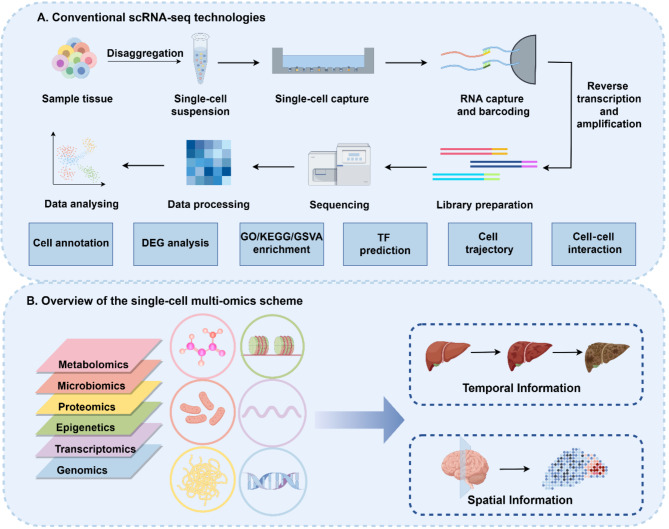
Cells, as the fundamental units of life, contain multidimensional spatiotemporal information. Single-cell RNA sequencing (scRNA-seq) is revolutionizing biomedical science by analyzing cellular state and intercellular heterogeneity. Undoubtedly, single-cell transcriptomics has emerged as one of the most vibrant research fields today. With the optimization and innovation of single-cell sequencing technologies, the intricate multidimensional details concealed within cells are gradually unveiled. The combination of scRNA-seq and other multi-omics is at the forefront of the single-cell field. This involves simultaneously measuring various omics data within individual cells, expanding our understanding across a broader spectrum of dimensions. Single-cell multi-omics precisely captures the multidimensional aspects of single-cell transcriptomes, immune repertoire, spatial information, temporal information, epitopes, and other omics in diverse spatiotemporal contexts. In addition to depicting the cell atlas of normal or diseased tissues, it also provides a cornerstone for studying cell differentiation and development patterns, disease heterogeneity, drug resistance mechanisms, and treatment strategies. Herein, we review traditional single-cell sequencing technologies and outline the latest advancements in single-cell multi-omics. We summarize the current status and challenges of applying single-cell multi-omics technologies to biological research and clinical applications. Finally, we discuss the limitations and challenges of single-cell multi-omics and potential strategies to address them.
Overview
CoChat Summary
TL;DR
This review summarizes single-cell sequencing and single-cell multi-omics technologies across temporal, spatial, genome, epigenome, proteome, immune repertoire, microbiome, and metabolome dimensions, and their biological and clinical applications. It also outlines current challenges, including high cost, strict sample requirements, computational integration, missing or mismatched information, and doublets.
Key findings
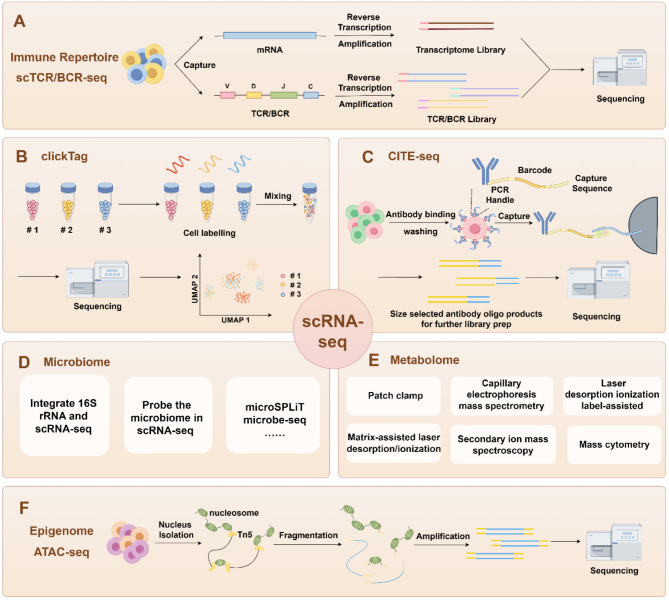
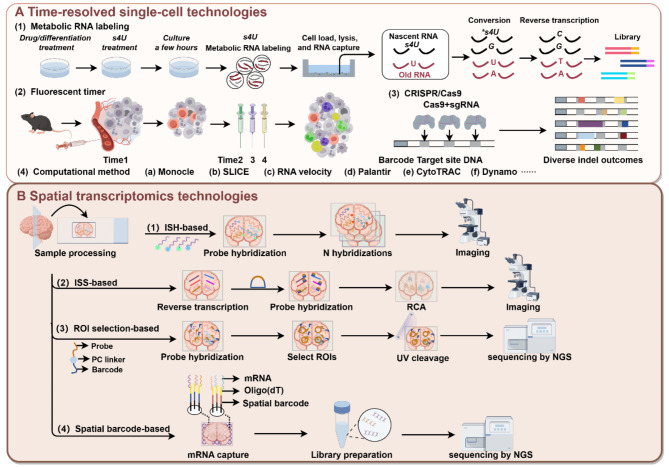
- Single-cell multi-omics extends scRNA-seq by simultaneously measuring multiple modalities in the same cell, with the review cataloging technologies for time (metabolic RNA labeling, fluorescent timers, CRISPR/Cas9 lineage tracing), space (ISH/ISS, ROI selection, spatial barcoding), genome, epigenome, protein/epitope, immune repertoire, microbiome, and metabolome.
- Reported cell/feature numbers include scSLAM-seq at 110 cells, scNT-seq at ∼55,000 cells, Well-TEMP-seq at 16,000 cells, TrackerSci at ∼800,000 cells, Zmen-seq at 8,976 cells, microSPLiT detecting subpopulations down to 0.142%, Microbe-seq with most single-amplified genomes over 95% purity, and mass spectrometry-based single-cell proteomics at about 1,500–2,500 proteins.
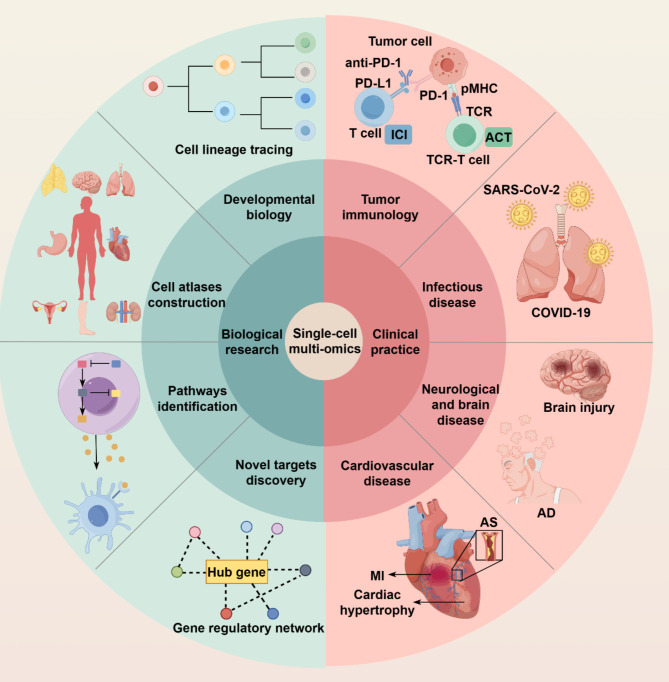
- Applications span cell atlas construction, developmental biology, pathway identification, and novel target discovery, as well as clinical areas such as tumor immunology, host-microbe interactions, infectious diseases, cardiovascular disease, and neurological/brain disease. For example, scTrio-seq was applied to 25 cancer cells and identified two distinct subsets, and an integrated human single-cell eQTL database comprises ∼16 million SNPs and ∼0.69 million sceQTLs.
- The review highlights that single-cell multi-omics can reveal cell states and targets not captured by transcriptomics alone, but also notes persistent challenges in cost, sample quality, data integration, sequencing depth, immune repertoire chain matching, and doublet removal.
Methods
- Narrative review; no original experiments or new primary data are reported. It synthesizes published single-cell sequencing and single-cell multi-omics technologies and their biological/clinical applications.
- Tables summarize time-resolved single-cell technologies (e.g., scSLAM-seq, NASC-seq, Sci-fate, scNT-seq, Well-TEMP-seq, scEU-seq, TrackerSci, Zmen-seq, CARLIN) and spatial transcriptomics/multi-omics technologies (e.g., smFISH, seqFISH+, MERFISH, STARmap PLUS, Geo-seq, DSP, 10× Visium, Slide-seq, Stereo-seq, DBiT-seq, spatial CITE-seq, Slide-tags) with resolution, data type, sample type, and genes/transcripts detected.
- The review also discusses computational analysis tools and workflows, including Seurat, Scanpy, Monocle, RNA velocity, Palantir, CytoTRACE, SCENIC, CellChat, CellPhoneDB, and batch-correction methods such as CCA, MNN, and Harmony.
Limitations
- The paper states that high cost and strict sample requirements discourage many researchers and restrict large-scale cohorts and clinical application; fresh tissue is generally preferred, freeze-thaw samples are usually recommended for snRNA-seq, and cell suspension quantity and viability affect data quality.
- The paper states that robust computational methods for integrating multi-dimensional single-cell data are still needed, that inconsistencies can occur among omics measured simultaneously in the same cells, and that sequencing depth, missing or incorrectly matched TCR chains, and doublets can confound downstream analyses.
- Evident from the text: as a narrative review, it does not perform a systematic search or quantitative synthesis and reports no primary validation data.
Model-written summary. Check it against the paper before relying on it.
Integrity signals
Registry
Cites
Statistics
Figures
Verification
Claims the paper makes
98 Valid · 9 Not valid · 33 Not checked · 20 Own results and interpretations
Every source the paper cites for this claim was checked and supports it.
In the paper
“The emergence of CRISPR/Cas9 technology facilitates the deliberate introduction of mutations using guide RNAs (gRNAs) [40].”
§ Single-cell sequencing to multi-omics: technologies and applications > New advances in single-cell sequencing > CRISPR/Cas9
What the sources say
- Supportedcites [40] McKenna A, Findlay GM, Gagnon JA, Horwitz MS, Schier AF, Shendure J. Whole-organism lineage tracing by combinatorial and cumulative genome editing. Science. 2016;353:aaf7907. 27229144 PMC4967023 source
In the Results section on barcode editing in cultured cells, the authors describe deliberately editing a CRISPR/Cas9 target array by introducing Cas9 and a single guide RNA. They then report mutations in the edited barcodes. The supplied passage does not specify a page number. (LLM, conf=0.94)
plainstates a cause- Asserted: passes — The authors put it forward as true.
- Checkable: passes — It can be checked against evidence.
- Load-bearing: unclear — It is unclear whether the paper’s conclusions depend on it.
- Based: passes — The paper gives a reason why it holds.
- Supported
The cited sources support only part of this claim — read each source’s verdict below.
In the paper
“Sample multiplexed scRNA-seq is another solution, establishing an efficient method for massively parallel species-mixing experiments [18–22].”
§ Single-cell sequencing to multi-omics: technologies and applications > Conventional single-cell sequencing
What the sources say
- Supportedcites [18] Cao J, Packer JS, Ramani V, Cusanovich DA, Huynh C, Daza R, Qiu X, Lee C, Furlan SN, Steemers FJ, et al. Comprehensive single-cell transcriptional profiling of a multicellular organism. Science. 2017;357:661–7. 28818938 PMC5894354 source
The Overview of sci-RNA-seq says multiple samples can be processed concurrently. The Scalability section reports a human–mouse mixing experiment that recovered 15,997 single-cell transcriptomes, and the Discussion describes the method as scalable and low-cost. These passages support the characterization of an efficient, massively parallel method for species-mixing experiments; page numbers were not provided. (LLM, conf=0.90)
- Not checked — no full text of the sourcecites [19] Gehring J, Hwee Park J, Chen S, Thomson M, Pachter L. Highly multiplexed single-cell RNA-seq by DNA oligonucleotide tagging of cellular proteins. Nat Biotechnol. 2020;38:35–8. 31873215 source
- Partly supportedcites [20] Shin D, Lee W, Lee JH, Bang D. Multiplexed single-cell RNA-seq via transient barcoding for simultaneous expression profiling of various drug perturbations. Sci Adv. 2019;5:eaav2249. 31106268 PMC6520024 sourceExperimental — accuracy not yet measured
The Results section (page unavailable) reports a six-sample human–mouse species-mixing experiment that validated the multiplexing method. The Discussion describes cost advantages and high multiplexing capacity, but the paper does not establish massively parallel species-mixing experiments: the species-mixing demonstration was six-plex. (LLM, conf=0.82)
- Partly supportedcites [21] McGinnis CS, Patterson DM, Winkler J, Conrad DN, Hein MY, Srivastava V, Hu JL, Murrow LM, Weissman JS, Werb Z, et al. MULTI-seq: sample multiplexing for single-cell RNA sequencing using lipid-tagged indices. Nat Methods. 2019;16:619–26. 31209384 PMC6837808 sourceExperimental — accuracy not yet measured
The Results section on demultiplexing reports species-specific classification of mixed human and mouse nuclei. The Results section on doublets demonstrates efficient, large-scale multiplexing of 96 human mammary epithelial cell samples, but our copy does not demonstrate a massively parallel species-mixing experiment; the claim combines features shown in separate experiments. Page numbers are unavailable in our copy. (LLM, conf=0.82)
- Supportedcites [22] Zhao X, Sun S, Yu W, Zhu W, Zhao Z, Zhou Y, Ding X, Fang N, Yang R, Li JP. Improved ClickTags enable live-cell barcoding for highly multiplexed single cell sequencing. RSC Chem Biol. 2022;3:1052–60. 35975006 PMC9347365 source
The paper describes sample multiplexing as a way to achieve massively parallel analysis in a single experiment (passage 6, indexed under Abstract). It also reports pooling 16 barcoded human and mouse cell samples for scRNA-seq and accurately assigning cells to their samples (passage 3). No page numbers are provided in our copy. (LLM, conf=0.88)
boostedstates a cause- Asserted: passes — The authors put it forward as true.
- Checkable: passes — It can be checked against evidence.
- Load-bearing: unclear — It is unclear whether the paper’s conclusions depend on it.
- Based: passes — The paper gives a reason why it holds.
- Supported
The cited sources support only part of this claim — read each source’s verdict below.
In the paper
“Integrating data from multiple experiments requires the use of employ algorithms such as Seurat’s canonical correlation analysis (CCA), mutual nearest neighbors (MNN), or Harmony to batch correction [16, 17].”
§ Single-cell sequencing to multi-omics: technologies and applications > Conventional single-cell sequencing
What the sources say
- Supportedcites [16] Korsunsky I, Millard N, Fan J, Slowikowski K, Zhang F, Wei K, Baglaenko Y, Brenner M, Loh PR, Raychaudhuri S. Fast, sensitive and accurate integration of single-cell data with Harmony. Nat Methods. 2019;16:1289–96. 31740819 PMC6884693 source
The Online Methods (Harmony) describe Harmony as producing a batch-corrected embedding. The Online Methods (Analysis Details) identify MNN Correct and Seurat MultiCCA as comparison integration algorithms, supporting the cited examples of methods for integrating data across experiments. (LLM, conf=0.89)
- Partly supportedcites [17] Buttner M, Miao Z, Wolf FA, Teichmann SA, Theis FJ. A test metric for assessing single-cell RNA-seq batch correction. Nat Methods. 2019;16:43–9. 30573817 sourceExperimental — accuracy not yet measured
Our copy supports the general point and two of the three named algorithms: the Introduction states that 'various methods have been proposed to remove or reduce cell-specific bias and batch effects in single-cell data... ranging from linear regression models such as ComBat to nonlinear models such as Seurat's canonical correlation analysis (CCA) and projection of mutual nearest neighbors (MNNs)', and the Results section 'Beyond replicates: dataset integration across studies' plus the Discussion treat CCA and MNN as integration tools, noting that 'batch-effect correction tools play a key role in data integration'. However, Harmony is never mentioned anywhere in our copy (searched 'Harmony', 'integration of data from multiple studies'), so attributing that algorithm to this source is not supported; the paper's method inventory stops at ComBat, limma/MAST/DESeq2, Seurat CCA, MNN, RUV and imputation approaches. (LLM, conf=0.78)
plainstates a cause- Asserted: passes — The authors put it forward as true.
- Checkable: passes — It can be checked against evidence.
- Load-bearing: unclear — It is unclear whether the paper’s conclusions depend on it.
- Based: passes — The paper gives a reason why it holds.
- Supported
Every source the paper cites for this claim was checked and supports it.
In the paper
“Integration with single-cell proteomics (CITE-seq) enriches the information with proteomics that is both similarities and discrepancies with the transcriptome [7].”
§ Single-cell sequencing to multi-omics: technologies and applications > Introduction
What the sources say
- Supportedcites [7] Hao Y, Hao S, Andersen-Nissen E, Mauck WM 3rd, Zheng S, Butler A, Lee MJ, Wilk AJ, Darby C, Zager M, et al. Integrated analysis of multimodal single-cell data. Cell. 2021;184:3573–e35873529. 34062119 PMC8238499 source
The Results section reports that RNA and protein data from a CITE-seq dataset produced largely consistent cell classifications but also revealed differences: protein measurements distinguished CD4+ from CD8+ T cells more clearly, while RNA distinguished some other cell types more clearly. This supports the claim that integrating protein measurements adds information while revealing both similarities and discrepancies with the transcriptome. (LLM, conf=0.93)
plainstates a cause- Asserted: passes — The authors put it forward as true.
- Checkable: passes — It can be checked against evidence.
- Load-bearing: unclear — It is unclear whether the paper’s conclusions depend on it.
- Based: passes — The paper gives a reason why it holds.
- Supported
Every source the paper cites for this claim was checked and supports it.
In the paper
“The study highlighted a critical insight: most DEGs are primarily detectable in new RNA, eluding detection in analyses of old or total RNA.”
§ Single-cell sequencing to multi-omics: technologies and applications > New advances in single-cell sequencing > Metabolic RNA labeling
What the sources say
- Supportedcites [32] Erhard F, Baptista MAP, Krammer T, Hennig T, Lange M, Arampatzi P, Jurges CS, Theis FJ, Saliba AE, Dolken L. scSLAM-seq reveals core features of transcription dynamics in single cells. Nature. 2019;571:419–23. 31292545 source
In “CMV transcriptional regulation” (p. 5), the paper reports that more than 60% of both upregulated and downregulated genes in CMV-infected versus mock-infected single cells could only be uncovered using new RNA. This supports the claim as a description of that study’s findings; the result is specific to that comparison. (LLM, conf=0.94)
plainstates an association- Asserted: passes — The authors put it forward as true.
- Checkable: passes — It can be checked against evidence.
- Load-bearing: passes — The paper’s conclusions depend on it.
- Based: passes — The paper gives a reason why it holds.
- Supported
53 more claims · 32 with their cited sources checked
Create a free account to see all 160 claims and to verify the 6 references still open.
- It may state two separate claims as one. 65
- Probably not a substantial claim. 50
- The quote only partly states this claim. 3
Citations
Cites
Integrated analysis of multimodal single-cell data
Hao, Y., Hao, S., Andersen-Nissen, E., Mauck, W. M., Zheng, S., Butler, A., Lee, M. J., Wilk, A. J., Darby, C., Zagar, M., et al. (2020) · doi:10.1101/2020.10.12.335331 · Cited by 15,508 · cited 4×
“( B ) Overview of the single-cell multi-omics scheme proteomics that is both similarities and discrepancies with the transcriptome [7].”
BackgroundMethodInfluentialFast, sensitive and accurate integration of single-cell data with Harmony
Korsunsky, I., Millard, N., Fan, J., Slowikowski, K., Zhang, F., Wei, K., Baglaenko, Y., Brenner, M., Loh, P.-R., & Raychaudhuri, S. (2019) · Nature Methods · doi:10.1038/s41592-019-0619-0 · Cited by 10,488 · cited 1×
“Integrating data from multiple experiments requires the use of employ algorithms such as Seurat’s canonical correlation analysis (CCA), mutual nearest neighbors (MNN), or Harmony to batch correction [16, 17].”
MethodInference and analysis of cell-cell communication using CellChat
Jin, S., Guerrero-Juarez, C. F., Zhang, L., Chang, I., Ramos, R., Kuan, C.-H., Myung, P., Plikus, M. V., & Nie, Q. (2021) · Nature Communications · doi:10.1038/s41467-021-21246-9 · Cited by 8,409 · cited 1×
“With the advancement of bioinformatic analysis, tools developed based on scRNA-seq for inferring cell-cell communications, such as CellChat [168], CellPhoneDB [13], NicheNet [169], and CellCall [170], have become mainstreams.”
MethodTrapnell, C., Cacchiarelli, D., Grimsby, J., Pokharel, P., Li, S., Morse, M., Lennon, N. J., Livak, K. J., Mikkelsen, T. S., & Rinn, J. L. (2014) · Nature Biotechnology · doi:10.1038/nbt.2859 · Cited by 7,314 · cited 3×
“The latest version, Monocle3, utilizes UMAP for trajectory inference [14].”
MethodScenic: single-cell regulatory network inference and clustering.
Aibar, S., González-Blas, C. B., Moerman, T., Huynh-Thu, V. A., Imrichova, H., Hulselmans, G., Rambow, F., Marine, J.-C., Geurts, P., Aerts, J., et al. (2017) · Nature Methods · doi:10.1038/nmeth.4463 · Cited by 6,520 · cited 1×
“Inferring TFs by single-cell regulatory network inference and clustering (SCENIC) provides the essential gene regulatory network [12].”
BackgroundBuenrostro, J. D., Giresi, P. G., Zaba, L. C., Chang, H. Y., & Greenleaf, W. J. (2013) · Nature Methods · doi:10.1038/nmeth.2688 · Cited by 6,422 · cited 1×
“Recently a variety of technologies have been developed to interrogate chromatin accessibility [107–109], whereas ATAC-seq barges to the forefront as a landmark break-through that utilizes the Tn5 transposase to fragment open chromatin and labels the genome with sequencing adaptors [110].”
BackgroundGut microbiome influences efficacy of PD-1-based immunotherapy against epithelial tumors
Routy, B., Le Chatelier, E., Derosa, L., Duong, C. P. M., Alou, M. T., Daillère, R., Fluckiger, A., Messaoudene, M., Rauber, C., Roberti, M. P., et al. (2018) · Science · doi:10.1126/science.aan3706 · Cited by 5,671 · cited 1×
“The intratumor microbiome has emerged as a novel and rapidly evolving research frontier, with the discovery of microorganisms in various cancer types, including in some organs traditionally considered to be sterile, primarily in gastrointestinal cancers [155–157].”
BackgroundSingle-cell RNA-seq highlights intratumoral heterogeneity in primary glioblastoma
Patel, A. P., Tirosh, I., Trombetta, J. J., Shalek, A. K., Gillespie, S. M., Wakimoto, H., Cahill, D. P., Nahed, B. V., Curry, W. T., Martuza, R. L., et al. (2014) · Science · doi:10.1126/science.1254257 · Cited by 5,063 · cited 1×
“Furthermore, inferring copy number variations (CNVs) with inferCNV analysis by comparing gene expression levels in cells with those in a reference genome is particularly crucial in cancer biology [15].”
BackgroundKraken: ultrafast metagenomic sequence classification using exact alignments
Wood, D. E., & Salzberg, S. L. (2014) · Genome Biology · doi:10.1186/gb-2014-15-3-r46 · Cited by 4,521 · cited 1×
“It is worth mentioning that Chai et al. employed the Kraken method [217, 218] to process scRNA-seq to obtain the bacterial population corresponding to specific cell types [214].”
MethodLa Manno, G., Soldatov, R., Zeisel, A., Braun, E., Hochgerner, H., Petukhov, V., Lidschreiber, K., Kastriti, M. E., Lönnerberg, P., Furlan, A., et al. (2018) · Nature · doi:10.1038/s41586-018-0414-6 · Cited by 4,118 · cited 2×
“RNA velocity is a prevalent technology in scRNA-seq analysis [26].”
BackgroundMethod
Research works printed but not linked: 1
- Galeano Nino JL, Wu H, LaCourse KD, Kempchinsky AG, Baryiames A, Barber B, Futran N, Houlton J, Sather C, Sicinska E, et al. Effect of the intratumoral microbiota on spatial and cellular heterogeneity in cancer. Nature. 2022;611:810–7. 36385528 PMC9684076 · DOI · Paper page
Cited by
Items 101–194 of 194
The Need for a Systems Biology Approach in Cancer Explained
Zhu, H., Zhang, X., Nazemalhosseini-Mojarad, E., Roelands, J. P., de Muynck, L. D. A. N., Ravensbergen, C. J., Hoorntje, R., Stouten, I., Hokland, M., Vahrmeijer, A. L., et al. (2025) · International Journal of Molecular Sciences · doi:10.3390/ijms27010141 · Cited by 2
“Approaches at this level include single-cell RNA sequencing and single-cell multi-omics to resolve tumor cell states, trajectory, and lineage inference, as well as mechanistic or probabilistic cell state models to capture phenotype plasticity [27,28].”
Zhao, Y., Lu, Y., Fu, T., Zhang, J., & Tang, J. (2026) · Basic Research in Cardiology · doi:10.1007/s00395-025-01156-3 · Cited by 2
Yan, L., Fang, J., Zhang, H., Lin, Y., Li, D., Zhou, Y., Zhu, L., Zhu, Z., Yang, P., & Cai, Z. (2026) · Analytical Chemistry · doi:10.1021/acs.analchem.5c06267 · Cited by 2
Hafiz, F., Azim, R., & Shatabda, S. (2026) · Briefings in Bioinformatics · doi:10.1093/bib/bbag027 · Cited by 1
Wang, X., Wang, L., Su, H., Yuan, N., & Wang, T. (2025) · Letters in Drug Design & Discovery · doi:10.1016/j.lddd.2025.100223 · Cited by 1
Deng, G., Han, J., Xiao, A., Tan, L., Yi, J., & Li, Z. (2026) · Journal of Resource Insects · doi:10.1016/j.jori.2026.100014 · Cited by 2
Alnuaimi, N. S., Lößlein, L., Mousa, M., Khader, T. A., Alkhaaldi, A., Azzam, S. K., Craenenbroeck, A. H. V., Ashraf, S. M., Carmeliet, P., & AlSafar, H. S. (2026) · Cardiovascular Diabetology · doi:10.1186/s12933-026-03187-z · Cited by 1
Wang, J., Yuan, N., Wang, B., Qiu, Y., Wang, B., & Xie, L. (2026) · Frontiers in Immunology · doi:10.3389/fimmu.2026.1834572 · Cited by 2
“…expect that the newly identi fi ed hyperglycemia-induced tolerance reported in this research will gain increased attention and further elucidation in the future, and that single-cell multi-omics and spatial transcriptomics will help dissect the heterogeneity of immune tolerant macrophages (64, 65).”
Cytomics-driven insights for investigating host–pathogen interactions
Cossarizza, A., Mussini, C., Boraschi, D., & Tagliabue, A. (2026) · hLife · doi:10.1016/j.hlife.2026.04.003 · Cited by 1
Huang, M., Qian, W., Lin, D., Zeng, Y., Zhou, Y., Zhang, S., 罗雅玲, Li, Z., & Du, X. (2026) · Frontiers in Medicine · doi:10.3389/fmed.2026.1821690 · Cited by 3
“Single-cell multi-omics, particularly the combination of single-cell transcriptomics with single-cell metabolomics, will provide unprecedented high-resolution perspectives for deconstructing SAE complexity (299, 300).”
Yu, L., Jiang, Y., Li, P., Wang, J., Tang, P., & Zhao, Y. (2026) · Drug Design Development and Therapy · doi:10.2147/dddt.s600863 · Cited by 2
“170 Kiran Makhani et al employed single-cell multi-omics to analyze arsenic-induced transcriptomic and epigenetic alterations in distinct immune cells.”
GxP-Ready Single-Cell RNA-seq and Spatial Transcriptomics End-to-End Pipeline for Clinical Research
Zaratiegui, A., Burfield, T., Povlsen, H. R., Solá, M. E. G., Czaban, A., Soh, K., & Das, V. (2026) · Computational and Structural Biotechnology Journal · doi:10.34133/csbj.0164 · Cited by 1
“However, it inherently lacks spatial [ 3 ] information, which is critical for understanding the tissue architecture and the local microenvironment in which the cells reside [ 4 ].”
Mu, C., Ding, Y., Weiss, A., Rosenfeld, S., Li, F., & Geng, X. (2026) · Biomolecules · doi:10.3390/biom16071054 · Cited by 1
“Temporal resolution in sc/snRNA seq is achievable, not inherently, but through strategic experimental design [168].”
Tumor evolution: signaling pathways, molecular mechanisms and therapeutic targets
Zhang, K.-Y., Zhu, X.-Z., Yan, Y., Ying, X.-H., Zhang, J., & Wang, Z. (2026) · Signal Transduction and Targeted Therapy · doi:10.1038/s41392-026-02850-x · Cited by 6
“68 By examining single cells, researchers can capture the full spectrum of genetic and epigenetic variations within a tumor.”
Bhargava, V., Gupta, S., Yadav, C., Panchal, I., Mathur, N., Kumar, R., Khangembam, C. D., & Lata, P. (2026) · Progress in Biophysics and Molecular Biology · doi:10.1016/j.pbiomolbio.2026.07.011 · Cited by 1
Zheng, Y., Wang, Q., Zhang, Q., & Zhang, H.-M. (2026) · Holistic Integrative Oncology · doi:10.1007/s44178-026-00285-6 · Cited by 1
“Additionally, high costs and batch effects pose substantial challenges for large-scale cohort studies [17].”
Oluwadare, O. E., Frankpeace, M. S., Oluwaniran, O. M., Anatuanya, J. I., & Onwuemelem, L. A. (2026) · Oncology Nuclear Medicine and Transplantology · doi:10.63946/onmt/19194 · Cited by 2
Evaluation of Multispecific Drugs Based on Patient‐Derived Immunocompetent Tumor Organoids
Zhao, Z., Wu, X., Zhang, T., Zhou, M. R., Liu, S., Yang, R. L., & Li, J. (2025) · ChemBioChem · doi:10.1002/cbic.202400731 · Cited by 2
Self-citationWu, S., Amin, S., Lee, C., Richard, J.-B., Merali, N., Morrell, C., Overend, L., Gao, W., Tucci, F., Gordon-Weeks, A. N., et al. (2025) · bioRxiv (Cold Spring Harbor Laboratory) · doi:10.1101/2025.06.30.662328 · Cited by 2
Benchmarking algorithms for RNA velocity inferencePreprint
Huang, K., Zhou, Y., Wang, T., Xiao, L., Zhao, X., Liu, X., Huang, L., Zhou, X., & Liu, J. (2026) · bioRxiv (Cold Spring Harbor Laboratory) · doi:10.64898/2026.01.03.697314 · Cited by 1
Yang, Y., Qian, H., Yan, Z., Wang, C., Du, L., Shen, X., Peng, Y., Bu, X., Li, T., Zhou, J., et al. (2026) · GigaScience · doi:10.64898/2026.05.08.723458 · Cited by 1
Zhang, J., Chakravarthy, M., & Singh, R. (2024) · bioRxiv (Cold Spring Harbor Laboratory) · doi:10.1101/2024.10.27.620531
“While co-assay technologies have emerged to simultaneously measure multiple modalities within the same cells (like gene expression and chromatin accessibility) [19, 20], these approaches are still resource-intensive and often limited by low sequencing depth [21, 22].”
Yang, X., Wang, D., Shen, C., Chen, X., Yang, H., Zhou, X., Guo, C.-R., Tian, Y., Zhu, M. X., & Yu, Y. (2025) · bioRxiv (Cold Spring Harbor Laboratory) · doi:10.1101/2025.01.10.632374
Self-citationWang, Y., Gao, K., Li, Z., Liu, C., Ji, C., Qiao, L., & Zheng, C.-H. (2025) · Current Bioinformatics · doi:10.2174/0115748936348851241230113213
Pratiwi, L., Adytia, G. J., & Sutanto, H. (2025) · Human Gene · doi:10.1016/j.humgen.2025.201425
Single-cell 3D genomics technologies and frontier advances
LIANG, B., HeMing, X. U., Chen, Y., & Dong, X. I. N. G. (2025) · Scientia Sinica Vitae · doi:10.1360/ssv-2025-0139 · Cited by 1
Aldahhan, R. A., & El-Sheikh, A. A. (2025) · Translational Research in Anatomy · doi:10.1016/j.tria.2025.100411 · Cited by 3
Contrastive Learning-Based Method for Single-Cell Multi-omics Data Clustering
Liang, Z., Zheng, R., Tao, H., Chen, Y., & Li, M. (2025) · Lecture notes in computer science · doi:10.1007/978-981-95-0698-9_29
Recent Progress and Challenges of Artificial Intelligence in Bioinformatics and New Medicine
Wang, T., Zhang, X., Wang, Y., & Peng, J. (2025) · Applied Sciences · doi:10.3390/app15179598
Correlated latent space learning for structural differentiation modeling in single cell RNA data
Fu, Z., & Chen, C. (2025) · Computers in Biology and Medicine · doi:10.1016/j.compbiomed.2025.111115
Zhang, P., Tang, X., Akanyibah, F. A., Du, S., & Mao, F. (2025) · Laboratory Investigation · doi:10.1016/j.labinv.2025.104256 · Cited by 1
Ziaei, H., & Rezaei, N. (2025) · Advances in experimental medicine and biology · doi:10.1007/978-3-032-03176-1_1 · Cited by 1
Distribution and Knowledge Alignment-based Single-cell Multi-omics Cell Type Annotation
He, S., Zhang, Y., Huang, Z., Wang, Z., Liu, Y., & Li, T. (2025) · International Joint Conference on Neural Networks (IJCNN) · doi:10.1109/ijcnn64981.2025.11227727 · Cited by 1
“By combining distinct omics dimensions, such as transcriptomics and epigenomics, multi-omics data enable a more comprehensive understanding of cellular regulatory networks and a more precise characterization of cellular states and functions, [6] as shown in Fig.”
Prokop, J. W., Bilinovich, S. M., Tokarski, E., Vishweswaraiah, S., Vanderweele, S., Das, A. S., Chhetri, S. B., Dao, A., Arora, S., Goodyke, A., et al. (2025) · Function · doi:10.1152/function.019.2025 · Cited by 1
“Continued advancements in algorithms, computational tools, and multiomics can reduce the limitations (185).”
YOU, Y., Caranica, C., Dai, G., & Lu, M. (2025) · bioRxiv (Cold Spring Harbor Laboratory) · doi:10.64898/2025.12.08.693064 · Cited by 1
DEEPCPG: A Novel Deep Learning Framework for Single-Cell DNA Methylation State Prediction
Ganji, S. (2025) · International Conference on Electronic Circuits and Signaling Technologies (ICECST) · doi:10.1109/icecst66106.2025.11307553
“In 2024, X. Wu et al. , [14] suggested the fundamental fields in epigenomics, single-cell DNA methylation studies have gone to provide unprecedented knowledge of cell-to-cell variation, lineage specification and epigenotic alteration of diseases.”
Single-Cell Analysis and Cancer Research: Implications for Diagnosis and Treatment
Biswas, P., Rahim, M. A., Chatterjee, D., Ali, M. S., Tabia, J. N., Siam, M. K. S., & Siam, M. K. S. (2026) · Interdisciplinary biotechnological advances · doi:10.1007/978-981-95-3612-2_3
Spatial and Single-Cell Multi-Omics for Precision Medicine: An Overview
Kataki, K., Talukdar, J., & Medhi, S. (2026) · IGI Global eBooks · doi:10.4018/979-8-3373-4849-0.ch001
Song, W., & Wei, M. (2026) · Applied and Environmental Microbiology · doi:10.1128/aem.02194-25 · Cited by 1
GxP Single-cell RNA-seq and Spatial Transcriptomics end-to-end pipeline for clinical researchPreprint
Zaratiegui, A., Burfield, T., Povlsen, H. R., Solá, M. E. G., Czaban, A., Soh, K., & Das, V. (2026) · bioRxiv (Cold Spring Harbor Laboratory) · doi:10.64898/2026.01.23.701261
Artificial intelligence in multi-omics analysis of small-molecule drug discovery
Soni, S., Rathee, S., Nagaraja, S., Vasdev, N., Tekade, M., Muley, A., & Tekade, R. K. (2026) · Progress in molecular biology and translational science · doi:10.1016/bs.pmbts.2026.01.026 · Cited by 1
Wu, R., Wang, K. (. D. I. A. E., Fan, M., Jia, R., Ma, Y., Yuan, C., 于美辰, Guo, M., Jiang, T., Wang, Y., et al. (2026) · Respiratory Research · doi:10.1186/s12931-026-03568-8 · Cited by 1
“Additionally, it further refines this integrative framework by allowing for efficient feature selection and dimensionality reduction from high-dimensional transcriptomic data [19].”
Bing, E., Chen, L., Luo, S., Xie, L., Wang, X., Wang, W., Xia, Y., Yang, X., Fu, G., & Wang, J. (2026) · European journal of medical research · doi:10.1186/s40001-026-04104-6
Self-citationAdvances in basic research on post-cardiac arrest syndrome in adults: a comprehensive review
Liu, R., & Wang, J. (2026) · Frontiers in Medicine · doi:10.3389/fmed.2026.1770983
“Single-cell and spatial omics technologies add spatial and cellular resolution, enabling the dissection of heterogeneity within affected tissues, such as the brain, and revealing cell-type-specific responses to ischemia-reperfusion injury (95).”
El-Moez, S. I. A., Seadawy, M. G., El-Hosseny, M. F., Ghareeb, D. A., & Elbatawy, O. (2026) · Advances in computational intelligence and robotics book series · doi:10.4018/979-8-3373-3121-8.ch008
Proteo-metabolomic approaches in CNS drug discovery: New avenues for psychiatric disorders
Sridevi, S., Nirenjen, S., Begum, R. F., Afreen, N., Prajapati, B. G., Rushendran, R., & Singh, S. (. (2026) · Advances in protein chemistry and structural biology · doi:10.1016/bs.apcsb.2026.02.006
Wu, J., Dong, H., Xu, X., & Wang, M. (2026) · Leukemia & lymphoma/Leukemia and lymphoma · doi:10.1080/10428194.2026.2649879
“…in experimental workflows, data registration, and batch effect control, especially in the context of limited availability of clinical samples [81,82]. therefore, single-cell research design and clinical translation must fully consider these bottlenecks and appropriately match platforms and…”
Investigating the dynamics of the aorta microenvironment leading to HSPC generation
Dainese, G. (2024) · theses.fr (ABES) · doi:10.70675/e141c08fz9b40z4a88z8590zab55ce84aa29
Jiang, Z. H. E. N. G. M., Wang, D. F., Shao, R., Wang, X. S., & Tang, Z. R. (2026) · Epigenetics · doi:10.1080/15592294.2026.2653959
GDSim: accurate simulation for single-cell transcriptomes based on the guided diffusion model
Wang, T., Dong, H., Zhao, H., Zhen, P., Wang, Y., Shang, X., Peng, J., Xiao, B., & Chen, J. Y. (2026) · Briefings in Bioinformatics · doi:10.1093/bib/bbag163
“Recent advances in single-cell RNA sequencing (scRNA-seq) technologies have revolutionized the study of cellular heterogeneity by enabling the profiling of gene expression at the resolution of individual cells [1, 2].”
Hu, X., Yao, M., Xu, F., Wang, H., Lu, M., & Chen, Q. (2026) · Neural Regeneration Research · doi:10.4103/nrr.nrr-d-25-01276
Chen, Q., Liu, Z. N., Wang, J., Teng, Y., Jiang, M., & Yue, W. (2026) · Cancer Cell International · doi:10.1186/s12935-026-04299-y
“The scRNA-seq revolutionized understanding of genetic information at the cellular level across various tissues and diseases, and deciphered inter-cellular heterogeneity within samples [39].”
Emerging Technologies and Approaches
Ghosh, S., Kumar, S., & Ghosh, M. K. (2026) · Springer eBooks · doi:10.1007/978-981-95-6845-1_21
Lu, Y., Zhang, X., & Li, H. (2026) · Quantitative Biology · doi:10.1002/qub2.70041
“Current sequencing technologies have enabled the simultaneous measurement of multiple omics layers [4].”
SPHINX: An Agentic AI System for Automated Scientific Discovery in Computational Biology
Sengupta, A., & Kellis, M. (2025) · IEEE MIT Undergraduate Research Technology Conference (URTC) · doi:10.1109/urtc68753.2025.11533138
Assessing biomarkers for patients with breast cancer who are suited for adjuvant therapy
Rakha, E. A. (2026) · Expert Review of Molecular Diagnostics · doi:10.1080/14737159.2026.2663045
“Recent advances in single-cell sequencing and spatial profiling have further expanded the potential of multi-omics approaches by enabling the dissection of intratumoral heterogeneity, cellular plasticity, and microenvironmental interactions at high resolution [78].”
Wong, C.-Y. (2026) · World Journal of Stem Cells · doi:10.4252/wjsc.116437
Understanding the immune microenvironment of ovarian cancer
Shen, M., Zhang, S., Zhu, Y., He, Q., & Weiming, C. H. E. N. (2026) · Frontiers in Oncology · doi:10.3389/fonc.2026.1837496
scCCCT: Single-cell RNA-seq data contrastive clustering network with hierarchical cell transformer
Zhao, S., Zhou, Z., Tang, B., Yu, N., Liu, F., & Chen, F. (2026) · Applied Soft Computing · doi:10.1016/j.asoc.2026.115680 · Cited by 2
Multi-omics insights into immunometabolic dysregulation in neonatal sepsis for precision medicine
Mohit, Verma, S. K., Yadav, A., & Venkatesh, V. (2026) · Molecular Biology Reports · doi:10.1007/s11033-026-12107-z · Cited by 1
Bondarenko, Y. D., & Kochnieva, O. V. (2026) · Zaporozhye Medical Journal · doi:10.14739/2310-1210.2026.3.344174
“Integration via MOFA+ and Seurat WNN forms the SRV, used to perform pathway enrichment of key pathways – stress-related, synaptic, endocytosis, autophagy, and apoptosis [ 33 , 34 , 35 , 36 , 37 , 38 ].”
Wolde, T., & Belay, M. (2026) · Advances in Cancer Biology - Metastasis · doi:10.1016/j.adcanc.2026.100195
Wang, J., Ma, H., Jilo, D. D., Abebe, B. K., Guo, J., Li, Y., Diao, X., Badaoui, B., Su, R., & Liu, Y. (2026) · Animals · doi:10.3390/ani16131948 · Cited by 1
“However, cellular regulation extends beyond transcriptional profiles to include chromatin accessibility, epigenetic modifications, protein expression, metabolic states, and spatial organization [122].”
Yuzhi, H., Zhang, C., Li, T., Zhu, J., Wang, Y., Liu, D., Wang, C., Chu, Q., Perek, B., Han, R., et al. (2026) · Journal of Molecular and Cellular Cardiology · doi:10.1016/j.yjmcc.2026.06.007
Self-citationWang, G.-L., Wang, G.-L., Xu, G., Wu, Z., 王国磊, & Dong, Y. (2026) · Frontiers in Immunology · doi:10.3389/fimmu.2026.1870538 · Cited by 1
Machado, M. S., Upadhyaya, S. A., Gadiraju, S., Santhosh, M., Gaba, J., Mcdonnell, P. J., Hincapie-Echeverri, J., & Barrero, C. A. (2026) · Cancers · doi:10.3390/cancers18132163 · Cited by 1
“Even when biologically compelling, these approaches may not be practical for routine use if they require large tissue volumes, specialized instrumentation, or prolonged computational analysis [68].”
Abedi, Z., Goharrizi, M. A. S. B., Abbasi, A., Zakeri, N. S. S., Jangi, H., & Susanabadi, A. (2026) · Genomics & Informatics · doi:10.1186/s44342-026-00076-5
“Single-cell RNA sequencing (scRNA-seq) offers a useful framework for studying these complex biological processes at cellular resolution [14].”
Zeng, L., Xue, B., Ren, X., 宫树桐, & Yan, J. (2026) · Frontiers in Cellular and Infection Microbiology · doi:10.3389/fcimb.2026.1781229
“The utilization of single-cell multi-omics technology is imperative for the analysis of cell-type-speci fi c regulatory mechanisms of gut-derived signals in the lung, thereby facilitating a more profound comprehension of the gut-lung axis (Wu et al., 2024; Tong et al., 2026; Wang et al., 2026).”
RNA-Seq and XAI Can be Used as Tools to Aid Pathologists in the Process of Cancer Diagnosis
Porras-Quesada, P. M., Sánchez, P., Morales-Álvarez, C. M., Ramírez‐Mena, A., Álvarez-Cubero, M. J., & Martínez-González, L. J. (2026) · Methods in molecular biology · doi:10.1007/978-1-0716-5050-9_26
Wu, C., Guo, Y., Cui, N., Gao, Y., Jiang, L., Tang, H., Liang, Q., & Tang, L. (2026) · Frontiers in Reproductive Health · doi:10.3389/frph.2026.1817416
“First, it is essential to deepen the integration of multi-modal technologies. scRNA-seq provides only static transcriptomic information and cannot capture spatial information or multi-omics data, and suffers from batch effects and high costs (11).”
Ruden, D. M. (2026) · Frontiers in Genetics · doi:10.3389/fgene.2026.1903791
“…et al., 2025), the establishment of large longitudinal human cohorts (Manolio et al., 2020), the maturation of multi-omics and single-cell technologies (Lim et al., 2024; Wu et al., 2024), and the integration of artificial intelligence (AI) into biomedical research (O’Connor and McVeigh, 2025).”
Tumor Plasticity and Microenvironmental Crosstalk as Drivers of Metastasis and Therapy Resistance
Dagar, G., Dagar, M., Gupta, A., Surendranath, A., Das, S. K., Rehmani, M. U., Tanwar, M., Mirza, S., Macha, M. A., Akil, A. S. A.-S., et al. (2026) · MedComm · doi:10.1002/mco2.70836 · Cited by 2
“Recent integration of multiomic single-cell platforms, including single-cell ATAC-seq, spatial proteomics, and multiplex imaging, has further refined our understanding of how chromatin accessibility landscapes and transcriptional networks dynamically shift during state transitions [ 57 ].”
Impact of exercise intervention on immune function during aging
Bai, J., & Zhang, J. (2026) · Frontiers in Immunology · doi:10.3389/fimmu.2026.1817225 · Cited by 1
Gao, H., Luo, X., Fu, Y., Chen, Y., Ning, S.-Y., Han, X., Wang, L., & Wang, Q.-F. (2026) · Frontiers in Immunology · doi:10.3389/fimmu.2026.1865003 · Cited by 1
Epigenetic regulation in liver fibrosis: Focus on the chromatin accessibility landscape
Dong, X., Li, M.-H., Qiao, Z.-L., Xi, Z.-H., Sun, W.-J., Dong, Q.-Q., Tao, H., Lu, C., & Yang, J. (2026) · European Journal of Pharmacology · doi:10.1016/j.ejphar.2026.179202
Li, Q., Xu, L., Zhu, M., et al. (2026) · Metabolites · doi:10.3390/metabo16080541
“In parallel, single-cell sequencing has revolutionized our capacity to decode complex tissue heterogeneity, allowing researchers to precisely assign disease-associated molecular signatures to specific neuronal and glial populations [21].”
Xue-ting, Y., ZHANG, J.-Y., ZHENG, T.-J., Wang, X., Hai-Lin, W. A. N. G., Zeng-Di, W. E. N., Jia-Yu, S. U. N., Yu, G. U. O., Cao, D., Ying, Y. A. N. G., et al. (2026) · Shengming kexue · doi:10.3724/cbls.2026097
Liu, Y., Liu, A., Dai, X., et al. (2026) · Frontiers in Immunology · doi:10.3389/fimmu.2026.1845274
“Although computational inferences derived from trajectory analysis, cell-cell communication modeling, and spatial correlation offer compelling supportive evidence (41, 42), they necessitate validation through direct functional experimentation.”
Epigenetic modifications in cardiac aging and senescence
Afsar, S., & Syed, R. U. (2026) · Elsevier eBooks · doi:10.1016/b978-0-443-45811-8.00009-x
Cardiac aging beyond senescence: structural, functional, and physiological changes
Aundhia, C. J., Mishra, R., Pandey, S. N., Singh, S. K., Singla, N., Sharma, R., Gupta, G., Dahiya, R., & Dahiya, S. (2026) · Elsevier eBooks · doi:10.1016/b978-0-443-45811-8.00006-4
Hou, S., Sang, M., Wang, Y., et al. (2026) · Journal of Gastroenterology and Hepatology · doi:10.1111/jgh.70586
“Single-cell RNA sequencing (scRNA-seq) has evolved into a transformative technology, offering unprecedented resolution to deconvolute the cellular composition and transcriptional states of the TME [12, 13].”
Suresh, S., Parvathy, A. S., Raj, M., S., K. G., Priya, M. L., Biswas, R., Ramaiah, S., & Anbarasu, A. (2026) · Frontiers in Digital Health · doi:10.3389/fdgth.2026.1872286 · Cited by 1
Beyond Earth: Recent Advancements in Microgravity Biomedical and Genetic Research in Saudi Arabia
Hawsawi, Y. M., Jamous, Y. F., Alghannam, S. F., Aldahshan, H., Alothman, L., Fitaihi, R. A., Aljawini, N., Alqarni, S. S., Alfaraj, R., Aldkheil, E. A., et al. (2026) · International Journal of Molecular Sciences · doi:10.3390/ijms27177613
“Additionally, single-cell sequencing allows researchers to analyze cellular heterogeneity under microgravity at unprecedented resolution [159].”
Gadelkarim, M., Elsayed, A., Abaza, T., Bahr, A. R., Elsayed, Y. A.-E., & Iqbal, O. (2026) · Clinical Cancer Bulletin · doi:10.1007/s44272-026-00067-1
“…models [124] Batch-to-batch variability, lack of standardized protocols, cost, computational and analysis challenges, and lack of microenvironment [125, 126] Spatial transcriptomics with orga-noid Higher modeling, mapping tumor heterogeneity, high throughput, comprehensive data, and reducing…”
Multi-omics integration: A novel theoretical framework for innovative drug target discovery
Guan, Z., He, Y., & Guo, W. (2026) · Current Molecular Pharmacology · doi:10.1016/j.cmp.2025.10.001
Omics in optic neuropathies: From molecular landscapes to personalized therapeutics
Wu, S., Tan, K., Qiu, M., Chen, Y., Li, J., Hu, Y., & Zhou, H. (2026) · Progress in Retinal and Eye Research · doi:10.1016/j.preteyeres.2026.101526
Du, X., & Qiao, H. (2026) · Frontiers in Cell and Developmental Biology · doi:10.3389/fcell.2026.1935200
Nirob, S. R., Das, P. R., Patwary, M. O., Ashfaque, S. A., Islam, M. R., Islam, M. S., Ahmed, N., & Ahmed, F. (2026) · Frontiers in Oncology · doi:10.3389/fonc.2026.1936192
“Fifth, arti fi cial intelligence and multi-omics integration are typically reviewed in isolation, with limited integration into spatial biology and practical clinical work fl ows (7).”
Munir, Y. A., Magaji, M., Ibrahim, A., Ahmed, A. L., Salisu, I., Hussaini, H. K., Ibrahim, M. S., Sani, A. S., Abdullahi, A., & Bashir, A. (2026) · UMYU Scientifica · doi:10.56919/usci.2654.001
Fotara, M., Moustakli, E., Daskalaki, M. A., Mavrogianni, D., Arkoulis, I., Topis, S., Potiris, A., Louis, K., Kathopoulis, N., Domali, E., et al. (2026) · Current Issues in Molecular Biology · doi:10.3390/cimb48090959
“The application of transcriptomics, epigenomics, metabolomics, proteomics, and mitochondrial genomics at the single-oocyte level, together with analysis of matched cumulus or granulosa cells, may help distinguish reproducible molecular signatures of aging from interindividual variability [86].”
Omics-Nano-CRISPR Strategies for Combating Breast Cancer in the AI Age
Sah, A. K., Patel, S., Kumar, R. P., Mishra, P. S., Sisodiya, S., Kumar, A., & Elshaikh, R. H. (2026) · IGI Global eBooks · doi:10.4018/979-8-3373-9715-3.ch006
Xu, Y., Zhang, W., Lin, Y., Zhou, S., Zhang, M., Moyle, P. M., Ziora, Z. M., Septama, A. W., & Chen, H. (2026) · Food Bioscience · doi:10.1016/j.fbio.2026.110060
Fu, T., Hu, M., & Wu, X. (2026) · Frontiers in Oncology · doi:10.3389/fonc.2026.1970165
Self-citationZhang, H., Zhang, Q., Zhang, H., Wang, P., Geng, R., Pan, R., Li, C., Shi, F., Liu, J., Wu, Y., et al. (2026) · Advanced Biotechnology · doi:10.1007/s44307-026-00139-2
Metadata
- Authors
- Wu, X., Yang, X., Dai, Y., Zhao, Z., Zhu, J., Guo, H., & Yang, R.
- Affiliations
- Nanjing Drum Tower Hospital (CN)
- Nanjing University (CN)
- Corresponding author
- Guo, Hongqian
- Yang, Rong
- Venue
- Biomarker Research
- Published
- 2024-09-27
- Volume
- 12
- Issue
- 1
- Pages
- 110-110
- ISSN
- 2050-7771 (ISSN-L)
- PMC
- PMC11438019
- OpenAlex
- W4402912319
- Semantic Scholar
- ef71354c45a6936e7d8f317b730e595e6695f5e0
- Cited by
- 222
- References
- 251
- Citations by year
- 2026: 115 · 2025: 102 · 2024: 5
- FWCI
- 8.22
- Type
- journal article
- Language
- en
- Open access
- gold
- doi.org
- Licence
- cc-by
- creativecommons.org/licenses/by/4.0 (tdm)
- creativecommons.org/licenses/by/4.0 (vor)
- Locations
- Biomarker Research (publishedVersion, cc-by)
- PubMed Central (publishedVersion, cc-by)
- PubMed (publishedVersion)
- DOAJ (DOAJ: Directory of Open Access Journals) (submittedVersion)
- Funders
- National Natural Science Foundation of China (81772710, 82172691)
- Jiangsu Provincial Healthcare Commission Scientific Research Grant Top Project (M2020093)
- Jiangsu Provincial Social Development Project (BE2023659)
- Topics
- Life Sciences › Biochemistry, Genetics and Molecular Biology › Molecular Biology › Single-cell and spatial transcriptomics
- Life Sciences › Biochemistry, Genetics and Molecular Biology › Molecular Biology › Genomics and Phylogenetic Studies
- Life Sciences › Biochemistry, Genetics and Molecular Biology › Molecular Biology › Genomics and Chromatin Dynamics
- Keywords
- single-cell multi-omics, single-cell RNA sequencing, single-cell transcriptomics, immune repertoire, spatial transcriptomics, temporal transcriptomics, cell atlas, cell differentiation, disease heterogeneity, drug resistance, clinical application
About these checks
Registry, retraction, Cites and statistics results are computed, not judged, with one exception: a printed reference that no index lists is read once by a model before it counts as a citation error. Claims are extracted by a model and kept only when their quote appears verbatim in the text; each cited source is then checked, with a model’s help, for whether it says what the claim relies on. Those verdicts can be wrong — read the claim’s quote and the cited source before relying on one.
The claim verdicts this report counts are experimental: their accuracy is not yet measured.
A language model drew the claims from the paper on 2026-10-07, under version 3 of the claim definition (model deepseek-v4.1-flash, prompt extract-v3).
A second model labelled each claim on 2026-10-07 (model jev-1.13-20260917, definition revision gold-guideline-v0.2).
Cited sources are checked with a language model’s help (gpt-6-sol and qwen3.8-omni-flash).
Statistics and arithmetic are recomputed, not judged.
Confidence bands are shown only for fields calibrated on our annotated test set. None is calibrated yet, so no band is shown.
What counts as a claim ›How we measure confidence ›How we check this ›
Are you an author, or do you see a problem with this page? Request a review
Data sources
Bibliographic data: Semantic Scholar, OpenAlex, Crossref.
Contains information from the Semantic Scholar Academic Graph Datasets, made available under the ODC Attribution License (ODC-BY 1.0).
Semantic Scholar’s data is described in: Kinney, R., et al. (2023). The Semantic Scholar Open Data Platform. arXiv:2301.10140.
