

The skin microbiome: impact of modern environments on skin ecology, barrier integrity, and systemic immune programming
Open accessThe DOI matches its Crossref record; 180 of the 180 references it cites were found in a registry or an index.
Abstract
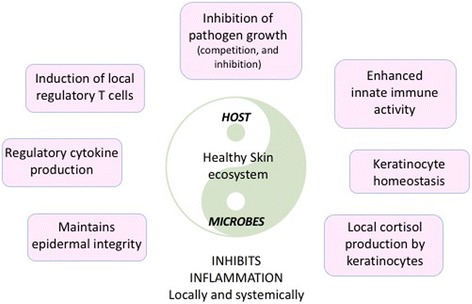
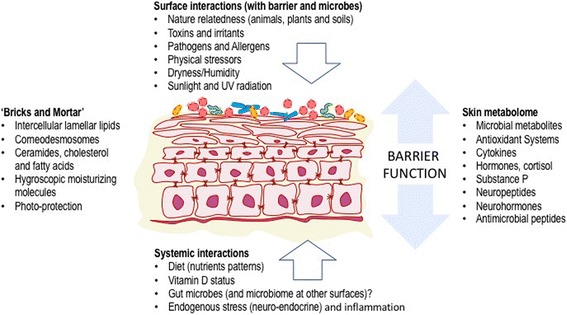
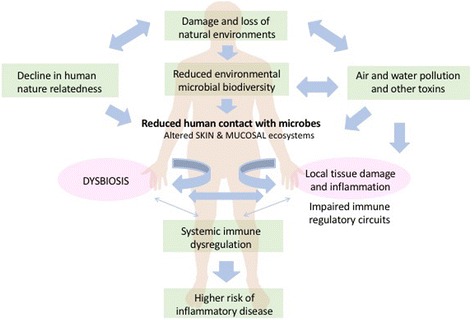
Skin barrier structure and function is essential to human health. Hitherto unrecognized functions of epidermal keratinocytes show that the skin plays an important role in adapting whole-body physiology to changing environments, including the capacity to produce a wide variety of hormones, neurotransmitters and cytokine that can potentially influence whole-body states, and quite possibly, even emotions. Skin microbiota play an integral role in the maturation and homeostatic regulation of keratinocytes and host immune networks with systemic implications. As our primary interface with the external environment, the biodiversity of skin habitats is heavily influenced by the biodiversity of the ecosystems in which we reside. Thus, factors which alter the establishment and health of the skin microbiome have the potential to predispose to not only cutaneous disease, but also other inflammatory non-communicable diseases (NCDs). Indeed, disturbances of the stratum corneum have been noted in allergic diseases (eczema and food allergy), psoriasis, rosacea, acne vulgaris and with the skin aging process. The built environment, global biodiversity losses and declining nature relatedness are contributing to erosion of diversity at a micro-ecological level, including our own microbial habitats. This emphasises the importance of ecological perspectives in overcoming the factors that drive dysbiosis and the risk of inflammatory diseases across the life course.
Overview
The claims and statistics of this paper haven’t been checked yet.
Free: it reads the open-access text and checks the first 5 claims that cite a source we can check. Create a free account to check every claim.
Integrity signals
Registry
Cites
Statistics
Figures
Verification
Claims the paper makes
The claims and statistics of this paper haven’t been checked yet.
Free: it reads the open-access text and checks the first 5 claims that cite a source we can check. Create a free account to check every claim.
Claims other papers make about this one
Each is checked against this paper’s own text: does it say what the citing paper says it does?
The cited source says what the claim attributes to it.
In the citing paper
“The decline of microbial diversity in urban and post‐industrial populations has been linked to immune dysregulation [87, 88, 89, 90].”
From Ignoring the planet: A critical blind spot for research on ageing (2025) · cites this paper as [88]
Self-check
Percentages, sums and reported differences re-computed from the paper’s own numbers.
The self-check needs the paper’s full text.
Citations
Cites
Dermyshi, E., Wang, Y., Yan, C., Hong, W., Qiu, G., Gong, X., & Zhang, T. (2017) · Neonatology · doi:10.1159/000454668 · Cited by 24,451
Ecosystems and Human Well-being: Synthesis
Assessment, M. E. (2005) · Island Press · doi:10.5281/zenodo.18167309 · Cited by 10,665
Dominguez-Bello, M. G., Costello, E. K., Contreras, M., Magris, M., Hidalgo, G., Fierer, N., & Knight, R. (2010) · Proceedings of the National Academy of Sciences · doi:10.1073/pnas.1002601107 · Cited by 4,774 · cited 4×
“Unlike vaginally delivered infants, who are colonized by bacteria from the vaginal community, infants born by C-section are dominantly colonized by Staphylococcus and other taxa reflecting maternal skin flora [83, 90].”
BackgroundInfluentialBacterial Community Variation in Human Body Habitats Across Space and Time
Costello, E. K., Lauber, C. L., Hamady, M., Fierer, N., Gordon, J. I., & Knight, R. (2009) · Science · doi:10.1126/science.1177486 · Cited by 3,231 · cited 1×
“indicating that environmental characteristics play a strong role in shaping skin bacterial communities at sebaceous sites such as the forehead [147].”
BackgroundGrice, E. A., & Segre, J. A. (2011) · Nature Reviews Microbiology · doi:10.1038/nrmicro2537 · Cited by 3,143
Atopic Dermatitis: Global Epidemiology and Risk Factors
Nutten, S. (2015) · Annals of Nutrition and Metabolism · doi:10.1159/000370220 · Cited by 3,055 · cited 1×
“While there is much focus in the gut microbiota in this context, we argue that the role of skin ecosystems may be equally important, especially as defects in skin integrity, namely early onset eczema, have increased in tandem with modernity [7].”
BackgroundWhitmee, S., Haines, A., Beyrer, C., Boltz, F., Capon, A. G., de Souza Dias, B. F., Ezeh, A., Frumkin, H., Gong, P., Head, P., et al. (2015) · The Lancet · doi:10.1016/s0140-6736(15)60901-1 · Cited by 2,998
Topographical and Temporal Diversity of the Human Skin Microbiome
Grice, E. A., Kong, H. H., Conlan, S., Deming, C. B., Davis, J., Young, A. C., Program, N. C. S., Bouffard, G. G., Blakesley, R. W., Murray, P. R., et al. (2009) · Science · doi:10.1126/science.1171700 · Cited by 2,953 · cited 2×
“In general, these studies have identified three broad microenvironment types with characteristic microbial communities: sebaceous areas (where Propionibacteria species and Staphylococci species predominate), moist areas (where Corynebacteria species predominate, with Staphylococci also present) and dry areas (with mix…”
BackgroundSudo, N., Chida, Y., Aiba, Y., Sonoda, J., Oyama, N., Yu, X., Kubo, C., & Koga, Y. (2004) · The Journal of Physiology · doi:10.1113/jphysiol.2004.063388 · Cited by 2,735 · cited 1×
“Many studies have shown that microbes, even when heat killed [63], have effects on innate immunity, and regulate gene expression in the brain [64], growth and glucose-insulin metabolism [65].”
BackgroundThe Placenta Harbors a Unique Microbiome
Aagaard, K., Ma, J., Antony, K. M., Ganu, R., Petrosino, J., & Versalovic, J. (2014) · Science Translational Medicine · doi:10.1126/scitranslmed.3008599 · Cited by 2,494 · cited 1×
“placental microbiome in healthy pregnancies [78], of likely influence to developing metabolic and immune responses in the fetus.”
Background
Research works printed but not linked: 1
- World Health Organisation Biodiversity and human health: a state of knowledge review 2015 Switzerland WHO
Cited by
Items 101–200 of 353
DeVore, S. B., Gonzalez, T., Sherenian, M. G., Herr, A. B., & Hershey, G. K. K. (2020) · Annals of Allergy Asthma & Immunology · doi:10.1016/j.anai.2020.08.025 · Cited by 25
Behaviour and sun exposure in holidaymakers alters skin microbiota composition and diversity
Willmott, T., Campbell, P. M., Griffiths, C. E. M., O’Connor, C., Bell, M., Watson, R. E. B., McBain, A. J., & Langton, A. K. (2023) · Frontiers in Aging · doi:10.3389/fragi.2023.1217635 · Cited by 25
Gannesen, A. V., Lesouhaitier, O., Netrusov, A. I., Plakunov, V. K., & Feuilloley, M. G. J. (2018) · Microbiology · doi:10.1134/s0026261718050090 · Cited by 24
Cellulose Nanocrystals for Skin Barrier Protection by Preparing a Versatile Foundation Liquid
Tang, J., He, H., Wan, R., Yang, Q. Y., Luo, H., Li, L., & Xiong, L. (2021) · ACS Omega · doi:10.1021/acsomega.0c05257 · Cited by 25
Shao, L., Jiang, S., Li, Y., Shi, Y., Wang, M., Liu, T., Yang, S., & Ma, L. (2022) · Clinical Cosmetic and Investigational Dermatology · doi:10.2147/ccid.s364542 · Cited by 25
“Skin surface is covered with numerous microorganisms, and together with the physical barrier, they protect us from the invasion of pathogens.(17,18) When the delicate balance within this symbiotic system is disturbed, unfavorable alteration of skin conditions or even skin diseases could happen, although it is still ra…”
BackgroundSkin microbiota: pathogenic roles and implications in atopic dermatitis
Huang, C., Zhuo, F., Guo, Y., Wang, S., Zhang, K., Li, X., Dai, W., Dou, X., & Yu, B. (2025) · Frontiers in Cellular and Infection Microbiology · doi:10.3389/fcimb.2024.1518811 · Cited by 30
Wojciechowska, K., & Szewczyk, K. D. S. (2025) · Molecules · doi:10.3390/molecules30224363 · Cited by 35
Rihova, M., Azpeitia, S., Číhalová, K., Michalička, J., Chennam, P. K., Kolíbalová, E., Svoboda, R., Heger, Z., Knez, M., & Macák, J. M. (2025) · Journal of Controlled Release · doi:10.1016/j.jconrel.2025.113777 · Cited by 22
Skin Lipids and Their Influence on Skin Microbiome and Skin Care
Siqueira, R. A. G. B., Hrádková, I., Leite‐Silva, V. R., Andréo‐Filho, N., & Lopes, P. S. (2025) · ACS Omega · doi:10.1021/acsomega.4c11687 · Cited by 28
Robinson, J. M., & Cameron, R. W. F. (2020) · Frontiers in Psychology · doi:10.3389/fpsyg.2020.591071 · Cited by 20
Park, H., Arellano, K., Lee, Y., Yeo, S., Ji, Y., Ko, J., & Holzapfel, W. H. (2021) · Microorganisms · doi:10.3390/microorganisms9112216 · Cited by 23
“Current findings showed that aside from the disruption of the skin barrier, microbial dysbiosis within the skin may also be a cause for atopic dermatitis, xerosis, acne vulgaris, eczema and various other skin diseases [6].”
BackgroundBeck, J. P., Grogan, M. D., Bennett, B. T., Jeyapalina, S., Agarwal, J. P., Bartow‐McKenney, C., Bugayev, J., Kubiak, E. N., Sinclair, S. K., & Grice, E. A. (2019) · Journal of Orthopaedic Research® · doi:10.1002/jor.24421 · Cited by 20
Chao, L., Lu, M., An, Z., Li, J., Li, Y., Zhao, Q., Wang, Y., Liu, Y., Wu, W., & Song, J. (2021) · Environmental Geochemistry and Health · doi:10.1007/s10653-021-00831-3 · Cited by 17
Wang, D.-Q., Li, X., Zhang, R., Yuan, C., Yan, B., Humbert, P. G., & Quan, Z. (2023) · Journal of Clinical Medicine · doi:10.3390/jcm12186078 · Cited by 22
“Literature of supporting evidence for each column as follow: [34], [37, 39, 40], [29, 30], [26, 27], [43], and [7].”
BackgroundBeri, K. (2018) · Cosmetics · doi:10.3390/cosmetics5020037 · Cited by 20
Recent advancements in magnetic starch-based composites for biomedical applications: A review
Fang, K., Li, P., Huang, X., Wang, H., Li, Y., Zhu, D., & Luo, B. (2025) · Carbohydrate Polymers · doi:10.1016/j.carbpol.2025.123689 · Cited by 15
Kayıran, M. A., Sahin, E., Koçoğlu, E., Sezerman, O. U., Gürel, M. S., & Karadağ, A. S. (2022) · Indian Journal of Dermatology Venereology and Leprology · doi:10.25259/ijdvl_323_21 · Cited by 55
Nature‐oriented daycare diversifies skin microbiota in children—No robust association with allergies
Lehtimäki, J., Laatikainen, T. K., Karkman, A., von Hertzen, L., Haahtela, T., Hanski, I., & Ruokolainen, L. (2018) · Pediatric Allergy and Immunology · doi:10.1111/pai.12872 · Cited by 18
Ooi, D. S. Q., Tan, C. P. T., Tay, M. J. Y., Ong, S. G., Tham, E. H., Siah, K. T. H., Eriksson, J. G., Godfrey, K. M., Shek, L. P., & Loo, E. X. L. (2020) · Journal of Developmental Origins of Health and Disease · doi:10.1017/s2040174420000549 · Cited by 16
Chueachavalit, C., Meephansan, J., Payungporn, S., Sawaswong, V., Chanchaem, P., Wongpiyabovorn, J., & Thio, H. B. (2022) · Experimental Dermatology · doi:10.1111/exd.14622 · Cited by 17
Systematic literature review on surgical site preparation in paediatric surgery
Bielicki, I., Subotic, U., & Bielicki, J. A. (2022) · BMC Pediatrics · doi:10.1186/s12887-022-03502-z · Cited by 19
Wallen-Russell, C., Pearlman, N., Wallen-Russell, S., Cretoiu, D., Thompson, D. C., & Voinea, S. C. (2023) · Microorganisms · doi:10.3390/microorganisms11112784 · Cited by 14
“It has now been proven that damaged skin can induce not just local but systemic inflammation [32,195], thought to be a key driver of diseases such as stroke, cancer, chronic kidney disease, eczema, autoimmune and neurodegenerative conditions, ischemic heart disease, and diabetes mellitus, which make…”
BackgroundJiang, Z., Li, L., Chen, J., Wei, G., Ji, Y., Chen, X., Liu, J., & Huo, J.-G. (2021) · Infection Genetics and Evolution · doi:10.1016/j.meegid.2021.104946 · Cited by 15
Agostinetto, G., Bozzi, D., Porro, D., Casiraghi, M., Labra, M., & Bruno, A. (2022) · Database · doi:10.1093/database/baac033 · Cited by 17
“As the number of studies grows, it clearly appears that crossing the boundary between medicine and microbial ecology is the lynchpin for a deep understanding of skin health (4,74).”
Background4‐phenylpyridine suppresses UVB ‐induced skin inflammation by targeting c‐Src in vitro and in vivo
Kim, J. G., Kang, H. Y., Kim, M. J., Lim, S., Lee, C. J., Kim, K., & Jung, S. K. (2022) · Journal of Cellular and Molecular Medicine · doi:10.1111/jcmm.17422 · Cited by 13
“Twenty mice were randomly allocated to each group (n = 5 per each group, four groups in total): (1) control group (normal), (2) UVBirradiated group (UVB), (3) 0.”
MethodStrategic Approaches in Formulation Development for Atopic Dermatitis
Kurebayashi, A. K., Phan, K. K. T., Abdoh, A., Andréo‐Filho, N., Lopes, P. S., Mohammed, Y., & Leite‐Silva, V. R. (2024) · Cosmetics · doi:10.3390/cosmetics11040113 · Cited by 20
Leverett, K., Manjarín, R., Laird, E., Valtierra, D., Santiago-Rodríguez, T. M., Donadelli, R. A., & Perez-Camargo, G. (2022) · Animals · doi:10.3390/ani12151881 · Cited by 16
“Moreover, there is novel research showing a relationship between the gut and skin [20,36].”
BackgroundTrikamjee, T., Basera, W., Botha, M., Facey‐Thomas, H. E., Gaunt, B., Genuneit, J., Gray, C. L., Hadebe, S., Hlela, C., Kirstein, F., et al. (2021) · Pediatric Allergy and Immunology · doi:10.1111/pai.13476 · Cited by 13
Self-citationSynergistic Strategies of Biomolecular Transport Technologies in Transdermal Healthcare Systems
Han, J., Choi, Y., & Kang, S. (2024) · Advanced Healthcare Materials · doi:10.1002/adhm.202401753 · Cited by 13
Barinova, A. N. (2018) · Russian Family Doctor · doi:10.17816/rfd2018314-22 · Cited by 12
The association of fractional cover, foliage projective cover and biodiversity with birthweight
Vilcins, D., Scarth, P. F., Sly, P. D., Jagals, P., Knibbs, L. D., & Baker, P. (2020) · The Science of The Total Environment · doi:10.1016/j.scitotenv.2020.143051 · Cited by 14
Distortion of the Microbiota of the Natural Environment by Human Activities
Sinkkonen, A. (2022) · Progress in inflammation research · doi:10.1007/978-3-030-91051-8_8 · Cited by 15
The Biological Role of Dead Sea Water in Skin Health: A Review
Dai, D., Xiaoyu, M., Yan, X., & Bao, X. (2023) · Cosmetics · doi:10.3390/cosmetics10010021 · Cited by 16
Microbiome in the primary prevention of allergic diseases and bronchial asthma
Sozańska, B. (2018) · Allergologia et Immunopathologia · doi:10.1016/j.aller.2018.03.005 · Cited by 13
Characterization of skin surface and dermal microbiota in dogs with mast cell tumor
Zamarian, V., Catozzi, C., Cuscó, A., Stefanello, D., Ferrari, R., Ceciliani, F., Francino, O., Sánchez, A., Grieco, V., Zani, D. D., et al. (2020) · Scientific Reports · doi:10.1038/s41598-020-69572-0 · Cited by 13
Darlenski, R., & Fluhr, J. W. (2023) · International Journal of Cosmetic Science · doi:10.1111/ics.12844 · Cited by 13
“In contrast, its outermost layers host a variety of microorganisms— resident microflora: increasingly referred to as an important part of the integrity of the skin and other tissues, including an interaction with the immune system [84].”
BackgroundInfluentialBijoy, M. H. I., Rahman, M. M., Sattar, A., Haque, A., Arefin, M. S., Dhar, P. K., & Shimamura, T. (2025) · Discover Applied Sciences · doi:10.1007/s42452-025-06596-z · Cited by 13
“Skin infection has become more common because of changing lifestyles and environments [1, 2].”
Jamerson, T. A., Li, Q., Sreeskandarajan, S., Budunova, I. V., He, Z., Kang, J., Gudjonsson, J. E., Patrick, M. T., & Tsoi, L. C. (2022) · Frontiers in Immunology · doi:10.3389/fimmu.2022.845655 · Cited by 13
Role of Cutaneous Microbiome in Dermatology
Mustari, A. P., Agrawal, I., Das, A., & Vinay, K. (2023) · Indian Journal of Dermatology · doi:10.4103/ijd.ijd_560_22 · Cited by 11
“…(Groin, axilla, antecubital fossa, toe web) [9] Mode of delivery Caesarean Vaginal Staphylococcus, Corynebacterium , and Cutibacterium predominant Lactobacillus, Prevotella and Sneathia predominant [10] Hormones α -MSH Acetylcholine Catestatain Act against Staphylococcus aureus and its biofilm”
Longitudinal study of the interplay between the skin barrier and facial microbiome over 1 year
Seo, J. Y., You, S. W., Gu, K., Kim, H., Shin, J., Leem, S., Hwang, B. K., Kim, Y., & Kang, N. G. (2023) · Frontiers in Microbiology · doi:10.3389/fmicb.2023.1298632 · Cited by 16
Svabova, T., Jelinkova, A., Zakostelska, Z. J., Thon, T., Coufal, Š., Poloučková, A., Kopelentová, E., Kverka, M., Makovicky, P., Tlaskalová‐Hogenová, H., et al. (2025) · Frontiers in Immunology · doi:10.3389/fimmu.2024.1509691 · Cited by 14
Microbiomes in action: multifaceted benefits and challenges across academic disciplines
Soth, S., Hampton, J. G., Alizadeh, H., Wakelin, S. A., & Mendoza‐Mendoza, A. (2025) · Frontiers in Microbiology · doi:10.3389/fmicb.2025.1550749 · Cited by 16
McLeod, K. H., Richards, J. L., Yap, Y. A., & Mariño, E. (2019) · Elsevier eBooks · doi:10.1016/b978-0-12-813820-5.00007-6 · Cited by 13
The role of the skin microbiota in the modulation of cutaneous inflammation—Lessons from the gut
Elias, A., McBain, A. J., & O’Neill, C. A. (2021) · Experimental Dermatology · doi:10.1111/exd.14420 · Cited by 10
Microbial community signatures for estimation of postmortem time intervals
Dash, H. R., & Das, S. (2022) · Advances in applied microbiology · doi:10.1016/bs.aambs.2022.02.002 · Cited by 14
Kwarteng, A., Wireko, S., Asiedu, S. O., Kini, P., Aglomasa, B. C., Amewu, E. K. A., Asiedu, E., Boahen, K. G., Amato, K. R., & Obiri‐Yeboah, D. (2022) · Scientific African · doi:10.1016/j.sciaf.2022.e01237 · Cited by 9
The Role of Skin Microbiome in Human Health and Diseases
Khan, A., & Koh, Y. (2024) · Journal of Bacteriology and Virology · doi:10.4167/jbv.2024.54.3.191 · Cited by 10
Cucu, C. I., Giurcăneanu, C., Mihai, M. M., Andronic, T., Ancuta, I., Popa, M. I., Macovei, I. S., & Popa, L. G. (2025) · Journal of Clinical Medicine · doi:10.3390/jcm14072424 · Cited by 12
Han, Y., Li, J., Wang, Y., Zhang, T., Mehmood, T., & Habimana, O. (2025) · Frontiers in Microbiology · doi:10.3389/fmicb.2025.1595030 · Cited by 14
Zhang, G., & Souëf, P. N. L. (2024) · World Allergy Organization Journal · doi:10.1016/j.waojou.2023.100857 · Cited by 12
“Apparently, these processes of urbanization and industrialization have resulted in a reduction in microbiome diversity, 17 , 18 which may have signi fi cantly contributed to the increase in non-communicable diseases in developed countries in past centuries as well as recently in developing countries.”
BackgroundMicrobiome of Compromised Skin
Farahmand, S. (2020) · Wiley eBooks · doi:10.1002/9781119593058.ch7 · Cited by 10
Oral and skin microbiome as potential tools in forensic field
Lovisolo, F., Ogbanga, N., Sguazzi, G., Renò, F., Migliario, M., Nelson, A., Procopio, N., & Gino, S. (2022) · Forensic science international. Genetics supplement series · doi:10.1016/j.fsigss.2022.09.024 · Cited by 8
Skin microbiome profile in people living with HIV/AIDS in Cameroon
Ogai, K., Nana, B. C., Lloyd, Y. M., Arios, J. P., Jiyarom, B., Awanakam, H., Esemu, L. F., Hori, A., Matsuoka, A., Nainu, F., et al. (2023) · Frontiers in Cellular and Infection Microbiology · doi:10.3389/fcimb.2023.1211899 · Cited by 8
Anshory, M., Kalim, H., Nouwen, J. L., & Thio, H. B. (2025) · International Journal of Molecular Sciences · doi:10.3390/ijms26073199 · Cited by 10
“Together, the microbiota and innate immune system form an essential network for skin immunity and homeostasis [15].”
Abdessalam, S., Hardy, T. J., Pershina, D., & Yoon, J. (2025) · Biosensors and Bioelectronics · doi:10.1016/j.bios.2025.117472 · Cited by 12
Kim, Y. (2025) · Journal of Clinical Medicine · doi:10.3390/jcm14144960 · Cited by 12
“Notably, gut microbiota alterations in AD have been more consistently reported compared to those of the skin microbiome, which are often confounded by sampling variability and site-specific factors [39,40].”
Cao, C., Gu, J., Zhu, W., Li, H., Liu, R., Zhang, W., Li, R., Li, D., Ling, J., Ge, M., et al. (2025) · Advanced Functional Materials · doi:10.1002/adfm.202516990 · Cited by 11
Лойко, Н. Г., Kanunnikov, O., Gannesen, A. V., Kovalenko, V. V., Vishnyakova, A., Axelrod, V., & Litti, Y. (2022) · Biology · doi:10.3390/biology11070984 · Cited by 8
“It plays a significant role in the adaptation of the body’s physiology to environmental changes, including its ability to express a wide range of signal molecules (hormones, neurotransmitters, and cytokines) [13].”
BackgroundRole of Nutribiotics in Skin Care
Mourelle, M. L., Gómez, C. P., Legido, J. L., & Pereira, L. (2024) · Applied Sciences · doi:10.3390/app14083505 · Cited by 9
“Some authors postulate that differences in the skin microbiome of urban and rural residents may be related to the exposure to microorganisms from the soil, water, and other factors, such as the biomass used in agriculture or livestock [63].”
BackgroundHuang, L., Huang, H., Liang, X., Su, Q., Ye, L., Zhai, C., Huang, E., Pang, J., Zhong, X., Shi, M., et al. (2024) · Forensic Science International · doi:10.1016/j.forsciint.2024.112152 · Cited by 8
Spotswood, E. N., Aronson, M. F. J., Bazo, M., Beller, E. E., Brown, J. D., Dronova, I., Estien, C. O., Frumkin, H., Galarraga, J., Grossinger, R. M., et al. (2025) · People and Nature · doi:10.1002/pan3.70130 · Cited by 15
“…can lead to greater diversity in the human microbiome (particularly in the gut and on the skin) (Flies et al., 2017 , 2018 ; Liddicoat et al., 2016; Prescott et al., 2016 , 2017 ), which is thought to be linked to immune function and the development of immune-related diseases in children,…”
Mechanical Properties of the Skin: What do we Know?
Ita, K. B., Silva, M., & Bassey, R. B. (2022) · Current Cosmetic Science · doi:10.2174/2666779701666220107161901 · Cited by 10
Microbiota shaping and bioburden monitoring of indoor antimicrobial surfaces
Mäki, A., Salonen, N., Kivisaari, M., Ahonen, M. H., & Latva, M. (2023) · Frontiers in Built Environment · doi:10.3389/fbuil.2023.1063804 · Cited by 8
“…disinfectant use, synthetic construction, and utility material use, medications such as broad-spectrum antibiotics, and historical events in recent centuries (Davenport et al., 2017; Prescott et al., 2017; Parajuli et al., 2018; SanMiguel et al., 2018; Ahn andHayes, 2021; Danko et al., 2021).”
BackgroundDancing Our Microbiome at the Science Museum: A Dance/STEAM Collaboration
Buono, A., & Burnidge, A. (2020) · Journal of Dance Education · doi:10.1080/15290824.2020.1790568 · Cited by 7
“…to the increasing realization that microbes are key in understanding topics such as pathogenicity (Rui-xue et al. 2019), antibacterial resistance (Relman and Lipsitch 2018), the nervous system of the gut (Heiss and Olofsson 2019), and earth’s diverse ecosystems (Yong 2016; Prescott et al. 2017).”
BackgroundA human skin microbiome reference catalog and the skin microbial landscape of plateau adults
Liu, Y., Li, Z., Zhang, C., Li, B., Jiang, W., Li, H., Zhang, L., Zhen, H., Bao, S., Li, X., et al. (2025) · iMetaOmics. · doi:10.1002/imo2.70000 · Cited by 7
“The intense ultraviolet radiation, low oxygen levels, and extreme weather conditions at high altitudes can further stimulate the barrier function of the skin microbiota [43 – 45].”
Omics-based decoding of molecular and metabolic crosstalk in the skin barrier ecosystem
Elettrico, L., Piacenti, G., Levron, C. L., Ansai, O., Croce, A., Duval, C., Proserpio, V., & Donati, G. (2026) · Cell Death and Differentiation · doi:10.1038/s41418-025-01648-8 · Cited by 8
“For instance, shifts in the microbial community, driven by environmental changes [102], skin disorders [21, 103], or therapeutic interventions [104, 105] have been correlated with alterations in keratinocyte gene expression, affecting processes such as differentiation, metabolism, cytokine…”
Microenvironmental host–microbe interactions in chronic inflammatory skin diseases
Bay, L., Jemec, G. B. E., & Ring, H. C. (2024) · Apmis · doi:10.1111/apm.13464 · Cited by 8
“Potentially, terminal hair follicle funnels harbor 10 times more bacteria than vellus hair follicles due to the difference in reservoir volume (8) leading to differ-ences in microbial abundance according to skin habitats and sexes (15,17,29 – 32).”
Sodré, M. T. C., Ferraz, F. A., Alencar, A., Silva, K. F., Silva, D. H. D. S., Silva, L. D. S., Carneiro, J. S. D. S. A., Monteiro, C. D. A., da Silva, L. C. N., & Monteiro, A. D. S. (2023) · Pharmaceuticals · doi:10.3390/ph16081112 · Cited by 8
Reef-Building Corals as a Tool for Climate Change Research in the Genomics Era
Godoy‐Vitorino, F., & Toledo‐Hernández, C. (2018) · Results and problems in cell differentiation · doi:10.1007/978-3-319-92486-1_23 · Cited by 7
Wallen-Russell, C., & Wallen-Russell, S. (2020) · Cosmetics · doi:10.3390/cosmetics7040079 · Cited by 6
Abadías‐Granado, I., Sánchez‐Bernal, J., & Gilaberte, Y. (2022) · Plastic and Aesthetic Research · doi:10.20517/2347-9264.2020.199 · Cited by 10
Wang, W., Zhong, M., Liu, R., Zhao, S., Wei, X., Zheng, Q., Zhong, Q., Shen, Y., & He, F. (2025) · Journal of Cosmetic Dermatology · doi:10.1111/jocd.70343 · Cited by 8
Complex topical therapy of progressive psoriasis
Novikov, Y. A., Zubareva, E. Y., Kungurova, L. R., Lekavichus, I. Y. L., Maslova, M. S., & Zadorozhnaya, A. V. (2022) · Russian Journal of Clinical Dermatology and Venereology · doi:10.17116/klinderma20222101192 · Cited by 5
Phenylalanine Butyramide: A Butyrate Derivative as a Novel Inhibitor of Tyrosinase
Lorenzo, R. D., Lorenzo, V. D., Serio, T. D., Marzocchi, A., Ricci, L., Vardaro, E., Greco, G., Maisto, M., Grumetto, L., Piccolo, V., et al. (2024) · International Journal of Molecular Sciences · doi:10.3390/ijms25137310 · Cited by 6
“The skin microbiome is crucial to maintaining skin health and well-being [8].”
BackgroundAlexander, G. K., & Brooks, V. (2021) · Collegian Journal of the Royal College of Nursing Australia · doi:10.1016/j.colegn.2021.03.001 · Cited by 5
Relationship Between Probiotics and Gut-Skin Axis in Skin Wound Healing: A Recent Update
Tembhre, M. K., Chawla, M. K., Berthiaume, F., & Kumar, S. (2021) · Springer eBooks · doi:10.1007/978-981-16-5628-6_8 · Cited by 5
Lower facial skin hydration level increases acne vulgaris severity level
Yolanda, M. O., Jusuf, N. K., & Putra, I. B. (2021) · Bali Medical Journal · doi:10.15562/bmj.v10i3.2195 · Cited by 11
“Very Dry 40 (100) 18 (100) 18 (94,7) 1 (33,3) -0,453 <0,001”
Gut-Skin Axis: Role in Health and Disease
Malaviya, A., Krishna, K. V., Malviya, S., & Das, T. (2021) · Springer eBooks · doi:10.1007/978-981-16-5628-6_1 · Cited by 6
Lee, W. J., Kim, M. J., Choi, H., Lee, J. J., & Jung, S. K. (2022) · Journal of Microbiology and Biotechnology · doi:10.4014/jmb.2206.06004 · Cited by 5
“Methyl Gallate Suppressed 1-Nitropyrene-Induced COX-2 Expression and Phosphorylation of MAPKs in HaCaT Cells Persistent or acute skin inflammatory reactions can cause skin diseases including rosacea, psoriasis, atopic dermatitis, and skin cancer [30].”
BackgroundComparative analysis of immune related genes between domestic pig and germ-free minipig
Lee, J. Y., Kim, S. E., Lee, H. T., & Hwang, J. H. (2020) · Laboratory Animal Research · doi:10.1186/s42826-020-00077-7 · Cited by 5
Damevska, K., Nikolovska, S., Kazandjieva, J., Trifunova, B. K., & Bocheva, G. (2019) · Wiley eBooks · doi:10.1002/9781119476009.ch24 · Cited by 8
Exploring Stress-Induced Mechanisms in Acne PathogenesisPreprint
Siddiqui, I., Rais, U., & Tahir, M. (2024) · Research Square · doi:10.21203/rs.3.rs-4477781/v1 · Cited by 7
Ignoring the planet: A critical blind spot for research on ageing
Shiels, P., Neytchev, O., Borland, G., Germushkina, P., Johnson, R., Stenvinkel, P., & Woods, T. (2025) · Journal of Internal Medicine · doi:10.1111/joim.70032 · Cited by 4
Pan, X., Zhao, Y. C., Huang, W., Wu, J., Liang, J., Xie, Y., Chen, Y., & Zhao, W. (2025) · Archives of Dermatological Research · doi:10.1007/s00403-025-04417-2 · Cited by 4
Alterations of Chinese women’s skin microbiota associated with the aging process
Wang, C., Yang, S., Ma, L., Li, Y., Shi, Y., Wang, M., Shao, L., Li, Z., & Wang, Y. (2022) · Acta Biochimica et Biophysica Sinica · doi:10.3724/abbs.2022105 · Cited by 5
“Recently, the role of the taxonomic compositions of skin microbial communities in skin health and disease and their relationships with the skin aging process are broadly focused on and further investigated [2].”
BackgroundWallen-Russell, C., Gijsberts-Veens, A., & Wallen-Russell, S. (2021) · Allergies · doi:10.3390/allergies2010001 · Cited by 6
Bhuju, J., Olesen, K. M., Muenyi, C. S., Patel, T. S., Read, R. W., Thompson, L., Skalli, O., Zheng, Q., Grice, E. A., Sutter, T. R., et al. (2021) · Toxics · doi:10.3390/toxics9080192 · Cited by 6
Bacteria and Biofilms as Natural Inhabitants of Our Body
Ray, R. R., Lahiri, D., Chatterjee, A., & Banerjee, P. (2021) · Springer eBooks · doi:10.1007/978-981-16-0745-5_3 · Cited by 8
Manfaat Probiotik dalam Perawatan Kulit : Review
Pratiwi, E. D., & Susanti, S. (2021) · Majalah Farmasetika · doi:10.24198/mfarmasetika.v6i4.35690 · Cited by 10
Haykal, D., & Rocha, M. (2025) · Journal of Cosmetic Dermatology · doi:10.1111/jocd.70150 · Cited by 3
Dubli, K., Balasundaram, P., Rinku, C., Vettrivelan, S., Borwake, A., Aleman, F., Kapoor, R., Singh, R., Singh, R., Kapoor, A., et al. (2025) · Biomedicines · doi:10.3390/biomedicines13102371 · Cited by 4
“Skin and its microbiome are constantly exposed to various physical, biological, and chemical factors that may affect skin health positively or negatively [53].”
Huang, X., Xie, J., Yang, Y., Dai, X., Lu, L., Li, N., Li, Y., Wang, S., & Zhang, L. (2023) · Frontiers in Neurology · doi:10.3389/fneur.2023.1263753 · Cited by 3
Exploring the Microbial Landscape of Neonatal Skin Flora: A Comprehensive Review
Jain, A., Meshram, R. J., Lohiya, S. B., Patel, A., & Kaplish, D. (2024) · Cureus · doi:10.7759/cureus.52972 · Cited by 4
“Dysbiosis, characterized by an imbalance in the skin microbiome, has been linked to various skin diseases and conditions, underscoring the importance of maintaining a healthy skin microbiota [5,23,24].”
BackgroundMadu, U. L., Ogundeji, A. O., Folorunso, O. S., Albertyn, J., Pohl, C. H., & Sebolai, O. M. (2021) · Photochem · doi:10.3390/photochem1020017 · Cited by 4
Suharto, I. P. S., Ramayanti, E. D., Yunalia, E. M., & Ulfa, N. (2021) · JURNAL PENDIDIKAN KEPERAWATAN INDONESIA · doi:10.17509/jpki.v7i2.40359 · Cited by 4
“Skin is an essential organ that reflects health (Prescott et al. , 2017).”
BackgroundHughes, M. F. (2020) · Elsevier eBooks · doi:10.1016/b978-0-12-813602-7.00011-9 · Cited by 4
Li, M., Masri, S., Chiu, C., Sun, Y., & Wu, J. Y. (2023) · The Science of The Total Environment · doi:10.1016/j.scitotenv.2023.166995 · Cited by 4
Jurek, J. M., & Neymann, V. (2023) · Journal of Cosmetic Dermatology · doi:10.1111/jocd.16131 · Cited by 3
“16 Consequently, understanding the interplay between skin immu - nity, microbiome, and aging may aid the development of innovative strategies to enhance skin regeneration and combat age-related skin disorders.”
BackgroundSkin Disease in Tropics: Impacted by Heat, Humidity, and Healthcare Neglect
Sharma, A., & Gupta, S. (2024) · Springer eBooks · doi:10.1007/978-981-97-0411-8_16 · Cited by 8
Links between biodiversity and human infectious and non-communicable diseases: a review
Crump, L., Martinoli, D., & Zinsstag, J. (2021) · Swiss Medical Weekly · doi:10.4414/smw.2021.20485 · Cited by 5
Metadata
- Authors
- Prescott, S. L., Larcombe, D.-L., Logan, A. C., West, C., Burks, W., Caraballo, L., Levin, M., Etten, E. V., Horwitz, P., Kozyrskyj, A., & Campbell, D. E.
- Affiliations
- The University of Western Australia (AU)
- Edith Cowan University (AU)
- Umeå University (SE)
- University of North Carolina at Chapel Hill (US)
- Universidad de Cartagena (CO)
- University of Cape Town (ZA)
- University of Alberta (CA)
- The University of Sydney (AU)
- Corresponding author
- Prescott, Susan L.
- ORCID
- Venue
- World Allergy Organization Journal
- Publisher
- Elsevier BV
- Published
- 2017
- Volume
- 10
- Issue
- 1
- Pages
- 29
- ISSN
- 1939-4551 (ISSN-L)
- PMC
- PMC5568566
- OpenAlex
- W2738994169
- Semantic Scholar
- d1929444bfb36a5e18f22eb9def253d8477139a7
- Cited by
- 347
- References
- 180
- Citations by year
- 2026: 32 · 2025: 52 · 2024: 32 · 2023: 37 · 2022: 42 · 2021: 46 · 2020: 58 · 2019: 22 · 2018: 25 · 2017: 1
- FWCI
- 5.19
- Type
- journal article
- Language
- en
- Open access
- gold
- doi.org
- Licence
- cc-by-nc-nd
- www.elsevier.com/tdm/userlicense/1.0/ (tdm)
- creativecommons.org/licenses/by-nc-nd/4.0/ (vor, 834 d)
- Locations
- World Allergy Organization Journal (publishedVersion, cc-by-nc-nd)
- Europe PMC (PubMed Central) (publishedVersion, cc-by)
- PubMed Central (publishedVersion, cc-by)
- PubMed (publishedVersion)
- Carolina Digital Repository (University of North Carolina at Chapel Hill) (submittedVersion)
- UWA Profiles and Research Repository (UWA) (submittedVersion, cc-by)
- Australasian Journal of Paramedicine (submittedVersion, cc-by)
- DiVA at Umeå University (Umeå University) (submittedVersion, other-oa)
- DOAJ (DOAJ: Directory of Open Access Journals) (submittedVersion, cc-by-sa)
- Open University of Cape Town (University of Cape Town) (submittedVersion)
- UNC Libraries
- Topics
- Health Sciences › Medicine › Dermatology › Dermatology and Skin Diseases
- Health Sciences › Medicine › Dermatology › Contact Dermatitis and Allergies
- Life Sciences › Biochemistry, Genetics and Molecular Biology › Molecular Biology › Gut microbiota and health
- Keywords
- skin microbiome, skin barrier integrity, keratinocytes, stratum corneum, atopic dermatitis, food allergy, psoriasis, rosacea, acne, skin aging, dysbiosis, built environment, biodiversity loss, nature relatedness, non-communicable diseases, allergic diseases
About these checks
Registry, retraction, Cites and statistics results are computed, not judged, with one exception: a printed reference that no index lists is read once by a model before it counts as a citation error. Claims are extracted by a model and kept only when their quote appears verbatim in the text; each cited source is then checked, with a model’s help, for whether it says what the claim relies on. Those verdicts can be wrong — read the claim’s quote and the cited source before relying on one.
Statistics and arithmetic are recomputed, not judged.
Confidence bands are shown only for fields calibrated on our annotated test set. None is calibrated yet, so no band is shown.
What counts as a claim ›How we measure confidence ›How we check this ›
Are you an author, or do you see a problem with this page? Request a review
Data sources
Bibliographic data: Semantic Scholar, OpenAlex, Crossref.
Contains information from the Semantic Scholar Academic Graph Datasets, made available under the ODC Attribution License (ODC-BY 1.0).
Semantic Scholar’s data is described in: Kinney, R., et al. (2023). The Semantic Scholar Open Data Platform. arXiv:2301.10140.
