

The skin microbiome: impact of modern environments on skin ecology, barrier integrity, and systemic immune programming
Open accessThe DOI matches its Crossref record; 180 of the 180 references it cites were found in a registry or an index.
Abstract
Skin barrier structure and function is essential to human health. Hitherto unrecognized functions of epidermal keratinocytes show that the skin plays an important role in adapting whole-body physiology to changing environments, including the capacity to produce a wide variety of hormones, neurotransmitters and cytokine that can potentially influence whole-body states, and quite possibly, even emotions. Skin microbiota play an integral role in the maturation and homeostatic regulation of keratinocytes and host immune networks with systemic implications. As our primary interface with the external environment, the biodiversity of skin habitats is heavily influenced by the biodiversity of the ecosystems in which we reside. Thus, factors which alter the establishment and health of the skin microbiome have the potential to predispose to not only cutaneous disease, but also other inflammatory non-communicable diseases (NCDs). Indeed, disturbances of the stratum corneum have been noted in allergic diseases (eczema and food allergy), psoriasis, rosacea, acne vulgaris and with the skin aging process. The built environment, global biodiversity losses and declining nature relatedness are contributing to erosion of diversity at a micro-ecological level, including our own microbial habitats. This emphasises the importance of ecological perspectives in overcoming the factors that drive dysbiosis and the risk of inflammatory diseases across the life course.
Overview
The claims and statistics of this paper haven’t been checked yet.
Free: it reads the open-access text and checks the first 5 claims that cite a source we can check. Create a free account to check every claim.
Integrity signals
Registry
Cites
Statistics
Figures
Verification
Claims the paper makes
The claims and statistics of this paper haven’t been checked yet.
Free: it reads the open-access text and checks the first 5 claims that cite a source we can check. Create a free account to check every claim.
Claims other papers make about this one
Each is checked against this paper’s own text: does it say what the citing paper says it does?
The cited source says what the claim attributes to it.
In the citing paper
“The decline of microbial diversity in urban and post‐industrial populations has been linked to immune dysregulation [87, 88, 89, 90].”
From Ignoring the planet: A critical blind spot for research on ageing (2025) · cites this paper as [88]
Self-check
Percentages, sums and reported differences re-computed from the paper’s own numbers.
The self-check needs the paper’s full text.
Citations
Cites
Dermyshi, E., Wang, Y., Yan, C., Hong, W., Qiu, G., Gong, X., & Zhang, T. (2017) · Neonatology · doi:10.1159/000454668 · Cited by 24,451
Ecosystems and Human Well-being: Synthesis
Assessment, M. E. (2005) · Island Press · doi:10.5281/zenodo.18167309 · Cited by 10,665
Dominguez-Bello, M. G., Costello, E. K., Contreras, M., Magris, M., Hidalgo, G., Fierer, N., & Knight, R. (2010) · Proceedings of the National Academy of Sciences · doi:10.1073/pnas.1002601107 · Cited by 4,774 · cited 4×
“Unlike vaginally delivered infants, who are colonized by bacteria from the vaginal community, infants born by C-section are dominantly colonized by Staphylococcus and other taxa reflecting maternal skin flora [83, 90].”
BackgroundInfluentialBacterial Community Variation in Human Body Habitats Across Space and Time
Costello, E. K., Lauber, C. L., Hamady, M., Fierer, N., Gordon, J. I., & Knight, R. (2009) · Science · doi:10.1126/science.1177486 · Cited by 3,231 · cited 1×
“indicating that environmental characteristics play a strong role in shaping skin bacterial communities at sebaceous sites such as the forehead [147].”
BackgroundGrice, E. A., & Segre, J. A. (2011) · Nature Reviews Microbiology · doi:10.1038/nrmicro2537 · Cited by 3,143
Atopic Dermatitis: Global Epidemiology and Risk Factors
Nutten, S. (2015) · Annals of Nutrition and Metabolism · doi:10.1159/000370220 · Cited by 3,055 · cited 1×
“While there is much focus in the gut microbiota in this context, we argue that the role of skin ecosystems may be equally important, especially as defects in skin integrity, namely early onset eczema, have increased in tandem with modernity [7].”
BackgroundWhitmee, S., Haines, A., Beyrer, C., Boltz, F., Capon, A. G., de Souza Dias, B. F., Ezeh, A., Frumkin, H., Gong, P., Head, P., et al. (2015) · The Lancet · doi:10.1016/s0140-6736(15)60901-1 · Cited by 2,998
Topographical and Temporal Diversity of the Human Skin Microbiome
Grice, E. A., Kong, H. H., Conlan, S., Deming, C. B., Davis, J., Young, A. C., Program, N. C. S., Bouffard, G. G., Blakesley, R. W., Murray, P. R., et al. (2009) · Science · doi:10.1126/science.1171700 · Cited by 2,953 · cited 2×
“In general, these studies have identified three broad microenvironment types with characteristic microbial communities: sebaceous areas (where Propionibacteria species and Staphylococci species predominate), moist areas (where Corynebacteria species predominate, with Staphylococci also present) and dry areas (with mix…”
BackgroundSudo, N., Chida, Y., Aiba, Y., Sonoda, J., Oyama, N., Yu, X., Kubo, C., & Koga, Y. (2004) · The Journal of Physiology · doi:10.1113/jphysiol.2004.063388 · Cited by 2,735 · cited 1×
“Many studies have shown that microbes, even when heat killed [63], have effects on innate immunity, and regulate gene expression in the brain [64], growth and glucose-insulin metabolism [65].”
BackgroundThe Placenta Harbors a Unique Microbiome
Aagaard, K., Ma, J., Antony, K. M., Ganu, R., Petrosino, J., & Versalovic, J. (2014) · Science Translational Medicine · doi:10.1126/scitranslmed.3008599 · Cited by 2,494 · cited 1×
“placental microbiome in healthy pregnancies [78], of likely influence to developing metabolic and immune responses in the fetus.”
BackgroundNisbet, E. K., Zelenski, J. M., & Murphy, S. A. (2009) · Environment and Behavior · doi:10.1177/0013916508318748 · Cited by 1,963 · cited 3×
“There are now a number of studies correlating validated measures of nature relatedness (NR) with health benefits [58, 114, 115].”
BackgroundCox, L. M., Yamanishi, S., Sohn, J., Alekseyenko, A. V., Leung, J. M., Cho, I., Kim, S. G., Li, H., Gao, Z., Mahana, D., et al. (2014) · Cell · doi:10.1016/j.cell.2014.05.052 · Cited by 1,859 · cited 1×
“Many studies have shown that microbes, even when heat killed [63], have effects on innate immunity, and regulate gene expression in the brain [64], growth and glucose-insulin metabolism [65].”
BackgroundEnvironmental Exposure to Endotoxin and Its Relation to Asthma in School-Age Children
Braun-Fahrländer, C., Riedler, J., Herz, U., Eder, W., Waser, M., Grize, L., Maisch, S., Carr, D., Gerlach, F., Bufe, A., et al. (2002) · New England Journal of Medicine · doi:10.1056/nejmoa020057 · Cited by 1,811
Rook's Textbook of Dermatology
(2004) · Wiley eBooks · doi:10.1002/9780470750520 · Cited by 1,653
Schweiger, D., Baufeld, C., Drescher, P., Oltrogge, B., Höpfner, S., Mess, A., Lüttke, J., Rippke, F., Filbry, A., & Max, H. (2013) · Skin Pharmacology and Physiology · doi:10.1159/000348473 · Cited by 1,346
Host Biology in Light of the Microbiome: Ten Principles of Holobionts and Hologenomes
Bordenstein, S. R., & Theis, K. R. (2015) · PLOS Biology · doi:10.1371/journal.pbio.1002226 · Cited by 1,240 · cited 1×
“Indeed, given the functionally essential metabolic roles played by microbes and their symbiotic relationship with other forms of life, the holobiont perspective is one in which humans are a multi-species entity [15].”
BackgroundThe relationship between nature connectedness and happiness: a meta-analysis
Capaldi, C. A., Dopko, R. L., & Zelenski, J. M. (2014) · Frontiers in Psychology · doi:10.3389/fpsyg.2014.00976 · Cited by 1,183 · cited 1×
“There are now a number of studies correlating validated measures of nature relatedness (NR) with health benefits [58, 114, 115].”
BackgroundBiogeography and individuality shape function in the human skin metagenome
Program, N. C. S., Oh, J., Byrd, A. L., Deming, C., Conlan, S., Kong, H. H., & Segre, J. A. (2014) · Nature · doi:10.1038/nature13786 · Cited by 1,148 · cited 1×
“Even then, the signatures vary with changes in the local microenvironment, between individuals and with health, behavior and environmental contacts (as discussed further below) [17].”
BackgroundPerez-Muñoz, M. E., Arrieta, M.-C., Ramer-Tait, A. E., & Walter, J. (2017) · Microbiome · doi:10.1186/s40168-017-0268-4 · Cited by 1,096
Compartmentalized Control of Skin Immunity by Resident Commensals
Naik, S., Bouladoux, N., Wilhelm, C., Molloy, M. J., Salcedo, R., Kastenmuller, W., Deming, C., Quinones, M., Koo, L., Conlan, S., et al. (2012) · Science · doi:10.1126/science.1225152 · Cited by 1,092 · cited 1×
“In studies involving germ-free mice, the absence of commensal skin bacteria compromises normal immune responses, most notably cytokine production [52].”
BackgroundSelf-citationCohabiting family members share microbiota with one another and with their dogs
Song, S. J., Lauber, C., Costello, E. K., Lozupone, C. A., Humphrey, G., Berg-Lyons, D., Caporaso, J. G., Knights, D., Clemente, J. C., Nakielny, S., et al. (2013) · eLife · doi:10.7554/elife.00458 · Cited by 1,082 · cited 2×
“Closer similarities of skin commensal bacteria between family members residing in the same home than individuals from different households has been reported [95].”
BackgroundEnvironmental biodiversity, human microbiota, and allergy are interrelated
Hanski, I., von Hertzen, L., Fyhrquist, N., Koskinen, K., Torppa, K., Laatikainen, T., Karisola, P., Auvinen, P., Paulin, L., Mäkelä, M. J., et al. (2012) · Proceedings of the National Academy of Sciences · doi:10.1073/pnas.1205624109 · Cited by 1,063 · cited 6×
“Strategies to improve the quality and diversity of urban green spaces and plant communities will improve the health of urban systems and urban microbiomes, including those of humans [4, 128].”
BackgroundInfluentialChu, D. M., Ma, J., Prince, A. L., Antony, K. M., Seferovic, M. D., & Aagaard, K. M. (2017) · Nature Medicine · doi:10.1038/nm.4272 · Cited by 1,063 · cited 1×
“Similarly, there are age-related differences, with a relative dominance of lactobacilli in neonatal skin versus propionibacteria in the mother [18].”
BackgroundPartial restoration of the microbiota of cesarean-born infants via vaginal microbial transfer
Dominguez-Bello, M. G., De Jesus-Laboy, K. M., Shen, N., Cox, L. M., Amir, A., Gonzalez, A., Bokulich, N. A., Song, S. J., Hoashi, M., Rivera-Vinas, J. I., et al. (2016) · Nature Medicine · doi:10.1038/nm.4039 · Cited by 1,014 · cited 3×
“Unlike vaginally delivered infants, who are colonized by bacteria from the vaginal community, infants born by C-section are dominantly colonized by Staphylococcus and other taxa reflecting maternal skin flora [83, 90].”
BackgroundIwase, T., Uehara, Y., Shinji, H., Tajima, A., Seo, H., Takada, K., Agata, T., & Mizunoe, Y. (2010) · Nature · doi:10.1038/nature09074 · Cited by 991 · cited 1×
“aureus biofilm formation by the production of serine proteases [36].”
BackgroundProbiotics for prevention of necrotizing enterocolitis in preterm infants
AlFaleh, K., & Anabrees, J. (2014) · Cochrane Database of Systematic Reviews · doi:10.1002/14651858.cd005496.pub4 · Cited by 956
Skin microbiota: a source of disease or defence?
Cogen, A. L., Nizet, V., & Gallo, R. L. (2008) · British Journal of Dermatology · doi:10.1111/j.1365-2133.2008.08437.x · Cited by 952
Innate Immunity and Asthma Risk in Amish and Hutterite Farm Children
Stein, M. M., Hrusch, C. L., Gozdz, J., Igartua, C., Pivniouk, V., Murray, S. E., Ledford, J. G., Marques dos Santos, M., Anderson, R. L., Metwali, N., et al. (2016) · New England Journal of Medicine · doi:10.1056/nejmoa1508749 · Cited by 939
The Gut Microbiota Plays a Protective Role in the Host Defence Against Pneumococcal Pneumonia
Schuijt, T. J., Lankelma, J. M., Scicluna, B. P., de Sousa e Melo, F., Roelofs, J. J. T. H., de Boer, J. D., Hoogendijk, A. J., de Beer, R., de Vos, A., Belzer, C., et al. (2016) · Gut · doi:10.1136/gutjnl-2015-309728 · Cited by 832 · cited 1×
“microbes can shift the lung microbiome [166].”
Kuo, M. (2015) · Frontiers in Psychology · doi:10.3389/fpsyg.2015.01093 · Cited by 766 · cited 1×
“While the mechanisms are complex and multifaceted [112], the microbial biodiversity encountered through con-”
BackgroundEpidermal Barrier Dysfunction in Atopic Dermatitis
Cork, M. J., Danby, S. G., Vasilopoulos, Y., Hadgraft, J., Lane, M. E., Moustafa, M., Guy, R. H., MacGowan, A. L., Tazi-Ahnini, R., & Ward, S. J. (2009) · Journal of Investigative Dermatology · doi:10.1038/jid.2009.133 · Cited by 765 · cited 2×
“Genetic contributions in eczema have been noted, including mutations of FLG which normally encodes for the protein profilaggrin, an essential structural component of the epidermal barrier [24, 28].”
BackgroundRook, G. A. (2013) · Proceedings of the National Academy of Sciences · doi:10.1073/pnas.1313731110 · Cited by 760 · cited 1×
“Functional loss, or even extinction [68] of ancient species from the human microbiome with progressive lifestyle change, raises important new dimensions in the relationship between the health of the environment and modern inflammatory diseases [59, 69].”
BackgroundThe NR-6: a new brief measure of nature relatedness
Nisbet, E. K., & Zelenski, J. M. (2013) · Frontiers in Psychology · doi:10.3389/fpsyg.2013.00813 · Cited by 731 · cited 1×
“There are now a number of studies correlating validated measures of nature relatedness (NR) with health benefits [58, 114, 115].”
BackgroundEmollient enhancement of the skin barrier from birth offers effective atopic dermatitis prevention
Simpson, E. L., Chalmers, J. R., Hanifin, J. M., Thomas, K. S., Cork, M. J., McLean, W. H. I., Brown, S. J., Chen, Z., Chen, Y., & Williams, H. C. (2014) · Journal of Allergy and Clinical Immunology · doi:10.1016/j.jaci.2014.08.005 · Cited by 722
Rutayisire, E., Huang, K., Liu, Y., & Tao, F. (2016) · BMC Gastroenterology · doi:10.1186/s12876-016-0498-0 · Cited by 657 · cited 1×
“While the effect of delivery method on infant gut flora persist over the first 3–6 months of life [91]during critical windows of immune development, the longitudinal impact on skin colonisation patterns is less clear.”
BackgroundApplication of moisturizer to neonates prevents development of atopic dermatitis
Horimukai, K., Morita, K., Narita, M., Kondo, M., Kitazawa, H., Nozaki, M., Shigematsu, Y., Yoshida, K., Niizeki, H., Motomura, K.-I., et al. (2014) · Journal of Allergy and Clinical Immunology · doi:10.1016/j.jaci.2014.07.060 · Cited by 607 · cited 1×
“A protective effect of early and frequent skin moisturizing of infants at risk of eczema has been shown in a small clinical trial [92], however the composition of the microbiome was not reported.”
BackgroundAustrian children living on a farm have less hay fever, asthma and allergic sensitization
Riedler, Eder, Oberfeld, & Schreuer (2000) · Clinical & Experimental Allergy · doi:10.1046/j.1365-2222.2000.00799.x · Cited by 586
A wave of regulatory T cells into neonatal skin mediates tolerance to commensal microbes
Scharschmidt, T. C., Vasquez, K. S., Truong, H.-A., Gearty, S. V., Pauli, M. L., Nosbaum, A., Gratz, I. K., Otto, M., Moon, J. J., Liese, J., et al. (2015) · Immunity · doi:10.1016/j.immuni.2015.10.016 · Cited by 586 · cited 3×
“Accordingly, murine studies show that dysbiosis and reduced diversity of skin microbes can influence the development of cutaneous inflammation and disease [72, 73].”
BackgroundDysbiosis and Staphylococcus aureus Colonization Drives Inflammation in Atopic Dermatitis
Kobayashi, T., Glatz, M., Horiuchi, K., Kawasaki, H., Akiyama, H., Kaplan, D. H., Kong, H. H., Amagai, M., & Nagao, K. (2015) · Immunity · doi:10.1016/j.immuni.2015.03.014 · Cited by 545 · cited 1×
“Accordingly, murine studies show that dysbiosis and reduced diversity of skin microbes can influence the development of cutaneous inflammation and disease [72, 73].”
BackgroundDiversity of the human skin microbiome early in life
Capone, K. A., Dowd, S. E., Stamatas, G. N., & Nikolovski, J. (2011) · Journal of Investigative Dermatology · doi:10.1038/jid.2011.168 · Cited by 532 · cited 2×
“This is also consistent with previous studies showing the protective effect of early-life exposure to rural environments and animals against the development of asthma and allergies [85, 86, 129].”
BackgroundResultHuang, R., Wang, K., & Hu, J. (2016) · Nutrients · doi:10.3390/nu8080483 · Cited by 505 · cited 1×
“While the overall pool of studies remains small, meta-analyses of published intervention studies supports these original ideas; probiotics have been shown to improve emotional outlook and anxiety [163, 164].”
ResultAcne vulgaris: a disease of Western civilization
Cordain, L., Lindeberg, S., Hurtado, M., Hill, K., Eaton, S. B., & Brand-Miller, J. (2002) · Archives of Dermatology · doi:10.1001/archderm.138.12.1584 · Cited by 500 · cited 1×
“Although our focus is on the skin microbiome and increasing rates of allergic skin diseases, acne is no less a disease of westernization [177, 178].”
BackgroundFunctions of the skin microbiota in health and disease
Sanford, J. A., & Gallo, R. L. (2013) · Seminars in Immunology · doi:10.1016/j.smim.2013.09.005 · Cited by 479 · cited 3×
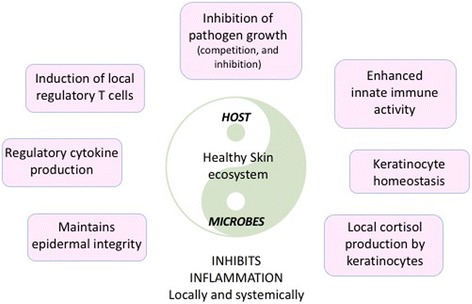
“There is already clear evidence that both innate and adaptive immune function in the skin are influenced by the commensal skin microbiota [3, 50], including inhibition of pathogens, inflammation, immune development and homeostasis, repair and angiogenesis and T cell differentiation [51].”
BackgroundFiocchi, A., Pawankar, R., Cuello-Garcia, C., Ahn, K., Al-Hammadi, S., Agarwal, A., Beyer, K., Burks, W., Canonica, G. W., Ebisawa, M., et al. (2015) · World Allergy Organization Journal · doi:10.1186/s40413-015-0055-2 · Cited by 473 · cited 1×
“These benefits may extend to a reduced risk of allergic disease in early life (reviewed in [157, 158]).”
BackgroundSelf-citationFallon, P. G., Sasaki, T., Sandilands, A., Campbell, L. E., Saunders, S. P., Mangan, N. E., Callanan, J. J., Kawasaki, H., Shiohama, A., Kubo, A., et al. (2009) · Nature Genetics · doi:10.1038/ng.358 · Cited by 473
The microbiome extends to subepidermal compartments of normal skin
Nakatsuji, T., Chiang, H.-I., Jiang, S. B., Nagarajan, H., Zengler, K., & Gallo, R. L. (2013) · Nature Communications · doi:10.1038/ncomms2441 · Cited by 450 · cited 1×
“Since the dermis is not a complete barrier, but rather a filter to microbial access to deeper dermal stroma [132], it is not surprising that cutaneous microbes derived from soils, air and plants can influence systemic immune function.”
BackgroundThe biodiversity hypothesis and allergic disease: world allergy organization position statement
Haahtela, T., Holgate, S., Pawankar, R., Akdis, C. A., Benjaponpitak, S., Caraballo, L., Demain, J., Portnoy, J., & von Hertzen, L. (2013) · World Allergy Organization Journal · doi:10.1186/1939-4551-6-3 · Cited by 426 · cited 2×
“The effects of biodiversity on immune health have implications for not only allergy [124]and autoimmune disease [125], but many inflammatory NCDs, including mental health disorders [59, 126].”
BackgroundSelf-citationMeadow, J. F., Altrichter, A. E., Kembel, S. W., Kline, J., Mhuireach, G., Moriyama, M., Northcutt, D., O'Connor, T. K., Womack, A. M., Brown, G. Z., et al. (2014) · Indoor Air · doi:10.1111/ina.12047 · Cited by 411 · cited 1×
“Other factors including the ambient temperature, ventilation, cooccupancy, humidity, environmental contact, air quality and sunlight (ultraviolet) light are also likely to contribute to individual and geographic variation in skin colonisation [33, 100].”
BackgroundEffects of probiotics on atopic dermatitis: a randomised controlled trial
Weston, S. (2005) · Archives of Disease in Childhood · doi:10.1136/adc.2004.060673 · Cited by 408 · cited 1×
“There is also suggestive data that modulating the gut flora with probiotics in infants with eczema can modulate systemic immune responses [93], and improve local skin disease [94].”
BackgroundChng, K. R., Tay, A. S. L., Li, C., Ng, A. H. Q., Wang, J., Suri, B. K., Matta, S. A., McGovern, N., Janela, B., Wong, X. F. C. C., et al. (2016) · Nature Microbiology · doi:10.1038/nmicrobiol.2016.106 · Cited by 388 · cited 2×
“There were also functional shifts in microbiome-wide gene signatures associated with metabolic imbalance (primed to generate excess ammonia) providing a microbial explanation for dry alkaline pH changes associated with eczema flares [38].”
Backgroundvan Smeden, J., & Bouwstra, J. A. (2016) · Current Problems in Dermatology · doi:10.1159/000441540 · Cited by 366 · cited 1×
“Once initiated, chronic inflammation can itself compromise the normal production of SC lipids [14], which means that cutaneous microbes may sit squarely within any discussions of the human epidermal barrier.”
BackgroundKennedy, E. A., Connolly, J., Hourihane, J. O., Fallon, P. G., McLean, W. H. I., Murray, D., Jo, J.-H., Segre, J. A., Kong, H. H., & Irvine, A. D. (2017) · Journal of Allergy and Clinical Immunology · doi:10.1016/j.jaci.2016.07.029 · Cited by 348 · cited 3×
“In one recent study, feeding method did not have a significant effect on the skin colonisation patterns [37].”
BackgroundInfluentialThe effect of heritability and host genetics on the gut microbiota and metabolic syndrome
Lim, M. Y., You, H. J., Yoon, H. S., Kwon, B., Lee, J. Y., Lee, S., Song, Y.-M., Lee, K., Sung, J., & Ko, G. (2017) · Gut · doi:10.1136/gutjnl-2015-311326 · Cited by 345 · cited 1×
“Recent twin studies indicate that the microbiome is a product of both genetics and the shared environment [30].”
BackgroundThe influence of skin microorganisms on cutaneous immunity
Belkaid, Y., & Tamoutounour, S. (2016) · Nature Reviews Immunology · doi:10.1038/nri.2016.48 · Cited by 338 · cited 1×
“However, it is almost certain that skin microbes play a role in the initiation and amplification of inflammatory loops within the skin compartment [32].”
BackgroundEarly regular egg exposure in infants with eczema: A randomized controlled trial
Palmer, D. J., Metcalfe, J., Makrides, M., Gold, M. S., Quinn, P., West, C. E., Loh, R., & Prescott, S. L. (2013) · Journal of Allergy and Clinical Immunology · doi:10.1016/j.jaci.2013.05.002 · Cited by 326 · cited 1×
“The resulting abnormalities of epithelial development may predispose to very early mucosal immune dysregulation associated with the appearance of clinical food allergies and eczema shortly after birth [82].”
BackgroundSelf-citationSolar UV radiation reduces the barrier function of human skin
Biniek, K., Levi, K., & Dauskardt, R. H. (2012) · Proceedings of the National Academy of Sciences · doi:10.1073/pnas.1206851109 · Cited by 325 · cited 1×
“development of skin cancer over the life course [10, 11].”
BackgroundConrad, M. L., Ferstl, R., Teich, R., Brand, S., Blümer, N., Yildirim, A. Ö., Patrascan, C. C., Hanuszkiewicz, A., Akira, S., Wagner, H., et al. (2009) · Journal of Experimental Medicine · doi:10.1084/jem.20090845 · Cited by 320 · cited 1×
“development of an asthmatic phenotype in the progeny [55]; a microbial induced Type 1 T helper (Th1) cell dependent effect mediated by epigenetic changes in the IFN gene [56].”
BackgroundMulder, I. E., Schmidt, B., Stokes, C. R., Lewis, M., Bailey, M., Aminov, R. I., Prosser, J. I., Gill, B. P., Pluske, J. R., Mayer, C.-D., et al. (2009) · BMC Biology · doi:10.1186/1741-7007-7-79 · Cited by 294
Greening vacant lots to reduce violent crime: a randomised controlled trial
Garvin, E. C., Cannuscio, C. C., & Branas, C. C. (2013) · Injury Prevention · doi:10.1136/injuryprev-2012-040439 · Cited by 293 · cited 1×
“Importantly, relatively simple transformation of vacant urban lots with trees and other forms of vegetation can have wider physical, mental and social benefits [141, 142].”
BackgroundAcne vulgaris, probiotics and the gut-brain-skin axis - back to the future?
Bowe, W. P., & Logan, A. C. (2011) · Gut Pathogens · doi:10.1186/1757-4749-3-1 · Cited by 292
Self-citationThe rarity of direct experiences of nature in an urban population
Cox, D. T. C., Hudson, H. L., Shanahan, D. F., Fuller, R. A., & Gaston, K. J. (2017) · Landscape and Urban Planning · doi:10.1016/j.landurbplan.2016.12.006 · Cited by 285 · cited 1×
“Higher scores on NR scales are associated with spending time within outdoor natural environments [116].”
BackgroundFeng, Q., Zhang, Q.-L., Du, Y., Ye, Y.-L., & He, Q.-Q. (2014) · PLoS ONE · doi:10.1371/journal.pone.0100914 · Cited by 285 · cited 1×
“More balanced indoor (screen) time with increased outdoor play time has overlapping benefits on sleep [167], academic achievement [168] and mental health [169].”
BackgroundAudebert, C., Even, G., Cian, A., The Blastocystis Investigation Group, Safadi, D. E., Certad, G., Delhaes, L., Pereira, B., Nourrisson, C., Poirier, P., et al. (2016) · Scientific Reports · doi:10.1038/srep25255 · Cited by 284 · cited 1×
“are exceptions [105, 106], the preponderance of evidence suggests that overall diversity of microbes in a select human niche equates, broadly, to health [107].”
BackgroundGreen areas around homes reduce atopic sensitization in children
Ruokolainen, L., Hertzen, L., Fyhrquist, N., Laatikainen, T., Lehtomäki, J., Auvinen, P., Karvonen, A. M., Hyvärinen, A., Tillmann, V., Niemelä, O., et al. (2015) · Allergy · doi:10.1111/all.12545 · Cited by 273 · cited 3×
“prising 1044 children from Finland and Estonia, closer contact with forest and agricultural land (within 2–5 km of the home) was associated with significantly reduced risk of allergic sensitization, and early exposure to ‘green’ environments was especially protective [120].”
BackgroundMajor depressive disorder: probiotics may be an adjuvant therapy
Logan, A. C., & Katzman, M. (2005) · Medical Hypotheses · doi:10.1016/j.mehy.2004.08.019 · Cited by 271 · cited 1×
“More than a decade has passed since the use of oral probiotics was hypothesized to lower fatigue and depressive symptoms [161, 162].”
BackgroundSelf-citationSoga, M., Gaston, K., Yamaura, Y., Kurisu, K., & Hanaki, K. (2016) · International Journal of Environmental Research and Public Health · doi:10.3390/ijerph13060529 · Cited by 271
Pirbaglou, M., Katz, J., de Souza, R. J., Stearns, J. C., Motamed, M., & Ritvo, P. (2016) · Nutrition Research · doi:10.1016/j.nutres.2016.06.009 · Cited by 270 · cited 1×
“While the overall pool of studies remains small, meta-analyses of published intervention studies supports these original ideas; probiotics have been shown to improve emotional outlook and anxiety [163, 164].”
ResultHumans differ in their personal microbial cloud
Meadow, J. F., Altrichter, A. E., Bateman, A. C., Stenson, J., Brown, G., Green, J. L., & Bohannan, B. J. M. (2015) · PeerJ · doi:10.7717/peerj.1258 · Cited by 266 · cited 1×
“New studies also show that individuals have a unique personal microbial ‘cloud’, emitting upwards of 10 [6] biological particles per hour, and influencing the surrounding environment [97].”
BackgroundThe balance of metagenomic elements shapes the skin microbiome in acne and health
Barnard, E., Shi, B., Kang, D., Craft, N., & Li, H. (2016) · Scientific Reports · doi:10.1038/srep39491 · Cited by 259
Potential role of the intestinal microbiota in programming health and disease: Figure 1
Goulet, O. (2015) · Nutrition Reviews · doi:10.1093/nutrit/nuv039 · Cited by 254
Ying, S., Zeng, D.-N., Chi, L., Tan, Y., Galzote, C., Cardona, C., Lax, S., Gilbert, J., & Quan, Z.-X. (2015) · PLOS ONE · doi:10.1371/journal.pone.0141842 · Cited by 253 · cited 1×
“Differences in cutaneous microbiota of rural compared with urban adults [123] suggest that contemporary cities and lifestyle behaviours are separating humans from microbialexposures in the external environment with which they evolved [108].”
BackgroundUse of Antibiotics during Pregnancy Increases the Risk of Asthma in Early Childhood
Stensballe, L. G., Simonsen, J., Jensen, S. M., Bønnelykke, K., & Bisgaard, H. (2013) · The Journal of Pediatrics · doi:10.1016/j.jpeds.2012.09.049 · Cited by 248
Extensive Strain-Level Copy-Number Variation across Human Gut Microbiome Species
Greenblum, S., Carr, R., & Borenstein, E. (2015) · Cell · doi:10.1016/j.cell.2014.12.038 · Cited by 244 · cited 1×
“However, examination of the gut microbiome at the strain level has revealed remarkable functional differences within the same species [174].”
BackgroundGenetic and epigenetic studies of atopic dermatitis
Bin, L., & Leung, D. Y. M. (2016) · Allergy, Asthma & Clinical Immunology · doi:10.1186/s13223-016-0158-5 · Cited by 242 · cited 1×
“Genetic contributions in eczema have been noted, including mutations of FLG which normally encodes for the protein profilaggrin, an essential structural component of the epidermal barrier [24, 28].”
BackgroundReber, S. O., Siebler, P. H., Donner, N. C., Morton, J. T., Smith, D. G., Kopelman, J. M., Lowe, K. R., Wheeler, K. J., Fox, J. H., Hassell, J. E., et al. (2016) · Proceedings of the National Academy of Sciences · doi:10.1073/pnas.1600324113 · Cited by 233 · cited 1×
“Further studies are needed to investigate links with the risk of other NCDs, but it is noteworthy that animal models already illustrate connections between skin or oral contact with other non-pathogenic soil microbes, such as Mycobacteria vaccae and systemic regulatory immune function – and that this even has the capa…”
BackgroundThe gut microbiota and its role in the development of allergic disease: A wider perspective
West, C. E., Jenmalm, M. C., & Prescott, S. L. (2015) · Clinical & Experimental Allergy · doi:10.1111/cea.12332 · Cited by 223 · cited 1×
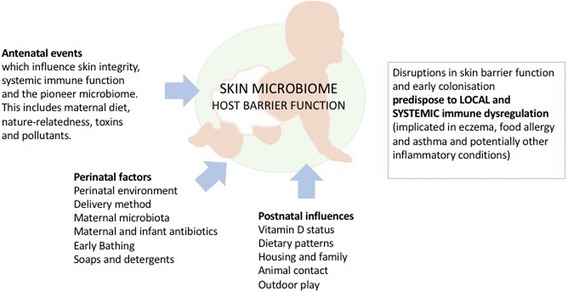
“These observations underscore the need to consider antenatal influences on fetal microbial colonization and immune development [81].”
BackgroundSelf-citationGur, T. L., Shay, L., Palkar, A. V., Fisher, S., Varaljay, V. A., Dowd, S., & Bailey, M. T. (2017) · Brain, Behavior, and Immunity · doi:10.1016/j.bbi.2016.12.021 · Cited by 213
Maternal influences on fetal microbial colonization and immune development
Romano-Keeler, J., & Weitkamp, J.-H. (2015) · Pediatric Research · doi:10.1038/pr.2014.163 · Cited by 212 · cited 1×
“the feto-placental unit is not ‘sterile’ and that microbial colonisation of the foetus prior to birth [76, 77].”
BackgroundRosso, J. Q. D., & Levin, J. (2011) · The journal of clinical and aesthetic dermatology · Cited by 206
Acinetobacter species in the skin microbiota protect against allergic sensitization and inflammation
Fyhrquist, N., Ruokolainen, L., Suomalainen, A., Lehtimäki, S., Veckman, V., Vendelin, J., Karisola, P., Lehto, M., Savinko, T., Jarva, H., et al. (2014) · Journal of Allergy and Clinical Immunology · doi:10.1016/j.jaci.2014.07.059 · Cited by 203 · cited 2×
“lwoffii applied to the skin intradermally was shown to induce strong Th1 and anti-inflammatory and regulatory IL-10 responses locally in the skin, and that this then protected against systemic allergic sensitization and lung inflammation [57].”
BackgroundLowry, C. A., Hollis, J. H., de Vries, A., Pan, B., Brunet, L. R., Hunt, J. R. F., Paton, J. F. R., van Kampen, E., Knight, D. M., Evans, A. K., et al. (2007) · Neuroscience · doi:10.1016/j.neuroscience.2007.01.067 · Cited by 199
Bacterial communities on classroom surfaces vary with human contact
Meadow, J. F., Altrichter, A. E., Kembel, S. W., Moriyama, M., O’Connor, T. K., Womack, A. M., Brown, G. Z., Green, J. L., & Bohannan, B. J. M. (2014) · Microbiome · doi:10.1186/2049-2618-2-7 · Cited by 196
The hygiene hypothesis: current perspectives and future therapies
Stiemsma, L., Reynolds, L., Turvey, S., & Finlay, B. (2015) · ImmunoTargets and Therapy · doi:10.2147/itt.s61528 · Cited by 190 · cited 1×
“The role of parasite-induced immunomodulation in maintaining immune system homeostasis and the consequences of its loss in modern societies is also increasingly recognized [70].”
BackgroundGlück, U., & Gebbers, J.-O. (2003) · The American Journal of Clinical Nutrition · doi:10.1093/ajcn/77.2.517 · Cited by 190 · cited 1×
“Studies indicate that orally consumed probiotics can influence the nasal microbiome [165], and manipulation of gut”
BackgroundGut Microbiome: Westernization and the Disappearance of Intestinal Diversity
Segata, N. (2015) · Current Biology · doi:10.1016/j.cub.2015.05.040 · Cited by 184 · cited 1×
“Functional loss, or even extinction [68] of ancient species from the human microbiome with progressive lifestyle change, raises important new dimensions in the relationship between the health of the environment and modern inflammatory diseases [59, 69].”
BackgroundTransplantation of human skin microbiota in models of atopic dermatitis
Myles, I. A., Williams, K. W., Reckhow, J. D., Jammeh, M. L., Pincus, N. B., Sastalla, I., Saleem, D., Stone, K. D., & Datta, S. K. (2016) · JCI Insight · doi:10.1172/jci.insight.86955 · Cited by 180
Does diversity of environmental microbial exposure matter for the occurrence of allergy and asthma?
Heederik, D., & von Mutius, E. (2012) · Journal of Allergy and Clinical Immunology · doi:10.1016/j.jaci.2012.01.067 · Cited by 177 · cited 1×
“This is also consistent with previous studies showing the protective effect of early-life exposure to rural environments and animals against the development of asthma and allergies [85, 86, 129].”
ResultBrand, S., Teich, R., Dicke, T., Harb, H., Yildirim, A. Ö., Tost, J., Schneider-Stock, R., Waterland, R. A., Bauer, U.-M., von Mutius, E., et al. (2011) · Journal of Allergy and Clinical Immunology · doi:10.1016/j.jaci.2011.04.035 · Cited by 177
Mobile phones carry the personal microbiome of their owners
Meadow, J. F., Altrichter, A. E., & Green, J. L. (2014) · PeerJ · doi:10.7717/peerj.447 · Cited by 174
Natural environments and mental health
Mantler, A., & Logan, A. C. (2015) · Advances in Integrative Medicine · doi:10.1016/j.aimed.2015.03.002 · Cited by 172 · cited 1×
“The effects of biodiversity on immune health have implications for not only allergy [124]and autoimmune disease [125], but many inflammatory NCDs, including mental health disorders [59, 126].”
BackgroundSelf-citationThe microbiota, immunoregulation, and mental health: implications for public health
Lowry, C. A., Smith, D. G., Siebler, P. H., Schmidt, D., Stamper, C. E., Hassell, J. E., Yamashita, P. S., Fox, J. H., Reber, S. O., Brenner, L. A., et al. (2016) · Current Environmental Health Reports · doi:10.1007/s40572-016-0100-5 · Cited by 172 · cited 2×
“Further studies are needed to investigate links with the risk of other NCDs, but it is noteworthy that animal models already illustrate connections between skin or oral contact with other non-pathogenic soil microbes, such as Mycobacteria vaccae and systemic regulatory immune function – and that this even has the capa…”
BackgroundContribution of Vegetation to the Microbial Composition of Nearby Outdoor Air
Lymperopoulou, D. S., Adams, R. I., & Lindow, S. E. (2016) · Applied and Environmental Microbiology · doi:10.1128/aem.00610-16 · Cited by 171 · cited 1×
“Vegetation makes a significant contribution to the airborne microbial content – up to 10-fold higher than nearby non-vegetated built areas [131].”
BackgroundProbiotics and prebiotics in dermatology
Nole, K. L. B., Yim, E., & Keri, J. E. (2014) · Journal of the American Academy of Dermatology · doi:10.1016/j.jaad.2014.04.050 · Cited by 170 · cited 1×
“Although the research supporting such applications remains limited, there is evidence that the topical applications of probiotics can enhance local barrier function and immune responses at the site of application (reviewed in [152]).”
BackgroundBifidobacterium longum lysate, a new ingredient for reactive skin
Guéniche, A., Bastien, P., Ovigne, J. M., Kermici, M., Courchay, G., Chevalier, V., Breton, L., & Castiel‐Higounenc, I. (2010) · Experimental Dermatology · doi:10.1111/j.1600-0625.2009.00932.x · Cited by 169
The Value of Urban Vacant Land to Support Arthropod Biodiversity and Ecosystem Services
Gardiner, M. M., Burkman, C. E., & Prajzner, S. P. (2013) · Environmental Entomology · doi:10.1603/en12275 · Cited by 169 · cited 1×
“This can be achieved in aesthetic ways that also promote biodiversity [140].”
BackgroundPavlovic, S., Daniltchenko, M., Tobin, D. J., Hagen, E., Hunt, S. P., Klapp, B. F., Arck, P., & Peters, E. M. J. (2007) · Journal of Investigative Dermatology · doi:10.1038/sj.jid.5701079 · Cited by 168 · cited 1×
“in local Substance P production [40] and changes in skin microbiota [41, 42].”
BackgroundPrenatal exposure to a farm environment modifies atopic sensitization at birth
Ege, M. J., Herzum, I., Büchele, G., Krauss-Etschmann, S., Lauener, R. P., Roponen, M., Hyvärinen, A., Vuitton, D. A., Riedler, J., Brunekreef, B., et al. (2008) · Journal of Allergy and Clinical Immunology · doi:10.1016/j.jaci.2008.06.011 · Cited by 161 · cited 1×
“Notably, this association connects maternal exposure in pregnancy with reduced allergic risk in offspring [54].”
BackgroundThe skin microbiome is different in pediatric versus adult atopic dermatitis
Shi, B., Bangayan, N. J., Curd, E., Taylor, P. A., Gallo, R. L., Leung, D. Y. M., & Li, H. (2016) · Journal of Allergy and Clinical Immunology · doi:10.1016/j.jaci.2016.04.053 · Cited by 161 · cited 1×
“are exceptions [105, 106], the preponderance of evidence suggests that overall diversity of microbes in a select human niche equates, broadly, to health [107].”
BackgroundSoil microbial communities are shaped by vegetation type and park age in cities under cold climate
Hui, N., Jumpponen, A., Francini, G., Kotze, D. J., Liu, X., Romantschuk, M., Strömmer, R., & Setälä, H. (2017) · Environmental Microbiology · doi:10.1111/1462-2920.13660 · Cited by 159 · cited 2×
“Strategies to improve the quality and diversity of urban green spaces and plant communities will improve the health of urban systems and urban microbiomes, including those of humans [4, 128].”
BackgroundUrban greenness influences airborne bacterial community composition
Mhuireach, G., Johnson, B. R., Altrichter, A. E., Ladau, J., Meadow, J. F., Pollard, K. S., & Green, J. L. (2016) · Science of The Total Environment · doi:10.1016/j.scitotenv.2016.07.037 · Cited by 156 · cited 2×
“Air sampling studies have shown that airborne bacterial communities from parks are different from parking lots, with the proportion of vegetated area within a 50 m radius of sampling stations explaining 15% of microbial composition variation [130].”
BackgroundCuello-Garcia, C. A., Fiocchi, A., Pawankar, R., Yepes-Nuñez, J. J., Morgano, G. P., Zhang, Y., Ahn, K., Al-Hammadi, S., Agarwal, A., Gandhi, S., et al. (2016) · World Allergy Organization Journal · doi:10.1186/s40413-016-0102-7 · Cited by 155 · cited 1×
“These benefits may extend to a reduced risk of allergic disease in early life (reviewed in [157, 158]).”
BackgroundSelf-citationAge‐dependent changes in stratum corneum barrier function
Boireau‐Adamezyk, E., Baillet‐Guffroy, A., & Stamatas, G. N. (2014) · Skin Research and Technology · doi:10.1111/srt.12132 · Cited by 147
Prescott, S. L., Dunstan, J. A., Hale, J., Breckler, L., Lehmann, H., Weston, S., & Richmond, P. (2005) · Clinical & Experimental Allergy · doi:10.1111/j.1365-2222.2005.02376.x · Cited by 146 · cited 1×
“There is also suggestive data that modulating the gut flora with probiotics in infants with eczema can modulate systemic immune responses [93], and improve local skin disease [94].”
BackgroundSelf-citationDoes atopic disease start in foetal life?
Jones, C. A., Holloway, J. A., & Warner, J. O. (2000) · Allergy · doi:10.1034/j.1398-9995.2000.00109.x · Cited by 144
Pelucchi, C., Galeone, C., Bach, J., Vecchia, C. L., & Chatenoud, L. (2013) · Journal of Allergy and Clinical Immunology · doi:10.1016/j.jaci.2013.04.009 · Cited by 141 · cited 1×
“fairly robust body of research links domestic dog ownership with reduced risk of eczema in children [136, 137], the mechanisms behind this relationship are obscure.”
BackgroundLohr, V. I., & Pearson-Mims, C. H. (2005) · HortTechnology · doi:10.21273/horttech.15.3.0472 · Cited by 141
Fabbrocini, G., Bertona, M., Picazo, Ó., Pareja-Galeano, H., Monfrecola, G., & Emanuele, E. (2016) · Beneficial Microbes · doi:10.3920/bm2016.0089 · Cited by 141 · cited 1×
“In a recent clinical trial inclusive of skin biopsy, oral probiotics were shown to influence gene expression of cutaneous IGF-1 and forkhead box protein O1 (FOXO1), both of which can regulate skin inflammation and local repair processes [159].”
BackgroundClausen, M. ‐., Edslev, S. M., Andersen, P. S., Clemmensen, K., Krogfelt, K. A., & Agner, T. (2017) · British Journal of Dermatology · doi:10.1111/bjd.15470 · Cited by 141 · cited 1×
“aureus is seen in both lesional and non-lesional skin, as well as carriage in the nasal cavity [34, 35].”
BackgroundNeighborhood Blight, Stress, and Health: A Walking Trial of Urban Greening and Ambulatory Heart Rate
South, E. C., Kondo, M. C., Cheney, R. A., & Branas, C. C. (2015) · American Journal of Public Health · doi:10.2105/ajph.2014.302526 · Cited by 138 · cited 1×
“Importantly, relatively simple transformation of vacant urban lots with trees and other forms of vegetation can have wider physical, mental and social benefits [141, 142].”
BackgroundRuokolainen, L., Paalanen, L., Karkman, A., Laatikainen, T., von Hertzen, L., Vlasoff, T., Markelova, O., Masyuk, V., Auvinen, P., Paulin, L., et al. (2017) · Clinical & Experimental Allergy · doi:10.1111/cea.12895 · Cited by 133
Lehtimäki, J., Karkman, A., Laatikainen, T., Paalanen, L., von Hertzen, L., Haahtela, T., Hanski, I., & Ruokolainen, L. (2017) · Scientific Reports · doi:10.1038/srep45651 · Cited by 131 · cited 2×
“Resident microbes are increasingly viewed as an integral part of the functional unit of the skin and other body surfaces, interacting with tissues and immune networks to influence the health and function not only of local systems, but wellbeing more generally [1].”
BackgroundParticularities of allergy in the tropics
Caraballo, L., Zakzuk, J., Lee, B. W., Acevedo, N., Soh, J. Y., Sánchez-Borges, M., Hossny, E., García, E., Rosario, N., Ansotegui, I., et al. (2016) · World Allergy Organization Journal · doi:10.1186/s40413-016-0110-7 · Cited by 127 · cited 1×
“Differences in skin disease profile in tropical areas, including reduced prevalence of eczema than temperate countries [101], suggests that comparative geographical studies of skin microbiota could identify specific protective factors that might be translated for therapeutic purposes.”
BackgroundSelf-citationTopical application of probiotics in skin: adhesion, antimicrobial and antibiofilm in vitro assays
Lopes, E. G., Moreira, D. A., Gullón, P., Gullón, B., Cardelle-Cobas, A., & Tavaria, F. K. (2017) · Journal of Applied Microbiology · doi:10.1111/jam.13349 · Cited by 125
The Human Microbiome before Birth
Blaser, M. J., & Dominguez-Bello, M. G. (2016) · Cell Host & Microbe · doi:10.1016/j.chom.2016.10.014 · Cited by 123 · cited 1×
“Indeed, the maturation and function of the systemic immune system in the young child is dependent on contact with microbes [2].”
BackgroundImmune-Microbiota Interactions: Dysbiosis as a Global Health Issue
Logan, A. C., Jacka, F. N., & Prescott, S. L. (2016) · Current Allergy and Asthma Reports · doi:10.1007/s11882-015-0590-5 · Cited by 115 · cited 2×
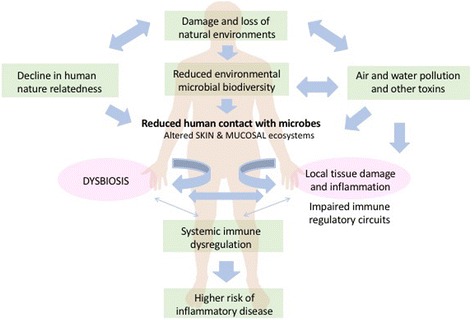
“We cannot truly promote health without widening our view to the wider dysbiosis of Earth’s ecosystems [109] and the reality that NCDs will be increasingly driven by loss of, or degradation of, these ecosystems at the macrobiological and microbiological levels.”
BackgroundSelf-citationThe ecology of human microbiota: dynamics and diversity in health and disease
Karkman, A., Lehtimäki, J., & Ruokolainen, L. (2017) · Annals of the New York Academy of Sciences · doi:10.1111/nyas.13326 · Cited by 115 · cited 1×
“are exceptions [105, 106], the preponderance of evidence suggests that overall diversity of microbes in a select human niche equates, broadly, to health [107].”
BackgroundThe association of atopic dermatitis in infancy with immunoglobulin E food sensitization
Hill, D. J., Sporik, R. B., Thorburn, J., & Hosking, C. S. (2000) · The Journal of Pediatrics · doi:10.1067/mpd.2000.108207 · Cited by 113 · cited 1×
“Children with severe early-onset eczema have the greatest risk of IgE sensitization [26], with antigen transfer through a defective epidermal barrier a likely underlying mechanism [27].”
BackgroundSrinivasjois, R. M., Rao, S. C., & Patole, S. (2013) · Clinical Nutrition · doi:10.1016/j.clnu.2013.05.009 · Cited by 110
Helsinki alert of biodiversity and health
von Hertzen, L., Beutler, B., Bienenstock, J., Blaser, M., Cani, P. D., Eriksson, J., Färkkilä, M., Haahtela, T., Hanski, I., Jenmalm, M. C., et al. (2015) · Annals of Medicine · doi:10.3109/07853890.2015.1010226 · Cited by 108 · cited 4×
“Human health is thus dependent upon biodiversity at the macro and micro scales [5].”
BackgroundInfluentialThiboutot, D. M., & Rosso, J. Q. D. (2013) · Europe PMC (PubMed Central) · Cited by 106
Chronic fatigue syndrome: lactic acid bacteria may be of therapeutic value
Logan, A. C., Rao, A. V., & Irani, D. (2003) · Medical Hypotheses · doi:10.1016/s0306-9877(03)00096-3 · Cited by 105 · cited 1×
“More than a decade has passed since the use of oral probiotics was hypothesized to lower fatigue and depressive symptoms [161, 162].”
BackgroundSelf-citationIngestion of mycobacterium vaccae decreases anxiety-related behavior and improves learning in mice
Matthews, D. M., & Jenks, S. M. (2013) · Behavioural Processes · doi:10.1016/j.beproc.2013.02.007 · Cited by 105 · cited 1×
“found in soil and water have been shown to improve cognition, anxiety and have other neurological benefits in rodent models when added to food [133, 134] or ad-”
BackgroundMicrobial Ecology of the Skin in the Era of Metagenomics and Molecular Microbiology
Hannigan, G. D., & Grice, E. A. (2013) · Cold Spring Harbor Perspectives in Medicine · doi:10.1101/cshperspect.a015362 · Cited by 104 · cited 2×
“This favors colonization by skin commensal microbes over pathogens [50, 51, 84].”
BackgroundProbiotic administration can prevent necrotizing enterocolitis in preterm infants: A meta-analysis
Lau, C. S. M., & Chamberlain, R. S. (2015) · Journal of Pediatric Surgery · doi:10.1016/j.jpedsurg.2015.05.008 · Cited by 101
Alduraywish, S. A., Standl, M., Lodge, C., Abramson, M. J., Allen, K. J., Erbas, B., Berg, A. V., Heinrich, J., Lowe, A. J., & Dharmage, S. C. (2016) · Pediatric Allergy and Immunology · doi:10.1111/pai.12651 · Cited by 100 · cited 1×
“In fact, defective skin barrier integrity has been proposed as a primary and initiating event in the allergic phenotype [24], with allergen sensitization via skin giving rise to aberrant and dysregulated responses to innocuous environmental allergens [25].”
BackgroundHand bacterial communities vary across two different human populations
Hospodsky, D., Pickering, A. J., Julian, T. R., Miller, D., Gorthala, S., Boehm, A. B. B., & Peccia, J. (2014) · Microbiology · doi:10.1099/mic.0.075390-0 · Cited by 96
Lim, S. K., Kwon, M., Lee, J., Oh, Y. J., Jang, J.-Y., Lee, J., Park, H. W., Nam, Y., Seo, M., Roh, S. W., et al. (2017) · Scientific Reports · doi:10.1038/srep40040 · Cited by 96 · cited 1×
“found in soil and water have been shown to improve cognition, anxiety and have other neurological benefits in rodent models when added to food [133, 134] or ad-”
BackgroundAl‐Ghazzewi, F. H., & Tester, R. F. (2010) · International Journal of Cosmetic Science · doi:10.1111/j.1468-2494.2009.00555.x · Cited by 94 · cited 1×
“Moreover, prebiotic fiber such as glucomannan has been the subject of recent experimental and clinical work; in vitro research suggest prebiotics might selectively inhibit pathogenic bacteria [155], while a small clinical trial showed that topical application of glucomannan at 5% improved acne lesions [156].”
BackgroundThe microbiome of the built environment and mental health
Hoisington, A. J., Brenner, L. A., Kinney, K. A., Postolache, T. T., & Lowry, C. A. (2015) · Microbiome · doi:10.1186/s40168-015-0127-0 · Cited by 91
Xu, H., Wen, L. M., Hardy, L. L., & Rissel, C. (2016) · Acta Paediatrica · doi:10.1111/apa.13285 · Cited by 90 · cited 1×
“More balanced indoor (screen) time with increased outdoor play time has overlapping benefits on sleep [167], academic achievement [168] and mental health [169].”
BackgroundGenetic associations and shared environmental effects on the skin microbiome of Korean twins
Si, J., Lee, S., Park, J. M., Sung, J., & Ko, G. (2015) · BMC Genomics · doi:10.1186/s12864-015-2131-y · Cited by 85 · cited 2×
“Genetic contributions in eczema have been noted, including mutations of FLG which normally encodes for the protein profilaggrin, an essential structural component of the epidermal barrier [24, 28].”
BackgroundSignificant changes in the skin microbiome mediated by the sport of roller derby
Meadow, J. F., Bateman, A. C., Herkert, K. M., O’Connor, T. K., & Green, J. L. (2013) · PeerJ · doi:10.7717/peerj.53 · Cited by 84
Stremnitzer, C., Manzano-Szalai, K., Willensdorfer, A., Starkl, P., Pieper, M., König, P., Mildner, M., Tschachler, E., Reichart, U., & Jensen-Jarolim, E. (2015) · Journal of Investigative Dermatology · doi:10.1038/jid.2015.58 · Cited by 83
Jorjão, A. L., de Oliveira, F. E., Leão, M. V. P., Carvalho, C. A. T., Jorge, A. O. C., & de Oliveira, L. D. (2015) · The Scientific World JOURNAL · doi:10.1155/2015/716749 · Cited by 80 · cited 1×
“Many studies have shown that microbes, even when heat killed [63], have effects on innate immunity, and regulate gene expression in the brain [64], growth and glucose-insulin metabolism [65].”
BackgroundMicrobiota in Healthy Skin and in Atopic Eczema
Baviera, G., Leoni, M. C., Capra, L., Cipriani, F., Longo, G., Maiello, N., Ricci, G., & Galli, E. (2014) · BioMed Research International · doi:10.1155/2014/436921 · Cited by 79 · cited 3×
“There are recognized differences in the skin microbiota of individuals with established disease (reviewed in [19]) and at this juncture it is not clear to what degree this is secondary to skin pathology, or the extent to which skin dysbiosis also plays a role in the pathogenesis and propagation of disease.”
BackgroundInfluential(2015) · Europe PMC (PubMed Central) · Cited by 78
Ishii, Y., Sugimoto, S., Izawa, N., Sone, T., Chiba, K., & Miyazaki, K. (2014) · Archives of Dermatological Research · doi:10.1007/s00403-014-1441-2 · Cited by 77 · cited 1×
“Preclinical studies show that orally ingested probiotics can positively influence the integrity of the stratum corneum, reduce the generation of radical oxygen species and prevent TEWL under the stress of ultraviolet radiation [160].”
BackgroundFactors shaping the composition of the cutaneous microbiota
Szabó, K., Erdei, L., Bolla, B. S., Tax, G., Bíró, T., & Kemény, L. (2017) · British Journal of Dermatology · doi:10.1111/bjd.14967 · Cited by 77 · cited 5×
“Practices, such as seeding the skin of C-section infants by swabbing the infants mouth, face and body with maternal vaginal microbes [84] can partially restore cutaneous and mucosal microbiota of these infants [90], and are increasingly commonly performed.”
BackgroundInfluentialBendiks, M., & Kopp, M. (2013) · Current Allergy and Asthma Reports · doi:10.1007/s11882-013-0382-8 · Cited by 75 · cited 2×
“This is also consistent with previous studies showing the protective effect of early-life exposure to rural environments and animals against the development of asthma and allergies [85, 86, 129].”
BackgroundResultSeite, S., ZELENKOVA, H., & MARTIN, R. (2017) · Clinical, Cosmetic and Investigational Dermatology · doi:10.2147/ccid.s121910 · Cited by 72
Effects of a Skin Neuropeptide (Substance P) on Cutaneous Microflora
Mijouin, L., Hillion, M., Ramdani, Y., Jaouen, T., Duclairoir-Poc, C., Follet-Gueye, M.-L., Lati, E., Yvergnaux, F., Driouich, A., Lefeuvre, L., et al. (2013) · PLoS ONE · doi:10.1371/journal.pone.0078773 · Cited by 71 · cited 1×
“in local Substance P production [40] and changes in skin microbiota [41, 42].”
BackgroundNegi, O., Tominaga, M., Tengara, S., Kamo, A., Taneda, K., Suga, Y., Ogawa, H., & Takamori, K. (2012) · Journal of Dermatological Science · doi:10.1016/j.jdermsci.2012.01.007 · Cited by 70
Stress and the Commensal Microbiota: Importance in Parturition and Infant Neurodevelopment
Gur, T. L., Worly, B. L., & Bailey, M. T. (2015) · Frontiers in Psychiatry · doi:10.3389/fpsyt.2015.00005 · Cited by 69 · cited 1×
“Certainly, there is evidence that an altered microbial composition during pregnancy may produce aberrant metabolites that adversely affect fetal development, including neurological outcomes [79] and cardiovascular development- with differences in infant aortic intima-media thickness [80].”
BackgroundCraig, J. M., Logan, A. C., & Prescott, S. L. (2016) · Journal of Physiological Anthropology · doi:10.1186/s40101-016-0083-9 · Cited by 67 · cited 1×
“tact with natural environments, especially early in life, may be one critical factor in the reported health benefits of nature relatedness [113].”
BackgroundSelf-citationThe Microbiome of the Built Environment and Human Behavior
Stamper, C. E., Hoisington, A. J., Gomez, O. M., Halweg‐Edwards, A. L., Smith, D. G., Bates, K. L., Kinney, K. A., Postolache, T. T., Brenner, L. A., Rook, G. A. W., et al. (2016) · International review of neurobiology · doi:10.1016/bs.irn.2016.07.006 · Cited by 66 · cited 1×
“New studies also show that individuals have a unique personal microbial ‘cloud’, emitting upwards of 10 [6] biological particles per hour, and influencing the surrounding environment [97].”
BackgroundPrescott, S., & Logan, A. (2016) · International Journal of Environmental Research and Public Health · doi:10.3390/ijerph13111075 · Cited by 64 · cited 7×
“The fundamental influence of the health of ecosystems in which humans live, on the diversity of human skin and mucosal microbiota, underscores the relevance of climate change, rapid urbanization, environmental degradation and gross biodiversity loss to human health, including the modern disconnection from nature [59].”
BackgroundInfluentialSelf-citationAtopic dermatitis: correlation between non‐damaged skin barrier function and disease activity
Addor, F. A. S., Takaoka, R., Rivitti, E. A., & Aoki, V. (2012) · International Journal of Dermatology · doi:10.1111/j.1365-4632.2011.05176.x · Cited by 62
Influence of substance-P on cultured sebocytes
Lee, W. J., Jung, H. D., Lee, H., Kim, B., Lee, S., & Kim, D. W. (2008) · Archives of Dermatological Research · doi:10.1007/s00403-008-0854-1 · Cited by 62
Maier, R. M., Palmer, M. W., Andersen, G. L., Halonen, M. J., Josephson, K. C., Maier, R. S., Martinez, F. D., Neilson, J. W., Stern, D. A., Vercelli, D., et al. (2010) · Applied and Environmental Microbiology · doi:10.1128/aem.01665-09 · Cited by 62 · cited 1×
“This reflects differences in the biodiversity of household dust samples depending on whether families have pets, or have children who attend daycare [96].”
BackgroundN'Diaye, A., Mijouin, L., Hillion, M., Diaz, S., Konto-Ghiorghi, Y., Percoco, G., Chevalier, S., Lefeuvre, L., Harmer, N. J., Lesouhaitier, O., et al. (2016) · Frontiers in Microbiology · doi:10.3389/fmicb.2016.00506 · Cited by 60 · cited 1×
“in local Substance P production [40] and changes in skin microbiota [41, 42].”
BackgroundTimm, S., Svanes, C., Janson, C., Sigsgaard, T., Johannessen, A., Gislason, T., Jogi, R., Omenaas, E., Forsberg, B., Torén, K., et al. (2014) · European Journal of Epidemiology · doi:10.1007/s10654-014-9922-3 · Cited by 55 · cited 1×
“The effects of biodiversity on immune health have implications for not only allergy [124]and autoimmune disease [125], but many inflammatory NCDs, including mental health disorders [59, 126].”
BackgroundThe Microbiome and Mental Health: Looking Back, Moving Forward with Lessons from Allergic Diseases
Logan, A. C., Jacka, F. N., Craig, J. M., & Prescott, S. L. (2016) · Clinical Psychopharmacology and Neuroscience · doi:10.9758/cpn.2016.14.2.131 · Cited by 51 · cited 3×
“This includes not only allergy and immune diseases, but many other conditions, including mental health, that are influenced by both the immune system and microbiome [66].”
BackgroundInfluentialSelf-citationUpregulated expression of substance P (SP) and NK1R in eczema and SP-induced mast cell accumulation
Zhan, M., Zheng, W., Jiang, Q., Zhao, Z., Wang, Z., Wang, J., Zhang, H., & He, S. (2017) · Cell Biology and Toxicology · doi:10.1007/s10565-016-9379-0 · Cited by 47
Percoco, G., Merle, C., Jaouen, T., Ramdani, Y., Bénard, M., Hillion, M., Mijouin, L., Lati, E., Feuilloley, M., Lefeuvre, L., et al. (2013) · Experimental Dermatology · doi:10.1111/exd.12259 · Cited by 46 · cited 1×
“Thus, microbes can set in motion the production of inflammatory cytokines within the outermost layer of the skin [13].”
BackgroundExposure to In Utero Lipopolysaccharide Induces Inflammation in the Fetal Ovine Skin
Kemp, M. W., Saito, M., Nitsos, I., Jobe, A. H., Kallapur, S. G., & Newnham, J. P. (2010) · Reproductive Sciences · doi:10.1177/1933719110380470 · Cited by 44 · cited 1×
“fetal skin- which may be more sensitive to such exposures [75].”
BackgroundDomestic dog exposure at birth reduces the incidence of atopic dermatitis
Thorsteinsdóttir, S., Thyssen, J. P., Stokholm, J., Vissing, N. H., Waage, J., & Bisgaard, H. F. (2016) · Allergy · doi:10.1111/all.12980 · Cited by 44 · cited 1×
“fairly robust body of research links domestic dog ownership with reduced risk of eczema in children [136, 137], the mechanisms behind this relationship are obscure.”
BackgroundPrescott, S. L., Millstein, R. A., Katzman, M. A., & Logan, A. C. (2016) · International Journal of Biodiversity · doi:10.1155/2016/2718275 · Cited by 43 · cited 3×
“clude suppression of inflammatory responses and upregulation of CD4 + CD25 + Foxp3+ regulatory T cells and suggest that the immune system is a central pathway mediating the effects of nature on health [108].”
BackgroundSelf-citationAlsterholm, M., Strömbeck, L., Ljung, A., Karami, N., Widjestam, J., Gillstedt, M., Åhrén, C., & Faergemann, J. (2017) · Acta Dermato Venereologica · doi:10.2340/00015555-2667 · Cited by 42 · cited 1×
“aureus is seen in both lesional and non-lesional skin, as well as carriage in the nasal cavity [34, 35].”
BackgroundThe role of skin and gut microbiota in the development of atopic eczema
Marrs, T., & Flohr, C. (2016) · British Journal of Dermatology · doi:10.1111/bjd.14907 · Cited by 41 · cited 1×
“These hitherto unrecognized functions suggest that the skin plays an important role in adapting wholebody physiology to changing environments, and raises new questions about the impact of the local skin microbiome, acting by itself or interacting with gut microbiome [49], on these numerous systemic activities.”
BackgroundThe role of barrier genes in epidermal malignancy
Darido, C., Georgy, S. R., & Jane, S. M. (2016) · Oncogene · doi:10.1038/onc.2016.84 · Cited by 38 · cited 1×
“development of skin cancer over the life course [10, 11].”
BackgroundTakei, K., Denda, S., Kumamoto, J., & Denda, M. (2013) · Experimental Dermatology · doi:10.1111/exd.12224 · Cited by 35 · cited 1×
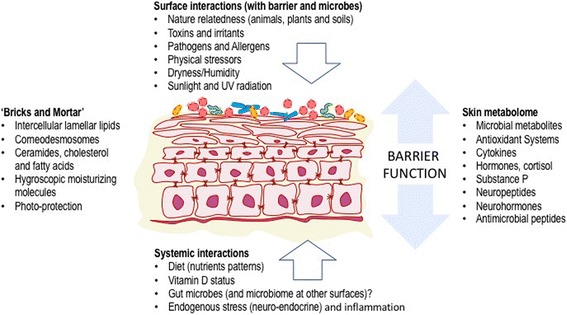
“Skin stressors including dryness and barrier disruption have been shown to stimulate cutaneous cortisol production, and this action may be mediated through activation of inflammatory cytokines such as IL-1β with systemic implications [48].”
BackgroundThe Diverse Microbiome of the Hunter-Gatherer
Schnorr, S. L. (2015) · Nature · doi:10.1038/518s14a · Cited by 33
Contrasting Immunological Effects of Two Disparate Dusts – Preliminary Observations
Alenius, H., Pakarinen, J., Saris, O., Andersson, M. A., Leino, M., Sirola, K., Majuri, M.-L., Niemelä, J., Matikainen, S., Wolff, H., et al. (2009) · International Archives of Allergy and Immunology · doi:10.1159/000176310 · Cited by 32 · cited 1×
“homes is relatively less diverse in microbial components compared to dust in rural homes [127].”
BackgroundBateni, E., Tester, R. F., Al‐Ghazzewi, F. H., Bateni, S., Alvani, K., & Piggott, J. R. (2013) · ResearchOnline · doi:10.5923/j.ajdv.20130202.02 · Cited by 27 · cited 1×
“Moreover, prebiotic fiber such as glucomannan has been the subject of recent experimental and clinical work; in vitro research suggest prebiotics might selectively inhibit pathogenic bacteria [155], while a small clinical trial showed that topical application of glucomannan at 5% improved acne lesions [156].”
BackgroundSugita, T., Yamazaki, T., Yamada, S., Takeoka, H., Cho, O., Tanaka, T., Ohno, G., Watanabe, K., Makimura, K., Ohshima, H., et al. (2015) · Medical Mycology · doi:10.1093/mmy/myv041 · Cited by 24
Szöllősi, A. G., Guéniche, A., Jammayrac, O., Szabó‐Papp, J., Blanchard, C., Vasas, N., Andrási, M., Juhász, I., Breton, L., & Bíró, T. (2016) · Experimental Dermatology · doi:10.1111/exd.13130 · Cited by 22
‘Ecological embeddedness’ and Its Public Health Implications: Findings From an Exploratory Study
Lewis, M., & Townsend, M. (2014) · EcoHealth · doi:10.1007/s10393-014-0987-y · Cited by 21
Perinatal microbial exposure may influence aortic intima-media thickness in early infancy
McCloskey, K., Vuillermin, P., Carlin, J. B., Cheung, M. M. H., Skilton, M. R., Tang, M. L. K., Allen, K. J., Gilbert, G. L., Ranganathan, S., Collier, F., et al. (2016) · International Journal of Epidemiology · doi:10.1093/ije/dyw042 · Cited by 18 · cited 1×
“Certainly, there is evidence that an altered microbial composition during pregnancy may produce aberrant metabolites that adversely affect fetal development, including neurological outcomes [79] and cardiovascular development- with differences in infant aortic intima-media thickness [80].”
BackgroundOn the role of environmental humidity on cortisol production by epidermal keratinocytes
Zhu, G. G., Janjetović, Z., & Slominski, A. T. (2013) · Experimental Dermatology · doi:10.1111/exd.12275 · Cited by 17 · cited 2×
“This includes not only the sensors of mechanical stress, temperature and chemical stimuli, but the capacity for glucocorticoid production via elements of the local hypothalamic-pituitary-adrenal (HPA) axis – acting as an independent steroidogenic organ [47].”
BackgroundThe blemishes of modern society? Acne prevalence in the Dogon of Mali
Campbell, C. E., & Strassmann, B. I. (2016) · Evolution Medicine and Public Health · doi:10.1093/emph/eow027 · Cited by 17 · cited 1×
“Although our focus is on the skin microbiome and increasing rates of allergic skin diseases, acne is no less a disease of westernization [177, 178].”
BackgroundToward a microbial Neolithic revolution in buildings
Thaler, D. S. (2016) · Microbiome · doi:10.1186/s40168-016-0157-2 · Cited by 12 · cited 1×
“courage the growth of healthy ecosystem through the use of bioreceptive materials with textures and pH that encourage microbes and plants to grow naturally [143].”
BackgroundThe Skin and Endocrine Disorders
Paus, R. (2016) · Wiley eBooks · doi:10.1002/9781118441213.rtd0150 · Cited by 12 · cited 1×
“including some which are further disseminated by sweat and sebum [39].”
BackgroundWondrak, G. T. (2016) · Springer eBooks · doi:10.1007/978-3-319-43157-4 · Cited by 12
Lohr, V. I., & Pearson-Mims, C. H. (2004) · Acta Horticulturae · doi:10.17660/actahortic.2004.639.33 · Cited by 11
Microbiota induces expression of tumor necrosis factor in postnatal mouse skin
Yuzhakova, D. V., Shirmanova, M. V., Bocharov, A. А., Astrakhantseva, I. V., Vasilenko, E. A., Gorshkova, E. N., Drutskaya, M. S., Вадимовна, З. Е., Недоспасов, С. А., & Kruglov, A. (2016) · Biochemistry (Moscow) · doi:10.1134/s0006297916110080 · Cited by 6 · cited 1×
“However, microbiota depletion eliminates this normal physiological function [53].”
BackgroundAllergy Epidemic: A Mystery of Modern Life, The
Prescott, S. L. (2011) · Cited by 6
Self-citationDenda, M. (2016) · Springer eBooks · doi:10.1007/978-3-319-43157-4_19 · Cited by 5 · cited 2×
“ence whole-body states and even emotions [46].”
BackgroundOral tetracyclines may not be effective in treating acne: dominance of the placebo effect
Chiou, W. L. (2012) · International Journal of Clinical Pharmacology and Therapeutics · doi:10.5414/cp201650 · Cited by 4 · cited 1×
“With only limited success [175], treatment approaches are often driven toward complete elimination of this species from the follicle.”
BackgroundUsing a specific emollient to manage skin microbiome dysbiosis.
(2016) · Journal of the American Academy of Dermatology · doi:10.1016/j.jaad.2016.02.348 · Cited by 3 · cited 1×
“There are also preliminary studies indicating that emollients supplemented with nonpathogenic bacteria (Vitreoscilla filiformis) can regulate the skin microbiome, restore the barrier function and reduce eczema flares [153, 154].”
ResultSugita, T., & Cho, O. (2015) · Journal of Disaster Research · doi:10.20965/jdr.2015.p1031 · Cited by 2
Research works printed but not linked: 1
- World Health Organisation Biodiversity and human health: a state of knowledge review 2015 Switzerland WHO
Cited by
Engineered living biomaterials
Rodrigo-Navarro, A., Sankaran, S., Dalby, M. J., del Campo, A., & Salmeron-Sanchez, M. (2021) · Nature Reviews Materials · doi:10.1038/s41578-021-00350-8 · Cited by 494
Gut-derived low-grade endotoxaemia, atherothrombosis and cardiovascular disease
Violi, F., Cammisotto, V., Bartimoccia, S., Pignatelli, P., Carnevale, R., & Nocella, C. (2023) · Nature Reviews Cardiology · doi:10.1038/s41569-022-00737-2 · Cited by 374
Human Skin Microbiome: Impact of Intrinsic and Extrinsic Factors on Skin Microbiota
Skowron, K., Bauza-Kaszewska, J., Kraszewska, Z., Wiktorczyk-Kapischke, N., Grudlewska-Buda, K., Kwiecińska-Piróg, J., Wałecka-Zacharska, E., Radtke, L., & Gospodarek-Komkowska, E. (2021) · Microorganisms · doi:10.3390/microorganisms9030543 · Cited by 345
“Too frequent use of soap or other antiseptics in hand disinfection can disrupt the microbiome and reduce its diversity due to damage to the skin surface and impairment of its protective function [14,22,86,108].”
BackgroundInfluentialThe role of filaggrin in atopic dermatitis and allergic disease
Drislane, C., & Irvine, A. D. (2020) · Annals of Allergy, Asthma & Immunology · doi:10.1016/j.anai.2019.10.008 · Cited by 311
Structural and Functional Changes and Possible Molecular Mechanisms in Aged Skin
Lee, H., Hong, Y., & Kim, M. (2021) · International Journal of Molecular Sciences · doi:10.3390/ijms222212489 · Cited by 243
Metadata
- Authors
- Prescott, S. L., Larcombe, D.-L., Logan, A. C., West, C., Burks, W., Caraballo, L., Levin, M., Etten, E. V., Horwitz, P., Kozyrskyj, A., & Campbell, D. E.
- Affiliations
- The University of Western Australia (AU)
- Edith Cowan University (AU)
- Umeå University (SE)
- University of North Carolina at Chapel Hill (US)
- Universidad de Cartagena (CO)
- University of Cape Town (ZA)
- University of Alberta (CA)
- The University of Sydney (AU)
- Corresponding author
- Prescott, Susan L.
- ORCID
- Venue
- World Allergy Organization Journal
- Publisher
- Elsevier BV
- Published
- 2017
- Volume
- 10
- Issue
- 1
- Pages
- 29
- ISSN
- 1939-4551 (ISSN-L)
- PMC
- PMC5568566
- OpenAlex
- W2738994169
- Semantic Scholar
- d1929444bfb36a5e18f22eb9def253d8477139a7
- Cited by
- 347
- References
- 180
- Citations by year
- 2026: 32 · 2025: 52 · 2024: 32 · 2023: 37 · 2022: 42 · 2021: 46 · 2020: 58 · 2019: 22 · 2018: 25 · 2017: 1
- FWCI
- 5.19
- Type
- journal article
- Language
- en
- Open access
- gold
- doi.org
- Licence
- cc-by-nc-nd
- www.elsevier.com/tdm/userlicense/1.0/ (tdm)
- creativecommons.org/licenses/by-nc-nd/4.0/ (vor, 834 d)
- Locations
- World Allergy Organization Journal (publishedVersion, cc-by-nc-nd)
- Europe PMC (PubMed Central) (publishedVersion, cc-by)
- PubMed Central (publishedVersion, cc-by)
- PubMed (publishedVersion)
- Carolina Digital Repository (University of North Carolina at Chapel Hill) (submittedVersion)
- UWA Profiles and Research Repository (UWA) (submittedVersion, cc-by)
- Australasian Journal of Paramedicine (submittedVersion, cc-by)
- DiVA at Umeå University (Umeå University) (submittedVersion, other-oa)
- DOAJ (DOAJ: Directory of Open Access Journals) (submittedVersion, cc-by-sa)
- Open University of Cape Town (University of Cape Town) (submittedVersion)
- UNC Libraries
- Topics
- Health Sciences › Medicine › Dermatology › Dermatology and Skin Diseases
- Health Sciences › Medicine › Dermatology › Contact Dermatitis and Allergies
- Life Sciences › Biochemistry, Genetics and Molecular Biology › Molecular Biology › Gut microbiota and health
- Keywords
- skin microbiome, skin barrier integrity, keratinocytes, stratum corneum, atopic dermatitis, food allergy, psoriasis, rosacea, acne, skin aging, dysbiosis, built environment, biodiversity loss, nature relatedness, non-communicable diseases, allergic diseases
About these checks
Registry, retraction, Cites and statistics results are computed, not judged, with one exception: a printed reference that no index lists is read once by a model before it counts as a citation error. Claims are extracted by a model and kept only when their quote appears verbatim in the text; each cited source is then checked, with a model’s help, for whether it says what the claim relies on. Those verdicts can be wrong — read the claim’s quote and the cited source before relying on one.
Statistics and arithmetic are recomputed, not judged.
Confidence bands are shown only for fields calibrated on our annotated test set. None is calibrated yet, so no band is shown.
What counts as a claim ›How we measure confidence ›How we check this ›
Are you an author, or do you see a problem with this page? Request a review
Data sources
Bibliographic data: Semantic Scholar, OpenAlex, Crossref.
Contains information from the Semantic Scholar Academic Graph Datasets, made available under the ODC Attribution License (ODC-BY 1.0).
Semantic Scholar’s data is described in: Kinney, R., et al. (2023). The Semantic Scholar Open Data Platform. arXiv:2301.10140.
