

The skin microbiome: impact of modern environments on skin ecology, barrier integrity, and systemic immune programming
Open accessThe DOI matches its Crossref record; 180 of the 180 references it cites were found in a registry or an index.
Abstract
Skin barrier structure and function is essential to human health. Hitherto unrecognized functions of epidermal keratinocytes show that the skin plays an important role in adapting whole-body physiology to changing environments, including the capacity to produce a wide variety of hormones, neurotransmitters and cytokine that can potentially influence whole-body states, and quite possibly, even emotions. Skin microbiota play an integral role in the maturation and homeostatic regulation of keratinocytes and host immune networks with systemic implications. As our primary interface with the external environment, the biodiversity of skin habitats is heavily influenced by the biodiversity of the ecosystems in which we reside. Thus, factors which alter the establishment and health of the skin microbiome have the potential to predispose to not only cutaneous disease, but also other inflammatory non-communicable diseases (NCDs). Indeed, disturbances of the stratum corneum have been noted in allergic diseases (eczema and food allergy), psoriasis, rosacea, acne vulgaris and with the skin aging process. The built environment, global biodiversity losses and declining nature relatedness are contributing to erosion of diversity at a micro-ecological level, including our own microbial habitats. This emphasises the importance of ecological perspectives in overcoming the factors that drive dysbiosis and the risk of inflammatory diseases across the life course.
Overview
The claims and statistics of this paper haven’t been checked yet.
Free: it reads the open-access text and checks the first 5 claims that cite a source we can check. Create a free account to check every claim.
Integrity signals
Registry
Cites
Statistics
Figures
Verification
Claims the paper makes
The claims and statistics of this paper haven’t been checked yet.
Free: it reads the open-access text and checks the first 5 claims that cite a source we can check. Create a free account to check every claim.
Claims other papers make about this one
Each is checked against this paper’s own text: does it say what the citing paper says it does?
The cited source says what the claim attributes to it.
In the citing paper
“The decline of microbial diversity in urban and post‐industrial populations has been linked to immune dysregulation [87, 88, 89, 90].”
From Ignoring the planet: A critical blind spot for research on ageing (2025) · cites this paper as [88]
Self-check
Percentages, sums and reported differences re-computed from the paper’s own numbers.
The self-check needs the paper’s full text.
Citations
Cites
Dermyshi, E., Wang, Y., Yan, C., Hong, W., Qiu, G., Gong, X., & Zhang, T. (2017) · Neonatology · doi:10.1159/000454668 · Cited by 24,451
Ecosystems and Human Well-being: Synthesis
Assessment, M. E. (2005) · Island Press · doi:10.5281/zenodo.18167309 · Cited by 10,665
Dominguez-Bello, M. G., Costello, E. K., Contreras, M., Magris, M., Hidalgo, G., Fierer, N., & Knight, R. (2010) · Proceedings of the National Academy of Sciences · doi:10.1073/pnas.1002601107 · Cited by 4,774 · cited 4×
“Unlike vaginally delivered infants, who are colonized by bacteria from the vaginal community, infants born by C-section are dominantly colonized by Staphylococcus and other taxa reflecting maternal skin flora [83, 90].”
BackgroundInfluentialBacterial Community Variation in Human Body Habitats Across Space and Time
Costello, E. K., Lauber, C. L., Hamady, M., Fierer, N., Gordon, J. I., & Knight, R. (2009) · Science · doi:10.1126/science.1177486 · Cited by 3,231 · cited 1×
“indicating that environmental characteristics play a strong role in shaping skin bacterial communities at sebaceous sites such as the forehead [147].”
BackgroundGrice, E. A., & Segre, J. A. (2011) · Nature Reviews Microbiology · doi:10.1038/nrmicro2537 · Cited by 3,143
Atopic Dermatitis: Global Epidemiology and Risk Factors
Nutten, S. (2015) · Annals of Nutrition and Metabolism · doi:10.1159/000370220 · Cited by 3,055 · cited 1×
“While there is much focus in the gut microbiota in this context, we argue that the role of skin ecosystems may be equally important, especially as defects in skin integrity, namely early onset eczema, have increased in tandem with modernity [7].”
BackgroundWhitmee, S., Haines, A., Beyrer, C., Boltz, F., Capon, A. G., de Souza Dias, B. F., Ezeh, A., Frumkin, H., Gong, P., Head, P., et al. (2015) · The Lancet · doi:10.1016/s0140-6736(15)60901-1 · Cited by 2,998
Topographical and Temporal Diversity of the Human Skin Microbiome
Grice, E. A., Kong, H. H., Conlan, S., Deming, C. B., Davis, J., Young, A. C., Program, N. C. S., Bouffard, G. G., Blakesley, R. W., Murray, P. R., et al. (2009) · Science · doi:10.1126/science.1171700 · Cited by 2,953 · cited 2×
“In general, these studies have identified three broad microenvironment types with characteristic microbial communities: sebaceous areas (where Propionibacteria species and Staphylococci species predominate), moist areas (where Corynebacteria species predominate, with Staphylococci also present) and dry areas (with mix…”
BackgroundSudo, N., Chida, Y., Aiba, Y., Sonoda, J., Oyama, N., Yu, X., Kubo, C., & Koga, Y. (2004) · The Journal of Physiology · doi:10.1113/jphysiol.2004.063388 · Cited by 2,735 · cited 1×
“Many studies have shown that microbes, even when heat killed [63], have effects on innate immunity, and regulate gene expression in the brain [64], growth and glucose-insulin metabolism [65].”
BackgroundThe Placenta Harbors a Unique Microbiome
Aagaard, K., Ma, J., Antony, K. M., Ganu, R., Petrosino, J., & Versalovic, J. (2014) · Science Translational Medicine · doi:10.1126/scitranslmed.3008599 · Cited by 2,494 · cited 1×
“placental microbiome in healthy pregnancies [78], of likely influence to developing metabolic and immune responses in the fetus.”
Background
Research works printed but not linked: 1
- World Health Organisation Biodiversity and human health: a state of knowledge review 2015 Switzerland WHO
Cited by
Engineered living biomaterials
Rodrigo-Navarro, A., Sankaran, S., Dalby, M. J., del Campo, A., & Salmeron-Sanchez, M. (2021) · Nature Reviews Materials · doi:10.1038/s41578-021-00350-8 · Cited by 494
Gut-derived low-grade endotoxaemia, atherothrombosis and cardiovascular disease
Violi, F., Cammisotto, V., Bartimoccia, S., Pignatelli, P., Carnevale, R., & Nocella, C. (2023) · Nature Reviews Cardiology · doi:10.1038/s41569-022-00737-2 · Cited by 374
Human Skin Microbiome: Impact of Intrinsic and Extrinsic Factors on Skin Microbiota
Skowron, K., Bauza-Kaszewska, J., Kraszewska, Z., Wiktorczyk-Kapischke, N., Grudlewska-Buda, K., Kwiecińska-Piróg, J., Wałecka-Zacharska, E., Radtke, L., & Gospodarek-Komkowska, E. (2021) · Microorganisms · doi:10.3390/microorganisms9030543 · Cited by 345
“Too frequent use of soap or other antiseptics in hand disinfection can disrupt the microbiome and reduce its diversity due to damage to the skin surface and impairment of its protective function [14,22,86,108].”
BackgroundInfluentialThe role of filaggrin in atopic dermatitis and allergic disease
Drislane, C., & Irvine, A. D. (2020) · Annals of Allergy, Asthma & Immunology · doi:10.1016/j.anai.2019.10.008 · Cited by 311
Structural and Functional Changes and Possible Molecular Mechanisms in Aged Skin
Lee, H., Hong, Y., & Kim, M. (2021) · International Journal of Molecular Sciences · doi:10.3390/ijms222212489 · Cited by 243
Bonté, F., Girard, D., Archambault, J.-C., & Desmoulière, A. (2019) · Subcellular Biochemistry · doi:10.1007/978-981-13-3681-2_10 · Cited by 209
Microbial Biosurfactants in Cosmetic and Personal Skincare Pharmaceutical Formulations
Adu, S. A., Naughton, P. J., Marchant, R., & Banat, I. M. (2020) · Pharmaceutics · doi:10.3390/pharmaceutics12111099 · Cited by 194
The exposome in atopic dermatitis
Stefanovic, N., Flohr, C., & Irvine, A. D. (2020) · Allergy · doi:10.1111/all.13946 · Cited by 181
Nygaard, A. B., Tunsjø, H. S., Meisal, R., & Charnock, C. (2020) · Scientific Reports · doi:10.1038/s41598-020-59771-0 · Cited by 169
Sokolowska, M., Lukasik, Z. M., Agache, I., Akdis, C. A., Akdis, D., Akdis, M., Barcik, W., Brough, H. A., Eiwegger, T., Eljaszewicz, A., et al. (2020) · Allergy · doi:10.1111/all.14462 · Cited by 169
Łętocha, A., Miastkowska, M., & Sikora, E. (2022) · Polymers · doi:10.3390/polym14183834 · Cited by 163
Potential role of natural bioactive peptides for development of cosmeceutical skin products
Aguilar-Toalá, J. E., Hernández-Mendoza, A., González-Córdova, A. F., Vallejo-Cordoba, B., & Liceaga, A. M. (2019) · Peptides · doi:10.1016/j.peptides.2019.170170 · Cited by 158
Staphylococcus epidermidis: A Potential New Player in the Physiopathology of Acne?
Claudel, J.-P., Auffret, N., Leccia, M.-T., Poli, F., Corvec, S., & Dréno, B. (2019) · Dermatology · doi:10.1159/000499858 · Cited by 152
Organization of the skin immune system and compartmentalized immune responses in infectious diseases
Quaresma, J. A. S. (2019) · Clinical Microbiology Reviews · doi:10.1128/cmr.00034-18 · Cited by 149
“through blood vessels and activation of the endothelium (5, 333, 334).”
BackgroundThe role of the microbiome in scalp hair follicle biology and disease
Polak‐Witka, K., Rudnicka, L., Blume‐Peytavi, U., & Vogt, A. (2019) · Experimental Dermatology · doi:10.1111/exd.13935 · Cited by 176
A compendium answering 150 questions on COVID‐19 and SARS‐CoV‐2
Riggioni, C., Comberiati, P., Giovannini, M., Agache, I. O., Akdiş, M., Alves‐Correia, M., Antó, J. M., Arcolacı, A., Azkur, A. K., Azkur, D., et al. (2020) · Allergy · doi:10.1111/all.14449 · Cited by 148
Levin, M. E., Botha, M., Basera, W., Facey‐Thomas, H. E., Gaunt, B., Gray, C. L., Kiragu, W., Ramjith, J., Watkins, A., & Genuneit, J. (2019) · Journal of Allergy and Clinical Immunology · doi:10.1016/j.jaci.2019.07.048 · Cited by 132
Self-citationHorve, P. F., Lloyd, S., Mhuireach, G. Á., Dietz, L. G., Fretz, M., MacCrone, G., Wymelenberg, K. G. V. D., & Ishaq, S. L. (2019) · Journal of Exposure Science & Environmental Epidemiology · doi:10.1038/s41370-019-0157-y · Cited by 146
Xu, L., Zhang, Y., Li, X., Li, C., Hu, H., Hu, J., Liu, M., Yang, Q. Z., Gu, P., Li, J., et al. (2025) · iMeta · doi:10.1002/imt2.270 · Cited by 154
3D Bioprinting in Skin Related Research: Recent Achievements and Application Perspectives
Olejnik, A., Semba, J. A., Kulpa, A., Dańczak-Pazdrowska, A., Rybka, J. D., & Gornowicz-Porowska, J. (2022) · ACS Synthetic Biology · doi:10.1021/acssynbio.1c00547 · Cited by 112
Segregation of age-related skin microbiome characteristics by functionality
Kim, H.-J., Kim, J. J., Myeong, N. R., Kim, T., Kim, D., An, S., Kim, H., Park, T., Jang, S. I., Yeon, J. H., et al. (2019) · Scientific Reports · doi:10.1038/s41598-019-53266-3 · Cited by 113
Shift in skin microbiota of Western European women across aging
Jugé, R., Rouaud-Tinguely, P., Breugnot, J., Servaes, K., Grimaldi, C., Roth, M.-P., Coppin, H., & Closs, B. (2018) · Journal of Applied Microbiology · doi:10.1111/jam.13929 · Cited by 112
“Indeed, the composition of human skin microbiota is influenced by multiple factors such as gender, environment, lifestyle and hygiene practices (Fierer et al. 2008; Ying et al. 2015; Prescott et al. 2017; Szab o et al. 2017).”
BackgroundHuman Microbiome: Composition and Role in Inflammatory Skin Diseases
Balato, A., Cacciapuoti, S., Di Caprio, R., Marasca, C., Masarà, A., Raimondo, A., & Fabbrocini, G. (2019) · Archivum Immunologiae et Therapiae Experimentalis · doi:10.1007/s00005-018-0528-4 · Cited by 108
Larson, P. J., Zhou, W., Santiago, A., Driscoll, S., Fleming, E., Voigt, A. Y., Chun, O. K., Grady, J. J., Kuchel, G. A., Robison, J. T., et al. (2022) · Nature Aging · doi:10.1038/s43587-022-00287-9 · Cited by 95
The Role of the Environment and Exposome in Atopic Dermatitis
Stefanovic, N., Irvine, A. D., & Flohr, C. (2021) · Current Treatment Options in Allergy · doi:10.1007/s40521-021-00289-9 · Cited by 94
Environmental risk factors and epigenetic alternations in psoriasis
Roszkiewicz, M., Dopytalska, K., Szymańska, E., Jakimiuk, A. J., & Walecka, I. (2019) · Annals of Agricultural and Environmental Medicine · doi:10.26444/aaem/112107 · Cited by 129
“In a healthy human subject, there is a mutual coexistence of different microorganisms (viruses, bacteria, and fungi) within the skin, mucous membranes (intestines, upper airways, urogenital tract), which constitutes an immunological balance with immune system cells [53].”
BackgroundLunjani, N., Hlela, C., & O’Mahony, L. (2019) · Current Opinion in Allergy & Clinical Immunology · doi:10.1097/aci.0000000000000542 · Cited by 93
Mills, J. G., Bissett, A., Gellie, N. J. C., Lowe, A. J., Selway, C. A., Thomas, T., Weinstein, P., Weyrich, L. S., & Breed, M. F. (2020) · Restoration Ecology · doi:10.1111/rec.13175 · Cited by 90
“…has potential to help reduce the rising noncommunicable disease burden in cities across the world by improving biodiversity exposure, particularly to natural microbiotas, in a cost-effective and socio-economically transcendent manner (Prescott et al. 2017; Robinson et al. 2018; Mills et al. 2019).”
BackgroundKang, K., Ni, Y., Li, J., Imamovic, L., Sarkar, C., Kobler, M. D., Heshiki, Y., Zheng, T., Kumari, S., Wong, J. C. Y., et al. (2018) · Cell Reports · doi:10.1016/j.celrep.2018.06.109 · Cited by 100
“Therefore, characterizing shifts in the microbial consortia an individual carries after using mass transit is amore direct investigation than intensive sampling of accumulations and communities on built surfaces (Gibbons et al., 2015; Prescott et al., 2017; Zimmerman et al., 2014).”
BackgroundImpact of systemic factors in shaping the periodontal microbiome
Teles, F., Wang, Y., Hajishengallis, G., Hasturk, H., & Marchesan, J. T. (2021) · Periodontology 2000 · doi:10.1111/prd.12356 · Cited by 88
Roslund, M. I., Parajuli, A., Hui, N., Puhakka, R., Grönroos, M., Soininen, L., Nurminen, N., Oikarinen, S., Cinek, O., Kramná, L., et al. (2022) · Ecotoxicology and Environmental Safety · doi:10.1016/j.ecoenv.2022.113900 · Cited by 106
Çetinarslan, T., Kümper, L., & Fölster‐Holst, R. (2023) · Frontiers in Molecular Biosciences · doi:10.3389/fmolb.2023.1159404 · Cited by 120
“epidermidis may improve innate immunity and protect the skin against infection with pathogens by activating IL-17- expressing CD8 T cells (Prescott et al., 2017).”
BackgroundNew Insights Into the Skin Microbial Communities and Skin Aging
Li, Z., Bai, X., Peng, T., Yi, X., Luo, L., Yang, J., Liu, J., Wang, Y., He, T., Wang, X., et al. (2020) · Frontiers in Microbiology · doi:10.3389/fmicb.2020.565549 · Cited by 95
The Skin Microbiome: Current Techniques, Challenges, and Future Directions
Santiago-Rodríguez, T. M., François, B. L., Macklaim, J. M., Doukhanine, E., & Hollister, E. B. (2023) · Microorganisms · doi:10.3390/microorganisms11051222 · Cited by 100
Skin microbiota and allergic symptoms associate with exposure to environmental microbes
Lehtimäki, J., Sinkko, H., Hielm-Björkman, A., Salmela, E., Tiira, K., Laatikainen, T., Mäkeläinen, S., Kaukonen, M., Uusitalo, L., Hanski, I., et al. (2018) · Proceedings of the National Academy of Sciences · doi:10.1073/pnas.1719785115 · Cited by 81
The neighbourhood natural environment is associated with asthma in children: A birth cohort study
Cavaleiro Rufo, J., Paciência, I., Hoffimann, E., Moreira, A., Barros, H., & Ribeiro, A. I. (2021) · Allergy · doi:10.1111/all.14493 · Cited by 80
Skin Microbiome, Metabolome and Skin Phenome, from the Perspectives of Skin as an Ecosystem
Chen, H., Zhao, Q., Zhong, Q., Duan, C., Krutmann, J., Wang, J., & Xia, J. (2022) · Phenomics · doi:10.1007/s43657-022-00073-y · Cited by 79
Comparative Analysis of the Microbiome across the Gut–Skin Axis in Atopic Dermatitis
Park, D. H., Kim, J. W., Park, H., & Hahm, D. (2021) · International Journal of Molecular Sciences · doi:10.3390/ijms22084228 · Cited by 99
“Exposure to germs from mothers during spontaneous delivery is also associated with a decrease in allergic reactions in children [33].”
BackgroundInfluentialLodovico, S. D., Menghini, L., Ferrante, C., Recchia, E., Castro-Amorim, J., Gameiro, P., Cellini, L., & Bessa, L. J. (2020) · Frontiers in Microbiology · doi:10.3389/fmicb.2020.01852 · Cited by 92
Microbiome and the immune system: From a healthy steady-state to allergy associated disruption
Mezouar, S., Chantran, Y., Michel, J., Fabre, A., Dubus, J. ‐., Léone, M., Sérémé, Y., Mège, J., Ranque, S., Desnues, B., et al. (2018) · Human Microbiome Journal · doi:10.1016/j.humic.2018.10.001 · Cited by 83
Skin health and biological aging
Furman, D., Auwerx, J. H., Bulteau, A., Church, G. M., Couturaud, V., Crabbé, L., Davies, K. J. A., Decottignies, A., Gladyshev, V. N., Kennedy, B. K., et al. (2025) · Nature Aging · doi:10.1038/s43587-025-00901-6 · Cited by 85
“While age-related DNA damage highlights the vulnerability of aging skin, changes in the skin microbiome may further exacerbate its susceptibility to pathogen invasion 86 and systemic effects 76 .”
Microbiome and Postbiotics in Skin Health
Prajapati, S. K., Lekkala, L., Yadav, D., Jain, S., & Yadav, H. (2025) · Biomedicines · doi:10.3390/biomedicines13040791 · Cited by 65
“These microorganisms play a crucial role in maintaining the skin’s structural integrity and immune defense mechanisms by interacting with skin cells and environmental factors [4,5].”
The Impact of Pollution on Skin and Proper Efficacy Testing for Anti-Pollution Claims
Rembiesa, J., Ruzgas, T. A., Engblom, J., & Holefors, A. (2018) · Cosmetics · doi:10.3390/cosmetics5010004 · Cited by 73
The Microbiome in Hidradenitis Suppurativa: A Review
Wark, K. J. L., & Cains, G. D. (2020) · Dermatology and Therapy · doi:10.1007/s13555-020-00465-w · Cited by 70
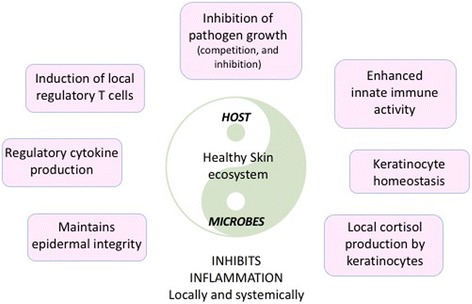
“It exists in homeostasis with the host immune system, and may provide a mutually beneficial relationship: it is involved in regulatory cytokine production, the maintenance of the epidermal barrier, keratinocyte differentiation and homeostasis, inhibition of pathogen growth, induction of local regulatory T cells and en…”
BackgroundKim, J., Son, S.-M., Park, H.-J., Kim, B. K., Choi, I. S., Kim, H., & Huh, C. S. (2021) · Scientific Reports · doi:10.1038/s41598-021-95734-9 · Cited by 74
Antibiotics Drive Microbial Imbalance and Vitiligo Development in Mice
Dellacecca, E. R., Cosgrove, C., Mukhatayev, Z., Akhtar, S., Engelhard, V. H., RADEMAKER, A. W., Knight, K. L., & Poole, I. C. L. (2019) · Journal of Investigative Dermatology · doi:10.1016/j.jid.2019.08.435 · Cited by 67
“A breach of skin integrity offers microbes a port of entry to trigger innate, humoral, or cell-mediated immune responses (Prescott et al., 2017).”
BackgroundA Journey on the Skin Microbiome: Pitfalls and Opportunities
Pistone, D., Meroni, G., Panelli, S., D’Auria, E., Acunzo, M., Pasala, A. R., Zuccotti, G., Bandi, C., & Drago, L. (2021) · International Journal of Molecular Sciences · doi:10.3390/ijms22189846 · Cited by 64
The Role of Every-Day Cosmetics in Altering the Skin Microbiome: A Study Using Biodiversity
Wallen-Russell, C. (2018) · Cosmetics · doi:10.3390/cosmetics6010002 · Cited by 57
Exposure to airborne bacteria depends upon vertical stratification and vegetation complexity
Robinson, J. M., Cando‐Dumancela, C., Antwis, R. E., Cameron, R. W. F., Liddicoat, C., Poudel, R., Weinstein, P., & Breed, M. F. (2021) · Scientific Reports · doi:10.1038/s41598-021-89065-y · Cited by 63
Human skin bacterial microbiota homeostasis: A delicate balance between health and disease
Zhu, Y., Yu, X., & Cheng, G. (2023) · mLife · doi:10.1002/mlf2.12064 · Cited by 65
“The skin bacterial microbiota should be viewed as a comprehensive and dynamic interface where microbes interact with the immune system to carry out vitally important regulatory activities 28,29 .”
BackgroundPrescott, S. L., Wegienka, G., Logan, A. C., & Katz, D. L. (2018) · BioPsychoSocial Medicine · doi:10.1186/s13030-018-0126-z · Cited by 53
“No longer is the intact dermis considered a fortress wall impenetrable to microbes; experimental evidence suggests that skin microbes may have systemic immune activity which opens the door to links between microbes in the total lived environment and many aspects of health [33].”
BackgroundSelf-citationVertical Stratification in Urban Green Space Aerobiomes
Robinson, J. M., Cando‐Dumancela, C., Liddicoat, C., Weinstein, P., Cameron, R. W. F., & Breed, M. F. (2020) · Environmental Health Perspectives · doi:10.1289/ehp7807 · Cited by 57
“…link the microbiome to a plethora of maladies from Alzheimer ’ s disease (Kowalski and Mulak 2019) and myalgic encephalomyelitis (Hanson and Giloteaux 2017), through in fl ammatory bowel (Aschard et al. 2019) and skin diseases (Prescott et al. 2017), to respiratory health (Sokolowska et al. 2018).”
Microfluidic-based skin-on-chip systems for safety assessment of nanomaterials
Costa, S. D. F. Z., Vilas‐Boas, V., Lebre, F., Granjeiro, J. M., Catarino, C. M., Teixeira, L. M., Loskill, P., Alfaro‐Moreno, E., & Ribeiro, A. R. (2023) · Trends in biotechnology · doi:10.1016/j.tibtech.2023.05.009 · Cited by 61
Gannesen, A. V., Lesouhaitier, O., Racine, P., Barreau, M., Netrusov, A. I., Plakunov, V. K., & Feuilloley, M. G. J. (2018) · Frontiers in Microbiology · doi:10.3389/fmicb.2018.02912 · Cited by 55
Understanding building-occupant-microbiome interactions toward healthy built environments: A review
Li, S., Yang, Z., Hu, D., Cao, L., & He, Q. (2020) · Frontiers of Environmental Science & Engineering · doi:10.1007/s11783-020-1357-3 · Cited by 58
“The effect of light on microbial communities including those in house dust or on human skin was also reported in the literature (Patra et al., 2016; Prescott et al., 2017; Fahimipour et al., 2018).”
BackgroundA cross talk between microbial metabolites and host immunity: Its relevance for allergic diseases
Losol, P., Wolska, M., Wypych, T. P., Yao, L., O’Mahony, L., & Sokołowska, M. (2024) · Clinical and Translational Allergy · doi:10.1002/clt2.12339 · Cited by 56
“149 Skin commensals Staphylococcal epidermis ( S. epi-dermidis ) and Staphylococcus hominis ( S. hominis ) produce antimicrobial peptides against pathogens and can decrease the abundance of S. aureus .”
BackgroundA comprehensive review on medical applications of microalgae
Huang, H., Lang, Y., & Zhou, M. (2024) · Algal Research · doi:10.1016/j.algal.2024.103504 · Cited by 66
Altonsy, M. O., Kurwa, H. A., Lauzon, G. J., Amrein, M., Gerber, A. N., Almishri, W., & Mydlarski, P. R. (2020) · Immunity Inflammation and Disease · doi:10.1002/iid3.284 · Cited by 49
Extrinsic Factors Shaping the Skin Microbiome
Moskovicz, V., Gross, A., & Mizrahi, B. (2020) · Microorganisms · doi:10.3390/microorganisms8071023 · Cited by 54
Wrześniewska, M., Wołoszczak, J., Świrkosz, G., Szyller, H. P., & Gomułka, K. (2024) · International Journal of Molecular Sciences · doi:10.3390/ijms25126539 · Cited by 60
“Therefore, any factors that disrupt the balance and health of the microbiota can predispose to multiple skin diseases as well as other inflammatory and autoimmune disorders [47–49].”
BackgroundImplications of indoor microbial ecology and evolution on antibiotic resistance
Maamar, S. B., Hu, J., & Hartmann, E. M. (2019) · Journal of Exposure Science & Environmental Epidemiology · doi:10.1038/s41370-019-0171-0 · Cited by 49
“[100] report that human skin microbiota is influenced by the built environment microbiome.”
BackgroundAn Insight into Probiotics Bio-Route: Translocation from the Mother’s Gut to the Mammary Gland
Selvamani, S., Dailin, D. J., Gupta, V. K., Wahid, M., Keat, H. C., Natasya, K. H., Malek, R. A., Haque, S., Sayyed, R. Z., Abomoelak, B., et al. (2021) · Applied Sciences · doi:10.3390/app11167247 · Cited by 50
Cukrowská, B. (2018) · Nutrients · doi:10.3390/nu10101541 · Cited by 48
“The optimal microbiota composition that may reduce the risk of developing an allergy is observed in infants whose mothers are healthy, did not take antibiotics during pregnancy or lactation, as well as infants who were delivered vaginally, breastfed, living in contact with nature, animals, peers, and siblings, with no…”
BackgroundAlsterholm, M., Strömbeck, L., Ljung, A., Karami, N., Widjestam, J., Gillstedt, M., Åhrén, C., & Faergemann, J. (2017) · Acta Dermato Venereologica · doi:10.2340/00015555-2667 · Cited by 42
Ruggles, K. V., Wang, J., Volkova, A., Contreras, M., Noya-Alarcón, Ó., Lander, O., Caballero‐Arias, H., & Domínguez-Bello, M. G. (2018) · mSphere · doi:10.1128/msphere.00193-18 · Cited by 48
“In addition, other lifestyle factors, such as circadian rhythms (16) and individual hygiene practice (17, 18), have been shown to influence the commensal microbiota in human and experimental animals.”
Bay, L., & Ring, H. C. (2021) · Apmis · doi:10.1111/apm.13201 · Cited by 56
Twenty Important Research Questions in Microbial Exposure and Social Equity
Robinson, J. M., Redvers, N., Camargo, A., Bosch, C. A., Breed, M. F., Brenner, L. A., Carney, M. A., Chauhan, A., Dasari, M. R., Dietz, L. G., et al. (2022) · mSystems · doi:10.1128/msystems.01240-21 · Cited by 49
Dermatological Health in the Light of Skin Microbiome Evolution
Haykal, D., Cartier, H., & Dréno, B. (2024) · Journal of Cosmetic Dermatology · doi:10.1111/jocd.16557 · Cited by 48
Leung, M. H. Y., Tong, X., Shen, Z., Du, S., Bastien, P., Appenzeller, B. M. R., Betts, R. J., Mezzache, S., Bourokba, N., Cavusoglu, N., et al. (2023) · Microbiome · doi:10.1186/s40168-023-01564-4 · Cited by 36
“Discussion The skin microbiome is shaped by the external environment surrounding the skin [34], and subsequently, exposure to pollutants such as PAHs has been linked to a wide range of skin conditions [14, 19, 35, 36].”
BackgroundSilver Nanoparticles in 3D Printing: A New Frontier in Wound Healing
Astaneh, M. E., & Fereydouni, N. (2024) · ACS Omega · doi:10.1021/acsomega.4c04961 · Cited by 49
Estrogen Action and Gut Microbiome Metabolism in Dermal Health
Lephart, E. D., & Naftolin, F. N. (2022) · Dermatology and Therapy · doi:10.1007/s13555-022-00759-1 · Cited by 47
“Additionally, the following conditions or disorders are associated with the gut microbiome: aging [49], allergic and immune [4, 5, 17, 19], cancer [4, 11, 22, 33, 35], diabetes and metabolic syndrome [5, 17, 33, 35], gastrointestinal disorders [5, 33, 35], infection [4, 5, 26], and rheumatoid arthritis [33, 50] (Fig.”
BackgroundSkin Microbiota in Obese Women at Risk for Surgical Site Infection After Cesarean Delivery
Rood, K. M., Buhimschi, I. A., Jurcisek, J. A., Summerfield, T. L. S., Zhao, G., Ackerman, W. E., Wang, W., Rumpf, R. W., Thung, S., Bakaletz, L. O., et al. (2018) · Scientific Reports · doi:10.1038/s41598-018-27134-5 · Cited by 41
Darlenski, R., Kozyrskyj, A. L., Fluhr, J. W., & Caraballo, L. R. (2021) · Journal of Allergy and Clinical Immunology · doi:10.1016/j.jaci.2021.10.002 · Cited by 42
Self-citationHuman microbial ecology and the rising new medicine
Godoy‐Vitorino, F. (2019) · Annals of Translational Medicine · doi:10.21037/atm.2019.06.56 · Cited by 40
“Advances in next-generation sequencing methods, like pyrosequencing (68) and more recently Illumina sequencing (69) of 16S rDNA genes, exponentially increased the number of studies and their relationships with disease phenotypes (8,70-74).”
MethodMajeed, M., Majeed, S., Nagabhushanam, K., Lawrence, L., Arumugam, S., & Mundkur, L. (2020) · Cosmetics · doi:10.3390/cosmetics7040076 · Cited by 34
Evidence-Based Consensus Recommendations for Skin Care in Healthy, Full-Term Neonates in India
Gupta, P., Nagesh, K. N., Garg, P., Thomas, J., Suryawanshi, P. B., Sethuraman, G., Dass, R., Verma, R. J., Kumar, C. S., Kumari, S., et al. (2023) · Pediatric Health Medicine and Therapeutics · doi:10.2147/phmt.s414091 · Cited by 45
Krueger, A., Zaugg, J., Chisholm, S., Linedale, R., Lachner, N., Teoh, S. M., Tuong, Z. K., Lukowski, S. W., Morrison, M., Soyer, H. P., et al. (2022) · Frontiers in Microbiology · doi:10.3389/fmicb.2021.789042 · Cited by 37
Zhu, Z., Zeng, Q., Wang, Z., Xue, Y., Chen, T., Hu, Y., Wang, Y., Wu, Y., Shen, Q., Jiang, C., et al. (2022) · Phytomedicine · doi:10.1016/j.phymed.2022.154101 · Cited by 33
Dębińska, A., & Sozańska, B. (2023) · Nutrients · doi:10.3390/nu15051070 · Cited by 33
Investigation of Age-Related Changes in the Skin Microbiota of Korean Women
Kim, M., Park, T., Yun, J. I., Lim, H. W., Han, N. R., & Lee, S. T. (2020) · Microorganisms · doi:10.3390/microorganisms8101581 · Cited by 32
Manus, M. B., Kuthyar, S., Perroni‐Marañón, A. G., la Mora, A. N., & Amato, K. R. (2020) · mSystems · doi:10.1128/msystems.00834-20 · Cited by 36
Prebiotic Combinations Effects on the Colonization of Staphylococcal Skin Strains
Lodovico, S. D., Gasparri, F., Campli, E. D., Fermo, P. D., D’Ercole, S., Cellini, L., & Giulio, M. D. (2020) · Microorganisms · doi:10.3390/microorganisms9010037 · Cited by 29
“The most commonly isolated bacterium in a healthy skin microbiota is Staphylococcus epidermidis, making up to 90% [4] of the aerobic species.”
BackgroundRobinson, J. M., Cameron, R. W. F., & Parker, B. M. (2021) · Frontiers in Ecology and Evolution · doi:10.3389/fevo.2021.662588 · Cited by 31
“Indeed, a dysfunctional microbiome has been linked to a plethora of diseases from Alzheimer’s (Kowalski and Mulak, 2019), skin diseases (Prescott et al., 2017) and mental health conditions (Cryan et al.”
BackgroundObesity-Induced Immunological Effects on the Skin
Palanivel, J. A., & Millington, G. W. M. (2023) · Skin Health and Disease · doi:10.1002/ski2.160 · Cited by 32
“68 Our understanding of the microbiome's role in skin inflammation has recently undergone a significant change.(69) Both the skin microbiome and the gut microbiome are vital in regulating the immune response and maintaining homoeostasis.”
BackgroundKarimzadeh, F., Fard, E. S., Nadi, A., Malekzadeh, R., Elahian, F., & Mirzaei, S. A. (2024) · Journal of Materials Chemistry B · doi:10.1039/d4tb00966e · Cited by 31
Anti-Inflammatory and Immune Regulatory Actions of Naja naja atra Venom
Wang, S., & Qin, Z. (2018) · Toxins · doi:10.3390/toxins10030100 · Cited by 32
Structures of the Skin Microbiome and Mycobiome Depending on Skin Sensitivity
Keum, H. L., Kim, H., Kim, H.-J., Park, T., Kim, S., An, S., & Sul, W. J. (2020) · Microorganisms · doi:10.3390/microorganisms8071032 · Cited by 29
Tsai, W.-H., Fang, Y., Huang, T.-Y., Chiang, Y.-J., Lin, C.-G., & Chang, W. (2023) · BMC Microbiology · doi:10.1186/s12866-023-02870-5 · Cited by 38
Peng, M., & Biswas, D. (2020) · Microorganisms · doi:10.3390/microorganisms8101481 · Cited by 26
Tracing skin aging process: a mini- review of in vitro approaches
Letsiou, S. (2021) · Biogerontology · doi:10.1007/s10522-021-09916-z · Cited by 30
Skin microbiota dynamics following B. subtilis formulation challenge: an in vivo study in mice
Moskovicz, V., Ben-El, R. T. G., Horev, G., & Mizrahi, B. (2021) · BMC Microbiology · doi:10.1186/s12866-021-02295-y · Cited by 27
Russo, E., Gloria, L. D., Cerboneschi, M., Smeazzetto, S., Baruzzi, G. P., Romano, F., Ramazzotti, M., & Amedei, A. (2023) · Biomedicines · doi:10.3390/biomedicines11030684 · Cited by 26
Skin Microbiome & Host Immunity: Applications in Regenerative Cosmetics & Transdermal Drug Delivery
Beri, K. (2018) · Future Science OA · doi:10.4155/fsoa-2017-0117 · Cited by 32
Microbiome-Based Interventions for Skin Aging and Barrier Function: A Comprehensive Review
Hong, J. Y., Kwon, D., & Park, K. Y. (2025) · Annals of Dermatology · doi:10.5021/ad.25.009 · Cited by 33
Alterations in Skin Microbiomes of Patients With Cirrhosis
Bajaj, J. S., Fagan, A., Sikaroodi, M., Kakiyama, G., Takei, H., Degefu, Y., Pandak, W. M., Hylemon, P. B., Fuchs, M. A., John, B. V., et al. (2019) · Clinical Gastroenterology and Hepatology · doi:10.1016/j.cgh.2019.03.028 · Cited by 28
Consumer Safety Considerations of Skin and Oral Microbiome Perturbation
McBain, A. J., O’Neill, C. A., Amézquita, A., Price, L. J., Faust, K., Tett, A., Segata, N., Swann, J. R., Smith, A. M., Murphy, B., et al. (2019) · Clinical Microbiology Reviews · doi:10.1128/cmr.00051-19 · Cited by 29
“The human microbiome provides protection against pathogenic organisms (14) and can stimulate the immune system (15, 16) and participate in the maintenance of different ecological niches present in the body (17).”
BackgroundRetinoids as an Immunity-modulator in Dermatology Disorders
Chen, W., Zhao, S., Zhu, W., Wu, L., & Chen, X. '. (2019) · Archivum Immunologiae et Therapiae Experimentalis · doi:10.1007/s00005-019-00562-5 · Cited by 27
Towards standardized and reproducible research in skin microbiomes
Ruuskanen, M. O., Vats, D., Potbhare, R., RaviKumar, A., Munukka, E., Ashma, R., & Lahti, L. (2022) · Environmental Microbiology · doi:10.1111/1462-2920.15945 · Cited by 27
“strongly influence the host’s overall health (Prescott et al., 2017).”
BackgroundInfluentialCiardiello, T., Pinto, D., Marotta, L., Giuliani, G., & Rinaldi, F. (2020) · Cosmetics · doi:10.3390/cosmetics7020034 · Cited by 23
Bielfeldt, S., Springmann, G., Seise, M., Wilhelm, K., & Callaghan, T. (2018) · International Journal of Cosmetic Science · doi:10.1111/ics.12484 · Cited by 31
“These include poor diet, disease, hygiene, smoking, cosmetics, pollution, UV, drugs, etc [62].”
Metadata
- Authors
- Prescott, S. L., Larcombe, D.-L., Logan, A. C., West, C., Burks, W., Caraballo, L., Levin, M., Etten, E. V., Horwitz, P., Kozyrskyj, A., & Campbell, D. E.
- Affiliations
- The University of Western Australia (AU)
- Edith Cowan University (AU)
- Umeå University (SE)
- University of North Carolina at Chapel Hill (US)
- Universidad de Cartagena (CO)
- University of Cape Town (ZA)
- University of Alberta (CA)
- The University of Sydney (AU)
- Corresponding author
- Prescott, Susan L.
- ORCID
- Venue
- World Allergy Organization Journal
- Publisher
- Elsevier BV
- Published
- 2017
- Volume
- 10
- Issue
- 1
- Pages
- 29
- ISSN
- 1939-4551 (ISSN-L)
- PMC
- PMC5568566
- OpenAlex
- W2738994169
- Cited by
- 347
- References
- 180
- Citations by year
- 2026: 32 · 2025: 52 · 2024: 32 · 2023: 37 · 2022: 42 · 2021: 46 · 2020: 58 · 2019: 22 · 2018: 25 · 2017: 1
- FWCI
- 5.19
- Type
- journal article
- Language
- en
- Open access
- gold
- doi.org
- Licence
- cc-by-nc-nd
- www.elsevier.com/tdm/userlicense/1.0/ (tdm)
- creativecommons.org/licenses/by-nc-nd/4.0/ (vor, 834 d)
- Locations
- World Allergy Organization Journal (publishedVersion, cc-by-nc-nd)
- Europe PMC (PubMed Central) (publishedVersion, cc-by)
- PubMed Central (publishedVersion, cc-by)
- PubMed (publishedVersion)
- Carolina Digital Repository (University of North Carolina at Chapel Hill) (submittedVersion)
- UWA Profiles and Research Repository (UWA) (submittedVersion, cc-by)
- Australasian Journal of Paramedicine (submittedVersion, cc-by)
- DiVA at Umeå University (Umeå University) (submittedVersion, other-oa)
- DOAJ (DOAJ: Directory of Open Access Journals) (submittedVersion, cc-by-sa)
- Open University of Cape Town (University of Cape Town) (submittedVersion)
- UNC Libraries
- Topics
- Health Sciences › Medicine › Dermatology › Dermatology and Skin Diseases
- Health Sciences › Medicine › Dermatology › Contact Dermatitis and Allergies
- Life Sciences › Biochemistry, Genetics and Molecular Biology › Molecular Biology › Gut microbiota and health
- Keywords
- skin microbiome, skin barrier integrity, keratinocytes, stratum corneum, atopic dermatitis, food allergy, psoriasis, rosacea, acne, skin aging, dysbiosis, built environment, biodiversity loss, nature relatedness, non-communicable diseases, allergic diseases
About these checks
Registry, retraction, Cites and statistics results are computed, not judged, with one exception: a printed reference that no index lists is read once by a model before it counts as a citation error. Claims are extracted by a model and kept only when their quote appears verbatim in the text; each cited source is then checked, with a model’s help, for whether it says what the claim relies on. Those verdicts can be wrong — read the claim’s quote and the cited source before relying on one.
Statistics and arithmetic are recomputed, not judged.
Confidence bands are shown only for fields calibrated on our annotated test set. None is calibrated yet, so no band is shown.
What counts as a claim ›How we measure confidence ›How we check this ›
Are you an author, or do you see a problem with this page? Request a review
Data sources
Bibliographic data: Semantic Scholar, OpenAlex, Crossref.
Contains information from the Semantic Scholar Academic Graph Datasets, made available under the ODC Attribution License (ODC-BY 1.0).
Semantic Scholar’s data is described in: Kinney, R., et al. (2023). The Semantic Scholar Open Data Platform. arXiv:2301.10140.
