

Natural killer T cell activation increases iNOS+CD206- M1 macrophage and controls the growth of solid tumor
Open accessThe DOI matches its Crossref record; 63 of the 64 references it cites were found in a registry or an index.
Abstract
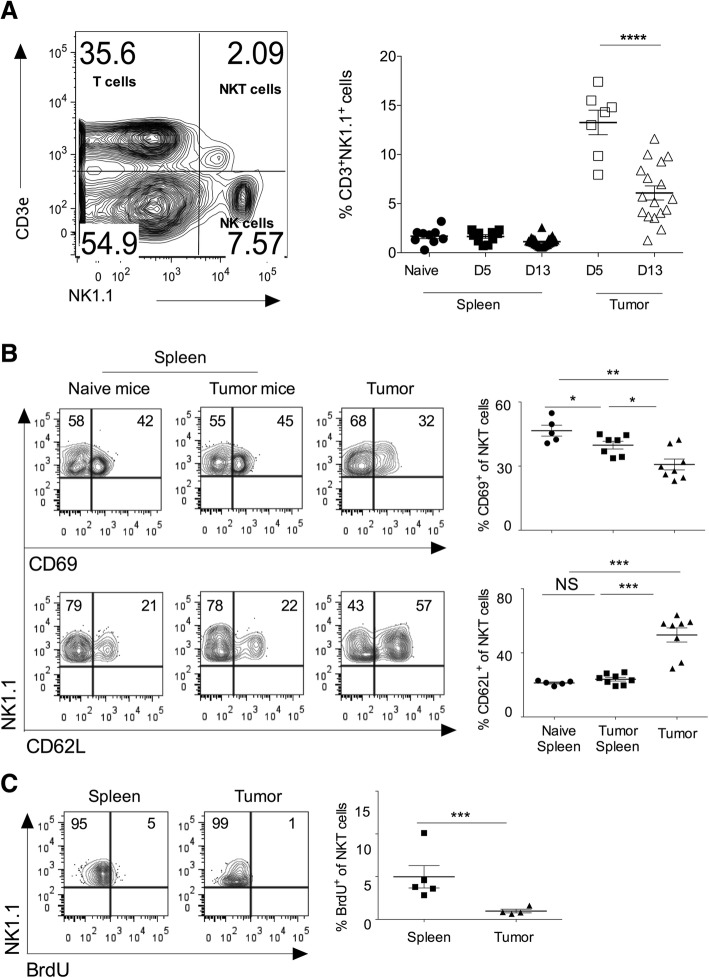
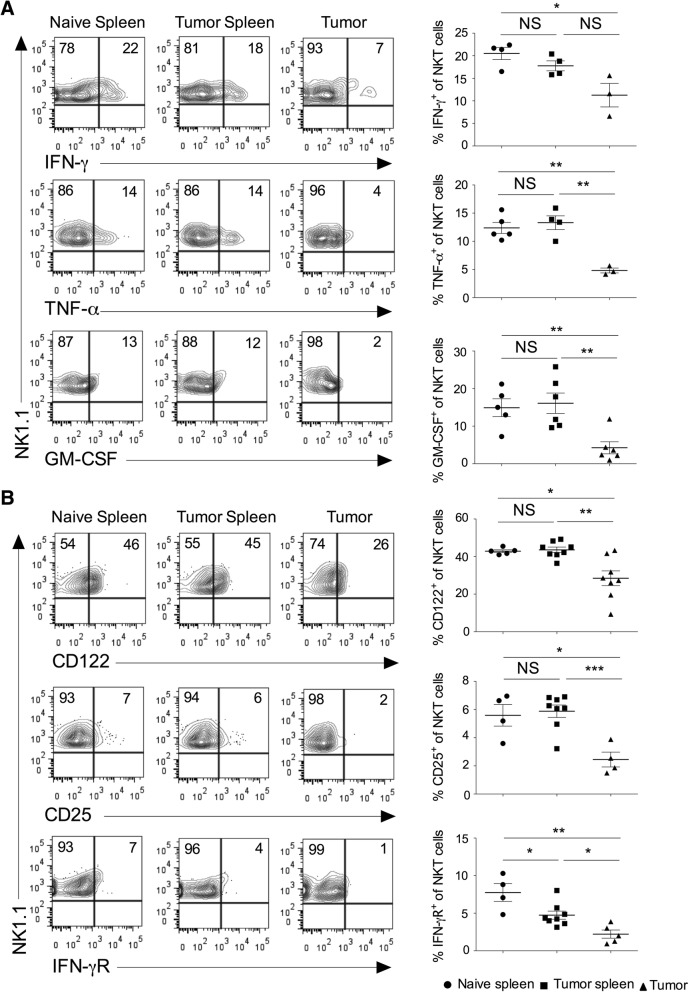
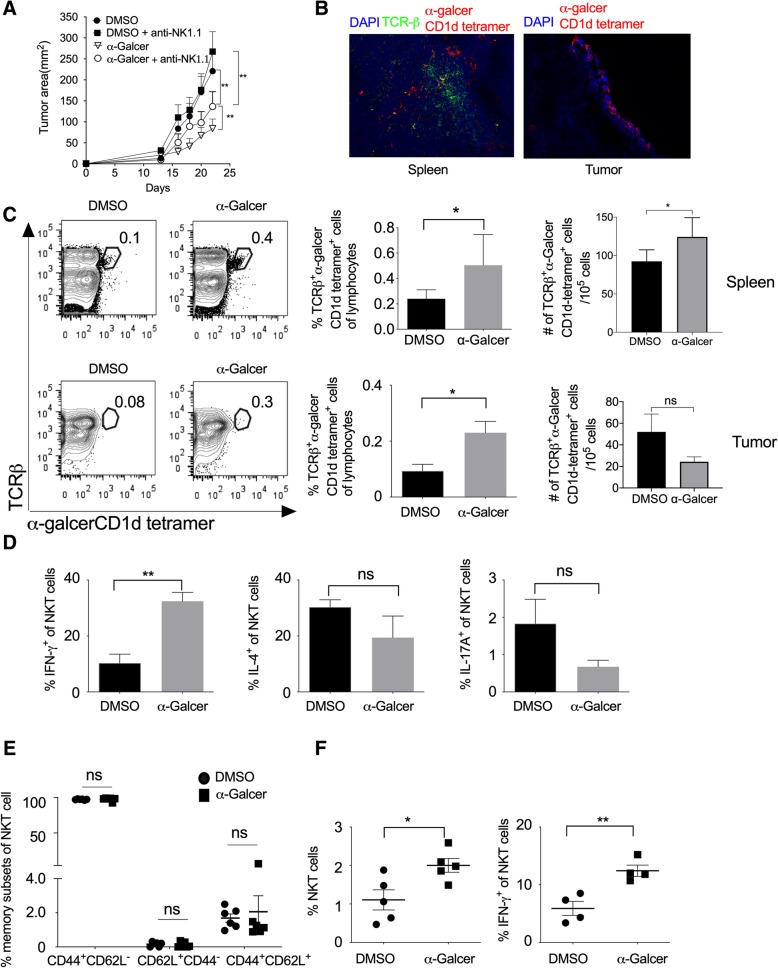
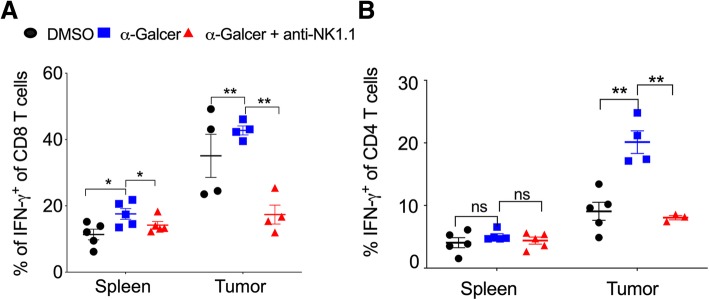
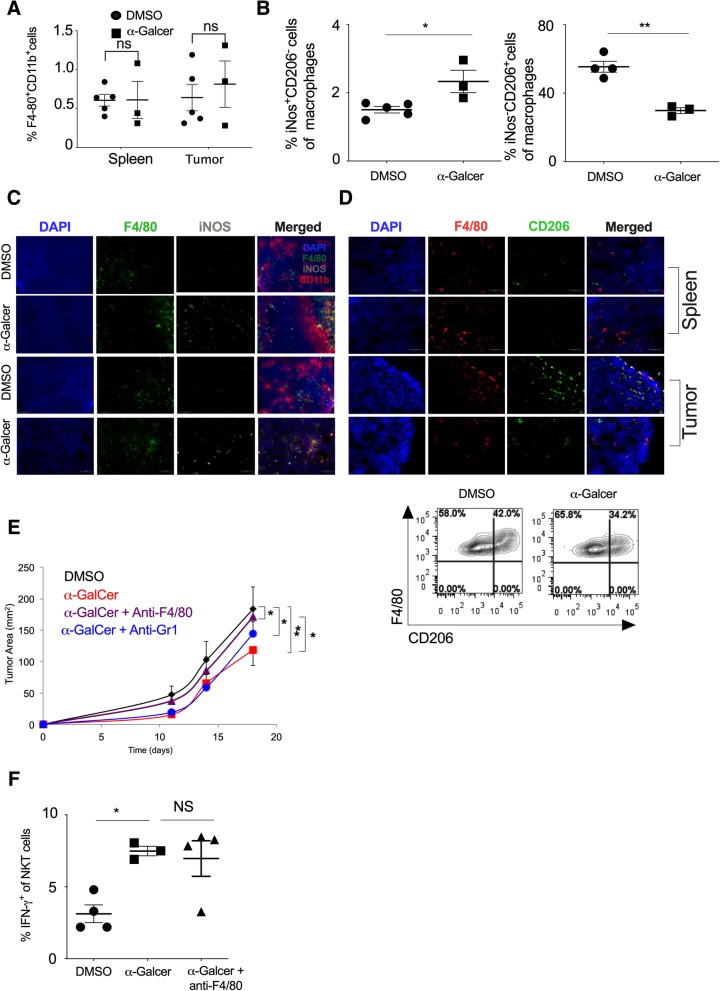
Background NKT cells play an important role in anti-tumor immunity. Alpha-galactosylceramide (α-GalCer), a synthetic glycolipid is presented to natural killer T (NKT) cells by most antigen-presenting cells through CD1d molecules leading to activation of NKT cells. However, the precise mechanisms of how α-GalCer-activated NKT regulate the polarization of the macrophages and effector T cells in the solid tumor are not studied adequately. Methods We induced solid tumor in C57BL/6 mice by subcutaneous injection of B16F10 cell line (1 X 10⁶ cells) and monitored the tumor growth. Animals were given an intraperitoneal injection of α-GalCer (2 μg/injection) in 200 μl PBS on day + 1, + 5, + 10, + 15, and + 20 (with respect to tumor cell injection). Immune cells were characterized using flow cytometry and immunofluorescence staining. NK cells, Gr1+ cells, and F4/80+ macrophages in the mice were depleted by intravenous injection of cell-specific antibodies. Statistical analysis was performed using Student’s t-test or one-way ANOVA. Results Our results showed that intratumoral NKT cells have a lower frequency of CD69, CD25, CD122, and IFN-γR expression; produced less inflammatory cytokines such as IFN-γ, TNF-α, and GM-CSF; higher frequency CD62L+ NKT cells; and also showed reduced proliferation as compared to the splenic NKT cells. Mice treated with α-GalCer showed a significantly increased frequency of IFN-γ-producing NKT cells, CD8+ T cells, and effector Th1 cells. Depletion of NK cells in α-GalCer-treated mice showed a lower frequency of IFN-γ-producing CD4+ and CD8+ T cells in the tumor and prevented the α-GalCer-induced tumor growth. NKT cell activation with α-GalCer treatment significantly increased the iNOS+CD206− M1-macrophages and reduced the iNOS−CD206+ M2-macrophages in the spleen and tumor, and depletion of F4/80+ macrophages prevented the α-GalCer-induced reduction in the tumor growth. Conclusions We showed that activation of NKT cell with α-GalCer modulates the frequency of M1-macrophages and effector Th1 cells in the secondary lymphoid tissues and tumor microenvironment and inhibit tumor growth. The finding suggests that activation of NKT cells with α-GalCer may provide an effective anti-cancer outcome.
Overview
The claims and statistics of this paper haven’t been checked yet.
Free: it reads the open-access text and checks the first 5 claims that cite a source we can check. Create a free account to check every claim.
Integrity signals
Registry
Cites
Statistics
Figures
Verification
Claims the paper makes
The claims and statistics of this paper haven’t been checked yet.
Free: it reads the open-access text and checks the first 5 claims that cite a source we can check. Create a free account to check every claim.
Claims other papers make about this one
Each is checked against this paper’s own text: does it say what the citing paper says it does?
The source backs part of the claim, not all of it — or backs it for a different population, condition or comparison.
In the citing paper
“iNOS is an intermediate metabolite of activated M1 macrophages involved in antibacterial-related biological processes (Orecchioni et al., 2019;Paul et al., 2019).”
From Nanosilver alleviates foreign body reaction and facilitates wound repair by regulating macrophage polarization (2023) · cites this paper as Paul et al., 2019
Experimental — accuracy not yet measured
Self-check
Percentages, sums and reported differences re-computed from the paper’s own numbers.
The self-check needs the paper’s full text.
Citations
Cites
From Monocytes to M1/M2 Macrophages: Phenotypical vs. Functional Differentiation
Italiani, P., & Boraschi, D. (2014) · Frontiers in Immunology · doi:10.3389/fimmu.2014.00514 · Cited by 2,067 · cited 2×
“In contrast, M2 macrophages secrete Th2-type cytokines such as IL4, IL-10, IL-13, and TGF-β, and show a pro-tumorigenic phenotype [21].”
BackgroundCD1 Recognition by Mouse NK1 + T Lymphocytes
Bendelac, A., Lantz, O., Quimby, M. E., Yewdell, J. W., Bennink, J. R., & Brutkiewicz, R. R. (1995) · Science · doi:10.1126/science.7538697 · Cited by 914
Going both ways: Immune regulation via CD1d-dependent NKT cells
Godfrey, D. I., & Kronenberg, M. (2004) · Journal of Clinical Investigation · doi:10.1172/jci200423594 · Cited by 877 · cited 1×
“tokines and modulates the function of several effectors and regulatory immune cells both in mice and humans [1, 2].”
BackgroundThe Molecular Mechanism of Natural Killer Cells Function and Its Importance in Cancer Immunotherapy
Paul, S., & Lal, G. (2017) · Frontiers in Immunology · doi:10.3389/fimmu.2017.01124 · Cited by 825
Self-citationIdentification of an IL-17–producing NK1.1neg iNKT cell population involved in airway neutrophilia
Michel, M.-L., Keller, A. C., Paget, C., Fujio, M., Trottein, F., Savage, P. B., Wong, C.-H., Schneider, E., Dy, M., & Leite-de-Moraes, M. C. (2007) · The Journal of Experimental Medicine · doi:10.1084/jem.20061551 · Cited by 617
Giaccone, G., Punt, C. J. A., Ando, Y., Ruijter, R., Nishi, N., Peters, M. E. W. J., Blomberg, B. M. E. V., Scheper, R. J., van der Vliet, H. J., van den Eertwegh, A. J. M., et al. (2002) · PubMed · Cited by 596
Kawano, T., Cui, J., Koezuka, Y., Toura, I., Kaneko, Y., Sato, H., Kondo, E., Harada, M., Koseki, H., Nakayama, T., et al. (1998) · Proceedings of the National Academy of Sciences · doi:10.1073/pnas.95.10.5690 · Cited by 476 · cited 2×
“Activation of NKT cells by α-GalCer is reported to inhibit the metastasis in B16F10-induced melanoma, colon carcinoma, and spontaneous sarcomas in p53 mice [16, 54, 55].”
BackgroundCoquet, J. M., Chakravarti, S., Kyparissoudis, K., McNab, F. W., Pitt, L. A., McKenzie, B. S., Berzins, S. P., Smyth, M. J., & Godfrey, D. I. (2008) · Proceedings of the National Academy of Sciences · doi:10.1073/pnas.0801631105 · Cited by 463
Glycolipid antigen induces long-term natural killer T cell anergy in mice
Parekh, V. V. (2005) · Journal of Clinical Investigation · doi:10.1172/jci24762 · Cited by 458
Dhodapkar, M. V., Geller, M. D., Chang, D. H., Shimizu, K., Fujii, S.-I., Dhodapkar, K. M., & Krasovsky, J. (2003) · The Journal of Experimental Medicine · doi:10.1084/jem.20021650 · Cited by 425
Cited by
Items 101–164 of 164
Qiu, D., & Sun, S. S. (2024) · Scientific Reports · doi:10.1038/s41598-024-73330-x · Cited by 4
Mondal, M., Lahiri, A., Vundavilli, H., Priore, G. D., Reeves, N. P., & Datta, A. A. (2024) · IEEE Access · doi:10.1109/access.2024.3503438 · Cited by 4
RNA-binding protein gene NOP58 exhibits crucial prognostic and therapeutic value in Ewing sarcoma
Geng, Y., Yang, L., Shao, R., Xu, T., & Zhang, L. (2025) · Hereditas · doi:10.1186/s41065-025-00440-5 · Cited by 4
PLS-α-GalCer: a novel targeted glycolipid therapy for solid tumors
Burks, J., Tiwary, S., Stevens, D. M., Skoczen, S. L., Kularatne, R. N., Stern, S. T., & Berzofsky, J. A. (2025) · Journal for ImmunoTherapy of Cancer · doi:10.1136/jitc-2024-009539 · Cited by 3
Tu, M., Tang, S., Zhang, Q., Guo, T., Cen, Y., Xu, X., Wu, S., Chen, X., Lu, W., Ding, C., et al. (2026) · EBioMedicine · doi:10.1016/j.ebiom.2026.106248 · Cited by 3
Ma, C., Zhang, Y., Lei, J., Zhang, J., Li, F., He, X., Yuan, J., Li, W., & Chen, W. (2023) · Cellular and Molecular Biology · doi:10.14715/cmb/2023.69.4.16 · Cited by 3
“The M1 type depends on the cell-inflammatory mediators such as IFN-γ, TNF-α, and IL-2 to submit antigens, thereby eliminating the pathogens in the body (23).”
Sun, M., Han, Y., mamizadehjanghour, L., Han, Y., Zhao, A., Akhavan, B., & Qian, L. (2025) · ACS Applied Bio Materials · doi:10.1021/acsabm.5c01880 · Cited by 2
Lin, E. Y., Mukhopadhyay, S., Corcoran, D., Assi, M. N., Encarnación-Rosado, J., Sohn, A. S. W., Biancur, D. E., Yu, P. Y., Deng, J., Chen, T., et al. (2026) · Cancer Research · doi:10.1158/0008-5472.can-25-2451 · Cited by 2
Song, X., Pan, Z., Zhang, Y., Yang, W., Zhang, T., Wang, H., Chen, Y., Yu, X., Ding, H., Li, R., et al. (2025) · Advanced Science · doi:10.1002/advs.202403851 · Cited by 2
The Role of Tumor-associated Macrophages in Colorectal Peritoneal Metastasis in Mice
Kawaguchi, M., Kawai, M., Munakata, S., Ishihara, H., Tsuchiya, Y., Honjo, K., Sugimoto, K., Takahashi, M., & SAKAMOTO, K. (2025) · Juntendō Igaku/Juntendo igaku · doi:10.14789/ejmj.jmj24-0049-oa · Cited by 1
Garza, R. G., Gutiérrez‐González, A., López‐López, N., Garza‐Guajardo, R., Gutiérrez, J. P. I., Salinas-Carmona, M. C., Juarez, V. M. O., Ocaña-Munguía, M. A., Jasso, J. H. E., & Mejia-Torres, M. G. (2025) · Oncology Letters · doi:10.3892/ol.2025.15245 · Cited by 1
“The relative increase in CD3 + CD4 ‑ CD8 ‑ cells and the abundance of lipids within the tumor core suggest the presence of natural killer T lymphocytes because such cells have intrinsic capabilities to recognize lipidic antigens (34,35).”
Tong, Y., Xu, L., Sun, Y., Zhang, K., & Fu, X. (2025) · International Journal of Women s Health · doi:10.2147/ijwh.s537092 · Cited by 1
“79,80 In contrast, patients classified as high-risk often display an immature immune microenvironment, characterized by the presence of resting CD4+ memory T cells and M0 macrophages, which may contribute to immune evasion and diminished effectiveness of immunotherapy.”
Hong, T., Masuda, K., Nakashima, Y., Li, S., Chen, P., Hu, G., Igarashi, K., Kimura, A., Fujita, K., Umezu, T., et al. (2025) · Journal of Controlled Release · doi:10.1016/j.jconrel.2025.114274 · Cited by 2
Guo, X., Sun, Z., Chen, H., Li, C., Chang, A., Zhao, H., Ling, J., & Zhuo, X. (2025) · Food Science & Nutrition · doi:10.1002/fsn3.71241 · Cited by 1
Yan, X., Dong, X., Yao, L., Guo, M., & Wang, N. (2026) · Pathology - Research and Practice · doi:10.1016/j.prp.2026.156425 · Cited by 1
Liang, X., Ma, Y., Zhang, X., Zhang, M., & Pan, L. (2026) · Frontiers in Immunology · doi:10.3389/fimmu.2026.1724707 · Cited by 1
“Meanwhile, iNOS has been proven to inhibit the production of immunosuppressive and tumor growth factors (82, 83); Meanwhile, IFN-g can also drive the maturation of dendritic cells, upregulate the secretion of their co-stimulatory molecules (such as CD80, CD86, and CCR7) and cytokines (such as…”
Suzuki, Y., Mani, R., & Evers, B. M. (2026) · Cancers · doi:10.3390/cancers18061003 · Cited by 1
“NOS2 expression by macrophages also activates endothelial cells to induce their expression of vascular cell adhesion protein-1 (VCAM-1), which facilitates the recruitment of IFN-γ -producing T cells into the tumor tissue [48].”
Barone, M., Peidli, S., Neuschulz, A., Riesterer, K., Iwert, C., Junquera, L., Sai, S., Bolaji, O., Bakoueva, D., Appelt, C., et al. (2026) · EMBO Reports · doi:10.1038/s44319-026-00732-5 · Cited by 1
“In addition, IFN-γ and TNF regulate the activation and maturation of macrophages and dendritic cells, initiating a sustained cancer-immunity cycle (Chen and Mellman, 2013; Paul et al, 2019; Wang et al, 2019).”
Kang, M., Ren, H., Zhen, Y., Liu, L., Xu, Q., Ma, Y., Zhang, L., Jia, H., Chen, Q., Jiang, Y., et al. (2026) · Archives of Pharmacal Research · doi:10.1007/s12272-026-01610-3 · Cited by 2
Li, Z., Zhang, Y., Chen, Y., Liu, M., Li, P., Wang, F., & Jiang, W. (2026) · International Journal of Biological Macromolecules · doi:10.1016/j.ijbiomac.2026.152491 · Cited by 1
Pan, Y., Yuan, Z., Cao, X., Zhao, H., Shi, W., Chen, Y., & Gong, A. (2026) · International Immunopharmacology · doi:10.1016/j.intimp.2026.116874 · Cited by 1
Ilyushin, A. L., Викторович, Б. И., Aleksanyan, A. Z., Vv, N., & Ashrafyan, L. А. (2023) · Siberian Journal of Oncology · doi:10.21294/1814-4861-2023-22-4-118-127 · Cited by 1
Prognosis and Immune Cell Infiltration Analysis of OAS Family Genes in Pan-CancerPreprint
Wang, X., Cheng, Y., Tian, Y., Song, Z., He, Z., Shen, P., Wang, H., Luo, L., & Cui, R. (2022) · Research Square · doi:10.21203/rs.3.rs-1189067/v1 · Cited by 1
Nature Killer T (NKT) Cells in Cancer
Ghobadinezhad, F., Izadi, Z., Ebrahimi, M., & Nima, R. (2023) · Springer eBooks · doi:10.1007/978-3-030-80962-1_16-1
Shih, Y. W., Chang, C.-W., Chang, H., Tsai, J. R., Wang, W., Fang, H., Lin, C. L., Rias, Y. A., & Tsai, H. (2024) · Biological Research For Nursing · doi:10.1177/10998004241229069
“Additionally, NK cells secrete cytokines, such as interferon (IFN)- γ and tumor necrosis factor (TNF)- α , which act on other immune cells like macrophages and dendritic cells to enhance immune responses (Paul et al., 2019; Rowaiye et al., 2020).”
BackgroundAdditional file 6 of Pan-cancer landscape of CENPO and its underlying mechanism in LUAD
Shi, T., Hu, Z., Tian, L., & Yang, Y. (2023) · Figshare · doi:10.6084/m9.figshare.22639642
Leng, S., Nie, G., Yi, C., Xu, Y., Zhang, L., & Zhu, L. (2023) · Figshare · doi:10.6084/m9.figshare.24202764
Additional file 8 of Pan-cancer landscape of CENPO and its underlying mechanism in LUAD
Shi, T., Hu, Z., Tian, L., & Yang, Y. (2023) · Figshare · doi:10.6084/m9.figshare.22639648
Leng, S., Nie, G., Yi, C., Xu, Y., Zhang, L., & Zhu, L. (2023) · Figshare · doi:10.6084/m9.figshare.24202761
Additional file 7 of Pan-cancer landscape of CENPO and its underlying mechanism in LUAD
Shi, T., Hu, Z., Tian, L., & Yang, Y. (2023) · Figshare · doi:10.6084/m9.figshare.22639645
Additional file 5 of Pan-cancer landscape of CENPO and its underlying mechanism in LUAD
Shi, T., Hu, Z., Tian, L., & Yang, Y. (2023) · Figshare · doi:10.6084/m9.figshare.22639639
Additional file 4 of Pan-cancer landscape of CENPO and its underlying mechanism in LUAD
Shi, T., Hu, Z., Tian, L., & Yang, Y. (2023) · Figshare · doi:10.6084/m9.figshare.22639636
Additional file 2 of Pan-cancer landscape of CENPO and its underlying mechanism in LUAD
Shi, T., Hu, Z., Tian, L., & Yang, Y. (2023) · Figshare · doi:10.6084/m9.figshare.22639630
Leng, S., Nie, G., Yi, C., Xu, Y., Zhang, L., & Zhu, L. (2023) · Figshare · doi:10.6084/m9.figshare.24202758
Additional file 3 of Pan-cancer landscape of CENPO and its underlying mechanism in LUAD
Shi, T., Hu, Z., Tian, L., & Yang, Y. (2023) · Figshare · doi:10.6084/m9.figshare.22639633
Leng, S., Nie, G., Yi, C., Xu, Y., Zhang, L., & Zhu, L. (2023) · Figshare · doi:10.6084/m9.figshare.24202755
Huang, J., Li, Z., & Lin, Y. (2025) · medRxiv · doi:10.1101/2025.01.02.25319933 · Cited by 1
NKT Cells in Tumor Immunity In: Encyclopedia of Immunobiology
Terabe, M., & Berzofsky, J. A. (2025) · Elsevier eBooks · doi:10.1016/b978-0-12-824465-4.00140-x
Unconventional T Cells: Biology, Functions, and Their Implications in Cancer
Karmakar, S., Suresh, R., Yadav, S., & Lal, G. (2025) · Springer eBooks · doi:10.1007/978-3-031-88695-9_10
Self-citationAdoptive Cell Therapies Using Unconventional T Lymphocytes
Karmakar, S., Yadav, S., Suresh, R., & Lal, G. (2025) · Springer eBooks · doi:10.1007/978-3-031-88695-9_11
Self-citationXu, H., Zhou, S., Chen, Y., Shi, A., Ge, W., Zhang, L., & Wang, Y. (2025) · Forum of Clinical Oncology · doi:10.2478/fco-2024-0012
Zhang, S., Huang, Z., Sun, S., Feng, S., Liu, K., Sang, L., Yang, J., Yang, F., Zhang, R., Fan, H., et al. (2025) · Translational Cancer Research · doi:10.21037/tcr-2024-2651
Nature Killer T (NKT) Cells in Cancer
Ghobadinezhad, F., Izadi, Z., Ebrahimi, M., & Rezaei, N. (2025) · Springer eBooks · doi:10.1007/978-3-032-00749-0_16
Ishizu, T., Eichin, D., Padzik, A., Tuominen, S., Grénman, R., Salmi, M., Grönroos, T. J., & Tuomela, J. M. (2021) · Figshare · doi:10.6084/m9.figshare.16570115
Leng, S., Nie, G., Yi, C., Xu, Y., Zhang, L., & Zhu, L. (2023) · Figshare · doi:10.6084/m9.figshare.24202770
Ishizu, T., Eichin, D., Padzik, A., Tuominen, S., Grénman, R., Salmi, M., Grönroos, T. J., & Tuomela, J. M. (2021) · Figshare · doi:10.6084/m9.figshare.16570130
Ishizu, T., Eichin, D., Padzik, A., Tuominen, S., Grénman, R., Salmi, M., Grönroos, T. J., & Tuomela, J. M. (2021) · Figshare · doi:10.6084/m9.figshare.16570124
Leng, S., Nie, G., Yi, C., Xu, Y., Zhang, L., & Zhu, L. (2023) · Figshare · doi:10.6084/m9.figshare.24202767
Additional file 1 of Pan-cancer landscape of CENPO and its underlying mechanism in LUAD
Shi, T., Hu, Z., Tian, L., & Yang, Y. (2023) · Figshare · doi:10.6084/m9.figshare.22639627
Ishizu, T., Eichin, D., Padzik, A., Tuominen, S., Grénman, R., Salmi, M., Grönroos, T. J., & Tuomela, J. M. (2021) · Figshare · doi:10.6084/m9.figshare.16570121
Ishizu, T., Eichin, D., Padzik, A., Tuominen, S., Grénman, R., Salmi, M., Grönroos, T. J., & Tuomela, J. M. (2021) · Figshare · doi:10.6084/m9.figshare.16570118
Ishizu, T., Eichin, D., Padzik, A., Tuominen, S., Grenman, R. A., Salmi, M., Grönroos, T. J., & Tuomela, J. M. (2021) · Figshare · doi:10.6084/m9.figshare.16570136
Ishizu, T., Eichin, D., Padzik, A., Tuominen, S., Grénman, R., Salmi, M., Grönroos, T. J., & Tuomela, J. M. (2021) · Figshare · doi:10.6084/m9.figshare.16570127
Interplay between innate epithelial sensing and mucosal immunity
Scarfe, L. (2024) · University of Birmingham Institutional Research Archive (University of Birmingham)
CD73 in triple-negative breast cancer
Petruk, N. (2023) · UTUPub (University of Turku)
iNKT cells: an emerging promise for immunotherapy
Wang, X., Jin, J. Y., & Zhang, L. (2025) · Targetome · doi:10.48130/targetome-0025-0010
Zhang, N., Zhang, Z., Zhang, X., Li, Z., Zhang, W., Wu, M., Qu, S., Zhu, H., Dong, D., Yang, T., et al. (2026) · Journal of the National Cancer Center · doi:10.1016/j.jncc.2026.02.002
Nie, J., Wang, S., Xu, Y., Lu, C., Huang, J., Huang, Z.-C., & Zhou, H. (2026) · Journal of Visualized Experiments · doi:10.3791/70436
Ye, S., & Ji, S. (2026) · Computer Methods in Biomechanics & Biomedical Engineering · doi:10.1080/10255842.2026.2670506
Sui, D., Li, S., Ai, C., Song, S., Li, Y., Zhao, S., Li, H., Chang, H., & Ren, X. (2026) · Food Bioscience · doi:10.1016/j.fbio.2026.109177
Wu, C., Xu, Y., Zhao, M., Tao, L., Duan, D. D., Qian, J., Zhao, S., Liu, S., & Zhou, J. (2026) · Frontiers in Immunology · doi:10.3389/fimmu.2026.1774363
“Additionally, activated NKT cells are able to reduce melanoma tumor through increasing the frequency of effector Th1 cells (27).”
Yuan, Y., Wang, M., Hao, M., (2939340), J. C., Liu, X., Yang, Y., Cui, Y., Li, S., Liu, W., Zhou, D., et al. (2026) · Veterinary Research · doi:10.1186/s13567-026-01833-8
“M1 macrophages are associated with patho-gen clearance and antigen presentation to T lymphocytes to initiate adaptive immunity, which is reflected in the expression of costimulatory molecules linked to antigen presentation in these cells [11].”
BindingDB Entry 50015543: Discovery of (
BindingDB (2023) · UC San Diego · doi:10.7270/q21j9fp6
Metadata
- Authors
- Paul, S., Chhatar, S., Mishra, A., & Lal, G.
- Affiliations
- National Centre for Cell Science (IN)
- Corresponding author
- Lal, Girdhari
- Venue
- Journal for ImmunoTherapy of Cancer
- Publisher
- BMJ
- Published
- 2019-08-06
- Volume
- 7
- Issue
- 1
- Pages
- 208-208
- ISSN
- 2051-1426 (ISSN-L)
- PMC
- PMC6685184
- OpenAlex
- W2964572246
- Cited by
- 150
- References
- 64
- Citations by year
- 2026: 15 · 2025: 32 · 2024: 27 · 2023: 27 · 2022: 22 · 2021: 21 · 2020: 5 · 2019: 1
- FWCI
- 4.89
- Type
- journal article
- Language
- en
- Open access
- gold
- doi.org
- Licence
- cc-by
- creativecommons.org/licenses/by/4.0/ (tdm)
- Locations
- Journal for ImmunoTherapy of Cancer (publishedVersion, cc-by)
- Europe PMC (PubMed Central) (publishedVersion, cc-by)
- PubMed Central (publishedVersion, cc-by)
- PubMed (publishedVersion)
- DOAJ (DOAJ: Directory of Open Access Journals) (submittedVersion, cc-by-sa)
- Funders
- Science and Engineering Research Board (EMR/2016/007108)
- Topics
- Life Sciences › Immunology and Microbiology › Immunology › Immunotherapy and Immune Responses
- Life Sciences › Immunology and Microbiology › Immunology › Immune cells in cancer
- Health Sciences › Medicine › Oncology › Cancer Immunotherapy and Biomarkers
- Keywords
- NKT cells, alpha-galactosylceramide, CD1d, macrophage polarization, M1 macrophages, M2 macrophages, inducible nitric oxide synthase, CD206, tumor growth, antitumor immunity, NK cell depletion, CD8+ T cells, Th1 cells, interferon-gamma, B16F10 melanoma
- MeSH terms
- Mannose Receptor, Animals, Lymphocyte Activation, Macrophages, Male, Melanoma, Experimental, Mice, Inbred C57BL, Receptors, Cell Surface, Lectins, C-Type, Mannose-Binding Lectins, Mice, Nitric Oxide Synthase Type II, Natural Killer T-Cells, Tumor Microenvironment
About these checks
Registry, retraction, Cites and statistics results are computed, not judged, with one exception: a printed reference that no index lists is read once by a model before it counts as a citation error. Claims are extracted by a model and kept only when their quote appears verbatim in the text; each cited source is then checked, with a model’s help, for whether it says what the claim relies on. Those verdicts can be wrong — read the claim’s quote and the cited source before relying on one.
Statistics and arithmetic are recomputed, not judged.
Confidence bands are shown only for fields calibrated on our annotated test set. None is calibrated yet, so no band is shown.
What counts as a claim ›How we measure confidence ›How we check this ›
Are you an author, or do you see a problem with this page? Request a review
Data sources
Bibliographic data: Semantic Scholar, OpenAlex, Crossref.
Contains information from the Semantic Scholar Academic Graph Datasets, made available under the ODC Attribution License (ODC-BY 1.0).
Semantic Scholar’s data is described in: Kinney, R., et al. (2023). The Semantic Scholar Open Data Platform. arXiv:2301.10140.
