

The DOI matches its Crossref record; 45 of the 45 references it cites were found in a registry or an index.
RNA binding proteins co-localize with small tau inclusions in tauopathy
Open accessAbstract
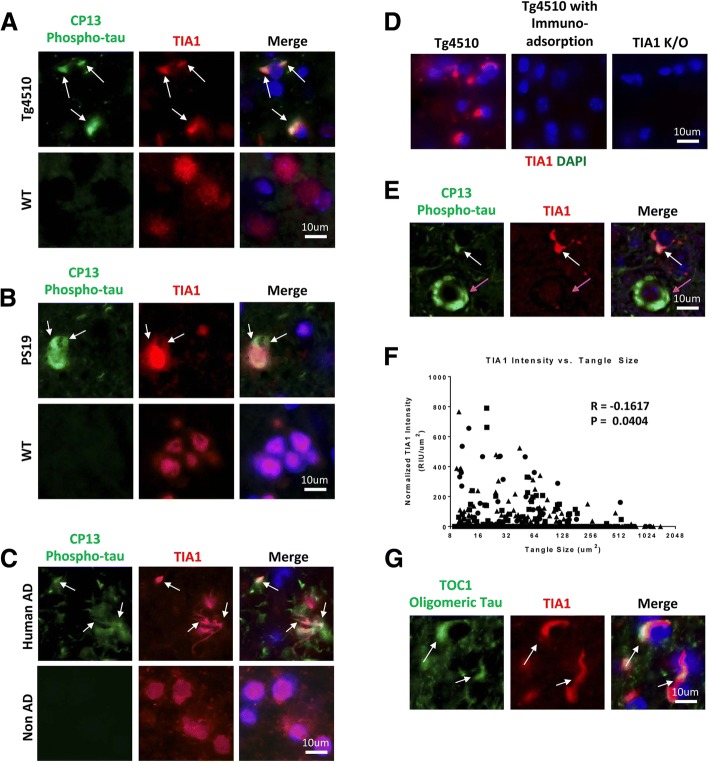
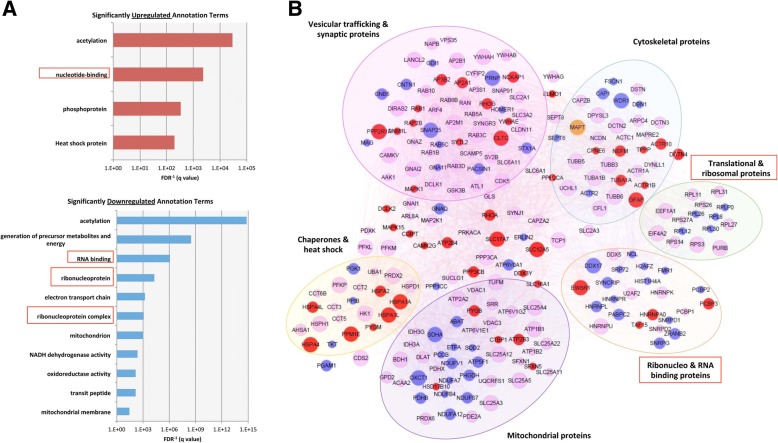
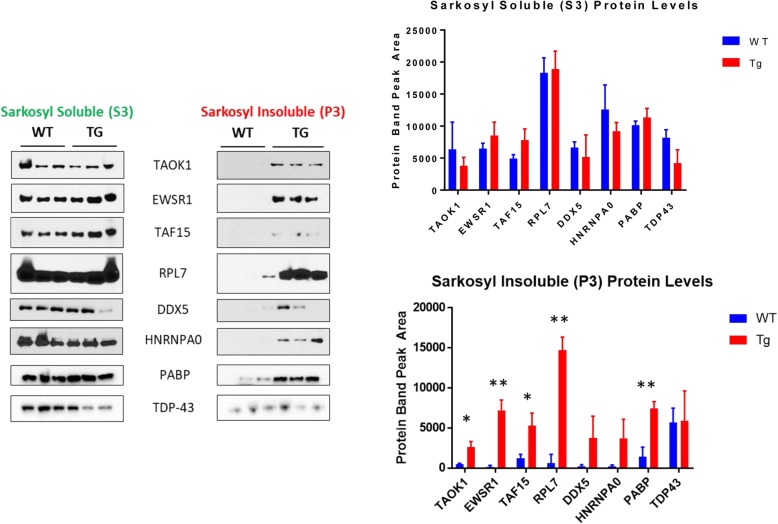
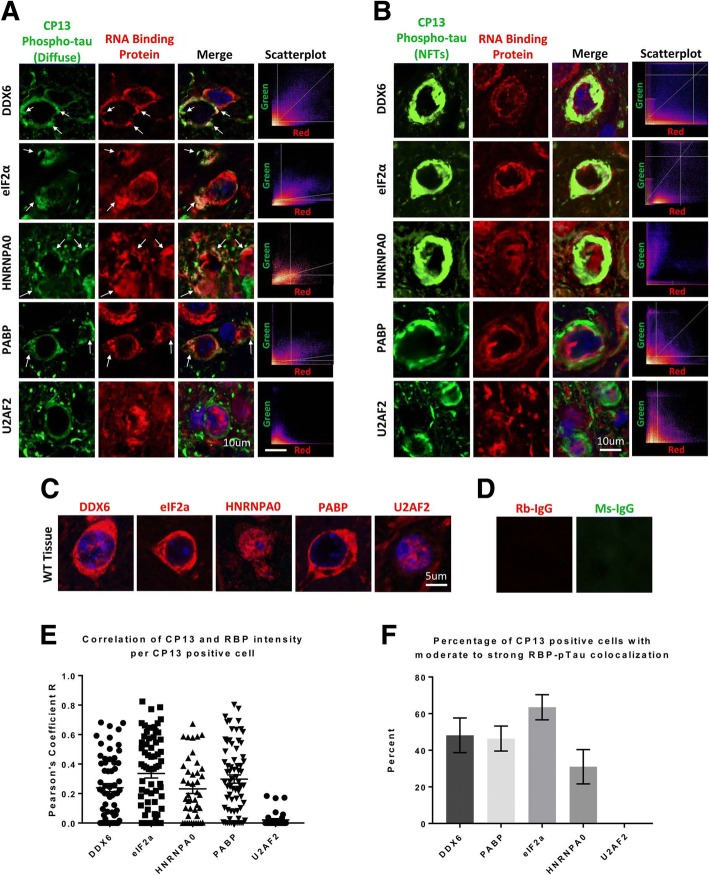
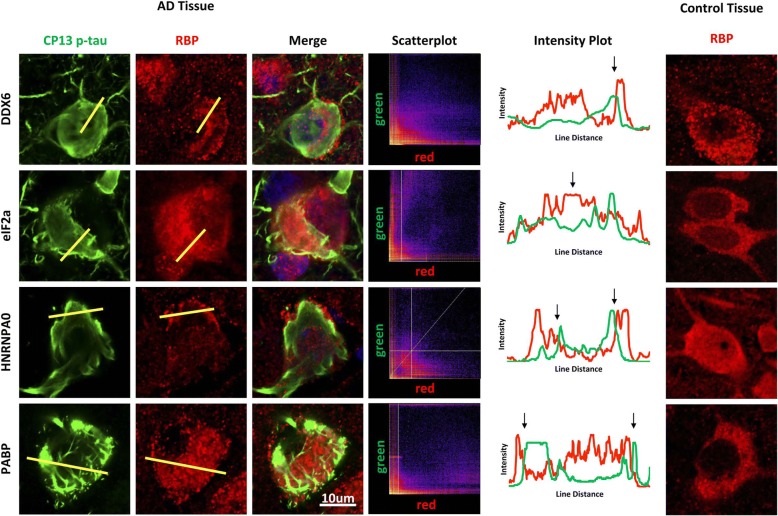
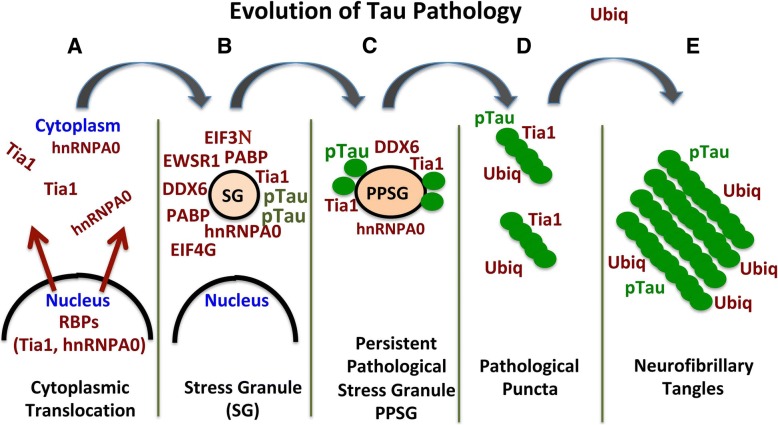
The development of insoluble, intracellular neurofibrillary tangles composed of the microtubule-associated protein tau is a defining feature of tauopathies, including Alzheimer's disease (AD). Accumulating evidence suggests that tau pathology co-localizes with RNA binding proteins (RBPs) that are known markers for stress granules (SGs). Here we used proteomics to determine how the network of tau binding proteins changes with disease in the rTg4510 mouse, and then followed up with immunohistochemistry to identify RNA binding proteins that co-localize with tau pathology. The tau interactome networks revealed striking disease-related changes in interactions between tau and a multiple RBPs, and biochemical fractionation studies demonstrated that many of these proteins including hnRNPA0, EWSR1, PABP and RPL7 form insoluble aggregates as tau pathology develops. Immunohistochemical analysis of mouse and human brain tissues suggest a model of evolving pathological interaction, in which RBPs co-localize with pathological phospho-tau but occur adjacent to larger pathological tau inclusions. We suggest a model in which tau initially interacts with RBPs in small complexes, but evolves into isolated aggregated inclusions as tau pathology matures.
Overview
The claims and statistics of this paper haven’t been checked yet.
Run the check — free, no account needed. It reads the open-access text and checks the sources it cites.
Integrity signals
Registry
Cites
Statistics
Figures
Verification
Claims the paper makes
The claims and statistics of this paper haven’t been checked yet.
Run the check — free, no account needed. It reads the open-access text and checks the sources it cites.
Claims other papers make about this one
Each is checked against this paper’s own text: does it say what the citing paper says it does?
The source backs part of the claim, not all of it — or backs it for a different population, condition or comparison.
In the citing paper
“The cell body MAPT pathology is particularly important because this pathology colocalizes with markers of the translational stress response, such as stress granule proteins HNRNPA2B1, TIA1, EIF3n and PABP, and also neuronal death (as shown by cleaved caspase 3 and loss of NeuN positive cells) (Ash et al., 2014; Apicco et al., 2018; Maziuk et al., 2018; Apicco et al., 2019; Jiang et al., 2019, 2021”
From β-amyloid accumulation enhances microtubule associated protein tau pathology in an APPNL-G-F/MAPTP301S mouse model of Alzheimer’s disease (2024) · cites this paper as Maziuk et al., 2018
Experimental — accuracy not yet measuredIn the citing paper
“previous analyses of the AD brain detergent-insoluble proteome, which have repeatedly demonstrated the association of U1 small nuclear ribonucleoproteins (U1 snRNPs) and other RNA-binding proteins with tau tangles [133–137].”
From Systems-based proteomics to resolve the biology of Alzheimer’s disease beyond amyloid and tau (2021) · cites this paper as [137]
In the citing paper
“Interestingly, our previous studies demonstrated that many of the U1 snRNPs colocalize with neurofibrillary tangles and paired helical filaments in AD brain [24, 32–34], and that accumulation of insoluble snRNPs correlates strongly with both amyloid and Tau pathology [32–37].”
From Deep proteomic network analysis of Alzheimer’s disease brain reveals alterations in RNA binding proteins and RNA splicing associated with disease (2018) · cites this paper as [36]
Self-check
Percentages, sums and reported differences re-computed from the paper’s own numbers.
The self-check needs the paper’s full text.
Citations
Cites
Amyloid oligomers exacerbate tau pathology in a mouse model of tauopathy
Selenica, M.-L. B., Brownlow, M., Jimenez, J. P., Lee, D. C., Pena, G., Dickey, C. A., Gordon, M. N., & Morgan, D. (2013) · Neurodegenerative Diseases · doi:10.1159/000337230 · Cited by 10,359
Liquid phase condensation in cell physiology and disease
Shin, Y., & Brangwynne, C. P. (2017) · Science · doi:10.1126/science.aaf4382 · Cited by 4,143
Molliex, A., Temirov, J. P., Lee, J., Coughlin, M., Kanagaraj, A., Kim, H. J., Mittag, T., & Taylor, J. P. (2015) · Cell · doi:10.1016/j.cell.2015.09.015 · Cited by 2,690
Phase transitions in the assembly of multivalent signalling proteins
Li, P., Banjade, S., Cheng, H., Kim, S., Chen, B., Guo, L., Llaguno, M. C., Hollingsworth, J. V., King, D., Banani, S. F., et al. (2012) · Nature · doi:10.1038/nature10879 · Cited by 2,565
Tau Suppression in a Neurodegenerative Mouse Model Improves Memory Function
SantaCruz, K., Lewis, J., Spires, T., Paulson, J., Kotilinek, L., Ingelsson, M., Guimaraes, A., DeTure, M., Ramsden, M., McGowan, E., et al. (2005) · Science · doi:10.1126/science.1113694 · Cited by 2,014
Nott, T. J., Petsalaki, E., Farber, P., Jervis, D., Fussner, E., Plochowietz, A., Craggs, T. D., Bazett-Jones, D. P., Pawson, T., Forman-Kay, J. D., et al. (2015) · Molecular Cell · doi:10.1016/j.molcel.2015.01.013 · Cited by 1,803
Formation and Maturation of Phase-Separated Liquid Droplets by RNA-Binding Proteins
Lin, Y., Protter, D. S. W., Rosen, M. K., & Parker, R. (2015) · Molecular Cell · doi:10.1016/j.molcel.2015.08.018 · Cited by 1,593
Tau protein liquid–liquid phase separation can initiate tau aggregation
Wegmann, S., Eftekharzadeh, B., Tepper, K., Zoltowska, K. M., Bennett, R. E., Dujardin, S., Laskowski, P. R., MacKenzie, D., Kamath, T., Commins, C., et al. (2018) · The EMBO Journal · doi:10.15252/embj.201798049 · Cited by 1,102
Liu‐Yesucevitz, L., Bilgutay, A. N., Zhang, Y., Vanderwyde, T., Citro, A., Mehta, T., Zaarur, N., McKee, A. C., Bowser, R. P., Sherman, M. Y., et al. (2010) · PLoS ONE · doi:10.1371/journal.pone.0013250 · Cited by 637
Self-citationTherapeutic reduction of ataxin-2 extends lifespan and reduces pathology in TDP-43 mice
Becker, L. A., Huang, B., Bieri, G., Ma, R., Knowles, D. A., Jafar-Nejad, P., Messing, J., Kim, H. J., Soriano, A., Auburger, G., et al. (2017) · Nature · doi:10.1038/nature22038 · Cited by 571
Cited by
Sorted by citations
Liquid–Liquid Phase Separation in Disease
Alberti, S., & Dormann, D. (2019) · Annual Review of Genetics · doi:10.1146/annurev-genet-112618-043527 · Cited by 871
Stress granules and neurodegeneration
Wolozin, B., & Ivanov, P. (2019) · Nature Reviews Neuroscience · doi:10.1038/s41583-019-0222-5 · Cited by 810
Self-citationLiquid-liquid phase separation induces pathogenic tau conformations in vitro
Kanaan, N. M., Hamel, C., Grabinski, T., & Combs, B. (2020) · Nature Communications · doi:10.1038/s41467-020-16580-3 · Cited by 397
Hofweber, M., & Dormann, D. (2018) · Journal of Biological Chemistry · doi:10.1074/jbc.tm118.001189 · Cited by 398
Zhao, J., Fu, Y., Yamazaki, Y., Ren, Y., Davis, M. D., Liu, C.-C., Lu, W., Wang, X., Chen, K., Cherukuri, Y., et al. (2020) · Nature Communications · doi:10.1038/s41467-020-19264-0 · Cited by 374
Phosphorylated tau interactome in the human Alzheimer's disease brain
Drummond, E., Pires, G., MacMurray, C., Askenazi, M., Nayak, S., Bourdon, M., Safar, J., Ueberheide, B., & Wisniewski, T. (2020) · Brain · doi:10.1093/brain/awaa223 · Cited by 357
Tau interactome maps synaptic and mitochondrial processes associated with neurodegeneration
Tracy, T. E., Madero‐Pérez, J., Swaney, D. L., Chang, T. S., Moritz, M., Konràd, C., Ward, M. E., Stevenson, E. J., Hüttenhain, R., Kauwe, G., et al. (2022) · Cell · doi:10.1016/j.cell.2021.12.041 · Cited by 355
Lysine/RNA-interactions drive and regulate biomolecular condensation
Ukmar, T., Hutten, S., Grieshop, M. P., Rezaei‐Ghaleh, N., Cima‐Omori, M., Biernat, J., Mandelkow�, E., Söding, J., Dormann, D., & Zweckstetter, M. (2019) · Nature Communications · doi:10.1038/s41467-019-10792-y · Cited by 257
Johnson, E. C. B., Dammer, E. B., Duong, D. M., Yin, L., Thambisetty, M., Troncoso, J. C., Lah, J. J., Levey, A. I., & Seyfried, N. T. (2018) · Molecular Neurodegeneration · doi:10.1186/s13024-018-0282-4 · Cited by 225
Tau aggregates are RNA-protein assemblies that mislocalize multiple nuclear speckle components
Lester, E., Ooi, F. K., Bakkar, N., Ayers, J. I., Woerman, A. L., Wheeler, J., Bowser, R. P., Carlson, G. A., Prusiner, S. B., & Parker, R. (2021) · Neuron · doi:10.1016/j.neuron.2021.03.026 · Cited by 212
Updates in Alzheimer's disease: from basic research to diagnosis and therapies
Liu, E., Zhang, Y., & Wang, J. (2024) · Translational Neurodegeneration · doi:10.1186/s40035-024-00432-x · Cited by 241
Hsieh, Y.-C., Guo, C., Yalamanchili, H. K., Abreha, M., Al-Ouran, R., Li, Y., Dammer, E. B., Lah, J. J., Levey, A. I., Bennett, D. A., et al. (2019) · Cell Reports · doi:10.1016/j.celrep.2019.08.104 · Cited by 196
Interaction of tau with HNRNPA2B1 and N6-methyladenosine RNA mediates the progression of tauopathy
Jiang, L., Lin, W., Zhang, C., Ash, P. E. A., Verma, M., Kwan, J., van Vliet, E., Yang, Z., Cruz, A. L., Boudeau, S., et al. (2021) · Molecular Cell · doi:10.1016/j.molcel.2021.07.038 · Cited by 177
Self-citationThe RNA-Binding Protein PUM2 Impairs Mitochondrial Dynamics and Mitophagy During Aging
D’Amico, D., Mottis, A., Potenza, F., Sorrentino, V., Li, H., Romani, M., Lemos, V., Schoonjans, K., Zamboni, N., Knott, G., et al. (2019) · Molecular Cell · doi:10.1016/j.molcel.2018.11.034 · Cited by 159
Self-citationTIA1 potentiates tau phase separation and promotes generation of toxic oligomeric tau
Ash, P. E. A., Lei, S., Shattuck, J., Boudeau, S., Carlomagno, Y., Medalla, M., Mashimo, B. L., Socorro, G., Al-Mohanna, L. F. A., Jiang, L., et al. (2021) · Proceedings of the National Academy of Sciences · doi:10.1073/pnas.2014188118 · Cited by 159
Self-citationBuchholz, S., & Zempel, H. (2024) · Alzheimer s & Dementia · doi:10.1002/alz.13784 · Cited by 154
Liquid–liquid phase separation of tau: From molecular biophysics to physiology and disease
Rai, S. K., Savastano, A., Singh, P., Mukhopadhyay, S., & Zweckstetter, M. (2021) · Protein Science · doi:10.1002/pro.4093 · Cited by 129
Stress granule subtypes: an emerging link to neurodegeneration
Advani, V. M., & Ivanov, P. V. (2020) · Cellular and Molecular Life Sciences · doi:10.1007/s00018-020-03565-0 · Cited by 118
Systems-based proteomics to resolve the biology of Alzheimer’s disease beyond amyloid and tau
Rayaprolu, S., Higginbotham, L., Bagchi, P., Watson, C. M., Zhang, T., Levey, A. I., Rangaraju, S., & Seyfried, N. T. (2021) · Neuropsychopharmacology · doi:10.1038/s41386-020-00840-3 · Cited by 118
Tau interactome and RNA binding proteins in neurodegenerative diseases
Kavanagh, T., Halder, A., & Drummond, E. (2022) · Molecular Neurodegeneration · doi:10.1186/s13024-022-00572-6 · Cited by 111
Li, H., Liu, C.-C., Zheng, H., & Huang, T. Y. (2018) · Translational Neurodegeneration · doi:10.1186/s40035-018-0139-3 · Cited by 103
Self-citationSFPQ and Tau: critical factors contributing to rapid progression of Alzheimer’s disease
Younas, N., Zafar, S., Shafiq, M., Noor, A., Siegert, A., Arora, A. S., Galkin, A. P., Zafar, A., Schmitz, M., Stadelmann, C., et al. (2020) · Acta Neuropathologica · doi:10.1007/s00401-020-02178-y · Cited by 94
Proteomics Approaches for Biomarker and Drug Target Discovery in ALS and FTD
Hedl, T. J., San Gil, R., Cheng, F., Rayner, S. L., Davidson, J. M., De Luca, A., Villalva, M. D., Ecroyd, H., Walker, A. K., & Lee, A. (2019) · Frontiers in Neuroscience · doi:10.3389/fnins.2019.00548 · Cited by 87
Cid-Samper, F., Gelabert‐Baldrich, M., Lang, B., Lorenzo-Gotor, N., Ponti, R. D., Severijnen, L.-A. W. F. M., Bolognesi, B., Gelpí, E., Hukema, R. K., Botta‐Orfila, T., et al. (2018) · Cell Reports · doi:10.1016/j.celrep.2018.11.076 · Cited by 86
Fyn Kinase Controls Tau Aggregation In Vivo
Briner, A., Götz, J., & Polanco, J. C. (2020) · Cell Reports · doi:10.1016/j.celrep.2020.108045 · Cited by 85
Friend or foe: The role of stress granule in neurodegenerative disease
Cui, Q., Liu, Z., & Bai, G. (2024) · Neuron · doi:10.1016/j.neuron.2024.04.025 · Cited by 86
Composition of the Intranuclear Inclusions of Fragile X-associated Tremor/Ataxia Syndrome
Ma, L., Herren, A. W., Espinal, G. M., Randol, J. L., McLaughlin, B. E., Martínez‐Cerdeño, V., Pessah, I. N., Hagerman, R. J., & Hagerman, P. J. (2019) · Acta Neuropathologica Communications · doi:10.1186/s40478-019-0796-1 · Cited by 78
Splicing alterations in healthy aging and disease
Angarola, B. L., & Anczuków, O. (2021) · Wiley Interdisciplinary Reviews - RNA · doi:10.1002/wrna.1643 · Cited by 73
RNA Dynamics in Alzheimer’s Disease
Rybak‐Wolf, A., & Plass, M. (2021) · Molecules · doi:10.3390/molecules26175113 · Cited by 72
Bassoon contributes to tau-seed propagation and neurotoxicity
Martinez, P., Patel, H., You, Y., Jury, N., Perkins, A., Lee-Gosselin, A., Taylor, X., You, Y., Viana Di Prisco, G., Huang, X., et al. (2022) · Nature Neuroscience · doi:10.1038/s41593-022-01191-6 · Cited by 68
McMillan, P. J., Strovas, T. J., Baum, M., Mitchell, B. K., Eck, R. J., Hendricks, N., Wheeler, J. M., Latimer, C. S., Keene, C. D., & Kraemer, B. C. (2021) · Acta Neuropathologica Communications · doi:10.1186/s40478-021-01219-1 · Cited by 64
Naskar, A., Nayak, A., Salaikumaran, M. R., Vishal, S. S., & Gopal, P. P. (2023) · Frontiers in Molecular Neuroscience · doi:10.3389/fnmol.2023.1242925 · Cited by 60
hnRNP A/B Proteins: An Encyclopedic Assessment of Their Roles in Homeostasis and Disease
Thibault, P. A., Ganesan, A., Kalyaanamoorthy, S., Clarke, J.-P. W. E., Salapa, H. E., & Levin, M. C. (2021) · Biology · doi:10.3390/biology10080712 · Cited by 59
Arginine π-stacking drives binding to fibrils of the Alzheimer protein Tau
Ferrari, L., Stucchi, R., Konstantoulea, K., van de Kamp, G., Kos, R., Geerts, W. J. C., van Bezouwen, L. S., Förster, F. G., Altelaar, M. A. F., Hoogenraad, C. C., et al. (2020) · Nature Communications · doi:10.1038/s41467-019-13745-7 · Cited by 65
Stress Granules and Neurodegenerative Disorders: A Scoping Review
Asadi, M. R., Moslehian, M. S., Sabaie, H., Jalaiei, A., Ghafouri‐Fard, S., Taheri, M. N., & Rezazadeh, M. (2021) · Frontiers in Aging Neuroscience · doi:10.3389/fnagi.2021.650740 · Cited by 60
hnRNP A1 dysfunction alters RNA splicing and drives neurodegeneration in multiple sclerosis (MS)
Salapa, H. E., Thibault, P., Libner, C. D., Ding, Y.-L., Clarke, J. P., Denomy, C., Hutchinson, C., Abidullah, H. M., Hammond, S. A., Pastushok, L., et al. (2024) · Nature Communications · doi:10.1038/s41467-023-44658-1 · Cited by 47
Lish, A. M., Grogan, E. F. L., Benoit, C. R., Pearse, R. V., Heuer, S. E., Luquez, T., Orme, G. A., Galle, P. C., Milinkeviciute, G., Green, K. N., et al. (2025) · Neuron · doi:10.1016/j.neuron.2025.03.034 · Cited by 55
Montalbano, M., McAllen, S., Sengupta, U., Puangmalai, N., Bhatt, N. N., Ellsworth, A., & Kayed, R. (2019) · Aging Cell · doi:10.1111/acel.13035 · Cited by 46
RNA induces unique tau strains and stabilizes Alzheimer’s disease seeds
Zwierzchowski-Zarate, A. N., Mendoza‐Oliva, A., Kashmer, O. M., Collazo-Lopez, J. E., White, C. L., & Diamond, M. I. (2022) · Journal of Biological Chemistry · doi:10.1016/j.jbc.2022.102132 · Cited by 48
Koren, S. A., Galvis-Escobar, S., & Abisambra, J. F. (2020) · Neurobiology of Disease · doi:10.1016/j.nbd.2020.104939 · Cited by 49
Self-citationTau–RNA complexes inhibit microtubule polymerization and drive disease-relevant conformation change
McMillan, P. J., Benbow, S. J., Uhrich, R. L., Saxton, A. D., Baum, M., Strovas, T. J., Wheeler, J. M., Baker, J. D., Liachko, N. F., Keene, C. D., et al. (2023) · Brain · doi:10.1093/brain/awad032 · Cited by 43
The Pathophysiology of Tau and Stress Granules in Disease
Cruz, A. L., Verma, M., & Wolozin, B. L. (2019) · Advances in experimental medicine and biology · doi:10.1007/978-981-32-9358-8_26 · Cited by 42
Self-citationPhysiological Tau Interactome in Brain and Its Link to Tauopathies
Šinský, J., Majerová, P., Kováč, A., Kotlyar, M., Jurišica, I., & Hanes, J. (2020) · Journal of Proteome Research · doi:10.1021/acs.jproteome.0c00137 · Cited by 44
Webber, C. J., Lei, S. (., & Wolozin, B. L. (2020) · Progress in molecular biology and translational science · doi:10.1016/bs.pmbts.2020.04.021 · Cited by 41
Self-citationReduction of the RNA Binding Protein TIA1 Exacerbates Neuroinflammation in Tauopathy
LeBlang, C. J., Medalla, M., Nicoletti, N. W., Hays, E. C., Zhao, J., Shattuck, J. E., Cruz, A. L., Wolozin, B. L., & Luebke, J. I. (2020) · Frontiers in Neuroscience · doi:10.3389/fnins.2020.00285 · Cited by 38
Self-citationBiomolecular condensation of the microtubule-associated protein tau
Ukmar, T., Wegmann, S., & Zweckstetter, M. (2019) · Seminars in Cell and Developmental Biology · doi:10.1016/j.semcdb.2019.06.007 · Cited by 41
Yamoah, A., Tripathi, P., Sechi, A. S., Köhler, C. N., Guo, H., Chandrasekar, A., Nolte, K. W., Wruck, C. J., Katona, I., Anink, J. J., et al. (2020) · Journal of Alzheimer s Disease · doi:10.3233/jad-190722 · Cited by 35
Application of yeast to studying amyloid and prion diseases
Chernoff, Y. O., Grizel, A. V., Rubel, A. A., Zelinsky, A. А., Chandramowlishwaran, P., & Chernova, T. A. (2020) · Advances in genetics · doi:10.1016/bs.adgen.2020.01.002 · Cited by 41
Interplay of RNA-Binding Proteins and microRNAs in Neurodegenerative Diseases
Kinoshita, C., Kubota, N., & Aoyama, K. (2021) · International Journal of Molecular Sciences · doi:10.3390/ijms22105292 · Cited by 35
Stress granules: emerging players in neurodegenerative diseases
Yuan, L., Mao, L.-H., Huang, Y.-Y., Outeiro, T. F., Li, W., Vieira, T. C. R. G., & Li, J. (2025) · Translational Neurodegeneration · doi:10.1186/s40035-025-00482-9 · Cited by 48
Increased G3BP2-Tau interaction in tauopathies is a natural defense against Tau aggregation
Wang, C., Terrigno, M., Li, J., Distler, T., Pandya, N. J., Ebeling, M., Tyanova, S., Hoozemans, J. J. M., Dijkstra, A. A., Fuchs, L., et al. (2023) · Neuron · doi:10.1016/j.neuron.2023.05.033 · Cited by 35
Nuclear face of Tau: an inside player in neurodegeneration
Younas, N., Saleem, T., Younas, A., & Zerr, I. (2023) · Acta Neuropathologica Communications · doi:10.1186/s40478-023-01702-x · Cited by 34
Salapa, H. E., Libner, C. D., & Levin, M. C. (2019) · Journal of Neuroscience Research · doi:10.1002/jnr.24554 · Cited by 33
Liquid − liquid phase separation of tau: Driving forces, regulation, and biological implications
Li, P., Chen, J., Wang, X., Su, Z., Gao, M., & Huang, Y. (2023) · Neurobiology of Disease · doi:10.1016/j.nbd.2023.106167 · Cited by 30
Jiang, L., Zhao, J., Cheng, J., & Wolozin, B. L. (2020) · Frontiers in Neurology · doi:10.3389/fneur.2020.579434 · Cited by 31
Self-citationTau liquid–liquid phase separation: At the crossroads of tau physiology and tauopathy
Islam, M., Shen, F., Regmi, D., Petersen, K., Karim, M. R. U., & Du, D. (2024) · Journal of Cellular Physiology · doi:10.1002/jcp.30853 · Cited by 28
The influence of APOEε4 on the pTau interactome in sporadic Alzheimer’s disease
Thierry, M., Ponce, J., Martá-Ariza, M., Askenazi, M., Faustin, A., Leitner, D., Pires, G., Kanshin, E., Drummond, E., Ueberheide, B. M., et al. (2024) · Acta Neuropathologica · doi:10.1007/s00401-024-02744-8 · Cited by 27
Cellular Biology of Tau Diversity and Pathogenic Conformers
Kang, S., Eskandari‐Sedighi, G., Hromádková, L., Safar, J., & Westaway, D. A. (2020) · Frontiers in Neurology · doi:10.3389/fneur.2020.590199 · Cited by 29
Molecular interaction of stress granules with Tau and autophagy in Alzheimer's disease
Yu, Q.-Y., Ye, L., & Li, H. (2022) · Neurochemistry International · doi:10.1016/j.neuint.2022.105342 · Cited by 27
Self-citationNuclear Tau, p53 and Pin1 Regulate PARN-Mediated Deadenylation and Gene Expression
Baquero, J., Varriano, S., Ordonez, M., Kuczaj, P., Murphy, M. R., Aruggoda, G., Lundine, D., Morozova, V., Makki, A. E.-H., Alonso, A. D. C., et al. (2019) · Frontiers in Molecular Neuroscience · doi:10.3389/fnmol.2019.00242 · Cited by 26
Ferdousi, F., Kondo, S., Sasaki, K., Uchida, Y., Ohkohchi, N., Zheng, Y., & Isoda, H. (2020) · Aging · doi:10.18632/aging.102985 · Cited by 25
Guo, Q., Dammer, E. B., Zhou, M., Kundinger, S. R., Gearing, M., Lah, J. J., Levey, A. I., Shulman, J. M., & Seyfried, N. T. (2021) · Frontiers in Molecular Neuroscience · doi:10.3389/fnmol.2021.623659 · Cited by 27
Tripathi, P., Guo, H., Dreser, A., Yamoah, A., Sechi, A. S., Jesse, C. M., Katona, I., Doukas, P., Nikolin, S., Ernst, S., et al. (2021) · Cell Death and Disease · doi:10.1038/s41419-021-03710-y · Cited by 23
Li, M., Liu, E.-J., Zhou, Q., Li, S., Liu, S., Yu, H., Pan, Q., Sun, F., He, T., Wang, W.-J., et al. (2022) · Military Medical Research · doi:10.1186/s40779-022-00396-x · Cited by 24
Jeong, A., Auger, S. A., Maity, S., Fredriksen, K., Zhong, R., Li, L., & Distefano, M. D. (2022) · ACS Chemical Biology · doi:10.1021/acschembio.2c00486 · Cited by 26
Proteostasis and Ribostasis Impairment as Common Cell Death Mechanisms in Neurodegenerative Diseases
Lim, S. M., Nahm, M., & Kim, S. H. (2023) · Journal of Clinical Neurology · doi:10.3988/jcn.2022.0379 · Cited by 24
Protein Interaction Network Biology in Neuroscience
Basu, A., Ash, P. E. A., Wolozin, B. L., & Emili, A. (2020) · PROTEOMICS · doi:10.1002/pmic.201900311 · Cited by 23
Self-citationSato, K., Takayama, K., & Inoue, S. (2023) · Aging · doi:10.18632/aging.204737 · Cited by 26
Chinese nutraceuticals and physical activity; their role in neurodegenerative tauopathies
Alausa, A. O., Ogundepo, S., Olaleke, B., Adeyemi, R. O., Olatinwo, M., & Ismail, A. (2021) · Chinese Medicine · doi:10.1186/s13020-020-00418-7 · Cited by 21
Long non-coding RNA SNHG8 drives stress granule formation in tauopathies
Bhagat, R., Minaya, M., Renganathan, A., Mehra, M., Marsh, J. A., Martinez, R. J., Eteleeb, A. M., Nana, A. L., Spina, S., Seeley, W. W., et al. (2023) · Molecular Psychiatry · doi:10.1038/s41380-023-02237-2 · Cited by 23
Tassinari, V., Rosa, P. L., Guida, E., Colopi, A., Caratelli, S., Paolis, F. D., Gallo, A., Cenciarelli, C., Sconocchia, G., Dolci, S., et al. (2023) · Mechanisms of Ageing and Development · doi:10.1016/j.mad.2023.111807 · Cited by 19
Tonner, H., Hunn, S., Auler, N., Schmelter, C., Beutgen, V. M., von Pein, H. D., Pfeiffer, N., & Grus, F. H. (2022) · International Journal of Molecular Sciences · doi:10.3390/ijms23084107 · Cited by 19
Analyzing alternative splicing in Alzheimer’s disease postmortem brain: a cell-level perspective
Farhadieh, M., & Ghaedi, K. (2023) · Frontiers in Molecular Neuroscience · doi:10.3389/fnmol.2023.1237874 · Cited by 18
Crooke, P. S., Tossberg, J. T., Heinrich, R. M., Porter, K. P., & Aune, T. M. (2022) · Brain Communications · doi:10.1093/braincomms/fcac238 · Cited by 16
Kavanagh, T., Balcomb, K., Rastegar, D. A., Lourenco, G. F., Wısnıewskı, T., Halliday, G. M., & Drummond, E. (2024) · Brain Pathology · doi:10.1111/bpa.13305 · Cited by 17
Podvin, S., Jones, A. C., Liu, Q., Aulston, B. D., Mosier, C., Ames, J., Winston, C. N., Lietz, C. B., Jiang, Z., O’Donoghue, A. J., et al. (2021) · ACS Omega · doi:10.1021/acsomega.1c00660 · Cited by 16
Tau, RNA, and RNA-Binding Proteins: Complex Interactions in Health and Neurodegenerative Diseases
Lester, E., & Parker, R. (2023) · The Neuroscientist · doi:10.1177/10738584231154551 · Cited by 16
The Role of Immunity in Alzheimer's Disease
McManus, R. M. (2022) · Advanced Biology · doi:10.1002/adbi.202101166 · Cited by 16
Jiang, L., Roberts, R., Wong, M., Zhang, L., Webber, C. J., Libera, J., Wang, Z., Kilci, A., Jenkins, M., Ortiz, A. R., et al. (2024) · Frontiers in Neuroscience · doi:10.3389/fnins.2024.1372297 · Cited by 15
Self-citationMorderer, D., Wren, M. C., Liu, F., Kouri, N., Maistrenko, A., Khalil, B., Pobitzer, N., Salemi, M., Phinney, B. S., Bu, G., et al. (2025) · Molecular Neurodegeneration · doi:10.1186/s13024-025-00817-0 · Cited by 21
The emerging molecular mechanisms for mitochondrial dysfunctions in FXTAS
Gohel, D., Charlet‐Berguerand, N., Tassone, F., & Singh, R. K. (2020) · Biochimica et Biophysica Acta (BBA) - Molecular Basis of Disease · doi:10.1016/j.bbadis.2020.165918 · Cited by 17
Posttranscriptional regulation of neurofilament proteins and tau in health and disease
Yuan, A., & Nixon, R. A. (2022) · Brain Research Bulletin · doi:10.1016/j.brainresbull.2022.10.017 · Cited by 16
Takayama, K., Suzuki, T., Sato, K., Saito, Y., & Inoue, S. (2024) · Aging Cell · doi:10.1111/acel.14316 · Cited by 15
Tau mRNA Metabolism in Neurodegenerative Diseases: A Tangle Journey
da Costa, P. J., Hamdane, M., Buée, L., & Martin, F. (2022) · Biomedicines · doi:10.3390/biomedicines10020241 · Cited by 16
Lu, X., Lu, J., Li, S., Feng, S., Wang, Y., & Cui, L. (2024) · Aging and Disease · doi:10.14336/ad.2024.0209 · Cited by 17
Emerging Connections Between Tau and Nucleic Acids
Galas, M., Bonnefoy, E., Buée, L., & Lefebvre, B. (2019) · Advances in experimental medicine and biology · doi:10.1007/978-981-32-9358-8_12 · Cited by 17
Liu, S., Cho, M., Huang, Y.-N., Park, T., Chaudhuri, S., Rosewood, T. J., Bice, P. J., Chung, D., Bennett, D. A., Ertekin‐Taner, N., et al. (2025) · Journal of Translational Medicine · doi:10.1186/s12967-025-06739-1 · Cited by 17
Radford, R. A. W., Rayner, S. L., Szwaja, P., Morsch, M., Cheng, F., Zhu, T., Widagdo, J., Anggono, V., Pountney, D. L., Chung, R. S., et al. (2023) · Journal of Neurochemistry · doi:10.1111/jnc.15796 · Cited by 12
Evaluation of the Therapeutic Effect of Lycoramine on Alzheimer’s Disease in Mouse Model
Kiris, İ., Karayel‐Basar, M., Şahin, B., Gürel, B., Coşkun, J., Mroczek, T., & Baykal, A. T. (2020) · Current Medicinal Chemistry · doi:10.2174/0929867327999201116193126 · Cited by 13
Schwab, K., Melis, V., Harrington, C. R., Wischik, C. M., Magbagbeolu, M., Theuring, F., & Riedel, G. (2021) · Cells · doi:10.3390/cells10082162 · Cited by 11
Using Proteomics to Understand Alzheimer’s Disease Pathogenesis
Drummond, E., & Wısnıewskı, T. (2019) · Codon Publications eBooks · doi:10.15586/alzheimersdisease.2019.ch3 · Cited by 13
hnRNP A1 dysfunction in oligodendrocytes contributes to the pathogenesis of multiple sclerosis
Jahan-Abad, A. J., Salapa, H. E., Libner, C. D., Thibault, P., & Levin, M. (2022) · Glia · doi:10.1002/glia.24300 · Cited by 12
Fujita, K., Ishizuka, T., Mitsukawa, M., Kurata, M., & Masuda, S. (2020) · International Journal of Molecular Sciences · doi:10.3390/ijms21062026 · Cited by 13
Hole, K. L., Zhu, B., Huggon, L., Brown, J. T., Mason, J. M., & Williams, R. J. (2024) · Cell Death and Disease · doi:10.1038/s41419-024-06815-2 · Cited by 11
Lipoprotein Metabolism, Protein Aggregation, and Alzheimer’s Disease: A Literature Review
Grao‐Cruces, E., Claro, C., la Paz, S. M., & Nóbrega, C. (2023) · International Journal of Molecular Sciences · doi:10.3390/ijms24032944 · Cited by 15
Dysregulation of neuroproteasomes by ApoE isoforms drives endogenous Tau aggregationPreprint
Paradise, V., Sabu, M., Bafia, J., Sharif, N., Nguyen, C., Konrad-Vicario, K., Mukim, R. D., Wang, X., Corjuc, B., Fu, J. M., et al. (2022) · bioRxiv (Cold Spring Harbor Laboratory) · doi:10.1101/2022.11.29.518293 · Cited by 10
Younas, N., Zafar, S., Saleem, T., Flores, L. C. F., Younas, A., Schmitz, M., & Zerr, I. (2023) · Cell & Bioscience · doi:10.1186/s13578-023-01164-7 · Cited by 10
Nelson, R. S., Dammer, E. B., Santiago, J. V., Seyfried, N. T., & Rangaraju, S. (2022) · Frontiers in Neuroscience · doi:10.3389/fnins.2022.902146 · Cited by 10
Puangmalai, N., Aday, A. E., Samples, M., Bhatt, N. N., Cascio, F. L., Marcatti, M., Park, S. J., Fung, L., Jerez, C., Penalva, L. O. F., et al. (2025) · Progress in Neurobiology · doi:10.1016/j.pneurobio.2025.102742 · Cited by 8
Pires, G., Ueberheide, B. M., Wısnıewskı, T., & Drummond, E. (2022) · Methods in molecular biology · doi:10.1007/978-1-0716-2655-9_14 · Cited by 8
Metadata
- Authors
- Maziuk, B. F., Apicco, D. J., Cruz, A. L., Jiang, L., Ash, P. E. A., da Rocha, E. L., Zhang, C., Yu, W. H., Leszyk, J., Abisambra, J. F., Li, H., & Wolozin, B.
- Affiliations
- Boston University (US)
- Mayo Clinic (US)
- Columbia University Irving Medical Center (US)
- University of Massachusetts Chan Medical School (US)
- University of Kentucky (US)
- Corresponding author
- Wolozin, Benjamin
- ORCID
- Venue
- Acta Neuropathologica Communications
- Published
- 2018-08-01
- Volume
- 6
- Issue
- 1
- Pages
- 71-71
- ISSN
- 2051-5960 (ISSN-L)
- PMC
- PMC6069705
- OpenAlex
- W2887193453
- Cited by
- 151
- References
- 45
- Citations by year
- 2026: 18 · 2025: 17 · 2024: 14 · 2023: 20 · 2022: 18 · 2021: 17 · 2020: 25 · 2019: 17 · 2018: 5
- FWCI
- 10.98
- Type
- journal article
- Language
- en
- Open access
- gold
- doi.org
- Locations
- Acta Neuropathologica Communications (publishedVersion, cc-by)
- Europe PMC (PubMed Central) (publishedVersion, other-oa)
- PubMed Central (publishedVersion, cc-by)
- PubMed (publishedVersion)
- eScholarship@UMassChan (submittedVersion, cc-by)
- UKnowledge (University of Kentucky) (submittedVersion, cc-by)
- DOAJ (DOAJ: Directory of Open Access Journals) (submittedVersion, cc-by-sa)
- Funders
- National Institute on Aging (AG050471, AG056318, AG028383)
- National Institute of Neurological Disorders and Stroke (NS089544, NS106751, NS091329)
- National Institute of Environmental Health Sciences (ES020395)
- BrightFocus Foundation
- Alzheimer Association
- Cure Alzheimer's Fund
- National Institute of Arthritis and Musculoskeletal and Skin Diseases (MD009205)
- U.S. Department of Defense (AZ140097)
- Topics
- Life Sciences › Neuroscience › Cellular and Molecular Neuroscience › Alzheimer's disease research and treatments
- Health Sciences › Medicine › Psychiatry and Mental health › Dementia and Cognitive Impairment Research
- Health Sciences › Medicine › Clinical Neurology › Amyotrophic Lateral Sclerosis Research
- Keywords
- tauopathy, tau protein, RNA-binding proteins, stress granules, neurofibrillary tangles, EWSR1, poly(A)-binding protein, protein aggregation, phosphorylated tau, Alzheimer's disease, protein colocalization
- MeSH terms
- T-Cell Intracellular Antigen-1, Aged, Aged, 80 and over, Animals, Brain, Inclusion Bodies, Endodeoxyribonucleases, Humans, Male, Mice, Transgenic, Middle Aged, Phosphorylation, Mass Spectrometry, RNA-Binding Proteins, Neurofibrillary Tangles, tau Proteins, Cell Cycle Proteins, Tauopathies, Proteomics, Immunoprecipitation, Mice, Protein Interaction Maps, Protein Aggregation, Pathological
About these checks
Registry, retraction, Cites and statistics results are computed, not judged, with one exception: a printed reference that no index lists is read once by a model before it counts as a citation error. Claims are extracted by a model and kept only when their quote appears verbatim in the text; each cited source is then checked, with a model’s help, for whether it says what the claim relies on. Those verdicts can be wrong — read the claim’s quote and the cited source before relying on one.
Statistics and arithmetic are recomputed, not judged.
Confidence bands are shown only for fields calibrated on our annotated test set. None is calibrated yet, so no band is shown.
What counts as a claim ›How we measure confidence ›How we check this ›
Are you an author, or do you see a problem with this page? Request a review
