

The effect of resistance training interventions on 'the self' in youth: a systematic review and meta-analysis
Open accessThe DOI matches its Crossref record; 51 of the 51 references it cites were found in a registry or an index.
Abstract
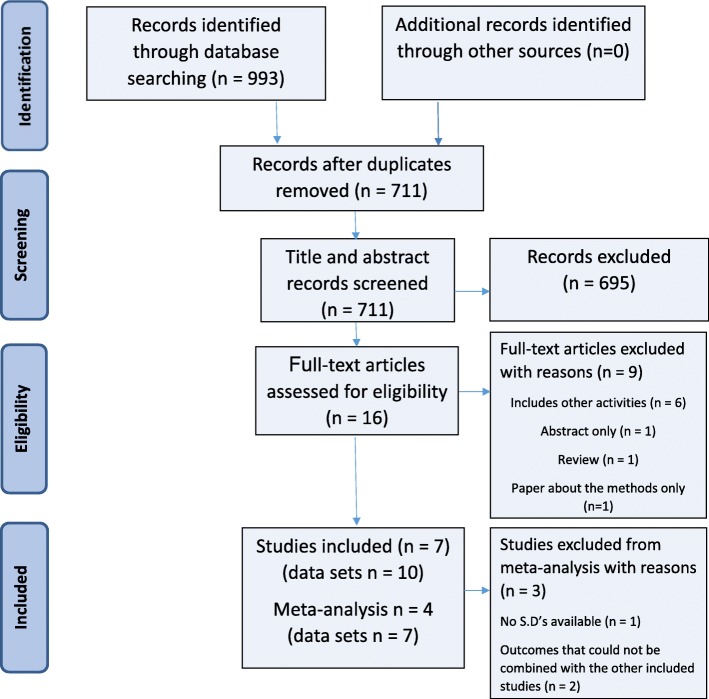
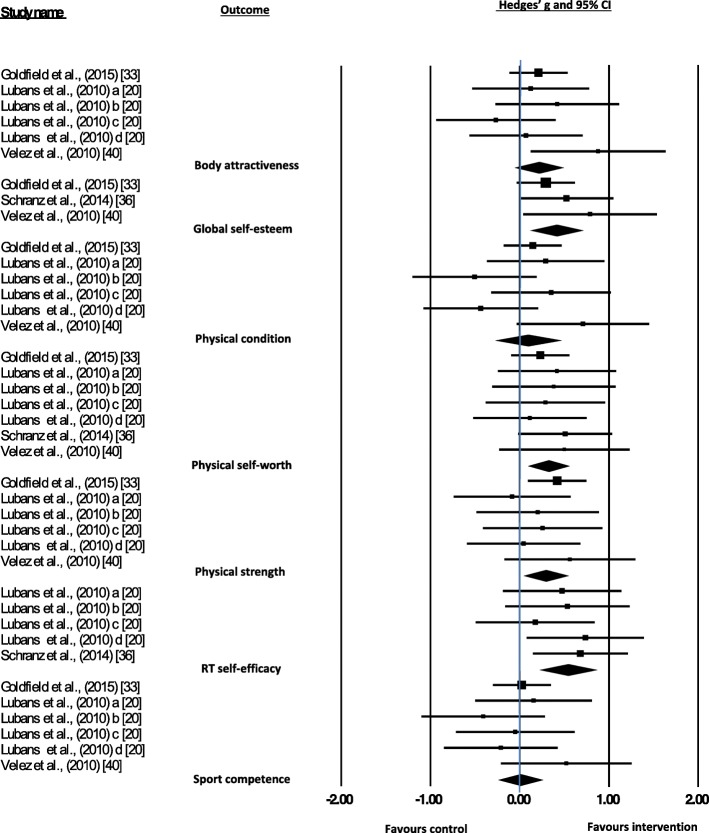
BACKGROUND: There is growing evidence that physical activity (PA) is beneficial for the mental health of young people. One area that has been widely examined is the impact of PA on 'the self', which is a term that encompasses a range of specific and related terms (e.g. self-esteem, self-efficacy, self-perceptions). There is evidence that PA is strongly associated with 'the self' in childhood and beyond. However, the impact of the specific PA of resistance training (RT) is not yet clear. The purpose of this review was to advance knowledge on the potential of RT for enhancing mental health by examining the effect of RT interventions on 'the self' in youth. METHODS: This systematic review followed the PRISMA guidelines (PROSPERO registration number CRD42016038365). Electronic literature databases were searched from the year of their inception to October 2018. The search included English language articles that examined the effect of isolated RT on the broad term of 'the self' in youth, with participants of school age (5-18 years). Data were extracted using an electronic form by one reviewer with 10% conducted by a second reviewer. The 'Quality Assessment Tool for Quantitative Studies' was used to assess the quality and risk of bias and was conducted by two reviewers. RESULTS: From seven peer-reviewed studies, ten data sets were included exploring seven outcomes related to 'the self' in participants aged between 10 and 16 years. Four of these studies (including seven data sets) were combined in a meta-analysis, with results from the remaining three studies reported separately. Significant intervention effects were identified for resistance training self-efficacy (Hedges' g = 0.538, 95% CI 0.254 to 0.822, P < 0.001), physical strength (Hedges' g = 0.289, 95% CI 0.067 to 0.511, P = 0.011), physical self-worth (Hedges' g = 0.319, 95% CI 0.114 to 0.523, P = 0.002) and global self-worth (Hedges' g = 0.409, 95% 0.149 to 0.669, P = 0.002). Although not statistically significant, the effect sizes for the remaining three outcomes were body attractiveness (Hedges' g = 0.211, 95% CI - 0.031 to 0.454, P = 0.087), physical condition (Hedges' g = 0.089, 95% CI - 0.238 to 0.417, P = 0.593) and sport competence (Hedges' g = 0.004, 95% CI - 0.218 to 0.225, P = 0.974). There was variable quality of studies, with just two studies being classified as 'strong'. CONCLUSION: This is the first review to synthesise research on the effects of isolated RT interventions on 'the self'. The findings indicate that RT has a positive impact on some aspects of 'the self' in youth. More high-quality studies should be conducted to further investigate this topic. If validated, this type of intervention could have a positive impact on 'the self' and ultimately improve the health of individuals not only during childhood but as they progress through life.
Overview
The claims and statistics of this paper haven’t been checked yet.
Free: it reads the open-access text and checks the first 5 claims that cite a source we can check. Create a free account to check every claim.
Integrity signals
Registry
Cites
Statistics
Figures
Verification
Claims the paper makes
The claims and statistics of this paper haven’t been checked yet.
Free: it reads the open-access text and checks the first 5 claims that cite a source we can check. Create a free account to check every claim.
Self-check
Percentages, sums and reported differences re-computed from the paper’s own numbers.
The self-check needs the paper’s full text.
Citations
Cites
Statistical Power Analysis for the Behavioral Sciences
Muller, K. (1989) · Technometrics · doi:10.1080/00401706.1989.10488618 · Cited by 99,167
Preferred Reporting Items for Systematic Reviews and Meta-Analyses: the PRISMA statement
Moher, D., Liberati, A., Tetzlaff, J., Altman, D. G., & for the PRISMA Group (2009) · BMJ · doi:10.1136/bmj.b2535 · Cited by 83,823
Statistical power analysis for the behavioral sciences
(1990) · Computers, Environment and Urban Systems · doi:10.1016/0198-9715(90)90050-4 · Cited by 65,269
Preferred Reporting Items for Systematic Reviews and Meta-Analyses: The PRISMA Statement
Moher, D., Liberati, A., Tetzlaff, J., Altman, D. G., & The PRISMA Group (2009) · PLoS Medicine · doi:10.1371/journal.pmed.1000097 · Cited by 64,042 · cited 1×
“The conduct and reporting of this review adhered to the guidelines outlined in the PRISMA statement [23].”
Measuring inconsistency in meta-analyses
Higgins, J. P. T., Thompson, S. G., Deeks, J. J., & Altman, D. G. (2003) · BMJ · doi:10.1136/bmj.327.7414.557 · Cited by 63,139
Bias in meta-analysis detected by a simple, graphical test
Egger, M., Smith, G. D., Schneider, M., & Minder, C. (1997) · BMJ · doi:10.1136/bmj.315.7109.629 · Cited by 56,722
Preferred reporting items for systematic reviews and meta-analyses: the PRISMA Statement.
(2009) · PubMed Central · Cited by 44,859
Interrater reliability: The kappa statistic
McHugh, M. L. (2012) · Biochemia Medica · doi:10.11613/bm.2012.031 · Cited by 19,877 · cited 1×
“0 for both the screening and the quality assessment, suggesting a strong level of agreement [24].”
BackgroundWang, G., Ma, R., Qiao, G., Wada, K., Aizawa, Y., & Satoh, T. (2015) · Integrative Medicine International · doi:10.1159/000368408 · Cited by 18,657
The file drawer problem and tolerance for null results.
Rosenthal, R. (1979) · Psychological Bulletin · doi:10.1037/0033-2909.86.3.638 · Cited by 9,068 · cited 2×
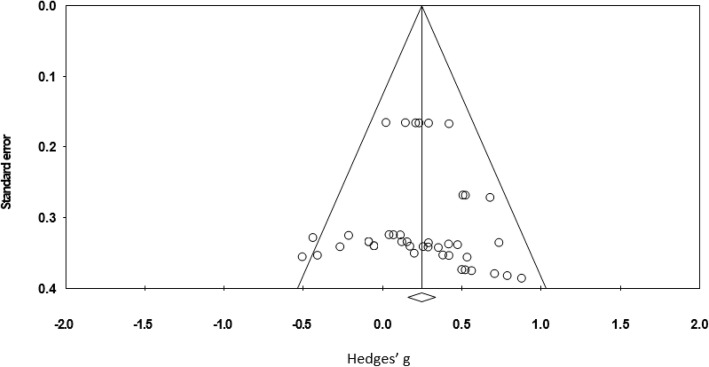
“Publication bias was assessed by calculating Egger bias statistics [28] and Rosenthal’s Fail-safe N [29].”
BackgroundMethodSelf-concept: validation of construct interpretations.
Shavelson, R. J., Hubner, J. J., & Stanton, G. C. (1976) · Review of Educational Research · doi:10.3102/00346543046003407 · Cited by 4,164 · cited 1×
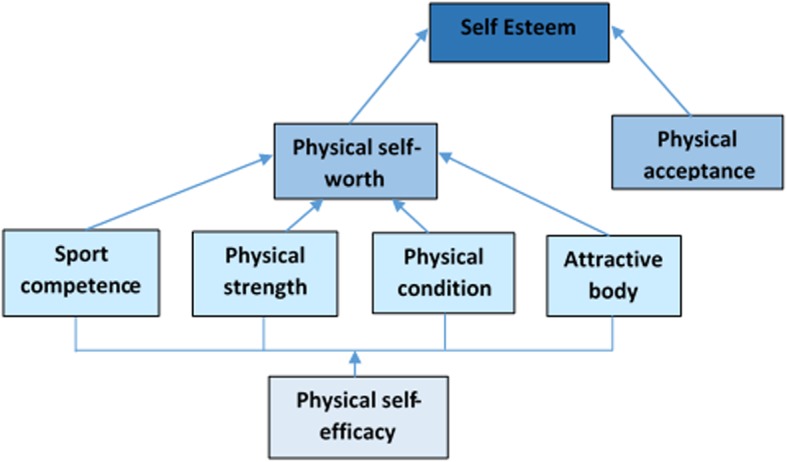
“self-concept ‘a person’s perception of him or herself ’ [4] and selfesteem ‘how an individual feels about their sense of self ’ [5]) at the apex of the structure which are influenced by less stable sub-domains (e.”
BackgroundSelf-Efficacy Beliefs of Adolescents
(2006) · Emerald Group Publishing Limited eBooks · doi:10.1108/978-1-60752-750-3 · Cited by 3,506
Lundberg, C. C. (2000) · Creative Consulting · doi:10.1108/978-1-60752-837-120251015 · Cited by 3,337
Thomas, B. H., Ciliska, D., Dobbins, M., & Micucci, S. (2004) · Worldviews on Evidence-Based Nursing · doi:10.1111/j.1524-475x.2004.04006.x · Cited by 2,118 · cited 1×
“The assessment tool has been found to be valid and reliable [25].”
MethodPhysical Activity for Cognitive and Mental Health in Youth: A Systematic Review of Mechanisms
Lubans, D., Richards, J., Hillman, C., Faulkner, G., Beauchamp, M., Nilsson, M., Kelly, P., Smith, J., Raine, L., & Biddle, S. (2016) · Pediatrics · doi:10.1542/peds.2016-1642 · Cited by 1,548 · cited 2×
“[14] suggests that physical activity has an impact on psychosocial factors (i.”
BackgroundBiddle, S. J. H., Ciaccioni, S., Thomas, G., & Vergeer, I. (2019) · Psychology of Sport and Exercise · doi:10.1016/j.psychsport.2018.08.011 · Cited by 1,454 · cited 1×
“In addition to the physical benefits, there is growing evidence that PA is beneficial for the mental health of young people, including depression, anxiety and self-esteem [2], and in this respect, one area that has been widely examined is the impact of PA on ‘the self ’ [3].”
BackgroundAdvances in sport and exercise psychology measurement
Duda, J. L. (1998) · University of Birmingham Research Portal (University of Birmingham) · Cited by 1,324
Faigenbaum, A. D., Kraemer, W. J., Blimkie, C. J. R., Jeffreys, I., Micheli, L. J., Nitka, M., & Rowland, T. W. (2009) · Journal of Strength and Conditioning Research · doi:10.1519/jsc.0b013e31819df407 · Cited by 1,209
The Physical Self-Perception Profile: Devlopment and Preliminary Validation
Fox, K. R., & Corbin, C. B. (1989) · Journal of Sport and Exercise Psychology · doi:10.1123/jsep.11.4.408 · Cited by 1,133 · cited 3×
“However, the majority of the studies included used the Children and Youth Physical Self-perception Profile (CY-PSPP) which has been validated as a method of assessing physical selfperceptions in children and youth [50].”
MethodSmith, J. J., Eather, N., Morgan, P. J., Plotnikoff, R. C., Faigenbaum, A. D., & Lubans, D. R. (2014) · Sports Medicine · doi:10.1007/s40279-014-0196-4 · Cited by 795 · cited 1×
“Indirect support for the independent positive effect of RT interventions on the self therefore currently comes from studies that demonstrate a positive association between muscular fitness and physical self-perceptions [21].”
BackgroundPosition statement on youth resistance training: the 2014 International Consensus
Lloyd, R. S., Faigenbaum, A. D., Stone, M. H., Oliver, J. L., Jeffreys, I., Moody, J. A., Brewer, C., Pierce, K. C., McCambridge, T. M., Howard, R., et al. (2014) · British Journal of Sports Medicine · doi:10.1136/bjsports-2013-092952 · Cited by 683
Physical Activity and Physical Self-Concept in Youth: Systematic Review and Meta-Analysis
Babic, M. J., Morgan, P. J., Plotnikoff, R. C., Lonsdale, C., White, R. L., & Lubans, D. R. (2014) · Sports Medicine · doi:10.1007/s40279-014-0229-z · Cited by 576 · cited 1×
“[10] included 64 studies in a meta-analysis and found a significant association between physical activity and physical self-concept and its various sub-domains in children and adolescents.”
BackgroundA Meta-analysis of the Relationship Between Children’s Physical Activity and Mental Health
Ahn, S., & Fedewa, A. L. (2011) · Journal of Pediatric Psychology · doi:10.1093/jpepsy/jsq107 · Cited by 506 · cited 3×
“Although reviews by Ahn and Fedewa [8] and Liu et al.”
MethodInfluentialExercise and self-esteem: rationale and model.
Sonstroem, R. J., & Morgan, W. P. (1989) · PubMed · Cited by 448
Development and validation of a physical self-efficacy scale.
Ryckman, R. M., Robbins, M. A., Thornton, B., & Cantrell, P. J. (1982) · Journal of Personality and Social Psychology · doi:10.1037//0022-3514.42.5.891 · Cited by 429
Exercise and self-esteem: rationale and model
SONSTROEM, R. J., & MORGAN, W. P. (1989) · Medicine & Science in Sports & Exercise · doi:10.1249/00005768-198906000-00018 · Cited by 383 · cited 12×
“Morgantown: Fitness Information Technology; 1998. p. 295–310.”
BackgroundMethodResultInfluentialLiu, M., Wu, L., & Ming, Q. (2015) · PLOS ONE · doi:10.1371/journal.pone.0134804 · Cited by 374
Dale, L. P., Vanderloo, L., Moore, S., & Faulkner, G. (2019) · Mental Health and Physical Activity · doi:10.1016/j.mhpa.2018.12.001 · Cited by 366 · cited 1×
“In addition to the physical benefits, there is growing evidence that PA is beneficial for the mental health of young people, including depression, anxiety and self-esteem [2], and in this respect, one area that has been widely examined is the impact of PA on ‘the self ’ [3].”
BackgroundEwart, C. K., Taylor, C. B., Reese, L. B., & DeBusk, R. F. (1983) · The American Journal of Cardiology · doi:10.1016/0002-9149(83)90348-x · Cited by 304
Ekeland, E., Heian, F., & Hagen, K. B. (2005) · British Journal of Sports Medicine · doi:10.1136/bjsm.2004.017707 · Cited by 250
Whitehead, J. R. (1995) · Pediatric Exercise Science · doi:10.1123/pes.7.2.132 · Cited by 233
EPSTEIN, L. H., & GOLDFIELD, G. S. (1999) · Medicine & Science in Sports & Exercise · doi:10.1097/00005768-199911001-00011 · Cited by 204 · cited 1×
“Additionally, good compliance is important given that exercise adherence is critical to positive outcomes [48], adding substance to the potential for RT as a viable mode of intervention to improve outcomes related to ‘the self ’.”
BackgroundTranstheoretical model: Examining adolescent exercise behavior
Nigg, C. R., & Courneya, K. S. (1998) · Journal of Adolescent Health · doi:10.1016/s1054-139x(97)00141-9 · Cited by 200
Advances in Sport and Exercise Psychology
(1992) · Human Kinetics eBooks · doi:10.5040/9781492595199 · Cited by 178
Hayes, S. D., Crocker, P. R. E., & Kowalski, K. C. (1999) · Journal of sport behavior · Cited by 167
Moran, J., SANDERCOCK, G. R. H., Ramírez‐Campillo, R., Clark, C. C. T., Fernandes, J. F. T., & Drury, B. (2018) · Sports Medicine · doi:10.1007/s40279-018-0914-4 · Cited by 141 · cited 1×
“This introduces limitations due to variability in adaptations to RT interventions according to sex [49].”
BackgroundVelez, A., Golem, D. L., & Arent, S. M. (2010) · Journal of Strength and Conditioning Research · doi:10.1519/jsc.0b013e3181cc230a · Cited by 113
Goldfield, G. S., Kenny, G. P., Alberga, A. S., Prud'homme, D., Hadjiyannakis, S., Gougeon, R., Phillips, P., Tulloch, H., Malcolm, J., Doucette, S., et al. (2015) · Journal of Consulting and Clinical Psychology · doi:10.1037/ccp0000038 · Cited by 107 · cited 1×
“Additionally, although we did not include duration or frequency in the moderator analysis, it should be noted that there was a wide range of duration, with two studies including an intervention of over 20 weeks [33, 36].”
BackgroundBASES Position Statement on Guidelines for Resistance Exercise in Young People
Stratton, G., Jones, M., Fox, K., Tolfrey, K., Harris, J., Maffulli, N., Lee, M., & Frostick, S. (2004) · Journal of Sports Sciences · doi:10.1080/02640410310001641629 · Cited by 95 · cited 4×
“Stratton G, Jones M, Fox KR, Tolfrey K, Harris J, Maffulli N, et al. BASES position statement on guidelines for resistance exercise in young people.”
BackgroundInfluentialLubans, D. R., Aguiar, E. J., & Callister, R. (2010) · Psychology of sport and exercise · doi:10.1016/j.psychsport.2010.06.009 · Cited by 90 · cited 3×
“[20] investigated whether RT might impact on ‘resistance training (RT) selfefficacy’.”
BackgroundInfluentialValidity of the Children and Youth Physical Self-Perception Profile: A Confirmatory Factor Analysis
Eklund, R. C., Whitehead, J. R., & Welk, G. J. (1997) · Research Quarterly for Exercise and Sport · doi:10.1080/02701367.1997.10608004 · Cited by 87
Muscular fitness, body composition and physical self-perception in adolescents
Lubans, D. R., & Cliff, D. P. (2010) · Journal of science and medicine in sport · doi:10.1016/j.jsams.2010.10.003 · Cited by 86 · cited 2×
“Specifically, Lubans and Cliff [22] reported evidence of an association between muscular fitness and physical self-perceptions (perceived physical performance and perceived sports competence), overall physical self-worth and global selfesteem in youth.”
BackgroundSchranz, N., Tomkinson, G., & Olds, T. (2013) · Sports Medicine · doi:10.1007/s40279-013-0062-9 · Cited by 86 · cited 1×
“Self-efficacy is viewed to be the most accurate and most influenced by the environment, and over time, these perceptions can feed forward to influence broader perceptions of physical competence and, ultimately, self-esteem [13].”
BackgroundSchranz, N., Tomkinson, G., Parletta, N., Petkov, J., & Olds, T. (2014) · British Journal of Sports Medicine · doi:10.1136/bjsports-2013-092209 · Cited by 84 · cited 1×
“Additionally, although we did not include duration or frequency in the moderator analysis, it should be noted that there was a wide range of duration, with two studies including an intervention of over 20 weeks [33, 36].”
BackgroundSelf-perception of physical competences in preadolescent overweight Chinese children
Sung, R. Y. T., Yu, C. C.-W., So, R. C. H., Lam, P. K. W., & Hau, K. (2004) · European Journal of Clinical Nutrition · doi:10.1038/sj.ejcn.1602044 · Cited by 79 · cited 1×
“Contrary to this, overweight pre-adolescents may also have higher perceived strength than their healthy weight peers [47].”
BackgroundSelf‐Efficacy and Training for Strength in Adolescent Girls1
Holloway, J. B., Beuter, A., & Duda, J. L. (1988) · Journal of Applied Social Psychology · doi:10.1111/j.1559-1816.1988.tb00046.x · Cited by 72
Whitehead, J. R., & Corbin, C. B. (1991) · Journal of School Health · doi:10.1111/j.1746-1561.1991.tb07850.x · Cited by 47
Psychological effects of strength training on children.
Faigenbaum, A. D., Zaichkowsky, L. D., Westcott, W. L., Long, C., Loud, R. L., Micheli, L. J., & Outerbridge, A. R. (1997) · Journal of sport behavior · Cited by 28
Mullane, S. L., Bocchicchio, V. B., & Crespo, N. C. (2017) · Family & Community Health · doi:10.1097/fch.0000000000000157 · Cited by 7 · cited 3×
“This was because one did not provide standard deviations [30] and a further two did not assess outcomes that could be combined with the data from the four studies that were included (selfconcept, upper body self-efficacy, lower body selfefficacy and exercise self-efficacy) [31, 32].”
BackgroundMethodThe effect of body-weight and obesity bias on children’s self-esteem
Κornilaki, E. N. (2014) · Preschool and Primary Education · doi:10.12681/ppej.137 · Cited by 6
Self-Perception in Sport and Exercise
Sabiston, C. M., Gilchrist, J. D., & Brunet, J. (1992) · doi:10.5040/9781492595199.ch-004 · Cited by 2 · cited 2×
“Physical self-efficacy is not a reflective description or evaluation of the self but rather a more situation-specific self-assessment of perceived ability [5].”
Background
Research works printed but not linked: 4
- Services DoHaH Physical Activity Guidelines Advisory Committee Scientific Report 2018
- Harter S Manual for the self-perception profile for children 1985 Denver University of Denver
- Harter S Manual for the self-perception profile for adolescents 1988 Denver, CO University of Denver
- Martinek T Zaichkowsky L Manual for the Martinek-Zaichkowsky self-concept scale for children 1977
Cited by
Wilhite, K., Booker, B., Huang, B.-H., Antczak, D., Corbett, L., Parker, P., Noetel, M., Rissel, C., Lonsdale, C., del Pozo Cruz, B., et al. (2023) · American Journal of Epidemiology · doi:10.1093/aje/kwac212 · Cited by 213
Hale, G. E., Colquhoun, L., Lancastle, D., Lewis, N., & Tyson, P. J. (2021) · Child and Adolescent Mental Health · doi:10.1111/camh.12485 · Cited by 199
Vella, S. A., Aidman, E., Teychenne, M. J., Smith, J. J., Swann, C., Rosenbaum, S., White, R. L., & Lubans, D. R. (2023) · Journal of science and medicine in sport · doi:10.1016/j.jsams.2023.01.001 · Cited by 202
Impact of organized activities on mental health in children and adolescents: An umbrella review
Boelens, M., Smit, M. S., Raat, H., Bramer, W. M., & Jansen, W. (2022) · Preventive Medicine Reports · doi:10.1016/j.pmedr.2021.101687 · Cited by 65
Vella, S. A., Sutcliffe, J., Fernandez, D. K., Liddelow, C., Aidman, E., Teychenne, M. J., Smith, J. J., Swann, C., Rosenbaum, S., White, R. L., et al. (2023) · Mental health and physical activity · doi:10.1016/j.mhpa.2023.100520 · Cited by 79
Metadata
- Authors
- Collins, H., Booth, J. N., Duncan, A., Fawkner, S., & Niven, A.
- Affiliations
- University of Dundee (GB)
- University of Edinburgh (GB)
- Corresponding author
- Collins, Helen
- Venue
- Sports Medicine - Open
- Published
- 2019-07-03
- Volume
- 5
- Issue
- 1
- Pages
- 29-29
- ISSN
- 2198-9761 (ISSN-L)
- 2199-1170
- PMC
- PMC6609926
- OpenAlex
- W2954017701
- Cited by
- 90
- References
- 51
- Citations by year
- 2026: 16 · 2025: 16 · 2024: 18 · 2023: 13 · 2022: 4 · 2021: 13 · 2020: 8 · 2019: 2
- FWCI
- 0.79
- Type
- journal article
- Language
- en
- Open access
- gold
- doi.org
- Licence
- cc-by
- creativecommons.org/licenses/by/4.0 (tdm)
- creativecommons.org/licenses/by/4.0 (vor)
- Locations
- Sports Medicine - Open (publishedVersion, cc-by)
- Europe PMC (PubMed Central) (publishedVersion, cc-by)
- PubMed Central (publishedVersion, cc-by)
- PubMed (publishedVersion)
- Discovery Research Portal (University of Dundee) (submittedVersion, cc-by)
- Edinburgh Research Explorer (University of Edinburgh) (submittedVersion, cc-by)
- Topics
- Health Sciences › Medicine › Public Health, Environmental and Occupational Health › Physical Activity and Health
- Social Sciences › Psychology › Social Psychology › Motivation and Self-Concept in Sports
- Health Sciences › Health Professions › Physical Therapy, Sports Therapy and Rehabilitation › Physical Education and Training Studies
- Keywords
- resistance training, youth, self-esteem, self-efficacy, self-perception, physical self-worth, global self-worth, physical strength, mental health, physical activity, school-age children and adolescents, exercise intervention, body image, body dissatisfaction, eating disorders, eating disorder symptoms, eating disorder risk factors, eating disorder prevention, eating disorder treatment, eating disorder screening
About these checks
Registry, retraction, Cites and statistics results are computed, not judged, with one exception: a printed reference that no index lists is read once by a model before it counts as a citation error. Claims are extracted by a model and kept only when their quote appears verbatim in the text; each cited source is then checked, with a model’s help, for whether it says what the claim relies on. Those verdicts can be wrong — read the claim’s quote and the cited source before relying on one.
Statistics and arithmetic are recomputed, not judged.
Confidence bands are shown only for fields calibrated on our annotated test set. None is calibrated yet, so no band is shown.
What counts as a claim ›How we measure confidence ›How we check this ›
Are you an author, or do you see a problem with this page? Request a review
Data sources
Bibliographic data: Semantic Scholar, OpenAlex, Crossref.
Contains information from the Semantic Scholar Academic Graph Datasets, made available under the ODC Attribution License (ODC-BY 1.0).
Semantic Scholar’s data is described in: Kinney, R., et al. (2023). The Semantic Scholar Open Data Platform. arXiv:2301.10140.
