

School-related physical activity interventions and mental health among children: a systematic review and meta-analysis
Open accessThe DOI matches its Crossref record; 70 of the 70 references it cites were found in a registry or an index.
Abstract
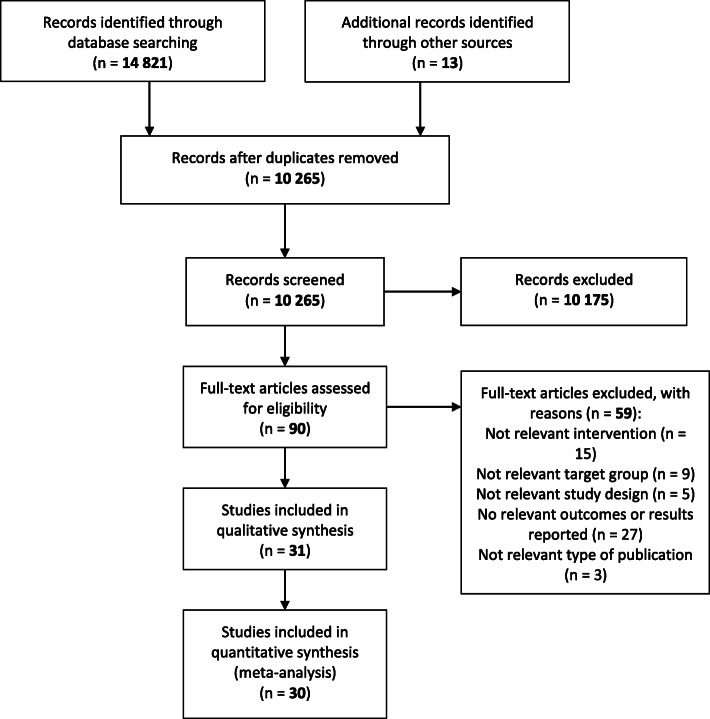
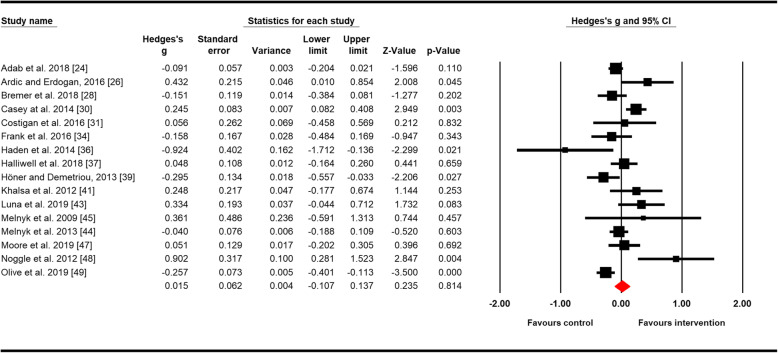
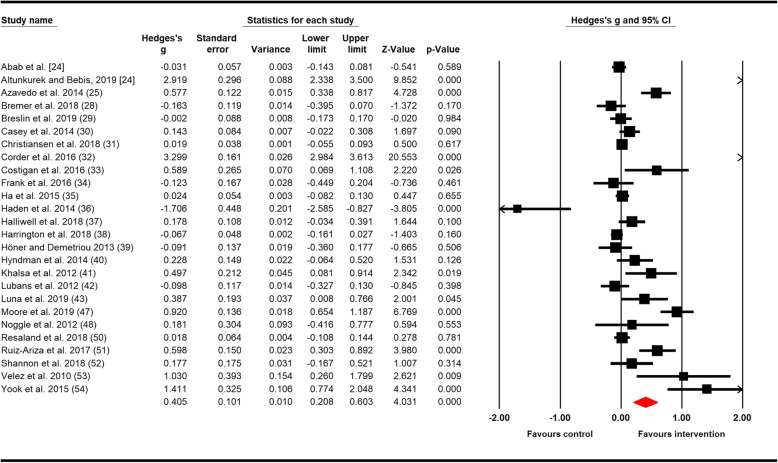
Background: Low levels of physical activity, sedentary behaviour and mental health problems are issues that have received considerable attention in the last decade. The aim of this systematic review and meta-analysis was to investigate effects of interventions targeting school-related physical activity or sedentary behaviour on mental health in children and adolescents and to identify the features of effective interventions. Methods: Scientific articles published between January 2009 and October 2019 fulfilling the following criteria were included: general populations of children and adolescents between age 4 and 19, all types of school-related efforts to promote physical activity or reduce sedentary behaviour. Study selection, data extraction and quality assessment were done by at least two authors independently of each other. Data were analysed with a random effects meta-analysis and by narrative moderator analyses. Results: The literature search resulted in 10265 unique articles. Thirty-one articles, describing 30 interventions, were finally included. Eleven relevant outcomes were identified: health-related quality of life, well-being, self-esteem and self-worth, resilience, positive effect, positive mental health, anxiety, depression, emotional problems, negative effect and internalising mental health problems. There was a significant beneficial effect of school-related physical activity interventions on resilience (Hedges’ g = 0.748, 95% CI = 0.326; 1.170, p = 0.001), positive mental health (Hedges’ g = 0.405, 95% CI = 0.208; 0.603, p = < 0.001), well-being (Hedges’ g = 0.877, 95% CI = 0.356; 1.398, p = < 0.001) and anxiety (Hedges’ g = 0.347, 95% CI = 0.072; 0.623, p = 0.013). Heterogeneity was moderate to high ( I 2 = 59–98%) between studies for all outcomes except positive effect, where heterogeneity was low ( I 2 = 2%). The narrative moderator analyses of outcomes based on 10 or more studies showed that age of the children moderated the effect of the intervention on internalising mental health problems. Interventions in younger children showed a significantly negative or no effect on internalising mental health problems while those in older children showed a significant positive or no effect. Moreover, studies with a high implementation reach showed a significant negative or no effect while those with a low level of implementation showed no or a positive effect. No signs of effect moderation were found for self-esteem, well-being or positive mental health. Risk of publication bias was evident for several outcomes, but adjustment did not change the results. Conclusions: School-related physical activity interventions may reduce anxiety, increase resilience, improve well-being and increase positive mental health in children and adolescents. Considering the positive effects of physical activity on health in general, these findings may reinforce school-based initiatives to increase physical activity. However, the studies show considerable heterogeneity. The results should therefore be interpreted with caution. Future studies should report on implementation factors and more clearly describe the activities of the control group and whether the activity is added to or replacing ordinary physical education lessons in order to aid interpretation of results. Trial registration: PROSPERO, CRD42018086757 .
Overview
The claims and statistics of this paper haven’t been checked yet.
Free: it reads the open-access text and checks the first 5 claims that cite a source we can check. Create a free account to check every claim.
Integrity signals
Registry
Cites
Statistics
Figures
Verification
Claims the paper makes
The claims and statistics of this paper haven’t been checked yet.
Free: it reads the open-access text and checks the first 5 claims that cite a source we can check. Create a free account to check every claim.
Claims other papers make about this one
Each is checked against this paper’s own text: does it say what the citing paper says it does?
The cited source says what the claim attributes to it.
In the citing paper
“Overlapping concepts and components found in mental health interventions conducted before the pandemic included: physical activity [57, 58], yoga [20], art [59, 60], psychoeducation, psychological counseling, and psychotherapeutic approaches (e.g. CBT) [20], which were also found in the included studies in our review focusing on the COVID-19 pandemic.”
Self-check
Percentages, sums and reported differences re-computed from the paper’s own numbers.
The self-check needs the paper’s full text.
Citations
Cites
Preferred Reporting Items for Systematic Reviews and Meta-Analyses: the PRISMA statement
Moher, D., Liberati, A., Tetzlaff, J., Altman, D. G., & for the PRISMA Group (2009) · BMJ · doi:10.1136/bmj.b2535 · Cited by 83,823
Preferred Reporting Items for Systematic Reviews and Meta-Analyses: The PRISMA Statement
Moher, D., Liberati, A., Tetzlaff, J., Altman, D. G., & The PRISMA Group (2009) · PLoS Medicine · doi:10.1371/journal.pmed.1000097 · Cited by 64,042 · cited 1×
“The aims of the systematic review were as follows: 1) To study the impact of school-related physical activity interventions or interventions to reduce sedentary behaviour on symptoms of mental health in terms of internalising mental health problems and positive mental health in children aged 4–19 years 2) To investiga…”
Measuring inconsistency in meta-analyses
Higgins, J. P. T., Thompson, S. G., Deeks, J. J., & Altman, D. G. (2003) · BMJ · doi:10.1136/bmj.327.7414.557 · Cited by 63,139
Preferred reporting items for systematic reviews and meta-analyses: the PRISMA Statement.
(2009) · PubMed Central · Cited by 44,859
Kessler, R. C., Berglund, P., Demler, O., Jin, R., Merikangas, K. R., & Walters, E. E. (2005) · Archives of General Psychiatry · doi:10.1001/archpsyc.62.6.593 · Cited by 20,391 · cited 1×
“Considering that the average age of onset for anxiety disorders is 11 years [60] and 11–13 years for depressive disorders [61], prevention effectiveness may vary depending on not only the type of intervention, but also the age or developmental stage of the child [7].”
BackgroundWang, G., Ma, R., Qiao, G., Wada, K., Aizawa, Y., & Satoh, T. (2015) · Integrative Medicine International · doi:10.1159/000368408 · Cited by 18,657
Borenstein, M., Hedges, L. V., Higgins, J. P. T., & Rothstein, H. R. (2009) · doi:10.1002/9780470743386 · Cited by 14,225
Borenstein, M., Hedges, L. V., Higgins, J. P. T., & Rothstein, H. R. (2021) · doi:10.1002/9781119558378 · Cited by 9,799
The Construct of Resilience: A Critical Evaluation and Guidelines for Future Work
Luthar, S. S., Cicchetti, D., & Becker, B. (2000) · Child Development · doi:10.1111/1467-8624.00164 · Cited by 9,381 · cited 1×
“adaptation within the context of significant adversity [65].”
BackgroundGlobal physical activity levels: surveillance progress, pitfalls, and prospects
Hallal, P. C., Andersen, L. B., Bull, F. C., Guthold, R., Haskell, W., & Ekelund, U. (2012) · The Lancet · doi:10.1016/s0140-6736(12)60646-1 · Cited by 5,711
Research works printed but not linked: 2
- World Health Organization. Global recommendations on physical activity for health; 5–17 years old. Geneva; 2010. 26180873
- Quality Assessment Tool For Quantitative Studies Effective Public Health Practice Project 1998
Cited by
Carter, T., Pascoe, M., Bastounis, A., Morres, I. D., Callaghan, P., & Parker, A. G. (2021) · Journal of Affective Disorders · doi:10.1016/j.jad.2021.02.026 · Cited by 190
Tandon, P. S., Zhou, C., Johnson, A. M., Gonzalez, E. S., & Kroshus, E. (2021) · JAMA Network Open · doi:10.1001/jamanetworkopen.2021.27892 · Cited by 185
Fu, Q., Li, L., Li, Q., & Wang, J. (2025) · BMC Public Health · doi:10.1186/s12889-025-22690-8 · Cited by 177
“Numerous meta-analyses and systematic reviews have highlighted the mental health benefits of physical activity, including reductions in anxiety [17, 18], depression [19–21], and stress [22, 23], as well as improvements in self-esteem [6, 24, 25] and overall mental health [7, 26, 27].”
Klizienė, I., Čižauskas, G., Sipavičienė, S., Aleksandravičienė, R., & Zaičenkovienė, K. (2021) · International Journal of Environmental Research and Public Health · doi:10.3390/ijerph18147536 · Cited by 177
Physical activity, exercise, and mental health of healthy adolescents: A review of the last 5 years
Ruiz-Ranz, E., & Asín‐Izquierdo, I. (2024) · Sports Medicine and Health Science · doi:10.1016/j.smhs.2024.10.003 · Cited by 103
“This review updates previous reviews 35 – 40 and provides additional insights into the psychological bene fi ts of these interventions.”
Liu, C., Liang, X., & Sit, C. H. P. (2024) · JAMA Pediatrics · doi:10.1001/jamapediatrics.2023.6251 · Cited by 88
Kim, S., Hwang, J., Lee, J. H., Park, J., Kim, H. J., Son, Y., Oh, H. Y., Smith, L., Kang, J., Fond, G. B., et al. (2024) · World Journal of Pediatrics · doi:10.1007/s12519-024-00837-8 · Cited by 90
“Therefore, it is necessary to establish programs that encourage students to engage in various physical activities, yoga, artistic pursuits, and other extracurricular activities at home [84, 85].”
Dastamooz, S., Bahmani, D. S., Farahani, M. H. D., Wong, S. H., Yam, J. C. S., Tham, C. C. Y., & Sit, C. H. P. (2023) · EClinicalMedicine · doi:10.1016/j.eclinm.2023.102137 · Cited by 90
Pinto‐Escalona, T., Gobbi, E., Valenzuela, P. L., Bennett, S. J., Aschieri, P., Martín‐Loeches, M., Paoli, A., & Martínez‐de‐Quel, Ó. (2021) · Journal of sport and health science/Journal of Sport and Health Science · doi:10.1016/j.jshs.2021.10.006 · Cited by 84
Ramires, V. V., dos Santos, P. C., Filho, V. C. B., Bandeira, A. D. S., Tenório, M. C. M., de Camargo, É. M., Ravagnani, F. C. D. P., Sandreschi, P. F., de Oliveira, V. J. M., Hallal, P. C., et al. (2023) · Journal of Physical Activity and Health · doi:10.1123/jpah.2022-0395 · Cited by 93
Singh, B., Bennett, H., Miatke, A., Dumuid, D., Curtis, R., Ferguson, T., Brinsley, J., Szeto, K., Eglitis, E., Zhou, M., et al. (2025) · Journal of the American Academy of Child & Adolescent Psychiatry · doi:10.1016/j.jaac.2025.04.007 · Cited by 78
Troy, D. M., Anderson, J., Jessiman, P., Albers, P. N., Williams, J. G., Sheard, S., Geijer‐Simpson, E., Spencer, L. P., Kaner, E., Limmer, M., et al. (2022) · BMC Public Health · doi:10.1186/s12889-022-12894-7 · Cited by 74
Ou, K.-L., Wong, M. Y. C., Chung, P., & Chui, K. Y. K. (2022) · International Journal of Environmental Research and Public Health · doi:10.3390/ijerph19106181 · Cited by 67
Social media use and adolescents’ well-being: A note on flourishing
Marciano, L., & Viswanath, K. (2023) · Frontiers in Psychology · doi:10.3389/fpsyg.2023.1092109 · Cited by 66
Li, B., Ng, K., Tong, X., Zhou, X., Ye, J., & Yu, J. J. (2023) · Child and Adolescent Psychiatry and Mental Health · doi:10.1186/s13034-023-00629-4 · Cited by 69
“To assess studies involving RCTs, we used the Effective Public Health Practice Project (EPHPP) Quality Assessment Tool [18], which included six quality components: selection bias, design, confounders, blinding, data collection, withdrawal and dropout.”
MethodWang, K., Li, Y., Liu, H., Zhang, T., & Luo, J. (2024) · Frontiers in Public Health · doi:10.3389/fpubh.2024.1412389 · Cited by 72
Physical activity interventions for the mental health of children: A systematic review
Hale, G. E., Colquhoun, L., Lancastle, D., Lewis, N., & Tyson, P. J. (2022) · Child Care Health and Development · doi:10.1111/cch.13048 · Cited by 63
Fairclough, S. J., Tyler, R., Dainty, J. R., Dumuid, D., Richardson, C., Shepstone, L., & Atkin, A. J. (2021) · Journal of Sports Sciences · doi:10.1080/02640414.2021.1890351 · Cited by 59
“Moreover, physical activity interventions in school settings have signi cant moderate to strong bene cial effects on resilience, positive mental health, anxiety, and wellbeing (23).”
BackgroundPurgato, M., Cadorin, C., Prina, E., Ferreira, M. C., Piccolo, L. D., Gerber, M., Jordans, M. J. D., Ostuzzi, G., Richards, J. A., Rudi, D., et al. (2023) · Journal of the American Academy of Child & Adolescent Psychiatry · doi:10.1016/j.jaac.2023.04.017 · Cited by 50
Marchi, J., Johansson, N., Sarkadi, A., & Warner, G. (2021) · Frontiers in Psychiatry · doi:10.3389/fpsyt.2021.711791 · Cited by 54
The health and educational impact of removing financial constraints for school sport
Sulz, L., Gleddie, D., Kinsella, C., & Humbert, M. L. (2022) · European Physical Education Review · doi:10.1177/1356336x221104909 · Cited by 51
“A recent systematic review and meta-analysis (Andermo et al., 2020) examined effects of interventions targeting school-related physical activity on mental health in children and adolescents.”
BackgroundBermejo‐Cantarero, A., Sánchez‐López, M., Álvarez‐Bueno, C., Redondo‐Tébar, A., García‐Hermoso, A., & Martínez‐Vizcaíno, V. (2023) · Sports Health A Multidisciplinary Approach · doi:10.1177/19417381231190885 · Cited by 47
“3,26 In contrast, other authors found that school-based interventions had no significant effects on HRQoL or reported unclear results.”
InfluentialChen, S.-S., He, Y., Xie, G.-D., Chen, L.-R., Zhang, T., Yuan, M., Li, Y., Chang, J.-J., & Su, P. (2021) · Preventive Medicine · doi:10.1016/j.ypmed.2021.106902 · Cited by 46
Dreiskämper, D., Tietjens, M., & Schott, N. (2022) · Psychology of sport and exercise · doi:10.1016/j.psychsport.2022.102187 · Cited by 47
Noetel, M., Parker, P. D., Dicke, T., Beauchamp, M. R., Ntoumanis, N., Hulteen, R. M., Diezmann, C. M., Yeung, A. S., Ahmadi, A., Vasconcellos, D., et al. (2023) · Educational Psychology Review · doi:10.1007/s10648-023-09786-6 · Cited by 44
“, 2021), mental health (Andermo et al., 2020), and physical health indicators (Hartwig et al.”
BackgroundJulian, V., Haschke, F., Fearnbach, N., Gomahr, J., Pixner, T., Furthner, D., Weghuber, D., & Thivel, D. (2022) · Current Obesity Reports · doi:10.1007/s13679-021-00467-5 · Cited by 41
Dzhambov, A. M., Lercher, P., Vincens, N., Waye, K. P., Klatte, M., Leist, L., Lachmann, T., Schreckenberg, D., Belke, C., Ристовска, Г., et al. (2023) · Environmental Research · doi:10.1016/j.envres.2023.116452 · Cited by 41
Pang, J. C. Y., Chan, E. L. S., Lau, H. M.-C., Reeves, K. K. L., Chung, T. H. Y., Hui, H. W. L., Leung, A. H. L., & Fu, A. C. L. (2023) · Frontiers in Pediatrics · doi:10.3389/fped.2023.1015943 · Cited by 36
Frömel, K., Groffik, D., Šafář, M., & Mitáš, J. (2022) · BioMed Research International · doi:10.1155/2022/6305204 · Cited by 38
“Various studies suggest that a high degree of heterogeneity [16] and evidence is often limited [17].”
Wasserman, D., Arango, C., Fiorillo, A., Levin, S. M., Peters, A., Rao, P. G., Sanchez, T., & Sylla, A. (2023) · World Psychiatry · doi:10.1002/wps.21146 · Cited by 35
Beyond “Brain Breaks”: A New Model for Integrating Classroom-Based Active Breaks
Lander, N., Ayala, A. M. C., Mazzoli, E., Lai, S. K., Orr, J., & Salmon, J. (2024) · Journal of Physical Education Recreation & Dance · doi:10.1080/07303084.2024.2308253 · Cited by 40
“In addition, physical activity has a positive effect on the mental health of children and adolescents by reducing levels of anxiety and depression; increasing resilience, self-esteem, and self-confidence; and improving mood and well-being (Andermo et al., 2020; S. J. H. Biddle et al., 2019).”
Sheng, X., Liang, K., Li, K., Chi, X., & Fan, H. (2024) · Frontiers in Psychology · doi:10.3389/fpsyg.2024.1365310 · Cited by 37
Habyarimana, J. D. D., Tugirumukiza, E., Sun, H., Pathirana, A., & Zhou, K. (2025) · Frontiers in Public Health · doi:10.3389/fpubh.2025.1636891 · Cited by 37
Gao, Y., Yu, Q., Schuch, F. B., Herold, F., Hossain, M. M., Ludyga, S., Gerber, M., Mullen, S. P., Yeung, A., Kramer, A. F., et al. (2024) · Journal of Affective Disorders · doi:10.1016/j.jad.2024.01.017 · Cited by 36
Zaki, M. A., Umar, U., Yenes, R., Rasyid, W., Ockta, Y., & Budiwanto, A. (2023) · Jurnal Penelitian Pendidikan IPA · doi:10.29303/jppipa.v9ispecialissue.7811 · Cited by 33
“Doing regular physical activity is very important for teenagers because it can help improve their physical and mental health significantly (Andermo et al., 2020; Okuyama et al., 2021).”
BackgroundBreslin, G., Hillyard, M., Brick, N., Shannon, S., McKay-Redmond, B., & McConnell, B. (2023) · PLoS ONE · doi:10.1371/journal.pone.0277375 · Cited by 37
Solmaz, S., İnan, M., & Şahin, M. Y. (2025) · Frontiers in Public Health · doi:10.3389/fpubh.2025.1544044 · Cited by 34
Liu, C., Yang, Y., Wong, S. H., Leung, A., & Sit, C. H. P. (2025) · International Journal of Behavioral Nutrition and Physical Activity · doi:10.1186/s12966-025-01745-4 · Cited by 37
School Medical Service: Strategies to Promote Psycho-Physiological Well-Being
Tafuri, F., & Latino, F. (2024) · Pediatric Reports · doi:10.3390/pediatric16010019 · Cited by 37
Chen, S., Guo, T., Yu, Q., Stubbs, B., Clark, C. C. T., Zhang, Z., Zhu, M., Hossain, M. M., Yeung, A., Griffiths, M. D., et al. (2020) · International Journal of Clinical and Health Psychology · doi:10.1016/j.ijchp.2020.11.001 · Cited by 34
Self-citationAbdul, S., Adeghe, E. P., Adegoke, B. O., Adegoke, A. A., & Udedeh, E. H. (2024) · World Journal of Biology Pharmacy and Health Sciences · doi:10.30574/wjbphs.2024.18.2.0298 · Cited by 73
“Healthy school environments support physical activity, nutritious eating habits, and positive mental health (Andermo et al ., 2020).”
BackgroundTrauma-Informed Practice in Physical Activity Programs for Young People: A Systematic Review
Berger, E., O’Donohue, K., Jeanes, R., & Alfrey, L. (2023) · Trauma Violence & Abuse · doi:10.1177/15248380231218293 · Cited by 32
“Research and systematic reviews have explored the impacts and benefits of sports and physical activity on the mental health of children and adolescents (Andermo et al., 2020; Eime et al., 2013), however there is less research on the impacts of physical activity for trauma-exposed young people.”
BackgroundExercise intervention and improvement of negative emotions in children: a meta-analysis
Li, J., Jiang, X., Huang, Z., & Shao, T. (2023) · BMC Pediatrics · doi:10.1186/s12887-023-04247-z · Cited by 35
Ahmed, K. R., Horwood, S., Kolbe-Alexander, T. L., & Khan, A. (2023) · Journal of Physical Activity and Health · doi:10.1123/jpah.2023-0062 · Cited by 32
Henning, L., Dreiskämper, D., & Tietjens, M. (2021) · Psychology of sport and exercise · doi:10.1016/j.psychsport.2021.102055 · Cited by 30
Ganjeh, P., Hagmayer, Y., Meyer, T., Kuhnert, R., Ravens‐Sieberer, U., von Steinbüchel, N., Rothenberger, A., & Becker, A. (2022) · Frontiers in Behavioral Neuroscience · doi:10.3389/fnbeh.2022.933139 · Cited by 29
“Reviews and meta-analyses typically face some limitations, such as a small number of studies (Biddle et al., 2019; Schuch et al., 2019; Andermo et al., 2020; Lambez et al., 2020; Carter et al., 2021; Liang et al., 2021), differences in methodologies (Lambez et al.”
BackgroundÖstenberg, A. H., Enberg, A., Pojskić, H., Gilić, B., Sekulić, D., & Alricsson, M. (2022) · International Journal of Environmental Research and Public Health · doi:10.3390/ijerph191912841 · Cited by 32
“Furthermore, PA positively contributed to improved self-esteem and self-confidence [20], reduced anxiety, and increased well-being [21,22], while sedentary behavior and insufficient PA were inversely associated with mental health in young people [20,22,23].”
BackgroundWoodforde, J., Alsop, T., Salmon, J., Gomersall, S. R., & Stylianou, M. (2021) · British Journal of Sports Medicine · doi:10.1136/bjsports-2021-104470 · Cited by 30
Using physical education lessons to develop the autonomy of primary school children
Ospankulov, Y. E., Nurgaliyeva, S., Kunai, S., Baigaliev, A. M., & Kaldyhanovna, K. R. (2022) · Cypriot Journal of Educational Sciences · doi:10.18844/cjes.v17i2.6856 · Cited by 27
Pinto‐Escalona, T., Gobbi, E., Valenzuela, P. L., Bennett, S. J., Aschieri, P., Martín‐Loeches, M., Paoli, A., & Martínez‐de‐Quel, Ó. (2021) · Journal of sport and health science/Journal of Sport and Health Science · doi:10.1016/j.jshs.2021.06.005 · Cited by 27
RetractedHou, J., Deng, Q., Sha, L., Zhu, J., Xiang, R., Zhao, X., Xiao, C., Qin, C., Qu, Y., Han, T., et al. (2024) · Journal of Affective Disorders · doi:10.1016/j.jad.2024.11.065 · Cited by 33
Jacobs, J., Strugnell, C., Allender, S. E., Orellana, L., Backholer, K., Bolton, K. A., Fraser, P., Le, H., Brown, A. D., & Nichols, M. S. (2021) · BMC Public Health · doi:10.1186/s12889-021-12150-4 · Cited by 27
“A meta-analysis including 11 school-level intervention studies focussing on the impact of PA interventions found no overall change in HRQoL outcomes [50], however, these were also not presented according to SEP measures.”
MethodImmekus, J. C., Jeong, T. S., & Yoo, J. E. (2022) · Large-scale Assessments in Education · doi:10.1186/s40536-022-00150-8 · Cited by 27
“This aligns with Andermo et al.’s (2020) meta-analysis of the positive effects of school-related physical activity interventions on children’s mental health.”
Tafuri, F., Martínez-Roig, R., Susanto, N., Setyawan, H., & Latino, F. (2024) · Retos · doi:10.47197/retos.v58.106154 · Cited by 29
“Consequently, children advance their cognitive, social, and motor skills through body movements (Andermo et al., 2020).”
BackgroundLevante, A., Quarta, S., Massaro, M., Calabriso, N., Carluccio, M. A., Damiano, F., Pollice, F., Siculella, L., & Lecciso, F. (2024) · Heliyon · doi:10.1016/j.heliyon.2024.e26626 · Cited by 30
“At a physical level, physical activity habits improve cardiorespiratory functions and body composition [55 – 58], prevent diseases such as diabetes, osteoporosis, and stroke [44], reduce stress hormones [59], and are associated with high adherence to the Mediterranean diet [60].”
BackgroundA Systematic Review Exploring the Effectiveness of Body Image Interventions Among Boys
Ahuja, L., Schneider, J., Budhraja, M., Diedrichs, P. C., & Williamson, H. (2024) · Adolescent Research Review · doi:10.1007/s40894-024-00246-y · Cited by 25
“Some reviews have focused on the effectiveness of specific therapeutic approaches to mitigate body dissatisfaction, such as media literacy and physical activity interventions (Andermo et al., 2020; Kurz et al., 2022).”
Liang, X., Xu, R. H., Zhao, M., Qu, L., & Shum, D. (2024) · Psychology Health & Medicine · doi:10.1080/13548506.2024.2407449 · Cited by 23
“Consistent with a recent meta-analysis, the effect of school-based physical activity intervention was beneficial for resilience ( n = 4, g = .748) in typically developing children (Andermo et al., 2020).”
The relation between lifestyles and positive mental health in Portuguese higher education students
VALENTİM, O. M. M. D. S., Vilelas, J., Carvalho, J. C., Andrade, C. M. D. S. M., Tomás, C. C., Costa, P., & Sequeira, C. (2022) · Global Health Promotion · doi:10.1177/17579759221112552 · Cited by 23
“Our results do not corroborate the findings of another study, which concluded that the older the students, the less capacity they had to perceive emotional support and the more difficult it was to find and maintain affective relationships (20,21).”
ResultXiang, C., Zhao, J., Kamalden, T. F. T., Dong, W., Luo, H., & Ismail, N. (2023) · Humanities and Social Sciences Communications · doi:10.1057/s41599-023-02466-4 · Cited by 26
Sortwell, A., O’Brien, K. M., Murphy, A. J., Ramírez‐Campillo, R., Piggott, B., Hine, G., & Newton, M. J. (2023) · Biology of Sport · doi:10.5114/biolsport.2024.132991 · Cited by 24
“Therefore, the deliv - ery of plyometric-based structured game active breaks rather than only free-play breaks may be a more effective strategy to facilitate inclusion and build student self-confidence [38].”
BackgroundBrinsley, J., Schmidt, M., Curtis, R., Simpson, C. E. M., Edwards, J. K., Eglitis, E., Gosse, G., Broad, M., Jardine, B., Taddeo, E., et al. (2025) · Scientific Reports · doi:10.1038/s41598-025-01053-8 · Cited by 24
“…on physical activity, found that school-based interventions positively impacted mental health outcomes such as anxiety, resilience, and wellbeing 44 , our review, which predominantly included physical activity interventions (5/7 included studies) reveals more nuanced results when health…”
Zhou, S., Chen, J., Han, L., Ye, Y., Xiao, Y., Ouyang, N., Pan, S., Feng, S., Xie, M., & Li, B. (2022) · Frontiers in Psychiatry · doi:10.3389/fpsyt.2022.840945 · Cited by 41
Sales, D. R. L., da Silva, J. P., Bergamo, R. R., de Oliveira, L. C., Ferrari, G., & Matsudo, V. K. R. (2023) · Scientific Reports · doi:10.1038/s41598-023-33732-9 · Cited by 25
Exercise, grit, and life satisfaction among Korean adolescents: a latent growth modeling analysis
Bae, M.-H., Zhang, X., & Lee, J.-S. (2024) · BMC Public Health · doi:10.1186/s12889-024-18899-8 · Cited by 21
Jacinto, M., Frontini, R., Matos, R. M. N., & Antunes, R. (2021) · Healthcare · doi:10.3390/healthcare9081047 · Cited by 21
Sánchez-García, C., Morales‐Sánchez, V., Reigal, R. E., & Hernández-Mendo, A. (2024) · Cuadernos de Psicología del Deporte · doi:10.6018/cpd.623711 · Cited by 25
AKTIVITAS FISIK : APAKAH MEMBERIKAN DAMPAK BAGI KEBUGARAN JASMANI DAN KESEHATAN MENTAL?
Chaeroni, A., Kusmaedi, N., Ma’mun, A., & Budiana, D. (2021) · Sporta Saintika · doi:10.24036/sporta.v6i1.163 · Cited by 70
Wendel, F., Bender, S., Breitinger, E., Coenen, M., Hummel, J., Immich, G., Kirschneck, M., Klünder, V., Kunzler, A. M., Lieb, K., et al. (2024) · European Child & Adolescent Psychiatry · doi:10.1007/s00787-023-02280-y · Cited by 19
Robles, A., Zapata‐Lamana, R., Gutierrez, M. A., Cigarroa, I., Nazar, G., Salas-Bravo, C., Sánchez‐López, M., & Reyes‐Molina, D. (2023) · Retos · doi:10.47197/retos.v48.96211 · Cited by 22
Oh, W., & Heo, Y. (2024) · Journal of Pediatric Health Care · doi:10.1016/j.pedhc.2023.12.011 · Cited by 19
Hennessey, A., MacQuarrie, S., & Petersen, K. J. (2024) · BMC Psychology · doi:10.1186/s40359-024-02196-5 · Cited by 20
Viskari, T., Koivumäki, T., Appelqvist‐Schmidlechner, K., Ståhl, T., Ruiz‐Ariza, A., & Fröjd, S. A. (2025) · Scandinavian Journal of Medicine and Science in Sports · doi:10.1111/sms.70150 · Cited by 18
“Andermo et al. [15] found a positive effect on anxiety, but no effect on internalizing symptoms in general.”
InfluentialFillon, A., Pereira, B., Vanhelst, J., Baran, J., Masurier, J., Guirado, T., Boirie, Y., Duclos, M., Julian, V., & Thivel, D. (2022) · International Journal of Environmental Research and Public Health · doi:10.3390/ijerph192113782 · Cited by 20
Watson‐Mackie, K., Arundell, L., Lander, N., McKay, F. H., Jerebine, A., Venetsanou, F., & Barnett, L. M. (2024) · Journal of Medical Internet Research · doi:10.2196/52302 · Cited by 19
“Meeting the WHO PA guidelines helps individuals maintain a healthy weight, reduces the risk of developing noncommunicable diseases such as type 2 diabetes and obesity [1,2,4], and may improve mental well-being and increase academic performance [5,6].”
Farmer, E., Papadopoulos, N. V., Emonson, C., Fuelscher, I. T., Pesce, C., McGillivray, J., Hyde, C. E., OLIVE, L. S., & Rinehart, N. (2020) · International Journal of Environmental Research and Public Health · doi:10.3390/ijerph17155584 · Cited by 21
Fanxing, K., Gao, Y., Herold, F., Hossain, M. M., Yeung, A., Ng, J. L., Kramer, A. F., & Zou, L. (2023) · Complementary Therapies in Clinical Practice · doi:10.1016/j.ctcp.2023.101806 · Cited by 20
Yao, Y., Du, J., Wang, D., Li, N., Tao, Z., Wu, D., Peng, F., Shi, J., Zhou, W., Zhao, T., et al. (2024) · Brain Behavior and Immunity · doi:10.1016/j.bbi.2024.06.006 · Cited by 19
Henning, L., Dreiskämper, D., Pauly, H., Filz, S., & Tietjens, M. (2022) · Journal of Sport and Exercise Psychology · doi:10.1123/jsep.2021-0270 · Cited by 17
Zakaria, S., Sasagawa, S., & Essau, C. A. (2021) · Addictive Behaviors Reports · doi:10.1016/j.abrep.2021.100381 · Cited by 16
Rakaa, O. B., Bassiri, M., & Lotfi, S. (2025) · Physical Education Theory and Methodology · doi:10.17309/tmfv.2025.1.16 · Cited by 16
“Furthermore, recent research has demonstrated the long-term advantages of structured physical activity programmes, which not only enhance physical health but also foster psychological resilience and improve academic performance (Andermo et al., 2020).”
MARTÍNEZ-SÁNCHEZ, S. M., Martínez-García, C., Martínez-García, T. E., & Munguía‐Izquierdo, D. (2020) · Frontiers in Psychiatry · doi:10.3389/fpsyt.2020.503274 · Cited by 17
Andermo, S., Lidin, M., Hellénius, M.-L., Nordenfelt, A., & Nyberg, G. (2020) · BMC Public Health · doi:10.1186/s12889-020-10002-1 · Cited by 16
Self-citationHow the Built Environment Moderates Gender Gap in Active Commuting to Schools
Javadpoor, M., Soltani, A., Fatehnia, L., & Soltani, N. (2023) · International Journal of Environmental Research and Public Health · doi:10.3390/ijerph20021131 · Cited by 16
“AST promotion has been proven in studies to enhance children’s physical health [7], mental health [7], anxiety relief [8], increase positive emotions such as happiness, excitement, or relaxation [7,9], reduce obesity [7,10], and prevention of diabetes [10].”
BackgroundSmith, A. W. (2020) · European Physical Education Review · doi:10.1177/1356336x20947554 · Cited by 16
“School-related physical activity interventions may have small beneficial effects on mental health (Andermo et al., 2020), but we currently know comparatively little about the direct and indirect (as part of school-wide physical activity or sport interventions) contribution participation in PE makes…”
BackgroundMarson, F., Fano, A. D., PELLEGRINO, M. A., Pesce, C., Glicksohn, J., & Ben‐Soussan, T. D. (2021) · Children · doi:10.3390/children8070583 · Cited by 19
“In fact, two recent meta-analyses showed how such schoolbased physical activity (PA) interventions may have positive effects on various physical and non-physical domains, such as quality of life, self-efficacy, well-being, prosocial behaviors and enjoyment [6], reduced psychiatric symptoms, and enhanced resilience [7].”
BackgroundEvaluating the impact of rock climbing on mental health and emotional well-being in adolescents
Gürer, H., Akçınar, F., Arslan, S. C., AKÇINAR, S., Güllü, M., Eken, Ö., Kurtoğlu, A., Ilkım, M., Alotaibi, M. H., & Elkholi, S. M. A. (2024) · Frontiers in Psychology · doi:10.3389/fpsyg.2024.1426654 · Cited by 19
The effect of physical activities and self-esteem on school performance: A probabilistic analysis
Cerda, A. A., García, L. Y., & Cerda, A. J. (2021) · Cogent Education · doi:10.1080/2331186x.2021.1936370 · Cited by 17
Öztürk, N., & Ünver, F. (2022) · Journal of Bodywork and Movement Therapies · doi:10.1016/j.jbmt.2022.03.009 · Cited by 15
Kalata, C., Liener, S. R., Ma, I., Ostroff, R., Jandali, D. B., Berkey, D. S., & Chen, W. (2025) · American Journal of Health Education · doi:10.1080/19325037.2025.2536774 · Cited by 15
“Furthermore, a systematic review highlighted that school-related PA interventions could reduce anxiety and increase resilience in children and adolescents (Andermo et al., 2020).”
Arpacı, T., & Altay, N. (2024) · European Journal of Oncology Nursing · doi:10.1016/j.ejon.2024.102541 · Cited by 15
Liu, C., Liang, X., Yang, Y., Liu, R., Arbour‐Nicitopoulos, K. P., & Sit, C. H. P. (2024) · American Journal of Preventive Medicine · doi:10.1016/j.amepre.2024.05.022 · Cited by 15
O’Dea, B., KING, C. A., Achilles, M. R., Calear, A. L., & Subotic-Kerry, M. (2021) · Health Services Insights · doi:10.1177/11786329211017689 · Cited by 15
Greeven, S. J., Medellin, A. M., Watkins, J. M., Coble, C. J., Brunnemer, J. E., Solá, P. A. F., Dutta, S., Hobson, J. M., Evanovich, J. M., Kercher, V. M. M., et al. (2023) · Frontiers in Public Health · doi:10.3389/fpubh.2023.1290567 · Cited by 15
Feng, J., Huang, Y., Chen, Z., Jiao, J., Khan, A., Nisar, M., & Wong, S. H.-S. (2024) · Sports Medicine · doi:10.1007/s40279-024-02113-1 · Cited by 15
“Previous systematic reviews have also observed the favourable effectiveness of school-based interventions on physical activity levels [134], physical activity enjoyment [135] and both physical and mental health [136–138].”
Li, J.-M., Herold, F., Chen, Y.-X., Zhang, Z.-H., Werneck, A., Ji, T., Lowe, C. J., Tari, B., Hallgren, M., Stubbs, B., et al. (2025) · Applied Psychology: Health and Well-Being · doi:10.1111/aphw.70071 · Cited by 18
Self-citationGlaser, M., Green, G., Zigdon, A., Barak, S., Joseph, G., Marques, A., Ng, K., Erez-Shidlov, I., Ofri, L., & Tesler, R. (2022) · Children · doi:10.3390/children9111704 · Cited by 14
Jarnig, G., Kerbl, R., Jaunig, J., & van Poppel, M. N. M. (2023) · Journal of Sports Sciences · doi:10.1080/02640414.2023.2259210 · Cited by 13
“For school-aged children, the main focus is to implement interventions at school (Adamowitsch et al., 2017; Andermo et al., 2020; Brustio et al., 2019; Chesham et al., 2019; Hoelscher et al., 2001; McKay et al., 2015; Parrish et al., 2013), and a daily PA programme is a frequently applied measure…”
BackgroundExploring factors associated with student wellbeing in the United Arab Emirates: PISA 2018
Marquez, J., Lambert, L., & Khanna, D. (2024) · Journal of Research in International Education · doi:10.1177/14752409241243011 · Cited by 12
“Initiatives could include delaying school day start times (Dunster et al, 2018), instituting periods of physical activity (Andermo et al, 2020) and offering healthy food options during school (Esteban-Gonzalo et al, 2019).”
BackgroundThe Feeling of Pleasure for Overweight Children during Different Types of Physical Activity
Hawani, A., Chikha, A. B., Souissi, M. A., Trabelsi, O., Mrayah, M., Souissi, N., Marsigliante, S., & Muscella, A. (2023) · Children · doi:10.3390/children10091526 · Cited by 12
“Indeed, school-based physical activity interventions can reduce anxiousness, increase resilience, and enhance good mental health and well-being in children and teenagers [16].”
Metadata
- Authors
- Andermo, S., Hallgren, M., Nguyen, T.-T.-D., Jonsson, S., Petersen, S., Friberg, M., Romqvist, A., Stubbs, B., & Elinder, L. S.
- Affiliations
- Karolinska Institutet (SE)
- Region Stockholm (SE)
- Public Health Agency of Sweden (SE)
- National Health Service (GB)
- Corresponding author
- Andermo, Susanne
- Venue
- Sports Medicine - Open
- Published
- 2020-06-16
- Volume
- 6
- Issue
- 1
- Pages
- 25-25
- ISSN
- 2198-9761 (ISSN-L)
- 2199-1170
- PMC
- PMC7297899
- OpenAlex
- W3035372294
- Cited by
- 336
- References
- 70
- Citations by year
- 2026: 58 · 2025: 82 · 2024: 77 · 2023: 50 · 2022: 40 · 2021: 22 · 2020: 7
- FWCI
- 3.79
- Type
- journal article
- Language
- en
- Open access
- gold
- doi.org
- Licence
- cc-by
- creativecommons.org/licenses/by/4.0 (tdm)
- creativecommons.org/licenses/by/4.0 (vor)
- Locations
- Sports Medicine - Open (publishedVersion, cc-by)
- PubMed Central (publishedVersion, cc-by)
- PubMed (publishedVersion)
- DiVA at Umeå University (Umeå University) (submittedVersion, other-oa)
- Figshare (submittedVersion, cc-by)
- Research Portal (King's College London) (submittedVersion, other-oa)
- Funders
- Folkhälsomyndigheten (04287-2017, 05031-2018)
- Topics
- Health Sciences › Medicine › Public Health, Environmental and Occupational Health › Physical Activity and Health
- Health Sciences › Medicine › Public Health, Environmental and Occupational Health › School Health and Nursing Education
- Health Sciences › Medicine › Public Health, Environmental and Occupational Health › Obesity, Physical Activity, Diet
- Keywords
- school-based physical activity intervention, sedentary behavior, child mental health, adolescents, resilience, positive mental health, well-being, anxiety, depression, internalizing problems, health-related quality of life, self-esteem, intervention duration, intervention intensity, school health promotion, physical activity promotion, sedentary behavior reduction, socioemotional skills
About these checks
Registry, retraction, Cites and statistics results are computed, not judged, with one exception: a printed reference that no index lists is read once by a model before it counts as a citation error. Claims are extracted by a model and kept only when their quote appears verbatim in the text; each cited source is then checked, with a model’s help, for whether it says what the claim relies on. Those verdicts can be wrong — read the claim’s quote and the cited source before relying on one.
Statistics and arithmetic are recomputed, not judged.
Confidence bands are shown only for fields calibrated on our annotated test set. None is calibrated yet, so no band is shown.
What counts as a claim ›How we measure confidence ›How we check this ›
Are you an author, or do you see a problem with this page? Request a review
Data sources
Bibliographic data: Semantic Scholar, OpenAlex, Crossref.
Contains information from the Semantic Scholar Academic Graph Datasets, made available under the ODC Attribution License (ODC-BY 1.0).
Semantic Scholar’s data is described in: Kinney, R., et al. (2023). The Semantic Scholar Open Data Platform. arXiv:2301.10140.
