

School-related physical activity interventions and mental health among children: a systematic review and meta-analysis
Open accessThe DOI matches its Crossref record; 70 of the 70 references it cites were found in a registry or an index.
Abstract
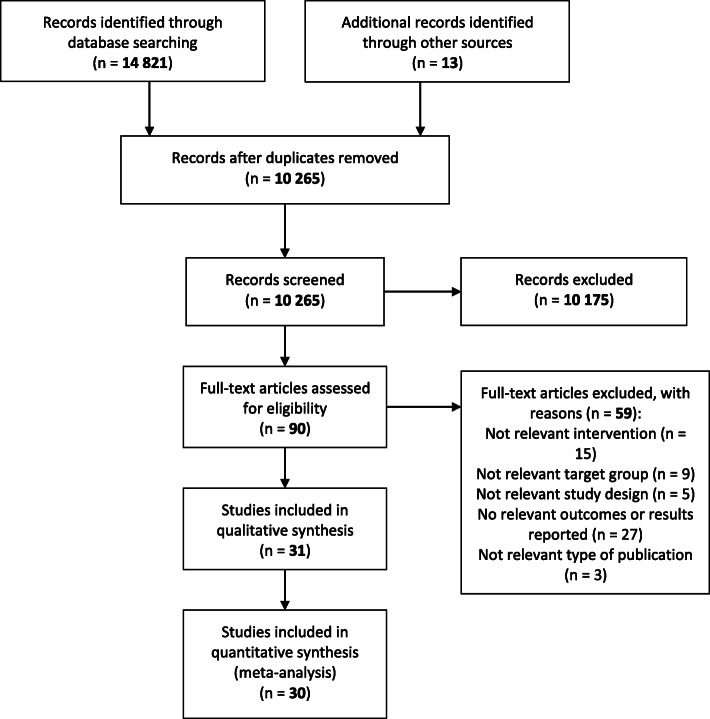
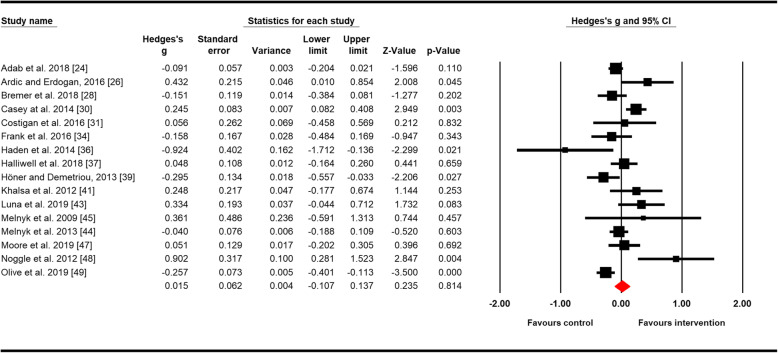
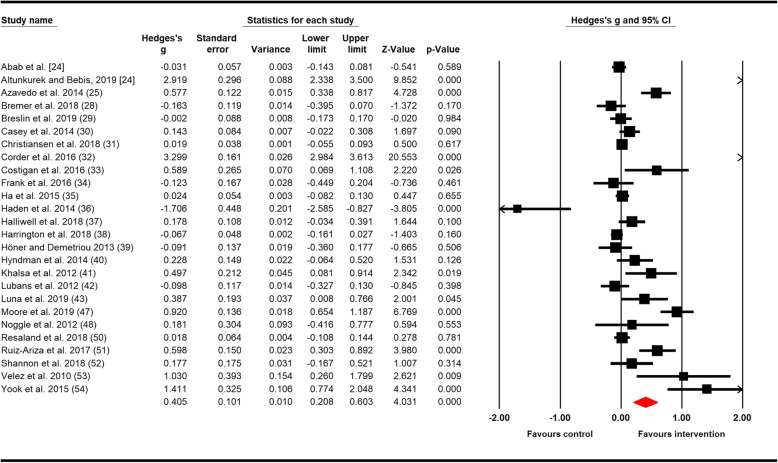
Background: Low levels of physical activity, sedentary behaviour and mental health problems are issues that have received considerable attention in the last decade. The aim of this systematic review and meta-analysis was to investigate effects of interventions targeting school-related physical activity or sedentary behaviour on mental health in children and adolescents and to identify the features of effective interventions. Methods: Scientific articles published between January 2009 and October 2019 fulfilling the following criteria were included: general populations of children and adolescents between age 4 and 19, all types of school-related efforts to promote physical activity or reduce sedentary behaviour. Study selection, data extraction and quality assessment were done by at least two authors independently of each other. Data were analysed with a random effects meta-analysis and by narrative moderator analyses. Results: The literature search resulted in 10265 unique articles. Thirty-one articles, describing 30 interventions, were finally included. Eleven relevant outcomes were identified: health-related quality of life, well-being, self-esteem and self-worth, resilience, positive effect, positive mental health, anxiety, depression, emotional problems, negative effect and internalising mental health problems. There was a significant beneficial effect of school-related physical activity interventions on resilience (Hedges’ g = 0.748, 95% CI = 0.326; 1.170, p = 0.001), positive mental health (Hedges’ g = 0.405, 95% CI = 0.208; 0.603, p = < 0.001), well-being (Hedges’ g = 0.877, 95% CI = 0.356; 1.398, p = < 0.001) and anxiety (Hedges’ g = 0.347, 95% CI = 0.072; 0.623, p = 0.013). Heterogeneity was moderate to high ( I 2 = 59–98%) between studies for all outcomes except positive effect, where heterogeneity was low ( I 2 = 2%). The narrative moderator analyses of outcomes based on 10 or more studies showed that age of the children moderated the effect of the intervention on internalising mental health problems. Interventions in younger children showed a significantly negative or no effect on internalising mental health problems while those in older children showed a significant positive or no effect. Moreover, studies with a high implementation reach showed a significant negative or no effect while those with a low level of implementation showed no or a positive effect. No signs of effect moderation were found for self-esteem, well-being or positive mental health. Risk of publication bias was evident for several outcomes, but adjustment did not change the results. Conclusions: School-related physical activity interventions may reduce anxiety, increase resilience, improve well-being and increase positive mental health in children and adolescents. Considering the positive effects of physical activity on health in general, these findings may reinforce school-based initiatives to increase physical activity. However, the studies show considerable heterogeneity. The results should therefore be interpreted with caution. Future studies should report on implementation factors and more clearly describe the activities of the control group and whether the activity is added to or replacing ordinary physical education lessons in order to aid interpretation of results. Trial registration: PROSPERO, CRD42018086757 .
Overview
The claims and statistics of this paper haven’t been checked yet.
Free: it reads the open-access text and checks the first 5 claims that cite a source we can check. Create a free account to check every claim.
Integrity signals
Registry
Cites
Statistics
Figures
Verification
Claims the paper makes
The claims and statistics of this paper haven’t been checked yet.
Free: it reads the open-access text and checks the first 5 claims that cite a source we can check. Create a free account to check every claim.
Claims other papers make about this one
Each is checked against this paper’s own text: does it say what the citing paper says it does?
The cited source says what the claim attributes to it.
In the citing paper
“Overlapping concepts and components found in mental health interventions conducted before the pandemic included: physical activity [57, 58], yoga [20], art [59, 60], psychoeducation, psychological counseling, and psychotherapeutic approaches (e.g. CBT) [20], which were also found in the included studies in our review focusing on the COVID-19 pandemic.”
Self-check
Percentages, sums and reported differences re-computed from the paper’s own numbers.
The self-check needs the paper’s full text.
Citations
Cites
Preferred Reporting Items for Systematic Reviews and Meta-Analyses: the PRISMA statement
Moher, D., Liberati, A., Tetzlaff, J., Altman, D. G., & for the PRISMA Group (2009) · BMJ · doi:10.1136/bmj.b2535 · Cited by 83,823
Preferred Reporting Items for Systematic Reviews and Meta-Analyses: The PRISMA Statement
Moher, D., Liberati, A., Tetzlaff, J., Altman, D. G., & The PRISMA Group (2009) · PLoS Medicine · doi:10.1371/journal.pmed.1000097 · Cited by 64,042 · cited 1×
“The aims of the systematic review were as follows: 1) To study the impact of school-related physical activity interventions or interventions to reduce sedentary behaviour on symptoms of mental health in terms of internalising mental health problems and positive mental health in children aged 4–19 years 2) To investiga…”
Measuring inconsistency in meta-analyses
Higgins, J. P. T., Thompson, S. G., Deeks, J. J., & Altman, D. G. (2003) · BMJ · doi:10.1136/bmj.327.7414.557 · Cited by 63,139
Preferred reporting items for systematic reviews and meta-analyses: the PRISMA Statement.
(2009) · PubMed Central · Cited by 44,859
Kessler, R. C., Berglund, P., Demler, O., Jin, R., Merikangas, K. R., & Walters, E. E. (2005) · Archives of General Psychiatry · doi:10.1001/archpsyc.62.6.593 · Cited by 20,391 · cited 1×
“Considering that the average age of onset for anxiety disorders is 11 years [60] and 11–13 years for depressive disorders [61], prevention effectiveness may vary depending on not only the type of intervention, but also the age or developmental stage of the child [7].”
BackgroundWang, G., Ma, R., Qiao, G., Wada, K., Aizawa, Y., & Satoh, T. (2015) · Integrative Medicine International · doi:10.1159/000368408 · Cited by 18,657
Borenstein, M., Hedges, L. V., Higgins, J. P. T., & Rothstein, H. R. (2009) · doi:10.1002/9780470743386 · Cited by 14,225
Borenstein, M., Hedges, L. V., Higgins, J. P. T., & Rothstein, H. R. (2021) · doi:10.1002/9781119558378 · Cited by 9,799
The Construct of Resilience: A Critical Evaluation and Guidelines for Future Work
Luthar, S. S., Cicchetti, D., & Becker, B. (2000) · Child Development · doi:10.1111/1467-8624.00164 · Cited by 9,381 · cited 1×
“adaptation within the context of significant adversity [65].”
BackgroundGlobal physical activity levels: surveillance progress, pitfalls, and prospects
Hallal, P. C., Andersen, L. B., Bull, F. C., Guthold, R., Haskell, W., & Ekelund, U. (2012) · The Lancet · doi:10.1016/s0140-6736(12)60646-1 · Cited by 5,711
Research works printed but not linked: 2
- World Health Organization. Global recommendations on physical activity for health; 5–17 years old. Geneva; 2010. 26180873
- Quality Assessment Tool For Quantitative Studies Effective Public Health Practice Project 1998
Cited by
Items 101–200 of 434
An analysis of primary school student’s holistic well-being using PhotoVoice
Cashman, D., O’Brien, W., & Chambers, F. C. (2025) · Health Education · doi:10.1108/he-05-2024-0062 · Cited by 11
Leahy, A. A., Robinson, K. J., Eather, N., Smith, J. J., Hillman, C. H., Beacroft, S., Mazzoli, E., & Lubans, D. R. (2025) · Journal of Physical Activity and Health · doi:10.1123/jpah.2025-0052 · Cited by 13
Groß, D., Schröder, I., Wasserfall, N., Eschenbeck, H., & Kohlmann, C. (2022) · Applied Psychology Health and Well-Being · doi:10.1111/aphw.12396 · Cited by 12
Klizienė, I., Emeljanovas, A., & Dubosas, M. (2023) · Physical Education Theory and Methodology · doi:10.17309/tmfv.2023.2.19 · Cited by 12
Giannotta, F., Nilsson, K. W., Åslund, C., & Larm, P. (2023) · Mental health and physical activity · doi:10.1016/j.mhpa.2023.100536 · Cited by 11
“Recent reviews (Andermo et al., 2020; Rodriguez-Ayllon et al., 2019) have found that the protective effects of physical activity are limited to adolescents and are not present among children.”
Dementyev, F., Fish, B., Opoku, N. S., Tesfaye, L., Chan, J., Ortiz, L., Montgomery, S., Walker, E. J., & Wilson, S. M. (2023) · Frontiers in Sports and Active Living · doi:10.3389/fspor.2023.1255514 · Cited by 13
Integrating Fundamental Movement Skills and Mathematics in Early Childhood: A Pilot Study
Capio, C. M., Cheung, S. K., Fung, S. S. W., & Hu, X. (2024) · Children · doi:10.3390/children11040457 · Cited by 14
“Physical activity (PA) participation has been consistently associated with a host of physical, psychosocial, developmental, cognitive, and mental health benefits among children from early years to adolescence [1,2].”
BackgroundKosti, R. I., Kanellopoulou, A., Morogianni, K., Notara, V., Αntonogeorgos, G., Kourtesa, T., Gil, A. P. R., Κornilaki, E. N., Lagiou, A., & Panagiotakos, D. B. (2022) · Nutrition and Health · doi:10.1177/02601060221102270 · Cited by 12
“…activity on children ’ s anxiety along with the impact of anxiety on sleep behaviours and the interactive effect of sleep duration and physical activity on anxiety could be one of the mechanistic explanations behind this association (Andermo et al., 2020; Fehr et al., 2021; Ogawa et al., 2019).”
BackgroundZapata‐Lamana, R., Robles-Campos, A., Reyes‐Molina, D., Rojas-Bravo, J., Salcedo, P., Chávez-Castillo, Y., Aguayo, J. G., Valdebenito-Villalobos, J., Arias, A. M., Sanhueza-Campos, C., et al. (2024) · Frontiers in Physiology · doi:10.3389/fphys.2024.1438555 · Cited by 12
Mateo‐Orcajada, A., Ponce-Ramírez, C. M., Abenza‐Cano, L., & Vaquero‐Cristóbal, R. (2024) · Journal of Medical Internet Research · doi:10.2196/55243 · Cited by 11
“These have also reported benefits on fitness, physical activity level, body composition, and psychological state [95,96].”
Aprendizaje Socioemocional en Educación Física: una revisión sistemática en Educación Secundaria
Mengibar, D. L., Monfort-Ripollés, P., García-Delafunte, A., Lis-Sancerni, R., Sancerni-Beitia, M.-D., Tabarés‐Seisdedos, R., & Monfort-Pañego, M. (2024) · Retos · doi:10.47197/retos.v63.107466 · Cited by 12
Lara-Bercial, S., McKenna, J., Hill, M. R., Jowett, G. E., Gledhill, A., Megicks, B. S., Veldhoven, N. S.-V., Navarro, R. M., Balogh, J., & Petrovic, L. (2025) · Youth · doi:10.3390/youth5020051 · Cited by 10
“In addition, sport can be a catalyst for individual and social growth in underserved communities and underdeveloped nations (UNICEF, 2023) due to its mental (Andermo et al., 2020) and physical (Poitras et al., 2016) health benefits.”
Shi, Y., Zhao, W., & Lipowski, M. (2025) · Frontiers in Psychology · doi:10.3389/fpsyg.2025.1486949 · Cited by 13
Hennessey, A., MacQuarrie, S., Pert, K., Mason, C., & Verity, L. (2025) · Frontiers in Education · doi:10.3389/feduc.2025.1675773 · Cited by 12
Tarantino, G., Ntoumanis, N., Neville, R. D., Cimenti, C., Petersen, A. P., Pfeffer, K., Mazéas, A., Larsen, M. N., Krustrup, P., & Thøgersen‐Ntoumani, C. (2025) · International Journal of Behavioral Nutrition and Physical Activity · doi:10.1186/s12966-025-01844-2 · Cited by 10
Mental health outcomes of the Daily Mile in elementary school children: a single‐arm pilot study
Arkesteyn, A., Vancampfort, D., Firth, J., & Damme, T. V. (2022) · Child and Adolescent Mental Health · doi:10.1111/camh.12573 · Cited by 13
Hanna, L., Burns, C., O’Neill, C., & Coughlan, E. K. (2023) · International Journal of Environmental Research and Public Health · doi:10.3390/ijerph20136203 · Cited by 12
Hawani, A., Masmoudi, L., Trabelsi, O., Souissi, M. A., Chikha, A. B., Mrayah, M., Souissi, N., Marsigliante, S., Rozmiarek, M., & Muscella, A. (2023) · Children · doi:10.3390/children10111748 · Cited by 11
“Among these strategies, school-related physical activity interventions have been shown to reduce anxiety, increase resilience, improve well-being, and promote positive mental health in children [35].”
BackgroundMilenković, D., Radonjić, J., Nikić, N., & Zubić, I. (2024) · Physical Education Theory and Methodology · doi:10.17309/tmfv.2024.1.11 · Cited by 10
“Therefore, taking into account the positive effects of physical education on health in general, it is suggested to increase the fund of physical education classes (Andermo et al., 2020).”
BackgroundMugisha, J., Damme, T. V., & Vancampfort, D. (2022) · Journal of Child and Adolescent Mental Health · doi:10.2989/17280583.2023.2288969 · Cited by 10
“…= 0 .748; 95% CI 0 .326; 1 .170, p = 0 .001), positive mental health (Hedges’ g = 0 .405; 95% CI 0 .208, 0 .603; p < 0 .001), and well-being (Hedges’ g = 0 .877; 95% CI 0 .356, 1 .398; p < 0 .001), and reduce anxiety (Hedges’ g = 0 .347; 95% CI 0 .072; 0 .623, p = 0 .013) (Andermo et al ., 2020) .”
Fondacaro, D. V., Fondacaro, F. V., & Camilleri, N. (2022) · International Journal of Environmental Research and Public Health · doi:10.3390/ijerph19116906 · Cited by 10
“877 for well-being) [1], especially on their self-esteem and social interaction [2].”
BackgroundRasmussen, R. M. W., Strandberg‐Larsen, K., Danielsen, S., Nordentoft, M., Erlangsen, A., & Madsen, T. (2025) · Social Psychiatry and Psychiatric Epidemiology · doi:10.1007/s00127-025-02827-1 · Cited by 9
“…men - tal health, well-being and resilience, however authors also highlight the need for future studies of high-quality physical activity interventions in school context and a better understanding of mechanisms of how to implement these interventions before they can be used in practice [33].”
Reyes-Amigo, T., Grao‐Cruces, A., Sánchez‐Oliva, D., García‐Hermoso, A., Reyes‐Molina, D., Sepulveda, R. A. Y., Arancibia, J. E. O., Almonacid, J. G. H., Páez‐Herrera, J., Salinas-Gallardo, G., et al. (2025) · Frontiers in Public Health · doi:10.3389/fpubh.2025.1644819 · Cited by 9
Reyes-Amigo, T., Ibarra-Mora, J., Aguilar-Farías, N., Gómez-Álvarez, N., Beltrán, H. C., Zapata‐Lamana, R., Almonacid, J. G. H., Páez‐Herrera, J., Sepulveda, R. A. Y., Cortés, G., et al. (2024) · Frontiers in Public Health · doi:10.3389/fpubh.2023.1243592 · Cited by 9
Cortés-Roco, G., Vesga-Oviedo, S., Almonacid, J. G. H., Gallardo-Rodríguez, R., Páez‐Herrera, J., Reyes-Amigo, T., & Sepulveda, R. A. Y. (2025) · Retos · doi:10.47197/retos.v63.109391 · Cited by 9
TransformEd: an innovative model to support professional growth of pre-service teachers
Lander, N., Mazzoli, E., Orr, J., Verswijveren, S. J. J. M., Ayala, A. M. C., Brown, T. D., & Muir, T. (2025) · Teaching Education · doi:10.1080/10476210.2025.2462312 · Cited by 9
“Recently, school-based physical activity has been explored owing to its positive associations with both academic (Schmidt et al., 2016; Singh et al., 2019) and health outcomes in children (Andermo et al., 2020; Biddle et al., 2019; Poitras et al., 2016; Solberg et al., 2021).”
Burns, R. D., Podlog, L. W., & Bai, Y. (2022) · Journal of Adolescent Health · doi:10.1016/j.jadohealth.2022.06.002 · Cited by 9
Танасійчук, Ю. М. (2024) · Педагогічна Академія наукові записки · doi:10.57125/pedacademy.2024.02.29.02 · Cited by 9
Poulos, A., Wilson, K., Schulke, M., Nam, K., Ohri-Vachaspati, P., Bai, Y., & Kulinna, P. H. (2024) · BMC Public Health · doi:10.1186/s12889-023-17605-4 · Cited by 8
“School-based PA is positively related to children’s cognitive functioning [20] and the mental health of children and adolescents [21].”
BackgroundVancampfort, D., Ward, P. B., Kwiringira, J. N., Damme, T. V., Rosenbaum, S., & Mugisha, J. (2025) · Journal of Affective Disorders · doi:10.1016/j.jad.2025.04.128 · Cited by 8
Peñacoba, C., Rodríguez‐Rojo, I. C., González, R. L., González-Alegre, P., Cuesta‐Lozano, D., Esteve, Á. L. A., Blázquez‐González, P., & García-Sastre, M. (2025) · Social Sciences · doi:10.3390/socsci14080461 · Cited by 8
The impact of adolescent physical activity on quality of life: a moderated mediation model
Ma, S., Gao, Y., Zhao, L., Sui, W., Yang, Y., & Hu, Y. (2025) · Frontiers in Public Health · doi:10.3389/fpubh.2025.1625066 · Cited by 8
Martín-Pérez, Á. D. L., Morán‐Sánchez, I., & Gascón–Cánovas, J. J. (2022) · Scientific Reports · doi:10.1038/s41598-022-23424-1 · Cited by 9
FITNESS LEVEL OF SECONDARY SCHOOL STUDENTS ENGAGED IN SPORTS
Danylevych, M. V., Romanchuk, O. V., Musikevych, T., Yurko, N., & Stefanyshyn, M. (2024) · SOCIETY INTEGRATION EDUCATION Proceedings of the International Scientific Conference · doi:10.17770/sie2024vol2.7881 · Cited by 8
“(Andermo et al., 2020).”
BackgroundBennett, A. E. (2024) · Child Care Health and Development · doi:10.1111/cch.13285 · Cited by 8
Bischops, A., Reinauer, C., Pischke, C. R., Mayatepek, E., & Meißner, T. (2022) · Klinische Pädiatrie · doi:10.1055/a-1849-1355 · Cited by 8
“Resilience can, at least in the short term, be improved with targeted “resilience trainings” for vulnerable children and families, school staff, and caregivers [3, 12, 28, 35, 45, 49, 56].”
BackgroundInfluentialCoffey, C., Sheehan, D., Faigenbaum, A. D., Healy, S., Lloyd, R. S., & Kinsella, S. (2023) · European Journal of Adapted Physical Activity · doi:10.5507/euj.2023.004 · Cited by 8
Ram, B., Foley, K., van Sluijs, E. M. F., Hargreaves, D. S., Viner, R., & Saxena, S. K. (2022) · BMJ Open · doi:10.1136/bmjopen-2022-061335 · Cited by 8
Villodres, G. C., Rodríguez-Mérida, M., Vizcaíno-Cuenca, R., & Muros, J. J. (2025) · Adolescent Research Review · doi:10.1007/s40894-025-00276-0 · Cited by 7
“In this sense, interventions have been shown to decrease anxiety, enhance resilience, and improve overall psychological wellbeing (Andermo et al., 2020), as well as to promote students’ emotional state and interpersonal skills (Du & Liu, 2022 ).”
Zhang, Z., Li, L., Wang, H., Dong, K., & Li, D. (2025) · European Child & Adolescent Psychiatry · doi:10.1007/s00787-025-02893-5 · Cited by 7
A compulsory school in need of a physiotherapist - an interview study
Persson, L., & Sjöström, R. (2024) · International Journal of Adolescence and Youth · doi:10.1080/02673843.2024.2341939 · Cited by 7
“School-based interventions with physical activity can also reduce anxiety, increase resilience to mental illness, improve well-being and promote mental health in children and youth (Andermo et al., 2020).”
BackgroundMovement, my favourite thing: children’s perceptions of movement integration in school
Egan, C. A., Orendorff, K. L., Merica, C. B., & Brush, C. J. (2024) · Curriculum Studies in Health and Physical Education · doi:10.1080/25742981.2024.2374321 · Cited by 7
“Given that school-related PA interventions are associated with a number of mental health bene fi ts (Andermo et al., 2020) and can be o ff ered in an accessible manner, PA o ff ered during school remains an important avenue to alleviate mental health problems among young people.”
Galan, Y., Moseichuk, Y., Dotsyuk, L., Kushnir, I., Moroz, O., Kurnyshev, Y., Duditska, S., Lohush, L., Kyselytsia, O., Yachniuk, M., et al. (2024) · Retos · doi:10.47197/retos.v58.106256 · Cited by 7
“Modern researchers are actively studying the features and patterns of children's physical and psycho-emotional state, which are key to the development of their harmonious and holistic potential (Andermo et al, 2020; Klizieneal, 2020; Galan et al, 2024).”
BackgroundTempleton, D. P., & Korchagin, R. (2024) · Frontiers in Education · doi:10.3389/feduc.2024.1433466 · Cited by 7
Marquez, J., Panayiotou, M., Farzinnia, R., Cheng, Q., & Humphrey, N. (2025) · Quality of Life Research · doi:10.1007/s11136-025-03894-2 · Cited by 8
“In another systematic review of physical activity interventions in schools, no gender differences in the improved outcomes (such as positive wellbeing, mental health, increased resilience, and reduced anxiety) were found [28].”
The Effect of Social Networks on Active Living in Adolescents: Qualitative Focus Group Study
Hermsen, S., van Abswoude, F., & Steenbergen, B. (2023) · JMIR Formative Research · doi:10.2196/46350 · Cited by 8
“To support adolescents to be active, a broad range of interventions exist [34,35].”
BackgroundHolte, A. (2024) · Mental Health & Prevention · doi:10.1016/j.mhp.2024.200321 · Cited by 9
Mahon, A., Holt, C., Hibbert, M., Jago, R., Tinner, L., & Kidger, J. (2025) · Discover Public Health · doi:10.1186/s12982-025-00933-8 · Cited by 9
Putting child and adolescent mental health at the centre: building an ecosystem of support
Simelane, S. R. N., Bantjes, J. R., Kleintjes, S., Lake, L., Lund, C., Mawoyo, T. L., Nassen, R., & Tomlinson, M. (2025) · South African Health Review · doi:10.61473/001c.142241 · Cited by 7
Delgado‐Floody, P., Cristi‐Montero, C., Jerez‐Mayorga, D., Ruiz‐Ariza, A., Guzmán‐Guzmán, I. P., Álvarez, C., López, M. G., Carter-Thuillier, B. I., & Navarrete, F. C. (2024) · Frontiers in Public Health · doi:10.3389/fpubh.2024.1426108 · Cited by 6
Egger, F., Gasser, M., Kamer, M., & Schmidt, M. (2024) · European Journal of Psychology and Educational Research · doi:10.12973/ejper.7.3.159 · Cited by 7
Physical Exercise and Mental Health in Adolescents: Scoping Review
Tello, N. C., Ordóñez, A. S., Oñate, H. A. B., & Mosquera, J. D. H. (2024) · Revista de Investigación e Innovación en Ciencias de la Salud · doi:10.46634/riics.328 · Cited by 6
Yilin, R., Ai, L., Yang, Y., & Zhu, F. (2025) · International Journal of Sport and Exercise Psychology · doi:10.1080/1612197x.2024.2437483 · Cited by 6
“…prescription and drawing from the findings of previous research on physical and mental health promotion interventions for middle school students (Andermo et al., 2020), as well as incorporating theoretical and practical experiences regarding aerobic exercise interventions and academic…”
Lousen, I., Johnstone, A., Schipperijn, J., Traynor, O., McCrorie, P., & Pawlowski, C. S. (2025) · Mental Health & Prevention · doi:10.1016/j.mhp.2025.200460 · Cited by 6
Effects of Virtual Reality on Static and Dynamic Balance among Individuals with Down Syndrome
Ghouri, E.-U.-R. K., Memon, A. G., Ali, S., Adnan, Q., & Tahir, S. (2024) · Journal of Liaquat University of Medical & Health Sciences · doi:10.22442/jlumhs.2024.01057 · Cited by 6
“These findings are consistent with previous literature, which reported similar improvements in balance and motor skills in children with developmental coordination disorder following a comparable intervention 12,13 .”
Associations between Physical Activity, Depression, Self-Esteem, and Suicide Ideation in Adolescents
An, D., Thuan, N. H. M., & Kim, Y. (2024) · International Journal of Mental Health Promotion · doi:10.32604/ijmhp.2024.055568 · Cited by 8
Hu, X., & Tang, Y. (2022) · International Journal of Mental Health Promotion · doi:10.32604/ijmhp.2022.018332 · Cited by 6
Redondo‐Tébar, A., Hermosa, A. R., Martínez‐Vizcaíno, V., Bermejo‐Cantarero, A., Cavero‐Redondo, I., Espinosa, N. M. M., & Sánchez‐López, M. (2022) · Scandinavian Journal of Medicine and Science in Sports · doi:10.1111/sms.14291 · Cited by 7
The Stimulation of Mental Health in Physical Education: A Systematic Review
Gunasaekaran, D., Arifin, S., & Anuar, N. A. (2023) · International Journal of Academic Research in Progressive Education and Development · doi:10.6007/ijarped/v12-i2/16969 · Cited by 6
“The National Board of Health and Welfare in Sweden reported that the number of children and adolescents who have received healthcare for depression or anxiety has increased during the period 2006 – 2016 (Andermo et al., 2020).”
BackgroundSchool-Based Physical Activity Programmes: An Integrative Review of Health-Related Research
Silva, A. M., Graça, A., MacPhail, A., & Batista, P. (2025) · Studia sportiva · doi:10.5817/sts2025-1-8 · Cited by 5
Viner, R., Michalopoulou, S., Hudson, L. D., Hope, S., Lloyd-Houldey, O., Sundaram, N., Scott, S., Nicholls, D., & Bonell, C. P. (2025) · Public Health Research · doi:10.3310/ffhr7745 · Cited by 6
“By topic, 11 reviews reported on interventions for anxiety, 19 , 27 , 32 , 37 – 39 , 41 In terms of study type, three studies (7”
Lander, N., Patterson, K. A. E., Lai, S. K., Martin-Alcaide, N., Orr, J., Weatherell, N., Beasy, K. M., & Salmon, J. (2025) · Frontiers in Sports and Active Living · doi:10.3389/fspor.2025.1719341 · Cited by 6
Efectos de la actividad física sobre la salud mental: una revisión paraguas de carácter integral
Tristancho-Celis, M. C., Parra-Jaramillo, L., Quiceno-Florez, C., Sandberg, T., Franco, A. M., Salazar-Tamayo, D., Vargas-Galeano, M., & Aguirre-Loaiza, H. (2025) · Revista de Psicología Aplicada al Deporte y el Ejercicio Físico · doi:10.5093/rpadef2025a16 · Cited by 5
Galan, Y. P., Ярмак, О. М., & Moseichuk, Y. Y. (2025) · Реабілітаційні та фізкультурно-рекреаційні аспекти розвитку людини (Rehabilitation & recreation) · doi:10.32782/2522-1795.2025.19.4.16 · Cited by 5
Reimagining adolescent well-being through yoga as a public health paradigm
Babu, A., Joseph, A. P., Bose, J., & Sarathy, K. (2026) · Frontiers in Psychiatry · doi:10.3389/fpsyt.2025.1691915 · Cited by 7
Wang, Y., Wu, C.-C., Lin, L., & Su, C.-H. (2026) · Frontiers in Public Health · doi:10.3389/fpubh.2026.1737783 · Cited by 5
“…PA and depression, anxiety, and distress have been described (overviewing the evidence and meta-analysis) and suggest possible causal pathways in children and adolescents (4, 7, 9, 17, 18), including evidence from school-related PA interventions when implemented with sufficient quality and reach (5).”
Physical education in primary school and impact on educational leadership
D’Isanto, T. (2023) · Acta kinesiologica · doi:10.51371/issn.1840-2976.2023.17.1.4 · Cited by 10
Подрігало, Л., & Єрмаков, С. (2023) · Pedagogy of Health · doi:10.15561/health.2023.0203 · Cited by 5
“Articles with a relatively low duplication index, such as Andermo et al. [36] and Giblin et al. [39] with a DRI of 0.10, can also achieve a high level of citations, indicating the complexity and multifaceted nature of factors influencing citation frequency.”
BackgroundInfluentialLarsson, R., Ljung, E., Josefsson, S., & Ljung, T. (2024) · BMC Public Health · doi:10.1186/s12889-024-18509-7 · Cited by 5
“Previous research shows that school-based health interventions focusing on PA can have beneficial effects on physical and mental health among children and adolescents [3, 11].”
BackgroundEffects of a 12-Week Physical Activity Intervention on Psychological Symptoms in Adolescents
Francisquini, M. C. J., dos Santos, G. C., Silva, T. M. D. S., Dias, P. H. G., dos Santos, C. F., Pinzon, G., Machado‐Rodrigues, A. M., & Neto, A. S. (2024) · International Journal of Environmental Research and Public Health · doi:10.3390/ijerph21121558 · Cited by 6
Liu, X., Drenowatz, C. J., Chen, S., Chen, S., Ma, Y., & Zhang, Y. (2025) · Journal of Science in Sport and Exercise · doi:10.1007/s42978-024-00316-6 · Cited by 7
Multilateral activity model: improving children's gross motor
Lengkana, A. S. (2025) · Retos · doi:10.47197/retos.v67.110796 · Cited by 5
Widiyatmoko, F. A., Setiawan, C., Hamid, M. A., & Pradipta, G. D. (2025) · Edu Sportivo/Edu Sportivo · doi:10.25299/esijope.2025.vol6(1).17931 · Cited by 5
Effect of Twelve-Week Yoga Intervention on Stress and Anxiety in School Going Children
Pradhan, P., & Pramanik, T. N. (2024) · Physical rehabilitation and recreational health technologies · doi:10.15391/prrht.2024-9(2).05 · Cited by 11
Woodard, K. F., & Chen, Y. (2024) · Journal of Teaching in Physical Education · doi:10.1123/jtpe.2023-0388 · Cited by 5
Association Between Socio-Emotional Health, Physical Activity and Screen Time Among Children
Aliyas, Z., Mahmoudian, A., & Cloutier, M. (2024) · American Journal of Health Education · doi:10.1080/19325037.2024.2396602 · Cited by 6
“There is increasing interest in the link between PA and mental health, with evidence suggesting regular exercise improves psychological well-being (Andermo et al., 2020; Sampasa-Kanyinga et al., 2020).”
Oktavianus, I., Gustian, U., & Triansyah, A. (2025) · Physical Education Theory and Methodology · doi:10.17309/tmfv.2025.1.23 · Cited by 7
“Interventions to increase PA in schools have been shown to reduce anxiety, increase resilience, improve well-being, and promote positive mental health in children and adolescents (Andermo et al., 2020) and effectively enhance a variety of motivational outcomes (Kelso et al., 2020).”
Studi Deskriptif Kesehatan Mental Siswa Berstatus Atlet Dan Non-Atlet
Muthia, D. S., Abduljabar, B., & Sumpena, A. (2023) · Jurnal Olahraga dan Kesehatan Indonesia · doi:10.55081/joki.v4i1.1628 · Cited by 5
Physical Activity, Academic Self-Efficacy, and Depression Among Ninth-Grade Students in Shanghai
Bai, D., & Hashim, A. H. M. (2025) · Perceptual and Motor Skills · doi:10.1177/00315125251337854 · Cited by 4
“…physical exercise can improve self-ef fi cacy, academic mood, and academic performance in adolescents (Fu et al., 2023), and others have reported. that PA is associated with lower levels of depressive symptoms in adolescents (Andermo et al., 2020; Gu, 2022; Wang et al., 2022; Wang & Peiper, 2022).”
Fernández‐Sánchez, A., Sánchez‐López, M., Hermosa, A. R., Redondo‐Tébar, A., Pozuelo‐Carrascosa, D. P., Jiménez‐López, E., & Martínez‐Vizcaíno, V. (2025) · European Journal of Sport Science · doi:10.1002/ejsc.12308 · Cited by 4
Reducing classroom sedentary behaviour: a scoping review of interventions and student involvement
Ekman, S. D., Nair, M., Gredin, N. V., & Lindgren, E. (2025) · Health Promotion International · doi:10.1093/heapro/daaf167 · Cited by 6
“2017, Andermo et al .”
Ditzen-Janotta, C., Schwarz, S., Wendel, F., Kunzler, A. M., Schoenweger, P., Kirschneck, M., Merkel, L., Movsisyan, A., Weber, M., Rehfuess, E. A., et al. (2026) · European Archives of Psychiatry and Clinical Neuroscience · doi:10.1007/s00406-025-02187-6 · Cited by 5
“A meta-analysis by Andermo et al. revealed evidence for beneficial effects of school-based PA interventions on resilience, well-being, and anxiety [18 ].”
Xu, Y., Qi, K., Dong, X., Xu, Q., Wang, S., Chen, D., Schinke, R. J., & Chen, A. (2026) · BMC Psychology · doi:10.1186/s40359-026-04339-2 · Cited by 5
“In contrast, the MHT’s comprehensive assessment of mental health status may be less sensitive to short-term interventions than specific skill measures [99].”
Ten Tips for Designing Effective Physical Education Programs in Schools
Ghayebzadeh, S., Zardoshtian, S., da Silva, C. A. F., Tarajian, M., & Sortwell, A. (2024) · Journal of Physical Education Recreation & Dance · doi:10.1080/07303084.2024.2373005 · Cited by 4
“…and bones that results in increased energy expenditure above resting levels, and can vary according to the type of activity (e.g., yoga or football), frequency (times per day or week), duration (minutes or hours), and intensity, measured by age-related maximum heart rate (Andermo et al., 2020).”
The Application of the Perma Model in Mental Health Education in Colleges and Universities
Chen, C., & Lan, L. (2024) · Informatica · doi:10.31449/inf.v48i14.6127 · Cited by 4
de Souza-Lima, J., Ferrari, G., Sepulveda, R. A. Y., Giakoni-Ramírez, F., Muñoz-Strale, C., Alarcón-Aguilar, J., Parra-Saldías, M., Bastías, D. M. D., Godoy-Cumillaf, A. E. R., Merellano-Navarro, E., et al. (2025) · Children · doi:10.3390/children12101282 · Cited by 4
“These results highlight the small but consistent influence of physical activity and school safety, with gender moderating effects modestly and partial η 2 values indicating limited explained variance ( ≤ 0.014).”
InfluentialSun, Y. (2022) · Occupational Therapy International · doi:10.1155/2022/4998180 · Cited by 4
RetractedAugustsson, F., & Grahn, K. (2024) · Health Education Journal · doi:10.1177/00178969241237087 · Cited by 4
“For several decades, schools have been identified as auspicious arenas in which to undertake health promotion (Andermo et al., 2020; Ekblom, 2011; He et al., 2011; Peterson, 2007).”
BackgroundThe effect of intensity of social media use and physical activity on adolescent mental health
Hartanto, A., Fizi, R. M., Winarni, S., & Guntur, G. (2024) · Retos · doi:10.47197/retos.v59.109275 · Cited by 6
Using fuzzy decision support to create a positive mental health environment for preschoolers
Li, X. (2025) · Scientific Reports · doi:10.1038/s41598-025-96543-0 · Cited by 4
McAlister, K. L., Chapman, T. M., Kanning, M. K., Lange, J.-P., Lopez, N. V., Moore, K., Papini, N. M., Yi, L., Dunton, G. F., & Belcher, B. R. (2022) · Elsevier eBooks · doi:10.1016/b978-0-12-818872-9.00141-2 · Cited by 5
Hanna, L., Burns, C., O’Neill, C., Bolger, L. E., & Coughlan, E. K. (2025) · Frontiers in Sports and Active Living · doi:10.3389/fspor.2025.1550028 · Cited by 3
Omojor-Oche, J. E. O., Tempest, G. D., Hettinga, F. J., & McCullogh, N. (2025) · PLoS ONE · doi:10.1371/journal.pone.0324781 · Cited by 3
Köpl, K., Wambsganz, A., Roell, L., Schwaiger, R., Fischer, T., Falkai, P., Hasan, A., Schmitt, A., & Maurus, I. (2025) · BMJ Open · doi:10.1136/bmjopen-2024-092862 · Cited by 3
“Further in-depth research is needed to translate our findings into real-life interventions that address aforementioned determinants to make better use of the benefits of regular PA for the physical and mental health of individuals with MI.”
Tiwari, B. B., Matta, J., Thomsen, M. R., Da, L., Thapa, K., Shen, Y., Ingels, J. B., & Rajbhandari‐Thapa, J. (2025) · Frontiers in Public Health · doi:10.3389/fpubh.2025.1582693 · Cited by 3
“…finding raises concern for adolescents’ health as they transition to adulthood, and such a decrease in physical activity is associated with a higher risk for cardiovascular disease (CVD), type 2 diabetes, high blood pressure, and obesity (57–60) and is a threat to adolescent mental health (61–63).”
Bai, D., Wu, M., Pang, Y. K., & Liu, X. (2025) · Frontiers in Public Health · doi:10.3389/fpubh.2025.1663388 · Cited by 3
“A growing body of empirical evidence suggests that PA is inversely associated with depressive symptoms among adolescents (21–24).”
Maadleh, L. Z., Ali, N. M. A., & Shahrour, G. (2025) · International Journal of Adolescence and Youth · doi:10.1080/02673843.2025.2586613 · Cited by 4
“This widespread inactivity trend has remained constant or worsened (WHO, 2022; Milton et al., 2023), resulting in increasing levels of NCDs and mental health problems (Santos et al., 2023; Andermo et al., 2020).”
Vásquez, G. I. V., Ochoa, E. D. Q., Quizhpe, C. F. B., & Orellana, S. M. (2025) · Salud Ciencia y Tecnología · doi:10.56294/saludcyt20262366 · Cited by 3
Nyam, G., Lander, N., Ayala, A. M. C., Strugnell, C., & Salmon, J. (2025) · Journal of Activity Sedentary and Sleep Behaviors · doi:10.1186/s44167-025-00094-8 · Cited by 3
“…pathway from movement behaviours to improved wellbeing, with school-based interventions demonstrating that increasing physical activity and reducing sedentary time can improve adolescents’ mental health and wellbeing [23, 24], and sleep interventions improving mood and reducing anxiety [25, 26].”
Varalda, M., Ungureanu, A. N., Coassin, A., Maffei, N., Volsi, D. L., Brustio, P. R., & Lupo, C. (2026) · Sports · doi:10.3390/sports14010010 · Cited by 3
“School-related physical activity (PA) and sport practice (SP) can improve well-being and increase positive mental health in children and adolescents [7,15].”
Metadata
- Authors
- Andermo, S., Hallgren, M., Nguyen, T.-T.-D., Jonsson, S., Petersen, S., Friberg, M., Romqvist, A., Stubbs, B., & Elinder, L. S.
- Affiliations
- Karolinska Institutet (SE)
- Region Stockholm (SE)
- Public Health Agency of Sweden (SE)
- National Health Service (GB)
- Corresponding author
- Andermo, Susanne
- Venue
- Sports Medicine - Open
- Published
- 2020-06-16
- Volume
- 6
- Issue
- 1
- Pages
- 25-25
- ISSN
- 2198-9761 (ISSN-L)
- 2199-1170
- PMC
- PMC7297899
- OpenAlex
- W3035372294
- Cited by
- 336
- References
- 70
- Citations by year
- 2026: 58 · 2025: 82 · 2024: 77 · 2023: 50 · 2022: 40 · 2021: 22 · 2020: 7
- FWCI
- 3.79
- Type
- journal article
- Language
- en
- Open access
- gold
- doi.org
- Licence
- cc-by
- creativecommons.org/licenses/by/4.0 (tdm)
- creativecommons.org/licenses/by/4.0 (vor)
- Locations
- Sports Medicine - Open (publishedVersion, cc-by)
- PubMed Central (publishedVersion, cc-by)
- PubMed (publishedVersion)
- DiVA at Umeå University (Umeå University) (submittedVersion, other-oa)
- Figshare (submittedVersion, cc-by)
- Research Portal (King's College London) (submittedVersion, other-oa)
- Funders
- Folkhälsomyndigheten (04287-2017, 05031-2018)
- Topics
- Health Sciences › Medicine › Public Health, Environmental and Occupational Health › Physical Activity and Health
- Health Sciences › Medicine › Public Health, Environmental and Occupational Health › School Health and Nursing Education
- Health Sciences › Medicine › Public Health, Environmental and Occupational Health › Obesity, Physical Activity, Diet
- Keywords
- school-based physical activity intervention, sedentary behavior, child mental health, adolescents, resilience, positive mental health, well-being, anxiety, depression, internalizing problems, health-related quality of life, self-esteem, intervention duration, intervention intensity, school health promotion, physical activity promotion, sedentary behavior reduction, socioemotional skills
About these checks
Registry, retraction, Cites and statistics results are computed, not judged, with one exception: a printed reference that no index lists is read once by a model before it counts as a citation error. Claims are extracted by a model and kept only when their quote appears verbatim in the text; each cited source is then checked, with a model’s help, for whether it says what the claim relies on. Those verdicts can be wrong — read the claim’s quote and the cited source before relying on one.
Statistics and arithmetic are recomputed, not judged.
Confidence bands are shown only for fields calibrated on our annotated test set. None is calibrated yet, so no band is shown.
What counts as a claim ›How we measure confidence ›How we check this ›
Are you an author, or do you see a problem with this page? Request a review
Data sources
Bibliographic data: Semantic Scholar, OpenAlex, Crossref.
Contains information from the Semantic Scholar Academic Graph Datasets, made available under the ODC Attribution License (ODC-BY 1.0).
Semantic Scholar’s data is described in: Kinney, R., et al. (2023). The Semantic Scholar Open Data Platform. arXiv:2301.10140.
