

The DOI matches its Crossref record; 6 of the 6 references it cites were found in a registry or an index.
Anterior Cruciate Ligament Return to Sport after Injury Scale (ACL-RSI) Scores over Time After Anterior Cruciate Ligament Reconstruction: A Systematic Review with Meta-analysis
Open accessAbstract
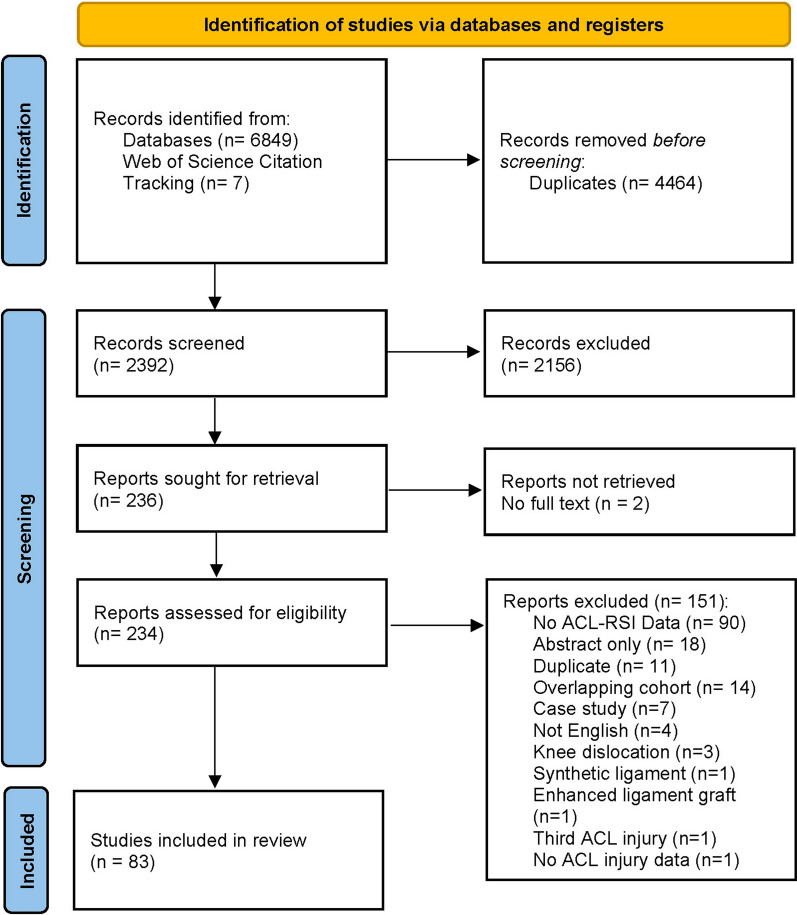
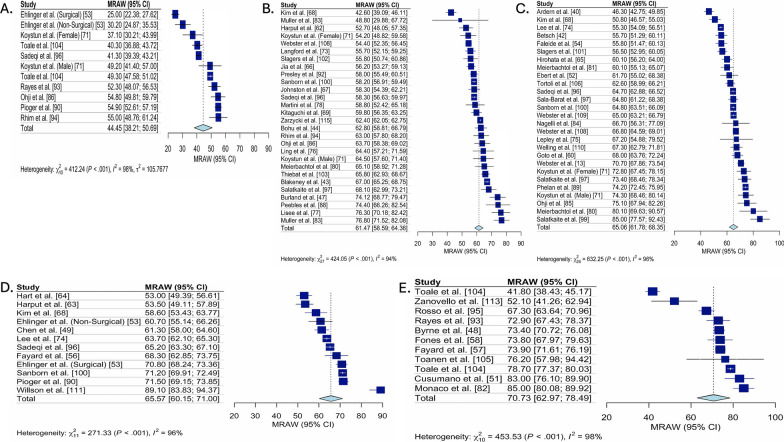
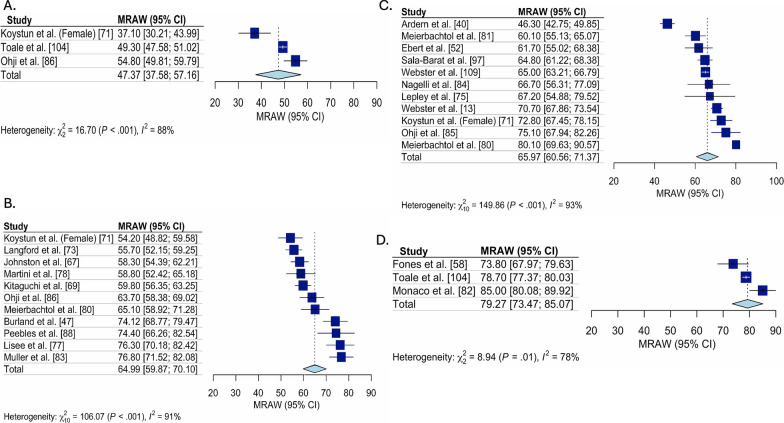
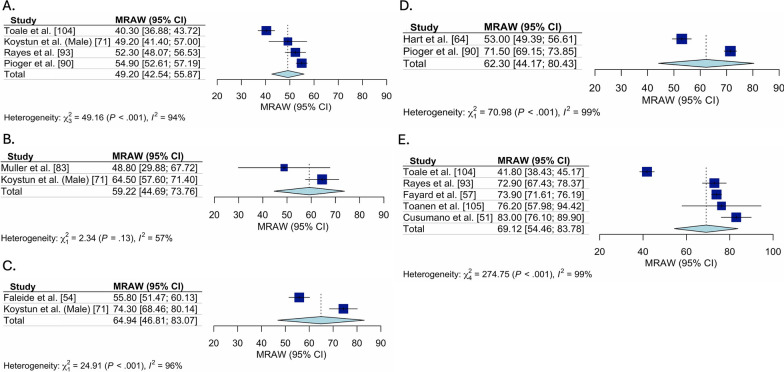
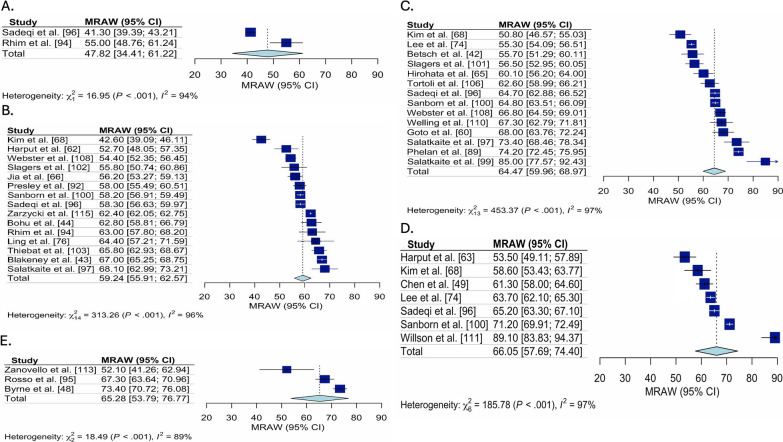
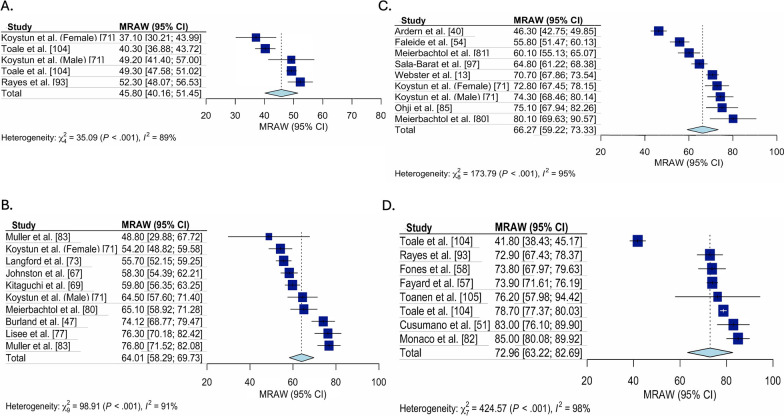
Background: Psychological readiness is an important consideration for athletes and clinicians when making return to sport decisions following anterior cruciate ligament reconstruction (ACLR). To improve our understanding of the extent of deficits in psychological readiness, a systematic review is necessary. Objective: To investigate psychological readiness (measured via the Anterior Cruciate Ligament-Return to Sport after Injury scale (ACL-RSI)) over time after ACL tear and understand if time between injury and surgery, age, and sex are associated with ACL-RSI scores. Methods: Seven databases were searched from the earliest date available to March 22, 2022. Articles reporting ACL-RSI scores after ACL tear were included. Risk of bias was assessed using the ROBINS-I, RoB-2, and RoBANS tools based on the study design. Evidence certainty was assessed for each analysis. Random-effects meta-analyses pooled ACL-RSI scores, stratified by time post-injury and based on treatment approach (i.e., early ACLR, delayed ACLR, and unclear approach). Results: A total of 83 studies were included in this review (78% high risk of bias). Evidence certainty was ‘weak’ or ‘limited’ for all analyses. Overall, ACL-RSI scores were higher at 3 to 6 months post-ACLR (mean = 61.5 [95% confidence interval (CI) 58.6, 64.4], I 2 = 94%) compared to pre-ACLR (mean = 44.4 [95% CI 38.2, 50.7], I 2 = 98%), remained relatively stable, until they reached the highest point 2 to 5 years after ACLR (mean = 70.7 [95% CI 63.0, 78.5], I 2 = 98%). Meta-regression suggests shorter time from injury to surgery, male sex, and older age were associated with higher ACL-RSI scores only 3 to 6 months post-ACLR (heterogeneity explained R 2 = 47.6%), and this reduced 1–2 years after ACLR (heterogeneity explained R 2 = 27.0%). Conclusion: Psychological readiness to return to sport appears to improve early after ACL injury, with little subsequent improvement until ≥ 2-years after ACLR. Longer time from injury to surgery, female sex and older age might be negatively related to ACL-RSI scores 12–24 months after ACLR. Due to the weak evidence quality rating and the considerable importance of psychological readiness for long-term outcomes after ACL injury, there is an urgent need for well-designed studies that maximize internal validity and identify additional prognostic factors for psychological readiness at times critical for return to sport decisions. Registration: Open Science Framework (OSF), https://osf.io/2tezs/.
Overview
The claims and statistics of this paper haven’t been checked yet.
Run the check — free, no account needed. It reads the open-access text and checks the sources it cites.
Integrity signals
Registry
Cites
Statistics
Figures
Verification
Claims the paper makes
The claims and statistics of this paper haven’t been checked yet.
Run the check — free, no account needed. It reads the open-access text and checks the sources it cites.
Claims other papers make about this one
Each is checked against this paper’s own text: does it say what the citing paper says it does?
The source backs part of the claim, not all of it — or backs it for a different population, condition or comparison.
In the citing paper
“Both psychological and physical factors have an established role in ACL injury recovery, but their relative and combined contributions to psychological readiness for return to sport remain unclear.36”
From Determinants of Psychological Readiness to Return to Sport After Anterior Cruciate Ligament Reconstruction (2026) · cites this paper as [36]
Experimental — accuracy not yet measured
Self-check
Percentages, sums and reported differences re-computed from the paper’s own numbers.
The self-check needs the paper’s full text.
Citations
Cites
The PRISMA 2020 statement: An updated guideline for reporting systematic reviews
Page, M. J., McKenzie, J. E., Bossuyt, P. M., Boutron, I., Hoffmann, T. C., Mulrow, C. D., Shamseer, L., Tetzlaff, J. M., Akl, E. A., Brennan, S. E., et al. (2021) · BMJ · doi:10.1136/bmj.n71 · Cited by 108,283
ROBINS-I: a tool for assessing risk of bias in non-randomised studies of interventions
Sterne, J. A., Hernán, M. A., Reeves, B. C., Savović, J., Berkman, N. D., Viswanathan, M., Henry, D., Altman, D. G., Ansari, M. T., Boutron, I., et al. (2016) · BMJ · doi:10.1136/bmj.i4919 · Cited by 20,329
Vandenbroucke, J. P., von Elm, E., Altman, D. G., Gøtzsche, P. C., Mulrow, C. D., Pocock, S. J., Poole, C., Schlesselman, J. J., Egger, M., & Initiative, F. T. S. (2007) · PLoS Medicine · doi:10.1371/journal.pmed.0040297 · Cited by 8,613
Kim, S. Y., Park, J. E., Lee, Y. J., Seo, H.-J., Sheen, S.-S., Hahn, S., Jang, B.-H., & Son, H.-J. (2013) · Journal of Clinical Epidemiology · doi:10.1016/j.jclinepi.2012.09.016 · Cited by 1,165
Moher, D., Altman, D. G., Liberati, A., & Tetzlaff, J. (2011) · Epidemiology · doi:10.1097/ede.0b013e3181fe7825 · Cited by 627
Minozzi, S., Cinquini, M., Gianola, S., Gonzalez-Lorenzo, M., & Banzi, R. (2020) · Journal of Clinical Epidemiology · doi:10.1016/j.jclinepi.2020.06.015 · Cited by 471 · cited 1×
“…(RoB) was assessed using domain-based RoB tools specific to study design, including the Cochrane Risk of Bias tool for randomized trials (RoB 2), Risk of Bias tool In Non-randomized Studies of Interventions (ROBINS-I), and the Risk of Bias Assessment tool for Nonrandomized Studies (RoBANS) [30–32].”
Method
Research works printed but not linked: 115
- Agel J, Rockwood T, Klossner D. Collegiate ACL injury rates across 15 sports: National Collegiate Athletic Association Injury Surveillance System Data Update (2004–2005 Through 2012–2013). Clin J Sport Med. 2016;26(6):518–23. · DOI · Paper page
- Hootman JM, Dick R, Agel J. Epidemiology of collegiate injuries for 15 sports: summary and recommendations for injury prevention initiatives. J Athl Train. 2007;42(2):311–9.
- Walden M, Hagglund M, Magnusson H, Ekstrand J. ACL injuries in men’s professional football: a 15-year prospective study on time trends and return-to-play rates reveals only 65% of players still play at the top level 3 years after ACL rupture. Br J Sports Med. 2016;50(12):744–50. · DOI
- Montalvo AM, Schneider DK, Webster KE, Yut L, Galloway MT, Heidt RS Jr, et al. Anterior cruciate ligament injury risk in sport: a systematic review and meta-analysis of injury incidence by sex and sport classification. J Athl Train. 2019;54(5):472–82. · DOI
- Wiggins AJ, Grandhi RK, Schneider DK, Stanfield D, Webster KE, Myer GD. Risk of secondary injury in younger athletes after anterior cruciate ligament reconstruction: a systematic review and meta-analysis. Am J Sports Med. 2016;44(7):1861–76. · DOI · Paper page
- Whittaker J, Losciale J, Juhl CB, Thorlund JB, Lundberg M, Truong LK, et al. Risk factors for knee osteoarthritis after traumatic knee injury: a systematic review and meta-analysis of randomised controlled trials and cohort studies for the OPTIKNEE Consensus. Br J Sports Med. 2022. · DOI
- Chmielewski TL, Jones D, Day T, Tillman SM, Lentz TA, George SZ. The association of pain and fear of movement/reinjury with function during anterior cruciate ligament reconstruction rehabilitation. J Orthop Sports Phys Ther. 2008;38(12):746–53. · DOI
- Ardern CL, Webster KE, Taylor NF, Feller JA. Return to sport following anterior cruciate ligament reconstruction surgery: a systematic review and meta-analysis of the state of play. Br J Sports Med. 2011;45(7):596–606. · DOI · Paper page
- Toomey CM, Whittaker JL, Doyle-Baker PK, Emery CA. Does a history of youth sport-related knee injury still impact accelerometer-measured levels of physical activity after 3–12 years? Phys Ther Sport. 2022;10(55):90–7. · DOI
- Svantesson E, Hamrin Senorski E, Webster KE, Karlsson J, Diermeier T, Rothrauff BB, et al. Clinical outcomes after anterior cruciate ligament injury: panther symposium ACL injury clinical outcomes consensus group. Knee Surg Sports Traumatol Arthrosc. 2020;28(8):2415–34. · DOI
- Whittaker J, Culvenor AG, Juhl CB, Berg B, Bricca A, Filbay SR, et al. OPTIKNEE 2022: consensus recommendations to optimise knee health after traumatic knee injury to prevent osteoarthritis. Br J Sports Med. 2022. · DOI
- Nwachukwu BU, Adjei J, Rauck RC, Chahla J, Okoroha KR, Verma NN, et al. How much do psychological factors affect lack of return to play after anterior cruciate ligament reconstruction? A systematic review. Orthop J Sports Med. 2019;7(5):2325967119845313. · DOI · Paper page
- Webster KE, McPherson AL, Hewett TE, Feller JA. Factors associated with a return to preinjury level of sport performance after anterior cruciate ligament reconstruction surgery. Am J Sports Med. 2019;47(11):2557–62. · DOI
- Truong LK, Mosewich AD, Holt CJ, Le CY, Miciak M, Whittaker JL. Psychological, social and contextual factors across recovery stages following a sport-related knee injury: a scoping review. Br J Sports Med. 2020;54(19):1149–56. · DOI · Paper page
- Webster KE, Feller JA, Lambros C. Development and preliminary validation of a scale to measure the psychological impact of returning to sport following anterior cruciate ligament reconstruction surgery. Phys Ther Sport. 2008;9(1):9–15. · DOI · Paper page
- Webster KE, Feller JA. Development and validation of a short version of the anterior cruciate ligament return to sport after injury (ACL-RSI) scale. Orthop J Sports Med. 2018;6(4):2325967118763763. · DOI · Paper page
- Kvist J, Filbay S. Fear of reinjury following surgical and nonsurgical management of anterior cruciate ligament injury: an exploratory analysis of the NACOX multicenter longitudinal cohort study. Phys Ther. 2021. · DOI
- Webster KE, Feller JA. Who passes return-to-sport tests, and which tests are most strongly associated with return to play after anterior cruciate ligament reconstruction? Orthop J Sports Med. 2020;8(12):2325967120969425. · DOI
- McPherson AL, Feller JA, Hewett TE, Webster KE. Psychological readiness to return to sport is associated with second anterior cruciate ligament injuries. Am J Sports Med. 2019;47(4):857–62. · DOI · Paper page
- Losciale J, Bullock G, Collins G, Arundale AJ, Hughes T, Arden N, et al. Description, prediction, and causation in sport and exercise medicine research: resolving the confusion to improve research quality and patient outcomes. J Orthopaedic Sports Phys Ther. 2023;(ja):1–19. · DOI
- Kuenze C, Bell DR, Grindstaff TL, Lisee CM, Birchmeier T, Triplett A, et al. A comparison of psychological readiness and patient-reported function between sexes after anterior cruciate ligament reconstruction. J Athl Train. 2021;56(2):164–9. · DOI
- Bruder A, Culvenor AG, King MG, Haberfield M, Roughead EA, Mastwyk J, et al. Let's talk about sex (and gender) after ACL injury: a systematic review and meta-analysis of self-reported activity and knee-related outcomes. Br J Sports Med. 2023. · DOI
- Institute of Medicine (US) Committee on Standards for Systematic Reviews of Comparative Effectiveness Research. In: Eden J, Levit L, Berg A, Morton S, editors. Finding What works in health care: standards for systematic reviews. Washington, DC: National Academies Press (US); 2011.
- Tegner Y, Lysholm J. Rating systems in the evaluation of knee ligament injuries. Clin Orthop Relat Res. 1985;198(198):43–9.
- Hefti F, Muller W, Jakob RP, Staubli HU. Evaluation of knee ligament injuries with the IKDC form. Knee Surg Sports Traumatol Arthrosc. 1993;1(3–4):226–34. · DOI
- Patel AD, Bullock GS, Wrigley J, Paterno MV, Sell TC, Losciale JM. Does sex affect second ACL injury risk? A systematic review with meta-analysis. Br J Sports Med. 2021;55(15):873–82. · DOI
- Ardern CL, Taylor NF, Feller JA, Webster KE. Fifty-five per cent return to competitive sport following anterior cruciate ligament reconstruction surgery: an updated systematic review and meta-analysis including aspects of physical functioning and contextual factors. Br J Sports Med. 2014;48(21):1543–52. · DOI · Paper page
- Teirlinck C, Dorleijn D, Bos P, Rijkels-Otters J, Bierma-Zeinstra S, Luijsterburg P. Prognostic factors for progression of osteoarthritis of the hip: a systematic review. Arthritis Res Ther. 2019;21(1):1–19. · DOI
- Bullock GS, Sell TC, Zarega R, Reiter C, King V, Wrona H, et al. Kinesiophobia, Knee Self-Efficacy, and Fear Avoidance Beliefs in People with ACL Injury: A Systematic Review and Meta-Analysis. Sports Med. 2022;52(12):3001–19. · DOI
- McGrath S, Zhao X, Steele R, Thombs BD, Benedetti A, Collaboration DSD. Estimating the sample mean and standard deviation from commonly reported quantiles in meta-analysis. Stat Methods Med Res. 2020;29(9):2520–37. · DOI
- Alzhrani M, Alzahrani H, Alshehri YS. Arabic version of the short anterior cruciate ligament-return to sport after injury scale: translation, cross-cultural adaptation, and validation. Orthop J Sports Med. 2022;10(1):23259671211066508. · DOI
- Ardern CL, Osterberg A, Tagesson S, Gauffin H, Webster KE, Kvist J. The impact of psychological readiness to return to sport and recreational activities after anterior cruciate ligament reconstruction. Br J Sports Med. 2014;48(22):1613–9. · DOI · Paper page
- Ardern CL, Taylor NF, Feller JA, Whitehead TS, Webster KE. Psychological responses matter in returning to preinjury level of sport after anterior cruciate ligament reconstruction surgery. Am J Sports Med. 2013;41(7):1549–58. · DOI · Paper page
- Ardern CL, Taylor NF, Feller JA, Whitehead TS, Webster KE. Sports participation 2 years after anterior cruciate ligament reconstruction in athletes who had not returned to sport at 1 year: a prospective follow-up of physical function and psychological factors in 122 athletes. Am J Sports Med. 2015;43(4):848–56. · DOI
- Beischer S, Hamrin Senorski E, Thomee C, Samuelsson K, Thomee R. How is psychological outcome related to knee function and return to sport among adolescent athletes after anterior cruciate ligament reconstruction? Am J Sports Med. 2019;47(7):1567–75. · DOI
- Betsch M, Hoit G, Dwyer T, Whelan D, Theodoropoulos J, Ogilvie-Harris D, et al. Postoperative pain is associated with psychological and physical readiness to return to sports one-year after anterior cruciate ligament reconstruction. Arthrosc Sports Med Rehabil. 2021;3(6):e1737–43. · DOI
- Blakeney WG, Ouanezar H, Rogowski I, Vigne G, Guen ML, Fayard JM, et al. Validation of a composite test for assessment of readiness for return to sports after anterior cruciate ligament reconstruction: the K-STARTS test. Sports Health. 2018;10(6):515–22. · DOI
- Bohu Y, Klouche S, Lefevre N, Webster K, Herman S. Translation, cross-cultural adaptation and validation of the French version of the Anterior Cruciate Ligament-Return to Sport after Injury (ACL-RSI) scale. Knee Surg Sports Traumatol Arthrosc. 2015;23(4):1192–6. · DOI
- Bortone I, Moretti L, Bizzoca D, Caringella N, Delmedico M, Piazzolla A, et al. The importance of biomechanical assessment after Return to Play in athletes with ACL-Reconstruction. Gait Posture. 2021;88:240–6. · DOI
- Burland JP, Howard JS, Lepley AS, DiStefano LJ, Lepley LK, Frechette L. What are our patients really telling us? Psychological constructs associated with patient-reported outcomes after anterior cruciate ligament reconstruction. J Athl Train. 2020;55(7):707–16. · DOI
- Burland JP, Kostyun RO, Kostyun KJ, Solomito M, Nissen C, Milewski MD. Clinical outcome measures and return-to-sport timing in adolescent athletes after anterior cruciate ligament reconstruction. J Athl Train. 2018;53(5):442–51. · DOI
- Byrne L, King E, Mc Fadden C, Jackson M, Moran R, Daniels K. The effect of meniscal pathology and management with ACL reconstruction on patient-reported outcomes, strength, and jump performance ten months post-surgery. Knee. 2021;32:72–9. · DOI
- Chen T, Zhang P, Li Y, Webster K, Zhang J, Yao W, et al. Translation, cultural adaptation and validation of simplified Chinese version of the anterior cruciate ligament return to sport after injury (ACL-RSI) scale. PLoS ONE. 2017;12(8):e0183095. · DOI
- Culvenor AG, Collins NJ, Vicenzino B, Cook JL, Whitehead TS, Morris HG, et al. Predictors and effects of patellofemoral pain following hamstring-tendon ACL reconstruction. J Sci Med Sport. 2016;19(7):518–23. · DOI
- Cusumano A, Capitani P, Messina C, de Girolamo L, Vigano M, Ravasio G, et al. Different timing in allograft and autograft maturation after primary anterior cruciate ligament reconstruction does not influence the clinical outcome at mid-long-term follow-up. Knee Surg Sports Traumatol Arthrosc. 2022;30(7):2281–90. · DOI
- Ebert JR, Edwards P, Preez LD, Furzer B, Joss B. Knee extensor strength, hop performance, patient-reported outcome and inter-test correlation in patients 9–12 months after anterior cruciate ligament reconstruction. Knee. 2021;30:176–84. · DOI
- Ehlinger M, Panisset JC, Dejour D, Gonzalez JF, Paihle R, Favreau H, et al. Anterior cruciate ligament reconstruction in the over-50s. A prospective comparative study between surgical and functional treatment. Orthop Traumatol Surg Res. 2021;107(8S):103039. · DOI
- Faleide AGH, Magnussen LH, Strand T, Bogen BE, Moe-Nilssen R, Mo IF, et al. The role of psychological readiness in return to sport assessment after anterior cruciate ligament reconstruction. Am J Sports Med. 2021;49(5):1236–43. · DOI
- Faltstrom A, Hagglund M, Kvist J. Factors associated with playing football after anterior cruciate ligament reconstruction in female football players. Scand J Med Sci Sports. 2016;26(11):1343–52. · DOI
- Fayard JM, Sonnery-Cottet B, Vrgoc G, O’Loughlin P, de Mont Marin GD, Freychet B, et al. Incidence and risk factors for a partial anterior cruciate ligament tear progressing to a complete tear after nonoperative treatment in patients younger than 30 years. Orthop J Sports Med. 2019;7(7):2325967119856624. · DOI
- Fayard JM, Wein F, Ollivier M, Paihle R, Ehlinger M, Lustig S, et al. Factors affecting outcome of ACL reconstruction in over-50-year-olds. Orthop Traumatol Surg Res. 2019;105(8S):S247–51. · DOI
- Fones L, Kostyun RO, Cohen AD, Pace JL. Patient-reported outcomes, return-to-sport status, and reinjury rates after anterior cruciate ligament reconstruction in adolescent athletes: minimum 2-year follow-up. Orthop J Sports Med. 2020;8(11):2325967120964471. · DOI · Paper page
- Gokeler A, Welling W, Zaffagnini S, Seil R, Padua D. Development of a test battery to enhance safe return to sports after anterior cruciate ligament reconstruction. Knee Surg Sports Traumatol Arthrosc. 2017;25(1):192–9. · DOI
- Goto K, Duthon VB, Menetrey J. Anterior cruciate ligament reconstruction using quadriceps tendon autograft is a viable option for small-statured female patients. Knee Surg Sports Traumatol Arthrosc. 2022;30(7):2358–63. · DOI
- Ha JK, Kim JG, Yoon KH, Wang JH, Seon JK, Bae JH, et al. Korean version of the anterior cruciate ligament-return to sport after injury scale: translation and cross-cultural adaptation. Clin Orthop Surg. 2019;11(2):164–9. · DOI
- Harput G, Tok D, Tunay VB. Relation of self-reported knee function and physical performance with psychological responses in anterior cruciate ligament reconstructed individuals. Fizyoterapi Rehabilitasyon. 2016;27(3):102–7. · DOI
- Harput G, Tok D, Ulusoy B, Eraslan L, Yildiz TI, Turgut E, et al. Translation and cross-cultural adaptation of the anterior cruciate ligament-return to sport after injury (ACL-RSI) scale into Turkish. Knee Surg Sports Traumatol Arthrosc. 2017;25(1):159–64. · DOI · Paper page
- Hart HF, Culvenor AG, Guermazi A, Crossley KM. Worse knee confidence, fear of movement, psychological readiness to return-to-sport and pain are associated with worse function after ACL reconstruction. Phys Ther Sport. 2020;41:1–8. · DOI
- Hirohata K, Aizawa J, Furuya H, Mitomo S, Ohmi T, Ohji S, et al. The Japanese version of the anterior cruciate ligament-return to sport after injury (ACL-RSI) scale has acceptable validity and reliability. Knee Surg Sports Traumatol Arthrosc. 2020;28(8):2519–25. · DOI
- Jia ZY, Cui J, Wang W, Xue CC, Liu TZ, Huang X, et al. Translation and validation of the simplified Chinese version of the anterior cruciate ligament-return to sport after injury (ACL-RSI). Knee Surg Sports Traumatol Arthrosc. 2018;26(10):2997–3003. · DOI
- Johnston PT, Feller JA, McClelland JA, Webster KE. Strength deficits and flexion range of motion following primary anterior cruciate ligament reconstruction differ between quadriceps and hamstring autografts. J ISAKOS. 2021;6(2):88–93. · DOI
- Kim Y, Kubota M, Sato T, Inui T, Ohno R, Ishijima M. Psychological Patient-reported outcome measure after anterior cruciate ligament reconstruction: evaluation of subcategory in ACL-Return to Sport after Injury (ACL-RSI) scale. Orthop Traumatol Surg Res. 2022;108(3):103141. · DOI
- Kitaguchi T, Tanaka Y, Takeshita S, Tsujimoto N, Kita K, Amano H, et al. Importance of functional performance and psychological readiness for return to preinjury level of sports 1 year after ACL reconstruction in competitive athletes. Knee Surg Sports Traumatol Arthrosc. 2020;28(7):2203–12. · DOI
- Klasan A, Putnis SE, Grasso S, Kandhari V, Oshima T, Parker DA. Tegner level is predictive for successful return to sport 2 years after anterior cruciate ligament reconstruction. Knee Surg Sports Traumatol Arthrosc. 2021;29(9):3010–6. · DOI
- Kostyun RO, Burland JP, Kostyun KJ, Milewski MD, Nissen CW. Male and female adolescent athletes’ readiness to return to sport after anterior cruciate ligament injury and reconstruction. Clin J Sport Med. 2021;31(4):383–7. · DOI · Paper page
- Kvist J, Osterberg A, Gauffin H, Tagesson S, Webster K, Ardern C. Translation and measurement properties of the Swedish version of ACL-Return to Sports after Injury questionnaire. Scand J Med Sci Sports. 2013;23(5):568–75. · DOI · Paper page
- Langford JL, Webster KE, Feller JA. A prospective longitudinal study to assess psychological changes following anterior cruciate ligament reconstruction surgery. Br J Sports Med. 2009;43(5):377–81. · DOI · Paper page
- Lee DW, Lee JK, Kwon SH, Moon SG, Cho SI, Chung SH, et al. Adolescents show a lower healing rate of anterolateral ligament injury and a higher rotational laxity than adults after anterior cruciate ligament reconstruction. Knee. 2021;30:113–24. · DOI
- Lepley AS, Pietrosimone B, Cormier ML. Quadriceps function, knee pain, and self-reported outcomes in patients with anterior cruciate ligament reconstruction. J Athl Train. 2018;53(4):337–46. · DOI
- Ling DI, Chiaia TA, deMille P, Marx RG. Return to sport testing after anterior cruciate ligament reconstruction has marginal psychological impact: a randomised controlled trial. Journal of ISAKOS. 2019;4(1):4–8. · DOI
- Lisee CM, DiSanti JS, Chan M, Ling J, Erickson K, Shingles M, et al. Gender differences in psychological responses to recovery after anterior cruciate ligament reconstruction before return to sport. J Athl Train. 2020;55(10):1098–105. · DOI
- Martini A, Ayala A, Lechable M, Rannou F, Lefevre-Colau MM, Nguyen C. Determinants of apprehension to return to sport after reconstruction of the anterior cruciate ligament: an exploratory observational retrospective study. BMC Sports Sci Med Rehabil. 2022;14(1):37. · DOI
- McPherson AL, Feller JA, Hewett TE, Webster KE. Smaller change in psychological readiness to return to sport is associated with second anterior cruciate ligament injury among younger patients. Am J Sports Med. 2019;47(5):1209–15. · DOI
- Meierbachtol A, Obermeier M, Yungtum W, Bottoms J, Paur E, Nelson BJ, et al. Injury-related fears during the return-to-sport phase of ACL reconstruction rehabilitation. Orthop J Sports Med. 2020;8(3):2325967120909385. · DOI
- Meierbachtol A, Yungtum W, Paur E, Bottoms J, Chmielewski TL. Psychological and functional readiness for sport following advanced group training in patients with anterior cruciate ligament reconstruction. J Orthop Sports Phys Ther. 2018;48(11):864–72. · DOI
- Monaco E, Pisanu G, Carrozzo A, Giuliani A, Conteduca J, Oliviero M, et al. Translation, cross-cultural adaptation, and validation of the Italian version of the anterior cruciate ligament-return to sport after injury (ACL-RSI) scale and its integration into the K-STARTS test. J Orthop Traumatol. 2022;23(1):11. · DOI
- Muller U, Kruger-Franke M, Schmidt M, Rosemeyer B. Predictive parameters for return to pre-injury level of sport 6 months following anterior cruciate ligament reconstruction surgery. Knee Surg Sports Traumatol Arthrosc. 2015;23(12):3623–31. · DOI
- Nagelli CV, Webster KE, Di Stasi S, Wordeman SC, Hewett TE. The association of psychological readiness to return to sport after anterior cruciate ligament reconstruction and hip and knee landing kinematics. Clin Biomech (Bristol, Avon). 2019;68:104–8. · DOI
- Ohji S, Aizawa J, Hirohata K, Mitomo S, Ohmi T, Jinno T, et al. Athletic identity and sport commitment in athletes after anterior cruciate ligament reconstruction who have returned to sports at their pre-injury level of competition. BMC Sports Sci Med Rehabil. 2021;13(1):37. · DOI
- Ohji S, Aizawa J, Hirohata K, Ohmi T, Mitomo S, Koga H, et al. The psychological readiness to return to sports of patients with anterior cruciate ligament reconstruction preoperatively and 6 months postoperatively. Phys Ther Sport. 2021;50:114–20. · DOI
- Panisset JC, Gonzalez JF, de Lavigne C, Ode Q, Dejour D, Ehlinger M, et al. ACL reconstruction in over-50 year-olds: Comparative study between prospective series of over-50 year-old and under-40 year-old patients. Orthop Traumatol Surg Res. 2019;105(8S):S259–65. · DOI
- Peebles AT, Savla J, Ollendick TH, Queen RM. Landing asymmetry is associated with psychological factors after anterior cruciate ligament reconstruction. Med Sci Sports Exerc. 2021;53(7):1446–51. · DOI
- Phelan B, King E, Richter C, Webster K, Falvey E. A comparison of anterior cruciate ligament—return to sports after injury (ACL-RSI) scores of male athletes nine-months Post-ACL reconstruction with matched uninjured controls. Phys Ther Sport. 2019;38:179–83. · DOI
- Pioger C, Saithna A, Rayes J, Haidar IM, Fradin T, Ngbilo C, et al. Influence of preoperative tunnel widening on the outcomes of a single stage-only approach to every revision anterior cruciate ligament reconstruction: an analysis of 409 consecutive patients from the SANTI Study Group. Am J Sports Med. 2021;49(6):1431–40. · DOI
- Piussi R, Beischer S, Thomee R, Hamrin SE. Hop tests and psychological PROs provide a demanding and clinician-friendly RTS assessment of patients after ACL reconstruction, a registry study. BMC Sports Sci Med Rehabil. 2020;12:32. · DOI
- Presley J, Bailey L, Maloney K, Duncan B, Reid M, Juneau C, et al. The influence of mode-of-injury on psychological readiness for return-to-sport following anterior cruciate ligament reconstruction: a matched-controlled study. Int J Sports Phys Ther. 2021;16(1):177–84. · DOI
- Rayes J, Ouanezar H, Haidar IM, Ngbilo C, Fradin T, Vieira TD, et al. Revision anterior cruciate ligament reconstruction using bone-patellar tendon-bone graft combined with modified Lemaire technique versus hamstring graft combined with anterolateral ligament reconstruction: a clinical comparative matched study with a mean follow-up of 5 years from The SANTI study group. Am J Sports Med. 2022;50(2):395–403. · DOI
- Rhim HC, Lee SJ, Jeon JS, Kim G, Lee KY, Lee JH, et al. Effectiveness of modeling videos on psychological responses of patients following anterior cruciate ligament reconstruction: A pilot randomized trial. Medicine (Baltimore). 2020;99(45):e23158. · DOI
- Rosso F, Bonasia DE, Cottino U, Cambursano S, Dettoni F, Rossi R. Factors affecting subjective and objective outcomes and return to play in anterior cruciate ligament reconstruction: a retrospective cohort study. Joints. 2018;6(1):23–32. · DOI
- Sadeqi M, Klouche S, Bohu Y, Herman S, Lefevre N, Gerometta A. Progression of the psychological ACL-RSI score and return to sport after anterior cruciate ligament reconstruction: a prospective 2-year follow-up study from the french prospective anterior cruciate Ligament reconstruction cohort study (FAST). Orthop J Sports Med. 2018;6(12):2325967118812819. · DOI
- Sala-Barat E, Alvarez-Diaz P, Alentorn-Geli E, Webster KE, Cugat R, Tomas-Sabado J. Translation, cross-cultural adaptation, validation, and measurement properties of the Spanish version of the anterior cruciate ligament-return to sport after injury (ACL-RSI-Sp) scale. Knee Surg Sports Traumatol Arthrosc. 2020;28(3):833–9. · DOI · Paper page
- Salatkaite S, Siupsinskas L, Gudas R. Translation and cultural adaptation of Lithuanian version of the anterior cruciate ligament return to sport after injury (ACL-RSI) scale. PLoS ONE. 2019;14(7):e0219593. · DOI
- Salatkaitė S, Šiupšinskas L, Žumbakytė-Šermukšnienė R, Gudas R. Eight-months after anterior cruciate ligament reconstruction: is it time to return to physical activity? Baltic J Sport Health Sci. 2021;121(2):21–7. · DOI
- Sanborn RM, Badger GJ, Team BT, Yen YM, Murray MM, Christino MA, et al. Psychological readiness to return to sport at 6 months is higher after bridge-enhanced ACL restoration than autograft ACL reconstruction: results of a prospective randomized clinical trial. Orthop J Sports Med. 2022;10(2):23259671211070544. · DOI
- Slagers AJ, Reininga IH, van den Akker-Scheek I. The Dutch language anterior cruciate ligament return to sport after injury scale (ACL-RSI) - validity and reliability. J Sports Sci. 2017;35(4):393–401. · DOI · Paper page
- Slagers AJ, van den Akker-Scheek I, Geertzen JHB, Zwerver J, Reininga IHF. Responsiveness of the anterior cruciate ligament—Return to Sports after Injury (ACL-RSI) and Injury—psychological Readiness to Return to Sport (I-PRRS) scales. J Sports Sci. 2019;37(21):2499–505. · DOI
- Thiebat G, Cucchi D, Spreafico A, Muzzi S, Vigano M, Visconti L, et al. Italian version of the anterior cruciate ligament-return to sport after injury scale (IT ACL-RSI): translation, cross-cultural adaptation, validation and ability to predict the return to sport at medium-term follow-up in a population of sport patients. Knee Surg Sports Traumatol Arthrosc. 2022;30(1):270–9. · DOI
- Toale JP, Hurley ET, Hughes AJ, Withers D, King E, Jackson M, et al. The majority of athletes fail to return to play following anterior cruciate ligament reconstruction due to reasons other than the operated knee. Knee Surg Sports Traumatol Arthrosc. 2021;29(11):3877–82. · DOI
- Toanen C, Demey G, Ntagiopoulos PG, Ferrua P, Dejour D. Is there any benefit in anterior cruciate ligament reconstruction in patients older than 60 years? Am J Sports Med. 2017;45(4):832–7. · DOI
- Tortoli E, Francini L, Giovannico G, Ramponi C. Translation, cross-cultural adaptation and validation of the Italian version of the anterior cruciate ligament-return to sport after injury (ACL-RSI) scale. Knee Surg Sports Traumatol Arthrosc. 2022;30(4):1180–6. · DOI
- Vermeijden HD, van der List JP, DiFelice GS. Acute and delayed anterior cruciate ligament repair results in similar short to mid-term outcomes. Knee. 2021;29:142–9. · DOI
- Webster KE, Feller JA. Evaluation of the responsiveness of the anterior cruciate ligament return to sport after injury (ACL-RSI) scale. Orthop J Sports Med. 2021;9(8):23259671211031240. · DOI
- Webster KE, Nagelli CV, Hewett TE, Feller JA. Factors associated with psychological readiness to return to sport after anterior cruciate ligament reconstruction surgery. Am J Sports Med. 2018;46(7):1545–50. · DOI
- Welling W, Benjaminse A, Seil R, Lemmink K, Zaffagnini S, Gokeler A. Low rates of patients meeting return to sport criteria 9 months after anterior cruciate ligament reconstruction: a prospective longitudinal study. Knee Surg Sports Traumatol Arthrosc. 2018;26(12):3636–44. · DOI
- Willson RG, Kostyun RO, Milewski MD, Nissen CW. Anterior cruciate ligament reconstruction in skeletally immature patients: early results using a hybrid physeal-sparing technique. Orthop J Sports Med. 2018;6(2):2325967118755330. · DOI
- Winkler PW, Wagala NN, Hughes JD, Lesniak BP, Musahl V. A high tibial slope, allograft use, and poor patient-reported outcome scores are associated with multiple ACL graft failures. Knee Surg Sports Traumatol Arthrosc. 2022;30(1):139–48. · DOI
- Zanovello J, Rosso F, Bistolfi A, Rossi R, Castoldi F. Combined intra- and extra-articular technique in revision anterior cruciate ligament reconstruction. Joints. 2017;5(3):156–63. · DOI
- Zarzycki R, Arhos E, Failla M, Capin J, Smith AH, Snyder-Mackler L. Association of the psychological response to the ACL-SPORTS training program and self-reported function at 2 years after anterior cruciate ligament reconstruction. Am J Sports Med. 2021;49(13):3495–501. · DOI
- Zarzycki R, Failla M, Capin JJ, Snyder-Mackler L. Psychological readiness to return to sport is associated with knee kinematic asymmetry during gait following anterior cruciate ligament reconstruction. J Orthop Sports Phys Ther. 2018;48(12):968–73. · DOI
- Marom N, Xiang W, Wolfe I, Jivanelli B, Williams RJ 3rd, Marx RG. High variability and lack of standardization in the evaluation of return to sport after ACL reconstruction: a systematic review. Knee Surg Sports Traumatol Arthrosc. 2022;30(4):1369–79. · DOI
- O’Connor RF, King E, Richter C, Webster KE, Falvey ÉC. No relationship between strength and power scores and anterior cruciate ligament return to sport after injury scale 9 months after anterior cruciate ligament reconstruction. Am J Sports Med. 2020;48(1):78–84. · DOI
- Xiao M, van Niekerk M, Trivedi NN, Hwang CE, Sherman SL, Safran MR, et al. Patients who return to sport after primary anterior cruciate ligament reconstruction have significantly higher psychological readiness: a systematic review and meta-analysis of 3744 patients. Am J Sports Med. 2022;20:3635465221102420.
- Frobell RB, Roos EM, Roos HP, Ranstam J, Lohmander LS. A randomized trial of treatment for acute anterior cruciate ligament tears. N Engl J Med. 2010;363(4):331–42. · DOI
- Frobell RB, Roos HP, Roos EM, Roemer FW, Ranstam J, Lohmander LS. Treatment for acute anterior cruciate ligament tear: Five year outcome of randomised trial. Br J Sports Med. 2015;49(10):700. · DOI
- Reijman M, Eggerding V, van Es E, van Arkel E, van den Brand I, van Linge J, et al. Early surgical reconstruction versus rehabilitation with elective delayed reconstruction for patients with anterior cruciate ligament rupture: COMPARE randomised controlled trial. BMJ. 2021;9(372):n375. · DOI
Cited by
Sorted by citations
Murphy, T., Lyons, L., Mertz-Bynum, N., Lugin, A., Harkey, M. S., Kuenze, C., Baez, S., Myer, G. D., Diekfuss, J., & Petushek, E. (2026) · Journal of Athletic Training · doi:10.4085/1062-6050-0696.25
Metadata
- Authors
- Sell, T. C., Zerega, R., King, V., Reiter, C. R., Wrona, H., Bullock, G. S., Mills, N., Räisänen, A., Ledbetter, L., Collins, G. S., Kvist, J., Filbay, S. R., & Losciale, J. M.
- Affiliations
- University of Oxford (GB)
- UNSW Sydney (AU)
- University of Calgary (CA)
- Duke University (US)
- Linköping University (SE)
- The University of Melbourne (AU)
- University of British Columbia (CA)
- Corresponding author
- Losciale, Justin M.
- ORCID
- Venue
- Sports Medicine - Open
- Published
- 2024-04-30
- Volume
- 10
- Issue
- 1
- Pages
- 49-49
- ISSN
- 2198-9761 (ISSN-L)
- PMC
- PMC11061071
- OpenAlex
- W4396558289
- Cited by
- 62
- References
- 6
- Citations by year
- 2026: 34 · 2025: 28
- FWCI
- 5.36
- Type
- journal article
- Language
- en
- Open access
- gold
- doi.org
- Locations
- Sports Medicine - Open (publishedVersion, cc-by)
- PubMed Central (publishedVersion, cc-by)
- PubMed (publishedVersion)
- Diva portal (Dalarna University Library) (submittedVersion, other-oa)
- DOAJ (DOAJ: Directory of Open Access Journals) (submittedVersion, cc-by-sa)
- Minerva Access (University of Melbourne) (submittedVersion, cc-by)
- Oxford University Research Archive (ORA) (University of Oxford) (submittedVersion, cc-by)
- University of Birmingham Research Portal (University of Birmingham) (submittedVersion, cc-by)
- Libraries and Cultural Resources (University of Calgary) (submittedVersion)
- Topics
- Health Sciences › Medicine › Surgery › Knee injuries and reconstruction techniques
- Social Sciences › Psychology › Developmental and Educational Psychology › Sport Psychology and Performance
- Health Sciences › Medicine › Orthopedics and Sports Medicine › Sports injuries and prevention
- Keywords
- anterior cruciate ligament reconstruction, return to sport, psychological readiness, ACL-RSI, anterior cruciate ligament rupture, athletes, time to surgery, sex differences, age, delayed ACL reconstruction, risk of bias in observational studies, risk of bias in randomized trials
About these checks
Registry, retraction, Cites and statistics results are computed, not judged, with one exception: a printed reference that no index lists is read once by a model before it counts as a citation error. Claims are extracted by a model and kept only when their quote appears verbatim in the text; each cited source is then checked, with a model’s help, for whether it says what the claim relies on. Those verdicts can be wrong — read the claim’s quote and the cited source before relying on one.
Statistics and arithmetic are recomputed, not judged.
Confidence bands are shown only for fields calibrated on our annotated test set. None is calibrated yet, so no band is shown.
What counts as a claim ›How we measure confidence ›How we check this ›
Are you an author, or do you see a problem with this page? Request a review
