

Diabetes and its drivers: the largest epidemic in human history?
Open accessThe DOI matches its Crossref record; 46 of the 46 references it cites were found in a registry or an index.
Abstract
The "Diabesity" epidemic (obesity and type 2 diabetes) is likely to be the biggest epidemic in human history. Diabetes has been seriously underrated as a global public health issue and the world can no longer ignore "the rise and rise" of type 2 diabetes. Currently, most of the national and global diabetes estimates come from the IDF Atlas. These estimates have significant limitations from a public health perspective. It is apparent that the IDF have consistently underestimated the global burden. More reliable estimates of the future burden of diabetes are urgently needed. To prevent type 2 diabetes, a better understanding of the drivers of the epidemic is needed. While for years, there has been comprehensive attention to the "traditional" risk factors for type 2 diabetes i.e., genes, lifestyle and behavioral change, the spotlight is turning to the impact of the intra-uterine environment and epigenetics on future risk in adult life. It highlights the urgency for discovering novel approaches to prevention focusing on maternal and child health. Diabetes risk through epigenetic changes can be transmitted inter-generationally thus creating a vicious cycle that will continue to feed the diabetes epidemic. History provides important lessons and there are lessons to learn from major catastrophic events such as the Dutch Winter Hunger and Chinese famines. The Chinese famine may have been the trigger for what may be viewed as a diabetes "avalanche" many decades later. The drivers of the epidemic are indeed genes and environment but they are now joined by deleterious early life events. Looking to the future there is the potential scenario of future new "hot spots" for type 2 diabetes in regions e.g., the Horn of Africa, now experiencing droughts and famine. This is likely to occur should improved economic and living conditions occur over the next few decades. Type 2 diabetes will remain one of the greatest challenges to human health for many years to come.
Overview
The claims and statistics of this paper haven’t been checked yet.
Free: it reads the open-access text and checks the first 5 claims that cite a source we can check. Create a free account to check every claim.
Integrity signals
Registry
Cites
Statistics
Figures
Verification
Claims the paper makes
The claims and statistics of this paper haven’t been checked yet.
Free: it reads the open-access text and checks the first 5 claims that cite a source we can check. Create a free account to check every claim.
Claims other papers make about this one
Each is checked against this paper’s own text: does it say what the citing paper says it does?
In the citing paper
“Heterozygous carriers of these same gene mutations commonly express moderate elevations of serum TG levels that expose them to increased CVD risk [378].”
From 2019 ESC/EAS guidelines for the management of dyslipidaemias: lipid modification to reduce cardiovascular risk (2019) · cites this paper as [378]
Self-check
Percentages, sums and reported differences re-computed from the paper’s own numbers.
The self-check needs the paper’s full text.
Citations
Cites
Wild, S., Roglic, G., Green, A., Sicree, R., & King, H. (2004) · Diabetes Care · doi:10.2337/diacare.27.5.1047 · Cited by 15,297 · cited 1×
“prevalence of diabetes in 2000 and 2030–171 million people with diabetes in 2000 and 366 million by 2030 [4].”
BackgroundInternational Diabetes Federation 2017
Carracher, A. M., Marathe, P. H., & Close, K. L. (2018) · Journal of Diabetes · doi:10.1111/1753-0407.12644 · Cited by 13,418
Tuomilehto, J., Lindström, J., Eriksson, J. G., Valle, T. T., Hämäläinen, H., Ilanne-Parikka, P., Keinänen-Kiukaanniemi, S., Laakso, M., Louheranta, A., Rastas, M., et al. (2001) · New England Journal of Medicine · doi:10.1056/nejm200105033441801 · Cited by 10,873 · cited 1×
“These results were extended by others including the classic study of Jaakko Tuomilehto, the Finnish Diabetes Prevention Study [34].”
ResultPrevalence of Diabetes among Men and Women in China
Yang, W., Lu, J., Weng, J., Jia, W., Ji, L., Xiao, J., Shan, Z., Liu, J., Tian, H., Ji, Q., et al. (2010) · New England Journal of Medicine · doi:10.1056/nejmoa0908292 · Cited by 3,031 · cited 1×
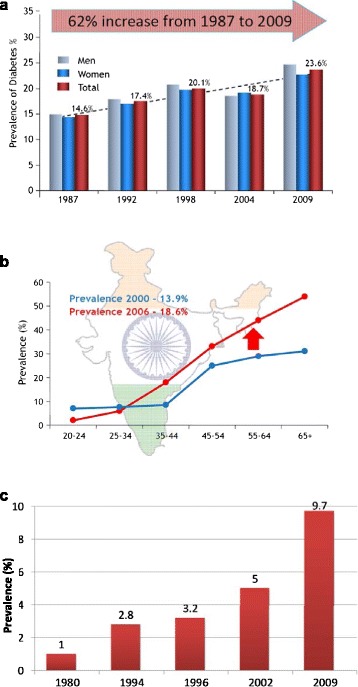
“[18, 19], b India Adapted from [20], and c China Adapted from [21] Zimmet Clinical Diabetes and Endocrinology (2017) 3:1 Page 3 of 8”
BackgroundPrevalence and Control of Diabetes in Chinese Adults
Xu, Y. (2013) · JAMA · doi:10.1001/jama.2013.168118 · Cited by 2,703
Glucose tolerance in adults after prenatal exposure to famine
Ravelli, A., van der Meulen, J., Michels, R., Osmond, C., Barker, D., Hales, C., & Bleker, O. (1998) · The Lancet · doi:10.1016/s0140-6736(97)07244-9 · Cited by 1,606
Global healthcare expenditure on diabetes for 2010 and 2030
Zhang, P., Zhang, X., Brown, J., Vistisen, D., Sicree, R., Shaw, J., & Nichols, G. (2010) · Diabetes Research and Clinical Practice · doi:10.1016/j.diabres.2010.01.026 · Cited by 1,145
Diabetes: a 21st century challenge
Zimmet, P. Z., Magliano, D. J., Herman, W. H., & Shaw, J. E. (2014) · The Lancet Diabetes & Endocrinology · doi:10.1016/s2213-8587(13)70112-8 · Cited by 1,062 · cited 1×
“Ukraine (1932–1933) [43] and in Cambodia (1975–79) [44, 45].”
Self-citationThe Rising Prevalence of Diabetes and Impaired Glucose Tolerance
Dunstan, D. W., Zimmet, P. Z., Welborn, T. A., de Courten, M. P., Cameron, A. J., Sicree, R. A., Dwyer, T., Colagiuri, S., Jolley, D., Knuiman, M., et al. (2002) · Diabetes Care · doi:10.2337/diacare.25.5.829 · Cited by 907 · cited 1×
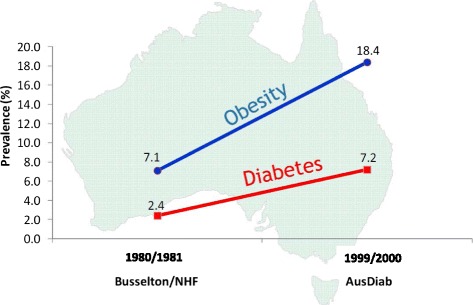
“3 Prevalence of Diabetes and Obesity in Australia 1980/81 and 1999/2000 Adapted from [27, 28]”
BackgroundSelf-citation
Research works printed but not linked: 3
- International Diabetes Federation IDF Diabetes 2015 7 Brussels International Diabetes Federation
- International Diabetes Federation IDF Diabetes 2000 1 Brussels International Diabetes Federation
- Mathers M Dialysis in Central Australia. Current Issues in Indigenous Affairs U3A Hawthorn 2012 1 7
Cited by
Items 201–300 of 398
Punnose, J., Malhotra, R. K., Sukhija, K., Mathew, A., Sharma, A., & Choudhary, N. (2018) · Journal of Clinical & Translational Endocrinology · doi:10.1016/j.jcte.2018.06.001 · Cited by 5
“There is an ongoing global diabetes epidemic and South Asia is projected as its epicenter [22].”
BackgroundKe, C., Persaud, S., Singh, K. K., Ostrow, B., Lebovic, G., Hincapié, C. A., & LOWE, J. M. (2020) · BMJ Open Diabetes Research & Care · doi:10.1136/bmjdrc-2020-001349 · Cited by 6
Nantha, Y. S., Chelliah, A. A. P., Haque, S., & Zain, A. Z. M. (2021) · PLoS ONE · doi:10.1371/journal.pone.0249620 · Cited by 5
Pablo, C. R., Mohammadnezhad, M., Wilson, D., & Khan, S. (2018) · Journal of Diabetic Complications & Medicine · doi:10.4172/2475-3211.1000120 · Cited by 5
Trtica, M. L., Babič, F., Bosnić, Z., Zekić–Sušac, M., & Wittlinger, T. (2020) · International Journal of Diabetes and Clinical Research · doi:10.23937/2377-3634/1410121 · Cited by 5
“Int J Diabetes Clin Res 2020, 7:121 • Page 2 of 12 • and lower limb amputations [1].”
BackgroundPolhuis, K. C. M. M. (2023) · doi:10.18174/631882 · Cited by 5
Dalvand, A., Aazami, H., Akbarniakhaky, H., Parvar, S., Habibi, R., Mohammadi, G., Faryabi, A., & Dehghanbanadaki, H. (2026) · Cardiovascular Diabetology – Endocrinology Reports · doi:10.1186/s40842-026-00272-w · Cited by 4
“The Rapid Expansion phase (mean 725.92 articles/year) corresponds to a global epidemic [9], demonstrating the field scalability.”
InfluentialAlfa, J., Ben, A. F., Buxaderas, E., Akpa, P. A., Hanifah, A., Oseni, O. M.-L., Kenechukwu, F. C., Momoh, M. A., & Díaz, D. D. (2024) · Current Pharmaceutical Design · doi:10.2174/0113816128309449240527053640 · Cited by 4
Mehra, A., Mittal, A., & Thakur, D. (2024) · Current Proteomics · doi:10.2174/0115701646323264240821072359 · Cited by 4
Maikai, S. S., Raji, R. O., Muhammad, H. L., & Abubakar, A. (2019) · Comparative Clinical Pathology · doi:10.1007/s00580-019-03063-1 · Cited by 4
“It is commonly known as Gwandan daji, Ewe-aso and Dukuuhi in Hausa, Yoruba and Fulani respectively (Zimmet 2017).”
BackgroundSingh, R., Thilagawathi, T., Mansoor, S., & Verma, M. (2020) · International Journal of Diabetes in Developing Countries · doi:10.1007/s13410-020-00815-6 · Cited by 4
Premakumara, G. A. S., & Abeysekera, W. K. S. M. (2023) · BMC Complementary Medicine and Therapies · doi:10.1186/s12906-023-04169-4 · Cited by 4
“Diabetes is in epidemic proportions throughout the world [1–3].”
BackgroundNingombam, S. S., Rajkumari, S., Chhungi, V., Newmei, M. K., Devi, N. K., Mondal, P. R., & Saraswathy, K. N. (2018) · International Journal of Diabetes in Developing Countries · doi:10.1007/s13410-018-0634-1 · Cited by 4
“In developed countries, it was considered as Bthe Western killer^, the developing countries are also not untouched by this biggest epidemic in human history [1].”
BackgroundProblematika uživanja pijač z dodanim sladkorjem v Sloveniji in svetu
Volčanšek, Š., Lunder, M., Janić, M., & Janež, A. (2019) · Slovenian Medical Journal · doi:10.6016/zdravvestn.2703 · Cited by 4
Diet-related nutrition and health issues in Indian population
Lakshmi, A. J., & Prakash, J. (2020) · Elsevier eBooks · doi:10.1016/b978-0-12-820011-7.00003-4 · Cited by 4
Mariye, T., Tadesse, D. B., Atalay, H. T., Teklay, G., Gebremichael, G. B., Teklu, T., Mebrahtom, G., & Aberhe, W. (2020) · Cited by 4
González-Block, M. Á., Díaz-Portillo, S. P., Reyes‐Morales, H., Saldaña, J. R., & Gutiérrez-Calderón, E. (2020) · Primary care diabetes · doi:10.1016/j.pcd.2020.10.012 · Cited by 4
Barthow, C. A., Krebs, J. D., & McKinlay, E. M. (2023) · BMC Family Practice · doi:10.1186/s12875-023-02053-1 · Cited by 4
“Diabetes occurs more frequently in urban compared to rural areas [3], and disproportionately affects indigenous and disadvantaged populations [4, 5].”
BackgroundSecondary Traumatic Stress in Teachers and School Communities Impacted by the Opioid Epidemic
Steketee, A. (2020) · Chapman University Digital Commons (Chapman University) · doi:10.36837/chapman.000176 · Cited by 5
Ndonwi, E. N., Matshazi, D. M., Davison, G. M., Erasmus, R. T., Kengne, A. P., & Matsha, T. E. (2025) · Biomedical Reports · doi:10.3892/br.2025.2022 · Cited by 3
“Socio‑economic (income and level of education), demographic (age, sex and ethnicity) and environmental factors (diet, alcohol consumption and physical inactivity) have contributed to the rise in the prevalence of prediabetes and diabetes (4).”
Maltol induces diabetic fragility fractures by disrupting the balance of bone remodeling
Wang, J., Wang, Z., Jinyi, F., Zhang, Y., Yao, L., Zhang, Y., Zhang, R., Cai, J., Yu, H., Deng, S., et al. (2026) · Cell Metabolism · doi:10.1016/j.cmet.2026.03.001 · Cited by 3
Priyadarsini, N., Likhitha, D., Ramachandran, M., & Behera, K. K. (2023) · Canadian Journal of Diabetes · doi:10.1016/j.jcjd.2023.12.003 · Cited by 3
Omodei‐James, S., Wilson, A. M., Kropinyeri, R., Cameron, D., Wingard, S., Kerrigan, C., Scriven, T., Wilson, S., Mendham, A. E., Spaeth, B., et al. (2024) · Health Promotion Journal of Australia · doi:10.1002/hpja.915 · Cited by 3
Ozel‐Tasci, C., Pilatin, G., Edeer, O., & Güleç, Ş. (2020) · Turkish Journal of Biochemistry · doi:10.1515/tjb-2020-0082 · Cited by 3
Body Weight and Psychological Functioning in Type 2 Diabetes Mellitus Patients: A Preliminary Study
Pokrajac-Bulian, A., & Tkalčić, M. (2018) · Psihologijske teme · doi:10.31820/pt.27.1.4 · Cited by 2
“Unhealthy dietary habits and sedentary behaviour that lead to obesity are the major drivers of this global pandemic (Zimmet, 2017).”
BackgroundZhang, J., Zhang, J., & Tao, Z. (2022) · Frontiers in Endocrinology · doi:10.3389/fendo.2022.861443 · Cited by 4
Advances in Teleophthalmology Screening for Diabetic Retinopathy
Song, A., & Borkar, D. S. (2023) · International Ophthalmology Clinics · doi:10.1097/iio.0000000000000505 · Cited by 3
“Portable and smartphone-based retinal imaging may also have a role in resource-constrained settings.”
BackgroundRodríguez‐Saldaña, J. (2019) · Springer eBooks · doi:10.1007/978-3-030-11815-0_1 · Cited by 3
Natural Products in Modern Biology: Ancient Wisdom for Today’s Challenges
Krüger, M., Richter, P. R., & Strauch, S. M. (2021) · Biology · doi:10.3390/biology10050369 · Cited by 3
Li, P., Ji, B., Lappa, D., Meijnikman, A. S., Olsson, L. M., Aydin, Ö., Bruin, S. C., van de Laar, A. W. J. M., Tremaroli, V., Luo, H., et al. (2022) · bioRxiv (Cold Spring Harbor Laboratory) · doi:10.1101/2022.04.26.489057 · Cited by 3
Corrao, S., Nobili, A., Natoli, G., Mannucci, P. M., Perticone, F., Pietrangelo, A., Argano, C., & the REPOSI Investigators (2021) · Acta Diabetologica · doi:10.1007/s00592-021-01749-z · Cited by 3
Szukiewicz, D. (2025) · International Journal of Molecular Sciences · doi:10.3390/ijms262210899 · Cited by 3
“Diabetes mellitus (DM) is the most common metabolic disease in humans, and its prevalence is increasing worldwide in parallel with that of obesity [25].”
Zinn, C., Campbell, J. L., Fraser, L., Davies, G., Hawkins, M., Currie, O., Cannons, J., Unwin, D., Crofts, C., Stewart, T., et al. (2025) · Nutrients · doi:10.3390/nu17243953 · Cited by 2
“The global type 2 diabetes (T2D) epidemic is a significant public health crisis [1].”
Dey, S., Dey, R., Sow, P., Bhattacharjee, B., Chakrovorty, A., Sk, S., Bera, M., Nandi, S., Guptaroy, P., & Samadder, A. (2025) · Materials Advances · doi:10.1039/d4ma01203h · Cited by 2
IZUMI, M., Hano, K., Taiki, K. A. T. O., Hirata, A., Paing, T. H. A. W., Seki, A., Tanaka, M., Ochi, K., Suganami, T., KITAGAWA, H., et al. (2025) · Journal of Veterinary Medical Science · doi:10.1292/jvms.25-0145 · Cited by 2
Yakubu, I., Alhassan, M., Arhin, E. T., & Mohammed, H. (2025) · BMC Public Health · doi:10.1186/s12889-025-23979-4 · Cited by 2
El-Khoury, R., Mahmoud, S., Dargham, S. R., Mahfoud, Z. R., Jayyousi, A., Suwaidi, J. M. S. A., & Khalil, C. A. (2026) · ESC Heart Failure · doi:10.1093/eschf/xvag064 · Cited by 2
“Further, diagnoses, comorbidities, and clinical events were coded using ICD-10, which may introduce misclassification and selection bias.”
Non-invasive blood glucose sensing with a wearable microwave antenna earring
Abdel‐Haleem, M. R., Afifi, A. I., & El-Hameed, A. S. A. (2026) · Sensors and Actuators A Physical · doi:10.1016/j.sna.2026.117846 · Cited by 2
Mortalität bei Typ-2-Diabetes in Deutschland
Tönnies, T., Brinks, R., & Hoyer, A. (2019) · Der Diabetologe · doi:10.1007/s11428-018-0436-6 · Cited by 2
Genetic association tests in family samples for multi-category phenotypes
Wang, S., Meigs, J. B., & Dupuis, J. (2021) · BMC Genomics · doi:10.1186/s12864-021-08107-x · Cited by 2
“We evaluate our approach using simulations and apply it to a genome-wide scan to identify genetic variants associated with diabesity, a four-category phenotype, with the healthy referent category being no diabetes and no obesity and the unhealthiest category, “diabese” (diabetes and obesity), having a prevalence of at…”
MethodHeterogeneity and altered β-cell identity in the TallyHo model of early-onset type 2 diabetes
McDonald, S. D., Ray, P., Bunn, R. C., Fowlkes, J. L., Thrailkill, K. M., & Popescu, I. R. (2022) · Acta Histochemica · doi:10.1016/j.acthis.2022.151940 · Cited by 2
Herencia, J. A. C., Rueda, M. S., Ródenas, L. M. A., Divisón, J. A., Escribano, F. M., García, I. P., Bru, A. P., Moreno, P. T., Bernardo, D. C., López, R. M., et al. (2025) · Clínica e Investigación en Arteriosclerosis (English Edition) · doi:10.1016/j.artere.2025.500768 · Cited by 2
Ezeama Martina, C., & Enwereji Ezinna, E. (2019) · International Journal of Advances in Medicine · doi:10.18203/2349-3933.ijam20195237 · Cited by 2
Obesity and Hypertension among Nigerians with Impaired Fasting Glucose
Atiba, A. S., Oparinde, D. P., Olufunmimi, J., ‘Niran-Atiba, T. A., & Bello, N. O. (2020) · Pakistan Journal of Nutrition · doi:10.3923/pjn.2020.266.270 · Cited by 2
Electrolyte Variations in Diabetic Nephropathy
Rao, S. N., & Kuldeep, G. B. (2022) · Journal of Diabetes Research Review & Reports · doi:10.47363/jdrr/2022(4)155 · Cited by 2
Application of End-To-End EfficientNetV2 in Diabetic Retinopathy Grading
Xu, X., Liu, D., Wang, M., & Lei, M. (2023) · Lecture notes on data engineering and communications technologies · doi:10.1007/978-3-031-20738-9_22 · Cited by 2
AN ASSOCIATION BETWEEN TYPE 2 DIABETES MELLITUS AND A CLINICAL PERIODONTAL PARAMETER: POCKET DEPTH
Mariyum, S., Khan, A. I., Wadud, S., Hakeem, H., Saleem, N., & Younas, M. (2023) · Journal of Khyber College of Dentistry · doi:10.33279/jkcd.v13i1.104 · Cited by 2
Бойко, А. І. (2023) · Фармацевтичний часопис · doi:10.11603/2312-0967.2023.1.13913 · Cited by 2
Hussein, H. M., Alkhuzai, A., Janson, C., & Amin, K. (2024) · Cellular and Molecular Biology · doi:10.14715/cmb/2024.70.4.8 · Cited by 2
“The prevalence of type 2 diabetes mellitus (T2DM) is progressively growing with the improvement of people's living conditions, the aging of the population, and changes in people's lifestyles [1].”
BackgroundQibtia, M., Mahwish, R., Shahid, A., Choudhary, M., Mazhar, M., & Ali, M. (2021) · Journal of Akhtar Saeed Medical & Dental College · doi:10.51127/jamdcv03i01oa02 · Cited by 2
The STOP DIABETES study: when prevention works
Bonaventura, A., & Montecucco, F. (2019) · Acta Diabetologica · doi:10.1007/s00592-019-01309-6 · Cited by 2
Khroud, M., Song, Z., Shao, W., & Jin, T. (2019) · Obesity Medicine · doi:10.1016/j.obmed.2019.100153 · Cited by 2
Pandey, S., Satyawali, V., Painyuli, B., & Titiyal, G. S. (2019) · Indian Journal of Clinical and Experimental Ophthalmology · doi:10.18231/j.ijceo.2019.085 · Cited by 2
“If the total number of diabetics in the world is to be collected in one country, it would be the third biggest country in the world.(1) In recent years, the prevalence of diabetes, as well as prediabetes, has significantly increased in India.”
BackgroundBizzarri, M., Minini, M., & Monti, N. (2020) · Human perspectives in health sciences and technology · doi:10.1007/978-3-030-32857-3_1 · Cited by 2
Rethinking Fatness, Rethinking Diabetes
Carruth, L. (2020) · American Anthropologist · doi:10.1111/aman.13440 · Cited by 2
Tahir, M., Adil, M., Khalid, S. R., Khan, S., & Tariq, S. B. (2020) · The Professional Medical Journal · doi:10.29309/tpmj/2020.27.09.4239 · Cited by 2
Mathakala, V., Kesavulu, M. M., & Palempalli, U. M. D. (2022) · Heliyon · doi:10.1016/j.heliyon.2022.e10252 · Cited by 2
“When I Don’t Have Money, I Don’t Eat”: A Critical Hermeneutic Study of Diabetes in Liberia
Bleah, P., Wilson, R. A., Macdonald, D., & Plazas, P. C. (2023) · New Trends in Qualitative Research · doi:10.36367/ntqr.16.2023.e785 · Cited by 2
Saputro, A., Prasetyo, S. A., Sobirin, M. A., Mughni, A., & Prajoko, Y. W. (2023) · The Indonesian Biomedical Journal · doi:10.18585/inabj.v15i4.2240 · Cited by 2
A Study of Prevalence of Thyroid Disorders in Patients with Type 2 Diabetes Mellitus
Surendra, K. (2019) · Open Access Journal of Endocrinology · doi:10.23880/oaje-16000142 · Cited by 2
Devi, V. S. M. A. V. N. M. (2023) · Journal of Pharmaceutical Negative Results · doi:10.47750/pnr.2023.14.s02.132 · Cited by 2
Karakurt, M., Açar, B., Özeke, Ö., Özbay, M. B., Özen, Y., Ünal, S., Karanfil, M., Yayla, Ç., Çay, S., Maden, O., et al. (2018) · Angiology · doi:10.1177/0003319718808921 · Cited by 2
Diabetic retinopathy screening and treatment
Nissen, T. P. H. (2023) · VBN Forskningsportal (Aalborg Universitet) · doi:10.54337/aau588589522 · Cited by 2
Omodei-James, S., Kropinyeri, R., Wilson, S., Cameron, D., Mendham, A. E., Kartinyeri, N., Scriven, T., Wingard, S., Kerrigan, C., Spaeth, B., et al. (2025) · BMJ Open · doi:10.1136/bmjopen-2025-106319 · Cited by 1
Bala, C. G., Román, G., Ciobanu, D. M., & Rusu, A. (2020) · International Journal of Diabetes in Developing Countries · doi:10.1007/s13410-019-00784-5 · Cited by 1
Dietary Patterns and Whole Plant Foods in Type 2 Diabetes Prevention and Management
Dreher, M. L. (2018) · Springer eBooks · doi:10.1007/978-3-319-59180-3_9 · Cited by 1
DiTosto, J. D., Gomez-Roas, M. V., Niznik, C. M., Williams, B. R., Grobman, W. A., & Yee, L. M. (2024) · Diabetes Spectrum · doi:10.2337/ds23-0072 · Cited by 1
McNulty, C. R., & Holland, J. J. (2025) · mHealth · doi:10.21037/mhealth-24-87 · Cited by 1
Cristela Mae C. Candelario, R., & Eleanor C. Castillo, R. (2025) · Acta Medica Philippina · doi:10.47895/amp.vi0.12268 · Cited by 1
How the Salutogenic Pattern of Health Reflects in Type 2 Diabetes Mellitus: A Narrative Review
Mijač, S., Vitale, K., Lončarek, K., & Slivšek, G. (2025) · Diabetology · doi:10.3390/diabetology6110124 · Cited by 2
“Based on these findings and the fact that T2DM often occurs as a result of obesity, which is primarily related to an unhealthy diet, it is now more common to speak of an epidemic of diabesity or, more precisely, of the development of T2DM in the presence of obesity [15].”
Almendras, M. B., Jaillita, M. L. N., Colque, J. A. I., Viles, E. C., Carrasco, O. C., & Ramallo, G. J. M. R. (2025) · IEEE Latin American Conference on Computational Intelligence (LA-CCI) · doi:10.1109/la-cci66231.2025.11270183 · Cited by 1
“Early prediction not only improves the chances of medical intervention but also contributes to the reduction of serious complications associated with diabetes, such as cardiovascular diseases, neuropathies, and nephropathies [1].”
Colatrella, A., Bhaniramka, V., Gilbert, P. F., Bicknell, J., Pascual-Pedro, M., & Campillo‐Alvarado, G. (2026) · ACS Omega · doi:10.1021/acsomega.5c13537 · Cited by 1
Otene, C., Ihaka, B., & Carroll, M. (2026) · Journal of Foot and Ankle Research · doi:10.1002/jfa2.70167 · Cited by 1
Kudolo, G. B. (2019) · Pancreas - Open Journal · doi:10.17140/poj-3-109 · Cited by 1
Salci, M. A., Paiano, M., Radovanovic, C. A. T., Pires, G. A. R., Meirelles, B. H. S., & da Silva, D. V. (2020) · Ciência Cuidado e Saúde · doi:10.4025/ciencuidsaude.v19i0.48484 · Cited by 1
All-healing weapon: the value of Oplopanax horridus root bark in the treatment of type 2 diabetes
Daschbach, A. B. (2019) · Western CEDAR (Western Washington University) · Cited by 1
The relationship between adult height and diabetes in India: A countrywide cross‐sectional study
Ssabbagh, M. A., Geldsetzer, P., Bärnighausen, T., & Deckert, A. (2019) · Journal of Diabetes · doi:10.1111/1753-0407.12977 · Cited by 1
Al-Sharafi, B. A., Algoby, M. A., & Salem, K. (2020) · Journal of Diabetes Research and Therapy · doi:10.16966/2380-5544.152 · Cited by 1
“This may have been affected by the war which has caused an increase in poverty, which in some countries caused a decrease in obesity and diabetes such as occurred in Nauru and Cuba after the economic collapse [16].”
BackgroundSmash of Diabetes Mellitus on Smile
Akter, F., & Haque, M. (2021) · Advances in Human Biology · doi:10.4103/aihb.aihb_68_21 · Cited by 1
The impact of obesity on the development of certain cancers in patients with type 2 diabetes
Вацеба, Т. С., SOKOLOVA, L. K., Tronko, M. D., Churpiy, І. К., Vatseba, M. O., & Derpak, V. V. (2021) · Medicni perspektivi · doi:10.26641/2307-0404.2021.2.234627 · Cited by 1
Amiri, M., Mobareke, K. A., & Oreyzi, S. H. R. (2018) · Journal of Research in Behavioural Sciences · doi:10.52547/rbs.16.4.549 · Cited by 1
Aboulmakarim, S., Boukhira, A., Sayagh, S., & Chellak, S. (2021) · American Journal of Laboratory Medicine · doi:10.11648/j.ajlm.20210606.15 · Cited by 1
“Diabetes mellitus Type 2 (T2DM) is characterized by chronic hyperglycemia due to a progressive loss of adequate β-cell insulin secretion frequently on the background of insulin resistance [1, 2] and is usually associated with lipoprotein disorders [3].”
Pathophysiology of Type 2 Diabetes: A General Overview of Glucose and Insulin Homeostasis
Ghasemi, A., & Kashfi, K. (2022) · BENTHAM SCIENCE PUBLISHERS eBooks · doi:10.2174/9789815079814122010004 · Cited by 1
The Global Epidemic of Diabesity: Are We Heading for an Unsustainable Future?
Cuschieri, S., & Grech, S. (2023) · Integrated science · doi:10.1007/978-3-031-17778-1_20 · Cited by 1
Wildenberg, K., Zillich, L., Streit, F., Maier, B. C. L., Distel, D., Hammes, H., Witt, S. H., & Deuschle, M. (2023) · Psychosomatic Medicine · doi:10.1097/psy.0000000000001213 · Cited by 1
“Moreover, adverse childhood events do not exclusively endanger the health of those affected but also the offspring of those affected (53,54).”
BackgroundChowdhury, Y. S., Moaddab, A., Soni, L., & McFarlane, S. I. (2023) · Contemporary cardiology · doi:10.1007/978-3-031-13177-6_13 · Cited by 1
Dózsa, K., Fadgyas‐Freyler, P., Kováts, T., Pollner, P., Joó, T., Oláh, I., Hasitz, Á., Rosta, L., & Kempler, P. (2024) · Diabetologia Hungarica · doi:10.24121/dh.2024.1 · Cited by 1
اثربخشی آموزش ذهنآگاهی با رویکرد اسلامی بر بهزیستی معنوی و احساس تنهایی زنان مبتلا به دیابت نوع دو
Yazdi, F. F., Askarizadeh, G., & Ghouchani, K. P. (2020) · پژوهش در دین و سلامت · doi:10.22037/jrrh.v6i4.26588 · Cited by 1
Herencia, J. A. C., Rueda, M. S., Ródenas, L. M. A., Divisón, J. A., Escribano, F. M., García, I. P., Bru, A. P., Moreno, P. T., Bernardo, D. C., López, R. M., et al. (2025) · Clínica e Investigación en Arteriosclerosis · doi:10.1016/j.arteri.2025.500768 · Cited by 1
Strydom, H., Muchiri, J. W., Delport, E., & White, Z. (2025) · Clinical Nutrition ESPEN · doi:10.1016/j.clnesp.2025.07.1128 · Cited by 1
Kozlowski, W., & Figiel, S. (2025) · EUROPEAN RESEARCH STUDIES JOURNAL · doi:10.35808/ersj/4034 · Cited by 1
Manuga, T. (2019) · University of the Western Cape Electronic Theses and Dissertations Repository (University of the Western Cape) · Cited by 1
Enhancing diabetes self-management through mobile phone application
Adu, M. D. (2020) · ResearchOnline at James Cook University (James Cook University) · doi:10.25903/f2b4-0c62 · Cited by 1
Dimitrov, K., & Zimpfer, D. (2022) · European Journal of Cardio-Thoracic Surgery · doi:10.1093/ejcts/ezac093 · Cited by 1
Epigenetics of Environmental Exposures
Stein, R. A., Skumiał, M. A., & Graur, F. (2019) · Elsevier eBooks · doi:10.1016/b978-0-12-409548-9.10662-1 · Cited by 1
Managing obesity: A need to bring guidelines to practice
Menon, A. S., Verma, V., & Kotwal, N. (2023) · Medical Journal Armed Forces India · doi:10.1016/j.mjafi.2022.11.005 · Cited by 1
Rodríguez‐Saldaña, J. (2023) · Springer eBooks · doi:10.1007/978-3-031-25519-9_1 · Cited by 1
Metabolic health: A new frontier
Zinn, C. (2023) · Journal of Metabolic Health · doi:10.4102/jmh.v6i1.92 · Cited by 1
Barrett, B. (2024) · Sustainability · doi:10.3390/su16114536 · Cited by 1
“Metabolic syndrome, diabetes, dyslipidemia, and obesity are major risk factors for both cardiovascular disease and cancer, and they have reached epidemic proportions across the globe [33].”
DIETS: Diabetic Insulin Management System in Everyday LifePreprint
Zeng, H., Ji, H., & Zhou, P. (2024) · arXiv (Cornell University) · doi:10.48550/arxiv.2411.12812 · Cited by 1
“Diabetes has become a major global epidemic, affecting 10.5% of adults aged 20-79 affected worldwide, totaling 537 million individuals [55].”
Influential
Metadata
- Authors
- Zimmet, P. Z.
- Affiliations
- Baker Heart and Diabetes Institute (AU)
- Corresponding author
- Zimmet, Paul Z.
- ORCID
- Zimmet, Paul Z.
- Venue
- Clinical Diabetes and Endocrinology
- Published
- 2017-01-18
- Volume
- 3
- Issue
- 1
- Pages
- 1-1
- ISSN
- 2055-8260 (ISSN-L)
- PMC
- PMC5471716
- OpenAlex
- W2578241329
- Cited by
- 338
- References
- 46
- Citations by year
- 2026: 7 · 2025: 30 · 2024: 35 · 2023: 48 · 2022: 38 · 2021: 56 · 2020: 54 · 2019: 37 · 2018: 26 · 2017: 7
- FWCI
- 37.00
- Type
- journal article
- Language
- en
- Open access
- gold
- doi.org
- Licence
- cc-by
- Locations
- Clinical Diabetes and Endocrinology (publishedVersion, cc-by)
- PubMed Central (publishedVersion, cc-by)
- PubMed (publishedVersion)
- Topics
- Health Sciences › Medicine › Pediatrics, Perinatology and Child Health › Birth, Development, and Health
- Health Sciences › Medicine › Endocrinology, Diabetes and Metabolism › Diabetes, Cardiovascular Risks, and Lipoproteins
- Life Sciences › Biochemistry, Genetics and Molecular Biology › Genetics › Diabetes and associated disorders
- Keywords
- type 2 diabetes, obesity, diabetes prevention, epigenetics, intrauterine environment, intergenerational transmission, famine, Chinese famine, early life events, maternal and child health, drought, Horn of Africa
About these checks
Registry, retraction, Cites and statistics results are computed, not judged, with one exception: a printed reference that no index lists is read once by a model before it counts as a citation error. Claims are extracted by a model and kept only when their quote appears verbatim in the text; each cited source is then checked, with a model’s help, for whether it says what the claim relies on. Those verdicts can be wrong — read the claim’s quote and the cited source before relying on one.
Statistics and arithmetic are recomputed, not judged.
Confidence bands are shown only for fields calibrated on our annotated test set. None is calibrated yet, so no band is shown.
What counts as a claim ›How we measure confidence ›How we check this ›
Are you an author, or do you see a problem with this page? Request a review
Data sources
Bibliographic data: Semantic Scholar, OpenAlex, Crossref.
Contains information from the Semantic Scholar Academic Graph Datasets, made available under the ODC Attribution License (ODC-BY 1.0).
Semantic Scholar’s data is described in: Kinney, R., et al. (2023). The Semantic Scholar Open Data Platform. arXiv:2301.10140.
