

Diabetes and its drivers: the largest epidemic in human history?
Open accessThe DOI matches its Crossref record; 46 of the 46 references it cites were found in a registry or an index.
Abstract
The "Diabesity" epidemic (obesity and type 2 diabetes) is likely to be the biggest epidemic in human history. Diabetes has been seriously underrated as a global public health issue and the world can no longer ignore "the rise and rise" of type 2 diabetes. Currently, most of the national and global diabetes estimates come from the IDF Atlas. These estimates have significant limitations from a public health perspective. It is apparent that the IDF have consistently underestimated the global burden. More reliable estimates of the future burden of diabetes are urgently needed. To prevent type 2 diabetes, a better understanding of the drivers of the epidemic is needed. While for years, there has been comprehensive attention to the "traditional" risk factors for type 2 diabetes i.e., genes, lifestyle and behavioral change, the spotlight is turning to the impact of the intra-uterine environment and epigenetics on future risk in adult life. It highlights the urgency for discovering novel approaches to prevention focusing on maternal and child health. Diabetes risk through epigenetic changes can be transmitted inter-generationally thus creating a vicious cycle that will continue to feed the diabetes epidemic. History provides important lessons and there are lessons to learn from major catastrophic events such as the Dutch Winter Hunger and Chinese famines. The Chinese famine may have been the trigger for what may be viewed as a diabetes "avalanche" many decades later. The drivers of the epidemic are indeed genes and environment but they are now joined by deleterious early life events. Looking to the future there is the potential scenario of future new "hot spots" for type 2 diabetes in regions e.g., the Horn of Africa, now experiencing droughts and famine. This is likely to occur should improved economic and living conditions occur over the next few decades. Type 2 diabetes will remain one of the greatest challenges to human health for many years to come.
Overview
The claims and statistics of this paper haven’t been checked yet.
Free: it reads the open-access text and checks the first 5 claims that cite a source we can check. Create a free account to check every claim.
Integrity signals
Registry
Cites
Statistics
Figures
Verification
Claims the paper makes
The claims and statistics of this paper haven’t been checked yet.
Free: it reads the open-access text and checks the first 5 claims that cite a source we can check. Create a free account to check every claim.
Claims other papers make about this one
Each is checked against this paper’s own text: does it say what the citing paper says it does?
In the citing paper
“Heterozygous carriers of these same gene mutations commonly express moderate elevations of serum TG levels that expose them to increased CVD risk [378].”
From 2019 ESC/EAS guidelines for the management of dyslipidaemias: lipid modification to reduce cardiovascular risk (2019) · cites this paper as [378]
Self-check
Percentages, sums and reported differences re-computed from the paper’s own numbers.
The self-check needs the paper’s full text.
Citations
Cites
Wild, S., Roglic, G., Green, A., Sicree, R., & King, H. (2004) · Diabetes Care · doi:10.2337/diacare.27.5.1047 · Cited by 15,297 · cited 1×
“prevalence of diabetes in 2000 and 2030–171 million people with diabetes in 2000 and 366 million by 2030 [4].”
BackgroundInternational Diabetes Federation 2017
Carracher, A. M., Marathe, P. H., & Close, K. L. (2018) · Journal of Diabetes · doi:10.1111/1753-0407.12644 · Cited by 13,418
Tuomilehto, J., Lindström, J., Eriksson, J. G., Valle, T. T., Hämäläinen, H., Ilanne-Parikka, P., Keinänen-Kiukaanniemi, S., Laakso, M., Louheranta, A., Rastas, M., et al. (2001) · New England Journal of Medicine · doi:10.1056/nejm200105033441801 · Cited by 10,873 · cited 1×
“These results were extended by others including the classic study of Jaakko Tuomilehto, the Finnish Diabetes Prevention Study [34].”
ResultPrevalence of Diabetes among Men and Women in China
Yang, W., Lu, J., Weng, J., Jia, W., Ji, L., Xiao, J., Shan, Z., Liu, J., Tian, H., Ji, Q., et al. (2010) · New England Journal of Medicine · doi:10.1056/nejmoa0908292 · Cited by 3,031 · cited 1×
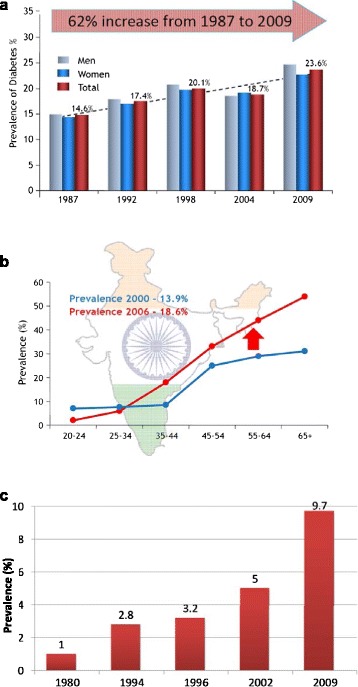
“[18, 19], b India Adapted from [20], and c China Adapted from [21] Zimmet Clinical Diabetes and Endocrinology (2017) 3:1 Page 3 of 8”
BackgroundPrevalence and Control of Diabetes in Chinese Adults
Xu, Y. (2013) · JAMA · doi:10.1001/jama.2013.168118 · Cited by 2,703
Glucose tolerance in adults after prenatal exposure to famine
Ravelli, A., van der Meulen, J., Michels, R., Osmond, C., Barker, D., Hales, C., & Bleker, O. (1998) · The Lancet · doi:10.1016/s0140-6736(97)07244-9 · Cited by 1,606
Global healthcare expenditure on diabetes for 2010 and 2030
Zhang, P., Zhang, X., Brown, J., Vistisen, D., Sicree, R., Shaw, J., & Nichols, G. (2010) · Diabetes Research and Clinical Practice · doi:10.1016/j.diabres.2010.01.026 · Cited by 1,145
Diabetes: a 21st century challenge
Zimmet, P. Z., Magliano, D. J., Herman, W. H., & Shaw, J. E. (2014) · The Lancet Diabetes & Endocrinology · doi:10.1016/s2213-8587(13)70112-8 · Cited by 1,062 · cited 1×
“Ukraine (1932–1933) [43] and in Cambodia (1975–79) [44, 45].”
Self-citationThe Rising Prevalence of Diabetes and Impaired Glucose Tolerance
Dunstan, D. W., Zimmet, P. Z., Welborn, T. A., de Courten, M. P., Cameron, A. J., Sicree, R. A., Dwyer, T., Colagiuri, S., Jolley, D., Knuiman, M., et al. (2002) · Diabetes Care · doi:10.2337/diacare.25.5.829 · Cited by 907 · cited 1×
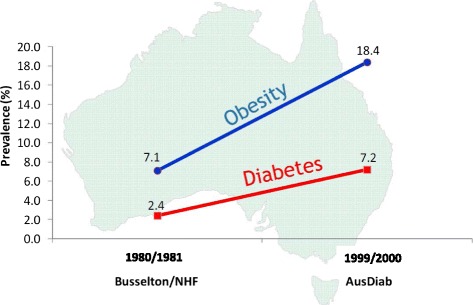
“3 Prevalence of Diabetes and Obesity in Australia 1980/81 and 1999/2000 Adapted from [27, 28]”
BackgroundSelf-citation
Research works printed but not linked: 3
- International Diabetes Federation IDF Diabetes 2015 7 Brussels International Diabetes Federation
- International Diabetes Federation IDF Diabetes 2000 1 Brussels International Diabetes Federation
- Mathers M Dialysis in Central Australia. Current Issues in Indigenous Affairs U3A Hawthorn 2012 1 7
Cited by
Items 101–200 of 398
Roadmap to the Effective Use of Continuous Glucose Monitoring in Primary Care
Martens, T. W. (2023) · Diabetes Spectrum · doi:10.2337/dsi23-0001 · Cited by 20
Li, C., Gráda, C. Ó., & Lumey, L. H. (2024) · BMJ Global Health · doi:10.1136/bmjgh-2024-015355 · Cited by 20
“…on trends in T2D could show many decades after the events 22 24 ; that the Chinese famine could trigger a diabetes ‘avalanche’ many years later 25 ; that future natural disasters such as famines will result in the perpetuation of the T2D epidemic 21 ; and that children born during a famine…”
Parr, E. B., Devlin, B. L., Callahan, M. J., Radford, B. E., Blankenship, J. M., Dunstan, D. W., & Hawley, J. A. (2018) · Nutrients · doi:10.3390/nu10050557 · Cited by 20
Covid-19 and diabesity: when a pandemia cross another pandemia
Guarisco, G., & Leonetti, F. (2020) · Eating and Weight Disorders - Studies on Anorexia Bulimia and Obesity · doi:10.1007/s40519-020-00958-9 · Cited by 20
Ofori‐Asenso, R., Liew, D., Lalic, S., Mazidi, M., Magliano, D. J., Ademi, Z., Bell, J. S., & Ilomäki, J. (2019) · Advances in Therapy · doi:10.1007/s12325-019-01077-3 · Cited by 19
Drake, I., Fryk, E., Strindberg, L., Lundqvist, A., Rosengren, A. H., Groop, L., Ahlqvist, E., Borén, J., Orho‐Melander, M., & Jansson, P. (2021) · Diabetologia · doi:10.1007/s00125-021-05594-1 · Cited by 19
“Diabetes is a global health concern, currently affecting over 400 million people worldwide [1].”
BackgroundRatha, B. N., Kar, R. K., Bednáriková, Z., Gažová, Z., Kotler, S. A., Raha, S., De, S., Maiti, N. C., & Bhunia, A. (2020) · The Journal of Physical Chemistry B · doi:10.1021/acs.jpcb.9b10349 · Cited by 18
Inhibition of miR-200b Promotes Angiogenesis in Endothelial Cells by Activating The Notch Pathway.
Qiu, T., Huang, J., Wang, L., & Zhu, B. (2021) · PubMed Central · doi:10.22074/cellj.2021.7080 · Cited by 18
Negotiating Gestational Diabetes Mellitus in India: A National Approach
Thanawala, U., Divakar, H., Jain, R. K., & Agarwal, M. (2021) · Medicina · doi:10.3390/medicina57090942 · Cited by 18
Interaction between oxidative stress and diabetes: a mini-review
Singh, R., Ashish, A., Shah, A., & Pandey, S. S. (2020) · Journal of Diabetes Metabolic Disorders & Control · doi:10.15406/jdmdc.2020.07.00201 · Cited by 18
Katey, D., Addo, A. A., Abass, K., & Morgan, A. K. (2022) · Journal of Endocrinology Metabolism and Diabetes of South Africa · doi:10.1080/16089677.2022.2074121 · Cited by 17
Fang, Z., Hu, X., Chen, Z., Xie, J., Wu, D., Yin, Y., & You, L. (2020) · Saudi Pharmaceutical Journal · doi:10.1016/j.jsps.2020.04.009 · Cited by 17
“The International Diabetes Federation reported that more than 415 million adults (20–79 years old) had diabetes mellitus globally, which will rise to 642 million by 2040 (IDF, 2015; Zimmet 2017).”
Şimşek, D., Akselim, B., & Altekin, Y. (2021) · The Journal of Maternal-Fetal & Neonatal Medicine · doi:10.1080/14767058.2021.1946779 · Cited by 17
“It could be the century’s Black Death which was the world’s biggest epidemic in the fourteenth century [1].”
BackgroundSafitri, A., Sari, D. R. T., Refsilangi, B., Roosdiana, A., & Fatchiyah, F. (2021) · Veterinary Medicine International · doi:10.1155/2021/6938433 · Cited by 17
Insulin Therapy and Autoimmune Disease with Relevance to Non Alchoholic Fatty Liver Disease
Martins, I. J. (2019) · IntechOpen eBooks · doi:10.5772/intechopen.81297 · Cited by 17
Elhanani, O., Salame, T. M., Sobel, J., Leshkowitz, D., Povodovski, L., Vaknin, I., Kolodkin‐Gal, D., & WALKER, M. D. (2020) · Cell Reports · doi:10.1016/j.celrep.2020.107591 · Cited by 17
Grudziąż-Sękowska, J., Sękowski, K. B., & Kobuszewski, B. (2022) · International Journal of Environmental Research and Public Health · doi:10.3390/ijerph19084798 · Cited by 17
“Since the late 20th century, there has been an upward trend in the number of new cases of T1D diagnosed in children and adolescents [4].”
BackgroundMahmutović, L., Bego, T., Sterner, M., Gremsperger, G., Ahlqvist, E., Velija-Ašimi, Z., Prnjavorac, B., Hamad, N., Čaušević, A., Groop, L., et al. (2019) · Drug Metabolism and Personalized Therapy · doi:10.1515/dmpt-2018-0031 · Cited by 16
Impact of Bariatric Surgery in Reducing Macrovascular Complications in Severely Obese T2DM Patients
Hussain, S., Khan, M. S., Jamali, M. C., Siddiqui, A. N., Gupta, G., Hussain, M. S., & Husain, F. M. (2021) · Obesity Surgery · doi:10.1007/s11695-020-05155-2 · Cited by 15
“Obesity and type 2 diabetes mellitus (T2DM) are the fastestgrowing public health problems, and both have shown a dramatic rise in their incidences in the past 20 years [1].”
BackgroundD’Angelo, S., Ferrara, L., & Joksimović, M. (2022) · Current Nutrition & Food Science · doi:10.2174/1573401318666220317140717 · Cited by 15
Prevalence of diabetic micro vascular complications at a tertiary care unit of Karachi, Pakistan
Abro, M. U. R., Zafar, A. B., Fawwad, A., Mustafa, N., Tahir, B., Riaz, M., & Basit, A. (2018) · International Journal of Diabetes in Developing Countries · doi:10.1007/s13410-018-0683-5 · Cited by 15
Ghasemi, A., Afzali, H., & Jeddi, S. (2021) · Biomedical Journal · doi:10.1016/j.bj.2021.04.004 · Cited by 15
“Diabetes, the largest epidemic in human history [1], is the ninth cause of death [2] with one death every eight seconds in 2019 [3].”
BackgroundVastolo, V., Nettore, I. C., Ciccarelli, M., Albano, L., Raciti, G. A., Longo, M., Bèguinot, F., & Ungaro, P. (2018) · Metabolism · doi:10.1016/j.metabol.2018.06.001 · Cited by 15
Gebreyesus, H. A., Abreha, G. F., Besherae, S. D., Abera, M. A., Weldegerima, A. H., Kidane, E. G., Bezabih, A. M., Lemma, T. B., & Nigatu, T. G. (2021) · BMC Endocrine Disorders · doi:10.1186/s12902-021-00750-5 · Cited by 14
“Background Diabetes mellitus is the most challenging public health threat of the twenty-first century [1].”
BackgroundDepression and type 2 diabetes risk: a Mendelian randomization study
Liu, K., Zhou, D., Chen, L., & Hao, S. (2024) · Frontiers in Endocrinology · doi:10.3389/fendo.2024.1436411 · Cited by 14
Mehta, S., Nain, P., Agrawal, B. K., Singh, R., Kaur, J., Maity, S., Bhattarcharjee, A., Peela, J. R., Nauhria, S., & Nauhria, S. (2021) · Cureus · doi:10.7759/cureus.20208 · Cited by 14
“Diabetes mellitus (DM) is the largest global epidemic of the 21st century and is associated with various complications classified as microvascular and macrovascular [1].”
BackgroundNation-Wide Wastewater-Based Epidemiology Assessment of Metformin Usage in China: 2014–2020
Zheng, Q., Du, P., Wang, Z., Zhang, L., Zhu, Z., Huang, J., Wang, Z., Hall, W., Dang, A. K., Wang, D., et al. (2023) · ACS ES&T Water · doi:10.1021/acsestwater.2c00489 · Cited by 14
Mazzoli, A., Sardi, C., Breasson, L., Theilig, F., Becattini, B., & Solinas, G. (2020) · FASEB BioAdvances · doi:10.1096/fba.2020-00081 · Cited by 14
In vitro, In vivo and In silico Antihyperglycemic Activity of Some Semi-Synthetic Phytol Derivatives
Upadhyay, H. C., Mishra, A., Pandey, J., Sharma, P., Tamrakar, A. K., Srivastava, A. K., Khan, F., & Srivastava, S. K. (2021) · Medicinal Chemistry · doi:10.2174/1573406417666201216124018 · Cited by 13
Xu, Q., Ding, H., Li, S., Dong, S., Li, L., Shi, B., Zhong, M., & Zhang, G. (2021) · Frontiers in Physiology · doi:10.3389/fphys.2021.785799 · Cited by 13
“Diabetes and its complications, including diabetic cardiomyopathy (DCM), pose a serious threat to global health and place a great burden on global health care (Holman et al., 2015; Zimmet, 2017).”
BackgroundThe Fundus Structural and Functional Predictions of DME Patients After Anti-VEGF Treatments
Xie, H., Huang, S., Liu, Q., Xiang, Y., Xu, F., Li, X., & Chiu, C.-H. (2022) · Frontiers in Endocrinology · doi:10.3389/fendo.2022.865211 · Cited by 13
Ahmad, M. F., Haidar, M. A., Naseem, N., Ahsan, H., & Siddiqui, W. A. (2023) · Molecular and Cellular Biomedical Sciences · doi:10.21705/mcbs.v7i1.282 · Cited by 13
Evolving role of anti-VEGF for diabetic macular oedema: from clinical trials to real life
Sharma, T. (2019) · Eye · doi:10.1038/s41433-019-0590-0 · Cited by 13
Safitri, A., Ratih, D. S., Fatchiyah, F., & Roosdiana, A. (2021) · Makara Journal of Science · doi:10.7454/mss.v25i1.1223 · Cited by 12
Wang, R., He, X., Su, S., Bai, J., Xiang, Q., Liu, H., & Zhou, F. (2024) · Smart Materials in Medicine · doi:10.1016/j.smaim.2024.07.002 · Cited by 12
Mendivil, C. O., Romero, S., Peláez-Jaramillo, M. J., Nieves-Barreto, L. D., Montaño-Rodríguez, A., & Betancourt-Villamizar, E. (2021) · BMJ Open · doi:10.1136/bmjopen-2020-042050 · Cited by 12
Nantha, Y. S., Haque, S., Chelliah, A. A. P., Zain, A. Z. M., & Yen, G. K. (2020) · Journal of Primary Care & Community Health · doi:10.1177/2150132719900710 · Cited by 12
Predicting and preventing diabetes: Translational potential of Ayurveda information on pre-diabetes
Rastogi, S., Singh, N., Gutch, M., & Bhattacharya, A. (2021) · Journal of Ayurveda and Integrative Medicine · doi:10.1016/j.jaim.2021.05.009 · Cited by 13
Corrao, S., Natoli, G., Nobili, A., Mannucci, P. M., Perticone, F., Arcoraci, V., & Argano, C. (2022) · Healthcare · doi:10.3390/healthcare10081459 · Cited by 12
Alfaqih, M. A., Melhem, N. Y., Khabour, O. F., Al‐Dwairi, A., Elsalem, L., Alsaqer, T. G., & Allouh, M. Z. (2022) · Medicina · doi:10.3390/medicina58091267 · Cited by 13
(2021) · Journal of Contemporary Medical Sciences · doi:10.22317/jcms.v7i3.970 · Cited by 11
Hartogh, D. J. D., MacPherson, R. E. K., & Tsiani, E. (2025) · Applied Physiology, Nutrition, and Metabolism · doi:10.1139/apnm-2024-0302 · Cited by 11
The chicken or the egg? Does glycaemic control predict cognitive function or the other way around?
Ganmore, I., & Beeri, M. S. (2018) · Diabetologia · doi:10.1007/s00125-018-4689-9 · Cited by 12
Rastogi, R., Saxena, M., Sharma, S. K., Murlidharan, S., Beriwal, V. K., Jaiswal, D., Sharma, A., & Mishra, A. (2020) · Advances in intelligent systems and computing · doi:10.1007/978-981-15-2449-3_15 · Cited by 11
Diabetes mellitus: Plasticizers and nanomaterials acting as endocrine‑disrupting chemicals (Review)
Țuculină, M. J., Perlea, P., Gheorghiță, M., Cumpătă, C. N., Dascălu, I. T., Turcu, A., Nicola, A. G., Gheorghiţă, L., Diaconu, O. A., Valea, A., et al. (2022) · Experimental and Therapeutic Medicine · doi:10.3892/etm.2022.11217 · Cited by 11
“Diabetes is consid‐ ered the true pandemic of the modern era, at least before the Corona Virus Disease‐19 (COVID‐19) pandemic wave that has affected the population worldwide (8,9).”
BackgroundInfluentialSchiffmann, N., Liang, Y., Nemcovsky, C. E., Almogy, M., Halperin‐Sternfeld, M., Gianneschi, N. C., Adler‐Abramovich, L., & Rosen, E. (2023) · Advanced Healthcare Materials · doi:10.1002/adhm.202301053 · Cited by 10
Chee, H. K., Abbas, F., Winkelhoff, A. J. V., Tjakkes, G. E., Htoon, H. M., Li, H., de Waal, Y. C. M., Vissink, A., & Seneviratne, C. J. (2024) · Journal Of Clinical Periodontology · doi:10.1111/jcpe.14090 · Cited by 12
Zhao, Q., Tan, Y., Wu, Q., Xiao, X., Wei, X., Nian, M., Yao, J. J., Fan, N., Wang, R., & Fan, G. (2023) · Expert Opinion on Drug Safety · doi:10.1080/14740338.2023.2275704 · Cited by 10
Santos‐Báez, L. S., Díaz‐Rizzolo, D. A., Popp, C. J., Shaw, D., Fine, K. S., Altomare, A., St‐Onge, M., Manoogian, E. N. C., Panda, S., Cheng, B., et al. (2024) · Nutrients · doi:10.3390/nu16091295 · Cited by 10
“Interventional and epidemiological studies suggest that an excess calorie intake [3], particularly food with a high glycemic load [4,5], are key contributors to overall obesity risk and metabolic dysfunction [6,7].”
BackgroundZhao, T. M., Liu, D., Liu, Y., Deng, J., & Yang, H. (2024) · Food Research International · doi:10.1016/j.foodres.2024.114508 · Cited by 10
Monea, G., Jiritano, R., Salerno, L., Rubino, M., Massimino, M., Perticone, M., Mannino, G. C., Sciacqua, A., Succurro, E., Fiorentino, T. V., et al. (2024) · Cardiovascular Diabetology · doi:10.1186/s12933-024-02394-w · Cited by 10
Changes of intestinal microbiome and its relationship with painful diabetic neuropathy in rats
Jia, S., Mi, H., Yao, S., Liu, Y., Ming, Z., & Lin, J. (2025) · BMC Microbiology · doi:10.1186/s12866-025-04015-2 · Cited by 10
“With the annual increase in the global number of diabetes patients, the type 2 diabetes mellitus (T2DM) has become one of the most serious global epidemics of the twenty-first century [1].”
Jekarl, D. W., Choi, H., Kim, E. S., Lee, S., Park, H., Kim, M., & Kim, Y. (2019) · Scandinavian Journal of Clinical and Laboratory Investigation · doi:10.1080/00365513.2019.1627575 · Cited by 10
Nantha, Y. S., Haque, S., & Chelliah, A. A. P. (2019) · PLoS ONE · doi:10.1371/journal.pone.0225534 · Cited by 10
Aboelnaga, E. M., Aboelnaga, M. M., & Elkalla, H. (2021) · Diabetes & Metabolic Syndrome Clinical Research & Reviews · doi:10.1016/j.dsx.2021.102251 · Cited by 10
Genomic Medicine and Endocrine Autoimmunity as Key to Mitochondrial Disease
Martins, I. J. (2018) · Global Journal of Endocrinological Metabolism · doi:10.31031/gjem.2018.02.000534 · Cited by 10
“Diabetes and its connections to endocrine autoimmunity [1-3] has become important to metabolic disease with relevance to the non alcoholic fatty liver disease (NAFLD) epidemic and neurodegenerative diseases [4].”
BackgroundKoufakis, T., Liberopoulos, E. N., Kokkinos, A. D., Zebekakis, P. E., & Kotsa, K. (2023) · Drugs · doi:10.1007/s40265-023-01852-1 · Cited by 9
Senthilkumar, S., Dasarathan, R., Pazhani, P., Archana Gaur, T., & Sakthivadivel, V. (2023) · Irish Journal of Medical Science (1971 -) · doi:10.1007/s11845-023-03376-9 · Cited by 9
Niu, Y., Li, P., & Pang, Z. (2025) · Pharmaceuticals · doi:10.3390/ph18040474 · Cited by 9
“Type 2 diabetes mellitus (T2DM) has become a global health epidemic, affecting hundreds of millions of people worldwide and posing a significant challenge to public health systems [1].”
Napoli, R., Formoso, G., Piro, S., Targher, G., Consoli, A., & Purrello, F. (2020) · Nutrition Metabolism and Cardiovascular Diseases · doi:10.1016/j.numecd.2020.07.012 · Cited by 9
Alhmoud, E., Saad, M. O., & Omar, N. E. (2024) · Frontiers in Endocrinology · doi:10.3389/fendo.2023.1285147 · Cited by 9
“Diabetes is currently the greatest pandemic of the 21st century according to many epidemiologists (2, 3).”
BackgroundZhou, Z., Li, H., Bai, S., Xu, Z., & Jiao, Y. (2022) · Biochemical and Biophysical Research Communications · doi:10.1016/j.bbrc.2022.02.044 · Cited by 9
Managing diabetes patients in India: Is the future more bitter or less sweet?
Rajadhyaksha, V. (2018) · Perspectives in Clinical Research · doi:10.4103/picr.picr_161_17 · Cited by 9
“[1] If the total number of diabetics in the world is to be collected in one country, it would be the third biggest country in the world.[1] In recent years, the prevalence of diabetes, as well as prediabetes, has significantly increased in India.”
BackgroundRastogi, S., Singh, N., Gutch, M., & Bhattacharya, A. (2022) · Journal of Ayurveda and Integrative Medicine · doi:10.1016/j.jaim.2022.100671 · Cited by 8
How much schizophrenia do famines cause?
Gráda, C. Ó., Li, C., & Lumey, L. H. (2023) · Schizophrenia · doi:10.1038/s41537-023-00416-2 · Cited by 8
“Further a fi eld, drought and famine in the Horn of Africa in the recent past have been tied to “ a potential scenario of new ‘ hot spots ’ for type 2 diabetes ” 3 .”
BackgroundInsulin delivery devices in diabetes management: Applications and advancements
Yang, R., Yang, Z., Chi, J., & Ya, Z. (2025) · Intelligent Pharmacy · doi:10.1016/j.ipha.2025.02.002 · Cited by 8
Dang, N.-A. T., Le, H. M., Nguyen, A., Glöde, P. C., Vinter, C. A., Nielsen, J., Nguyen, D. K., Gammeltoft, T. M., & Linde, D. S. (2025) · Systematic Reviews · doi:10.1186/s13643-025-02790-7 · Cited by 8
Electrochemical Sensing of the Peptide Drug Exendin-4 Using a Versatile Nucleic Acid Nanostructure
Khuda, N., Somasundaram, S., & Easley, C. J. (2022) · ACS Sensors · doi:10.1021/acssensors.1c02336 · Cited by 8
Storz, M. A., & Küster, O. (2019) · Nutrition and Health · doi:10.1177/0260106019874683 · Cited by 8
“Diabetes is a global public health issue and one of the greatest contemporary challenges to human health (Zimmet, 2017).”
BackgroundLiu, M., Yang, S., Wang, S., Zhao, Y., Zhu, Q. L., Ning, C., & He, Y. (2020) · Endocrine · doi:10.1007/s12020-020-02403-4 · Cited by 8
Diabetic retinopathy awareness and eye care behaviour of indigenous women in Saskatoon, Canada
Umaefulam, V. O., & Premkumar, K. (2021) · International Journal of Circumpolar Health · doi:10.1080/22423982.2021.1878749 · Cited by 8
“Diabetes is a major public health challenge worldwide [1].”
BackgroundSari, A. N., Januardi, J., & Diningrat, D. S. (2020) · Elkawnie · doi:10.22373/ekw.v6i1.5496 · Cited by 8
“The World Health Organization (WHO) estimates that DM is suffered by around 171 million people worldwide and the number is expected to reach 366 million by 2030 Huang et al., 2018; Zimmet, 2017).”
BackgroundAbate, T. W., Genanew, A., Gedamu, H., Tegenaw, A., Ayalew, E., Berhie, A. Y., Ergetie, T., & Shibesh, B. F. (2024) · Frontiers in Endocrinology · doi:10.3389/fendo.2024.1372046 · Cited by 7
The Potential of Fish Oil Components and Manuka Honey in Tackling Chronic Wound Treatment
Clare, J., Lindley, M. R., & Ratcliffe, E. (2024) · Microorganisms · doi:10.3390/microorganisms12081593 · Cited by 6
“Due to the increasing number of cases of diabetes across Europe and worldwide [7], diabetic foot ulcers are fast becoming a large burden on many healthcare services and so effective treatments for chronic wounds must be identified.”
BackgroundBaroni, I., Caruso, R., Dellafiore, F., Arrigoni, C., Fabrizi, D., Luciani, M., Rebora, P., & Ausili, D. (2022) · Canadian Journal of Diabetes · doi:10.1016/j.jcjd.2022.03.009 · Cited by 7
Diabetes among women with preterm births: outcomes of a Brazilian multicenter study
da‐Costa‐Santos, J., Guida, J. P. D. S., Cralcev, C., Dias, T. Z., Passini, R., Lajos, G. J., Pacagnella, R. C., Tedesco, R. P., Nomura, M. L., Rehder, P. M., et al. (2023) · Einstein (São Paulo) · doi:10.31744/einstein_journal/2023ao0515 · Cited by 7
Martorell, M., Opazo, M., Ramírez‐Alarcón, K., Labraña, A. M., Nazar, G., Villagrán, M., Mardones, L., Concha‐Cisternas, Y., Diaz‐Toro, F., Lanuza, F., et al. (2024) · Revista médica de Chile · doi:10.4067/s0034-98872024000200178 · Cited by 8
Kusuma, R. J., Ermamilia, A., Halimah, S. N., Pradani, N. F., & Sholikha, I. (2020) · Current Nutrition & Food Science · doi:10.2174/1573401316999201009145146 · Cited by 7
Khamees, M., Jarrar, Y. B., Al‐Qirim, T. M., Mahmoud, I. S., Hatmal, M. M., Alshaer, W., & Lee, S. (2021) · International Journal of Clinical Practice · doi:10.1111/ijcp.14036 · Cited by 7
“(b) This study did not analyse other genetic variants in EPHX2 gene with known functionality on sEH structure and function, (3) we did not study the association of EPHX2 genetic variants with other complications of DM2, such as the neuro- and nephropathy, and (4) we focused on one gene and did not analyse other genes,…”
BackgroundВацеба, Т. С., SOKOLOVA, L. K., & Pushkarev, V. M. (2020) · INTERNATIONAL JOURNAL OF ENDOCRINOLOGY (Ukraine) · doi:10.22141/2224-0721.16.2.2020.201303 · Cited by 7
Chen, T., Zhou, L., Wang, K., Ma, X., Wu, H., Liu, X., Tong, J., Cai, B., & Ji, Q. (2020) · Clinical Therapeutics · doi:10.1016/j.clinthera.2020.06.006 · Cited by 7
Rastogi, R., Saxena, M., Chaturvedi, D. K., Gupta, M., Jain, P., Jain, R., Jain, M., Sharma, V., Sangam, U., Singhal, P., et al. (2022) · Wiley eBooks · doi:10.1002/9781119792673.ch12 · Cited by 7
Hasan, M. M., Ahmed, Q. U., Latip, J., So’ad, S. Z. M., Taher, M., Sabere, A. S. M., & Zakaria, Z. A. (2023) · Sains Malaysiana · doi:10.17576/jsm-2023-5202-14 · Cited by 6
Zhang, W., Natarajan, B., Kannan, P., Medlín, R., Nicolaï, L., Procházka, M., Minar, J., & Subramanian, P. (2024) · Biosensors and Bioelectronics · doi:10.1016/j.bios.2024.116938 · Cited by 6
Samy, B., Mabrouk, M. M., Hamid, M. A. A., & Ahmed, H. M. A. (2025) · BMC Chemistry · doi:10.1186/s13065-025-01582-3 · Cited by 6
Vafaeinasab, M., Malekabad, F. M., Khatibi, A., Ghadiri‐Anari, A., Bidoki, M. Z., & Azizi, R. (2025) · Endocrinology Diabetes & Metabolism · doi:10.1002/edm2.70128 · Cited by 6
Silvestre, M. P., Fogelholm, M., Alves, M., Papoila, A. L., Adam, T. C., Liu, A., Brand-Miller, J. C., Martínez, J. A., Westerterp‐Plantenga, M. S., Handjieva‐Darlenska, T., et al. (2023) · Clinical Nutrition · doi:10.1016/j.clnu.2023.02.023 · Cited by 6
Yoon, Y., Kim, T. O., Park, G., Lee, J., Roh, J., Lee, J., Lee, K., Lee, P. H., Choe, J., Kim, Y., et al. (2025) · The American Journal of Cardiology · doi:10.1016/j.amjcard.2025.03.005 · Cited by 6
Rastogi, R., Maheshwari, S., Garg, P., Rastogi, M., & Kumar, P. (2021) · Intelligent systems reference library · doi:10.1007/978-3-030-76653-5_3 · Cited by 6
Rajkumari, S., Ningombam, S. S., Chhungi, V., Newmei, M. K., Devi, N. K., Mondal, P. R., & Saraswathy, K. N. (2021) · Molecular Biology Reports · doi:10.1007/s11033-021-06924-7 · Cited by 6
“Type 2 diabetes is a serious public health problem, affecting both developed and developing countries [1-3].”
BackgroundRíos-Lugo, M. J., Lucio, A. G. P., Victoria-Campos, C. I., Lugo‐Trampe, Á., Trujillo-Murillo, K. D. C., López-García, M. A., Espinoza-Ruiz, M., Romero-Guzmán, E. T., Hernández‐Mendoza, H., & Chang-Rueda, C. (2022) · Healthcare · doi:10.3390/healthcare10091665 · Cited by 6
“At least 90% of diabetes cases in the world are represented by type 2 diabetes (T2D) and its high relationship with overweight and obesity, is responsible to take an important place in the most critical public health concerns worldwide [1].”
BackgroundKansra, P., Oberoi, S., Bhargava, C., & Sharma, P. K. (2022) · International Journal of Quality & Reliability Management · doi:10.1108/ijqrm-09-2021-0327 · Cited by 6
Carpio, L. E., Olivares, M., Benítez‐Páez, A., Serrano‐Candelas, E., Barigye, S. J., Sanz, Y., & Gozalbes, R. (2024) · International Journal of Molecular Sciences · doi:10.3390/ijms25115744 · Cited by 5
“The causes of the diabetes epidemic are multifaceted and include population aging, economic development, urbanization, Westernized dietary habits (enriched in saturated fats and refined sugars), genetic predisposition, and sedentary lifestyles [1].”
BackgroundTran, H. T. T., Cap, D. M., Nguyen, L. T., & Nguyen, T. V. (2024) · Journal of Public Health and Development · doi:10.55131/jphd/2024/220204 · Cited by 5
Zhang, Y., Chen, B., Yang, Q., & Wan, Q. (2024) · Diabetes Obesity and Metabolism · doi:10.1111/dom.15792 · Cited by 5
“5 .”
Biologic Therapy and Treatment Options in Diabetic Retinopathy with Diabetic Macular Edema
Nissen, T. P. H., Vorum, H., & Aasbjerg, K. (2020) · Current Drug Safety · doi:10.2174/1574886315666200902154322 · Cited by 5
Chawla, S., Sabharwal, J. K., McCarthy, B., & Erhardt, R. (2020) · Springer eBooks · doi:10.1007/978-981-15-8517-3_11 · Cited by 5
Challenge of diabetes mellitus and researchers’ contributions to its control
Odularu, A. T., & Ajibade, P. A. (2021) · Open Chemistry · doi:10.1515/chem-2020-0153 · Cited by 6
“This increase is believed to be primarily due to the global population aging, a decrease in exercise, and increasing rates of obesity [18,19].”
BackgroundHricová, M. (2021) · Psihologijske teme · doi:10.31820/pt.30.2.8 · Cited by 5
Metadata
- Authors
- Zimmet, P. Z.
- Affiliations
- Baker Heart and Diabetes Institute (AU)
- Corresponding author
- Zimmet, Paul Z.
- ORCID
- Zimmet, Paul Z.
- Venue
- Clinical Diabetes and Endocrinology
- Published
- 2017-01-18
- Volume
- 3
- Issue
- 1
- Pages
- 1-1
- ISSN
- 2055-8260 (ISSN-L)
- PMC
- PMC5471716
- OpenAlex
- W2578241329
- Cited by
- 338
- References
- 46
- Citations by year
- 2026: 7 · 2025: 30 · 2024: 35 · 2023: 48 · 2022: 38 · 2021: 56 · 2020: 54 · 2019: 37 · 2018: 26 · 2017: 7
- FWCI
- 37.00
- Type
- journal article
- Language
- en
- Open access
- gold
- doi.org
- Licence
- cc-by
- Locations
- Clinical Diabetes and Endocrinology (publishedVersion, cc-by)
- PubMed Central (publishedVersion, cc-by)
- PubMed (publishedVersion)
- Topics
- Health Sciences › Medicine › Pediatrics, Perinatology and Child Health › Birth, Development, and Health
- Health Sciences › Medicine › Endocrinology, Diabetes and Metabolism › Diabetes, Cardiovascular Risks, and Lipoproteins
- Life Sciences › Biochemistry, Genetics and Molecular Biology › Genetics › Diabetes and associated disorders
- Keywords
- type 2 diabetes, obesity, diabetes prevention, epigenetics, intrauterine environment, intergenerational transmission, famine, Chinese famine, early life events, maternal and child health, drought, Horn of Africa
About these checks
Registry, retraction, Cites and statistics results are computed, not judged, with one exception: a printed reference that no index lists is read once by a model before it counts as a citation error. Claims are extracted by a model and kept only when their quote appears verbatim in the text; each cited source is then checked, with a model’s help, for whether it says what the claim relies on. Those verdicts can be wrong — read the claim’s quote and the cited source before relying on one.
Statistics and arithmetic are recomputed, not judged.
Confidence bands are shown only for fields calibrated on our annotated test set. None is calibrated yet, so no band is shown.
What counts as a claim ›How we measure confidence ›How we check this ›
Are you an author, or do you see a problem with this page? Request a review
Data sources
Bibliographic data: Semantic Scholar, OpenAlex, Crossref.
Contains information from the Semantic Scholar Academic Graph Datasets, made available under the ODC Attribution License (ODC-BY 1.0).
Semantic Scholar’s data is described in: Kinney, R., et al. (2023). The Semantic Scholar Open Data Platform. arXiv:2301.10140.
