

The DOI matches its Crossref record; 43 of the 43 references it cites were found in a registry or an index.
AI-generated feedback on writing: insights into efficacy and ENL student preference
Open accessAbstract
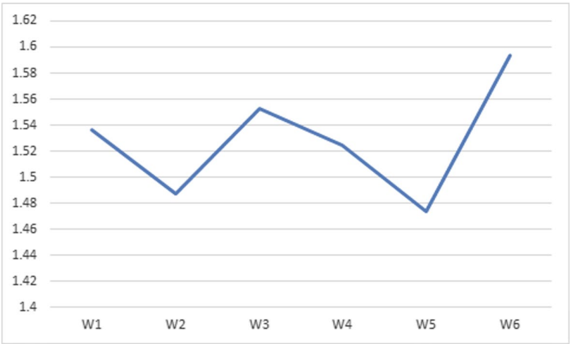
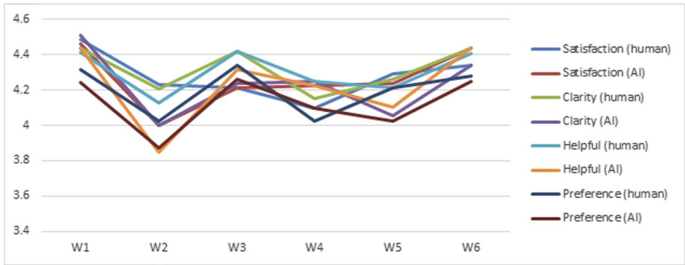
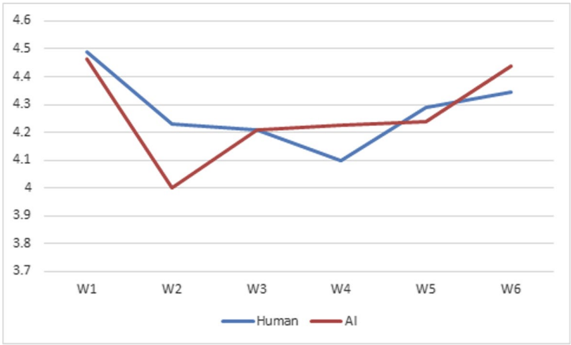
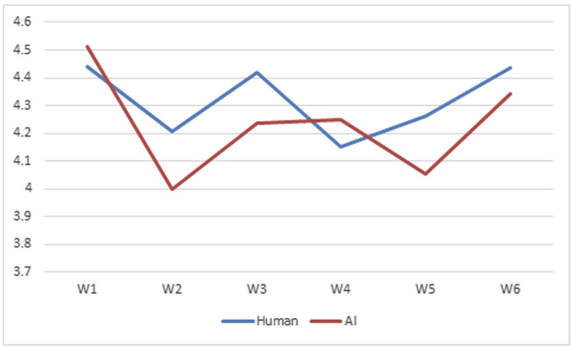
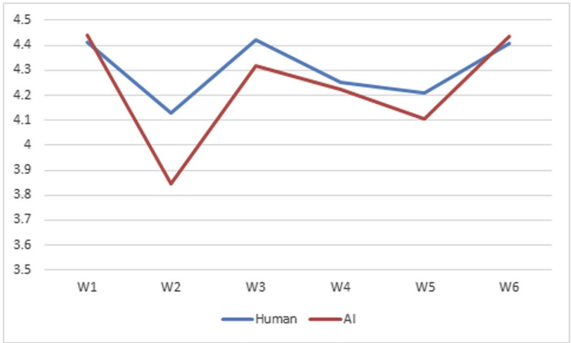
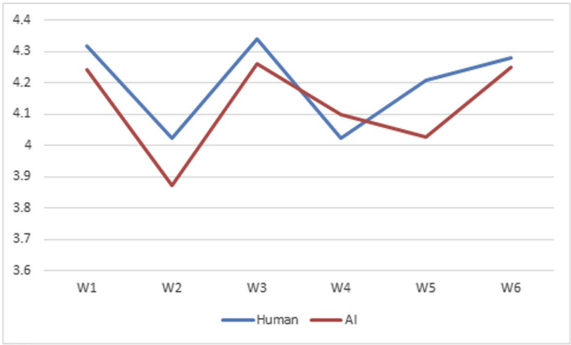
The question of how generative AI tools, such as large language models and chatbots, can be leveraged ethically and effectively in education is ongoing. Given the critical role that writing plays in learning and assessment within educational institutions, it is of growing importance for educators to make thoughtful and informed decisions as to how and in what capacity generative AI tools should be leveraged to assist in the development of students’ writing skills. This paper reports on two longitudinal studies. Study 1 examined learning outcomes of 48 university English as a new language (ENL) learners in a six-week long repeated measures quasi experimental design where the experimental group received writing feedback generated from ChatGPT (GPT-4) and the control group received feedback from their human tutor. Study 2 analyzed the perceptions of a different group of 43 ENLs who received feedback from both ChatGPT and their tutor. Results of study 1 showed no difference in learning outcomes between the two groups. Study 2 results revealed a near even split in preference for AI-generated or human-generated feedback, with clear advantages to both forms of feedback apparent from the data. The main implication of these studies is that the use of AI-generated feedback can likely be incorporated into ENL essay evaluation without affecting learning outcomes, although we recommend a blended approach that utilizes the strengths of both forms of feedback. The main contribution of this paper is in addressing generative AI as an automatic essay evaluator while incorporating learner perspectives.
Overview
The claims and statistics of this paper haven’t been checked yet.
Run the check — free, no account needed. It reads the open-access text and checks the sources it cites.
Integrity signals
Registry
Cites
Statistics
Figures
Verification
Claims the paper makes
The claims and statistics of this paper haven’t been checked yet.
Run the check — free, no account needed. It reads the open-access text and checks the sources it cites.
Claims other papers make about this one
Each is checked against this paper’s own text: does it say what the citing paper says it does?
The source backs part of the claim, not all of it — or backs it for a different population, condition or comparison.
In the citing paper
“This explanation is supported by a study from Escalante, Pack, and Barrett (2023) in which students considered AI-generated feedback more 'readable and detailed' compared to human-generated feedback.”
From Summarise, elaborate, try again: exploring the effect of feedback literacy on AI-enhanced essay writing (2026) · cites this paper as Escalante, Pack, and Barrett (2023)
Experimental — accuracy not yet measuredIn the citing paper
“Combining AI-driven feedback with human input may provide comprehensive guidance tailored to individual needs [142].”
From Leveraging AI in E-Learning: Personalized Learning and Adaptive Assessment through Cognitive Neuropsychology—A Systematic Analysis (2024) · cites this paper as [142]
Self-check
Percentages, sums and reported differences re-computed from the paper’s own numbers.
The self-check needs the paper’s full text.
Citations
Cites
Perceived usefulness, perceived ease of use, and user acceptance of information technology
Davis, F. D. (1989) · MIS Quarterly · doi:10.2307/249008 · Cited by 68,483
Principles and Practice in Second Language Acquisition
Higgs, T. V., & Krashen, S. D. (1983) · Modern Language Journal · doi:10.2307/328293 · Cited by 5,375
Principles and Practice in Second Language Acquisition
Krahnke, K. J., & Krashen, S. D. (1983) · TESOL Quarterly · doi:10.2307/3586656 · Cited by 4,483
Language Learning with Technology
Castillo, D. G. (2021) · Springer eBooks · doi:10.1007/978-981-16-2697-5 · Cited by 2,211
Clinical versus mechanical prediction: a meta-analysis
Grove, W. M., Zald, D. H., Lebow, B. S., Snitz, B. E., & Nelson, C. (2000) · Psychological Assessment · doi:10.1037/1040-3590.12.1.19 · Cited by 1,640
Sociocultural approaches to learning and development: A Vygotskian framework
John-Steiner, V. P., & Mahn, H. (1996) · Educational Psychologist · doi:10.1080/00461520.1996.9653266 · Cited by 1,389
A SWOT analysis of ChatGPT: Implications for educational practice and research
Farrokhnia, M., Banihashem, S. K., Noroozi, O., & Wals, A. (2024) · Innovations in Education and Teaching International · doi:10.1080/14703297.2023.2195846 · Cited by 1,384
Chiu, T. K. F., Xia, Q., Zhou, X., Chai, C. S., & Cheng, M. (2023) · Computers and Education: Artificial Intelligence · doi:10.1016/j.caeai.2022.100118 · Cited by 1,181 · cited 2×
“Personalized learning through evaluating and giving feedback on essay writing has been identified as a potential strength of GenAI (Chiu et al., 2023; Farrokhnia et al., 2023; Zhu et al., 2023), which can, in turn, help decrease teacher workload (Farrokhnia et al., 2023) and prevent teacher burnout.”
BackgroundChatGPT in higher education: considerations for academic integrity and student learning
(2023) · Journal of Applied Learning & Teaching · doi:10.37074/jalt.2023.6.1.17 · Cited by 853 · cited 1×
“…across Australia, New Zealand, The U.K., and the U.S., general sentiment appeared evenly split between positive and negative, but concerns about academic integrity have been raised (Sullivan, 2023), with some educational institutions deciding to ban ChatGPT than to allow its use (Yang, 2023).”
BackgroundExploring the potential of using an AI language model for automated essay scoring
Mizumoto, A., & Eguchi, M. (2023) · Research Methods in Applied Linguistics · doi:10.1016/j.rmal.2023.100050 · Cited by 647
Cited by
Sorted by citations
Items 701–800 of 800
Benchmarking SLM and LLM in Feature Generation for Interpretable Automated Essay Scoring
Chovanec, K., Fields, J., & Madiraju, P. (2026) · IEEE International Conference on Information Reuse and Integration (IRI) · doi:10.1109/iri69576.2026.00023
Rethinking Assessment in the AI Era: Emerging Challenges and Responses
Noor, L. (2026) · Language Testing in Focus An International Journal · doi:10.32038/ltf.2026.14.01
Kuhail, M. A., Dahu, B. M., Kittur, J., & Thornquist, E. (2026) · Journal of Computer Assisted Learning · doi:10.1002/jcal.70319
Noor, L. (2026) · Feedback Research in Second Language · doi:10.32038/frsl.2027.05.01
Mulyono, H., Suryoputro, G., Azizah, U. S. A., & Falah, Z. A. (2026) · SN Social Sciences · doi:10.1007/s43545-026-01716-x
Mustofa, K., Badriyah, I. M., & Hasnawati, L. (2026) · Journal of General Education and Humanities · doi:10.58421/gehu.v5i5.1957
Do Students Learn from Writing Feedback from an AI Teaching Assistant?
Liu, X., Wei, Z., Baker, R. S., Pankiewicz, M., Dai, Y., & Vanacore, K. (2026) · Springer eBooks · doi:10.1007/978-3-032-24819-0_20
Abdel-Maksoud, N. F., Kessler, G., & Shaltout, M. S. (2026) · Acta Innovations · doi:10.62441/actainnovations.v62i.960
Han, T., Yuan, Y., Zhou, N., & Fan, Z. (2026) · Journal of Intelligence · doi:10.3390/jintelligence14090221
Yang, X., & Liu, X. (2026) · Creative Education · doi:10.4236/ce.2026.179099
Chirinos, R. A. G., Gervacio-Jiménez, H., Bejarano-Huamaní, J. M., Ibarra, F., Ruiz-Avendaño, L. E., & Pozo-Prado, S. E. (2026) · Natural and Engineering Sciences · doi:10.28978/nesciences.263036
Generative AI for Writing: Student Interactions with AI Feedback in a High School English ClassroomPreprint
Kwon, K., Park, J., Kale, U., Kim, K., & Yang, S. (2026) · SSRN Electronic Journal · doi:10.2139/ssrn.7471093
Tekman, İ., & Debreli, E. (2026) · Innovation in Language Learning and Teaching · doi:10.1080/17501229.2026.2734839
Mendonça, P. C., Quintal, F., Figueiredo, M., & Mendonça, F. (2026) · Frontiers in Education · doi:10.3389/feduc.2026.1934069
Shauki, N. B. I. (2026) · Springer Proceedings in Humanities and Social Sciences · doi:10.1007/978-981-92-0411-3_2
Zhou, W., & Yang, Y. (2026) · Interactive Learning Environments · doi:10.1080/10494820.2026.2732233
Wei, S., Wei, W., & Hwang, G. J. (2026) · International Journal of Mobile Learning and Organisation · doi:10.1504/ijmlo.2026.10081240
Written Corrective Feedback in EFL Writing: A Human-Machine Comparison
Susilawati, S., Ramadhan, A., Halim, N., Dwigustini, R., & Efendi, A. S. (2025) · Pendekar Jurnal Pendidikan Berkarakter · doi:10.31764/pendekar.v8i2.31437
Mawla, A. A. E., Younis, A. A. A., Ahmed, F. R., Atalla, A. D. G., Shehata, Y. M., & Morsy, A. A. I. (2026) · Teaching and learning in nursing · doi:10.1016/j.teln.2026.09.012
Exploring the effects of AI-powered feedback in language learning: a meta-analysis
Chen, Z., Chen, S., & Chen, W. (2026) · Educational Psychology · doi:10.1080/01443410.2026.2735272
Bibliometric analysis of ChatGPT in education
Sabirova, G., Zharkynbekova, S. K., Kannazarova, Z., Mamatkulov, K., Goyibova, N., Avazovna, U. S., & Shasaidova, L. (2026) · Discover Education · doi:10.1007/s44217-026-02006-7
La Nueva Taxonomía del Aprendizaje con Inteligencia Artificial
Guevara, D. P. S., Romo, M. S. S., Michuy, A. B. C., & Pereira, W. I. S. (2026) · doi:10.63415/saga.2026.132
Jiang, S., Wang, P., & Lu, Y. (2026) · Frontiers in Psychology · doi:10.3389/fpsyg.2026.1956962
Pinzon, P. A. A., & Pachay, J. F. Z. (2026) · Research Club Scientia · doi:10.65415/6n5vxh92
Albaqami, H. M. R. (2026) · University of Tabuk Journal for Humanities and Social Sciences · doi:10.68114/1658-8797.1019
Jauhiainen, J. S. (2026) · Academia AI and Applications · doi:10.20935/acadai8542
Buba, A. M. (2026) · WORLD JOURNAL OF INNOVATION AND MODERN TECHNOLOGY · doi:10.56201/wjimt.v10.no8.2026.pg196.207
Talking to Humans or Machines? EFL Students’ Willingness to Communicate With Classmates and Chatbots
Lytovchenko, I., Едуардівна, Л. Ю., Степанівна, С. О., Lukianenko, V., & Meleshko, I. (2026) · SAGE Open · doi:10.1177/21582440261492982
Transformasi Penulisan Akademik Mahasiswa melalui Generative AI dan Kontribusinya terhadap SDG 4
Nahrowi, N., Mentari, R., Puri, M. A., & Ardhyantama, V. (2026) · Jurnal Pendidikan dan Teknologi Indonesia · doi:10.52436/1.jpti.1960
Exploring the effectiveness of GenAI feedback in facilitating EFL translation task performance
Jiang, Z., & Min, S. (2026) · System · doi:10.1016/j.system.2026.104170
Dual-Signal Explainability for LLM-Based Automated Grading and Feedback: A Pilot Study
Nayadkar, P. P., Gite, S., Sharma, S., & Khandare, A. (2026) · International Conference on Computing Communication Control and automation · doi:10.1109/iccubea69821.2026.11701989
Zichil, V., Cojocariu, V. M., & Cîrtiță-Buzoianu, C. (2026) · Revista Romaneasca pentru Educatie Multidimensionala · doi:10.66388/rrem/18.3/63
Navigating AI feedback: Changing perceptions and argumentation skills in science teacher education
Feyzioğlu, E. Y., & Aymak, S. (2026) · Journal of Educational Technology and Online Learning · doi:10.31681/jetol.1933284
Diagnostic Specificity in Genre-Based AI Writing FeedbackPreprint
Rian, I. (2026) · SSRN Electronic Journal · doi:10.2139/ssrn.7544748
ChatGPT as a Tool in Contemporary Teaching Practice
Miałkowska-Kozaryna, M., & Aksamit, D. (2026) · Edukacyjna Analiza Transakcyjna · doi:10.16926/eat.2026.15.13.en
Elyacoubi, H., Baytar, E. M., Saqri, N., & Ouchaouka, L. (2026) · Computers · doi:10.3390/computers15100665
ChatGPT jako narzędzie we współczesnej praktyce dydaktycznej
Miałkowska-Kozaryna, M., & Aksamit, D. (2026) · Edukacyjna Analiza Transakcyjna · doi:10.16926/eat.2026.15.13.pl
Maxammetov, B. (2026) · Общество и инновации · doi:10.47689/2181-1415-vol7-iss9/s-pp152-160
Lasap, R. A., & Jesus, L. C. M. D. (2026) · International Journal of Artificial Intelligence and Machine Learning · doi:10.51483/ijaiml.6.12s.2026.414-425
Yualita, P., Damaianti, V. S., Mulyati, Y., Sastromiharjo, A., & Aditya, F. (2026) · Indonesian Journal on Learning and Advanced Education (IJOLAE) · doi:10.23917/ijolae.v8i3.20393
Wang, A. (2026) · SSRN Electronic Journal · doi:10.2139/ssrn.7553024
Human–AI Collaboration in Academic Writing Instruction: Calibrated Feedback Model for EAP
Farzi, R. (2026) · OLBI Journal · doi:10.18192/olbij.v15i1.7773
Seyri, H., & Ghiasvand, F. (2026) · English language teaching · doi:10.1007/978-981-92-3961-0_8
Vinte, J. V., & Kurt, M. (2026) · Discover Computing · doi:10.1007/s10791-026-10604-0
Palma, L. Á. G., Zambrano, M. M. B., & Montoya-Espinoza, L. M. (2026) · Revista JRG de Estudos Acadêmicos · doi:10.55892/jrg.v9i21.3675
Cunff, A. L., Dommett, E. J., & Compton, M. (2026) · International Journal of Educational Research · doi:10.1016/j.ijer.2026.103135
Affordances of technology-mediated TBLT for young learners
Ziegler, N. (2026) · Task-based language teaching · doi:10.1075/tblt.21.13zie
Can Students Provide Higher-Quality Feedback than Generative Artificial Intelligence?
Song, M. H., Park, J., Kwon, S., Lee, T., Lim, J., & Park, J. (2026) · Technology Knowledge and Learning · doi:10.1007/s10758-026-10038-z
Fuentes, M. J. B. (2026) · Dominio de las Ciencias · doi:10.23857/dc.v12i3.4999
Han, F., & Wang, Z. (2026) · Behavioral Sciences · doi:10.3390/bs16101837
Lee, E., Lee, H., & Lee, J. H. (2026) · IRAL - International Review of Applied Linguistics in Language Teaching · doi:10.1515/iral-2026-0172
The Impact of LLMs Feedback on L2 Writing Development
Zhou, Y. (2026) · OALib · doi:10.4236/oalib.1115998
Atiyah, N. A., & Muhith, M. (2026) · Journal of Arabic Language Technology and Education · doi:10.68299/5x87e082
Razaviir, S. S. M., Afshari, A., & Lotfi, S. A. T. (2026) · Asian Journal of Education and Social Studies · doi:10.9734/ajess/2026/v52i103396
Kayathri, M. K., Poonkodi, M. P., Mythili, M. S., & Kavipriya, M. K. (2026) · International Journal for Research in Applied Science and Engineering Technology · doi:10.22214/ijraset.2026.85081
Master of Contemporary Education Symposium Proceedings - July 2026
academyEX (2026) · He Rourou · doi:10.54474/herourou.v4i2.18808
Sai, K. T., Gnaneswar, R., Kushal, U. K., & Devi, B. S. (2026) · International Conference on Advancements in Smart, Secure and Intelligent Computing (ASSIC) · doi:10.1109/assic70037.2026.11717269
Makelele, B. M. (2026) · Contemporary research analysis journal. · doi:10.55677/craj/06-2026-vol03i10
Shane, S. A., Sheremeta, R. M., Wang, S., & Xiong, H. (2026) · SSRN Electronic Journal · doi:10.2139/ssrn.7597401
Zhong, W., Luo, J., Yu, S., Lyu, Y., & Guo, J. (2026) · Computers & Education · doi:10.1016/j.compedu.2026.105768
Li, J. (2026) · Social Sciences and Humanities Inquiry · doi:10.67728/sshi.2026.010
Maruf, N., Husain, D., & Syam, U. K. (2026) · Indonesian EFL Journal · doi:10.25134/ieflj.v12i3.190
Bradley, L., Karlén, J., Segergren, N., von Feilitzen, M., & Johansson, D. (2026) · Education Sciences · doi:10.3390/educsci16101722
Higher education assessments in the age of GenAI: a systematic review
Crompton, H., & Burke, D. (2026) · International Journal of Educational Technology in Higher Education · doi:10.1186/s41239-026-00627-4 · Cited by 1
Karsli, M. B., Karabey, S. Ç., Guler, M., Arpacık, Ö., Arslan, M. A., Kurşun, E., & Kaba, E. (2026) · Applied Measurement in Education · doi:10.1080/08957347.2026.2738700
Packard, A. L., Fuller, R., Holmes, G. A., & Kayanuma, B. P. (2026) · Online journal of distance learning administration · doi:10.67695/nlrp7634
Modes of Engagement with AI-Generated Feedback: A Case Study of Three Pre-Service EFL Teachers
Zheldibayeva, R. (2026) · The Eurasia Proceedings of Educational and Social Sciences · doi:10.55549/epess.1067
Sulaiman, M. A. A., Abdelmageed, M., & Khallaf, N. M. (2026) · Journal of English Language Teaching and Applied Linguistics · doi:10.32996/jeltal.2026.8.11.1
Hung, Yu, Z., Hung, M.-T., & Smith, S. E. (2026) · Interactive Learning Environments · doi:10.1080/10494820.2026.2749408
AI for Grading from the Teaching Perspective (with an EssayGrader Case Comparison)
Shepherd, I. J. (2026) · Journal of Higher Education Theory and Practice · doi:10.33423/pant6n19
Кенесбаевна, Д. Н. (2026) · SCIENCE and SOCIETY · doi:10.67609/gc5qhg80
Gündoğdu, B., & Merç, A. (2026) · Assessing Writing · doi:10.1016/j.asw.2026.101135
Mudau, P. P., Mandende, I. P., & Cekiso, M. (2026) · Journal of Languages and Language Teaching · doi:10.33394/jollt.v14i4.19513
Hochman, G., Miller, C. S., & Kline, M. (2026) · Cogent Education · doi:10.1080/2331186x.2026.2746161
Negotiating agency: university students’ experiences of co-creating content with generative AI
Lu, C., & Gu, M. M. (2026) · Education and Information Technologies · doi:10.1007/s10639-026-14056-3
Novak, D. (2026) · CASALC Review · doi:10.5817/casalc2026-1-4
The Implementation of Digital Support for Punctuation in Academic Writing of EFL Students
Rizal, D., Margiyanti, D. A. S., Jaufanishshofa, L., & Dewanti, N. A. (2024) · Vision Journal for Language and Foreign Language Learning · doi:10.21580/vjv13i224039
Deswita, Wulandari, V., & Suhaela, N. (2026) · DEWANTECH Jurnal Teknologi Pendidikan · doi:10.61434/dewantech.v3i3.325
Guo, W., & Ren, X. (2026) · Frontiers in Psychology · doi:10.3389/fpsyg.2026.1986129
Pindo, J. M. O., Castillo, F. J., Azan, J. P. C., & Rivas, M. A. T. (2026) · Estudios y Perspectivas Revista Científica y Académica · doi:10.61384/r.c.a..v6i4.2133
Development of a Gemini AI-Based Learning Medium with Structured Feedback for Speech-Text Writing
Halawa, I. M., Hutahaean, B., Zalukhu, K., & Bangun, Y. M. B. (2026) · Jurnal Pembelajaran Bahasa dan Sastra · doi:10.55909/jpbs.v5i5.1776
Reyes, M. K. G., Lau, G., Tsai, M., Kasturiratna, K. T. A. S., & Hartanto, A. (2026) · Computers in Human Behavior Artificial Humans · doi:10.1016/j.chbah.2026.100415
LIA: Um Chatbot para Consulta de Diretrizes de Inteligência Artificial em Universidades Brasileiras
Santos, A. M. A. D., de Queiroz, M. J., Lima, H. G., Ricarte, D. R. D., & Lino, N. C. Q. (2026) · Anais do ... Simpósio Brasileiro de Informática na Educação/Anais do Simpósio Brasileiro de Informática na Educação · doi:10.5753/sbie.2026.27205
-, M. S. G. D. R. (2026) · International Journal of Research and Innovation in Social Science · doi:10.47772/ijriss.2026.100900763
Xilin, X. U., Xu, G., & Li, D. (2026) · Journal of Second Language Writing · doi:10.1016/j.jslw.2026.101373
Sun, Q., & Jiang, L. (2026) · Journal of Second Language Writing · doi:10.1016/j.jslw.2026.101371
Fong, C. J., Zarei, P., Schallert, D. L., Fard, S. M., & Dezhkameh, A. (2026) · Computers and Education Open · doi:10.1016/j.caeo.2026.100429
A Comparative Study of EFL Learners’ Perceptions of Written Feedback from Peers, Pigai, and ChatGPT
胡, 艾. (2026) · Modern Linguistics · doi:10.12677/ml.2026.14101016
Sambeka, F. L., Wuisang, J. R., Runtuwarouw, J. J., Ratu, D. M., Rorimpandey, R. S., Kumayas, T. A., & Lengkoan, F. (2026) · JURNAL EDUSCIENCE · doi:10.36987/jes.v13i5.9899
Merrikhi, P. (2026) · Research Square · doi:10.21203/rs.3.rs-11277915/v1
Hernández, G. A. Q., Quintero, A. M., & Reyes, Y. M. (2026) · Research Club Scientia · doi:10.65415/3wgg4c83
Liu, Y., & Shi, M. (2026) · Frontiers in Psychology · doi:10.3389/fpsyg.2026.1918748
Generative AI in Korean Language Learning: A Scoping Review
Kong, W., & Wu, Y. (2026) · Education and Learning · doi:10.58920/edu0202767
Do, N. N. T., & Nguyen, H. B. (2026) · International Journal of Learning Teaching and Educational Research · doi:10.26803/ijlter.25.10.40
Abd-Elaal, E.-S., Smith, E., Abdelaal, M. S., Diaby, A. L., Janssen, A., & Araby, S. (2026) · Journal of Applied Research in Higher Education · doi:10.1108/jarhe-11-2025-0951
Toward Prompt Literacy in AI-Assisted EFL Writing: A Conceptually Driven Narrative Review
Tran, T. M. L., & Doan, H. H. (2026) · International Journal of Technology in Education and Science · doi:10.46328/ijtes.8694
Dalle, A., & Amir, J. (2026) · Journal of Social Science and Human Research Studies · doi:10.65150/ep-jsshrs/v2e10/2026-11
Metadata
- Authors
- Escalante, J., Pack, A., & Barrett, A.
- Affiliations
- Brigham Young University–Hawaii (US)
- Florida State University (US)
- Corresponding author
- Escalante, Juan
- Venue
- International Journal of Educational Technology in Higher Education
- Published
- 2023-10-27
- Volume
- 20
- Issue
- 1
- ISSN
- 2365-9440 (ISSN-L)
- OpenAlex
- W4387954002
- Cited by
- 589
- References
- 38
- Citations by year
- 2026: 267 · 2025: 231 · 2024: 90 · 2023: 1
- FWCI
- 138.70
- Type
- journal article
- Language
- en
- Open access
- diamond
- doi.org
- Locations
- International Journal of Educational Technology in Higher Education (publishedVersion, cc-by)
- DOAJ (DOAJ: Directory of Open Access Journals) (submittedVersion, cc-by-sa)
- Topics
- Social Sciences › Education › Artificial Intelligence in Education
- Social Sciences › Arts and Humanities › Language and Linguistics › EFL/ESL Teaching and Learning
- Social Sciences › Education › Student Assessment and Feedback
- Keywords
- AI-generated feedback, generative AI in education, ChatGPT, large language models, writing instruction, learner preferences, writing learning outcomes
About these checks
Registry, retraction, Cites and statistics results are computed, not judged, with one exception: a printed reference that no index lists is read once by a model before it counts as a citation error. Claims are extracted by a model and kept only when their quote appears verbatim in the text; each cited source is then checked, with a model’s help, for whether it says what the claim relies on. Those verdicts can be wrong — read the claim’s quote and the cited source before relying on one.
Statistics and arithmetic are recomputed, not judged.
Confidence bands are shown only for fields calibrated on our annotated test set. None is calibrated yet, so no band is shown.
What counts as a claim ›How we measure confidence ›How we check this ›
Are you an author, or do you see a problem with this page? Request a review
