

Recent advances of natural pigments from algae
Open accessThe DOI matches its Crossref record; 123 of the 123 references it cites were found in a registry or an index.
Abstract
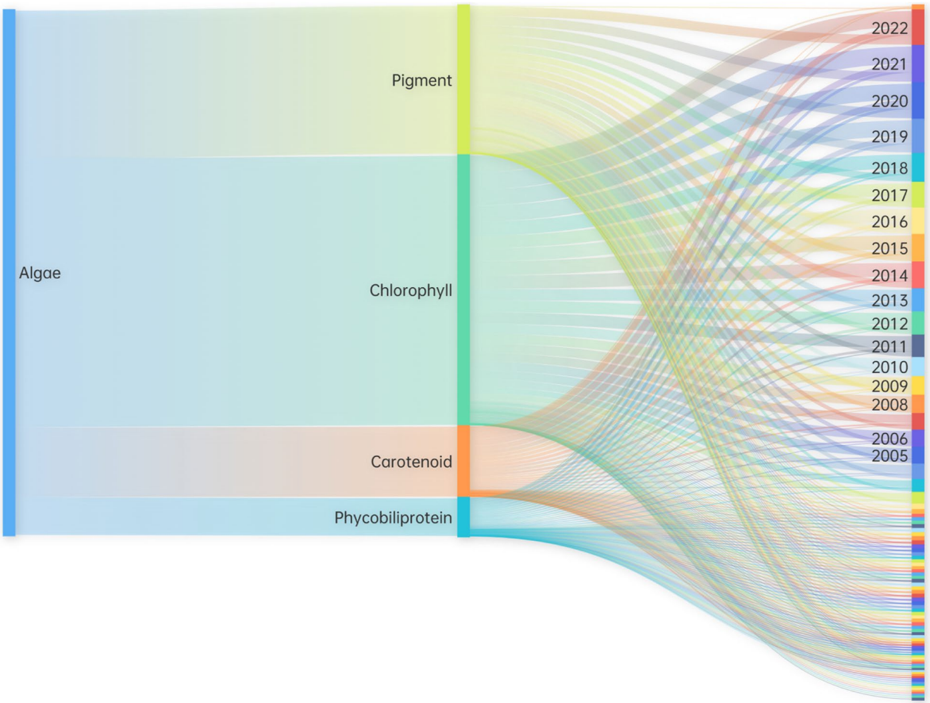
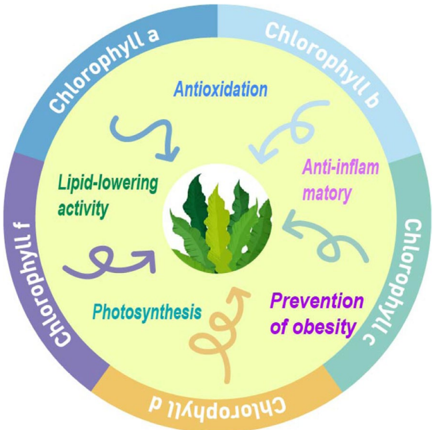
Pigment is an important food additive that plays a major role in the sensory impact of food. And natural sources, healthy and non-toxic edible pigments are receiving a lot of attention. Algae is an important source of natural pigments, and contain chlorophyll, phycoerythrin, carotene, and other natural pigments. Besides staining, the pigment also has powerful physiological activities such as antioxidants, anti-inflammatory, anti-obesity, and lipid-lowering. In this paper, three pigments in seaweed were reviewed, and their main structural properties and functions are presented, filling the gap in the review of pigments with seaweed as the main object of introduction. This review provides research basis for the development of new health foods, a new direction for the use of seaweed chlorophyll in the food and pharmaceutical industries. Graphical Abstract
Overview
The claims and statistics of this paper haven’t been checked yet.
Free: it reads the open-access text and checks the first 5 claims that cite a source we can check. Create a free account to check every claim.
Integrity signals
Registry
Cites
Statistics
Figures
Verification
Claims the paper makes
The claims and statistics of this paper haven’t been checked yet.
Free: it reads the open-access text and checks the first 5 claims that cite a source we can check. Create a free account to check every claim.
Claims other papers make about this one
Each is checked against this paper’s own text: does it say what the citing paper says it does?
The cited source says what the claim attributes to it.
In the citing paper
“Their absorption spectrum [16] depends upon the type and concentration of photosynthesis pigments [17] inside them, such as chlorophyll, fucoxanthin, phycoerythrin, and phycocyanin [18].”
From Multiwavelength Photoacoustic Doppler Flowmetry of Living Microalgae Cells (2024) · cites this paper as [17]
Self-check
Percentages, sums and reported differences re-computed from the paper’s own numbers.
The self-check needs the paper’s full text.
Citations
Cites
Galanakis, C. M. (2012) · Trends in Food Science & Technology · doi:10.1016/j.tifs.2012.03.003 · Cited by 1,240 · cited 1×
“It can be roughly divided into five stages, including macro pretreatment, separation of macromolecules and micromolecules, extraction, purification, and product generation (Galanakis 2012).”
BackgroundAlgal Proteins: Extraction, Application, and Challenges Concerning Production
Bleakley, S., & Hayes, M. (2017) · Foods · doi:10.3390/foods6050033 · Cited by 1,092 · cited 1×
“As a unique natural pigment in algae, phycobiliprotein provides new options for products in the food, medicine, and cosmetics (Bleakley & Hayes 2017; Saini et al.”
BackgroundCarotenoids in Algae: Distributions, Biosyntheses and Functions
Takaichi, S. (2011) · Marine Drugs · doi:10.3390/md9061101 · Cited by 802 · cited 9×
“Besides fucoxanthin, such carotenoids include peridinin and dinoxanthin (Takaichi 2011).”
BackgroundMethodInfluentialBiological activities and health benefit effects of natural pigments derived from marine algae
Pangestuti, R., & Kim, S.-K. (2011) · Journal of Functional Foods · doi:10.1016/j.jff.2011.07.001 · Cited by 564 · cited 2×
“Fucoxanthin accounts for about 10% of the total production of natural lutein (Pangestuti & Kim 2011).”
BackgroundPhycobiliproteins from cyanobacteria: Chemistry and biotechnological applications
Pagels, F., Guedes, A. C., Amaro, H. M., Kijjoa, A., & Vasconcelos, V. (2019) · Biotechnology Advances · doi:10.1016/j.biotechadv.2019.02.010 · Cited by 426
Brown, E. M., Allsopp, P. J., Magee, P. J., Gill, C. I., Nitecki, S., Strain, C. R., & McSorley, E. M. (2014) · Nutrition Reviews · doi:10.1111/nure.12091 · Cited by 392 · cited 1×
“In addition to its dyeing function and various physiological activities that are beneficial to the human body, it is also a high-quality protein rich in various essential amino acids required by the human body, with extremely high nutritional value (Brown et al. 2014).”
BackgroundPhycobiliproteins and Complementary Chromatic Adaptation
Bogorad, L. (1975) · Annual Review of Plant Physiology · doi:10.1146/annurev.pp.26.060175.002101 · Cited by 376 · cited 2×
“The type and proportion of phycobiliprotein, the auxiliary photosynthetic pigment vary depending on the location of growth and light absorption by the algae (Bogorad 1975).”
BackgroundFunctional properties of carotenoids originating from algae
Christaki, E., Bonos, E., Giannenas, I., & Florou‐Paneri, P. (2013) · Journal of the Science of Food and Agriculture · doi:10.1002/jsfa.5902 · Cited by 346 · cited 2×
“Among carotenoids, Allene (C=C=C), a structure present in natural substances, is relatively rare, and only about 40 carotenoids contain this Allene bond, of which fucoxanthin is the most typical (Christaki et al. 2013).”
BackgroundPhycobiliprotein: Potential microalgae derived pharmaceutical and biological reagent
Manirafasha, E., Ndikubwimana, T., Zeng, X., Lu, Y., & Jing, K. (2016) · Biochemical Engineering Journal · doi:10.1016/j.bej.2016.01.025 · Cited by 321
Innovative Alternative Technologies to Extract Carotenoids from Microalgae and Seaweeds
Poojary, M., Barba, F., Aliakbarian, B., Donsì, F., Pataro, G., Dias, D., & Juliano, P. (2016) · Marine Drugs · doi:10.3390/md14110214 · Cited by 313
Photochemistry beyond the red limit in chlorophyll f–containing photosystems
Nürnberg, D. J., Morton, J., Santabarbara, S., Telfer, A., Joliot, P., Antonaru, L. A., Ruban, A. V., Cardona, T., Krausz, E., Boussac, A., et al. (2018) · Science · doi:10.1126/science.aar8313 · Cited by 301
Recent Developments in Production and Biotechnological Applications of C-Phycocyanin
Kuddus, M., Singh, P., Thomas, G., & Al-Hazimi, A. (2013) · BioMed Research International · doi:10.1155/2013/742859 · Cited by 286
Algae in food: a general review
Ścieszka, S., & Klewicka, E. (2019) · Critical Reviews in Food Science and Nutrition · doi:10.1080/10408398.2018.1496319 · Cited by 283
Algae as an emerging source of bioactive pigments
Patel, A. K., Albarico, F. P. J. B., Perumal, P. K., Vadrale, A. P., Nian, C. T., Chau, H. T. B., Anwar, C., Wani, H. M. U. D., Pal, A., Saini, R., et al. (2022) · Bioresource Technology · doi:10.1016/j.biortech.2022.126910 · Cited by 255
Sustainable harvesting of wild seaweed resources.
Mac Monagail, M., Cornish, L., Morrison, L., Araújo, R., & Critchley, A. T. (2017) · European Journal of Phycology · doi:10.1080/09670262.2017.1365273 · Cited by 253
Phycobiliproteins: Molecular structure, production, applications, and prospects
Li, W., Su, H.-N., Pu, Y., Chen, J., Liu, L.-N., Liu, Q., & Qin, S. (2019) · Biotechnology Advances · doi:10.1016/j.biotechadv.2019.01.008 · Cited by 236
Fucoxanthin—An Antibacterial Carotenoid
Karpiński, T. M., & Adamczak, A. (2019) · Antioxidants · doi:10.3390/antiox8080239 · Cited by 234 · cited 1×
“2021), antibacterial (Karpiński & Adamczak 2019), preventive and therapeutic effects on diabetes (Lin et al.”
BackgroundMethod to obtain C-phycocyanin of high purity
Patil, G., Chethana, S., Sridevi, A. S., & Raghavarao, K. S. M. S. (2006) · Journal of Chromatography A · doi:10.1016/j.chroma.2006.05.073 · Cited by 227
Glazer, A. N., & Hixson, C. S. (1977) · Journal of Biological Chemistry · doi:10.1016/s0021-9258(17)32794-1 · Cited by 210
Xanthophylls from the Sea: Algae as Source of Bioactive Carotenoids
Pereira, A. G., Otero, P., Echave, J., Carreira-Casais, A., Chamorro, F., Collazo, N., Jaboui, A., Lourenço-Lopes, C., Simal-Gandara, J., & Prieto, M. A. (2021) · Marine Drugs · doi:10.3390/md19040188 · Cited by 207
Proton‐donative antioxidant activity of fucoxanthin with 1,1‐Diphenyl‐2‐Picrylhydrazyl (DPPH)
Nomura, T., Kikuchi, M., Kubodera, A., & Kawakami, Y. (1997) · IUBMB Life · doi:10.1080/15216549700202761 · Cited by 201
Health benefits of fucoxanthin in the prevention of chronic diseases
Bae, M., Kim, M.-B., Park, Y.-K., & Lee, J.-Y. (2020) · Biochimica et Biophysica Acta (BBA) - Molecular and Cell Biology of Lipids · doi:10.1016/j.bbalip.2020.158618 · Cited by 190
Munier, M., Jubeau, S., Wijaya, A., Morançais, M., Dumay, J., Marchal, L., Jaouen, P., & Fleurence, J. (2014) · Food Chemistry · doi:10.1016/j.foodchem.2013.10.113 · Cited by 185
Pradhan, B., Nayak, R., Patra, S., Jit, B. P., Ragusa, A., & Jena, M. (2020) · Molecules · doi:10.3390/molecules26010037 · Cited by 184
Galland-Irmouli, A. V., Pons, L., Luçon, M., Villaume, C., Mrabet, N. T., Guéant, J. L., & Fleurence, J. (2000) · Journal of Chromatography B: Biomedical Sciences and Applications · doi:10.1016/s0378-4347(99)00433-8 · Cited by 178
Cyanobacterial pigments: Perspectives and biotechnological approaches
Saini, D. K., Pabbi, S., & Shukla, P. (2018) · Food and Chemical Toxicology · doi:10.1016/j.fct.2018.08.002 · Cited by 178
Phycobiliproteins and phycobilisomes: the early observations
de Marsac, N. T. (2003) · Photosynthesis Research · doi:10.1023/a:1024954911473 · Cited by 176 · cited 1×
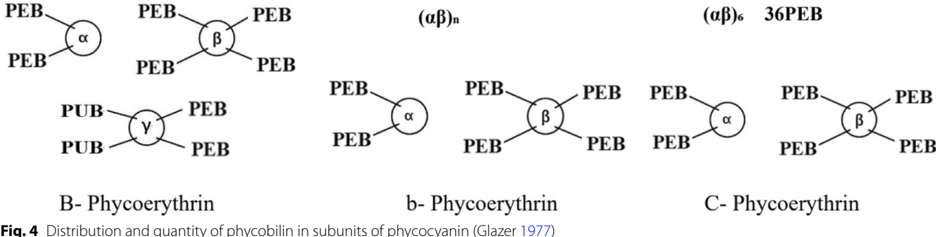
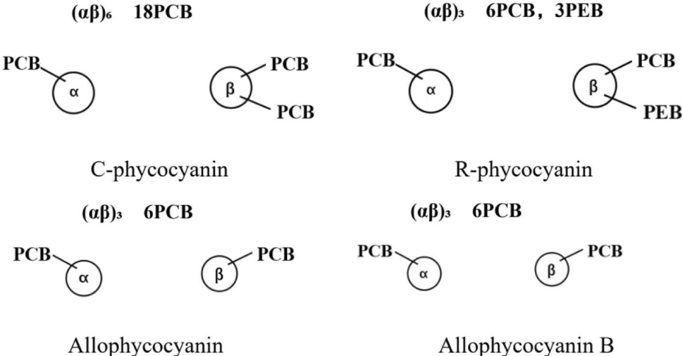
“…composing of two polypeptide chains with α, and β subunits bound as a monomer (αβ), generally in the form of trimers or hexamers in phycobilisomes of algae (Tandeau de Marsac 2003), and each subunit carrying a covalently linked tetrapyrrole prosthetic groups related to the bile pigment biliverdin.”
BackgroundChlorophylls and their Derivatives Used in Food Industry and Medicine
Solymosi, K., & Myśliwa‐Kurdziel, B. (2016) · Mini-Reviews in Medicinal Chemistry · doi:10.2174/1389557516666161004161411 · Cited by 174 · cited 2×
“With the maturity of green protection technology year by year, chlorophyll has become more and more widely used and favored by food processing (Solymosi & Mysliwa-Kurdziel 2017).”
BackgroundMethodPhycobilisomes of Porphyridium cruentum. Pigment analysis
Gantt, E., & Lipschultz, C. A. (1974) · Biochemistry · doi:10.1021/bi00711a027 · Cited by 171 · cited 1×
“B-phycoerythrin is mainly found in Porphyridium cruentum (Gantt & Lipschultz 1974).”
BackgroundPalette of Our Palates: A Brief History of Food Coloring and Its Regulation
Burrows, J. D. (2009) · Comprehensive Reviews in Food Science and Food Safety · doi:10.1111/j.1541-4337.2009.00089.x · Cited by 159
Allophycocyanin B (?max 671, 618 nm): A new cyanobacterial phycobiliprotein
Glazer, A. N., & Bryant, D. A. (1975) · Archives of Microbiology · doi:10.1007/bf00447294 · Cited by 159 · cited 1×
“Similar to Allophycocyanin, the protein portion of allophycocyanin B does not contain histidine or tryptophan, but in other respects the two proteins are completely different (Glazer & Bryant 1975).”
ResultDegradation of carotenoids in orange juice during microwave heating
Fratianni, A., Cinquanta, L., & Panfili, G. (2010) · LWT - Food Science and Technology · doi:10.1016/j.lwt.2010.01.011 · Cited by 158
Glazer, A. N. (1977) · Molecular and Cellular Biochemistry · doi:10.1007/bf00280278 · Cited by 147 · cited 10×
“B-phycoerythrin forms the same hexamer as R-phycoerythrin but has a different absorption spectrum (Munier et al.”
BackgroundInfluentialGlazer, A. N. (1988) · Methods in enzymology on CD-ROM/Methods in enzymology · doi:10.1016/0076-6879(88)67034-0 · Cited by 147
A Systematic Review on Marine Algae-Derived Fucoxanthin: An Update of Pharmacological Insights
Mohibbullah, M., Haque, M. N., Sohag, A. A. M., Hossain, M. T., Zahan, M. S., Uddin, M. J., Hannan, M. A., Moon, I. S., & Choi, J. (2022) · Marine Drugs · doi:10.3390/md20050279 · Cited by 137
Yan, X., Yang, C., Lin, G., Chen, Y., Miao, S., Liu, B., & Zhao, C. (2018) · Journal of Food Science · doi:10.1111/1750-3841.14415 · Cited by 129
Self-citationIdentification of the special pair of photosystem II in a chlorophyll d -dominated cyanobacterium
Tomo, T., Okubo, T., Akimoto, S., Yokono, M., Miyashita, H., Tsuchiya, T., Noguchi, T., & Mimuro, M. (2007) · Proceedings of the National Academy of Sciences · doi:10.1073/pnas.0701847104 · Cited by 128 · cited 1×
“2022), that can expand the absorption range of algae photo cooperation and improve the efficiency of photosynthesis, especially chlorophyll f (Follana-Berná et al. 2021; Nürnberg et al. 2018; Tomo et al. 2007).”
BackgroundZhao, K.-H., Su, P., Tu, J.-M., Wang, X., Liu, H., Plöscher, M., Eichacker, L., Yang, B., Zhou, M., & Scheer, H. (2007) · Proceedings of the National Academy of Sciences · doi:10.1073/pnas.0706209104 · Cited by 122
Seo, Y., Kim, K., Choi, J., Koh, E., & Lee, B.-Y. (2018) · Nutrients · doi:10.3390/nu10060712 · Cited by 122 · cited 1×
“Chlorophyll a can also act with C-phycocyanin to reduce fat production and prevent obesity (Seo et al. 2018).”
BackgroundLourenço-Lopes, C., Garcia-Oliveira, P., Carpena, M., Fraga-Corral, M., Jimenez-Lopez, C., Pereira, A. G., Prieto, M. A., & Simal-Gandara, J. (2020) · Foods · doi:10.3390/foods9081113 · Cited by 120 · cited 1×
“According to estimates, the market for fucoxanthin could expand to US$120 million by the end of this year (Lourenço-Lopes et al. 2020).”
BackgroundZhu, Z., Wu, Q., Di, X., Li, S., Barba, F. J., Koubaa, M., Roohinejad, S., Xiong, X., & He, J. (2017) · Food and Bioproducts Processing · doi:10.1016/j.fbp.2017.04.008 · Cited by 112
Niu, J., Wang, G., & Tseng, C. (2006) · Protein Expression and Purification · doi:10.1016/j.pep.2006.02.001 · Cited by 110
Sun, L., Wang, S., Gong, X., Zhao, M., Fu, X., & Wang, L. (2008) · Protein Expression and Purification · doi:10.1016/j.pep.2008.09.013 · Cited by 106 · cited 1×
“These optical properties are determined by the number of conjugated double bonds or the delocalization of their conjugated π-electrons (Sun et al. 2009).”
BackgroundPotentials and applications of algal pigments in biology and industry
Prasanna, R., Sood, A., Suresh, A., Nayak, S., & Kaushik, B. (2007) · Acta Botanica Hungarica · doi:10.1556/abot.49.2007.1-2.14 · Cited by 106
Phycobilins and Phycobiliproteins Used in Food Industry and Medicine
Mysliwa-Kurdziel, B., & Solymosi, K. (2017) · Mini-Reviews in Medicinal Chemistry · doi:10.2174/1389557516666160912180155 · Cited by 104 · cited 1×
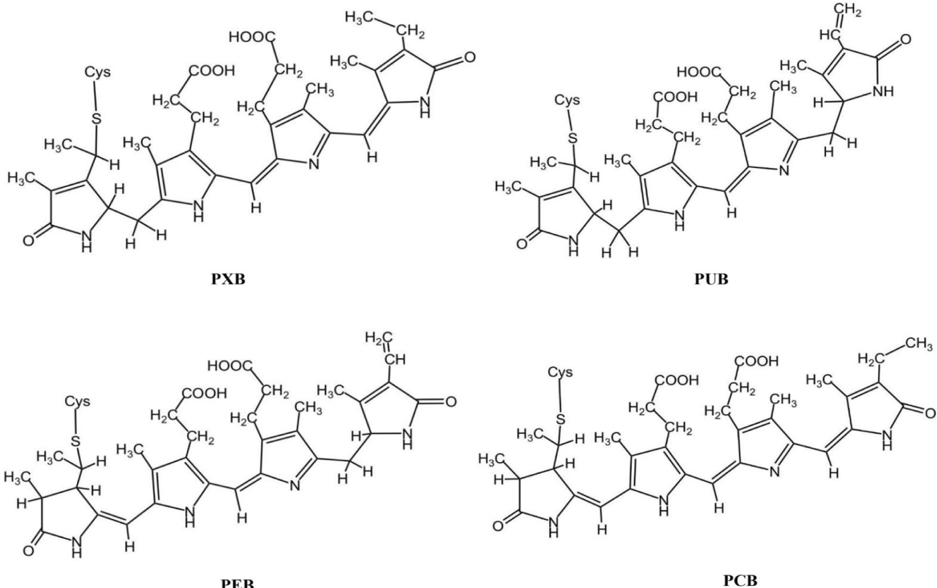
“Phycobilin is structurally similar to chlorophyll and consists of four pyrrole rings linked by methylene (Mysliwa-Kurdziel & Solymosi 2017), but unlike chlorophyll, the molecule is in a straight chain and does not contain magnesium atoms.”
BackgroundDumay, J., & Morançais, M. (2016) · Elsevier eBooks · doi:10.1016/b978-0-12-802772-1.00009-9 · Cited by 101
A review on the progress, challenges and prospects in commercializing microalgal fucoxanthin
Wang, S., Wu, S., Yang, G., Pan, K., Wang, L., & Hu, Z. (2021) · Biotechnology Advances · doi:10.1016/j.biotechadv.2021.107865 · Cited by 100
Osuna‐Ruíz, I., López‐Saiz, C. M., Burgos‐Hernández, A., Velázquez, C. A., Nieves-Soto, M., & Hurtado‐Oliva, M. Á. (2016) · Pharmaceutical Biology · doi:10.3109/13880209.2016.1150305 · Cited by 96
Bonet, M. L., Ribot, J., Galmés, S., Serra, F. A., & Palou, A. (2020) · Biochimica et Biophysica Acta (BBA) - Molecular and Cell Biology of Lipids · doi:10.1016/j.bbalip.2020.158676 · Cited by 91
Leong, Y. K., Chen, C.-Y., Varjani, S., & Chang, J.-S. (2022) · Bioresource Technology · doi:10.1016/j.biortech.2021.126170 · Cited by 91 · cited 1×
“There are already some techniques to synthesize fucoxanthin in the laboratory, but this operation makes the synthesis very expensive, so obtaining fucoxanthin from algae by extraction methods is still the most preferred way (Zhao, Chen, et al. 2022; Leong et al. 2022).”
MethodXu, Y., Wang, Q., & Hou, Y. (2020) · Marine Drugs · doi:10.3390/md18120618 · Cited by 90 · cited 3×
“To improve the extraction efficiency and purity of R-phycoerythrin and reduce the acquisition cost, there are several techniques for R-phycoerythrin extraction and purification based on two water-based systems (Gu et al. 2018; Xu et al. 2020), or combination and upgrade of existing techniques.”
BackgroundMethodOne-step purification of R-phycoerythrin from the red edible seaweed Grateloupia turuturu
Munier, M., Morançais, M., Dumay, J., Jaouen, P., & Fleurence, J. (2015) · Journal of Chromatography B · doi:10.1016/j.jchromb.2015.04.012 · Cited by 89
Chlorophyll d and Acaryochloris marina: current status
Loughlin, P. C., Lin, Y., & Chen, M. (2013) · Photosynthesis Research · doi:10.1007/s11120-013-9829-y · Cited by 87
Lin, G., Liu, X., Yan, X., Liu, D., Yang, C., Liu, B., Huang, Y., & Zhao, C. (2018) · International Journal of Molecular Sciences · doi:10.3390/ijms20010025 · Cited by 87
Self-citationBachvaroff, T. R., Sanchez Puerta, M. V., & Delwiche, C. F. (2005) · Molecular Biology and Evolution · doi:10.1093/molbev/msi172 · Cited by 86
Lundell, D. J., & Glazer, A. N. (1981) · Journal of Biological Chemistry · doi:10.1016/s0021-9258(18)43317-0 · Cited by 84 · cited 1×
“5), but they have different absorption spectral maxima, 650 nm for allophycocyanin, but 670 nm for allophycocyanin B (Lundell & Glazer 1981).”
BackgroundIna, A., Hayashi, K., Nozaki, H., & Kamei, Y. (2007) · International Journal of Developmental Neuroscience · doi:10.1016/j.ijdevneu.2006.09.323 · Cited by 83 · cited 1×
“Chlorophyll extracted from the marine brown alga Sargassum fulvellum enhances the neural differentiation of PC12 cells and has the potential to treat neurodegenerative diseases, such as Alzheimer’s disease (Ina et al. 2007).”
BackgroundComprehensive chlorophyll composition in the main edible seaweeds
Chen, K., Ríos, J. J., Pérez‐Gálvez, A., & Roca, M. (2017) · Food Chemistry · doi:10.1016/j.foodchem.2017.02.036 · Cited by 83 · cited 1×
“Chlorophyll is the most common pigment in algae, and the chlorophyll contained in algae mainly includes a, b, c, d, and f (Chen et al. 2017).”
BackgroundLauritano, C., Helland, K., Riccio, G., Andersen, J. H., Ianora, A., & Hansen, E. H. (2020) · Marine Drugs · doi:10.3390/md18030166 · Cited by 83
Saravana, P. S., Choi, J. H., Park, Y. B., Woo, H. C., & Chun, B. S. (2016) · Algal Research · doi:10.1016/j.algal.2015.12.004 · Cited by 81
Cancer-fighting potentials of algal polysaccharides as nutraceuticals
Ouyang, Y., Qiu, Y., Liu, Y., Zhu, R., Chen, Y., El-Seedi, H. R., Chen, X., & Zhao, C. (2021) · Food Research International · doi:10.1016/j.foodres.2021.110522 · Cited by 78
Self-citationKim, E., Choi, Y. H., & Nam, T. (2018) · International Journal of Molecular Medicine · doi:10.3892/ijmm.2018.3650 · Cited by 76
Putnik, P., Kovačević, D. B., Penić, M., Fegeš, M., & Dragović‐Uzelac, V. (2016) · Food Analytical Methods · doi:10.1007/s12161-016-0428-3 · Cited by 73
Cervantes-Llanos, M., Lagumersindez-Denis, N., Marín-Prida, J., Pavón-Fuentes, N., Falcon-Cama, V., Piniella-Matamoros, B., Camacho-Rodríguez, H., Fernández-Massó, J. R., Valenzuela-Silva, C., Raíces-Cruz, I., et al. (2018) · Life Sciences · doi:10.1016/j.lfs.2017.12.032 · Cited by 73
Whey protein improves the stability of C-phycocyanin in acidified conditions during light storage
Zhang, S., Zhang, Z., Dadmohammadi, Y., Li, Y., Jaiswal, A., & Abbaspourrad, A. (2020) · Food Chemistry · doi:10.1016/j.foodchem.2020.128642 · Cited by 73
Sui, S.-F. (2021) · Annual Review of Biophysics · doi:10.1146/annurev-biophys-062920-063657 · Cited by 72 · cited 1×
“As an important light-trapping color protein unique to algae, they only play the role of absorbing and transmitting light during photosynthesis, so they are also known as an auxiliary pigment of photosynthetic (Sui 2021).”
BackgroundIsolation and characterization of macromolecular protein R-Phycoerythrin from Portieria hornemannii
Senthilkumar, N., Veeraperumal, S., Thangam, R., Kurinjimalar, C., Kavitha, G., Murugan, P., Kannan, S., & Rengasamy, R. (2013) · International Journal of Biological Macromolecules · doi:10.1016/j.ijbiomac.2012.12.039 · Cited by 70
Using a B-Phycoerythrin Extract as a Natural Colorant: Application in Milk-Based Products
García, A., Longo, E., Murillo, M., & Bermejo, R. (2021) · Molecules · doi:10.3390/molecules26020297 · Cited by 70
Thermal and pH Stability of the B-Phycoerythrin from the Red Algae Porphyridium cruentum
González-Ramírez, E. J., Andújar‐Sánchez, M., Ortiz‐Salmerón, E., Bacarizo, J., Cuadri, C., Sobczuk, T. M., González, M. J. I., Cámara-Artigas, A., & Martínez‐Rodríguez, S. (2014) · Food Biophysics · doi:10.1007/s11483-014-9331-x · Cited by 69
Ulagesan, S., Nam, T., & Choi, Y. (2021) · Molecules · doi:10.3390/molecules26216479 · Cited by 69
Liu, Q., Wang, Y., Cao, M., Pan, T., Yang, Y., Mao, H., Sun, L., & Liu, G. (2015) · International Immunopharmacology · doi:10.1016/j.intimp.2015.02.032 · Cited by 67
The algal polysaccharide ulvan suppresses growth of hepatoma cells
Zhao, C., Lin, G., Wu, D., Liu, D., You, L., Högger, P., Simal‐Gándara, J., Wang, M., da Costa, J. G. M., Marunaka, Y., et al. (2020) · Food Frontiers · doi:10.1002/fft2.13 · Cited by 66
Self-citationChallenges and Potential in Increasing Lutein Content in Microalgae
Xie, Y., Xiong, X., & Chen, S. (2021) · Microorganisms · doi:10.3390/microorganisms9051068 · Cited by 66
Antitumor function and mechanism of phycoerythrin from Porphyra haitanensis
Pan, Q., Chen, M., Li, J., Wu, Y., Zhen, C., & Liang, B. (2013) · Biological Research · doi:10.4067/s0716-97602013000100013 · Cited by 65
Self-citationYe, J., Zheng, J., Tian, X., Xu, B., Yuan, F., Wang, B., Yang, Z., & Huang, F. (2022) · Marine Drugs · doi:10.3390/md20040225 · Cited by 65
White, W. L., & Wilson, P. S. (2015) · Elsevier eBooks · doi:10.1016/b978-0-12-418697-2.00002-7 · Cited by 62
Zhong, S., Bird, A. J., & Kopec, R. E. (2021) · Molecular Nutrition & Food Research · doi:10.1002/mnfr.202000761 · Cited by 62 · cited 1×
“Nelson and Ferruzzi (2008) demonstrated that chlorophyll and its derivatives are degraded in the human body and are absorbed and utilized by intestinal cells through in vitro simulated digestion experiments (Zhong et al. 2021).”
BackgroundSeaweed and seaweed-derived metabolites as prebiotics
Charoensiddhi, S., Abraham, R. E., Su, P. H., & Zhang, W. Y. (2019) · Advances in food and nutrition research · doi:10.1016/bs.afnr.2019.10.001 · Cited by 57 · cited 1×
“Both nutrient-rich seaweeds themselves and seaweed extracts with various bioactivities are becoming new materials for the development of functional and nutritional health foods (Ścieszka & Klewicka 2019; Charoensiddhi et al. 2020).”
BackgroundChlorophyll Derivatives from Marine Cyanobacteria with Lipid-Reducing Activities
Freitas, S., Silva, N. G., Sousa, M. L., Ribeiro, T., Rosa, F., Leão, P. N., Vasconcelos, V. M., Reis, M. A., & Urbatzka, R. (2019) · Marine Drugs · doi:10.3390/md17040229 · Cited by 55
Blas-Valdivia, V., Moran-Dorantes, D. N., Rojas-Franco, P., Franco-Colín, M., Mirhosseini, N., Davarnejad, R., Hallajisani, A., Tavakoli, O., & Cano-Europa, E. (2022) · Pharmaceutical Biology · doi:10.1080/13880209.2022.2055089 · Cited by 54 · cited 1×
“In recent years, C-phycocyanin has become the focus of phycobilin research and has been proven to have strong physiological activities, such as anti-inflammatory (Blas-Valdivia et al. 2022), antioxidant, antibacterial (Pourhajibagher & Bahador 2021), etc.”
BackgroundExtraction of chlorophyll from wild and farmed Ulva spp. using aqueous solutions of ionic liquids
Martins, M., Fernandes, A. P. M., Torres‐Acosta, M. A., Collén, P. N., Abreu, H., & Ventura, S. P. M. (2020) · Separation and Purification Technology · doi:10.1016/j.seppur.2020.117589 · Cited by 53
Brown Seaweed Food Supplementation: Effects on Allergy and Inflammation and Its Consequences
Olsthoorn, S. E. M., Wang, X., Tillema, B., Vanmierlo, T., Kraan, S., Leenen, P. J. M., & Mulder, M. T. (2021) · Nutrients · doi:10.3390/nu13082613 · Cited by 53
Soni, B., Visavadiya, N. P., & Madamwar, D. (2009) · British Journal of Nutrition · doi:10.1017/s0007114508162973 · Cited by 51 · cited 1×
“Also, a previous study indicated that it has the potential to fight cancer and improve diabetes complications (Madamwar et al. 2015; Soni et al. 2009).”
BackgroundGanesan, A. R., Kannan, M., Rajan, D. K., Pillay, A. A., Shanmugam, M., Sathishkumar, P., Johansen, J., & Tiwari, B. K. (2022) · Critical Reviews in Food Science and Nutrition · doi:10.1080/10408398.2022.2081962 · Cited by 47
Zhang, Z., Yu, B., Xu, Q., Bai, Z., Ji, K., Gao, X., Wang, B., Aadil, R. M., Ma, H., & Xiao, R. (2022) · Foods · doi:10.3390/foods11121809 · Cited by 47
Pendyala, B., Patras, A., & Dash, C. (2021) · Frontiers in Microbiology · doi:10.3389/fmicb.2021.645713 · Cited by 44
Koh, E.-J., Kim, K.-J., Choi, J., Kang, D.-H., & Lee, B.-Y. (2018) · Neuroscience Letters · doi:10.1016/j.neulet.2018.02.057 · Cited by 43
Yang, G., Li, Q., Peng, J., Jin, L., Zhu, X., Zheng, D., Zhang, Y., Wang, R., Song, Y., Hu, W., et al. (2021) · European Journal of Pharmacology · doi:10.1016/j.ejphar.2021.174629 · Cited by 42
Blatt, A., Bauch, M. E., Pörschke, Y., & Lohr, M. (2015) · The Plant Journal · doi:10.1111/tpj.12826 · Cited by 41
Spirulina is an effective dietary source of zeaxanthin to humans
Yu, B., Wang, J., Suter, P. M., Russell, R. M., Grusak, M. A., Wang, Y., Wang, Z., Yin, S., & Tang, G. (2012) · British Journal of Nutrition · doi:10.1017/s0007114511005885 · Cited by 40
R-Phycoerythrin Induces SGC-7901 Apoptosis by Arresting Cell Cycle at S Phase
Tan, H., Gao, S., Zhuang, Y., Dong, Y., Guan, W., Zhang, K., Xu, J., & Cui, J. (2016) · Marine Drugs · doi:10.3390/md14090166 · Cited by 40 · cited 1×
“According to research, R-phycoerythrin has physiological activities such as regulating immunity, anticancer, and anti-tumor (Pan et al. 2013; Tan et al. 2016; Wang et al. 2020), so its application is pretty extensive.”
MethodCherdkiatikul, T., & Suwanwong, Y. (2014) · SLAS DISCOVERY · doi:10.1177/1087057113520565 · Cited by 37 · cited 2×
“(2022) confirmed that C-phycocyanin has an antioxidant effect, especially its β subunit has a protective effect against cell damage induced by hydrogen peroxide (Cherdkiatikul & Suwanwong 2014).”
BackgroundFar-red light allophycocyanin subunits play a role in chlorophyll d accumulation in far-red light
Bryant, D. A., Shen, G., Turner, G., Soulier, N. T., Laremore, T. N., & Ho, M. (2019) · Photosynthesis Research · doi:10.1007/s11120-019-00689-8 · Cited by 37 · cited 1×
“Chlorophyll d is mostly found in cyanobacteria because the cysteine subunit rich in cyanobacteria may be directly involved in its synthesis, or that far-red light bicylindrical cores stabilize far-red light Photosystem II to prevent loss of chlorophyll d (Bryant et al. 2020).”
BackgroundTHE SOLVENT EFFECTIVENESS ON EXTRACTION PROCESS OF SEAWEED PIGMENT
Warkoyo, W., & Saati, E. A. (2011) · MAKARA of Technology Series · doi:10.7454/mst.v15i1.850 · Cited by 35
Wang, C., Shen, Z., Li, L., Li, Y., Zhao, H., & Jiang, X. (2020) · Food & Function · doi:10.1039/c9fo02444a · Cited by 34
Recent advance of in vitro models in natural phytochemicals absorption and metabolism
Huang, Y., Chen, Y., Lu, S., & Zhao, C. (2021) · eFood · doi:10.53365/efood.k/146945 · Cited by 34 · cited 1×
“the accumulation of intracellular lipids and have beneficial effects on lipid metabolism (Huang et al. 2021; Lee et al. 2021).”
BackgroundSelf-citationMarques, F., Lopes, D., da Costa, E. V., Conde, T., Rego, A. M., Ribeiro, A. I., Abreu, H., & Domingues, M. R. (2021) · Marine Drugs · doi:10.3390/md19120684 · Cited by 33
α‐Carotene : a valuable carotenoid in biological and medical research
Zhao, Z., Chen, J., Ci, F., Pang, H., Cheng, N., & Xing, A. (2022) · Journal of the Science of Food and Agriculture · doi:10.1002/jsfa.11966 · Cited by 33
Lee, H.-G., Lu, Y., Je, J.-G., Jayawardena, T. U., Kang, M., Lee, S., Kim, T.-H., Lee, D.-S., Lee, J., Yim, M., et al. (2021) · Marine Drugs · doi:10.3390/md19020091 · Cited by 32
Sonani, R. R., Rastogi, R. P., Singh, N., Thadani, J., Patel, P. J., Kumar, J., Tiwari, A. K., Devkar, R., & Madamwar, D. (2016) · PROTOPLASMA · doi:10.1007/s00709-016-0996-5 · Cited by 31
Yu, J. (2017) · Molecules · doi:10.3390/molecules22112023 · Cited by 31 · cited 1×
“However, C-phycocyanin is usually extracted from Spirulina platensis because the cell shape of Spirulina platensis is cylindrical and spiral, the cell wall is hard, and it is difficult to destroy (Yu 2017).”
BackgroundDeng, Y., Cheng, L., Wang, Q., Ge, Z.-H., Zheng, H., Cao, T., Lu, Q., Yang, L., & Lu, S. (2020) · Journal of Agricultural and Food Chemistry · doi:10.1021/acs.jafc.9b06918 · Cited by 29
Single-step purified R-phycoerythrin transmits cellular imaging functionalities in vitro
Sathuvan, M., Thangam, R., Venkateshbabu, G., Cheong, K., Kang, H., & Liu, Y. (2021) · International Journal of Biological Macromolecules · doi:10.1016/j.ijbiomac.2021.11.099 · Cited by 29
The Effect of C-Phycocyanin on Microglia Activation Is Mediated by Toll-like Receptor 4
Piovan, A., Filippini, R., Argentini, C., Moro, S., Giusti, P., & Zusso, M. (2022) · International Journal of Molecular Sciences · doi:10.3390/ijms23031440 · Cited by 27
Madamwar, D., Patel, D., Desai, S., Upadhyay, K. K., & Devkar, R. V. (2015) · EXCLI journal · doi:10.17179/excli2014-696 · Cited by 26
Gu, D., Lazo-Portugal, R., Fang, C., Wang, Z., Ma, Y., Knight, M., & Ito, Y. (2018) · Journal of Chromatography B · doi:10.1016/j.jchromb.2018.04.047 · Cited by 26 · cited 1×
“To improve the extraction efficiency and purity of R-phycoerythrin and reduce the acquisition cost, there are several techniques for R-phycoerythrin extraction and purification based on two water-based systems (Gu et al. 2018; Xu et al. 2020), or combination and upgrade of existing techniques.”
MethodCulture of a high-chlorophyll-producing and halotolerant Chlorella vulgaris
Nakanishi, K., & Deuchi, K. (2013) · Journal of Bioscience and Bioengineering · doi:10.1016/j.jbiosc.2013.10.024 · Cited by 25 · cited 1×
“2021) and have attempted to grow algae with higher chlorophyll content (Nakanishi & Deuchi 2014).”
BackgroundRapid Purification of Fucoxanthin from Phaeodactylum tricornutum
Zhao, X., Gao, L., & Zhao, X. (2022) · Molecules · doi:10.3390/molecules27103189 · Cited by 25
He, S., Zhang, N., & Jing, P. (2019) · RSC Advances · doi:10.1039/c8ra09329f · Cited by 24
Balaraman, H. B., Sivasubramanian, A., & Rathnasamy, S. (2021) · Bioresource Technology · doi:10.1016/j.biortech.2021.125357 · Cited by 22
Dong, X., Yang, F., Xu, X., Zhu, F., Liu, G., Xu, F., Chen, G., Cao, C., Teng, L., Li, X., et al. (2022) · Environmental Toxicology · doi:10.1002/tox.23482 · Cited by 21
Dagnino‐Leone, J., Figueroa, M., Uribe, E. A., Hinrichs, M. V., Ortiz‐López, D., Martínez‐Oyanedel, J., & Bunster, M. C. (2020) · MicrobiologyOpen · doi:10.1002/mbo3.989 · Cited by 19
Synthesis and Bioaccessibility of Fe‐Pheophytin Derivatives from Crude Spinach Extract
Nelson, R. E., & Ferruzzi, M. G. (2008) · Journal of Food Science · doi:10.1111/j.1750-3841.2008.00783.x · Cited by 17 · cited 1×
“Nelson and Ferruzzi (2008) demonstrated that chlorophyll and its derivatives are degraded in the human body and are absorbed and utilized by intestinal cells through in vitro simulated digestion experiments (Zhong et al.”
BackgroundA Review on Food Coloring Agents-Safe or Unsafe?
Shanmugasundaram, P., Bavenro, & Rujaswini, T. (2019) · Research Journal of Pharmacy and Technology · doi:10.5958/0974-360x.2019.00421.9 · Cited by 16 · cited 2×
“However, with the pursuit of health and green concepts, the safety controversy of synthetic pigments has been mentioned again (Shanmugasundaram & Rujaswini 2019), so the advantages of high-quality natural pigments from algae have been highlighted.”
BackgroundFeng, Y., Lu, H., Hu, J., Zheng, B., & Zhang, Y. (2022) · Marine Drugs · doi:10.3390/md20080468 · Cited by 14
Chen, H., & Jiang, P. (2018) · Journal of Bioscience and Bioengineering · doi:10.1016/j.jbiosc.2018.06.004 · Cited by 12 · cited 1×
“However, after processing, the fusion protein will have higher sensitivity for immunofluorescence detection and a more comprehensive range of application (Chen & Jiang 2018).”
MethodYasuda, M., & Tabata, M. (2021) · Journal of Food Science · doi:10.1111/1750-3841.15782 · Cited by 12 · cited 1×
“In the food industry, it is often used to color cakes and beverages, or to protect the color of canned vegetables and fruits (Yasuda & Tabata 2021).”
BackgroundBednarczyk, D., Tor‐Cohen, C., Das, P. K., & Noy, D. (2021) · Photochemistry and Photobiology · doi:10.1111/php.13398 · Cited by 11 · cited 1×
“To make it more widely used, food developers typically use chlorophyllide directly (Bednarczyk et al. 2021) or stabilize chlorophyll as a good natural green pigment by adding sodium caseinate (He et al.”
MethodChromophore attachment to fusion protein of streptavidin and recombinant allophycocyanin α subunit
Wu, J., Chen, H., & Jiang, P. (2017) · Bioengineered · doi:10.1080/21655979.2017.1321282 · Cited by 8
Follana‐Berná, J., Farran, R., Leibl, W., Quaranta, A., Sastre‐Santos, Á., & Aukauloo, A. (2021) · Angewandte Chemie International Edition · doi:10.1002/anie.202101051 · Cited by 8
Pourhajibagher, M., & Bahador, A. (2021) · Folia Medica · doi:10.3897/folmed.63.e52756 · Cited by 8 · cited 1×
“2022), antioxidant, antibacterial (Pourhajibagher & Bahador 2021), etc. (Piovan et al.”
Chlorophyll f can replace chlorophyll a in the soluble antenna of dinoflagellates
Hernández‐Prieto, M. A., Hiller, R. G., & Chen, M. (2022) · Photosynthesis Research · doi:10.1007/s11120-021-00890-8 · Cited by 5
Staff, T. P. O. (2014) · PLoS ONE · doi:10.1371/journal.pone.0101724 · Cited by 4
Cited by
A critical review on the stability of natural food pigments and stabilization techniques
Wijesekara, T., & Xu, B. (2024) · Food Research International · doi:10.1016/j.foodres.2024.114011 · Cited by 119
Natural Dyes and Pigments: Sustainable Applications and Future Scope
Negi, A. (2025) · Sustainable Chemistry · doi:10.3390/suschem6030023 · Cited by 116
Ayub, A., Rahayu, F., Khamidah, A., Antarlina, S. S., Iswari, K., Supriyadi, K., Mufidah, E., Singh, A., Chopra, C., & Wani, A. K. (2025) · Discover Applied Sciences · doi:10.1007/s42452-025-06916-3 · Cited by 29
“Pigments also possess antiseptic properties and can act as preservatives due to their antioxidant activities, preventing food spoilage by inhibiting fatty acid oxidation [145].”
Seaweed as a sustainable future food source
Chen, Z., Zhang, L., Liu, Y., Wen, Y., Shan, S., & Zhao, C. (2024) · International Journal of Food Science & Technology · doi:10.1111/ijfs.16910 · Cited by 21
Self-citationRecent Advances on Seaweed-Derived Pigments for FoodApplication and Current Legal Framework
Vieira, E. F., Gomes, L. R., Grosso, C., & Delerue-Matos, C. M. (2025) · Foods · doi:10.3390/foods14183265 · Cited by 23
“Among natural sources, seaweeds represent a rich and largely untapped reservoir of pigments with both functional and nutritional value [2].”
Metadata
- Authors
- Chen, Z., Wu, W., Wen, Y., Zhang, L., Wu, Y., Farid, M. S., El-Seedi, H. R., Capanoglu, E., & Zhao, C.
- Affiliations
- Fujian Agriculture and Forestry University (CN)
- Ningbo University (CN)
- Uppsala University (SE)
- Corresponding author
- Zhao, Chao
- ORCID
- Venue
- Food Production, Processing and Nutrition
- Published
- 2023-08-08
- Volume
- 5
- Issue
- 1
- ISSN
- 2661-8974 (ISSN-L)
- OpenAlex
- W4385623470
- Cited by
- 67
- References
- 123
- Citations by year
- 2026: 24 · 2025: 23 · 2024: 19 · 2023: 1
- FWCI
- 13.74
- Type
- journal article
- Language
- en
- Open access
- gold
- doi.org
- Licence
- cc-by
- creativecommons.org/licenses/by/4.0 (tdm)
- creativecommons.org/licenses/by/4.0 (vor)
- Locations
- Food Production Processing and Nutrition (publishedVersion, cc-by)
- Uppsala University Publications (Uppsala University) (submittedVersion, other-oa)
- DOAJ (DOAJ: Directory of Open Access Journals) (submittedVersion, cc-by-sa)
- Istanbul Technical University Academic Open Archive (Istanbul Technical University) (submittedVersion)
- Funders
- Fujian Agriculture and Forestry University (KSYLX013)
- Topics
- Life Sciences › Agricultural and Biological Sciences › Aquatic Science › Seaweed-derived Bioactive Compounds
- Life Sciences › Biochemistry, Genetics and Molecular Biology › Biotechnology › Microbial Metabolism and Applications
- Physical Sciences › Energy › Renewable Energy, Sustainability and the Environment › Algal biology and biofuel production
- Keywords
- natural pigments, algae, seaweed, chlorophyll, phycoerythrin, carotenoids, food additives, antioxidant activity, anti-inflammatory activity, anti-obesity, hypolipidemic activity, health foods, food colorants
About these checks
Registry, retraction, Cites and statistics results are computed, not judged, with one exception: a printed reference that no index lists is read once by a model before it counts as a citation error. Claims are extracted by a model and kept only when their quote appears verbatim in the text; each cited source is then checked, with a model’s help, for whether it says what the claim relies on. Those verdicts can be wrong — read the claim’s quote and the cited source before relying on one.
Statistics and arithmetic are recomputed, not judged.
Confidence bands are shown only for fields calibrated on our annotated test set. None is calibrated yet, so no band is shown.
What counts as a claim ›How we measure confidence ›How we check this ›
Are you an author, or do you see a problem with this page? Request a review
Data sources
Bibliographic data: Semantic Scholar, OpenAlex, Crossref.
Contains information from the Semantic Scholar Academic Graph Datasets, made available under the ODC Attribution License (ODC-BY 1.0).
Semantic Scholar’s data is described in: Kinney, R., et al. (2023). The Semantic Scholar Open Data Platform. arXiv:2301.10140.
