

The DOI matches its Crossref record; 70 of the 85 references it cites were found in a registry or an index.
PORTAAL: A Classroom Observation Tool Assessing Evidence-Based Teaching Practices for Active Learning in Large Science, Technology, Engineering, and Mathematics Classes
Open accessAbstract
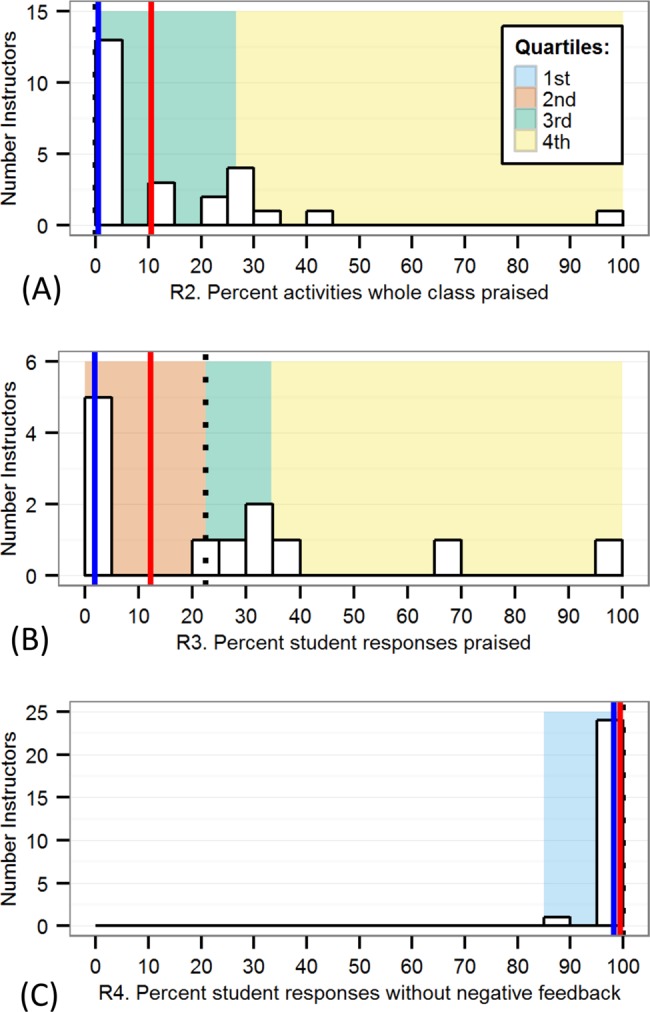
There is extensive evidence that active learning works better than a completely passive lecture. Despite this evidence, adoption of these evidence-based teaching practices remains low. In this paper, we offer one tool to help faculty members implement active learning. This tool identifies 21 readily implemented elements that have been shown to increase student outcomes related to achievement, logic development, or other relevant learning goals with college-age students. Thus, this tool both clarifies the research-supported elements of best practices for instructor implementation of active learning in the classroom setting and measures instructors’ alignment with these practices. We describe how we reviewed the discipline-based education research literature to identify best practices in active learning for adult learners in the classroom and used these results to develop an observation tool (Practical Observation Rubric To Assess Active Learning, or PORTAAL) that documents the extent to which instructors incorporate these practices into their classrooms. We then use PORTAAL to explore the classroom practices of 25 introductory biology instructors who employ some form of active learning. Overall, PORTAAL documents how well aligned classrooms are with research-supported best practices for active learning and provides specific feedback and guidance to instructors to allow them to identify what they do well and what could be improved.
Overview
The claims and statistics of this paper haven’t been checked yet.
Run the check — free, no account needed. It reads the open-access text and checks the sources it cites.
Integrity signals
Registry
Cites
Statistics
Figures
Verification
Claims the paper makes
The claims and statistics of this paper haven’t been checked yet.
Run the check — free, no account needed. It reads the open-access text and checks the sources it cites.
Claims other papers make about this one
Each is checked against this paper’s own text: does it say what the citing paper says it does?
The cited source says what the claim attributes to it.
In the citing paper
“Our data on type of active learning are also poorly resolved, because publications still routinely fail to report quantitative data on the nature of course interventions, such as records from classroom observation tools (e.g., ref. 61 and SI Appendix, Table S12).”
From Active learning narrows achievement gaps for underrepresented students in undergraduate science, technology, engineering, and math (2020) · cites this paper as [61]
Self-check
Percentages, sums and reported differences re-computed from the paper’s own numbers.
The self-check needs the paper’s full text.
Citations
Cites
Active learning increases student performance in science, engineering, and mathematics
Freeman, S., Eddy, S. L., McDonough, M., Smith, M. K., Okoroafor, N., Jordt, H., & Wenderoth, M. P. (2014) · Proceedings of the National Academy of Sciences · doi:10.1073/pnas.1319030111 · Cited by 9,787 · cited 3×
“For example, when asked to define active learning, faculty members in one study offered a range of answers, including simply “using clickers” or “group work” to “emphasizing higher-order skills” (Freeman et al., 2014).”
BackgroundInfluentialSelf-citationThe role of deliberate practice in the acquisition of expert performance
Ericsson, K. A., Krampe, R. T., & Tesch-Römer, C. (1993) · Psychological Review · doi:10.1037/0033-295x.100.3.363 · Cited by 9,564 · cited 4×
“In addition to the amount of practice, the quality and distribution of the practice is also important (Ericsson et al., 1993).”
BackgroundMethodInfluentialCicchetti, D. V. (1994) · Psychological Assessment · doi:10.1037/1040-3590.6.4.284 · Cited by 9,349 · cited 2×
“The resulting ICCs were all > 0.8, and thus all were in the “excellent” range (Supplemental Table 2; Cicchetti 1994).”
BackgroundInfluentialForming inferences about some intraclass correlation coefficients.
McGraw, K. O., & Wong, S. P. (1996) · Psychological Methods · doi:10.1037/1082-989x.1.1.30 · Cited by 6,903 · cited 3×
“The resulting ICCs were all > 0.8, and thus all were in the “excellent” range (Supplemental Table 2; Cicchetti 1994).”
MethodInfluentialHake, R. R. (1998) · American Journal of Physics · doi:10.1119/1.18809 · Cited by 6,072 · cited 1×
“One of the most popular definitions of active learning comes from Hake (1998): “those [practices] designed at least in part to promote conceptual understanding through interactive engagement of students in heads-on (always) and hands-on (usually) activities which yield immediate feedback through…”
BackgroundDunlosky, J., Rawson, K. A., Marsh, E. J., Nathan, M. J., & Willingham, D. T. (2013) · Psychological Science in the Public Interest · doi:10.1177/1529100612453266 · Cited by 3,138
Goals: An approach to motivation and achievement.
Elliott, E. S., & Dweck, C. S. (1988) · Journal of Personality and Social Psychology · doi:10.1037//0022-3514.54.1.5 · Cited by 3,098
Levels of processing versus transfer appropriate processing
Morris, C. D., Bransford, J. D., & Franks, J. J. (1977) · Journal of Verbal Learning and Verbal Behavior · doi:10.1016/s0022-5371(77)80016-9 · Cited by 2,296 · cited 2×
“To provide students with opportunities to practice their logic development, it is necessary for instructors to formulate questions that require a higher level of thinking (PORTAAL element logic development 1, L1; Morris et al., 1977; Ericsson et al.,1993; Jensen et al., 2014).”
BackgroundMethodAronson, J., Fried, C. B., & Good, C. (2002) · Journal of Experimental Social Psychology · doi:10.1006/jesp.2001.1491 · Cited by 1,889 · cited 1×
“At the college level, an intervention that had students reflect on a situation in their own life in which hard work helped them improve also increased their achievement in their classes (Aronson et al., 2002).”
BackgroundPraise for intelligence can undermine children's motivation and performance.
Mueller, C. M., & Dweck, C. S. (1998) · Journal of Personality and Social Psychology · doi:10.1037/0022-3514.75.1.33 · Cited by 1,709 · cited 1×
“Praise that focuses on effort encourages a mastery goal and can increase student willingness to participate in challenging tasks (R6; Mueller and Dweck, 1998).”
Background
Research works printed but not linked: 21
- Aggarwal P, 2008, J Market Educ, 30, 255, 10.1177/0273475308322283 · DOI
- American Association for the Advancement of Science, 2013, Describing and Measuring Undergraduate STEM Teaching Practices
- Bouwma-Gearhard J, 2012, Int J Teach Learn High Educ, 24, 180
- Bybee RW, 2006, The BSCS 5E Instructional Model: Origins and Effectiveness
- Cole CC, 1982, Improving Instruction: Issues and Alternatives for Higher Education, AAHE-ERIC Higher Education Report no. 4
- Eichinger D, 1991, Paper presented at the annual meeting of the American Educational Research Association, in Chicago, IL
- Elliot ES, 1988, J Pers Soc Psychol, 54, 5, 10.1037/0022-3514.54.1.5 · DOI · Paper page
- Ellis K, 2000, Hum Commun Res, 26, 264
- 10.1187/cbe.06-09-0194 · DOI · Paper page
- Fritschner LM, 2000, J High Educ, 71, 342
- Henderson C, 2009, Phys Educ Res, 5, 1
- Hoekstra A, 2011, Learn Media Technol, 2011, 1
- Jensen JL, 2014, Educ Psychol Rev, 2014, 1
- Kane TJ, 2013, Ensuring Fair and Reliable Measures of Effective Teaching: Culminating Findings from the MET Project’s Three-Year Study
- National Science Foundation, 2013, Widening Implementation and Demonstration of Evidence-Based Reforms (WIDER), NSF 13–552 Program Solicitation
- President’s Council of Advisors on Science and Technology, 2012, Engage to Excel: Producing One Million Additional College Graduate with Degrees in Science, Technology, Engineering and Mathematics
- Turpen C, 2009, Phys Rev Spec Top Phys Educ Res, 5, 1
- Turpen C, 2010, Phys Rev Spec Top Phys Educ Res, 6, 1
- Weimer M, 1990, Improving College Teaching: Strategies for Developing Instructional Effectiveness
- Wood E, 1994, Albta J Educ Res, 40, 57
- Wood E, 1999, J Educ Psychol, 91, 527, 10.1037/0022-0663.91.3.527 · DOI
Cited by
Sorted by citations
Theobald, E. J., Hill, M. J., Tran, E., Agrawal, S., Arroyo, E. N., Behling, S., Chambwe, N., Cintrón, D. L., Cooper, J. D., Dunster, G., et al. (2020) · Proceedings of the National Academy of Sciences · doi:10.1073/pnas.1916903117 · Cited by 1,387
The Curious Construct of Active Learning
Lombardi, D., Shipley, T. F., Astronomy Team, B. T., Bailey, J. M., Bretones, P. S., Prather, E. E., Ballen, C. J., Knight, J., Smith, M. K., Stowe, R. L., et al. (2021) · Gothic.net · doi:10.1177/1529100620973974 · Cited by 547
“Examples include the Reformed Teaching Observation Protocol (RTOP; Sawada et al., 2002), the Teaching Dimensions Observation Protocol (Hora et al., 2013), the Classroom Observation Protocol for Undergraduate STEM (COPUS; Smith et al., 2013), the Practical Observation Rubric to Assess Active Learning (Eddy et al., 2015…”
BackgroundCooper, K. M., Downing, V. R., & Brownell, S. (2018) · International Journal of STEM Education · doi:10.1186/s40594-018-0123-6 · Cited by 298
“There are many different ways to enact active learning, but typically active learning includes students working with other students during class and more frequent assessment of student learning in the classroom (Eddy et al. 2015b; Freeman et al. 2014).”
BackgroundInfluentialCooper, K. M., & Brownell, S. (2016) · CBE - Life Sciences Education · doi:10.1187/cbe.16-01-0074 · Cited by 188
Fear of Negative Evaluation and Student Anxiety in Community College Active-Learning Science Courses
Downing, V. R., Cooper, K. M., Cala, J. M., Gin, L. E., & Brownell, S. E. (2020) · CBE—Life Sciences Education · doi:10.1187/cbe.19-09-0186 · Cited by 237
“…can reduce bias with regard to who is called on in college science courses; in biology courses in which random call is not practiced and students volunteer to answer questions, only 40% of female voices are heard, even when females make up 60% of the class (Eddy et al., 2014, 2015; Tanner, 2013).”
BackgroundEngland, B. J., Brigati, J., & Schussler, E. (2017) · PLoS ONE · doi:10.1371/journal.pone.0182506 · Cited by 146
Design-Based Research: A Methodology to Extend and Enrich Biology Education Research
Scott, E. E., Wenderoth, M. P., & Doherty, J. H. (2020) · CBE—Life Sciences Education · doi:10.1187/cbe.19-11-0245 · Cited by 214
“Second, collaborations between researchers and instructors could help increase the implementation of evidence-based teaching practices by instructors/faculty who are not education researchers and would benefit from support while shifting their instructional approaches (Eddy et al., 2015).”
BackgroundSelf-citationEngland, B. J., Brigati, J. R., Schussler, E. E., & Musgrove, M. M. C. (2019) · CBE—Life Sciences Education · doi:10.1187/cbe.17-12-0284 · Cited by 142
“…a growing interest in understanding how undergraduate anxiety may impact motivation, performance, and persistence, particularly for demographic subsets of students (Bledsoe and Baskin, 2014; Eddy et al., 2014, 2015a,b; Broeckelman-Post et al., 2016; Cooper and Brownell, 2016; Cooper et al., 2018).”
BackgroundActive Teaching and Learning Methodologies: Some Considerations
Konopka, C. L., Adaime, M. B., & Mosele, P. H. C. (2015) · Creative Education · doi:10.4236/ce.2015.614154 · Cited by 160
ASPECT: A Survey to Assess Student Perspective of Engagement in an Active-Learning Classroom
Wiggins, B. L., Eddy, S. L., Wener-Fligner, L., Freisem, K., Grunspan, D. Z., Theobald, E. J., Timbrook, J., & Crowe, A. J. (2017) · CBE—Life Sciences Education · doi:10.1187/cbe.16-08-0244 · Cited by 125
“…engagement between two instructors; paired with additional classroom observation data about instructor habits (for example from a tool like PORTAAL [Eddy et al., 2015] or COPUS [Smith et al., 2013]), instructors may be able to enhance their own soft skills to increase engagement in their own…”
BackgroundMethodSelf-citationDemystifying the Meaning of Active Learning in Postsecondary Biology Education
Driessen, E. P., Knight, J. K., Smith, M. K., & Ballen, C. J. (2020) · CBE - Life Sciences Education · doi:10.1187/cbe.20-04-0068 · Cited by 115
“…definition for the BER community; the fact that active learning is a complex process encompassing both teaching methods and student learning (Eddy et al., 2015); the dichotomous nature of the term as both a theory and as a set of pedagogical strategies (Drew and Mackie, 2011); the…”
BackgroundMethodInfluentialClassroom sound can be used to classify teaching practices in college science courses
Owens, M. T., Seidel, S. B., Wong, M., Bejines, T. E., Lietz, S., Perez, J. R., Sit, S., Subedar, Z.-S., Acker, G. N., Akana, S., et al. (2017) · Proceedings of the National Academy of Sciences of the United States of America · doi:10.1073/pnas.1618693114 · Cited by 92
“…Protocol (TDOP), Reformed Teaching Observation Protocol (RTOP), Classroom Observation Protocol for Undergraduate STEM (COPUS), Practical Observation Rubric To Assess Active Learning (PORTAAL)] (11 – 14) require trained human observers and are not feasible for addressing questions at this scale.”
BackgroundAuerbach, A. J., & Andrews, T. C. (2018) · International Journal of STEM Education · doi:10.1186/s40594-018-0112-9 · Cited by 106
“A literature review revealed that about half of the instructional practices demonstrated to improve student achievement in active-learning instruction in large undergraduate STEM courses focused on student motivation (Eddy et al. 2015).”
BackgroundWiggins, B. L., Eddy, S. L., Grunspan, D. Z., & Crowe, A. J. (2017) · AERA Open · doi:10.1177/2332858417708567 · Cited by 102
“These studies should include inspection of finer-grain analyses of student intersectionality/identity, as well as a better understanding of the diverse relationships within working groups (Eddy et al., 2015).”
BackgroundSelf-citationDeChenne, S. E., Koziol, N., Needham, M. D., & Enochs, L. (2015) · CBE - Life Sciences Education · doi:10.1187/cbe.14-09-0153 · Cited by 80
“There are also recent observation protocols that would indicate whether the GTA PD is being taught using current best practices in science teaching (e.g., Smith et al., 2013; Eddy et al., 2015).”
BackgroundWright, C. D., Eddy, S. L., Wenderoth, M. P., Abshire, E. T., Blankenbiller, M., & Brownell, S. E. (2016) · CBE—Life Sciences Education · doi:10.1187/cbe.15-12-0246 · Cited by 74
“A study that recently investigated the teaching strategies of the classrooms used in our study documented that instructional practices varied between instructors, ranging from almost entirely traditional lecture to more student-centered interactive methods (Eddy et al., 2015).”
BackgroundSelf-citationTeacher Knowledge for Active-Learning Instruction: Expert–Novice Comparison Reveals Differences
Auerbach, A., Higgins, M., Brickman, P., & Andrews, T. C. (2018) · CBE - Life Sciences Education · doi:10.1187/cbe.17-07-0149 · Cited by 63
“…to relevant literature to inform our thinking about conceptual relationships among codes, including literature on active-learning instruction (e.g., Eddy et al., 2015), student motivation (e.g., Glynn et al., 2009), cognitive science (e.g., Vermunt, 1996), and course climate (e.g., Ambrose et al.,…”
BackgroundInfluentialWeir, L. K., Barker, M. K., McDonnell, L., Schimpf, N. G., Rodela, T. M., & Schulte, P. M. (2019) · PLoS ONE · doi:10.1371/journal.pone.0220900 · Cited by 69
Student Anxiety and Fear of Negative Evaluation in Active Learning Science Classrooms
Cooper, K. M., & Brownell, S. (2020) · Springer eBooks · doi:10.1007/978-3-030-33600-4_56 · Cited by 58
Harrison, C. D., Nguyen, T. A., Seidel, S. B., Escobedo, A. M., Hartman, C., Lam, K., Liang, K. S., Martens, M., Acker, G. N., Akana, S. F., et al. (2019) · CBE—Life Sciences Education · doi:10.1187/cbe.18-10-0215 · Cited by 54
“In particular, such Instructor Talk sampling would complement information being collected with currently available classroom observation tools (e.g., Reformed Teaching Observation Protocol, Teaching Dimensions Observation Protocol, Classroom Observation Protocol for Undergraduate STEM, Practical Observation Rubric To…”
BackgroundPfeifer, M. A., Cordero, J. J., & Stanton, J. D. (2022) · CBE—Life Sciences Education · doi:10.1187/cbe.21-12-0329 · Cited by 65
Khasawneh, E., Hodge-Zickerman, A., York, C. S., Smith, T. J., & Mayall, H. J. (2022) · International Electronic Journal of Mathematics Education · doi:10.29333/iejme/12715 · Cited by 70
“…the focus of their pedagogies from preparing students to pass exams to preparing them to be life-long learners who are able to think critically, collaborate, solve problems, and communicate effectively (Conference Board of Mathematical Sciences, 2016; Eddy et al., 2015; Maron, 2016; Pienta, 2015).”
Shekhar, P., Borrego, M., DeMonbrun, M., Finelli, C., Crockett, C., & Nguyen, K. (2020) · Journal of College Science Teaching · doi:10.1080/0047231x.2020.12290664 · Cited by 45
A multidimensional assessment of reformed teaching practice in geoscience classrooms
Teasdale, R., Viskupic, K., Bartley, J., McConnell, D., Manduca, C., Bruckner, M., Farthing, D., & Iverson, E. (2017) · Geosphere · doi:10.1130/ges01479.1 · Cited by 44
Lozano, A., López, R., Pereira, F. J., & Fontao, C. B. (2022) · International Journal of Environmental Research and Public Health · doi:10.3390/ijerph192416977 · Cited by 43
“These results corroborate the improvement in science education through active methodologies already described by many authors in the last few decades [41,42].”
ResultAndrews, T. C., Auerbach, A. J., & Grant, E. F. (2019) · CBE—Life Sciences Education · doi:10.1187/cbe.19-01-0010 · Cited by 50
“…using additional approaches, such as analyzing the instructor talk exhibited (Seidel et al., 2015), the 21 specific practices documented in the PORTAAL (Eddy et al., 2015), or the participation patterns in classroom discourse provided by Equity Quantified in Participation (Reinholz and Shah, 2018).”
BackgroundMethodInfluentialBarral, A. M., Ardi-Pastores, V. C., & Simmons, R. E. (2018) · CBE—Life Sciences Education · doi:10.1187/cbe.17-07-0129 · Cited by 55
“In the past decade, the biology education research community has identified a number of evidence-based instructional practices (Freeman et al., 2007, 2011; Handelsman et al., 2007; Bradforth et al., 2015; Eddy et al., 2015; James and Singer, 2016; Jordt et al., 2017).”
BackgroundDurham, M. F., Knight, J., & Couch, B. A. (2017) · CBE—Life Sciences Education · doi:10.1187/cbe.17-02-0033 · Cited by 47
“The Practical Observation Rubric to Assess Active Learning (PORTAAL) is used by observers to document the frequency and duration of class activities that employ specific active-learning techniques documented to improve student learning (Eddy et al., 2015).”
BackgroundMethodThe Effects of Practice-Based Training on Graduate Teaching Assistants’ Classroom Practices
Becker, E. A., Easlon, E. J., Potter, S. C., Guzman-Alvarez, A., Spear, J. M., Facciotti, M., Igo, M., Singer, M., & Pagliarulo, C. (2017) · bioRxiv · doi:10.1187/cbe.16-05-0162 · Cited by 40
“Although there are many different aspects of active learning, important components with demonstrated positive effects on student learning have recently been reviewed (Eddy, Converse, and Wenderoth 2015).”
BackgroundMethodInfluentialEvading Race: STEM Faculty Struggle to Acknowledge Racialized Classroom Events
King, G. P., Russo‐Tait, T., & Andrews, T. C. (2023) · CBE—Life Sciences Education · doi:10.1187/cbe.22-06-0104 · Cited by 53
“The Ignored event could have been mitigated if the instructor had been cautious with praise and not judged student responses (Aronson et al., 2002; Tanner, 2013; Eddy et al., 2015).”
BackgroundCooper, K. M., Ashley, M., & Brownell, S. E. (2017) · CBE—Life Sciences Education · doi:10.1187/cbe.16-05-0161 · Cited by 40
“We adapted our definitions from the biology education literature (e.g., Freeman et al., 2014; Eddy, Brownell, et al., 2015; Eddy et al., 2015).”
MethodOfferdahl, E. G., McConnell, M., & Boyer, J. (2018) · CBE—Life Sciences Education · doi:10.1187/cbe.18-02-0029 · Cited by 40
Ferrare, J. J. (2019) · CBE—Life Sciences Education · doi:10.1187/cbe.17-12-0257 · Cited by 51
“These efforts have led to the development of multiple classroom observation instruments (for a review, see Hora and Ferrare, 2012), such as the Reformed Teaching Observation Protocol (i.e., RTOP; Sawada et al., 2002), Practical Observation Rubric to Assess Active Learning (Eddy et al., 2015), Teaching Dimensions Obser…”
BackgroundBrancaccio-Taras, L., Pape-Lindstrom, P. A., Peteroy-Kelly, M., Aguirre, K., Awong-Taylor, J., Balser, T. C., Cahill, M. J., Frey, R. F., Jack, T. P., Kelrick, M., et al. (2016) · CBE - Life Sciences Education · doi:10.1187/cbe.15-12-0260 · Cited by 34
“, 2015) and the Faculty Practice/Faculty Support rubric (D’Avanzo, 2013; Smith et al., 2013; Wieman and Gilbert, 2014; Eddy et al., 2015).”
Making STEM Equitable: An Active Learning Approach to Closing the Achievement Gap
Burke, C., Luu, R., Lai, A., Hsiao, V., Cheung, E., Tamashiro, D., & Ashcroft, J. M. (2020) · doi:10.15294/ijal.v5i2.23933 · Cited by 20
Adams, A. E. M., Garcia, J., & Traustadóttir, T. (2016) · CBE - Life Sciences Education · doi:10.1187/cbe.15-07-0157 · Cited by 31
“First, it is possible that additional or other approaches to active learning would have been more effective than those used in this study; future research should be directed at determining what types of activities are most effective in eliciting active learning (Andrews et al., 2011; Freeman et al., 2014; Eddy et al.,…”
Biosensors Show Promise as a Measure of Student Engagement in a Large Introductory Biology Course
McNeal, K. S., Zhong, M., Soltis, N., Doukopoulos, L., Johnson, E. T., Courtney, S. L., Alwan, A., & Porch, M. (2020) · CBE—Life Sciences Education · doi:10.1187/cbe.19-08-0158 · Cited by 35
“Several classroom observation tools have been designed to measure student (and instructor) participation and behavior in the classroom (Sawada et al., 2002; Hora and Ferrare, 2010; Smith et al., 2013; Eddy et al., 2015; Lane and Harris, 2015).”
BackgroundDevelopment of a formative peer observation protocol for STEM faculty reflection
Dillon, H., James, C., Prestholdt, T. E., Peterson, V., Salomone, S., & Anctil, E. (2020) · Assessment & Evaluation in Higher Education · doi:10.1080/02602938.2019.1645091 · Cited by 26
True Grit: Passion and persistence make an innovative course design work
Casper, A., Eddy, S. L., & Freeman, S. (2019) · PLoS Biology · doi:10.1371/journal.pbio.3000359 · Cited by 26
“The changes in course design that occurred over the three experiments (Table 1) are backed by data from a classroom observation tool [11] (S3 Text).”
MethodSelf-citationKranzfelder, P., Lo, A. T., Melloy, M. P., Walker, L. E., & Warfa, A.-R. M. (2019) · International Journal of Science Education · doi:10.1080/09500693.2019.1649503 · Cited by 23
Deep Learning for Classroom Activity Detection from Audio
Cosbey, R., Wusterbarth, A., & Hutchinson, B. (2019) · IEEE International Conference on Acoustics Speech and Signal Processing · doi:10.1109/icassp.2019.8683365 · Cited by 38
Making the Grade: Using Instructional Feedback and Evaluation to Inspire Evidence-Based Teaching
Brickman, P., Gormally, C. L., & Martella, A. (2016) · CBE - Life Sciences Education · doi:10.1187/cbe.15-12-0249 · Cited by 24
“, teaching practices inventories) could be used to give faculty the tools to support student buy-in of evidence-based teaching approaches and to be successful in implementing these teaching models (Wieman and Gilbert, 2014; Eddy et al., 2015).”
MethodInteractive teaching enhances students' physiological arousal during online learning
Gellisch, M., Moroşan‐Puopolo, G., Wolf, O. T., Moser, D., Zaehres, H., & Brand‐Saberi, B. (2023) · Annals of Anatomy - Anatomischer Anzeiger · doi:10.1016/j.aanat.2023.152050 · Cited by 35
“random to participate in a multiple-choice test on the course topic provided on the online platform Moodle, to incorporate a typical active learning assessment-component into the online teaching concept (Freeman et al., 2014; Eddy et al., 2015).”
BackgroundMethodAlkhouri, J. S., Donham, C., Pusey, T. S., Signorini, A., Stivers, A. H., & Kranzfelder, P. (2021) · BioScience · doi:10.1093/biosci/biab077 · Cited by 28
Guimarães, L., & Lima, R. D. S. (2021) · European Journal of Engineering Education · doi:10.1080/03043797.2021.1937946 · Cited by 21
Haag, K., Pickett, S. B., Trujillo, G., & Andrews, T. C. (2022) · CBE—Life Sciences Education · doi:10.1187/cbe.22-08-0169 · Cited by 27
“Other tools could also be useful for investigating the implementation and fidelity of evidence-based practices as a result of co-teaching experiences (e.g., Crowe et al., 2008; Eddy et al., 2015; Tekkumru‐Kisa et al., 2015; Arneson and Offerdahl, 2018; Kranzfelder et al., 2019).”
MethodMeiliati, R., Djodding, I. M., Aswin, Salido, A., Husain, D. S., Tahir, & Hidayati, U. (2026) · Social Sciences & Humanities Open · doi:10.1016/j.ssaho.2025.102345 · Cited by 20
Graham, M., Jacobson, K., Husman, J. E., Prince, M., Finelli, C., Andrews, M., & Borrego, M. J. (2023) · International Journal of Science Education · doi:10.1080/09500693.2023.2196643 · Cited by 29
Schlotterbeck, D., Uribe, P., Araya, R., Jiménez, A., & Caballero, D. (2021) · International Conference on Learning Analytics and Knowledge · doi:10.1145/3448139.3448152 · Cited by 19
“…method [26], the Teaching Dimensions Ob-servation Protocol (TDOP) [12], the Practical Observation Rubric To Assess Active Learning (PORTAAL) [7], the Classroom Assessment Scoring System (CLASS) [29], and the Classroom Observation Protocol for Undergraduate STEM (COPUS) [34]; where observers…”
MethodLi, B., Yu, J., Sun, L., & Yang, H. (2024) · Frontiers in Education · doi:10.3389/feduc.2024.1332778 · Cited by 20
Auerbach, A. J., & Schussler, E. E. (2017) · CBE—Life Sciences Education · doi:10.1187/cbe.16-08-0258 · Cited by 22
“Eddy et al. (2015) found that students explaining their answers to peers, hearing other students describe their logic, and participating in activities that require group work are all elements of best practices in AL.”
BackgroundResultTeoh, S. L., Long, C., & Khan, T. (2016) · doi:10.1177/2158244016658085 · Cited by 18
“The possibility of biased PRT has been stressed and can be countered by conducting several independent class observations or by involving multiple reviewers (Eddy et al., 2015).”
BackgroundInfluentialEvidence-based teaching practices correlate with increased exam performance in biology
Moon, S., Jackson, M. A., Doherty, J. H., & Wenderoth, M. P. (2021) · PLoS ONE · doi:10.1371/journal.pone.0260789 · Cited by 18
Self-citationMapping Patterns of Student Engagement Using Cluster Analysis
Wilson, D. M., Wright, J., & Summers, L. (2021) · Journal for STEM Education Research · doi:10.1007/s41979-021-00049-z · Cited by 15
“In either case, the large difference in the fractions of more engaged students in these two classes calls for the use of more observation codes when active learning occurs such as the 21 elements used in the PORTAAL classroom observation tool (Eddy et al. 2015).”
BackgroundPope, D., Rounds, C. M., & Clarke-Midura, J. (2017) · Evolution: Education and Outreach · doi:10.1186/s12052-017-0067-1 · Cited by 15
The role of a team psychological safety feeling in teamwork in the classroom
Gonda, D., Tirpáková, A., Pavlovičová, G., & Ďuriš, V. (2024) · Heliyon · doi:10.1016/j.heliyon.2024.e37618 · Cited by 23
Teasdale, R., Ryker, K. D., Viskupic, K. M., Czajka, C. D., & Manduca, C. A. (2020) · International Journal of STEM Education · doi:10.1186/s40594-020-00251-2 · Cited by 20
Real, virtual, or simulated: Approaches to emergency remote learning in engineering
Kruger, K., Wolff, K. E., & Cairncross, K. (2021) · Computer Applications in Engineering Education · doi:10.1002/cae.22444 · Cited by 19
“Other disadvantages include lack of collaboration and teamwork (key International Engineering Alliance and Engineering Council of South Africa qualification standard graduate attributes [9,14]) as well as the risk of plagiarism during the assessment, which may misrepresent the benefits of virtual experimentation [8].”
BackgroundAlbeshree, F., Al-Manasia, M., Lemckert, C., Liu, S.-Z., & Tran, D. (2020) · International Journal of Mathematical Education in Science and Technology · doi:10.1080/0020739x.2020.1837399 · Cited by 13
“The approach was purely directed to student self-directed learning (SDL) with an all-inclusive scheme to direct the online activities to student academic improvement (Darmawan & Hidayah, 2017; Eddy et al., 2015).”
Jackson, M. A., Moon, S., Doherty, J. H., & Wenderoth, M. P. (2022) · International Journal of STEM Education · doi:10.1186/s40594-022-00340-4 · Cited by 18
“Many factors contribute to students’ success in their coursework, including but not limited to scaffolding of course material, homework assignments, students’ motivation, and family responsibilities (Eddy et al., 2015a).”
BackgroundMethodInfluentialSelf-citationGeraets, A., Nottolini, I., Doty, C. M., Wan, T., Chini, J. J., & Saitta, E. K. H. (2021) · Journal of Science Education and Technology · doi:10.1007/s10956-021-09923-2 · Cited by 12
Twahirwa, J., & Twizeyimana, E. (2020) · African Journal of Educational Studies in Mathematics and Sciences · doi:10.4314/ajesms.v16i2.7 · Cited by 12
“Obviously, the study conducted by Eddy, Converse, and Wenderoth (2015) emphasized that learners’ participation can be taken to a higher level by feeling the sense of responsibility during grasping of their own knowledge and skills.”
ResultProduction and uses of e-learning tools for animal biology education at university
Sautière, P. E., Blervacq, A., & Vizioli, J. (2019) · The European Zoological Journal · doi:10.1080/24750263.2019.1582722 · Cited by 15
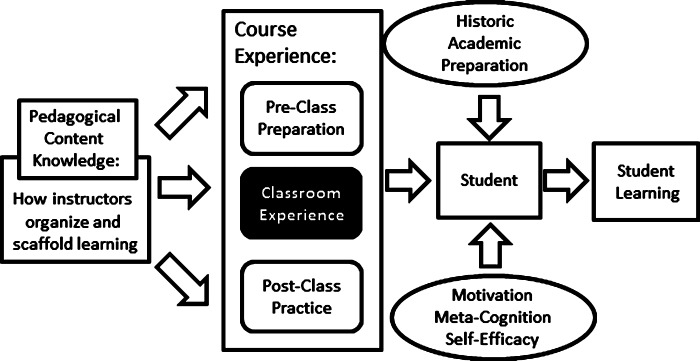
“…necessary to combine these resources with those of the students: previous school experience and their own personality (dotted arrows) (modi fi ed from Eddy et al. 2015). for molecular biology students (Laneuville & Sikora 2015), suggesting that this kind of learning activity is not…”
BackgroundRoman, T. A., & Uttamchandani, S. (2018) · International Journal of Research & Method in Education · doi:10.1080/1743727x.2018.1452199 · Cited by 12
“Eddy, Converse, and Wenderoth (2015) created an observational tool for capturing the presence, absence, and frequency of best practices for active learning, although it is specific to large ALCs (i.e., 50–700 students) in STEM domains.”
BackgroundWan, T., Doty, C. M., Geraets, A., Saitta, E. K. H., & Chini, J. J. (2023) · International Journal of STEM Education · doi:10.1186/s40594-023-00398-8 · Cited by 11
“Error framing is proposed in the literature as a pedagogical tool to reduce student apprehension (Eddy et al., 2015) and anxiety (Cooper et al.”
BackgroundInfluentialOlsen, A., Morbitzer, K. A., Zambrano, S., Zeeman, J., Persky, A., Bush, A. A., & McLaughlin, J. E. (2022) · BMC Medical Education · doi:10.1186/s12909-022-03616-z · Cited by 11
“Although other instruments exist, such as the Classroom Observation Protocol for Undergraduate STEM (COPUS) [43] and the Practice Observation Rubric to Assess Active Learning (PORTAAL), [44] the TPI provides a relatively simple, frequency-based system for characterizing research-based teaching practices with little to…”
BackgroundTakahashi, A., Kashiwaba, Y., Okumura, T., Ando, T., Yajima, K., Hayakawa, Y., Takeshige, M., & Uchida, T. (2015) · International Conference on Teaching, Assessment, and Learning for Engineering · doi:10.1109/tale.2015.7386020 · Cited by 11
Asgari, M., Miles, A. M., Lisboa, M. S., & Sarvary, M. A. (2021) · Frontiers in Education · doi:10.3389/feduc.2021.740344 · Cited by 13
“The training guide provided by COPUS and PORTAAL (Smith et al., 2013; Eddy et al., 2015) was also reviewed.”
BackgroundMethodResultInfluentialPublishing activities improves undergraduate biology education
Smith, M. K. (2018) · FEMS Microbiology Letters · doi:10.1093/femsle/fny099 · Cited by 11
Stieha, V., Shadle, S., & Paterson, S. (2016) · The Journal of General Education · doi:10.5325/jgeneeduc.65.2.0085 · Cited by 10
MacKay, J. R. D., Nordmann, E., Murray, L., Browitt, A., Anderson, M., & Hutchison, J. (2021) · Frontiers in Education · doi:10.3389/feduc.2021.734755 · Cited by 9
“While activity within lectures is varied by lecturer, the majority of lecture time is predominantly the lecturer talking (Smith et al., 2013b; Eddy et al., 2015; Kinnear et al., 2021).”
BackgroundThe effectiveness of computer-based simulations for numerical methods in engineering
Tudón-Martínez, J., Hernandez-Alcantara, D., Rodríguez-Villalobos, M., Aquines-Gutiérrez, O., Vivas-Lopez, C., & Morales-Menéndez, R. (2020) · International Journal on Interactive Design and Manufacturing (IJIDeM) · doi:10.1007/s12008-020-00673-w · Cited by 9
Cen, X., Lee, R. J., Contreras, C., Owens, M. T., & Maloy, J. P. (2024) · Journal of Microbiology and Biology Education · doi:10.1128/jmbe.00073-24 · Cited by 9
“…the volume and variance of classroom audio recordings to estimate the percentage of time spent in active learning (56); and the Practical Observation Rubric To Assess Active Learning, which measures the minutes students could spend in thinking or discussion as a component of its score (57).”
Fernández, D., White, S., Smith, H. C. M., Connor, P., & Ryan, M. K. (2023) · Frontiers in Education · doi:10.3389/feduc.2023.1194968 · Cited by 13
Gellisch, M., Schäfer, T., Yahya, I., Joswig, M., Cheng, X., Moroşan‐Puopolo, G., & Brand‐Saberi, B. (2023) · European Journal of Investigation in Health Psychology and Education · doi:10.3390/ejihpe13080109 · Cited by 10
“This increase in interaction, based on the evidence-based active learning strategy [44,45], was accompanied by the requirement to turn on the students’ cameras to enable a more personal learning atmosphere.”
BackgroundWan, T., Doty, C. M., Geraets, A. A., Nix, C. A., Saitta, E. K. H., & Chini, J. J. (2021) · Physical Review Physics Education Research · doi:10.1103/physrevphyseducres.17.010146 · Cited by 12
Brazeal, K. R., Brown, T. L., & Couch, B. A. (2021) · Journal for STEM Education Research · doi:10.1007/s41979-021-00054-2 · Cited by 8
Development of the Engineering Learning Classroom Observation Tool (ELCOT)
Tolnay, T. K., Spiegel, S. A., & Sherer, J. (2017) · ASEE Annual Conference & Exposition · doi:10.18260/1-2--28176 · Cited by 8
He, S., & Zhang, H. (2025) · Journal of Hospitality & Tourism Education · doi:10.1080/10963758.2025.2473017 · Cited by 7
“For example, Eddy et al. (2015) proposed that active learning typically involves students collaborating with peers in the classroom and engaging in mutual knowledge evaluation.”
Automated Assessment of Classroom Interaction Based on Verbal Dynamics: A Deep Learning Approach
Singh, S., Singh, L., & Satsangee, N. (2025) · SN Computer Science · doi:10.1007/s42979-025-03770-3 · Cited by 7
“…tools are the Teaching Dimen - sions Observation Protocol (TDOP) [ 6 ], Practical Observa - tion Rubric To Assess Active Learning (PORTAAL) [7], the Classroom Assessment Scoring System (CLASS) [8], and the Classroom Observation Protocol for Undergradu - ate STEM (COPUS) [9] where observers…”
Engaging classroom observation: A brief measure of active learning in the college classroom
Young, C., Mitchell-Yellin, B., & Randall, G. K. (2024) · Active Learning in Higher Education · doi:10.1177/14697874241229421 · Cited by 7
“Other tools, such as the Practical Observation Rubric to Assess Active Learning (PORTAAL) (Eddy et al., 2015) and the Teaching Dimensions Observation Protocol (TDOP) (Hora, 2015; Hora & Ferrare, 2014) were designed to measure the types and prevalence of active learning instructional strategies in…”
Fine-Grained Classroom Activity Detection from Audio with Neural NetworksPreprint
Slyman, E., Daw, C., Skrabut, M., Usenko, A., & Hutchinson, B. (2021) · arXiv (Cornell University) · doi:10.48550/arxiv.2107.14369 · Cited by 15
“Traditionally, knowing how class time is spent requires bringing in a trained observer to hand-annotate during lecture, for example, using one of the popular classroom annotation schemes (Smith et al. 2013; Sawada et al. 2002; Velasco et al. 2016; Eddy, Converse, and Wenderoth 2015).”
Zhu, N. (2020) · International Journal of Mechanical Engineering Education · doi:10.1177/0306419020920594 · Cited by 7
An evidence-based framework for peer review of teaching.
Dawson, S. M., & Hocker, A. D. (2020) · Advances in Physiology Education · doi:10.1152/advan.00088.2019 · Cited by 7
A Guide for Graduate Students Interested in Postdoctoral Positions in Biology Education Research
Aikens, M. L., Corwin, L. A., Andrews, T. C., Couch, B., Eddy, S. L., McDonnell, L., & Trujillo, G. (2016) · CBE - Life Sciences Education · doi:10.1187/cbe.16-03-0130 · Cited by 7
“…(e.g., Dasgupta et al., 2014), surveys (e.g., Glynn et al., 2011; Hanauer and Dolan, 2014), concept inventories (e.g., Anderson et al., 2002; Price et al., 2014; Couch et al., 2015), or observation protocols (e.g., Smith et al., 2013; Eddy et al., 2015), for use by the biology education community.”
BackgroundSelf-citationA3 Learning System: Advanced Active and Autonomous Learning System
Takahashi, A., Kashiwaba, Y., Okumura, T., Ando, T., Yajima, K., Hayakawa, Y., Takeshige, M., & Uchida, T. (2016) · Int. J. Eng. Pedagog. · doi:10.3991/ijep.v6i2.5645 · Cited by 7
Probing the Flipped Learning Literature in Social Sciences and Humanities Education
Jdaitawi, M. T., Hussein, E. T., Muhaidat, F. M., & Abu-Joudeh, M. I. (2022) · International Journal of Instruction · doi:10.29333/iji.2022.15337a · Cited by 7
A computational thinking course accessible to non-stem majors
Kafura, D., Bart, A., & Chowdhury, B. (2018) · Journal of Computing Sciences in Colleges (JCSC; Formerly: Journal of Computing in Small Colleges) · doi:10.5555/3282588.3282611 · Cited by 6
Validation of a peer observation and evaluation tool for online teaching in the U.S.
Jia, Y., Spagnolo, A. B., Barrett, N. M., Murphy, A. A., Basto, P., Rothpletz-Puglia, P., & Luther, S. (2024) · Educational technology research and development · doi:10.1007/s11423-024-10428-z · Cited by 5
“…in specific disciplines for traditional face to face classroom, for example, the Practical Observation Rubric to Assess Active Learning (PORTAAL; Eddy et al., 2015), The Classroom Observation Protocol for Undergraduate STEM (COPUS; Smith et al., 2013), Peer Review of Teaching (PRoT) program for…”
Takahashi, A., Kashiwaba, Y., Hayakawa, Y., Kubota, Y., & Yajima, K. (2016) · International Conference on Teaching, Assessment, and Learning for Engineering · doi:10.3991/ijep.v7i3.6968 · Cited by 5
“In recent years, “Active Learning (AL),” the teaching method which puts more emphasis on students’ active participation in class and their abilities to discover problems and solve them, has been coming under the spotlight worldwide [1][2][3][4][5][6].”
BackgroundActive Learning and Conceptual Understanding in Biology
Olimpo, J. T., & Esparza, D. (2020) · Springer eBooks · doi:10.1007/978-3-030-33600-4_4 · Cited by 14
Outlooks on Organic Chemistry: Student and Faculty Perspectives as a Model for Change
Richards, E. R., Luciano, K., Nix, C. A., Kolpashchikov, D., & Saitta, E. K. H. (2025) · Journal of Chemical Education · doi:10.1021/acs.jchemed.4c01437 · Cited by 4
-, M. A. (2023) · The Proceedings of the International Academic Conference on Teaching, Learning and Education. · doi:10.33422/6th.tleconf.2023.06.101 · Cited by 11
“It is probable that students would actively participate in their studies, contribute to debates, and work collaboratively with peers when they feel respected, encouraged, and included (Eddy et al., 2020).”
BackgroundInfluentialBrief Training and Intensive Mentoring Guide Postdoctoral Scholars to Student-Centered Instruction
Price, R., Self, C. J., Young, W. C., Klein, E. R., Al‐Noori, S., Ma, E. Y., & DeMarais, A. A. (2021) · CBE—Life Sciences Education · doi:10.1187/cbe.21-03-0083 · Cited by 4
ACTIVE METHODOLOGIES IN HIGHER EDUCATION: A SYSTEMATIC MAPPING IN THE CONTEXT OF ENGINEERING COURSES
Reis, A., Alves, A., & Wendland, E. (2023) · Educação em revista · doi:10.1590/0102-469839012t · Cited by 4
Xu, S., Velasco, V., Hill, M. J., Tran, E. T., Agrawal, S., Arroyo, E. N., Behling, S., Chambwe, N., Cintrón, D. L., Cooper, J. D., et al. (2026) · Education Sciences · doi:10.3390/educsci16071044 · Cited by 4
Faculty case studies on learning to teach inclusively in undergraduate STEM education
Hill, L. B., Buchanan, D., Woods, S. E. O., & Frey, R. F. (2025) · Frontiers in Education · doi:10.3389/feduc.2025.1574464 · Cited by 4
Eight Indicators for Measuring Equitable Student Success in STEM
Redd, K., Estrada, M., Nembhard, H., & Ngai, C. (2024) · Change · doi:10.1080/00091383.2024.2348425 · Cited by 3
Virtual Laboratory: Development of Physics Practicum Instruction to Improve Student Skills
S, F., & Maiyanti, A. A. (2023) · Islamic Journal of Integrated Science Education (IJISE) · doi:10.30762/ijise.v2i3.1891 · Cited by 3
Metadata
- Authors
- Eddy, S. L., Converse, M., & Wenderoth, M. P.
- Affiliations
- University of Washington (US)
- Corresponding author
- Eddy, Sarah L.
- Venue
- CBE—Life Sciences Education
- Published
- 2015-06
- Volume
- 14
- Issue
- 2
- Pages
- ar23
- ISSN
- 1931-7913 (ISSN-L)
- PMC
- PMC4477739
- OpenAlex
- W2307728084
- Cited by
- 182
- References
- 85
- Citations by year
- 2026: 9 · 2025: 21 · 2024: 14 · 2023: 16 · 2022: 17 · 2021: 24 · 2020: 24 · 2019: 15 · 2018: 11 · 2017: 17 · 2016: 11 · 2015: 3
- FWCI
- 70.04
- Type
- journal article
- Language
- en
- Open access
- hybrid
- doi.org
- Licence
- cc-by-nc-sa
- Locations
- CBE—Life Sciences Education (publishedVersion, cc-by-nc-sa)
- Europe PMC (PubMed Central) (publishedVersion, cc-by-nc-sa)
- PubMed Central (publishedVersion, cc-by-nc-sa)
- PubMed (publishedVersion)
- Funders
- National Science Foundation (1118890)
- Topics
- Social Sciences › Education › Innovative Teaching Methods
- Social Sciences › Education › Evaluation of Teaching Practices
- Social Sciences › Education › Problem and Project Based Learning
- Keywords
- active learning, evidence-based teaching practices, classroom observation tools, instructor feedback, adult learners, discipline-based education research
- MeSH terms
- Engineering, Humans, Logic, Mathematics, Science, Students, Teaching, Technology, Universities, Reproducibility of Results, Program Development, Problem-Based Learning
About these checks
Registry, retraction, Cites and statistics results are computed, not judged, with one exception: a printed reference that no index lists is read once by a model before it counts as a citation error. Claims are extracted by a model and kept only when their quote appears verbatim in the text; each cited source is then checked, with a model’s help, for whether it says what the claim relies on. Those verdicts can be wrong — read the claim’s quote and the cited source before relying on one.
Statistics and arithmetic are recomputed, not judged.
Confidence bands are shown only for fields calibrated on our annotated test set. None is calibrated yet, so no band is shown.
What counts as a claim ›How we measure confidence ›How we check this ›
Are you an author, or do you see a problem with this page? Request a review
