

Omega-3 fatty acid supplementation accelerates chylomicron triglyceride clearance
Open accessThe DOI matches its Crossref record; 74 of the 77 references it cites were found in a registry or an index; 3 of the 41 sources its claims cite were checked for support.
Abstract
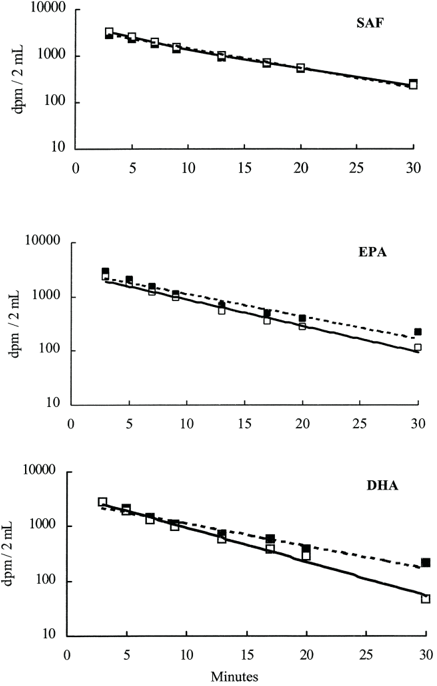
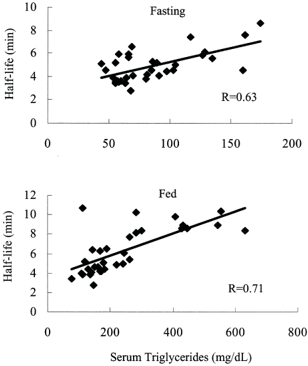
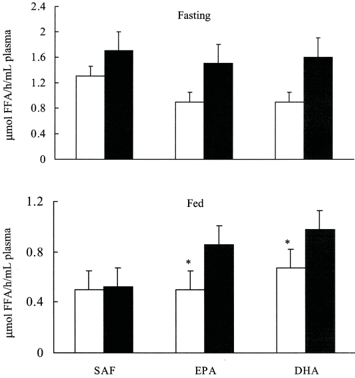
Omega-3 fatty acids (FAs) reduce postprandial triacylglycerol (TG) concentrations. This study was undertaken to determine whether this effect was due to reduced production or increased clearance of chylomicrons. Healthy subjects (n = 33) began with a 4-week, olive oil placebo (4 g/d) run-in period. After a 4-week wash-out period, subjects were randomized to supplementation with 4 g/d of ethyl esters of either safflower oil (SAF), eicosapentaenoic acid (EPA), or docosahexaenoic acid (DHA) for 4 weeks. Results for EPA and DHA were similar, and therefore the data were combined into one omega-3 FA group. Omega-3 FA supplementation reduced the postprandial TG and apolipoprotein B (apo B)-48 and apoB-100 concentrations by 16% (P = 0.08), 28% (P < 0.001), and 24% (P < 0.01), respectively. Chylomicron TG half-lives in the fed state were reduced after omega-3 FA treatment (6.0 +/- 0.5 vs. 5.1 +/- 0.4 min; P < 0.05), but not after SAF (6.9 +/- 0.7 vs. 7.1 +/- 0.7 min). Omega-3 FA supplementation decreased chylomicron particle sizes (mean diameter; 293 +/- 44 vs. 175 +/- 25 nm; P < 0.01) and increased preheparin lipoprotein lipase (LPL; 0.6 +/- 0.1 vs. 0.9 +/- 0.1 micromol/h/ml; P < 0.05) activity during the fed state, but had no effect on postheparin LPL or hepatic lipase activities. The results suggest that omega-3 FA supplementation accelerates chylomicron TG clearance by increasing LPL activity, and that EPA and DHA are equally effective.
Overview
CoChat Summary
TL;DR
In healthy adults, 4 weeks of EPA or DHA supplementation accelerated fed-state chylomicron triglyceride clearance and increased preheparin lipoprotein lipase activity, with EPA and DHA showing similar effects. The authors conclude that omega-3 fatty acids reduce postprandial lipemia mainly by increasing LPL-mediated chylomicron TG clearance rather than by reducing chylomicron production.
Key findings
Omega-3 supplementation reduced postprandial TG, apoB-48, and apoB-100 concentrations by 16% (P = 0.08), 28% (P < 0.001), and 24% (P < 0.01), respectively. Fed-state chylomicron TG half-lives were shorter after omega-3 treatment (6.0 ± 0.5 vs. 5.1 ± 0.4 min; P < 0.05) but not after safflower oil (6.9 ± 0.7 vs. 7.1 ± 0.7 min); fasting half-lives were unaffected. Chylomicron mean diameter decreased (293 ± 44 vs. 175 ± 25 nm; P < 0.01), and fed-state preheparin LPL activity increased (0.6 ± 0.1 vs. 0.9 ± 0.1; P < 0.05; units as reported), while postheparin LPL and hepatic lipase activities did not change significantly. EPA and DHA results were similar and were combined into one omega-3 group.
Methods
Randomized, double-blind, parallel-group, placebo-controlled study in 33 healthy subjects (11 per group: safflower oil, EPA, or DHA). After a 4-week olive oil placebo run-in and 4-week wash-out, subjects received 4 g/d ethyl esters of safflower oil, EPA, or DHA for 4 weeks. Outcomes included oral fat tolerance tests, intravenous fat clearance tests using a [3H]triolein-labeled lipid emulsion, heparin tests for lipase activity, and ANCOVA controlling for baseline values.
Limitations
The paper states that non-LPL-mediated clearance by tissues such as spleen, muscle, adipose tissue, or kidney cannot be excluded, and that it cannot rule out the possibility that omega-3 supplementation caused the intestine to secrete smaller chylomicrons. It also notes that the mechanism responsible for increased LPL activity requires further investigation. Evident from the text: the sample was small (n = 33 total, 11 per group), participants were healthy/normolipidemic, and the intervention was short (4 weeks), which limits generalizability to hypertriglyceridemic or clinical populations.
Model-written summary. Check it against the paper before relying on it.
Integrity signals
Registry
Cites
Statistics
Figures
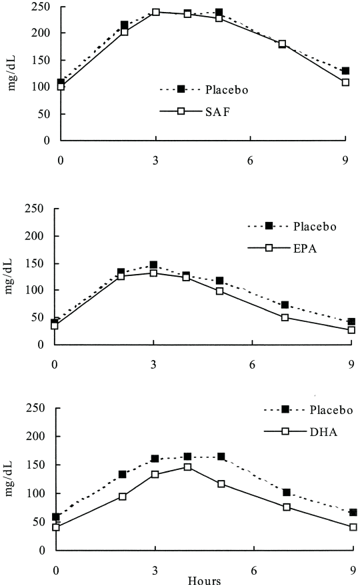
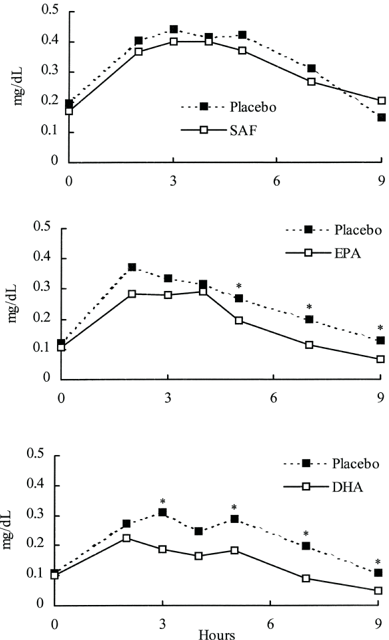
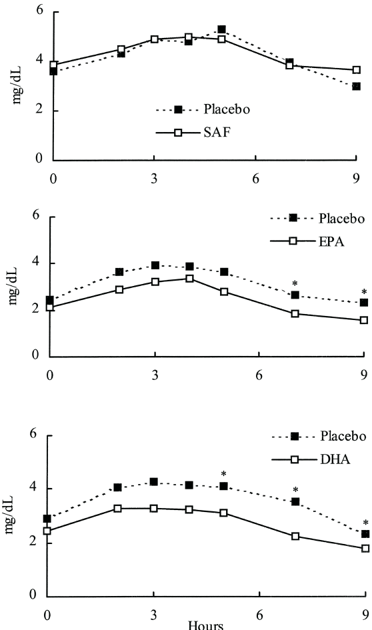
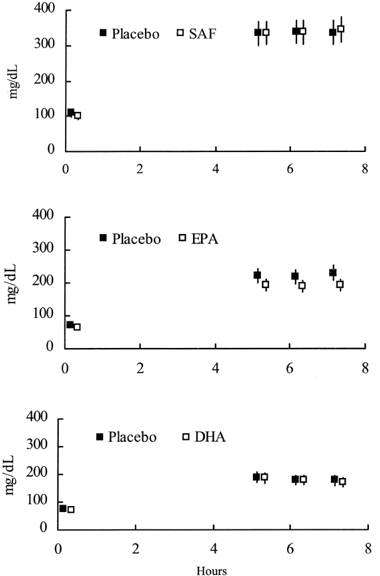
Verification
Claims the paper makes
1 Valid · 0 Not valid · 20 Not checked · 48 Own results and interpretations
A result the paper reports from its own data — it cites no other source for it, so there is none to check. The quote shows it is in the paper.
In the paper
“There was no significant effect of treatment on fasting plasma TG, and total, HDL, LDL, and VLDL-C concentration (Table 2).”
- Also stated in: § DISCUSSION · plain
“Consistent with this finding, -3 fatty acids did not reduce fasting TG concentrations.”
§ Omega-3 fatty acid supplementation accelerates chylomicron triglyceride clearance > Fasting lipid profile
plain- Asserted: passes — The authors put it forward as true.
- Checkable: passes — It can be checked against evidence.
- Load-bearing: passes — The paper’s conclusions depend on it.
- Based: passes — The paper gives a reason why it holds.
- Also stated in: § DISCUSSION · plain
A result the paper reports from its own data — it cites no other source for it, so there is none to check. The quote shows it is in the paper.
In the paper
“Preheparin LPL activities during the fed state increased after DHA (47%; P Ͻ 0.05) and EPA (73%; P Ͻ 0.05) treatments compared with SAF, but no change was de-tected in the fasting state (Fig. 8).”
§ Omega-3 fatty acid supplementation accelerates chylomicron triglyceride clearance > Lipase activities
plain- Asserted: passes — The authors put it forward as true.
- Checkable: passes — It can be checked against evidence.
- Load-bearing: unclear — It is unclear whether the paper’s conclusions depend on it.
- Based: passes — The paper gives a reason why it holds.
A result the paper reports from its own data — it cites no other source for it, so there is none to check. The quote shows it is in the paper.
In the paper
“Preheparin LPL activities during the fed state increased after DHA (47%; P Ͻ 0.05) and EPA (73%; P Ͻ 0.05) treatments compared with SAF”
- Also stated in: § Abstract · plain
“increased preheparin lipoprotein lipase (LPL; 0.6 ؎ 0.1 vs. 0.9 ؎ 0.1 mol/h/ml; P Ͻ 0.05) activity during the fed state”
§ Omega-3 fatty acid supplementation accelerates chylomicron triglyceride clearance > Lipase activities
plainstates a cause- Asserted: passes — The authors put it forward as true.
- Checkable: passes — It can be checked against evidence.
- Load-bearing: passes — The paper’s conclusions depend on it.
- Based: passes — The paper gives a reason why it holds.
- Also stated in: § Abstract · plain
A result the paper reports from its own data — it cites no other source for it, so there is none to check. The quote shows it is in the paper.
In the paper
“Omega-3 FA supplementation reduced the postprandial TG and apolipoprotein B (apo B)-48 and apoB-100 concentrations by 16% ( P ؍ 0.08), 28% ( P Ͻ 0.001), and 24% ( P Ͻ 0.01), respectively.”
§ Omega-3 fatty acid supplementation accelerates chylomicron triglyceride clearance > Abstract
plainstates a cause- Asserted: passes — The authors put it forward as true.
- Checkable: passes — It can be checked against evidence.
- Load-bearing: passes — The paper’s conclusions depend on it.
- Based: passes — The paper gives a reason why it holds.
A result the paper reports from its own data — it cites no other source for it, so there is none to check. The quote shows it is in the paper.
In the paper
“Chylomicron PL concentrations were not significantly different before and after treatments, but chylomicron TG tended to be reduced by EPA and DHA.”
§ Omega-3 fatty acid supplementation accelerates chylomicron triglyceride clearance > Chylomicron size
hedgedstates a possible cause- Asserted: passes — The authors put it forward as true.
- Checkable: passes — It can be checked against evidence.
- Load-bearing: unclear — It is unclear whether the paper’s conclusions depend on it.
- Based: passes — The paper gives a reason why it holds.
29 more claims
Create a free account to see all 69 claims and to verify the 38 references still open.
- It may state two separate claims as one. 23
- Probably not a substantial claim. 16
Claims other papers make about this one
Each is checked against this paper’s own text: does it say what the citing paper says it does?
The source backs part of the claim, not all of it — or backs it for a different population, condition or comparison.
In the citing paper
“Fish oil (omega-3 fatty acids) lowers post-prandial triglyceride levels by 16% to 40% in a dose-dependent fashion, in part by upregulating lipoprotein lipase activity and accelerating the clearance of chylomicrons (30).”
From Dietary Strategies for Improving Post-Prandial Glucose, Lipids, Inflammation, and Cardiovascular Health (2008) · cites this paper as [30]
Experimental — accuracy not yet measuredThe source backs part of the claim, not all of it — or backs it for a different population, condition or comparison.
In the citing paper
“Comparing pre-heparin and post-heparin LPL activity showed consistently increased pre-heparin activity, while post-heparin activity was unchanged by OM3FA treatment in most studies [38, 39, 43] but not all [41].”
From Omega-3 fatty acids eicosapentaenoic acid and docosahexaenoic acid and their mechanisms of action on apolipoprotein B-containing lipoproteins in humans: a review (2017) · cites this paper as [38]
Experimental — accuracy not yet measuredIn the citing paper
“Pre-heparin LPL activity increased following both DHA and EPA treatment [38]”
In the citing paper
“Lowered postprandial TG levels are also explained by increased chylomicron clearance.”
In the citing paper
“Both EPA and DHA treatment significantly increased removal of TGs in chylomicrons in the fed state but not in the fasted state.”
5 more claims about this paper
Create a free account to see every claim other papers make about this one.
Self-check
Percentages, sums and reported differences re-computed from the paper’s own numbers.
Each contradiction between two passages listed here was confirmed by an independent check.
Rated minor: it would not touch a result — a value no result rests on, a p-value that stays on the same side of the significance level, or a conflict that is clerical, resolved elsewhere in the paper, or outside its own findings.
In the paper
§ Omega-3 fatty acid supplementation accelerates chylomicron triglyceride clearance > DISCUSSION
“Fish oil supplementation has been shown to decrease the PL-TG ratio in the chylomicron particles, indicating reduced chylomicron size (9).This was observed in the present study”
§ Omega-3 fatty acid supplementation accelerates chylomicron triglyceride clearance > DISCUSSION
“| EPA | 0.8 Ϯ 0.2 | 0.8 Ϯ 0.1 | 18.2 Ϯ 4.2 | 10.0 Ϯ 2.4 | 319 Ϯ 53 | 149 Ϯ 20 a |”
Citations
Cites
Friedewald, W. T., Levy, R. I., & Fredrickson, D. S. (1972) · Clinical Chemistry · doi:10.1093/clinchem/18.6.499 · Cited by 32,423 · cited 1×
“Plasma was analyzed for total cholesterol, TG, and HDL-C concentrations using a Cobas Fara II with enzymatic reagents from Boehringer Mannheim; VLDL and LDL-C concentrations were estimated by the Friedewald equation (20).”
MethodMarkwell, M. A. K., Haas, S. M., Bieber, L. L., & Tolbert, N. E. (1978) · Analytical Biochemistry · doi:10.1016/0003-2697(78)90586-9 · Cited by 6,458 · cited 1×
“1 mg protein/mg TG) and then adjusted to 1 mg/ml with sample buffer (23).”
MethodFish oils and plasma lipid and lipoprotein metabolism in humans: a critical review
Harris, W. S. (1989) · Journal of Lipid Research · doi:10.1016/s0022-2275(20)38310-3 · Cited by 1,127
Self-citationSuppression by diets rich in fish oil of very low density lipoprotein production in man.
Nestel, P. J., Connor, W. E., Reardon, M. F., Connor, S., Wong, S., & Boston, R. (1984) · Journal of Clinical Investigation · doi:10.1172/jci111422 · Cited by 616
Mori, T. A., Burke, V., Puddey, I. B., Watts, G. F., O’Neal, D. N., Best, J. D., & Beilin, L. J. (2000) · The American Journal of Clinical Nutrition · doi:10.1093/ajcn/71.5.1085 · Cited by 588
Fatty acid modulation of endothelial activation
De Caterina, R., Liao, J. K., & Libby, P. (2000) · The American Journal of Clinical Nutrition · doi:10.1093/ajcn/71.1.213s · Cited by 486
Brunzell, J. D., Hazzard, W. R., Porte, D., & Bierman, E. L. (1973) · Journal of Clinical Investigation · doi:10.1172/jci107334 · Cited by 484 · cited 2×
“Chylomicrons (48) and lipid emulsions (49) are cleared more slowly in patients with elevated VLDL concentrations (likely because of increased competition for LPL), and reductions in endogenous VLDL concentrations accelerate chylomicron clearance (50).”
BackgroundPostprandial lipoproteins and progression of coronary atherosclerosis
Karpe, F., Steiner, G., Uffelman, K., Olivecrona, T., & Hamsten, A. (1994) · Atherosclerosis · doi:10.1016/0021-9150(94)90085-x · Cited by 483
Goodfellow, J., Bellamy, M. F., Ramsey, M. W., Jones, C. J. H., & Lewis, M. J. (2000) · Journal of the American College of Cardiology · doi:10.1016/s0735-1097(99)00548-3 · Cited by 380
Weintraub, M. S., Zechner, R., Brown, A., Eisenberg, S., & Breslow, J. L. (1988) · Journal of Clinical Investigation · doi:10.1172/jci113806 · Cited by 331 · cited 2×
“nature of the fat in the test meal (6, 8, 11, 12, 28, 29).”
Background
Research works printed but not linked: 1
- 8. Harris, W. S., and S. L. Windsor. 1991. N-3 fatty acid supplements reduce chylomicron levels in healthy volunteers. J. Appl. Nutr. 43: 5-15.
Cited by
Items 201–300 of 348
Changes in antibiotic use in Dutch hospitals over a six-year period: 1997 to 2002.
Liem, T. B. Y., Filius, F. M. G., van der Linden, P. D., Janknegt, R., Natsch, S., & Vulto, A. G. (2005) · PubMed · Cited by 18
Welty, F. K., Daher, R., & Garelnabi, M. (2023) · Arteriosclerosis Thrombosis and Vascular Biology · doi:10.1161/atvbaha.122.318125 · Cited by 17
Wolff, J., Cober, M. P., & Huff, K. A. (2025) · Nutrition in Clinical Practice · doi:10.1002/ncp.11278 · Cited by 16
“98,99 There have been case reports of FO ‐ ILE therapy improving hypertriglyceridemia in pediatric patients.”
Kim, H., Park, S., Yang, H., Choi, Y. J., Huh, K. B., & Chang, N. (2015) · Nutrition Research and Practice · doi:10.4162/nrp.2015.9.5.496 · Cited by 13
“EPA and DHA supplementations lower the half-lives and particle size of chylomicron TG and enhance preheparin lipoprotein lipase activities [32].”
BackgroundPark, Y., & Harris, W. S. (2009) · Journal of Medicinal Food · doi:10.1089/jmf.2008.1250 · Cited by 14
Self-citationEpanova ® and Hypertriglyceridemia: Pharmacological Mechanisms and Clinical Efficacy
Kataoka, Y., Uno, K., Puri, R., & Nicholls, S. J. (2013) · Future Cardiology · doi:10.2217/fca.13.4 · Cited by 13
“Ultrapure w-3 fatty acid: Vascepa® Several direct comparisons of EPA and DHA in patients with dyslipidemia demonstrated that both lower TG levels, with evidence of LDLcholesterol raising with DHA, but not with EPA [62,85–88].”
BackgroundDetopoulou, P., & Antonopoulou, S. (2015) · Cited by 15
Khan, S. A., & Jackson, R. T. (2018) · Food Science & Nutrition · doi:10.1002/fsn3.698 · Cited by 12
Aluko, R. E. (2011) · Elsevier eBooks · doi:10.1016/b978-0-08-088504-9.00302-0 · Cited by 13
Barakat, H., Alshimali, S. I., Almutairi, A. S., Alkhurayji, R. I., Almutiri, S. M., Aljutaily, T., Algheshairy, R. M., Alhomaid, R. M., Aljalis, R. A., Alkhidhr, M., et al. (2022) · Frontiers in Nutrition · doi:10.3389/fnut.2022.1029793 · Cited by 10
“Concerning TG, high antioxidants can be assigned to a decrease in the hepatic synthesis of fatty acids, decreasing the triacylglycerol concentration in the liver and reducing autoxidation, which attenuates VLDL-c accumulation (15, 65).”
BackgroundAustin, G., Ferguson, J. J. A., Thota, R. N., Singh, H., Burrows, T. L., & Garg, M. L. (2020) · Clinical Nutrition · doi:10.1016/j.clnu.2020.06.027 · Cited by 14
Tremblay, A. J., Lamarche, B., Hogue, J., & Couture, P. (2016) · Journal of Diabetes Research · doi:10.1155/2016/2909210 · Cited by 13
Bazarbashi, N., & Miller, M. J. (2020) · Expert Review of Cardiovascular Therapy · doi:10.1080/14779072.2020.1749596 · Cited by 11
“LDL and progression of atherosclerosis [51,52].”
Approach to the Patient With Moderate Hypertriglyceridemia
Subramanian, S. (2022) · The Journal of Clinical Endocrinology & Metabolism · doi:10.1210/clinem/dgac085 · Cited by 13
Hypertriglyceridemia in Preterm Infants
Chan, A. P., Robinson, D. T., & Calkins, K. L. (2022) · NeoReviews · doi:10.1542/neo.23-8-e528 · Cited by 11
Campanari, D. D., Cipriano, U. G., Fraga‐Silva, T. F. D. C., Ramalho, L. N. Z., Ovídio, P. P., Júnior, A. A. J., Bonato, V. L. D., & Ferriolli, E. (2024) · Nutrients · doi:10.3390/nu16050634 · Cited by 12
“Consumption in humans should be cautious and its extrapolation viewed with care, considering the amount administered and metabolic differences between individuals [46].”
BackgroundEffects of supplementation with polyunsaturated fatty acids in patients with heart failure
Nodari, S., Triggiani, M., Manerba, A., Milesi, G., & Cas, L. D. (2011) · Internal and Emergency Medicine · doi:10.1007/s11739-011-0671-y · Cited by 10
Jiménez, M. J., Bocos, C., Panadero, M. I., & Herrera, E. (2015) · Zeitschrift für Ernährungswissenschaft · doi:10.1007/s00394-015-1091-y · Cited by 11
“The increased rate of clearance of TAG–chylomicrons seen with n-3 LCPUFA has been associated with an increased activity of lipoprotein lipase (LPL) [22, 42].”
BackgroundInfluentialQualitative and Quantitative Effects of Fatty Acids Involved in Heart Diseases
Moriyama, H., Endo, J., Ikura, H., Kitakata, H., Momoi, M., Shinya, Y., Ko, S., Ichihara, G., Hiraide, T., Shirakawa, K., et al. (2022) · Metabolites · doi:10.3390/metabo12030210 · Cited by 10
Maruyama, K., Khairunnisa, S., Saito, I., Tanigawa, T., Tomooka, K., Minato-Inokawa, S., Sano, M., Takakado, M., Kawamura, R., Takata, Y., et al. (2022) · Nutrients · doi:10.3390/nu14173644 · Cited by 13
Watabe, S., Tanaka, W., Sakakibara, H., & Yokoyama, D. (2024) · Nutrients · doi:10.3390/nu16101407 · Cited by 9
Tratamiento de la hipertrigliceridemia: fibratos frente a ácidos grasos omega-3
Ros, E., & Laguna, J. C. (2006) · Revista Española de Cardiología Suplementos · doi:10.1016/s1131-3587(06)74826-9 · Cited by 51
Doughman, S. D., Ryan, A. S., Krupanidhi, S., Sanjeevi, C. B., & Mohan, V. (2013) · International Journal of Diabetes in Developing Countries · doi:10.1007/s13410-013-0125-3 · Cited by 9
The Effects of Dietary Fatty Acids on Lipid Metabolism
Vemuri, M., & Kelley, D. S. (2007) · doi:10.1201/9781420006902-25 · Cited by 10
New Uses for a New Oil: Clinical Applications of Fish Oil Lipid Emulsion
Elfadil, O. M., Bonnes, S. L. R., Salonen, B. R., Vellapati, S., Patel, J. N., Narasimhan, R., Hurt, R. T., & Mundi, M. S. (2020) · Current Surgery Reports · doi:10.1007/s40137-020-00259-1 · Cited by 9
Shirouchi, B., Nagao, K., Furuya, K., Nagai, T., Ichioka, K., Tokairin, S., Iida, Y., & Yanagita, T. (2010) · Journal of Oleo Science · doi:10.5650/jos.59.299 · Cited by 8
Nash, M. S., Dalal, K. L., Martinez‐Barrizonte, J., & Cárdenas, D. (2010) · Topics in Spinal Cord Injury Rehabilitation · doi:10.1310/sci1603-14 · Cited by 7
Zumaraga, M. P., Borel, P., Bott, R., Nowicki, M., Lairon, D., & Desmarchelier, C. (2022) · Molecular Nutrition & Food Research · doi:10.1002/mnfr.202200580 · Cited by 7
Ngafon, M. N., Ndomou, M., Manz, J. C. K., Melong, C. S. M., Dama, R. A., Ndômbôl, R. P. N., Nsoga, J. V. F., Tang, C. N., Youogo, M. T., Peyieno, M. J., et al. (2020) · International Journal of Biological and Chemical Sciences · doi:10.4314/ijbcs.v14i6.21 · Cited by 12
Aldamiz-Echevarria, L. J., Sanjurjo, P., Elorz, J., Prieto, J. A., Pérez, C., Andrade, F., & Rodríguez‐Soriano, J. (2006) · Journal of Inherited Metabolic Disease · doi:10.1007/s10545-006-0182-6 · Cited by 11
“It is well known that both the anti-inflammatory and the lipidlowering beneficial effects of n − 3 PUFA are directly related to DHA (Clarke 2004; Grimble et al 2002; McCowen and Bistrian 2005; Mishra et al 2004; Park and Harris 2003; Wallace et al 2003).”
BackgroundMolecular mechanisms involved in the regulation of lipid and lipoprotein metabolism by fish oil
Dubey, P., & Cheema, S. K. (2006) · Future Lipidology · doi:10.2217/17460875.1.5.559 · Cited by 7
“n-3 PUFA supplementation in normolipidemic subjects has revealed reduced postprandial plasma TG, ApoB48 and VLDL– ApoB100 absolute concentrations [14–16].”
BackgroundResultMachigashira, S., Kaji, T., Onishi, S., Yamada, W., Yano, K., Yamada, K., Masuya, R., Kawano, T., Nakame, K., Mukai, M., et al. (2017) · Pediatric Surgery International · doi:10.1007/s00383-017-4190-4 · Cited by 7
“As a previous study demonstrated that dietary ω-3 administration was a negative regulator of hepatic lipogenesis and increased the clearance of TG [11], the intravenous administration of FO lipid emulsion may also work via the same mechanism.”
BackgroundYao, Y., Pek, S. X., Toh, D. W. K., Xia, X., & Kim, J. E. (2020) · International Journal of Food Sciences and Nutrition · doi:10.1080/09637486.2020.1744534 · Cited by 9
Advances in diagnosis and potential therapeutic options for familial chylomicronemia syndrome
Benes, L. B., Brandt, E. J., & Davidson, M. H. (2018) · Expert Opinion on Orphan Drugs · doi:10.1080/21678707.2018.1419863 · Cited by 6
The impact of PUFA-enriched yogurt consumption on cardiovascular risk markers: A review
Cortés, L.-N., Villamil, R., & Cortés, L. Y. (2023) · PharmaNutrition · doi:10.1016/j.phanu.2023.100330 · Cited by 6
Omega-3 fatty acids improve postprandial lipaemia in patients with nephrotic range proteinuria
Bell, S., Cooney, J., Packard, C. J., CASLAKE, M. J., & Deighan, C. J. (2008) · Atherosclerosis · doi:10.1016/j.atherosclerosis.2008.12.002 · Cited by 6
Severe hyperchylomicronemia in two infants with novel APOC2 gene mutation
Köse, E., Armağan, C., Kısa, P. T., Önay, H., & Arslan, N. (2018) · Journal of Pediatric Endocrinology and Metabolism · doi:10.1515/jpem-2018-0280 · Cited by 8
Vine, D. F., Proctor, E., Weaver, O. R., Ghosh, M., Maximova, K., & Proctor, S. D. (2021) · Journal of the Endocrine Society · doi:10.1210/jendso/bvab114 · Cited by 11
“Fish oil (FO) contains omega-3 long chain fatty acids, eicosapentaenoic (EPA) and docosahexaenoic acid (DHA), and FO has been shown to effectively target fasting TG, nonfasting plasma TG and total apoB-lipoproteins in the MetS [40-43].”
BackgroundHealth effects of omega-3 polyunsaturated fatty acids in common diseases
Jia, G., Qiong, Z., & Yonghua, W. (2021) · International Food Research Journal · doi:10.47836/ifrj.28.6.01 · Cited by 8
“…and peroxisome (Nakamura et al., 2004), eventually, the lack of essential substrates suppresses the hepatic TG synthesis (Shearer et al., 2012); and (3) n-3 PUFAs accelerate hepatic TG clearance by inducing lipolysis via insulin-promoted lipoprotein lipase (LPL) (Park and Harris, 2003).”
BackgroundInfluentialOmega-3 Polyunsaturated Fatty Acids and Health
Umhau, J. C., & Dauphinais, K. M. (2007) · Springer eBooks · doi:10.1007/0-387-36899-x_4 · Cited by 6
Effects of karaya saponin andRhodobacter capsulatuson yolk cholesterol in laying hens
Afrose, S., Hossain, M. S., Maki, T., & Tsujii, H. (2010) · British Poultry Science · doi:10.1080/00071668.2010.495469 · Cited by 6
“The hypotriglyceridaemic effects of omega-3 fatty acids are well established and are primarily due to the suppression of hepatic VLDL-triglyceride production with a concomitant acceleration of chylomicron triglyceride clearance (Park and Harris, 2003).”
BackgroundFernández, I., Pallaro, A. N., & Slobodianik, N. (2007) · PubMed · Cited by 6
Miyashita, K. (2007) · CRC Press eBooks · doi:10.1201/9781420005479.ch36 · Cited by 6
Francisco, N. M. (2010) · Cited by 9
Laupsa‐Borge, J., Grytten, E., Bohov, P., Bjørndal, B., Strand, E., Skorve, J., Nordrehaug, J. E., Berge, R. K., Rostrup, E., Mellgren, G., et al. (2023) · Frontiers in Nutrition · doi:10.3389/fnut.2023.1020678 · Cited by 6
Mu, F., Wang, W., Liu, L., Hu, N., & Wang, F. (2024) · Frontiers in Nutrition · doi:10.3389/fnut.2024.1439599 · Cited by 7
“…(27, 28); (4) they inhibit key enzymes associated with hepatic TG synthesis, like phosphatidate phosphatase and diacylglycerol acyltransferase (29); and (5) finally, they have been shown to increase LPL activity to accelerate chylomicron TG clearance, and EPA and DHA are equally effective (30).”
BackgroundDall, T., & Bays, H. E. (2009) · Southern Medical Journal · doi:10.1097/smj.0b013e31819b08f7 · Cited by 4
“Omega-3 fatty acids reduce VLDL formation and accelerate VLDL metabolism to LDL particles.(41,42) The net effect is to decrease TG levels and, in most cases, non–HDL-C levels.”
BackgroundJacobs, F., Craeyveld, E. V., Feng, Y., & Geest, B. D. (2009) · Cardiovascular Pathology · doi:10.1016/j.carpath.2009.09.002 · Cited by 5
“The conversion of chylomicrons into chylomicron remnants occurs very fast, with triglyceride half-lives of around 5 min [25–27].”
BackgroundCorrales, G. P., Rivero, N. L., Fernández, R. O., & Culebras-Fernández, J. M. (2013) · PubMed · doi:10.3305/nh.2013.28.1.6311 · Cited by 7
The potential role of omega-3 fatty acids supplements in increasing athletic performance
Gligor, Ş., & Gligor, R. (2016) · Timisoara Physical Education and Rehabilitation Journal · doi:10.1515/tperj-2016-0004 · Cited by 5
Picklo, M. J., Marcotte, B. V., Bukowski, M. R., de Toro‐Martín, J., RUST, B. M., Guénard, F., & Vohl, M. (2021) · Journal of the American Heart Association · doi:10.1161/jaha.120.018126 · Cited by 7
Dietary features and blood pressure among 18–88-year-old residents in an island population in China
Chen, X., Zou, S., Wu, X., Sun, H., Ma, B., Yang, B., Zhang, W., & Shi, J. (2015) · The journal of nutrition health & aging · doi:10.1007/s12603-015-0563-3 · Cited by 5
Fechner, E., Bilet, L., Peters, H. P. F., Schrauwen, P., & Mensink, R. P. (2020) · Journal of Nutrition · doi:10.1093/jn/nxaa252 · Cited by 5
“For each participant, energy intake was estimated using the HarrisBenedict formula adjusted for the physical activity level (11, 12).”
BackgroundArabzadeh, E., Nazar, N. K., Gholami, M., Koosha, M. S. R., & Zargani, M. (2024) · Clinical Nutrition ESPEN · doi:10.1016/j.clnesp.2024.03.018 · Cited by 4
Vikøren, L. A. S., Drotningsvik, A., Mjøs, S. A., Mellgren, G., & Gudbrandsen, O. A. (2018) · Nutrients · doi:10.3390/nu10101459 · Cited by 4
“However, others have shown that fish oil may actually reduce secretion of VLDL from the liver [38] and accelerate chylomicron triglyceride clearance [39], and reduction in circulating triacylglycerol is indeed considered the most consistent effect of n−3 PUFA consumption [16].”
BackgroundHussein, S. A., Esmeal, T., Amin, A., & Sarhan, E. (2016) · Benha Veterinary Medical Journal · doi:10.21608/bvmj.2016.31359 · Cited by 4
Khajvand-Abedini, M., Ziamajidi, N., Nourian, A., Bahmani, M., & Abbasalipourkabir, R. (2021) · Gene Reports · doi:10.1016/j.genrep.2021.101079 · Cited by 6
The Effects of Dietary Fatty Acids on Lipid Metabolism
Vemuri, M., & Kelley, D. S. (2007) · Food science and technology · doi:10.1201/9781420006902.ch23 · Cited by 13
Triglyceride-Rich Lipoproteins, Remnants, and Atherosclerotic Cardiovascular Disease Risk
Bharadiya, V. M., Rawal, S., Jain, V., Chevli, P. A., & Mehta, A. (2022) · Current Cardiovascular Risk Reports · doi:10.1007/s12170-022-00702-1 · Cited by 5
Omega-3 Fatty Acids in Prevention of Cardiovascular Disease in Humans
Sharma, R. (2012) · Elsevier eBooks · doi:10.1016/b978-0-12-396485-4.00028-1 · Cited by 4
Farmacología de los ácidos grasos omega-3
Caballero, R., Gómez, R. J., Núñez, L., Vaquero, M., Tamargo, J. L., & Delpón, E. (2006) · Revista Española de Cardiología Suplementos · doi:10.1016/s1131-3587(06)74822-1 · Cited by 10
Soybeans, Flaxseeds, and Fish Oil in the Treatment of Renal Disease
Ristić-Medić, D., Takić, M. M., & Radjen, S. (2018) · Elsevier eBooks · doi:10.1016/b978-0-12-811517-6.00011-8 · Cited by 5
Atherogenic dyslipidaemia in type 2 diabetes mellitus: The PREDISAT study
Climent, E., Millán, J., Ascaso, J. F., Tembra, M. S., Morillas, C., Civeira, F., Bellón, J. M., Pedro‐Botet, J., & the Spanish Atherosclerosis Society Working Group on Atherogenic Dyslipidaemia (2023) · Lipids · doi:10.1002/lipd.12374 · Cited by 3
Moritz, B., Wazlawik, E., Minatti, J., & de Miranda, R. C. D. (2008) · Revista de Nutrição · doi:10.1590/s1415-52732008000600005 · Cited by 4
Shirouchi, B., Nagao, K., & Yanagita, T. (2011) · Elsevier eBooks · doi:10.1016/b978-1-893997-82-0.50012-8 · Cited by 3
Shinagawa, J., Morino, H., Masumoto, T., & Fukada, H. (2017) · Fisheries Science · doi:10.1007/s12562-017-1097-x · Cited by 5
Application of emerging technologies to obtain valuable lipids from food byproducts
del Río, P. G., Garrote, G., Astray, G., Oliveira, D., Costa, P., & Gullón, B. (2022) · Elsevier eBooks · doi:10.1016/b978-0-12-823371-9.00007-1 · Cited by 3
Dispelling the Myths About Omega-3 Fatty Acids
Sadovsky, R., Collins, N., Ann, P. T., Safeer, R. S., Morris, C. M., & Brunton, S. (2008) · Postgraduate Medicine · doi:10.3810/pgm.2008.07.1796 · Cited by 4
Current Perspectives of Diabetic Dyslipidemia and Treatment Modalities
Akkuş, G. (2025) · Current Medicinal Chemistry · doi:10.2174/0109298673336501241001093417 · Cited by 4
Detopoulou, P., Antonopoulou, S., Douvogianni, P., & Demopoulos, C. A. (2026) · Nutrients · doi:10.3390/nu18091320 · Cited by 2
“Research indicates that MUFAs help control postprandial blood lipid levels [122], while omega-3 fatty acids reduce post-meal triacylglycerols, possibly through enhanced chylomicron clearance and reduced VLDL secretion [116,123].”
Thomas, R. M., & Meadors, E. (2013) · Journal of Nutrition & Food Sciences · doi:10.4172/2155-9600.1000221 · Cited by 2
Efficacy of DHA and EPA on Serum Triglyceride Levels of Healthy Participants: Systematic Review
Kawasaki, Y., Iwahori, Y., Chiba, Y., Hiroyuki, M., Kawasaki, T., Fujita, S., & Takahashi, Y. (2019) · International Journal Of Nutrition · doi:10.14302/issn.2379-7835.ijn-18-2469 · Cited by 2
“Moreover, it has been reported to increase the removal of fasting serum TG from circulating VLDL and chylomicron particles [48, 49].”
BackgroundSingh, N., Dove, E., & Bhatt, D. L. (2023) · Elsevier eBooks · doi:10.1016/b978-0-323-88286-6.00019-4 · Cited by 4
Elsheikh, M., Amrousy, D. M. E., Elmahdy, H., Dawoud, H., Harkan, A. I., & Elbarky, A. M. (2023) · Pediatric Research · doi:10.1038/s41390-023-02632-z · Cited by 2
Apolipoprotein B-48 and late graft failure in kidney transplant recipients
Szili‐Török, T., de Borst, M. H., Soteriou, A., Post, L., Bakker, S. J. L., & Tietge, U. J. F. (2024) · Clinical Kidney Journal · doi:10.1093/ckj/sfae289 · Cited by 2
Lust, C. A. C., Hillyer, L. M., Pallister, M., Wright, A. J., Rogers, M. A., Rock, E. M., Limebeer, C. L., Parker, L. A., & David, W. L. (2025) · Journal of Cannabis Research · doi:10.1186/s42238-025-00298-4 · Cited by 4
Cordova, M. A. R., Cotillo, A., Cózar, J. A., Cruz, S., Felix, L., Fernandez, D., Rivera, L. K. L., Vasquez, L. I., & Castañeda, B. C. (2006) · Horizonte Médico (Lima) · doi:10.24265/horizmed.2006.v6n1.06 · Cited by 6
The Omega-3 Index: a new risk factor for death from coronary
Harris, W. S., & von Schacky, C. (2004) · Cited by 2
Self-citationOmega-3 Polyunsaturated Fatty Acids and Hyperlipidaemias
Ferguson, J. J. A., Dias, C. B., & Garg, M. L. (2016) · Springer eBooks · doi:10.1007/978-3-319-40458-5_6 · Cited by 3
Nutrigenomics and its Role in Periodontal Health – A Review
Behura, S. S. (2020) · Indian Journal of Forensic Medicine & Toxicology · doi:10.37506/ijfmt.v14i4.11732 · Cited by 2
Hypertriglyceridaemia: Contemporary management of a neglected cardiovascular risk factor
Khan, T. Z., Schatz, U., Bornstein, S. R., & Barbir, M. (2021) · Global Cardiology Science and Practice · doi:10.21542/gcsp.2021.19 · Cited by 3
Aluko, R. E. (2011) · Elsevier eBooks · doi:10.1016/b978-0-444-64046-8.00239-1 · Cited by 3
The Protective Effects of the Echium amoenum Seed Oil Against Seizures Induced by Pentylenetetrazole
Gavzan, H., Araghi, A., & Behzadi, R. (2023) · Jundishapur Journal of Natural Pharmaceutical Products · doi:10.5812/jjnpp-138748 · Cited by 1
Zhao, W., Wang, Y., Li, J., Chen, T., Yin, D., Dai, H., Yao, Z., & Zhao, S. (2024) · Lipids · doi:10.1002/lipd.12406 · Cited by 1
Lee, Y. Q., Tai, B. C., Sim, X., van Dam, R. M., & Chong, M. F. (2025) · Clinical Nutrition ESPEN · doi:10.1016/j.clnesp.2025.08.004 · Cited by 2
Ácidos grasos omega-3 y prevención cardiovascular
Travieso, J. C. F. (2010) · Revista CENIC. Ciencias biológicas · Cited by 3
Hiperlipidemi Tedavisinde Omega-3 Yağ Asitinin (Balik Yaği) Etkinliği
Özkan, Y., & Koca, S. S. (2006) · Fırat Tıp Dergisi · Cited by 15
Abdel‐Moemin, A. R., El-Megeid, A. A. A., Omar, E., El-Moneim, Y. F. A., Talaat, D. M., & El-Marasy, S. S. (2011) · Agricultura · Cited by 1
Gura, K. M. (2010) · ICAN Infant Child & Adolescent Nutrition · doi:10.1177/1941406410376239 · Cited by 2
Investigation on the Effect of EPA and DHA on Lipid Profile
Ibrahim, A. M., Alwash, A., Al-Shanon, A. F., & Hasan, A. (2015) · Journal of Advanced Chemical Sciences · Cited by 1
Pediatric Patients With Liver Cholestasis Due to Parenteral Nutrition-Associated Liver Disease
Turville, B. (2011) · Topics in Clinical Nutrition · doi:10.1097/tin.0b013e31821930a4 · Cited by 1
Role of Polyunsaturated Fatty Acids in Cardiovascular Diseases
Asif, M. (2015) · DOAJ (DOAJ: Directory of Open Access Journals) · Cited by 1
Burdine, J., Franco-Fuenmayor, M. E., Huff, M. L., & Shattuck, K. E. (2022) · Journal of Clinical Pharmacy and Therapeutics · doi:10.1111/jcpt.13639 · Cited by 1
Capurso, A., Crepaldi, G., & Capurso, C. A. (2018) · Practical issues in geriatrics · doi:10.1007/978-3-319-78084-9_13 · Cited by 1
Nature or Nurture: Nutritional Approach to Periodontal Therapy
(2016) · International Journal of Science and Research (IJSR) · doi:10.21275/v5i5.nov164002 · Cited by 2
Cardioprotective mechanisms of cytochrome P450 derived oxylipins from ω-3 and ω-6 PUFAs
Cho, C., Aliwarga, T., Wiley, A. M., & Totah, R. A. (2023) · Advances in pharmacology · doi:10.1016/bs.apha.2023.02.001 · Cited by 1
COMPOSTOS BIOATIVOS EM ALIMENTOS FUNCIONAIS E SEUS BENEFÍCIOS À SAÚDE: UMA REVISÃO
Antonini, L. M. (2023) · Editora e-Publicar eBooks · doi:10.47402/ed.ep.c2023526014938 · Cited by 4
The effects of herring-roe lyophilized powder on lipid metabolism
Nishimura, M., Ohkawara, T., Kobayashi, H., Sato, Y., Munekata, M., & Nishihira, J. (2015) · Journal of Traditional and Complementary Medicine · doi:10.1016/j.jtcme.2015.04.002 · Cited by 2
Padma, K. R. (2023) · Chettinad Health City Medical Journal · doi:10.24321/2278.2044.202359
The Effects of Eicosapentaenoic Acid in Various Clinical Conditions
Sinclair, A. J., Wallace, J. M. W., Martin, M. J., Attar‐Bashi, N. M., Weisinger, R. S., & Li, D. (2019) · AOCS Publishing eBooks · doi:10.1201/9780429104497-16 · Cited by 1
Metadata
- Authors
- Park, Y., & Harris, W. S.
- Affiliations
- Saint Luke's Hospital (US)
- Corresponding author
- Harris, William S.
- Venue
- Journal of Lipid Research
- Publisher
- Elsevier BV
- Published
- 2003-03
- Volume
- 44
- Issue
- 3
- Pages
- 455-463
- ISSN
- 0022-2275 (ISSN-L)
- OpenAlex
- W2028676438
- Cited by
- 348
- References
- 77
- Citations by year
- 2026: 5 · 2025: 8 · 2024: 9 · 2023: 14 · 2022: 17 · 2021: 17 · 2020: 16 · 2019: 13 · 2018: 14 · 2017: 12 · 2016: 16 · 2015: 19 · 2014: 13 · 2013: 23 · 2012: 10
- FWCI
- 10.29
- Type
- journal article
- Language
- en
- Open access
- hybrid
- doi.org
- Licence
- cc-by
- www.elsevier.com/tdm/userlicense/1.0/ (tdm)
- creativecommons.org/licenses/by/4.0/ (vor, 6382 d)
- Locations
- Journal of Lipid Research (publishedVersion, cc-by)
- PubMed (publishedVersion)
- DOAJ (DOAJ: Directory of Open Access Journals) (submittedVersion, cc-by-sa)
- Funders
- American Heart Association
- National Institutes of Health (5r01hl047468-04)
- National Heart, Lung, and Blood Institute (HL-47468)
- Topics
- Health Sciences › Nursing › Nutrition and Dietetics › Fatty Acid Research and Health
- Health Sciences › Medicine › Cardiology and Cardiovascular Medicine › Lipid metabolism and disorders
- Life Sciences › Biochemistry, Genetics and Molecular Biology › Biochemistry › Lipid metabolism and biosynthesis
- Keywords
- omega-3 fatty acids, postprandial triglycerides, eicosapentaenoic acid, docosahexaenoic acid, apolipoprotein B-48, apolipoprotein B-100, lipoprotein lipase, hepatic lipase
- MeSH terms
- Administration, Oral, Adult, Aged, Apolipoproteins B, Cholesterol, Chylomicrons, Double-Blind Method, Fasting, Fat Emulsions, Intravenous, Female, Half-Life, Heparin, Humans, Lipoprotein Lipase, Male, Metabolic Clearance Rate, Middle Aged, Safflower Oil, Triglycerides, Fatty Acids, Omega-3, Postprandial Period, Dietary Supplements
About these checks
Registry, retraction, Cites and statistics results are computed, not judged, with one exception: a printed reference that no index lists is read once by a model before it counts as a citation error. Claims are extracted by a model and kept only when their quote appears verbatim in the text; each cited source is then checked, with a model’s help, for whether it says what the claim relies on. Those verdicts can be wrong — read the claim’s quote and the cited source before relying on one.
The claim verdicts this report counts are experimental: their accuracy is not yet measured.
A language model drew the claims from the paper on 2026-09-27, under version 3 of the claim definition (prompt extract-v3).
A second model labelled each claim on 2026-09-27 (model jev-1.13-20260917, definition revision gold-guideline-v0.2).
Statistics and arithmetic are recomputed, not judged.
Confidence bands are shown only for fields calibrated on our annotated test set. None is calibrated yet, so no band is shown.
What counts as a claim ›How we measure confidence ›How we check this ›
Are you an author, or do you see a problem with this page? Request a review
Data sources
Bibliographic data: Semantic Scholar, OpenAlex, Crossref.
Contains information from the Semantic Scholar Academic Graph Datasets, made available under the ODC Attribution License (ODC-BY 1.0).
Semantic Scholar’s data is described in: Kinney, R., et al. (2023). The Semantic Scholar Open Data Platform. arXiv:2301.10140.
