

Omega-3 fatty acid supplementation accelerates chylomicron triglyceride clearance
Open accessThe DOI matches its Crossref record; 74 of the 77 references it cites were found in a registry or an index; 3 of the 41 sources its claims cite were checked for support.
Abstract
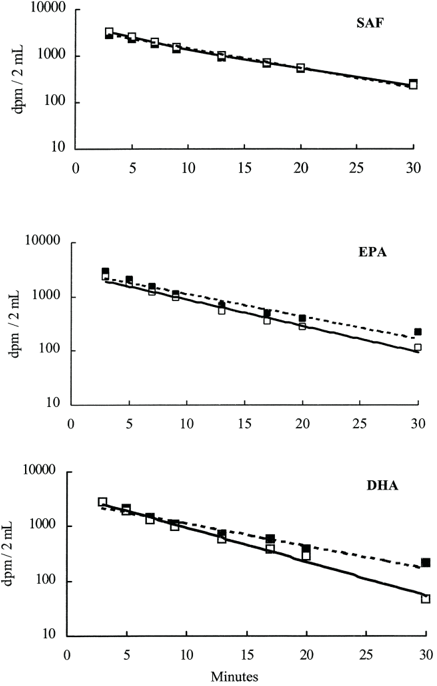
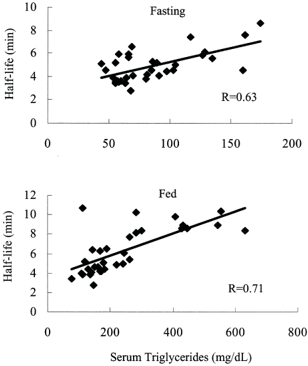
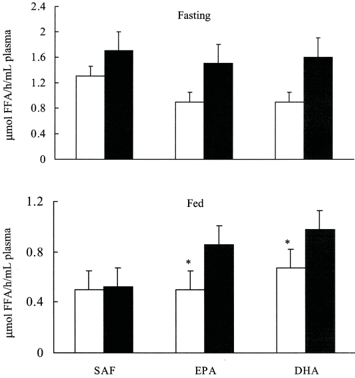
Omega-3 fatty acids (FAs) reduce postprandial triacylglycerol (TG) concentrations. This study was undertaken to determine whether this effect was due to reduced production or increased clearance of chylomicrons. Healthy subjects (n = 33) began with a 4-week, olive oil placebo (4 g/d) run-in period. After a 4-week wash-out period, subjects were randomized to supplementation with 4 g/d of ethyl esters of either safflower oil (SAF), eicosapentaenoic acid (EPA), or docosahexaenoic acid (DHA) for 4 weeks. Results for EPA and DHA were similar, and therefore the data were combined into one omega-3 FA group. Omega-3 FA supplementation reduced the postprandial TG and apolipoprotein B (apo B)-48 and apoB-100 concentrations by 16% (P = 0.08), 28% (P < 0.001), and 24% (P < 0.01), respectively. Chylomicron TG half-lives in the fed state were reduced after omega-3 FA treatment (6.0 +/- 0.5 vs. 5.1 +/- 0.4 min; P < 0.05), but not after SAF (6.9 +/- 0.7 vs. 7.1 +/- 0.7 min). Omega-3 FA supplementation decreased chylomicron particle sizes (mean diameter; 293 +/- 44 vs. 175 +/- 25 nm; P < 0.01) and increased preheparin lipoprotein lipase (LPL; 0.6 +/- 0.1 vs. 0.9 +/- 0.1 micromol/h/ml; P < 0.05) activity during the fed state, but had no effect on postheparin LPL or hepatic lipase activities. The results suggest that omega-3 FA supplementation accelerates chylomicron TG clearance by increasing LPL activity, and that EPA and DHA are equally effective.
Overview
CoChat Summary
TL;DR
In healthy adults, 4 weeks of EPA or DHA supplementation accelerated fed-state chylomicron triglyceride clearance and increased preheparin lipoprotein lipase activity, with EPA and DHA showing similar effects. The authors conclude that omega-3 fatty acids reduce postprandial lipemia mainly by increasing LPL-mediated chylomicron TG clearance rather than by reducing chylomicron production.
Key findings
Omega-3 supplementation reduced postprandial TG, apoB-48, and apoB-100 concentrations by 16% (P = 0.08), 28% (P < 0.001), and 24% (P < 0.01), respectively. Fed-state chylomicron TG half-lives were shorter after omega-3 treatment (6.0 ± 0.5 vs. 5.1 ± 0.4 min; P < 0.05) but not after safflower oil (6.9 ± 0.7 vs. 7.1 ± 0.7 min); fasting half-lives were unaffected. Chylomicron mean diameter decreased (293 ± 44 vs. 175 ± 25 nm; P < 0.01), and fed-state preheparin LPL activity increased (0.6 ± 0.1 vs. 0.9 ± 0.1; P < 0.05; units as reported), while postheparin LPL and hepatic lipase activities did not change significantly. EPA and DHA results were similar and were combined into one omega-3 group.
Methods
Randomized, double-blind, parallel-group, placebo-controlled study in 33 healthy subjects (11 per group: safflower oil, EPA, or DHA). After a 4-week olive oil placebo run-in and 4-week wash-out, subjects received 4 g/d ethyl esters of safflower oil, EPA, or DHA for 4 weeks. Outcomes included oral fat tolerance tests, intravenous fat clearance tests using a [3H]triolein-labeled lipid emulsion, heparin tests for lipase activity, and ANCOVA controlling for baseline values.
Limitations
The paper states that non-LPL-mediated clearance by tissues such as spleen, muscle, adipose tissue, or kidney cannot be excluded, and that it cannot rule out the possibility that omega-3 supplementation caused the intestine to secrete smaller chylomicrons. It also notes that the mechanism responsible for increased LPL activity requires further investigation. Evident from the text: the sample was small (n = 33 total, 11 per group), participants were healthy/normolipidemic, and the intervention was short (4 weeks), which limits generalizability to hypertriglyceridemic or clinical populations.
Model-written summary. Check it against the paper before relying on it.
Integrity signals
Registry
Cites
Statistics
Figures
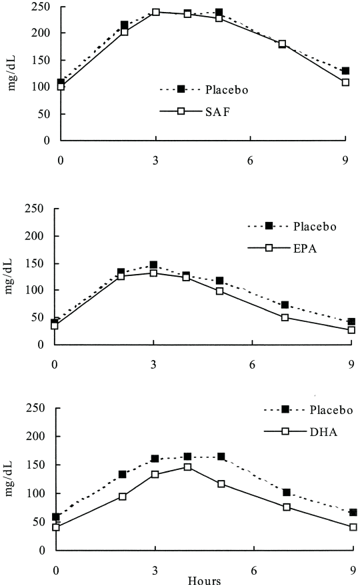
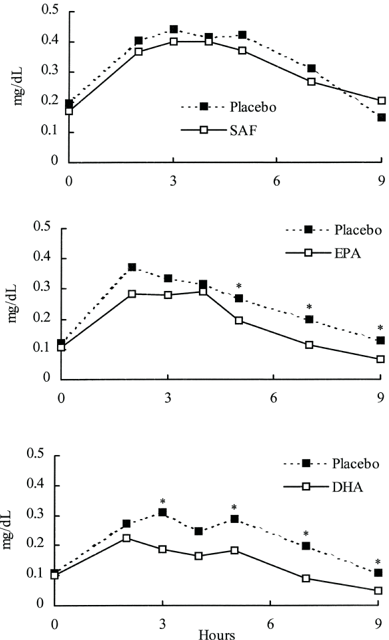
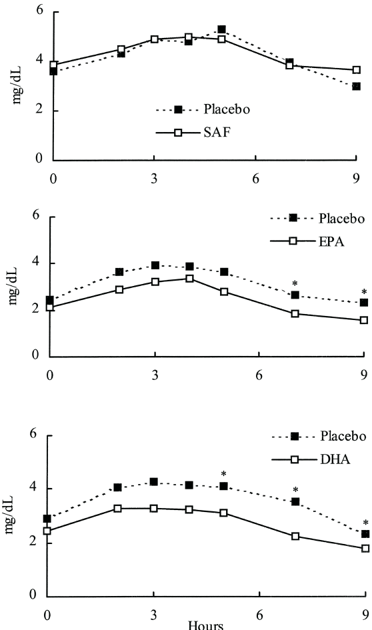
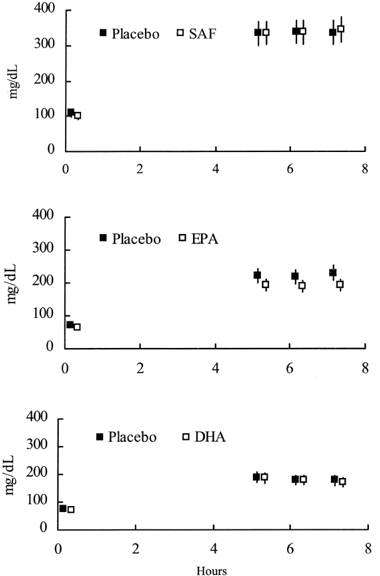
Verification
Claims the paper makes
1 Valid · 0 Not valid · 20 Not checked · 48 Own results and interpretations
A result the paper reports from its own data — it cites no other source for it, so there is none to check. The quote shows it is in the paper.
In the paper
“There was no significant effect of treatment on fasting plasma TG, and total, HDL, LDL, and VLDL-C concentration (Table 2).”
- Also stated in: § DISCUSSION · plain
“Consistent with this finding, -3 fatty acids did not reduce fasting TG concentrations.”
§ Omega-3 fatty acid supplementation accelerates chylomicron triglyceride clearance > Fasting lipid profile
plain- Asserted: passes — The authors put it forward as true.
- Checkable: passes — It can be checked against evidence.
- Load-bearing: passes — The paper’s conclusions depend on it.
- Based: passes — The paper gives a reason why it holds.
- Also stated in: § DISCUSSION · plain
A result the paper reports from its own data — it cites no other source for it, so there is none to check. The quote shows it is in the paper.
In the paper
“Preheparin LPL activities during the fed state increased after DHA (47%; P Ͻ 0.05) and EPA (73%; P Ͻ 0.05) treatments compared with SAF, but no change was de-tected in the fasting state (Fig. 8).”
§ Omega-3 fatty acid supplementation accelerates chylomicron triglyceride clearance > Lipase activities
plain- Asserted: passes — The authors put it forward as true.
- Checkable: passes — It can be checked against evidence.
- Load-bearing: unclear — It is unclear whether the paper’s conclusions depend on it.
- Based: passes — The paper gives a reason why it holds.
A result the paper reports from its own data — it cites no other source for it, so there is none to check. The quote shows it is in the paper.
In the paper
“Preheparin LPL activities during the fed state increased after DHA (47%; P Ͻ 0.05) and EPA (73%; P Ͻ 0.05) treatments compared with SAF”
- Also stated in: § Abstract · plain
“increased preheparin lipoprotein lipase (LPL; 0.6 ؎ 0.1 vs. 0.9 ؎ 0.1 mol/h/ml; P Ͻ 0.05) activity during the fed state”
§ Omega-3 fatty acid supplementation accelerates chylomicron triglyceride clearance > Lipase activities
plainstates a cause- Asserted: passes — The authors put it forward as true.
- Checkable: passes — It can be checked against evidence.
- Load-bearing: passes — The paper’s conclusions depend on it.
- Based: passes — The paper gives a reason why it holds.
- Also stated in: § Abstract · plain
A result the paper reports from its own data — it cites no other source for it, so there is none to check. The quote shows it is in the paper.
In the paper
“Omega-3 FA supplementation reduced the postprandial TG and apolipoprotein B (apo B)-48 and apoB-100 concentrations by 16% ( P ؍ 0.08), 28% ( P Ͻ 0.001), and 24% ( P Ͻ 0.01), respectively.”
§ Omega-3 fatty acid supplementation accelerates chylomicron triglyceride clearance > Abstract
plainstates a cause- Asserted: passes — The authors put it forward as true.
- Checkable: passes — It can be checked against evidence.
- Load-bearing: passes — The paper’s conclusions depend on it.
- Based: passes — The paper gives a reason why it holds.
A result the paper reports from its own data — it cites no other source for it, so there is none to check. The quote shows it is in the paper.
In the paper
“Chylomicron PL concentrations were not significantly different before and after treatments, but chylomicron TG tended to be reduced by EPA and DHA.”
§ Omega-3 fatty acid supplementation accelerates chylomicron triglyceride clearance > Chylomicron size
hedgedstates a possible cause- Asserted: passes — The authors put it forward as true.
- Checkable: passes — It can be checked against evidence.
- Load-bearing: unclear — It is unclear whether the paper’s conclusions depend on it.
- Based: passes — The paper gives a reason why it holds.
29 more claims
Create a free account to see all 69 claims and to verify the 38 references still open.
- It may state two separate claims as one. 23
- Probably not a substantial claim. 16
Claims other papers make about this one
Each is checked against this paper’s own text: does it say what the citing paper says it does?
The source backs part of the claim, not all of it — or backs it for a different population, condition or comparison.
In the citing paper
“Fish oil (omega-3 fatty acids) lowers post-prandial triglyceride levels by 16% to 40% in a dose-dependent fashion, in part by upregulating lipoprotein lipase activity and accelerating the clearance of chylomicrons (30).”
From Dietary Strategies for Improving Post-Prandial Glucose, Lipids, Inflammation, and Cardiovascular Health (2008) · cites this paper as [30]
Experimental — accuracy not yet measuredThe source backs part of the claim, not all of it — or backs it for a different population, condition or comparison.
In the citing paper
“Comparing pre-heparin and post-heparin LPL activity showed consistently increased pre-heparin activity, while post-heparin activity was unchanged by OM3FA treatment in most studies [38, 39, 43] but not all [41].”
From Omega-3 fatty acids eicosapentaenoic acid and docosahexaenoic acid and their mechanisms of action on apolipoprotein B-containing lipoproteins in humans: a review (2017) · cites this paper as [38]
Experimental — accuracy not yet measuredIn the citing paper
“Pre-heparin LPL activity increased following both DHA and EPA treatment [38]”
In the citing paper
“Lowered postprandial TG levels are also explained by increased chylomicron clearance.”
In the citing paper
“Both EPA and DHA treatment significantly increased removal of TGs in chylomicrons in the fed state but not in the fasted state.”
5 more claims about this paper
Create a free account to see every claim other papers make about this one.
Self-check
Percentages, sums and reported differences re-computed from the paper’s own numbers.
Each contradiction between two passages listed here was confirmed by an independent check.
Rated minor: it would not touch a result — a value no result rests on, a p-value that stays on the same side of the significance level, or a conflict that is clerical, resolved elsewhere in the paper, or outside its own findings.
In the paper
§ Omega-3 fatty acid supplementation accelerates chylomicron triglyceride clearance > DISCUSSION
“Fish oil supplementation has been shown to decrease the PL-TG ratio in the chylomicron particles, indicating reduced chylomicron size (9).This was observed in the present study”
§ Omega-3 fatty acid supplementation accelerates chylomicron triglyceride clearance > DISCUSSION
“| EPA | 0.8 Ϯ 0.2 | 0.8 Ϯ 0.1 | 18.2 Ϯ 4.2 | 10.0 Ϯ 2.4 | 319 Ϯ 53 | 149 Ϯ 20 a |”
Citations
Cites
Friedewald, W. T., Levy, R. I., & Fredrickson, D. S. (1972) · Clinical Chemistry · doi:10.1093/clinchem/18.6.499 · Cited by 32,423 · cited 1×
“Plasma was analyzed for total cholesterol, TG, and HDL-C concentrations using a Cobas Fara II with enzymatic reagents from Boehringer Mannheim; VLDL and LDL-C concentrations were estimated by the Friedewald equation (20).”
MethodMarkwell, M. A. K., Haas, S. M., Bieber, L. L., & Tolbert, N. E. (1978) · Analytical Biochemistry · doi:10.1016/0003-2697(78)90586-9 · Cited by 6,458 · cited 1×
“1 mg protein/mg TG) and then adjusted to 1 mg/ml with sample buffer (23).”
MethodFish oils and plasma lipid and lipoprotein metabolism in humans: a critical review
Harris, W. S. (1989) · Journal of Lipid Research · doi:10.1016/s0022-2275(20)38310-3 · Cited by 1,127
Self-citationSuppression by diets rich in fish oil of very low density lipoprotein production in man.
Nestel, P. J., Connor, W. E., Reardon, M. F., Connor, S., Wong, S., & Boston, R. (1984) · Journal of Clinical Investigation · doi:10.1172/jci111422 · Cited by 616
Mori, T. A., Burke, V., Puddey, I. B., Watts, G. F., O’Neal, D. N., Best, J. D., & Beilin, L. J. (2000) · The American Journal of Clinical Nutrition · doi:10.1093/ajcn/71.5.1085 · Cited by 588
Fatty acid modulation of endothelial activation
De Caterina, R., Liao, J. K., & Libby, P. (2000) · The American Journal of Clinical Nutrition · doi:10.1093/ajcn/71.1.213s · Cited by 486
Brunzell, J. D., Hazzard, W. R., Porte, D., & Bierman, E. L. (1973) · Journal of Clinical Investigation · doi:10.1172/jci107334 · Cited by 484 · cited 2×
“Chylomicrons (48) and lipid emulsions (49) are cleared more slowly in patients with elevated VLDL concentrations (likely because of increased competition for LPL), and reductions in endogenous VLDL concentrations accelerate chylomicron clearance (50).”
BackgroundPostprandial lipoproteins and progression of coronary atherosclerosis
Karpe, F., Steiner, G., Uffelman, K., Olivecrona, T., & Hamsten, A. (1994) · Atherosclerosis · doi:10.1016/0021-9150(94)90085-x · Cited by 483
Goodfellow, J., Bellamy, M. F., Ramsey, M. W., Jones, C. J. H., & Lewis, M. J. (2000) · Journal of the American College of Cardiology · doi:10.1016/s0735-1097(99)00548-3 · Cited by 380
Weintraub, M. S., Zechner, R., Brown, A., Eisenberg, S., & Breslow, J. L. (1988) · Journal of Clinical Investigation · doi:10.1172/jci113806 · Cited by 331 · cited 2×
“nature of the fat in the test meal (6, 8, 11, 12, 28, 29).”
Background
Research works printed but not linked: 1
- 8. Harris, W. S., and S. L. Windsor. 1991. N-3 fatty acid supplements reduce chylomicron levels in healthy volunteers. J. Appl. Nutr. 43: 5-15.
Cited by
Chapman, M. J., Ginsberg, H. N., Amarenco, P., Andreotti, F., Borén, J., Catapano, A. L., Descamps, O. S., Fisher, E., Kovanen, P. T., Kuivenhoven, J. A., et al. (2011) · European Heart Journal · doi:10.1093/eurheartj/ehr112 · Cited by 1,227
The Omega-3 Index: A new risk factor for death from coronary heart disease?
Harris, W. S., & von Schacky, C. (2004) · Preventive Medicine · doi:10.1016/j.ypmed.2004.02.030 · Cited by 1,111
Self-citationEffects of omega-3 fatty acids on serum markers of cardiovascular disease risk: a systematic review
Balk, E. M., Lichtenstein, A. H., Chung, M., Kupelnick, B., Chew, P., & Lau, J. (2006) · Atherosclerosis · doi:10.1016/j.atherosclerosis.2006.02.012 · Cited by 732
Omega-3 polyunsaturated fatty acids and cardiovascular diseases.
Lavie, C. J., Milani, R. V., Mehra, M. R., & Ventura, H. O. (2009) · Journal of the American College of Cardiology · doi:10.1016/j.jacc.2009.02.084 · Cited by 644
Omega-3 fatty acids and coronary heart disease risk: clinical and mechanistic perspectives
Harris, W. S., Miller, M., Tighe, A. P., Davidson, M. H., & Schaefer, E. J. (2008) · Atherosclerosis · doi:10.1016/j.atherosclerosis.2007.11.008 · Cited by 552
Self-citationO’Keefe, J. H., Gheewala, N. M., & O’Keefe, J. O. (2008) · Journal of the American College of Cardiology · doi:10.1016/j.jacc.2007.10.016 · Cited by 497
A Brief Review of Cardiovascular Diseases, Associated Risk Factors and Current Treatment Regimes
Flora, G. D., & Nayak, M. K. (2019) · Current Pharmaceutical Design · doi:10.2174/1381612825666190925163827 · Cited by 476
Why do omega-3 fatty acids lower serum triglycerides?
Harris, W. S., & Bulchandani, D. (2006) · Current Opinion in Lipidology · doi:10.1097/01.mol.0000236363.63840.16 · Cited by 398
Self-citationDavidson, M. H., Stein, E. A., Bays, H. E., Maki, K. C., Doyle, R. T., Shalwitz, R. A., Ballantyne, C. M., & Ginsberg, H. N. (2007) · Clinical Therapeutics · doi:10.1016/j.clinthera.2007.07.018 · Cited by 385
Mechanisms for the Hypotriglyceridemic Effect of Marine Omega-3 Fatty Acids
Davidson, M. H. (2006) · The American Journal of Cardiology · doi:10.1016/j.amjcard.2005.12.024 · Cited by 374
Multi-targeted therapy of cancer by omega-3 fatty acids
Berquin, I. M., Edwards, I. J., & Chen, Y. Q. (2008) · Cancer Letters · doi:10.1016/j.canlet.2008.03.044 · Cited by 364
“Moreover, studies by Park and Harris [23] have shown that human intake of 4 g of EPA/day for a 4month period did not result in a detectable increase of DHA in plasma, indicating that even in the absence of high a-LNA, the EPA to DHA conversion is an inefficient process.”
BackgroundSokoła-Wysoczańska, E., Wysoczański, T., Wagner, J., Czyż, K., Bodkowski, R., Lochyński, S., & Patkowska-Sokoła, B. (2018) · Nutrients · doi:10.3390/nu10101561 · Cited by 360
“The recent meta-analysis prepared by Alexander et al. [61] mentioned a prominent effect of omega-3 long-chain PUFAs supplementation in lowering the concentration of serum TGs, and emphasized that an elevated TGslevel is responsible for an increased CVD risk.”
BackgroundInfluentialBays, H. E., Ballantyne, C. M., Kastelein, J. J., Isaacsohn, J. L., Braeckman, R. A., & Soni, P. N. (2011) · The American Journal of Cardiology · doi:10.1016/j.amjcard.2011.04.015 · Cited by 358
Chylomicronaemia–current diagnosis and future therapies
Brahm, A. J., & Hegele, R. A. (2015) · Nature Reviews Endocrinology · doi:10.1038/nrendo.2015.26 · Cited by 356
Prostaglandins, Leukotrienes and Essential Fatty Acids
Kaur, G., Sinclair, A. J., Cameron‐Smith, D., Barr, D. P., Molero, J. C., & Konstantopoulos, N. (2009) · Cited by 321
Dietary, physiological, genetic and pathological influences on postprandial lipid metabolism
Lopez-Miranda, J., Williams, C., & Lairon, D. (2007) · British Journal of Nutrition · doi:10.1017/s000711450774268x · Cited by 320
Fish oil — How does it reduce plasma triglycerides?
Shearer, G. C., Savinova, O. V., & Harris, W. S. (2012) · Biochimica et Biophysica Acta (BBA) - Molecular and Cell Biology of Lipids · doi:10.1016/j.bbalip.2011.10.011 · Cited by 285
Self-citationWei, M. Y., & Jacobson, T. A. (2011) · Current Atherosclerosis Reports · doi:10.1007/s11883-011-0210-3 · Cited by 284
“Six studies [22, 24–28] directly compared EPA and DHA on HDL.”
BackgroundResultInfluentialThe impact of long-chain n-3 polyunsaturated fatty acids on human health
Ruxton, C. H. S., Calder, P. C., Reed, S. C., & Simpson, M. J. A. (2005) · Nutrition Research Reviews · doi:10.1079/nrr200497 · Cited by 273
Bays, H. E., Tighe, A. P., Sadovsky, R., & Davidson, M. H. (2008) · Expert Review of Cardiovascular Therapy · doi:10.1586/14779072.6.3.391 · Cited by 265
Jacobson, T. A., Glickstein, S. B., Rowe, J. D., & Soni, P. N. (2012) · Journal of Clinical Lipidology · doi:10.1016/j.jacl.2011.10.018 · Cited by 263
Omega-3 Fatty Acids for Cardioprotection
Lee, J. H., O'Keefe, J. H., Lavie, C. J., Marchioli, R., & Harris, W. S. (2008) · Mayo Clinic Proceedings · doi:10.4065/83.3.324 · Cited by 249
Self-citationThe differential effects of EPA and DHA on cardiovascular risk factors
Cottin, S. C., Sanders, T. A., & Hall, W. L. (2011) · Proceedings of the Nutrition Society · doi:10.1017/s0029665111000061 · Cited by 247
Kastelein, J. J. P., Maki, K. C., Susekov, A., Ezhov, M., Nordestgaard, B. G., Machielse, B. N., Kling, D., & Davidson, M. H. (2014) · Journal of Clinical Lipidology · doi:10.1016/j.jacl.2013.10.003 · Cited by 233
Wolska, A., Dunbar, R. L., Freeman, L. A., Ueda, M., Amar, M. J., Sviridov, D. O., & Remaley, A. T. (2017) · Atherosclerosis · doi:10.1016/j.atherosclerosis.2017.10.025 · Cited by 231
Management of hypertriglyceridemia
Simha, V. (2020) · BMJ · doi:10.1136/bmj.m3109 · Cited by 223
Antiatherosclerotic and Antithrombotic Effects of Omega-3 Fatty Acids
Robinson, J. G., & Stone, N. J. (2006) · The American Journal of Cardiology · doi:10.1016/j.amjcard.2005.12.026 · Cited by 208
Alwayn, I. P. J., Gura, K., Nosé, V., Zausche, B., Javid, P., Garza, J., Verbesey, J., Voss, S., Ollero, M., Andersson, C., et al. (2005) · Pediatric Research · doi:10.1203/01.pdr.0000153672.43030.75 · Cited by 204
Innes, J. K., & Calder, P. C. (2018) · International Journal of Molecular Sciences · doi:10.3390/ijms19020532 · Cited by 201
“In contrast, studies providing pure or near-pure DHA have shown that, in addition to the accumulation of DHA in blood lipids and blood cells, there is also a modest accumulation of EPA [33,35,49,50,53,55,57,60,62,64,65,67,87], suggesting some retroconversion of DHA to EPA.”
BackgroundResultInfluentialKim, M., Goto, T., Yu, R., Uchida, K., Tominaga, M., Kano, Y., Takahashi, N., & Kawada, T. (2015) · Scientific Reports · doi:10.1038/srep18013 · Cited by 198
The clinical relevance of omega-3 fatty acids in the management of hypertriglyceridemia
Backes, J., Anzalone, D., Hilleman, D., & Catini, J. (2016) · Lipids in Health and Disease · doi:10.1186/s12944-016-0286-4 · Cited by 195
Inherited Apolipoprotein A-V Deficiency in Severe Hypertriglyceridemia
Oliva, C. P., Pisciotta, L., Volti, G. L., Sambataro, M. P., Cantafora, A., Bellocchio, A., Catapano, A., Tarugi, P., Bertolini, S., & Calandra, S. (2005) · Arteriosclerosis, Thrombosis, and Vascular Biology · doi:10.1161/01.atv.0000153087.36428.dd · Cited by 187
Kelley, D. S., Siegel, D., Vemuri, M., & Mackey, B. E. (2007) · The American Journal of Clinical Nutrition · doi:10.1093/ajcn/86.2.324 · Cited by 179
de Meijer, V. E., Gura, K. M., Le, H. D., Meisel, J. A., & Puder, M. (2009) · Journal of Parenteral and Enteral Nutrition · doi:10.1177/0148607109332773 · Cited by 166
Garaiova, I., Guschina, I. A., Plummer, S. F., Tang, J., Wang, D., & Plummer, N. T. (2007) · Nutrition Journal · doi:10.1186/1475-2891-6-4 · Cited by 162
Oscarsson, J., & Hurt-Camejo, E. (2017) · Lipids in Health and Disease · doi:10.1186/s12944-017-0541-3 · Cited by 158
“Hepatic lipase activity is typically unchanged in controlled studies investigating the effects of OM3FAs on patients with dyslipidemia [38, 43, 52].”
BackgroundMethodInfluentialHigh Fat Feeding Induces Hepatic Fatty Acid Elongation in Mice
Oosterveer, M. H., van Dijk, T. H., Tietge, U. J. F., Boer, T., Havinga, R., Stellaard, F., Groen, A. K., Kuipers, F., & Reijngoud, D.-J. (2009) · PLoS ONE · doi:10.1371/journal.pone.0006066 · Cited by 155
Role of n−3 fatty acids in the treatment of hypertriglyceridemia and cardiovascular disease
Jacobson, T. A. (2008) · American Journal of Clinical Nutrition · doi:10.1093/ajcn/87.6.1981s · Cited by 165
The Metabolic Syndrome: Definition, Global Impact, and Pathophysiology
Potenza, M. V., & Mechanick, J. I. (2009) · Nutrition in Clinical Practice · doi:10.1177/0884533609342436 · Cited by 145
Fish Oil for the Treatment of Cardiovascular Disease
Weitz, D., Weintraub, H., Fisher, E., & Schwartzbard, A. Z. (2010) · Cardiology in Review · doi:10.1097/crd.0b013e3181ea0de0 · Cited by 138
Long-chain omega-3 fatty acids: time to establish a dietary reference intake
Flock, M. R., Harris, W. S., & Kris-Etherton, P. M. (2013) · Nutrition Reviews · doi:10.1111/nure.12071 · Cited by 137
Self-citationNon-alcoholic fatty liver disease and its treatment with n-3 polyunsaturated fatty acids
de Castro, G. S., & Calder, P. C. (2017) · Clinical Nutrition · doi:10.1016/j.clnu.2017.01.006 · Cited by 142
Shirouchi, B., Nagao, K., Inoue, N., Ohkubo, T., Hibino, H., & Yanagita, T. (2007) · Journal of Agricultural and Food Chemistry · doi:10.1021/jf071225x · Cited by 130
Potential mechanisms underpinning the nutritional modulation of periodontal inflammation
Chapple, I. L. C. (2009) · The Journal of the American Dental Association · doi:10.14219/jada.archive.2009.0131 · Cited by 126
AbuMweis, S., Jew, S., Tayyem, R., & Agraib, L. (2018) · Journal of Human Nutrition and Dietetics · doi:10.1111/jhn.12493 · Cited by 122
Sun, H., Berquin, I. M., Owens, R. T., O’Flaherty, J. T., & Edwards, I. J. (2008) · Cancer Research · doi:10.1158/0008-5472.can-07-2305 · Cited by 125
Buckley, R., Shewring, B., Turner, R., Yaqoob, P., & Minihane, A. M. (2004) · British Journal of Nutrition · doi:10.1079/bjn20041235 · Cited by 118
Lemke, S. L., Vicini, J. L., Su, H. L., Goldstein, D. A., Nemeth, M. A., Krul, E. S., & Harris, W. S. (2010) · American Journal of Clinical Nutrition · doi:10.3945/ajcn.2009.29072 · Cited by 127
Self-citationThe Role of Omega-3 Fatty Acids in Reverse Cholesterol Transport: A Review
Pizzini, A., Lunger, L., Demetz, E., Hilbe, R., Weiß, G., Ebenbichler, C. F., & Tancevski, I. (2017) · Nutrients · doi:10.3390/nu9101099 · Cited by 136
Omega‐3 Fatty Acids and PPARγ in Cancer
Edwards, I. J., & O’Flaherty, J. T. (2008) · PPAR Research · doi:10.1155/2008/358052 · Cited by 142
Chen, B., Zhou, Y., Yang, P., Wan, H., & Wu, X. (2010) · Journal of Parenteral and Enteral Nutrition · doi:10.1177/0148607110362532 · Cited by 112
Atherosclerosis, Dyslipidemia, and Inflammation: The Significant Role of Polyunsaturated Fatty Acids
Dessì, M., Noce, A., Bertucci, P., di Villahermosa, S. M., Zenobi, R., Castagnola, V., Addessi, E., & Daniele, N. D. (2013) · ISRN Inflammation · doi:10.1155/2013/191823 · Cited by 129
Postprandial lipemia as a cardiometabolic risk factor
Pirillo, A., Norata, G. D., & Catapano, A. L. (2014) · Current Medical Research and Opinion · doi:10.1185/03007995.2014.909394 · Cited by 108
Duda, M. K., O’Shea, K. M., & Stanley, W. C. (2009) · Cardiovascular Research · doi:10.1093/cvr/cvp169 · Cited by 120
Chapman, M. J., Ginsberg, H. N., Amarenco, P., Andreotti, F., Borén, J., Catapano, A. L., Descamps, O. S., Fisher, E. A. A., Kovanen, P. T., Kuivenhoven, J. A., et al. (2011) · Atherosclerosis Supplements · doi:10.1016/s1567-5688(11)70033-2 · Cited by 109
Dawczynski, C., Schubert, R., Hein, G. E., Müller, A., Eidner, T., Vogelsang, H., Basu, S., & Jahreis, G. (2009) · British Journal Of Nutrition · doi:10.1017/s0007114508076216 · Cited by 107
Inflammation and cardiovascular disease: are marine phospholipids the answer?
Lordan, R., Redfern, S., Tsoupras, A., & Zabetakis, I. (2020) · Food & Function · doi:10.1039/c9fo01742a · Cited by 101
Lichtenstein, A. H. (2006) · Journal of Lipid Research · doi:10.1194/jlr.r600019-jlr200 · Cited by 94
“v-3 fatty acids decrease postprandial plasma triglyceride concentrations by accelerating the fractional catabolic rate via increased lipoprotein lipase activity ( 81 ).”
An Improvement of Cardiovascular Risk Factors by Omega-3 Polyunsaturated Fatty Acids
Yanai, H., Masui, Y., Katsuyama, H., Adachi, H., Kawaguchi, A., Hakoshima, M., Waragai, Y., Harigae, T., & Sako, A. (2018) · Journal of Clinical Medicine Research · doi:10.14740/jocmr3362w · Cited by 107
“which is the apolipoprotein of CM [15].”
Comparison of 5 intravenous lipid emulsions and their effects on hepatic steatosis in a murine model
Meisel, J. A., Le, H. D., de Meijer, V. E., Nosé, V., Gura, K. M., Mulkern, R. V., Sharif, M. R. A., & Puder, M. (2011) · Journal of Pediatric Surgery · doi:10.1016/j.jpedsurg.2010.08.018 · Cited by 97
“It has been demonstrated that dietary PUFAs are negative regulators of hepatic lipogenesis [43] and that reduced lipogenesis through the suppression of sterol regulatory element-binding protein 1 and increased clearance of triglycerides likely plays a role [44,45].”
BackgroundMembrane lipid alterations in the metabolic syndrome and the role of dietary oils
Perona, J. S. (2017) · Biochimica et Biophysica Acta (BBA) - Biomembranes · doi:10.1016/j.bbamem.2017.04.015 · Cited by 98
Anez‐Bustillos, L., Dao, D. T., Baker, M. A., Fell, G. L., Puder, M., & Gura, K. M. (2016) · Nutrition in Clinical Practice · doi:10.1177/0884533616662996 · Cited by 100
Qi, K., Fan, C., Jin, J., Zhu, H., Jiao, H., Meng, Q., & Deckelbaum, R. J. (2008) · Clinical Nutrition · doi:10.1016/j.clnu.2008.02.001 · Cited by 95
Alterations of specific lipid groups in serum of obese humans: a review
Mika, A., & Śledziński, T. (2016) · Obesity Reviews · doi:10.1111/obr.12475 · Cited by 93
Postprandial Hypertriglyceridemia and Cardiovascular Disease: Current and Future Therapies
Chan, D. C., Pang, J., Romic, G., & Watts, G. F. (2013) · Current Atherosclerosis Reports · doi:10.1007/s11883-013-0309-9 · Cited by 91
Prostaglandin E3 metabolism and cancer
Yang, P., Jiang, Y., & Fischer, S. M. (2014) · Cancer Letters · doi:10.1016/j.canlet.2014.03.010 · Cited by 86
Regulation of chylomicron production in humans
Xiao, C., & Lewis, G. F. (2011) · Biochimica et Biophysica Acta (BBA) - Molecular and Cell Biology of Lipids · doi:10.1016/j.bbalip.2011.09.019 · Cited by 92
Asztalos, I. B., Gleason, J. A., Sever, S., Gedik, R., Asztalos, B. F., Horvath, K. V., Dansinger, M. L., Lamon‐Fava, S., & Schaefer, E. J. (2016) · Metabolism · doi:10.1016/j.metabol.2016.07.010 · Cited by 79
Valdivielso, P., Rioja, J., García-Arias, C., Sánchez-Chaparro, M. Á., & González‐Santos, P. (2009) · Cardiovascular Diabetology · doi:10.1186/1475-2840-8-1 · Cited by 75
Ryu, N. H., Lim, Y., Park, J. E., Kim, J., Kim, J. Y., Kwon, S. W., & Kwon, O. (2014) · Nutrition Journal · doi:10.1186/1475-2891-13-57 · Cited by 71
Svensson, M., Schmidt, E., Jørgensen, K., & Christensen, J. (2008) · Nephrology, Dialysis and Transplantation · doi:10.1093/ndt/gfn180 · Cited by 75
“The mechanism by which n- 3 PUFA reduce postprandial hypertriglyceridaemia might be through an increased lipoprotein lipase activity and increased chylomicron clearance, as previously demonstrated by Park and Harris [ 19 ], but also through suppression of VLDL secretion from the liver [20].”
BackgroundNakajima, K., Nagamine, T., Fujita, M., Ai, M., Tanaka, A., & Schaefer, E. J. (2014) · Advances in clinical chemistry · doi:10.1016/b978-0-12-800263-6.00003-3 · Cited by 89
Juárez-López, C., Klünder-Klünder, M., Madrigal-Azcárate, A., & Flores-Huerta, S. (2013) · Pediatric Diabetes · doi:10.1111/pedi.12024 · Cited by 67
Hassanali, Z., Ametaj, B. N., Field, C. J., Proctor, S. D., & Vine, D. F. (2010) · Diabetes, Obesity and Metabolism · doi:10.1111/j.1463-1326.2009.01130.x · Cited by 67
Dietary fat’gene interactions in cancer
Chen, Y. Q., Edwards, I. J., Kridel, S. J., Thornburg, T., & Berquin, I. M. (2007) · Cancer and Metastasis Reviews · doi:10.1007/s10555-007-9075-x · Cited by 75
“In fact, studies have shown that dietary supplementation with αLNA or EPA does not result in a detectable increase in plasma DHA, particularly in males [50, 51].”
BackgroundEffect of Nutrient and Micronutrient Intake on Chylomicron Production and Postprandial Lipemia
Desmarchelier, C., Borel, P., Lairon, D., Maraninchi, M., & Valéro, R. (2019) · Nutrients · doi:10.3390/nu11061299 · Cited by 75
Emerging strategies of targeting lipoprotein lipase for metabolic and cardiovascular diseases
Geldenhuys, W. J., Lin, L., Darvesh, A. S., & Sadana, P. (2017) · Drug Discovery Today · doi:10.1016/j.drudis.2016.10.007 · Cited by 64
Mechanisms of Atherosclerosis Induced by Postprandial Lipemia
Zhao, Y., Liu, L., Yang, S., Liu, G., Pan, L., Gu, C., Wang, Y., Li, D. X., Zhao, R., & Wu, M. (2021) · Frontiers in Cardiovascular Medicine · doi:10.3389/fcvm.2021.636947 · Cited by 78
“In addition, it enhanced the clearance of CM-TG by increasing LPL activity (128).”
BackgroundThota, R. N., Ferguson, J. J. A., Abbott, K. A., Dias, C. B., & Garg, M. L. (2018) · Food & Function · doi:10.1039/c8fo00348c · Cited by 65
Combination Therapy with Statins and Omega-3 Fatty Acids
Nambi, V., & Ballantyne, C. M. (2006) · The American Journal of Cardiology · doi:10.1016/j.amjcard.2005.12.025 · Cited by 62
Milte, C. M., Coates, A. M., Buckley, J. D., Hill, A. M., & Howe, P. R. C. (2008) · British Journal of Nutrition · doi:10.1017/s000711450785344x · Cited by 61
Mann, N. J., O’Connell, S. L., Baldwin, K. M., Singh, I., & Meyer, B. J. (2010) · Lipids · doi:10.1007/s11745-010-3450-z · Cited by 60
“Proposed mechanisms for decreases in triacylglycerol with LC n-3 PUFA involve chylomicron triacylglycerol clearance [49] and reduced absorption and synthesis of hepatic triacylglycerols and their increased catabolism [50].”
BackgroundFish consumption is inversely associated with the metabolic syndrome
Zaribaf, F., Falahi, E., Barak, F., Heidari‐Beni, M., Keshteli, A. H., Yazdannik, A., & Esmaillzadeh, A. (2014) · European Journal of Clinical Nutrition · doi:10.1038/ejcn.2014.5 · Cited by 64
Miyoshi, T., Noda, Y., Ohno, Y., Sugiyama, H., Oe, H., Nakamura, K., Kohno, K., & Ito, H. (2014) · Biomedicine & Pharmacotherapy · doi:10.1016/j.biopha.2014.10.008 · Cited by 69
Nutraceuticals and Bioactive Components from Fish for Dyslipidemia and Cardiovascular Risk Reduction
Chiesa, G., Busnelli, M., Manzini, S., & Parolini, C. (2016) · Marine Drugs · doi:10.3390/md14060113 · Cited by 65
Posicionamento sobre o Consumo de Gorduras e Saúde Cardiovascular – 2021
Izar, M. C. D. O., Lottenberg, A. M., Giraldez, V. Z. R., Santos, R. D., Machado, R. M., Bertolami, A., Assad, M. H. V., Saraiva, J. F. K., Faludi, A. Á., Moreira, A. S. B., et al. (2021) · Arquivos Brasileiros de Cardiologia · doi:10.36660/abc.20201340 · Cited by 146
Triglyceride lowering by omega-3 fatty acids: a mechanism mediated by N-acyl taurines
Bornfeldt, K. E. (2021) · Journal of Clinical Investigation · doi:10.1172/jci147558 · Cited by 58
Effects of N-3 Fatty Acids on Hepatic Triglyceride Content in Humans
Vega, G. L., Chandalia, M., Szczepaniak, L. S., & Grundy, S. M. (2008) · Journal of Investigative Medicine · doi:10.2310/jim.0b013e318177024d · Cited by 56
Fat Overload Syndrome After the Rapid Infusion of SMOFlipid Emulsion
Hojsak, I., & Kolaček, S. (2013) · Journal of Parenteral and Enteral Nutrition · doi:10.1177/0148607113482001 · Cited by 56
Moran, N. E., Cichon, M. J., Riedl, K. M., Grainger, E. M., Schwartz, S. J., Novotny, J. A., Erdman, J. W., & Clinton, S. K. (2015) · American Journal of Clinical Nutrition · doi:10.3945/ajcn.114.103143 · Cited by 56
“33] on the basis of a report of chyomicron clearance in healthy adults who were fed olive oil (45), which was the oil carrier for the (13)C-lycopene provided to the current subjects.”
BackgroundKlingel, S. L., Metherel, A. H., Irfan, M., Rajna, A., Chabowski, A., Bazinet, R. P., & Mutch, D. M. (2019) · The American Journal of Clinical Nutrition · doi:10.1093/ajcn/nqz234 · Cited by 54
Dietary fat and postprandial lipids
Sanders, T. A. B. (2003) · Current Atherosclerosis Reports · doi:10.1007/s11883-003-0034-x · Cited by 63
Dunbar, R. L., Nicholls, S. J., Maki, K. C., Roth, E. M., Orloff, D. G., Curcio, D., Johnson, J., Kling, D., & Davidson, M. H. (2015) · Lipids in Health and Disease · doi:10.1186/s12944-015-0100-8 · Cited by 52
Nakandakare, E. R., Charf, A. M., dos Santos, F. C., Nunes, V. S., Ortega, K. C., Lottenberg, A. M., Mion, D., Nakano, T., Nakajima, K., D’Amico, É. A., et al. (2008) · Atherosclerosis · doi:10.1016/j.atherosclerosis.2007.12.034 · Cited by 51
DHA attenuates postprandial hyperlipidemia via activating PPARα in intestinal epithelial cells
Kimura, R., Takahashi, N., Lin, S., Goto, T., Murota, K., Nakata, R., Inoue, H., & Kawada, T. (2013) · Journal of Lipid Research · doi:10.1194/jlr.m034942 · Cited by 60
Telle‐Hansen, V. H., Larsen, L. N., Høstmark, A. T., Molin, M., Dahl, L., Almendingen, K., & Ulven, S. M. (2011) · Lipids · doi:10.1007/s11745-011-3637-y · Cited by 58
“Previously, DHA has been demonstrated to have similar TAG-lowering effects as EPA [56–58] and the increase in DHA observed in the cod group in the present study may at least partly explain the reduction in serum TAG.”
BackgroundOmega-3 fatty acids ameliorate vascular inflammation: A rationale for their atheroprotective effects
Pisaniello, A. D., Psaltis, P. J., King, P. M., Liu, G., Gibson, R. A., Tan, J. T. M., Duong, M., Nguyen, T., Bursill, C. A., Worthley, M. I., et al. (2021) · Atherosclerosis · doi:10.1016/j.atherosclerosis.2021.03.003 · Cited by 64
Adherence to a Mediterranean Diet Is Associated with Lower Depressive Symptoms among U.S. Adults
Oddo, V. M., Welke, L., McLeod, A., Pezley, L., Xia, Y., Maki, P. M., Koenig, M. D., Kominiarek, M. A., Langenecker, S. A., & Tussing-Humphreys, L. M. (2022) · Nutrients · doi:10.3390/nu14020278 · Cited by 65
Omega-3 Fatty Acids in Cardiovascular Disease and Diabetes: a Review of Recent Evidence
Bhat, S. Z., Sarkar, S., Zaffar, D., Dandona, P., & Kalyani, R. R. (2023) · Current Cardiology Reports · doi:10.1007/s11886-022-01831-0 · Cited by 57
Hypertriglyceridemia: new approaches in management and treatment
Wolska, A., Yang, Z.-H., & Remaley, A. T. (2020) · Current Opinion in Lipidology · doi:10.1097/mol.0000000000000710 · Cited by 49
Metadata
- Authors
- Park, Y., & Harris, W. S.
- Affiliations
- Saint Luke's Hospital (US)
- Corresponding author
- Harris, William S.
- Venue
- Journal of Lipid Research
- Publisher
- Elsevier BV
- Published
- 2003-03
- Volume
- 44
- Issue
- 3
- Pages
- 455-463
- ISSN
- 0022-2275 (ISSN-L)
- OpenAlex
- W2028676438
- Cited by
- 348
- References
- 77
- Citations by year
- 2026: 5 · 2025: 8 · 2024: 9 · 2023: 14 · 2022: 17 · 2021: 17 · 2020: 16 · 2019: 13 · 2018: 14 · 2017: 12 · 2016: 16 · 2015: 19 · 2014: 13 · 2013: 23 · 2012: 10
- FWCI
- 10.29
- Type
- journal article
- Language
- en
- Open access
- hybrid
- doi.org
- Licence
- cc-by
- www.elsevier.com/tdm/userlicense/1.0/ (tdm)
- creativecommons.org/licenses/by/4.0/ (vor, 6382 d)
- Locations
- Journal of Lipid Research (publishedVersion, cc-by)
- PubMed (publishedVersion)
- DOAJ (DOAJ: Directory of Open Access Journals) (submittedVersion, cc-by-sa)
- Funders
- American Heart Association
- National Institutes of Health (5r01hl047468-04)
- National Heart, Lung, and Blood Institute (HL-47468)
- Topics
- Health Sciences › Nursing › Nutrition and Dietetics › Fatty Acid Research and Health
- Health Sciences › Medicine › Cardiology and Cardiovascular Medicine › Lipid metabolism and disorders
- Life Sciences › Biochemistry, Genetics and Molecular Biology › Biochemistry › Lipid metabolism and biosynthesis
- Keywords
- omega-3 fatty acids, postprandial triglycerides, eicosapentaenoic acid, docosahexaenoic acid, apolipoprotein B-48, apolipoprotein B-100, lipoprotein lipase, hepatic lipase
- MeSH terms
- Administration, Oral, Adult, Aged, Apolipoproteins B, Cholesterol, Chylomicrons, Double-Blind Method, Fasting, Fat Emulsions, Intravenous, Female, Half-Life, Heparin, Humans, Lipoprotein Lipase, Male, Metabolic Clearance Rate, Middle Aged, Safflower Oil, Triglycerides, Fatty Acids, Omega-3, Postprandial Period, Dietary Supplements
About these checks
Registry, retraction, Cites and statistics results are computed, not judged, with one exception: a printed reference that no index lists is read once by a model before it counts as a citation error. Claims are extracted by a model and kept only when their quote appears verbatim in the text; each cited source is then checked, with a model’s help, for whether it says what the claim relies on. Those verdicts can be wrong — read the claim’s quote and the cited source before relying on one.
The claim verdicts this report counts are experimental: their accuracy is not yet measured.
A language model drew the claims from the paper on 2026-09-27, under version 3 of the claim definition (prompt extract-v3).
A second model labelled each claim on 2026-09-27 (model jev-1.13-20260917, definition revision gold-guideline-v0.2).
Statistics and arithmetic are recomputed, not judged.
Confidence bands are shown only for fields calibrated on our annotated test set. None is calibrated yet, so no band is shown.
What counts as a claim ›How we measure confidence ›How we check this ›
Are you an author, or do you see a problem with this page? Request a review
Data sources
Bibliographic data: Semantic Scholar, OpenAlex, Crossref.
Contains information from the Semantic Scholar Academic Graph Datasets, made available under the ODC Attribution License (ODC-BY 1.0).
Semantic Scholar’s data is described in: Kinney, R., et al. (2023). The Semantic Scholar Open Data Platform. arXiv:2301.10140.
