

Omega-3 fatty acid supplementation accelerates chylomicron triglyceride clearance
Open accessThe DOI matches its Crossref record; 74 of the 77 references it cites were found in a registry or an index; 3 of the 41 sources its claims cite were checked for support.
Abstract
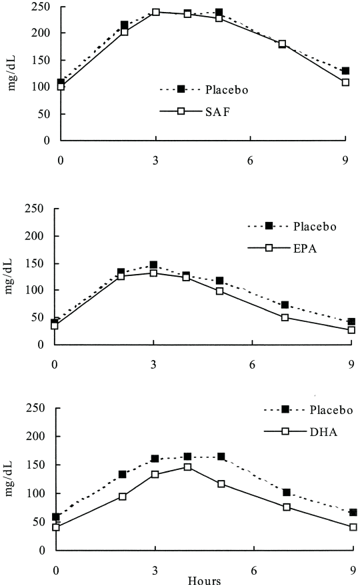
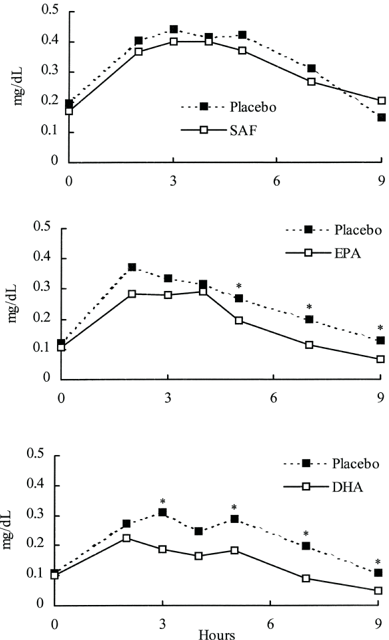
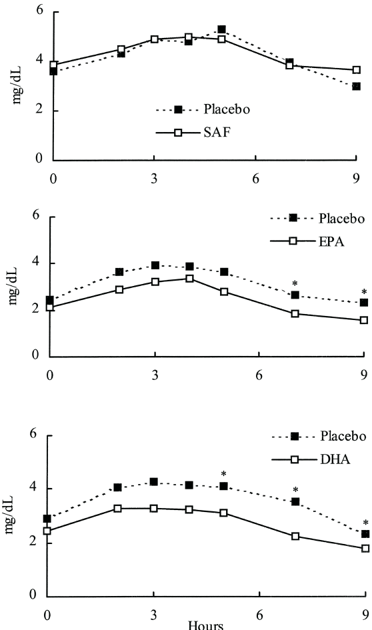
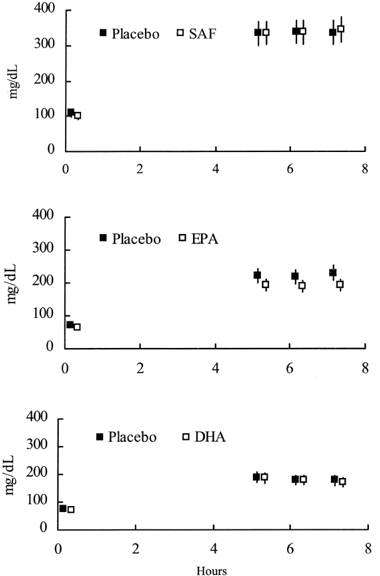
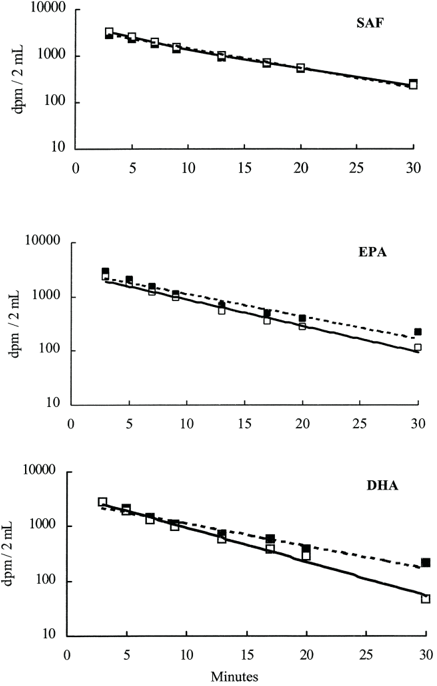
Omega-3 fatty acids (FAs) reduce postprandial triacylglycerol (TG) concentrations. This study was undertaken to determine whether this effect was due to reduced production or increased clearance of chylomicrons. Healthy subjects (n = 33) began with a 4-week, olive oil placebo (4 g/d) run-in period. After a 4-week wash-out period, subjects were randomized to supplementation with 4 g/d of ethyl esters of either safflower oil (SAF), eicosapentaenoic acid (EPA), or docosahexaenoic acid (DHA) for 4 weeks. Results for EPA and DHA were similar, and therefore the data were combined into one omega-3 FA group. Omega-3 FA supplementation reduced the postprandial TG and apolipoprotein B (apo B)-48 and apoB-100 concentrations by 16% (P = 0.08), 28% (P < 0.001), and 24% (P < 0.01), respectively. Chylomicron TG half-lives in the fed state were reduced after omega-3 FA treatment (6.0 +/- 0.5 vs. 5.1 +/- 0.4 min; P < 0.05), but not after SAF (6.9 +/- 0.7 vs. 7.1 +/- 0.7 min). Omega-3 FA supplementation decreased chylomicron particle sizes (mean diameter; 293 +/- 44 vs. 175 +/- 25 nm; P < 0.01) and increased preheparin lipoprotein lipase (LPL; 0.6 +/- 0.1 vs. 0.9 +/- 0.1 micromol/h/ml; P < 0.05) activity during the fed state, but had no effect on postheparin LPL or hepatic lipase activities. The results suggest that omega-3 FA supplementation accelerates chylomicron TG clearance by increasing LPL activity, and that EPA and DHA are equally effective.
Overview
CoChat Summary
TL;DR
In healthy adults, 4 weeks of EPA or DHA supplementation accelerated fed-state chylomicron triglyceride clearance and increased preheparin lipoprotein lipase activity, with EPA and DHA showing similar effects. The authors conclude that omega-3 fatty acids reduce postprandial lipemia mainly by increasing LPL-mediated chylomicron TG clearance rather than by reducing chylomicron production.
Key findings
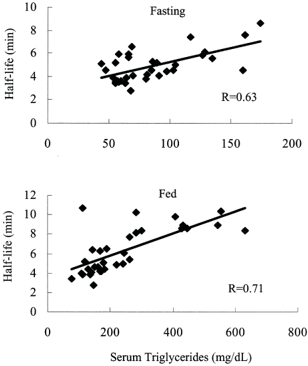
Omega-3 supplementation reduced postprandial TG, apoB-48, and apoB-100 concentrations by 16% (P = 0.08), 28% (P < 0.001), and 24% (P < 0.01), respectively. Fed-state chylomicron TG half-lives were shorter after omega-3 treatment (6.0 ± 0.5 vs. 5.1 ± 0.4 min; P < 0.05) but not after safflower oil (6.9 ± 0.7 vs. 7.1 ± 0.7 min); fasting half-lives were unaffected. Chylomicron mean diameter decreased (293 ± 44 vs. 175 ± 25 nm; P < 0.01), and fed-state preheparin LPL activity increased (0.6 ± 0.1 vs. 0.9 ± 0.1; P < 0.05; units as reported), while postheparin LPL and hepatic lipase activities did not change significantly. EPA and DHA results were similar and were combined into one omega-3 group.
Methods
Randomized, double-blind, parallel-group, placebo-controlled study in 33 healthy subjects (11 per group: safflower oil, EPA, or DHA). After a 4-week olive oil placebo run-in and 4-week wash-out, subjects received 4 g/d ethyl esters of safflower oil, EPA, or DHA for 4 weeks. Outcomes included oral fat tolerance tests, intravenous fat clearance tests using a [3H]triolein-labeled lipid emulsion, heparin tests for lipase activity, and ANCOVA controlling for baseline values.
Limitations
The paper states that non-LPL-mediated clearance by tissues such as spleen, muscle, adipose tissue, or kidney cannot be excluded, and that it cannot rule out the possibility that omega-3 supplementation caused the intestine to secrete smaller chylomicrons. It also notes that the mechanism responsible for increased LPL activity requires further investigation. Evident from the text: the sample was small (n = 33 total, 11 per group), participants were healthy/normolipidemic, and the intervention was short (4 weeks), which limits generalizability to hypertriglyceridemic or clinical populations.
Model-written summary. Check it against the paper before relying on it.
Integrity signals
Registry
Cites
Statistics
Figures
Verification
Claims the paper makes
1 Valid · 0 Not valid · 20 Not checked · 48 Own results and interpretations
A result the paper reports from its own data — it cites no other source for it, so there is none to check. The quote shows it is in the paper.
In the paper
“There was no significant effect of treatment on fasting plasma TG, and total, HDL, LDL, and VLDL-C concentration (Table 2).”
- Also stated in: § DISCUSSION · plain
“Consistent with this finding, -3 fatty acids did not reduce fasting TG concentrations.”
§ Omega-3 fatty acid supplementation accelerates chylomicron triglyceride clearance > Fasting lipid profile
plain- Asserted: passes — The authors put it forward as true.
- Checkable: passes — It can be checked against evidence.
- Load-bearing: passes — The paper’s conclusions depend on it.
- Based: passes — The paper gives a reason why it holds.
- Also stated in: § DISCUSSION · plain
A result the paper reports from its own data — it cites no other source for it, so there is none to check. The quote shows it is in the paper.
In the paper
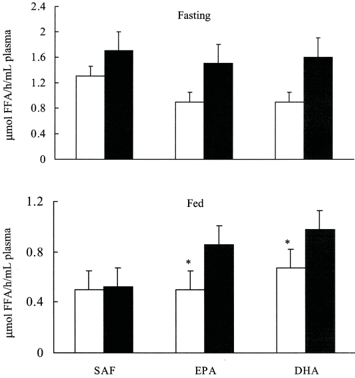
“Preheparin LPL activities during the fed state increased after DHA (47%; P Ͻ 0.05) and EPA (73%; P Ͻ 0.05) treatments compared with SAF, but no change was de-tected in the fasting state (Fig. 8).”
§ Omega-3 fatty acid supplementation accelerates chylomicron triglyceride clearance > Lipase activities
plain- Asserted: passes — The authors put it forward as true.
- Checkable: passes — It can be checked against evidence.
- Load-bearing: unclear — It is unclear whether the paper’s conclusions depend on it.
- Based: passes — The paper gives a reason why it holds.
A result the paper reports from its own data — it cites no other source for it, so there is none to check. The quote shows it is in the paper.
In the paper
“Preheparin LPL activities during the fed state increased after DHA (47%; P Ͻ 0.05) and EPA (73%; P Ͻ 0.05) treatments compared with SAF”
- Also stated in: § Abstract · plain
“increased preheparin lipoprotein lipase (LPL; 0.6 ؎ 0.1 vs. 0.9 ؎ 0.1 mol/h/ml; P Ͻ 0.05) activity during the fed state”
§ Omega-3 fatty acid supplementation accelerates chylomicron triglyceride clearance > Lipase activities
plainstates a cause- Asserted: passes — The authors put it forward as true.
- Checkable: passes — It can be checked against evidence.
- Load-bearing: passes — The paper’s conclusions depend on it.
- Based: passes — The paper gives a reason why it holds.
- Also stated in: § Abstract · plain
A result the paper reports from its own data — it cites no other source for it, so there is none to check. The quote shows it is in the paper.
In the paper
“Omega-3 FA supplementation reduced the postprandial TG and apolipoprotein B (apo B)-48 and apoB-100 concentrations by 16% ( P ؍ 0.08), 28% ( P Ͻ 0.001), and 24% ( P Ͻ 0.01), respectively.”
§ Omega-3 fatty acid supplementation accelerates chylomicron triglyceride clearance > Abstract
plainstates a cause- Asserted: passes — The authors put it forward as true.
- Checkable: passes — It can be checked against evidence.
- Load-bearing: passes — The paper’s conclusions depend on it.
- Based: passes — The paper gives a reason why it holds.
A result the paper reports from its own data — it cites no other source for it, so there is none to check. The quote shows it is in the paper.
In the paper
“Chylomicron PL concentrations were not significantly different before and after treatments, but chylomicron TG tended to be reduced by EPA and DHA.”
§ Omega-3 fatty acid supplementation accelerates chylomicron triglyceride clearance > Chylomicron size
hedgedstates a possible cause- Asserted: passes — The authors put it forward as true.
- Checkable: passes — It can be checked against evidence.
- Load-bearing: unclear — It is unclear whether the paper’s conclusions depend on it.
- Based: passes — The paper gives a reason why it holds.
29 more claims
Create a free account to see all 69 claims and to verify the 38 references still open.
- It may state two separate claims as one. 23
- Probably not a substantial claim. 16
Claims other papers make about this one
Each is checked against this paper’s own text: does it say what the citing paper says it does?
The source backs part of the claim, not all of it — or backs it for a different population, condition or comparison.
In the citing paper
“Fish oil (omega-3 fatty acids) lowers post-prandial triglyceride levels by 16% to 40% in a dose-dependent fashion, in part by upregulating lipoprotein lipase activity and accelerating the clearance of chylomicrons (30).”
From Dietary Strategies for Improving Post-Prandial Glucose, Lipids, Inflammation, and Cardiovascular Health (2008) · cites this paper as [30]
Experimental — accuracy not yet measuredThe source backs part of the claim, not all of it — or backs it for a different population, condition or comparison.
In the citing paper
“Comparing pre-heparin and post-heparin LPL activity showed consistently increased pre-heparin activity, while post-heparin activity was unchanged by OM3FA treatment in most studies [38, 39, 43] but not all [41].”
From Omega-3 fatty acids eicosapentaenoic acid and docosahexaenoic acid and their mechanisms of action on apolipoprotein B-containing lipoproteins in humans: a review (2017) · cites this paper as [38]
Experimental — accuracy not yet measuredIn the citing paper
“Pre-heparin LPL activity increased following both DHA and EPA treatment [38]”
In the citing paper
“Lowered postprandial TG levels are also explained by increased chylomicron clearance.”
In the citing paper
“Both EPA and DHA treatment significantly increased removal of TGs in chylomicrons in the fed state but not in the fasted state.”
5 more claims about this paper
Create a free account to see every claim other papers make about this one.
Self-check
Percentages, sums and reported differences re-computed from the paper’s own numbers.
Each contradiction between two passages listed here was confirmed by an independent check.
Rated minor: it would not touch a result — a value no result rests on, a p-value that stays on the same side of the significance level, or a conflict that is clerical, resolved elsewhere in the paper, or outside its own findings.
In the paper
§ Omega-3 fatty acid supplementation accelerates chylomicron triglyceride clearance > DISCUSSION
“Fish oil supplementation has been shown to decrease the PL-TG ratio in the chylomicron particles, indicating reduced chylomicron size (9).This was observed in the present study”
§ Omega-3 fatty acid supplementation accelerates chylomicron triglyceride clearance > DISCUSSION
“| EPA | 0.8 Ϯ 0.2 | 0.8 Ϯ 0.1 | 18.2 Ϯ 4.2 | 10.0 Ϯ 2.4 | 319 Ϯ 53 | 149 Ϯ 20 a |”
Citations
Cites
Friedewald, W. T., Levy, R. I., & Fredrickson, D. S. (1972) · Clinical Chemistry · doi:10.1093/clinchem/18.6.499 · Cited by 32,423 · cited 1×
“Plasma was analyzed for total cholesterol, TG, and HDL-C concentrations using a Cobas Fara II with enzymatic reagents from Boehringer Mannheim; VLDL and LDL-C concentrations were estimated by the Friedewald equation (20).”
MethodMarkwell, M. A. K., Haas, S. M., Bieber, L. L., & Tolbert, N. E. (1978) · Analytical Biochemistry · doi:10.1016/0003-2697(78)90586-9 · Cited by 6,458 · cited 1×
“1 mg protein/mg TG) and then adjusted to 1 mg/ml with sample buffer (23).”
MethodFish oils and plasma lipid and lipoprotein metabolism in humans: a critical review
Harris, W. S. (1989) · Journal of Lipid Research · doi:10.1016/s0022-2275(20)38310-3 · Cited by 1,127
Self-citationSuppression by diets rich in fish oil of very low density lipoprotein production in man.
Nestel, P. J., Connor, W. E., Reardon, M. F., Connor, S., Wong, S., & Boston, R. (1984) · Journal of Clinical Investigation · doi:10.1172/jci111422 · Cited by 616
Mori, T. A., Burke, V., Puddey, I. B., Watts, G. F., O’Neal, D. N., Best, J. D., & Beilin, L. J. (2000) · The American Journal of Clinical Nutrition · doi:10.1093/ajcn/71.5.1085 · Cited by 588
Fatty acid modulation of endothelial activation
De Caterina, R., Liao, J. K., & Libby, P. (2000) · The American Journal of Clinical Nutrition · doi:10.1093/ajcn/71.1.213s · Cited by 486
Brunzell, J. D., Hazzard, W. R., Porte, D., & Bierman, E. L. (1973) · Journal of Clinical Investigation · doi:10.1172/jci107334 · Cited by 484 · cited 2×
“Chylomicrons (48) and lipid emulsions (49) are cleared more slowly in patients with elevated VLDL concentrations (likely because of increased competition for LPL), and reductions in endogenous VLDL concentrations accelerate chylomicron clearance (50).”
BackgroundPostprandial lipoproteins and progression of coronary atherosclerosis
Karpe, F., Steiner, G., Uffelman, K., Olivecrona, T., & Hamsten, A. (1994) · Atherosclerosis · doi:10.1016/0021-9150(94)90085-x · Cited by 483
Goodfellow, J., Bellamy, M. F., Ramsey, M. W., Jones, C. J. H., & Lewis, M. J. (2000) · Journal of the American College of Cardiology · doi:10.1016/s0735-1097(99)00548-3 · Cited by 380
Weintraub, M. S., Zechner, R., Brown, A., Eisenberg, S., & Breslow, J. L. (1988) · Journal of Clinical Investigation · doi:10.1172/jci113806 · Cited by 331 · cited 2×
“nature of the fat in the test meal (6, 8, 11, 12, 28, 29).”
Background
Research works printed but not linked: 1
- 8. Harris, W. S., and S. L. Windsor. 1991. N-3 fatty acid supplements reduce chylomicron levels in healthy volunteers. J. Appl. Nutr. 43: 5-15.
Cited by
Items 101–200 of 348
Omega-3 Fatty Acids and Cognitive Function in Women
Robinson, J. G., Ijioma, N., & Harris, W. S. (2010) · Women s Health · doi:10.2217/whe.09.75 · Cited by 56
Self-citationSahebkar, A., Simental-Mendía, L. E., Mikhailidis, D. P., Pirro, M., Banach, M., Sirtori, C. R., & Reiner, Ž. (2018) · Annals of Medicine · doi:10.1080/07853890.2018.1511919 · Cited by 48
Soni, N. K., Ross, A. B., Scheers, N., Nookaew, I., Gabrielsson, B. G., & Sandberg, A. (2019) · International Journal of Molecular Sciences · doi:10.3390/ijms20235895 · Cited by 52
“However, it should be noted that a relationship between LC n-3 PUFA intake from a variety of sources is not conclusively linked to any reduced risk of T2D [40], though the number of clinical trials studying this is limited [41].”
BackgroundInfluentialBallantyne, C. M., Braeckman, R. A., Bays, H. E., Kastelein, J. J., Otvos, J. D., Stirtan, W. G., Doyle, R. T., Soni, P. N., & Juliano, R. A. (2015) · Journal of Clinical Lipidology · doi:10.1016/j.jacl.2014.11.009 · Cited by 46
Lipoprotein Lipase: Is It a Magic Target for the Treatment of Hypertriglyceridemia
Moon, J. H., Kim, K., & Choi, S. H. (2022) · Endocrinology and Metabolism · doi:10.3803/enm.2022.402 · Cited by 68
Saraswathi, V., Morrow, J. D., & Hasty, A. H. (2009) · Journal of Nutrition · doi:10.3945/jn.109.111567 · Cited by 49
Karalis, D. G. (2016) · Advances in Therapy · doi:10.1007/s12325-016-0462-y · Cited by 59
Complementary and Alternative Medicine and the Management of the Metabolic Syndrome
Hollander, J. M., & Mechanick, J. I. (2008) · Journal of the American Dietetic Association · doi:10.1016/j.jada.2007.12.007 · Cited by 52
Yanagita, T., Wang, Y.-M., Nagao, K., Ujino, Y., & Inoue, N. (2005) · Journal of Agricultural and Food Chemistry · doi:10.1021/jf052203i · Cited by 44
Balanço entre ácidos graxos ômega-3 e 6 na resposta inflamatória em pacientes com câncer e caquexia
Garófolo, A., & Petrilli, A. S. (2006) · Revista de Nutrição · doi:10.1590/s1415-52732006000500009 · Cited by 87
Wooten, J. S., Biggerstaff, K. D., & Ben-Ezra, V. (2009) · Journal of Applied Physiology · doi:10.1152/japplphysiol.91062.2008 · Cited by 43
“In addition, the baseline HDL-C concentration of the men in the present study was similar to preexercise HDL-C concentration of the men in these previous investigations (12, 22).”
BackgroundResultZhang, H., Gao, X., Guo, X., Li, K., Li, S., Sinclair, A. J., & Li, D. (2021) · Clinical Nutrition · doi:10.1016/j.clnu.2021.05.025 · Cited by 44
Park, Y., Jones, P. G., & Harris, W. S. (2004) · The American Journal of Clinical Nutrition · doi:10.1093/ajcn/80.1.45 · Cited by 41
Self-citationBonafini, S., Antoniazzi, F., Maffeis, C., Minuz, P., & Fava, C. (2015) · Prostaglandins & Other Lipid Mediators · doi:10.1016/j.prostaglandins.2015.03.006 · Cited by 50
Zargar, A., & Ito, M. K. (2011) · Metabolic Syndrome and Related Disorders · doi:10.1089/met.2011.0004 · Cited by 39
Rundblad, A., Holven, K. B., Bruheim, I. A., Myhrstad, M. C. W., & Ulven, S. M. (2018) · Journal of Nutritional Science · doi:10.1017/jns.2017.64 · Cited by 46
“This may have been a result of increased lipoprotein lipase activity, which has previously been described after n-3 supplementation((53)).”
BackgroundChang, M. I., Puder, M., & Gura, K. M. (2012) · Nutrients · doi:10.3390/nu4121828 · Cited by 45
Essential fatty acids and their derivatives
McCowen, K. C., & Bistrian, B. R. (2005) · Current Opinion in Gastroenterology · doi:10.1097/01.mog.0000153361.90653.cb · Cited by 46
ASPEN lipid injectable emulsion safety recommendations part 2: Neonate and pediatric considerations
Cober, M. P., Gura, K. M., Mirtallo, J. M., Ayers, P., Boullata, J. I., Anderson, C., & Plogsted, S. W. (2021) · Nutrition in Clinical Practice · doi:10.1002/ncp.10778 · Cited by 37
Liang, S., Steffen, L. M., Steffen, B. T., Guan, W., Weir, N. L., Rich, S. S., Manichaikul, A. W., Vargas, J. D., & Tsai, M. Y. (2013) · Atherosclerosis · doi:10.1016/j.atherosclerosis.2013.02.004 · Cited by 45
In Vivo and in Vitro Regulation of Syndecan 1 in Prostate Cells by n-3 Polyunsaturated Fatty Acids
Edwards, I. J., Sun, H., Hu, Y., Berquin, I. M., O’Flaherty, J. T., Cline, J. M., Rudel, L. L., & Chen, Y. Q. (2008) · Journal of Biological Chemistry · doi:10.1074/jbc.m802107200 · Cited by 41
Rudkowska, I., Caron‐Dorval, D., Verreault, M., Couture, P., Deshaies, Y., Barbier, O., & Vohl, M. (2010) · Molecular Nutrition & Food Research · doi:10.1002/mnfr.200900085 · Cited by 36
Meadus, W. J., Duff, P., Rolland, D., Aalhus, J. L., Uttaro, B., & Dugan, M. E. R. (2011) · Canadian Journal of Animal Science · doi:10.4141/cjas2011-055 · Cited by 39
Exercise plus n-3 fatty acids: Additive effect on postprandial lipemia
SMITH, B. K., Sun, G. Y., Donahue, O. M., & Thomas, T. R. (2004) · Metabolism · doi:10.1016/j.metabol.2004.05.012 · Cited by 39
Choi, G. Y., & Calder, P. C. (2024) · Frontiers in Nutrition · doi:10.3389/fnut.2024.1423228 · Cited by 41
Linderborg, K. M., Kaur, G., Miller, E. G., Meikle, P. J., Larsen, A., Weir, J. M., Nuora, A., Barlow, C. K., Kallio, H. P. T., Cameron‐Smith, D., et al. (2013) · Prostaglandins Leukotrienes and Essential Fatty Acids · doi:10.1016/j.plefa.2013.01.010 · Cited by 37
Walker, R. E., Harvatine, K. J., Ross, A. C., Wagner, E. A., Riddle, S. W., Gernand, A. D., & Nommsen‐Rivers, L. A. (2022) · Journal of Nutrition · doi:10.1093/jn/nxac220 · Cited by 38
Complementary and Alternative Therapies for the Management of Dyslipidemia
Nies, L. K., Cymbala, A. A., Kasten, S. L., Lamprecht, D. G., & Olson, K. L. (2006) · Annals of Pharmacotherapy · doi:10.1345/aph.1h040 · Cited by 38
Sepidarkish, M., Morvaridzadeh, M., Akbari‐Fakhrabadi, M., Almasi‐Hashiani, A., Rezaeinejad, M., & Heshmati, J. (2019) · Diabetes & Metabolic Syndrome Clinical Research & Reviews · doi:10.1016/j.dsx.2019.03.018 · Cited by 38
N-3 fatty acids as preventive and therapeutic agents in attenuating PCOS complications
Salek, M., Clark, C. C. T., Taghizadeh, M., & Jafarnejad, S. (2019) · EXCLI journal · doi:10.17179/excli2019-1534 · Cited by 34
Zhang, P., Boudyguina, E. Y., Wilson, M. D., Gebre, A. K., & Parks, J. S. (2007) · The Journal of Nutritional Biochemistry · doi:10.1016/j.jnutbio.2007.08.005 · Cited by 40
ω-3 Fatty Acid Ethyl Esters Diminish Postprandial Lipemia in Familial Hypercholesterolemia
Chan, D. C., Pang, J., Barrett, P. H. R., SULLIVAN, D. R., Burnett, J. R., BOCKXMEER, F. M. V., & Watts, G. F. (2016) · The Journal of Clinical Endocrinology & Metabolism · doi:10.1210/jc.2016-2217 · Cited by 39
Nandivada, P., Cowan, E. A., Carlson, S. J., Chang, M. I., Gura, K. M., & Puder, M. (2013) · Prostaglandins Leukotrienes and Essential Fatty Acids · doi:10.1016/j.plefa.2013.02.008 · Cited by 37
SENO-O, A., Takakuwa, F., Hashiguchi, T., Morioka, K., Masumoto, T., & Fukada, H. (2008) · Fisheries Science · doi:10.1111/j.1444-2906.2008.01655.x · Cited by 33
“In humans, EPA or DHA supplementation reduces postprandial triglyceride levels by increasing lipoprotein lipase activity.(30) Deficiency of EPA and/or DHA in OO diets may have increased the triglyceride levels in yellowtail; however, a 50% replacement of FO with OO in Atlantic salmon did not have a significant effect…”
BackgroundPostprandial activation of hemostatic factors: Role of dietary fatty acids
Duttaroy, A. K. (2005) · Prostaglandins Leukotrienes and Essential Fatty Acids · doi:10.1016/j.plefa.2005.03.003 · Cited by 33
Michaeloudes, C., Christodoulides, S., Christodoulou, P., Kyriakou, T.-C., Patrikios, I. S., & Stephanou, A. (2023) · Nutrients · doi:10.3390/nu15224830 · Cited by 41
“High doses (3–4 g/day) of EPA or DHA were shown to be equally efficient in inducing liposome lipase activity, suggesting that the superior triglyceride-lowering effect of DHA is not due to a more efficient chylomicron/VLDL clearance [97,110].”
BackgroundResultNovel developments in omega-3 fatty acid-based strategies
Davidson, M. H., Kling, D. F., & Maki, K. C. (2011) · Current Opinion in Lipidology · doi:10.1097/mol.0b013e32834bd642 · Cited by 35
Paragh, G., Németh, Á., Harangi, M., Banach, M., & Fülöp, P. (2022) · Lipids in Health and Disease · doi:10.1186/s12944-022-01631-z · Cited by 38
Schmidt, S., Willers, J., Stahl, F., Mutz, K.-O., Scheper, T., Hahn, A., & Schuchardt, J. P. (2012) · Lipids in Health and Disease · doi:10.1186/1476-511x-11-172 · Cited by 31
“The recommended daily intake of n-3 PUFAs for TG lowering in hypertriglyceridemic subjects ranges from 2 to 5 g/d; amounts which could only be reached by supplementation [7,8].”
BackgroundResultAli, Z., Ma, H., Wali, A., Ayim, I., & Sharif, M. N. (2019) · Journal of Herbal Medicine · doi:10.1016/j.hermed.2019.100265 · Cited by 37
Targeting hypertriglyceridemia to mitigate cardiovascular risk: A review
Toth, P. P., Shah, P. K., & Lepor, N. E. (2020) · American Journal of Preventive Cardiology · doi:10.1016/j.ajpc.2020.100086 · Cited by 37
Romeo, J., Wärnberǵ, J., García-Mármol, E., Rodríguez-Rodríguez, M., Díaz, L. E., Gómez‐Martínez, S., Cueto-Martín, B., López‐Huertas, E., Cepero, M., Bozá, J., et al. (2009) · Nutrition Metabolism and Cardiovascular Diseases · doi:10.1016/j.numecd.2009.08.007 · Cited by 33
Wong, A. T. Y., Chan, D. C., Barrett, P. H. R., Adams, L. A., & Watts, G. F. (2014) · The Journal of Clinical Endocrinology & Metabolism · doi:10.1210/jc.2013-4037 · Cited by 30
Lee, M. W., Park, J. K., Hong, J. W., Kim, K. J., Shin, D. Y., Ahn, C. W., Song, Y. D., Cho, H. K., Park, S. W., & Lee, E. J. (2013) · Diabetes & Metabolism Journal · doi:10.4093/dmj.2013.37.3.207 · Cited by 34
Dai, X., Chen, Y., Zeng, F., Sun, L., Chen, C.-G., & Su, Y. (2015) · European Journal of Nutrition · doi:10.1007/s00394-015-0912-3 · Cited by 31
Lozano, A., Pérez‐Martínez, P., Delgado‐Lista, J., Marín, C., Rodríguez, B. C., Rodríguez-Cantalejo, F., Gómez-Luna, M. J., Cruz‐Teno, C., Pérez‐Jiménez, F., & López‐Miranda, J. (2010) · Nutrition Metabolism and Cardiovascular Diseases · doi:10.1016/j.numecd.2010.07.013 · Cited by 37
Ali, Z., Ma, H., Ayim, I., & Wali, A. (2018) · Journal of Food Biochemistry · doi:10.1111/jfbc.12545 · Cited by 28
Neumann, H. F., & Egert, S. (2021) · Advances in Nutrition · doi:10.1093/advances/nmab096 · Cited by 34
Gura, K. M., & Puder, M. (2010) · Nutrition in Clinical Practice · doi:10.1177/0884533610373770 · Cited by 28
Absorption and Distribution Kinetics of the 13C-Labeled Tomato Carotenoid Phytoene in Healthy Adults
Moran, N. E., Novotny, J. A., Cichon, M. J., Riedl, K. M., Rogers, R. B., Grainger, E. M., Schwartz, S. J., Erdman, J. W., & Clinton, S. K. (2015) · Journal of Nutrition · doi:10.3945/jn.115.220525 · Cited by 27
Harris, W. S., & Jacobson, T. A. (2009) · Elsevier eBooks · doi:10.1016/b978-141605469-6.50031-7 · Cited by 39
Self-citationGene therapy for genetic lipoprotein lipase deficiency: from promise to practice.
Nierman, M. C., Rip, J., Twisk, J., Meulenberg, J. J. M., Kastelein, J. J. P., Stroes, E. S. G., & Kuivenhoven, J. A. (2005) · PubMed · Cited by 34
Effects of dietary fat modification on skeletal muscle fatty acid handling in the metabolic syndrome
van Hees, A. M. J., Saris, W. H. M., Hul, G. B. J., Schaper, N. C., Timmerman, B. E., Lovegrove, J. A., Roche, H. M., & Blaak, E. E. (2010) · International Journal of Obesity · doi:10.1038/ijo.2010.6 · Cited by 26
Li, J., Bi, L., Hulke, M. L., & Li, T. (2014) · Journal of Biological Chemistry · doi:10.1074/jbc.m114.548933 · Cited by 27
Role of lipoprotein lipase in triglyceride metabolism: potential therapeutic target
Alpers, D. (2008) · Future Lipidology · doi:10.2217/17460875.3.4.385 · Cited by 31
“Omega-3 fatty acids have a profound effect on VLDL and chylomicron metabolism [86,87], by decreasing TG synthesis with a resulting decreased hepatic VLDL secretion.”
BackgroundEfficacy of Drug Therapy in the Secondary Prevention of Cardiovascular Disease and Stroke
Fletcher, G. F., Bufalino, V. J., Costa, F., Goldstein, L. B., Jones, D., Smaha, L. A., Smith, S. C., & Stone, N. J. (2007) · The American Journal of Cardiology · doi:10.1016/j.amjcard.2007.02.001 · Cited by 29
Residual cardiovascular risk among people with diabetes
Dash, S., & Leiter, L. A. (2019) · Diabetes Obesity and Metabolism · doi:10.1111/dom.13646 · Cited by 27
Nutrition, Diet Therapy, and the Liver
Preedy, V. R., Lakshman, M., Srirajaskanthan, R., & WATSON, R. R. (2009) · CRC Press eBooks · doi:10.1201/9781420085501 · Cited by 27
McTavish, P. V., & Mutch, D. M. (2024) · Lipids in Health and Disease · doi:10.1186/s12944-024-02376-7 · Cited by 24
Ali, Z., Li, J., Zhang, Y., Naeem, N., Younas, S., & Javeed, F. (2020) · Food Reviews International · doi:10.1080/87559129.2020.1735411 · Cited by 32
“high portion of omega 3 fatty acids, known not to impede the assembly of chylomicrons in the intestine but to prevent VLDL in the liver.([39,121]) The presence of some constituents, such as phytochemicals, β-sitosterol, proanthocyanidins, catechin, quercetin, anthocyanins, and selenium, may contribute to cardioprotect…”
BackgroundNutritional supplements and serum lipids: Does anything work?
McGowan, M. P., & Proulx, S. (2009) · Current Atherosclerosis Reports · doi:10.1007/s11883-009-0070-2 · Cited by 26
“Work by Harris and colleagues [44, 45 ] suggests that omega-3 fatty acid supplementation may also accelerate the clearance of triglyceride-rich lipoproteins via enhanced lipolysis.”
BackgroundLiu, K., Yang, Y., Yao, H., Chia, T., Lu, C., Li, C., Tsai, H. J., Lii, C., & Chen, H. (2015) · Molecular Nutrition & Food Research · doi:10.1002/mnfr.201500178 · Cited by 30
“A couple of mechanisms have been proposed, including preventing arrhythmias, lowering plasma triacylglycerols [53], reducing blood pressure [54], decreasing platelet aggregation [55], improving vascular reactivity [56] and reducing inflammation [57].”
BackgroundJackson, K. G., & Williams, C. M. (2004) · Atherosclerosis · doi:10.1016/j.atherosclerosis.2004.02.003 · Cited by 26
“Park and Harris [43] 21–70 years male/female Fat emulsion (1 g fat/kg body weight) TRL (d < 1.”
BackgroundTurvey, E. A., Heigenhauser, G. J. F., Parolin, M. L., & Peters, S. J. (2004) · Journal of Applied Physiology · doi:10.1152/japplphysiol.00604.2004 · Cited by 26
Lee, D. P. S., Low, J. H. M., Chen, J. R., Zimmermann, D., Actis‐Goretta, L., & Kim, J. E. (2020) · Advances in Nutrition · doi:10.1093/advances/nmaa074 · Cited by 25
“In addition, PUFA consumption can result in accelerated clearance of CMs via LPL-mediated lipolysis during the postprandial period (121, 122).”
BackgroundEffects of omega-3 fatty acids on postprandial triglycerides and monocyte activation
Schirmer, S. H., Werner, C., Binder, S. B. G., Faas, M. E., Custodis, F., Böhm, M., & Laufs, U. (2012) · Atherosclerosis · doi:10.1016/j.atherosclerosis.2012.09.002 · Cited by 27
“While low dose therapy does not affect lipid levels, high-dose (3e4 g/day) treatment with n3-FA selectively lowers TG [25].”
BackgroundLópez, S., Bermúdez, B., Pacheco, Y. M., López‐Lluch, G., Moreda, W., Villar, J. R., Abia, R., & Muriana, F. J. G. (2007) · Journal of Nutrition · doi:10.1093/jn/137.9.1999 · Cited by 23
“in postprandial TRL, in agreement with studies suggesting that (n-3) LCPUFA may further enhance LpL activity (28) and binding affinity to TRL (29) in the fed state.”
ResultYang, B., Tseng, P.-T., Hu, X., Zeng, B.-Y., Chang, J. P.-C., Liu, Y., Chu, W.-J., Zhang, S.-S., Zhou, Z.-L., Chu, C.-S., et al. (2022) · Progress in Lipid Research · doi:10.1016/j.plipres.2022.101196 · Cited by 21
Association between omega-3 index and blood lipids in older Australians
Ferguson, J. J. A., Veysey, M. J., Lucock, M. D., Niblett, S. H., King, K., MacDonald‐Wicks, L. K., & Garg, M. L. (2015) · The Journal of Nutritional Biochemistry · doi:10.1016/j.jnutbio.2015.09.010 · Cited by 23
“Conversely, dietary intervention with omega-3 polyunsaturated fatty acids (n-3 PUFAs) has been shown to provide a number of antiatherogenic affects such as increased LDL particle size, accelerated clearance of chylomicron TGs [16,18], potential to stimulate lipoprotein lipase activity [12,18] and suppressed apolipopro…”
BackgroundResultChoi, J.-E., Borkowski, K., Newman, J. W. I., & Park, Y. (2021) · The Journal of Nutritional Biochemistry · doi:10.1016/j.jnutbio.2021.108599 · Cited by 24
Self-citationGupta, R., Ramakrishnan, L., Abraham, R. A., Reddy, K. S., Jeemon, P., & Prabhakaran, D. (2013) · Food and Nutrition Sciences · doi:10.4236/fns.2013.49a1015 · Cited by 25
Oh, Y., Jin, Y., & Park, Y. (2015) · British Journal Of Nutrition · doi:10.1017/s0007114515003517 · Cited by 22
Self-citationDietary, Physiological, and Genetic Impacts on Postprandial Lipid Metabolism
López‐Miranda, J., & Marín, C. (2009) · Frontiers in neuroscience · doi:10.1201/9781420067767-c17 · Cited by 23
Hypertriglyceridemia and Atherosclerotic Carotid Artery Stenosis
Miura, Y., & Suzuki, H. (2022) · International Journal of Molecular Sciences · doi:10.3390/ijms232416224 · Cited by 22
“A few studies reported that omega-3 fatty acids reduced nonfasting hypertriglyceridemia [73] and accelerated CM clearance [74].”
BackgroundWong, A. T. Y., Chan, D. C., Ooi, E. M. M., Ng, T. W., Watts, G. F., & Barrett, P. H. R. (2013) · Clinical Science · doi:10.1042/cs20120587 · Cited by 21
Song, J., Hu, M., Li, C., Yang, B., Ding, Q., Wang, C., & Mao, L. (2018) · Food & Function · doi:10.1039/c7fo01566f · Cited by 21
Vanschoonbeek, K., Feijge, M. A. H., Saris, W. H. M., de Maat, M. P. M., & Heemskerk, J. W. M. (2007) · Journal of Nutrition · doi:10.1093/jn/137.1.7 · Cited by 20
“Mechanisms proposed include downregulation of gene expression in the liver by the (n-3) PUFA delivered via chylomicron remnants (40); suppression of VLDL apo B production (41,42), or stimulation of apo B degradation (43); increased clearance of chylomicrons (44,45); and higher conversion of VLDL into LDL in the periph…”
BackgroundGura, K. M., Calkins, K. L., & Puder, M. (2019) · Nutrition in Clinical Practice · doi:10.1002/ncp.10413 · Cited by 20
Yin, B., Liu, H., Tan, B., Dong, X., Chi, S., Yang, Q., & Zhang, S. (2021) · Aquaculture Nutrition · doi:10.1111/anu.13370 · Cited by 20
Fedor, D. M., Adkins, Y. C., Mackey, B. E., & Kelley, D. S. (2012) · Metabolic Syndrome and Related Disorders · doi:10.1089/met.2011.0113 · Cited by 20
Eating patterns and lipid levels in older adolescent girls
Bradlee, M. L., Singer, M. R., Daniels, S. R., & Moore, L. L. (2012) · Nutrition Metabolism and Cardiovascular Diseases · doi:10.1016/j.numecd.2011.10.010 · Cited by 19
de Castro, I. A., Monteiro, V. C. B., Barroso, L. P., & Bertolami, M. C. (2007) · Nutrition · doi:10.1016/j.nut.2006.11.006 · Cited by 22
Perona, J. S., & RUIZGUTIERREZ, V. (2005) · American Journal of Hypertension · doi:10.1016/j.amjhyper.2004.11.012 · Cited by 19
Balogun, K. A., Randunu, R. S., & Cheema, S. K. (2014) · Prostaglandins Leukotrienes and Essential Fatty Acids · doi:10.1016/j.plefa.2014.05.002 · Cited by 21
Efecto de la Plukenetia volubilis Linneo (sacha inchi) en la trigliceridemia posprandial
Huamán, J., Chávez, K., Castañeda, E., Carranza, S., Chávez, T., Beltrán, Y., Caffo, C., Cadillo, R., & Cadenillas, J. (2013) · Anales de la Facultad de Medicina · doi:10.15381/anales.v69i4.1128 · Cited by 18
Omega-3 fatty acids for the treatment of elevated triglycerides
Maki, K. C., Dicklin, M. R., Lawless, A. L., & Reeves, M. P. (2009) · Clinical Lipidology · doi:10.2217/clp.09.34 · Cited by 18
Feingold, K. R. (2017) · Europe PMC (PubMed Central) · Cited by 18
Liu, B., Wang, Y.-R., Kuo, C. F., Cheng, W., Shen, T. F., & Ding, S. (2005) · Asian-Australasian Journal of Animal Sciences · doi:10.5713/ajas.2005.1451 · Cited by 19
“Alternatively, the reduction of plasma TG in the DHA oil treated pigs might be due to an increase of chylomicron TG clearance (Park and Harris, 2003).”
BackgroundSaadatagah, S., Larouche, M., Naderian, M., Nambi, V., Brisson, D., Kullo, I. J., Duell, P. B., Michos, E. D., Shapiro, M. D., Watts, G. F., et al. (2025) · Journal of clinical lipidology · doi:10.1016/j.jacl.2025.03.012 · Cited by 31
“64,66,67 Any omega-3 intake (eg, 2 g twice daily) must be considered as part of the individual’s daily fat limit.”
Yang, Q., Kong, J., Bai, R., Yu, W.-T., Zhang, J., Shen, W., Tang, L.-X., Zhu, Y., Wang, Y.-S., Song, S.-Y., et al. (2023) · European Journal of Clinical Nutrition · doi:10.1038/s41430-023-01288-6 · Cited by 16
[Role of omega-3 fatty acids in cardiovascular disease prevention].
Piñeiro‐Corrales, G., Rivero, N. L., & Culebras-Fernández, J. M. (2013) · PubMed · doi:10.3305/nh.2013.28.1.6312 · Cited by 16
Effective Food Ingredients for Fatty Liver: Soy Protein β-Conglycinin and Fish Oil
Yamazaki, T., Li, D., & Ikaga, R. (2018) · International Journal of Molecular Sciences · doi:10.3390/ijms19124107 · Cited by 16
“EPA or DHA supplementation accelerates chylomicron TG clearance by increasing lipoprotein lipase activity, and EPA and DHA appear to be equally effective [70].”
BackgroundSaadatagah, S., Larouche, M., Naderian, M., Nambi, V., Brisson, D., Kullo, I. J., Duell, P. B., Michos, E. D., Shapiro, M. D., Watts, G. F., et al. (2025) · American Journal of Preventive Cardiology · doi:10.1016/j.ajpc.2025.100978 · Cited by 22
“Prescription marine omega-3 fatty acids (eicosapentaenoic acid and docosahexaenoic acid, not linolenic acid) reduce TG synthesis in the liver, resulting in reduced secretion of VLDL, and have a small effect on LPL upregulation and chylomicron clearance in the exogenous pathway [64,66,67].”
Interaction of exercise training andn-3 fatty acid supplementation on postprandial lipemia
Thomas, T. R., Liu, Y., Linden, M. A., & Rector, R. S. (2007) · Applied Physiology, Nutrition, and Metabolism · doi:10.1139/h07-021 · Cited by 16
Pharmacokinetics of current and emerging treatments for hypercholesterolemia
Tomlinson, B., Chan, P., Zhang, Y., Liu, Z., & Lam, C. W. K. (2020) · Expert Opinion on Drug Metabolism & Toxicology · doi:10.1080/17425255.2020.1749261 · Cited by 17
Helk, O., Schreiber, R., & Widhalm, K. (2016) · European Journal of Clinical Nutrition · doi:10.1038/ejcn.2016.70 · Cited by 14
Pallebage‐Gamarallage, M. M., Lam, V., Takechi, R., Galloway, S., & Mamo, J. C. L. (2011) · International Journal of Vascular Medicine · doi:10.1155/2012/647689 · Cited by 17
Nutrigenomics: A perio-nutrition interrelationship
Gupta, C., Tomar, N., Kaushik, M., & Wadhawan, A. (2017) · Journal of Oral Research and Review · doi:10.4103/2249-4987.201401 · Cited by 14
Grytten, E., Laupsa‐Borge, J., Bohov, P., Bjørndal, B., Strand, E., Skorve, J., Nordrehaug, J. E., Berge, R. K., Rostrup, E., Mellgren, G., et al. (2021) · Clinical Nutrition · doi:10.1016/j.clnu.2021.03.040 · Cited by 15
Dietary modulators of statin efficacy in cardiovascular disease and cognition
Wang, H., Blumberg, J. B., Chen, C. ‐. O., Choi, S., Corcoran, M. P., Harris, S. S., Jacques, P. F., Kristo, A. S., Lai, C., Lamon‐Fava, S., et al. (2014) · Molecular Aspects of Medicine · doi:10.1016/j.mam.2014.04.001 · Cited by 16
Metadata
- Authors
- Park, Y., & Harris, W. S.
- Affiliations
- Saint Luke's Hospital (US)
- Corresponding author
- Harris, William S.
- Venue
- Journal of Lipid Research
- Publisher
- Elsevier BV
- Published
- 2003-03
- Volume
- 44
- Issue
- 3
- Pages
- 455-463
- ISSN
- 0022-2275 (ISSN-L)
- OpenAlex
- W2028676438
- Cited by
- 348
- References
- 77
- Citations by year
- 2026: 5 · 2025: 8 · 2024: 9 · 2023: 14 · 2022: 17 · 2021: 17 · 2020: 16 · 2019: 13 · 2018: 14 · 2017: 12 · 2016: 16 · 2015: 19 · 2014: 13 · 2013: 23 · 2012: 10
- FWCI
- 10.29
- Type
- journal article
- Language
- en
- Open access
- hybrid
- doi.org
- Licence
- cc-by
- www.elsevier.com/tdm/userlicense/1.0/ (tdm)
- creativecommons.org/licenses/by/4.0/ (vor, 6382 d)
- Locations
- Journal of Lipid Research (publishedVersion, cc-by)
- PubMed (publishedVersion)
- DOAJ (DOAJ: Directory of Open Access Journals) (submittedVersion, cc-by-sa)
- Funders
- American Heart Association
- National Institutes of Health (5r01hl047468-04)
- National Heart, Lung, and Blood Institute (HL-47468)
- Topics
- Health Sciences › Nursing › Nutrition and Dietetics › Fatty Acid Research and Health
- Health Sciences › Medicine › Cardiology and Cardiovascular Medicine › Lipid metabolism and disorders
- Life Sciences › Biochemistry, Genetics and Molecular Biology › Biochemistry › Lipid metabolism and biosynthesis
- Keywords
- omega-3 fatty acids, postprandial triglycerides, eicosapentaenoic acid, docosahexaenoic acid, apolipoprotein B-48, apolipoprotein B-100, lipoprotein lipase, hepatic lipase
- MeSH terms
- Administration, Oral, Adult, Aged, Apolipoproteins B, Cholesterol, Chylomicrons, Double-Blind Method, Fasting, Fat Emulsions, Intravenous, Female, Half-Life, Heparin, Humans, Lipoprotein Lipase, Male, Metabolic Clearance Rate, Middle Aged, Safflower Oil, Triglycerides, Fatty Acids, Omega-3, Postprandial Period, Dietary Supplements
About these checks
Registry, retraction, Cites and statistics results are computed, not judged, with one exception: a printed reference that no index lists is read once by a model before it counts as a citation error. Claims are extracted by a model and kept only when their quote appears verbatim in the text; each cited source is then checked, with a model’s help, for whether it says what the claim relies on. Those verdicts can be wrong — read the claim’s quote and the cited source before relying on one.
The claim verdicts this report counts are experimental: their accuracy is not yet measured.
A language model drew the claims from the paper on 2026-09-27, under version 3 of the claim definition (prompt extract-v3).
A second model labelled each claim on 2026-09-27 (model jev-1.13-20260917, definition revision gold-guideline-v0.2).
Statistics and arithmetic are recomputed, not judged.
Confidence bands are shown only for fields calibrated on our annotated test set. None is calibrated yet, so no band is shown.
What counts as a claim ›How we measure confidence ›How we check this ›
Are you an author, or do you see a problem with this page? Request a review
Data sources
Bibliographic data: Semantic Scholar, OpenAlex, Crossref.
Contains information from the Semantic Scholar Academic Graph Datasets, made available under the ODC Attribution License (ODC-BY 1.0).
Semantic Scholar’s data is described in: Kinney, R., et al. (2023). The Semantic Scholar Open Data Platform. arXiv:2301.10140.
