

Thematic review series: Adipocyte Biology. Adipocyte stress: the endoplasmic reticulum and metabolic disease
Open accessThe DOI matches its Crossref record; 87 of the 89 references it cites were found in a registry or an index.
Abstract
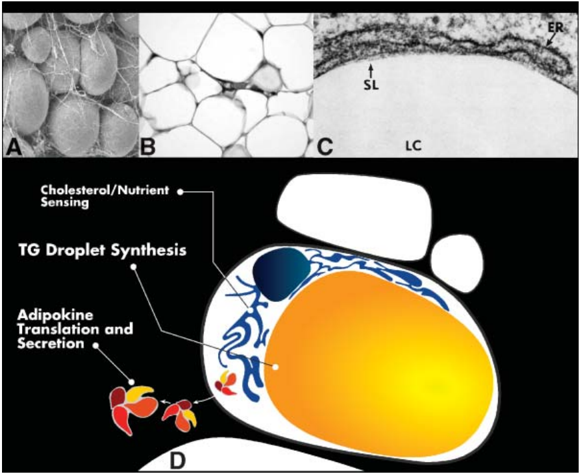
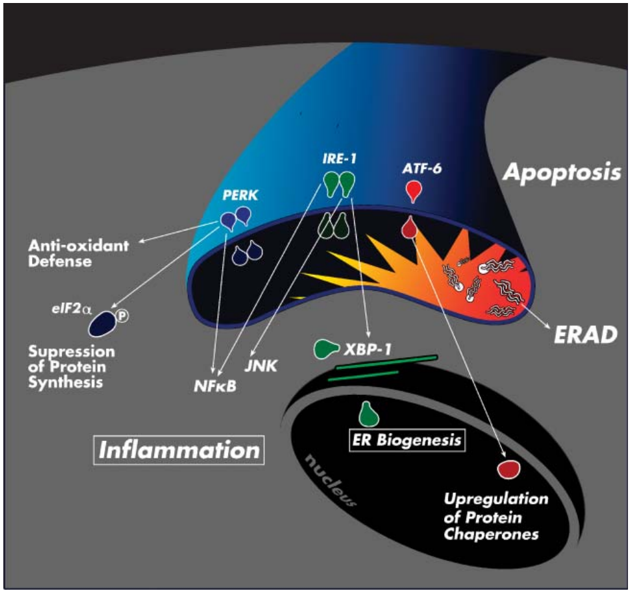
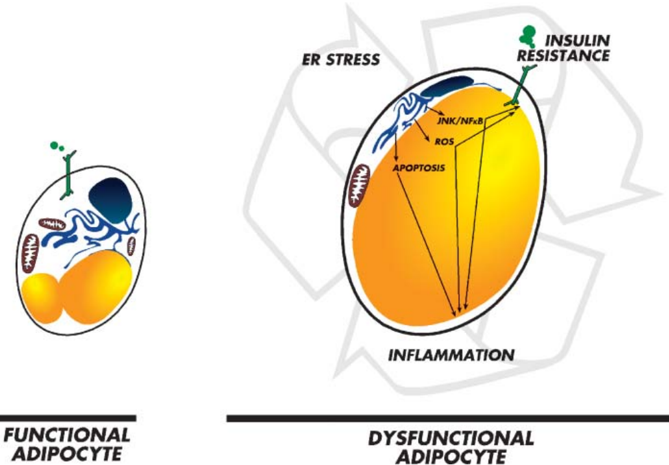
In the context of obesity and its related maladies, the adipocyte plays a central role in the balance, or imbalance, of metabolic homeostasis. An obese, hypertrophic adipocyte is challenged by many insults, including surplus energy, inflammation, insulin resistance, and considerable stress to various organelles. The endoplasmic reticulum (ER) is one such vital organelle that demonstrates significant signs of stress and dysfunction in obesity and insulin resistance. Under normal conditions, the ER must function in the unique and trying environment of the adipocyte, adapting to meet the demands of increased protein synthesis and secretion, energy storage in the form of triglyceride droplet formation, and nutrient sensing that are particular to the differentiated fat cell. When nutrients are in pathological excess, the ER is overwhelmed and the unfolded protein response (UPR) is activated. Remarkably, the consequences of UPR activation have been causally linked to the development of insulin resistance through a multitude of possible mechanisms, including c-jun N-terminal kinase activation, inflammation, and oxidative stress. This review will focus on the function of the ER under normal conditions in the adipocyte and the pathological effects of a stressed ER contributing to adipocyte dysfunction and a thwarted metabolic homeostasis.
Overview
The claims and statistics of this paper haven’t been checked yet.
Free: it reads the open-access text and checks the first 5 claims that cite a source we can check. Create a free account to check every claim.
Integrity signals
Registry
Cites
Statistics
Figures
Verification
Claims the paper makes
The claims and statistics of this paper haven’t been checked yet.
Free: it reads the open-access text and checks the first 5 claims that cite a source we can check. Create a free account to check every claim.
Claims other papers make about this one
Each is checked against this paper’s own text: does it say what the citing paper says it does?
The source backs part of the claim, not all of it — or backs it for a different population, condition or comparison.
In the citing paper
“The UPR also leads to increased IKKβ and proinflammatory cytokine expression (e.g., Il6, Tnfa, and Ccl2) (94,96,98).”
From Insulin sensitivity: Modulation by nutrients and inflammation (2008) · cites this paper as [94]
Experimental — accuracy not yet measured
Self-check
Percentages, sums and reported differences re-computed from the paper’s own numbers.
The self-check needs the paper’s full text.
Citations
Cites
Inflammation and metabolic disorders
Hotamisligil, G. S. (2006) · Nature · doi:10.1038/nature05485 · Cited by 9,199 · cited 5×
“One locus that has emerged as a central mediator of this dysfunction is cellular inflammation (3).”
InfluentialAdipose Expression of Tumor Necrosis Factor-α: Direct Role in Obesity-Linked Insulin Resistance
Hotamisligil, G. S., Shargill, N. S., & Spiegelman, B. M. (1993) · Science · doi:10.1126/science.7678183 · Cited by 7,518 · cited 1×
“Many of these pro-inflammatory mediators have been shown to be detrimental to proper insulin signaling, and inhibition of obesity-induced inflammation can improve insulin sensitivity in mice and humans [4-7].”
TOR signaling in growth and metabolism
Wullschleger, S., Loewith, R., & Hall, M. N. (2006) · Cell · doi:10.1016/j.cell.2006.01.016 · Cited by 5,787 · cited 1×
“The nutrient-responsive mammalian target of rapamycin (mTOR) pathway upregulates protein synthesis, which would naturally increase protein translation and folding in the ER (32).”
Increased oxidative stress in obesity and its impact on metabolic syndrome
Furukawa, S., Fujita, T., Shimabukuro, M., Iwaki, M., Yamada, Y., Nakajima, Y., Nakayama, O., Makishima, M., Matsuda, M., & Shimomura, I. (2004) · Journal of Clinical Investigation · doi:10.1172/jci21625 · Cited by 5,508 · cited 1×
“This is relevant given recent evidence of an increase in oxidative stress markers in the adipose tissue of obese/insulin-resistant mice and humans (79), and in cultured adipocytes ROS have been shown to cause insulin resistance (80).”
Inflammation and insulin resistance
Shoelson, S. E. (2006) · Journal of Clinical Investigation · doi:10.1172/jci29069 · Cited by 4,769
Inflammation, stress, and diabetes
Wellen, K. E., & Hotamisligil, G. S. (2005) · Journal of Clinical Investigation · doi:10.1172/jci25102 · Cited by 4,143 · cited 1×
“to be present in obese adipose tissue and causative for insulin resistance (3, 4, 7).”
Endoplasmic Reticulum Stress Links Obesity, Insulin Action, and Type 2 Diabetes
Özcan, U., Cao, Q., Yilmaz, E., Lee, A.-H., Iwakoshi, N. N., Özdelen, E., Tuncman, G., Görgün, C., Glimcher, L. H., & Hotamisligil, G. S. (2004) · Science · doi:10.1126/science.1103160 · Cited by 3,844 · cited 6×
“Indeed, in adipose tissue of mice fed a high-fat diet for 16 weeks, indicators of ER stress such as PERK phosphorylation and JNK activity are significantly increased compared with mice fed a regular diet (11).”
InfluentialA central role for JNK in obesity and insulin resistance
Hirosumi, J., Tuncman, G., Chang, L., Görgün, C. Z., Uysal, K. T., Maeda, K., Karin, M., & Hotamisligil, G. S. (2002) · Nature · doi:10.1038/nature01137 · Cited by 3,359 · cited 2×
“such as liver, muscle, and adipose tissues (42).”
Adipocytokines: mediators linking adipose tissue, inflammation and immunity
Tilg, H., & Moschen, A. R. (2006) · Nature Reviews Immunology · doi:10.1038/nri1937 · Cited by 3,188 · cited 1×
“Many abundant adipokines, such as leptin, adiponectin, RBP4, and even the fatty acid binding protein ap2, are found at high concentrations in serum (16, 17).”
Urano, F., Wang, X., Bertolotti, A., Zhang, Y., Chung, P., Harding, H. P., & Ron, D. (2000) · Science · doi:10.1126/science.287.5453.664 · Cited by 2,988 · cited 1×
“ER stress-induced IRE-1a phosphorylation leads to the recruitment of tumor necrosis factor receptor-associated factor 2 (TRAF2) and apoptosis signal-regulating kinase 1 (ASK1) to the cytosolic leaflet of the ERmembrane (40, 41).”
Cited by
Items 201–300 of 624
Malo, A., Krüger, B., Göke, B., & Kubisch, C. H. (2012) · Pancreas · doi:10.1097/mpa.0b013e318259f6ca · Cited by 60
“4-Phenylbutyric acid improved systemic insulin resistance and reduced the obesityinduced lipid accumulation in liver.(58) Cystic fibrosis (CF), a recessive disorder, is caused by mutations of the CF transmembrane conductance regulator (CFTR) gene disrupting its folding and trafficking and impairing chloride conductanc…”
BackgroundChapter 13 Phosphorylation of IRS Proteins
Sun, X., & Liu, F. (2009) · Vitamins and hormones · doi:10.1016/s0083-6729(08)00613-4 · Cited by 74
Chen, Y.-C., Zeng, X., He, Y., Liu, H., Wang, B., Zhou, H., Chen, J., Liu, P., Gu, L., Ye, J., et al. (2013) · ACS Chemical Biology · doi:10.1021/cb4003893 · Cited by 57
12/15-Lipoxygenase signaling in the endoplasmic reticulum stress response
Cole, B. K., Kuhn, N. S., Green-Mitchell, S. M., Leone, K. A., Raab, R. M., Nadler, J. L., & Chakrabarti, S. K. (2012) · American Journal of Physiology-Endocrinology and Metabolism · doi:10.1152/ajpendo.00373.2011 · Cited by 57
Yu, K., Mo, D., Wu, M., Chen, H., Chen, L., Li, M., & Chen, Y. (2014) · FEBS Journal · doi:10.1111/febs.12792 · Cited by 58
Endoplasmic reticulum stress in adipose tissue augments lipolysis
Bogdanovic, E., Kraus, N., Patsouris, D., Diao, L., Wang, V. Y., Abdullahi, A., & Jeschke, M. G. (2014) · Journal of Cellular and Molecular Medicine · doi:10.1111/jcmm.12384 · Cited by 61
Obesity and weight loss could alter the properties of adipose stem cells?
Baptista, L. S., Silva, K. R., & Borojevic, R. (2015) · World Journal of Stem Cells · doi:10.4252/wjsc.v7.i1.165 · Cited by 59
Nuclear Factor-Y is an adipogenic factor that regulates leptin gene expression
Lu, Y.-H., Dallner, O. S., Birsoy, K., Fayzikhodjaeva, G., & Friedman, J. M. (2015) · Molecular Metabolism · doi:10.1016/j.molmet.2015.02.002 · Cited by 50
“Recent studies reveal that ER stress occurs in adipocytes in obesity and diabetes [34,35]; this would be a possible mechanism by which NF-Y regulates leptin expression under different metabolic states of adipose tissue.”
BackgroundZhang, D., Lin, W., Liu, Y., Guo, H., Wang, L., Yang, L., Li, L., Li, D., & Tang, R. (2020) · Toxins · doi:10.3390/toxins12020107 · Cited by 56
“The sterol regulatory element binding protein (SREBP) family is the most important transcription factor present in the ER, which is involved in the regulation of target genes associated with the synthesis of lipid (such as SREBP1c) and cholesterol metabolism (such as SREBP1a and SREBP2) [51].”
BackgroundYang, Q., Yang, Y., Tang, Y., Wang, X., Chen, Y., Shen, W., Zhan, Y., Gao, J., Wu, B., He, M., et al. (2020) · Biotechnology for Biofuels · doi:10.1186/s13068-020-01781-1 · Cited by 55
Mendizábal, Y., Llorens, S., & Nava, E. (2013) · Life Sciences · doi:10.1016/j.lfs.2013.10.021 · Cited by 53
Skoien, R., Richardson, M. M., Jonsson, J. R., Powell, E. E., Brunt, E. M., Neuschwander‐Tetri, B. A., Bhathal, P. S., Dixon, J. B., O'Brien, P. E., Tilg, H., et al. (2013) · Liver International · doi:10.1111/liv.12100 · Cited by 53
Meneses, M. E., Camargo, A., Perez‐Martinez, P., Delgado‐Lista, J., Cruz‐Teno, C., Jimenez‐Gomez, Y., Paniagua, J. A., Gutierrez‐Mariscal, F. M., Tinahones, F. J., Vidal‐Puig, A., et al. (2011) · Molecular Nutrition & Food Research · doi:10.1002/mnfr.201100200 · Cited by 50
Angiotensin II Increases Endoplasmic Reticulum Stress in Adipose Tissue and Adipocytes
Menikdiwela, K. R., Ramalingam, L., Allen, L., Scoggin, S. O., Kalupahana, N. S., & Moustaïd‐Moussa, N. (2019) · Scientific Reports · doi:10.1038/s41598-019-44834-8 · Cited by 53
ER stress in adipocytes and insulin resistance: Mechanisms and significance (Review)
Khan, S. M., & WANG, C. H. (2014) · Molecular Medicine Reports · doi:10.3892/mmr.2014.2532 · Cited by 57
GRP78 plays an essential role in adipogenesis and postnatal growth in mice
Zhu, G., Ye, R., Jung, D. Y., Barrón, E., Friedline, R. H., Benoit, V. M., Hinton, D. R., Kim, J. K., & Lee, A. S. (2012) · The FASEB Journal · doi:10.1096/fj.12-213330 · Cited by 52
Sharkey, D., Gardner, D. S., Fainberg, H. P., Sebert, S. P., Bos, P., Wilson, V., Bell, R. C., Symonds, M. E., & Budge, H. (2008) · The FASEB Journal · doi:10.1096/fj.08-114330 · Cited by 60
“Within stressed adipocytes, activation of the UPR initially aims to promote cell survival by down-regulating nonessential protein synthesis while increasing crucial ER chaperones, such as glucose-regulated protein 78 (GRP78), to restore cellular homeostasis (10).”
BackgroundInfluentialBou, M., Todorčević, M., Fontanillas, R., Capilla, E., Gutiérrez, J., & Navarro, I. (2014) · Comparative Biochemistry and Physiology Part A Molecular & Integrative Physiology · doi:10.1016/j.cbpa.2014.05.014 · Cited by 55
Activation of the Cellular Unfolded Protein Response by Recombinant Adeno-Associated Virus Vectors
Balakrishnan, B., Sen, D., Hareendran, S., Roshini, V., David, S., Srivastava, A., & Jayandharan, G. R. (2013) · PLoS ONE · doi:10.1371/journal.pone.0053845 · Cited by 50
“In particular the link between IRE1a/sXBP1 driven activation of janus kinase (JNK) or phosphotidyl inositol 3-kinase (PI3K) pathway or mitogen associated protein kinase pathway (MAPK) that mediate a NF-kB dependent activation of anti-viral innate immune response is being increasingly recognized [47,55].”
BackgroundOn the Immunometabolic Role of NF-κB in Adipocytes
Griffin, M. J. (2022) · Immunometabolism · doi:10.20900/immunometab20220003 · Cited by 52
From a glucocentric to a lipocentric approach towards metabolic syndrome
Mittra, S., Bansal, V. S., & Bhatnagar, P. K. (2008) · Drug Discovery Today · doi:10.1016/j.drudis.2008.01.006 · Cited by 48
Tsai, T., Lai, K.-H., Su, J.-H., Wu, Y., & Sheu, J. (2018) · Marine Drugs · doi:10.3390/md16040104 · Cited by 50
“At the same time, when PERK separates from its ER chaperone molecule, it causes PERK oligomerization in the ER lumen, resulting in its phosphorylation and promoting downstream eIF2α phosphorylation [23].”
BackgroundGaribaldi, N., Contento, B. M., Babini, G., Morini, J., Siciliani, S., Biggiogera, M., Raspanti, M., Marini, J. C., Rossi, A., Forlino, A., et al. (2021) · Matrix Biology · doi:10.1016/j.matbio.2021.03.001 · Cited by 48
Endoplasmic Reticulum Stress Regulates Adipocyte Resistin Expression
Lefterova, M. I., Mullican, S. E., Tomaru, T., Qatanani, M., Schupp, M., & Lazar, M. A. (2009) · Diabetes · doi:10.2337/db08-1706 · Cited by 52
“In turn, unresolved ER stress may contribute to the dysregulated function of adipose tissue by diminishing insulin sensitivity and leading to aberrant adipokine secretion (19).”
BackgroundKushwaha, V., Rai, P., Varshney, S., Gupta, S., Khandelwal, N., Kumar, D., & Gaikwad, A. N. (2022) · Food Chemistry Molecular Sciences · doi:10.1016/j.fochms.2022.100079 · Cited by 49
The relationship between inflammatory markers, angiogenesis, and obesity.
Tahergorabi, Z., & Khazaei, M. (2013) · PubMed Central · Cited by 60
Zhou, Q. G., Zhou, M., Hou, F. F., & Peng, X. (2009) · American Journal of Physiology-Endocrinology and Metabolism · doi:10.1152/ajpendo.91011.2008 · Cited by 48
LaRosa, P. C., Riethoven, J.-J. M., Chen, H., Xia, Y., Zhou, Y., Chen, M., Miner, J. L., & Fromm, M. (2007) · Physiological Genomics · doi:10.1152/physiolgenomics.00156.2007 · Cited by 54
Redox‐based endoplasmic reticulum dysfunction in neurological diseases
Bánhegyi, G., Mandl, J., & Csala, M. (2008) · Journal of Neurochemistry · doi:10.1111/j.1471-4159.2008.05571.x · Cited by 52
Zhao, M., Zang, B., Cheng, M., Ma, Y., Yang, Y., & Yang, N. (2013) · PLoS ONE · doi:10.1371/journal.pone.0078620 · Cited by 48
“And the increased GRP78 mRNA in HL/HL was presumably due to still activated ATF6 pathway at that time, which also targets GRP78 transcriptionally [70] while the possible explanation of decreased GRP78 protein in HL/HL and HS/HS included reduction in translation and rapid degradation of GRP78 protein, although further…”
BackgroundInfluentialCha, B.-H., Kim, J., Ahn, J. C., Kim, H.-C., Kim, B., Han, D. K., Park, S. G., & Lee, S. (2014) · Biomaterials · doi:10.1016/j.biomaterials.2013.12.067 · Cited by 48
“ER stress occurs when there is an accumulation of misfolded proteins within the ER of liver and adipose tissue [9,10].”
BackgroundThe Multi-Level Action of Fatty Acids on Adiponectin Production by Fat Cells
Karki, S., Chakrabarti, P., Huang, G., Wang, H., Farmer, S. R., & Kandror, K. V. (2011) · PLoS ONE · doi:10.1371/journal.pone.0028146 · Cited by 45
“that are collectively known as lipotoxicity [22,23,24,25].”
Stop feeding cancer: Pro-inflammatory role of visceral adiposity in liver cancer
Zhao, J., & Lawless, M. W. (2013) · Cytokine · doi:10.1016/j.cyto.2013.09.009 · Cited by 47
Li, R. C., Krishnamoorthy, P. M., DerOhannessian, S. L., Doveikis, J., Wilcox, M., Thomas, P., Rader, D. J., Reilly, M. P., Voorhees, A. V., Gelfand, J. M., et al. (2013) · Clinical and Experimental Dermatology · doi:10.1111/ced.12250 · Cited by 50
Endoplasmic Reticulum Stress Impairs Insulin Receptor Signaling in the Brains of Obese Rats
Liang, L., Chen, J., Zhan, L., Lu, X., Sun, X., Sui, H. X., Zheng, L., Xiang, H., & Zhang, F.-L. (2015) · PLoS ONE · doi:10.1371/journal.pone.0126384 · Cited by 49
“Several studies in liver and adipose tissue have revealed that nutrient excess-induced chronic ER stress plays a role in the pathogenesis of diabetes, and specifically contributes to hepatic steatosis [28], beta cell loss, and insulin resistance [14,29,30].”
BackgroundPradas, I., Rovira‐Llopis, S., Naudí, A., Bañuls, C., Rocha, M., Hernández‐Mijares, A., Pamplona, R., Víctor, V. M., & Jové, M. (2019) · Scientific Reports · doi:10.1038/s41598-019-52263-w · Cited by 45
Figueiredo, A., Leal, E. C., & Carvalho, E. (2020) · Pharmacological Research · doi:10.1016/j.phrs.2020.104977 · Cited by 48
González-Chávez, A., Elizondo-Argueta, S., Gutiérrez‐Reyes, G., & León-Pedroza, J. I. (2011) · PubMed · Cited by 49
Anderson, C. D., Upadhya, G. A., Conzen, K. D., Jia, J., Brunt, E. M., Tiriveedhi, V., Xie, Y., Ramachandran, S., Mohanakumar, T., Davidson, N. O., et al. (2010) · Liver Transplantation · doi:10.1002/lt.22220 · Cited by 48
“Although ER stress is, in general, an adaptive response, prolonged or sudden increases in ER stress can initiate pathways that result in cell death.(22,42,43) There are multiple pathways through which ER stress is known to mediate cell death.”
BackgroundMei, Q., Zeng, Y., Huang, C., Zheng, J., Guo, Y., Fan, J., Fu, X., Wang, X., & Lu, Y. (2020) · Inflammation · doi:10.1007/s10753-020-01228-7 · Cited by 43
Sarcopenic Obesity: Involvement of Oxidative Stress and Beneficial Role of Antioxidant Flavonoids
Jung, U. J. (2023) · Antioxidants · doi:10.3390/antiox12051063 · Cited by 47
Zhou, Q. G., Zhou, M., Lou, A., Xie, D., & Hou, F. F. (2010) · Cellular Physiology and Biochemistry · doi:10.1159/000322345 · Cited by 45
Vera, R. H., Vilahur, G., Ferrer‐Lorente, R., Peña, E., & Badimón, L. (2012) · Arteriosclerosis Thrombosis and Vascular Biology · doi:10.1161/atvbaha.112.255281 · Cited by 43
FGF21-FGFR1 Coordinates Phospholipid Homeostasis, Lipid Droplet Function, and ER Stress in Obesity
Ye, M., Lu, W., Wang, X., Wang, C., Abbruzzese, J. L., Liang, G., Li, X., & Luo, Y. (2016) · Endocrinology · doi:10.1210/en.2016-1710 · Cited by 42
Uremia induces adipose tissue inflammation and muscle mitochondrial dysfunction
Cantarin, M. P. M., Whitaker‐Menezes, D., Zhao, L., & Falkner, B. E. (2017) · Nephrology Dialysis Transplantation · doi:10.1093/ndt/gfx050 · Cited by 46
“of obesity is also characterized by adipocyte hypertrophy, altered mitochondrial function, hypoxia, disruption of apoptotic signaling and endoplasmic reticulum (ER) stress [36, 37].”
BackgroundNon-alcoholic fatty liver disease and obesity: the role of the gut bacteria
Schwenger, K. J. P., Bolzon, C. M., Li, C., & Allard, J. P. (2018) · European Journal of Nutrition · doi:10.1007/s00394-018-1844-5 · Cited by 43
Endurance training in mice increases the unfolded protein response induced by a high-fat diet
Deldicque, L., Cani, P. D., Delzenne, N. M., Baar, K., & Francaux, M. (2013) · Journal of Physiology and Biochemistry · doi:10.1007/s13105-012-0204-9 · Cited by 41
“3e and f) [11, 16].”
Ryan, V. H., German, A. J., Wood, I. S., Hunter, L., Morris, P., & Trayhurn, P. (2010) · Pflügers Archiv - European Journal of Physiology · doi:10.1007/s00424-010-0845-x · Cited by 47
“In these species, white adipocytes have been shown to synthesise and secrete a wide range of protein hormones and other signalling factors [ 14 , 39, 40, 47, 48].”
BackgroundInsulin Regulates the Unfolded Protein Response in Human Adipose Tissue
Boden, G. H., Cheung, P., Salehi, S., Homko, C. J., Loveland-Jones, C. E., Jayarajan, S. N., Stein, T. P., Williams, K. J., Liu, M., Barrero, C. A., et al. (2013) · Diabetes · doi:10.2337/db13-0906 · Cited by 41
“They were obtained in adipose tissue, a tissue where ER stress was found in obese rodents to be very prominent, leading to its dysfunction and to many obesity-related pathologies (27).”
BackgroundParaoxonases and Chemokine (C–C Motif) Ligand-2 in Noncommunicable Diseases
Camps, J., Rodríguez‐Gallego, E., García‐Heredia, A., Triguero, I., Riera-Borrull, M., Hernández‐Aguilera, A., Luciano‐Mateo, F., Fernández‐Arroyo, S., & Joven, J. (2013) · Advances in clinical chemistry · doi:10.1016/b978-0-12-800094-6.00007-8 · Cited by 46
Peña‐Orihuela, P. J., Camargo, A., Rangel-Zúñiga, O. A., Pérez‐Martínez, P., Cruz‐Teno, C., Delgado‐Lista, J., Yubero‐Serrano, E. M., Paniagua, J. A., Tinahones, F. J., Malagón, M. M., et al. (2013) · The Journal of Nutritional Biochemistry · doi:10.1016/j.jnutbio.2013.02.012 · Cited by 46
“stress and even mechanical damage due to hypertrophy of the adipocyte [7].”
BackgroundCharacterization of calcium signaling pathways in human preadipocytes
Hu, R., He, M., Hu, H., Yuan, B.-X., Zang, W., Lau, C., Tse, H., & Li, G. (2009) · Journal of Cellular Physiology · doi:10.1002/jcp.21823 · Cited by 41
“…of fat also results in obesity, which is a prevalent health problem in industrial countries, and closely associated with the occurrence of hypertension, hyperlipidemia, type 2 diabetes and cardiovascular diseases (Ferrarezi et al., 2007; Mathew et al., 2007; Gregor and Hotamisligil, 2007).”
BackgroundAnti-inflammatory agents as modulators of the inflammation in adipose tissue: A systematic review
da Cruz Nascimento, S. S., Carvalho de Queiroz, J. L., Fernandes de Medeiros, A., de França Nunes, A. C., Piuvezam, G., Lima Maciel, B. L., Souza Passos, T., & Morais, A. H. D. A. (2022) · PLOS ONE · doi:10.1371/journal.pone.0273942 · Cited by 36
Schürmann, C., Goren, I., Linke, A., Pfeilschifter, J. M., & Frank, S. (2014) · Biochemical and Biophysical Research Communications · doi:10.1016/j.bbrc.2014.02.085 · Cited by 43
Early endocrine and molecular changes in metabolic syndrome models
Larqué, C., Velasco, M., Navarro‐Tableros, V., Duhne, M., Aguirre, J., Gutiérrez‐Reyes, G., Moreno, J., Robles‐Díaz, G., Hong, E., & Hiriart, M. (2011) · IUBMB Life · doi:10.1002/iub.544 · Cited by 41
Congur, I., Mingrone, G., & Guan, K. (2024) · Metabolism · doi:10.1016/j.metabol.2024.156062 · Cited by 39
Tang, X., Rong, G., Yang, B., Zhang, S., Zhang, M., Zhang, J., & Liang, X. (2015) · Cellular Physiology and Biochemistry · doi:10.1159/000369740 · Cited by 39
Mechanisms Underlying the Anti-Aging and Anti-Tumor Effects of Lithocholic Bile Acid
Arlia‐Ciommo, A., Piano, A., Svistkova, V., Mohtashami, S., & Titorenko, V. I. (2014) · International Journal of Molecular Sciences · doi:10.3390/ijms150916522 · Cited by 40
Obeid, J., Stoyanova, R. S., Kwon, D., Patel, M. J., Padgett, K. R., Slingerland, J. M., Takita, C., Alperin, N. J., Yepes, M. M., & Zeidan, Y. H. (2016) · Clinical & Translational Oncology · doi:10.1007/s12094-016-1526-9 · Cited by 40
ZnO nanoparticles augment ALT, AST, ALP and LDH expressions in C2C12 cells
Pandurangan, M., & Kim, D. H. (2015) · Saudi Journal of Biological Sciences · doi:10.1016/j.sjbs.2015.03.013 · Cited by 39
An endocrine perspective of nonalcoholic fatty liver disease (NAFLD)
Lomonaco, R., Chen, J., & Cusi, K. J. (2011) · Therapeutic Advances in Endocrinology and Metabolism · doi:10.1177/2042018811419157 · Cited by 45
“…previously believed to be produced only by macrophages (i.e. TNF-a, IL-6, resistin, monocyte chemoattractant protein-1 [MCP-1], plasminogen activator inhibitor-1 [PAI-1], visfatin, angiotensinogen, retinol-binding protein-4 [RBP-4], etc.) [Gregor and Hotamisligil, 2007; Shoelson et al. 2006].”
BackgroundRadice, R. P., Limongi, A. R., Viviano, E., Padula, M. C., Martelli, G., & Bermano, G. (2021) · Free Radical Biology and Medicine · doi:10.1016/j.freeradbiomed.2021.05.008 · Cited by 38
“Obesity may affect endoplasmic reticulum (ER) correct folding of proteins and, when homeostasis is perturbed, accumulation of misfolded proteins occurs that triggers a response in the ER and activation of BiP (binding immunoglobulin protein), responsible for the correct folding of proteins [59].”
BackgroundCha, B.-H., Jung, M.-J., Moon, B.-K., Kim, J., Ma, Y.-J., Arai, Y., Noh, M., Shin, J., Kim, B., & Lee, S. (2015) · Bone · doi:10.1016/j.bone.2015.10.011 · Cited by 41
González‐Muniesa, P., Marrades, M. P., Martínez, J. A., & Moreno-Aliaga, M. J. (2013) · International Journal of Molecular Sciences · doi:10.3390/ijms140917238 · Cited by 40
“Three reasons have been proposed by different groups to explain this inflammatory process occurring within adipose tissue: (a) local hypoxia [5,6]; (b) endoplasmic reticulum stress [7–9]; and (c) oxidative stress [10–12].”
BackgroundSystemic Effects of White Adipose Tissue Dysregulation and Obesity‐Related Inflammation
Guri, A. J., & Bassaganya-Riera, J. (2011) · Obesity · doi:10.1038/oby.2010.230 · Cited by 43
A Protective Role for CD154 in Hepatic Steatosis in Mice
Villeneuve, J., Lepreux, S., Mulot, A., Bérard, A. M., Higa-Nishiyama, A., Costet, P., de Lédinghen, V., Bioulac‐Sage, P., Balabaud, C. P., Nurden, A. T., et al. (2010) · Hepatology · doi:10.1002/hep.23935 · Cited by 39
Honkala, S. M., Motiani, P., Kivelä, R., Hemanthakumar, K. A., Tolvanen, E., Motiani, K. K., Eskelinen, J.-J., Virtanen, K. A., Kemppainen, J., Heiskanen, M. A., et al. (2020) · BMJ Open Diabetes Research & Care · doi:10.1136/bmjdrc-2019-000830 · Cited by 37
Alemany, M. (2012) · Free Radical Biology and Medicine · doi:10.1016/j.freeradbiomed.2012.03.003 · Cited by 41
Characterization of ion channels in human preadipocytes
Hu, H., He, M., Tao, R., Sun, H., Hu, R., Zang, W., Yuan, B.-X., Lau, C., Tse, H., & Li, G. (2008) · Journal of Cellular Physiology · doi:10.1002/jcp.21617 · Cited by 37
“…adipose tissue, which is a prevalent health hazard in industrial countries, and closely associated with the occurrence of hypertension, hyperlipidemia, type 2 diabetes and cardiovascular disease (Ferrarezi et al., 2007; Gray and Vidal-Puig, 2007; Gregor and Hotamisligil, 2007; Mathew et al., 2007).”
BackgroundGoeckeler-Fried, J. L., & Brodsky, J. L. (2010) · Diabetes Obesity and Metabolism · doi:10.1111/j.1463-1326.2010.01273.x · Cited by 45
THP-1 Macrophages and SGBS Adipocytes ? A New Human in vitro Model System of Inflamed Adipose Tissue
Keuper, M., Dzyakanchuk, A. A., Amrein, K. E., Wabitsch, M., & Fischer‐Posovszky, P. (2011) · Frontiers in Endocrinology · doi:10.3389/fendo.2011.00089 · Cited by 39
Bariatric surgery to unload the stressed heart: a metabolic hypothesis
Algahim, M. F., Sen, S., & Taegtmeyer, H. (2012) · American Journal of Physiology-Heart and Circulatory Physiology · doi:10.1152/ajpheart.00626.2011 · Cited by 36
Rambhojan, C., Bouaziz-Amar, É., Larifla, L., Deloumeaux, J., Clepier, J., Plumasseau, J., Lacorte, J., & Foucan, L. (2015) · Nutrition & Metabolism · doi:10.1186/s12986-015-0039-9 · Cited by 37
van Eijkeren, R. J., Krabbe, O., Boes, M. L., Schipper, H. S., & Kalkhoven, E. (2017) · Immunology · doi:10.1111/imm.12839 · Cited by 39
Gonçalves, N. B., Bannitz, R. F., da Silva, B. R., Becari, D. D., Poloni, C., Gomes, P. M., Foss, M. C., & Foss‐Freitas, M. C. (2018) · Clinics · doi:10.6061/clinics/2018/e150 · Cited by 36
“In addition to the inflammatory processes promoted by obesity, the increase in visceral adipose tissue particularly leads to stress in several vital organelles, especially the endoplasmic reticulum (ER) (8).”
BackgroundZhang, Z., Qiao, D., Zhang, Y., Chen, Q., Chen, Y.-J., Tang, Y., Que, R., Chen, Y., Zheng, L., Dai, Y.-C., et al. (2021) · Molecular Nutrition & Food Research · doi:10.1002/mnfr.202100791 · Cited by 37
Regulation of adipolin/CTRP12 cleavage by obesity
Enomoto, T., Shibata, R., Ohashi, K., Kambara, T., Kataoka, Y., Uemura, Y., Yuasa, D., Murohara, T., & Ouchi, N. (2012) · Biochemical and Biophysical Research Communications · doi:10.1016/j.bbrc.2012.10.031 · Cited by 36
DeBoer, M. D. (2010) · Current Cardiovascular Risk Reports · doi:10.1007/s12170-010-0104-x · Cited by 37
Deldicque, L., Proeyen, K. V., Francaux, M., & Hespel, P. (2010) · European Journal of Applied Physiology · doi:10.1007/s00421-010-1783-1 · Cited by 40
“Data from studies conducted in obese rodent models have demonstrated that ER stress and the activation of related stress signaling pathways may be implicated in the pathophysiology of insulin resistance and type 2 diabetes (Gregor and Hotamisligil 2007).”
BackgroundMaixner, N., Kovsan, J., Harman‐Boehm, I., Blüher, M., Bashan, N., & Rudich, A. (2012) · Obesity Facts · doi:10.1159/000343983 · Cited by 40
Haim, Y., Blüher, M., Konrad, D., Goldstein, N., Klöting, N., Harman‐Boehm, I., Kirshtein, B., Ginsberg, D., Tarnovscki, T., Gepner, Y., et al. (2017) · Molecular Metabolism · doi:10.1016/j.molmet.2017.05.003 · Cited by 36
Relevance and consequence of chronic inflammation for obesity development
Rück, L., Wiegand, S., & Kühnen, P. (2023) · Molecular and Cellular Pediatrics · doi:10.1186/s40348-023-00170-6 · Cited by 35
“…first hypothesis suggests that excessive nutrient intake leads to the accumulation of misfolded or unfolded proteins in the endoplasmic reticulum, triggering the activation of the unfolded protein response pathway (UPR), which leads to an enhanced expression of pro-inflammatory cytokines [66–71].”
BackgroundMenikdiwela, K. R., Guimarães, J. P. T., Ramalingam, L., Kalupahana, N. S., Dufour, J. M., Washburn, R. L., & Moustaïd‐Moussa, N. (2021) · Critical Reviews in Biochemistry and Molecular Biology · doi:10.1080/10409238.2021.1925219 · Cited by 37
Effects of hyperoxia exposure on metabolic markers and gene expression in 3T3-L1 adipocytes
Quintero, P., González‐Muniesa, P., García‐Díaz, D. F., & Martínez, J. A. (2012) · Journal of Physiology and Biochemistry · doi:10.1007/s13105-012-0169-8 · Cited by 36
Yuliana, A., Daijo, A., Jheng, H., Kwon, J., Nomura, W., Takahashi, H., Ara, T., Kawada, T., & Goto, T. (2019) · International Journal of Molecular Sciences · doi:10.3390/ijms20020274 · Cited by 34
“In adipose tissue, obesity results in chronic stress and dysfunction caused by the increased demand of synthetic machinery [17].”
BackgroundJha, D., & Mazumder, P. M. (2019) · Molecular Biology Reports · doi:10.1007/s11033-019-04623-y · Cited by 37
Mawed, S. A., Centoducati, G., Farag, M. R., Alagawany, M. M., Abou‐Zeid, S. M., Elhady, W. M., El‐Saadony, M. T., Cerbo, A. D., & Al-Zahaby, S. A. (2022) · Biology · doi:10.3390/biology11101447 · Cited by 38
Adipokine expression in brown and white adipocytes in response to hypoxia.
Wree, A., Mayer, A., Westphal, S., Beilfuss, A., Canbay, A. E., Schick, R., Gerken, G., & Vaupel, P. W. (2012) · PubMed · doi:10.3275/7964 · Cited by 39
Intestinal microbiota and overweight
Lyra, A., Lahtinen, S., Tiihonen, K., & Ouwehand, A. (2010) · Beneficial Microbes · doi:10.3920/bm2010.0030 · Cited by 32
Pathogenic obesity and nutraceuticals
Conroy, K. P., Davidson, I. M., & Warnock, M. (2011) · Proceedings of The Nutrition Society · doi:10.1017/s0029665111001662 · Cited by 40
Fabre, O., Salehzada, T., Lambert, K., Seok, Y. B., Zhou, A., Mercier, J. G., & Bisbal, C. (2012) · Cell Death and Differentiation · doi:10.1038/cdd.2012.23 · Cited by 36
Berberine exerts anti-adipogenic activity through up-regulation of C/EBP inhibitors, CHOP and DEC2
Pham, T. P. T., Kwon, J., & Shin, J. (2011) · Biochemical and Biophysical Research Communications · doi:10.1016/j.bbrc.2011.08.110 · Cited by 35
Insulin Regulates TRB3 and Other Stress-Responsive Gene Expression through Induction of C/EBPβ
Du, K., & Ding, J. (2009) · Molecular Endocrinology · doi:10.1210/me.2008-0284 · Cited by 36
Lee, W., Yun, S., Choi, G. H., & Jung, T. W. (2018) · Biochemical and Biophysical Research Communications · doi:10.1016/j.bbrc.2018.05.133 · Cited by 32
Scarano, F., Gliozzi, M., Zito, M. C., Guarnieri, L., Carresi, C., Macrì, R., Nucera, S., Scicchitano, M., Bosco, F., Ruga, S., et al. (2021) · International Journal of Molecular Sciences · doi:10.3390/ijms22073351 · Cited by 33
“ER Stress and UPR are linked to major inflammatory and stress signaling pathways with a central role in obesity-induced inflammation and metabolic dysfunction, via activation of JNK1 and IKK-NF-κB pathways, as well as ROS production [59].”
BackgroundAlotaibi, G., & Alkhammash, A. (2025) · European Journal of Pharmacology · doi:10.1016/j.ejphar.2025.177509 · Cited by 32
Bories, P., Rikardsen, A. H., Leonards, P. E. G., Fisk, A. T., Tartu, S., Vogel, E. F., Bytingsvik, J., & Blévin, P. (2021) · Ecology and Evolution · doi:10.1002/ece3.7523 · Cited by 31
Jiang, S., Wang, Z., Riethoven, J.-J. M., Xia, Y., Miner, J. L., & Fromm, M. (2009) · Journal of Nutrition · doi:10.3945/jn.109.112417 · Cited by 33
Lipid Storage, Lipolysis, and Lipotoxicity in Obesity
Engin, A. (2024) · Advances in experimental medicine and biology · doi:10.1007/978-3-031-63657-8_4 · Cited by 32
Recent advances of lipid droplet-targeted AIE-active materials for imaging, diagnosis and therapy
Yuan, S., & Zhao, E. (2024) · Biosensors and Bioelectronics · doi:10.1016/j.bios.2024.116802 · Cited by 30
Metadata
- Authors
- Gregor, M. F., & Hotamisligil, G. S.
- Affiliations
- Harvard University (US)
- ORCID
- Gregor, Margaret F.
- Venue
- Journal of Lipid Research
- Publisher
- Elsevier BV
- Published
- 2007-09
- Volume
- 48
- Issue
- 9
- Pages
- 1905-1914
- ISSN
- 0022-2275 (ISSN-L)
- OpenAlex
- W2138485536
- Cited by
- 586
- References
- 89
- Citations by year
- 2026: 9 · 2025: 12 · 2024: 20 · 2023: 11 · 2022: 16 · 2021: 25 · 2020: 21 · 2019: 26 · 2018: 21 · 2017: 26 · 2016: 26 · 2015: 34 · 2014: 37 · 2013: 56 · 2012: 52
- FWCI
- 3.44
- Type
- journal article
- Language
- en
- Open access
- hybrid
- doi.org
- Licence
- cc-by
- www.elsevier.com/tdm/userlicense/1.0/ (tdm)
- creativecommons.org/licenses/by/4.0/ (vor, 4794 d)
- Locations
- Journal of Lipid Research (publishedVersion, cc-by)
- PubMed (publishedVersion)
- DOAJ (DOAJ: Directory of Open Access Journals) (submittedVersion, cc-by-sa)
- Funders
- National Institute of Diabetes and Digestive and Kidney Diseases (T90DK070078)
- Topics
- Life Sciences › Biochemistry, Genetics and Molecular Biology › Cell Biology › Endoplasmic Reticulum Stress and Disease
- Health Sciences › Medicine › Endocrinology, Diabetes and Metabolism › Adipokines, Inflammation, and Metabolic Diseases
- Health Sciences › Medicine › Physiology (medical) › Adipose Tissue and Metabolism
- Keywords
- endoplasmic reticulum stress, unfolded protein response, insulin resistance, obesity, metabolic homeostasis, c-Jun N-terminal kinase, inflammation, oxidative stress, adipocyte dysfunction, nutrient sensing
- MeSH terms
- Animals, Cholesterol, Endoplasmic Reticulum, Humans, Inflammation, Metabolic Diseases, Obesity, Phenylbutyrates, Proteins, Stress, Physiological, Taurochenodeoxycholic Acid, Protein Folding, Adipocytes, Lipid Metabolism
About these checks
Registry, retraction, Cites and statistics results are computed, not judged, with one exception: a printed reference that no index lists is read once by a model before it counts as a citation error. Claims are extracted by a model and kept only when their quote appears verbatim in the text; each cited source is then checked, with a model’s help, for whether it says what the claim relies on. Those verdicts can be wrong — read the claim’s quote and the cited source before relying on one.
Statistics and arithmetic are recomputed, not judged.
Confidence bands are shown only for fields calibrated on our annotated test set. None is calibrated yet, so no band is shown.
What counts as a claim ›How we measure confidence ›How we check this ›
Are you an author, or do you see a problem with this page? Request a review
Data sources
Bibliographic data: Semantic Scholar, OpenAlex, Crossref.
Contains information from the Semantic Scholar Academic Graph Datasets, made available under the ODC Attribution License (ODC-BY 1.0).
Semantic Scholar’s data is described in: Kinney, R., et al. (2023). The Semantic Scholar Open Data Platform. arXiv:2301.10140.
