

Thematic review series: Adipocyte Biology. Adipocyte stress: the endoplasmic reticulum and metabolic disease
Open accessThe DOI matches its Crossref record; 87 of the 89 references it cites were found in a registry or an index.
Abstract
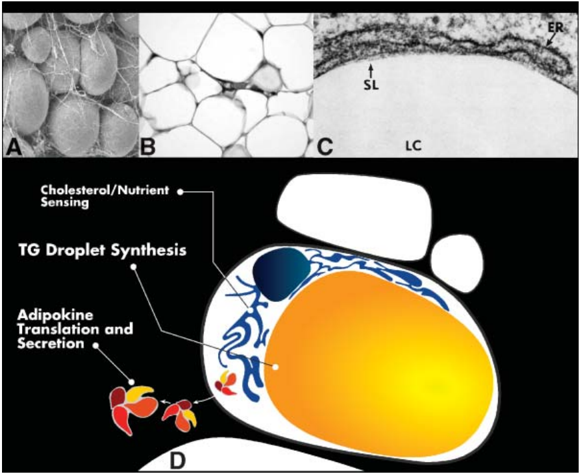
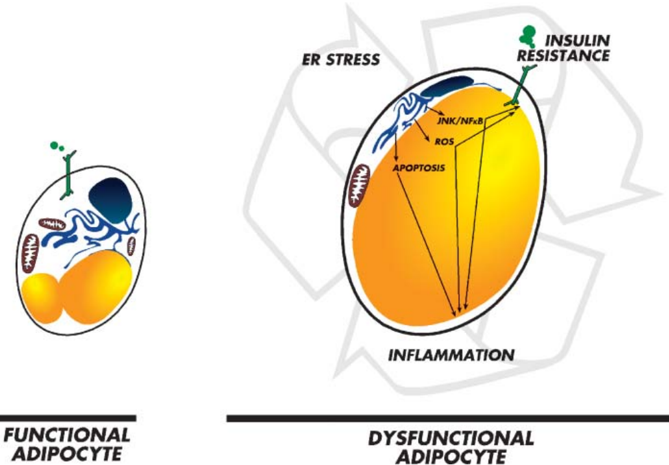
In the context of obesity and its related maladies, the adipocyte plays a central role in the balance, or imbalance, of metabolic homeostasis. An obese, hypertrophic adipocyte is challenged by many insults, including surplus energy, inflammation, insulin resistance, and considerable stress to various organelles. The endoplasmic reticulum (ER) is one such vital organelle that demonstrates significant signs of stress and dysfunction in obesity and insulin resistance. Under normal conditions, the ER must function in the unique and trying environment of the adipocyte, adapting to meet the demands of increased protein synthesis and secretion, energy storage in the form of triglyceride droplet formation, and nutrient sensing that are particular to the differentiated fat cell. When nutrients are in pathological excess, the ER is overwhelmed and the unfolded protein response (UPR) is activated. Remarkably, the consequences of UPR activation have been causally linked to the development of insulin resistance through a multitude of possible mechanisms, including c-jun N-terminal kinase activation, inflammation, and oxidative stress. This review will focus on the function of the ER under normal conditions in the adipocyte and the pathological effects of a stressed ER contributing to adipocyte dysfunction and a thwarted metabolic homeostasis.
Overview
The claims and statistics of this paper haven’t been checked yet.
Free: it reads the open-access text and checks the first 5 claims that cite a source we can check. Create a free account to check every claim.
Integrity signals
Registry
Cites
Statistics
Figures
Verification
Claims the paper makes
The claims and statistics of this paper haven’t been checked yet.
Free: it reads the open-access text and checks the first 5 claims that cite a source we can check. Create a free account to check every claim.
Claims other papers make about this one
Each is checked against this paper’s own text: does it say what the citing paper says it does?
The source backs part of the claim, not all of it — or backs it for a different population, condition or comparison.
In the citing paper
“The UPR also leads to increased IKKβ and proinflammatory cytokine expression (e.g., Il6, Tnfa, and Ccl2) (94,96,98).”
From Insulin sensitivity: Modulation by nutrients and inflammation (2008) · cites this paper as [94]
Experimental — accuracy not yet measured
Self-check
Percentages, sums and reported differences re-computed from the paper’s own numbers.
The self-check needs the paper’s full text.
Citations
Cites
Inflammation and metabolic disorders
Hotamisligil, G. S. (2006) · Nature · doi:10.1038/nature05485 · Cited by 9,199 · cited 5×
“One locus that has emerged as a central mediator of this dysfunction is cellular inflammation (3).”
InfluentialAdipose Expression of Tumor Necrosis Factor-α: Direct Role in Obesity-Linked Insulin Resistance
Hotamisligil, G. S., Shargill, N. S., & Spiegelman, B. M. (1993) · Science · doi:10.1126/science.7678183 · Cited by 7,518 · cited 1×
“Many of these pro-inflammatory mediators have been shown to be detrimental to proper insulin signaling, and inhibition of obesity-induced inflammation can improve insulin sensitivity in mice and humans [4-7].”
TOR signaling in growth and metabolism
Wullschleger, S., Loewith, R., & Hall, M. N. (2006) · Cell · doi:10.1016/j.cell.2006.01.016 · Cited by 5,787 · cited 1×
“The nutrient-responsive mammalian target of rapamycin (mTOR) pathway upregulates protein synthesis, which would naturally increase protein translation and folding in the ER (32).”
Increased oxidative stress in obesity and its impact on metabolic syndrome
Furukawa, S., Fujita, T., Shimabukuro, M., Iwaki, M., Yamada, Y., Nakajima, Y., Nakayama, O., Makishima, M., Matsuda, M., & Shimomura, I. (2004) · Journal of Clinical Investigation · doi:10.1172/jci21625 · Cited by 5,508 · cited 1×
“This is relevant given recent evidence of an increase in oxidative stress markers in the adipose tissue of obese/insulin-resistant mice and humans (79), and in cultured adipocytes ROS have been shown to cause insulin resistance (80).”
Inflammation and insulin resistance
Shoelson, S. E. (2006) · Journal of Clinical Investigation · doi:10.1172/jci29069 · Cited by 4,769
Inflammation, stress, and diabetes
Wellen, K. E., & Hotamisligil, G. S. (2005) · Journal of Clinical Investigation · doi:10.1172/jci25102 · Cited by 4,143 · cited 1×
“to be present in obese adipose tissue and causative for insulin resistance (3, 4, 7).”
Endoplasmic Reticulum Stress Links Obesity, Insulin Action, and Type 2 Diabetes
Özcan, U., Cao, Q., Yilmaz, E., Lee, A.-H., Iwakoshi, N. N., Özdelen, E., Tuncman, G., Görgün, C., Glimcher, L. H., & Hotamisligil, G. S. (2004) · Science · doi:10.1126/science.1103160 · Cited by 3,844 · cited 6×
“Indeed, in adipose tissue of mice fed a high-fat diet for 16 weeks, indicators of ER stress such as PERK phosphorylation and JNK activity are significantly increased compared with mice fed a regular diet (11).”
InfluentialA central role for JNK in obesity and insulin resistance
Hirosumi, J., Tuncman, G., Chang, L., Görgün, C. Z., Uysal, K. T., Maeda, K., Karin, M., & Hotamisligil, G. S. (2002) · Nature · doi:10.1038/nature01137 · Cited by 3,359 · cited 2×
“such as liver, muscle, and adipose tissues (42).”
Adipocytokines: mediators linking adipose tissue, inflammation and immunity
Tilg, H., & Moschen, A. R. (2006) · Nature Reviews Immunology · doi:10.1038/nri1937 · Cited by 3,188 · cited 1×
“Many abundant adipokines, such as leptin, adiponectin, RBP4, and even the fatty acid binding protein ap2, are found at high concentrations in serum (16, 17).”
Urano, F., Wang, X., Bertolotti, A., Zhang, Y., Chung, P., Harding, H. P., & Ron, D. (2000) · Science · doi:10.1126/science.287.5453.664 · Cited by 2,988 · cited 1×
“ER stress-induced IRE-1a phosphorylation leads to the recruitment of tumor necrosis factor receptor-associated factor 2 (TRAF2) and apoptosis signal-regulating kinase 1 (ASK1) to the cytosolic leaflet of the ERmembrane (40, 41).”
Cited by
Inflammatory Mechanisms in Obesity
Gregor, M. F., & Hotamisligil, G. S. (2011) · Annual Review of Immunology · doi:10.1146/annurev-immunol-031210-101322 · Cited by 3,754
Self-citationThe multiple-hit pathogenesis of non-alcoholic fatty liver disease (NAFLD)
Buzzetti, E., Pinzani, M., & Tsochatzis, E. A. (2016) · Metabolism · doi:10.1016/j.metabol.2015.12.012 · Cited by 3,119
“[68] Gregor MF, Hotamisligil GS.”
BackgroundEndoplasmic reticulum stress and the inflammatory basis of metabolic disease
Hotamisligil, G. S. (2010) · Cell · doi:10.1016/j.cell.2010.02.034 · Cited by 2,802
“Activation of SREBP proteins also occurs during ER stress and is critical for the regulation of target genes involved in cholesterol metabolism (SREBP1a, SREBP2) or lipid (SREBP1c) synthesis (Gregor and Hotamisligil, 2007).”
InfluentialMacrophages, inflammation, and insulin resistance
Olefsky, J. M., & Glass, C. K. (2010) · Annual Review of Physiology · doi:10.1146/annurev-physiol-021909-135846 · Cited by 2,733
Defective Hepatic Autophagy in Obesity Promotes ER Stress and Causes Insulin Resistance
Yang, L., Li, P., Fu, S., Calay, E. S., & Hotamisligil, G. S. (2010) · Cell Metabolism · doi:10.1016/j.cmet.2010.04.005 · Cited by 1,274
“This may be particularly relevant to the endoplasmic reticulum (ER) function because obesity is characterized by ER stress (Gregor and Hotamisligil, 2007; Ozcan et al., 2004).”
BackgroundInsulin sensitivity: Modulation by nutrients and inflammation
Schenk, S., Saberi, M., & Olefsky, J. M. (2008) · Journal of Clinical Investigation · doi:10.1172/jci34260 · Cited by 1,191
Chronic Inflammation in Obesity and the Metabolic Syndrome
Monteiro, R., & Azevedo, I. (2010) · Mediators of Inflammation · doi:10.1155/2010/289645 · Cited by 1,186
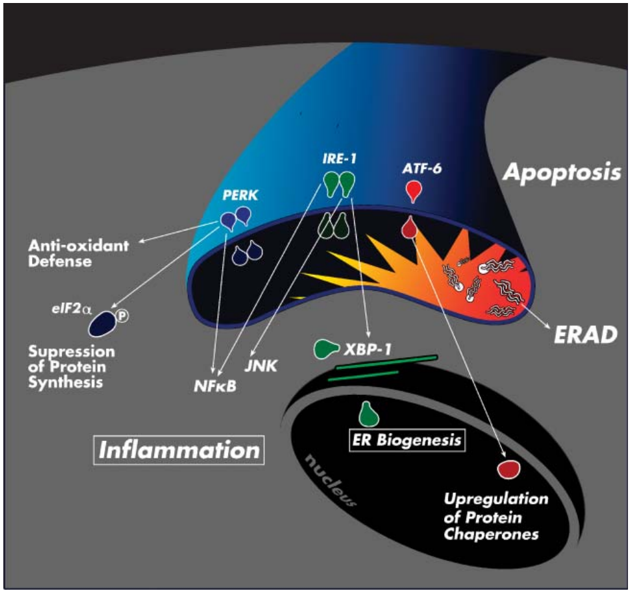
“The UPR functions via signalling through three branches, denoted for the three stress-sensing proteins found in the ER membrane: PKR-like eukaryotic initiation factor 2a kinase (PERK), inositol-requiring enzyme-1 (IRE-1), and activating transcription factor-6 (ATF-6) [53].”
BackgroundThe Role for Endoplasmic Reticulum Stress in Diabetes Mellitus
Eizirik, D. L., Cardozo, A. K., & Cnop, M. (2008) · Endocrine Reviews · doi:10.1210/er.2007-0015 · Cited by 1,173
Biological and Chemical Approaches to Diseases of Proteostasis Deficiency
Powers, E. T., Morimoto, R. I., Dillin, A., Kelly, J. W., & Balch, W. E. (2009) · Annual Review of Biochemistry · doi:10.1146/annurev.biochem.052308.114844 · Cited by 1,149
Nutrient sensing and inflammation in metabolic diseases
Hotamisligil, G. S., & Erbay, E. (2008) · Nature Reviews Immunology · doi:10.1038/nri2449 · Cited by 1,040
The interaction of hepatic lipid and glucose metabolism in liver diseases
Bechmann, L. P., Hannivoort, R. A., Gerken, G., Hotamisligil, G. S., Trauner, M., & Canbay, A. (2012) · Journal of Hepatology · doi:10.1016/j.jhep.2011.08.025 · Cited by 994
Endoplasmic reticulum stress signalling and the pathogenesis of non-alcoholic fatty liver disease
Lebeaupin, C., Vallée, D., Hazari, Y., Hetz, C., Chevet, E., & Bailly-Maitre, B. (2018) · Journal of Hepatology · doi:10.1016/j.jhep.2018.06.008 · Cited by 944
“Also, higher free cholesterol in the ER results in enhanced esterification due to acyl-CoA cholesterol acyl transferase (ACAT), leading to elevated free cholesterol/esterified cholesterol levels, further aggravating ER stress (97).”
BackgroundMapping the Genetic Architecture of Gene Expression in Human Liver
Schadt, E. E., Molony, C., Chudin, E., Hao, K., Yang, X., Lum, P. Y., Kasarskis, A., Zhang, B., Wang, S., Suver, C., et al. (2008) · PLoS Biology · doi:10.1371/journal.pbio.0060107 · Cited by 921
Cusi, K. (2012) · Gastroenterology · doi:10.1053/j.gastro.2012.02.003 · Cited by 911
Hypoxia and Adipose Tissue Function and Dysfunction in Obesity
Trayhurn, P. (2013) · Physiological Reviews · doi:10.1152/physrev.00017.2012 · Cited by 878
Obesity, inflammation and the immune system
de Heredia, F. P., Gómez-Martínez, S., & Marcos, A. (2012) · Proceedings of the Nutrition Society · doi:10.1017/s0029665112000092 · Cited by 845
Metabolic Syndrome and Insulin Resistance: Underlying Causes and Modification by Exercise Training
Roberts, C. K., Hevener, A. L., & Barnard, R. J. (2013) · Comprehensive Physiology · doi:10.1002/cphy.c110062 · Cited by 831
“In liver and adipose tissue samples from genetically obese or high-fat fed mice, markers of ER stress (increased PERK, EIF2α, and c-Jun phosphorylation) were elevated when compared to lean and normal chow fed controls (235, 486).”
High-Fat, Western-Style Diet, Systemic Inflammation, and Gut Microbiota: A Narrative Review
Malesza, I. J., Malesza, M., Walkowiak, J., Mussin, N., Walkowiak, D., Aringazina, R., Bartkowiak-Wieczorek, J., & Mądry, E. (2021) · Cells · doi:10.3390/cells10113164 · Cited by 782
The Perfect Storm: Obesity, Adipocyte Dysfunction, and Metabolic Consequences
de Ferranti, S., & Mozaffarian, D. (2008) · Clinical Chemistry · doi:10.1373/clinchem.2007.100156 · Cited by 733
“Produced by macrophages within adipose tissue and by adipocytes themselves (43) and stimulated by ER stress and UPR ( 16 ),TNF-inhibitslipoproteinlipaseactivityandincreases lipolysis (44).”
BackgroundInfluentialAdipokines as novel biomarkers and regulators of the metabolic syndrome
Deng, Y., & Scherer, P. E. (2010) · Annals of the New York Academy of Sciences · doi:10.1111/j.1749-6632.2010.05875.x · Cited by 558
Cardiovascular disease risk in type 2 diabetes mellitus: insights from mechanistic studies
Mazzone, T., Chait, A., & Plutzky, J. (2008) · The Lancet · doi:10.1016/s0140-6736(08)60768-0 · Cited by 545
Positive and Negative Regulation of Insulin Signaling by Reactive Oxygen and Nitrogen Species
Bashan, N., Kovsan, J., Kachko, I., Ovadia, H., & Rudich, A. (2009) · Physiological Reviews · doi:10.1152/physrev.00014.2008 · Cited by 542
“All of these conditions or factors have been implicated as causative factors in insulin resistance of adipose tissue and/or muscle (143, 184, 185, 193).”
BackgroundInfluentialMolecular Mechanisms of Lipotoxicity in Nonalcoholic Fatty Liver Disease
Malhi, H., & Gores, G. (2008) · Seminars in Liver Disease · doi:10.1055/s-0028-1091980 · Cited by 538
Thyroid Hormones, Oxidative Stress, and Inflammation
Mancini, A., Di Segni, C., Raimondo, S., Olivieri, G., Silvestrini, A., Meucci, E., & Currò, D. (2016) · Mediators of Inflammation · doi:10.1155/2016/6757154 · Cited by 529
Lynch, L., Nowak, M., Varghese, B., Clark, J., Hogan, A. E., Toxavidis, V., Balk, S. P., O’Shea, D., O’Farrelly, C., & Exley, M. A. (2012) · Immunity · doi:10.1016/j.immuni.2012.06.016 · Cited by 512
Nakamura, T., Furuhashi, M., Li, P., Cao, H., Tuncman, G., Sonenberg, N., Gorgun, C. Z., & Hotamisligil, G. S. (2010) · Cell · doi:10.1016/j.cell.2010.01.001 · Cited by 505
“ER stress also plays an important role in the development of insulin resistance and diabetes, at least in part, by triggering JNK activity (Gregor and Hotamisligil, 2007; Ozcan et al., 2004).”
BackgroundEndoplasmic reticulum stress is reduced in tissues of obese subjects after weight loss
Gregor, M. F., Yang, L., Fabbrini, E., Mohammed, B. S., Eagon, J. C., Hotamisligil, G. S., & Klein, S. (2009) · Diabetes · doi:10.2337/db08-1220 · Cited by 488
Self-citationThe Pathologic Continuum of Diabetic Vascular Disease
Orasanu, G., & Plutzky, J. (2009) · Journal of the American College of Cardiology · doi:10.1016/j.jacc.2008.09.055 · Cited by 487
“All secretory and membrane proteins, many pathogens, and diverse nutrients, including glucose, pass through the ER. Hyperglycemia alone can induce ER stress in multiple tissues, including the liver and fat, activating pathways involved in oxidation and inflammation ( 11 ).”
BackgroundErbay, E., Babaev, V. R., Mayers, J. R., Makowski, L., Charles, K. N., Snitow, M. E., Fazio, S., Wiest, M. M., Watkins, S. M., Linton, M. F., et al. (2009) · Nature Medicine · doi:10.1038/nm.2067 · Cited by 485
Boden, G., Duan, X., Homko, C., Molina, E. J., Song, W., Perez, O., Cheung, P., & Merali, S. (2008) · Diabetes · doi:10.2337/db08-0604 · Cited by 468
Hypoxia in adipose tissue: a basis for the dysregulation of tissue function in obesity?
Trayhurn, P., Wang, B., & Wood, I. S. (2008) · British Journal of Nutrition · doi:10.1017/s0007114508971282 · Cited by 464
Human Insulin Resistance Is Associated With Increased Plasma Levels of 12α-Hydroxylated Bile Acids
Haeusler, R. A., Astiarraga, B., Camastra, S., Accili, D., & Ferrannini, E. (2013) · Diabetes · doi:10.2337/db13-0639 · Cited by 444
“In addition, BAs can act as mediators of the unfolded protein response (2).”
BackgroundEndoplasmic Reticulum Stress and Inflammation in Obesity and Diabetes
Hummasti, S., & Hotamisligil, G. S. (2010) · Circulation Research · doi:10.1161/circresaha.110.225698 · Cited by 436
Oxidative stress and inflammation interactions in human obesity
Bondia-Pons, I., Ryan, L., & Martinez, J. A. (2012) · Journal of Physiology and Biochemistry · doi:10.1007/s13105-012-0154-2 · Cited by 412
Atherton, P. J., Etheridge, T., Watt, P. W., Wilkinson, D., Selby, A., Rankin, D., Smith, K., & Rennie, M. J. (2010) · The American Journal of Clinical Nutrition · doi:10.3945/ajcn.2010.29819 · Cited by 404
Kars, M., Yang, L., Gregor, M. F., Mohammed, B. S., Pietka, T. A., Finck, B. N., Patterson, B. W., Horton, J. D., Mittendorfer, B., Hotamisligil, G. S., et al. (2010) · Diabetes · doi:10.2337/db10-0308 · Cited by 400
“Recently, endoplasmic reticulum (ER) stress has been identified as a contributor to insulin resistance associated with obesity in experimental models (15,16).”
BackgroundSelf-citationEvolving Concepts in the Pathogenesis of NASH: Beyond Steatosis and Inflammation
Peverill, W., Powell, L., & Skoien, R. (2014) · International Journal of Molecular Sciences · doi:10.3390/ijms15058591 · Cited by 376
The endoplasmic reticulum stress response in aging and age-related diseases
Brown, M. K., & Naidoo, N. (2012) · Frontiers in Physiology · doi:10.3389/fphys.2012.00263 · Cited by 376
Contribution of Adipose Tissue Inflammation to the Development of Type 2 Diabetes Mellitus
Burhans, M. S., Hagman, D. K., Kuzma, J. N., Schmidt, K. A., & Kratz, M. (2018) · Comprehensive Physiology · doi:10.1002/cphy.c170040 · Cited by 373
The contribution of endoplasmic reticulum stress to liver diseases
Dara, L., Ji, C., & Kaplowitz, N. (2011) · Hepatology · doi:10.1002/hep.24279 · Cited by 371
“A variety of supportive evidence suggests that prolonged UPR/ER stress response leads to steatosis: SREBPs are a family of ER resident proteins which function as transcription factors in the control of fatty acid, TG, and cholesterol synthesis.(33,34) They are synthesized as inactive precursors bound to the ER in a co…”
BackgroundEctopic fat and insulin resistance: pathophysiology and effect of diet and lifestyle interventions.
Snel, M., Jonker, J. T., Schoones, J., Lamb, H., de Roos, A., Pijl, H., Smit, J. W. A., Meinders, A. E., & Jazet, I. M. (2012) · International Journal of Endocrinology · doi:10.1155/2012/983814 · Cited by 368
Guo, L., Li, X., & Tang, Q.-Q. (2015) · Journal of Biological Chemistry · doi:10.1074/jbc.r114.619957 · Cited by 353
“Because dramatic transformations take place during the differentiation from preadipocytes to mature adipocytes, it is hypothesized that adipocytes might exhibit increased level of UPR so as to relieve the stress burden on the endoplasmic reticulum imposed by the increased biosynthesis of protein and lipids (41).”
BackgroundBalagopal, P. (., de Ferranti, S. D., Cook, S., Daniels, S. R., Gidding, S. S., Hayman, L. L., McCrindle, B. W., Mietus-Snyder, M. L., & Steinberger, J. (2011) · Circulation · doi:10.1161/cir.0b013e31821c7c64 · Cited by 352
Metabolic syndrome: from epidemiology to systems biology
Lusis, A. J., Attie, A. D., & Reue, K. (2008) · Nature Reviews Genetics · doi:10.1038/nrg2468 · Cited by 344
“Insulin resistance is also associated with oxidative stress that affects the ER in adipose and other tissue”
BackgroundCalcium Homeostasis and Organelle Function in the Pathogenesis of Obesity and Diabetes
Arruda, A. P., & Hotamisligil, G. S. (2015) · Cell Metabolism · doi:10.1016/j.cmet.2015.06.010 · Cited by 341
“In the setting of obesity or chronic nutrient excess, however, perturbations in adipose lipid metabolism occur in response to the integration of various mechanisms, such as lipid accumulation, inflammation, hypoxia, and oxidative stress, with pathogenic consequences (Gregor and Hotamisligil, 2007).”
BackgroundGlycerolipid Metabolism and Signaling in Health and Disease
Prentki, M., & Madiraju, S. R. M. (2008) · Endocrine Reviews · doi:10.1210/er.2008-0007 · Cited by 326
Cellular metabolic and autophagic pathways: Traffic control by redox signaling
Dodson, M., Darley-Usmar, V., & Zhang, J. (2013) · Free Radical Biology and Medicine · doi:10.1016/j.freeradbiomed.2013.05.014 · Cited by 324
“ER stress is also increased in the adipocytes of obese patients, possibly as a result of insulin resistance, inflammation, and increased oxidative stress [108].”
BackgroundThe secretory function of adipocytes in the physiology of white adipose tissue
Wang, P., Mariman, E., Renes, J., & Keijer, J. (2008) · Journal of Cellular Physiology · doi:10.1002/jcp.21386 · Cited by 318
“…secretion, in particular the secretion of peptide hormones such as leptin and adiponectin, is disturbed, which in turn is associated with diseases such as metabolic syndrome, insulin resistance (Trujillo and Scherer, 2005; Kadowaki et al., 2006) and cardiovascular disease (Guzik et al., 2006).”
BackgroundNutrigenomics, Rumen-Derived Bioactive Fatty Acids, and the Regulation of Milk Fat Synthesis
Bauman, D. E., Harvatine, K. J., & Lock, A. L. (2011) · Annual Review of Nutrition · doi:10.1146/annurev.nutr.012809.104648 · Cited by 317
Protein kinase R-like ER kinase and its role in endoplasmic reticulum stress-decided cell fate
Liu, Z., Lv, Y., Zhao, N., Guan, G., & Wang, J. (2015) · Cell Death & Disease · doi:10.1038/cddis.2015.183 · Cited by 313
“ER has been considered as a tubular system composed of a biomembrane, providing pathways for intracellular material transportation and a platform for various biological enzymatic reactions.(2) ER is considered as one of the major vital organelles because it executes and participates in various”
BackgroundAdipose Vascular Endothelial Growth Factor Regulates Metabolic Homeostasis through Angiogenesis
Sung, H.-K., Doh, K.-O., Son, J. E., Park, J. G., Bae, Y., Choi, S., Nelson, S. M. L., Cowling, R., Nagy, K., Michael, I. P., et al. (2013) · Cell Metabolism · doi:10.1016/j.cmet.2012.12.010 · Cited by 303
“…of adipose tissue to pathologic expansion, including oxidative stress (Houstis ell Metabolism 17, 61–72, January 8, 2013 ª2013 Elsevier Inc. 61 et al., 2006), endoplasmic reticulum stress (Gregor and Hotamisligil, 2007; Ozcan et al., 2004), and hypoxia (Hosogai et al., 2007; Trayhurn et al., 2008).”
BackgroundEndoplasmic reticulum stress and atherosclerosis
Hotamisligil, G. S. (2010) · Nature Medicine · doi:10.1038/nm0410-396 · Cited by 299
Molecular and cellular mechanisms linking inflammation to insulin resistance and β-cell dysfunction
Khodabandehloo, H., Gorgani-Firuzjaee, S., Panahi, G., & Meshkani, R. (2016) · Translational Research · doi:10.1016/j.trsl.2015.08.011 · Cited by 295
“In line with this, hypoxia has been found to induce the UPR in cultured adipocytes[69].”
BackgroundBrown adipose tissue whitening leads to brown adipocyte death and adipose tissue inflammation
Kotzbeck, P., Giordano, A., Mondini, E., Murano, I., Severi, I., Venema, W., Cecchini, M. P., Kershaw, E. E., Barbatelli, G., Haemmerle, G., et al. (2018) · Journal of Lipid Research · doi:10.1194/jlr.m079665 · Cited by 293
Vascular biology of preeclampsia
Myatt, L., & Webster, R. P. (2009) · Journal of Thrombosis and Haemostasis · doi:10.1111/j.1538-7836.2008.03259.x · Cited by 292
Wood, I. S., de Heredia, F. P., Wang, B., & Trayhurn, P. (2009) · Proceedings of the Nutrition Society · doi:10.1017/s0029665109990206 · Cited by 292
The IRE1α-XBP1 Pathway of the Unfolded Protein Response Is Required for Adipogenesis
Sha, H., He, Y., Chen, H., Wang, C., Zenno, A., Shi, H., Yang, X., Zhang, X., & Qi, L. (2009) · Cell Metabolism · doi:10.1016/j.cmet.2009.04.009 · Cited by 292
“Given their endocrine capacity and unique cellular structure, it has recently been hypothesized that adipocytes may display elevated UPR in an attempt to alleviate stress in the endoplasmic reticulum (ER) caused by increased protein and lipid biosynthesis (Gregor and Hotamisligil, 2007).”
Ning, Y., Wang, L., & Giovannucci, E. L. (2010) · Obesity Reviews · doi:10.1111/j.1467-789x.2009.00613.x · Cited by 286
Inflammation and endoplasmic reticulum stress in obesity and diabetes
Hotamisligil, G. S. (2008) · International Journal of Obesity · doi:10.1038/ijo.2008.238 · Cited by 285
Delibegovic, M., Zimmer, D., Kauffman, C., Rak, K., Hong, E.-G., Cho, Y.-R., Kim, J. K., Kahn, B. B., Neel, B. G., & Bence, K. K. (2009) · Diabetes · doi:10.2337/db08-0913 · Cited by 280
Obesity, Inflammation and Diet
Lee, H., Lee, I. S., & Choue, R. (2013) · Pediatric Gastroenterology, Hepatology & Nutrition · doi:10.5223/pghn.2013.16.3.143 · Cited by 275
“expression of pro-inflammatory cytokines [24,27-29].”
Endoplasmic Reticulum Stress Markers Are Associated with Obesity in Nondiabetic Subjects
Sharma, N. K., Das, S. K., Mondal, A. K., Hackney, O. G., Chu, W. S., Kern, P. A., Rasouli, N., Spencer, H. J., Yao-Borengasser, A., & Elbein, S. C. (2008) · The Journal of Clinical Endocrinology & Metabolism · doi:10.1210/jc.2008-1001 · Cited by 271
Mitochondrial (Dys)function in Adipocyte (De)differentiation and Systemic Metabolic Alterations
De Pauw, A., Tejerina, S., Raes, M., Keijer, J., & Arnould, T. (2009) · The American Journal of Pathology · doi:10.2353/ajpath.2009.081155 · Cited by 270
Role of Insulin Resistance and Lipotoxicity in Non-Alcoholic Steatohepatitis
Cusi, K. (2009) · Clinics in Liver Disease · doi:10.1016/j.cld.2009.07.009 · Cited by 266
Palmitoleate attenuates palmitate-induced Bim and PUMA up-regulation and hepatocyte lipoapoptosis
Akazawa, Y., Cazanave, S., Mott, J. L., Elmi, N., Bronk, S. F., Kohno, S., Charlton, M. R., & Gores, G. J. (2010) · Journal of Hepatology · doi:10.1016/j.jhep.2010.01.003 · Cited by 252
Mitochondrial fatty acid oxidation in obesity
Serra, D., Mera, P., Malandrino, M. I., Mir, J. F., & Herrero, L. (2013) · Antioxidants & Redox Signaling · doi:10.1089/ars.2012.4875 · Cited by 246
Copeland, R. J., Bullen, J. W., & Hart, G. W. (2008) · American Journal of Physiology-Endocrinology and Metabolism · doi:10.1152/ajpendo.90281.2008 · Cited by 246
Differential Scales of Protein Quality Control
Wolff, S., Weissman, J. S., & Dillin, A. (2014) · Cell · doi:10.1016/j.cell.2014.03.007 · Cited by 245
“…present in the cellular pool to reduce the rate at which smaller amino acids are misincorporated into the active site of the tRNA and thus have an additional domain distinct from that which acetylates that is capable of editing out the incorrectly incorporated amino acids (Guo and Schimmel, 2013).”
BackgroundTranscriptional and post-translational regulation of adiponectin
Liu, M., & Liu, F. (2010) · Biochemical Journal · doi:10.1042/bj20091045 · Cited by 235
Adipocyte metabolism and obesity
Attie, A. D., & Scherer, P. E. (2009) · Journal of Lipid Research · doi:10.1194/jlr.r800057-jlr200 · Cited by 225
Basseri, S., Lhoták, Š., Sharma, A. M., & Austin, R. C. (2009) · Journal of Lipid Research · doi:10.1194/jlr.m900216-jlr200 · Cited by 223
Obesity and insulin resistance: Pathophysiology and treatment
Tong, Y., Xu, S., Huang, L., & Chen, C. (2022) · Drug Discovery Today · doi:10.1016/j.drudis.2021.11.001 · Cited by 218
From chronic overnutrition to insulin resistance: The role of fat-storing capacity and inflammation
Lionetti, L., Mollica, M. P., Lombardi, A., Cavaliere, G., Gifuni, G., & Barletta, A. (2009) · Nutrition, Metabolism and Cardiovascular Diseases · doi:10.1016/j.numecd.2008.10.010 · Cited by 216
‘Adipaging’: ageing and obesity share biological hallmarks related to a dysfunctional adipose tissue
Pérez, L. M., Pareja‐Galeano, H., Sanchis‐Gomar, F., Emanuele, E., Lucia, A., & Gálvez, B. G. (2016) · The Journal of Physiology · doi:10.1113/jp271691 · Cited by 215
“…in obesity results in organelle dysfunction, particularly of the endoplasmic reticulum (ER), which is the organelle where triacylglycerol droplet formation takes places and which participates in the regulation of lipid, glucose, cholesterol and protein metabolism (Gregor & Hotamisligil, 2007).”
BackgroundBleau, C., Karelis, A. D., St‐Pierre, D. H., & Lamontagne, L. (2015) · Diabetes/Metabolism Research and Reviews · doi:10.1002/dmrr.2617 · Cited by 215
Estrogen Signaling in Metabolic Inflammation
Monteiro, R., Teixeira, D., & Calhau, C. (2014) · Mediators of Inflammation · doi:10.1155/2014/615917 · Cited by 208
A disulfide-bond A oxidoreductase-like protein (DsbA-L) regulates adiponectin multimerization
Liu, M., Zhou, L., Xu, A., Lam, K. S. L., Wetzel, M. D., Xiang, R., Zhang, J., Xin, X., Dong, L. Q., & Liu, F. (2008) · Proceedings of the National Academy of Sciences · doi:10.1073/pnas.0806341105 · Cited by 207
“UPR has also been shown to increase disposal of misfolded proteins via the ubiquitin proteasome-dependent ER-associated degradation (ERAD) pathway (32, 33).”
BackgroundHypoxia and Adipocyte Physiology: Implications for Adipose Tissue Dysfunction in Obesity
Trayhurn, P. (2014) · Annual Review of Nutrition · doi:10.1146/annurev-nutr-071812-161156 · Cited by 194
Obesity, fatty liver disease and intestinal microbiota
Arslan, N. (2014) · World Journal of Gastroenterology · doi:10.3748/wjg.v20.i44.16452 · Cited by 190
Integration of ER stress, oxidative stress and the inflammatory response in health and disease.
Zhang, K. (2010) · PubMed Central · Cited by 229
Pinnick, K. E., Nicholson, G., Manolopoulos, K. N., McQuaid, S. E., Valet, P., Frayn, K. N., Denton, N., Min, J. L., Zondervan, K. T., Fleckner, J., et al. (2014) · Diabetes · doi:10.2337/db14-0385 · Cited by 186
“The cellular or mechanistic basis for these pathways may involve a reduced capacity to recruit and renew adipocytes, thus limiting AT expandability (24), induction of innate immune mechanisms, or the activation of cellular stress pathways (25).”
BackgroundZheng, Y., Wang, S., Wu, J., & Wang, Y. (2023) · Journal of Translational Medicine · doi:10.1186/s12967-023-04367-1 · Cited by 179
Pérez de Heredia, F., Wood, I. S., & Trayhurn, P. (2010) · Pflügers Archiv - European Journal of Physiology · doi:10.1007/s00424-009-0750-3 · Cited by 179
“Consequently, adipose tissue dysfunction appears as a key event underlying a number of conditions commonly associated with obesity, such as insulin resistance, type-2 diabetes, and the metabolic syndrome [ 7 , 12, 27, 31].”
BackgroundCrosstalk between Hypoxia and ER Stress Response: a Key Regulator of Macrophage Polarization
Díaz-Bulnes, P., Saiz, M. L., López-Larrea, C., & Rodríguez, R. M. (2020) · Frontiers in Immunology · doi:10.3389/fimmu.2019.02951 · Cited by 175
Ye, R., Jung, D. Y., Jun, J. Y., Li, J., Luo, S., Ko, H. J., Kim, J. K., & Lee, A. S. (2010) · Diabetes · doi:10.2337/db09-0755 · Cited by 173
Mitochondrial Dysfunction Plays Central Role in Nonalcoholic Fatty Liver Disease
Ramanathan, R., Ali, A. H., & Ibdah, J. A. (2022) · International Journal of Molecular Sciences · doi:10.3390/ijms23137280 · Cited by 171
“Reports also suggest that there is continuous inter-organ cross talk involved in NAFLD pathogenesis, with the adipose tissue and the gut playing key roles [59].”
BackgroundPiperi, C., Adamopoulos, C., Dalagiorgou, G., Diamanti-Kandarakis, E., & Papavassiliou, A. G. (2012) · The Journal of Clinical Endocrinology & Metabolism · doi:10.1210/jc.2011-3408 · Cited by 167
Microvascular Responses to Cardiovascular Risk Factors
GRANGER, D. N., RODRIGUES, S. F., YILDIRIM, A., & SENCHENKOVA, E. Y. (2010) · Microcirculation · doi:10.1111/j.1549-8719.2009.00015.x · Cited by 164
Deldicque, L., Cani, P. D., Philp, A., Raymackers, J.-M., Meakin, P. J., Ashford, M. L. J., Delzenne, N. M., Francaux, M., & Baar, K. (2010) · American Journal of Physiology-Endocrinology and Metabolism · doi:10.1152/ajpendo.00038.2010 · Cited by 163
Adipose tissue: A motor for the inflammation associated with obesity
Vachharajani, V., & Granger, D. N. (2009) · IUBMB Life · doi:10.1002/iub.169 · Cited by 150
Roles of Reactive Oxygen Species on Insulin Resistance in Adipose Tissue
Han, C. Y. (2016) · Diabetes & Metabolism Journal · doi:10.4093/dmj.2016.40.4.272 · Cited by 159
“Although several mechanisms such as endoplasmic reticulum (ER) stress, hypoxia, and adipocyte death have been reported to be related to adipocyte inflammation during obesity [18,19], ROS generation is upstream of ER stress and apoptosis of adipocyte occurs at later stages of obesity [18,20].”
BackgroundAdipolin/C1qdc2/CTRP12 Protein Functions as an Adipokine That Improves Glucose Metabolism
Enomoto, T., Ohashi, K., Shibata, R., Higuchi, A., Maruyama, S., Izumiya, Y., Walsh, K., Murohara, T., & Ouchi, N. (2011) · Journal of Biological Chemistry · doi:10.1074/jbc.m111.277319 · Cited by 152
Regulatory Coordination between Two Major Intracellular Homeostatic Systems
Dokladny, K., Zuhl, M. N., Mandell, M., Bhattacharya, D., Schneider, S., Deretic, V., & Moseley, P. L. (2013) · Journal of Biological Chemistry · doi:10.1074/jbc.m113.462408 · Cited by 158
“Previous studies have suggested that ER stress is involved in development of many pathological conditions including Huntington’s and Parkinson’s diseases and insulin resistance and inhibition of ER stress seemed to be therapeutically beneficial in numerous cell culture and animal models (76-81).”
BackgroundWang, Z., Yao, T., Pini, M., Zhou, Z., Fantuzzi, G., & Song, Z. (2010) · American Journal of Physiology-Gastrointestinal and Liver Physiology · doi:10.1152/ajpgi.00249.2009 · Cited by 166
Role of Endoplasmic Reticulum Stress, Autophagy, and Inflammation in Cardiovascular Disease
Zhang, C., Syed, T. W., Liu, R., & Yu, J. (2017) · Frontiers in Cardiovascular Medicine · doi:10.3389/fcvm.2017.00029 · Cited by 161
“For example, UPR can affect lipid metabolism since several vital lipogenic pathways are located in the ER (27), and XBP1 has been shown to participate in ER phosphatidylcholine synthesis (9).”
BackgroundPaul, P. K., Bhatnagar, S., Mishra, V., Srivastava, S., Darnay, B. G., Choi, Y., & Kumar, A. (2012) · Molecular and Cellular Biology · doi:10.1128/mcb.06351-11 · Cited by 150
“UPR pathways have been found to be involved in several pathological and metabolic disorders, such as impaired glucose metabolism (3, 41), adipocyte stress (17, 48), and inflammatory response and metabolic abnormalities (20, 62, 65).”
BackgroundIllesca, P., Valenzuela, R., Espinosa, A., Echeverría, F., Soto-Alarcón, S. A., Ortíz, M., & Videla, L. A. (2018) · Biomedicine & Pharmacotherapy · doi:10.1016/j.biopha.2018.11.120 · Cited by 152
Role of macrophage tissue infiltration in obesity and insulin resistance
Bourlier, V., & Bouloumié, A. (2009) · Diabetes & Metabolism · doi:10.1016/j.diabet.2009.05.001 · Cited by 158
The Role of Chronic Inflammation in Obesity-Associated Cancers
Ramos-Nino, M. E. (2013) · ISRN Oncology · doi:10.1155/2013/697521 · Cited by 127
Inflammatory pathways linking obesity and ovarian dysfunction
Robker, R. L., Wu, L., & Yang, X. (2011) · Journal of Reproductive Immunology · doi:10.1016/j.jri.2011.01.008 · Cited by 150
“Oxidative stress and endoplasmic reticulum stress are clearly linked, with each able to exacerbate the other (Cullinan and Diehl, 2006; Malhotra and Kaufman, 2007) and both are intertwined with inflammatory pathways (Gregor and Hotamisligil, 2007; Qatanani and Lazar, 2007; De Ferranti andMozaffarian, 2008; Hotamisligi…”
Background
Metadata
- Authors
- Gregor, M. F., & Hotamisligil, G. S.
- Affiliations
- Harvard University (US)
- ORCID
- Gregor, Margaret F.
- Venue
- Journal of Lipid Research
- Publisher
- Elsevier BV
- Published
- 2007-09
- Volume
- 48
- Issue
- 9
- Pages
- 1905-1914
- ISSN
- 0022-2275 (ISSN-L)
- OpenAlex
- W2138485536
- Cited by
- 586
- References
- 89
- Citations by year
- 2026: 9 · 2025: 12 · 2024: 20 · 2023: 11 · 2022: 16 · 2021: 25 · 2020: 21 · 2019: 26 · 2018: 21 · 2017: 26 · 2016: 26 · 2015: 34 · 2014: 37 · 2013: 56 · 2012: 52
- FWCI
- 3.44
- Type
- journal article
- Language
- en
- Open access
- hybrid
- doi.org
- Licence
- cc-by
- www.elsevier.com/tdm/userlicense/1.0/ (tdm)
- creativecommons.org/licenses/by/4.0/ (vor, 4794 d)
- Locations
- Journal of Lipid Research (publishedVersion, cc-by)
- PubMed (publishedVersion)
- DOAJ (DOAJ: Directory of Open Access Journals) (submittedVersion, cc-by-sa)
- Funders
- National Institute of Diabetes and Digestive and Kidney Diseases (T90DK070078)
- Topics
- Life Sciences › Biochemistry, Genetics and Molecular Biology › Cell Biology › Endoplasmic Reticulum Stress and Disease
- Health Sciences › Medicine › Endocrinology, Diabetes and Metabolism › Adipokines, Inflammation, and Metabolic Diseases
- Health Sciences › Medicine › Physiology (medical) › Adipose Tissue and Metabolism
- Keywords
- endoplasmic reticulum stress, unfolded protein response, insulin resistance, obesity, metabolic homeostasis, c-Jun N-terminal kinase, inflammation, oxidative stress, adipocyte dysfunction, nutrient sensing
- MeSH terms
- Animals, Cholesterol, Endoplasmic Reticulum, Humans, Inflammation, Metabolic Diseases, Obesity, Phenylbutyrates, Proteins, Stress, Physiological, Taurochenodeoxycholic Acid, Protein Folding, Adipocytes, Lipid Metabolism
About these checks
Registry, retraction, Cites and statistics results are computed, not judged, with one exception: a printed reference that no index lists is read once by a model before it counts as a citation error. Claims are extracted by a model and kept only when their quote appears verbatim in the text; each cited source is then checked, with a model’s help, for whether it says what the claim relies on. Those verdicts can be wrong — read the claim’s quote and the cited source before relying on one.
Statistics and arithmetic are recomputed, not judged.
Confidence bands are shown only for fields calibrated on our annotated test set. None is calibrated yet, so no band is shown.
What counts as a claim ›How we measure confidence ›How we check this ›
Are you an author, or do you see a problem with this page? Request a review
Data sources
Bibliographic data: Semantic Scholar, OpenAlex, Crossref.
Contains information from the Semantic Scholar Academic Graph Datasets, made available under the ODC Attribution License (ODC-BY 1.0).
Semantic Scholar’s data is described in: Kinney, R., et al. (2023). The Semantic Scholar Open Data Platform. arXiv:2301.10140.
