

Thematic review series: Adipocyte Biology. Adipocyte stress: the endoplasmic reticulum and metabolic disease
Open accessThe DOI matches its Crossref record; 87 of the 89 references it cites were found in a registry or an index.
Abstract
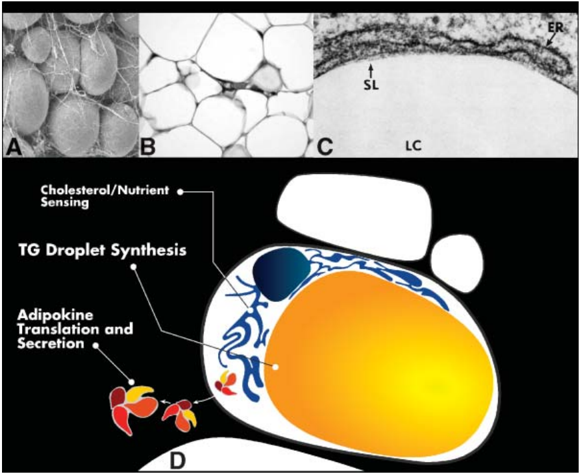
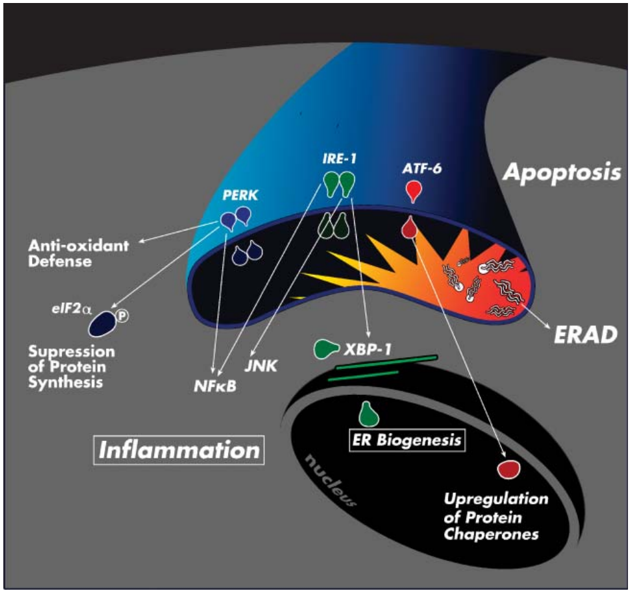
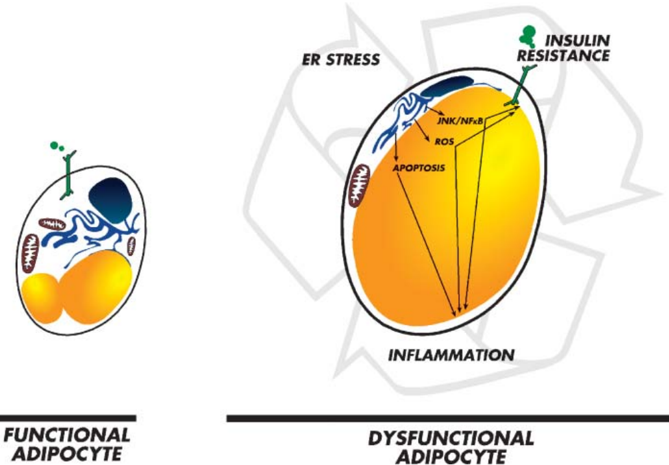
In the context of obesity and its related maladies, the adipocyte plays a central role in the balance, or imbalance, of metabolic homeostasis. An obese, hypertrophic adipocyte is challenged by many insults, including surplus energy, inflammation, insulin resistance, and considerable stress to various organelles. The endoplasmic reticulum (ER) is one such vital organelle that demonstrates significant signs of stress and dysfunction in obesity and insulin resistance. Under normal conditions, the ER must function in the unique and trying environment of the adipocyte, adapting to meet the demands of increased protein synthesis and secretion, energy storage in the form of triglyceride droplet formation, and nutrient sensing that are particular to the differentiated fat cell. When nutrients are in pathological excess, the ER is overwhelmed and the unfolded protein response (UPR) is activated. Remarkably, the consequences of UPR activation have been causally linked to the development of insulin resistance through a multitude of possible mechanisms, including c-jun N-terminal kinase activation, inflammation, and oxidative stress. This review will focus on the function of the ER under normal conditions in the adipocyte and the pathological effects of a stressed ER contributing to adipocyte dysfunction and a thwarted metabolic homeostasis.
Overview
The claims and statistics of this paper haven’t been checked yet.
Free: it reads the open-access text and checks the first 5 claims that cite a source we can check. Create a free account to check every claim.
Integrity signals
Registry
Cites
Statistics
Figures
Verification
Claims the paper makes
The claims and statistics of this paper haven’t been checked yet.
Free: it reads the open-access text and checks the first 5 claims that cite a source we can check. Create a free account to check every claim.
Claims other papers make about this one
Each is checked against this paper’s own text: does it say what the citing paper says it does?
The source backs part of the claim, not all of it — or backs it for a different population, condition or comparison.
In the citing paper
“The UPR also leads to increased IKKβ and proinflammatory cytokine expression (e.g., Il6, Tnfa, and Ccl2) (94,96,98).”
From Insulin sensitivity: Modulation by nutrients and inflammation (2008) · cites this paper as [94]
Experimental — accuracy not yet measured
Self-check
Percentages, sums and reported differences re-computed from the paper’s own numbers.
The self-check needs the paper’s full text.
Citations
Cites
Inflammation and metabolic disorders
Hotamisligil, G. S. (2006) · Nature · doi:10.1038/nature05485 · Cited by 9,199 · cited 5×
“One locus that has emerged as a central mediator of this dysfunction is cellular inflammation (3).”
InfluentialAdipose Expression of Tumor Necrosis Factor-α: Direct Role in Obesity-Linked Insulin Resistance
Hotamisligil, G. S., Shargill, N. S., & Spiegelman, B. M. (1993) · Science · doi:10.1126/science.7678183 · Cited by 7,518 · cited 1×
“Many of these pro-inflammatory mediators have been shown to be detrimental to proper insulin signaling, and inhibition of obesity-induced inflammation can improve insulin sensitivity in mice and humans [4-7].”
TOR signaling in growth and metabolism
Wullschleger, S., Loewith, R., & Hall, M. N. (2006) · Cell · doi:10.1016/j.cell.2006.01.016 · Cited by 5,787 · cited 1×
“The nutrient-responsive mammalian target of rapamycin (mTOR) pathway upregulates protein synthesis, which would naturally increase protein translation and folding in the ER (32).”
Increased oxidative stress in obesity and its impact on metabolic syndrome
Furukawa, S., Fujita, T., Shimabukuro, M., Iwaki, M., Yamada, Y., Nakajima, Y., Nakayama, O., Makishima, M., Matsuda, M., & Shimomura, I. (2004) · Journal of Clinical Investigation · doi:10.1172/jci21625 · Cited by 5,508 · cited 1×
“This is relevant given recent evidence of an increase in oxidative stress markers in the adipose tissue of obese/insulin-resistant mice and humans (79), and in cultured adipocytes ROS have been shown to cause insulin resistance (80).”
Inflammation and insulin resistance
Shoelson, S. E. (2006) · Journal of Clinical Investigation · doi:10.1172/jci29069 · Cited by 4,769
Inflammation, stress, and diabetes
Wellen, K. E., & Hotamisligil, G. S. (2005) · Journal of Clinical Investigation · doi:10.1172/jci25102 · Cited by 4,143 · cited 1×
“to be present in obese adipose tissue and causative for insulin resistance (3, 4, 7).”
Endoplasmic Reticulum Stress Links Obesity, Insulin Action, and Type 2 Diabetes
Özcan, U., Cao, Q., Yilmaz, E., Lee, A.-H., Iwakoshi, N. N., Özdelen, E., Tuncman, G., Görgün, C., Glimcher, L. H., & Hotamisligil, G. S. (2004) · Science · doi:10.1126/science.1103160 · Cited by 3,844 · cited 6×
“Indeed, in adipose tissue of mice fed a high-fat diet for 16 weeks, indicators of ER stress such as PERK phosphorylation and JNK activity are significantly increased compared with mice fed a regular diet (11).”
InfluentialA central role for JNK in obesity and insulin resistance
Hirosumi, J., Tuncman, G., Chang, L., Görgün, C. Z., Uysal, K. T., Maeda, K., Karin, M., & Hotamisligil, G. S. (2002) · Nature · doi:10.1038/nature01137 · Cited by 3,359 · cited 2×
“such as liver, muscle, and adipose tissues (42).”
Adipocytokines: mediators linking adipose tissue, inflammation and immunity
Tilg, H., & Moschen, A. R. (2006) · Nature Reviews Immunology · doi:10.1038/nri1937 · Cited by 3,188 · cited 1×
“Many abundant adipokines, such as leptin, adiponectin, RBP4, and even the fatty acid binding protein ap2, are found at high concentrations in serum (16, 17).”
Urano, F., Wang, X., Bertolotti, A., Zhang, Y., Chung, P., Harding, H. P., & Ron, D. (2000) · Science · doi:10.1126/science.287.5453.664 · Cited by 2,988 · cited 1×
“ER stress-induced IRE-1a phosphorylation leads to the recruitment of tumor necrosis factor receptor-associated factor 2 (TRAF2) and apoptosis signal-regulating kinase 1 (ASK1) to the cytosolic leaflet of the ERmembrane (40, 41).”
Cited by
Items 501–600 of 624
The role of endoplasmic reticulum stress in atherosclerosis
Ekta, M. B., Sukhorukov, V. N., Markin, A. M., Sobenin, I. A., & Orekhov, A. N. (2020) · Complex Issues of Cardiovascular Diseases · doi:10.17802/2306-1278-2020-9-4-88-94 · Cited by 2
Phenotypic classification and biochemical profile of obesity for cardiovascular prevention
Perrone, M. A., Dasari, J. B., Intorcia, A., Gualtieri, P., Marche, M., Luozzo, M. D., Merra, G., Bernardini, S., Romeo, F., & Sergi, D. (2020) · Gazzetta Medica Italiana Archivio per le Scienze Mediche · doi:10.23736/s0393-3660.20.04259-x · Cited by 1
González‐Amor, M., & García‐Redondo, A. B. (2022) · Anales de la Real Academia Nacional de Farmacia · doi:10.53519/analesranf.2022.88.02.04 · Cited by 1
Adiponectin, Diabetes, and the Cardiovascular System
Gasbarrino, K., Boutari, C., Filippaios, A., Gianopoulos, I., Daskalopoulou, S. S., & Mantzoros, C. S. (2023) · Contemporary cardiology · doi:10.1007/978-3-031-13177-6_8 · Cited by 1
Unveiling the Underlying Mechanisms Related to the Biological Activities of Cynometra cauliflora
Zin, S. R. M., Hashim, N. E., Das, S., & Zulkafli, I. S. (2024) · The Natural Products Journal · doi:10.2174/0122103155337729240926033345 · Cited by 1
Köröskényi, K., Sós, L., Rostás, M., Papp, A. B., Kókai, E., Garabuczi, É., Deák, D., Beke, L., Méhes, G., & Szondy, Z. (2024) · Cells · doi:10.3390/cells13221902 · Cited by 1
Redox Imbalance in the Endoplasmic Reticulum
Bánhegyi, G., Margittai, É., Csala, M., & Mandl, J. (2009) · Contemporary clinical neuroscience · doi:10.1007/978-1-60327-342-8_3 · Cited by 2
“Recent observations suggest that overnutrition by supplying an excess of reducing equivalents also leads to ER stress [1, 2, 23, 24 ].”
BackgroundHoggard, N. (2012) · The Open Nutrition Journal · doi:10.2174/1874288201206010108 · Cited by 1
Adiposopathy and Obesity Paradox
Sukmawati, I. R., & Wijaya, A. (2013) · The Indonesian Biomedical Journal · doi:10.18585/inabj.v5i1.45 · Cited by 1
Serrano‐Ríos, M., Angosto, M. C., & Larrad, M. T. M. (2016) · Anales de la Real Academia Nacional de Farmacia · Cited by 3
Detrimental Effects of Inactivity on Insulin Action
Stephens, B. R. (2009) · ScholarWorks@UMassAmherst (University of Massachusetts Amherst) · doi:10.7275/ex1j-2d59 · Cited by 1
Amano, S. U. (2013) · The Journal of the American Medical Association (JAMA) Network (American Medical Association) · doi:10.13028/m2bw2z · Cited by 1
Anti-Obesity and Anti-Hypertensive Action of Calanus Oil
Salma, W. (2015) · NVA (Nasjonalt vitenarkiv) · Cited by 2
Obesity as a risk factor for severe COVID-19 and complicationsPreprint
Demeulemeester, F., de Punder, K., van Heijningen, M., & van Doesburg, F. (2020) · OSF Preprints (OSF Preprints) · doi:10.31219/osf.io/vyd24 · Cited by 1
Control of cholesterol-induced adipocyte inflammation by the Nfe2l1-Atf3 pathwayPreprint
Jethwa, C., Hoffmann, A., Kotschi, S., Caesar, J., Kern, M., Worthmann, A., Schlein, C., Khani, S., Arús, B. A., Bruns†, O. T., et al. (2024) · bioRxiv (Cold Spring Harbor Laboratory) · doi:10.1101/2024.07.22.604614 · Cited by 1
Why we age: the four process modelPreprint
Wordsworth, J., Nielsen, P. Y., Fielder, E., Chandrasegaran, S., & Shanley, D. P. (2026) · bioRxiv (Cold Spring Harbor Laboratory) · doi:10.64898/2026.01.30.701154 · Cited by 1
Inflammation du tissu adipeux au cours de l'obésité humaine : implication des lymphocytes Th17
Caër, C. (2016) · theses.fr (ABES) · doi:10.70675/65eca5dczaa63z4e9az82dbzb223bfe8ef82 · Cited by 7
Andersen, C. J. (2013) · OpenCommons - UConn (University of Connecticut)
Serra, L. S. (2014) · Dipòsit Digital de la Universitat de Barcelona (Universitat de Barcelona)
Adipokines, Inflammation, and Atherosclerosis
Stulnig, T. M., & Zeyda, M. (2011) · Springer eBooks · doi:10.1007/978-3-7091-0338-8_14
Current advances in ER stress intervention therapies
Booth, L. A., Cruickshanks, N. A., Tang, Y., Bareford, M. D., Hamed, H. A., Fisher, P. B., Grant, S., & Dent, P. (2012) · Springer eBooks · doi:10.1007/978-94-007-4351-9_19
Mechanisms Linking Lipid Metabolism and Longevity in Yeast
Bourque, S. D. (2011) · Spectrum Research Repository (Concordia University)
Insulin resistance pathogenesis in visceral fat and gut organisms
Lam, Y. Y., Ha, C. W. Y., & Holmes, A. J. (2012) · The Sydney eScholarship Repository (The University of Sydney)
Regulation of human adipose tissue gene expression in relation to obesity and insulin resistance
Klimčáková, E. (2007) · OpenGrey (Institut de l'Information Scientifique et Technique)
Sieber, J. (2011) · edoc (University of Basel) · doi:10.5451/unibas-005771788
The role of endoplasmic reticulum in human adipose tissue
Alhusaini, S. (2026) · Warwick Research Archive Portal (University of Warwick) · doi:10.82444/warw.33602866
Modulación metabólica de la oleoil estrona en ratas con sobrepeso
Romero, R., & del Mar, M. (2013) · Dipòsit Digital de la Universitat de Barcelona (Universitat de Barcelona)
Aguirre, M., Rojas, J., & Souki, A. J. (2011) · Cited by 2
Olsson, M. M. (2010) · Gothenburg University Publications Electronic Archive (Gothenburg University)
Efeitos do ácido alfa-linolênico em modelo animal de resistência insulínica
Gonçalves, N. B. (2014) · Digital Library of Theses and Dissertations (Universidade de São Paulo) · doi:10.11606/d.17.2014.tde-03112014-075617
The Role of Adaptive Stress Responses in HIV Replication and Macrophage-Mediated Neurotoxicity
Cross, S. A. (2011) · ScholarlyCommons (University of Pennsylvania)
Metabolic Regulation of mTOR Activation and Endoplasmic Reticulum Stress in the Heart
Sen, S. (2012) · Digital Commons-TMC (Texas Medical Center)
Sevastianova, K. (2011) · Helda - University of Helsinki Institutional Repository
Malandrino, M. I. (2013) · Tesis Doctorals en Xarxa (Consorci de Serveis Universitaris de Catalunya)
Obesity and adipose tissue endocrine function
Joshi, A. R. (2013) · International Journal of Biomedical and Advance Research · doi:10.7439/ijbar.v4i11.549
Expanded adipose tissue: ‘out of breath’ and inflamed
Sell, H., & Eckel, J. (2008) · British Journal Of Nutrition · doi:10.1017/s0007114508968239 · Cited by 1
“There are several explanations why ER stress occurs particularly in fat in obesity that include increased protein synthesis due to increased energy availability or even glucose deprivation due to insulin resistance in adipose tissue((11)).”
BackgroundGenetic Association of the Tenomodulin Gene (TNMD) with
Tolppanen, A. (2009)
Orihuela, J. P. (2014) · LA Referencia (Red Federada de Repositorios Institucionales de Publicaciones Científicas)
Molecular Mechanisms Underlying the Early Life Programming of the Liver
Sohi, G. (2013) · Scholarship@Western (Western University)
Kallio, P. (2010) · UEF eRepo (University of Eastern Finland) · Cited by 1
Guo, X. (2013) · OakTrust (Texas A&M University Libraries) · Cited by 1
Short Title: GL/FFA Cycle and Signaling
Prentki, M., & Madiraju, S. R. M. (2008)
Microarray Analysis in Human Adipose Tissue and Adipocytes
Jernås, M. (2008)
Regulação anômala da autofagia em tecido adiposo na obesidade
Nuñez, C. E. C. (2013) · doi:10.47749/t/unicamp.2013.905630
The antiobesity mechanism of conjugated linoleic acid
Kennedy, A. J. (2009) · NC Digital Online Collection of Knowledge and Scholarship (The University of North Carolina at Greensboro)
Regulation of endoplasmic reticulum stress in adipose tissue metabolism
Voyias, P. D. (2026) · Warwick Research Archive Portal (University of Warwick) · doi:10.82444/warw.33705232
Maggioni, L. (2014) · Americanae (AECID Library)
Stefanson, A. L. (2013) · The Atrium (University of Guelph)
Adipose Tissue Biology: An Update Review
Meiliana, A., & Wijaya, A. (2009) · The Indonesian Biomedical Journal · doi:10.18585/inabj.v1i3.98 · Cited by 2
Koupaki, O. (2012) · Spectrum Research Repository (Concordia University)
Steinberger, J., Gidding, S. S., Hayman, L. L., McCrindle, B. W., de Ferranti, S. D., & Cook, S. L. (2011)
Mechanisms Mediating Obesity-Induced Inflammation and Insulin Resistance
Schenk, S., Osborn, O., & Olefsky, J. M. (2011) · CRC Press eBooks · doi:10.1201/b11294-14
Proatherogenic crosstalk between adipose tissue and smooth muscle cells
Schlich, R. (2012)
Chriett, S. (2016) · theses.fr (ABES) · doi:10.70675/cd55694ezf4e2z4af7za388z4fff419f6715 · Cited by 1
Metabolic adaptation of white adipose tissue to nutritional and environmental challenges
Hoevenaars, F. P. M. (2014) · doi:10.18174/300419 · Cited by 1
May, S. (2013) · mediaTUM (Technical University of Munich)
An Overview of the Endoplasmic Reticulum Stress and Interrelation with Obesity: Review
Köse, Ö., Erkekoğlu, P., Özyurt, B., & GÜMÜŞEL, B. K. (2017) · Turkiye Klinikleri Journal of Pharmacy Sciences · doi:10.5336/pharmsci.2017-55592 · Cited by 2
Effect of hypoxia on metabolic markers and gene expression HIF-1 α in adipocytes
Younes, N. (2015) · Qatar University QSpace (Qatar University)
Chaves, M. P. (2018) · Digital Library of Theses and Dissertations (Universidade de São Paulo) · doi:10.11606/t.17.2018.tde-24042018-173433
Rôle de la kinase inflammatoire Tpl2 dans l'inflammation du tissu adipeux lors de l'obésité
Ceppo, F. (2014) · theses.fr (ABES) · doi:10.70675/4f725590z4b0az43c5zad51z96dea7639de8
New pharmacological approaches in type 2 diabetes mellitus
Cusi, K. J. (2009) · Dialnet (Universidad de la Rioja) · doi:10.1016/b978-84-8086-683-5.50016-0
Bouget, G. (2018) · theses.fr (ABES) · doi:10.70675/923c8e5dze33bz49dazaa64z2c6e5ad149ea
Armstrong, H. C. (2019) · PEARL (University of Plymouth) · doi:10.24382/1131
Physiological Mechanisms of Bariatric Procedures
Funes, D. R., Menzo, E. L., Szomstein, S., & Rosenthal, R. J. (2019) · Springer eBooks · doi:10.1007/978-3-030-27021-6_5 · Cited by 1
Measurement and mathematical modelling of endoplasmic reticulum stress in human adipocytes
Murphy, A. M. (2026) · Warwick Research Archive Portal (University of Warwick) · doi:10.82444/warw.33973855
Das, S. R., & Choudhuri, D. (2019) · Asian Journal of Pharmaceutical and Clinical Research · doi:10.22159/ajpcr.2019.v12i18.34034
“Adipose tissue acts as an endocrine organ by secreting specific hormones or adipokines, which act as messengers to distant organs including muscle, liver, and brain, to maintain the body’s energy balance and metabolic health [5].”
BackgroundFatty acids and temperature effects in fish adipogenesis and osteogenesis
Riera‐Heredia, N. (2019) · Dipòsit Digital de la Universitat de Barcelona (Universitat de Barcelona)
Ferreira, M. M. (2019) · Digital Library of Theses and Dissertations (Universidade de São Paulo) · doi:10.11606/d.100.2020.tde-19122019-134105
The role of Protein Kinase R in lipotoxicity
Yağabasan, B. (2013) · Bilkent University Institutional Repository (Bilkent University)
Cibler IRE1α dans le carcinome hépatocellulaire - une nouvelle piste thérapeutique ?
Vallée, D. (2019) · theses.fr (ABES) · doi:10.70675/7f0f7d18z2e64z471fz93b7z12498efca3c8 · Cited by 1
Investigating the Role of Insulin Receptor Signaling in B Lymphocyte Function
Chan, Y. T. (2019) · TSpace (University of Toronto)
Immunometabolism and vascular remodeling-role ofhyperhomocysteinemia
Wang, X., & Feng, J. (2021) · Scientia Sinica Vitae · doi:10.1360/ssv-2021-0232
Lipid antigens in adipose tissue: A CD1d centered view on adipocyte - iNKT cell communication
van Eijkeren, R. J. (2022) · Utrecht University Repository (Utrecht University) · doi:10.33540/1201
Pathophysiology of Diabetes in Pregnancy
Einstein, F. H. (2017) · Wiley eBooks · doi:10.1002/9781119043805.ch2 · Cited by 1
Pummoung, S., Werawatganon, D., & Siriviriyakul, P. (2017) · Chula Digiverse · doi:10.58837/chula.the.2017.368 · Cited by 1
Rôle du récepteur RANK dans la régulation du métabolisme énergétique hépatique et adipocytaire
Phan, F. (2022) · theses.fr (ABES) · doi:10.70675/009ba81az6addz47b3z9e33zcc6ad1543dcb
Associação entre os níveis de adiponectina e pré-eclâmpsia: revisão sistemática e meta-análise
Marcayata, P. A. Y. (2024) · Digital Library of Theses and Dissertations (Universidade de São Paulo) · doi:10.11606/t.17.2024.tde-29102024-171309
Adipose Tissue Insulin Sensitivity, Adipocyte Function, and Regulation of Systemic Metabolism
Hosooka, T. (2025) · Nippon Eiyo Shokuryo Gakkaishi · doi:10.4327/jsnfs.78.131
Ogata, H., Mori, M., Jingushi, Y., Matsuzaki, H., Katahira, K., Ishimatsu, A., Enokizu‐Ogawa, A., Taguchi, K., Moriwaki, A., & Yoshida, M. (2021) · Figshare · doi:10.6084/m9.figshare.17161547
The role of adipocyte Nfe2l1 in cholesterol homeostasis and atherogenesis
Jethwa, C. (2025) · Electronic Theses of LMU Munich (Ludwig-Maximilians-Universität München) · doi:10.5282/edoc.34958
D'ARDIS, S. (2019) · Electronic Theses and Dissertations Repository (University of Pisa)
Bertran Ramos, L. (2023) · Rovira & Virgili repository
Genomik Çağda Moleküler Epidemıyoloji: Metagenomik ve Küresel Sürveyansın Entegrasyonu
Pektaş, A. N. (2025) · Bidge Yayınları eBooks · doi:10.70269/10.70269/2334697522
Investigating myoblast-adipocyte crosstalk; influence on metabolic function and redox homeostasis
Bateman, A. (2026) · e-space (Manchester Metropolitan University) · doi:10.83056/mmu.32557236
Polte, S. C. H., Matono, T., Okamoto, K., Koda, M., Ebrahimifard, A., Wanzel, M., Stiewe, T., Wissniowski, T. T., Matrood, S., & Fazio, P. D. (2026) · Translational Gastroenterology and Hepatology · doi:10.21037/tgh-25-17
Type 1 Diabetes: Pathophysiology and Treatment Considerations for Cardiovascular Risk and Disease
Tommerdahl, K. L., & Bjornstad, P. (2026) · Elsevier eBooks · doi:10.1016/b978-0-323-87862-3.00005-7
Arslan, N. P., Altun, R., Esim, R. T., Dasdemir, E., Kiziler, M. E., Kayar, F., Darendelioğlu, E., Altinok, F., Doymus, M., & Taşkın, M. (2026) · Critical Reviews in Food Science and Nutrition · doi:10.1080/10408398.2026.2643765
Expression , régulation et rôle du système adiponectine dans l'ovaire chez trois espèces
Chabrolle, C. (2008) · theses.fr (ABES) · doi:10.70675/2221927az8c81z4358z9ec5z75a6736831de
Bases moléculaires des défauts sécrétoires des cellules ß pancréatiques lors de la glucotoxicité
Papin, J. (2009) · theses.fr (ABES) · doi:10.70675/072782aezbd58z4434z8f48z1139a9cf8a7e · Cited by 1
Masgrau, A. (2012) · theses.fr (ABES) · doi:10.70675/46b9e080z381dz4d95z87faz1d27fbaae953
Esposti, D. D. (2011) · theses.fr (ABES) · doi:10.70675/b2a8993cz0743z4be8z979cz0a5a932b5326 · Cited by 1
LIMA, R. S. P., Sousa, J. D. S., de Sousa, D. J. M., Martins, J. A., Pereira, I. C., Monteiro, R. L., Neres, M. S. D. O., Severo, J. S., da Silva, F. C. C., da Silva, M. T. B., et al. (2026) · International Journal of Molecular Sciences · doi:10.3390/ijms27073173
Marimoutou, M. (2014) · theses.fr (ABES) · doi:10.70675/a33441dfz869ez4663z8461zf169d9d766f0 · Cited by 1
Metadata
- Authors
- Gregor, M. F., & Hotamisligil, G. S.
- Affiliations
- Harvard University (US)
- ORCID
- Gregor, Margaret F.
- Venue
- Journal of Lipid Research
- Publisher
- Elsevier BV
- Published
- 2007-09
- Volume
- 48
- Issue
- 9
- Pages
- 1905-1914
- ISSN
- 0022-2275 (ISSN-L)
- OpenAlex
- W2138485536
- Cited by
- 586
- References
- 89
- Citations by year
- 2026: 9 · 2025: 12 · 2024: 20 · 2023: 11 · 2022: 16 · 2021: 25 · 2020: 21 · 2019: 26 · 2018: 21 · 2017: 26 · 2016: 26 · 2015: 34 · 2014: 37 · 2013: 56 · 2012: 52
- FWCI
- 3.44
- Type
- journal article
- Language
- en
- Open access
- hybrid
- doi.org
- Licence
- cc-by
- www.elsevier.com/tdm/userlicense/1.0/ (tdm)
- creativecommons.org/licenses/by/4.0/ (vor, 4794 d)
- Locations
- Journal of Lipid Research (publishedVersion, cc-by)
- PubMed (publishedVersion)
- DOAJ (DOAJ: Directory of Open Access Journals) (submittedVersion, cc-by-sa)
- Funders
- National Institute of Diabetes and Digestive and Kidney Diseases (T90DK070078)
- Topics
- Life Sciences › Biochemistry, Genetics and Molecular Biology › Cell Biology › Endoplasmic Reticulum Stress and Disease
- Health Sciences › Medicine › Endocrinology, Diabetes and Metabolism › Adipokines, Inflammation, and Metabolic Diseases
- Health Sciences › Medicine › Physiology (medical) › Adipose Tissue and Metabolism
- Keywords
- endoplasmic reticulum stress, unfolded protein response, insulin resistance, obesity, metabolic homeostasis, c-Jun N-terminal kinase, inflammation, oxidative stress, adipocyte dysfunction, nutrient sensing
- MeSH terms
- Animals, Cholesterol, Endoplasmic Reticulum, Humans, Inflammation, Metabolic Diseases, Obesity, Phenylbutyrates, Proteins, Stress, Physiological, Taurochenodeoxycholic Acid, Protein Folding, Adipocytes, Lipid Metabolism
About these checks
Registry, retraction, Cites and statistics results are computed, not judged, with one exception: a printed reference that no index lists is read once by a model before it counts as a citation error. Claims are extracted by a model and kept only when their quote appears verbatim in the text; each cited source is then checked, with a model’s help, for whether it says what the claim relies on. Those verdicts can be wrong — read the claim’s quote and the cited source before relying on one.
Statistics and arithmetic are recomputed, not judged.
Confidence bands are shown only for fields calibrated on our annotated test set. None is calibrated yet, so no band is shown.
What counts as a claim ›How we measure confidence ›How we check this ›
Are you an author, or do you see a problem with this page? Request a review
Data sources
Bibliographic data: Semantic Scholar, OpenAlex, Crossref.
Contains information from the Semantic Scholar Academic Graph Datasets, made available under the ODC Attribution License (ODC-BY 1.0).
Semantic Scholar’s data is described in: Kinney, R., et al. (2023). The Semantic Scholar Open Data Platform. arXiv:2301.10140.
