

Thematic review series: Adipocyte Biology. Adipocyte stress: the endoplasmic reticulum and metabolic disease
Open accessThe DOI matches its Crossref record; 87 of the 89 references it cites were found in a registry or an index.
Abstract
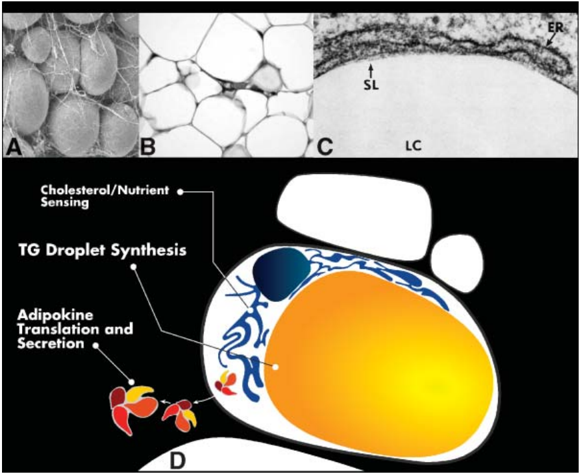
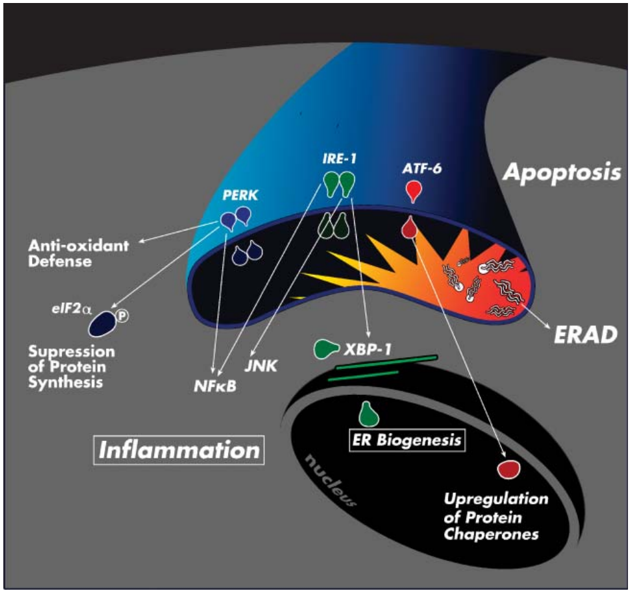
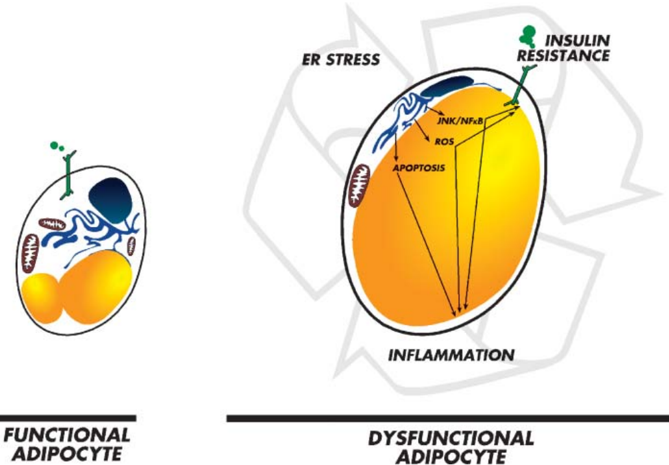
In the context of obesity and its related maladies, the adipocyte plays a central role in the balance, or imbalance, of metabolic homeostasis. An obese, hypertrophic adipocyte is challenged by many insults, including surplus energy, inflammation, insulin resistance, and considerable stress to various organelles. The endoplasmic reticulum (ER) is one such vital organelle that demonstrates significant signs of stress and dysfunction in obesity and insulin resistance. Under normal conditions, the ER must function in the unique and trying environment of the adipocyte, adapting to meet the demands of increased protein synthesis and secretion, energy storage in the form of triglyceride droplet formation, and nutrient sensing that are particular to the differentiated fat cell. When nutrients are in pathological excess, the ER is overwhelmed and the unfolded protein response (UPR) is activated. Remarkably, the consequences of UPR activation have been causally linked to the development of insulin resistance through a multitude of possible mechanisms, including c-jun N-terminal kinase activation, inflammation, and oxidative stress. This review will focus on the function of the ER under normal conditions in the adipocyte and the pathological effects of a stressed ER contributing to adipocyte dysfunction and a thwarted metabolic homeostasis.
Overview
The claims and statistics of this paper haven’t been checked yet.
Free: it reads the open-access text and checks the first 5 claims that cite a source we can check. Create a free account to check every claim.
Integrity signals
Registry
Cites
Statistics
Figures
Verification
Claims the paper makes
The claims and statistics of this paper haven’t been checked yet.
Free: it reads the open-access text and checks the first 5 claims that cite a source we can check. Create a free account to check every claim.
Claims other papers make about this one
Each is checked against this paper’s own text: does it say what the citing paper says it does?
The source backs part of the claim, not all of it — or backs it for a different population, condition or comparison.
In the citing paper
“The UPR also leads to increased IKKβ and proinflammatory cytokine expression (e.g., Il6, Tnfa, and Ccl2) (94,96,98).”
From Insulin sensitivity: Modulation by nutrients and inflammation (2008) · cites this paper as [94]
Experimental — accuracy not yet measured
Self-check
Percentages, sums and reported differences re-computed from the paper’s own numbers.
The self-check needs the paper’s full text.
Citations
Cites
Inflammation and metabolic disorders
Hotamisligil, G. S. (2006) · Nature · doi:10.1038/nature05485 · Cited by 9,199 · cited 5×
“One locus that has emerged as a central mediator of this dysfunction is cellular inflammation (3).”
InfluentialAdipose Expression of Tumor Necrosis Factor-α: Direct Role in Obesity-Linked Insulin Resistance
Hotamisligil, G. S., Shargill, N. S., & Spiegelman, B. M. (1993) · Science · doi:10.1126/science.7678183 · Cited by 7,518 · cited 1×
“Many of these pro-inflammatory mediators have been shown to be detrimental to proper insulin signaling, and inhibition of obesity-induced inflammation can improve insulin sensitivity in mice and humans [4-7].”
TOR signaling in growth and metabolism
Wullschleger, S., Loewith, R., & Hall, M. N. (2006) · Cell · doi:10.1016/j.cell.2006.01.016 · Cited by 5,787 · cited 1×
“The nutrient-responsive mammalian target of rapamycin (mTOR) pathway upregulates protein synthesis, which would naturally increase protein translation and folding in the ER (32).”
Increased oxidative stress in obesity and its impact on metabolic syndrome
Furukawa, S., Fujita, T., Shimabukuro, M., Iwaki, M., Yamada, Y., Nakajima, Y., Nakayama, O., Makishima, M., Matsuda, M., & Shimomura, I. (2004) · Journal of Clinical Investigation · doi:10.1172/jci21625 · Cited by 5,508 · cited 1×
“This is relevant given recent evidence of an increase in oxidative stress markers in the adipose tissue of obese/insulin-resistant mice and humans (79), and in cultured adipocytes ROS have been shown to cause insulin resistance (80).”
Inflammation and insulin resistance
Shoelson, S. E. (2006) · Journal of Clinical Investigation · doi:10.1172/jci29069 · Cited by 4,769
Inflammation, stress, and diabetes
Wellen, K. E., & Hotamisligil, G. S. (2005) · Journal of Clinical Investigation · doi:10.1172/jci25102 · Cited by 4,143 · cited 1×
“to be present in obese adipose tissue and causative for insulin resistance (3, 4, 7).”
Endoplasmic Reticulum Stress Links Obesity, Insulin Action, and Type 2 Diabetes
Özcan, U., Cao, Q., Yilmaz, E., Lee, A.-H., Iwakoshi, N. N., Özdelen, E., Tuncman, G., Görgün, C., Glimcher, L. H., & Hotamisligil, G. S. (2004) · Science · doi:10.1126/science.1103160 · Cited by 3,844 · cited 6×
“Indeed, in adipose tissue of mice fed a high-fat diet for 16 weeks, indicators of ER stress such as PERK phosphorylation and JNK activity are significantly increased compared with mice fed a regular diet (11).”
InfluentialA central role for JNK in obesity and insulin resistance
Hirosumi, J., Tuncman, G., Chang, L., Görgün, C. Z., Uysal, K. T., Maeda, K., Karin, M., & Hotamisligil, G. S. (2002) · Nature · doi:10.1038/nature01137 · Cited by 3,359 · cited 2×
“such as liver, muscle, and adipose tissues (42).”
Adipocytokines: mediators linking adipose tissue, inflammation and immunity
Tilg, H., & Moschen, A. R. (2006) · Nature Reviews Immunology · doi:10.1038/nri1937 · Cited by 3,188 · cited 1×
“Many abundant adipokines, such as leptin, adiponectin, RBP4, and even the fatty acid binding protein ap2, are found at high concentrations in serum (16, 17).”
Urano, F., Wang, X., Bertolotti, A., Zhang, Y., Chung, P., Harding, H. P., & Ron, D. (2000) · Science · doi:10.1126/science.287.5453.664 · Cited by 2,988 · cited 1×
“ER stress-induced IRE-1a phosphorylation leads to the recruitment of tumor necrosis factor receptor-associated factor 2 (TRAF2) and apoptosis signal-regulating kinase 1 (ASK1) to the cytosolic leaflet of the ERmembrane (40, 41).”
Cited by
Items 401–500 of 624
Lakeland, T. V., Borg, M. L., Matzaris, M., Abdelkader, A., Evans, R. G., & Watt, M. J. (2014) · American Journal of Physiology-Endocrinology and Metabolism · doi:10.1152/ajpendo.00046.2014 · Cited by 15
“Adipose tissue expansion accompanied by insufficient neovascularization is linked to an inadequate supply of nutrients, growth factors, and oxygen, which is proposed to induce sequelae, including hypoxia, adipocyte cell death, chronic low-grade inflammation, fibrosis, and insulin resistance (21, 24, 39).”
BackgroundLipid homeostasis is involved in plasma membrane and endoplasmic reticulum stress in Pichia pastoris
Zhang, M., Yu, Q., Liang, C., Zhang, B., & Li, M. (2016) · Biochemical and Biophysical Research Communications · doi:10.1016/j.bbrc.2016.08.024 · Cited by 14
Interplay between Hypoxia, Inflammation and Adipocyte Remodeling in the Metabolic Syndrome
Andrei, A. M., Berbecaru-Iovan, A., Din-Anghel, F. R. I., Stănciulescu, C. E., Berbecaru-Iovan, S., Baniţă, I. M., & Pisoschi, C. G. (2017) · InTech eBooks · doi:10.5772/65491 · Cited by 16
Immunology of Normal Pregnancy and Preeclampsia
Redman, C. W. G., Sargent, I. L., & Taylor, R. N. (2014) · Elsevier eBooks · doi:10.1016/b978-0-12-407866-6.00008-0 · Cited by 19
Unravelling the story of protein misfolding in diabetes mellitus
Thomas, S. E., Dalton, L. E., Malzer, E., & Marciniak, S. J. (2011) · World Journal of Diabetes · doi:10.4239/wjd.v2.i7.114 · Cited by 15
Genetics, physiology and perinatal influences in childhood obesity: view from the Chair
Mitchell, G. A. (2009) · International Journal of Obesity · doi:10.1038/ijo.2009.16 · Cited by 15
Ren, G., Eskandari, P., Wang, S., & Smas, C. M. (2015) · Archives of Biochemistry and Biophysics · doi:10.1016/j.abb.2015.09.019 · Cited by 13
Acute Tissue Injury Caused by Subcutaneous Fat Biopsies Produces Endoplasmic Reticulum Stress
Boden, G. H., Silviera, M. L., Smith, B. M., Cheung, P., & Homko, C. J. (2009) · The Journal of Clinical Endocrinology & Metabolism · doi:10.1210/jc.2009-1815 · Cited by 13
Illesca, P., Álvarez, S. M., Selenscig, D. A., Ferreira, M. D. R., Giménez, M. S., Lombardo, Y. B., & D’Alessandro, M. E. (2017) · Biomedicine & Pharmacotherapy · doi:10.1016/j.biopha.2017.01.153 · Cited by 15
Scopoletin intervention in pancreatic endoplasmic reticulum stress induced by lipotoxicity
Kalaivanan, K., Priyadarshini, E., Sreeja, S., Kalivarathan, J., & Anuradha, C. V. (2018) · Cell Stress and Chaperones · doi:10.1007/s12192-018-0893-2 · Cited by 13
Pascual, G., Ricote, M., & Hevener, A. L. (2007) · Expert Opinion on Therapeutic Targets · doi:10.1517/14728222.11.11.1503 · Cited by 12
Induction of hyperlipidemic pancreatitis by different fatty acids: A narrative review
Wang, Y., Ge, P., & Chen, H. (2025) · World Journal of Gastroenterology · doi:10.3748/wjg.v31.i22.106575 · Cited by 16
PROLEGOMENON TO THE EUROPEAN CONSTITUTION BOOK OF DIABETES MELLITUS
Ionescu-Tirgoviste, C., & Paulescu, N. (2008) · Cited by 13
Xu, Q., Fan, Y., Loor, J. J., Jiang, Q., Zheng, X., Wang, Z., Yang, T., Sun, X., Jia, H., Li, X., et al. (2022) · Journal of Dairy Science · doi:10.3168/jds.2022-21989 · Cited by 12
“…conditions cells activate the unfolded protein response (UPR), which includes transcriptional induction of 3 primary transducers: PKRlike ER kinase (PERK), inositol-requiring enzyme 1 (IRE1), and transcription factor 6 (ATF6; Harding et al., 2002; Zhao and Ackerman, 2006; Ron and Walter, 2007).”
BackgroundKim, M., Seol, M. H., & Lee, B.-C. (2019) · International Journal of Molecular Sciences · doi:10.3390/ijms20122858 · Cited by 12
“Adipose tissue stress induces chemokine and pro-inflammatory cytokine production and leads to the progressive infiltration of immune cells [5,6].”
BackgroundGe, X., Liu, Z., Qi, W., Shi, X., & Zhai, Q. (2008) · Free Radical Research · doi:10.1080/10715760802155113 · Cited by 13
Chronic Inflammation in the Metabolic Syndrome: Emphasis on Adipose Tissue
Monteiro, R. (2009) · Springer eBooks · doi:10.1007/978-1-4020-9701-0_4 · Cited by 16
Li, N., Huang, Z., Ding, L., Shi, H., & Hong, M. (2021) · Comparative Biochemistry and Physiology Part C Toxicology & Pharmacology · doi:10.1016/j.cbpc.2021.109102 · Cited by 11
PROTEIN TYROSINE PHOSPHATASE 1B (PTP1B) IN OBESITY AND TYPE 2 DIABETES
Delibegović, M., & Mody, N. (2009) · Acta Medica Saliniana · doi:10.5457/ams.v38i1.23 · Cited by 11
Undernourishment in utero and hepatic steatosis in later life: A potential issue in Japanese people
Itoh, H., Muramatsu‐Kato, K., Ferdous, U. J., Kohmura‐Kobayashi, Y., & Kanayama, N. (2016) · Congenital Anomalies · doi:10.1111/cga.12200 · Cited by 11
Wang, Y., Zhang, P., Su, X., Yu, Q., Chen, Y., Guan, H., Liu, E., & Fan, J. (2018) · Molecular Medicine Reports · doi:10.3892/mmr.2018.9258 · Cited by 12
Bottasso, O. A., Docena, G. H., Stanford, J. L., & Grange, J. M. (2009) · Inflammopharmacology · doi:10.1007/s10787-009-0008-x · Cited by 12
“Endoplasmic reticulum stress is particularly likely to occur in cells with high metabolic activity, such as macrophages, b-cells in the pancreatic islets and adipocytes, and is characteristic of obesity and type 2 diabetes ( Gregor and Hotamisligil 2007 ).”
BackgroundSchwanstecher, C., & Schwanstecher, M. (2011) · Handbook of experimental pharmacology · doi:10.1007/978-3-642-17214-4_1 · Cited by 13
“The UPR in turn induces a set of genes involved in protein processing, thus seeking to halt transcription and promote folding (Gregor and Hotamisligil 2007; Ron and Walter 2007; Eizirik et al. 2008).”
BackgroundChandrahas, V. K., Han, J., & Kaufman, R. J. (2017) · Current topics in microbiology and immunology · doi:10.1007/82_2017_41 · Cited by 10
Mahbouli, S., Talvas, J., Vartanian, A. D., Ortega, S., Rougé, S., Vasson, M., & Rossary, A. (2018) · BMC Cancer · doi:10.1186/s12885-018-5141-8 · Cited by 11
Determinants of Cardiovascular Risk in Diabetes Beyond Hyperglycemia
Badimón, L., Vera, R. H., & Vilahur, G. (2013) · Cited by 10
Cheng, C., Xue, F., Sui, W., Meng, L., Xie, L., Zhang, C., Yang, J., & Zhang, Y. (2021) · Journal of Cellular and Molecular Medicine · doi:10.1111/jcmm.16931 · Cited by 9
A mechanistic investigation about hepatoxic effects of borneol using zebrafish
Liu, L., Yang, Y., Yang, F., Lin, Y., Liu, K., Wang, X., & Zhang, Y. (2023) · Human & Experimental Toxicology · doi:10.1177/09603271221149011 · Cited by 9
The Yin-Yang Concept of Pediatric Obesity and Gut Microbiota
Meliţ, L. E., Mărginean, C. O., & Săsăran, M. O. (2022) · Biomedicines · doi:10.3390/biomedicines10030645 · Cited by 11
Adipocytes as Target Cells for Endocrine Disruption
Janesick, A., & Blumberg, B. (2011) · Humana Press eBooks · doi:10.1007/978-1-60761-561-3_10 · Cited by 9
Endoplasmic Reticulum Stress and Obesity
Yılmaz, E. (2024) · Advances in experimental medicine and biology · doi:10.1007/978-3-031-63657-8_13 · Cited by 9
Insulin Resistance and Inflammation
Boden, G. H. (2014) · Elsevier eBooks · doi:10.1016/b978-0-12-800093-9.00008-9 · Cited by 8
Ageing, Metabolic Dysfunction, and the Therapeutic Role of Antioxidants
Santos, A. L., & Sinha, S. (2023) · Sub-cellular biochemistry/Subcellular biochemistry · doi:10.1007/978-3-031-26576-1_15 · Cited by 8
Ell, J., Regn, S., Buchberger, A., von Bomhard, A., Stark, T., Schantz, J., & Storck, K. (2017) · Adipocyte · doi:10.1080/21623945.2016.1273299 · Cited by 8
Wang, Y., Zhao, H., Guo, M., Mu, M., Zong, H., & Xing, M. (2020) · Aquaculture · doi:10.1016/j.aquaculture.2020.735965 · Cited by 8
Bian, C., Sun, J. H., Huang, X., Ji, S., & Ji, H. (2022) · Fish Physiology and Biochemistry · doi:10.1007/s10695-021-01031-7 · Cited by 8
Oxidative Stress in the Metabolic Syndrome
Calhau, C., & Santos, A. (2009) · Springer eBooks · doi:10.1007/978-1-4020-9701-0_3 · Cited by 9
Temporal Observation of Adipocyte Microfiber Using Anchoring Device
Yokomizo, A., Morimoto, Y., Nishimura, K., & Takeuchi, S. (2019) · Micromachines · doi:10.3390/mi10060358 · Cited by 8
Gentile, A., Magnacca, N., Matteis, R. D., Moreno, M., Cioffi, F., Giacco, A., Lanni, A., de Lange, P., Senese, R., Goglia, F., et al. (2022) · The FASEB Journal · doi:10.1096/fj.202101816rr · Cited by 7
Etiopathogenesis of insulin resistance
Gupta, A. (2021) · Elsevier eBooks · doi:10.1016/b978-0-12-820234-0.00010-x · Cited by 9
Conjugated linoleic acids and inflammation: isomer- and tissue-specific responses
Belda, B. J., Lee, Y., & Heuvel, J. P. V. (2010) · Clinical Lipidology · doi:10.2217/clp.10.54 · Cited by 8
Contribution Of Sphingolipids To The Pathogenesis Of Obesity
Samad, F. (2007) · Future Lipidology · doi:10.2217/17460875.2.6.625 · Cited by 8
Free Radicals and Metabolic Disorders
Cohen, G., Riahi, Y., & Sasson, S. (2012) · Wiley eBooks · doi:10.1002/9781119953678.rad057 · Cited by 8
Jha, D., Prajapati, S. K., Deb, P. K., Jaiswal, M., & Mazumder, P. M. (2024) · Molecular Biology Reports · doi:10.1007/s11033-023-08962-9 · Cited by 6
ADAMTS13 deficiency in mice does not affect adipose tissue development
Geys, L., Scroyen, I., Roose, E., Vanhoorelbeke, K., & Lijnen, H. R. (2015) · Biochimica et Biophysica Acta (BBA) - General Subjects · doi:10.1016/j.bbagen.2015.03.008 · Cited by 7
Liu, J., Yang, R., Meng, H., Zhou, T., & He, Q. (2020) · BMC Endocrine Disorders · doi:10.1186/s12902-020-00589-2 · Cited by 6
Girija, S. M. (2008) · Medical Hypotheses · doi:10.1016/j.mehy.2008.10.009 · Cited by 7
Jorge, R., de Heredia, F. P., Gmez-Martnez, S., & Marcos, A. (2012) · InTech eBooks · doi:10.5772/25324 · Cited by 6
Nck2, an unexpected regulator of adipogenesis
Haider, N., Dusseault, J., Rudich, A., & Larose, L. (2017) · Adipocyte · doi:10.1080/21623945.2017.1291102 · Cited by 8
Corticosteroid insensitivity in obese asthma: potential mechanisms and therapeutic perspectives
To, M., & To, Y. (2025) · Frontiers in Allergy · doi:10.3389/falgy.2025.1719900 · Cited by 5
“This expansion increases lipid droplet size disproportionately relative to cytoplasmic volume, placing mechanical stress on the plasma membrane and straining intracellular organelles such as mitochondria and the endoplasmic reticulum (14–16).”
The Effect of Alisma orientale Extract on Free Fatty Acid-induced Lipoapoptosis in HepG2 Cells
Kim, E., & Lee, J. H. (2014) · The Journal of Internal Korean Medicine · Cited by 6
Ionescu-TîrgoviÅŸte, C., Vasilescu, R., Timar, R. Z., Guja, C., Gagniuc, P. A., Băcanu, E. V., Gligor, R., & Carniciu, S. (2012) · Adipobiology · doi:10.14748/adipo.v4.279 · Cited by 7
Adiporedoxin, an upstream regulator of ER oxidative folding and protein secretion in adipocytes
Jedrychowski, M. P., Liu, L., Laflamme, C. J., Karastergiou, K., Meshulam, T., Ding, S.-Y., Wu, Y., Lee, M., Gygi, S. P., Fried, S. K., et al. (2015) · Molecular Metabolism · doi:10.1016/j.molmet.2015.09.002 · Cited by 5
“perturbation of fat cell and organismal metabolism such as insulin resistance and type 2 diabetes [18].”
BackgroundChandalia, M., & Abate, N. I. (2009) · Current Cardiovascular Risk Reports · doi:10.1007/s12170-009-0027-6 · Cited by 5
“The ultimate consequences are increased endoplasmic reticulum stress, increased infl ammation, and inhibition of insulin signaling pathways, which may each independently exacerbate the other, culminating in severe adipocyte dysfunction [ 37 ].”
BackgroundA Personalized Approach to Metabolic Aspects of Obesity
Brietzke, S. (2010) · Mount Sinai Journal of Medicine A Journal of Translational and Personalized Medicine · doi:10.1002/msj.20206 · Cited by 8
Síndrome metabólico y envejecimiento
Jaurrieta, J. J. S. (2009) · Revista Española de Geriatría y Gerontología · doi:10.1016/j.regg.2009.09.001 · Cited by 9
Endoplasmic Reticulum Stress-induced Transcriptional Factor CHOP and Cardiovascular Diseases
Gotoh, T., Endo, M., & Oike, Y. (2010) · Current Hypertension Reviews · doi:10.2174/157340210790231717 · Cited by 5
Baburina, Y. L., Lomovsky, A. I., Lomovskaya, Y. V., Sotnikov, R., Sotnikova, L. D., & Krestinina, O. V. (2025) · Cells · doi:10.3390/cells14221772 · Cited by 4
“In addition, ER stress occurs when the ER is overloaded with misfolded proteins [14,15], a state that can contribute to various metabolic diseases.”
Nakagawa, S., Fukui‐Miyazaki, A., Yoshida, T., Ishii, Y., Murata, E., Taniguchi, K., Ishizu, A., Kasahara, M., & Tomaru, U. (2024) · American Journal Of Pathology · doi:10.1016/j.ajpath.2024.02.007 · Cited by 4
Antioxidants and Inflammation in Obesity
Peairs, A., & Abbey, E. L. (2012) · Elsevier eBooks · doi:10.1016/b978-0-12-397153-1.00031-7 · Cited by 4
PTP1B in the Periphery: Regulating Insulin Sensitivity and ER Stress
Delibegović, M., & Mody, N. (2013) · Springer eBooks · doi:10.1007/978-1-4614-7855-3_5 · Cited by 4
Tardelli, L. P., Breda, L., Marques, L. F., Lima, N. C. G. C., Camargo, T. F., Scherer, B. R., Moreira, N. F., Dias, J. F., Dalia, R. A., Thomazini, B. F., et al. (2018) · Journal of Nutrition & Intermediary Metabolism · doi:10.1016/j.jnim.2018.08.003 · Cited by 5
“Adducts of glucose with lipids or proteins are products and also propagators of oxidative stress [23,56].”
BackgroundIRON IN OBESITY: A VICTIM OR SUSPECT
Nikonorov, A. I., Tinkov, A. A., Popova, E. V., Немерешина, О. Н., Gatiatulina, E. R., Геннадиевна, С. М., & Skalny, A. V. (2015) · Trace Elements in Medicine (Moscow) · doi:10.19112/2413-6174-2015-16-2-3-9 · Cited by 6
Thomas, S., Harmancey, R., & Taegtmeyer, H. (2010) · JACC. Cardiovascular imaging · doi:10.1016/j.jcmg.2010.05.001 · Cited by 4
Dang, L., Lv, R., Zuo, Y.-F., & Sun, C. (2025) · The International Journal of Biochemistry & Cell Biology · doi:10.1016/j.biocel.2025.106874 · Cited by 3
Tanaka, M., Sato, T., Gohda, T., Kamei, N., Murakoshi, M., Ishiwata, E., Endo, K., Kawaharata, W., Aida, H., Nakata, K., et al. (2024) · Journal of Diabetes Investigation · doi:10.1111/jdi.14388 · Cited by 3
Evolving Role of GLP-1 Therapies in Liver Disease
Lindsay, M., Arndt, G., Wieland, A. C., & Jensen, T. (2025) · Current Gastroenterology Reports · doi:10.1007/s11894-025-00988-2 · Cited by 3
Gut Microbiota Alterations in People With Obesity and Effect of Probiotics Treatment
Leo, E. E. M., Ortega, A. M. M., & Campos, M. R. S. (2018) · Elsevier eBooks · doi:10.1016/b978-0-12-811440-7.00005-3 · Cited by 3
Trayhurn, P. (2009) · Wiley eBooks · doi:10.1002/9781444307627.ch9 · Cited by 5
Wi, D., & Park, C. Y. (2024) · Nutrition Research and Practice · doi:10.4162/nrp.2024.18.1.1 · Cited by 3
Human adaptation response to obesity
Jahanbani, A., Rezazadeh, D., Sajadi, E., Hosseini, M. H., Ketabchi, D., & Roozbahani, N. E. (2025) · International Journal of Obesity · doi:10.1038/s41366-025-01791-9 · Cited by 4
Kim, S.-J., Choi, H., Jung, C.-H., Park, S. S., Cho, S.-R., Oh, S., & Kim, E.-S. (2010) · Korean Journal for Food Science of Animal Resources · doi:10.5851/kosfa.2010.30.5.787 · Cited by 3
“Increased lipid accumulation by dysregulated lipid metabolism in adipose tissues resulted in obesity and is frequently related with metabolic diseases including insulin resistance and type 2 diabetes (Fu et al., 2005; Kershaw and Flier, 2004; Gregor and Hotamisligil, 2007; Shi and Burn, 2004).”
BackgroundThe Role of Hypoxia in Adipocyte Function and Dysfunction
Trayhurn, P., de Heredia, F. P., Wang, B., & Wood, I. S. (2010) · Research and perspectives in endocrine interactions · doi:10.1007/978-3-642-13517-0_4 · Cited by 5
“Three general proposals have been advanced: inflammation is a consequence of 1) endoplasmic reticulum stress ( Gregor and Hotamisligil 2007 ), 2) oxidative stress (Houstis et al. 2006), and 3) local hypoxia (Trayhurn and Wood 2004).”
BackgroundPATHOGENETIC ASPECTS OF ATHEROTHOMBOTIC RISK IN OBESITY AND THROMBOPHILIA
Викторович, Х. А. (2015) · Obstetrics Gynecology and Reproduction · doi:10.17749/2070-4968.2015.9.3.045-052 · Cited by 3
Bulanawichit, W., Kirdin, T., & Boonsong, T. (2018) · Chiang Mai University Journal of Natural Sciences · doi:10.12982/cmujns.2018.0007 · Cited by 3
“Excess fat accumulation caused by an imbalance of energy is a serious risk factor for obesity and other health problems, such as cardiovascular disease, hypertension, type 2 diabetes, dyslipidemia, and cancer (Gregor and Hotamisligil, 2007).”
BackgroundMicroRNA-18a-5p regulates hepatic lipid accumulation in response to high-fat diet
Petito, G., Magnacca, N., Cuomo, A., Ventriglia, M., Fusco, A., Venditti, M., Falvo, S., Potenza, N., Lanni, A., Cioffi, F., et al. (2025) · Frontiers in Physiology · doi:10.3389/fphys.2025.1661428 · Cited by 3
YAP/TAZ signaling in dendritic cells is dispensable for insulin resistance and NAFLD pathogenesis
Lee, M., Schcolnik‐Cabrera, A., Dzierlega, K., Basso, P. J., Strachan, E. R., Zhu, M., Akbari, M., Clemente‐Casares, X., & Tsai, S. J. (2026) · Heliyon · doi:10.1016/j.heliyon.2026.e44680 · Cited by 2
To eat or not to eat – Anti‐ageing effects of energy restriction
Neves, D., Martins, M. J., Passos, E., & Tomada, I. (2015) · Wiley eBooks · doi:10.1002/9781118823408.ch2 · Cited by 2
Tanis, R. M. (2014) · Scholar Commons (University of South Carolina) · Cited by 3
Igwe, J., & Alaribe, U. (2024) · Journal of Cannabis Research · doi:10.1186/s42238-024-00228-w · Cited by 2
TR4 and PPARγ activities are differentially modulated by pyriproxyfen
Choi, H., Park, S. S., & Kim, E. (2014) · Entomological Research · doi:10.1111/1748-5967.12061 · Cited by 2
“Thus, deregulated expression of lipogenic genes in adipocytes is frequently linked to insulin resistance, obesity, diabetes, coronary artery diseases and cancers (Gregor & Hotamisligil 2007; Guilherme et al. 2008).”
BackgroundHighly Active Antiretroviral Therapy (HAART) and Metabolic Complications
Beth, S., Elaine, J., Zha, W., Philip, B., Pandak, W. M., & Zhou, H. (2011) · InTech eBooks · doi:10.5772/20644 · Cited by 2
“In adipocytes, SREBP-1c is actually downregulated in times of ER stress (Gregor and Hotamisligil 2007), as it is also a major player in adipogenesis.”
BackgroundAdipose tussue and homocysteine metabolism
Bełtowski, J., & Tokarzewska, D. (2009) · Biomedical Reviews · doi:10.14748/bmr.v20.50 · Cited by 2
Julve, J., Errico, T. L., Chen, X., Santos, D., Freixa, J., Porcel, I., Cubero, E., Escolá‐Gil, J. C., & Blanco‐Vaca, F. (2013) · Clínica e Investigación en Arteriosclerosis · doi:10.1016/j.arteri.2013.07.001 · Cited by 4
Adipocyte Dysfunction, Inflammation, and Insulin Resistance in Obesity
Jahansouz, C. (2015) · Springer eBooks · doi:10.1007/978-1-4939-3220-7_5 · Cited by 2
Obesity decreases the oxidant stress induced by tobacco smoke in a rat model
Montaño, M., Pérez‐Ramos, J., Esquivel-Campos, A. L., Rivera-Rosales, R. M., González-Ávila, G., Becerril, C., Checa, M., & Ramos, C. (2016) · Toxicology Mechanisms and Methods · doi:10.1080/15376516.2016.1211208 · Cited by 2
“These cells secrete adipokines, cytokines and inflammatory mediators that contribute to the modulation of the energy metabolism of muscles, liver and other organs, thus altering the body weight (Gregor & Hotamisligil, 2007; Olefsky & Glass, 2010; Skyba et al., 2010; Suganami et al., 2005).”
BackgroundWeight Management: Inflammation
UPASANA, U. (2020) · IntechOpen eBooks · doi:10.5772/intechopen.92380 · Cited by 2
Eidelberg, A., Cho, A., & Chughtai, B. I. (2021) · Elsevier eBooks · doi:10.1016/b978-0-12-819765-3.00015-7 · Cited by 2
Adiponectin and immune tolerance in type 1 diabetes
Pang, T. (2011) · University of Birmingham Institutional Research Archive (University of Birmingham) · Cited by 3
Zhou, H., Yuan, J., Chen, X., Li, Z., Wu, H., Shi, H., Wu, X., Huang, J. L., & Huang, F. (2025) · Free Radical Biology and Medicine · doi:10.1016/j.freeradbiomed.2025.10.292 · Cited by 1
Isa, S., Mainwaring, L. S., Webb, R., & Thomas, A. (2011) · Bayero Journal of Pure and Applied Sciences · doi:10.4314/bajopas.v2i2.63716 · Cited by 1
Endoplasmic Reticulum Stress and the Unfolded Protein Response in Lipid Metabolism and Obesity
Basseri, S., & Austin, R. C. (2012) · Springer eBooks · doi:10.1007/978-94-007-4351-9_10 · Cited by 1
Pathophysiology of Diabetes in Pregnancy
Einstein, F. H. (2010) · Wiley eBooks · doi:10.1002/9781444315196.ch2 · Cited by 3
The effect of 10- versus 30-minutes of acute aerobic exercise on insulin and glucose in obese adults
Mishler, A. E. (2012) · D-Scholarship@Pitt (University of Pittsburgh) · Cited by 1
Conjugated Linoleic Acid Negatively Regulates TR4 Activity in 3T3-L1 Adipocytes
Choi, H., & Kim, E.-S. (2011) · Korean Journal for Food Science of Animal Resources · doi:10.5851/kosfa.2011.31.3.381 · Cited by 1
“Obesity causes insulin resistance and thus has been considered as a major risk factor for the development of diabetes, hypertension, and coronary artery disease (Gregor and Hotamisligil, 2007; Kershaw and Flier, 2004; Shi and Burn, 2004).”
BackgroundLa tormenta perfecta: obesidad, disfunción del adipocito y consecuencias metabólicas
de Ferranti, S. D., Mozaffarian, D., & Rodríguez, M. A. S. (2009) · Bioquimia · Cited by 5
Zhao, X., Yao, F., Zhang, C., Cheng, Y., Xiao, B., Li, Y., Duan, C., Liu, Y., Li, H., & Dai, R. (2016) · Cell Biology · doi:10.11648/j.cb.20160401.11 · Cited by 1
“It has been suggested that ER stress is involved in PA-induced apoptosis [12, 19, 20, 31].”
BackgroundNadir, M., Tufanlı, Ö., Erbay, E., & Atalay, A. (2016) · Turkish Journal of Biochemistry · doi:10.1515/tjb-2016-0031 · Cited by 1
Leptin Levels and its Relationship to Liver Dysfunctional Diseases and Hepatocellular Carcinoma
Martins, A. M. A. (2016) · Journal of Gastroenterology Pancreatology & Liver Disorders · doi:10.15226/2374-815x/3/5/00171 · Cited by 1
“The endoplasmic reticulum (ER) and FFAs activate the production of TNF-α, which is coupled to its specific receptors, producing its biological effects such as apoptosis induction through the activation of nuclear factor kB (NFkB), the most relevant inflammation effector [43].”
Background
Metadata
- Authors
- Gregor, M. F., & Hotamisligil, G. S.
- Affiliations
- Harvard University (US)
- ORCID
- Gregor, Margaret F.
- Venue
- Journal of Lipid Research
- Publisher
- Elsevier BV
- Published
- 2007-09
- Volume
- 48
- Issue
- 9
- Pages
- 1905-1914
- ISSN
- 0022-2275 (ISSN-L)
- OpenAlex
- W2138485536
- Cited by
- 586
- References
- 89
- Citations by year
- 2026: 9 · 2025: 12 · 2024: 20 · 2023: 11 · 2022: 16 · 2021: 25 · 2020: 21 · 2019: 26 · 2018: 21 · 2017: 26 · 2016: 26 · 2015: 34 · 2014: 37 · 2013: 56 · 2012: 52
- FWCI
- 3.44
- Type
- journal article
- Language
- en
- Open access
- hybrid
- doi.org
- Licence
- cc-by
- www.elsevier.com/tdm/userlicense/1.0/ (tdm)
- creativecommons.org/licenses/by/4.0/ (vor, 4794 d)
- Locations
- Journal of Lipid Research (publishedVersion, cc-by)
- PubMed (publishedVersion)
- DOAJ (DOAJ: Directory of Open Access Journals) (submittedVersion, cc-by-sa)
- Funders
- National Institute of Diabetes and Digestive and Kidney Diseases (T90DK070078)
- Topics
- Life Sciences › Biochemistry, Genetics and Molecular Biology › Cell Biology › Endoplasmic Reticulum Stress and Disease
- Health Sciences › Medicine › Endocrinology, Diabetes and Metabolism › Adipokines, Inflammation, and Metabolic Diseases
- Health Sciences › Medicine › Physiology (medical) › Adipose Tissue and Metabolism
- Keywords
- endoplasmic reticulum stress, unfolded protein response, insulin resistance, obesity, metabolic homeostasis, c-Jun N-terminal kinase, inflammation, oxidative stress, adipocyte dysfunction, nutrient sensing
- MeSH terms
- Animals, Cholesterol, Endoplasmic Reticulum, Humans, Inflammation, Metabolic Diseases, Obesity, Phenylbutyrates, Proteins, Stress, Physiological, Taurochenodeoxycholic Acid, Protein Folding, Adipocytes, Lipid Metabolism
About these checks
Registry, retraction, Cites and statistics results are computed, not judged, with one exception: a printed reference that no index lists is read once by a model before it counts as a citation error. Claims are extracted by a model and kept only when their quote appears verbatim in the text; each cited source is then checked, with a model’s help, for whether it says what the claim relies on. Those verdicts can be wrong — read the claim’s quote and the cited source before relying on one.
Statistics and arithmetic are recomputed, not judged.
Confidence bands are shown only for fields calibrated on our annotated test set. None is calibrated yet, so no band is shown.
What counts as a claim ›How we measure confidence ›How we check this ›
Are you an author, or do you see a problem with this page? Request a review
Data sources
Bibliographic data: Semantic Scholar, OpenAlex, Crossref.
Contains information from the Semantic Scholar Academic Graph Datasets, made available under the ODC Attribution License (ODC-BY 1.0).
Semantic Scholar’s data is described in: Kinney, R., et al. (2023). The Semantic Scholar Open Data Platform. arXiv:2301.10140.
