

Semaglutide added to basal insulin in type 2 diabetes (SUSTAIN 5): a randomized, controlled trial.
Open accessThe DOI matches its Crossref record; 43 of the 43 references it cites were found in a registry or an index.
Abstract
Context: Combination therapy with insulin and glucagon-like peptide-1 receptor agonists (GLP-1RAs) is important for treating type 2 diabetes (T2D). This trial assesses the efficacy and safety of semaglutide, a GLP-1RA, as an add-on to basal insulin. Objective: To demonstrate the superiority of semaglutide vs placebo on glycemic control as an add-on to basal insulin in patients with T2D. Design: Phase 3a, double-blind, placebo-controlled, 30-week trial. Setting: This study included 90 sites in five countries. Patients: We studied 397 patients with uncontrolled T2D receiving stable therapy with basal insulin with or without metformin. Interventions: Subcutaneous semaglutide 0.5 or 1.0 mg once weekly or volume-matched placebo. Main Outcome Measures: Primary endpoint was change in glycated Hb (HbA1c) from baseline to week 30. Confirmatory secondary endpoint was change in body weight from baseline to week 30. Results: At week 30, mean HbA1c reductions [mean baseline value, 8.4% (67.9 mmol/mol)] with semaglutide 0.5 and 1.0 mg were 1.4% (15.8 mmol/mol) and 1.8% (20.2 mmol/mol) vs 0.1% (1.0 mmol/mol) with placebo [estimated treatment difference (ETD) vs placebo, -1.35 (14.8 mmol/mol); 95% CI, -1.61 to -1.10 and ETD, -1.75% (19.2 mmol/mol); 95% CI, -2.01 to -1.50; both P < 0.0001]. Severe or blood glucose-confirmed hypoglycemic episodes were reported in 11 patients (17 events) and 14 patients (25 events) with semaglutide 0.5 and 1.0 mg, respectively, vs seven patients (13 events) with placebo (estimated rate ratio vs placebo, 2.08; 95% CI, 0.67 to 6.51 and estimated rate ratio vs placebo, 2.41; 95% CI, 0.84 to 6.96 for 0.5 and 1.0 mg; both P = nonsignificant). Mean body weight decreased with semaglutide 0.5 and 1.0 mg vs placebo from baseline to end of treatment: 3.7, 6.4, and 1.4 kg (ETD, -2.31; 95% CI, -3.33 to -1.29 and ETD, -5.06; 95% CI, -6.08 to -4.04 kg; both P < 0.0001). Premature treatment discontinuation due to adverse events was higher for semaglutide 0.5 and 1.0 mg vs placebo (4.5%, 6.1%, and 0.8%), mainly due to gastrointestinal disorders. Conclusions: Semaglutide, added to basal insulin, significantly reduced HbA1c and body weight in patients with uncontrolled T2D vs placebo.
Overview
The claims and statistics of this paper haven’t been checked yet.
Free: it reads the open-access text and checks the first 5 claims that cite a source we can check. Create a free account to check every claim.
Integrity signals
Registry
Cites
Statistics
Figures
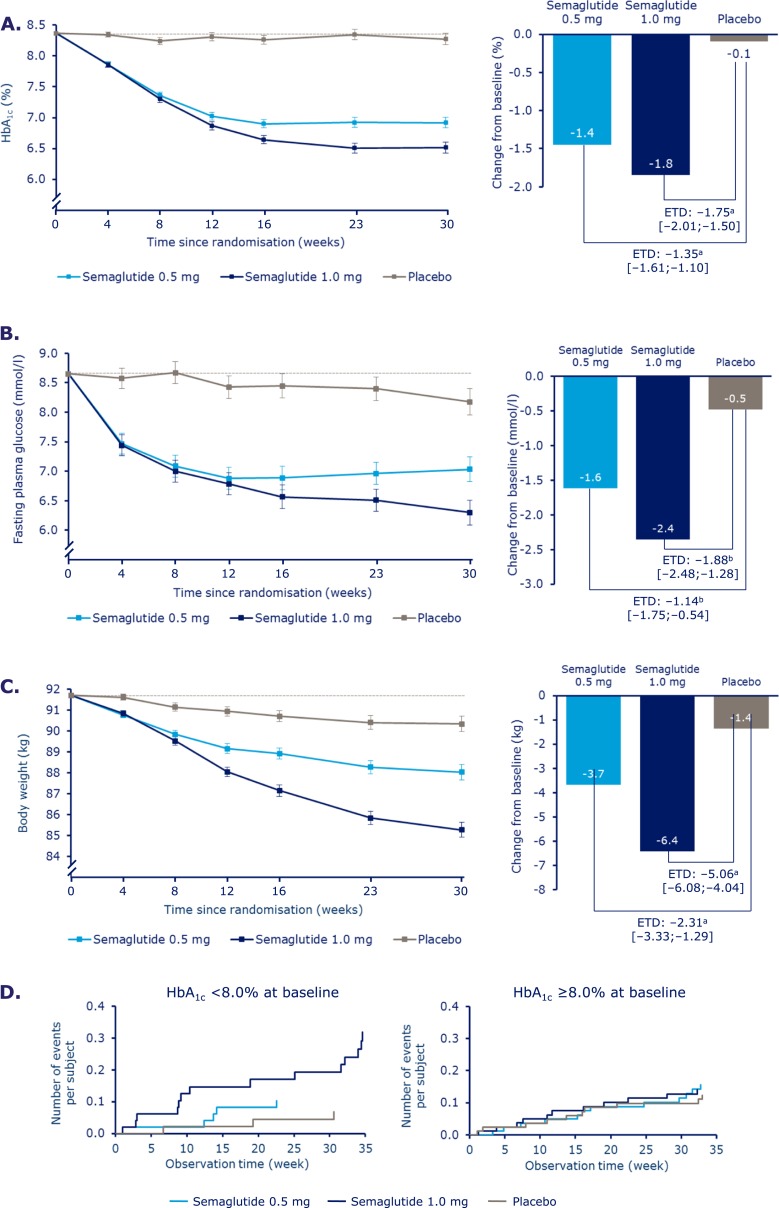
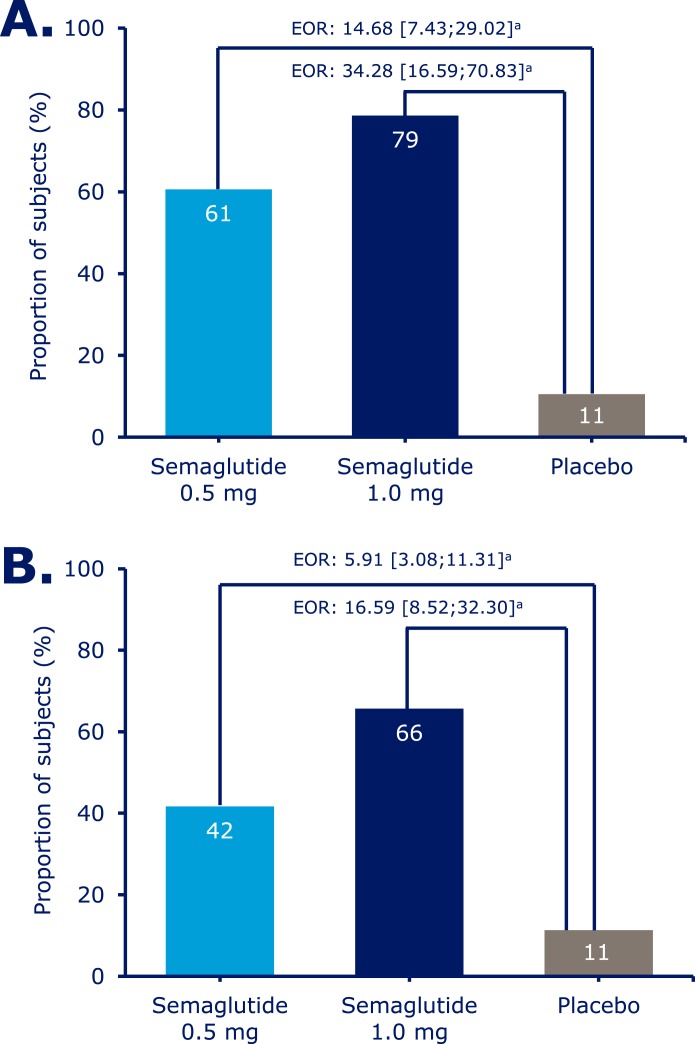
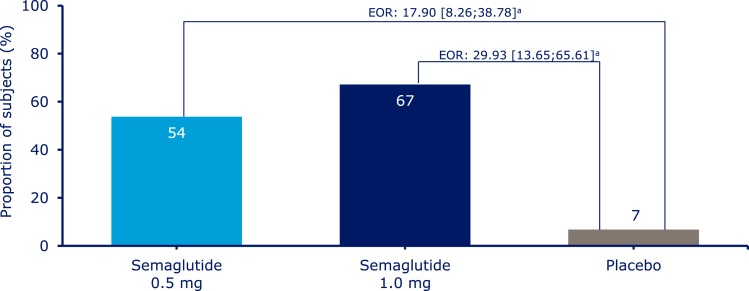
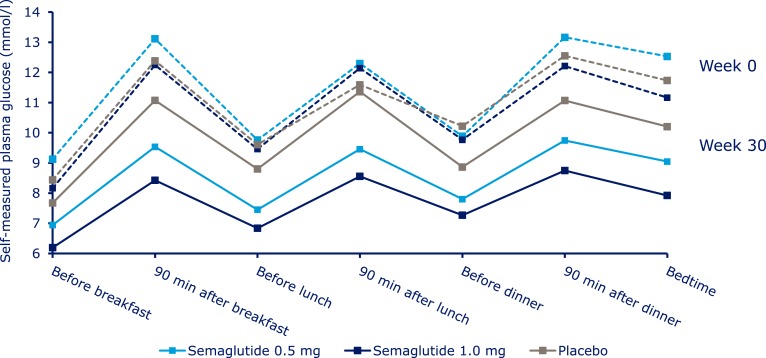
Verification
Claims the paper makes
The claims and statistics of this paper haven’t been checked yet.
Free: it reads the open-access text and checks the first 5 claims that cite a source we can check. Create a free account to check every claim.
Claims other papers make about this one
Each is checked against this paper’s own text: does it say what the citing paper says it does?
The source backs part of the claim, not all of it — or backs it for a different population, condition or comparison.
In the citing paper
“hsCRP data collected in SUSTAIN 2, 4, and 5 trials [22–24] were not used due to technical issues during sample collection — the hsCRP analysis assay was found to have a negative bias (an under-recovery of up to –25% at hsCRP concentrations below 5 mg/L), which affected a proportion of the samples.”
From Impact of semaglutide on high-sensitivity C-reactive protein: exploratory patient-level analyses of SUSTAIN and PIONEER randomized clinical trials (2022) · cites this paper as [24]
Experimental — accuracy not yet measuredThe source backs part of the claim, not all of it — or backs it for a different population, condition or comparison.
In the citing paper
“When compared with placebo, subcutaneous semaglutide for 30 weeks induced nausea in 11.4 to 20% of the semaglutide-treated patients (placebo 3.3–8%), vomiting in 4 to 11.5% (placebo 2–3%) and diarrhea in 4.5 to 11.3% (placebo 1.5–6%) (10, 27, 31).”
From Safety of Semaglutide (2021) · cites this paper as [27]
Experimental — accuracy not yet measuredThe source backs part of the claim, not all of it — or backs it for a different population, condition or comparison.
In the citing paper
“None of these were medullary carcinoma.”
From Safety of Semaglutide (2021) · cites this paper as [27]
Experimental — accuracy not yet measuredThe source backs part of the claim, not all of it — or backs it for a different population, condition or comparison.
In the citing paper
“The events mainly included cholelithiasis.”
From Safety of Semaglutide (2021) · cites this paper as [27]
Experimental — accuracy not yet measured
5 more claims about this paper
Create a free account to see every claim other papers make about this one.
Self-check
Percentages, sums and reported differences re-computed from the paper’s own numbers.
The self-check needs the paper’s full text.
Citations
Cites
Cook, R. J., Dickens, B. M., & Fathalla, M. F. (2003) · Reproductive Health and Human Rights · doi:10.1093/acprof:oso/9780199241323.003.0025 · Cited by 10,769
Stratton, I. M. (2000) · BMJ · doi:10.1136/bmj.321.7258.405 · Cited by 9,059
Standards of Medical Care in Diabetes
Power, D. (2006) · Diabetes Care · doi:10.2337/diacare.29.02.06.dc05-1593 · Cited by 8,673
Turner, R. C., Fox, C., Matthews, McElroy, H. H., Cull, C. A., Holman, R. R., Neil, P., Hadden, D. R., Wright, D., Manley, E., et al. (1998) · The Lancet · Cited by 8,419
10-year follow-up of intensive glucose control in type 2 diabetes
Holman, R. R., Paul, S. K., Bethel, M. A., Matthews, D. R., & Neil, H. A. W. (2008) · New England Journal of Medicine · doi:10.1056/nejmoa0806470 · Cited by 7,751
Semaglutide and Cardiovascular Outcomes in Patients with Type 2 Diabetes
Marso, S. P., Bain, S. C., Consoli, A., Eliaschewitz, F. G., Jódar, E., Leiter, L. A., Lingvay, I., Rosenstock, J., Seufert, J., Warren, M. L., et al. (2016) · New England Journal of Medicine · doi:10.1056/nejmoa1607141 · Cited by 6,900
Self-citationStandards of medical care in diabetes—2014
American Diabetes Association (2014) · Diabetes Care · doi:10.2337/dc14-s014 · Cited by 4,572
Gupta, A., & Uribarri, J. (2016) · Hormone Research in Paediatrics · doi:10.1159/000444053 · Cited by 4,006
Research works printed but not linked: 1
- Marbury T, Flint A, Segel S, Lindegaard M, Lasseter K Pharmacokinetics and tolerability of a single dose of semaglutide, a once-weekly human GLP-1 analogue, in subjects with and without renal impairment. Diabetologia. 2014; 57: S358.
Cited by
Items 201–300 of 412
Managing obesity in adults with type 1 diabetes
Campos, A., Gutiérrez, R. D. J. R., Galindo, R. J., McCoy, R. G., & Andrade, M. D. H. (2024) · Diabetes Research and Clinical Practice · doi:10.1016/j.diabres.2024.111983 · Cited by 15
Novel Antidiabetic Drugs and Risk of Venous Thromboembolism: A Literature Review
Chen, Q., Anijs, R. J. S., Verlaan, J. P. L., Scheres, L. J. J., Klok, F. A., & Cannegieter, S. C. (2025) · Seminars in Thrombosis and Hemostasis · doi:10.1055/a-2546-0353 · Cited by 15
Bzowyckyj, A. S. (2020) · Journal of Clinical Pharmacy and Therapeutics · doi:10.1111/jcpt.13229 · Cited by 14
George, J., Lobkovich, A. M., Nardolillo, J. A., Farhat, N., Kolander, S., & Thomas, E. (2022) · American Journal of Health-System Pharmacy · doi:10.1093/ajhp/zxac046 · Cited by 13
Liu, L., Ruan, Z., Ung, C. O. L., Zhang, Y., Shen, Y., Han, S., Jia, R., Qiao, J., Hu, H., & Guo, L. (2023) · Diabetes Therapy · doi:10.1007/s13300-022-01336-7 · Cited by 12
Landgraf, R., Aberle, J., Birkenfeld, A. L., Gallwitz, B., Kellerer, M., Klein, H., Müller-Wieland, D., Nauck, M. A., Wiesner, T., & Siegel, E. (2022) · Experimental and Clinical Endocrinology & Diabetes · doi:10.1055/a-1624-3449 · Cited by 12
Ariaee, A., Noueihad, K., Hunter, A., Wignall, A. D., Wardill, H. R., Davies, M. R., Prestidge, C. A., & Joyce, P. M. (2026) · Journal of Controlled Release · doi:10.1016/j.jconrel.2026.114711 · Cited by 14
Acute pancreatitis due to different semaglutide regimens: An updated meta-analysis
Masson, W. M., Lobo, M., Barbagelata, L., Cobo, A. L., & Nogueira, J. P. (2024) · Endocrinología Diabetes y Nutrición · doi:10.1016/j.endinu.2024.01.001 · Cited by 26
Ahmad, E., Arsenyadis, F., Almaqhawi, A., Barker, M., Jobanputra, R., Sargeant, J. A., Webb, D. R., Yates, T. E., & Davies, M. J. (2023) · Diabetic Medicine · doi:10.1111/dme.15083 · Cited by 15
New practice in semaglutide on type-2 diabetes and obesity: clinical evidence and expectation
Liu, Y., & Luo, X. (2022) · Frontiers of Medicine · doi:10.1007/s11684-021-0873-2 · Cited by 15
Weiskirchen, R., & Lonardo, A. (2025) · Medical Sciences · doi:10.3390/medsci13040265 · Cited by 22
“A substantial proportion of patients treated with semaglutide achieved clinically significant weight loss thresholds ( ≥ 5%, ≥ 10%, ≥ 15%), with these benefits appearing to be maintained over time, as indicated by data from the SUSTAIN 5 trial [62], which employed a different drug (PHEN/TPM CR).”
Urva, S., Levine, J. A., Schneck, K. B., & Tang, C. C. (2024) · Current Medical Research and Opinion · doi:10.1080/03007995.2024.2322072 · Cited by 12
Evaluating the safety profile of semaglutide: an updated meta-analysis
Rivera, F. B., Arias-Aguirre, E., Aguirre, Z., Ybañez, M. J. C., Rubia, J. M. M., Galang, D. J. C., Lumbang, G. N. O., Ruyeras, J. M. M., Magalong, J. V., Pine, P. L. S., et al. (2024) · Current Medical Research and Opinion · doi:10.1080/03007995.2024.2383731 · Cited by 14
“Notably, this study revealed that semaglutide was associated with decreased odds of new onset neoplasms (log OR − 0.58, 95% CI − 0.85, − 0.31, p 0.01), congruent with the findings from the SUSTAIN 5 and SUSTAIN 6 trials 5,21 .”
InfluentialExploring beyond numeric weight loss: The metabolic effects of semaglutide
Sokary, S., & Bawadi, H. A. (2025) · Clinical Nutrition ESPEN · doi:10.1016/j.clnesp.2025.03.010 · Cited by 20
Osumili, B., Sapin, H., Yang, Z., Ranta, K., Paik, J. S., & Blüher, M. (2025) · Diabetes Therapy · doi:10.1007/s13300-025-01728-5 · Cited by 16
“However, comparisons of tirzepatide with subcutaneously administered semaglutide were not feasible because of the different study design of SUSTAIN 5 [230]; insulin titration was very different between SUSTAIN 5 (restricted) and SURPASS-5 (free titration to the target).”
InfluentialBabazadeh, D., Wyatt, S., & Steinberg, F. M. (2025) · Advances in Nutrition · doi:10.1016/j.advnut.2025.100491 · Cited by 16
Lin, C., Cai, X., Yang, W., Lv, F., Nie, L., & Ji, L. (2020) · BMC Medicine · doi:10.1186/s12916-020-01787-4 · Cited by 12
Semaglutide injection for the treatment of adults with type 2 diabetes
Chudleigh, R. A., & Bain, S. C. (2020) · Expert Review of Clinical Pharmacology · doi:10.1080/17512433.2020.1776108 · Cited by 13
Feng, Z., Tong, W. K., Zhang, X., & Tang, Z. (2023) · Frontiers in Pharmacology · doi:10.3389/fphar.2023.1226778 · Cited by 14
“Nonetheless, achieving optimal glycemic targets remains challenging for some patients, despite increasing insulin doses, due to unfavorable effects on body weight and adverse reactions (Swinnen et al., 2009; Rodbard et al., 2018).”
BackgroundHuang, X., Wu, M., Lin, J., Mou, L., Zhang, Y., & Jiang, J. (2024) · Medicine · doi:10.1097/md.0000000000038236 · Cited by 11
Rodriguez, P., Breslaw, N., Xiao, H., Bena, J., Jenkins, K., Isaacs, D. M., Zhou, K., Griebeler, M. L., Burguera, B. G., Pantalone, K. M., et al. (2024) · Diabetes Obesity and Metabolism · doi:10.1111/dom.16057 · Cited by 11
Chen, B., Tao, L., Tian, M., & Ji, Z. (2025) · Clinical Nutrition ESPEN · doi:10.1016/j.clnesp.2025.01.056 · Cited by 11
Ocular Effects of GLP-1 Receptor Agonists: A Review of Current Evidence and Safety Concerns
Albanese, G. M., Visioli, G., Alisi, L., Giovannetti, F., Lucchino, L., Armentano, M., Catania, F., Marenco, M., & Gharbiya, M. (2025) · Diabetology · doi:10.3390/diabetology6100117 · Cited by 15
“Future research should also address their role in other ocular disorders, including DME, neovascular age-related macular degeneration, and optic neuropathies, for which preliminary data suggest potential applications [39,40].”
Semaglutide once-weekly: improved efficacy with a new safety warning
Coon, S. A., Crannage, E. F., Kerwin, L. C., & Guyton, J. E. (2018) · Expert Review of Clinical Pharmacology · doi:10.1080/17512433.2018.1534201 · Cited by 10
Shabutdinova, O. R., Dautov, A. R., Samkov, A. A., Kononenko, A. V., Sargaliev, A. F., Davletshin, A. R., Andresova, P. A., Zarbeeva, K. R., Torshkhoeva, D. A., Rakhmonkulov, U. A., et al. (2023) · Problems of Endocrinology · doi:10.14341/probl13197 · Cited by 18
Xie, P., Abildlund, M. T., Bækdal, T. A., He, X., Lyauk, Y. K., Patted, U. R. H., Zu, N., & Shi, A. (2024) · Diabetes Obesity and Metabolism · doi:10.1111/dom.15624 · Cited by 14
Lisco, G., Tullio, A. D., Guastamacchia, E., & Triggiani, V. (2020) · Endocrine Metabolic & Immune Disorders - Drug Targets · doi:10.2174/1871530320666200705211224 · Cited by 13
Lee, B., Cho, Y. M., Kim, S. G., Ko, S., Lim, S. K., Dahaoui, A., Jeong, J. S., Lim, H. J., & Yu, J. M. (2024) · Diabetes Therapy · doi:10.1007/s13300-023-01515-0 · Cited by 12
Zupec, J. F., Munger, R., Scaletta, A., & Quinn, D. H. (2025) · Nutrition in Clinical Practice · doi:10.1002/ncp.11279 · Cited by 9
James, S. K., Christoffersen, A., David, J., Hacker, M., Jensen, M. D. R. J., Mellbin, L., Pieber, T. R., Ripa, R. S., Rossing, P. R., Švehlíková, E., et al. (2025) · American Heart Journal · doi:10.1016/j.ahj.2025.05.001 · Cited by 12
“…was well-treated, and had a lower disease burden and inflammatory profile than anticipated; baseline levels of HbA 1c , LDL-cholesterol, hs-CRP and [ 18 F]FDG TBR max were lower in this trial than what was observed in the SUSTAIN 6, PIONEER 6, and SELECT CV outcomes trials with semaglutide.”
InfluentialThe expanding role of semaglutide: beyond glycemic control
Zarei, M., Sabetkasaei, M., Mozafari, M., & Zaeri, S. (2025) · Journal of Diabetes & Metabolic Disorders · doi:10.1007/s40200-025-01663-z · Cited by 11
Wu, R., Xing, B., Huang, Y., Zhou, Z., Sun, B., Yu, L., & Wang, H. (2025) · Frontiers in Endocrinology · doi:10.3389/fendo.2025.1554795 · Cited by 12
Ala, M., & Aleaba, M. M. (2024) · Journal of Endocrinological Investigation · doi:10.1007/s40618-024-02459-3 · Cited by 12
“However, the effect of semaglutide on blood pressure widely varied among studies [14–19].”
Dril, E. V., Allison, M., & Schumacher, C. (2022) · American Heart Journal Plus Cardiology Research and Practice · doi:10.1016/j.ahjo.2022.100163 · Cited by 11
“Clinical trials studying long-acting GLP-1 receptor agonists in patients inadequately controlled on basal insulin, both with and without metformin, also implemented a 20 % dose reduction in basal insulin if participants' baseline A1C was 8 % or less [16,17].”
BackgroundRuan, Z., Jiang, Y., Shi, H., Jia, R., Ung, C. O. L., & Hu, H. (2023) · Expert Review of Clinical Pharmacology · doi:10.1080/17512433.2023.2174099 · Cited by 10
Sillassen, C. D. B., Petersen, J. J., Faltermeier, P., Yucel, D., Siddiqui, F., Andersen, R. K., Graever, L., Bjerg, J. L., Kamp, C. B., Grand, J., et al. (2025) · BMC Medicine · doi:10.1186/s12916-025-04486-0 · Cited by 10
“Twenty-six trials reported no deaths in either of the compared groups [34, 35, 37, 40, 41, 43, 45, 49, 50, 53, 54, 59–63, 65, 66, 68–71, 73, 75–77].”
Alenzi, S., Alzahrani, A., Aljaloud, A., Alanazi, K., & Alarfaj, S. J. (2024) · Frontiers in Endocrinology · doi:10.3389/fendo.2024.1395651 · Cited by 11
Hu, S., Su, X., Deng, X., & Wang, Y. (2021) · Frontiers in Pharmacology · doi:10.3389/fphar.2021.701446 · Cited by 10
Berković, M. C., Režić, T., Bilić-Čurčić, I., & Mrzljak, A. (2022) · World Journal of Clinical Cases · doi:10.12998/wjcc.v10.i20.6759 · Cited by 10
Tofé, S., Argüelles, I., Mena, E., Serra, G., Codina, M., Urgelés, J. R., García, H., & Pereg, V. (2021) · Endocrine and Metabolic Science · doi:10.1016/j.endmts.2021.100082 · Cited by 9
Boye, K. S., Poon, J. L., Landó, L. F., Sapin, H., Huh, R., Wang, M., WILLIAMSON, S. E., & Patel, H. (2024) · Diabetes Therapy · doi:10.1007/s13300-024-01620-8 · Cited by 8
“However, these agents have shown positive but limited effects on PROs measuring over-all HRQoL or health state (SF-36v2, EQ-5D-5L) in some studies [14, 18–20].”
Guo, L., Dong, X., Ma, J., Liu, M., Lu, Y., Wang, H., Li, Q., Li, L., Deng, Y., & Xu, J. (2025) · The Lancet Diabetes & Endocrinology · doi:10.1016/s2213-8587(25)00248-7 · Cited by 11
Impact of semaglutide on limb events: a meta-analysis of randomized controlled trials
Cesaro, A., Acerbo, V., Longo, M., Antonucci, A., Maiorino, M. I., Monaco, M. G., Martelli, E., Giudice, G., Esposito, K., Giorgino, F., et al. (2026) · European Journal of Preventive Cardiology · doi:10.1093/eurjpc/zwag077 · Cited by 11
Ji, L., Ahmann, A., Åhrén, B., Capehorn, M., Hu, P., Lingvay, I., Liu, W., Rodbard, H. W., Shen, Z., & SORLI, C. H. (2023) · Diabetes Obesity and Metabolism · doi:10.1111/dom.15309 · Cited by 8
Self-citationComparing medication persistence with oral and subcutaneous semaglutide in a real-world setting
Conti, M., Pontiggia, L., Vergani, M., Muraca, E., Cannistraci, R., Perra, S., Lattuada, G., Perseghin, G., & Ciardullo, S. (2024) · Acta Diabetologica · doi:10.1007/s00592-024-02424-9 · Cited by 12
Wełnicki, M. T., Gorczyca-Głowacka, I., Mamcarz, A., Filipiak, K. J., Wożakowska−Kapłon, B., Barylski, M., Szymański, F. M., Kasprzak, J. D., Grabowski, M., & Dzida, G. J. (2022) · Kardiologia Polska · doi:10.33963/kp.a2022.0282 · Cited by 15
Lopes, A. C., Roque, F., Lourenço, O. M., Herdeiro, M. T., & Morgado, M. (2023) · Expert Opinion on Drug Safety · doi:10.1080/14740338.2023.2172159 · Cited by 7
Wajid, M., Sattar, S., Khalid, F., & Masood, M. Q. (2023) · Clinical Medicine Insights: Endocrinology and Diabetes · doi:10.1177/11795514231213568 · Cited by 7
“7,17,22 In our study, a decrease in medication effect score of 0.4 was observed at follow up showing that Semaglutide therapy could lead to dose reduction of other anti-diabetic medications as well as insulin.”
BackgroundInfluentialOral Semaglutide: The First-available Noninjectable Glucagon-like Peptide 1 Receptor Agonist
Powell, J., Piszczatoski, C., & Taylor, J. R. (2020) · Clinical Therapeutics · doi:10.1016/j.clinthera.2020.07.017 · Cited by 8
Camilleri, M. (2024) · The Journal of Physiology · doi:10.1113/jp287535 · Cited by 7
“…to be due to tachyphylaxis, which has been documented with several agents, including GLP-1 itself, liraglutide, semaglutide and weekly exenatide formulation (Jensterle et al., 2023; Jones et al., 2020; Maselli et al., 2022; Nauck et al., 2021; Rodbard et al., 2018; Umapathysivam et al., 2014).”
Advances in incretin therapies for targeting cardiovascular disease in diabetes
Roberts, T. D., Hutchinson, D. S., Wootten, D. L., Blasio, M. J. D., & Ritchie, R. H. (2025) · Journal of Molecular and Cellular Cardiology · doi:10.1016/j.yjmcc.2025.03.007 · Cited by 7
Elangovan, H., Gunton, J. E., Zheng, M., Fan, J.-G., Goh, G. B., Grønbæk, H., & George, J. (2025) · Hepatology International · doi:10.1007/s12072-025-10795-6 · Cited by 7
Araki, E., Harashima, S., Nishida, T., & Nakamura, J. (2022) · Journal of Diabetes Investigation · doi:10.1111/jdi.13905 · Cited by 8
Self-citationAs, A., Шохин, И. Е., Rogozhina, E. A., Геннадьевна, Б. Т., Nevretdinova, M. E., Bely, P. A., Zaslavskaya, K. Y., Shcherbakova, V. S., Куркин, Д. В., Koryanova, K. N., et al. (2024) · Pharmacy & Pharmacology · doi:10.19163/2307-9266-2023-11-4-324-346 · Cited by 13
Landgraf, R., Aberle, J., Birkenfeld, A. L., Gallwitz, B., Kellerer, M., Klein, H. H., Müller‐Wieland, D., Nauck, M. A., Wiesner, T., & Siegel, E. G. (2024) · Experimental and Clinical Endocrinology & Diabetes · doi:10.1055/a-2166-6755 · Cited by 7
“Compared to intensive insulin therapy, however, gastrointestinal side effects were more frequent with GLP-1-RA [222– 224].”
Tan, X., Liang, Y. M., Gamble, C. L., & King, A. (2023) · Diabetes Therapy · doi:10.1007/s13300-023-01509-y · Cited by 5
Global Health & Population Project on Access to Care for Cardiometabolic Diseases (HPACC) (2025) · PLoS Medicine · doi:10.1371/journal.pmed.1004559 · Cited by 8
“Research has also shown that SGLT-2 inhibitors and GLP-1 receptor agonists reduce the dosages of insulin needed among people with type 2 diabetes [10].”
Meta-analysis of the Effect of Semaglutide on Blood Pressure in Obese Populations
Li, Y., Xue, K., Hu, R., Hu, X., Guo, R., Hongxia, G., & Li, G. (2025) · American Journal of Cardiovascular Drugs · doi:10.1007/s40256-025-00738-9 · Cited by 5
Giorgino, F., DʼSOUZA, S., Ludwig, L., Kiyosue, A., Ibriga, H., RHA, H., Denning, M., Wu, W.-S., Landó, L. F., & Tobian, J. A. (2026) · JAMA · doi:10.1001/jama.2026.9512 · Cited by 8
Glucagon-Like Peptide-1 Agonist Use in Adults With Congenital Heart Disease
Thapa, R., Lara-Breitinger, K. M., López-Jiménez, F. A., Shama, N., Egbe, A. C., Miranda, W. R., Connolly, H. M., Jain, C. C., Jokhadar, M., Kosec, A. M., et al. (2025) · JACC Advances · doi:10.1016/j.jacadv.2025.101674 · Cited by 7
Ali, A., Siddiqui, A. A., Usman, M., Shahid, I., Khan, M. S., & Perswani, P. (2025) · Clinical Obesity · doi:10.1111/cob.70012 · Cited by 5
Current and Emerging Parenteral and Peroral Medications for Weight Loss: A Narrative Review
Lawati, A. A., Alhabsi, A. N., Rahul, R., Savino, M.-L., Alwahaibi, H., Das, S., & Lawati, H. A. (2025) · Diseases · doi:10.3390/diseases13050129 · Cited by 6
Landgraf, R., Kellerer, M., Aberle, J., Fach, E.-M., Gallwitz, B., Hamann, A., Joost, H., Klein, H., Müller‐Wieland, D., Nauck, M. A., et al. (2019) · Der Diabetologe · doi:10.1007/s11428-019-0459-7 · Cited by 5
Semaglutide and the retina: Weighing evidence against concern
Muzurović, E. M., Zečević, K., Maggio, V., El‐Tanani, M., & Rizzo, M. (2025) · Journal of Diabetes and its Complications · doi:10.1016/j.jdiacomp.2025.109148 · Cited by 4
Cetiner, S. (2026) · Diabetes Metabolic Syndrome and Obesity · doi:10.2147/dmso.s594898 · Cited by 7
Social and Structural Determinants of Cardiovascular Complications of Diabetes
MENSAH, P. A., VALDEZ, K., Gyawali, A., & Snell‐Bergeon, J. K. (2024) · Current Diabetes Reports · doi:10.1007/s11892-024-01541-7 · Cited by 7
“Novel anti-diabetic medications have been shown to reduce CVD events in people with T2D[29, 30],but in an analysis of Medicare claims data, NHB people with T2D were 34% less and Hispanic people 15% less likely than NHW patients to be prescribed either a sodium-glucose co-transporter-2 inhibitor or…”
Pathophysiologic Approach to Type 2 Diabetes Management: One Centre Experience 1980–2020
Chlup, R., Kaňa, R., Hanáčková, L., Zálešáková, H., & Doubravová, B. (2021) · IntechOpen eBooks · doi:10.5772/intechopen.96237 · Cited by 5
Frazer, M., Swift, C., Sargent, A., Leszko, M., Buysman, E. K., Gronroos, N. N., Alvarez, S., Dunn, T. J., Noone, J. M., & Gamble, C. L. (2023) · Journal of Diabetes & Metabolic Disorders · doi:10.1007/s40200-023-01341-y · Cited by 5
Reducing or Discontinuing Insulin or Sulfonylurea When Initiating a Glucagon-like Peptide-1 Agonist
Herron, E., Cencetti, J., & Matis, J. H. (2024) · Federal Practitioner · doi:10.12788/fp.0452 · Cited by 10
Landgraf, R., Aberle, J., Birkenfeld, A. L., Gallwitz, B., Kellerer, M., Klein, H. H., Müller‐Wieland, D., Nauck, M. A., Wiesner, T., & Siegel, E. G. (2022) · Die Diabetologie · doi:10.1007/s11428-022-00921-5 · Cited by 8
Semaglutide in Cardiometabolic Diseases: SELECTing the Target Population
Natale, F., Luisi, E., Franzese, R., Mollo, N., Solimene, A., Caso, V. M., Corvino, A., Golino, P., & Cimmino, G. (2024) · Journal of Cardiovascular Development and Disease · doi:10.3390/jcdd11050145 · Cited by 8
“Another important reason for the different efficacy of the two drugs may be linked to their pharmacokinetic profiles and especially to exposure over time [77].”
BackgroundMethodInfluentialWehler, E., Lautsch, D., KOWAL, S. L., Davies, G., Briggs, A. H., Li, Q., Rajpathak, S. N., & Alsumali, A. (2020) · PharmacoEconomics · doi:10.1007/s40273-020-00967-7 · Cited by 5
Gronroos, N. N., Swift, C., Frazer, M., Sargent, A., Leszko, M., Buysman, E. K., Alvarez, S., Dunn, T. J., & Noone, J. M. (2024) · Journal of health economics and outcomes research · doi:10.36469/001c.124111 · Cited by 5
Safety and Efficacy of Semaglutide in Type 2 Diabetes Patients: A Real-World Study
Aneja, P., Bhalla, G., & Jain, A. (2025) · International Journal of Diabetes and Technology · doi:10.4103/ijdt.ijdt_48_24 · Cited by 3
Pawar, S. S., Rasal, P. B., Kulkarni, K. H., & Pawar, S. B. (2025) · Journal of Drug Delivery and Therapeutics · doi:10.22270/jddt.v15i12.7452 · Cited by 4
Kumar, S. R., Anderson, J. E., Coviello, A. D., Lopez-Jimenez, F., & Bakris, G. L. (2026) · JACC Advances · doi:10.1016/j.jacadv.2025.102465 · Cited by 4
Pharmacologic Treatment of Obesity in the Context of Type 2 Diabetes
Conte, C., & Amaro, A. (2026) · Current Diabetes Reports · doi:10.1007/s11892-026-01626-5 · Cited by 3
Wharton, S., Stefański, A., Chen, J., Rao, G. S., Twum, E. A., & Denning, M. (2026) · Diabetes Obesity and Metabolism · doi:10.1111/dom.71032 · Cited by 3
Are there differences in the efficacy of once-weekly GLP-1RAs in patients with type 2 diabetes?
Strong, J. L. (2018) · Journal of the American Association of Nurse Practitioners · doi:10.1097/jxx.0000000000000113 · Cited by 3
“, 2014), and semaglutide (Ahmann et al., 2018; Pratley et al., 2018; Rodbard et al., 2018; Sorli et al., 2017) versus comparators.”
BackgroundMethodInfluentialChen, M., Vider, E., & Plakogiannis, R. (2021) · Journal of Pharmacy Practice · doi:10.1177/0897190021993625 · Cited by 5
“Conversely, other studies demonstrated a significant reduction in the insulin dosage at the end of the study period.(6,9,15) Riddle et al.”
BackgroundResultInfluentialLingvay, I., Catarig, A., Lawson, J., Chubb, B., Gorst‐Rasmussen, A., & Evans, L. M. (2022) · Diabetes Therapy · doi:10.1007/s13300-022-01344-7 · Cited by 3
Self-citationOral semaglutide effectiveness and safety in real world practice; The REVOLUTION study
Alsheikh, A., Alshehri, A., ALZAHRANI, S. H., Jammah, A. A., Alqahtani, F., Alotaibi, M. S., Aldahash, R., Alhozali, A. M., Alsabaan, F., Almehthel, M. S., et al. (2024) · Diabetes Epidemiology and Management · doi:10.1016/j.deman.2024.100209 · Cited by 4
Semaglutide for the management of diabesity: The real-world experience
Alkhalifah, M. K., Afsar, H., Shams, A., Blaibel, D., Chandrabalan, V., & Pappachan, J. M. (2024) · World Journal of Methodology · doi:10.5662/wjm.v14.i3.91832 · Cited by 5
Rudofsky, G., Menzen, M., Potier, L., Catarig, A.-M., Clark, A., Priyadarshini, P., & Abreu, C. (2025) · Advances in Therapy · doi:10.1007/s12325-024-03000-x · Cited by 3
Kobalava, Z. D., & Кохан, Е. В. (2020) · Kardiologiia · doi:10.18087/cardio.2020.9.n1274 · Cited by 4
Ares, J., Pujante, P., Lambert, C., Morales-Sánchez, P., Delgado-Álvarez, E., & Torre, E. L. M. (2022) · Revista Clínica Española · doi:10.1016/j.rce.2022.03.009 · Cited by 5
Ares, J., Pujante, P., Lambert, C., Morales-Sánchez, P., Delgado-Álvarez, E., & Torre, E. L. M. (2022) · Revista Clínica Española (English Edition) · doi:10.1016/j.rceng.2022.06.001 · Cited by 4
IcoSema: unveiling the future of diabetes management from a clinical pharmacology perspective
Seetharaman, R., Monteiro, R. C., Maradia, J., & Tripathi, R. K. (2024) · Journal of Basic and Clinical Physiology and Pharmacology · doi:10.1515/jbcpp-2024-0058 · Cited by 4
Ji, L., Lu, Y., Shen, Z., Hu, P., Liu, W., Zhang, Q., & Shi, B. (2024) · Diabetes Obesity and Metabolism · doi:10.1111/dom.15888 · Cited by 3
Combined medical strategies for the management of type 2 diabetes mellitus and obesity in adults
Tarazi, M. S., Touhamy, S., Tchang, B. G., & Shukla, A. P. (2021) · Expert Opinion on Pharmacotherapy · doi:10.1080/14656566.2021.1942841 · Cited by 4
Qureshy, K., Kirk, A. R., Wolden, M. L., Zonoozi, A. A. M., & Liu, A. (2022) · Cardiovascular Endocrinology & Metabolism · doi:10.1097/xce.0000000000000260 · Cited by 2
Ko, D., Kim, D. H., Tan, F. X. N., Ho, G. J. K., Chandra, R., Xuan, Z. Z., Tham, E. K. J., Tang, N. S. Y., Yang, H. S., Koh, J. W. H., et al. (2026) · Cell Reports Medicine · doi:10.1016/j.xcrm.2026.102614 · Cited by 3
Kim, J.-M., Kim, K., Yu, N.-Y., Kim, D., Kang, J. Y., Baek, S.-K., Park, J., & Park, J. Y. (2026) · Pharmaceutics · doi:10.3390/pharmaceutics18070770 · Cited by 2
Hussain, A., Wahab, M. U., Qureshi, S., Raja, U. Y., Munir, A., Gardezi, S. H., Iqbal, M., Afzal, B., Butt, M. D., & Ong, S. C. (2026) · Diabetes Obesity and Metabolism · doi:10.1111/dom.71043 · Cited by 3
Шамхалова, М. Ш., & Shestakova, M. V. (2022) · Diabetes Mellitus · doi:10.14341/dm12941 · Cited by 3
Semaglutida en enfermedad renal diabética: Experiencia en dos programas de salud renal en Colombia
Daza-Arnedo, R., Rico-Fontalvo, J. E., Raad-Sarabia, M., Clason, E. C. R., Bohórquez-Rivero, J., Montejo-Hernández, J. D., Cabrales, J., Escobar-Pacheco, C., Pérez, T. A. A., Henao-Ramirez, C., et al. (2022) · Revista Colombiana de Endocrinología Diabetes & Metabolismo · doi:10.53853/encr.9.3.776 · Cited by 4
“[22] Rodbard HW, Lingvay I, Reed J, De La Rosa R, Rose L, Sugimoto D, et al.”
BackgroundTakahara, M., Shiraiwa, T., Katakami, N., Maeno, Y., Yamamoto, K., Shiraiwa, Y., Yoshida, Y., Kozawa, J., & Shimomura, I. (2023) · Internal Medicine · doi:10.2169/internalmedicine.1441-22 · Cited by 3
Charting New Territories in Obesity Management- Traditional Techniques to Tirzepatide
Fareed, A., Ghanem, L., Vaid, R., Iftikhar, Z., Rehman, A. U., Sarwar, A., & Asif, M. I. (2024) · Endocrine Practice · doi:10.1016/j.eprac.2024.09.004 · Cited by 5
Alghamdi, F. A., Alshegifi, H., Alhuthayli, R., Helal, T., Huwait, T. A., Alharbi, T., Akbar, A. F., Alshehri, W., & Alsheikh, S. (2024) · Cureus · doi:10.7759/cureus.74345 · Cited by 3
McKone, D. B., Duprey, K. S., Hall, H. M., Leonhard, A., Schadler, A. D., & Naseman, K. (2025) · Diabetes Spectrum · doi:10.2337/ds24-0035 · Cited by 2
Metadata
- Authors
- Rodbard, H. W., Lingvay, I., Reed, J., de la Rosa, R., Rose, L., Sugimoto, D., Araki, E., Chu, P.-L., Wijayasinghe, N., & Norwood, P.
- Affiliations
- Endocrine and Metabolic Consultants, Rockville, Maryland
- The University of Texas Southwestern Medical Center (US)
- Endocrine Research Solutions (United States) (US)
- Four Rivers Clinical Research, Paducah, Kentucky
- Institute of Diabetes Research, Münster, Germany
- Cedar-Crosse Research Center, Chicago, Illinois
- Kumamoto University (JP)
- Novo Nordisk Inc., Plainsboro, New Jersey
- Novo Nordisk (Denmark) (DK)
- University of California, San Francisco (US)
- Corresponding author
- Rodbard, Helena W
- Venue
- The Journal of Clinical Endocrinology & Metabolism
- Publisher
- The Endocrine Society
- Published
- 2018-04-23
- Volume
- 103
- Issue
- 6
- Pages
- 2291-2301
- ISSN
- 0021-972X (ISSN-L)
- 1945-7197
- PMC
- PMC5991220
- OpenAlex
- W2801715295
- Semantic Scholar
- 27a6e1a3a80fc91de65f29515784aa546a8f31cf
- Cited by
- 412
- References
- 43
- Citations by year
- 2026: 50 · 2025: 63 · 2024: 69 · 2023: 44 · 2022: 57 · 2021: 40 · 2020: 46 · 2019: 31 · 2018: 10
- FWCI
- 25.27
- Type
- journal article
- Language
- en
- Open access
- hybrid
- doi.org
- Licence
- Locations
- The Journal of Clinical Endocrinology & Metabolism (publishedVersion, cc-by)
- Europe PMC (PubMed Central) (publishedVersion, cc-by)
- PubMed Central (publishedVersion, cc-by)
- PubMed (publishedVersion)
- Funders
- Novo Nordisk
- Japan Society for the Promotion of Science (17H04201, 18K08482)
- Topics
- Health Sciences › Medicine › Endocrinology, Diabetes and Metabolism › Diabetes Treatment and Management
- Health Sciences › Medicine › Endocrinology, Diabetes and Metabolism › Diabetes Management and Research
- Health Sciences › Medicine › Pharmacology (medical) › Pharmacology and Obesity Treatment
- Keywords
- semaglutide, basal insulin, type 2 diabetes, GLP-1 receptor agonists, adjunctive therapy, glycemic control, HbA1c, body weight, hypoglycemia, drug safety, metformin, weight loss, insulin dose reduction, HbA1c reduction, adverse events, drug discontinuation
- MeSH terms
- Semaglutide, Adult, Aged, Aged, 80 and over, Blood Glucose, Diabetes Mellitus, Type 2, Double-Blind Method, Drug Therapy, Combination, Glucagon-Like Peptides, Female, Glycated Hemoglobin, Humans, Hypoglycemic Agents, Insulin, Male, Middle Aged, Treatment Outcome, Young Adult
About these checks
Registry, retraction, Cites and statistics results are computed, not judged, with one exception: a printed reference that no index lists is read once by a model before it counts as a citation error. Claims are extracted by a model and kept only when their quote appears verbatim in the text; each cited source is then checked, with a model’s help, for whether it says what the claim relies on. Those verdicts can be wrong — read the claim’s quote and the cited source before relying on one.
Statistics and arithmetic are recomputed, not judged.
Confidence bands are shown only for fields calibrated on our annotated test set. None is calibrated yet, so no band is shown.
What counts as a claim ›How we measure confidence ›How we check this ›
Are you an author, or do you see a problem with this page? Request a review
Data sources
Bibliographic data: Semantic Scholar, OpenAlex, Crossref.
Contains information from the Semantic Scholar Academic Graph Datasets, made available under the ODC Attribution License (ODC-BY 1.0).
Semantic Scholar’s data is described in: Kinney, R., et al. (2023). The Semantic Scholar Open Data Platform. arXiv:2301.10140.
