

Semaglutide added to basal insulin in type 2 diabetes (SUSTAIN 5): a randomized, controlled trial.
Open accessThe DOI matches its Crossref record; 43 of the 43 references it cites were found in a registry or an index.
Abstract
Context: Combination therapy with insulin and glucagon-like peptide-1 receptor agonists (GLP-1RAs) is important for treating type 2 diabetes (T2D). This trial assesses the efficacy and safety of semaglutide, a GLP-1RA, as an add-on to basal insulin. Objective: To demonstrate the superiority of semaglutide vs placebo on glycemic control as an add-on to basal insulin in patients with T2D. Design: Phase 3a, double-blind, placebo-controlled, 30-week trial. Setting: This study included 90 sites in five countries. Patients: We studied 397 patients with uncontrolled T2D receiving stable therapy with basal insulin with or without metformin. Interventions: Subcutaneous semaglutide 0.5 or 1.0 mg once weekly or volume-matched placebo. Main Outcome Measures: Primary endpoint was change in glycated Hb (HbA1c) from baseline to week 30. Confirmatory secondary endpoint was change in body weight from baseline to week 30. Results: At week 30, mean HbA1c reductions [mean baseline value, 8.4% (67.9 mmol/mol)] with semaglutide 0.5 and 1.0 mg were 1.4% (15.8 mmol/mol) and 1.8% (20.2 mmol/mol) vs 0.1% (1.0 mmol/mol) with placebo [estimated treatment difference (ETD) vs placebo, -1.35 (14.8 mmol/mol); 95% CI, -1.61 to -1.10 and ETD, -1.75% (19.2 mmol/mol); 95% CI, -2.01 to -1.50; both P < 0.0001]. Severe or blood glucose-confirmed hypoglycemic episodes were reported in 11 patients (17 events) and 14 patients (25 events) with semaglutide 0.5 and 1.0 mg, respectively, vs seven patients (13 events) with placebo (estimated rate ratio vs placebo, 2.08; 95% CI, 0.67 to 6.51 and estimated rate ratio vs placebo, 2.41; 95% CI, 0.84 to 6.96 for 0.5 and 1.0 mg; both P = nonsignificant). Mean body weight decreased with semaglutide 0.5 and 1.0 mg vs placebo from baseline to end of treatment: 3.7, 6.4, and 1.4 kg (ETD, -2.31; 95% CI, -3.33 to -1.29 and ETD, -5.06; 95% CI, -6.08 to -4.04 kg; both P < 0.0001). Premature treatment discontinuation due to adverse events was higher for semaglutide 0.5 and 1.0 mg vs placebo (4.5%, 6.1%, and 0.8%), mainly due to gastrointestinal disorders. Conclusions: Semaglutide, added to basal insulin, significantly reduced HbA1c and body weight in patients with uncontrolled T2D vs placebo.
Overview
The claims and statistics of this paper haven’t been checked yet.
Free: it reads the open-access text and checks the first 5 claims that cite a source we can check. Create a free account to check every claim.
Integrity signals
Registry
Cites
Statistics
Figures
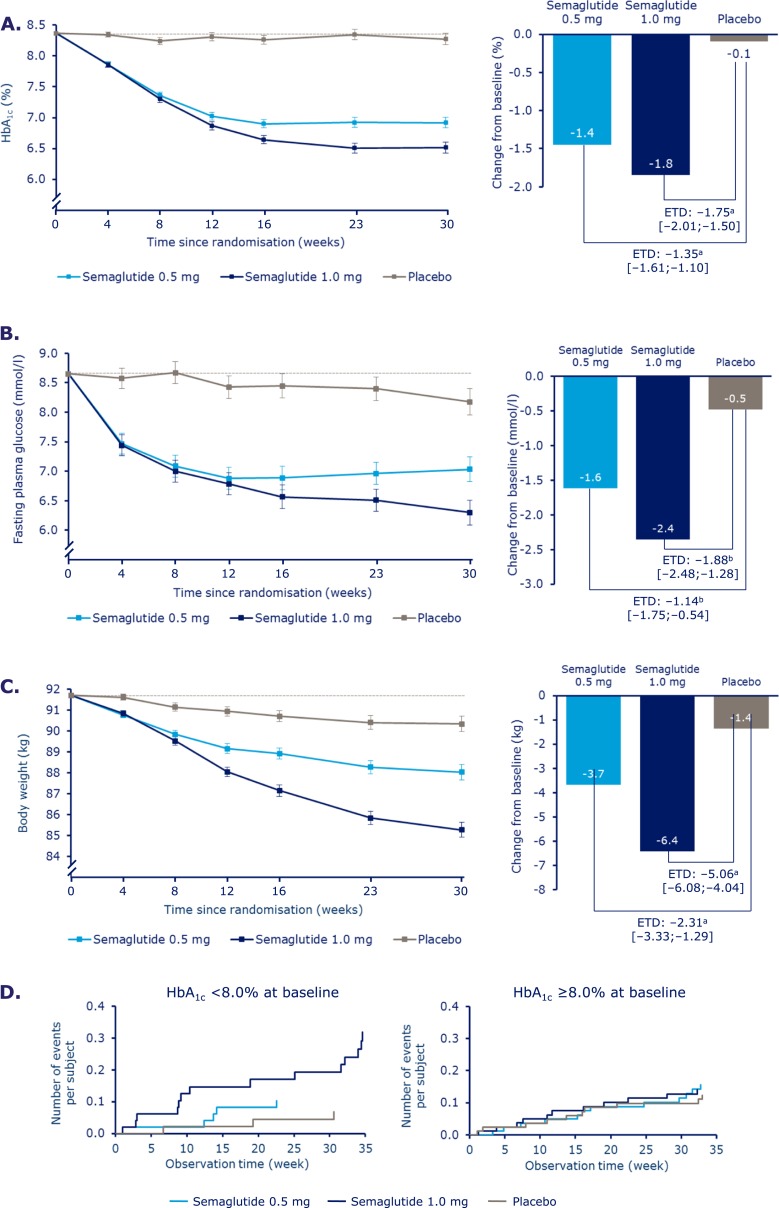
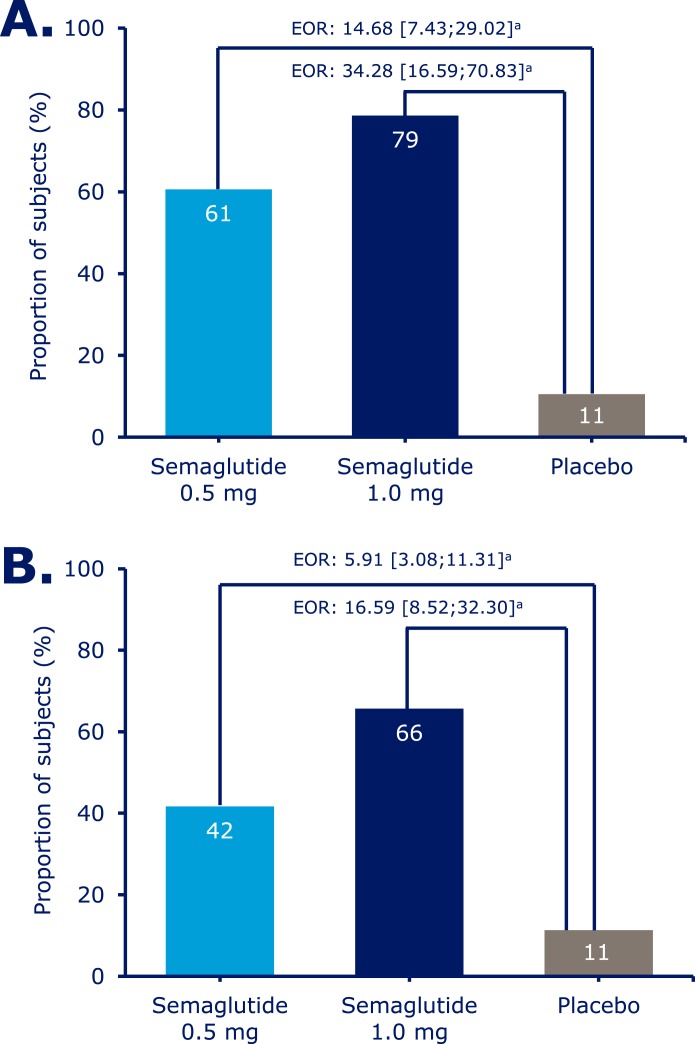
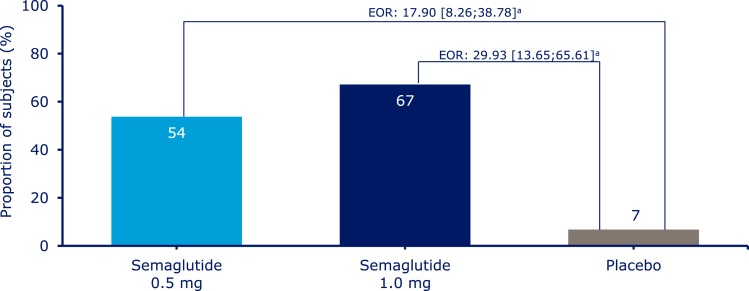
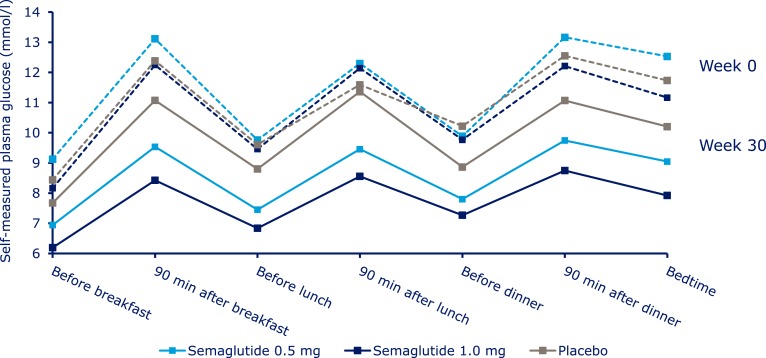
Verification
Claims the paper makes
The claims and statistics of this paper haven’t been checked yet.
Free: it reads the open-access text and checks the first 5 claims that cite a source we can check. Create a free account to check every claim.
Claims other papers make about this one
Each is checked against this paper’s own text: does it say what the citing paper says it does?
The source backs part of the claim, not all of it — or backs it for a different population, condition or comparison.
In the citing paper
“hsCRP data collected in SUSTAIN 2, 4, and 5 trials [22–24] were not used due to technical issues during sample collection — the hsCRP analysis assay was found to have a negative bias (an under-recovery of up to –25% at hsCRP concentrations below 5 mg/L), which affected a proportion of the samples.”
From Impact of semaglutide on high-sensitivity C-reactive protein: exploratory patient-level analyses of SUSTAIN and PIONEER randomized clinical trials (2022) · cites this paper as [24]
Experimental — accuracy not yet measuredThe source backs part of the claim, not all of it — or backs it for a different population, condition or comparison.
In the citing paper
“When compared with placebo, subcutaneous semaglutide for 30 weeks induced nausea in 11.4 to 20% of the semaglutide-treated patients (placebo 3.3–8%), vomiting in 4 to 11.5% (placebo 2–3%) and diarrhea in 4.5 to 11.3% (placebo 1.5–6%) (10, 27, 31).”
From Safety of Semaglutide (2021) · cites this paper as [27]
Experimental — accuracy not yet measuredThe source backs part of the claim, not all of it — or backs it for a different population, condition or comparison.
In the citing paper
“None of these were medullary carcinoma.”
From Safety of Semaglutide (2021) · cites this paper as [27]
Experimental — accuracy not yet measuredThe source backs part of the claim, not all of it — or backs it for a different population, condition or comparison.
In the citing paper
“The events mainly included cholelithiasis.”
From Safety of Semaglutide (2021) · cites this paper as [27]
Experimental — accuracy not yet measured
5 more claims about this paper
Create a free account to see every claim other papers make about this one.
Self-check
Percentages, sums and reported differences re-computed from the paper’s own numbers.
The self-check needs the paper’s full text.
Citations
Cites
Cook, R. J., Dickens, B. M., & Fathalla, M. F. (2003) · Reproductive Health and Human Rights · doi:10.1093/acprof:oso/9780199241323.003.0025 · Cited by 10,769
Stratton, I. M. (2000) · BMJ · doi:10.1136/bmj.321.7258.405 · Cited by 9,059
Standards of Medical Care in Diabetes
Power, D. (2006) · Diabetes Care · doi:10.2337/diacare.29.02.06.dc05-1593 · Cited by 8,673
Turner, R. C., Fox, C., Matthews, McElroy, H. H., Cull, C. A., Holman, R. R., Neil, P., Hadden, D. R., Wright, D., Manley, E., et al. (1998) · The Lancet · Cited by 8,419
10-year follow-up of intensive glucose control in type 2 diabetes
Holman, R. R., Paul, S. K., Bethel, M. A., Matthews, D. R., & Neil, H. A. W. (2008) · New England Journal of Medicine · doi:10.1056/nejmoa0806470 · Cited by 7,751
Semaglutide and Cardiovascular Outcomes in Patients with Type 2 Diabetes
Marso, S. P., Bain, S. C., Consoli, A., Eliaschewitz, F. G., Jódar, E., Leiter, L. A., Lingvay, I., Rosenstock, J., Seufert, J., Warren, M. L., et al. (2016) · New England Journal of Medicine · doi:10.1056/nejmoa1607141 · Cited by 6,900
Self-citationStandards of medical care in diabetes—2014
American Diabetes Association (2014) · Diabetes Care · doi:10.2337/dc14-s014 · Cited by 4,572
Gupta, A., & Uribarri, J. (2016) · Hormone Research in Paediatrics · doi:10.1159/000444053 · Cited by 4,006
Research works printed but not linked: 1
- Marbury T, Flint A, Segel S, Lindegaard M, Lasseter K Pharmacokinetics and tolerability of a single dose of semaglutide, a once-weekly human GLP-1 analogue, in subjects with and without renal impairment. Diabetologia. 2014; 57: S358.
Cited by
Tirzepatide versus Semaglutide Once Weekly in Patients with Type 2 Diabetes
Frías, J. P., Davies, M. J., Rosenstock, J., Pérez Manghi, F. C., Fernández Landó, L., Bergman, B. K., Liu, B., Cui, X., & Brown, K. (2021) · New England Journal of Medicine · doi:10.1056/nejmoa2107519 · Cited by 2,096
GLP-1 receptor agonists in the treatment of type 2 diabetes - state-of-the-art
Nauck, M. A., Quast, D. R., Wefers, J., & Meier, J. J. (2021) · Molecular Metabolism · doi:10.1016/j.molmet.2020.101102 · Cited by 1,647
Davies, M., Færch, L., Jeppesen, O. K., Pakseresht, A., Pedersen, S. D., Perreault, L., Rosenstock, J., Shimomura, I., Viljoen, A., Wadden, T. A., et al. (2021) · The Lancet · doi:10.1016/s0140-6736(21)00213-0 · Cited by 1,419
Self-citationDahl, D., Onishi, Y., Norwood, P., Huh, R., Bray, R., Patel, H., & Rodríguez, Á. (2022) · JAMA · doi:10.1001/jama.2022.0078 · Cited by 597
“When added to basal insulin, selective glucagon-like peptide-1 (GLP-1) receptor agonists have demonstrated improved glycemic control and body weight loss without increasing the risk of hypoglycemia and reducing insulin requirements.(2-6)Glucose-dependent insulinotropic polypeptide is the primary incretin hormone respo…”
BackgroundResultSelf-citationRodbard, H. W., Rosenstock, J., Canani, L. H., Deerochanawong, C., Gumprecht, J., Lindberg, S. Ø., Lingvay, I., Søndergaard, A. L., Treppendahl, M. B., Montanya, E., et al. (2019) · Diabetes Care · doi:10.2337/dc19-0883 · Cited by 463
Self-citationFriedrichsen, M., Breitschaft, A., Tadayon, S., Wizert, A., & Skovgaard, D. (2021) · Diabetes, Obesity and Metabolism · doi:10.1111/dom.14280 · Cited by 427
Capehorn, M. S., Catarig, A.-M., Furberg, J. K., Janez, A., Price, H. C., Tadayon, S., Vergès, B., & Marre, M. (2020) · Diabetes & Metabolism · doi:10.1016/j.diabet.2019.101117 · Cited by 412
Zinman, B., Bhosekar, V., Busch, R., Holst, I., Ludvik, B., Thielke, D., Thrasher, J., Woo, V., & Philis-Tsimikas, A. (2019) · The Lancet Diabetes & Endocrinology · doi:10.1016/s2213-8587(19)30066-x · Cited by 376
Lingvay, I., Catarig, A.-M., Frias, J. P., Kumar, H., Lausvig, N. L., le Roux, C. W., Thielke, D., Viljoen, A., & McCrimmon, R. J. (2019) · The Lancet Diabetes & Endocrinology · doi:10.1016/s2213-8587(19)30311-0 · Cited by 298
Self-citationZinman, B., Aroda, V. R., Buse, J. B., Cariou, B., Harris, S. B., Hoff, S. T., Pedersen, K. B., Tarp-Johansen, M. J., Araki, E., PIONEER 8 Investigators, et al. (2019) · Diabetes Care · doi:10.2337/dc19-0898 · Cited by 300
“subcutaneous, once-weekly formulation improved glycemic control and reduced body weight from baseline when used alongside basal insulin in patients with type 2 diabetes (6).”
BackgroundResultSelf-citationAroda, V. R., Ahmann, A., Cariou, B., Chow, F., Davies, M. J., Jódar, E., Mehta, R., Woo, V., & Lingvay, I. (2019) · Diabetes & Metabolism · doi:10.1016/j.diabet.2018.12.001 · Cited by 296
“cm with insulin glargine (SUSTAIN 4) [32-37].”
BackgroundMethodInfluentialSelf-citationSmits, M. M., & Van Raalte, D. H. (2021) · Frontiers in Endocrinology · doi:10.3389/fendo.2021.645563 · Cited by 332
Pieber, T. R., Bode, B., Mertens, A., Cho, Y. M., Christiansen, E., Hertz, C. L., Wallenstein, S. O. R., Buse, J. B., Akın, S., Aladağ, N., et al. (2019) · The Lancet Diabetes & Endocrinology · doi:10.1016/s2213-8587(19)30194-9 · Cited by 287
Recent updates on GLP-1 agonists: Current advancements & challenges
Sharma, D., Verma, S., Vaidya, S., Kalia, K., & Tiwari, V. (2018) · Biomedicine & Pharmacotherapy · doi:10.1016/j.biopha.2018.08.088 · Cited by 265
Silveira, S. Q., da Silva, L. M., de Campos Vieira Abib, A., de Moura, D. T. H., de Moura, E. G. H., Santos, L. B., Ho, A. M.-H., Nersessian, R. S. F., Lima, F. L. M., Silva, M. V., et al. (2023) · Journal of Clinical Anesthesia · doi:10.1016/j.jclinane.2023.111091 · Cited by 259
Wegovy (Semaglutide): A New Weight Loss Drug for Chronic Weight Management
Singh, G., Krauthamer, M., & Bjalme-Evans, M. (2022) · Journal of Investigative Medicine · doi:10.1136/jim-2021-001952 · Cited by 240
2021 Clinical Practice Guidelines for Diabetes Mellitus of the Korean Diabetes Association
Hur, K. Y., Moon, M. K., Park, J. S., Kim, S.-K., Lee, S.-H., Yun, J.-S., Baek, J. H., Noh, J., Lee, B.-W., Oh, T. J., et al. (2021) · Diabetes & Metabolism Journal · doi:10.4093/dmj.2021.0156 · Cited by 226
“If A1C target is not achieved with GLP-1RA or basal insulin-based therapy, free or fixed-ratio combination therapy of GLP-1RA and basal insulin could be considered (RCT, Limited) [72,78-94].”
BackgroundHusain, M., Bain, S. C., Jeppesen, O. K., Lingvay, I., Sørrig, R., Treppendahl, M. B., & Vilsbøll, T. (2020) · Diabetes, Obesity and Metabolism · doi:10.1111/dom.13955 · Cited by 209
Self-citationFrías, J. P., Auerbach, P., Bajaj, H. S., Fukushima, Y., Lingvay, I., Macura, S., Søndergaard, A. L., Tankova, T. I., Tentolouris, N., & Buse, J. B. (2021) · The Lancet Diabetes & Endocrinology · doi:10.1016/s2213-8587(21)00174-1 · Cited by 188
Self-citationMcCrimmon, R. J., Catarig, A.-M., Frias, J. P., Lausvig, N. L., le Roux, C. W., Thielke, D., & Lingvay, I. (2020) · Diabetologia · doi:10.1007/s00125-019-05065-8 · Cited by 184
Self-citationMcGowan, B. M., Bruun, J. M., Capehorn, M., Pedersen, S. D., Pietiläinen, K. H., Muniraju, H. A. K., Quiroga, M., Varbo, A., & Lau, D. C. W. (2024) · The Lancet Diabetes & Endocrinology · doi:10.1016/s2213-8587(24)00182-7 · Cited by 176
Mahapatra, M. K., Karuppasamy, M., & Sahoo, B. M. (2022) · Reviews in Endocrine and Metabolic Disorders · doi:10.1007/s11154-021-09699-1 · Cited by 166
“0 mg semaglutide) was also reported [52].”
Semaglutide as a promising antiobesity drug
Christou, G. A., Katsiki, N., Blundell, J., Fruhbeck, G., & Kiortsis, D. N. (2019) · Obesity Reviews · doi:10.1111/obr.12839 · Cited by 159
“The incidence of minor hypoglycaemia induced by semaglutide is low, whereas severe hypoglycaemia may occur even more rarely.(41-43,53,54,77) Headache, nasopharyngitis, influenza virus infection, and increased pancreatic lipase levels have been reported in semaglutide‐treated patients but less frequently than gastroint…”
BackgroundLeiter, L. A., Bain, S. C., Hramiak, I., Jódar, E., Madsbad, S., Gondolf, T., Hansen, T., Holst, I., & Lingvay, I. (2019) · Cardiovascular Diabetology · doi:10.1186/s12933-019-0871-8 · Cited by 159
Self-citationMann, J. F. E., Hansen, T., Idorn, T., Leiter, L. A., Marso, S. P., Rossing, P., Seufert, J., Tadayon, S., & Vilsbøll, T. (2020) · The Lancet Diabetes & Endocrinology · doi:10.1016/s2213-8587(20)30313-2 · Cited by 157
Ahrén, B., Atkin, S. L., Charpentier, G., Warren, M. L., Wilding, J. P. H., Birch, S., Holst, A. G., & Leiter, L. A. (2018) · Diabetes, Obesity and Metabolism · doi:10.1111/dom.13353 · Cited by 157
Pharmacologic Glycemic Management of Type 2 Diabetes in Adults: 2020 Update
Lipscombe, L., Butalia, S., Dasgupta, K., Eurich, D. T., MacCallum, L., Shah, B. R., Simpson, S., & Senior, P. A. (2020) · Canadian Journal of Diabetes · doi:10.1016/j.jcjd.2020.08.001 · Cited by 153
“a) A GLP1-RA should be considered as add-on therapy [Grade A, Level 1A (61,62)], before initiating bolus insulin or intensifying insulin to improve glycemic control with potential benefits of weight loss and lower hypoglycemia risk compared to single or multiple bolus insulin injections [Grade A, Level 1A (63-71)].”
BackgroundPharmacotherapy of type 2 diabetes: An update and future directions
DeMarsilis, A. J., Reddy, N., Boutari, C., Filippaios, A., Sternthal, E., Katsiki, N., & Mantzoros, C. S. (2022) · Metabolism · doi:10.1016/j.metabol.2022.155332 · Cited by 184
Efficacy of semaglutide in a subcutaneous and an oral formulation
Meier, J. J. (2021) · Frontiers in Endocrinology · doi:10.3389/fendo.2021.645617 · Cited by 146
Kornelius, E., Huang, J.-Y., Lo, S.-C., Huang, C.-N., & Yang, Y.-S. (2024) · Scientific Reports · doi:10.1038/s41598-024-75965-2 · Cited by 143
Nadolsky, K., Garvey, W. T., Agarwal, M., Bonnecaze, A., Burguera, B., Chaplin, M. D., Griebeler, M. L., Harris, S. R., Schellinger, J. N., Simonetti, J., et al. (2025) · Endocrine Practice · doi:10.1016/j.eprac.2025.07.017 · Cited by 141
Aroda, V. R., Blonde, L., & Pratley, R. E. (2022) · Reviews in Endocrine and Metabolic Disorders · doi:10.1007/s11154-022-09735-8 · Cited by 135
Safety and tolerability of once‐weekly GLP‐1 receptor agonists in type 2 diabetes
Trujillo, J. (2020) · Journal of Clinical Pharmacy and Therapeutics · doi:10.1111/jcpt.13225 · Cited by 130
The psychophysiology of anxiety.
LADER, M. H. (1983) · PubMed · Cited by 133
2023 Clinical Practice Guidelines for Diabetes Mellitus of the Korean Diabetes Association
Choi, J. H., Lee, K. A., Moon, J. H., Chon, S., Kim, D. J., Kim, H. J., Kim, N. H., Seo, J. A., Kim, M. K., Lim, J. H., et al. (2023) · Diabetes & Metabolism Journal · doi:10.4093/dmj.2023.0282 · Cited by 150
“GLP-1RAs that have shown effects can be used as first-line therapy for NAFLD in T2DM adults (RCT, Limited) [28-30].”
BackgroundInfluentialTirzepatide for the treatment of adults with type 2 diabetes: An endocrine perspective
De Block, C., Bailey, C., Wysham, C., Hemmingway, A., Allen, S. E., & Peleshok, J. (2023) · Diabetes, Obesity and Metabolism · doi:10.1111/dom.14831 · Cited by 121
“and comparator treatment arms (Table S1), and the range of SAEs reported is consistent with that reported for semaglutide 1 mg in the SUSTAIN programme.(93-97) A higher number of SAEs was”
ResultGlucagon-Like Peptide 1 Receptor Agonists and Mental Health: A Systematic Review and Meta-Analysis
Pierret, A. C. S., Mizuno, Y., Saunders, P., Lim, E., De Giorgi, R., Howes, O. D., McCutcheon, R. A., McGowan, B., Sen Gupta, P., Smith, D., et al. (2025) · JAMA Psychiatry · doi:10.1001/jamapsychiatry.2025.0679 · Cited by 116
Xie, X., Wu, C., Hao, Y., Wang, T., Yang, Y., Cai, P., Zhang, Y., Huang, J., Deng, K., Yan, D., et al. (2023) · Frontiers in Endocrinology · doi:10.3389/fendo.2023.1301093 · Cited by 141
“…from different countries and regions, it was reported that compared with the placebo group, the combination of semaglutide, another GLP-1 receptor agonist, with basal insulin had outstanding advantages in anti-diabetic management, including more pronounced reductions of HbA1c and body weight (90).”
BackgroundChiang, C.-H., Jaroenlapnopparat, A., Colak, S. C., Yu, C.-C., Xanthavanij, N., Wang, T.-H., See, X. Y., Lo, S.-W., Ko, A., Chang, Y.-C., et al. (2025) · Gastroenterology · doi:10.1053/j.gastro.2025.06.003 · Cited by 105
Karagiannis, T., Malandris, K., Avgerinos, I., Stamati, A., Kakotrichi, P., Liakos, A., Vasilakou, D., Kakaletsis, N., Tsapas, A., & Bekiari, E. (2024) · Diabetologia · doi:10.1007/s00125-024-06144-1 · Cited by 102
Hiramoto, B., McCarty, T. R., Lodhia, N. A., Jenkins, A., Elnaiem, A., Muftah, M., Flanagan, R., & Chan, W. W. (2024) · American Journal of Gastroenterology · doi:10.14309/ajg.0000000000002820 · Cited by 94
Vosoughi, K., Atieh, J., Khanna, L., Khoshbin, K., Prokop, L. J., Davitkov, P., Murad, M. H., & Camilleri, M. (2021) · eClinicalMedicine · doi:10.1016/j.eclinm.2021.101213 · Cited by 97
Semaglutide: review and place in therapy for adults with type 2 diabetes
Goldenberg, R. M., & Steen, O. (2019) · Canadian Journal of Diabetes · doi:10.1016/j.jcjd.2018.05.008 · Cited by 91
Huthmacher, J. A., Meier, J. J., & Nauck, M. A. (2020) · Diabetes Care · doi:10.2337/dc20-0498 · Cited by 91
Clinical Pharmacokinetics of Semaglutide: A Systematic Review
Yang, X., & Yang, X. (2024) · Drug Design Development and Therapy · doi:10.2147/dddt.s470826 · Cited by 119
Prasad, F., De, R., Korann, V., Chintoh, A. F., Remington, G., Ebdrup, B. H., Siskind, D., Knop, F. K., Vilsbøll, T., Fink-Jensen, A., et al. (2023) · Therapeutic Advances in Psychopharmacology · doi:10.1177/20451253231165169 · Cited by 88
Kellerer, M., Kaltoft, M. S., Lawson, J., Nielsen, L. L., Strojek, K., Tabak, Ö., & Jacob, S. (2022) · Diabetes, Obesity and Metabolism · doi:10.1111/dom.14765 · Cited by 86
“The safety profile of OW semaglutide in this trial was determined to be consistent with its wellestablished safety profile and consistent with the GLP-1RA drug class in general.(13-22) Participants enrolled in this trial were slightly older than other SUSTAIN trial populations, had longer diabetes duration and latesta…”
BackgroundResultInfluentialGlucagon-Like Peptide-1 Receptor Agonists in Type 2 Diabetes: Their Use and Differential Features
Lyseng-Williamson, K. A. (2019) · Clinical Drug Investigation · doi:10.1007/s40261-019-00826-0 · Cited by 87
Mosenzon, O., Capehorn, M. S., De Remigis, A., Rasmussen, S., Weimers, P., & Rosenstock, J. (2022) · Cardiovascular Diabetology · doi:10.1186/s12933-022-01585-7 · Cited by 91
Semaglutide and cancer: A systematic review and meta-analysis
Nagendra, L., BG, H., Sharma, M., & Dutta, D. (2023) · Diabetes & Metabolic Syndrome: Clinical Research & Reviews · doi:10.1016/j.dsx.2023.102834 · Cited by 86
GLP-1 receptor agonists in the treatment of type 2 diabetes: role and clinical experience to date
Brunton, S. A., & Wysham, C. H. (2020) · Postgraduate Medicine · doi:10.1080/00325481.2020.1798099 · Cited by 80
Lingvay, I., Desouza, C. V., Lalic, K. S., Rose, L., Hansen, T., Zacho, J., & Pieber, T. R. (2018) · Diabetes Care · doi:10.2337/dc17-2381 · Cited by 81
Self-citationThe trials and tribulations of determining HbA1c targets for diabetes mellitus
Klein, K. R., & Buse, J. B. (2020) · Nature Reviews Endocrinology · doi:10.1038/s41574-020-00425-6 · Cited by 98
Moon, J. S., Kang, S., Choi, J. H., Lee, K. A., Moon, J. H., Chon, S., Kim, D. J., Kim, H. J., Seo, J. A., Kim, M. K., et al. (2024) · Diabetes & Metabolism Journal · doi:10.4093/dmj.2024.0249 · Cited by 90
Rosenstock, J., Nino, A., Soffer, J., Erskine, L., Acusta, A., Dole, J., Carr, M. C., Mallory, J., & Home, P. (2020) · Diabetes Care · doi:10.2337/dc19-2316 · Cited by 73
“As examples, exenatide and semaglutide improved glucose control when added to a basal insulin regimen, with the added benefit of weight reduction(11,14).”
BackgroundAdvances in the treatment of diabetic retinopathy
Singh, R. P., Elman, M. J., Singh, S., Fung, A. E., & Stoilov, I. (2019) · Journal of Diabetes and its Complications · doi:10.1016/j.jdiacomp.2019.107417 · Cited by 82
Lingvay, I., Hansen, T., Macura, S., Marre, M., Nauck, M. A., de la Rosa, R., Woo, V., Yildirim, E., & Wilding, J. (2020) · BMJ Open Diabetes Research & Care · doi:10.1136/bmjdrc-2020-001706 · Cited by 71
Self-citationWarren, M., Chaykin, L., Trachtenbarg, D., Nayak, G., Wijayasinghe, N., & Cariou, B. (2018) · Diabetes, Obesity and Metabolism · doi:10.1111/dom.13331 · Cited by 70
Self-citationVolpe, S., Lisco, G., Racaniello, D., Fanelli, M., Colaianni, V., Vozza, A., Triggiani, V., Sabbà, C., Tortorella, C., De Pergola, G., et al. (2022) · Nutrients · doi:10.3390/nu14122414 · Cited by 67
“Semaglutide subcutaneously administered once-weekly has been demonstrated to significantly improve glucose control and reduce body weight; it is one of the most potent GLP-1RAs approved for the treatment of T2D and related comorbidities [13,14].”
BackgroundVosoughi, K., Salman Roghani, R., & Camilleri, M. (2022) · Obesity Medicine · doi:10.1016/j.obmed.2022.100456 · Cited by 65
Gilbert, O., Gulati, M., Gluckman, T. J., Kittleson, M. M., Rikhi, R., Saseen, J. J., & Tchang, B. G. (2025) · JACC · doi:10.1016/j.jacc.2025.05.024 · Cited by 65
Wang, F., Mao, Y., Wang, H., Liu, Y., & Huang, P. (2021) · Clinical Drug Investigation · doi:10.1007/s40261-021-01110-w · Cited by 78
“[29] (SUSTAIN 5) [minimum– maximum] Semaglutide 0.”
Rajamand Ekberg, N., Bodholdt, U., Catarig, A.-M., Catrina, S.-B., Grau, K., Holmberg, C. N., Klanger, B., & Knudsen, S. T. (2021) · Primary Care Diabetes · doi:10.1016/j.pcd.2021.06.008 · Cited by 63
Fonseca, V. A., Capehorn, M. S., Garg, S. K., Jódar Gimeno, E., Hansen, O. H., Holst, A. G., Nayak, G., & Seufert, J. (2019) · The Journal of Clinical Endocrinology & Metabolism · doi:10.1210/jc.2018-02685 · Cited by 63
Landgraf, R., Aberle, J., Birkenfeld, A. L., Gallwitz, B., Kellerer, M., Klein, H., Müller-Wieland, D., Nauck, M. A., Reuter, H.-M., & Siegel, E. (2019) · Experimental and Clinical Endocrinology & Diabetes · doi:10.1055/a-1018-9106 · Cited by 62
Chao, A. M., Tronieri, J. S., Amaro, A., & Wadden, T. A. (2022) · Drug Design, Development and Therapy · doi:10.2147/dddt.s365416 · Cited by 58
DeSouza, C., Cariou, B., Garg, S., Lausvig, N., Navarria, A., & Fonseca, V. (2020) · The Journal of Clinical Endocrinology & Metabolism · doi:10.1210/clinem/dgz072 · Cited by 57
Rivera, F. B., Lumbang, G. N. O., Gaid, D. R. M., Cruz, L. L. A., Magalong, J. V., Bantayan, N. R. B., Lara‐Breitinger, K. M., Gulati, M., & Bakris, G. (2024) · Diabetes, Obesity and Metabolism · doi:10.1111/dom.15529 · Cited by 57
“…– RCTs. 18,20,21,27,32,46,53,57,62,67,72,75 Thirty-eight RCTs 15,17,18,21 – 23, 25,28,31,32,34,36 – 38,40,42,44 – 46,48,50,52,54,55,57 – 59,62,63,67,69 – 71,75,78 were done exclusively among patients with DM. 23, 25 – 36 ,38, 40 – 22 RCTs 15 – 20,23,25 – 28,34,37,41,45,48,51,54,55,64,66,73 used…”
InfluentialOnoviran, O. F., Li, D., Toombs Smith, S., & Raji, M. A. (2019) · Therapeutic Advances in Chronic Disease · doi:10.1177/2040622319862691 · Cited by 57
The effect of GLP-1R agonists on the medical triad of obesity, diabetes, and cancer
Ibrahim, S. S., Ibrahim, R. S., Arabi, B., Brockmueller, A., Shakibaei, M., & Büsselberg, D. (2024) · Cancer and Metastasis Reviews · doi:10.1007/s10555-024-10192-9 · Cited by 56
Aroda, V. R., Erhan, U., Jelnes, P., Meier, J. J., Abildlund, M. T., Pratley, R., Vilsbøll, T., & Husain, M. (2023) · Diabetes, Obesity and Metabolism · doi:10.1111/dom.14990 · Cited by 55
“Blood pressure was modestly decreased in patients treated with subcutaneous/oral semaglutide (systolic: –4/–3; diastolic: –1/–1 mmHg; Table S12).”
MethodInfluentialHusain, M., Bain, S. C., Holst, A. G., Mark, T., Rasmussen, S., & Lingvay, I. (2020) · Cardiovascular Diabetology · doi:10.1186/s12933-020-01106-4 · Cited by 55
Self-citationGranata, A., Maccarrone, R., Anzaldi, M., Leonardi, G., Pesce, F., Amico, F., Gesualdo, L., & Corrao, S. (2022) · Clinical Kidney Journal · doi:10.1093/ckj/sfac069 · Cited by 54
Yeh, T.-L., Tsai, M.-C., Tsai, W.-H., Tu, Y.-K., & Chien, K.-L. (2023) · PLOS ONE · doi:10.1371/journal.pone.0278685 · Cited by 50
Structural principles of insulin formulation and analog design: A century of innovation
Jarosinski, M. A., Dhayalan, B., Chen, Y., Chatterjee, D., Varas, N., & Weiss, M. A. (2021) · Molecular Metabolism · doi:10.1016/j.molmet.2021.101325 · Cited by 58
“The concept of biased agonism may also be exploited to reduce the baseline mitogenicity of insulin, of interest in relation to epidemiological relationships between T2D and several common cancers [235e237].”
MethodInfluentialYale, J.-F., Bodholdt, U., Catarig, A.-M., Catrina, S., Clark, A., Ekberg, N. R., Erhan, U., Holmes, P., Knudsen, S. T., Liutkus, J., et al. (2022) · BMJ Open Diabetes Research & Care · doi:10.1136/bmjdrc-2021-002619 · Cited by 50
Once-Weekly Semaglutide for Weight Management: A Clinical Review
Fornes, A., Huff, J., Pritchard, R. I., & Godfrey, M. (2022) · Journal of Pharmacy Technology · doi:10.1177/87551225221092681 · Cited by 50
Xie, X., Yang, S., Deng, S., Liu, Y., Xu, Z., & He, B. (2025) · Frontiers in Pharmacology · doi:10.3389/fphar.2025.1613610 · Cited by 57
Semaglutide s.c. Once-Weekly in Type 2 Diabetes: A Population Pharmacokinetic Analysis
Carlsson Petri, K. C., Ingwersen, S. H., Flint, A., Zacho, J., & Overgaard, R. V. (2018) · Diabetes Therapy · doi:10.1007/s13300-018-0458-5 · Cited by 47
Jain, A. B., Ali, A., Gorgojo Martínez, J. J., Hramiak, I., Kavia, K., Madsbad, S., Potier, L., Prohaska, B. D., Strong, J. L., & Vilsbøll, T. (2021) · International Journal of Clinical Practice · doi:10.1111/ijcp.13731 · Cited by 44
Rudofsky, G., Catarig, A.-M., Favre, L., Grau, K., Häfliger, S., Thomann, R., & Schultes, B. (2021) · Diabetes Research and Clinical Practice · doi:10.1016/j.diabres.2021.108931 · Cited by 46
Aviles Bueno, B., Soler, M. J., Perez-Belmonte, L., Jimenez Millan, A., Rivas Ruiz, F., & Garcia de Lucas, M. D. (2022) · Clinical Kidney Journal · doi:10.1093/ckj/sfac096 · Cited by 43
Hu, M., Cai, X., Yang, W., Zhang, S., Nie, L., & Ji, L. (2020) · Journal of the American Heart Association · doi:10.1161/jaha.119.015323 · Cited by 49
Long-acting GLP-1RAs: An overview of efficacy, safety, and their role in type 2 diabetes management
Chun, J. H., & Butts, A. (2020) · JAAPA · doi:10.1097/01.jaa.0000669456.13763.bd · Cited by 45
Semaglutide and the risk of diabetic retinopathy—current perspective
Sharma, A., Parachuri, N., Kumar, N., Saboo, B., Tripathi, H. N., Kuppermann, B. D., & Bandello, F. (2022) · Eye · doi:10.1038/s41433-021-01741-5 · Cited by 43
Santos, L. B., Mizubuti, G. B., da Silva, L. M., Silveira, S. Q., Nersessian, R. S. F., Abib, A. D. C. V., Bellicieri, F. N., Lima, H. D. O., Ho, A. M.-H., dos Anjos, G. S., et al. (2024) · Journal of Clinical Anesthesia · doi:10.1016/j.jclinane.2024.111668 · Cited by 43
Holmes, P., Bell, H. E., Bozkurt, K., Catarig, A.-M., Clark, A., Machell, A., & Sathyapalan, T. (2021) · Diabetes Therapy · doi:10.1007/s13300-021-01141-8 · Cited by 42
Brown, R. E., Bech, P. G., & Aronson, R. (2020) · Diabetes, Obesity and Metabolism · doi:10.1111/dom.14117 · Cited by 42
“A reduction in insulin dose was also reported in participants adding semaglutide to basal insulin in the SUSTAIN 5 trial.(8) During the 3- to 6-month follow-up period, 17.”
BackgroundZaazouee, M. S., Hamdallah, A., Helmy, S. K., Hasabo, E. A., Sayed, A. K., Gbreel, M. I., Elmegeed, A. A., Aladwan, H., Elshanbary, A. A., Abdel‐Aziz, W., et al. (2022) · Diabetes & Metabolic Syndrome Clinical Research & Reviews · doi:10.1016/j.dsx.2022.102511 · Cited by 45
Semaglutide as a GLP-1 Agonist: A Breakthrough in Obesity Treatment
Salvador, R., Moutinho, C. M. S. G., Sousa, C., Vinha, A. F., Carvalho, M. C., & Matos, C. M. (2025) · Pharmaceuticals · doi:10.3390/ph18030399 · Cited by 55
“Higher doses (1.0 mg vs. 0.5 mg) led to greater weight loss [64–68].”
InfluentialCamilleri, M., & Lupianez-Merly, C. (2024) · American Journal of Gastroenterology · doi:10.14309/ajg.0000000000002519 · Cited by 41
Ocular Adverse Events With Semaglutide: A Systematic Review and Meta-Analysis
Natividade, G. R., Spiazzi, B. F., Baumgarten, M. W., Bassotto, C., Pereira, A. A., Fraga, B. L., Scalco, B. G., Mattes, N. R., Lavinsky, D., Kramer, C. K., et al. (2025) · JAMA Ophthalmology · doi:10.1001/jamaophthalmol.2025.2489 · Cited by 41
Xia, L., Shen, T., Dong, W., Su, F., Wang, J., Wang, Q., Niu, S., & Fang, Y. (2021) · Diabetes Research and Clinical Practice · doi:10.1016/j.diabres.2021.108904 · Cited by 40
Transforming body composition with semaglutide in adults with obesity and type 2 diabetes mellitus
Rodríguez Jiménez, B., Rodríguez de Vera Gómez, P., Belmonte Lomas, S., Mesa Díaz, Á. M., Caballero Mateos, I., Galán, I., Morales Portillo, C., & Martínez-Brocca, M. A. (2024) · Frontiers in Endocrinology · doi:10.3389/fendo.2024.1386542 · Cited by 39
Yin, D.-G., Ding, L.-L., Zhou, H.-R., Qiu, M., & Duan, X.-Y. (2021) · Endocrine Journal · doi:10.1507/endocrj.ej21-0129 · Cited by 39
Chubb, B., Gupta, P., Gupta, J., Nuhoho, S., Kallenbach, K., & Orme, M. (2021) · Diabetes Therapy · doi:10.1007/s13300-021-01034-w · Cited by 39
Kang, S., Kang, S. M., Choi, J. H., Ko, S., Koo, B. K., Kwon, H.-S., Kim, M. K., Kim, S. Y., Kim, S., Kim, Y., et al. (2025) · Diabetes & Metabolism Journal · doi:10.4093/dmj.2025.0469 · Cited by 85
Yale, J., Catarig, A., Grau, K., Harris, S., Klimek‐Abercrombie, A., Rabasa‐Lhoret, R., Reardon, L., Woo, V., & Liutkus, J. (2021) · Diabetes, Obesity and Metabolism · doi:10.1111/dom.14468 · Cited by 37
Alhindi, Y., & Avery, A. (2022) · Contemporary Clinical Trials Communications · doi:10.1016/j.conctc.2022.100944 · Cited by 37
Beyond Weight Loss: Added Benefits Could Guide the Choice of Anti-Obesity Medications
Guglielmi, V., Bettini, S., Sbraccia, P., Busetto, L., Pellegrini, M., Yumuk, V., Colao, A. M. L., Ghoch, M. E., & Muscogiuri, G. (2023) · Current Obesity Reports · doi:10.1007/s13679-023-00502-7 · Cited by 44
Metadata
- Authors
- Rodbard, H. W., Lingvay, I., Reed, J., de la Rosa, R., Rose, L., Sugimoto, D., Araki, E., Chu, P.-L., Wijayasinghe, N., & Norwood, P.
- Affiliations
- Endocrine and Metabolic Consultants, Rockville, Maryland
- The University of Texas Southwestern Medical Center (US)
- Endocrine Research Solutions (United States) (US)
- Four Rivers Clinical Research, Paducah, Kentucky
- Institute of Diabetes Research, Münster, Germany
- Cedar-Crosse Research Center, Chicago, Illinois
- Kumamoto University (JP)
- Novo Nordisk Inc., Plainsboro, New Jersey
- Novo Nordisk (Denmark) (DK)
- University of California, San Francisco (US)
- Corresponding author
- Rodbard, Helena W
- Venue
- The Journal of Clinical Endocrinology & Metabolism
- Publisher
- The Endocrine Society
- Published
- 2018-04-23
- Volume
- 103
- Issue
- 6
- Pages
- 2291-2301
- ISSN
- 0021-972X (ISSN-L)
- 1945-7197
- PMC
- PMC5991220
- OpenAlex
- W2801715295
- Semantic Scholar
- 27a6e1a3a80fc91de65f29515784aa546a8f31cf
- Cited by
- 412
- References
- 43
- Citations by year
- 2026: 50 · 2025: 63 · 2024: 69 · 2023: 44 · 2022: 57 · 2021: 40 · 2020: 46 · 2019: 31 · 2018: 10
- FWCI
- 25.27
- Type
- journal article
- Language
- en
- Open access
- hybrid
- doi.org
- Licence
- Locations
- The Journal of Clinical Endocrinology & Metabolism (publishedVersion, cc-by)
- Europe PMC (PubMed Central) (publishedVersion, cc-by)
- PubMed Central (publishedVersion, cc-by)
- PubMed (publishedVersion)
- Funders
- Novo Nordisk
- Japan Society for the Promotion of Science (17H04201, 18K08482)
- Topics
- Health Sciences › Medicine › Endocrinology, Diabetes and Metabolism › Diabetes Treatment and Management
- Health Sciences › Medicine › Endocrinology, Diabetes and Metabolism › Diabetes Management and Research
- Health Sciences › Medicine › Pharmacology (medical) › Pharmacology and Obesity Treatment
- Keywords
- semaglutide, basal insulin, type 2 diabetes, GLP-1 receptor agonists, adjunctive therapy, glycemic control, HbA1c, body weight, hypoglycemia, drug safety, metformin, weight loss, insulin dose reduction, HbA1c reduction, adverse events, drug discontinuation
- MeSH terms
- Semaglutide, Adult, Aged, Aged, 80 and over, Blood Glucose, Diabetes Mellitus, Type 2, Double-Blind Method, Drug Therapy, Combination, Glucagon-Like Peptides, Female, Glycated Hemoglobin, Humans, Hypoglycemic Agents, Insulin, Male, Middle Aged, Treatment Outcome, Young Adult
About these checks
Registry, retraction, Cites and statistics results are computed, not judged, with one exception: a printed reference that no index lists is read once by a model before it counts as a citation error. Claims are extracted by a model and kept only when their quote appears verbatim in the text; each cited source is then checked, with a model’s help, for whether it says what the claim relies on. Those verdicts can be wrong — read the claim’s quote and the cited source before relying on one.
Statistics and arithmetic are recomputed, not judged.
Confidence bands are shown only for fields calibrated on our annotated test set. None is calibrated yet, so no band is shown.
What counts as a claim ›How we measure confidence ›How we check this ›
Are you an author, or do you see a problem with this page? Request a review
Data sources
Bibliographic data: Semantic Scholar, OpenAlex, Crossref.
Contains information from the Semantic Scholar Academic Graph Datasets, made available under the ODC Attribution License (ODC-BY 1.0).
Semantic Scholar’s data is described in: Kinney, R., et al. (2023). The Semantic Scholar Open Data Platform. arXiv:2301.10140.
