

Acute Vigorous Exercise Decreases Subsequent Nonexercise Physical Activity and Body Temperature Linked to Weight Gain
Open accessPublished version of a preprint
The DOI matches its Crossref record; 59 of the 60 references it cites were found in a registry or an index.
Abstract
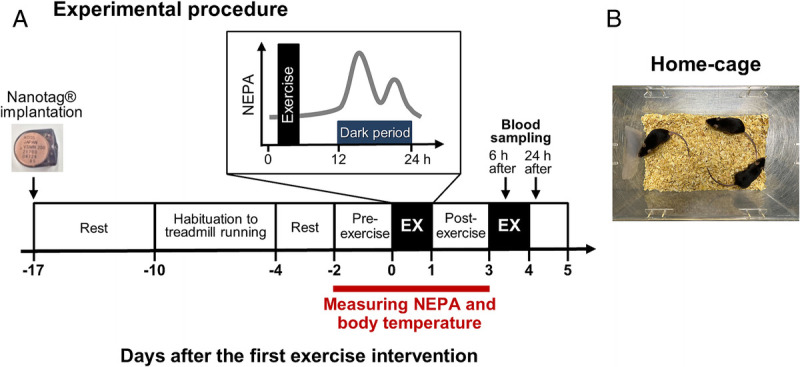
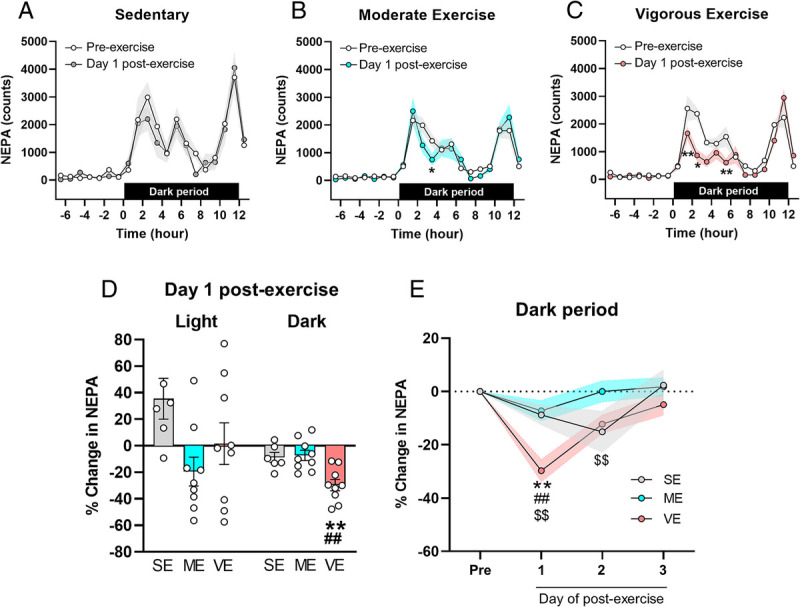
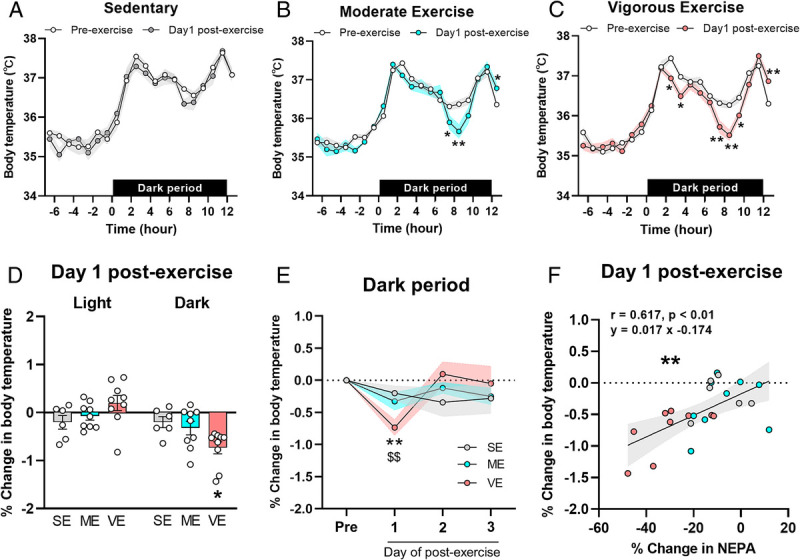
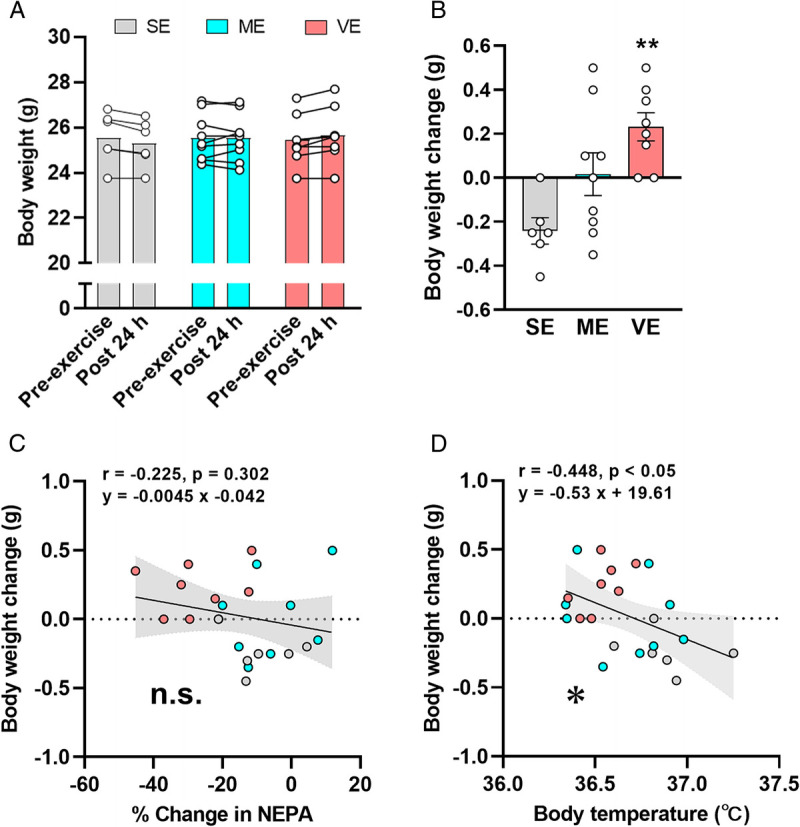
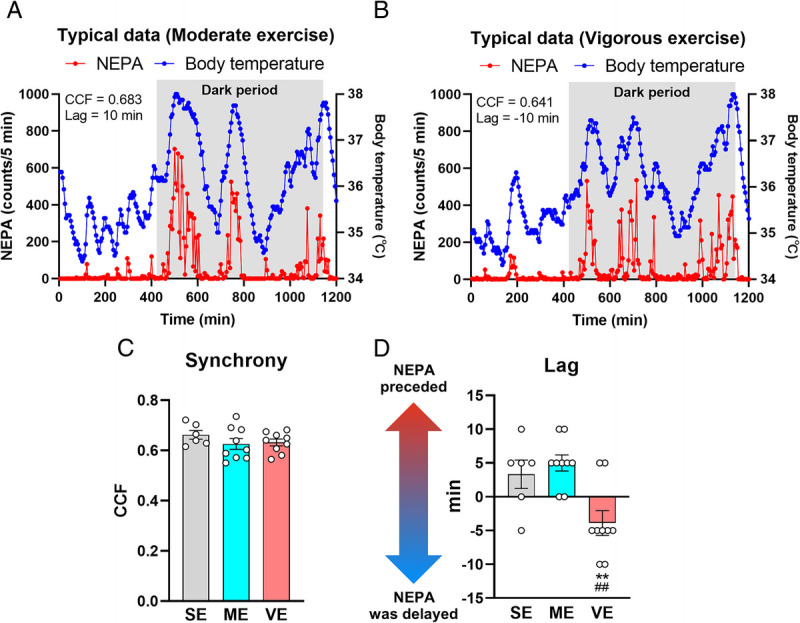
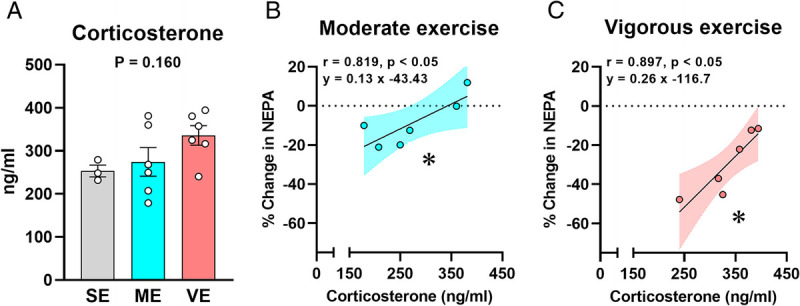
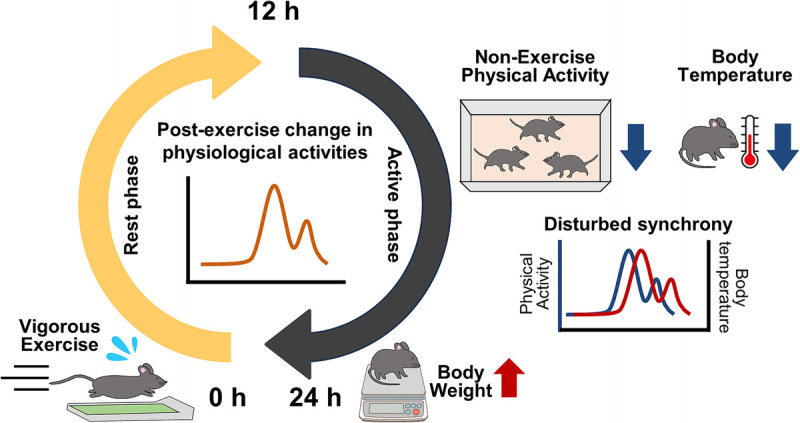
Purpose: Exercise benefits the body and mind, but its weight loss effect is less than generally expected. Although this phenomenon is likely due to an exercise intensity–dependent decrease in non-exercise physical activity (NEPA), resulting in a decrease in non-exercise activity thermogenesis, the underlying mechanisms and effects of exercise intensity remain unknown. Here we show that acute vigorous exercise decreases subsequent NEPA and body temperature (BT) in association with body weight gain. Methods: Adult male C57BL/6J mice were categorized into three groups: sedentary, moderate exercise, and vigorous exercise, with exercise groups undergoing a 30-min treadmill session. Using an intraperitoneally implanted activity monitor, NEPA and BT were monitored for 2 d before and 3 d after exercise. The daily synchrony between NEPA and BT was evaluated using a cross-correlation function. Plasma corticosterone was also detected 6 and 24 h after exercise. Results: Notably, only the vigorous exercise group exhibited a decline in both NEPA and BT, resulting in body weight gain the following day, despite no observed changes in food intake. Furthermore, vigorous exercise induces a distinct delay in the daily dynamics of NEPA compared with BT. A positive correlation was observed between plasma corticosterone levels and changes in NEPA levels before and after exercise across all exercise groups. Conclusions: Our findings provide evidence for vigorous exercise–specific reduction in subsequent NEPA, BT, and their synchrony linked to weight gain, likely due to the disturbed circadian rhythm of corticosterone. This is an initial investigation redefining the significance of exercise intensity in beneficial effects beyond the energy expenditure of the exercise itself.
Overview
The claims and statistics of this paper haven’t been checked yet.
Free: it reads the open-access text and checks the first 5 claims that cite a source we can check. Create a free account to check every claim.
Integrity signals
Registry
Cites
Statistics
Figures
Verification
Claims the paper makes
The claims and statistics of this paper haven’t been checked yet.
Free: it reads the open-access text and checks the first 5 claims that cite a source we can check. Create a free account to check every claim.
Claims other papers make about this one
Each is checked against this paper’s own text: does it say what the citing paper says it does?
The cited source doesn’t support the claim as written.
In the citing paper
“Acute exercise can cause reductions in overall energy intake that can cause weight gain”
From Lifestyle Medicine for Obesity in the Era of Highly Effective Anti-Obesity Treatment (2025) · cites this paper as [240]
Checked by a reasoning model — may be wrong.
Experimental — accuracy not yet measuredThe source backs part of the claim, not all of it — or backs it for a different population, condition or comparison.
In the citing paper
“NEAT can increase energy flux while not causing individuals to reduce their net energy expenditure as moderate to vigorous physical activity is known to”
From Lifestyle Medicine for Obesity in the Era of Highly Effective Anti-Obesity Treatment (2025) · cites this paper as [240]
Experimental — accuracy not yet measured
Self-check
Percentages, sums and reported differences re-computed from the paper’s own numbers.
The self-check needs the paper’s full text.
Citations
Cites
Walking and Dementia in Physically Capable Elderly Men
Abbott, R. D. (2004) · JAMA · doi:10.1001/jama.292.12.1447 · Cited by 743 · cited 2×
“Notably, low levels of NEPA are implicated in the deterioration of cognitive function and increased risk of dementia (9 – 11).”
BackgroundInterindividual variation in posture allocation: possible role in human obesity
Levine, J. A., Lanningham-Foster, L. M., McCrady, S. K., Krizan, A. C., Olson, L. R., Kane, P. H., Jensen, M. D., & Clark, M. M. (2005) · Science · doi:10.1126/science.1106561 · Cited by 705 · cited 2×
“xercise has been widely recommended as a pivotal strategy to improve physical and mental health (1 – 3).”
BackgroundThe aging clock: circadian rhythms and later life
Hood, S., & Amir, S. (2017) · Journal of Clinical Investigation · doi:10.1172/jci90328 · Cited by 605 · cited 1×
“To date, a lot of studies have examined the effects of several biological and environmental factors, including aging, exercise, and diet, on circadian rhythms of physical activity and body temperature (46 – 48).”
BackgroundJelleyman, C., Yates, T., O'Donovan, G., Gray, L. J., King, J. A., Khunti, K., & Davies, M. J. (2015) · Obesity Reviews · doi:10.1111/obr.12317 · Cited by 588 · cited 1×
“Despite the acknowledged efficacy of vigorous exercise in enhancing metabolic health (22), it sometimes fails to improve spatial learning and anxiety-like behaviors and increases the expression of mature brain-derived neurotrophic factor proteins in the hippocampus (23,24).”
BackgroundAtkinson, H. C., & Waddell, B. J. (1997) · Endocrinology · doi:10.1210/endo.138.9.5395 · Cited by 438 · cited 2×
“Plasma corticosterone commonly shows a higher value in the late light to early dark period, that is, before awakening (27).”
BackgroundKing, N. A., Hopkins, M., Caudwell, P., Stubbs, R. J., & Blundell, J. E. (2008) · International Journal of Obesity · doi:10.1038/sj.ijo.0803712 · Cited by 429 · cited 3×
“Compensatory responses to exercise have been well recognized to be exhibited as increased energy intake (7).”
BackgroundEffects of Exercise on Brain and Cognition Across Age Groups and Health States
Stillman, C. M., Esteban-Cornejo, I., Brown, B., Bender, C. M., & Erickson, K. I. (2020) · Trends in Neurosciences · doi:10.1016/j.tins.2020.04.010 · Cited by 423
Age-Related Decline in Circadian Output
Nakamura, T. J., Nakamura, W., Yamazaki, S., Kudo, T., Cutler, T., Colwell, C. S., & Block, G. D. (2011) · Journal of Neuroscience · doi:10.1523/jneurosci.0451-11.2011 · Cited by 386 · cited 1×
“For example, aging decreases the amplitude of the rhythm of voluntary physical activity and is linked to the phase advancement of the rhythms of body temperature, cortisol, and melatonin (43 – 45).”
BackgroundConstrained Total Energy Expenditure and Metabolic Adaptation to Physical Activity in Adult Humans
Pontzer, H., Durazo-Arvizu, R., Dugas, L. R., Plange-Rhule, J., Bovet, P., Forrester, T. E., Lambert, E. V., Cooper, R. S., Schoeller, D. A., & Luke, A. (2016) · Current Biology · doi:10.1016/j.cub.2015.12.046 · Cited by 326 · cited 1×
“Pontzer et al. (39) demonstrated that increasing physical activity does not simply add total energy expenditure in a dose – response manner.”
BackgroundTime of exercise specifies the impact on muscle metabolic pathways and systemic energy homeostasis
Sato, S., Basse, A. L., Schönke, M., Chen, S., Samad, M., Altıntaş, A., Laker, R. C., Dalbram, E., Barrès, R., Baldi, P., et al. (2019) · Cell Metabolism · doi:10.1016/j.cmet.2019.03.013 · Cited by 298 · cited 1×
“The effect of exercise is known to depend on the timing of exercise (58,59).”
BackgroundBDNF induction with mild exercise in the rat hippocampus
Soya, H., Nakamura, T., Deocaris, C. C., Kimpara, A., Iimura, M., Fujikawa, T., Chang, H., McEwen, B. S., & Nishijima, T. (2007) · Biochemical and Biophysical Research Communications · doi:10.1016/j.bbrc.2007.04.173 · Cited by 269 · cited 2×
“This may stem from the excessive stress-related physiological responses induced by vigorous exercise, such as the activation of corticotrophin-releasing factor neurons in the hypothalamic paraventricular nucleus and increases in corticosterone release in rodents (25,26).”
BackgroundSelf-citationIntegration of body temperature into the analysis of energy expenditure in the mouse
Abreu-Vieira, G., Xiao, C., Gavrilova, O., & Reitman, M. L. (2015) · Molecular Metabolism · doi:10.1016/j.molmet.2015.03.001 · Cited by 220 · cited 2×
“Body temperature, serving as a sensitive indicator of whole-body metabolic activity, immune function, and physical activity levels, is largely influenced by NEAT and basal metabolism (40,41).”
BackgroundMultisystem physiological perspective of human frailty and its modulation by physical activity
Taylor, J. A., Greenhaff, P. L., Bartlett, D. B., Jackson, T. A., Duggal, N. A., & Lord, J. M. (2023) · Physiological Reviews · doi:10.1152/physrev.00037.2021 · Cited by 197 · cited 1×
“xercise has been widely recommended as a pivotal strategy to improve physical and mental health (1 – 3).”
BackgroundAge‐Related Changes of Circadian Rhythms and Sleep‐Wake Cycles
Yoon, I., Kripke, D. F., Elliott, J. A., Youngstedt, S. D., Rex, K. M., & Hauger, R. L. (2003) · Journal of the American Geriatrics Society · doi:10.1046/j.1532-5415.2003.51356.x · Cited by 186 · cited 1×
“For example, aging decreases the amplitude of the rhythm of voluntary physical activity and is linked to the phase advancement of the rhythms of body temperature, cortisol, and melatonin (43 – 45).”
BackgroundPlasma corticosterone response to acute and chronic voluntary exercise in female house mice
Girard, I., & Garland, T. (2002) · Journal of Applied Physiology · doi:10.1152/japplphysiol.00465.2001 · Cited by 175 · cited 1×
“Furthermore, plasma corticosterone levels were positively correlated with wheel-running distance in mice (29), suggesting an interplay between corticosterone and physical activity levels.”
BackgroundBonnavion, P., Jackson, A. C., Carter, M. E., & de Lecea, L. (2015) · Nature Communications · doi:10.1038/ncomms7266 · Cited by 174
Human resting energy expenditure varies with circadian phase
Zitting, K.-M., Vujovic, N., Yuan, R. K., Isherwood, C. M., Medina, J. E., Wang, W., Buxton, O. M., Williams, J. S., Czeisler, C. A., & Duffy, J. F. (2018) · Current Biology · doi:10.1016/j.cub.2018.10.005 · Cited by 164 · cited 1×
“Body temperature, serving as a sensitive indicator of whole-body metabolic activity, immune function, and physical activity levels, is largely influenced by NEAT and basal metabolism (40,41).”
BackgroundExtreme events reveal an alimentary limit on sustained maximal human energy expenditure
Thurber, C., Dugas, L. R., Ocobock, C., Carlson, B., Speakman, J. R., & Pontzer, H. (2019) · Science Advances · doi:10.1126/sciadv.aaw0341 · Cited by 163 · cited 1×
“A previous study reported that a long-term extreme endurance event leads to a reduction in the energy expenditure generated by NEPA (56).”
BackgroundJones, J. R., Chaturvedi, S., Granados-Fuentes, D., & Herzog, E. D. (2021) · Nature Communications · doi:10.1038/s41467-021-25959-9 · Cited by 144 · cited 1×
“Circadian rhythms of corticosterone are regulated by many chronobiological mechanisms, such as clock-related genes, neuronal activity in the supra-chiasmatic nucleus, and hypocretin neurons in the paraventricular nucleus (49,50).”
BackgroundThe effect of exercise on non‐exercise physical activity and sedentary behavior in adults
Melanson, E. L. (2017) · Obesity Reviews · doi:10.1111/obr.12507 · Cited by 103 · cited 2×
“However, the effect of exercise on body weight loss is often less than the theoretically predicted reduction based on exercise-induced energy expenditure (4,5).”
BackgroundNonexercise Activity Thermogenesis in Obesity Management
Villablanca, P. A., Alegría, J. R., Mookadam, F., Holmes, D. R., Wright, R. S., & Levine, J. A. (2015) · Mayo Clinic Proceedings · doi:10.1016/j.mayocp.2015.02.001 · Cited by 101 · cited 1×
“Energy expenditure resulting from NEPA, known as NEAT, is the most variable component of total energy expenditure (8).”
BackgroundCognition in Older Women: The Importance of Daytime Movement
Barnes, D. E., Blackwell, T., Stone, K. L., Goldman, S. E., Hillier, T., Yaffe, K., & Fractures, F. T. S. O. O. (2008) · Journal of the American Geriatrics Society · doi:10.1111/j.1532-5415.2008.01841.x · Cited by 95
Chow, L. S., Greenlund, L. J., Asmann, Y. W., Short, K. R., McCrady, S. K., Levine, J. A., & Nair, K. S. (2007) · Journal of Applied Physiology · doi:10.1152/japplphysiol.00791.2006 · Cited by 87 · cited 1×
“On the other hand, there is evidence that chronic exercise – induced enhancement of aerobic capacity is likely to increase NEPA (57).”
BackgroundOtsuka, T., Nishii, A., Amemiya, S., Kubota, N., Nishijima, T., & Kita, I. (2016) · Behavioural Brain Research · doi:10.1016/j.bbr.2015.10.055 · Cited by 86 · cited 1×
“This may stem from the excessive stress-related physiological responses induced by vigorous exercise, such as the activation of corticotrophin-releasing factor neurons in the hypothalamic paraventricular nucleus and increases in corticosterone release in rodents (25,26).”
BackgroundSelf-citationYook, J. S., Rakwal, R., Shibato, J., Takahashi, K., Koizumi, H., Shima, T., Ikemoto, M. J., Oharomari, L. K., McEwen, B. S., & Soya, H. (2019) · Proceedings of the National Academy of Sciences · doi:10.1073/pnas.1815197116 · Cited by 81 · cited 2×
“Mice were habituated to treadmill running for 1 wk, and the running speed was gradually increased from 0 to 25 m·min − 1 over sessions, as described previously (37,38).”
MethodInfluentialNeuropeptidergic Mediators of Spontaneous Physical Activity and Non-Exercise Activity Thermogenesis
Teske, J. A., Billington, C. J., & Kotz, C. M. (2008) · Neuroendocrinology · doi:10.1159/000110802 · Cited by 79 · cited 1×
“…to be regulated by multiple neuromodulators, for example, corticotropin-releasing hormone, neuropeptide Y, leptin, agouti-related protein, orexin, and ghrelin (54), which may be a potential target for investigating neuroendocrine mechanisms underlying post-exercise compensatory responses.”
BackgroundAge-Related Changes in Hypothalamic-Pituitary-Adrenal Axis Activity of Male C57BL/6J Mice
Dalm, S., Enthoven, L., Meijer, O. C., van der Mark, M. H., Karssen, A. M., de Kloet, E. R., & Oitzl, M. S. (2005) · Neuroendocrinology · doi:10.1159/000089555 · Cited by 77 · cited 1×
“Furthermore, corticosterone exhibits circadian rhythms that peak at the beginning of the active phase, a dark period in rodents, and synchronize with the dynamics of physical activity (27,28).”
BackgroundYasumoto, Y., Nakao, R., & Oishi, K. (2015) · PLOS ONE · doi:10.1371/journal.pone.0116476 · Cited by 75 · cited 1×
“To date, a lot of studies have examined the effects of several biological and environmental factors, including aging, exercise, and diet, on circadian rhythms of physical activity and body temperature (46 – 48).”
BackgroundBehavioral Compensatory Adjustments to Exercise Training in Overweight Women
MANTHOU, E., GILL, J. M. R., WRIGHT, A., & MALKOVA, D. (2010) · Medicine & Science in Sports & Exercise · doi:10.1249/mss.0b013e3181c524b7 · Cited by 67 · cited 1×
“Indeed, compensatory responses in NEPA to exercise intervention often exhibit considerable variability among participants due to challenges in controlling external factors such as ge-netic and social background, living conditions, dietary habits, and other free-living activities (31,32).”
BackgroundDrenowatz, C. (2015) · Advances in Nutrition · doi:10.3945/an.115.008615 · Cited by 65 · cited 3×
“To date, there is growing controversy over the effects of exercise programs on NEPA in human studies (15,53).”
BackgroundSilva, A. M., Júdice, P. B., Carraça, E. V., King, N., Teixeira, P. J., & Sardinha, L. B. (2018) · British Journal of Nutrition · doi:10.1017/s000711451800096x · Cited by 63
Increases in Physical Activity Result in Diminishing Increments in Daily Energy Expenditure in Mice
O’Neal, T. J., Friend, D. M., Guo, J., Hall, K. D., & Kravitz, A. V. (2017) · Current Biology · doi:10.1016/j.cub.2016.12.009 · Cited by 59 · cited 2×
“In addition, an animal study reported that the total energy expenditure does not increase even though the daily running distance increases considerably in mice (18).”
Hormetic effects by exercise on hippocampal neurogenesis with glucocorticoid signaling
Okamoto, M., Yamamura, Y., Liu, Y., Min-Chul, L., Matsui, T., Shima, T., Soya, M., Takahashi, K., Soya, S., McEwen, B. S., et al. (2015) · Brain Plasticity · doi:10.3233/bpl-150012 · Cited by 58 · cited 4×
“The LT in mice engaged in 1-wk habituation of treadmill running was previously examined by continuously assessing blood lactate collected using a catheter inserted in the external jugular vein during incremental treadmill running, and the LT was found at running speeds of about 17.5 m·min − 1 (37).”
BackgroundMethodInfluentialSelf-citationWu, Y., Deng, F., Wang, J., Liu, Y., Zhou, W., Qu, L., & Cheng, M. (2020) · Behavioural Brain Research · doi:10.1016/j.bbr.2020.112599 · Cited by 53 · cited 2×
“However, vigorous exercise often causes excessive stress-related physiological responses, potentially diminishing the benefits of exercise (23,24).”
BackgroundMonnard, C. R., Fares, E.-J., Calonne, J., Miles-Chan, J. L., Montani, J.-P., Durrer, D., Schutz, Y., & Dulloo, A. G. (2017) · Frontiers in Endocrinology · doi:10.3389/fendo.2017.00130 · Cited by 41 · cited 3×
“It is also difficult to measure for a long duration over several days, because ingested capsules are excreted in about 30 h (30,34).”
BackgroundEffect of Aerobic Exercise-induced Weight Loss on the Components of Daily Energy Expenditure
BROSKEY, N. T., MARTIN, C. K., BURTON, J. H., CHURCH, T. S., RAVUSSIN, E., & REDMAN, L. M. (2021) · Medicine & Science in Sports & Exercise · doi:10.1249/mss.0000000000002689 · Cited by 40 · cited 2×
“However, the effect of exercise on body weight loss is often less than the theoretically predicted reduction based on exercise-induced energy expenditure (4,5).”
BackgroundDrenowatz, C., Grieve, G. L., & DeMello, M. M. (2015) · SpringerPlus · doi:10.1186/s40064-015-1594-2 · Cited by 38
Riou, M.-È., Jomphe-Tremblay, S., Lamothe, G., Finlayson, G., Blundell, J. E., Décarie-Spain, L., Gagnon, J.-C., & Doucet, É. (2019) · Frontiers in Physiology · doi:10.3389/fphys.2019.01048 · Cited by 35 · cited 1×
“Similarly, post-exercise reduction in NEPA is sometimes observed, and this response is also potentially a critical contributor to the lack of weight loss after exercise than theoretically expected (12 – 14).”
BackgroundNishii, A., Amemiya, S., Kubota, N., Nishijima, T., & Kita, I. (2017) · Frontiers in Behavioral Neuroscience · doi:10.3389/fnbeh.2017.00235 · Cited by 34
Self-citationOishi, K., Yamamoto, S., Uchida, D., & Doi, R. (2013) · FEBS Open Bio · doi:10.1016/j.fob.2013.03.005 · Cited by 32
Mansfeldt, J. M., & Magkos, F. (2023) · Current Nutrition Reports · doi:10.1007/s13668-023-00467-y · Cited by 31 · cited 1×
“This is considered to be because exercise-induced increases in energy expenditure increase energy intake and/or reduce the energy spent on other physiological activities (6,7).”
BackgroundActivation of brain lactate receptor GPR81 aggravates exercise-induced central fatigue
Li, J., Xia, Y., Xu, H., Xiong, R., Zhao, Y., Li, P., Yang, T., Huang, Q., & Shan, F. (2022) · American Journal of Physiology-Regulatory, Integrative and Comparative Physiology · doi:10.1152/ajpregu.00094.2022 · Cited by 29 · cited 1×
“It was recently reported that activation of lactate receptors, known as hydroxycarboxylic acid receptor 1, decreases spontaneous locomotor activity in mice (52).”
BackgroundVoluntary running decreases nonexercise activity in lean and diet-induced obese mice
de Carvalho, F. P., Benfato, I. D., Moretto, T. L., Barthichoto, M., & de Oliveira, C. A. M. (2016) · Physiology & Behavior · doi:10.1016/j.physbeh.2016.08.003 · Cited by 28 · cited 2×
“In rodents, introducing a running wheel decreases NEPA (16 – 18), underscoring the potential negative impact of even voluntary exercise on NEPA.”
BackgroundEffects of manipulating body temperature on sleep in postmenopausal women
Reid, K. J., Kräuchi, K., Grimaldi, D., Sbarboro, J., Attarian, H. P., Malkani, R. G., Mason, M., & Zee, P. C. (2021) · Sleep Medicine · doi:10.1016/j.sleep.2021.01.064 · Cited by 28 · cited 1×
“In addition, ingestible telemetric capsules are often used for the measurement of core body temperature in free-living humans (33), but accurate detection could fail owing to the influence of some foods/drinks (30).”
BackgroundThe metabolic cost of physical activity in mice using a physiology-based model of energy expenditure
Škop, V., Guo, J., Liu, N., Xiao, C., Hall, K. D., Gavrilova, O., & Reitman, M. L. (2023) · Molecular Metabolism · doi:10.1016/j.molmet.2023.101699 · Cited by 24 · cited 1×
“NEPA and body temperature exhibit circadian rhythms that are highly synchronized; for example, the first increase in these levels is observed during the early dark period (42).”
BackgroundShahroodi, A., Mohammadi, F., Vafaei, A. A., Miladi‐Gorji, H., Bandegi, A. R., & Rashidy‐Pour, A. (2019) · Metabolic Brain Disease · doi:10.1007/s11011-019-00518-w · Cited by 23 · cited 2×
“However, vigorous exercise often causes excessive stress-related physiological responses, potentially diminishing the benefits of exercise (23,24).”
BackgroundKaneda, Y., Kawata, A., Suzuki, K., Matsunaga, D., Yasumatsu, M., & Ishiwata, T. (2020) · Developmental Psychobiology · doi:10.1002/dev.22036 · Cited by 23 · cited 1×
“We thus used an animal model realizing for accurate and continuous measurement of NEPA and core body temperature simultaneously (35,36), and tested the hypothesis that acute vigorous, but not other intensity, exercise decreases subsequent NEPA and core body temperature.”
MethodLark, D. S., Kwan, J. R., McClatchey, P. M., James, M. N., James, F. D., Lighton, J. R. B., Lantier, L., & Wasserman, D. H. (2018) · Diabetes · doi:10.2337/db17-1293 · Cited by 22 · cited 1×
“in NEPA after exercise (16,17), an exploration into whether the volume or intensity of exercise contributes to the observed decrease in NEPA has remained unexplored.”
BackgroundMorikawa, R., Kubota, N., Amemiya, S., Nishijima, T., & Kita, I. (2021) · The Journal of Physiological Sciences · doi:10.1186/s12576-020-00788-5 · Cited by 22 · cited 2×
“The recommendation of moderate to vigorous physical activity for overall health is well established, whereas the benefits of exercise vary depending on exercise intensity (20,21).”
BackgroundSelf-citationJesmin, S., Shima, T., Soya, M., Takahashi, K., Koki, O., Ogura, K., Koizumi, H., & Soya, H. (2021) · American Journal of Physiology-Endocrinology and Metabolism · doi:10.1152/ajpendo.00326.2021 · Cited by 22 · cited 1×
“A growing body of evidence demonstrates that light-intensity exercise is sufficient to improve brain function (55).”
BackgroundYamasue, K., Hagiwara, H., Tochikubo, O., Sugimoto, C., & Kohno, R. (2012) · Advanced Biomedical Engineering · doi:10.14326/abe.1.9 · Cited by 21 · cited 1×
“It is also difficult to measure for a long duration over several days, because ingested capsules are excreted in about 30 h (30,34).”
BackgroundBurke, S. J., Batdorf, H. M., Huang, T.-Y., Jackson, J. W., Jones, K. A., Martin, T. M., Rohli, K. E., Karlstad, M. D., Sparer, T. E., Burk, D. H., et al. (2019) · The Journal of Steroid Biochemistry and Molecular Biology · doi:10.1016/j.jsbmb.2019.105468 · Cited by 19 · cited 1×
“Because chronic administration of corticosterone reduces NEPA in mice (51), the details of the underlying mechanisms with corticosterone are worthy of investigation to better understand the acute exercise – induced reduction in subsequent NEPA in the future study.”
Funabashi, D., Wakiyama, Y., Muto, N., Kita, I., & Nishijima, T. (2022) · Experimental Physiology · doi:10.1113/ep090132 · Cited by 18 · cited 5×
“After 1-wk habituation to the housing environment, mice underwent surgery to implant a device intraperitoneally to measure NEPA and body temperature, as described previously (35).”
BackgroundMethodInfluentialSelf-citationLee, P. M. Y., Kwok, H. L., Ting, J. Y., & Tse, L. A. (2021) · Neurobiology of Sleep and Circadian Rhythms · doi:10.1016/j.nbscr.2021.100065 · Cited by 17
Krell‐Roesch, J., Syrjanen, J. A., Vassilaki, M. E., Barisch‐Fritz, B., Trautwein, S., Boes, K., Wöll, A., Kremers, W. K., Machulda, M. M., Mielke, M. M., et al. (2019) · European Journal of Ageing · doi:10.1007/s10433-019-00513-1 · Cited by 14 · cited 2×
“Notably, low levels of NEPA are implicated in the deterioration of cognitive function and increased risk of dementia (9 – 11).”
BackgroundSasaki, H., Miyakawa, H., Watanabe, A., Tamura, K., Shiga, K., Lyu, Y., Ichikawa, N., Fu, Y., Hayashi, K., Imamura, M., et al. (2022) · Biochimica et Biophysica Acta (BBA) - Molecular Basis of Disease · doi:10.1016/j.bbadis.2022.166373 · Cited by 12 · cited 1×
“The effect of exercise is known to depend on the timing of exercise (58,59).”
BackgroundEffects of acute exercise on spontaneous physical activity in mice at different ages
Quintanilha, A. C. S., Benfato, I. D., Santos, R. L. O., Antunes, H. K. M., & de Oliveira, C. A. M. (2021) · BMC Sports Science Medicine and Rehabilitation · doi:10.1186/s13102-021-00311-2 · Cited by 11 · cited 1×
“In addition, a single bout of treadmill running decreased NEPA levels following exercise in mice (19).”
BackgroundLiu, X., Wang, K., Zhu, Z., & Cao, Z. (2022) · Frontiers in Physiology · doi:10.3389/fphys.2022.932846 · Cited by 11 · cited 1×
“Similarly, post-exercise reduction in NEPA is sometimes observed, and this response is also potentially a critical contributor to the lack of weight loss after exercise than theoretically expected (12 – 14).”
BackgroundThe Effects of an Acute Bout of Aerobic or Resistance Exercise on Nonexercise Physical Activity
Thomas, J. V., Tobin, S. Y., Mifflin, M. G., Burns, R. D., Bailey, R. R., Purcell, S. A., Melanson, E. L., Cornier, M., & Halliday, T. M. (2023) · Exercise Sport and Movement · doi:10.1249/esm.0000000000000004 · Cited by 3 · cited 1×
“Non-exercise components related to energy expenditure include non-exercise physical activity (NEPA) and non-exercise activity thermogenesis (NEAT) in association with NEPA.”
Background
Cited by
Lifestyle Medicine for Obesity in the Era of Highly Effective Anti-Obesity Treatment
Sannidhi, D., Abeles, R., Andrew, W., Bonnet, J. P., Vitale, K., Niranjan, V., Gulati, M., Pauly, K., Moran, R., Alexander, L., et al. (2025) · Nutrients · doi:10.3390/nu17142382 · Cited by 29
“…can cause reductions in overall energy intake that can cause weight gain, so prescriptions for physical activity should be provided with a concurrent recommendation to continue to keep overall activity constant with attention to step counts and increasing non-exercise activity thermogenesis [240].”
Cho, Y. W., Chow, S., Li, J., Wang, W., Wang, S. D., Ji, L., Chinchilli, V. M., Intille, S. S., & Dunton, G. F. (2025) · JMIR mhealth and uhealth · doi:10.2196/65350 · Cited by 7
“While the PA process exhibited an AR pattern in the overall sample, excessive PA on one day can reduce the next day’s PA [46].”
Shinkai, H., Shirai, T., Uemichi, K., Iwai, R., Iwata, T., Tanimura, R., Sugiyama, S., & Takemasa, T. (2025) · Physiological Reports · doi:10.14814/phy2.70542 · Cited by 1
“Such high-intensity exercise may also result in a different energy expenditure/intake balance and resting behavior (Funabashi et al., 2024).”
IF1 Protein Controls Aging RatePreprint
Forrest, M. (2021) · bioRxiv (Cold Spring Harbor Laboratory) · doi:10.1101/2021.10.28.466310 · Cited by 1
Effects of a dynamically adjusted exercise prescription in adults with overweight and obesity
Zhang, Z. K., Peng, W., Zhang, F. W., Lu, P. X., Huang, L., & Sun, S. M. (2026) · Science & Sports · doi:10.1016/j.scispo.2026.02.003
Metadata
- Authors
- FUNABASHI, D., DOBASHI, S., SAMESHIMA, K., SAGAYAMA, H., NISHIJIMA, T., & MATSUI, T.
- Affiliations
- University of Tsukuba (JP)
- Tokyo Metropolitan University (JP)
- Corresponding author
- MATSUI, TAKASHI
- Venue
- Medicine & Science in Sports & Exercise
- Published
- 2024-06-06
- Volume
- 56
- Issue
- 10
- Pages
- 1964-1975
- ISSN
- 0195-9131 (ISSN-L)
- 1530-0315
- PMC
- PMC11419279
- OpenAlex
- W4397002221
- Cited by
- 4
- References
- 60
- Citations by year
- 2026: 1 · 2025: 2
- FWCI
- 0.85
- Type
- journal article
- Language
- en
- Open access
- hybrid
- doi.org
- Licence
- Locations
- Medicine & Science in Sports & Exercise (publishedVersion, cc-by-nc-nd)
- bioRxiv (Cold Spring Harbor Laboratory) (acceptedVersion)
- PubMed Central (publishedVersion, cc-by-nc-nd)
- PubMed (publishedVersion)
- Institutional Repositories DataBase (IRDB) (acceptedVersion)
- Funders
- Japan Society for the Promotion of Science (23K24735, 22K21199, 22K11528, 24K20595, 20K20619)
- Japan Science and Technology Agency
- Topics
- Health Sciences › Medicine › Public Health, Environmental and Occupational Health › Physical Activity and Health
- Life Sciences › Neuroscience › Endocrine and Autonomic Systems › Regulation of Appetite and Obesity
- Life Sciences › Neuroscience › Endocrine and Autonomic Systems › Circadian rhythm and melatonin
- Keywords
- non-exercise physical activity, non-exercise activity thermogenesis, body temperature, weight gain, corticosterone, circadian rhythm, exercise intensity, energy expenditure, treadmill exercise
- MeSH terms
- Animals, Body Temperature, Corticosterone, Male, Mice, Inbred C57BL, Physical Conditioning, Animal, Weight Gain, Thermogenesis, Mice
About these checks
Registry, retraction, Cites and statistics results are computed, not judged, with one exception: a printed reference that no index lists is read once by a model before it counts as a citation error. Claims are extracted by a model and kept only when their quote appears verbatim in the text; each cited source is then checked, with a model’s help, for whether it says what the claim relies on. Those verdicts can be wrong — read the claim’s quote and the cited source before relying on one.
Statistics and arithmetic are recomputed, not judged.
Confidence bands are shown only for fields calibrated on our annotated test set. None is calibrated yet, so no band is shown.
What counts as a claim ›How we measure confidence ›How we check this ›
Are you an author, or do you see a problem with this page? Request a review
Data sources
Bibliographic data: Semantic Scholar, OpenAlex, Crossref.
Contains information from the Semantic Scholar Academic Graph Datasets, made available under the ODC Attribution License (ODC-BY 1.0).
Semantic Scholar’s data is described in: Kinney, R., et al. (2023). The Semantic Scholar Open Data Platform. arXiv:2301.10140.
