

Reasoning, Learning, and Creativity: Frontal Lobe Function and Human Decision-Making
Open accessThe DOI matches its Crossref record; 71 of the 71 references it cites were found in a registry or an index.
Abstract
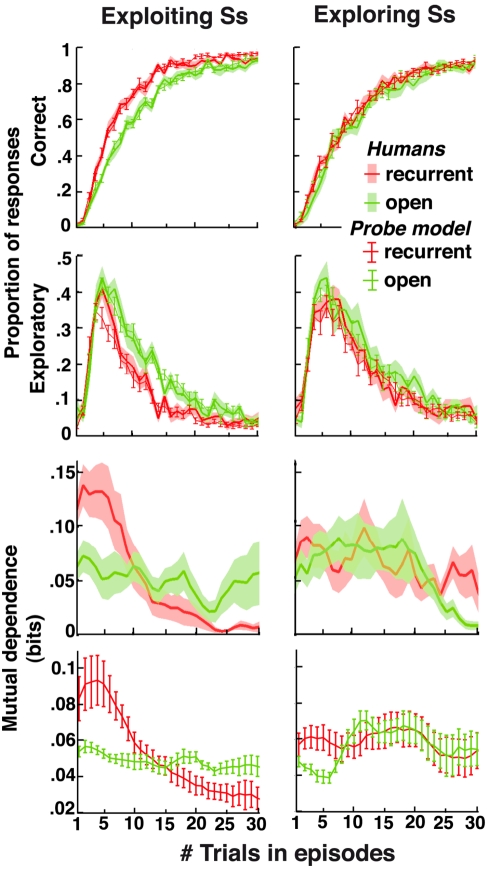
The frontal lobes subserve decision-making and executive control--that is, the selection and coordination of goal-directed behaviors. Current models of frontal executive function, however, do not explain human decision-making in everyday environments featuring uncertain, changing, and especially open-ended situations. Here, we propose a computational model of human executive function that clarifies this issue. Using behavioral experiments, we show that unlike others, the proposed model predicts human decisions and their variations across individuals in naturalistic situations. The model reveals that for driving action, the human frontal function monitors up to three/four concurrent behavioral strategies and infers online their ability to predict action outcomes: whenever one appears more reliable than unreliable, this strategy is chosen to guide the selection and learning of actions that maximize rewards. Otherwise, a new behavioral strategy is tentatively formed, partly from those stored in long-term memory, then probed, and if competitive confirmed to subsequently drive action. Thus, the human executive function has a monitoring capacity limited to three or four behavioral strategies. This limitation is compensated by the binary structure of executive control that in ambiguous and unknown situations promotes the exploration and creation of new behavioral strategies. The results support a model of human frontal function that integrates reasoning, learning, and creative abilities in the service of decision-making and adaptive behavior.
Overview
The claims and statistics of this paper haven’t been checked yet.
Free: it reads the open-access text and checks the first 5 claims that cite a source we can check. Create a free account to check every claim.
Integrity signals
Registry
Cites
Statistics
Figures



Verification
Claims the paper makes
The claims and statistics of this paper haven’t been checked yet.
Free: it reads the open-access text and checks the first 5 claims that cite a source we can check. Create a free account to check every claim.
Claims other papers make about this one
Each is checked against this paper’s own text: does it say what the citing paper says it does?
The source backs part of the claim, not all of it — or backs it for a different population, condition or comparison.
In the citing paper
“Other functions, higher-order EF, such as planning, reasoning, and problem solving, develop from these core processes [16].”
From Comparing Executive Functions in Children and Adolescents with Autism and ADHD—A Systematic Review and Meta-Analysis (2024) · cites this paper as [16]
Experimental — accuracy not yet measuredIn the citing paper
“The frontal lobe performs executive functions, such as planning and organizing, and undergoes massive changes from puberty until mid-twenties [74].”
In the citing paper
“accurately inferring one’s confidence in a task is an important indicator of whether a previous decision should be revised 17, 57, whether a subsequent step in a chain of decisions should be initiated (58), or more generally when it is advantageous to deliberate (59) or engage cognitive control (18).”
From Psychiatric Symptom Dimensions Are Associated With Dissociable Shifts in Metacognition but Not Task Performance (2018) · cites this paper as [17]
Self-check
Percentages, sums and reported differences re-computed from the paper’s own numbers.
The self-check needs the paper’s full text.
Citations
Cites
Hitch, G. (1984) · Science · doi:10.1017/s0033291700003548 · Cited by 16,233
Information theory and statistical mechanics
Jaynes, E. T. (1957) · Physical Review · doi:10.1103/physrev.106.620 · Cited by 12,931 · cited 2×
“Prior reliability lprior of the probe actor is chosen as minimizing prior information over task set reliability because no information is available to estimate it [32].”
BackgroundAn Integrative Theory of Prefrontal Cortex Function
Miller, E. K., & Cohen, J. D. (2001) · Annual Review of Neuroscience · doi:10.1146/annurev.neuro.24.1.167 · Cited by 12,803 · cited 1×
“Neuroimaging studies suggest that these internal mappings are implemented in distinct frontal regions: (1) selective mappings in lateral premotor regions, because these regions are involved in learning and processing stimulus-response associations [10,46]; (2) predictive mappings in ventromedial prefrontal regions, be…”
BackgroundRescorla, R. A. (1972) · Medical Entomology and Zoology · Cited by 9,462
Kahneman, D., & Tversky, A. (1984) · American Psychologist · doi:10.1037/0003-066x.39.4.341 · Cited by 6,544 · cited 1×
“associating stimuli, actions, and expected outcomes [1–4]).”
Models of Bounded Rationality: Empirically Grounded Economic Reason
Simon, H. A. (1997) · The MIT Press eBooks · doi:10.7551/mitpress/4711.001.0001 · Cited by 4,205 · cited 1×
“Indeed, actor selection is based on a ‘‘satisficing’’ criterion based on task set reliability [1]: either a task set appears to be reliable, in which case it becomes the actor, because no other task sets meet this criterion, or no task set appears reliable, in which case a new task set is created and serves as an acto…”
BackgroundCosts of a predictible switch between simple cognitive tasks.
Rogers, R. D., & Monsell, S. (1995) · Journal of Experimental Psychology: General · doi:10.1037/0096-3445.124.2.207 · Cited by 3,170 · cited 1×
“. Thus, we assumed that in agreement with previous studies (e.g.,”
Result(2000) · doi:10.1017/cbo9780511803475 · Cited by 2,987
Barto, A. G. (1998) · IFAC Proceedings Volumes · doi:10.1016/s1474-6670(17)38315-5 · Cited by 2,976 · cited 6×
“After observing action outcome ot, the actor selective mapping is updated based on outcome values r[o] according to standard reinforcement learning mechanisms [11] (e.”
BackgroundMethodInfluentialBoden, M. A. (2004) · doi:10.4324/9780203508527 · Cited by 2,775
Cited by
Items 101–200 of 487
Kouklari, E.-C., Tsermentseli, S. K., & Auyeung, B. (2018) · Research in Developmental Disabilities · doi:10.1016/j.ridd.2018.02.015 · Cited by 73
Effects of single-session transcranial direct current stimulation on reactive response inhibition
Friehs, M. A., Frings, C., & Hartwigsen, G. (2021) · Neuroscience & Biobehavioral Reviews · doi:10.1016/j.neubiorev.2021.07.013 · Cited by 63
“Additionally, more complex higher-order competences such as reasoning, problem solving, or planning can be built from these core executive functions (Collins and Koechlin, 2012; Lehto et al., 2003).”
BackgroundPsychosurgery Reduces Uncertainty and Increases Free Will? A Review
Ridder, D. D., Vanneste, S., Gillett, G. R., Manning, P. J., Glue, P., & Langguth, B. (2016) · Neuromodulation Technology at the Neural Interface · doi:10.1111/ner.12405 · Cited by 94
Christoforou, M., Jones, E. J. H., White, P., & Charman, T. (2023) · JCPP Advances · doi:10.1002/jcv2.12123 · Cited by 54
“Built on these domains, higher ‐ order executive processes (problem ‐ solving and planning) underpin decision ‐ making and behaviour (Collins & Koechlin, 2012).”
Chmielewski, W. X., & Beste, C. (2014) · Progress in Neurobiology · doi:10.1016/j.pneurobio.2014.11.002 · Cited by 55
Educational Robotics and Robot Creativity: An Interdisciplinary Dialogue
Gubenko, A., Kirsch, C., Smilek, J. N., Lubart, T., & Houssemand, C. (2021) · Frontiers in Robotics and AI · doi:10.3389/frobt.2021.662030 · Cited by 70
“The creative process is also marked by the constraint between new and already existing problem-solving strategies (Collins and Koechlin, 2012) and by the necessity to build upon previous experience and knowledge in order to extend or break with them to generate novelty.”
BackgroundRefinement and Psychometric Evaluation of the Executive Skills Questionnaire-Revised
Strait, J. E., Dawson, P., Walther, C. A. P., Strait, G. G., Barton, A. K., & McClain, M. B. (2019) · Contemporary School Psychology · doi:10.1007/s40688-018-00224-x · Cited by 57
Prefrontal Goal Codes Emerge as Latent States in Probabilistic Value Learning
Stoianov, I., Genovesio, A., & Pezzulo, G. (2016) · Journal of Cognitive Neuroscience · doi:10.1162/jocn_a_00886 · Cited by 44
“…1991; Sanborn et al., 2010) to infer from experience a set of candidate categories that guide stimulus-action-value transitions, and a reward-sensitive process to select the actual category to be used for action control at any given trial (Collins and Koechlin, 2012; Collins and Frank, 2013).”
BackgroundMethodResultInfluentialImprecise neural computations as a source of adaptive behaviour in volatile environments
Findling, C., Chopin, N., & Koechlin, É. (2020) · Nature Human Behaviour · doi:10.1038/s41562-020-00971-z · Cited by 61
Self-citationEffects of Alcohol Consumption on Cognition and Regional Brain Volumes Among Older Adults
Downer, B. G., Jiang, Y., Zanjani, F. A. K., & Fardo, D. W. (2014) · American Journal of Alzheimer s Disease & Other Dementias® · doi:10.1177/1533317514549411 · Cited by 48
“The frontal lobe is located in the front of each cerebral hemisphere and is responsible for a number of complex cognitive tasks and behaviors including language, planning, decision making, attention, executive functioning, and goal directed behavior.(11) Frontal lobe atrophy is a characteristic of frontotemporal demen…”
BackgroundGoals, usefulness and abstraction in value-based choice
Martino, B. D., & Cortese, A. (2022) · Trends in Cognitive Sciences · doi:10.1016/j.tics.2022.11.001 · Cited by 54
“…fl uentialcognitivemodelpostulatingthatthebrainperformstwoparallelcomputationstosolvethe exploit/explore problem, which can be adapted to our case as: ‘ exploit ’ = continue using the current abstraction; ‘ explore ’ = change abstraction [128,129].”
BackgroundLigneul, R. (2019) · PLoS Computational Biology · doi:10.1371/journal.pcbi.1006989 · Cited by 46
Meijer, A., Königs, M., van der Fels, I. M. J., Visscher, C., Bosker, R., Hartman, E., & Oosterlaan, J. (2020) · Journal of Sport and Exercise Psychology · doi:10.1123/jsep.2020-0034 · Cited by 52
Bourguignon, N. J. (2014) · Neuroscience & Biobehavioral Reviews · doi:10.1016/j.neubiorev.2014.09.008 · Cited by 52
Ren, F.-F., Alderman, B. L., Wang, W., Chen, F., Zhou, W.-S., Zong, W.-J., Liang, W.-M., & Chang, Y. (2023) · Sports Medicine · doi:10.1007/s40279-023-01869-2 · Cited by 41
“, inhibitory control, working memory, and cognitive flexibility) but also reflects higher-level cognitive processes involved in goal-directed thought and action (planning, reasoning, and problem solving) [13, 15, 16].”
BackgroundMontgomery, L., Chondrogianni, V., Fletcher‐Watson, S., Rabagliati, H., Sorace, A., & Davis, R. (2021) · Journal of Autism and Developmental Disorders · doi:10.1007/s10803-021-05234-y · Cited by 50
Examining the Relations Among Emerging Adult Coping, Executive Function, and Anxiety
O’Rourke, E. J., Halpern, L. F., & Vaysman, R. (2018) · Emerging Adulthood · doi:10.1177/2167696818797531 · Cited by 61
“And, higher order cognitive processes such as problemsolving and planning are complex EFs that utilize more basic EFs such as inhibitory control, cognitive flexibility, and working memory (Collins & Koechlin, 2012; Diamond, 2013).”
BackgroundThe Cost of Structure Learning
Collins, A. G. E. (2017) · Journal of Cognitive Neuroscience · doi:10.1162/jocn_a_01128 · Cited by 49
“…do so whether the contexts are observable (either snow or ice on the ground means you should dress warmly) or only latent (it is currently winter in a cold climate, which requires the same rule), inferred as the current temporal context (Donoso, Collins, & Koechlin, 2014; Collins & Koechlin, 2012).”
BackgroundSelf-citationInterplay between Creativity, Executive Function and Working Memory in Middle-Aged and Older Adults
Sharma, S., & Babu, N. (2017) · Creativity Research Journal · doi:10.1080/10400419.2017.1263512 · Cited by 53
“From these higher order EFs of reasoning, problem solving and planning are built (Collins & Koechlin, 2012; Lunt et al., 2012).”
BackgroundImmersive Virtual Reality-Based Methods for Assessing Executive Functioning: Systematic Review
Kirkham, R., Kooijman, L., Albertella, L., Myles, D., Yücel, M., & Rotaru, K. (2024) · JMIR Serious Games · doi:10.2196/50282 · Cited by 40
Reinforcement learning: bringing together computation and cognition
Collins, A. G. E. (2019) · Current Opinion in Behavioral Sciences · doi:10.1016/j.cobeha.2019.04.011 · Cited by 40
Self-citationModel-based spatial navigation in the hippocampus-ventral striatum circuit: A computational analysis
Stoianov, I. P., Pennartz, C. M. A., Lansink, C. S., & Pezzulo, G. (2018) · PLoS Computational Biology · doi:10.1371/journal.pcbi.1006316 · Cited by 44
Learning and transfer of working memory gating policiesPreprint
Bhandari, A., & Badre, D. (2017) · bioRxiv · doi:10.1101/144543 · Cited by 36
“…work on the learning and transfer of abstract ‘task-sets’, for example, it has been argued that transfer is flexible in that participants make adaptive decisions about whether to re-use one of many previously learned task-sets or build a new one (Collins & Frank, 2013; Collins & Koechlin, 2012).”
Chueh, T., Hsieh, S., Tsai, Y.-J., Yu, C., Hung, C., Benzing, V., Schmidt, M., Chang, Y., Hillman, C. H., & Hung, T. (2021) · Psychology of sport and exercise · doi:10.1016/j.psychsport.2021.102097 · Cited by 134
Eckstein, M. K., Master, S. L., Dahl, R. E., Wilbrecht, L., & Collins, A. G. E. (2020) · bioRxiv (Cold Spring Harbor Laboratory) · doi:10.1101/2020.07.04.187971 · Cited by 23
Self-citationRodrigue, C., Gearhardt, A. N., & Bégin, C. (2019) · Appetite · doi:10.1016/j.appet.2019.05.034 · Cited by 44
Treble‐Barna, A., Sohlberg, M. M., Harn, B. E., & Wade, S. L. (2015) · Journal of Head Trauma Rehabilitation · doi:10.1097/htr.0000000000000200 · Cited by 46
Ravan, M., Noroozi, A., Sanchez, M. M., Borden, L., Alam, N., Flor-Henry, P., & Hasey, G. (2022) · Clinical Neurophysiology · doi:10.1016/j.clinph.2022.11.014 · Cited by 39
Effect of shift work on working memory, attention and response time in nurses
Esmaily, A., Jambarsang, S., Mohammadian, F., & Mehrparvar, A. H. (2020) · International Journal of Occupational Safety and Ergonomics · doi:10.1080/10803548.2020.1863656 · Cited by 42
“important in accurately performing many jobs [10].”
Morris, A. S., Wakschlag, L. S., Krogh‐Jespersen, S., Fox, N. A., Planalp, B. M., Perlman, S. B., Shuffrey, L. C., Smith, B. A., Lorenzo, N. E., Amso, D., et al. (2020) · Adversity and Resilience Science · doi:10.1007/s42844-020-00025-3 · Cited by 40
The role of prediction and outcomes in adaptive cognitive control
Schiffer, A., Waszak, F., & Yeung, N. (2015) · Journal of Physiology-Paris · doi:10.1016/j.jphysparis.2015.02.001 · Cited by 37
“Crucially for our purposes here, HRL theory also has interesting implications for the role of outcome and task representations in cognitive control (Collins and Frank, 2013; Collins and Koechlin, 2012).”
BackgroundPetrolini, V., Jorba, M., & Vicente, A. (2020) · Frontiers in Psychology · doi:10.3389/fpsyg.2020.572035 · Cited by 33
Bombonato, C., Lucchese, B. D., Ruffini, C., Lieto, M., Brovedani, P., Sgandurra, G., Cioni, G., & Pecini, C. (2023) · Neuropsychology Review · doi:10.1007/s11065-022-09574-z · Cited by 60
“Subsequently, these three basic EF components support the emergence of more complex and high-level EFs, including abstract reasoning, problem solving and planning, also referred to as Fluid Intelligence (Collins & Koechlin, 2012; Diamond, 2013; Lunt et al., 2012).”
BackgroundCropley, M., & Collis, H. (2020) · Frontiers in Psychology · doi:10.3389/fpsyg.2020.00821 · Cited by 49
“, 2000), which lead on to further higher order functions such as reasoning and planning (Collins and Koechlin, 2012; Diamond, 2013).”
BackgroundMhiri, I., & Rekik, I. (2019) · Medical Image Analysis · doi:10.1016/j.media.2019.101596 · Cited by 40
Ceruti, C., Mingozzi, A., Scionti, N., & Marzocchi, G. M. (2024) · Children · doi:10.3390/children11040473 · Cited by 35
“Other functions, higher-order EF, such as planning, reasoning, and problem solving, develop from these core processes [16].”
BackgroundAccumulating Data to Optimally Predict Obesity Treatment (ADOPT) Core Measures: Psychosocial Domain
Sutin, A. R., Boutelle, K. N., Czajkowski, S. M., Epel, E. S., Green, P. A., Hunter, C. M., Rice, E. L., Williams, D. M., Young-Hyman, D. L., & Rothman, A. J. (2018) · Obesity · doi:10.1002/oby.22160 · Cited by 37
“From these core functions, higher-order EFs are built, including reasoning, decision-making, problem solving, and planning (28).”
BackgroundDistributed representation of context by intrinsic subnetworks in prefrontal cortex
Waskom, M., & Wagner, A. D. (2017) · Proceedings of the National Academy of Sciences · doi:10.1073/pnas.1615269114 · Cited by 30
“Humans’ abilities to actively represent and evaluate rules appears similarly limited (30).”
BackgroundThe computational role of structure in neural activity and connectivity.
Ostojic, S., & Fusi, S. (2023) · arXiv.org · doi:10.48550/arxiv.2308.16772 · Cited by 31
Richter, A., Richter, S., Barman, A., Soch, J., Klein, M., Assmann, A., Libeau, C., Behnisch, G., Wüstenberg, T., Seidenbecher, C. I., et al. (2013) · Frontiers in Human Neuroscience · doi:10.3389/fnhum.2013.00250 · Cited by 32
“The ability to adapt oneself to uncertain, changeable needs of the environment is considered as an outstanding human skill (Collins and Koechlin, 2012).”
BackgroundAssessment of Engagement and Learning During Child-Robot Interaction Using EEG Signals
Alimardani, M., van den Braak, S., Jouen, A.-L., Matsunaka, R., & Hiraki, K. (2021) · Lecture notes in computer science · doi:10.1007/978-3-030-90525-5_59 · Cited by 35
Cardiovascular fitness and executive functioning in primary school‐aged children
Meijer, A., Königs, M., de Bruijn, A. G. M., Visscher, C., Bosker, R., Hartman, E., & Oosterlaan, J. (2020) · Developmental Science · doi:10.1111/desc.13019 · Cited by 40
Fettes, P., Moayedi, M., Dunlop, K., Mansouri, F., Vila‐Rodriguez, F., Giacobbe, P., Davis, K. D., Lam, R. W. M., Kennedy, S. H., Daskalakis, Z. J., et al. (2017) · Biological Psychiatry Cognitive Neuroscience and Neuroimaging · doi:10.1016/j.bpsc.2017.12.003 · Cited by 34
Recognition of Facial Emotional Expression in Amnestic Mild Cognitive Impairment
Varjassyová, A., Hořínek, D., Andel, R., Amlerová, J., Laczó, J., Sheardová, K., Magerová, H., Holmerová, I., Vyhnálek, M., Bradáč, O., et al. (2012) · Journal of Alzheimer s Disease · doi:10.3233/jad-2012-120148 · Cited by 38
“Decision about familiarity may occur later on when the temporal lobe connects with the orbitofrontal cortex [6], the area well known to govern executive functions [7].”
Palamarchuk, I. S., & Vaillancourt, T. (2022) · Frontiers in Integrative Neuroscience · doi:10.3389/fnint.2022.782154 · Cited by 45
“Cognitive inflexibility is related to binary decision-making, which is a defensive cognitive strategy to ergonomically conquer the social challenge by integrating insecurity predictability, reasoning, learning fortification, and monitoring behavioral strategies (Collins and Koechlin, 2012).”
BackgroundFaulkner, K. M., Uchmanowicz, I., Lisiak, M., Cichoń, E., Cyrkot, T., & Szczepanowski, R. (2021) · Frontiers in Psychiatry · doi:10.3389/fpsyt.2021.713386 · Cited by 31
Cao, Y., Huang, T., Huang, J., Xie, X., & Wang, Y. (2020) · Frontiers in Psychology · doi:10.3389/fpsyg.2020.580329 · Cited by 48
“The model was built from the basic components (Collins and Koechlin, 2012; Lunt et al., 2012).”
MethodMiklós, M., Komáromy, D., Futó, J., & Balázs, J. (2020) · International Journal of Environmental Research and Public Health · doi:10.3390/ijerph17114071 · Cited by 53
“Some studies suggest that reasoning, problem-solving, and planning are based on these aforementioned processes [8,9].”
BackgroundA generative framework for the study of delusions
Erdmann, T., & Mathys, C. D. (2021) · Schizophrenia Research · doi:10.1016/j.schres.2020.11.048 · Cited by 38
“For this reason, DPMMs have found broad application in the modelling of higher-order human cognition (e.g., Kemp et al., 2010; Collins and Koechlin, 2012).”
Feriver, Ş., Olgan, R., Teksöz, G., & Barth, M. (2019) · Sustainability · doi:10.3390/su11051478 · Cited by 53
Deterministic response strategies in a trial-and-error learning task
Mohr, H., Zwosta, K., Marković, D., Bitzer, S., Wolfensteller, U., & Ruge, H. (2018) · PLoS Computational Biology · doi:10.1371/journal.pcbi.1006621 · Cited by 31
Prefrontal function and cognitive control: from action to language
Rouault, M., & Koechlin, É. (2018) · Current Opinion in Behavioral Sciences · doi:10.1016/j.cobeha.2018.03.008 · Cited by 30
Self-citationA Summary of the Developmental Trajectory of Executive Functions from Birth to Adulthood
Korzeniowski, C., Ison, M. S., & de Anglat, H. D. (2021) · Springer eBooks · doi:10.1007/978-3-030-61721-9_33 · Cited by 60
Kibby, M. Y., Newsham, G., Imre, Z., & Schlak, J. E. (2021) · Child Neuropsychology · doi:10.1080/09297049.2021.1908532 · Cited by 29
“Others have supported this notion (Collins & Koechlin, 2012; for a review, see Diamond, 2013; Lunt, Bramham, Morris, Bullock, Selway, Xenitidis, & David, 2012).”
Marković, D., Goschke, T., & Kiebel, S. J. (2020) · Cognitive Affective & Behavioral Neuroscience · doi:10.3758/s13415-020-00837-x · Cited by 29
“This view is congruent with proposals that dACC is involvedwhen switching away from the current task set (Collins and Koechlin, 2012; Duverne and Koechlin, 2017; Gruber, Diekhof, Kirchenbauer and Goschke, 2010) or an ongoing task (Kolling, Behrens, Mars and Rushworth, 2012), where the idea is that dACC does not only r…”
BackgroundKim, E., Han, J., Choi, H., Prié, Y., Vigier, T., Bulteau, S., & Kwon, G. H. (2021) · JMIR Serious Games · doi:10.2196/30249 · Cited by 36
Adaptive Learning through Temporal Dynamics of State Representation
Razmi, N., & Nassar, M. (2020) · Journal of Neuroscience · doi:10.1101/2020.08.03.231068 · Cited by 26
“In principle, state update rules could be derived for repeating contexts in much the same way, by first deriving Bayesian estimates of context probability(A. Collins & Koechlin, 2012) and then approximating these values using the network output (analogous to our network-based context shift model).”
Methodvan Schooten, K. S., Duran, L., Visschedijk, M., Pijnappels, M., Lord, S. R., Richardson, J., & Delbaere, K. (2019) · Aging Clinical and Experimental Research · doi:10.1007/s40520-018-1050-6 · Cited by 28
Steinke, A., Lange, F., Seer, C., & Kopp, B. (2018) · Computational Brain & Behavior · doi:10.1007/s42113-018-0009-1 · Cited by 20
“Furthermore, Collins and Koechlin (2012) hypothesize that reinforcement learning cannot explain executive functions alone, but an internal mechanism is necessary as well that switches between task sets as a function of subjective values of outcomes.”
BackgroundCan We Be Epigenetically Proactive?
Evers, K. (2015) · doi:10.15502/9783958570238 · Cited by 25
“Recently Collins & Koechlin (2012) have further suggested a computational model of human executive functioning associated with the prefrontal cortex, which integrates multiple processes during decision-making, such as expectedness of uncertainty, task switching, and reinforcement learning.”
Vandoni, M., Giuriato, M., Pirazzi, A., Zanelli, S., Gaboardi, F., Pellino, V. C., Gazzarri, A. A., Baldassarre, P., Zuccotti, G., & Calcaterra, V. (2023) · Pediatric Reports · doi:10.3390/pediatric15040062 · Cited by 45
“Collins and Koechlin [70] show that EFs are fundamental to build higher-order EFs, such as reasoning, problem solving, and planning.”
BackgroundHills, T. T. (2019) · Proceedings of the Royal Society B Biological Sciences · doi:10.1098/rspb.2019.0510 · Cited by 35
Executive functions assessment in patients with language impairment A systematic review
Gonçalves, A. P. B., Mello, C., Pereira, A. H., Ferré, P., Fonseca, R. P., & Joanette, Y. (2018) · Dementia & Neuropsychologia · doi:10.1590/1980-57642018dn12-030008 · Cited by 30
Rungsattatharm, L., Tasingha, P., Trairatvorakul, P., & Chonchaiya, W. (2025) · Child and Adolescent Psychiatry and Mental Health · doi:10.1186/s13034-025-00875-8 · Cited by 49
“Core skills within EF include inhibitory control, working memory, and cognitive flexibility [1], while higher-level EF involves reasoning, problem-solving skills, and planning [1, 2].”
The relationship between music training and cognitive flexibility: an ERP study
Hao, J., Zhong, Y., Pang, Y., Jing, Y., Liu, Y., Li, H., Li, J., & Zheng, M. (2023) · Frontiers in Psychology · doi:10.3389/fpsyg.2023.1276752 · Cited by 27
Real and Deepfake Face Recognition: An EEG Study on Cognitive and Emotive Implications
Tarchi, P., Lanini, M. C., Frassineti, L., & Lanatà, A. (2023) · Brain Sciences · doi:10.3390/brainsci13091233 · Cited by 31
Aging and Psychological Well-Being: The Possible Role of Inhibition Skills
Fusi, G., Palmiero, M., Lavolpe, S., Colautti, L., Crepaldi, M., Antonietti, A., Domenico, A. D., Colombo, B., Crosta, A. D., Malva, P. L., et al. (2022) · Healthcare · doi:10.3390/healthcare10081477 · Cited by 33
“From these core functions, higher-order EFs are built, including planning and fluid intelligence, which encompasses reasoning and problem solving [28].”
BackgroundLandry-Roy, C., Bernier, A., Gravel, J., & Beauchamp, M. H. (2018) · Journal of the International Neuropsychological Society · doi:10.1017/s1355617718000401 · Cited by 44
“Studies that have focused on mapping the developmental trajectories of EF indicate that earlier developing core EF underlie and predict more complex executive abilities (Collins & Koechlin, 2012; Diamond, 2013; Garon et al., 2008).”
BackgroundRejecting Outliers: Surprising Changes Do Not Always Improve Belief Updating
Filipowicz, A., Valadao, D., Anderson, B., & Danckert, J. (2018) · Decision · doi:10.1037/dec0000073 · Cited by 23
“…addition to building mental models, an equally important skill is the ability to update one’s models when faced with new information that is not explained by a current model (Collins & Koechlin, 2012; Danckert, Stöttinger, Quehl, & Anderson, 2012; Nassar, Wilson, Heasly, & Gold, 2010).”
BackgroundMartínez‐Pernía, D., Olavarría, L., Fernández‐Manjón, B., Cabello, V., Henríquez, F., Robert, P. H., Alvarado, L., Barría, S., Antivilo-Bruna, A., Velásquez, J. D., et al. (2023) · Applied Neuropsychology Adult · doi:10.1080/23279095.2023.2174438 · Cited by 31
“From these, higher-order EF are built, such as problem-solving, reasoning, and planning (Collins & Koechlin, 2012, Lunt et al., 2012).”
Altered Functional Connectivity in Children with ADHD Revealed by Scalp EEG: An ERP Study
Chen, C., Yang, H., Du, Y., Zhai, G., Xiong, H., Yao, D., Xu, P., Gong, J., Yin, G., & Li, F. (2021) · Neural Plasticity · doi:10.1155/2021/6615384 · Cited by 26
Ahmed, A. O., Kramer, S., Hofman, N., Flynn, J., Hansen, M. C., Martin, V., Pillai, A., & Buckley, P. F. (2021) · Neuropsychobiology · doi:10.1159/000514126 · Cited by 28
Avilov, O., Rimbert, S., Popov, A. O., & Bougrain, L. (2021) · IEEE Transactions on Biomedical Engineering · doi:10.1109/tbme.2021.3064794 · Cited by 22
“We also investigated additional channels from the frontal lobe as an interesting area for our experiment because it is considered as the emotional controller center and also responsible for motor functions, motor speech functions and impulse control [28].”
Nonparametric Problem-Space Clustering: Learning Efficient Codes for Cognitive Control Tasks
Maisto, D., Donnarumma, F., & Pezzulo, G. (2016) · Entropy · doi:10.3390/e18020061 · Cited by 21
“Nevertheless, given the computational complexity of full Bayesian inference processes, it is still unclear whether specific approximations or heuristics might be used [17,57–59].”
BackgroundComputational role of structure in neural activity and connectivity
Ostojic, S., & Fusi, S. (2024) · Trends in Cognitive Sciences · doi:10.1016/j.tics.2024.03.003 · Cited by 59
Targeting executive function for weight loss in adults with overweight or obesity
Eichen, D. M., Pasquale, E. K., Twamley, E. W., & Boutelle, K. N. (2021) · Physiology & Behavior · doi:10.1016/j.physbeh.2021.113540 · Cited by 26
Neural Mechanisms of Human Decision-Making
Herd, S. A., Krueger, K. A., Nair, A., Mollick, J., & O’Reilly, R. C. (2021) · Cognitive Affective & Behavioral Neuroscience · doi:10.3758/s13415-020-00842-0 · Cited by 32
Incremental implicit learning of bundles of statistical patterns
Qian, T., Jaeger, T. F., & Aslin, R. Ν. (2016) · Cognition · doi:10.1016/j.cognition.2016.09.002 · Cited by 25
“The second challenge — the problem of bundle identity — concerns the ability of learners to see commonalities between various subsequences of input and to construct a representation that compactly encodes only the unique statistical patterns of the task environment (cf., Collins & Koechlin, 2012).”
BackgroundArpaïa, P., Covino, A., Cristaldi, L., Frosolone, M., Gargiulo, L., Mancino, F., Mantile, F., & Moccaldi, N. (2022) · Sensors · doi:10.3390/s22134934 · Cited by 30
Daikoku, T., Wiggins, G. A., & Nagai, Y. (2021) · Frontiers in Neuroscience · doi:10.3389/fnins.2021.640412 · Cited by 23
Scionti, N., & Marzocchi, G. M. (2021) · Child Neuropsychology · doi:10.1080/09297049.2020.1868419 · Cited by 26
“Planning ability shows an increase during the preschool age range (Tecwyn et al., 2014) through the development of the primary core EF (Collins & Koechlin, 2012; Diamond, 2013).”
BackgroundBernal-Ruiz, F., Vera, M. R., & Ortega, A. (2020) · Interdisciplinaria Revista de Psicología y Ciencias Afines · doi:10.16888/interd.2020.37.1.6 · Cited by 50
Temporal chunking as a mechanism for unsupervised learning of task-sets
Bouchacourt, F. M., Palminteri, S., Koechlin, E., & Ostojic, S. (2019) · bioRxiv · doi:10.1101/713156 · Cited by 20
“More specifically, Collins and Koechlin [Collins and Koechlin, 2012] have shown that the Bayesian likelihood (“reliability”) of each task-set in memory is evaluated.”
BackgroundMethodInfluentialSelf-citationRelationships Between Executive Functions and Computational Thinking
Liu, T. (2024) · Journal of Educational Computing Research · doi:10.1177/07356331241242435 · Cited by 23
“As the results, higher-order EFs such as problem-solving, reasoning, and CT are crucial for students ’ cognitive development and success in various domains, including school and real-life situations (Collins & Koechlin, 2012).”
Luo, Q., Zhang, J., Huang, S., Hu, Y., Wang, H., & Chen, X. (2023) · Frontiers in Psychiatry · doi:10.3389/fpsyt.2023.1196113 · Cited by 25
Effects of computer-based training on children’s executive functions and academic achievement
Conesa, P. J., & Duñabeitia, J. A. (2021) · The Journal of Educational Research · doi:10.1080/00220671.2021.1998881 · Cited by 29
“…and therefore in academic performance such as the verbal factor, logical reasoning (Best et al., 2011), problem solving, reasoning or planning (Collins & Koechlin, 2012; Duncan et al., 2012), or skills related to reading (Borella et al., 2010; Butterfuss & Kendeou, 2018; Duncan et al., 2007;…”
BackgroundDREAM Architecture: a Developmental Approach to Open-Ended Learning in RoboticsPreprint
Doncieux, S., Bredèche, N., Goff, L. K. L., Girard, B., Coninx, A., Sigaud, O., Khamassi, M., Díaz-Rodríguez, N., Filliat, D., Hospedales, T. M., et al. (2020) · arXiv (Cornell University) · doi:10.48550/arxiv.2005.06223 · Cited by 20
“and coordination in the prefrontal cortex [158, 24].”
BackgroundToward a computational role for locus coeruleus/norepinephrine arousal systems
Nassar, M. R. (2024) · Current Opinion in Behavioral Sciences · doi:10.1016/j.cobeha.2024.101407 · Cited by 25
Chen, X., & Zhang, Y. (2023) · Neural Regeneration Research · doi:10.4103/1673-5374.379042 · Cited by 31
“Executive functions refer to a set of high-order cognitive processes, including reasoning, problem-solving, and planning, thus creating an attentional-control system (Collins and Koechlin, 2012; Lunt et al., 2012).”
BackgroundWoo, J. H., Aguirre, C. G., Bari, B. A., Tsutsui, K., Grabenhorst, F., Cohen, J. Y., Schultz, W., Izquierdo, A., & Soltani, A. (2023) · Cognitive Affective & Behavioral Neuroscience · doi:10.3758/s13415-022-01059-z · Cited by 25
“For example, it has been suggested that active representations of alternative models about the environment (task set) are stored in long-term memory to be retrieved when the corresponding context reoccurs (Collins & Koechlin, 2012; Soltani & Koechlin, 2022).”
BackgroundWang, X., Wanniarachchi, H. I., Wu, A., & Liu, H. (2022) · Frontiers in Human Neuroscience · doi:10.3389/fnhum.2022.853909 · Cited by 22
Kusi‐Mensah, K., Nuamah, N. D., Wemakor, S., Agorinya, J., Seidu, R., Martyn‐Dickens, C., & Bateman, A. (2021) · Neuropsychology Review · doi:10.1007/s11065-021-09529-w · Cited by 29
“This 3-core-factor model has been fairly well replicated (Collins & Koechlin, 2012; Hall & Marteau, 2014; Karbach & Unger, 2014; Lunt et al., 2012; Miyake & Friedman, 2012).”
MethodMhiri, I., Khalifa, A. B., Mahjoub, M. A., & Rekik, I. (2020) · Medical Image Analysis · doi:10.1016/j.media.2020.101768 · Cited by 22
Dynamic noise estimation: A generalized method for modeling noise fluctuations in decision-making
Li, J.-J., Shi, C.-C., Li, L.-X., & Collins, A. G. E. (2024) · bioRxiv · doi:10.1101/2023.06.19.545524 · Cited by 17
“Our approach instead relies on the assumption that participants may switch be-406 tween finite, discrete late states abruptly, which is supported by behavioral findings for discrete policies [40, 41].”
BackgroundSelf-citationCompetencias parentales que favorecen el desarrollo de funciones ejecutivas en escolares
Universidad de Playa Ancha, C., Bernal-Ruiz, F., Vera, M. R., Programa Pace, U. D. P. A., Campos, J. G., Universidad de Playa Ancha, C., Torres-Álvarez, A., & Universidad de Playa Ancha, C. (2017) · Revista Latinoamericana de Ciencias Sociales Niñez y Juventud · doi:10.11600/1692715x.16109 · Cited by 58
“De estos tres puntos a su vez se desprenden el razonamiento de problemas, la resolución de conflictos y la planificación (Collins & Koechlin, 2012).”
BackgroundAbrupt and spontaneous strategy switches emerge in simple regularised neural networks
Löwe, A. T., Touzo, L., Muhle-Karbe, P. S., Saxe, A., Summerfield, C., & Schuck, N. W. (2024) · PLoS Computational Biology · doi:10.1371/journal.pcbi.1012505 · Cited by 16
“One interesting model that can dynamically switch between strategies was reported by Collins and colleagues [25, 26].”
BackgroundTracking the contribution of inductive bias to individualised internal models
Török, B., Nagy, D., Kiss, M. M., Janacsek, K., Németh, D., & Orbán, G. (2022) · PLoS Computational Biology · doi:10.1371/journal.pcbi.1010182 · Cited by 17
Hummos, A. (2022) · arXiv (Cornell University) · doi:10.48550/arxiv.2205.11713 · Cited by 10
“Biological brains seem capable of using these changes advantageously and leverage the temporal structure to learn causal and well-factorized representations (Collins & Koechlin, 2012; Yu et al., 2021; Herce Casta˜n´on et al., 2021).”
BackgroundPreschool Executive Functioning and Child Behavior: Association with Learning Prerequisites?
Ruffini, C., Marzocchi, G. M., & Pecini, C. (2021) · Children · doi:10.3390/children8110964 · Cited by 22
“In turn, the three basic components support the development of more complex and high-level EFs that constitute fluid intelligence, such as abstract reasoning, problem solving, and planning [3,18,19].”
BackgroundVallejo, J. M. B., Carrera, R. M. H., Rodríguez, R. M., & López-Bastías, J. L. (2020) · Sustainability · doi:10.3390/su12198109 · Cited by 29
“In this way, each experience becomes an element in the organizational structure of the set of events that determine the development of learning, which is considered the set of responses modeled on culture and environment [73,74].”
Background
Metadata
- Authors
- Collins, A., & Koechlin, E.
- Affiliations
- Brown University (US)
- Corresponding author
- Collins, Anne
- ORCID
- Collins, Anne
- Venue
- PLoS Biology
- Publisher
- Public Library of Science (PLoS)
- Published
- 2012-03-27
- Volume
- 10
- Issue
- 3
- Pages
- e1001293
- ISSN
- 1544-9173 (ISSN-L)
- 1545-7885
- PMC
- PMC3313946
- OpenAlex
- W2093397813
- Cited by
- 558
- References
- 64
- Citations by year
- 2026: 24 · 2025: 45 · 2024: 47 · 2023: 47 · 2022: 66 · 2021: 69 · 2020: 58 · 2019: 47 · 2018: 39 · 2017: 29 · 2016: 24 · 2015: 25 · 2014: 19 · 2013: 14 · 2012: 5
- FWCI
- 10.33
- Type
- journal article
- Language
- en
- Open access
- gold
- doi.org
- Locations
- PLoS Biology (publishedVersion, cc-by)
- Europe PMC (PubMed Central) (publishedVersion, cc-by)
- PubMed Central (publishedVersion, cc-by)
- PubMed (publishedVersion)
- HAL (submittedVersion, other-oa)
- DOAJ (DOAJ: Directory of Open Access Journals) (submittedVersion, cc-by-sa)
- Figshare (submittedVersion, cc-by)
- Funders
- FP7 Ideas: European Research Council (250106)
- Topics
- Life Sciences › Neuroscience › Cognitive Neuroscience › Neural and Behavioral Psychology Studies
- Social Sciences › Decision Sciences › General Decision Sciences › Decision-Making and Behavioral Economics
- Social Sciences › Psychology › Experimental and Cognitive Psychology › Cognitive Functions and Memory
- Keywords
- frontal lobe function, executive function, decision-making, behavioral strategies, strategy monitoring, exploration, creativity, reasoning, learning, reward maximization, individual differences, naturalistic decision making, adaptive behavior
- MeSH terms
- Adaptation, Psychological, Behavior, Cognition, Creativity, Cues, Decision Making, Frontal Lobe, Humans, Individuality, Learning, Models, Neurological, Computational Biology, Executive Function
About these checks
Registry, retraction, Cites and statistics results are computed, not judged, with one exception: a printed reference that no index lists is read once by a model before it counts as a citation error. Claims are extracted by a model and kept only when their quote appears verbatim in the text; each cited source is then checked, with a model’s help, for whether it says what the claim relies on. Those verdicts can be wrong — read the claim’s quote and the cited source before relying on one.
Statistics and arithmetic are recomputed, not judged.
Confidence bands are shown only for fields calibrated on our annotated test set. None is calibrated yet, so no band is shown.
What counts as a claim ›How we measure confidence ›How we check this ›
Are you an author, or do you see a problem with this page? Request a review
Data sources
Bibliographic data: Semantic Scholar, OpenAlex, Crossref.
Contains information from the Semantic Scholar Academic Graph Datasets, made available under the ODC Attribution License (ODC-BY 1.0).
Semantic Scholar’s data is described in: Kinney, R., et al. (2023). The Semantic Scholar Open Data Platform. arXiv:2301.10140.
