

The Origin of Glucocorticoid Hormone Oscillations
Open accessThe DOI matches its Crossref record; 56 of the 56 references it cites were found in a registry or an index.
Abstract
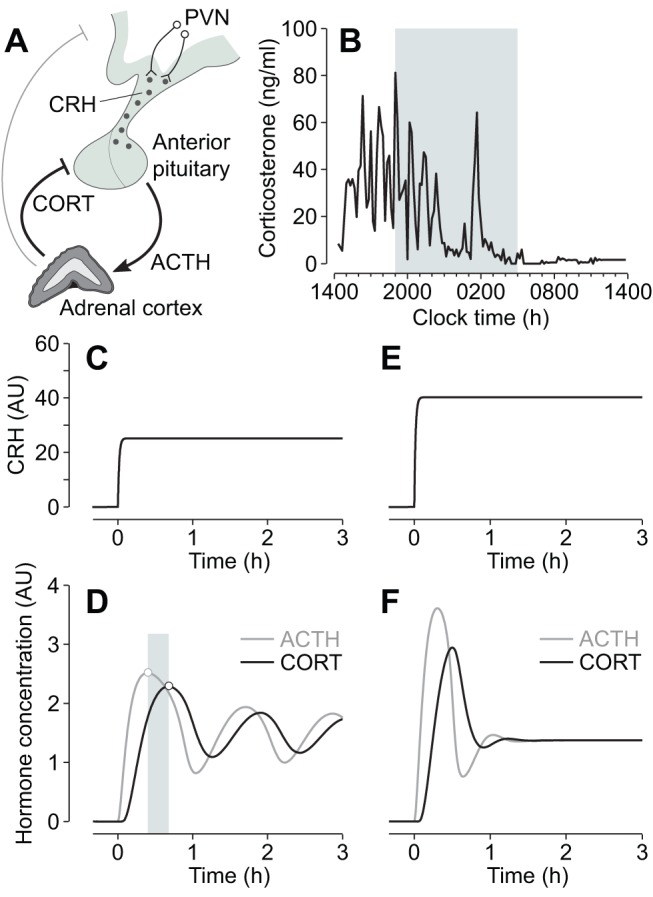
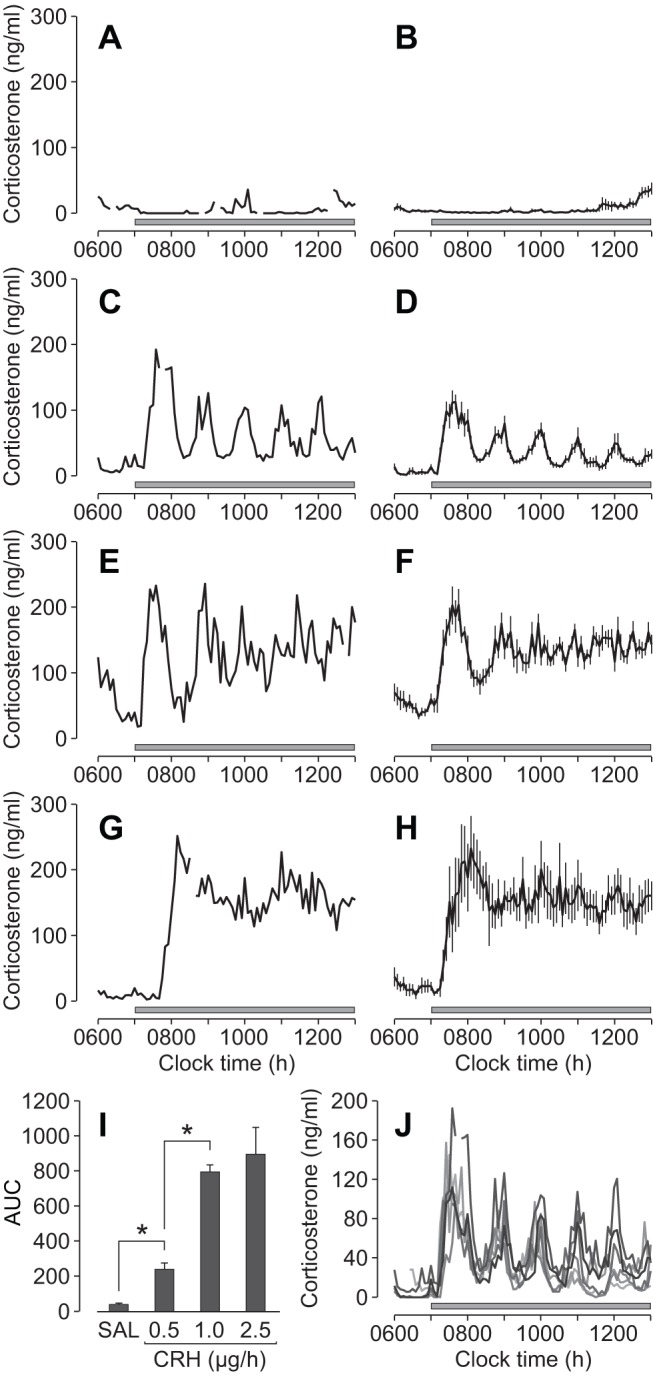
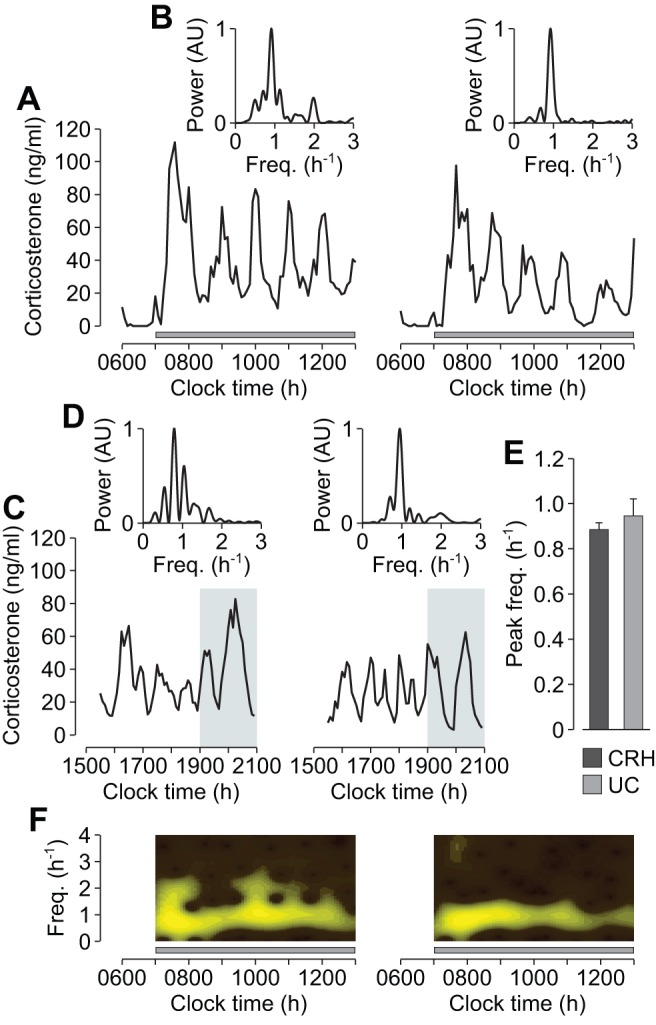
Oscillating levels of adrenal glucocorticoid hormones are essential for optimal gene expression, and for maintaining physiological and behavioural responsiveness to stress. The biological basis for these oscillations is not known, but a neuronal "pulse generator" within the hypothalamus has remained a popular hypothesis. We demonstrate that pulsatile hypothalamic activity is not required for generating ultradian glucocorticoid oscillations. We show that a constant level of corticotrophin-releasing hormone (CRH) can activate a dynamic pituitary-adrenal peripheral network to produce ultradian adrenocorticotrophic hormone and glucocorticoid oscillations with a physiological frequency. This oscillatory response to CRH is dose dependent and becomes disrupted for higher levels of CRH. These data suggest that glucocorticoid oscillations result from a sub-hypothalamic pituitary-adrenal system, which functions as a deterministic peripheral hormone oscillator with a characteristic ultradian frequency. This constitutes a novel mechanism by which the level, rather than the pattern, of CRH determines the dynamics of glucocorticoid hormone secretion.
Overview
The claims and statistics of this paper haven’t been checked yet.
Free: it reads the open-access text and checks the first 5 claims that cite a source we can check. Create a free account to check every claim.
Integrity signals
Registry
Cites
Statistics
Figures
Verification
Claims the paper makes
The claims and statistics of this paper haven’t been checked yet.
Free: it reads the open-access text and checks the first 5 claims that cite a source we can check. Create a free account to check every claim.
Claims other papers make about this one
Each is checked against this paper’s own text: does it say what the citing paper says it does?
The cited source says what the claim attributes to it.
In the citing paper
“Subsequent experiments confirmed this model prediction 48, 49, which demonstrated that a previously hypothesised hypothalamic ‘pulse generator’ [50] is not essential to generate ultradian glucocorticoid oscillations.”
From Mathematical Modelling of Endocrine Systems (2019) · cites this paper as [49]
The cited source says what the claim attributes to it.
In the citing paper
“This mathematical hypothesis has been supported by a series of in vivo experiments where CRH was infused at constant levels during the circadian nadir of HPA activity and hourly pulses in both ACTH and CORT were observed [2].”
From Rapid intra-adrenal feedback regulation of glucocorticoid synthesis (2015) · cites this paper as [2]
Self-check
Percentages, sums and reported differences re-computed from the paper’s own numbers.
The self-check needs the paper’s full text.
Citations
Cites
Sapolsky, R. M., Romero, L. M., & Munck, A. U. (2000) · Endocrine Reviews · doi:10.1210/edrv.21.1.0389 · Cited by 7,541 · cited 1×
“This neuroendocrine system regulates the secretion of vital adrenal glucocorticoid hormones (cortisol in humans and corticosterone in rodents), which have major effects on brain and metabolic function and are essential for successful recovery and adaptation to stress [4,5].”
BackgroundSapolsky, R. M. (2000) · Endocrine Reviews · doi:10.1210/er.21.1.55 · Cited by 7,533
Physiology and neurobiology of stress and adaptation: central role of the brain
McEwen, B. S. (2007) · Physiological Reviews · doi:10.1152/physrev.00041.2006 · Cited by 5,429 · cited 1×
“This ability to respond to change or ‘‘stress’’ becomes more complex in multicellular organisms, and mammals have developed a well-integrated organization of hormonal, neural, and immunological systems that protect them from internal and external threats to their homeostatic state [1–3].”
BackgroundStress and the brain: from adaptation to disease
de Kloet, E. R., Joëls, M., & Holsboer, F. (2005) · Nature Reviews Neuroscience · doi:10.1038/nrn1683 · Cited by 4,621 · cited 1×
“This neuroendocrine system regulates the secretion of vital adrenal glucocorticoid hormones (cortisol in humans and corticosterone in rodents), which have major effects on brain and metabolic function and are essential for successful recovery and adaptation to stress [4,5].”
BackgroundVale, W., Spiess, J., Rivier, C., & Rivier, J. (1981) · Science · doi:10.1126/science.6267699 · Cited by 3,965
VALE, W., SPIESS, J., RIVIER, C., & RIVIER, J. (1982) · Obstetrical & Gynecological Survey · doi:10.1097/00006254-198205000-00013 · Cited by 3,904 · cited 1×
“Central regulation of glucocorticoid secretion is predominantly coordinated by the hypothalamic peptide corticotrophin-releasing hormone (CRH) [6,7], the efficacy of which can be significantly potentiated by other hypothalamic factors, most notably vasopressin [8].”
BackgroundThe Concepts of Stress and Stress System Disorders: Overview of Physical and Behavioral Homeostasis
Chrousos, G. P. (1992) · JAMA · doi:10.1001/jama.1992.03480090092034 · Cited by 2,689 · cited 1×
“Exposure of tissues to abnormal glucocorticoid levels due to prolonged stress [46] and raised CRH [47,48], or due to the loss of ultradian pulsatility that has been detected in ageing animals [49], will modify glucocorticoid signalling, and could be an important factor for both stress- and age-related disease.”
BackgroundTwo receptor systems for corticosterone in rat brain: Microdistribution and differential occupation
REUL, J. M. H. M., & KLOET, E. R. D. (1985) · Endocrinology · doi:10.1210/endo-117-6-2505 · Cited by 2,580 · cited 1×
“Circulating glucocorticoids regulate gene expression in cells throughout the organism via activation of two widely expressed transcription factors—the glucocorticoid receptor (GR) and mineralocorticoid receptor (MR) [11]—as well as acting directly at the cell membrane to initiate more rapid non-genomic signalling proc…”
BackgroundThe Hypothalamic–Pituitary–Adrenal Axis and Immune-Mediated Inflammation
Chrousos, G. P. (1995) · New England Journal of Medicine · doi:10.1056/nejm199505183322008 · Cited by 2,579 · cited 1×
“A fundamental requisite for survival is the ability to respond and adapt to a changing environment. This ability to respond to change or “stress” becomes more complex in multicellular organisms, and mammals have developed a well-integrated organization of hormonal, neural, and immunological systems that protect them f…”
BackgroundJoëls, M., & Baram, T. Z. (2009) · Nature Reviews Neuroscience · doi:10.1038/nrn2632 · Cited by 1,521 · cited 1×
“This ability to respond to change or ‘‘stress’’ becomes more complex in multicellular organisms, and mammals have developed a well-integrated organization of hormonal, neural, and immunological systems that protect them from internal and external threats to their homeostatic state [1–3].”
Background
Cited by
Russell, G., & Lightman, S. (2019) · Nature Reviews Endocrinology · doi:10.1038/s41574-019-0228-0 · Cited by 1,032
Self-citationThe Functional and Clinical Significance of the 24-Hour Rhythm of Circulating Glucocorticoids
Oster, H., Challet, E., Ott, V., Arvat, E., de Kloet, E. R., Dijk, D.-J., Lightman, S., Vgontzas, A., & Van Cauter, E. (2017) · Endocrine Reviews · doi:10.1210/er.2015-1080 · Cited by 548
“during the nadir of HPA activity is sufficient to result in pulsatile ACTH and corticosterone secretion (172), whereas blocking the activity of the SCN abolishes cir-”
Dynamics of ACTH and Cortisol Secretion and Implications for Disease
Lightman, S. L., Birnie, M. T., & Conway-Campbell, B. L. (2020) · Endocrine Reviews · doi:10.1210/endrev/bnaa002 · Cited by 439
“This was tested with a constant CRH infusion in the rat (58).”
MethodSelf-citationRole of glucocorticoid negative feedback in the regulation of HPA axis pulsatility
Gjerstad, J. K., Lightman, S. L., & Spiga, F. (2018) · Stress · doi:10.1080/10253890.2018.1470238 · Cited by 437
“Our experiments also confirmed the model prediction that in rats infused with low CRH each pulse of ACTH is followed by a pulse of CORT (Walker et al., 2012).”
BackgroundResultInfluentialSelf-citationSheng, J. A., Bales, N. J., Myers, S. A., Bautista, A. I., Roueinfar, M., Hale, T. M., & Handa, R. J. (2021) · Frontiers in Behavioral Neuroscience · doi:10.3389/fnbeh.2020.601939 · Cited by 418
“An ultradian variation in GC secretion is composed of the pulsatile release of corticosterone and ACTH that occur in response to differential timing of the stimulus and feedback signals within the HPA axis (Walker et al., 2012).”
BackgroundGonadal steroid hormones and the hypothalamo–pituitary–adrenal axis
Handa, R. J., & Weiser, M. J. (2014) · Frontiers in Neuroendocrinology · doi:10.1016/j.yfrne.2013.11.001 · Cited by 408
“Thus, unlike other neuroendocrine systems, it is the level, not the pattern of CRF secretion that sets the pulsatile dynamics of glucocorticoid secretion (Walker et al., 2012).”
BackgroundSpiga, F., Walker, J. J., Terry, J. R., & Lightman, S. L. (2014) · Comprehensive Physiology · doi:10.1002/cphy.c140003 · Cited by 267
“Mathematical modeling and in vivo experimental work suggest that ultradian glucocorticoid oscillations can be generated by the feedforward-feedback interaction between the anterior pituitary and adrenal cortex, independent of pulsatile hypothalamic stimulation (201, 202).”
InfluentialSelf-citationPOMC: The Physiological Power of Hormone Processing
Harno, E., Gali Ramamoorthy, T., Coll, A. P., & White, A. (2018) · Physiological Reviews · doi:10.1152/physrev.00024.2017 · Cited by 262
“Pioneering studies by Stafford Lightman and colleagues used mathematical modeling (416) and subsequent in vivo experiments to show that the ultradian pattern of ACTH and cortisol derives from a feedforward and a feedback system, involving the pituitary and adrenal (415).”
BackgroundThe Corticotropin-Releasing Factor Family: Physiology of the Stress Response
Deussing, J. M., & Chen, A. (2018) · Physiological Reviews · doi:10.1152/physrev.00042.2017 · Cited by 260
From Receptor Balance to Rational Glucocorticoid Therapy
de Kloet, E. R. (2014) · Endocrinology · doi:10.1210/en.2014-1048 · Cited by 208
Joëls, M. (2018) · Journal of Endocrinology · doi:10.1530/joe-18-0226 · Cited by 179
Glucocorticoid Signaling: An Update from a Genomic Perspective
Sacta, M. A., Chinenov, Y., & Rogatsky, I. (2016) · Annual Review of Physiology · doi:10.1146/annurev-physiol-021115-105323 · Cited by 148
The circadian clock and glucocorticoids – interactions across many time scales
Dickmeis, T., Weger, B. D., & Weger, M. (2013) · Molecular and Cellular Endocrinology · doi:10.1016/j.mce.2013.05.012 · Cited by 144
Circadian Clocks, Stress, and Immunity
Dumbell, R., Matveeva, O., & Oster, H. (2016) · Frontiers in Endocrinology · doi:10.3389/fendo.2016.00037 · Cited by 171
“This rhythm overlays a more dynamic ultradian pattern for both ACTH and glucocorticoid secretion (19) driven by feedback between glucocorticoids and ACTH release at the pituitary (20) and intra-adrenal feedback of glucocorticoids (21).”
BackgroundKalafatakis, K., Russell, G. M., Harmer, C. J., Munafo, M. R., Marchant, N., Wilson, A., Brooks, J. C., Durant, C., Thakrar, J., Murphy, P., et al. (2018) · Proceedings of the National Academy of Sciences · doi:10.1073/pnas.1714239115 · Cited by 119
Adrenal Clocks and the Role of Adrenal Hormones in the Regulation of Circadian Physiology
Leliavski, A., Dumbell, R., Ott, V., & Oster, H. (2015) · Journal of Biological Rhythms · doi:10.1177/0748730414553971 · Cited by 118
“While pulsatile GC release is controlled by a negative feedback loop involving GR signaling and adrenocorticotropic hormone (ACTH) suppression in the pituitary (Walker et al., 2012), circadian GC rhythms are regulated by 3 main factors: (1) the endocrine hypothalamic-pituitary-adrenal (HPA) axis, (2) SCNcontrolled aut…”
BackgroundSpencer, R. L., Chun, L. E., Hartsock, M. J., & Woodruff, E. R. (2017) · Frontiers in Neuroendocrinology · doi:10.1016/j.yfrne.2017.12.005 · Cited by 143
Qian, X., Droste, S. K., Lightman, S. L., Reul, J. M. H. M., & Linthorst, A. C. E. (2012) · Endocrinology · doi:10.1210/en.2012-1484 · Cited by 110
The effects of season, daylight saving and time of sunrise on serum cortisol in a large population
Hadlow, N. C., Brown, S., Wardrop, R., & Henley, D. (2014) · Chronobiology International · doi:10.3109/07420528.2013.844162 · Cited by 103
“Corticotrophin-releasing hormone (CRH) from the hypothalamus can activate a dynamic pituitary–adrenal peripheral network generating pulsatile adrenocorticotrophic hormone (ACTH) and subsequent oscillations in glucocorticoid secretion (Walker et al., 2012), and there is a close temporal relationship between these two h…”
BackgroundGlucocorticoids and their receptors: Insights into specific roles in mitochondria
Lee, S., Kim, H. K., Song, I.-S., Youm, J., Dizon, L. A., Jeong, S.-H., Ko, T.-H., Heo, H.-J., Ko, K. S., Rhee, B. D., et al. (2013) · Progress in Biophysics and Molecular Biology · doi:10.1016/j.pbiomolbio.2013.04.001 · Cited by 111
“Although cortisol secretion varies diurnally (Dallman et al., 1993; Walker et al., 2012), its release also fluctuates depending on traumatic stress, as well as other types of stress, including illness, surgery, extreme temperatures, and psychological stress (Barnes, 2011; Biddie et al.”
BackgroundUltradian corticosterone secretion is maintained in the absence of circadian cues
Waite, E. J., McKenna, M., Kershaw, Y., Walker, J. J., Cho, K., Piggins, H. D., & Lightman, S. L. (2012) · European Journal of Neuroscience · doi:10.1111/j.1460-9568.2012.08213.x · Cited by 96
“This putative pacemaker can be activated by a change in hypothalamic portal CRH ⁄ AVP drive, which has a robust frequency determined by feedforward and feedback mechanisms between the pituitary and adrenal (Walker et al., 2010; Walker et al., 2012).”
BackgroundSelf-citationHigh-resolution daily profiles of tissue adrenal steroids by portable automated collection
Upton, T. J., Zavala, E., Methlie, P., Kämpe, O., Tsagarakis, S., Øksnes, M., Bensing, S., Vassiliadi, D. A., Grytaas, M. A., Botusan, I. R., et al. (2023) · Science Translational Medicine · doi:10.1126/scitranslmed.adg8464 · Cited by 94
Self-citationStavreva, D. A., Coulon, A., Baek, S., Sung, M.-H., John, S., Stixova, L., Tesikova, M., Hakim, O., Miranda, T., Hawkins, M., et al. (2015) · Genome Research · doi:10.1101/gr.184168.114 · Cited by 93
“…glands in a circadian, as well as highly pulsatile (ultradian) fashion — e.g., short (20 min) hourly pulses (Lightman et al. 2002, 2008; Young et al. 2004; Atkinson et al. 2006; Light-man 2006; Droste et al. 2008; Lightman and Conway-Campbell 2010; Conway-Campbell et al. 2011; Walker et al. 2012).”
Kinlein, S. A., & Karatsoreos, I. N. (2019) · Frontiers in Neuroendocrinology · doi:10.1016/j.yfrne.2019.100819 · Cited by 118
“Heroic work by the Lightman group demonstrate that circulating CORT rhythms are generated by alterations in the profile of pulsatile secretion, occurring in an ultradian fashion, with a period of about 1hr [183; 184; 185].”
BackgroundHypothalamus as an Endocrine Organ
Clarke, I. J. (2014) · Comprehensive Physiology · doi:10.1002/cphy.c140019 · Cited by 88
“The concept that a “pulse generator” is essential for the operation of brain-to-endocrine organ pulsatility has been challenged in the case of the hypothalamo-pituitary adrenal axis (315).”
Dynamic Pituitary-Adrenal Interactions in Response to Cardiac Surgery*
Gibbison, B., Spiga, F., Walker, J. J., Russell, G. M., Stevenson, K., Kershaw, Y., Zhao, Z., Henley, D., Angelini, G. D., & Lightman, S. L. (2015) · Critical Care Medicine · doi:10.1097/ccm.0000000000000773 · Cited by 87
“emerge from the feedforward:feedback relationship between the pituitary and adrenal (10, 11), this implies that the pituitary-adrenal connection persists.”
Self-citationMathematical Modelling of Endocrine Systems
Zavala, E., Wedgwood, K. C. A., Voliotis, M., Tabak, J., Spiga, F., Lightman, S. L., & Tsaneva-Atanasova, K. (2019) · Trends in Endocrinology & Metabolism · doi:10.1016/j.tem.2019.01.008 · Cited by 81
“Subsequent experiments confirmed this model prediction [48,49], which demonstrated that a previously hypothesised hypothalamic ‘pulse generator’ [50] is not essential to generate ultradian glucocorticoid oscillations.”
Nicolaides, N. C., Charmandari, E., Chrousos, G. P., & Kino, T. (2014) · BMC Endocrine Disorders · doi:10.1186/1472-6823-14-71 · Cited by 83
“Their results were further confirmed by in vivo studies [53].”
BackgroundResultAltered ultradian cortisol rhythmicity as a potential neurobiologic substrate for chronic insomnia
Vargas, I., Vgontzas, A. N., Abelson, J. L., Faghih, R. T., Morales, K. H., & Perlis, M. L. (2018) · Sleep Medicine Reviews · doi:10.1016/j.smrv.2018.03.003 · Cited by 82
“, higher pulse frequency and higher pulse amplitude during the day) may also be responsible for increasing diurnal arousal and the maintenance of wakefulness during the day [54,72,73].”
BackgroundMethodInfluentialDeng, Q., Riquelme, D., Trinh, L., Low, M. J., Tomić, M., Stojilkovic, S., & Aguilera, G. (2015) · Endocrinology · doi:10.1210/en.2015-1265 · Cited by 77
“mining ultradian pulse generation (20).”
The Circadian Clock Is a Key Driver of Steroid Hormone Production in Drosophila
Cara, F. D., & King‐Jones, K. (2016) · Current Biology · doi:10.1016/j.cub.2016.07.004 · Cited by 87
Schouten, M., Bielefeld, P., Garcia-Corzo, L., Passchier, E. M. J., Gradari, S., Jungenitz, T., Pons-Espinal, M., Gebara, E., Martín-Suárez, S., Lucassen, P. J., et al. (2020) · Molecular Psychiatry · doi:10.1038/s41380-019-0440-2 · Cited by 76
Craddock, T. J. A., Fritsch, P., Rice, M. A., del Rosario, R. M., Miller, D. B., Fletcher, M. A., Klimas, N. G., & Broderick, G. (2014) · PLoS ONE · doi:10.1371/journal.pone.0084839 · Cited by 75
“[22], have shown natural oscillatory rhythms in the HPA axis [19–21].”
Backgroundde Kloet, E. R. (2013) · European Journal of Pharmacology · doi:10.1016/j.ejphar.2013.04.053 · Cited by 98
Rapid intra-adrenal feedback regulation of glucocorticoid synthesis
Walker, J. J., Spiga, F., Gupta, R., Zhao, Z., Lightman, S. L., & Terry, J. R. (2015) · Journal of The Royal Society Interface · doi:10.1098/rsif.2014.0875 · Cited by 70
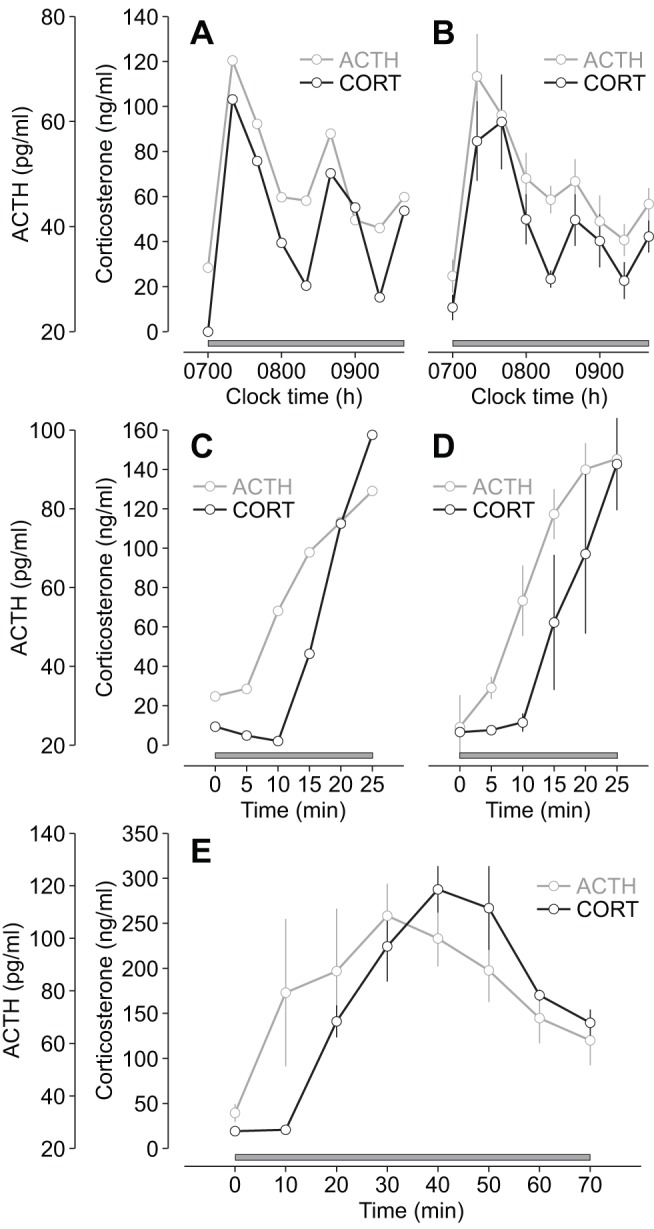
“We collected the adrenal glands at regular intervals throughout each of the three experiments and measured CORT levels within the adrenal gland, in addition to plasma levels of both ACTH and CORT (figure 2).”
BackgroundMethodInfluentialCircadian regulation of endocrine systems
Neumann, A.-M., Schmidt, C. X., Brockmann, R. M., & Oster, H. (2019) · Autonomic Neuroscience · doi:10.1016/j.autneu.2018.10.001 · Cited by 70
Russell, G. M., Kalafatakis, K., & Lightman, S. L. (2015) · Journal of Neuroendocrinology · doi:10.1111/jne.12247 · Cited by 68
Dynamics of the HPA axis and inflammatory cytokines: Insights from mathematical modeling
Malek, H., Ebadzadeh, M. M., Safabakhsh, R., Razavi, A., & Zaringhalam, J. (2015) · Computers in Biology and Medicine · doi:10.1016/j.compbiomed.2015.09.018 · Cited by 63
Rhythmicity matters: Circadian and ultradian patterns of HPA axis activity
Focke, C. M. B., & Iremonger, K. J. (2019) · Molecular and Cellular Endocrinology · doi:10.1016/j.mce.2019.110652 · Cited by 69
Control of Rest:Activity by a Dopaminergic Ultradian Oscillator and the Circadian Clock
Bourguignon, C., & Storch, K.-F. (2017) · Frontiers in Neurology · doi:10.3389/fneur.2017.00614 · Cited by 69
Clock genes alterations and endocrine disorders
Angelousi, A. G., Kassi, E. N., Ansari, N. N., Weickert, M. O., Randeva, H. S., & Kaltsas, G. (2018) · European Journal of Clinical Investigation · doi:10.1111/eci.12927 · Cited by 74
Dynamics of adrenal glucocorticoid steroidogenesis in health and disease
Spiga, F., & Lightman, S. L. (2015) · Molecular and Cellular Endocrinology · doi:10.1016/j.mce.2015.02.005 · Cited by 78
“We have tested the predictions of this hypothesis in vivo by studying the dynamics of ACTH and corticosterone in response to different levels of constant CRH stimulation in conscious freely behaving male rats (Walker et al., 2012).”
Factors promoting vulnerability to dysregulated stress reactivity and stress‐related disease
Russell, A. L., Tasker, J. G., Lucion, A. B., Fiedler, J., Munhoz, C. D., Wu, T. J., & Deak, T. (2018) · Journal of Neuroendocrinology · doi:10.1111/jne.12641 · Cited by 59
Ultradian rhythms in mammalian physiology and behavior
Prendergast, B. J., & Zucker, I. (2016) · Current Opinion in Neurobiology · doi:10.1016/j.conb.2016.07.011 · Cited by 64
Dynamic responses of the adrenal steroidogenic regulatory network
Spiga, F., Zavala, E., Walker, J. J., Zhao, Z., Terry, J. R., & Lightman, S. L. (2017) · Proceedings of the National Academy of Sciences · doi:10.1073/pnas.1703779114 · Cited by 52
“Although there is some evidence for pulsatility of CRH (1, 2), our recent work suggests that ACTH and CORT pulsatility is predominantly generated by a subhypothalamic oscillator within the pituitary–adrenal system (3, 4).”
BackgroundSelf-citationSpiga, F., Walker, J. J., Gupta, R., Terry, J. R., & Lightman, S. L. (2015) · Journal of Endocrinology · doi:10.1530/joe-15-0132 · Cited by 48
“behaving male rats (Walker et al. 2012).”
Self-citationThe Arcuate Nucleus: A Site of Fast Negative Feedback for Corticosterone Secretion in Male Rats
Mercado, L. L., Chao, D. H. M., Basualdo, M. D. C., Kawata, M., Escobar, C., & Buijs, R. M. (2017) · eNeuro · doi:10.1523/eneuro.0350-16.2017 · Cited by 57
“The changes in ACTH levels at ZT10 during dialysis with type II GR agonist and antagonist may be explained in part by the effects of glucocorticoid nongenomic action on the pituitary gland (Walker et al., 2012; Deng et al., 2015).”
BackgroundGlucocorticoids Exert Direct Toxicity on Microvasculature: Analysis of Cell Death Mechanisms
Zaoui, I. E., Béhar‐Cohen, F., & Torriglia, A. (2014) · Toxicological Sciences · doi:10.1093/toxsci/kfu243 · Cited by 49
“due to their lipophilicity and exert physiological effects in almost every tissue of the human body (Cockrem, 2013; Walker et al., 2012).”
BackgroundNapier, C., & Pearce, S. H. S. (2012) · La Presse Médicale · doi:10.1016/j.lpm.2012.09.010 · Cited by 53
Stewart, P. M., & Krone, N. P. (2011) · Elsevier eBooks · doi:10.1016/b978-1-4377-0324-5.00015-8 · Cited by 61
Understanding stress-effects in the brain via transcriptional signal transduction pathways
Zalachoras, I., Houtman, R., & Meijer, O. C. (2013) · Neuroscience · doi:10.1016/j.neuroscience.2013.03.038 · Cited by 48
“Activity of receptors depends of course on the type and local concentration of the ligand (Awasthi and Simons, 2012; Yang and Fuller, 2012) and on the pattern of ligand exposure in time (Walker et al., 2012).”
Glucocorticoid signaling induces transcriptional memory and universally reversible chromatin changes
Bothe, M., Buschow, R., & Meijsing, S. H. (2021) · Life Science Alliance · doi:10.26508/lsa.202101080 · Cited by 44
Rhythms Within Rhythms: The Importance of Oscillations for Glucocorticoid Hormones
Lightman, S. L. (2016) · Research and perspectives in endocrine interactions · doi:10.1007/978-3-319-27069-2_10 · Cited by 45
“…a time when their endogenous CRH systems are suppressed by the SCN. Consistent with our mathematical model, a constant infusion of CRH produced normal ultradian oscillations of both ACTH and CORT, with the same pulse frequency as that found during normal nocturnal HPA activity (Walker et al. 2012).”
BackgroundHippocampal Fast Glutamatergic Transmission Is Transiently Regulated by Corticosterone Pulsatility
Sarabdjitsingh, R. A., Pasricha, N., Smeets, J. A. S., Kerkhofs, A., Mikasová, L., Karst, H., Groc, L., & Joëls, M. (2016) · PLoS ONE · doi:10.1371/journal.pone.0145858 · Cited by 40
Dynamic Hormone Control of Stress and Fertility
Zavala, E., Voliotis, M., Zerenner, T., Tabak, J., Walker, J. J., Li, X. F., Terry, J. R., Lightman, S. L., O'Byrne, K., & Tsaneva-Atanasova, K. (2020) · Frontiers in Physiology · doi:10.3389/fphys.2020.598845 · Cited by 34
“The model predicts that, in contrast to the reproductive axis, in the stress axis the hypothalamus only needs to provide circadian amplitude modulation of ultradian CORT pulses to explain experimental observations (Walker et al., 2012).”
Iatrogenic adrenal insufficiency in adults
Martin‐Grace, J., Tomkins, M., O’Reilly, M., & Sherlock, M. (2024) · Nature Reviews Endocrinology · doi:10.1038/s41574-023-00929-x · Cited by 40
“Cortisol is secreted in response to ACTH stimulation in both a circadian and ultradian (pulsatile) fashion in healthy adults 259,260 .”
Baumeister, D., Lightman, S. L., & Pariante, C. M. (2016) · Psychopathology Review · doi:10.5127/pr.034413 · Cited by 37
“This oscillatory activity is initiated by CRH, but is actually a function of a subhypothalamic pulse generator which produces oscillations in ACTH and glucocorticoids through activation of the feedforward feedback interactions of the pituitary-adrenal peripheral network (Walker et al., 2012).”
BackgroundInteractions between psychosocial stress and the circadian endogenous clock
Helfrich‐Förster, C. (2017) · PsyCh Journal · doi:10.1002/pchj.202 · Cited by 35
Circadian and ultradian rhythms: Clinical implications
Lightman, S. L., & Conway-Campbell, B. L. (2024) · Journal of Internal Medicine · doi:10.1111/joim.13795 · Cited by 35
“…both cortisol and corticosterone exhibit pattern similarities, with a robust increase prior to the start of the daily active phase [7] in large pulses generated as a result of the dynamic interplay of positive feedforward and negative feedback between the pituitary and adrenal glands [8–12].”
The Processes of Anterior Pituitary Hormone Pulse Generation
Tissier, P. L., Fiordelisio, T., & Mollard, P. (2018) · Endocrinology · doi:10.1210/en.2018-00508 · Cited by 36
“14 However, recent studies in the adrenal axis has questioned the requirement for pulsatile 15 hypothalamic input for a corresponding pulsatile pituitary output: constant CRH stimulation in 16 conscious, freely moving rats resulted in pulsatile adrenocorticotrophic hormone (ACTH) and 17 corticosterone release with a f…”
BackgroundAre physiological oscillations physiological ?
Xiong, L., & Garfinkel, A. (2023) · The Journal of Physiology · doi:10.1113/jp285015 · Cited by 38
Renewing an old interest: Pituitary folliculostellate cells
Tissier, P. L., & Mollard, P. (2021) · Journal of Neuroendocrinology · doi:10.1111/jne.13053 · Cited by 36
George, C. L., Birnie, M. T., Flynn, B. P., Kershaw, Y. M., Lightman, S. L., & Conway-Campbell, B. L. (2016) · Molecular and Cellular Endocrinology · doi:10.1016/j.mce.2016.10.019 · Cited by 35
“…of endogenous glucocorticoid secreted at regular intervals (approximately 60 min in rats (Windle et al., 1998a, 1998b) and 60 e 90 min in humans (Veldhuis et al., 1989)) that arise due to an intrinsic positive feed-forward and negative feedback loop in the HPA axis (Walker et al., 2010, 2012).”
BackgroundRussell, G. M., Kalafatakis, K., Durant, C. F., Marchant, N., Thakrar, J., Thirard, R., King, J., Bowles, J., Upton, T. J., Thai, N. J., et al. (2023) · Journal of Internal Medicine · doi:10.1111/joim.13721 · Cited by 28
“Ultradian rhythmicity emerges as a natural consequence of the feed-forward and feedback interaction between the pituitary and adrenal cortex [5].”
BackgroundLightman, S., & Terry, J. R. (2014) · The Lancet Diabetes & Endocrinology · doi:10.1016/s2213-8587(13)70182-7 · Cited by 28
Self-citationAn optimization formulation for characterization of pulsatile cortisol secretion
Faghih, R. T., Dahleh, M. A., & Brown, E. N. (2015) · Frontiers in Neuroscience · doi:10.3389/fnins.2015.00228 · Cited by 27
Coffman, J. A. (2020) · Future Neurology · doi:10.2217/fnl-2019-0014 · Cited by 36
Achieving Remission in Gulf War Illness: A Simulation-Based Approach to Treatment Design
Craddock, T. J. A., del Rosario, R. M., Rice, M., Zysman, J., FLETCHER, M. A., Klimas, N. G., & Broderick, G. (2015) · PLoS ONE · doi:10.1371/journal.pone.0132774 · Cited by 29
From Physiological Signals to Pulsatile Dynamics: A Sparse System Identification Approach
Faghih, R. T. (2017) · Springer eBooks · doi:10.1007/978-3-319-71976-4_10 · Cited by 28
Circadian Clocks and the Interaction between Stress Axis and Adipose Function
Kolbe, I., Dumbell, R., & Oster, H. (2015) · International Journal of Endocrinology · doi:10.1155/2015/693204 · Cited by 31
“This ultradian rhythm has been demonstrated in vivo to be independent of the SCN or any connection between the hypothalamus and pituitary [28, 29] and is controlled by negative feedback whereby glucocorticoids signal at pituitary glucocorticoid receptors (GRs) to suppress ACTH secretion [30].”
BackgroundDanan, D., Todder, D., Zohar, J., & Cohen, H. (2021) · International Journal of Molecular Sciences · doi:10.3390/ijms22116050 · Cited by 31
Glucocorticoid-Mediated Developmental Programming of Vertebrate Stress Responsivity
Gans, I. M., & Coffman, J. A. (2021) · Frontiers in Physiology · doi:10.3389/fphys.2021.812195 · Cited by 32
Rapcencu, A. E., Gorter, R., Kennis, M., van Rooij, S. J. H., & Geuze, E. (2017) · Psychoneuroendocrinology · doi:10.1016/j.psyneuen.2017.04.010 · Cited by 29
Dynamic Pituitary–Adrenal Interactions in the Critically Ill after Cardiac Surgery
Gibbison, B., Keenan, D. M., Roelfsema, F., Evans, J., Phillips, K., Rogers, C. A., Angelini, G. D., & Lightman, S. L. (2019) · The Journal of Clinical Endocrinology & Metabolism · doi:10.1210/clinem/dgz206 · Cited by 27
Role of Orexin in Respiratory and Sleep Homeostasis during Upper Airway Obstruction in Rats
Tarasiuk, A., Levi, A., Berdugo-Boura, N., Yahalom, A., & Segev, Y. (2014) · SLEEP · doi:10.5665/sleep.3676 · Cited by 24
The Tissue Clock Network: Driver and Gatekeeper of Circadian Physiology
Harder, L., & Oster, H. (2020) · BioEssays · doi:10.1002/bies.201900158 · Cited by 24
System identification of cortisol secretion : characterizing pulsatile dynamics
Faghih, R. T. (2014) · DSpace@MIT (Massachusetts Institute of Technology) · Cited by 28
Gans, I. M., Grendler, J., Babich, R., Jayasundara, N., & Coffman, J. A. (2021) · Frontiers in Cell and Developmental Biology · doi:10.3389/fcell.2021.727037 · Cited by 28
On the Use of a Simple Physical System Analogy to Study Robustness Features in Animal Sciences
Sadoul, B. C., Martin, O., Prunet, P., & Friggens, N. C. (2015) · PLoS ONE · doi:10.1371/journal.pone.0137333 · Cited by 26
“This type of phenomenon has been observed in other measures [23,27] and could be captured by adapting the damped spring model to include a mass during the recovery phase.”
Backgroundden Boon, F. S., de Vries, T., Baelde, M., Joëls, M., & Karst, H. (2019) · Endocrinology · doi:10.1210/en.2018-00767 · Cited by 25
Cardio‐metabolic consequences of glucocorticoid replacement: relevance of ultradian signalling
Henley, D., & Lightman, S. L. (2014) · Clinical Endocrinology · doi:10.1111/cen.12422 · Cited by 25
Multiple-scale neuroendocrine signals connect brain and pituitary hormone rhythms
Romanò, N., Guillou, A., Hodson, D. J., Martin, A., & Mollard, P. (2017) · Proceedings of the National Academy of Sciences · doi:10.1073/pnas.1616864114 · Cited by 24
“The Journal of neuroscience 32(23):8074-8083.”
BackgroundImproving glucocorticoid replacement profiles in adrenal insufficiency
Choudhury, S., Lightman, S. L., & Meeran, K. M. (2019) · Clinical Endocrinology · doi:10.1111/cen.13999 · Cited by 26
Spiga, F., Zhao, Z., & Lightman, S. L. (2020) · Brain Behavior and Immunity · doi:10.1016/j.bbi.2020.03.001 · Cited by 22
Gudmand-Hoeyer, J., Timmermann, S., & Ottesen, J. T. (2014) · Mathematical Biosciences · doi:10.1016/j.mbs.2014.07.013 · Cited by 22
Neonatal testosterone suppresses a neuroendocrine pulse generator required for reproduction
Israël, J.-M., Cabelguen, J., Masson, G. L., Oliet, S. H. R., & Ciofi, P. (2014) · Nature Communications · doi:10.1038/ncomms4285 · Cited by 25
“For recording, the culture was perifused (0.7mlmin 1) with Yamamoto’s solution (in mM): NaCl (125), KCl (3), MgSO4 (1), KH2PO4 (1.25), NaHCO3 (5), CaCl2 (2), glucose (5) and HEPES (10); pH 7.25; 293–295 mOsm.”
InfluentialNold, V., Portenhauser, M., Prete, D. D., Blasius, A., Harris, I., Koroś, E., Peleh, T., Hengerer, B., Kolassa, I., Ślęzak, M., et al. (2022) · Molecular Psychiatry · doi:10.1038/s41380-022-01549-z · Cited by 26
“The negative feedback loop is furthermore critical for the maintenance of oscillation patterns and function [20].”
BackgroundLeng, G., & MacGregor, D. J. (2018) · Mathematical Biosciences · doi:10.1016/j.mbs.2018.07.008 · Cited by 22
“simple and elegant mathematical model suggests that the ultradian pulses can arise without the hypothalamus [128, 129].”
BackgroundHow to tame your genes: mechanisms of inflammatory gene repression by glucocorticoids
Strickland, B. A., Ansari, S. A., Dantoft, W., & Uhlenhaut, N. H. (2022) · FEBS Letters · doi:10.1002/1873-3468.14409 · Cited by 25
Evidence for an internal and functional circadian clock in rat pituitary cells
Becquet, D., Boyer, B., Rasolonjanahary, R., Brue, T. C., Guillen, S., Moreno, M., Franc, J., & François‐Bellan, A. (2013) · Molecular and Cellular Endocrinology · doi:10.1016/j.mce.2013.11.004 · Cited by 21
Stewart, P. M., & Newell-Price, J. D. C. (2016) · Elsevier eBooks · doi:10.1016/b978-0-323-29738-7.00015-0 · Cited by 35
To Stress or Not to Stress: A Question of Models
Gray, J. M., Chaouloff, F., & Hill, M. N. (2015) · Current Protocols in Neuroscience · doi:10.1002/0471142301.ns0833s70 · Cited by 26
“…grooming, rearing, etc.), but can also be examined after a stressful stimulus has been terminated (forced swim test, sexual behavior, elevated plus maze, etc.) (Campeau et al., 2002; RetanaMárquez et al., 2003; Grissom et al., 2008; Karatsoreos et al., 2010; Waters and McCormick, 2011).”
BackgroundIntegrated Inflammatory Stress (ITIS) Model
Bangsgaard, E. O., Hjorth, P. G., Olufsen, M. S., Mehlsen, J., & Ottesen, J. T. (2017) · Bulletin of Mathematical Biology · doi:10.1007/s11538-017-0293-2 · Cited by 24
Diving into the brain: deep-brain imaging techniques in conscious animals
Campos, P., Walker, J. J., & Mollard, P. (2020) · Journal of Endocrinology · doi:10.1530/joe-20-0028 · Cited by 18
Sex‐Specific Effects of Stress on Respiratory Control: Plasticity, Adaptation, and Dysfunction
Lopes, L. T., & Kinkead, R. (2021) · Comprehensive physiology · doi:10.1002/cphy.c200022 · Cited by 29
Circadian Rhythm Effects on the Molecular Regulation of Physiological Systems
Crislip, G. R., Johnston, J. G., Douma, L. G., Costello, H. M., Juffre, A., Boyd, K., Li, W. W., Maugans, C. C., Gutierrez‐Monreal, M. A., Esser, K. A., et al. (2021) · Comprehensive physiology · doi:10.1002/cphy.c210011 · Cited by 40
Imaging and Manipulating Pituitary Function in the Awake Mouse
Hoa, O., Lafont, C., Fontanaud, P., Guillou, A., Kemkem, Y., Kineman, R. D., Luque, R. M., Fiordelisio, T., Tissier, P. L., & Mollard, P. (2019) · Endocrinology · doi:10.1210/en.2019-00297 · Cited by 20
Circadian Regulation of the Brain and Behavior: A Neuroendocrine Perspective
Karatsoreos, I. N. (2019) · Current topics in behavioral neurosciences · doi:10.1007/7854_2019_115 · Cited by 18
Feklicheva, I. V., Boks, M. P., de Kloet, E. R., Chipeeva, N., Павловна, М. Е., Pashkov, A. A., Korobova, S. Y., Komelkova, M. V., Kuznetsova, Y., Platkovski, P., et al. (2021) · Journal of Psychiatric Research · doi:10.1016/j.jpsychires.2021.11.032 · Cited by 21
Astashev, M. E., Serov, D. A., & Gudkov, S. V. (2023) · Mathematics · doi:10.3390/math11153307 · Cited by 17
Metadata
- Authors
- Walker, J. J., Spiga, F., Waite, E., Zhao, Z., Kershaw, Y., Terry, J. R., & Lightman, S. L.
- Affiliations
- University of Bristol (GB)
- University of Exeter (GB)
- Corresponding author
- Walker, Jamie J.
- Venue
- PLoS Biology
- Publisher
- Public Library of Science (PLoS)
- Published
- 2012-06-05
- Volume
- 10
- Issue
- 6
- Pages
- e1001341
- ISSN
- 1544-9173 (ISSN-L)
- 1545-7885
- PMC
- PMC3367982
- OpenAlex
- W1998486709
- Cited by
- 189
- References
- 55
- Citations by year
- 2026: 5 · 2025: 5 · 2024: 9 · 2023: 10 · 2022: 15 · 2021: 15 · 2020: 13 · 2019: 13 · 2018: 17 · 2017: 14 · 2016: 17 · 2015: 22 · 2014: 21 · 2013: 8 · 2012: 3
- FWCI
- 7.16
- Type
- journal article
- Language
- en
- Open access
- gold
- doi.org
- Locations
- PLoS Biology (publishedVersion, cc-by)
- Europe PMC (PubMed Central) (publishedVersion, cc-by)
- PubMed Central (publishedVersion, cc-by)
- PubMed (publishedVersion)
- Explore Bristol Research (submittedVersion, cc-by)
- DOAJ (DOAJ: Directory of Open Access Journals) (submittedVersion, cc-by-sa)
- University of Birmingham Research Portal (University of Birmingham) (submittedVersion)
- Bristol Research (University of Bristol) (submittedVersion)
- Funders
- Wellcome Trust (074112)
- British Society for Neuroendocrinology
- Directorate for Biological Sciences
- Medical Research Council (MR/J008893/1)
- Engineering and Physical Sciences Research Council (EP/E032249/1)
- Biotechnology and Biological Sciences Research Council (BB/H015779/1)
- Topics
- Life Sciences › Neuroscience › Behavioral Neuroscience › Stress Responses and Cortisol
- Health Sciences › Medicine › Endocrinology, Diabetes and Metabolism › Adrenal Hormones and Disorders
- Health Sciences › Medicine › Reproductive Medicine › Hypothalamic control of reproductive hormones
- Keywords
- ultradian rhythms, corticotropin-releasing factor, pituitary-adrenal axis, ACTH, hypothalamus, stress response, glucocorticoid secretion
- MeSH terms
- Adrenal Glands, Animals, Corticosterone, Corticotropin-Releasing Hormone, Glucocorticoids, Male, Pituitary Gland, Pituitary-Adrenal System, Stress, Physiological, Signal Transduction, Rats, Sprague-Dawley, Rats
About these checks
Registry, retraction, Cites and statistics results are computed, not judged, with one exception: a printed reference that no index lists is read once by a model before it counts as a citation error. Claims are extracted by a model and kept only when their quote appears verbatim in the text; each cited source is then checked, with a model’s help, for whether it says what the claim relies on. Those verdicts can be wrong — read the claim’s quote and the cited source before relying on one.
Statistics and arithmetic are recomputed, not judged.
Confidence bands are shown only for fields calibrated on our annotated test set. None is calibrated yet, so no band is shown.
What counts as a claim ›How we measure confidence ›How we check this ›
Are you an author, or do you see a problem with this page? Request a review
Data sources
Bibliographic data: Semantic Scholar, OpenAlex, Crossref.
Contains information from the Semantic Scholar Academic Graph Datasets, made available under the ODC Attribution License (ODC-BY 1.0).
Semantic Scholar’s data is described in: Kinney, R., et al. (2023). The Semantic Scholar Open Data Platform. arXiv:2301.10140.
