

The Origin of Glucocorticoid Hormone Oscillations
Open accessThe DOI matches its Crossref record; 56 of the 56 references it cites were found in a registry or an index.
Abstract
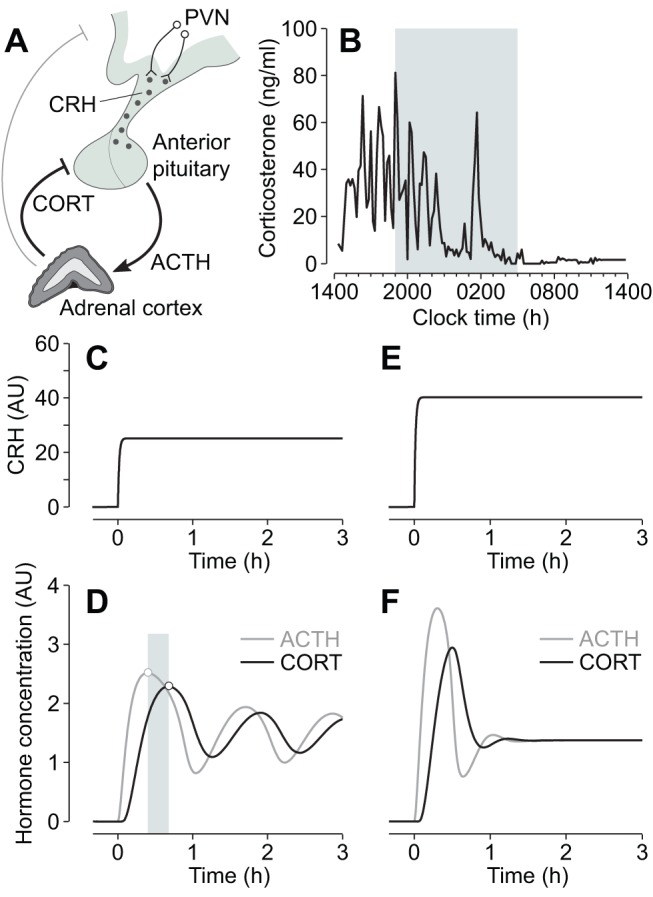
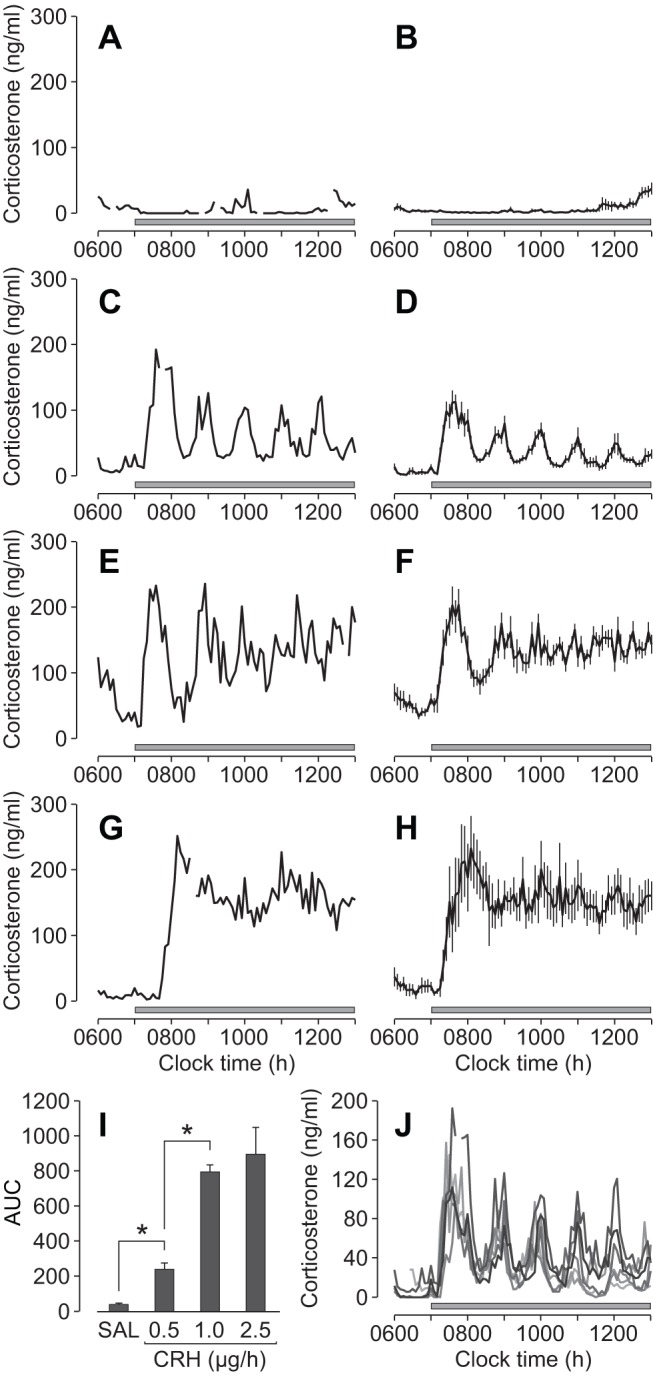
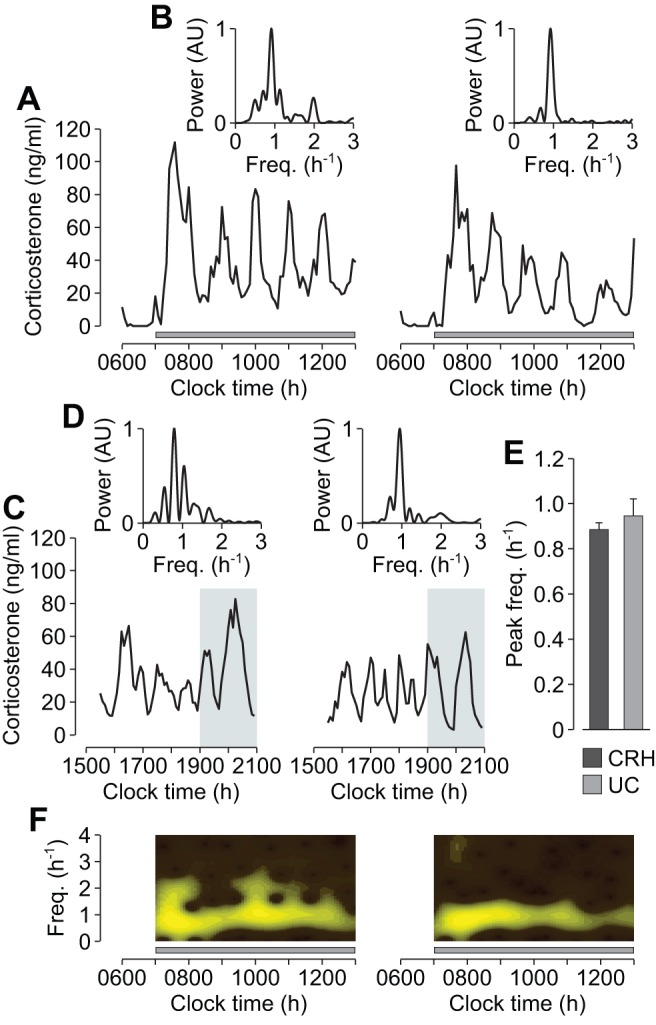
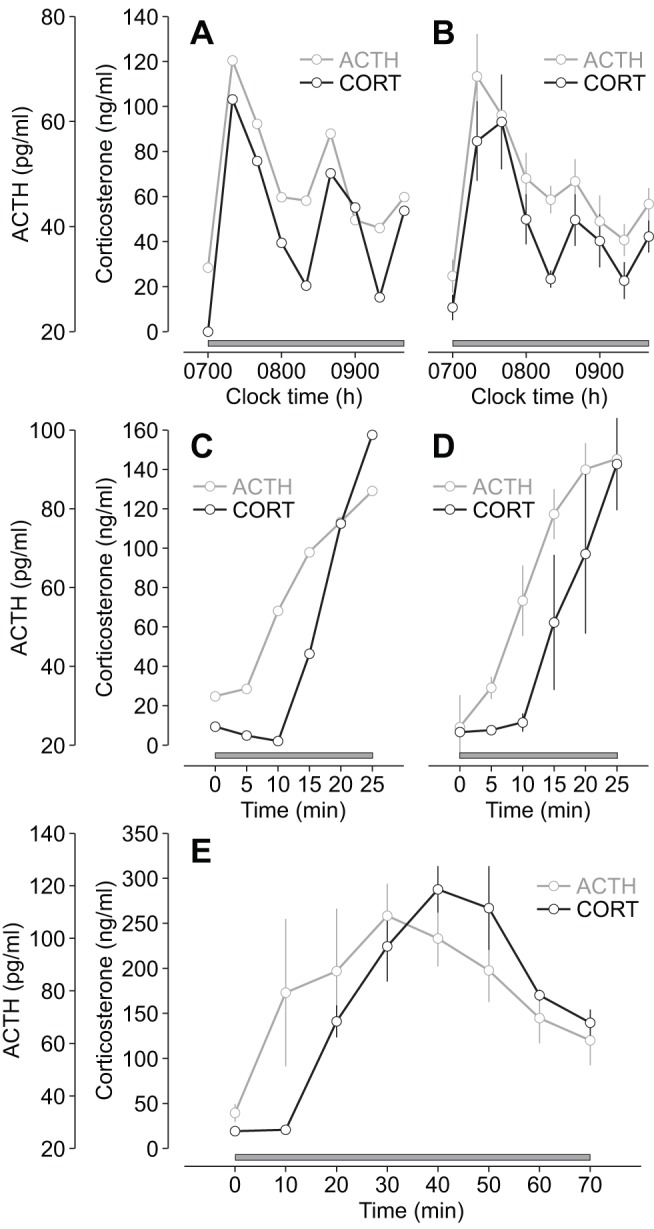
Oscillating levels of adrenal glucocorticoid hormones are essential for optimal gene expression, and for maintaining physiological and behavioural responsiveness to stress. The biological basis for these oscillations is not known, but a neuronal "pulse generator" within the hypothalamus has remained a popular hypothesis. We demonstrate that pulsatile hypothalamic activity is not required for generating ultradian glucocorticoid oscillations. We show that a constant level of corticotrophin-releasing hormone (CRH) can activate a dynamic pituitary-adrenal peripheral network to produce ultradian adrenocorticotrophic hormone and glucocorticoid oscillations with a physiological frequency. This oscillatory response to CRH is dose dependent and becomes disrupted for higher levels of CRH. These data suggest that glucocorticoid oscillations result from a sub-hypothalamic pituitary-adrenal system, which functions as a deterministic peripheral hormone oscillator with a characteristic ultradian frequency. This constitutes a novel mechanism by which the level, rather than the pattern, of CRH determines the dynamics of glucocorticoid hormone secretion.
Overview
The claims and statistics of this paper haven’t been checked yet.
Free: it reads the open-access text and checks the first 5 claims that cite a source we can check. Create a free account to check every claim.
Integrity signals
Registry
Cites
Statistics
Figures
Verification
Claims the paper makes
The claims and statistics of this paper haven’t been checked yet.
Free: it reads the open-access text and checks the first 5 claims that cite a source we can check. Create a free account to check every claim.
Claims other papers make about this one
Each is checked against this paper’s own text: does it say what the citing paper says it does?
The cited source says what the claim attributes to it.
In the citing paper
“Subsequent experiments confirmed this model prediction 48, 49, which demonstrated that a previously hypothesised hypothalamic ‘pulse generator’ [50] is not essential to generate ultradian glucocorticoid oscillations.”
From Mathematical Modelling of Endocrine Systems (2019) · cites this paper as [49]
The cited source says what the claim attributes to it.
In the citing paper
“This mathematical hypothesis has been supported by a series of in vivo experiments where CRH was infused at constant levels during the circadian nadir of HPA activity and hourly pulses in both ACTH and CORT were observed [2].”
From Rapid intra-adrenal feedback regulation of glucocorticoid synthesis (2015) · cites this paper as [2]
Self-check
Percentages, sums and reported differences re-computed from the paper’s own numbers.
The self-check needs the paper’s full text.
Citations
Cites
Sapolsky, R. M., Romero, L. M., & Munck, A. U. (2000) · Endocrine Reviews · doi:10.1210/edrv.21.1.0389 · Cited by 7,541 · cited 1×
“This neuroendocrine system regulates the secretion of vital adrenal glucocorticoid hormones (cortisol in humans and corticosterone in rodents), which have major effects on brain and metabolic function and are essential for successful recovery and adaptation to stress [4,5].”
BackgroundSapolsky, R. M. (2000) · Endocrine Reviews · doi:10.1210/er.21.1.55 · Cited by 7,533
Physiology and neurobiology of stress and adaptation: central role of the brain
McEwen, B. S. (2007) · Physiological Reviews · doi:10.1152/physrev.00041.2006 · Cited by 5,429 · cited 1×
“This ability to respond to change or ‘‘stress’’ becomes more complex in multicellular organisms, and mammals have developed a well-integrated organization of hormonal, neural, and immunological systems that protect them from internal and external threats to their homeostatic state [1–3].”
BackgroundStress and the brain: from adaptation to disease
de Kloet, E. R., Joëls, M., & Holsboer, F. (2005) · Nature Reviews Neuroscience · doi:10.1038/nrn1683 · Cited by 4,621 · cited 1×
“This neuroendocrine system regulates the secretion of vital adrenal glucocorticoid hormones (cortisol in humans and corticosterone in rodents), which have major effects on brain and metabolic function and are essential for successful recovery and adaptation to stress [4,5].”
BackgroundVale, W., Spiess, J., Rivier, C., & Rivier, J. (1981) · Science · doi:10.1126/science.6267699 · Cited by 3,965
VALE, W., SPIESS, J., RIVIER, C., & RIVIER, J. (1982) · Obstetrical & Gynecological Survey · doi:10.1097/00006254-198205000-00013 · Cited by 3,904 · cited 1×
“Central regulation of glucocorticoid secretion is predominantly coordinated by the hypothalamic peptide corticotrophin-releasing hormone (CRH) [6,7], the efficacy of which can be significantly potentiated by other hypothalamic factors, most notably vasopressin [8].”
BackgroundThe Concepts of Stress and Stress System Disorders: Overview of Physical and Behavioral Homeostasis
Chrousos, G. P. (1992) · JAMA · doi:10.1001/jama.1992.03480090092034 · Cited by 2,689 · cited 1×
“Exposure of tissues to abnormal glucocorticoid levels due to prolonged stress [46] and raised CRH [47,48], or due to the loss of ultradian pulsatility that has been detected in ageing animals [49], will modify glucocorticoid signalling, and could be an important factor for both stress- and age-related disease.”
BackgroundTwo receptor systems for corticosterone in rat brain: Microdistribution and differential occupation
REUL, J. M. H. M., & KLOET, E. R. D. (1985) · Endocrinology · doi:10.1210/endo-117-6-2505 · Cited by 2,580 · cited 1×
“Circulating glucocorticoids regulate gene expression in cells throughout the organism via activation of two widely expressed transcription factors—the glucocorticoid receptor (GR) and mineralocorticoid receptor (MR) [11]—as well as acting directly at the cell membrane to initiate more rapid non-genomic signalling proc…”
BackgroundThe Hypothalamic–Pituitary–Adrenal Axis and Immune-Mediated Inflammation
Chrousos, G. P. (1995) · New England Journal of Medicine · doi:10.1056/nejm199505183322008 · Cited by 2,579 · cited 1×
“A fundamental requisite for survival is the ability to respond and adapt to a changing environment. This ability to respond to change or “stress” becomes more complex in multicellular organisms, and mammals have developed a well-integrated organization of hormonal, neural, and immunological systems that protect them f…”
BackgroundJoëls, M., & Baram, T. Z. (2009) · Nature Reviews Neuroscience · doi:10.1038/nrn2632 · Cited by 1,521 · cited 1×
“This ability to respond to change or ‘‘stress’’ becomes more complex in multicellular organisms, and mammals have developed a well-integrated organization of hormonal, neural, and immunological systems that protect them from internal and external threats to their homeostatic state [1–3].”
Background
Cited by
Items 101–182 of 182
Ultradian Rhythms in the Transcriptome of Neurospora crassa
Ananthasubramaniam, B., Diernfellner, A. C. R., Brunner, M., & Herzel, H. (2018) · iScience · doi:10.1016/j.isci.2018.11.012 · Cited by 16
Mathematical Modeling in Neuroendocrinology
Bertram, R. (2015) · Comprehensive physiology · doi:10.1002/cphy.c140034 · Cited by 20
Arias, F. J. C., Aenlle, K. K., Abreu, M. M., Holschbach, M., Michalovicz, L. T., Kelly, K. A., Klimas, N. G., O'Callaghan, J. P., & Craddock, T. J. A. (2021) · International Journal of Molecular Sciences · doi:10.3390/ijms22168546 · Cited by 15
Torabi, M., Kesmati, M., Galehdari, H., Varzi, H. N., & Pourreza, N. (2019) · Physiology & Behavior · doi:10.1016/j.physbeh.2019.112727 · Cited by 16
The Synaptic Physiology of the Central Nervous System Response to Stress
Tasker, J. G., & Joëls, M. (2015) · Wiley eBooks · doi:10.1002/9781118921692.ch3 · Cited by 17
The 5:2 diet does not increase adult hippocampal neurogenesis or enhance spatial memory in mice
Roberts, L. D., Hornsby, A. K. E., Thomas, A., Sassi, M., Kinzett, A., Hsiao, N., David, B. R., Good, M. A., Wells, T., & Davies, J. S. (2023) · EMBO Reports · doi:10.15252/embr.202357269 · Cited by 11
“Given that rodent corticosterone levels display circadian and ultradian rhythms (Walker et al , 2012; den Boon et al , 2019) and that plasma samples were collected at different times throughout the day, we used non-parametric tests to compare the mean ranks of the data distributions.”
MethodCan side effects of steroid treatments be minimized by the temporal aspects of delivery method?
Russell, G. M., & Lightman, S. L. (2014) · Expert Opinion on Drug Safety · doi:10.1517/14740338.2014.965141 · Cited by 12
“Underlying the circadian rhythm is a complex and dynamic ultradian rhythm comprising of individual pulses of cortisol and corticosterone secretion (Figure 2) [27,29-31].”
BackgroundThe effect of fetal growth and nutrient stresses on steroid pathways
Stirrat, L., & Reynolds, R. M. (2015) · The Journal of Steroid Biochemistry and Molecular Biology · doi:10.1016/j.jsbmb.2015.07.003 · Cited by 17
“These oscillations are thought to be important for optimal transcriptional regulation[10].”
BackgroundCircadian distribution of epileptiform discharges in epilepsy: Candidate mechanisms of variability
Marinelli, I., Walker, J. J., Seneviratne, U. K., D'Souza, W. J., Cook, M. J., Anderson, C., Bagshaw, A. P., Lightman, S. L., Woldman, W., & Terry, J. R. (2023) · PLoS Computational Biology · doi:10.1371/journal.pcbi.1010508 · Cited by 10
“In unstressed, basal conditions, cycling levels of CORT rise and fall 253 over the day, with characteristic ultradian pulses [47].”
BackgroundModeling pulsativity in the hypothalamic–pituitary–adrenal hormonal axis
Churilov, A. N., & MILTON, J. G. (2022) · Scientific Reports · doi:10.1038/s41598-022-12513-w · Cited by 16
Yao, Y., & Silver, R. (2022) · Frontiers in Behavioral Neuroscience · doi:10.3389/fnbeh.2022.877256 · Cited by 13
“generating ACTH and CORT pulsatility (Walker et al., 2012).”
Circadian Regulation of Hormonal Timing and the Pathophysiology of Circadian Dysregulation
Moeller, J., Bever, S. R., Finn, S. L., Phumsatitpong, C., Browne, M. F., & Kriegsfeld, L. J. (2022) · Comprehensive physiology · doi:10.1002/cphy.c220018 · Cited by 22
An integrate-and-fire model for pulsatility in the neuroendocrine system
Churilov, A. N., Milton, J., & Salakhova, E. R. (2020) · Chaos An Interdisciplinary Journal of Nonlinear Science · doi:10.1063/5.0010553 · Cited by 10
Glucocorticoid action in the anterior pituitary gland: Insights from corticotroph physiology
Shipston, M. J. (2022) · Current Opinion in Endocrine and Metabolic Research · doi:10.1016/j.coemr.2022.100358 · Cited by 12
Shao, Y., Wang, H., Zhang, Q., Xie, Z., Zhu, X., Ding, Y., Chen, R., & Liao, Q. (2023) · Chemical Engineering Science · doi:10.1016/j.ces.2023.119139 · Cited by 10
Optimal Sampling Frequency of Serum Cortisol Concentrations After Cardiac Surgery
Powell, B., Nason, G. P., Angelini, G. D., Lightman, S. L., & Gibbison, B. (2017) · Critical Care Medicine · doi:10.1097/ccm.0000000000002534 · Cited by 11
“the positive feedforward and negative feedback of the pituitary and adrenal glands respectively(3) and is essential for end-organ effect(4).”
Malek, H., Ebadzadeh, M. M., Safabakhsh, R., & Razavi, A. (2021) · Computers in Biology and Medicine · doi:10.1016/j.compbiomed.2021.104580 · Cited by 8
Rigamonti, A. E., Bollati, V., Favero, C., Albetti, B., Caroli, D., Col, A. D., Cella, S. G., & Sartório, A. (2022) · International Journal of Environmental Research and Public Health · doi:10.3390/ijerph192315492 · Cited by 8
“Whereas the pulsatile release of ACTH and cortisol is controlled by a negative feedback loop involving glucocorticoid receptor (GR) signaling in the hippocampus up to pituitary [64,65], circadian HPA rhythm is regulated by clock-gene-mediated mechanisms operating at different levels: (i) the endocrine HPA axis itself,…”
BackgroundHe, X., Chen, R., Zhu, X., Liao, Q., Ye, D., Zhang, B., Jiao, L., Wang, Z., & Lei, Y. (2018) · Sensors and Actuators B Chemical · doi:10.1016/j.snb.2018.01.134 · Cited by 8
Does glucocorticoid exposure explain the association between metabolic dysfunction and tendinopathy?
Lewis, T., Zeisig, E., & Gaida, J. E. (2020) · Endocrine Connections · doi:10.1530/ec-19-0555 · Cited by 8
Pregnancy-induced changes in ultradian rhythms persist in circadian arrhythmic Siberian hamsters
Wang, Z. Y., Cable, E. J., Zucker, I., & Prendergast, B. J. (2014) · Hormones and Behavior · doi:10.1016/j.yhbeh.2014.04.014 · Cited by 7
“…rhythms (URs) impose temporal order on a sub-circadian timescale (typically with periods [’] < 8 h) (Shannahoff-Khalsa et al., 2001;Veldhuis 2008; Walker et al., 2012; Yates & Yates, 2008) that affect diverse aspects of physiology and behavior, including hormone secretion (Choe et al., 2013;…”
Neural substrates underlying rhythmic coupling of female reproductive and thermoregulatory circuits
Grant, A. D., & Kriegsfeld, L. J. (2023) · Frontiers in Physiology · doi:10.3389/fphys.2023.1254287 · Cited by 7
Oyola, M. G., Malysz, A. M., Mani, S. K., & Handa, R. J. (2015) · Elsevier eBooks · doi:10.1016/b978-0-12-802114-9.00013-5 · Cited by 7
Cell Networks in Endocrine/Neuroendocrine Gland Function
Guérineau, N. C., Campos, P., Tissier, P. L., Hodson, D. J., & Mollard, P. (2022) · Comprehensive physiology · doi:10.1002/cphy.c210031 · Cited by 9
The pulsatility of ACTH secretion in the rat anterior pituitary cell perifusion system
Deng, Q., Zhang, Z., & Wu, Y. (2017) · Cellular Physiology and Biochemistry · doi:10.1159/000455984 · Cited by 6
Szteroidok: A glükokortikoidok élettani és gyógyszertani hatásai
Zelena, D., & Makara, B. G. (2015) · Orvosi Hetilap · doi:10.1556/650.2015.30248 · Cited by 10
Cyclic Negative Feedback Systems: What is the Chance of Oscillation?
Tonnelier, A. (2014) · Bulletin of Mathematical Biology · doi:10.1007/s11538-014-9959-1 · Cited by 6
“…frequently occur in the regulation of biological systems and play a fundamental role in numerous physiological processes as the hormone secretion (Walker et al. 2012), the cardiac electrical activity (Keener and Sneyd 1998), the circadian rhythm (Goldbeter 2002), or in pharmacodynamics…”
BackgroundGil, N. L., Azevedo, G. A., Balbino, A. M., Silva, M. M., de Carvalho, M. H. C., Akamine, E. H., Keller, A. C., Landgraf, R. G., & Landgraf, M. A. (2021) · Life Sciences · doi:10.1016/j.lfs.2021.119764 · Cited by 6
Dynamics of the HPA Axis: A Systems Modeling Approach
Terry, J. R., Walker, J. J., Spiga, F., & Lightman, S. L. (2016) · Computational Neuroendocrinology · doi:10.1002/9781119159438.ch8 · Cited by 5
Chiloiro, S., Vicari, A., Mongelli, G., Costanza, F., Giampietro, A., Mattogno, P. P., Lauretti, L., Olivi, A., Marinis, L. D., Doglietto, F., et al. (2024) · Reviews in Endocrine and Metabolic Disorders · doi:10.1007/s11154-024-09898-6 · Cited by 8
“The rate of cortisol production in a healthy organism is around 20 mg/day, with a well-defined circadian rhythm regulated by the CLOCK (Clock Circadian Regulator) and BMAL1 (Basic Helix-Loop-Helix ARNT Like 1) genes [17, 18].”
BackgroundCorticosteroid Receptor Balance Hypothesis
de Kloet, E. R. (2016) · Elsevier eBooks · doi:10.1016/b978-0-12-800951-2.00003-0 · Cited by 10
Harno, E., & White, A. E. (2015) · Elsevier eBooks · doi:10.1016/b978-0-323-18907-1.00008-1 · Cited by 5
HPA system in anxiety disorder patients treated with cognitive behavioural therapy: A review
Lange, J. F., & Erhardt, A. (2024) · Biomarkers in Neuropsychiatry · doi:10.1016/j.bionps.2024.100116 · Cited by 9
Ultradian rhythms of CRH PVN neuron activity, behavior, and stress hormone secretion
Zheng, S., Focke, C. M. B., Young, C. K., Tripp, I., Ganeshan, D., Power, E. M., Schwenke, D. O., Herbison, A. E., Kim, J. S., & Iremonger, K. J. (2025) · Proceedings of the National Academy of Sciences · doi:10.1073/pnas.2510083122 · Cited by 8
Joyal, K. G., Boodhoo, N. A., & Buchanan, G. F. (2025) · Epilepsy & Behavior · doi:10.1016/j.yebeh.2025.110385 · Cited by 4
Glucocorticoid ultradian rhythms
Flynn, B. P. (2022) · Current Opinion in Endocrine and Metabolic Research · doi:10.1016/j.coemr.2022.100362 · Cited by 4
Astashev, M. E., Serov, D. A., Tankanag, A. V., Knyazeva, I. V., Александрович, Д. А., Simakin, A. V., & Gudkov, S. V. (2024) · Biology · doi:10.3390/biology13090685 · Cited by 4
Karatsoreos, I. N. (2014) · ChronoPhysiology and Therapy · doi:10.2147/cpt.s44799 · Cited by 3
“Mice with mutated Per2 show increased plasma insulin as well as impaired liver gluconeogenesis.(33,34) Similarly, Cry1/2 double knockout mice demonstrate a hyperglycemic response to acute feeding and impaired glucose tolerance.”
Action of CRF/Urocortin Peptides
Deussing, J. M., Ryabinin, A. E., Zuniga, A., & Kozicz, T. (2016) · Elsevier eBooks · doi:10.1016/b978-0-12-803592-4.00062-6 · Cited by 3
Bridgewater, A., Huard, B., & Angelova, M. N. (2020) · Journal of Nonlinear Science · doi:10.1007/s00332-020-09612-1 · Cited by 4
Circadian Clocks, Stress, and Psychiatric Disorders
Kling, C., & Landgraf, D. (2020) · Elsevier eBooks · doi:10.1016/b978-0-12-813156-5.00008-x · Cited by 3
Xiong, L. (., Garfinkel, A., Bennett, K. M., Baldelomar, E. J., Brown, L., Barrows, K. M., Vallon, V., Edwards, A., McDonough, A. A., Porat‐Shliom, N., et al. (2025) · bioRxiv (Cold Spring Harbor Laboratory) · doi:10.1101/2025.09.12.675896 · Cited by 3
How an appreciation of dynamics has altered our understanding of the HPA axis
Lightman, S. L., & Upton, T. J. (2024) · Stress · doi:10.1080/10253890.2023.2297371 · Cited by 2
“Furthermore the adrenal gland cannot store CORT, and thus new CORT must be synthesized following activation by ACTH, resulting in an approximate 20-minute delay before the adrenal gland response (Walker et al., 2010; 2012),.”
Home Parenteral Nutrition (HPN): An international benchmarking exercise
Baxter, J. P., Gillanders, L., Angstmann, K., Staun, M., O'Hanlon, C., Smith, T. R., Joly, F., Thul, P., Jonkers‐Schuitema, C. F., Gardiner, K. R., et al. (2011) · Proceedings of The Nutrition Society · doi:10.1017/s0029665111004265 · Cited by 2
Circadian Regulation of Endocrine Functions
Butler, M. P., Karatsoreos, I. N., Kriegsfeld, L. J., & Silver, R. (2016) · Elsevier eBooks · doi:10.1016/b978-0-12-803592-4.00012-2 · Cited by 2
Spiga, F., Pooley, J. R., Russell, G. M., & Lightman, S. L. (2017) · Elsevier eBooks · doi:10.1016/b978-0-12-802175-0.00043-7 · Cited by 2
A Unified Computational Model for the Human Response to Lipopolysaccharide-Induced Inflammation
Windoloski, K. A., Bangsgaard, E. O., Dobréva, A., Ottesen, J. T., & Olufsen, M. S. (2022) · Mathematics online first collections · doi:10.1007/16618_2022_39 · Cited by 2
Hormone oscillations in the HPA axis: dynamical diseases and beyond
MILTON, J. G., & Churilov, A. N. (2025) · Exploration of Endocrine and Metabolic Diseases · doi:10.37349/eemd.2025.101434 · Cited by 1
Lombard, B., Upton, T. J., Gibbison, B., Henley, D., Russell, G. M., Terry, J. R., Lightman, S. L., & Zavala, E. (2026) · Journal of Neuroendocrinology · doi:10.1111/jne.70264 · Cited by 1
“9,10 Therefore, we represent CRH as an external drive function Φ t ð Þ which could be either constant or have a circadian profile given by: where the circadian period T c is fixed at 1440min.”
InfluentialGlucocorticoid Replacement in Man
Russell, G. M., Løvås, K., & Lightman, S. L. (2016) · Elsevier eBooks · doi:10.1016/b978-0-12-803592-4.00078-x · Cited by 3
Mathematical Modeling of the Endocrine System
Bulgakova, S. V., Romanchuk, N., & Treneva, E. V. (2022) · Bulletin of Science and Practice · doi:10.33619/2414-2948/76/16 · Cited by 1
Şahin, Z., Kalkan, Ö. F., Aktaş, O., & Kalkan, A. (2023) · Akdeniz Medical Journal · doi:10.53394/akd.1110074 · Cited by 2
Using Cox cluster processes to model latent pulse location patterns in hormone concentration data
Carlson, N. E., Grunwald, G. K., & Johnson, T. D. (2015) · Biostatistics · doi:10.1093/biostatistics/kxv046 · Cited by 1
Network and Population Function in Neuroendocrine Systems
MacGregor, D. J., & Leng, G. (2019) · Elsevier eBooks · doi:10.1016/b978-0-12-801238-3.11371-6 · Cited by 1
The Endocrine Response to Stress
Henley, D., Upton, T. J., & Lightman, S. L. (2022) · doi:10.1093/med/9780198870197.003.0203 · Cited by 1
Fast dynamics in the HPA axis: Insight from mathematical and experimental studies
Walker, J. J., & Romanò, N. (2022) · Current Opinion in Endocrine and Metabolic Research · doi:10.1016/j.coemr.2022.100403 · Cited by 6
Reynolds, R. M., & Webster, S. P. (2015) · Wiley eBooks · doi:10.1002/9781118921692.ch14 · Cited by 1
Stallone, J. N. (2015) · Critical Care Medicine · doi:10.1097/ccm.0000000000000876 · Cited by 1
“These rhythms appear to result from a combination of internal and external stimuli acting upon the HPA axis, including potent negative feedback actions of cortisol on the HPA (6, 7), signals from an internal circadian hypothalamic “clock” in the suprachiasmatic nucleus (8), and external stimuli such as time of day and…”
BackgroundModeling, analysis, and control of biological oscillators
Taghvafard, H. (2018) · University of Groningen research database (University of Groningen / Centre for Information Technology) · Cited by 1
Diving into the brain: deep brain imaging techniques in conscious animals.
Campos, P. (2019) · Endocrine Abstracts · doi:10.1530/endoabs.63.nsa6 · Cited by 2
Dynamic Regulation of Chromatin Modification and Transcription by GR and the Steroid Receptors
George, C. L., & Conway-Campbell, B. L. (2016) · Epigenetics and human health · doi:10.1007/978-3-319-24493-8_2
Dynamics of the HPA axis: A systems modelling approach
Terry, J., Walker, J. J., Spiga, F., & Lightman, S. L. (2016) · Explore Bristol Research
P5013 Evaluation of gene interactions affecting carcass yield and marbling in beef cattle
Duncombe, J. L., Schmutz, S. M., Madder, K. M., & Buchanan, F. C. (2016) · Journal of Animal Science · doi:10.2527/jas2016.94supplement4121a
Upton, T. J., & Lightman, S. L. (2017) · Elsevier eBooks · doi:10.1016/b978-0-12-801238-3.64285-x
Ethanol-Nicotine Combinations Induces C-Fos Expression Within Stress And Reward-Related Circuitry
Schoen, J. (2017) · doi:10.15760/honors.494
“Stress-related hormones have been found to have lasting changes in dopamine and GABA neurotransmission, which are active components of the reward pathway (Walker et al., 2012).”
BackgroundHypothalamic pituitary adrenal axis dysregulation in obese pregnancy
Stirrat, L. (2018) · ERA
Effects of Glucocorticoids on the Brain
Pereira, A. M., Webb, S. M., & Meijer, O. C. (2018) · Elsevier eBooks · doi:10.1016/b978-0-12-801238-3.64329-5
Dynamic responses of the adrenal steroidogenic regulatory network
Spiga, F., Zavala, E., Walker, J. J., Zhao, Z., Terry, J. R., & Lightman, S. L. (2018) · Yearbook of pediatric endocrinology · doi:10.1530/ey.15.8.4
Nold, V., Portenhauser, M., Prete, D. D., Blasius, A., Harris, I., Koroś, E., Peleh, T., Hengerer, B., Kolassa, I., Ślęzak, M., et al. (2021) · bioRxiv (Cold Spring Harbor Laboratory) · doi:10.1101/2021.07.06.450863
Seejore, K., & Murray, R. D. (2020) · Wiley eBooks · doi:10.1002/9780470015902.a0029139 · Cited by 1
Adrenal cortical hormones and blood pressure regulation
Sanders, A., Fernandez, C. J., & Gama, R. M. (2023) · Elsevier eBooks · doi:10.1016/b978-0-323-96120-2.00019-4 · Cited by 1
The translational aspects of glucocorticoid biorhythmicity in modern therapeutics
Kalafatakis, K. (2024) · Review of Clinical Pharmacology and Pharmacokinetics - International Edition · doi:10.61873/xeyd8146
Ultradian rhythms of CRHPVN neuron activity, behavior, and stress hormone secretionPreprint
Zheng, S.-J., Focke, C. M. B., Young, C. K., Tripp, I., Ganeshan, D., Power, E. M., Schwenke, D., Herbison, A., Kim, J. S., & Iremonger, K. J. (2024) · bioRxiv · doi:10.1101/2024.06.30.601439 · Cited by 6
Cronobiología y aplicaciones médicas (II). Ritmos ultradianos e infradianos. Cronomedicina
García-Montero, C., Fraile‐Μartinez, O., Ríos, L., Sáez, M. A., de Mon-Soto, M. Á., & Ortega, M. A. (2024) · Medicine - Programa de Formación Médica Continuada Acreditado · doi:10.1016/j.med.2024.11.021
Upton, T. J., & Lightman, S. L. (2025) · Elsevier eBooks · doi:10.1016/b978-0-443-13825-6.00272-7 · Cited by 1
Effects of glucocorticoids on the brain
Pereira, A. M., Webb, S. M., & Meijer, O. C. (2026) · Elsevier eBooks · doi:10.1016/b978-0-443-13825-6.00364-2
Yadav, V., Nayak, R., & Yadav, J. (2026) · doi:10.2196/preprints.96048
Implication of the laterodorsal tegmentum in adaptive and maladaptive stress responses
Broussot, L. (2020) · theses.fr (ABES) · doi:10.70675/39fe4c40z3f00z4570zb7b3ze438a205279c
Stéroïdomique corticosurrénalienne par LC-MS/MS : applications en endocrinologie pédiatrique
Travers, S. A. A. (2020) · theses.fr (ABES) · doi:10.70675/84cf9c3bze93ez41dcza251z559f27f3c6a6
153Modeling pulsatile and diurnal rhythmicity of free and total cortisol
Churilov, A. N., & MILTON, J. G. (2026) · De Gruyter eBooks · doi:10.1515/9783112216620-013
Röblitz, S. (2026) · Journal of Molecular Endocrinology · doi:10.1530/jme-25-0211
Metadata
- Authors
- Walker, J. J., Spiga, F., Waite, E., Zhao, Z., Kershaw, Y., Terry, J. R., & Lightman, S. L.
- Affiliations
- University of Bristol (GB)
- University of Exeter (GB)
- Corresponding author
- Walker, Jamie J.
- Venue
- PLoS Biology
- Publisher
- Public Library of Science (PLoS)
- Published
- 2012-06-05
- Volume
- 10
- Issue
- 6
- Pages
- e1001341
- ISSN
- 1544-9173 (ISSN-L)
- 1545-7885
- PMC
- PMC3367982
- OpenAlex
- W1998486709
- Cited by
- 189
- References
- 55
- Citations by year
- 2026: 5 · 2025: 5 · 2024: 9 · 2023: 10 · 2022: 15 · 2021: 15 · 2020: 13 · 2019: 13 · 2018: 17 · 2017: 14 · 2016: 17 · 2015: 22 · 2014: 21 · 2013: 8 · 2012: 3
- FWCI
- 7.16
- Type
- journal article
- Language
- en
- Open access
- gold
- doi.org
- Locations
- PLoS Biology (publishedVersion, cc-by)
- Europe PMC (PubMed Central) (publishedVersion, cc-by)
- PubMed Central (publishedVersion, cc-by)
- PubMed (publishedVersion)
- Explore Bristol Research (submittedVersion, cc-by)
- DOAJ (DOAJ: Directory of Open Access Journals) (submittedVersion, cc-by-sa)
- University of Birmingham Research Portal (University of Birmingham) (submittedVersion)
- Bristol Research (University of Bristol) (submittedVersion)
- Funders
- Wellcome Trust (074112)
- British Society for Neuroendocrinology
- Directorate for Biological Sciences
- Medical Research Council (MR/J008893/1)
- Engineering and Physical Sciences Research Council (EP/E032249/1)
- Biotechnology and Biological Sciences Research Council (BB/H015779/1)
- Topics
- Life Sciences › Neuroscience › Behavioral Neuroscience › Stress Responses and Cortisol
- Health Sciences › Medicine › Endocrinology, Diabetes and Metabolism › Adrenal Hormones and Disorders
- Health Sciences › Medicine › Reproductive Medicine › Hypothalamic control of reproductive hormones
- Keywords
- ultradian rhythms, corticotropin-releasing factor, pituitary-adrenal axis, ACTH, hypothalamus, stress response, glucocorticoid secretion
- MeSH terms
- Adrenal Glands, Animals, Corticosterone, Corticotropin-Releasing Hormone, Glucocorticoids, Male, Pituitary Gland, Pituitary-Adrenal System, Stress, Physiological, Signal Transduction, Rats, Sprague-Dawley, Rats
About these checks
Registry, retraction, Cites and statistics results are computed, not judged, with one exception: a printed reference that no index lists is read once by a model before it counts as a citation error. Claims are extracted by a model and kept only when their quote appears verbatim in the text; each cited source is then checked, with a model’s help, for whether it says what the claim relies on. Those verdicts can be wrong — read the claim’s quote and the cited source before relying on one.
Statistics and arithmetic are recomputed, not judged.
Confidence bands are shown only for fields calibrated on our annotated test set. None is calibrated yet, so no band is shown.
What counts as a claim ›How we measure confidence ›How we check this ›
Are you an author, or do you see a problem with this page? Request a review
Data sources
Bibliographic data: Semantic Scholar, OpenAlex, Crossref.
Contains information from the Semantic Scholar Academic Graph Datasets, made available under the ODC Attribution License (ODC-BY 1.0).
Semantic Scholar’s data is described in: Kinney, R., et al. (2023). The Semantic Scholar Open Data Platform. arXiv:2301.10140.
