

Revised Estimates for the Number of Human and Bacteria Cells in the Body
Open accessPublished version of a preprint
The DOI matches its Crossref record; 86 of the 88 references it cites were found in a registry or an index.
Abstract
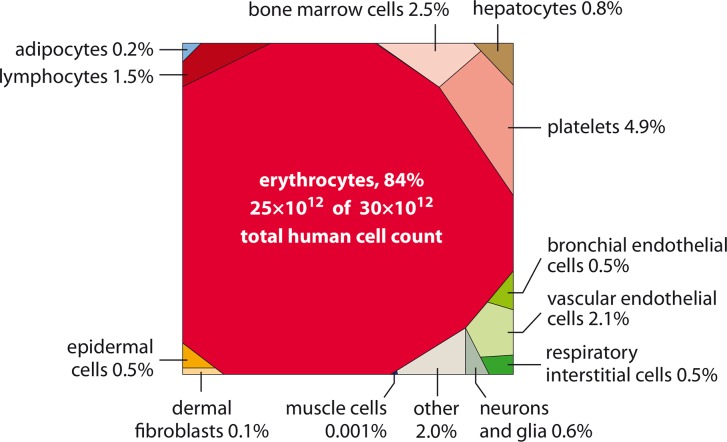
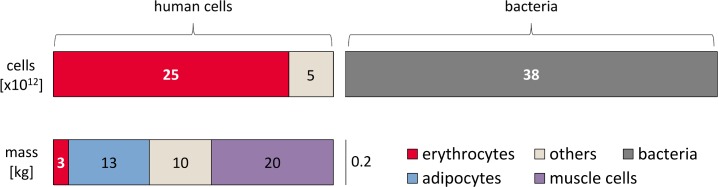
Reported values in the literature on the number of cells in the body differ by orders of magnitude and are very seldom supported by any measurements or calculations. Here, we integrate the most up-to-date information on the number of human and bacterial cells in the body. We estimate the total number of bacteria in the 70 kg "reference man" to be 3.8·1013. For human cells, we identify the dominant role of the hematopoietic lineage to the total count (≈90%) and revise past estimates to 3.0·1013 human cells. Our analysis also updates the widely-cited 10:1 ratio, showing that the number of bacteria in the body is actually of the same order as the number of human cells, and their total mass is about 0.2 kg.
Overview
The claims and statistics of this paper haven’t been checked yet.
Free: it reads the open-access text and checks the first 5 claims that cite a source we can check. Create a free account to check every claim.
Integrity signals
Registry
Cites
Statistics
Figures
Verification
Claims the paper makes
The claims and statistics of this paper haven’t been checked yet.
Free: it reads the open-access text and checks the first 5 claims that cite a source we can check. Create a free account to check every claim.
Claims other papers make about this one
Each is checked against this paper’s own text: does it say what the citing paper says it does?
The cited source doesn’t support the claim as written.
In the citing paper
“these microbes typically account for less than half of the weight of faecal solids 10 .”
From Human microbiome myths and misconceptions (2023) · cites this paper as [10]
Checked by a reasoning model — may be wrong.
Experimental — accuracy not yet measuredThe source backs part of the claim, not all of it — or backs it for a different population, condition or comparison.
In the citing paper
“Endotoxin is a lipopolysaccharide (LPS), constituting much of the outer membrane of gram-negative bacteria, present at high concentrations in gut, gums and skin and in other tissue during bacterial infection.”
From The endotoxin hypothesis of neurodegeneration (2019) · cites this paper as [6]
Experimental — accuracy not yet measuredThe source backs part of the claim, not all of it — or backs it for a different population, condition or comparison.
In the citing paper
“their gene count that exceeds the human genome’s gene count by ~100-fold and enables diverse metabolic programming”
From The microbiome and human cancer (2021) · cites this paper as [27]
Experimental — accuracy not yet measuredThe source backs part of the claim, not all of it — or backs it for a different population, condition or comparison.
In the citing paper
“The human gut microbiome contains ~3 × 10 13 bacteria, most of which are commensals (5).”
From The microbiome in cancer immunotherapy: Diagnostic tools and therapeutic strategies (2018) · cites this paper as [5]
Experimental — accuracy not yet measuredThe source backs part of the claim, not all of it — or backs it for a different population, condition or comparison.
In the citing paper
“there are trillions of microbes as numerous as human cells, that interact with the host constantly at numerous sites”
From The Influence of the Gut Microbiome on Cancer, Immunity, and Cancer Immunotherapy (2018) · cites this paper as Sender et al., 2016
Experimental — accuracy not yet measured
10 more claims about this paper
Create a free account to see every claim other papers make about this one.
Self-check
Percentages, sums and reported differences re-computed from the paper’s own numbers.
The self-check needs the paper’s full text.
Citations
Cites
A human gut microbial gene catalogue established by metagenomic sequencing
MetaHIT Consortium, Qin, J., Li, R., Raes, J., Arumugam, M., Burgdorf, K. S., Manichanh, C., Nielsen, T., Pons, N., Levenez, F., et al. (2010) · Nature · doi:10.1038/nature08821 · Cited by 11,624 · cited 1×
“Bacteria overwhelmingly outnumber eukaryotes and archaea in the human microbiome by 2–3 orders of magnitude [7,8].”
BackgroundHuman gut microbiome viewed across age and geography
Yatsunenko, T., Rey, F. E., Manary, M. J., Trehan, I., Dominguez-Bello, M. G., Contreras, M., Magris, M., Hidalgo, G., Baldassano, R. N., Anokhin, A. P., et al. (2012) · Nature · doi:10.1038/nature11053 · Cited by 7,815 · cited 1×
“Bacteria overwhelmingly outnumber eukaryotes and archaea in the human microbiome by 2–3 orders of magnitude [7,8].”
BackgroundAlberts, B., Johnson, A., Lewis, J., Morgan, D., Raff, M., Roberts, K., & Walter, P. (2017) · W.W. Norton eBooks · doi:10.1201/9781315735368 · Cited by 6,365
Turnbaugh, P. J., Ley, R. E., Hamady, M., Fraser-Liggett, C. M., Knight, R., & Gordon, J. I. (2007) · Nature · doi:10.1038/nature06244 · Cited by 6,091 · cited 1×
“One of the most fundamental and commonly cited figures in this growing field is the estimate that bacteria residing in the human body outnumber human cells by a factor of 10 or more (Bäckhed et al., 2005; Gill et al., 2006; Round and Mazmanian, 2010; Turnbaugh et al., 2007).”
BackgroundHost-Bacterial Mutualism in the Human Intestine
Bäckhed, F., Ley, R. E., Sonnenburg, J. L., Peterson, D. A., & Gordon, J. I. (2005) · Science · doi:10.1126/science.1104816 · Cited by 5,277
Metagenomic Analysis of the Human Distal Gut Microbiome
Gill, S. R., Pop, M., DeBoy, R. T., Eckburg, P. B., Turnbaugh, P. J., Samuel, B. S., Gordon, J. I., Relman, D. A., Fraser-Liggett, C. M., & Nelson, K. E. (2006) · Science · doi:10.1126/science.1124234 · Cited by 4,699 · cited 1×
“One of the most fundamental and commonly cited figures in this growing field is the estimate that bacteria residing in the human body outnumber human cells by a factor of 10 or more (Bäckhed et al., 2005; Gill et al., 2006; Round and Mazmanian, 2010; Turnbaugh et al., 2007).”
BackgroundCellular Scaling Rules for the Brains of Marsupials: Not as “Primitive” as Expected
Dos Santos, S. E., Porfirio, J., da Cunha, F. B., Manger, P. R., Tavares, W., Pessoa, L., Raghanti, M. A., Sherwood, C. C., & Herculano-Houzel, S. (2017) · Brain, Behavior and Evolution · doi:10.1159/000452856 · Cited by 2,642
MICROBIAL ECOLOGY OF THE GASTROINTESTINAL TRACT
Savage, D. C. (1977) · Annual Review of Microbiology · doi:10.1146/annurev.mi.31.100177.000543 · Cited by 2,436 · cited 5×
“Interestingly, those who read the original paper (Savage, 1977) find that it actually cites another paper for his estimate (Luckey, 1972).”
BackgroundInfluentialAzevedo, F. A. C., Carvalho, L. R. B., Grinberg, L. T., Farfel, J. M., Ferretti, R. E. L., Leite, R. E. P., Filho, W. J., Lent, R., & Herculano‐Houzel, S. (2009) · Journal of Comparative Neurology · doi:10.1002/cne.21974 · Cited by 2,337 · cited 1×
“However, a recent analysis [28] revisits this value and, after analyzing the variation across brain regions, concludes that the ratio is close to 1:1.”
BackgroundRound, J. L., & Mazmanian, S. K. (2010) · Proceedings of the National Academy of Sciences · doi:10.1073/pnas.0909122107 · Cited by 2,233 · cited 1×
“One of the most fundamental and commonly cited figures in this growing field is the estimate that bacteria residing in the human body outnumber human cells by a factor of 10 or more (Bäckhed et al., 2005; Gill et al., 2006; Round and Mazmanian, 2010; Turnbaugh et al., 2007).”
Background(1962) · PubMed · Cited by 2,094
Are We Really Vastly Outnumbered? Revisiting the Ratio of Bacterial to Host Cells in Humans
Sender, R., Fuchs, S., & Milo, R. (2016) · Cell · doi:10.1016/j.cell.2016.01.013 · Cited by 2,050
Self-citationVariation in cancer risk among tissues can be explained by the number of stem cell divisions
Tomasetti, C., & Vogelstein, B. (2015) · Science · doi:10.1126/science.1260825 · Cited by 1,927 · cited 2×
“A recent study shows how knowing the number of cells in different tissues can be an important indicator in understand variation in cancer risk among tissues (Tomasetti and Vogelstein, 2015).”
BackgroundValentin, J. (2002) · Annals of the ICRP · doi:10.1016/s0146-6453(03)00002-2 · Cited by 1,754 · cited 1×
“63 m, 60 kg [39]), young infant (age 4 weeks), infant (age 1 year), elder (66 years), and obese (140 kg).”
Report of the task group on reference man
(1979) · Annals of the ICRP · doi:10.1016/0146-6453(79)90123-4 · Cited by 1,706
Rook's Textbook of Dermatology
(2004) · Wiley eBooks · doi:10.1002/9780470750520 · Cited by 1,653
A Selected Core Microbiome Drives the Early Stages of Three Popular Italian Cheese Manufactures
De Filippis, F., La Storia, A., Stellato, G., Gatti, M., & Ercolini, D. (2014) · PLoS ONE · doi:10.1371/journal.pone.0089680 · Cited by 1,398
Sikweyiya, Y., & Jewkes, R. (2012) · PLoS ONE · doi:10.1371/journal.pone.0035495 · Cited by 1,310
The indigenous gastrointestinal microflora
Berg, R. (1996) · Trends in Microbiology · doi:10.1016/0966-842x(96)10057-3 · Cited by 1,153 · cited 6×
“The vast majority of commensal bacteria reside in the colon, with previous estimates of about 1014 bacteria (Savage, 1977), followed by the skin, which is estimated to harbor ~1012 bacteria (Berg, 1996).”
BackgroundMethodInfluentialHuman Fecal Flora: The Normal Flora of 20 Japanese-Hawaiians
Moore, W. E. C., & Holdeman, L. V. (1974) · Applied Microbiology · doi:10.1128/am.27.5.961-979.1974 · Cited by 1,144
Franks, A. H., Harmsen, H. J. M., Raangs, G. C., Jansen, G. J., Schut, F., & Welling, G. W. (1998) · Applied and Environmental Microbiology · doi:10.1128/aem.64.9.3336-3345.1998 · Cited by 1,056 · cited 2×
“Later experiments [22,23] used DAPI nucleic acid staining and fluorescent in situ hybridization [FISH] to bacterial 16S RNA.”
MethodAn estimation of the number of cells in the human body
Bianconi, E., Piovesan, A., Facchin, F., Beraudi, A., Casadei, R., Frabetti, F., Vitale, L., Pelleri, M. C., Tassani, S., Piva, F., et al. (2013) · Annals of Human Biology · doi:10.3109/03014460.2013.807878 · Cited by 1,012 · cited 18×
“Bianconi et al (Bianconi et al., 2013) accounted most of the cells of this lineage: red blood cells, white blood cells and platelets were counted in the blood and in the bone marrow, but there is a non-negligible fraction of the white blood cells that presented outside of these tissues.”
BackgroundMethodResultInfluentialLangendijk, P. S., Schut, F., Jansen, G. J., Raangs, G. C., Kamphuis, G. R., Wilkinson, M. H., & Welling, G. W. (1995) · Applied and Environmental Microbiology · doi:10.1128/aem.61.8.3069-3075.1995 · Cited by 975
Relation of Structure to Function of the Tissues of the Wall of Blood Vessels
Burton, A. C. (1954) · Physiological Reviews · doi:10.1152/physrev.1954.34.4.619 · Cited by 798 · cited 1×
“Using mean diameters for different blood vessels (Burton, 1954) we were able to derive the total length of each type of vessel (arteries, veins, capillaries etc.) and its corresponding surface area.”
MethodBasic anatomical and physiological data for use in radiological protection : reference values
Valentin, J. (2002) · Medical Entomology and Zoology · Cited by 680
Tannock, G. W., Munro, K., Harmsen, H. J. M., Welling, G. W., Smart, J., & Gopal, P. K. (2000) · Applied and Environmental Microbiology · doi:10.1128/aem.66.6.2578-2588.2000 · Cited by 679 · cited 1×
“Later experiments (Franks et al., 1998; Harmsen et al., 2002; Tannock et al., 2000; Thiel and Blaut, 2005) used DAPI staining and FISH (fluorescent in situ hybridization).”
MethodMitochondrial DNA molecules and virtual number of mitochondria per cell in mammalian cells
Robin, E. D., & Wong, R. (1988) · Journal of Cellular Physiology · doi:10.1002/jcp.1041360316 · Cited by 650 · cited 1×
“This can be appreciated by noting that most cell types (though not red blood cells) contain hundreds (or more) of mitochondria per cell [48].”
BackgroundBacterial dry matter content and biomass estimations
Bratbak, G., & Dundas, I. (1984) · Applied and Environmental Microbiology · doi:10.1128/aem.48.4.755-757.1984 · Cited by 633 · cited 2×
“The dry mass percentage of cell mass varies for different types of bacteria (Bratbak and Dundas, 1984; Robertson and Button, 1998) but can be assumed to be roughly equal to that of stool (29%), and thus the fraction of bacterial dry mass in dry feces is a good approximation to the fraction of…”
BackgroundIntestinal fluid volumes and transit of dosage forms as assessed by magnetic resonance imaging
SCHILLER, C., FRÖHLICH, C. ‐., GIESSMANN, T., SIEGMUND, W., MÖNNIKES, H., HOSTEN, N., & WEITSCHIES, W. (2005) · Alimentary Pharmacology & Therapeutics · doi:10.1111/j.1365-2036.2005.02683.x · Cited by 596
THE MICROBIAL CONTRIBUTION TO HUMAN FAECAL MASS
Stephen, A. M., & Cummings, J. H. (1980) · Journal of Medical Microbiology · doi:10.1099/00222615-13-1-45 · Cited by 545 · cited 7×
“The first such experiments date back to the 1960s and 1970s [20,21].”
BackgroundMethodInfluentialHoldeman, L. V., Good, I. J., & Moore, W. E. (1976) · Applied and Environmental Microbiology · doi:10.1128/aem.31.3.359-375.1976 · Cited by 496 · cited 2×
“The first such experiments date back to the 1960’s and 1970's (Holdeman et al., 1976; Houte and Gibbons, 1966; Moore and Holdeman, 1974; Stephen and Cummings, 1980).”
BackgroundFecal weight, colon cancer risk, and dietary intake of nonstarch polysaccharides (dietary fiber)
Cummings, J. H., Bingham, S. A., Heaton, K. W., & Eastwood, M. A. (1992) · Gastroenterology · doi:10.1016/0016-5085(92)91435-7 · Cited by 462 · cited 3×
“Following a typical meal, the volume changes by about 10% [15], while each defecation event reduces the content by a quarter to a third [18].”
BackgroundReport of the task group on reference man
Mann, W. B. (1977) · The International Journal of Applied Radiation and Isotopes · doi:10.1016/0020-708x(77)90145-4 · Cited by 433
Extensive Set of 16S rRNA-Based Probes for Detection of Bacteria in Human Feces
Harmsen, H. J. M., Raangs, G. C., He, T., Degener, J. E., & Welling, G. W. (2002) · Applied and Environmental Microbiology · doi:10.1128/aem.68.6.2982-2990.2002 · Cited by 401 · cited 1×
“Later experiments (Franks et al., 1998; Harmsen et al., 2002; Tannock et al., 2000; Thiel and Blaut, 2005) used DAPI staining and FISH (fluorescent in situ hybridization).”
MethodVolkmer, B., & Heinemann, M. (2011) · PLoS ONE · doi:10.1371/journal.pone.0023126 · Cited by 351 · cited 1×
“(Ambayya et al., 2014; Dosoo et al., 2012; Nordin et al., 2004; Pekelharing et al., 2010; Volkmer and Heinemann, 2011; Wakeman et al., 2007).”
Vulevic, J., Juric, A., Tzortzis, G., & Gibson, G. R. (2013) · The Journal of Nutrition · doi:10.3945/jn.112.166132 · Cited by 349 · cited 1×
“(1) No significant change in bacteria concentrations in relation to high variation for the reference man [40,43].”
BackgroundAnatomy and Organization of Human Skin
McGrath, J. A., Eady, R. A. J., & Pope, F. M. (2004) · Rook's Textbook of Dermatology · doi:10.1002/9780470750520.ch3 · Cited by 289 · cited 2×
“(McGrath et al., 2004).”
BackgroundIntroduction to intestinal microecology
Luckey, T. D. (1972) · The American Journal of Clinical Nutrition · doi:10.1093/ajcn/25.12.1292 · Cited by 288 · cited 8×
“Revisiting the original back-of-the-envelope estimate for the number of bacteria in the colon The often cited value of ~1014 bacteria in the body has its roots in the 1970’s (Holdeman et al., 1976; Luckey, 1972; Moore and Holdeman, 1974).”
BackgroundInfluentialBlood sample volumes in child health research: review of safe limits
Howie, S. R. (2011) · Bulletin of the World Health Organization · doi:10.2471/blt.10.080010 · Cited by 282 · cited 1×
“On the other hand, the blood volume to weight of infants is 75–80 ml/kg (Howie, 2011), approximately 10% higher than normal adults.”
BackgroundEstimated lean body mass as an index for normalization of body fluid volumes in humans
Boer, P. (1984) · American Journal of Physiology-Renal Physiology · doi:10.1152/ajprenal.1984.247.4.f632 · Cited by 280 · cited 2×
“(Boer, 1984; Feldschuh and Enson, 1977; Nadler et al., 1962; Snyder et al., 1975) multiplied by a mean RBC count of 5.0·10 12 cells/L (SEM 1.2%, CV 7”
BackgroundInfluentialHerman, I. P. (2016) · Biological and Medical Physics, Biomedical Engineering · doi:10.1007/978-3-319-23932-3 · Cited by 274
Prediction of the normal blood volume. Relation of blood volume to body habitus.
Feldschuh, J., & Enson, Y. (1977) · Circulation · doi:10.1161/01.cir.56.4.605 · Cited by 262 · cited 3×
“(Boer, 1984; Feldschuh and Enson, 1977; Nadler et al., 1962; Snyder et al., 1975) multiplied by a mean RBC count of 5.0·10 12 cells/L (SEM 1.2%, CV 7”
BackgroundInfluentialNumber and distribution of lymphocytes in man. A critical analysis
Trepel, F. (1974) · Klinische Wochenschrift · doi:10.1007/bf01468720 · Cited by 231 · cited 1×
“The total number of lymphocytes in a 70 kg man is estimated to be about 5·10 11 (Trepel, 1974), most of them reside in the lymphatic system and in tissues across the body.”
BackgroundGoodsell, D. S. (2009) · Springer eBooks · doi:10.1007/978-0-387-84925-6 · Cited by 224 · cited 2×
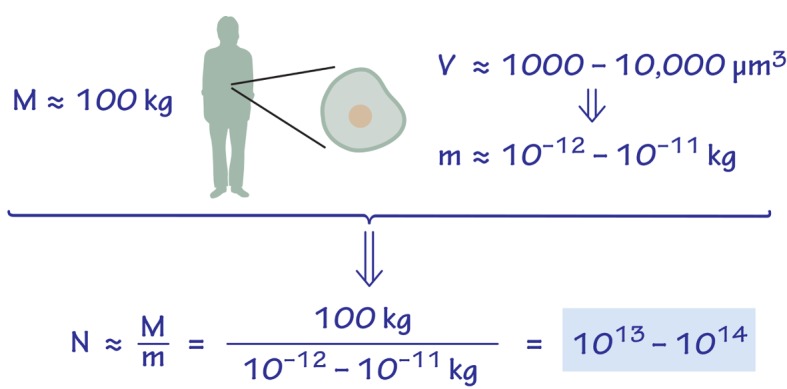
“The number of human cells in a “standard” adult male In the literature we find many statements for the number of cells in the human body ranging from 1012 to 1014 cells (Alberts et al., 2002; Cooper and Hausman, 2000; Goodsell, 2009; Griffiths, 2005; Lodish, 2000).”
BackgroundPredictors of body surface area
Wang, Y., Moss, J., & Thisted, R. (1992) · Journal of Clinical Anesthesia · doi:10.1016/0952-8180(92)90111-d · Cited by 223 · cited 1×
“(4) Skin area calculated as inferred from standard formula by DuBois for the body surface area [12].”
MethodErythrocyte Volume, Plasma Volume, and Lean Body Mass in Adult Men and Women
RETZLAFF, J. A., TAUXE, W. N., KIELY, J. M., & STROEBEL, C. F. (1969) · Blood · doi:10.1182/blood.v33.5.649.649 · Cited by 214 · cited 1×
“(4) No significant change in the hematocrit in obesity [45].”
BackgroundGeographical variation of human gut microbial composition
Suzuki, T. A., & Worobey, M. (2014) · Biology Letters · doi:10.1098/rsbl.2013.1037 · Cited by 210 · cited 1×
“It has been shown that the bacterial population in the colon is strongly affected by geography [47], but current data is not enough to allow robust inference for the colonic concentrations and represents a data gap.”
BackgroundThe Average Body Surface Area of Adult Cancer Patients in the UK: A Multicentre Retrospective Study
Sacco, J. J., Botten, J., Macbeth, F., Bagust, A., & Clark, P. (2010) · PLoS ONE · doi:10.1371/journal.pone.0008933 · Cited by 203 · cited 1×
“(3) Skin surface bacteria density is taken from (Leyden et al., 1987) (4) Total skin surface is taken from (Sacco et al., 2010) (5) Volume of the organs of the gastrointestinal tract is derived from weights taken from (Eve, 1966) by assuming content density of 1.04 g/ml (Snyder et al., 1975).”
BackgroundInfluentialFélétou, M. (2011) · Colloquium Series on Integrated Systems Physiology: From Molecule to Function · doi:10.4199/c00031ed1v01y201105isp019 · Cited by 200 · cited 1×
“Dividing by the mean surface area of one endothelial cell (Félétou, 2011) we derive a total estimate of 6·1011 cells.”
BackgroundHe, T., Priebe, M. G., Zhong, Y., Huang, C., Harmsen, H. J. M., Raangs, G. C., Antoine, J.-M., Welling, G. W., & Vonk, R. J. (2007) · Journal of Applied Microbiology · doi:10.1111/j.1365-2672.2007.03579.x · Cited by 191
Effect of changing transit time on colonic microbial metabolism in man.
Stephen, A. M., Wiggins, H. S., & Cummings, J. H. (1987) · Gut · doi:10.1136/gut.28.5.601 · Cited by 184 · cited 2×
“An adult human is reported to produce 147 grams of wet stool per day (SEM 16%) (Hammer et al., 1997; Stephen et al., 1987; Wyman et al., 1978).”
BackgroundHansen, R., Scott, K. P., Khan, S., Martin, J. C., Berry, S. H., Stevenson, M., Okpapi, A., Munro, M. J., & Hold, G. L. (2015) · PLOS ONE · doi:10.1371/journal.pone.0133320 · Cited by 183 · cited 1×
“The colonization of the neonatal GI tract from negligible colon bacterial concentrations of 10(5) bacteria/mL to concentrations equivalent to those of adults occurs in just under one month [42].”
BackgroundAge- and Sex-Specific Dynamics in 22 Hematologic and Biochemical Analytes from Birth to Adolescence
Zierk, J., Arzideh, F., Rechenauer, T., Haeckel, R., Rascher, W., Metzler, M., & Rauh, M. (2015) · Clinical Chemistry · doi:10.1373/clinchem.2015.239731 · Cited by 171
Southwell, B. R., Clarke, M. C. C., Sutcliffe, J., & Hutson, J. M. (2009) · Pediatric Surgery International · doi:10.1007/s00383-009-2387-x · Cited by 167 · cited 2×
“(Southwell et al., 2009).”
BackgroundVariability of colonic function in healthy subjects.
Wyman, J. B., Heaton, K. W., Manning, A. P., & Wicks, A. C. (1978) · Gut · doi:10.1136/gut.19.2.146 · Cited by 167
Moore, T. L. (2003) · Rheumatology · doi:10.1093/rheumatology/keg435 · Cited by 164 · cited 2×
“Dermal thickness was directly measured at 17 locations throughout the body [34], with the mean of these measurements yielding 0.”
MethodInfluentialHopkins, M. J., Macfarlane, G. T., Furrie, E., Fite, A., & Macfarlane, S. (2005) · FEMS Microbiology Ecology · doi:10.1016/j.femsec.2005.03.001 · Cited by 163 · cited 1×
“Review of the literature shows no significant effect on the colonic bacterial concentrations over age from the one month old infant to the elderly [40,41].”
BackgroundTotal blood volume in healthy young and older men
Davy, K. P., & Seals, D. R. (1994) · Journal of Applied Physiology · doi:10.1152/jappl.1994.76.5.2059 · Cited by 159 · cited 2×
“(3) Decrease of 24% in the blood volume, according to [44].”
BackgroundDetermination of bacterial cell volume with the Coulter Counter
Kubitschek, H. E., & Friske, J. A. (1986) · Journal of Bacteriology · doi:10.1128/jb.168.3.1466-1467.1986 · Cited by 143
Understanding the Adaptive Growth Strategy of Lactobacillus plantarum by In Silico Optimisation
Teusink, B., Wiersma, A., Jacobs, L., Notebaart, R. A., & Smid, E. J. (2009) · PLoS Computational Biology · doi:10.1371/journal.pcbi.1000410 · Cited by 143
Leyden, J. J., McGinley, K. J., Nordström, K. M., & WEBSTER, G. F. (1987) · Journal of Investigative Dermatology · doi:10.1111/1523-1747.ep12468965 · Cited by 138
Pritchard, S. E., Marciani, L., Garsed, K. C., Hoad, C. L., Thongborisute, W., Roberts, E., Gowland, P. A., & Spiller, R. C. (2014) · Neurogastroenterology & Motility · doi:10.1111/nmo.12243 · Cited by 134 · cited 2×
“Following a typical meal, the volume changes by about 10% [15], while each defecation event reduces the content by a quarter to a third [18].”
BackgroundZoetendal, E. G., Ben-Amor, K., Harmsen, H. J. M., Schut, F., Akkermans, A. D. L., & de Vos, W. M. (2002) · Applied and Environmental Microbiology · doi:10.1128/aem.68.9.4225-4232.2002 · Cited by 129
Eve, I. S. (1966) · Health Physics · doi:10.1097/00004032-196602000-00002 · Cited by 121
Robertson, B. R., Button, D. K., & Koch, A. L. (1998) · Applied and Environmental Microbiology · doi:10.1128/aem.64.10.3900-3909.1998 · Cited by 121 · cited 1×
“The dry mass percentage of cell mass varies for different types of bacteria (Bratbak and Dundas, 1984; Robertson and Button, 1998) but can be assumed to be roughly equal to that of stool (29%), and thus the fraction of bacterial dry mass in dry feces is a good approximation to the fraction of bacterial mass in stool.”
BackgroundRoger, L. C., & McCartney, A. L. (2010) · Microbiology · doi:10.1099/mic.0.041913-0 · Cited by 115 · cited 2×
“Review of the literature shows no significant effect on the colonic bacterial concentrations over age from the one month old infant to the elderly [40,41].”
BackgroundVery slow growth of Escherichia coli
Chesbro, W. R., Evans, T. M., & Eifert, R. (1979) · Journal of Bacteriology · doi:10.1128/jb.139.2.625-638.1979 · Cited by 113 · cited 1×
“Interestingly, this value for the average bacterial cell mass is several times higher than is usually taken for a model bacterium such as E. coli (Chesbro et al., 1979; Kubitschek et al., 1986).”
BackgroundBody cell mass: model development and validation at the cellular level of body composition
Wang, Z., St-Onge, M.-P., Lecumberri, B., Pi-Sunyer, F. X., Heshka, S., Wang, J., Kotler, D. P., Gallagher, D., Wielopolski, L., Pierson, R. N., et al. (2004) · American Journal of Physiology-Endocrinology and Metabolism · doi:10.1152/ajpendo.00227.2003 · Cited by 105 · cited 3×
“To distinguish between intra- and extracellular portions of each tissue, we can leverage total body potassiummeasurements [38] as detailed in S1 Appendix.”
BackgroundMethodNordin, G., Mårtensson, A., Swolin, B., Sandberg, S., Christensen, N. J., Thorsteinsson, V., Franzson, L., Kairisto, V., & Savolainen, E. ‐. (2004) · Scandinavian Journal of Clinical and Laboratory Investigation · doi:10.1080/00365510410002797 · Cited by 98
Studies of the cultivable flora of normal human feces
van Houte, J., & Gibbons, R. J. (1966) · Antonie van Leeuwenhoek · doi:10.1007/bf02097463 · Cited by 81 · cited 1×
“The first such experiments date back to the 1960s and 1970s [20,21].”
BackgroundYoung, J. F., Luecke, R. H., Pearce, B. A., Lee, T., Ahn, H., Baek, S., Moon, H., Dye, D. W., Davis, T. M., & Taylor, S. J. (2009) · Journal of Toxicology and Environmental Health · doi:10.1080/15287390802647203 · Cited by 81 · cited 2×
“(5) We could not find any direct measurements of the colonic volume for obese individuals in the literature, yet from an indirect analysis the volume increases with weight and plateaus at about 600 mL [46].”
BackgroundRobust, routine haematology reference ranges for healthy adults
WAKEMAN, L., AL‐ISMAIL, S., BENTON, A., BEDDALL, A., GIBBS, A., HARTNELL, S., MORRIS, K., & MUNRO, R. (2007) · International Journal of Laboratory Hematology · doi:10.1111/j.1365-2257.2006.00883.x · Cited by 74 · cited 2×
“(Ambayya et al., 2014; Dosoo et al., 2012; Nordin et al., 2004; Pekelharing et al., 2010; Volkmer and Heinemann, 2011; Wakeman et al., 2007).”
BackgroundSuggested Reference Values for Regional Blood Volumes in Humans
Leggett, R. W., & Williams, L. R. (1991) · Health Physics · doi:10.1097/00004032-199102000-00001 · Cited by 62
A cellular-level approach to predicting resting energy expenditure across the adult years
Wang, Z., Heshka, S., Heymsfield, S. B., Shen, W., & Gallagher, D. (2005) · The American Journal of Clinical Nutrition · doi:10.1093/ajcn/81.4.799 · Cited by 61 · cited 1×
“To distinguish between intra-and extra-cellular portions of each tissue we can leverage total body potassium measurements (Wang et al., 2004, 2005).”
MethodAn improved method for the automated enumeration of fluorescently labelled bacteria in human faeces
Thiel, R., & Blaut, M. (2005) · Journal of Microbiological Methods · doi:10.1016/j.mimet.2004.12.014 · Cited by 56 · cited 2×
“Later experiments [22,23] used DAPI nucleic acid staining and fluorescent in situ hybridization [FISH] to bacterial 16S RNA.”
MethodUyeno, Y., Sekiguchi, Y., & Kamagata, Y. (2007) · International Journal of Food Microbiology · doi:10.1016/j.ijfoodmicro.2007.11.042 · Cited by 54
The Role of Colonic Microbiota in Lactose Intolerance
Zhong, Y., Priebe, M. G., Vonk, R. J., Huang, C.-Y., Antoine, J., He, T., Harmsen, H. J. M., & Welling, G. W. (2004) · Digestive Diseases and Sciences · doi:10.1023/b:ddas.0000011606.96795.40 · Cited by 52
Griffiths, M. W. (2005) · Elsevier eBooks · doi:10.1016/b978-1-85573-953-6.50026-x · Cited by 48
Ten Times More Microbial Cells than Body Cells in Humans?
Rosner, J. L. (2014) · Microbe Magazine · doi:10.1128/microbe.9.47.2 · Cited by 47 · cited 2×
“This ratio was criticized recently in a letter to the journalMicrobe [5], but an alternative detailed estimate that will give concrete values and estimate the uncertainty range is needed.”
BackgroundSandberg, T. H., Nilsson, M., Poulsen, J. L., Gram, M., Frøkjær, J. B., Østergaard, L. R., & Drewes, A. M. (2015) · Abdominal Imaging · doi:10.1007/s00261-015-0475-z · Cited by 46 · cited 1×
“The inner colon volume in that cohort was 760 mL in total [16,17].”
BackgroundChaussain, C., Godeau, G., Lebreton, C., Desmoulière, A., Pellat, B., Dubertret, L., & Coulomb, B. (2003) · Experimental Dermatology · doi:10.1034/j.1600-0625.2003.00023.x · Cited by 41 · cited 2×
“The fibroblast density in the middle of the dermis was reported to be about 3 10(6) cells/cm(3) [36], giving an areal density of σret.”
BackgroundQuantification and variability in colonic volume with a novel magnetic resonance imaging method
Nilsson, M., Sandberg, T. H., Poulsen, J. L., Gram, M., Frøkjær, J. B., Østergaard, L. R., Krogh, K., Brock, C., & Drewes, A. M. (2015) · Neurogastroenterology & Motility · doi:10.1111/nmo.12673 · Cited by 40 · cited 1×
“The inner colon volume in that cohort was 760 mL in total [16,17].”
BackgroundDermal Fibroblasts Actively Metabolize Retinoic Acid but not Retinol
Randolph, R. K., & Simon, M. (1998) · Journal of Investigative Dermatology · doi:10.1046/j.1523-1747.1998.00307.x · Cited by 27 · cited 4×
“The fibroblast density is greater in the papillary dermis, with a reported areal density, σpap. of 106 cells/cm2 (with 100 μm thickness of papillary, giving 108 cells/cm3) (Randolph and Simon, 1998).”
BackgroundInfluentialFour‐Compartment Cellular Level Body Composition Model: Comparison of Two Approaches**
Shen, W., St‐Onge, M., Pietrobelli, A., Wang, J., Wang, Z., Heshka, S., & Heymsfield, S. B. (2005) · Obesity Research · doi:10.1038/oby.2005.8 · Cited by 23 · cited 1×
“For a reference man mass of 70 kg, 25% is extracellular fluid [37], another 7% is extracellular solids [37], thus we need to account for 46 kg of cell mass (including fat).”
BackgroundThe distal colon provides reserve storage capacity during colonic fluid overload
Hammer, J., Pruckmayer, M., Bergmann, H., Kletter, K., & Gangl, A. (1997) · Gut · doi:10.1136/gut.41.5.658 · Cited by 20 · cited 2×
“An adult human is reported to produce 147 grams of wet stool per day (SEM 16%) (Hammer et al., 1997; Stephen et al., 1987; Wyman et al., 1978).”
Background(1975) · Annals of the ICRP/ICRP Publication · doi:10.1016/s0074-2740(75)80015-8 · Cited by 2
Cited by
Introduction to the human gut microbiota
Thursby, E., & Juge, N. (2017) · Biochemical Journal · doi:10.1042/bcj20160510 · Cited by 3,600
Long non-coding RNAs: definitions, functions, challenges and recommendations
Mattick, J. S., Amaral, P. P., Carninci, P., Carpenter, S., Chang, H. Y., Chen, L.-L., Chen, R., Dean, C., Dinger, M. E., Fitzgerald, K. A., et al. (2023) · Nature Reviews Molecular Cell Biology · doi:10.1038/s41580-022-00566-8 · Cited by 2,356
Are We Really Vastly Outnumbered? Revisiting the Ratio of Bacterial to Host Cells in Humans
Sender, R., Fuchs, S., & Milo, R. (2016) · Cell · doi:10.1016/j.cell.2016.01.013 · Cited by 2,050
Self-citationStojanov, S., Berlec, A., & Štrukelj, B. (2020) · Microorganisms · doi:10.3390/microorganisms8111715 · Cited by 1,885
“In the human body, trillions of microorganisms live in symbiosis with the host and are mainly located in the gastrointestinal tract, skin, saliva, oral mucosa, conjunctiva, and vagina [1].”
BackgroundLloyd-Price, J., Abu-Ali, G., & Huttenhower, C. (2016) · Genome Medicine · doi:10.1186/s13073-016-0307-y · Cited by 1,891
“The ecosystem of the colon has been the most intensively studied body habitat (Table 1) as it boasts a remarkable diversity between people and a microbial biomass (cell count) that eclipses that of other body sites by more than an order of magnitude [32].”
Background
Metadata
- Authors
- Sender, R., Fuchs, S., & Milo, R.
- Affiliations
- Weizmann Institute of Science (IL)
- Corresponding author
- Fuchs, Shai
- Milo, Ron
- Venue
- PLOS Biology
- Publisher
- Public Library of Science (PLoS)
- Published
- 2016-08-19
- Volume
- 14
- Issue
- 8
- Pages
- e1002533
- ISSN
- 1544-9173 (ISSN-L)
- 1545-7885
- PMC
- PMC4991899
- OpenAlex
- W2952564192
- Cited by
- 5,425
- References
- 88
- Citations by year
- 2026: 411 · 2025: 533 · 2024: 655 · 2023: 696 · 2022: 659 · 2021: 645 · 2020: 597 · 2019: 514 · 2018: 394 · 2017: 252 · 2016: 66
- FWCI
- 212.46
- Type
- journal article
- Language
- en
- Open access
- gold
- doi.org
- Licence
- Locations
- PLoS Biology (publishedVersion, cc-by)
- bioRxiv (Cold Spring Harbor Laboratory) (acceptedVersion, cc-by-nc-nd)
- Europe PMC (PubMed Central) (publishedVersion, cc-by)
- PubMed Central (publishedVersion, cc-by)
- PubMed (publishedVersion)
- DOAJ (DOAJ: Directory of Open Access Journals) (submittedVersion)
- Figshare (submittedVersion, cc-by)
- Funders
- Leona M. and Harry B. Helmsley Charitable Trust
- H2020 European Research Council (646827)
- Topics
- Life Sciences › Biochemistry, Genetics and Molecular Biology › Molecular Biology › Gut microbiota and health
- Physical Sciences › Environmental Science › Ecology › Microbial Community Ecology and Physiology
- Health Sciences › Dentistry › Periodontics › Oral microbiology and periodontitis research
- Keywords
- bacterial counts, human microbiome, hematopoietic lineage, reference man, microbial biomass, body cell mass
- MeSH terms
- Adult, Bacteria, Body Weights and Measures, Cell Count, Humans, Male, Organ Specificity, Bacterial Load, Microbiota
About these checks
Registry, retraction, Cites and statistics results are computed, not judged, with one exception: a printed reference that no index lists is read once by a model before it counts as a citation error. Claims are extracted by a model and kept only when their quote appears verbatim in the text; each cited source is then checked, with a model’s help, for whether it says what the claim relies on. Those verdicts can be wrong — read the claim’s quote and the cited source before relying on one.
Statistics and arithmetic are recomputed, not judged.
Confidence bands are shown only for fields calibrated on our annotated test set. None is calibrated yet, so no band is shown.
What counts as a claim ›How we measure confidence ›How we check this ›
Are you an author, or do you see a problem with this page? Request a review
Data sources
Bibliographic data: Semantic Scholar, OpenAlex, Crossref.
Contains information from the Semantic Scholar Academic Graph Datasets, made available under the ODC Attribution License (ODC-BY 1.0).
Semantic Scholar’s data is described in: Kinney, R., et al. (2023). The Semantic Scholar Open Data Platform. arXiv:2301.10140.
