

Revised Estimates for the Number of Human and Bacteria Cells in the Body
Open accessPublished version of a preprint
The DOI matches its Crossref record; 86 of the 88 references it cites were found in a registry or an index.
Abstract
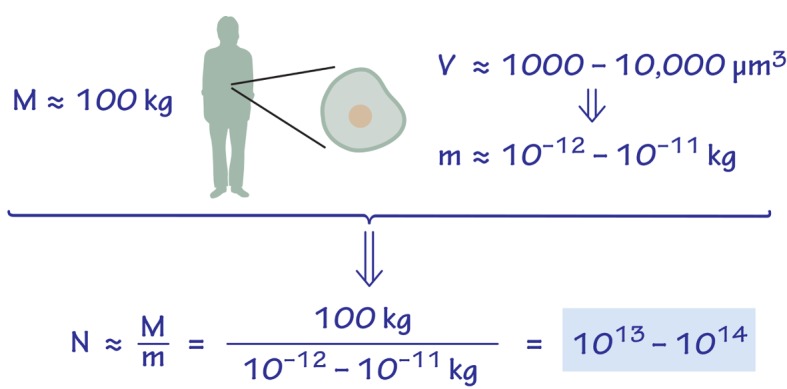
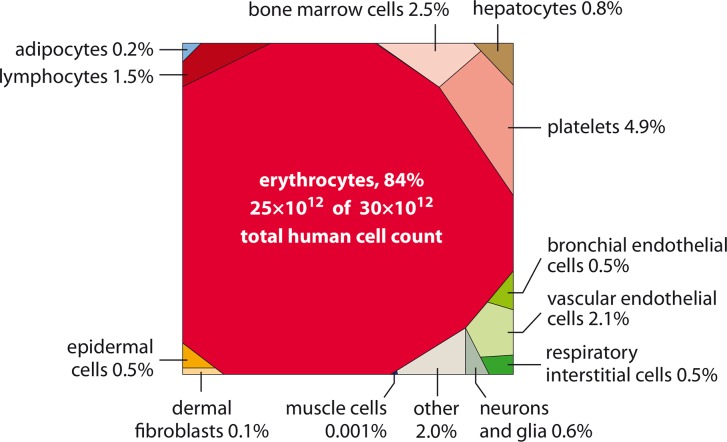
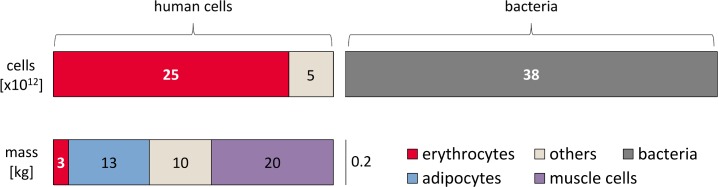
Reported values in the literature on the number of cells in the body differ by orders of magnitude and are very seldom supported by any measurements or calculations. Here, we integrate the most up-to-date information on the number of human and bacterial cells in the body. We estimate the total number of bacteria in the 70 kg "reference man" to be 3.8·1013. For human cells, we identify the dominant role of the hematopoietic lineage to the total count (≈90%) and revise past estimates to 3.0·1013 human cells. Our analysis also updates the widely-cited 10:1 ratio, showing that the number of bacteria in the body is actually of the same order as the number of human cells, and their total mass is about 0.2 kg.
Overview
The claims and statistics of this paper haven’t been checked yet.
Free: it reads the open-access text and checks the first 5 claims that cite a source we can check. Create a free account to check every claim.
Integrity signals
Registry
Cites
Statistics
Figures
Verification
Claims the paper makes
The claims and statistics of this paper haven’t been checked yet.
Free: it reads the open-access text and checks the first 5 claims that cite a source we can check. Create a free account to check every claim.
Claims other papers make about this one
Each is checked against this paper’s own text: does it say what the citing paper says it does?
The cited source doesn’t support the claim as written.
In the citing paper
“these microbes typically account for less than half of the weight of faecal solids 10 .”
From Human microbiome myths and misconceptions (2023) · cites this paper as [10]
Checked by a reasoning model — may be wrong.
Experimental — accuracy not yet measuredThe source backs part of the claim, not all of it — or backs it for a different population, condition or comparison.
In the citing paper
“Endotoxin is a lipopolysaccharide (LPS), constituting much of the outer membrane of gram-negative bacteria, present at high concentrations in gut, gums and skin and in other tissue during bacterial infection.”
From The endotoxin hypothesis of neurodegeneration (2019) · cites this paper as [6]
Experimental — accuracy not yet measuredThe source backs part of the claim, not all of it — or backs it for a different population, condition or comparison.
In the citing paper
“their gene count that exceeds the human genome’s gene count by ~100-fold and enables diverse metabolic programming”
From The microbiome and human cancer (2021) · cites this paper as [27]
Experimental — accuracy not yet measuredThe source backs part of the claim, not all of it — or backs it for a different population, condition or comparison.
In the citing paper
“The human gut microbiome contains ~3 × 10 13 bacteria, most of which are commensals (5).”
From The microbiome in cancer immunotherapy: Diagnostic tools and therapeutic strategies (2018) · cites this paper as [5]
Experimental — accuracy not yet measuredThe source backs part of the claim, not all of it — or backs it for a different population, condition or comparison.
In the citing paper
“there are trillions of microbes as numerous as human cells, that interact with the host constantly at numerous sites”
From The Influence of the Gut Microbiome on Cancer, Immunity, and Cancer Immunotherapy (2018) · cites this paper as Sender et al., 2016
Experimental — accuracy not yet measured
10 more claims about this paper
Create a free account to see every claim other papers make about this one.
Self-check
Percentages, sums and reported differences re-computed from the paper’s own numbers.
The self-check needs the paper’s full text.
Citations
Cites
A human gut microbial gene catalogue established by metagenomic sequencing
MetaHIT Consortium, Qin, J., Li, R., Raes, J., Arumugam, M., Burgdorf, K. S., Manichanh, C., Nielsen, T., Pons, N., Levenez, F., et al. (2010) · Nature · doi:10.1038/nature08821 · Cited by 11,624 · cited 1×
“Bacteria overwhelmingly outnumber eukaryotes and archaea in the human microbiome by 2–3 orders of magnitude [7,8].”
BackgroundHuman gut microbiome viewed across age and geography
Yatsunenko, T., Rey, F. E., Manary, M. J., Trehan, I., Dominguez-Bello, M. G., Contreras, M., Magris, M., Hidalgo, G., Baldassano, R. N., Anokhin, A. P., et al. (2012) · Nature · doi:10.1038/nature11053 · Cited by 7,815 · cited 1×
“Bacteria overwhelmingly outnumber eukaryotes and archaea in the human microbiome by 2–3 orders of magnitude [7,8].”
BackgroundAlberts, B., Johnson, A., Lewis, J., Morgan, D., Raff, M., Roberts, K., & Walter, P. (2017) · W.W. Norton eBooks · doi:10.1201/9781315735368 · Cited by 6,365
Turnbaugh, P. J., Ley, R. E., Hamady, M., Fraser-Liggett, C. M., Knight, R., & Gordon, J. I. (2007) · Nature · doi:10.1038/nature06244 · Cited by 6,091 · cited 1×
“One of the most fundamental and commonly cited figures in this growing field is the estimate that bacteria residing in the human body outnumber human cells by a factor of 10 or more (Bäckhed et al., 2005; Gill et al., 2006; Round and Mazmanian, 2010; Turnbaugh et al., 2007).”
BackgroundHost-Bacterial Mutualism in the Human Intestine
Bäckhed, F., Ley, R. E., Sonnenburg, J. L., Peterson, D. A., & Gordon, J. I. (2005) · Science · doi:10.1126/science.1104816 · Cited by 5,277
Metagenomic Analysis of the Human Distal Gut Microbiome
Gill, S. R., Pop, M., DeBoy, R. T., Eckburg, P. B., Turnbaugh, P. J., Samuel, B. S., Gordon, J. I., Relman, D. A., Fraser-Liggett, C. M., & Nelson, K. E. (2006) · Science · doi:10.1126/science.1124234 · Cited by 4,699 · cited 1×
“One of the most fundamental and commonly cited figures in this growing field is the estimate that bacteria residing in the human body outnumber human cells by a factor of 10 or more (Bäckhed et al., 2005; Gill et al., 2006; Round and Mazmanian, 2010; Turnbaugh et al., 2007).”
BackgroundCellular Scaling Rules for the Brains of Marsupials: Not as “Primitive” as Expected
Dos Santos, S. E., Porfirio, J., da Cunha, F. B., Manger, P. R., Tavares, W., Pessoa, L., Raghanti, M. A., Sherwood, C. C., & Herculano-Houzel, S. (2017) · Brain, Behavior and Evolution · doi:10.1159/000452856 · Cited by 2,642
MICROBIAL ECOLOGY OF THE GASTROINTESTINAL TRACT
Savage, D. C. (1977) · Annual Review of Microbiology · doi:10.1146/annurev.mi.31.100177.000543 · Cited by 2,436 · cited 5×
“Interestingly, those who read the original paper (Savage, 1977) find that it actually cites another paper for his estimate (Luckey, 1972).”
BackgroundInfluentialAzevedo, F. A. C., Carvalho, L. R. B., Grinberg, L. T., Farfel, J. M., Ferretti, R. E. L., Leite, R. E. P., Filho, W. J., Lent, R., & Herculano‐Houzel, S. (2009) · Journal of Comparative Neurology · doi:10.1002/cne.21974 · Cited by 2,337 · cited 1×
“However, a recent analysis [28] revisits this value and, after analyzing the variation across brain regions, concludes that the ratio is close to 1:1.”
BackgroundRound, J. L., & Mazmanian, S. K. (2010) · Proceedings of the National Academy of Sciences · doi:10.1073/pnas.0909122107 · Cited by 2,233 · cited 1×
“One of the most fundamental and commonly cited figures in this growing field is the estimate that bacteria residing in the human body outnumber human cells by a factor of 10 or more (Bäckhed et al., 2005; Gill et al., 2006; Round and Mazmanian, 2010; Turnbaugh et al., 2007).”
Background
Cited by
Introduction to the human gut microbiota
Thursby, E., & Juge, N. (2017) · Biochemical Journal · doi:10.1042/bcj20160510 · Cited by 3,600
Long non-coding RNAs: definitions, functions, challenges and recommendations
Mattick, J. S., Amaral, P. P., Carninci, P., Carpenter, S., Chang, H. Y., Chen, L.-L., Chen, R., Dean, C., Dinger, M. E., Fitzgerald, K. A., et al. (2023) · Nature Reviews Molecular Cell Biology · doi:10.1038/s41580-022-00566-8 · Cited by 2,356
Are We Really Vastly Outnumbered? Revisiting the Ratio of Bacterial to Host Cells in Humans
Sender, R., Fuchs, S., & Milo, R. (2016) · Cell · doi:10.1016/j.cell.2016.01.013 · Cited by 2,050
Self-citationStojanov, S., Berlec, A., & Štrukelj, B. (2020) · Microorganisms · doi:10.3390/microorganisms8111715 · Cited by 1,885
“In the human body, trillions of microorganisms live in symbiosis with the host and are mainly located in the gastrointestinal tract, skin, saliva, oral mucosa, conjunctiva, and vagina [1].”
BackgroundLloyd-Price, J., Abu-Ali, G., & Huttenhower, C. (2016) · Genome Medicine · doi:10.1186/s13073-016-0307-y · Cited by 1,891
“The ecosystem of the colon has been the most intensively studied body habitat (Table 1) as it boasts a remarkable diversity between people and a microbial biomass (cell count) that eclipses that of other body sites by more than an order of magnitude [32].”
BackgroundBacteria and archaea on Earth and their abundance in biofilms
Flemming, H.-C., & Wuertz, S. (2019) · Nature Reviews Microbiology · doi:10.1038/s41579-019-0158-9 · Cited by 1,729
The Influence of the Gut Microbiome on Cancer, Immunity, and Cancer Immunotherapy
Gopalakrishnan, V., Helmink, B. A., Spencer, C. N., Reuben, A., & Wargo, J. A. (2018) · Cancer Cell · doi:10.1016/j.ccell.2018.03.015 · Cited by 1,392
“Therefore, it is not surprising that they play such a large role in numerous host functions including immunity (Sender et al., 2016; Morgan and Huttenhower, 2012).”
BackgroundBacterial quorum sensing in complex and dynamically changing environments
Mukherjee, S., & Bassler, B. L. (2019) · Nature Reviews Microbiology · doi:10.1038/s41579-019-0186-5 · Cited by 1,374
The gut microbiome in neurological disorders
Cryan, J. F., O'Riordan, K. J., Sandhu, K., Peterson, V., & Dinan, T. G. (2020) · The Lancet Neurology · doi:10.1016/s1474-4422(19)30356-4 · Cited by 1,336
The microbiome and human cancer
Sepich-Poore, G. D., Zitvogel, L., Straussman, R., Hasty, J., Wargo, J. A., & Knight, R. (2021) · Science · doi:10.1126/science.abc4552 · Cited by 1,332
“1 to 1% are archaea and eukarya (including fungi) (27, 48).”
BackgroundObesity: Epidemiology, Pathophysiology, and Therapeutics
Lin, X., & Li, H. (2021) · Frontiers in Endocrinology · doi:10.3389/fendo.2021.706978 · Cited by 1,272
Gut Bacteroides species in health and disease
Zafar, H., & Saier, M. H. (2021) · Gut Microbes · doi:10.1080/19490976.2020.1848158 · Cited by 1,233
“The human colon is the main site of habitation for bacterial residents with an estimated concentration of 10(12)/ml.(4) As the colon of the gastrointestinal tract (GIT) of mammals has the availability of diverse nutrient sources (derived from the host diet), this makes it a predilection site for numerous microbes.”
BackgroundBacterial biofilm formation on implantable devices and approaches to its treatment and prevention
Khatoon, Z., McTiernan, C. D., Suuronen, E. J., Mah, T.-F., & Alarcon, E. I. (2018) · Heliyon · doi:10.1016/j.heliyon.2018.e01067 · Cited by 1,187
Enterotypes in the landscape of gut microbial community composition
Costea, P. I., Hildebrand, F., Arumugam, M., Bäckhed, F., Blaser, M. J., Bushman, F. D., de Vos, W. M., Ehrlich, S. D., Fraser, C. M., Hattori, M., et al. (2017) · Nature Microbiology · doi:10.1038/s41564-017-0072-8 · Cited by 1,138
“Determining whether samples are within the enterotype space (2) is based”
The Human Gut Microbiome – A Potential Controller of Wellness and Disease
Kho, Z. Y., & Lal, S. K. (2018) · Frontiers in Microbiology · doi:10.3389/fmicb.2018.01835 · Cited by 1,104
Chemical transformation of xenobiotics by the human gut microbiota
Koppel, N., Maini Rekdal, V., & Balskus, E. P. (2017) · Science · doi:10.1126/science.aag2770 · Cited by 1,080
The resilience of the intestinal microbiota influences health and disease
Sommer, F., Anderson, J. M., Bharti, R., Raes, J., & Rosenstiel, P. (2017) · Nature Reviews Microbiology · doi:10.1038/nrmicro.2017.58 · Cited by 1,058
Pitt, J. M., Vétizou, M., Daillère, R., Roberti, M. P., Yamazaki, T., Routy, B., Lepage, P., Boneca, I. G., Chamaillard, M., Kroemer, G., et al. (2016) · Immunity · doi:10.1016/j.immuni.2016.06.001 · Cited by 1,041
Microbes, Metabolites, and the Gut-Lung Axis
Dang, A. T., & Marsland, B. J. (2019) · Mucosal Immunology · doi:10.1038/s41385-019-0160-6 · Cited by 1,028
The microbiota-gut-brain axis: from motility to mood
Margolis, K. G., Cryan, J. F., & Mayer, E. A. (2021) · Gastroenterology · doi:10.1053/j.gastro.2020.10.066 · Cited by 999
Marco, M. L., Sanders, M. E., Gänzle, M., Arrieta, M. C., Cotter, P. D., De Vuyst, L., Hill, C., Holzapfel, W., Lebeer, S., Merenstein, D., et al. (2021) · Nature Reviews Gastroenterology & Hepatology · doi:10.1038/s41575-020-00390-5 · Cited by 937
Antibiotics as Major Disruptors of Gut Microbiota
Ramirez, J., Guarner, F., Bustos Fernandez, L., Maruy, A., Sdepanian, V. L., & Cohen, H. (2020) · Frontiers in Cellular and Infection Microbiology · doi:10.3389/fcimb.2020.572912 · Cited by 898
“9×10(13) bacterial cells, which can be investigated in fecal samples using a combination of genomic and culture-based approaches (Browne et al., 2016; Sender et al., 2016).”
BackgroundPostler, T. S., & Ghosh, S. (2017) · Cell Metabolism · doi:10.1016/j.cmet.2017.05.008 · Cited by 876
Proal, A. D., & VanElzakker, M. B. (2021) · Frontiers in Microbiology · doi:10.3389/fmicb.2021.698169 · Cited by 876
Microbiota: a key orchestrator of cancer therapy
Roy, S., & Trinchieri, G. (2017) · Nature Reviews Cancer · doi:10.1038/nrc.2017.13 · Cited by 883
Probiotic species in the modulation of gut microbiota: An overview
Azad, M. A. K., Sarker, M., Li, T., & Yin, J. (2018) · BioMed Research International · doi:10.1155/2018/9478630 · Cited by 803
The Intestinal Microbiota in Colorectal Cancer.
Tilg, H., Adolph, T. E., Gerner, R. R., & Moschen, A. R. (2018) · Cancer Cell · doi:10.1016/j.ccell.2018.03.004 · Cited by 777
Dietary metabolism, the gut microbiome, and heart failure
Tang, W. H. W., Li, D. Y., & Hazen, S. L. (2019) · Nature Reviews Cardiology · doi:10.1038/s41569-018-0108-7 · Cited by 789
High-Fat, Western-Style Diet, Systemic Inflammation, and Gut Microbiota: A Narrative Review
Malesza, I. J., Malesza, M., Walkowiak, J., Mussin, N., Walkowiak, D., Aringazina, R., Bartkowiak-Wieczorek, J., & Mądry, E. (2021) · Cells · doi:10.3390/cells10113164 · Cited by 782
“The microbiota of an adult intestine harbors approximately 1013 bacterial cells [63,65] and is a dynamic system that changes throughout human life.”
BackgroundThe microbiome in cancer immunotherapy: Diagnostic tools and therapeutic strategies
Zitvogel, L., Ma, Y., Raoult, D., Kroemer, G., & Gajewski, T. F. (2018) · Science · doi:10.1126/science.aar6918 · Cited by 777
Intestinal Barrier Dysfunction, LPS Translocation, and Disease Development
Ghosh, S. S., Wang, J., Yannie, P. J., & Ghosh, S. (2020) · Journal of the Endocrine Society · doi:10.1210/jendso/bvz039 · Cited by 759
“Furthermore, the number of microorganisms inhabiting the intestine or the gastrointestinal (GI) tract has been estimated to exceed 10(14), which encompasses ∼10 times more bacterial cells than the number of human cells and over 100 times the amount of genomic content (microbiome) as the human genome [1, 2]; a recently…”
BackgroundBacteriophages of the Human Gut: The “Known Unknown” of the Microbiome
Shkoporov, A. N., & Hill, C. (2019) · Cell Host & Microbe · doi:10.1016/j.chom.2019.01.017 · Cited by 767
Human gut microbiota in health and disease: Unveiling the relationship
Afzaal, M., Saeed, F., Shah, Y. A., Hussain, M., Rabail, R., Socol, C. T., Hassoun, A., Pateiro, M., Lorenzo, J. M., Rusu, A. V., et al. (2022) · Frontiers in Microbiology · doi:10.3389/fmicb.2022.999001 · Cited by 762
“Recent studies have demonstrated that the progression of diabetes is closely correlated to the alterations in the composition of intestinal microbiota (Sender et al., 2016; Gurung et al., 2020).”
BackgroundThe gut–liver axis and gut microbiota in health and liver disease
Hsu, C. L., & Schnabl, B. (2023) · Nature Reviews Microbiology · doi:10.1038/s41579-023-00904-3 · Cited by 737
Singh, V., Lee, G., Son, H., Koh, H., Kim, E. S., Unno, T., & Shin, J.-H. (2023) · Frontiers in Microbiology · doi:10.3389/fmicb.2022.1103836 · Cited by 705
“The human gut harbors an enormous number of microbes, approximately 38 × 1012 in total (Sender et al., 2016), comprising genetic material that is comparable to the human genome itself (Manson et al.”
BackgroundThe effects of vegetarian and vegan diets on gut microbiota
Tomova, A., Bukovsky, I., Rembert, E., Yonas, W., Alwarith, J., Barnard, N. D., & Kahleova, H. (2019) · Frontiers in Nutrition · doi:10.3389/fnut.2019.00047 · Cited by 713
“” Several studies have suggested that there are three basic bacterial enterotypes (5) (1) genus Prevotella (considered to be mostly anti-inflammatory and otherwise protective), (2) genus Bacteroides (more pro-inflammatory and possibly related to the heightened risk of metabolic syndrome and other pathological conditio…”
BackgroundGut microbes and metabolites as modulators of blood-brain barrier integrity and brain health
Parker, A., Fonseca, S., & Carding, S. R. (2020) · Gut Microbes · doi:10.1080/19490976.2019.1638722 · Cited by 702
So, D., Whelan, K., Rossi, M., Morrison, M., Holtmann, G., Kelly, J. T., Shanahan, E. R., Staudacher, H. M., & Campbell, K. L. (2018) · The American Journal of Clinical Nutrition · doi:10.1093/ajcn/nqy041 · Cited by 683
Mechanisms of Dysfunction in the Aging Vasculature and Role in Age-Related Disease
Donato, A. J., Machin, D. R., & Lesniewski, L. A. (2018) · Circulation Research · doi:10.1161/circresaha.118.312563 · Cited by 688
Efficient RNA drug delivery using red blood cell extracellular vesicles
Usman, W. M., Pham, T. C., Kwok, Y. Y., Vu, L. T., Ma, V., Peng, B., Chan, Y. S., Wei, L., Chin, S. M., Azad, A., et al. (2018) · Nature Communications · doi:10.1038/s41467-018-04791-8 · Cited by 663
Inflammatory bowel diseases (IBD) and the microbiome-searching the crime scene for clues
Lee, M., & Chang, E. B. (2021) · Gastroenterology · doi:10.1053/j.gastro.2020.09.056 · Cited by 645
The human virome: assembly, composition and host interactions
Liang, G., & Bushman, F. D. (2021) · Nature Reviews Microbiology · doi:10.1038/s41579-021-00536-5 · Cited by 624
Carbohydrate-active enzymes (CAZymes) in the gut microbiome
Wardman, J. F., Bains, R. K., Rahfeld, P., & Withers, S. G. (2022) · Nature Reviews Microbiology · doi:10.1038/s41579-022-00712-1 · Cited by 597
Sex differences in gut microbiota
Kim, Y. S., Unno, T., Kim, B.-Y., & Park, M.-S. (2020) · The World Journal of Men s Health · doi:10.5534/wjmh.190009 · Cited by 610
“2:1 (44×10(12) and 21×10(12), respectively) for females [29].”
Antimicrobial Properties of Chitosan and Chitosan Derivatives in the Treatment of Enteric Infections
Yan, D., Li, Y., Liu, Y., Li, N., Zhang, X., & Yan, C. (2021) · Molecules · doi:10.3390/molecules26237136 · Cited by 608
“The majority of bacteria colonize the colon (about 1014) [168], which is much larger than the concentration of microbes in the stomach and the upper part of the intestine owing to the acidic gastric ambient and the rapid passage of the food through the upper GI tract [167].”
BackgroundHiippala, K., Jouhten, H., Ronkainen, A., Hartikainen, A., Kainulainen, V., Jalanka, J., & Satokari, R. (2018) · Nutrients · doi:10.3390/nu10080988 · Cited by 594
“It has been estimated that we harbor 1013 bacterial cells, which equals the number of eukaryotic cells in the human body [1].”
BackgroundExtensive transmission of microbes along the gastrointestinal tract
Schmidt, T. S., Hayward, M. R., Coelho, L. P., Li, S. S., Costea, P. I., Voigt, A. Y., Wirbel, J., Maistrenko, O. M., Alves, R. J., Bergsten, E., et al. (2019) · eLife · doi:10.7554/elife.42693 · Cited by 596
Diversification of host bile acids by members of the gut microbiota
Winston, J. A., & Theriot, C. M. (2020) · Gut Microbes · doi:10.1080/19490976.2019.1674124 · Cited by 587
“3:1.(36) There are thousands of different bacterial species in the human gut.”
BackgroundClavijo, V., & Flórez, M. J. V. (2018) · Poultry Science · doi:10.3382/ps/pex359 · Cited by 589
“The microbiota is defined as the microbial community, including commensal, symbiotic and pathogenic microorganisms, which usually colonize an area of human and animal organisms, and are around 2 times more plentiful than somatic and germinal cells of the host (Sender et al., 2016).”
BackgroundRole of Metabolic Endotoxemia in Systemic Inflammation and Potential Interventions
Mohammad, S., & Thiemermann, C. (2021) · Frontiers in Immunology · doi:10.3389/fimmu.2020.594150 · Cited by 585
“However, the large intestine has a higher number of bacteria (10(11)) compared to the small intestine (10(8)) (46).”
BackgroundMicrobial Ecology along the Gastrointestinal Tract
Hillman, E. T., Lu, H., Yao, T., & Nakatsu, C. H. (2017) · Microbes and environments · doi:10.1264/jsme2.me17017 · Cited by 580
“The adult GI tract was initially estimated to harbor 1014 bacteria, 10 times more cells than the human body (16, 120); however, a more recent calculation estimates there to be 1013 bacteria, which is equivalent to the number of human cells (170).”
BackgroundCullin, N., Azevedo Antunes, C., Straussman, R., Stein-Thoeringer, C. K., & Elinav, E. (2021) · Cancer Cell · doi:10.1016/j.ccell.2021.08.006 · Cited by 578
Dynamic modulation of the gut microbiota and metabolome by bacteriophages in a mouse model
Hsu, B. B., Gibson, T. E., Yeliseyev, V., Liu, Q., Lyon, L., Bry, L., Silver, P. A., & Gerber, G. K. (2019) · Cell Host & Microbe · doi:10.1016/j.chom.2019.05.001 · Cited by 573
“Our bodies contain roughly as many bacterial cells as our own cells, with the greatest density in the colon at 10(14) bacterial cells (Sender et al., 2016).”
BackgroundGut Microbiota and Colonization Resistance against Bacterial Enteric Infection
Ducarmon, Q. R., Zwittink, R. D., Hornung, B. V. H., van Schaik, W., Young, V. B., & Kuijper, E. J. (2019) · Microbiology and Molecular Biology Reviews · doi:10.1128/mmbr.00007-19 · Cited by 566
“Bacteria achieve the highest cell density, estimated to be approximately 1011 bacteria/ml in the colon (1).”
BackgroundThe impact of the gut microbiota on the reproductive and metabolic endocrine system
Qi, X., Yun, C., Pang, Y., & Qiao, J. (2021) · Gut Microbes · doi:10.1080/19490976.2021.1894070 · Cited by 554
Insights into the human oral microbiome
Verma, D., Garg, P. K., & Dubey, A. K. (2018) · Archives of Microbiology · doi:10.1007/s00203-018-1505-3 · Cited by 541
“A recent study redefines that a healthy human body contains ~ 3.8 × 10¹³ cells of such inhabitant bacteria and other microorganisms, collectively known as ‘MICROBIOME’ (Sender et al.”
BackgroundInfluentialThe hologenome concept of evolution after 10 years
Rosenberg, E., & Zilber-Rosenberg, I. (2018) · Microbiome · doi:10.1186/s40168-018-0457-9 · Cited by 537
“Quantitative considerations The human gut contains approximately 4 × 10(13) bacteria, similar to the total number of human cells in the body [9].”
BackgroundEffects of Psychological, Environmental and Physical Stressors on the Gut Microbiota
Karl, J. P., Hatch, A. M., Arcidiacono, S. M., Pearce, S. C., Pantoja-Feliciano, I. G., Doherty, L. A., & Soares, J. W. (2018) · Frontiers in Microbiology · doi:10.3389/fmicb.2018.02013 · Cited by 530
“Resident gut microbes include bacteria, archaea, viruses, and yeast and other fungi whose population densities progressively increase from 103 to 104 cells/mL content in the acidic environment of the stomach to ∼1011 cells/mL content in the colon (Sender et al., 2016).”
BackgroundAnalysis of Gut Microbiota in Patients with Parkinson’s Disease
Petrov, V. A., Saltykova, I. V., Zhukova, I. A., Alifirova, V. M., Zhukova, N. G., Dorofeeva, Y. B., Tyakht, A. V., Kovarsky, B. A., Alekseev, D. G., Kostryukova, E. S., et al. (2017) · Bulletin of Experimental Biology and Medicine · doi:10.1007/s10517-017-3700-7 · Cited by 487
Human genetic variation and the gut microbiome in disease
Hall, A. B., Tolonen, A. C., & Xavier, R. J. (2017) · Nature Reviews Genetics · doi:10.1038/nrg.2017.63 · Cited by 517
“Sequence and expression of a candidate for the human Secretor blood group alpha(1,2) fucosyltransferase gene (FUT2).”
BackgroundThe intestinal barrier: a pivotal role in health, inflammation, and cancer
Neurath, M. F., Artis, D., & Becker, C. (2025) · The Lancet Gastroenterology & Hepatology · doi:10.1016/s2468-1253(24)00390-x · Cited by 487
Targeting the gut and tumor microbiota in cancer
Park, E. M., Chelvanambi, M., Bhutiani, N., Kroemer, G., Zitvogel, L., & Wargo, J. A. (2022) · Nature Medicine · doi:10.1038/s41591-022-01779-2 · Cited by 496
Contribution of the Intestinal Microbiome and Gut Barrier to Hepatic Disorders
Chopyk, D. M., & Grakoui, A. (2020) · Gastroenterology · doi:10.1053/j.gastro.2020.04.077 · Cited by 490
Role of dietary polyphenols on gut microbiota, their metabolites and health benefits
Mithul Aravind, S., Wichienchot, S., Tsao, R., Ramakrishnan, S., & Chakkaravarthi, S. (2021) · Food Research International · doi:10.1016/j.foodres.2021.110189 · Cited by 487
Response and Resistance to BCR-ABL1-Targeted Therapies
Braun, T. P., Eide, C. A., & Druker, B. J. (2020) · Cancer Cell · doi:10.1016/j.ccell.2020.03.006 · Cited by 483
The oralome and its dysbiosis: New insights into oral microbiome-host interactions
Radaic, A., & Kapila, Y. L. (2021) · Computational and Structural Biotechnology Journal · doi:10.1016/j.csbj.2021.02.010 · Cited by 467
Peptidoglycan recognition by the innate immune system
Wolf, A. J., & Underhill, D. M. (2018) · Nature Reviews Immunology · doi:10.1038/nri.2017.136 · Cited by 469
Gut microbiome, liver immunology, and liver diseases
Wang, R., Tang, R., Li, B., Ma, X., Schnabl, B., & Tilg, H. (2021) · Cellular & Molecular Immunology · doi:10.1038/s41423-020-00592-6 · Cited by 466
The role of inflammation and the gut microbiome in depression and anxiety
Peirce, J. M., & Alviña, K. (2019) · Journal of Neuroscience Research · doi:10.1002/jnr.24476 · Cited by 466
The endotoxin hypothesis of neurodegeneration
Brown, G. C. (2019) · Journal of Neuroinflammation · doi:10.1186/s12974-019-1564-7 · Cited by 457
The microbiome and gynaecological cancer development, prevention and therapy
Łaniewski, P., Ilhan, Z. E., & Herbst-Kralovetz, M. M. (2020) · Nature Reviews Urology · doi:10.1038/s41585-020-0286-z · Cited by 450
Interactions between Bacteria and Bile Salts in the Gastrointestinal and Hepatobiliary Tracts
Urdaneta, V., & Casadesús, J. (2017) · Frontiers in Medicine · doi:10.3389/fmed.2017.00163 · Cited by 449
“The human body is a complex ecosystem where the number of commensal bacterial cells are roughly as abundant as “human” cells (36).”
BackgroundAkkermansia muciniphila in the Human Gastrointestinal Tract: When, Where, and How?
Geerlings, S. Y., Kostopoulos, I., De Vos, W. M., & Belzer, C. (2018) · Microorganisms · doi:10.3390/microorganisms6030075 · Cited by 446
“The bacterial concentration in the duodenum and jejunum is only 103–104 bacteria/mL content [108].”
BackgroundGut–liver axis: barriers and functional circuits
Pabst, O., Hornef, M. W., Schaap, F. G., Cerovic, V., Clavel, T., & Bruns, T. (2023) · Nature Reviews Gastroenterology & Hepatology · doi:10.1038/s41575-023-00771-6 · Cited by 436
“In adults, although bacteria are dominant within the microbiota 81 , other members are increasingly being studied.”
BackgroundThe role of the lung microbiota and the gut–lung axis in respiratory infectious diseases
Dumas, A., Bernard, L., Poquet, Y., Lugo-Villarino, G., & Neyrolles, O. (2018) · Cellular Microbiology · doi:10.1111/cmi.12966 · Cited by 444
“The human body is host to at least as many microbes as there are human cells (Sender et al., 2016), and these microbes are present in all mucosal sites.”
BackgroundThe Bacterial Connection between the Oral Cavity and the Gut Diseases
Kitamoto, S., Nagao-Kitamoto, H., Hein, R., Schmidt, T. M., & Kamada, N. (2020) · Journal of Dental Research · doi:10.1177/0022034520924633 · Cited by 438
“The human body is colonized by >100 trillion symbiotic microorganisms, almost equivalent to the number of human cells and collectively referred to as the human microbiota (Qin et al. 2010; Sender et al. 2016).”
BackgroundThe role of the microbiome for human health: From basic science to clinical applications
Mohajeri, M. H., Brummer, R. J. M., Rastall, R. A., Weersma, R. K., Harmsen, H. J. M., Faas, M., & Eggersdorfer, M. (2018) · European Journal of Nutrition · doi:10.1007/s00394-018-1703-4 · Cited by 440
Next-generation sequencing: insights to advance clinical investigations of the microbiome
Wensel, C. R., Pluznick, J. L., Salzberg, S. L., & Sears, C. L. (2022) · Journal of Clinical Investigation · doi:10.1172/jci154944 · Cited by 437
“Introduction The number of microbial cells that reside on and in us rivals the number of our own cells (1).”
BackgroundAdaptive Evolution within Gut Microbiomes of Healthy People
Zhao, S., Lieberman, T. D., Poyet, M., Kauffman, K. M., Gibbons, S. M., Groussin, M., Xavier, R. J., & Alm, E. J. (2019) · Cell Host & Microbe · doi:10.1016/j.chom.2019.03.007 · Cited by 434
The microbiome and gut homeostasis
Lee, J.-Y., Tsolis, R. M., & Bäumler, A. J. (2022) · Science · doi:10.1126/science.abp9960 · Cited by 428
“The colonic microbiota is of particular interest for human health (1) because this absorptive organ harbors ~100-fold more microbes than any other microbial community in our body (31), which makes it the principal source of microbial metabolites.”
BackgroundDrug repurposing for cancer therapy
Xia, Y., Sun, M., Huang, H., & Jin, W.-L. (2024) · Signal Transduction and Targeted Therapy · doi:10.1038/s41392-024-01808-1 · Cited by 443
“213,214 Gut microbiota orchestrate a range of vital physiological functions, from nutrient and drug metabolism and vitamin synthesis to immune regulation and preservation of gastrointestinal structure.”
BackgroundThe gut microbiota and healthy aging: A mini-review
Kim, S., & Jazwinski, S. M. (2018) · Gerontology · doi:10.1159/000490615 · Cited by 427
“The total estimated number of gut microorganisms is somewhere between 10 13 and 10 14 , hovering around the total estimated number of human body cells (3~4×10 13 ) [1].”
Separating host and microbiome contributions to drug pharmacokinetics and toxicity
Zimmermann, M., Zimmermann-Kogadeeva, M., Wegmann, R., & Goodman, A. L. (2019) · Science · doi:10.1126/science.aat9931 · Cited by 423
“These drugs likely encounter commensal microbes at densities exceeding 10(8) cells/ml in the small intestine and 10(11) cells/ml in the large intestine (2).”
BackgroundNutrition, immunity and COVID-19
Calder, P. C. (2020) · BMJ Nutrition, Prevention & Health · doi:10.1136/bmjnph-2020-000085 · Cited by 426
Microbiota and metabolic diseases
Pascale, A., Marchesi, N., Marelli, C., Coppola, A., Luzi, L., Govoni, S., Giustina, A., & Gazzaruso, C. (2018) · Endocrine · doi:10.1007/s12020-018-1605-5 · Cited by 423
The distribution of cellular turnover in the human body
Sender, R., & Milo, R. (2021) · Nature Medicine · doi:10.1038/s41591-020-01182-9 · Cited by 420
Self-citationInfluence of Foods and Nutrition on the Gut Microbiome and Implications for Intestinal Health
Zhang, P. (2022) · International Journal of Molecular Sciences · doi:10.3390/ijms23179588 · Cited by 416
A pan-cancer mycobiome analysis reveals fungal involvement in gastrointestinal and lung tumors
Dohlman, A. B., Klug, J., Mesko, M., Gao, I. H., Lipkin, S. M., Shen, X., & Iliev, I. D. (2022) · Cell · doi:10.1016/j.cell.2022.09.015 · Cited by 413
Factors Influencing the Gut Microbiota, Inflammation, and Type 2 Diabetes
Wen, L., & Duffy, A. (2017) · The Journal of Nutrition · doi:10.3945/jn.116.240754 · Cited by 412
Bile acids as modulators of gut microbiota composition and function
Larabi, A. B., Masson, H. L. P., & Bäumler, A. J. (2023) · Gut Microbes · doi:10.1080/19490976.2023.2172671 · Cited by 401
Richard, M. L., & Sokol, H. (2019) · Nature Reviews Gastroenterology & Hepatology · doi:10.1038/s41575-019-0121-2 · Cited by 406
Haahtela, T. (2019) · Allergy · doi:10.1111/all.13763 · Cited by 407
“Bacteria (encoding close to 3 million genes) are best known, and their amount in the body is about the same as the number of our own cells (encoding about (20 000 genes) (67).”
BackgroundThe interaction among gut microbes, the intestinal barrier and short chain fatty acids
Ma, J., Piao, X., Mahfuz, S., Long, S., & Wang, J. (2022) · Animal Nutrition · doi:10.1016/j.aninu.2021.09.012 · Cited by 398
“The human intestine contains about 1014 bacteria with more than 500 species (Sender et al., 2016), including about 105 microorganisms in the upper region of the small intestine, approximately 103 to 107 microorganisms in the ileum, and beyond 1012 microorganisms in the colon (Turnbaugh et al.”
BackgroundBeyond gut feelings: how the gut microbiota regulates blood pressure
Marques, F. Z., Mackay, C. R., & Kaye, D. M. (2018) · Nature Reviews Cardiology · doi:10.1038/nrcardio.2017.120 · Cited by 397
Epithelial Toll-like receptors and their role in gut homeostasis and disease
Burgueño, J. F., & Abreu, M. T. (2020) · Nature Reviews Gastroenterology & Hepatology · doi:10.1038/s41575-019-0261-4 · Cited by 395
Zhang, F., Aschenbrenner, D., Yoo, J. Y., & Zuo, T. (2022) · The Lancet Microbe · doi:10.1016/s2666-5247(22)00203-8 · Cited by 388
Grosicki, G. J., Fielding, R. A., & Lustgarten, M. S. (2018) · Calcified Tissue International · doi:10.1007/s00223-017-0345-5 · Cited by 388
Role of microbiota-derived short-chain fatty acids in nervous system disorders
Mirzaei, R., Bouzari, B., Hosseini-Fard, S. R., Mazaheri, M., Ahmadyousefi, Y., Abdi, M., Jalalifar, S., Karimitabar, Z., Teimoori, A., Keyvani, H., et al. (2021) · Biomedicine & Pharmacotherapy · doi:10.1016/j.biopha.2021.111661 · Cited by 386
The Immunomodulatory Functions of Butyrate
Siddiqui, M. T., & Cresci, G. A. (2021) · Journal of Inflammation Research · doi:10.2147/jir.s300989 · Cited by 381
The Healing Power of Neutrophils
Phillipson, M., & Kubes, P. (2019) · Trends in Immunology · doi:10.1016/j.it.2019.05.001 · Cited by 377
Metadata
- Authors
- Sender, R., Fuchs, S., & Milo, R.
- Affiliations
- Weizmann Institute of Science (IL)
- Corresponding author
- Fuchs, Shai
- Milo, Ron
- Venue
- PLOS Biology
- Publisher
- Public Library of Science (PLoS)
- Published
- 2016-08-19
- Volume
- 14
- Issue
- 8
- Pages
- e1002533
- ISSN
- 1544-9173 (ISSN-L)
- 1545-7885
- PMC
- PMC4991899
- OpenAlex
- W2952564192
- Cited by
- 5,425
- References
- 88
- Citations by year
- 2026: 411 · 2025: 533 · 2024: 655 · 2023: 696 · 2022: 659 · 2021: 645 · 2020: 597 · 2019: 514 · 2018: 394 · 2017: 252 · 2016: 66
- FWCI
- 212.46
- Type
- journal article
- Language
- en
- Open access
- gold
- doi.org
- Licence
- Locations
- PLoS Biology (publishedVersion, cc-by)
- bioRxiv (Cold Spring Harbor Laboratory) (acceptedVersion, cc-by-nc-nd)
- Europe PMC (PubMed Central) (publishedVersion, cc-by)
- PubMed Central (publishedVersion, cc-by)
- PubMed (publishedVersion)
- DOAJ (DOAJ: Directory of Open Access Journals) (submittedVersion)
- Figshare (submittedVersion, cc-by)
- Funders
- Leona M. and Harry B. Helmsley Charitable Trust
- H2020 European Research Council (646827)
- Topics
- Life Sciences › Biochemistry, Genetics and Molecular Biology › Molecular Biology › Gut microbiota and health
- Physical Sciences › Environmental Science › Ecology › Microbial Community Ecology and Physiology
- Health Sciences › Dentistry › Periodontics › Oral microbiology and periodontitis research
- Keywords
- bacterial counts, human microbiome, hematopoietic lineage, reference man, microbial biomass, body cell mass
- MeSH terms
- Adult, Bacteria, Body Weights and Measures, Cell Count, Humans, Male, Organ Specificity, Bacterial Load, Microbiota
About these checks
Registry, retraction, Cites and statistics results are computed, not judged, with one exception: a printed reference that no index lists is read once by a model before it counts as a citation error. Claims are extracted by a model and kept only when their quote appears verbatim in the text; each cited source is then checked, with a model’s help, for whether it says what the claim relies on. Those verdicts can be wrong — read the claim’s quote and the cited source before relying on one.
Statistics and arithmetic are recomputed, not judged.
Confidence bands are shown only for fields calibrated on our annotated test set. None is calibrated yet, so no band is shown.
What counts as a claim ›How we measure confidence ›How we check this ›
Are you an author, or do you see a problem with this page? Request a review
Data sources
Bibliographic data: Semantic Scholar, OpenAlex, Crossref.
Contains information from the Semantic Scholar Academic Graph Datasets, made available under the ODC Attribution License (ODC-BY 1.0).
Semantic Scholar’s data is described in: Kinney, R., et al. (2023). The Semantic Scholar Open Data Platform. arXiv:2301.10140.
