

Reverse Engineering the Gap Gene Network of Drosophila melanogaster
Open accessThe DOI matches its Crossref record; 55 of the 55 references it cites were found in a registry or an index.
Abstract
A fundamental problem in functional genomics is to determine the structure and dynamics of genetic networks based on expression data. We describe a new strategy for solving this problem and apply it to recently published data on early Drosophila melanogaster development. Our method is orders of magnitude faster than current fitting methods and allows us to fit different types of rules for expressing regulatory relationships. Specifically, we use our approach to fit models using a smooth nonlinear formalism for modeling gene regulation (gene circuits) as well as models using logical rules based on activation and repression thresholds for transcription factors. Our technique also allows us to infer regulatory relationships de novo or to test network structures suggested by the literature. We fit a series of models to test several outstanding questions about gap gene regulation, including regulation of and by hunchback and the role of autoactivation. Based on our modeling results and validation against the experimental literature, we propose a revised network structure for the gap gene system. Interestingly, some relationships in standard textbook models of gap gene regulation appear to be unnecessary for or even inconsistent with the details of gap gene expression during wild-type development.
Overview
The claims and statistics of this paper haven’t been checked yet.
Free: it reads the open-access text and checks the first 5 claims that cite a source we can check. Create a free account to check every claim.
Integrity signals
Registry
Cites
Statistics
Figures
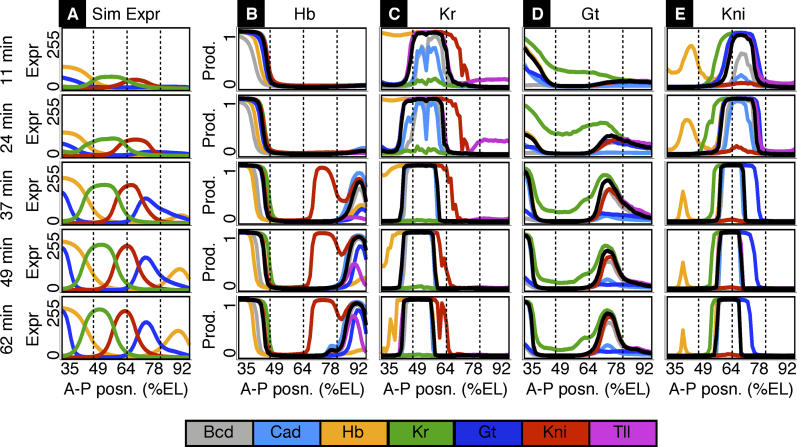
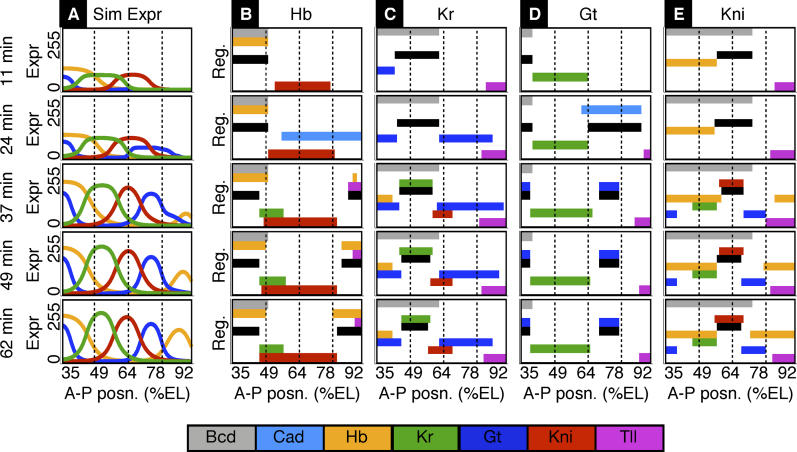
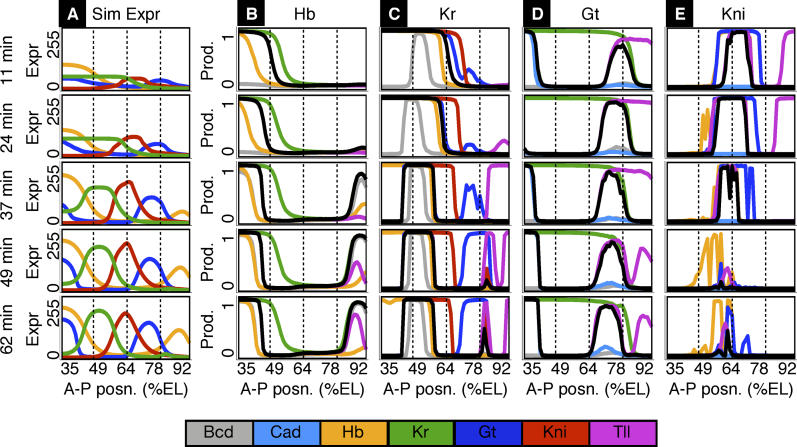
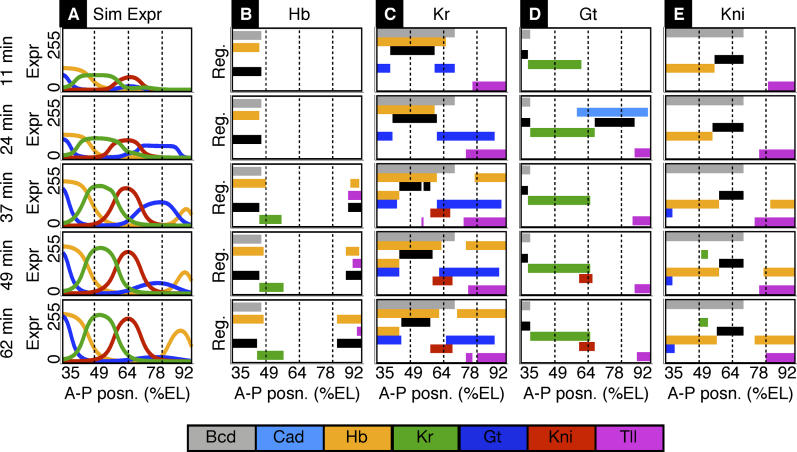
Verification
Claims the paper makes
The claims and statistics of this paper haven’t been checked yet.
Free: it reads the open-access text and checks the first 5 claims that cite a source we can check. Create a free account to check every claim.
Claims other papers make about this one
Each is checked against this paper’s own text: does it say what the citing paper says it does?
The cited source says what the claim attributes to it.
In the citing paper
“Second, the analysis suggested several additions and corrections of unresolved details of gap gene interactions.”
From Emerging properties of animal gene regulatory networks (2010) · cites this paper as [72]
In the citing paper
“Drosophila gap gene expression in the syncytial embryo provides the best known large developmental data set thus far subjected to mathematical kinetic analysis70–72.”
From Emerging properties of animal gene regulatory networks (2010) · cites this paper as [72]
Self-check
Percentages, sums and reported differences re-computed from the paper’s own numbers.
The self-check needs the paper’s full text.
Citations
Cites
The embryonic development of Drosophila melanogaster
(1938) · Protoplasma · doi:10.1007/bf01613769 · Cited by 2,142
The Embryonic Development of Drosophila melanogaster
Campos-Ortega, J. A., & Hartenstein, V. (1985) · Springer eBooks · doi:10.1007/978-3-662-02454-6 · Cited by 1,404
Foe, V. E., & Alberts, B. M. (1983) · Journal of Cell Science · doi:10.1242/jcs.61.1.31 · Cited by 1,049
The molecular genetics of embryonic pattern formation in Drosophila
Ingham, P. W. (1988) · Nature · doi:10.1038/335025a0 · Cited by 1,045 · cited 1×
“The segmented body pattern of Drosophila melanogaster is established by the expression of segmentation genes during the blastoderm stage of development (reviewed in [1,2]).”
BackgroundThe molecular basis for metameric pattern in the Drosophila embryo
Akam, M. (1987) · Development · doi:10.1242/dev.101.1.1 · Cited by 1,022
Albert, R., & Othmer, H. G. (2003) · Journal of Theoretical Biology · doi:10.1016/s0022-5193(03)00035-3 · Cited by 942 · cited 1×
“At a coarse level, the behavior of some genetic networks appears adequately captured by Boolean (on/off) models of gene expression [13–15].”
BackgroundGenomic Cis-Regulatory Logic: Experimental and Computational Analysis of a Sea Urchin Gene
Yuh, C.-H., Bolouri, H., & Davidson, E. H. (1998) · Science · doi:10.1126/science.279.5358.1896 · Cited by 679 · cited 1×
“However, detailed analysis of some genes has revealed more complex behavior which may well be functionally relevant [16,17].”
BackgroundReverse engineering gene networks using singular value decomposition and robust regression
Yeung, M. K. S., Tegnér, J., & Collins, J. J. (2002) · Proceedings of the National Academy of Sciences · doi:10.1073/pnas.092576199 · Cited by 667 · cited 1×
“Indeed, recent work has shown that model parameters and even the existence of regulatory relationships can be automatically inferred from expression time series data [5–9].”
BackgroundThe bicoid protein is a positive regulator of hunchback transcription in the early Drosophila embryo
Driever, W., & Nüsslein-Volhard, C. (1989) · Nature · doi:10.1038/337138a0 · Cited by 655
Dynamic control of positional information in the early Drosophila embryo
Jaeger, J., Surkova, S., Blagov, M., Janssens, H., Kosman, D., Kozlov, K. N., Manu, Myasnikova, E., Vanario-Alonso, C. E., Samsonova, M., et al. (2004) · Nature · doi:10.1038/nature02678 · Cited by 557 · cited 10×
“A chain of repressive relationships, hbagtakniaKr [6,7], causes the shifts in the Kr, kni, and posterior gt domains.”
BackgroundMethodInfluentialSelf-citation
Research works printed but not linked: 1
- Chu KW (2001) The existence and estimation of an optimal mixing regime [thesis]. Stony Brook (New York): State University of New York at Stony Brook.
Cited by
Two new Later Stone Age sites from the Final Pleistocene in the Falémé Valley, eastern Senegal
Ndiaye, M., Lespez, L., Tribolo, C., Rassé, M., Hadjas, I., Davidoux, S., Huysecom, É., & Douze, K. (2024) · Monash University Research Portal (Monash University) · doi:10.3929/ethz-b-000667478 · Cited by 23,868
Geometric Interpretation of Gene Coexpression Network Analysis
Horvath, S., & Dong, J. (2008) · PLoS Computational Biology · doi:10.1371/journal.pcbi.1000117 · Cited by 851
“, [13,55–61].”
Gene regulatory network inference: Data integration in dynamic models—A review
Hecker, M., Lambeck, S., Toepfer, S., van Someren, E., & Guthke, R. (2009) · Biosystems · doi:10.1016/j.biosystems.2008.12.004 · Cited by 755
Machine learning of linear differential equations using Gaussian processes
Raissi, M., Perdikaris, P., & Karniadakis, G. E. (2017) · Journal of Computational Physics · doi:10.1016/j.jcp.2017.07.050 · Cited by 584
“Moreover, the methodology will be applied to realistic problem in functional genomics, namely determining the structure and dynamics of genetic networks based on real expression data [34] on early Drosophila melanogaster development.”
BackgroundMethodInfluentialEmerging properties of animal gene regulatory networks
Davidson, E. H. (2010) · Nature · doi:10.1038/nature09645 · Cited by 579
Marbach, D., Schaffter, T., Mattiussi, C., & Floreano, D. (2009) · Journal of Computational Biology · doi:10.1089/cmb.2008.09tt · Cited by 430
“Before applying the module extraction method to real biological networks, we demonstrate it on the hierarchical scale-free network model of Ravasz et al. (2002), which has a scale-free topology with embedded modularity similar to many biological networks.”
BackgroundMethodPenas, D. R., González, P., Egea, J. A., Doallo, R., & Banga, J. R. (2017) · BMC Bioinformatics · doi:10.1186/s12859-016-1452-4 · Cited by 385
“Parallel global optimization strategies have been considered in several system biology studies, including parallel variants of simulated annealing [36], evolution strategies [37–40], particle swarm optimization [41, 42] and differential evolution [43].”
MethodSaez‐Rodriguez, J., Alexopoulos, L. G., Epperlein, J., Samaga, R., Lauffenburger, D. A., Klamt, S., & Sorger, P. K. (2009) · Molecular Systems Biology · doi:10.1038/msb.2009.87 · Cited by 351
Data based identification and prediction of nonlinear and complex dynamical systems
Wang, W.-X., Lai, Y.-C., & Grebogi, C. (2016) · Physics Reports · doi:10.1016/j.physrep.2016.06.004 · Cited by 299
Weighted Network Analysis: Applications in Genomics and Systems Biology
Horvath, S. (2011) · Springer eBooks · doi:10.1007/978-1-4419-8819-5 · Cited by 319
Jaeger, J. (2011) · Cellular and Molecular Life Sciences · doi:10.1007/s00018-010-0536-y · Cited by 280
Self-citationCanalization of Gene Expression in the Drosophila Blastoderm by Gap Gene Cross Regulation
Manu, Surkova, S., Spirov, A. V., Gursky, V. V., Janssens, H., Kim, A.-R., Radulescu, O., Vanario-Alonso, C. E., Sharp, D. H., Samsonova, M., et al. (2009) · PLoS Biology · doi:10.1371/journal.pbio.1000049 · Cited by 279
“Finally, experimental [23] and theoretical [24] investigations have shown that Kr represses hb, therefore, we only select circuits for further consideration if they show this property.”
BackgroundResultInfluentialSelf-citationManu, Surkova, S., Spirov, A. V., Gursky, V. V., Janssens, H., Kim, A.-R., Radulescu, O., Vanario-Alonso, C. E., Sharp, D. H., Samsonova, M., et al. (2009) · PLoS Computational Biology · doi:10.1371/journal.pcbi.1000303 · Cited by 213
“The presence of an attractor state in the phase space of a system implies that there exists a region of phase space, called the basin of attraction, in which all trajectories approach the attractor asymptotically [34,35].”
BackgroundSelf-citationMathematical modeling of gene expression: a guide for the perplexed biologist
Ay, A., & Arnosti, D. N. (2011) · Critical Reviews in Biochemistry and Molecular Biology · doi:10.3109/10409238.2011.556597 · Cited by 139
“The latter approach was more computationally efficient and produced similar results (Jaeger et al., 2004a, b; Perkins et al., 2006; Fomekong-Nanfack et al., 2007; Jostins and Jaeger, 2010).”
ResultLinear Latent Force Models Using Gaussian Processes
Álvarez, M. A., Luengo, D., & Lawrence, N. D. (2013) · IEEE Transactions on Pattern Analysis and Machine Intelligence · doi:10.1109/tpami.2013.86 · Cited by 187
Biosystems Design by Machine Learning
Volk, M., Lourentzou, I., Mishra, S., Vo, L. T., Zhai, C., & Zhao, H. (2020) · ACS Synthetic Biology · doi:10.1021/acssynbio.0c00129 · Cited by 164
Membrane identity and GTPase cascades regulated by toggle and cut‐out switches
Del Conte‐Zerial, P., Brusch, L., Rink, J. C., Collinet, C., Kalaidzidis, Y., Zerial, M., & Deutsch, A. (2008) · Molecular Systems Biology · doi:10.1038/msb.2008.45 · Cited by 129
“The function of the GAP gene network during Drosophila embryogenesis that selects among mutually exclusive cell fates is best modelled by 13 inhibitory interactions but no activating interaction among the GAP genes (Perkins et al, 2006).”
BackgroundJanssens, H., Siggens, K., Cicin-Sain, D., Jiménez-Guri, E., Musy, M., Akam, M. E., & Jaeger, J. (2014) · EvoDevo · doi:10.1186/2041-9139-5-1 · Cited by 114
“These networks can then be analyzed to gain insights into the regulatory processes underlying observed gene expression or phenotypic traits (for example, see [42-49]).”
BackgroundSelf-citationGene regulatory network models for plant development
Alvarez-Buylla, E. R., Benítez, M., DAVILA, E., Chaos, Á., Espinosa‐Soto, C., & Padilla-Longoria, P. (2006) · Current Opinion in Plant Biology · doi:10.1016/j.pbi.2006.11.008 · Cited by 120
“Other recent methods have been tested using detailed data for relatively small model networks (for plant examples see [18,19], and for Drosophila [20 ]) and might be useful as complementary techniques.”
MethodDecoding temporal interpretation of the morphogen Bicoid in the early Drosophila embryo
Huang, A., Amourda, C., Zhang, S., Tolwinski, N. S., & Saunders, T. E. (2017) · eLife · doi:10.7554/elife.26258 · Cited by 104
Probing Intrinsic Properties of a Robust Morphogen Gradient in Drosophila
He, F., Wen, Y., Deng, J., Lin, X. S., Lu, L. J., Jiao, R., & Ma, J. (2008) · Developmental Cell · doi:10.1016/j.devcel.2008.09.004 · Cited by 108
“…to our simple model, other factors, such as gap gene products, may affect the mean position of the Hb boundary (Houchmandzadeh et al., 2002; Perkins et al., 2006; Reinitz, 2007; Rivera-Pomar and Jackle, 1996; Simpson-Brose et al., 1994), but they are not required for Hb precision and…”
Gene Circuit Analysis of the Terminal Gap Gene huckebein
Ashyraliyev, M., Siggens, K., Janssens, H., Blom, J., Akam, M., & Jaeger, J. (2009) · PLoS Computational Biology · doi:10.1371/journal.pcbi.1000548 · Cited by 102
“When all weights v aij in (3) are equal to one, (3) represents an ordinary least squares (OLS) fit, which was the cost function used in all previous studies using gene circuit models [1,7,17–22].”
MethodResultInfluentialSelf-citationModeling Planarian Regeneration: A Primer for Reverse-Engineering the Worm
Lobo, D., Beane, W. S., & Levin, M. G. (2012) · PLoS Computational Biology · doi:10.1371/journal.pcbi.1002481 · Cited by 113
Quantitative Models of Developmental Pattern Formation
Reeves, G. T., Muratov, C. B., Schüpbach, T., & Shvartsman, S. Y. (2006) · Developmental Cell · doi:10.1016/j.devcel.2006.08.006 · Cited by 106
On the dynamic nature of positional information
Jaeger, J., & Reinitz, J. (2006) · BioEssays · doi:10.1002/bies.20494 · Cited by 104
Self-citationModularity, criticality, and evolvability of a developmental gene regulatory network
Verd, B., Monk, N., & Jaeger, J. (2019) · eLife · doi:10.7554/elife.42832 · Cited by 110
Self-citationKeränen, S. V., Fowlkes, C. C., Luengo Hendriks, C. L., Sudar, D., Knowles, D. W., Malik, J., & Biggin, M. D. (2006) · Genome Biology · doi:10.1186/gb-2006-7-12-r124 · Cited by 95
“First, the locations of gap gene stripes shift along the anterior/posterior (a/p) axis during stage 5 [6,7,15].”
BackgroundMethodNoise drives sharpening of gene expression boundaries in the zebrafish hindbrain
Zhang, L. J., Radtke, K., Zheng, L., Cai, A. Q., Schilling, T. F., & Nie, Q. H. (2012) · Molecular Systems Biology · doi:10.1038/msb.2012.45 · Cited by 101
“Similar rules may also apply for other RA target genes (e.g., Vhnf1) and other gene expression boundaries where cross-inhibition and/or autoactivation between target genes occur in morphogen systems (Rivera-Pomar and Jackle, 1996; Perkins et al, 2006; Balaskas et al, 2012).”
BackgroundRecent advances in machine learning applications in metabolic engineering
Patra, P., B.R., D., Kundu, P., Das, M., & Ghosh, A. (2023) · Biotechnology Advances · doi:10.1016/j.biotechadv.2022.108069 · Cited by 82
Parameter estimation and determinability analysis applied to Drosophila gap gene circuits
Ashyraliyev, M., Jaeger, J., & Blom, J. G. (2008) · BMC Systems Biology · doi:10.1186/1752-0509-2-83 · Cited by 89
Self-citationEfficient reverse-engineering of a developmental gene regulatory network
Crombach, A., Wotton, K. R., Cicin-Sain, D., Ashyraliyev, M., & Jaeger, J. (2012) · PLoS Computational Biology · doi:10.1371/journal.pcbi.1002589 · Cited by 83
Self-citationClark, E. (2017) · PLoS Biology · doi:10.1371/journal.pbio.2002439 · Cited by 90
“However, while the mechanistic origins of the shifts have been probed extensively [43,44,78,46], their functional role (if any) remains unclear.”
Lobo, D., & Levin, M. G. (2015) · PLoS Computational Biology · doi:10.1371/journal.pcbi.1004295 · Cited by 85
Jaeger, J., Sharp, D. H., & Reinitz, J. (2006) · Mechanisms of Development · doi:10.1016/j.mod.2006.11.001 · Cited by 86
Self-citationDual regulation by the Hunchback gradient in the Drosophila embryo
Papatsenko, D. A., & Levine, M. (2008) · Proceedings of the National Academy of Sciences · doi:10.1073/pnas.0711941105 · Cited by 88
The Intersection of Theory and Application in Elucidating Pattern Formation in Developmental Biology
Othmer, H. G., Painter, K. J., Umulis, D. M., & Xue, C. (2009) · Mathematical Modelling of Natural Phenomena · doi:10.1051/mmnp/20094401 · Cited by 82
“• Determine how the system works: Quantitatively measure transport and molecular mechanisms of pattern formation and include this information in the model [184, 82, 110, 83, 224, 200].”
BackgroundKazemian, M., Blatti, C., Richards, A., McCutchan, M., Wakabayashi-Ito, N., Hammonds, A. S., Celniker, S. E., Kumar, S., Wolfe, S. A., Brodsky, M. H., et al. (2010) · PLoS Biology · doi:10.1371/journal.pbio.1000456 · Cited by 70
“(Although dual roles for some of these factors have been noted in the literature [22], our model learns a single dominant role consistent with the dataset.”
Wotton, K. R., Jiménez-Guri, E., Crombach, A., Janssens, H., Alcaine-Colet, A., Lemke, S., Schmidt‐Ott, U., & Jaeger, J. (2015) · eLife · doi:10.7554/elife.04785 · Cited by 72
“The genetic and molecular mechanisms of gap gene regulation have been investigated extensively over the last few decades (reviewed in Jaeger (2011)), and a number of mathematical models exist that faithfully reproduce gap gene expression dynamics in this species (Reinitz et al., 1995; Jaeger et al., 2004a, 2004b; Perk…”
BackgroundSelf-citationLiu, J., & Ma, J. (2011) · Nature Cell Biology · doi:10.1038/ncb2141 · Cited by 68
Adapting machine-learning algorithms to design gene circuits
Hiscock, T. W. (2019) · BMC Bioinformatics · doi:10.1186/s12859-019-2788-3 · Cited by 75
Fomekong-Nanfack, Y., Kaandorp, J. A., & Blom, J. (2007) · Bioinformatics · doi:10.1093/bioinformatics/btm433 · Cited by 68
“The model-building process can be described in three main steps: 1. extraction of spatio-temporal gene expression data in a quantitative way,”
BackgroundMethodNetwork Topologies and Dynamics Leading to Endotoxin Tolerance and Priming in Innate Immune Cells
Fu, Y., Glaros, T., Zhu, M., Wang, P., Wu, Z., Tyson, J. J., Li, L., & Xing, J. (2012) · PLoS Computational Biology · doi:10.1371/journal.pcbi.1002526 · Cited by 69
“The formalism is close to that used by Vohradsky [60,61] and others [62,63] previously.”
Durant, F., Lobo, D., Hammelman, J., & Levin, M. G. (2016) · Regeneration · doi:10.1002/reg2.54 · Cited by 67
“…the early patterning of the Drosophila embryo from one-dimensional gene expression data represents one of the most successful applications of these heuristic meth-ods (Reinitz et al. 1995, 1998; Jaeger et al. 2004; Perkins et al. 2006; Manu et al. 2009; Crombach et al. 2012; Becker et al. 2013).”
MethodChallenges for modeling global gene regulatory networks during development: Insights from Drosophila
Wilczyński, B., & Furlong, E. E. M. (2009) · Developmental Biology · doi:10.1016/j.ydbio.2009.10.032 · Cited by 65
Mathematics and biology: a Kantian view on the history of pattern formation theory
Roth, S. (2011) · Development Genes and Evolution · doi:10.1007/s00427-011-0378-0 · Cited by 66
Dynamic Maternal Gradients Control Timing and Shift-Rates for Drosophila Gap Gene Expression
Verd, B., Crombach, A., & Jaeger, J. (2017) · PLoS Computational Biology · doi:10.1371/journal.pcbi.1005285 · Cited by 62
“This approach is based on tting dynamical models of gap gene regulation, called gene circuits, to quantitative spatio-temporal gene expression data [18, 19, 20, 21, 22, 23, 24, 25, 26, 27, 28, 29].”
Self-citationLobikin, M., Lobo, D., Blackiston, D. J., Martyniuk, C. J., Tkachenko, E., & Levin, M. G. (2015) · Science Signaling · doi:10.1126/scisignal.aac6609 · Cited by 59
Modelling the Drosophila embryo
Jaeger, J. (2009) · Molecular BioSystems · doi:10.1039/b904722k · Cited by 59
Self-citationEnhanced parallel Differential Evolution algorithm for problems in computational systems biology
Penas, D. R., Banga, J. R., González, P., & Doallo, R. (2015) · Applied Soft Computing · doi:10.1016/j.asoc.2015.04.025 · Cited by 58
“In the area of computational systems biology, parallel methods have already shown promising results [7, 8, 9].”
BackgroundGap Gene Regulatory Dynamics Evolve along a Genotype Network
Crombach, A., Wotton, K. R., Jiménez-Guri, E., & Jaeger, J. (2016) · Molecular Biology and Evolution · doi:10.1093/molbev/msw013 · Cited by 53
“Gene circuits are mathematical models for simulating the regulatory dynamics of gene networks (Mjolsness et al. 1991; Reinitz and Sharp 1995; Reinitz et al. 1995; Jaeger, Blagov, et al. 2004; Jaeger, Surkova, et al. 2004; Perkins et al. 2006; Ashyraliyev et al. 2009; Crombach, Wotton, et al. 2012).”
Self-citationThe Drosophila Gap Gene Network Is Composed of Two Parallel Toggle Switches
Papatsenko, D. A., & Levine, M. (2011) · PLoS ONE · doi:10.1371/journal.pone.0021145 · Cited by 60
“While the system has been extensively studied in the past two decades both in vivo [2,21,22] and in silico [5,6,23] a simple and comprehensive model explaining function of the entire network has been missing [24,25].”
BackgroundMathematical models of morphogen gradients and their effects on gene expression
Shvartsman, S. Y., & Baker, R. E. (2012) · Wiley Interdisciplinary Reviews Developmental Biology · doi:10.1002/wdev.55 · Cited by 49
Spirov, A. V., & Holloway, D. M. (2013) · Methods · doi:10.1016/j.ymeth.2013.05.013 · Cited by 51
Reconstructing nonlinear dynamic models of gene regulation using stochastic sampling
Mazur, J., Ritter, D., Reinelt, G., & Kaderali, L. (2009) · BMC Bioinformatics · doi:10.1186/1471-2105-10-448 · Cited by 54
“Perkins et al. used partial differential equations to reverse engineer the Gap gene network in Drosophila melanogaster [30].”
Jaeger, J., & Crombach, A. (2012) · Advances in experimental medicine and biology · doi:10.1007/978-1-4614-3567-9_5 · Cited by 61
Self-citationDevelopmental Evolution in Social Insects: Regulatory Networks from Genes to Societies
Linksvayer, T. A., Fewell, J. H., Gadau, J. R., & Laubichler, M. D. (2012) · Journal of Experimental Zoology Part B Molecular and Developmental Evolution · doi:10.1002/jez.b.22001 · Cited by 52
Pipeline for acquisition of quantitative data on segmentation gene expression from confocal images
Surkova, S. Y., Марковна, М. Е., Janssens, H., Kozlov, K. N., Samsonova, A. A., Reinitz, J., & Samsonova, M. G. (2008) · Fly · doi:10.4161/fly.6060 · Cited by 51
Self-citationReverse-Engineering Post-Transcriptional Regulation of Gap Genes in Drosophila melanogaster
Becker, K., Balsa‐Canto, E., Cicin-Sain, D., Hoermann, A., Janssens, H., Banga, J. R., & Jaeger, J. (2013) · PLoS Computational Biology · doi:10.1371/journal.pcbi.1003281 · Cited by 50
“[21–25]).”
MethodSelf-citationBieler, J., Pozzorini, C., & Naef, F. (2011) · Biophysical Journal · doi:10.1016/j.bpj.2011.05.060 · Cited by 50
“shows the geometry considered in 1D models (23).”
BackgroundMethodResultInfluentialReverse engineering a gene network using an asynchronous parallel evolution strategy
Jostins, L., & Jaeger, J. (2010) · BMC Systems Biology · doi:10.1186/1752-0509-4-17 · Cited by 42
“An alternative approach dramatically increases computational efficiency by dividing the optimisation procedure into several distinct steps, some of which can easily and efficiently be run in parallel [16].”
BackgroundMethodSelf-citationPattern formation by dynamically interacting network motifs
Lembong, J., Yakoby, N., & Shvartsman, S. Y. (2009) · Proceedings of the National Academy of Sciences · doi:10.1073/pnas.0810728106 · Cited by 39
“The regulation of the transcriptional targets of GRK and DPP is described by using piecewise-linear models that greatly accelerate parametric studies of system dynamics (23).”
MethodNahmad, M., Glass, L., & Abouheif, E. (2008) · Evolution & Development · doi:10.1111/j.1525-142x.2008.00244.x · Cited by 39
“Computational and mathematical modeling of genetic regulatory networks permits exploration of the possible dynamic behaviors, and may reveal new genetic interactions (von Dassow et al. 2000; Jaeger et al. 2004; Perkins et al. 2006).”
Self-citationFuertes, I., & Barata, C. (2020) · Chemosphere · doi:10.1016/j.chemosphere.2020.127814 · Cited by 36
Stability analysis for delayed genetic regulatory networks with reaction--diffusion terms
Ma, Q., Shi, G., Xu, S., & Zou, Y. (2011) · Neural Computing and Applications · doi:10.1007/s00521-011-0575-9 · Cited by 35
“The mesoscopic reaction– diffusion kinetics have gained much attention and have been investigated in many issues involving modeling simulation [19, 21 , 28], algorithm analysis [4, 29], and experimental measurements [6].”
MethodMemory functions reveal structural properties of gene regulatory networks
Herrera-Delgado, E., Perez‐Carrasco, R., Briscoe, J., & Sollich, P. (2018) · PLoS Computational Biology · doi:10.1371/journal.pcbi.1006003 · Cited by 38
Crombach, A., Garcia-Solache, M. A., & Jaeger, J. (2014) · Biosystems · doi:10.1016/j.biosystems.2014.06.003 · Cited by 36
Self-citationReplaying the Evolutionary Tape: Biomimetic Reverse Engineering of Gene Networks
Marbach, D., Mattiussi, C., & Floreano, D. (2009) · Annals of the New York Academy of Sciences · doi:10.1111/j.1749-6632.2008.03944.x · Cited by 36
The Role of Mathematical Models in Understanding Pattern Formation in Developmental Biology
Umulis, D. M., & Othmer, H. G. (2014) · Bulletin of Mathematical Biology · doi:10.1007/s11538-014-0019-7 · Cited by 36
“…Wang et al. 2010; Jaeger et al. 2004; Umulis et al. 2010; Ben-Zvi et al. 2011, 2008; Gregor et al. 2007; Harris et al. 2011; Janssens et al. 2006; Perkins et al. 2006;Umulis et al. 2009); and (iii) the interrelationship between growth and patterning (Aegerter-Wilmsen et al. 2007, 2010; Nahmad…”
Fathallah‐Shaykh, H. M., Bona, J. L., & Kadener, S. (2009) · Biophysical Journal · doi:10.1016/j.bpj.2009.08.018 · Cited by 34
Deriving a genetic regulatory network from an optimization principle
Sokolowski, T. R., Gregor, T., Bialek, W., & Tkačik, G. (2025) · Proceedings of the National Academy of Sciences · doi:10.1073/pnas.2402925121 · Cited by 42
Lobo, D., Lobikin, M., & Levin, M. (2017) · Scientific Reports · doi:10.1038/srep41339 · Cited by 30
Modeling the evolution of complex genetic systems: The gene network family tree
Fierst, J. L., & Phillips, P. C. (2014) · Journal of Experimental Zoology Part B Molecular and Developmental Evolution · doi:10.1002/jez.b.22597 · Cited by 35
“However, extending this framework by explicitly modeling protein levels through synthesis,diffusion and decay rates has proved successful in modeling the regulatory interactions in the Drosophila melanogaster gap gene network (Jaeger et al., 2004a,b; Perkins et al., 2006).”
MethodInferring Drosophila gap gene regulatory network: a parameter sensitivity and perturbation analysis
Fomekong‐Nanfack, Y., Postma, M., & Kaandorp, J. A. (2009) · BMC Systems Biology · doi:10.1186/1752-0509-3-94 · Cited by 31
“This inverse modelling formulation of the problem leads to different gene circuits describing different aspect of the segmentation gene mechanism [41-44].”
InfluentialIntroduction to Focus Issue: Quantitative Approaches to Genetic Networks
Albert, R., Collins, J. J., & Glass, L. (2013) · Chaos An Interdisciplinary Journal of Nonlinear Science · doi:10.1063/1.4810923 · Cited by 29
Self-citationSelective Control of the Apoptosis Signaling Network in Heterogeneous Cell Populations
Calzolari, D., Paternostro, G., Harrington, P. L., Piermarocchi, C., & Duxbury, P. M. (2007) · PLoS ONE · doi:10.1371/journal.pone.0000547 · Cited by 25
“Though striking progress is occuring in the extraction of networks using a range of experimental data[8,9], knowledge of signaling networks remains predominantly at the level of topology rather than detailed knowledge of the rate constants and nonlinear message passing which occurs in the networks.”
BackgroundDual-functioning transcription factors in the developmental gene network of Drosophila melanogaster
Bauer, D. C., Buske, F. A., & Bailey, T. L. (2010) · BMC Bioinformatics · doi:10.1186/1471-2105-11-366 · Cited by 25
“Our identification of these two TFs as potentially acting both as activators and repressors agrees with previously reported evidence [9,29].”
BackgroundDissecting sources of quantitative gene expression pattern divergence between Drosophila species
Wunderlich, Z., Bragdon, M. D. J., Eckenrode, K. B., Lydiard‐Martin, T., Pearl‐Waserman, S., & DePace, A. H. (2012) · Molecular Systems Biology · doi:10.1038/msb.2012.35 · Cited by 29
“Other sequence-agnostic models of the regulatory network have been used to study other facets of the system, e.g., the topology and the manner in which canalization is achieved (Perkins et al , 2006; Manu et al , 2009).”
MethodShift happens: The developmental and evolutionary dynamics of the gap gene system
Jaeger, J. (2018) · Current Opinion in Systems Biology · doi:10.1016/j.coisb.2018.08.004 · Cited by 24
Self-citationStripe formation in the early fly embryo: principles, models, and networks
Papatsenko, D. A. (2009) · BioEssays · doi:10.1002/bies.200900096 · Cited by 24
Mid-Embryo Patterning and Precision in Drosophila Segmentation: Krüppel Dual Regulation of hunchback
Holloway, D. M., & Spirov, A. V. (2015) · PLoS ONE · doi:10.1371/journal.pone.0118450 · Cited by 23
Hybrid models of genetic networks: Mathematical challenges and biological relevance
Glass, L., & Edwards, R. (2018) · Journal of Theoretical Biology · doi:10.1016/j.jtbi.2018.09.014 · Cited by 20
Self-citationBagh, S., Mazumder, M., Velauthapillai, T., Sardana, V., Dong, G. Q., Movva, A. B., Lim, L. H., & McMillen, D. R. (2008) · Physical Review E · doi:10.1103/physreve.77.021919 · Cited by 26
Analysis of Gap Gene Regulation in a 3D Organism-Scale Model of the Drosophila melanogaster Embryo
Hengenius, J. B., Gribskov, M., Rundell, A. E., Fowlkes, C. C., & Umulis, D. M. (2011) · PLoS ONE · doi:10.1371/journal.pone.0026797 · Cited by 19
“These internal boundaries are unrealistic in the case of the partial AP length domain as there are no such physical barriers in the embryo; they were introduced in previous gap gene models to help account for artifacts in previously inferred GRNs [14,42–44].”
BackgroundSymbolic Dynamics of Biological Feedback Networks
Simone Pigolotti, A., Krishna, S., & Jensen, M. H. (2009) · Physical Review Letters · doi:10.1103/physrevlett.102.088701 · Cited by 19
Lobo, D., Morokuma, J., & Levin, M. G. (2016) · Bioinformatics · doi:10.1093/bioinformatics/btw299 · Cited by 20
Nakajima, A., Isshiki, T., Kaneko, K., & Ishihara, S. (2010) · PLoS Computational Biology · doi:10.1371/journal.pcbi.1000760 · Cited by 18
“The requisite regulations or architecture of this system have been discussed at the network description level [10,11,12,13,14], and it is suggested that the underlying gene network has evolved to perform its processes in a robust manner [15,16,17].”
BackgroundImage analysis and empirical modeling of gene and protein expression
Trisnadi, N., Altinok, A., Stathopoulos, A., & Reeves, G. T. (2012) · Methods · doi:10.1016/j.ymeth.2012.09.016 · Cited by 21
“Ultimately, the overlying goal is to use such quantitative analyses to understand how gene expression in the embryo is controlled at the level of the gene regulatory network [21, 22].”
BackgroundPenas, D. R., Henriques, D., González, P., Doallo, R., Saez-Rodriguez, J., & Banga, J. R. (2017) · PLOS ONE · doi:10.1371/journal.pone.0182186 · Cited by 16
Making models match measurements: Model optimization for morphogen patterning networks
Hengenius, J. B., Gribskov, M., Rundell, A. E., & Umulis, D. M. (2014) · Seminars in Cell and Developmental Biology · doi:10.1016/j.semcdb.2014.06.017 · Cited by 18
Logical and symbolic analysis of robust biological dynamics
Glass, L., & Siegelmann, H. T. (2010) · Current Opinion in Genetics & Development · doi:10.1016/j.gde.2010.09.005 · Cited by 15
Self-citationEGFR-dependent network interactions that pattern Drosophila eggshell appendages
Simakov, D. S. A., Cheung, L. S., Pismen, L. M., & Shvartsman, S. Y. (2012) · Development · doi:10.1242/dev.077669 · Cited by 15
“Following previous models of gene regulation networks (Plahte, 2001; Bolouri and Davidson, 2002; Albert and Othmer, 2003; Thieffry and Sanchez, 2003; Longabaugh et al., 2005; Perkins et al., 2006), gene expression is approximated by Heaviside functions.”
MethodDilão, R., & Muraro, D. (2010) · PLoS ONE · doi:10.1371/journal.pone.0010743 · Cited by 17
“On the other hand, this mass action law model without diffusion at the level of gap genes is simpler than other full diffusion models, and is consistent with the reverse engineering methodology described in [26].”
ResultMachine Learning and Genetic Regulatory Networks: A Review and a Roadmap
Fogelberg, C. G., & Palade, V. (2009) · Studies in computational intelligence · doi:10.1007/978-3-642-01082-8_1 · Cited by 16
“However, the chemical process underlying this is not immediately clear, and in the models inferred in [89] a previously postulated case of this was not verified.”
BackgroundMethodMutual interaction in network motifs robustly sharpens gene expression in developmental processes
Ishihara, S., & Shibata, T. (2008) · Journal of Theoretical Biology · doi:10.1016/j.jtbi.2008.01.027 · Cited by 14
Kim, Y., Hafner, A., Ishihara, K., Fitzgerald, K. M., Deplancke, B., Papatsenko, D. A., & Shvartsman, S. Y. (2013) · Chaos An Interdisciplinary Journal of Nonlinear Science · doi:10.1063/1.4808157 · Cited by 16
Computing a Worm: Reverse-Engineering Planarian Regeneration
Lobo, D., & Levin, M. G. (2016) · Emergence, complexity and computation · doi:10.1007/978-3-319-33921-4_24 · Cited by 15
Parallel ant colony optimization for the training of cell signaling networks
González, P., Prado‐Rodríguez, R., Gábor, A., Sáez-Rodríguez, J., Banga, J. R., & Doallo, R. (2022) · Expert Systems with Applications · doi:10.1016/j.eswa.2022.118199 · Cited by 15
Zheng, Z., Christley, S., Chiu, W. T. Y., Blitz, I. L., Xie, X. S., Cho, K. W. Y., & Nie, Q. H. (2014) · BMC Systems Biology · doi:10.1186/1752-0509-8-3 · Cited by 14
“melanogaster [46-49].”
Lin, L., & Othmer, H. G. (2017) · Bulletin of Mathematical Biology · doi:10.1007/s11538-016-0241-6 · Cited by 12
“Mathematical models for Drosophila oogenesis, Bicoid patterning, BMP-mediated patterning, planar cell polarity, EGF patterning, and segment polarity have all led to experiments that may not have been carried out otherwise and contributed greatly to our understanding of those systems (Shvartsman et al. 2002; Amonlirdvi…”
BackgroundA Framework for Modelling and Simulating Networks of Cells
Montagna, S., & Mirko Viroli, D. (2010) · Electronic Notes in Theoretical Computer Science · doi:10.1016/j.entcs.2010.12.009 · Cited by 12
“Reaction rates for the gene regulatory network and for the protein synthesis and degradation has been taken from the Unc-GC model described in [15].”
BackgroundMethodInfluential
Metadata
- Authors
- Perkins, T. J., Jaeger, J., Reinitz, J., & Glass, L.
- Affiliations
- McGill University (CA)
- Stony Brook University (US)
- Corresponding author
- Perkins, Theodore J
- Venue
- PLoS Computational Biology
- Publisher
- Public Library of Science (PLoS)
- Published
- 2006-05-19
- Volume
- 2
- Issue
- 5
- Pages
- e51
- ISSN
- 1553-734X (ISSN-L)
- 1553-7358
- PMC
- PMC1463021
- OpenAlex
- W2111011458
- Cited by
- 187
- References
- 55
- Citations by year
- 2026: 2 · 2025: 2 · 2024: 3 · 2023: 3 · 2022: 2 · 2021: 4 · 2020: 3 · 2019: 8 · 2018: 6 · 2017: 10 · 2016: 13 · 2015: 13 · 2014: 10 · 2013: 9 · 2012: 20
- FWCI
- 6.40
- Type
- journal article
- Language
- en
- Open access
- gold
- doi.org
- Locations
- PLoS Computational Biology (publishedVersion, cc-by)
- Europe PMC (PubMed Central) (publishedVersion, cc-by)
- PubMed Central (publishedVersion, cc-by)
- PubMed (publishedVersion)
- RePEc: Research Papers in Economics (submittedVersion)
- DOAJ (DOAJ: Directory of Open Access Journals) (submittedVersion, cc-by-sa)
- Figshare (submittedVersion, cc-by)
- Funders
- National Science Foundation
- National Institutes of Health (RR07801)
- Natural Sciences and Engineering Research Council of Canada
- National Center for Research Resources (R01RR007801, RR 07801)
- Topics
- Life Sciences › Biochemistry, Genetics and Molecular Biology › Molecular Biology › Gene Regulatory Network Analysis
- Life Sciences › Biochemistry, Genetics and Molecular Biology › Molecular Biology › Developmental Biology and Gene Regulation
- Life Sciences › Biochemistry, Genetics and Molecular Biology › Molecular Biology › Genomics and Chromatin Dynamics
- Keywords
- Drosophila melanogaster, gene regulatory network inference, synthetic gene circuits, hunchback, self-activation, early embryonic development, gene expression data
- MeSH terms
- Animals, Computer Simulation, Drosophila melanogaster, Models, Genetic, Time Factors, Gene Expression Regulation, Developmental, Computational Biology, Drosophila Proteins
About these checks
Registry, retraction, Cites and statistics results are computed, not judged, with one exception: a printed reference that no index lists is read once by a model before it counts as a citation error. Claims are extracted by a model and kept only when their quote appears verbatim in the text; each cited source is then checked, with a model’s help, for whether it says what the claim relies on. Those verdicts can be wrong — read the claim’s quote and the cited source before relying on one.
Statistics and arithmetic are recomputed, not judged.
Confidence bands are shown only for fields calibrated on our annotated test set. None is calibrated yet, so no band is shown.
What counts as a claim ›How we measure confidence ›How we check this ›
Are you an author, or do you see a problem with this page? Request a review
Data sources
Bibliographic data: Semantic Scholar, OpenAlex, Crossref.
Contains information from the Semantic Scholar Academic Graph Datasets, made available under the ODC Attribution License (ODC-BY 1.0).
Semantic Scholar’s data is described in: Kinney, R., et al. (2023). The Semantic Scholar Open Data Platform. arXiv:2301.10140.
