

The DOI matches its Crossref record; 40 of the 41 references it cites were found in a registry or an index.
VBA: A Probabilistic Treatment of Nonlinear Models for Neurobiological and Behavioural Data
Open accessAbstract
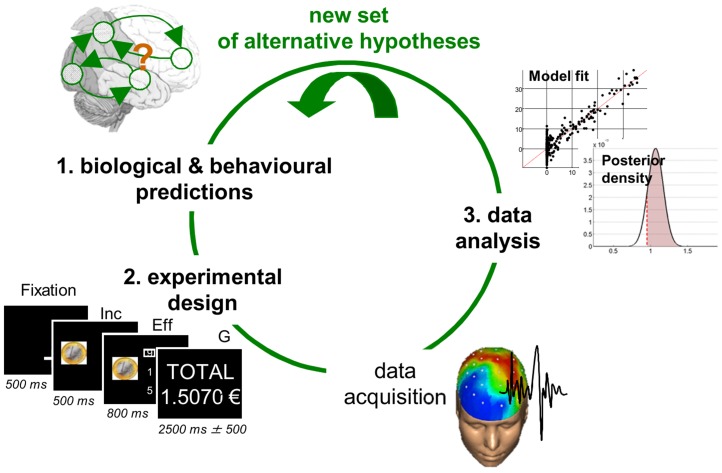
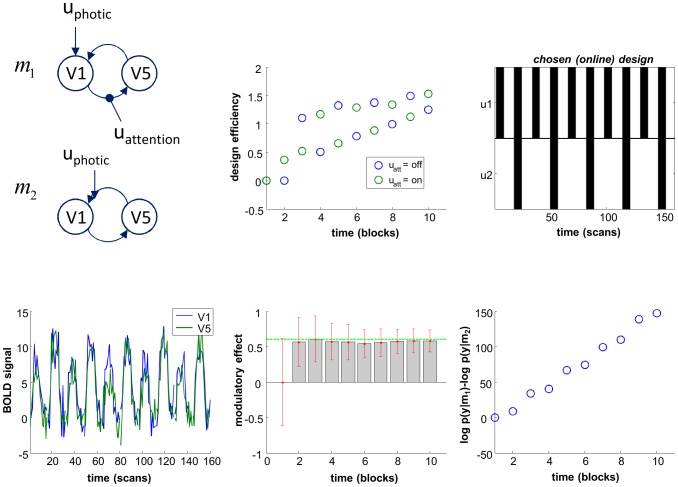
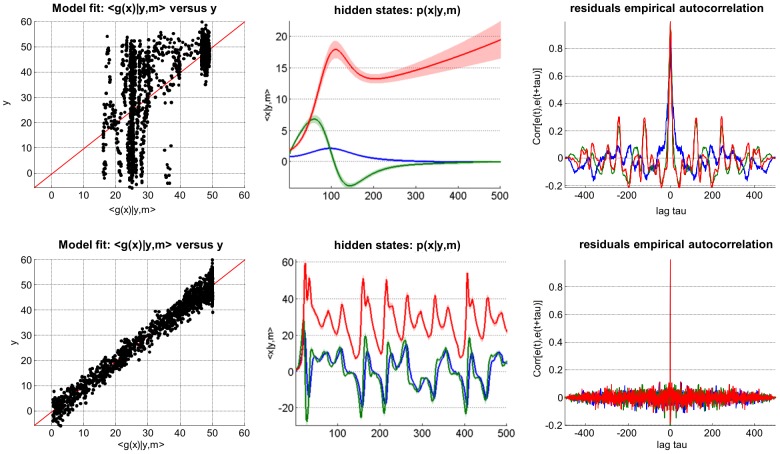
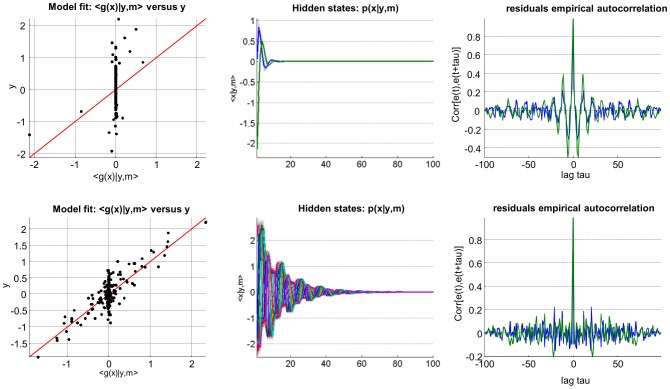
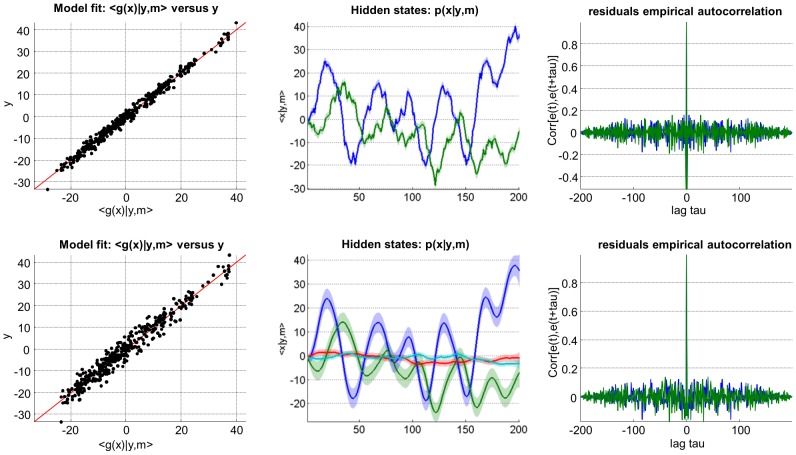
This work is in line with an on-going effort tending toward a computational (quantitative and refutable) understanding of human neuro-cognitive processes. Many sophisticated models for behavioural and neurobiological data have flourished during the past decade. Most of these models are partly unspecified (i.e. they have unknown parameters) and nonlinear. This makes them difficult to peer with a formal statistical data analysis framework. In turn, this compromises the reproducibility of model-based empirical studies. This work exposes a software toolbox that provides generic, efficient and robust probabilistic solutions to the three problems of model-based analysis of empirical data: (i) data simulation, (ii) parameter estimation/model selection, and (iii) experimental design optimization.
Overview
The claims and statistics of this paper haven’t been checked yet.
Run the check — free, no account needed. It reads the open-access text and checks the sources it cites.
Integrity signals
Registry
Cites
Statistics
Figures
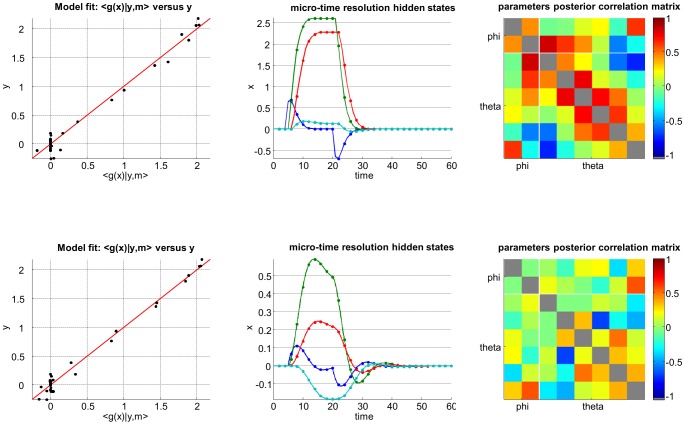
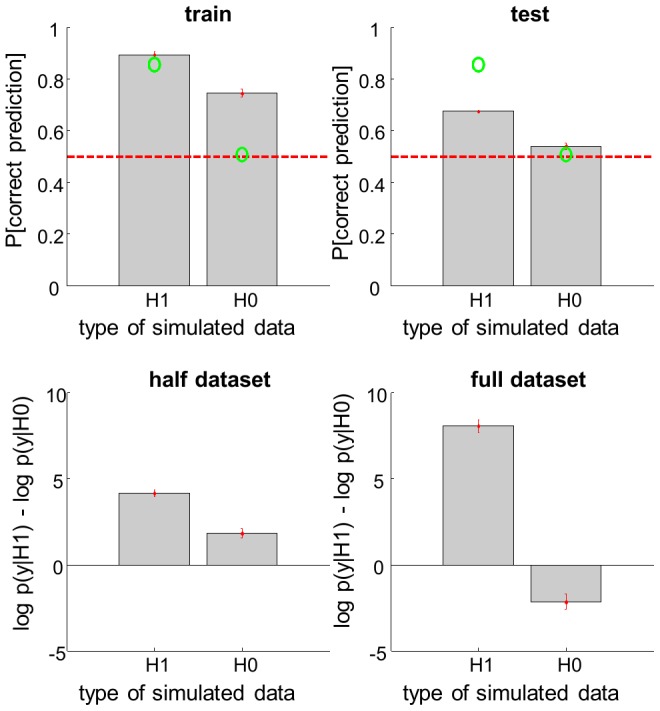
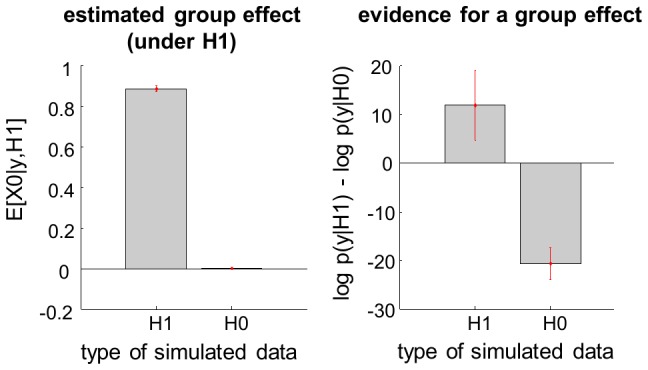
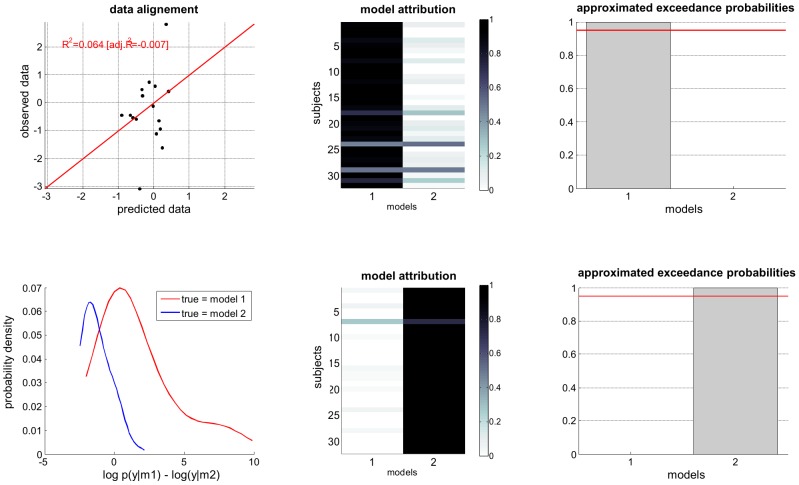
Verification
Claims the paper makes
The claims and statistics of this paper haven’t been checked yet.
Run the check — free, no account needed. It reads the open-access text and checks the sources it cites.
Claims other papers make about this one
Each is checked against this paper’s own text: does it say what the citing paper says it does?
The cited source says what the claim attributes to it.
In the citing paper
“The workflow includes the extraction of empirical priors from a combination of our pilot data and the data shared from Lawson et al. [17], parameter recovery and model identifiability based on simulated data, posterior predictive checks and random-effect analysis Bayesian model comparison as implemented in the VBA toolbox [41].”
From Predicting emotional valence in autism: a preregistered study in the Bayesian Brain framework (2026) · cites this paper as [41]
In the citing paper
“Model fitting was performed using a variational Bayesian estimation procedure using the well-validated VBA toolbox 58 .”
From Stress-sensitive inference of task controllability (2022) · cites this paper as [58]
Self-check
Percentages, sums and reported differences re-computed from the paper’s own numbers.
The self-check needs the paper’s full text.
Citations
Cites
Hodgkin, A. L., & Huxley, A. F. (1952) · The Journal of Physiology · doi:10.1113/jphysiol.1952.sp004764 · Cited by 23,191
A Theory of Cognitive Dissonance
Morvan, C., & O’Connor, A. (2017) · Macat Library eBooks · doi:10.4324/9781912282432 · Cited by 18,284
Kahneman, D., & Tversky, A. (1984) · American Psychologist · doi:10.1037/0003-066x.39.4.341 · Cited by 6,544
Impulses and Physiological States in Theoretical Models of Nerve Membrane
Fitzhugh, R. (1961) · Biophysical Journal · doi:10.1016/s0006-3495(61)86902-6 · Cited by 6,199
Kahneman, D. J., & Tversky, A. (2013) · World Scientific handbook in financial economic series · doi:10.1142/9789814417358_0016 · Cited by 5,379
Numerical solution of stochastic differential equations
Kloeden, P. E. 1., & Platen, E. (2016) · doi:10.5194/gmd-2016-45-rc1 · Cited by 5,119
Friston, K. J., Harrison, L., & Penny, W. (2003) · NeuroImage · doi:10.1016/s1053-8119(03)00202-7 · Cited by 4,583
Barto, A. (1998) · IFAC Proceedings Volumes · doi:10.1016/s1474-6670(17)38315-5 · Cited by 2,172
Dynamics of pattern formation in lateral-inhibition type neural fields
Амари, Ш.-И. (1977) · Biological Cybernetics · doi:10.1007/bf00337259 · Cited by 2,086
Organization, development and function of complex brain networks
SPORNS, O., CHIALVO, D., KAISER, M., & HILGETAG, C. (2004) · Trends in Cognitive Sciences · doi:10.1016/j.tics.2004.07.008 · Cited by 2,055
Research works printed but not linked: 1
- Robert C. (2007), The Bayesian choice: From Decision-Theoretic Foundations to Computational Implementation. Springer, August 2007.
Cited by
Sorted by citations
Variational Inference: A Review for Statisticians
Blei, D. M., Kucukelbir, A., & McAuliffe, J. D. (2017) · Journal of the American Statistical Association · doi:10.1080/01621459.2017.1285773 · Cited by 4,498
Uncertainty in perception and the Hierarchical Gaussian Filter
Mathys, C. D., Lomakina, E. I., Daunizeau, J., Iglesias, S., Brodersen, K. H., Friston, K. J., & Stephan, K. E. (2014) · Frontiers in Human Neuroscience · doi:10.3389/fnhum.2014.00825 · Cited by 465
The Importance of Falsification in Computational Cognitive Modeling
Palminteri, S., Wyart, V., & Koechlin, E. (2017) · Trends in Cognitive Sciences · doi:10.1016/j.tics.2017.03.011 · Cited by 448
Computations of uncertainty mediate acute stress responses in humans
de Berker, A. O., Rutledge, R. B., Mathys, C., Marshall, L., Cross, G. F., Dolan, R. J., & Bestmann, S. (2016) · Nature Communications · doi:10.1038/ncomms10996 · Cited by 330
Ahn, W., Haines, N., & Zhang, L. (2017) · Computational Psychiatry · doi:10.1162/cpsy_a_00002 · Cited by 385
Behavioural and neural characterization of optimistic reinforcement learning
Lefebvre, G., Lebreton, M. P., Meyniel, F., Bourgeois‐Gironde, S., & Palminteri, S. (2017) · Nature Human Behaviour · doi:10.1038/s41562-017-0067 · Cited by 314
Contextual modulation of value signals in reward and punishment learning
Palminteri, S., Khamassi, M., Joffily, M., & Coricelli, G. (2015) · Nature Communications · doi:10.1038/ncomms9096 · Cited by 273
Confirmation bias in human reinforcement learning: Evidence from counterfactual feedback processing
Palminteri, S., Lefebvre, G., Kilford, E. J., & Blakemore, S. (2017) · PLoS Computational Biology · doi:10.1371/journal.pcbi.1005684 · Cited by 250
Causal Inference in the Multisensory Brain
Cao, Y., Summerfield, C., Park, H., Giordano, B. L., & Kayser, C. (2019) · Neuron · doi:10.1016/j.neuron.2019.03.043 · Cited by 207
Skvortsova, V., Palminteri, S., & Pessiglione, M. (2014) · The Journal of Neuroscience · doi:10.1523/jneurosci.1350-14.2014 · Cited by 177
A neuro-metabolic account of why daylong cognitive work alters the control of economic decisions
Wiehler, A., Branzoli, F., Adanyeguh, I. M., Mochel, F., & Pessiglione, M. (2022) · Current Biology · doi:10.1016/j.cub.2022.07.010 · Cited by 196
Zhang, L., Lengersdorff, L., Mikuš, N., Gläscher, J. P., & Lamm, C. (2020) · Social Cognitive and Affective Neuroscience · doi:10.1093/scan/nsaa089 · Cited by 168
TAPAS: An Open-Source Software Package for Translational Neuromodeling and Computational Psychiatry
Frässle, S., Aponte, E. A., Bollmann, S., Brodersen, K. H., Do, C. T., Harrison, O. K., Harrison, S. J., Heinzle, J., Iglesias, S., Kasper, L., et al. (2021) · Frontiers in Psychiatry · doi:10.3389/fpsyt.2021.680811 · Cited by 169
Pharmacological Fingerprints of Contextual Uncertainty
Marshall, L., Mathys, C., Ruge, D., de Berker, A. O., Dayan, P., Stephan, K. E., & Bestmann, S. (2016) · PLOS Biology · doi:10.1371/journal.pbio.1002575 · Cited by 158
Neural mechanisms underlying the impact of daylong cognitive work on economic decisions
Blain, B., Hollard, G., & Pessiglione, M. (2016) · Proceedings of the National Academy of Sciences · doi:10.1073/pnas.1520527113 · Cited by 170
Computational Dissection of Dopamine Motor and Motivational Functions in Humans
Bouc, R. L., Rigoux, L., Schmidt, L., Degos, B., Welter, M., Vidailhet, M., Jean Daunizeau, A., & Pessiglione, M. (2016) · Journal of Neuroscience · doi:10.1523/jneurosci.3078-15.2016 · Cited by 166
Self-citationThe Computational Development of Reinforcement Learning during Adolescence
Palminteri, S., Kilford, E. J., Coricelli, G., & Blakemore, S. (2016) · PLoS Computational Biology · doi:10.1371/journal.pcbi.1004953 · Cited by 158
Comparing continual task learning in minds and machines
Flesch, T., Balaguer, J., Dekker, R., Nili, H., & Summerfield, C. (2018) · Proceedings of the National Academy of Sciences · doi:10.1073/pnas.1800755115 · Cited by 139
Hierarchical Bayesian inference for concurrent model fitting and comparison for group studies
Piray, P., Dezfouli, A., Heskes, T., Frank, M. J., & Daw, N. D. (2019) · PLoS Computational Biology · doi:10.1371/journal.pcbi.1007043 · Cited by 151
Hashemi, M., Vattikonda, A. N., Ší́p, V., Guye, M., Bartoloméi, F., Woodman, M., & Jirsa, V. (2020) · NeuroImage · doi:10.1016/j.neuroimage.2020.116839 · Cited by 123
A specific role for serotonin in overcoming effort cost
Meyniel, F., Goodwin, G. M., Deakin, J. F. W., Klinge, C., MacFadyen, C., Milligan, H., Mullings, E. L., Pessiglione, M., & Gaillard, R. (2016) · eLife · doi:10.7554/elife.17282 · Cited by 120
A computational analysis of the neural bases of Bayesian inference
Kolossa, A., Kopp, B., & Fingscheidt, T. (2014) · NeuroImage · doi:10.1016/j.neuroimage.2014.11.007 · Cited by 123
Acerbi, L., Dokka, K., Angelaki, D. E., & Ma, W. J. (2018) · PLOS Computational Biology · doi:10.1371/journal.pcbi.1006110 · Cited by 111
The Social Bayesian Brain: Does Mentalizing Make a Difference When We Learn?
Devaine, M., Hollard, G., & Jean Daunizeau, A. (2014) · PLoS Computational Biology · doi:10.1371/journal.pcbi.1003992 · Cited by 118
A Roadmap for the Development of Applied Computational Psychiatry
Paulus, M. P., Huys, Q. J. M., & Maia, T. V. (2016) · Biological Psychiatry Cognitive Neuroscience and Neuroimaging · doi:10.1016/j.bpsc.2016.05.001 · Cited by 106
From relief to surprise: Dual control of epistemic curiosity in the human brain
Ligneul, R., Mermillod, M., & Morisseau, T. (2018) · NeuroImage · doi:10.1016/j.neuroimage.2018.07.038 · Cited by 105
How prior preferences determine decision-making frames and biases in the human brain
Lopez‐Persem, A., Domenech, P., & Pessiglione, M. (2016) · eLife · doi:10.7554/elife.20317 · Cited by 104
Neuro-computational account of how mood fluctuations arise and affect decision making
Vinckier, F., Rigoux, L., Oudiette, D., & Pessiglione, M. (2018) · Nature Communications · doi:10.1038/s41467-018-03774-z · Cited by 112
Self-citationBrain signatures of a multiscale process of sequence learning in humans
Maheu, M., Dehaene, S., & Meyniel, F. (2019) · eLife · doi:10.7554/elife.41541 · Cited by 103
Chambon, V., Théro, H., Vidal, M., Vandendriessche, H., Haggard, P., & Palminteri, S. (2020) · Nature Human Behaviour · doi:10.1038/s41562-020-0919-5 · Cited by 105
Vinckier, F., Gaillard, R., Palminteri, S., Rigoux, L., Salvador, A., Fornito, A., Adapa, R., Krebs, M. O., Pessiglione, M., & Fletcher, P. C. (2016) · Molecular Psychiatry · doi:10.1038/mp.2015.73 · Cited by 87
Self-citationBiałaszek, W., Marcowski, P., & Ostaszewski, P. (2017) · PLoS ONE · doi:10.1371/journal.pone.0182353 · Cited by 90
Brown, V. M., Chen, J., Gillan, C. M., & Price, R. B. (2020) · Biological Psychiatry Cognitive Neuroscience and Neuroimaging · doi:10.1016/j.bpsc.2019.12.019 · Cited by 89
‘Subtypes’ in the Presentation of Autistic Traits in the General Adult Population
Palmer, C. J., Paton, B. K., Enticott, P. G., & Hohwy, J. (2014) · Journal of Autism and Developmental Disorders · doi:10.1007/s10803-014-2289-1 · Cited by 87
Contextual influence on confidence judgments in human reinforcement learning
Lebreton, M. P., Bacily, K., Palminteri, S., & Engelmann, J. B. (2019) · PLoS Computational Biology · doi:10.1371/journal.pcbi.1006973 · Cited by 91
Herding, J., Ludwig, S., von Lautz, A., Spitzer, B., & Blankenburg, F. (2019) · NeuroImage · doi:10.1016/j.neuroimage.2019.116011 · Cited by 86
Devaine, M., San‐Galli, A., Trapanese, C., Bardino, G., Hano, C., Jalme, M. S., Bouret, S., Masi, S., & Jean Daunizeau, A. (2017) · PLoS Computational Biology · doi:10.1371/journal.pcbi.1005833 · Cited by 82
Najar, A., Bonnet, E., Bahrami, B., & Palminteri, S. (2020) · PLoS Biology · doi:10.1371/journal.pbio.3001028 · Cited by 75
Neuro-computational Impact of Physical Training Overload on Economic Decision-Making
Blain, B., Schmit, C., Aubry, A., Hausswirth, C., Meur, Y. L., & Pessiglione, M. (2019) · Current Biology · doi:10.1016/j.cub.2019.08.054 · Cited by 78
Abitbol, R., Lebreton, M. P., Hollard, G., Richmond, B. J., Bouret, S., & Pessiglione, M. (2015) · Journal of Neuroscience · doi:10.1523/jneurosci.1878-14.2015 · Cited by 80
Value-Based Choice, Contingency Learning, and Suicidal Behavior in Mid- and Late-Life Depression
Dombrovski, A. Y., Hallquist, M. N., Brown, V. M., Wilson, J., & Szanto, K. (2019) · Biological Psychiatry · doi:10.1016/j.biopsych.2018.10.006 · Cited by 65
Pedersen, M. L., & Frank, M. J. (2020) · Computational Brain & Behavior · doi:10.1007/s42113-020-00084-w · Cited by 67
Trading mental effort for confidence in the metacognitive control of value-based decision-making
Lee, D. G., & Jean Daunizeau, A. (2021) · eLife · doi:10.7554/elife.63282 · Cited by 74
Stress-sensitive inference of task controllability
Ligneul, R., Mainen, Z. F., Ly, V., & Cools, R. (2022) · Nature Human Behaviour · doi:10.1038/s41562-022-01306-w · Cited by 60
Influence of vmPFC on dmPFC Predicts Valence-Guided Belief Formation
Kuzmanovic, B., Rigoux, L., & Tittgemeyer, M. (2018) · Journal of Neuroscience · doi:10.1523/jneurosci.0266-18.2018 · Cited by 63
Self-citationMomentary subjective well-being depends on learning and not reward
Blain, B., & Rutledge, R. B. (2020) · eLife · doi:10.7554/elife.57977 · Cited by 71
Bottemanne, H., Morlaàs, O., Claret, A., Sharot, T., Fossati, P., & Schmidt, L. (2022) · JAMA Psychiatry · doi:10.1001/jamapsychiatry.2022.2996 · Cited by 61
A computational analysis of mouse behavior in the sucrose preference test
Verharen, J. P. H., de Jong, J. W., Zhu, Y., & Lammel, S. (2023) · Nature Communications · doi:10.1038/s41467-023-38028-0 · Cited by 65
Dual contributions of noradrenaline to behavioural flexibility and motivation
Jahn, C. I., Gilardeau, S., Varazzani, C., Blain, B., Sallet, J., Walton, M. E., & Bouret, S. (2018) · Psychopharmacology · doi:10.1007/s00213-018-4963-z · Cited by 68
Crone, J. S., Lutkenhoff, E. S., Bio, B. J., Laureys, S., & Monti, M. M. (2016) · Cerebral Cortex · doi:10.1093/cercor/bhw112 · Cited by 65
Li, V., Michael, E. L., Balaguer, J., Castañón, S. H., & Summerfield, C. (2018) · Proceedings of the National Academy of Sciences · doi:10.1073/pnas.1805224115 · Cited by 54
Skvortsova, V., Degos, B., Welter, M., Vidailhet, M., & Pessiglione, M. (2017) · Journal of Neuroscience · doi:10.1523/jneurosci.2081-16.2017 · Cited by 53
Value generalization in human avoidance learning
Norbury, A., Robbins, T. W., & Seymour, B. (2018) · eLife · doi:10.7554/elife.34779 · Cited by 57
Pharmacological evidence for the implication of noradrenaline in effort
Borderies, N., Mattioni, J., Bornert, P., Gilardeau, S., & Bouret, S. (2020) · PLoS Biology · doi:10.1371/journal.pbio.3000793 · Cited by 49
Dissecting functional contributions of the social brain to strategic behavior
Konovalov, A., Hill, C., Jean Daunizeau, A., & Ruff, C. C. (2021) · Neuron · doi:10.1016/j.neuron.2021.07.025 · Cited by 61
Rahmati, V., Kirmse, K., Marković, D., Holthoff, K., & Kiebel, S. J. (2016) · PLoS Computational Biology · doi:10.1371/journal.pcbi.1004736 · Cited by 53
A primer on Variational Laplace (VL)
Zeidman, P., Friston, K. J., & Parr, T. (2023) · NeuroImage · doi:10.1016/j.neuroimage.2023.120310 · Cited by 57
Striatal dopamine supports reward expectation and learning: A simultaneous PET/fMRI study
Calabro, F. J., Montez, D. F., Larsen, B., Laymon, C. M., Foran, W., Hallquist, M. N., Price, J. C., & Luna, B. (2022) · NeuroImage · doi:10.1016/j.neuroimage.2022.119831 · Cited by 56
Chan, J. S., Wibral, M., Stawowsky, C., Brandl, M., Helbling, S., Naumer, M. J., Kaiser, J., & Wollstadt, P. (2021) · Frontiers in Aging Neuroscience · doi:10.3389/fnagi.2021.631599 · Cited by 49
Hu, J., Hu, Y., Li, Y., & Zhou, X. (2021) · Journal of Neuroscience · doi:10.1523/jneurosci.1939-20.2021 · Cited by 53
Mathar, D., Neumann, J., Villringer, A., & Horstmann, A. (2017) · Cortex · doi:10.1016/j.cortex.2017.08.022 · Cited by 49
Valence-Dependent Belief Updating: Computational Validation
Kuzmanovic, B., & Rigoux, L. (2017) · Frontiers in Psychology · doi:10.3389/fpsyg.2017.01087 · Cited by 68
Self-citationChiou, R. Y.-C., Humphreys, G. F., & Ralph, M. A. L. (2020) · Cerebral Cortex · doi:10.1093/cercor/bhaa130 · Cited by 49
Shekhar, M., & Rahnev, D. (2023) · Journal of Experimental Psychology General · doi:10.1037/xge0001524 · Cited by 71
Catecholaminergic modulation of meta-learning
Cook, J. L., Swart, J. C., Froböse, M. I., Diaconescu, A. O., Geurts, D. E. M., den Ouden, H. E. M., & Cools, R. (2019) · eLife · doi:10.7554/elife.51439 · Cited by 54
Hashemi, M., Vattikonda, A. N., Ší́p, V., Diaz-Pier, S., Peyser, A., Wang, H., Guye, M., Bartoloméi, F., Woodman, M., & Jirsa, V. (2021) · PLoS Computational Biology · doi:10.1371/journal.pcbi.1009129 · Cited by 39
Merola, A., Germuska, M. A., Warnert, E. A. H., Richmond, L., Helme, D., Khot, S., Murphy, K., Rogers, P. J., Hall, J. E., & Wise, R. G. (2017) · NeuroImage · doi:10.1016/j.neuroimage.2017.03.028 · Cited by 40
Acquisition of visual priors and induced hallucinations in chronic schizophrenia
Valton, V., Karvelis, P., Richards, K. L., Seitz, A. R., Lawrie, S. M., & Seriès, P. (2019) · Brain · doi:10.1093/brain/awz171 · Cited by 45
Corrêa, C. M. C., Noorman, S., Jiang, J., Palminteri, S., Cohen, M. X., Lebreton, M. P., & van Gaal, S. (2018) · Journal of Neuroscience · doi:10.1523/jneurosci.0457-18.2018 · Cited by 42
Ligneul, R. (2019) · PLoS Computational Biology · doi:10.1371/journal.pcbi.1006989 · Cited by 43
Novelty is not surprise: Human exploratory and adaptive behavior in sequential decision-making
He, X., Modirshanechi, A., Lehmann, M. P., Wulfram Gerstner, B., & Herzog, M. H. (2021) · PLoS Computational Biology · doi:10.1371/journal.pcbi.1009070 · Cited by 49
Dynamic causal modelling of brain–behaviour relationships
Rigoux, L., & Jean Daunizeau, A. (2015) · NeuroImage · doi:10.1016/j.neuroimage.2015.05.041 · Cited by 38
Self-citationConsistent patterns of distractor effects during decision making
Chau, B. K. H., Law, C.-K., Lopez‐Persem, A., Klein-Flügge, M. C., & Rushworth, M. F. S. (2020) · eLife · doi:10.7554/elife.53850 · Cited by 36
Klindt, D. A., Devaine, M., & Jean Daunizeau, A. (2016) · Cortex · doi:10.1016/j.cortex.2016.09.009 · Cited by 43
Sour grapes and sweet victories: How actions shape preferences
Vinckier, F., Rigoux, L., Kurniawan, I. T., Hu, C., Bourgeois‐Gironde, S., Jean Daunizeau, A., & Pessiglione, M. (2019) · PLoS Computational Biology · doi:10.1371/journal.pcbi.1006499 · Cited by 42
Self-citationNeurocomputational Underpinnings of Expected Surprise
Lecaignard, F., Bertrand, O., Caclin, A., & Mattout, J. (2021) · Journal of Neuroscience · doi:10.1523/jneurosci.0601-21.2021 · Cited by 37
Computational and neural mechanisms of statistical pain learning
Mancini, F., Zhang, S., & Seymour, B. (2022) · Nature Communications · doi:10.1038/s41467-022-34283-9 · Cited by 34
Cost-benefit trade-offs in decision-making and learning
Sidarus, N., Palminteri, S., & Chambon, V. (2019) · PLoS Computational Biology · doi:10.1371/journal.pcbi.1007326 · Cited by 42
Amygdala activity related to perceived social support
Sato, W., Kochiyama, T., Uono, S., Sawada, R., & Yoshikawa, S. (2020) · Scientific Reports · doi:10.1038/s41598-020-59758-x · Cited by 38
Confidence of probabilistic predictions modulates the cortical response to pain
Mulders, D., Seymour, B., Mouraux, A., & Mancini, F. (2023) · Proceedings of the National Academy of Sciences · doi:10.1073/pnas.2212252120 · Cited by 31
Structurally constrained effective brain connectivity
Crimi, A., Dodero, L., Sambataro, F., Murino, V., & Sona, D. (2021) · NeuroImage · doi:10.1016/j.neuroimage.2021.118288 · Cited by 33
Altered Perception of Environmental Volatility During Social Learning in Emerging Psychosis
Hauke, D. J., Wobmann, M., Andreou, C., Mackintosh, A., de Bock, R., Karvelis, P., Adams, R. A., Sterzer, P., Borgwardt, S., Röth, V., et al. (2024) · Computational Psychiatry · doi:10.5334/cpsy.95 · Cited by 35
Meyniel, F., Safra, L., & Pessiglione, M. (2014) · PLoS Computational Biology · doi:10.1371/journal.pcbi.1003584 · Cited by 37
Fully Bayesian estimation of virtual brain parameters with self-tuning Hamiltonian Monte Carlo
Jha, J., Hashemi, M., Vattikonda, A. N., Wang, H., & Jirsa, V. (2022) · Machine Learning Science and Technology · doi:10.1088/2632-2153/ac9037 · Cited by 29
Lopez‐Persem, A., Rigoux, L., Bourgeois‐Gironde, S., Jean Daunizeau, A., & Pessiglione, M. (2017) · PLoS Computational Biology · doi:10.1371/journal.pcbi.1005848 · Cited by 34
Self-citationAn uncertainty-based model of the effects of fixation on choice
Li, Z., & Ma, W. J. (2021) · PLoS Computational Biology · doi:10.1371/journal.pcbi.1009190 · Cited by 39
Testing models at the neural level reveals how the brain computes subjective value
Williams, T., Burke, C. J., Nebe, S., Preuschoff, K., Fehr, E., & Tobler, P. N. (2021) · Proceedings of the National Academy of Sciences · doi:10.1073/pnas.2106237118 · Cited by 33
Characterizing Human Habits in the Lab
Nebe, S., Kretzschmar, A., Brandt, M. C., & Tobler, P. N. (2024) · Collabra Psychology · doi:10.1525/collabra.92949 · Cited by 37
Gerster, S., Namer, B., Elam, M., & Bach, D. R. (2017) · Psychophysiology · doi:10.1111/psyp.12986 · Cited by 31
Value certainty in drift-diffusion models of preferential choice.
Lee, D. G., & Usher, M. (2021) · Psychological Review · doi:10.1037/rev0000329 · Cited by 31
Intracerebral mechanisms explaining the impact of incidental feedback on mood state and risky choice
Cecchi, R., Vinckier, F., Hammer, J., Marusič, P., Nica, A., Rheims, S., Trébuchon, A., Barbeau, E. J., Denuelle, M., Maillard, L. G., et al. (2022) · eLife · doi:10.7554/elife.72440 · Cited by 32
Herding, J., Spitzer, B., & Blankenburg, F. (2016) · Journal of Cognitive Neuroscience · doi:10.1162/jocn_a_00932 · Cited by 35
Devaine, M., & Jean Daunizeau, A. (2017) · PLoS Computational Biology · doi:10.1371/journal.pcbi.1005422 · Cited by 32
The control of tonic pain by active relief learning
Zhang, S., Mano, H., Lee, M., Yoshida, W., Kawato, M., Robbins, T. W., & Seymour, B. (2018) · eLife · doi:10.7554/elife.31949 · Cited by 37
Optimal utility and probability functions for agents with finite computational precision
Juechems, K., Balaguer, J., Spitzer, B., & Summerfield, C. (2020) · Proceedings of the National Academy of Sciences · doi:10.1073/pnas.2002232118 · Cited by 30
Adams, R. A., Moutoussis, M., Nour, M. M., Dahoun, T., Lewis, D. J., Illingworth, B. J. G., Veronese, M., Mathys, C. D., de Boer, L., Guitart‐Masip, M., et al. (2019) · Cerebral Cortex · doi:10.1093/cercor/bhz327 · Cited by 29
Strube, A., Horing, B., Rose, M., & Büchel, C. (2023) · Neuron · doi:10.1016/j.neuron.2023.01.002 · Cited by 34
Monkeys and humans implement causal inference to simultaneously localize auditory and visual stimuli
Mohl, J. T., Pearson, J. M., & Groh, J. M. (2020) · Journal of Neurophysiology · doi:10.1152/jn.00046.2020 · Cited by 30
Gehmacher, Q., Reisinger, P., Hartmann, T., Keintzel, T., Rösch, S., Schwarz, K., & Weisz, N. (2022) · Journal of Neuroscience · doi:10.1523/jneurosci.0665-21.2021 · Cited by 27
Altered predictive control during memory suppression in PTSD
Leone, G., Postel, C., Mary, A., Fraisse, F., Vallée, T., Viader, F., Sayette, V. D. L., Peschanski, D., Dayan, J., Eustache, F., et al. (2022) · Nature Communications · doi:10.1038/s41467-022-30855-x · Cited by 31
Metadata
- Authors
- Daunizeau, J., Adam, V., & Rigoux, L.
- Affiliations
- Gatsby Computational Neuroscience Unit (GB)
- Institut du Cerveau (FR)
- Venue
- PLoS Computational Biology
- Publisher
- Public Library of Science (PLoS)
- Published
- 2014-01-23
- Volume
- 10
- Issue
- 1
- Pages
- e1003441
- ISSN
- 1553-734X (ISSN-L)
- 1553-7358
- PMC
- PMC3900378
- OpenAlex
- W2049657715
- Cited by
- 385
- References
- 41
- Citations by year
- 2026: 28 · 2025: 36 · 2024: 44 · 2023: 37 · 2022: 39 · 2021: 47 · 2020: 47 · 2019: 24 · 2018: 22 · 2017: 24 · 2016: 21 · 2015: 7 · 2014: 9
- FWCI
- 21.23
- Type
- journal article
- Language
- en
- Open access
- gold
- doi.org
- Licence
- Locations
- PLoS Computational Biology (publishedVersion, cc-by)
- Europe PMC (PubMed Central) (publishedVersion, cc-by)
- PubMed Central (publishedVersion, cc-by)
- PubMed (publishedVersion)
- RePEc: Research Papers in Economics (submittedVersion)
- DOAJ (DOAJ: Directory of Open Access Journals) (submittedVersion)
- Figshare (submittedVersion, cc-by)
- Topics
- Physical Sciences › Mathematics › Statistics and Probability › Statistical Methods and Bayesian Inference
- Physical Sciences › Engineering › Control and Systems Engineering › Control Systems and Identification
- Physical Sciences › Computer Science › Artificial Intelligence › Gaussian Processes and Bayesian Inference
- Keywords
- stochastic modeling, nonlinear models, parameter estimation, model selection, data simulation, experimental design optimization, behavioral data, computational neuroscience, reproducibility
- MeSH terms
- Algorithms, Bayes Theorem, Cognition, Computer Simulation, Decision Making, Humans, Models, Biological, Models, Neurological, Nerve Net, Probability, Software, Stochastic Processes, Normal Distribution, Computational Biology
About these checks
Registry, retraction, Cites and statistics results are computed, not judged, with one exception: a printed reference that no index lists is read once by a model before it counts as a citation error. Claims are extracted by a model and kept only when their quote appears verbatim in the text; each cited source is then checked, with a model’s help, for whether it says what the claim relies on. Those verdicts can be wrong — read the claim’s quote and the cited source before relying on one.
Statistics and arithmetic are recomputed, not judged.
Confidence bands are shown only for fields calibrated on our annotated test set. None is calibrated yet, so no band is shown.
What counts as a claim ›How we measure confidence ›How we check this ›
Are you an author, or do you see a problem with this page? Request a review
