

The DOI matches its Crossref record; 40 of the 41 references it cites were found in a registry or an index.
VBA: A Probabilistic Treatment of Nonlinear Models for Neurobiological and Behavioural Data
Open accessAbstract
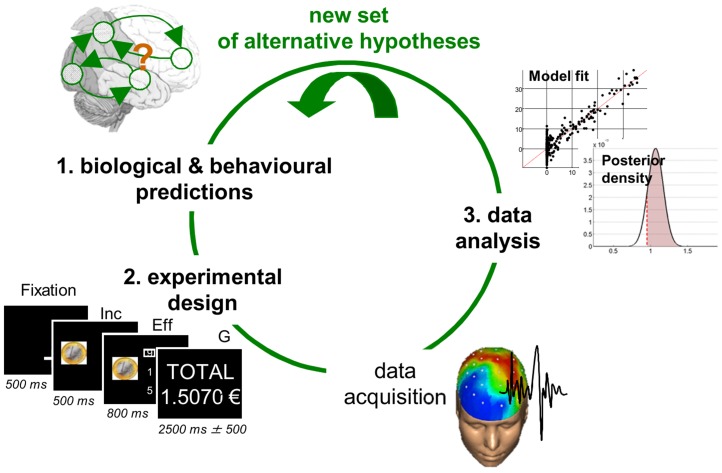
This work is in line with an on-going effort tending toward a computational (quantitative and refutable) understanding of human neuro-cognitive processes. Many sophisticated models for behavioural and neurobiological data have flourished during the past decade. Most of these models are partly unspecified (i.e. they have unknown parameters) and nonlinear. This makes them difficult to peer with a formal statistical data analysis framework. In turn, this compromises the reproducibility of model-based empirical studies. This work exposes a software toolbox that provides generic, efficient and robust probabilistic solutions to the three problems of model-based analysis of empirical data: (i) data simulation, (ii) parameter estimation/model selection, and (iii) experimental design optimization.
Overview
The claims and statistics of this paper haven’t been checked yet.
Run the check — free, no account needed. It reads the open-access text and checks the sources it cites.
Integrity signals
Registry
Cites
Statistics
Figures
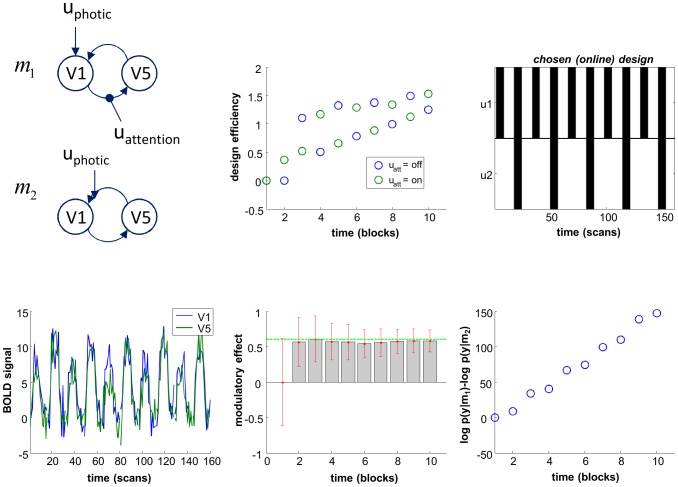
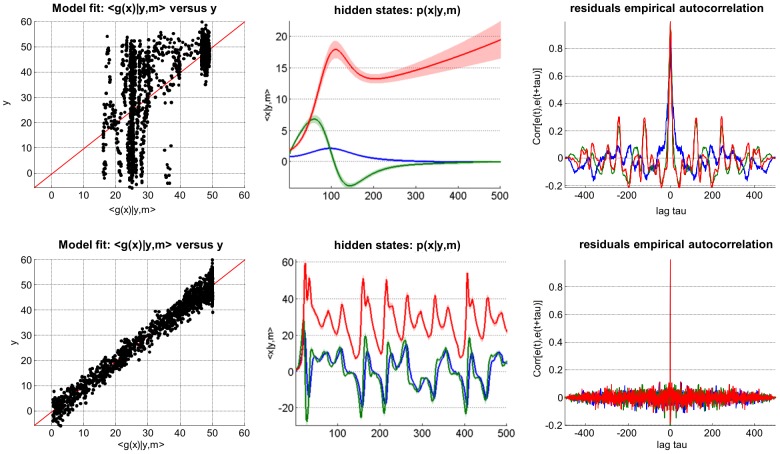
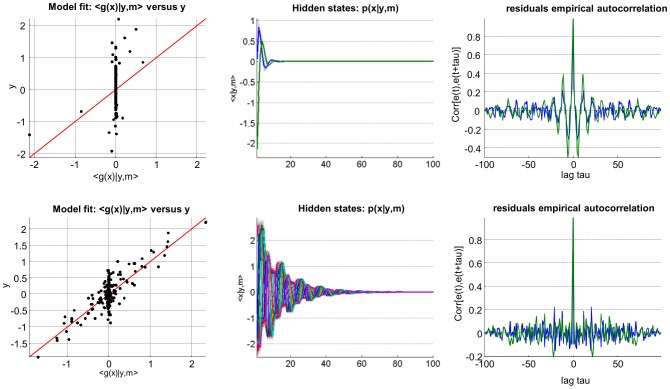
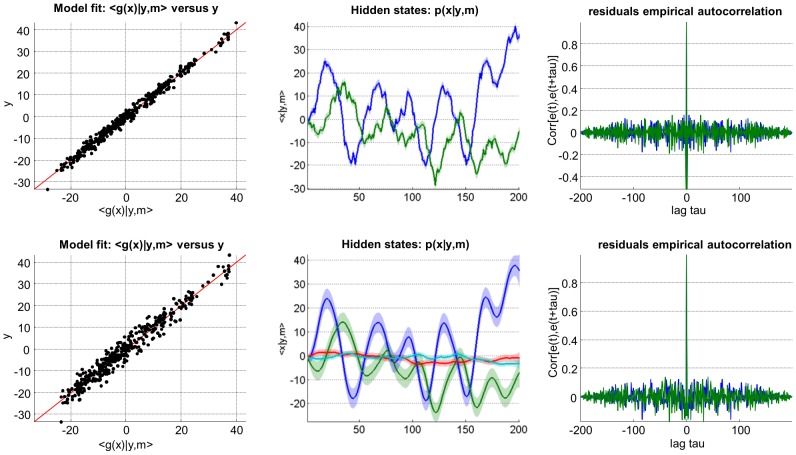
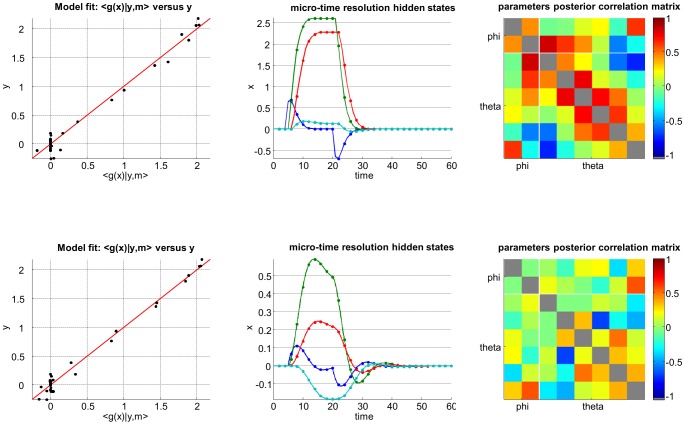
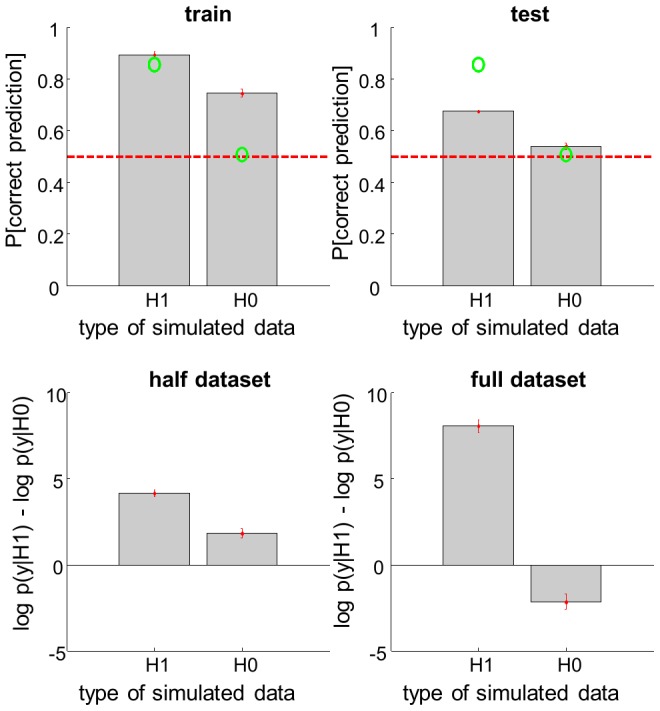
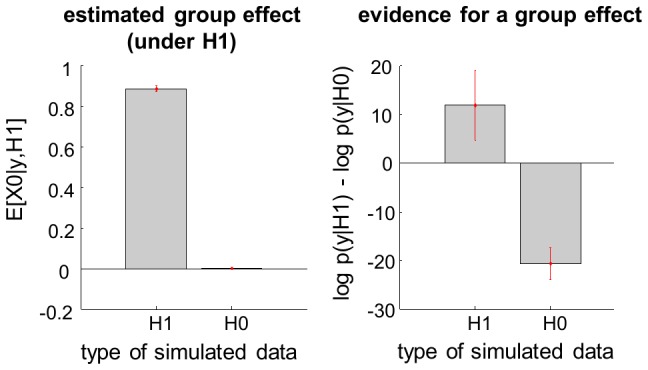
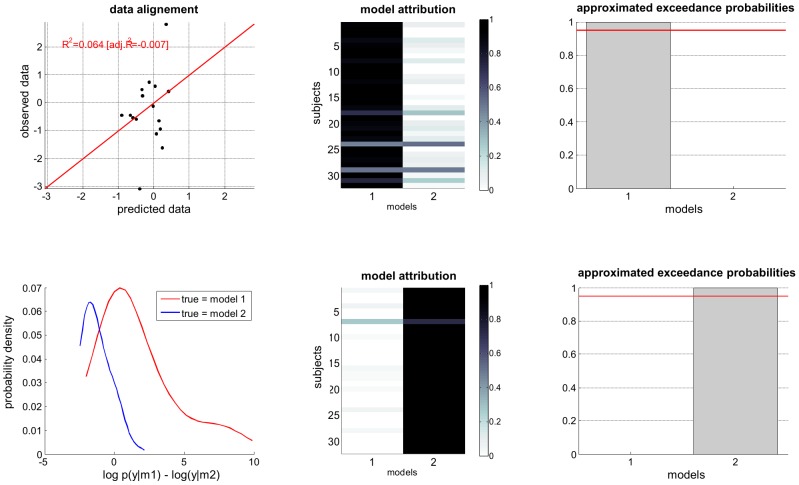
Verification
Claims the paper makes
The claims and statistics of this paper haven’t been checked yet.
Run the check — free, no account needed. It reads the open-access text and checks the sources it cites.
Claims other papers make about this one
Each is checked against this paper’s own text: does it say what the citing paper says it does?
The cited source says what the claim attributes to it.
In the citing paper
“The workflow includes the extraction of empirical priors from a combination of our pilot data and the data shared from Lawson et al. [17], parameter recovery and model identifiability based on simulated data, posterior predictive checks and random-effect analysis Bayesian model comparison as implemented in the VBA toolbox [41].”
From Predicting emotional valence in autism: a preregistered study in the Bayesian Brain framework (2026) · cites this paper as [41]
In the citing paper
“Model fitting was performed using a variational Bayesian estimation procedure using the well-validated VBA toolbox 58 .”
From Stress-sensitive inference of task controllability (2022) · cites this paper as [58]
Self-check
Percentages, sums and reported differences re-computed from the paper’s own numbers.
The self-check needs the paper’s full text.
Citations
Cites
Hodgkin, A. L., & Huxley, A. F. (1952) · The Journal of Physiology · doi:10.1113/jphysiol.1952.sp004764 · Cited by 23,191
A Theory of Cognitive Dissonance
Morvan, C., & O’Connor, A. (2017) · Macat Library eBooks · doi:10.4324/9781912282432 · Cited by 18,284
Kahneman, D., & Tversky, A. (1984) · American Psychologist · doi:10.1037/0003-066x.39.4.341 · Cited by 6,544
Impulses and Physiological States in Theoretical Models of Nerve Membrane
Fitzhugh, R. (1961) · Biophysical Journal · doi:10.1016/s0006-3495(61)86902-6 · Cited by 6,199
Kahneman, D. J., & Tversky, A. (2013) · World Scientific handbook in financial economic series · doi:10.1142/9789814417358_0016 · Cited by 5,379
Numerical solution of stochastic differential equations
Kloeden, P. E. 1., & Platen, E. (2016) · doi:10.5194/gmd-2016-45-rc1 · Cited by 5,119
Friston, K. J., Harrison, L., & Penny, W. (2003) · NeuroImage · doi:10.1016/s1053-8119(03)00202-7 · Cited by 4,583
Barto, A. (1998) · IFAC Proceedings Volumes · doi:10.1016/s1474-6670(17)38315-5 · Cited by 2,172
Dynamics of pattern formation in lateral-inhibition type neural fields
Амари, Ш.-И. (1977) · Biological Cybernetics · doi:10.1007/bf00337259 · Cited by 2,086
Organization, development and function of complex brain networks
SPORNS, O., CHIALVO, D., KAISER, M., & HILGETAG, C. (2004) · Trends in Cognitive Sciences · doi:10.1016/j.tics.2004.07.008 · Cited by 2,055
(2003) · Cited by 1,680
Tononi, G., Sporns, O., & Edelman, G. M. (1994) · Proceedings of the National Academy of Sciences · doi:10.1073/pnas.91.11.5033 · Cited by 1,626
Impulsivity and cigarette smoking: delay discounting in current, never, and ex-smokers
Bickel, W. K., Odum, A. L., & Madden, G. J. (1999) · Psychopharmacology · doi:10.1007/pl00005490 · Cited by 1,433
Bayesian model selection for group studies
Stephan, K. E., Penny, W. D., Daunizeau, J., Moran, R. J., & Friston, K. J. (2009) · NeuroImage · doi:10.1016/j.neuroimage.2009.03.025 · Cited by 1,423
Jansen, B. H., & Rit, V. G. (1995) · Biological Cybernetics · doi:10.1007/bf00199471 · Cited by 1,159
Dysconnection in schizophrenia: from abnormal synaptic plasticity to failures of self-monitoring
Stephan, K. E., Friston, K. J., & Frith, C. D. (2009) · Schizophrenia Bulletin · doi:10.1093/schbul/sbn176 · Cited by 1,134
Variational free energy and the Laplace approximation
Friston, K., Mattout, J., Trujillo-Barreto, N., Ashburner, J., & Penny, W. (2007) · NeuroImage · doi:10.1016/j.neuroimage.2006.08.035 · Cited by 880
Büchel, C. (1997) · Cerebral Cortex · doi:10.1093/cercor/7.8.768 · Cited by 798
Comparing families of dynamic causal models
Penny, W. D., Stephan, K. E., Daunizeau, J., Rosa, M. J., Friston, K. J., Schofield, T. M., & Leff, A. P. (2010) · PLoS Computational Biology · doi:10.1371/journal.pcbi.1000709 · Cited by 688
Bayesian model selection for group studies — Revisited
Rigoux, L., Stephan, K. E., Friston, K. J., & Jean Daunizeau, A. (2013) · NeuroImage · doi:10.1016/j.neuroimage.2013.08.065 · Cited by 659
Self-citationA Bayesian foundation for individual learning under uncertainty
Mathys, C. (2011) · Frontiers in Human Neuroscience · doi:10.3389/fnhum.2011.00039 · Cited by 655
Dynamic causal modeling of evoked responses in EEG and MEG
David, O., Kiebel, S. J., Harrison, L. M., Mattout, J., Kilner, J. M., & Friston, K. J. (2006) · NeuroImage · doi:10.1016/j.neuroimage.2005.10.045 · Cited by 620
Comparing hemodynamic models with DCM
Stephan, K. E., Weiskopf, N., Drysdale, P. M., Robinson, P. A., & Friston, K. J. (2007) · NeuroImage · doi:10.1016/j.neuroimage.2007.07.040 · Cited by 441
Nonlinear dynamic causal models for fMRI
Stephan, K. E., Kasper, L., Harrison, L. M., Daunizeau, J., den Ouden, H. E. M., Breakspear, M., & Friston, K. J. (2008) · NeuroImage · doi:10.1016/j.neuroimage.2008.04.262 · Cited by 416
Dynamic causal modelling: A critical review of the biophysical and statistical foundations
Daunizeau, J., David, O., & Stephan, K. E. (2011) · NeuroImage · doi:10.1016/j.neuroimage.2009.11.062 · Cited by 331
Striatal Prediction Error Modulates Cortical Coupling
den Ouden, H. E. M., Daunizeau, J., Roiser, J., Friston, K. J., & Stephan, K. E. (2010) · The Journal of Neuroscience · doi:10.1523/jneurosci.4458-09.2010 · Cited by 304
Friston, K. J., Li, B., Daunizeau, J., & Stephan, K. E. (2011) · NeuroImage · doi:10.1016/j.neuroimage.2010.12.039 · Cited by 283
Post hoc Bayesian model selection
Friston, K. J., & Penny, W. (2011) · NeuroImage · doi:10.1016/j.neuroimage.2011.03.062 · Cited by 275
Variational Bayesian identification and prediction of stochastic nonlinear dynamic causal models
Daunizeau, J., Friston, K. J., & Kiebel, S. (2009) · Physica A: Statistical Mechanics and its Applications · doi:10.1016/j.physd.2009.08.002 · Cited by 206
Generalised filtering and stochastic DCM for fMRI
Baojuan Li, A., Jean Daunizeau, A., Stephan, K. E., Penny, W. D., Hu, D., & Friston, K. J. (2011) · NeuroImage · doi:10.1016/j.neuroimage.2011.01.085 · Cited by 192
Observing the observer (I): meta-bayesian models of learning and decision-making
Daunizeau, J., den Ouden, H. E. M., Pessiglione, M., Kiebel, S. J., Stephan, K. E., & Friston, K. J. (2010) · PLoS ONE · doi:10.1371/journal.pone.0015554 · Cited by 167
Optimal experimental design for model discrimination.
Myung, J. I., & Pitt, M. A. (2009) · Psychological Review · doi:10.1037/a0016104 · Cited by 140
An in vivo assay of synaptic function mediating human cognition
Moran, R. J., Symmonds, M., Stephan, K. E., Friston, K. J., & Dolan, R. J. (2011) · Current Biology · doi:10.1016/j.cub.2011.06.053 · Cited by 137
Neurocomputational account of how the human brain decides when to have a break
Meyniel, F., Sergent, C., Rigoux, L., Jean Daunizeau, A., & Pessiglione, M. (2013) · Proceedings of the National Academy of Sciences · doi:10.1073/pnas.1211925110 · Cited by 122
Self-citationStochastic dynamic causal modelling of fMRI data: Should we care about neural noise?
Jean Daunizeau, A., Stephan, K. E., & Friston, K. J. (2012) · NeuroImage · doi:10.1016/j.neuroimage.2012.04.061 · Cited by 114
The Cognitive Neuroscience of Motivation and Learning
Daw, N. D., & Shohamy, D. (2008) · Social Cognition · doi:10.1521/soco.2008.26.5.593 · Cited by 108
Dynamic causal modelling of anticipatory skin conductance responses
Bach, D. R., Jean Daunizeau, A., Friston, K. J., & Dolan, R. J. (2010) · Biological Psychology · doi:10.1016/j.biopsycho.2010.06.007 · Cited by 107
Schmidt, A., Smieskova, R., Aston, J., Simon, A., Allen, P., Fusar-Poli, P., McGuire, P. K., Riecher-Rössler, A., Stephan, K. E., & Borgwardt, S. (2013) · JAMA Psychiatry · doi:10.1001/jamapsychiatry.2013.117 · Cited by 93
Optimizing Experimental Design for Comparing Models of Brain Function
Jean Daunizeau, A., Preuschoff, K., Friston, K. J., & Stephan, K. E. (2011) · PLoS Computational Biology · doi:10.1371/journal.pcbi.1002280 · Cited by 52
Schofield, T. M., Penny, W. D., Stephan, K. E., Crinion, J., Thompson, A. J., Price, C. J., & Leff, A. P. (2012) · Journal of Neuroscience · doi:10.1523/jneurosci.4670-11.2012 · Cited by 36
Research works printed but not linked: 1
- Robert C. (2007), The Bayesian choice: From Decision-Theoretic Foundations to Computational Implementation. Springer, August 2007.
Cited by
Sorted by citations
Variational Inference: A Review for Statisticians
Blei, D. M., Kucukelbir, A., & McAuliffe, J. D. (2017) · Journal of the American Statistical Association · doi:10.1080/01621459.2017.1285773 · Cited by 4,498
Uncertainty in perception and the Hierarchical Gaussian Filter
Mathys, C. D., Lomakina, E. I., Daunizeau, J., Iglesias, S., Brodersen, K. H., Friston, K. J., & Stephan, K. E. (2014) · Frontiers in Human Neuroscience · doi:10.3389/fnhum.2014.00825 · Cited by 465
The Importance of Falsification in Computational Cognitive Modeling
Palminteri, S., Wyart, V., & Koechlin, E. (2017) · Trends in Cognitive Sciences · doi:10.1016/j.tics.2017.03.011 · Cited by 448
Computations of uncertainty mediate acute stress responses in humans
de Berker, A. O., Rutledge, R. B., Mathys, C., Marshall, L., Cross, G. F., Dolan, R. J., & Bestmann, S. (2016) · Nature Communications · doi:10.1038/ncomms10996 · Cited by 330
Ahn, W., Haines, N., & Zhang, L. (2017) · Computational Psychiatry · doi:10.1162/cpsy_a_00002 · Cited by 385
Metadata
- Authors
- Daunizeau, J., Adam, V., & Rigoux, L.
- Affiliations
- Gatsby Computational Neuroscience Unit (GB)
- Institut du Cerveau (FR)
- Venue
- PLoS Computational Biology
- Publisher
- Public Library of Science (PLoS)
- Published
- 2014-01-23
- Volume
- 10
- Issue
- 1
- Pages
- e1003441
- ISSN
- 1553-734X (ISSN-L)
- 1553-7358
- PMC
- PMC3900378
- OpenAlex
- W2049657715
- Cited by
- 385
- References
- 41
- Citations by year
- 2026: 28 · 2025: 36 · 2024: 44 · 2023: 37 · 2022: 39 · 2021: 47 · 2020: 47 · 2019: 24 · 2018: 22 · 2017: 24 · 2016: 21 · 2015: 7 · 2014: 9
- FWCI
- 21.23
- Type
- journal article
- Language
- en
- Open access
- gold
- doi.org
- Licence
- Locations
- PLoS Computational Biology (publishedVersion, cc-by)
- Europe PMC (PubMed Central) (publishedVersion, cc-by)
- PubMed Central (publishedVersion, cc-by)
- PubMed (publishedVersion)
- RePEc: Research Papers in Economics (submittedVersion)
- DOAJ (DOAJ: Directory of Open Access Journals) (submittedVersion)
- Figshare (submittedVersion, cc-by)
- Topics
- Physical Sciences › Mathematics › Statistics and Probability › Statistical Methods and Bayesian Inference
- Physical Sciences › Engineering › Control and Systems Engineering › Control Systems and Identification
- Physical Sciences › Computer Science › Artificial Intelligence › Gaussian Processes and Bayesian Inference
- Keywords
- stochastic modeling, nonlinear models, parameter estimation, model selection, data simulation, experimental design optimization, behavioral data, computational neuroscience, reproducibility
- MeSH terms
- Algorithms, Bayes Theorem, Cognition, Computer Simulation, Decision Making, Humans, Models, Biological, Models, Neurological, Nerve Net, Probability, Software, Stochastic Processes, Normal Distribution, Computational Biology
About these checks
Registry, retraction, Cites and statistics results are computed, not judged, with one exception: a printed reference that no index lists is read once by a model before it counts as a citation error. Claims are extracted by a model and kept only when their quote appears verbatim in the text; each cited source is then checked, with a model’s help, for whether it says what the claim relies on. Those verdicts can be wrong — read the claim’s quote and the cited source before relying on one.
Statistics and arithmetic are recomputed, not judged.
Confidence bands are shown only for fields calibrated on our annotated test set. None is calibrated yet, so no band is shown.
What counts as a claim ›How we measure confidence ›How we check this ›
Are you an author, or do you see a problem with this page? Request a review
