

Localizing Recent Adaptive Evolution in the Human Genome.
Open accessThe DOI matches its Crossref record; 65 of the 66 references it cites were found in a registry or an index.
Abstract
Identifying genomic locations that have experienced selective sweeps is an important first step toward understanding the molecular basis of adaptive evolution. Using statistical methods that account for the confounding effects of population demography, recombination rate variation, and single-nucleotide polymorphism ascertainment, while also providing fine-scale estimates of the position of the selected site, we analyzed a genomic dataset of 1.2 million human single-nucleotide polymorphisms genotyped in African-American, European-American, and Chinese samples. We identify 101 regions of the human genome with very strong evidence (p < 10(-5)) of a recent selective sweep and where our estimate of the position of the selective sweep falls within 100 kb of a known gene. Within these regions, genes of biological interest include genes in pigmentation pathways, components of the dystrophin protein complex, clusters of olfactory receptors, genes involved in nervous system development and function, immune system genes, and heat shock genes. We also observe consistent evidence of selective sweeps in centromeric regions. In general, we find that recent adaptation is strikingly pervasive in the human genome, with as much as 10% of the genome affected by linkage to a selective sweep.
Overview
The claims and statistics of this paper haven’t been checked yet.
Free: it reads the open-access text and checks the first 5 claims that cite a source we can check. Create a free account to check every claim.
Integrity signals
Registry
Cites
Statistics
Figures
Verification
Claims the paper makes
The claims and statistics of this paper haven’t been checked yet.
Free: it reads the open-access text and checks the first 5 claims that cite a source we can check. Create a free account to check every claim.
Claims other papers make about this one
Each is checked against this paper’s own text: does it say what the citing paper says it does?
The source backs part of the claim, not all of it — or backs it for a different population, condition or comparison.
In the citing paper
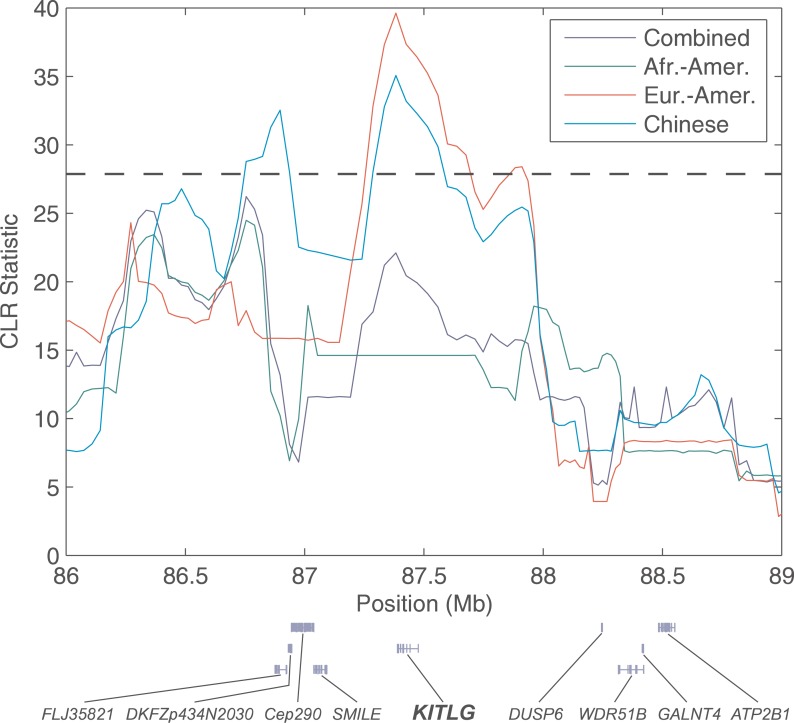
“Some genes, such as KITLG, have derived alleles (associated with lighter pigmentation) that reach high frequencies both in European and East Asian populations and likely began to be selected in a proto Eurasian population (Lao et al. 2007;Williamson et al. 2007;Pickrell et al. 2009).”
From The timing of pigmentation lightening in Europeans (2013) · cites this paper as Williamson et al. 2007
Experimental — accuracy not yet measuredThe cited source says what the claim attributes to it.
In the citing paper
“The SLC30A9 gene (chr4: 41,990,502–42,090,461; GRCh38) has been repeatedly reported as a top candidate region for positive selection in several genome-wide scans of selection, mostly in East Asian populations [14,16–20].”
From Human genetic adaptation related to cellular zinc homeostasis (2023) · cites this paper as [20]
The cited source says what the claim attributes to it.
In the citing paper
“The motivation for this study was the previous detection of strong signatures of positive selection in the SLC30A9 region [13,14,16,17,20,25].”
From Human genetic adaptation related to cellular zinc homeostasis (2023) · cites this paper as [20]
The check wasn’t confident either way, so it gives no verdict — never disputed.
In the citing paper
“Analysis of SNP variation between diverse human populations shows evidence of selection of the EDAR locus in East Asian and American populations [56],[57].”
From Zebrafish eda and edar Mutants Reveal Conserved and Ancestral Roles of Ectodysplasin Signaling in Vertebrates (2008) · cites this paper as [57]
Experimental — accuracy not yet measured
Self-check
Percentages, sums and reported differences re-computed from the paper’s own numbers.
The self-check needs the paper’s full text.
Citations
Cites
Controlling the False Discovery Rate: A Practical and Powerful Approach to Multiple Testing
Benjamini, Y., & Hochberg, Y. (1995) · Journal of the Royal Statistical Society Series B: Statistical Methodology · doi:10.1111/j.2517-6161.1995.tb02031.x · Cited by 109,482 · cited 3×
“Also, the present analysis is one of the first to fully correct for the bias introduced by SNP discovery protocols, and we account for the effects of multiple hypothesis testing using a false discovery rate approach [23,24].”
MethodStatistical significance for genomewide studies
Storey, J. D., & Tibshirani, R. (2003) · Proceedings of the National Academy of Sciences · doi:10.1073/pnas.1530509100 · Cited by 9,692 · cited 4×
“One modification to the approach outlined by Storey and Tishirani [24] is the method we use for selecting the tuning parameter, k.”
MethodInfluentialThe Neutral Theory of Molecular Evolution
Kimura, M. (1979) · Scientific American · doi:10.1038/scientificamerican1179-98 · Cited by 7,666
The Neutral Theory of Molecular Evolution
Kimura, M. (1983) · Cambridge University Press eBooks · doi:10.1017/cbo9780511623486 · Cited by 6,347
A haplotype map of the human genome
The International HapMap Consortium (2005) · Nature · doi:10.1038/nature04226 · Cited by 5,858
THE GENETIC BASIS OF EVOLUTIONARY CHANGE
Felsenstein, J. (1975) · Evolution · doi:10.1111/j.1558-5646.1975.tb00851.x · Cited by 3,912
A novel MHC class I-like gene is mutated in patients with hereditary haemochromatosis
Feder, J. N., Gnirke, A., Thomas, W., Tsuchihashi, Z., Ruddy, D. A., Basava, A., Dormishian, F., Domingo, R., Ellis, M. C., Fullan, A., et al. (1996) · Nature Genetics · doi:10.1038/ng0896-399 · Cited by 3,664 · cited 1×
“HFE contains a relatively high-frequency recessive mutation, C282Y, which causes hereditary hemochromatosis [44], an iron-overload disorder.”
BackgroundA Map of Recent Positive Selection in the Human Genome
Voight, B. F., Kudaravalli, S., Wen, X., & Pritchard, J. K. (2006) · PLoS Biology · doi:10.1371/journal.pbio.0040072 · Cited by 2,893
Generating samples under a Wright–Fisher neutral model of genetic variation
Hudson, R. R. (2002) · Bioinformatics · doi:10.1093/bioinformatics/18.2.337 · Cited by 2,364 · cited 1×
“Because allele frequencies of linked SNPs are not statistically independent, we determine the null (selectively neutral) distributions of all test statistics using coalescent simulations [60].”
MethodThe UCSC Table Browser data retrieval tool
Karolchik, D. (2004) · Nucleic Acids Research · doi:10.1093/nar/gkh103 · Cited by 2,316 · cited 1×
“are then recorded along with the genomic position of the center of the window. We repeat this procedure for every tenth window of 200 SNPs across all autosomes. Chromosomal positions of genes and genetic map estimates of local recombination rates were retrieved using the July 2003 build of the human genome on the Univ…”
Method
Cited by
Items 101–200 of 506
“REVERSE ECOLOGY” AND THE POWER OF POPULATION GENOMICS
Li, Y. F., Costello, J. C., Holloway, A. K., & Hahn, M. W. (2008) · Evolution · doi:10.1111/j.1558-5646.2008.00486.x · Cited by 134
Pervasive Hitchhiking at Coding and Regulatory Sites in Humans
Cai, J. J., Macpherson, J. M., Sella, G., & Petrov, D. A. (2009) · PLoS Genetics · doi:10.1371/journal.pgen.1000336 · Cited by 133
“This challenge comes not only from numerous studies detailing specific cases of molecular adaptation in a number of organisms (for example, see [2–8]) but also, and most compellingly, from a number of studies that indicate that adaptation might be common on the genomic scale [9–17].”
Extremely rare variants reveal patterns of germline mutation rate heterogeneity in humans
Carlson, J., Locke, A. E., Flickinger, M., Zawistowski, M., Levy, S., Myers, R. M., Boehnke, M., Kang, H. M., Scott, L. J., Li, J. Z., et al. (2018) · Nature Communications · doi:10.1038/s41467-018-05936-5 · Cited by 130
The role of constraints and limitation in driving individual variation in immune response
Ardia, D. R., Parmentier, H. K., & Vogel, L. A. (2011) · Functional Ecology · doi:10.1111/j.1365-2435.2010.01759.x · Cited by 145
Detecting recent selective sweeps while controlling for mutation rate and background selection
Huber, C. D., DeGiorgio, M., Hellmann, I., & Nielsen, R. (2016) · Molecular Ecology · doi:10.1111/mec.13351 · Cited by 129
“…signatures of selective sweeps (Akey et al. 2002; Carlson et al. 2005; Wang et al. 2006; Voight et al. 2006; Kelley et al. 2006; Kimura et al. 2007; Williamson et al. 2007; Tang et al. 2007; Sabeti et al. 2007; Xia et al. 2009; Qanbari et al. 2012; Ramey et al. 2013; Long et al. 2013;…”
BackgroundMethodInfluentialSelf-citationHuman-Specific Histone Methylation Signatures at Transcription Start Sites in Prefrontal Neurons
Shulha, H. P., Crisci, J. L., Reshetov, D., Tushir, J. S., Cheung, I., Bharadwaj, R., Chou, H.-J., Houston, I. B., Peter, C. J., Mitchell, A. C., et al. (2012) · PLoS Biology · doi:10.1371/journal.pbio.1001427 · Cited by 124
“These loci typically extend over several kb, and were identified in several recent studies on the basis of criteria associated with a ‘‘selective sweep,’’ which describes the elimination of genetic variation in sequences surrounding an advantageous mutation while it becomes fixed [61–64].”
BackgroundPredicting geographic location from genetic variation with deep neural networks
Battey, C. J., Ralph, P. L., & Kern, A. D. (2020) · eLife · doi:10.7554/elife.54507 · Cited by 125
Detecting Polygenic Adaptation in Admixture Graphs
Racimo, F., Berg, J. J., & Pickrell, J. K. (2018) · Genetics · doi:10.1534/genetics.117.300489 · Cited by 115
“It is thus possible that there are variants associated with traits like educational attainment that occur at high frequencies in East Asians, but that are missing from our analysis, or that the effect sizes in trait-associated SNPs are different in non-European populations, in such a way that the average genetic value…”
BackgroundInfluentialAncestral components of admixed genomes in a Mexican cohort
Johnson, N. A., Coram, M. A., Shriver, M. D., Romieu, I., Barsh, G. S., London, S. J., & Tang, H. (2011) · PLoS Genetics · doi:10.1371/journal.pgen.1002410 · Cited by 114
“In parallel, analyses based on European, African and East Asian populations have revealed that recent positive selection is a prevalent phenomenon throughout the genome [6–8].”
BackgroundMcManus, K. F., Oill, A. M. T., Henn, B. M., Bustamante, C. D., Sikora, M., & Cornejo, O. E. (2017) · PLoS Genetics · doi:10.1371/journal.pgen.1006560 · Cited by 143
Self-citationIdentification of selection signatures in livestock species
Gouveia, J. J. D. S., da Silva, M. V. G. B., Paiva, S. R., & de Oliveira, S. M. P. (2014) · Genetics and Molecular Biology · doi:10.1590/s1415-47572014000300004 · Cited by 154
“These new methods can deal with genomic data and account for the ascertainment bias (Nielsen et al., 2005; Kelley et al., 2006; Williamson et al., 2007).”
MethodRecent human adaptation: genomic approaches, interpretation and insights
Scheinfeldt, L. B., & Tishkoff, S. A. (2013) · Nature Reviews Genetics · doi:10.1038/nrg3604 · Cited by 114
INTEGRATING EVOLUTIONARY AND FUNCTIONAL APPROACHES TO INFER ADAPTATION AT SPECIFIC LOCI
Storz, J. F., & Wheat, C. W. (2010) · Evolution · doi:10.1111/j.1558-5646.2010.01044.x · Cited by 139
Zhai, W., Nielsen, R., & Slatkin, M. (2009) · Molecular Biology and Evolution · doi:10.1093/molbev/msn231 · Cited by 112
“Several recent papers have examined the abundance and distributionofDarwinianselection in thehumangenome (e.g., Akey et al. 2002; Clark et al. 2003; Bustamante et al. 2005; Carlson et al. 2005; Nielsen et al. 2005; Voight et al. 2006; Wang et al. 2006; Williamson et al. 2007).”
BackgroundMethodSelf-citationAdaptation of human skin color in various populations
Deng, L., & Xu, S. (2018) · Hereditas · doi:10.1186/s41065-017-0036-2 · Cited by 89
“One of the key single nucleotide polymorphism loci (SNPs) in OCA2, rs1800404, showed a significant effect on skin pigmentation when analyzing African Americans and a combined population of African American and AfricanCaribbean, but was absent in an independent analysis of the African-Caribbean samples [69].”
BackgroundInfluentialFerchaud, A., & Hansen, M. M. (2015) · Molecular Ecology · doi:10.1111/mec.13399 · Cited by 117
“organisms such as, for example humans (Williamson et al. 2007; Li et al. 2008) and Arabidopsis thaliana (Clark et al.”
BackgroundNatural Selection and the Distribution of Identity-by-Descent in the Human Genome
Albrechtsen, A., Moltke, I., & Nielsen, R. (2010) · Genetics · doi:10.1534/genetics.110.113977 · Cited by 106
“It is also interesting to note that most previous genome-wide scans (Carlson et al. 2005; Voight et al. 2006; Williamson et al. 2007) did not identify the HLA region among the regions with the strongest selection.”
ResultSelf-citationHsieh, P., Woerner, A. E., Wall, J. D., Lachance, J., Tishkoff, S. A., Gutenkunst, R. N., & Hammer, M. F. (2016) · Genome Research · doi:10.1101/gr.196634.115 · Cited by 105
“estimated that the false discovery rate (FDR) in our top 1% of windows ranges from∼19% to ∼68% across the four neutral whole-genome simulation sets (Supplemental Table S6) using the approach of Williamson et al. (2007) (Methods).”
Utsunomiya, Y. T., Pérez O’Brien, A. M., Sonstegard, T. S., Van Tassell, C. P., do Carmo, A. S., Mészáros, G., Sölkner, J., & Garcia, J. F. (2013) · PLoS ONE · doi:10.1371/journal.pone.0064280 · Cited by 104
“Change in the allele frequency spectrum Increase in the frequency of derived alleles DDAF [6], Tajima’s D [7], Fu and Li’s D-test [8], Fay and Wu’s H-test [9], CLR [10] Positive selection Within and between populations ,3,200”
BackgroundEvolutionary accounts of human behavioural diversity
Brown, G. R., Dickins, T. E., Sear, R., & Laland, K. N. (2011) · Philosophical Transactions of the Royal Society B: Biological Sciences · doi:10.1098/rstb.2010.0267 · Cited by 104
Ancestry, admixture and fitness in Colombian genomes
Rishishwar, L., Conley, A. B., Wigington, C. H., Wang, L., Valderrama-Aguirre, A., & Jordan, I. K. (2015) · Scientific Reports · doi:10.1038/srep12376 · Cited by 107
RECOMBINATION AND HITCHHIKING OF DELETERIOUS ALLELES: RECOMBINATION AND THE UNDESIRABLE HITCHHIKER
Hartfield, M., & Otto, S. P. (2011) · Evolution · doi:10.1111/j.1558-5646.2011.01311.x · Cited by 102
Evidence for Hitchhiking of Deleterious Mutations within the Human Genome
Chun, S., & Fay, J. C. (2011) · PLoS Genetics · doi:10.1371/journal.pgen.1002240 · Cited by 103
“that causes hemochromatosis is 150 kb away from a hitchhiking region and may have increased in frequency due to hitchhiking”
Understanding rare and common diseases in the context of human evolution
Quintana‐Murci, L. (2016) · Genome biology · doi:10.1186/s13059-016-1093-y · Cited by 124
Positive Selection in East Asians for an EDAR Allele that Enhances NF-κB Activation
Bryk, J., Hardouin, E., Pugach, I., Hughes, D., Strotmann, R., Stoneking, M., & Myles, S. (2008) · PLoS ONE · doi:10.1371/journal.pone.0002209 · Cited by 100
“A strong signature of positive selection in East Asians has been found in the genomic region containing the EDAR gene (HGNC:2895) according to tests based on the allele frequency spectrum [4,13,14], haplotype structure [2,3] and population differentiation [15–19].”
Infectious Disease and the Creation of Culture
Schaller, M., & Murray, D. R. (2010) · Advances in Culture and Psychology · doi:10.1093/acprof:oso/9780195380392.003.0003 · Cited by 94
Zayed, A., & Whitfield, C. W. (2008) · Proceedings of the National Academy of Sciences · doi:10.1073/pnas.0800107105 · Cited by 118
“Assuming that our randomly chosen SNPs represent the honey bee genome, our estimates imply that 852–1,371 genes ( 10% of the coding genome) experienced positive selection and adaptive evolution between the African and West European groups, on par with a recent study of adaptive evolution in human populations employing…”
BackgroundPopulation genetic analysis of shotgun assemblies of genomic sequences from multiple individuals
Hellmann, I., Mang, Y., Gu, Z., Li, P., de la Vega, F. M., Clark, A. G., & Nielsen, R. (2008) · Genome Research · doi:10.1101/gr.074187.107 · Cited by 94
Self-citationSchrider, D. R., Mendes, F. K., Hahn, M. W., & Kern, A. D. (2015) · Genetics · doi:10.1534/genetics.115.174912 · Cited by 108
“Indeed, there is a signi fi cant overlap between loci identi fi ed as sweeps in the human genome using iHS (Voight et al. 2006) and the composite likelihood-ratio test of Nielsen et al. (2005) that is intended to detect completed sweeps (Williamson et al. 2007).”
BackgroundEvolution of GPCR: Change and continuity
Strotmann, R., Schröck, K., Böselt, I., Stäubert, C., Russ, A., & Schöneberg, T. (2010) · Molecular and Cellular Endocrinology · doi:10.1016/j.mce.2010.07.012 · Cited by 106
Identifying genetic variants that affect viability in large cohorts
Mostafavi, H., Berisa, T., Day, F. R., Perry, J. R. B., Przeworski, M., & Pickrell, J. K. (2017) · PLOS Biology · doi:10.1371/journal.pbio.2002458 · Cited by 90
Reconstructing phylogenies and phenotypes: a molecular view of human evolution
Bradley, B. J. (2008) · Journal of Anatomy · doi:10.1111/j.1469-7580.2007.00840.x · Cited by 89
Runaway cultural niche construction
Rendell, L., Fogarty, L., & Laland, K. N. (2011) · Philosophical Transactions of the Royal Society B: Biological Sciences · doi:10.1098/rstb.2010.0256 · Cited by 90
Detecting Selective Sweeps from Pooled Next-Generation Sequencing Samples
Boitard, S., Schlötterer, C., Nolte, V., Pandey, R. V., & Futschik, A. (2012) · Molecular Biology and Evolution · doi:10.1093/molbev/mss090 · Cited by 107
“2009) and were applied to several species (Li and Stephan 2006; Williamson et al. 2007).”
MethodBhatia, G., Patterson, N. J., Paşaniuc, B., Zaitlen, N., Genovese, G., Pollack, S. J., Mallick, S., Myers, S., Tandon, A., Spencer, C. C. A., et al. (2011) · The American Journal of Human Genetics · doi:10.1016/j.ajhg.2011.07.025 · Cited by 101
Bierne, N. (2010) · Evolution · doi:10.1111/j.1558-5646.2010.01050.x · Cited by 95
Recurrent Adaptation in RNA Interference Genes Across the Drosophila Phylogeny
Kolaczkowski, B., Hupalo, D. N., & Kern, A. D. (2010) · Molecular Biology and Evolution · doi:10.1093/molbev/msq284 · Cited by 96
“We consider these estimates to be likely coarse, thus values of ρ were halved for simulation, as Williamson et al. (2007) have also shown that systematic underestimation of the rate of recombination leads to a conservative hypothesis test.”
BackgroundMethodResultInfluentialA Population Genetics-Phylogenetics Approach to Inferring Natural Selection in Coding Sequences
Wilson, D. J., Hernandez, R. D., Andolfatto, P., & Przeworski, M. (2011) · PLoS Genetics · doi:10.1371/journal.pgen.1002395 · Cited by 85
“Although the assumption of independence between sites is common in the analysis of allele frequency information [6,8,15,42,53,38], it is of concern because selection at linked sites can skew allele frequencies at synonymous sites and may lead to false inference of selection [42].”
BackgroundPositive Selection in the Human Genome: From Genome Scans to Biological Significance
Kelley, J. L., & Swanson, W. J. (2008) · Annual Review of Genomics and Human Genetics · doi:10.1146/annurev.genom.9.081307.164411 · Cited by 84
Limited Evidence for Classic Selective Sweeps in African Populations
Granka, J. M., Henn, B. M., Gignoux, C. R., Kidd, J. M., Bustamante, C. D., & Feldman, M. W. (2012) · Genetics · doi:10.1534/genetics.112.144071 · Cited by 83
“Another approach used to integrate results of genome-wide selection scans asks whether any biological functions (Gene Ontology biological process terms, or GO terms) appear to be more frequent targets of positive selection than expected by chance (www.geneontology.org).”
BackgroundSelf-citationSelection on Meiosis Genes in Diploid and Tetraploid Arabidopsis arenosa
Wright, K. M., Arnold, B., Xue, K. S., Šurinová, M., O’Connell, J. D., & Bomblies, K. (2014) · Molecular Biology and Evolution · doi:10.1093/molbev/msu398 · Cited by 89
“…from studies in animals that there is a surprising degree of diversity in genes that encode structural proteins essential for key meiotic functions, including chromosome pairing, repair, and crossing over (e.g., Williamson et al. 2007; Turner et al. 2008; Anderson et al. 2009; Cheng et al. 2012).”
BackgroundArtificial Selection and Domestication: Modern Lessons from Darwin’s Enduring Analogy
Gregory, T. R. (2009) · Evolution Education and Outreach · doi:10.1007/s12052-008-0114-z · Cited by 108
“…analyses of human genomic data suggest that many genes have been under positive selection in recent history (e.g., Nielsen et al. 2005; Voight et al. 2006; Williamson et al. 2007; Sabeti et al. 2007), including some involved in taste and smell, lactose and sucrose digestion, and disease resistance.”
BackgroundVariation and Evolution of Human Centromeres: A Field Guide and Perspective
Miga, K. H., & Alexandrov, I. A. (2021) · Annual Review of Genetics · doi:10.1146/annurev-genet-071719-020519 · Cited by 78
The evolution of cognitive mechanisms in response to cultural innovations
Lotem, A., Halpern, J. Y., Edelman, S., & Kolodny, O. (2017) · Proceedings of the National Academy of Sciences · doi:10.1073/pnas.1620742114 · Cited by 77
Möst, M., Belleghem, S. M. V., James, J., Salazar, C. A., Martin, S. H., Barker, S. L., Moreira, G. R. P., Mérot, C., Joron, M., Nadeau, N. J., et al. (2020) · PLoS Biology · doi:10.1371/journal.pbio.3000597 · Cited by 75
“Although many classic examples of selective sweeps have been found in domesticated populations, such as maize [6], chicken [7], and cattle [8], or in humans [9], increasingly natural populations are also studied.”
BackgroundConsanguineous Marriage and Human Evolution
Bittles, A. H., & Black, M. L. (2010) · Annual Review of Anthropology · doi:10.1146/annurev.anthro.012809.105051 · Cited by 102
Hsieh, P., Veeramah, K. R., Lachance, J., Tishkoff, S. A., Wall, J. D., Hammer, M. F., & Gutenkunst, R. N. (2016) · Genome Research · doi:10.1101/gr.192971.115 · Cited by 76
“…scan also identified a variety of genes (Supplemental Table S4) involved in immune function, one of the most common targets of adaptive evolution (Williamson et al. 2007; Barreiro and Quintana-Murci 2009), and in reproduction, which is compatible with the life-history tradeoff hypothesis…”
Fagny, M., Patin, E., Enard, D., Barreiro, L. B., Quintana-Murci, L., & Laval, G. (2014) · Molecular Biology and Evolution · doi:10.1093/molbev/msu118 · Cited by 75
Wang, D., Liu, F., Wang, L., Huang, S., & Yu, J. M. (2011) · Biology Direct · doi:10.1186/1745-6150-6-13 · Cited by 81
“The task of defining positively-selected genes has drawn the most attention, because these genes are often considered to be the major driving forces behind how organisms adapt to their external environments [4,5].”
BackgroundConfounding between recombination and selection, and the Ped/Pop method for detecting selection
O’Reilly, P. F., Birney, E., & Balding, D. J. (2008) · Genome Research · doi:10.1101/gr.067181.107 · Cited by 80
Qanbari, S., Strom, T. M., Haberer, G., Weigend, S., Gheyas, A., Turner, F. S., Burt, D. W., Preisinger, R., Gianola, D., & Simianer, H. (2012) · PLoS ONE · doi:10.1371/journal.pone.0049525 · Cited by 85
“[21], the prevalence of selection in the genome is unknown, the ‘‘empirical p-value’’ strategy does not directly test the hypothesis of selection at any putative locus and provides no means for quantifying how common selection is across the genome.”
BackgroundMethodHuman and Non-Human Primate Genomes Share Hotspots of Positive Selection
Enard, D., Depaulis, F., & Roest Crollius, H. (2010) · PLoS Genetics · doi:10.1371/journal.pgen.1000840 · Cited by 71
“05 in non-human primates with positive selection candidates found in at least two of three human genome scans for selective sweeps that are insensitive to background selection [11,12,14] (relative co-occurrence score C3+C4 excess = 91%, cooccurrence test P = 7.”
BackgroundMethodByars, S. G., Huang, Q. Q., Gray, L.-A., Bakshi, A., Ripatti, S., Abraham, G., Stearns, S. C., & Inouye, M. (2017) · PLOS Genetics · doi:10.1371/journal.pgen.1006328 · Cited by 78
The landscape of human genes involved in the immune response to parasitic worms
Fumagalli, M., Pozzoli, U., Cagliani, R., Comi, G. P., Bresolin, N., Clerici, M., & Sironi, M. (2010) · BMC Evolutionary Biology · doi:10.1186/1471-2148-10-264 · Cited by 70
“Many studies [15,17,71,72] have indicated that EDAR has been subjected to a strong selective pressure resulting in the rapid spread of the putatively selected 370Ala allele in Asian populations.”
BackgroundSperm Differentiation: The Role of Trafficking of Proteins
Teves, M. E., Roldán, E. R. S., Krapf, D., Strauss, J. F., Bhagat, V., & Sapao, P. (2020) · International Journal of Molecular Sciences · doi:10.3390/ijms21103702 · Cited by 88
“The Spag6 gene, another gene originally described to play a role in the central pair of the axoneme [22], has undergone positive selection [23], although there is no change in the amino acid sequence of the protein, and this positive selection seems to be associated with transcriptional control [24].”
BackgroundRegulatory Variation Within and Between Species
Zheng, W., Gianoulis, T. A., Karczewski, K. J., Zhao, H., & Snyder, M. (2011) · Annual Review of Genomics and Human Genetics · doi:10.1146/annurev-genom-082908-150139 · Cited by 68
Measuring Natural Selection on Genotypes and Phenotypes in the Wild
Linnen, C. R., & Hoekstra, H. E. (2009) · Cold Spring Harbor Symposia on Quantitative Biology · doi:10.1101/sqb.2009.74.045 · Cited by 79
“A mathematical model of mi gra tion-selection balance was proposed by Haldane (1930) and Wright (1931), who showed that the change in the deleterious (immigrant) allele frequency in a population (∆q) is given by , (3) in which s is the selection coefficient against the deleterious allele, q and p…”
Estimating Time to the Common Ancestor for a Beneficial Allele
Smith, J., Coop, G., Stephens, M., & Novembre, J. (2018) · Molecular Biology and Evolution · doi:10.1093/molbev/msy006 · Cited by 67
“EDAR Population genomic studies have repeatedly identified the gene EDAR to be under recent selection in East Asians [Akey et al., 2004, Williamson et al., 2005, Voight et al., 2006] with a particular site (rs3827760) showing strong evidence for being the putative target.”
BackgroundShades of complexity: New perspectives on the evolution and genetic architecture of human skin
Quillen, E. E., Norton, H. L., Parra, E. J., Lona‐Durazo, F., Ang, K. C., Illiescu, F. M., Pearson, L. N., Shriver, M. D., Lasisi, T., Gokcumen, O., et al. (2019) · American Journal of Physical Anthropology · doi:10.1002/ajpa.23737 · Cited by 67
Fumagalli, M., Sironi, M., Pozzoli, U., Ferrer-Admetlla, A., Pattini, L., & Nielsen, R. (2011) · PLoS Genetics · doi:10.1371/annotation/ca428083-dbcb-476a-956c-d7bb6e317cf7 · Cited by 70
Self-citationCasto, A. M., & Feldman, M. W. (2011) · PLoS Genetics · doi:10.1371/journal.pgen.1001266 · Cited by 66
“. The majority of this evidence has been found in European populations, but there have also been reports of selection at pigmentation loci in East Asian and African populations”
BackgroundDOMINGUES, V. S., Poh, Y.-P., Peterson, B. K., Pennings, P. S., Jensen, J. D., & Hoekstra, H. E. (2012) · Evolution · doi:10.1111/j.1558-5646.2012.01669.x · Cited by 74
“…2006; Gutenkunst et al. 2009; Naduvilezhath et al. 2011), and for detecting targets of selection (e.g., Sabeti et al. 2002; Nielsen et al. 2005; Williamson et al. 2007; Pavlidis et al. 2010) place us in a strong position to accurately infer the history of natural populations and rigorously…”
BackgroundGenome-wide search for signatures of selection in three major Brazilian locally adapted sheep breeds
Gouveia, J. J. D. S., Paiva, S. R., McManus, C., Caetano, A. R., Kijas, J., Facó, O., Azevedo, H. C., de Araújo, A. M., de Souza, C. J. H., Yamagishi, M. E. B., et al. (2017) · Livestock Science · doi:10.1016/j.livsci.2017.01.006 · Cited by 67
“SPAG6 has also been associated with male infertility in humans (Williamson et al., 2007; Barreiro et al., 2008).”
BackgroundA population genomic approach to map recent positive selection in model species
Pavlidis, P., Hütter, S., & Stephan, W. (2008) · Molecular Ecology · doi:10.1111/j.1365-294x.2008.03852.x · Cited by 68
Chen, M., Wang, J., Wang, Y., Wu, Y., Fu, J., & Liu, J. (2018) · BMC Genetics · doi:10.1186/s12863-018-0622-y · Cited by 80
“ive sweeps with variants at moderate frequencies [29]; and, CLR test is more sensitive to selective sweeps with variants approaching fixation in the population [30].”
A genome-wide scan for signatures of selection in Azeri and Khuzestani buffalo breeds
Mokhber, M., Moradi-Shahrbabak, M., Sadeghi, M., Moradi-Shahrbabak, H., Stella, A., Nicolzzi, E., Rahmaninia, J., & Williams, J. L. (2018) · BMC Genomics · doi:10.1186/s12864-018-4759-x · Cited by 75
Charlesworth, B., & Charlesworth, D. (2009) · Genetics · doi:10.1534/genetics.109.109991 · Cited by 92
Statistical methods for detecting natural selection from genomic data
Suzuki, Y. (2010) · Genes & Genetic Systems · doi:10.1266/ggs.85.359 · Cited by 67
“Akey (2009) compared positively selected regions in the human genome identified by 9 studies (Akey et al., 2002; Carlson et al., 2005; Kelley et al., 2006; Voight et al., 2006; Wang et al., 2006; Kimura et al., 2007; Sabeti et al., 2007; Tang et al., 2007; Williamson et al., 2007).”
BackgroundA migration-associated supergene reveals loss of biocomplexity in Atlantic cod
Kess, T., Bentzen, P., Lehnert, S. J., Sylvester, E. V. A., Lien, S., Kent, M., Sinclair‐Waters, M., Morris, C. J., Regular, P. M., Fairweather, R., et al. (2019) · Science Advances · doi:10.1126/sciadv.aav2461 · Cited by 69
Inference of Gorilla Demographic and Selective History from Whole-Genome Sequence Data
McManus, K. F., Kelley, J. L., Song, S., Veeramah, K. R., Woerner, A. E., Stevison, L. S., Ryder, O. A., Ape Genome Project, G., Kidd, J. M., Wall, J. D., et al. (2015) · Molecular Biology and Evolution · doi:10.1093/molbev/msu394 · Cited by 62
“Using the same parameters as Williamson et al. (2007), we found that the FDR at a p-value threshold of 10−5 was 0.50%, at 10−4 was 3.4%, at 0.001 was 9.11%, and at 0.01 was 34.04%.”
InfluentialSelf-citationEvolutionary forces shaping genomic islands of population differentiation in humans
Hofer, T., Foll, M., & Excoffier, L. (2012) · BMC Genomics · doi:10.1186/1471-2164-13-107 · Cited by 65
“We actually find a clear overlap between HDIs and regions under positive selection detected with methods based on levels of population subdivision [58-60], analyses of the site frequency spectrum [61-64], or tests relying on patterns of LD and haplotype variability [23,28,65-67].”
MethodOn the Prospect of Identifying Adaptive Loci in Recently Bottlenecked Populations
Poh, Y.-P., DOMINGUES, V. S., Hoekstra, H. E., & Jensen, J. D. (2014) · PLoS ONE · doi:10.1371/journal.pone.0110579 · Cited by 63
“, [12-17]).”
Detecting the Genetic Signature of Natural Selection in Human Populations: Models, Methods, and Data
Hancock, A. M., & Rienzo, A. D. (2008) · Annual Review of Anthropology · doi:10.1146/annurev.anthro.37.081407.085141 · Cited by 72
Population genomics identifies the origin and signatures of selection of Korean weedy rice
He, Q., Kim, K., & Park, Y. (2016) · Plant Biotechnology Journal · doi:10.1111/pbi.12630 · Cited by 60
“Recently, a number of analytical methods have been performed to identify signals of recent positive selection or adaptation loci on a genome-wide scale using huge NGS data, such as the fixation index (FST) (Akey et al., 2002), nucleotide diversity (p) (Nei and Li, 1979), integrated haplotype score (iHS) (Voight et al.…”
BackgroundInfluentialBridging the Gap Between Modern Evolutionary Psychology and the Study of Individual Differences
Penke, L. (2010) · The Evolution of Personality and Individual Differences · doi:10.1093/acprof:oso/9780195372090.003.0009 · Cited by 56
Advances in Whole Genome Sequencing: Methods, Tools, and Applications in Population Genomics
Lu, Y. C., Li, M., Gao, Z., Ma, H., Chong, Y., Hong, J., Wu, J., Wu, D., Xi, D., & Deng, W. (2025) · International Journal of Molecular Sciences · doi:10.3390/ijms26010372 · Cited by 98
Mammalian axoneme central pair complex proteins: Broader roles revealed by gene knockout phenotypes
Teves, M. E., Nagarkatti‐Gude, D. R., Zhang, Z., & Strauss, J. F. (2016) · Cytoskeleton · doi:10.1002/cm.21271 · Cited by 58
“SPAG6 is another CPC gene that has undergone positive selection [Williamson et al., 2007], although its selection is more likely to be related to transcriptional control than to a change in the protein sequence [Hu et al., 2012].”
BackgroundMurray, D. R., Fessler, D. M. T., Kerry, N., White, C., & Marin, M. (2016) · Evolution and Human Behavior · doi:10.1016/j.evolhumbehav.2016.06.008 · Cited by 61
Applications in the search for genomic selection signatures in fish
López, M. E., Neira, R., & Yáñez, J. M. (2015) · Frontiers in Genetics · doi:10.3389/fgene.2014.00458 · Cited by 78
“In humans, for example, evidence of selection has been found in genes related to the immune system and social behavior (Sabeti et al., 2002; Williamson, 2007).”
BackgroundChabris, C. F., Lee, J. J., Benjamin, D. J., Beauchamp, J. P., Glaeser, E. L., Borst, G., Pinker, S., & Laibson, D. I. (2013) · American Journal of Public Health · doi:10.2105/ajph.2013.301327 · Cited by 58
Disentangling selection on genetically correlated polygenic traits via whole-genome genealogies
Stern, A. J., Speidel, L., Zaitlen, N. A., & Nielsen, R. (2021) · The American Journal of Human Genetics · doi:10.1016/j.ajhg.2020.12.005 · Cited by 57
Self-citationGene Flow and Natural Selection in Oceanic Human Populations Inferred from Genome-Wide SNP Typing
Kimura, R., Ohashi, J., Matsumura, Y., Nakazawa, M., Inaoka, T., Ohtsuka, R., Osawa, M., & Tokunaga, K. (2008) · Molecular Biology and Evolution · doi:10.1093/molbev/msn128 · Cited by 57
A hidden Markov model for investigating recent positive selection through haplotype structure
Chen, H., Hey, J., & Slatkin, M. (2014) · Theoretical Population Biology · doi:10.1016/j.tpb.2014.11.001 · Cited by 61
Pathogen-Driven Selection in the Human Genome
Cagliani, R., & Sironi, M. (2013) · International Journal of Evolutionary Biology · doi:10.1155/2013/204240 · Cited by 61
“Several analyses (e.g., [58–63]) exploited distinct approaches and invariably came up with the finding that genes involved in immune response are preferential selection targets.”
BackgroundHider, J. L., Gittelman, R. M., Shah, T., Edwards, M., Rosenbloom, A., Akey, J. M., & Parra, E. J. (2013) · BMC Evolutionary Biology · doi:10.1186/1471-2148-13-150 · Cited by 56
“It is important to note that, with the exception of TH, KLHL7 and CTSD, these genes have already been described in genome-wide scans of signatures of selection in previous studies [12-17,20,21,38, 44-49], lending strong support to the hypothesis that positive selection has substantially shaped the patterns of variatio…”
ResultSchweizer, R. M., Robinson, J. A., Harrigan, R. J., Silva, P., Galverni, M., Musiani, M., Green, R. E., Novembre, J., & Wayne, R. K. (2015) · Molecular Ecology · doi:10.1111/mec.13467 · Cited by 65
“2013), and as a gene within selective sweep regions in East Asian humans (Williamson et al. 2007; Grossman et al. 2010).”
BackgroundPantalacci, S., Chaumot, A., Benoît, G., Sadier, A., Delsuc, F., Douzery, E., & Laudet, V. (2008) · Molecular Biology and Evolution · doi:10.1093/molbev/msn038 · Cited by 62
“…spatiotemporal expression) of signaling pathway components or target genes (e.g., BMP4 in finches beaks, Abzhanov et al. 2004 or Wnt signaling in the mouse and chicken face, Brugmann et al. 2007; for recent reviews on cis regulation in morphological evolution, Wray 2007; Prud’homme et al. 2007).”
BackgroundHitchhiking Effect of a Beneficial Mutation Spreading in a Subdivided Population
Kim, Y., & Maruki, T. (2011) · Genetics · doi:10.1534/genetics.111.130203 · Cited by 56
New developments in the genetic evidence for modern human origins
Weaver, T. D., & Roseman, C. C. (2008) · Evolutionary Anthropology: Issues, News, and Reviews · doi:10.1002/evan.20161 · Cited by 54
Evolutionary Developmental Biology and Human Language Evolution: Constraints on Adaptation
Fitch, W. T. (2012) · Evolutionary Biology · doi:10.1007/s11692-012-9162-y · Cited by 53
“A second source of ‘‘correlated traits’’ is genetic hitchhiking, (Maynard Smith and Haigh 1974; Hoekstra and Coyne 2007; Williamson et al. 2007; Rubin et al. 2010).”
R2d2 Drives Selfish Sweeps in the House Mouse
Didion, J. P., Morgan, A. P., Yadgary, L., Bell, T. A., McMullan, R. C., Ortiz de Solorzano, L., Britton-Davidian, J., Bult, C. J., Campbell, K. J., Castiglia, R., et al. (2016) · Molecular Biology and Evolution · doi:10.1093/molbev/msw036 · Cited by 54
“Population-level sequencing data have enabled analyses of positive selection in many species, including mice (Staubach et al. 2012) and humans (Williamson et al. 2007; Grossman et al. 2013; Colonna et al. 2014).”
BackgroundA genomic perspective on the important genetic mechanisms of upland adaptation of rice
Lyu, J., Li, B., He, W., Zhang, S., Gou, Z., Zhang, J., Meng, L., Li, X., Tao, D., Huang, W., et al. (2014) · BMC Plant Biology · doi:10.1186/1471-2229-14-160 · Cited by 53
“Genes within 10 kb of these grid points were considered as the potential selection targets in either rice population [55].”
BackgroundDetecting Selective Sweeps: A New Approach Based on Hidden Markov Models
Boitard, S., Schlötterer, C., & Futschik, A. (2009) · Genetics · doi:10.1534/genetics.108.100032 · Cited by 61
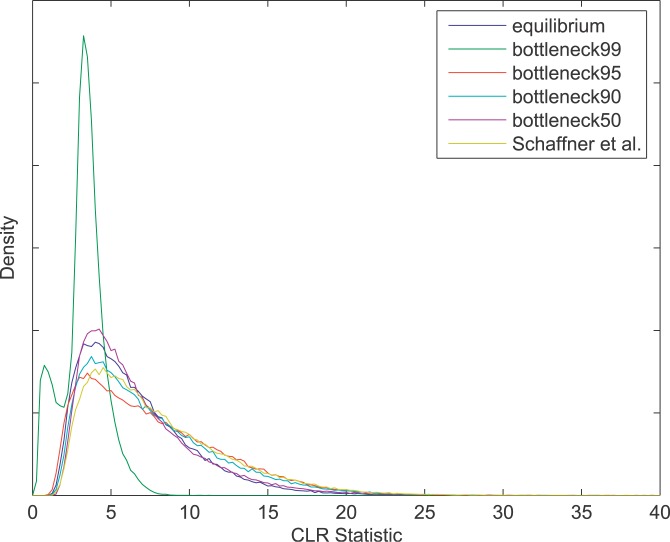
“Consistent with our results, W ILLIAMSON et al. (2007) also found that SweepFinder was conservative for bottlenecks with depth 0.01, anti-conservative for bottlenecks with depth 0.1, and almost unaffected for bottlenecks with depth 0.5.”
ResultInfluentialEvolution of alternative splicing in primate brain transcriptomes
Lin, L., Shen, S., Jiang, P., Sato, S., Davidson, B. L., & Xing, Y. (2010) · Human Molecular Genetics · doi:10.1093/hmg/ddq201 · Cited by 52
Schaibley, V. M., Zawistowski, M., Wegmann, D., Ehm, M. G., Nelson, M. R., Jean, P. L. S., Abecasis, G. R., Novembre, J., Zöllner, S. K., & Li, J. Z. (2013) · Genome Research · doi:10.1101/gr.154971.113 · Cited by 60
“However, widespread signatures of recent positive selection, even within supposedly neutral regions (Williamson et al. 2007), suggest that noncoding regions may also be influenced by selection.”
BackgroundBradbury, I., Hubert, S., Higgins, B., Bowman, S., Paterson, I. G., Snelgrove, P. V. R., Morris, C. J., Gregory, R. S., Hardie, D. C., Borza, T., et al. (2011) · Molecular Ecology Resources · doi:10.1111/j.1755-0998.2010.02949.x · Cited by 64
“Single nucleotide polymorphisms (SNPs) are rapidly gaining use in the studies of demographic and adaptive processes in nonmodel organisms (Morin et al. 2004; Williamson et al. 2007; Ramirez-Soriano & Nielsen 2009).”
BackgroundHitchhiking of Deleterious Alleles and the Cost of Adaptation in Partially Selfing Species
Hartfield, M., & Glémin, S. (2013) · Genetics · doi:10.1534/genetics.113.158196 · Cited by 52
Sequencing and analysis of an Irish human genome
Tong, P., Prendergast, J. G. D., Lohan, A. J., Farrington, S. M., Cronin, S., Friel, N., Bradley, D. G., Hardiman, O. M., Evans, A. C. O., Wilson, J. F., et al. (2010) · Genome biology · doi:10.1186/gb-2010-11-9-r91 · Cited by 56
“evidence of having undergone recent selective sweeps in the human lineage [41].”
BackgroundMethodInfluentialWang, K., Wu, P., Yang, Q., Chen, D., Zhou, J., Jiang, A., Ma, J., Tang, Q., Xiao, W., Jiang, Y., et al. (2018) · Frontiers in Genetics · doi:10.3389/fgene.2018.00119 · Cited by 52
On the prospect of achieving accurate joint estimation of selection with population history
Johri, P., Eyre‐Walker, A., Gutenkunst, R. N., Lohmueller, K. E., & Jensen, J. D. (2022) · Genome Biology and Evolution · doi:10.1093/gbe/evac088 · Cited by 52
Metadata
- Authors
- Williamson, S. H., Hubisz, M. J., Clark, A. G., Payseur, B. A., Bustamante, C. D., & Nielsen, R.
- Affiliations
- Cornell University (US)
- University of Copenhagen (DK)
- Corresponding author
- Williamson, Scott H
- Venue
- PLoS Genetics
- Publisher
- Public Library of Science (PLoS)
- Published
- 2007-06-01
- Volume
- 3
- Issue
- 6
- Pages
- e90
- ISSN
- 1553-7390 (ISSN-L)
- 1553-7404
- PMC
- PMC1885279
- OpenAlex
- W2010131461
- Semantic Scholar
- 743101193237dd8766b23c8c22d8f2062b047af6
- Cited by
- 507
- References
- 66
- Citations by year
- 2026: 7 · 2025: 13 · 2024: 9 · 2023: 24 · 2022: 8 · 2021: 14 · 2020: 17 · 2019: 8 · 2018: 19 · 2017: 19 · 2016: 26 · 2015: 26 · 2014: 42 · 2013: 28 · 2012: 37
- FWCI
- 29.93
- Type
- journal article
- Language
- en
- Open access
- gold
- doi.org
- Licence
- cc-by
- Locations
- PLoS Genetics (publishedVersion, cc-by)
- Europe PMC (PubMed Central) (publishedVersion, cc-by)
- PubMed Central (publishedVersion, cc-by)
- PubMed (publishedVersion)
- eScholarship (California Digital Library) (submittedVersion, cc-by)
- DOAJ (DOAJ: Directory of Open Access Journals) (submittedVersion, cc-by-sa)
- eScholarship (California Digital Library) (submittedVersion)
- Figshare (submittedVersion, cc-by)
- Research at the University of Copenhagen (University of Copenhagen) (submittedVersion)
- Funders
- National Human Genome Research Institute (R01HG003229)
- Topics
- Life Sciences › Biochemistry, Genetics and Molecular Biology › Genetics › Forensic and Genetic Research
- Life Sciences › Biochemistry, Genetics and Molecular Biology › Genetics › Genetic Associations and Epidemiology
- Life Sciences › Biochemistry, Genetics and Molecular Biology › Genetics › Evolution and Genetic Dynamics
- Keywords
- selective sweeps, human genome, single nucleotide polymorphisms, demography, recombination rate variation, pigmentation genes, olfactory receptor genes, dystrophin complex, immune system genes, heat shock genes, centromeric region, linkage disequilibrium
- MeSH terms
- Adaptation, Biological, Humans, Genome, Human, Evolution, Molecular, Polymorphism, Single Nucleotide
About these checks
Registry, retraction, Cites and statistics results are computed, not judged, with one exception: a printed reference that no index lists is read once by a model before it counts as a citation error. Claims are extracted by a model and kept only when their quote appears verbatim in the text; each cited source is then checked, with a model’s help, for whether it says what the claim relies on. Those verdicts can be wrong — read the claim’s quote and the cited source before relying on one.
Statistics and arithmetic are recomputed, not judged.
Confidence bands are shown only for fields calibrated on our annotated test set. None is calibrated yet, so no band is shown.
What counts as a claim ›How we measure confidence ›How we check this ›
Are you an author, or do you see a problem with this page? Request a review
Data sources
Bibliographic data: Semantic Scholar, OpenAlex, Crossref.
Contains information from the Semantic Scholar Academic Graph Datasets, made available under the ODC Attribution License (ODC-BY 1.0).
Semantic Scholar’s data is described in: Kinney, R., et al. (2023). The Semantic Scholar Open Data Platform. arXiv:2301.10140.
