

Localizing Recent Adaptive Evolution in the Human Genome.
Open accessThe DOI matches its Crossref record; 65 of the 66 references it cites were found in a registry or an index.
Abstract
Identifying genomic locations that have experienced selective sweeps is an important first step toward understanding the molecular basis of adaptive evolution. Using statistical methods that account for the confounding effects of population demography, recombination rate variation, and single-nucleotide polymorphism ascertainment, while also providing fine-scale estimates of the position of the selected site, we analyzed a genomic dataset of 1.2 million human single-nucleotide polymorphisms genotyped in African-American, European-American, and Chinese samples. We identify 101 regions of the human genome with very strong evidence (p < 10(-5)) of a recent selective sweep and where our estimate of the position of the selective sweep falls within 100 kb of a known gene. Within these regions, genes of biological interest include genes in pigmentation pathways, components of the dystrophin protein complex, clusters of olfactory receptors, genes involved in nervous system development and function, immune system genes, and heat shock genes. We also observe consistent evidence of selective sweeps in centromeric regions. In general, we find that recent adaptation is strikingly pervasive in the human genome, with as much as 10% of the genome affected by linkage to a selective sweep.
Overview
The claims and statistics of this paper haven’t been checked yet.
Free: it reads the open-access text and checks the first 5 claims that cite a source we can check. Create a free account to check every claim.
Integrity signals
Registry
Cites
Statistics
Figures
Verification
Claims the paper makes
The claims and statistics of this paper haven’t been checked yet.
Free: it reads the open-access text and checks the first 5 claims that cite a source we can check. Create a free account to check every claim.
Claims other papers make about this one
Each is checked against this paper’s own text: does it say what the citing paper says it does?
The source backs part of the claim, not all of it — or backs it for a different population, condition or comparison.
In the citing paper
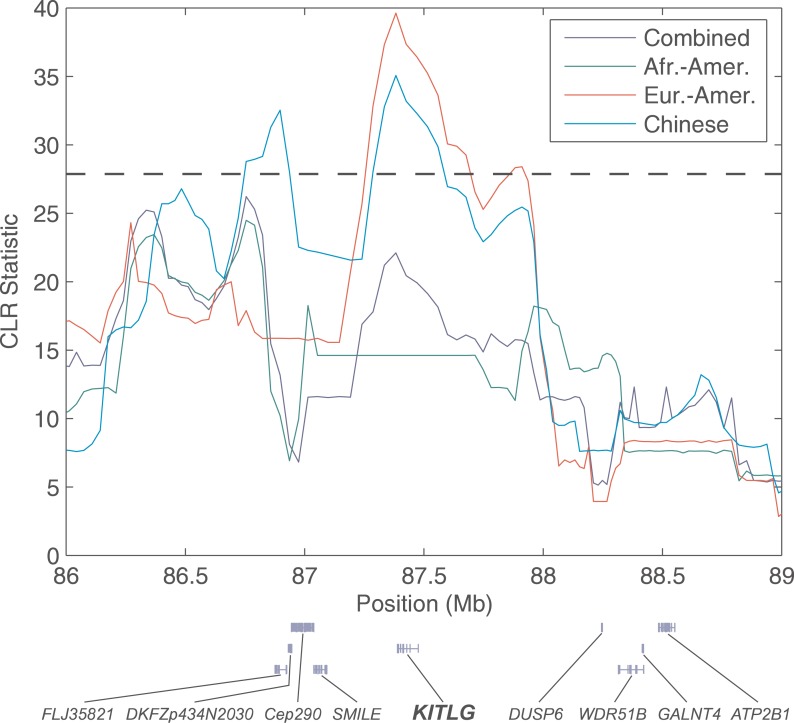
“Some genes, such as KITLG, have derived alleles (associated with lighter pigmentation) that reach high frequencies both in European and East Asian populations and likely began to be selected in a proto Eurasian population (Lao et al. 2007;Williamson et al. 2007;Pickrell et al. 2009).”
From The timing of pigmentation lightening in Europeans (2013) · cites this paper as Williamson et al. 2007
Experimental — accuracy not yet measuredThe cited source says what the claim attributes to it.
In the citing paper
“The SLC30A9 gene (chr4: 41,990,502–42,090,461; GRCh38) has been repeatedly reported as a top candidate region for positive selection in several genome-wide scans of selection, mostly in East Asian populations [14,16–20].”
From Human genetic adaptation related to cellular zinc homeostasis (2023) · cites this paper as [20]
The cited source says what the claim attributes to it.
In the citing paper
“The motivation for this study was the previous detection of strong signatures of positive selection in the SLC30A9 region [13,14,16,17,20,25].”
From Human genetic adaptation related to cellular zinc homeostasis (2023) · cites this paper as [20]
The check wasn’t confident either way, so it gives no verdict — never disputed.
In the citing paper
“Analysis of SNP variation between diverse human populations shows evidence of selection of the EDAR locus in East Asian and American populations [56],[57].”
From Zebrafish eda and edar Mutants Reveal Conserved and Ancestral Roles of Ectodysplasin Signaling in Vertebrates (2008) · cites this paper as [57]
Experimental — accuracy not yet measured
Self-check
Percentages, sums and reported differences re-computed from the paper’s own numbers.
The self-check needs the paper’s full text.
Citations
Cites
Controlling the False Discovery Rate: A Practical and Powerful Approach to Multiple Testing
Benjamini, Y., & Hochberg, Y. (1995) · Journal of the Royal Statistical Society Series B: Statistical Methodology · doi:10.1111/j.2517-6161.1995.tb02031.x · Cited by 109,482 · cited 3×
“Also, the present analysis is one of the first to fully correct for the bias introduced by SNP discovery protocols, and we account for the effects of multiple hypothesis testing using a false discovery rate approach [23,24].”
MethodStatistical significance for genomewide studies
Storey, J. D., & Tibshirani, R. (2003) · Proceedings of the National Academy of Sciences · doi:10.1073/pnas.1530509100 · Cited by 9,692 · cited 4×
“One modification to the approach outlined by Storey and Tishirani [24] is the method we use for selecting the tuning parameter, k.”
MethodInfluentialThe Neutral Theory of Molecular Evolution
Kimura, M. (1979) · Scientific American · doi:10.1038/scientificamerican1179-98 · Cited by 7,666
The Neutral Theory of Molecular Evolution
Kimura, M. (1983) · Cambridge University Press eBooks · doi:10.1017/cbo9780511623486 · Cited by 6,347
A haplotype map of the human genome
The International HapMap Consortium (2005) · Nature · doi:10.1038/nature04226 · Cited by 5,858
THE GENETIC BASIS OF EVOLUTIONARY CHANGE
Felsenstein, J. (1975) · Evolution · doi:10.1111/j.1558-5646.1975.tb00851.x · Cited by 3,912
A novel MHC class I-like gene is mutated in patients with hereditary haemochromatosis
Feder, J. N., Gnirke, A., Thomas, W., Tsuchihashi, Z., Ruddy, D. A., Basava, A., Dormishian, F., Domingo, R., Ellis, M. C., Fullan, A., et al. (1996) · Nature Genetics · doi:10.1038/ng0896-399 · Cited by 3,664 · cited 1×
“HFE contains a relatively high-frequency recessive mutation, C282Y, which causes hereditary hemochromatosis [44], an iron-overload disorder.”
BackgroundA Map of Recent Positive Selection in the Human Genome
Voight, B. F., Kudaravalli, S., Wen, X., & Pritchard, J. K. (2006) · PLoS Biology · doi:10.1371/journal.pbio.0040072 · Cited by 2,893
Generating samples under a Wright–Fisher neutral model of genetic variation
Hudson, R. R. (2002) · Bioinformatics · doi:10.1093/bioinformatics/18.2.337 · Cited by 2,364 · cited 1×
“Because allele frequencies of linked SNPs are not statistically independent, we determine the null (selectively neutral) distributions of all test statistics using coalescent simulations [60].”
MethodThe UCSC Table Browser data retrieval tool
Karolchik, D. (2004) · Nucleic Acids Research · doi:10.1093/nar/gkh103 · Cited by 2,316 · cited 1×
“are then recorded along with the genomic position of the center of the window. We repeat this procedure for every tenth window of 200 SNPs across all autosomes. Chromosomal positions of genes and genetic map estimates of local recombination rates were retrieved using the July 2003 build of the human genome on the Univ…”
Method
Cited by
Items 201–300 of 506
How to Make a Dolphin: Molecular Signature of Positive Selection in Cetacean Genome
Nery, M. F., González, D. J., & Opazo, J. C. (2013) · PLoS ONE · doi:10.1371/journal.pone.0065491 · Cited by 56
“duction and host-pathogen interactions [1–7].”
Recent Progress in Polymorphism-Based Population Genetic Inference
Crisci, J. L., Poh, Y.-P., Bean, A., Simkin, A., & Jensen, J. D. (2012) · Journal of Heredity · doi:10.1093/jhered/esr128 · Cited by 57
“In a recent study by Williamson et al. (2007), they apply SweepFinder to 1 of every 10 genomic windows of 200 SNPs in 3 human populations (African American, European American, and Chinese).”
BackgroundPenalized Likelihood Phylogenetic Inference: Bridging the Parsimony-Likelihood Gap
Kim, J., & Sanderson, M. J. (2008) · Systematic Biology · doi:10.1080/10635150802422274 · Cited by 58
“Selective sweeps, in which strong selection on a small region of the genome induces rapid change in closely linked loci, may have left its mark on 10% of the human genome (Williamson et al., 2007), inducing much rate variation.”
BackgroundDifferential gene expression in incipient species of Anopheles gambiae
Cassone, B. J., Mouline, K., Hahn, M. W., White, B. J., Pombi, M., Simard, F., Costantini, C., & Besansky, N. J. (2008) · Molecular Ecology · doi:10.1111/j.1365-294x.2008.03774.x · Cited by 55
“data (e.g. Akey et al. 2004; Williamson et al. 2007), multilocus microsatellite or amplified fragment length polymorphism screens (Schlotterer 2002; Campbell & Bernatchez 2004; Kane & Rieseberg 2007), or by the hybridization of genomic DNA to oligonucleotide microarrays (Turner et al.”
BackgroundHuman genomic disease variants: A neutral evolutionary explanation
Dudley, J. T., Kim, Y., Liu, L., Markov, G. J., Gerold, K., Chen, R., Butte, A. J., & Kumar, S. (2012) · Genome Research · doi:10.1101/gr.133702.111 · Cited by 58
“Neutrality has already served as a null hypothesis in the development and application of advanced approaches for de- tecting signals of recent positive selection (Fu and Li 1993; Sabeti et al. 2002, 2006; Voight et al. 2006; Kimura et al. 2007; Sabeti et al. 2007; Williamson et al. 2007).”
BackgroundLinkage Disequilibrium Extends Across Putative Selected Sites in FOXP2
Ptak, S. E., Enard, W., Wiebe, V., Hellmann, I., Krause, J., Lachmann, M., & Paabo, S. (2009) · Molecular Biology and Evolution · doi:10.1093/molbev/msp143 · Cited by 48
“Because FOXP2 is extremely conserved among mammals, this represents a significant accumulation of amino acid substitutions (Enard et al. 2002; Zhang et al. 2002; Clark et al. 2003; Nickel et al. 2008).”
BackgroundInfluentialA genome-wide scan to identify signatures of selection in two Iranian indigenous chicken ecotypes
Mahdabi, E. R., Esmailizadeh, A., Mehrgardi, A. A., & Fozi, M. A. (2021) · Genetics Selection Evolution · doi:10.1186/s12711-021-00664-9 · Cited by 57
“Composite likelihood ratio (CLR) The CLR test detects differences in allele frequencies along a chromosome between a neutral and a selective sweep model, which is able to detect variants that are close to fixation [45].”
BackgroundHuman centromere genomics: now it's personal
Hayden, K. E. (2012) · Chromosome Research · doi:10.1007/s10577-012-9295-y · Cited by 48
“Further, recent studies have observed consistent evidence for selective sweeps in human centromeric regions, suggesting that centromeres, or some genetic elements within centromeric gaps, may be under selection in the human population (Williamson et al. 2007).”
Chimusa, E. R., Meintjies, A., Tchanga, M., Mulder, N., Seoighe, C., Soodyall, H., & Ramesar, R. (2015) · PLOS Genetics · doi:10.1371/journal.pgen.1005052 · Cited by 46
“Comparative genome-wide genotype data among humans, Neanderthals and Chimpanzees have also shown that selection has played a significant role in human adaptation to the environment [8, 9, 10, 11].”
BackgroundThe Nature/Culture of Genetic Facts
Marks, J. (2013) · Annual Review of Anthropology · doi:10.1146/annurev-anthro-092412-155558 · Cited by 61
Genomic Data Reveal a Complex Making of Humans
Alves, I., Hanulová, A. Š., Foll, M., & Excoffier, L. (2012) · PLoS Genetics · doi:10.1371/journal.pgen.1002837 · Cited by 58
“While most people assumed that the out-of-Africa expansion had been characterized by a series of adaptations to new environments [4–6] leading to recurrent selective sweeps [7], our genome actually contains little trace of recent complete sweeps [2,3,8] and the genetic differentiation of human population has been very…”
BackgroundGenome-wide homozygosity signatures and childhood acute lymphoblastic leukemia risk
Hosking, F. J., Papaemmanuil, E., Sheridan, E., Kinsey, S. E., Lightfoot, T. J., Roman, E., Irving, J. A. E., Allan, J. M., Taylor, M., Tomlinson, I. P. M., et al. (2010) · Blood · doi:10.1182/blood-2009-09-244483 · Cited by 45
Evolutionary Behavioral Sciences
Međedović, J. M. (2023) · Springer eBooks · doi:10.1007/978-3-031-32886-2_3 · Cited by 44
Yang, Z., Shi, H., Ma, P., Zhao, S., Kong, Q., Bian, T., Gong, C., Zhao, Q., Liu, Y., Qi, X., et al. (2018) · Molecular Biology and Evolution · doi:10.1093/molbev/msy136 · Cited by 43
Infectious Diseases and the Evolution of Cross-Cultural Differences
Schaller, M., Norenzayan, A., Heine, S. J., Yamagishi, T., & Kameda, T. (2011) · doi:10.4324/9780203848746-23 · Cited by 48
“also clear is that infectious diseases can pose a powerful selective force on gene frequencies within different human populations (Sabeti et al., 2002; Williamson et al., 2007).”
Genes Associated with SLE Are Targets of Recent Positive Selection
Ramos, P. S., Shaftman, S. R., Ward, R. C., & Langefeld, C. D. (2014) · Autoimmune Diseases · doi:10.1155/2014/203435 · Cited by 49
“There is compelling evidence that natural selection is acting on a significant fraction of all genes (∼3%) [4–7] and as much as 10% of the human genome [8].”
BackgroundAltered social behavior in mice carrying a corticalFoxp2deletion
Medvedeva, V. P., Rieger, M. A., Vieth, B., Mombereau, C., Ziegenhain, C., Ghosh, T., Cressant, A., Enard, W., Granon, S., Dougherty, J. D., et al. (2018) · Human Molecular Genetics · doi:10.1093/hmg/ddy372 · Cited by 45
Amato, R., Pinelli, M., Monticelli, A., Marino, D., Miele, G., & Cocozza, S. (2009) · PLoS ONE · doi:10.1371/journal.pone.0007927 · Cited by 50
“Different strategies to quantify the population genetic differentiation have been elaborated [10–16].”
BackgroundDetecting Directional Selection in the Presence of Recent Admixture in African-Americans
Lohmueller, K. E., Bustamante, C. D., & Clark, A. G. (2011) · Genetics · doi:10.1534/genetics.110.122739 · Cited by 42
“…of admixture, averaging 80% African ancestry and 20% European ancestry, and that the admixture process also occurred quite recently, within the last 20 generations (Pfaff et al. 2001; Falush et al. 2003; Patterson et al. 2004; Seldin et al. 2004; Tang et al. 2006; Tian et al. 2006; Sankararaman…”
BackgroundInfluentialSelf-citationDetection of genomic signatures of recent selection in commercial broiler chickens
Fu, W., Lee, W. R., & Abasht, B. (2016) · BMC Genetics · doi:10.1186/s12863-016-0430-1 · Cited by 54
“(2014) applied two statistical methods, the integrated haplotype score (iHS) [10] and the composite likelihood ratio (CLR) [11, 12], and found that many candidate regions were relevant to coat coloring pattern, neurobehavioral functioning and sensory perception [13].”
Genomic landscape of positive natural selection in Northern European populations
Lappalainen, T., Salmela, E., Andersen, P. M., Dahlman‐Wright, K., Sistonen, P., Savontaus, M., Schreiber, S., Lahermo, P., & Kere, J. (2009) · European Journal of Human Genetics · doi:10.1038/ejhg.2009.184 · Cited by 44
GC-Biased Evolution Near Human Accelerated Regions
Katzman, S., Kern, A. D., Pollard, K. S., Salama, S. R., & Haussler, D. (2010) · PLoS Genetics · doi:10.1371/journal.pgen.1000960 · Cited by 39
“Selection was previously investigated in much larger (*500kb) regions using more sparse polymorphic loci [29].”
BackgroundMethodInfluentialPagel, M. D. (2012) · Nature · doi:10.1038/482297a · Cited by 39
Forni, D., Cagliani, R., Tresoldi, C., Pozzoli, U., De Gioia, L., Filippi, G., Riva, S., Menozzi, G., Colleoni, M., Biasin, M., et al. (2014) · PLoS Genetics · doi:10.1371/journal.pgen.1004189 · Cited by 38
“[50], who applied a composite likelihood ratio (CLR) model (the MARCH1 regions have CLR p values ,0.”
BackgroundMethodDetection of Convergent Genome-Wide Signals of Adaptation to Tropical Forests in Humans
Amorim, C. E. G., Daub, J. T., Salzano, F. M., Foll, M., & Excoffier, L. (2015) · PLOS ONE · doi:10.1371/journal.pone.0121557 · Cited by 38
“Another study with African-, EuropeanAmerican, and Chinese populations also found a significant signal of positive selection in heat shock genes [41], suggesting that this category might have some importance in human adaptation to different environments worldwide.”
BackgroundCamus‐Kulandaivelu, L., Chevin, L., Tollon‐Cordet, C., Charcosset, A., Manicacci, D., & Tenaillon, M. I. (2008) · Genetics · doi:10.1534/genetics.108.088849 · Cited by 41
“AN increasing number of genome-scan studiescombining the availability of large genomic data sets and statistical tools have contributed to the discovery of genes or genomic regions involved in adaptive evolution (Wright et al. 2005; Borevitz et al. 2007; Williamson et al. 2007).”
BackgroundDetecting and understanding natural selection
Anisimova, M. O., & Liberles, D. A. (2012) · Oxford University Press eBooks · doi:10.1093/acprof:osobl/9780199601165.003.0006 · Cited by 48
Pigment Intensity in Dogs is Associated with a Copy Number Variant Upstream of KITLG
Weich, K. M., Affolter, V. K., York, D. S., Rebhun, R. B., Grahn, R. A., Kallenberg, A., & Bannasch, D. L. (2020) · Genes · doi:10.3390/genes11010075 · Cited by 53
“The strongest selective signature for KITLG in humans lies 218 kb upstream of the coding sequence [60] while the SNVs associated with light pigmentation are located 355 kb upstream of KITLG [47].”
BackgroundSynthesis in the human evolutionary behavioural sciences
Sear, R., Lawson, D. W., & Dickins, T. E. (2007) · Journal of Evolutionary Psychology · doi:10.1556/jep.2007.1019 · Cited by 46
“…is strong evidence that adaptations have continued to form in response to selection during the Holocene epoch (e.g. HILL et al. 1991; HOLDEN and MACE 1997; WILLIAMSON et al. 2007), including evidence for the evolution of genes mediating neural design (EVANS et al. 2005; MEKEL-BOBROV et al. 2005).”
BackgroundTollis, M., & Boissinot, S. (2013) · Genetica · doi:10.1007/s10709-013-9754-1 · Cited by 39
“For example, recent adaptations (Williamson et al. 2007; Peng et al. 2011; Tishkoff et al. 2007) and certain disease susceptibilities (Tishkoff and Williams 2002) in humans only make sense in light of the geographic distribution and dispersal abilities of ancient populations.”
Ramírez-Soriano, A., & Nielsen, R. (2009) · Genetics · doi:10.1534/genetics.108.094060 · Cited by 36
“Much interest in the analysis of such data has focused on estimating demographic parameters or inferring natural selection (e.g., Bamshad and Wooding 2003; Wooding 2004; Carlson et al. 2006; Sabeti et al. 2006; Voight et al. 2006; Wang et al. 2006; Tang et al. 2007; Williamson et al. 2007).”
BackgroundSelf-citationLang, M., & Kundt, R. (2019) · Method & Theory in the Study of Religion · doi:10.1163/15700682-12341466 · Cited by 48
Landmarks in the history of selective sweeps
Panigrahi, M., Rajawat, D., Nayak, S. S., Ghildiyal, K., Sharma, A., Jain, K., Lei, C., Bhushan, B., Mishra, B. P., & Dutt, T. (2023) · Animal Genetics · doi:10.1111/age.13355 · Cited by 43
Lukić, B., Čurik, I., Držaić, I., Galić, V., Shihabi, M., VOSTRÝ, L., & Čubrić-Ćurik, V. (2023) · Journal of Animal Science and Biotechnology/Journal of animal science and biotechnology · doi:10.1186/s40104-023-00936-y · Cited by 39
“…approaches: i) extremely high SNP incidence in ROH ("extreme ROH islands" or "eROHi"), ii) integrated haplotype score (iHS), iii) number of segregating sites by length (nSL), and iv) composite likelihood ratio test (CLR), are widely used to identify hard and soft selection signals [12–18].”
MethodGames in Tetrads: Segregation, Recombination, and Meiotic Drive
Haig, D. (2010) · The American Naturalist · doi:10.1086/656265 · Cited by 38
Segregation distortion in chicken and the evolutionary consequences of female meiotic drive in birds
Axelsson, E., Albrechtsen, A., van, A., Li, L., Megens, H., Vereijken, A., Crooijmans, R. P. M. A., Groenen, M. A. M., Ellegren, H., Willerslev, E., et al. (2010) · Heredity · doi:10.1038/hdy.2009.193 · Cited by 41
“Third, selective sweeps seem to be common in centromeric regions in human (Williamson et al., 2007; Hellmann et al., 2008), and finally, kinetchore proteins have been shown to evolve rapidly in plants, flies and mammals (Talbert et al., 2004).”
BackgroundSelf-citationEvolutionary genetics of skin pigmentation in African populations
Feng, Y., McQuillan, M. A., & Tishkoff, S. A. (2021) · Human Molecular Genetics · doi:10.1093/hmg/ddab007 · Cited by 38
“For example, rs12913832 in the HERC2 gene has been shown to be located in a melanocyte-specific enhancer that modulates nearby OCA2 expression by chromatin looping (76).”
MethodInfluentialEnciso-Mora, V., Hosking, F. J., & Houlston, R. S. (2010) · European Journal of Human Genetics · doi:10.1038/ejhg.2010.53 · Cited by 33
Molecular population genomics: a short history
Charlesworth, B. (2010) · Genetics Research · doi:10.1017/s0016672310000522 · Cited by 48
“These approaches have been successfully applied to the detection of sweeps, and to determine more or less precisely the location of the target of selection, especially in humans and Drosophila (for overviews, see Williamson et al., 2007; Stephan 2010).”
MethodObstruction of adaptation in diploids by recessive, strongly deleterious alleles
Assaf, Z. J. F., Petrov, D. A., & Blundell, J. R. (2015) · Proceedings of the National Academy of Sciences · doi:10.1073/pnas.1424949112 · Cited by 36
Detecting natural selection by empirical comparison to random regions of the genome
Yu, F., Keinan, A., Chen, H., Ferland, R. J., Hill, R. S., Mignault, A. A., Walsh, C. A., & Reich, D. (2009) · Human Molecular Genetics · doi:10.1093/hmg/ddp457 · Cited by 33
Changes in Biological Pathways During 6,000 Years of Civilization in Europe
Chekalin, E., Rubanovich, A., Tatarinova, T. V., Kasianov, A. S., Bender, N., Dyachkova, M. S., Staub, K., Koepke, N., Rühli, F. J., Bruskin, S. A., et al. (2018) · Molecular Biology and Evolution · doi:10.1093/molbev/msy201 · Cited by 33
Engelken, J., Espadas, G., Mancuso, F. M., Bonet, N., Scherr, A.-L., Jímenez-Álvarez, V., Codina-Solà, M., Medina-Stacey, D., Spataro, N., Stoneking, M., et al. (2016) · Molecular Biology and Evolution · doi:10.1093/molbev/msv267 · Cited by 31
“In fact, the same region had already been reported to exhibit one of the most significant signatures of adaptation found in Asians in several genome-wide scans of selection (Carlson et al. 2005; Sabeti et al. 2007; Williamson et al. 2007; Pickrell et al. 2009).”
BackgroundGlobal Patterns of Diversity and Selection in Human Tyrosinase Gene
Hudjashov, G., Villems, R., & Kivisild, T. (2013) · PLoS ONE · doi:10.1371/journal.pone.0074307 · Cited by 35
“others have not been able to reject the neutral hypothesis [17–19,25,38,39].”
BackgroundDerbyshire, M. C., Denton‐Giles, M., Hane, J. K., Chang, S., Mousavi‐Derazmahalleh, M., Raffaele, S., Buchwaldt, L., & Kamphuis, L. G. (2019) · PLoS ONE · doi:10.1371/journal.pone.0214201 · Cited by 37
Natural selection on HFE in Asian populations contributes to enhanced non-heme iron absorption
Ye, K., Cao, C. Q., Lin, X., O'Brien, K. O., & Gu, Z. (2015) · BMC Genetics · doi:10.1186/s12863-015-0223-y · Cited by 34
“Our evolutionary analyses using genotype data from multiple continental populations confirmed the presence of an Asian-common HFE haplotype and positive selection signals on HFE in Asian populations [37, 38].”
MethodA Chronological Atlas of Natural Selection in the Human Genome during the Past Half-million Years
Zhou, H., Hu, S., Matveev, R., Yu, Q., Li, J., Khaitovich, P., Jin, L., Lachmann, M., Stoneking, M., Fu, Q., et al. (2015) · doi:10.1101/018929 · Cited by 28
Zhao, F., Xie, R., Fang, L., Xiang, R., Yuan, Z., Liu, Y., & Wang, L. (2024) · Evolutionary Applications · doi:10.1111/eva.13697 · Cited by 34
“This test had higher detection efficiency for fixed or to- be-fixed selection signals (Williamson et al., 2007), and is extremely sensitive to detecting selection signatures across multiple sites in a single population rather than analyzing each SNP separately.”
BackgroundSimulation of DNA sequence evolution under models of recent directional selection
Kim, Y., & Wiehe, T. (2008) · Briefings in Bioinformatics · doi:10.1093/bib/bbn048 · Cited by 37
Lehnert, S. J., Kess, T., Bentzen, P., Clément, M., & Bradbury, I. (2020) · Molecular Ecology · doi:10.1111/mec.15480 · Cited by 49
“…landscape and ascertainment bias (see Methods), chromosomes were also evaluated for evidence of positive selective sweeps within Europe and within North America using the CLR, which is more robust to variation in recombination and demography (Nielsen et al., 2005; Williamson et al., 2007).”
BackgroundIron metabolism: microbes, mouse, and man
Latunde‐Dada, G. O. (2009) · BioEssays · doi:10.1002/bies.200900101 · Cited by 29
“A recent report suggests that HFE mutation itself is not selected but is in linkage disequilibrium with a nearby selected beneficial gene.((74)) A plausible survival advantage hypothesis in HH is the inhibition of microbial growth in iron-depleted macrophages.”
BackgroundEvolution, genes, and inter‐disciplinary personality research
Penke, L., Denissen, J. J. A., & Miller, G. F. (2007) · European Journal of Personality · doi:10.1002/per.657 · Cited by 38
“Both Bates and Lee pointed to studies suggesting that human general intelligence has been subject to recent selective sweeps and in the midst of a genetic transition (Evans, Vallender, & Lahn, 2006; Wang et al., 2006; see also Williamson et al., 2007).”
BackgroundHigh rate of adaptation of mammalian proteins that interact with Plasmodium and related parasites
Ebel, E. R., Telis, N., Venkataram, S., Petrov, D. A., & Enard, D. (2017) · PLoS Genetics · doi:10.1371/journal.pgen.1007023 · Cited by 28
The fine-scale genetic structure and evolution of the Japanese population
Takeuchi, F., Katsuya, T., Kimura, R., Nabika, T., Isomura, M., Ohkubo, T., Tabara, Y., Yamamoto, K., Yokota, M., Liu, X., et al. (2017) · PLOS ONE · doi:10.1371/journal.pone.0185487 · Cited by 28
Genome-Wide Landscapes of Human Local Adaptation in Asia
Qian, W., Deng, L., Lu, D., & Xu, S. (2013) · PLoS ONE · doi:10.1371/journal.pone.0054224 · Cited by 41
“In previous studies, a large number of loci have been identified as candidates for local adaptation in human populations on a broad continental scale, providing a good indication of geneenvironment interactions in human evolution [10–13].”
BackgroundGenetic adaptation of the antibacterial human innate immunity network
Casals, F., Sikora, M., Laayouni, H., Montanucci, L., Muntasell, A., Lazarus, R. M., Calafell, F., Awadalla, P., Netea, M. G., & Bertranpetit, J. (2011) · BMC Evolutionary Biology · doi:10.1186/1471-2148-11-202 · Cited by 34
“Even if data is not comparable to whole genome scans looking at the footprint of positive selection with SNP data, the five studies published so far [2-4,6,39] all reviewed in [40] find from 444 to 1,030 genomic regions as candidates for positive selection, which represents a very small fraction of the genome (< 4%).”
BackgroundResultThe shared genetic architecture of schizophrenia, bipolar disorder and lifespan
Muntané, G., Farré, X., Bosch, E., Martorell, L., Navarro, A., & Vilella, E. (2020) · Human Genetics · doi:10.1007/s00439-020-02213-8 · Cited by 28
Are Species Cohesive?-A View from Bacteriology
Cohan, F. M. (2014) · ASM Press eBooks · doi:10.1128/9781555817114.ch5 · Cited by 27
Baker, J. L., Dunn, K. A., Mingrone, J., Wood, B. A., Karpinski, B. A., Sherwood, C. C., Wildman, D. E., Maynard, T. M., & Bielawski, J. P. (2016) · Genetics · doi:10.1534/genetics.115.183889 · Cited by 32
“In fact, there are only a handful of studies indicating that the dynamics of nonsynonymous evolution among primate NRs differ significantly from neutral expectations (Krasowski et al. 2005;Williamson et al. 2007; Chen et al. 2008).”
BackgroundThe effect of cultural transmission on shared sign language persistence
Mudd, K., Vos, C. D., & de Boer, B. (2020) · Humanities and Social Sciences Communications · doi:10.1057/s41599-020-0479-3 · Cited by 29
Jun, M., Gao, X., Li, J., Gao, H., Wang, Z., Zhang, L., Xu, L., Gao, H., Li, H., Wang, Y., et al. (2021) · Animals · doi:10.3390/ani11123469 · Cited by 25
“The CLR test has a high detection effect on the variants near fixation, which quantifies significant deviations from the neutral site frequency spectrum (SFS) [39].”
BackgroundNovel genomic signals of recent selection in an Ethiopian population
Ayele, F. T., Adeyemo, A., Chen, G., Hailu, E., Aseffa, A., Davey, G., Newport, M. J., & Rotimi, C. N. (2014) · European Journal of Human Genetics · doi:10.1038/ejhg.2014.233 · Cited by 26
Scale, causality, and the new organism–environment interaction
Stallins, J. A. (2011) · Geoforum · doi:10.1016/j.geoforum.2011.10.011 · Cited by 34
“as an undomesticated nature (Williamson et al., 2007; Hawks et al., 2007).”
BackgroundSelfish centromeres and the wastefulness of human reproduction
Hurst, L. D. (2022) · PLoS Biology · doi:10.1371/journal.pbio.3001671 · Cited by 25
“It is thus compatible with recent centromeric selection in humans [45,46] and with rapid coevolution of centromeres and their interactors [17–20,41,48–51].”
Medaka: a promising model animal for comparative population genomics
Matsumoto, Y., Oota, H., Asaoka, Y., Nishina, H., Watanabe, K., Bujnicki, J. M., Oda, S., Kawamura, S., & Mitani, H. (2009) · BMC Research Notes · doi:10.1186/1756-0500-2-88 · Cited by 25
“Such data make systematic searches for diseasecausing or drug-responsive genomic regions possible [3,4], and the accumulated SNP data can also provide compelling evidence of positive selection during human evolution [5,6].”
BackgroundWawrzik, M., Unmehopa, U. A., Swaab, D. F., van de Nes, J. A. P., Buiting, K., & Horsthemke, B. (2009) · Neurogenetics · doi:10.1007/s10048-009-0231-z · Cited by 23
“[6]); however, C15orf2 did not feature prominently.”
BackgroundIbarra, H. A., & Reader, T. (2013) · Journal of Zoology · doi:10.1111/jzo.12034 · Cited by 23
“They occur in non-coding areas of the genome, and have been used as markers for studies in population genetics, evolution and medicine (Hacia et al., 1999; Jorde et al., 2000; Syvänen, 2001; Williamson et al., 2007).”
MethodFineMAV: prioritizing candidate genetic variants driving local adaptations in human populations
Szpak, M., Mezzavilla, M., Ayub, Q., Chen, Y., Xue, Y., & Tyler‐Smith, C. (2018) · Genome biology · doi:10.1186/s13059-017-1380-2 · Cited by 25
Somel, M., Sayres, M. A. W., Jordan, G. E., Huerta‐Sánchez, E., Fumagalli, M., Ferrer-Admetlla, A., & Nielsen, R. (2013) · Molecular Biology and Evolution · doi:10.1093/molbev/mst098 · Cited by 26
“…be.oxfordjournals.org/ D ow nloaded from transition from nocturnal to diurnal activity in these lineages (Gilad et al. 2003, 2004; Go and Niimura 2008; Kim et al. 2010; Matsui et al. 2010) (positive selection on olfactory genes in humans has also been reported [Williamson et al. 2007]).”
BackgroundSelf-citationDetecting Signatures of Positive Selection along Defined Branches of a Population Tree Using LSD
Librado, P., & Orlando, L. (2018) · Molecular Biology and Evolution · doi:10.1093/molbev/msy053 · Cited by 28
“Amongst the wide range of methods available for detecting positive selection, Williamson et al. have designed a composite likelihood ratio (CLR) test that contrasts the fit of two competing models to patterns of DNA variation observed within a given genomic window (Williamson et al. 2007).”
BackgroundIdentifying and Classifying Shared Selective Sweeps from Multilocus Data
Harris, A. M., & DeGiorgio, M. (2020) · Genetics · doi:10.1534/genetics.120.303137 · Cited by 22
Polimanti, R. A., Piacentini, S., Angelis, F. D., Stefano, G. F. D., & Fuciarelli, M. F. (2011) · Disease Markers · doi:10.1155/2011/124169 · Cited by 23
Svetec, N., Pavlidis, P., & Stephan, W. (2009) · Molecular Biology and Evolution · doi:10.1093/molbev/msp065 · Cited by 24
Morality (in Handbook of Social Psychology)Preprint
Kesebir, S., & Haidt, J. (2010) · SSRN Electronic Journal · Cited by 33
Signatures of positive selection apparent in a small sample of human exomes
Tennessen, J. A., Madeoy, J. J., & Akey, J. M. (2010) · Genome Research · doi:10.1101/gr.106161.110 · Cited by 25
“78 (corresponding to a maximum of a single shared allele in Africa or two shared alleles in Europe); not on any of the four candidate lists (Kelley et al. 2006; Voight et al. 2006; Williamson et al. 2007; Akey 2009).”
InfluentialPiras, I. S., Montis, A. D., Calò, C. M., Marini, M., Atzori, M., Corrias, L., Sazzini, M., Boattini, A., Vona, G., & Contu, L. (2012) · European Journal of Human Genetics · doi:10.1038/ejhg.2012.65 · Cited by 25
Haplotype allelic classes for detecting ongoing positive selection
Hussin, J., Nadeau, P., Lefebvre, J.-F., & Labuda, D. (2010) · BMC Bioinformatics · doi:10.1186/1471-2105-11-65 · Cited by 26
“location of six loci previously identified as targets of selection [25-27].”
BackgroundMoreno‐Estrada, A., Tang, K., Sikora, M., Marquès‐Bonet, T., Casals, F., Navarro, A., Calafell, F., Bertranpetit, J., Stoneking, M., & Bosch, E. (2009) · Molecular Biology and Evolution · doi:10.1093/molbev/msp134 · Cited by 32
Evolutionary and Functional Evidence for Positive Selection at the Human CD5 Immune Receptor Gene
Carnero‐Montoro, E., Bonet, L., Engelken, J., Bielig, T., Martínez‐Florensa, M., Lozano, F., & Bosch, E. (2011) · Molecular Biology and Evolution · doi:10.1093/molbev/msr251 · Cited by 27
“The same genomic region had already been reported to show evidence for a recent complete selective sweep in Chinese samples when using a composite likelihood ratio approach on genome-wide SNP data (Williamson et al. 2007).”
Human evolutionary genomics: ethical and interpretive issues
Vitti, J. J., Cho, M. K., Tishkoff, S. A., & Sabeti, P. C. (2012) · Trends in Genetics · doi:10.1016/j.tig.2011.12.001 · Cited by 24
de Gruijter, J. M., Lao, Ó., Vermeulen, M., Xue, Y., Woodwark, C., Gillson, C., Coffey, A. J., Ayub, Q., Mehdi, S. Q., Kayser, M., et al. (2011) · Investigative Genetics · doi:10.1186/2041-2223-2-24 · Cited by 22
“For a large number of genes involved in the pigmentation pathway, signatures of recent selective sweeps have been suggested from SNP-scan data [12,14,23-26], and DNA sequence-based evidence has been tested for a limited number of the genes associated with human skin pigmentation ( melanocortin 1…”
BackgroundUnpacking Human Evolution to Find the Genetic Determinants of Human Skin Pigmentation
Quillen, E. E., & Shriver, M. D. (2011) · Journal of Investigative Dermatology · doi:10.1038/skinbio.2011.3 · Cited by 22
Selection in Australian Thoroughbred horses acts on a locus associated with early two-year old speed
Han, H., McGivney, B. A., Farries, G., Katz, L. M., MacHugh, D. E., Randhawa, I. A. S., & Hill, E. W. (2020) · PLoS ONE · doi:10.1371/journal.pone.0227212 · Cited by 23
Why Have the Peninsular “Negritos” Remained Distinct?
Benjamin, G. (2013) · Human Biology · doi:10.3378/027.085.0321 · Cited by 19
Deciphering climate resilience in Indian cattle breeds by selection signature analyses
Nayak, S. S., Panigrahi, M., Rajawat, D., Ghildiyal, K., Sharma, A., Jain, K., Bhushan, B., & Dutt, T. (2024) · Tropical Animal Health and Production · doi:10.1007/s11250-023-03879-8 · Cited by 24
“A selective sweep alters allele frequency patterns at associated sites, excluding variation at tightly linked loci and resulting in an allele surplus at very low and very high frequencies in more remote areas (Williamson et al., 2007).”
Linkage Disequilibrium Decay and Past Population History in the Human Genome
Park, L. (2012) · PLoS ONE · doi:10.1371/journal.pone.0046603 · Cited by 24
“83, respectively, associated with this region were not significant [50].”
Identification of regions of positive selection using Shared Genomic Segment analysis
Cai, Z., Camp, N. J., Cannon‐Albright, L., & Thomas, A. (2011) · European Journal of Human Genetics · doi:10.1038/ejhg.2010.257 · Cited by 24
Mueller, J. C., Hermisson, J., Olano-Marín, J., Hansson, B., & Kempenaers, B. (2010) · Evolutionary Ecology · doi:10.1007/s10682-010-9377-2 · Cited by 21
Kim, Y., & Gulisija, D. (2010) · Genetics · doi:10.1534/genetics.109.109447 · Cited by 21
“Numerous surveys of DNA sequence polymorphism revealed local reductions of variation clearly due to hitchhiking or selective sweeps (Wootton et al. 1999; Nair et al. 2003; Schlenke and Begun 2004; Sabeti et al. 2006; Macpherson et al. 2007; Thornton et al. 2007; Williamson et al. 2007; Akey 2009).”
BackgroundAntagonistic Coevolution of MER Tyrosine Kinase Expression and Function
Evans, A. L., Blackburn, J. W. D., Taruc, K., Kipp, A., Dirk, B. S., Hunt, N. R., Barr, S. D., Dikeakos, J. D., & Heit, B. (2017) · Molecular Biology and Evolution · doi:10.1093/molbev/msx102 · Cited by 22
Biological V. Social Definitions of Race: Implications for Modern Biomedical Research
Graves, J. L. (2009) · The Review of Black Political Economy · doi:10.1007/s12114-009-9053-3 · Cited by 23
“For example, human skin color is strongly influenced by genetic variation at five loci (MATP, TYR, OCA2, MC1R, ASIP, Williamson et al. 2007).”
BackgroundThe quest for adaptive evolution: a theoretical challenge in a maze of data
Tenaillon, M. I., & Tiffin, P. (2008) · Current Opinion in Plant Biology · doi:10.1016/j.pbi.2007.12.003 · Cited by 17
The Process of Modern Human Origins
Caspari, R., & Wolpoff, M. H. (2013) · Wiley eBooks · doi:10.1002/9781118659991.ch11 · Cited by 20
Hemochromatosis: Niche Construction and the Genetic Domino Effect in the European Neolithic
McCullough, Heath, & Smith (2015) · Human Biology · doi:10.13110/humanbiology.87.1.0039 · Cited by 19
“Williamson et al (2007) disagreed, noting that the HFE allele is located in the area of chromosome 6 where the genes defining histones important in DNA synthesis are situated; Hartfield and Otto (2011) agreed with their interpretation and noted the importance of finding a lethal gene caught by…”
BackgroundOn Characterizing Adaptive Events Unique to Modern Humans
Crisci, J. L., Wong, A., Good, J. M., & Jensen, J. D. (2011) · Genome Biology and Evolution · doi:10.1093/gbe/evr075 · Cited by 18
Exploring the Origins of the Human Brain through Molecular Evolution
Vallender, E. J. (2008) · Brain Behavior and Evolution · doi:10.1159/000151476 · Cited by 15
“Apart from these candidate gene studies, numerous whole genome scans for positive selection have been undertaken [ The International HapMap Consortium, 2005; Carlson et al., 2005; Kelley et al., 2006; Voight et al., 2006; Sabeti et al., 2007; Williamson et al., 2007].”
BackgroundThe Evolution of Centromeric DNA Sequences
Brown, J. D., & O'Neill, R. J. W. (2014) · Wiley eBooks · doi:10.1002/9780470015902.a0020827.pub2 · Cited by 18
Constructing “On Purpose”: How Niche Construction Affects Natural Selection
Deffner, D. (2023) · The MIT Press eBooks · doi:10.7551/mitpress/14642.003.0007 · Cited by 15
Weiss, K. M. (2010) · Evolutionary Anthropology Issues News and Reviews · doi:10.1002/evan.20286 · Cited by 14
A comparison of biological and cultural evolution
Portin, P. (2015) · Journal of Genetics · doi:10.1007/s12041-015-0482-4 · Cited by 25
Metadata
- Authors
- Williamson, S. H., Hubisz, M. J., Clark, A. G., Payseur, B. A., Bustamante, C. D., & Nielsen, R.
- Affiliations
- Cornell University (US)
- University of Copenhagen (DK)
- Corresponding author
- Williamson, Scott H
- Venue
- PLoS Genetics
- Publisher
- Public Library of Science (PLoS)
- Published
- 2007-06-01
- Volume
- 3
- Issue
- 6
- Pages
- e90
- ISSN
- 1553-7390 (ISSN-L)
- 1553-7404
- PMC
- PMC1885279
- OpenAlex
- W2010131461
- Semantic Scholar
- 743101193237dd8766b23c8c22d8f2062b047af6
- Cited by
- 507
- References
- 66
- Citations by year
- 2026: 7 · 2025: 13 · 2024: 9 · 2023: 24 · 2022: 8 · 2021: 14 · 2020: 17 · 2019: 8 · 2018: 19 · 2017: 19 · 2016: 26 · 2015: 26 · 2014: 42 · 2013: 28 · 2012: 37
- FWCI
- 29.93
- Type
- journal article
- Language
- en
- Open access
- gold
- doi.org
- Licence
- cc-by
- Locations
- PLoS Genetics (publishedVersion, cc-by)
- Europe PMC (PubMed Central) (publishedVersion, cc-by)
- PubMed Central (publishedVersion, cc-by)
- PubMed (publishedVersion)
- eScholarship (California Digital Library) (submittedVersion, cc-by)
- DOAJ (DOAJ: Directory of Open Access Journals) (submittedVersion, cc-by-sa)
- eScholarship (California Digital Library) (submittedVersion)
- Figshare (submittedVersion, cc-by)
- Research at the University of Copenhagen (University of Copenhagen) (submittedVersion)
- Funders
- National Human Genome Research Institute (R01HG003229)
- Topics
- Life Sciences › Biochemistry, Genetics and Molecular Biology › Genetics › Forensic and Genetic Research
- Life Sciences › Biochemistry, Genetics and Molecular Biology › Genetics › Genetic Associations and Epidemiology
- Life Sciences › Biochemistry, Genetics and Molecular Biology › Genetics › Evolution and Genetic Dynamics
- Keywords
- selective sweeps, human genome, single nucleotide polymorphisms, demography, recombination rate variation, pigmentation genes, olfactory receptor genes, dystrophin complex, immune system genes, heat shock genes, centromeric region, linkage disequilibrium
- MeSH terms
- Adaptation, Biological, Humans, Genome, Human, Evolution, Molecular, Polymorphism, Single Nucleotide
About these checks
Registry, retraction, Cites and statistics results are computed, not judged, with one exception: a printed reference that no index lists is read once by a model before it counts as a citation error. Claims are extracted by a model and kept only when their quote appears verbatim in the text; each cited source is then checked, with a model’s help, for whether it says what the claim relies on. Those verdicts can be wrong — read the claim’s quote and the cited source before relying on one.
Statistics and arithmetic are recomputed, not judged.
Confidence bands are shown only for fields calibrated on our annotated test set. None is calibrated yet, so no band is shown.
What counts as a claim ›How we measure confidence ›How we check this ›
Are you an author, or do you see a problem with this page? Request a review
Data sources
Bibliographic data: Semantic Scholar, OpenAlex, Crossref.
Contains information from the Semantic Scholar Academic Graph Datasets, made available under the ODC Attribution License (ODC-BY 1.0).
Semantic Scholar’s data is described in: Kinney, R., et al. (2023). The Semantic Scholar Open Data Platform. arXiv:2301.10140.
