

A Phenotypic Profile of the Candida albicans Regulatory Network
Open accessThe DOI matches its Crossref record; 66 of the 66 references it cites were found in a registry or an index.
Abstract
Candida albicans is a normal resident of the gastrointestinal tract and also the most prevalent fungal pathogen of humans. It last shared a common ancestor with the model yeast Saccharomyces cerevisiae over 300 million years ago. We describe a collection of 143 genetically matched strains of C. albicans, each of which has been deleted for a specific transcriptional regulator. This collection represents a large fraction of the non-essential transcription circuitry. A phenotypic profile for each mutant was developed using a screen of 55 growth conditions. The results identify the biological roles of many individual transcriptional regulators; for many, this work represents the first description of their functions. For example, a quarter of the strains showed altered colony formation, a phenotype reflecting transitions among yeast, pseudohyphal, and hyphal cell forms. These transitions, which have been closely linked to pathogenesis, have been extensively studied, yet our work nearly doubles the number of transcriptional regulators known to influence them. As a second example, nearly a quarter of the knockout strains affected sensitivity to commonly used antifungal drugs; although a few transcriptional regulators have previously been implicated in susceptibility to these drugs, our work indicates many additional mechanisms of sensitivity and resistance. Finally, our results inform how transcriptional networks evolve. Comparison with the existing S. cerevisiae data (supplemented by additional S. cerevisiae experiments reported here) allows the first systematic analysis of phenotypic conservation by orthologous transcriptional regulators over a large evolutionary distance. We find that, despite the many specific wiring changes documented between these species, the general phenotypes of orthologous transcriptional regulator knockouts are largely conserved. These observations support the idea that many wiring changes affect the detailed architecture of the circuit, but not its overall output.
Overview
The claims and statistics of this paper haven’t been checked yet.
Free: it reads the open-access text and checks the first 5 claims that cite a source we can check. Create a free account to check every claim.
Integrity signals
Registry
Cites
Statistics
Figures
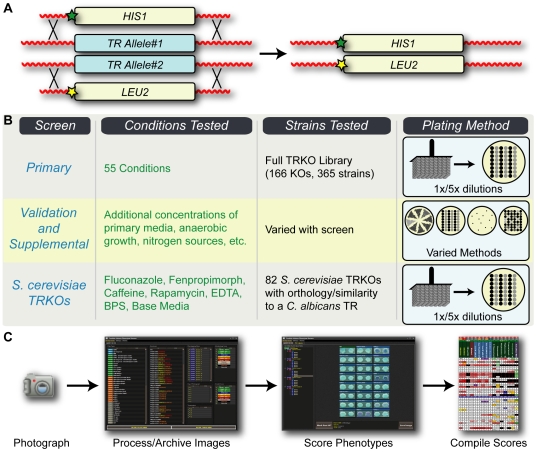
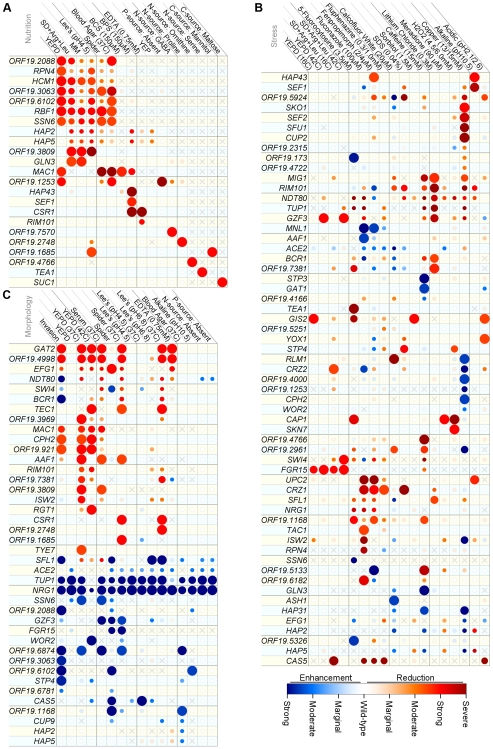
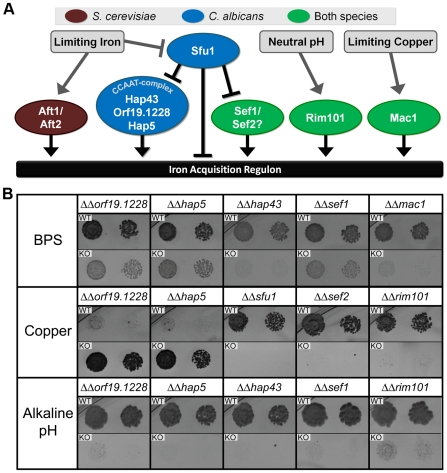
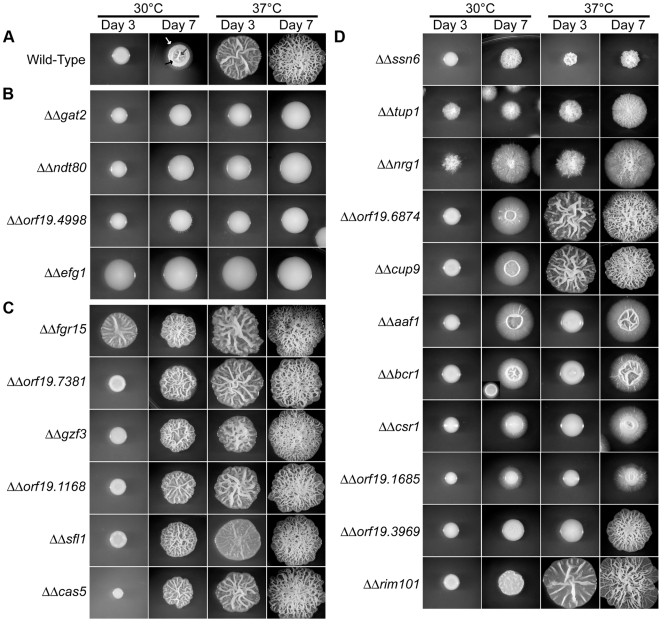
Verification
Claims the paper makes
The claims and statistics of this paper haven’t been checked yet.
Free: it reads the open-access text and checks the first 5 claims that cite a source we can check. Create a free account to check every claim.
Claims other papers make about this one
Each is checked against this paper’s own text: does it say what the citing paper says it does?
The cited source says what the claim attributes to it.
In the citing paper
“Amongst the 165 TFs represented in the library31, rtg1- and rtg3-deletion strains showed the greatest growth defect (Fig. 3a).”
From Multifactor transcriptional control of alternative oxidase induction integrates diverse environmental inputs to enable fungal virulence (2023) · cites this paper as [31]
Self-check
Percentages, sums and reported differences re-computed from the paper’s own numbers.
The self-check needs the paper’s full text.
Citations
Cites
Functional profiling of the Saccharomyces cerevisiae genome
Giaever, G., Chu, A. M., Ni, L., Connelly, C., Riles, L., Véronneau, S., Dow, S., Lucau-Danila, A., Anderson, K., André, B., et al. (2002) · Nature · doi:10.1038/nature00935 · Cited by 4,316 · cited 1×
“deletion strains were obtained from the Saccharomyces Genome Deletion Project collection”
MethodTranscriptional Regulatory Networks in Saccharomyces cerevisiae
Lee, T. I., Rinaldi, N. J., Robert, F., Odom, D. T., Bar-Joseph, Z., Gerber, G. K., Hannett, N. M., Harbison, C. T., Thompson, C. M., Simon, I., et al. (2002) · Science · doi:10.1126/science.1075090 · Cited by 2,956
InterProScan – an integration platform for the signature-recognition methods in InterPro
Zdobnov, E. M., & Apweiler, R. (2001) · Bioinformatics · doi:10.1093/bioinformatics/17.9.847 · Cited by 2,939 · cited 1×
“The list of candidate genes for inclusion in our transcriptional regulator knockout (TRKO) library was compiled from multiple sources (Dataset S1; [7,15–22]).”
MethodDujon, B., Sherman, D., Fischer, G., Durrens, P., Casaregola, S., Lafontaine, I., de Montigny, J., Marck, C., Neuvéglise, C., Talla, E., et al. (2004) · Nature · doi:10.1038/nature02579 · Cited by 1,623 · cited 1×
“those of fish and humans [3].”
Pfam: A comprehensive database of protein domain families based on seed alignments
Sonnhammer, E. L. L., Eddy, S. R., & Durbin, R. (1997) · Proteins: Structure, Function, and Genetics · doi:10.1002/(sici)1097-0134(199707)28:3<405::aid-prot10>3.0.co;2-l · Cited by 1,221
Automatic clustering of orthologs and in-paralogs from pairwise species comparisons
Remm, M., Storm, C. E. V., & Sonnhammer, E. L. L. (2001) · Journal of Molecular Biology · doi:10.1006/jmbi.2000.5197 · Cited by 1,174 · cited 2×
“algorithms, SYNERGY [59] and INPARANOID [60] supple-”
SGD: Saccharomyces Genome Database
Cherry, J. (1998) · Nucleic Acids Research · doi:10.1093/nar/26.1.73 · Cited by 1,159
The Chemical Genomic Portrait of Yeast: Uncovering a Phenotype for All Genes
Hillenmeyer, M. E., Fung, E., Wildenhain, J., Pierce, S. E., Hoon, S., Lee, W., Proctor, M., St.Onge, R. P., Tyers, M., Koller, D., et al. (2008) · Science · doi:10.1126/science.1150021 · Cited by 1,003 · cited 2×
“[8,9,12,14]), the extent of concordance between these studies is sufficiently low that these data are not suitable for inter-species comparison.”
BackgroundThe distinct morphogenic states of Candida albicans
Sudbery, P., Gow, N., & Berman, J. (2004) · Trends in Microbiology · doi:10.1016/j.tim.2004.05.008 · Cited by 876 · cited 1×
“reflect the transitions among these three cell forms [54].”
BackgroundThe origin and evolution of model organisms
Hedges, S. B. (2002) · Nature Reviews Genetics · doi:10.1038/nrg929 · Cited by 806 · cited 1×
“ancestor some 300–900 million years ago [1,2], and, in terms of coding sequences, their genomes are approximately as divergent as”
Background
Cited by
Items 401–444 of 444
The Roles of Biotin in Candida Albicans Physiology
Hussin, A. K. M., & Aini, N. R. (2016)
Rodríguez-Leguizamón, G. (2016) · Repositorio Institucional E-DocUR (Universidad Del Rosario) · doi:10.48713/10336_13785
Computational inference of the transcriptional regulatory network of Candida glabrata
Xu, N., & Liu, L. (2019) · FEMS Yeast Research · doi:10.1093/femsyr/foz036 · Cited by 1
Kumwenda, P., Cottier, F., Keevan, B., Gallagher, H., Tsai, H.-J., & Hall, R. A. (2020) · bioRxiv (Cold Spring Harbor Laboratory) · doi:10.1101/2020.07.22.207191
Solis, N. V., Wakade, R. S., Ollinger, T. L., Wellington, M. A., Mitchell, A. P., Filler, S. G., & Krysan, D. J. (2021) · bioRxiv (Cold Spring Harbor Laboratory) · doi:10.1101/2021.05.24.445409
“Although Efg1 is required for filamentation under a wide range of conditions [26], Riggle et al.”
Application of Systems Biology Approaches for Host-Fungal Interaction in Animals
Kumar, R., & Ruhel, R. (2021) · Fungal biology · doi:10.1007/978-3-030-69507-1_4
An Intersection between Iron Availability and Candida albicans Invasive FilamentationPreprint
Junier, A., Weeks, A., Alcaraz, Y., & Kumamoto, C. A. (2021) · bioRxiv (Cold Spring Harbor Laboratory) · doi:10.1101/2021.09.15.460572
“growth of mutants lacking the important regulator of filamentation Efg1p (17).”
BackgroundJaputra, C. (2014) · Digital WPI
Bassilana, M. (2019) · Faculty Opinions – Post-Publication Peer Review of the Biomedical Literature · doi:10.3410/f.734324385.793559869
(2010) · Yeast · doi:10.1002/yea.1719
Candida albicans filamentation does not require the cAMP-PKA pathway in vivoPreprint
Wakade, R. S., Kamara, J., Wellington, M. A., & Krysan, D. J. (2022) · bioRxiv (Cold Spring Harbor Laboratory) · doi:10.1101/2022.03.25.485899
Bassilana, M. (2019) · Faculty Opinions – Post-Publication Peer Review of the Biomedical Literature · doi:10.3410/f.736388418.793565726
Bassilana, M. (2019) · Faculty Opinions – Post-Publication Peer Review of the Biomedical Literature · doi:10.3410/f.733394828.793559882
Hube, B., & Brunke, S. (2020) · Faculty Opinions – Post-Publication Peer Review of the Biomedical Literature · doi:10.3410/f.737216998.793573821
Fungal genomics and transcriptomics
Munro, C. A., & Wilson, D. (2017) · Oxford University Press eBooks · doi:10.1093/med/9780198755388.003.0006
Idnurm, A. (2018) · Faculty Opinions – Post-Publication Peer Review of the Biomedical Literature · doi:10.3410/f.734324385.793552543
13 Functional Genomics to Characterize Opportunistic Pathogens
Heinekamp, T., Valiante, V., Koester-Eiserfunke, N., & Brakhage, A. A. (2014) · Springer eBooks · doi:10.1007/978-3-642-45218-5_13
“albicans a library in which 165 transcription factors were deleted is available for the Candida community (Homann et al. 2009).”
BackgroundWakade, R. S., Krysan, D. J., & Wellington, M. A. (2022) · Journal of Visualized Experiments · doi:10.3791/64258-v
Clade delineation and isolate-specific variability of Candida albicans exometabolomePreprint
Alaban, L. R., Bunescu, A., Abi‐Ghanem, J., Bequet, F., Kosmala, D., Bougnoux, M., d’Enfert, C., & THOMAS, V. (2022) · Research Square · doi:10.21203/rs.3.rs-2347907/v1
A Planarian Model System to Study Host-Pathogen Interactions
Maciel, E. I., Arevalo, A. V., Nobile, C. J., & Oviedo, N. J. (2023) · Methods in molecular biology · doi:10.1007/978-1-0716-3275-8_14 · Cited by 1
Pál, S. E. (2022) · SZTE Repository of Dissertations (University of Szeged) · doi:10.14232/phd.11334
Comparative dynamics of gene expression during in vitro and in vivo Candida albicans filamentationPreprint
Wakade, R. S., & Krysan, D. J. (2023) · bioRxiv (Cold Spring Harbor Laboratory) · doi:10.1101/2023.09.21.558874
Impact of inter-species hybridisation on antifungal drug response in the Saccharomyces genusPreprint
Visinoni, F., Royle, W., Scholey, R., Hu, Y., Timouma, S., Zeef, L. A. H., Louis, E. J., & Delneri, D. (2024) · bioRxiv (Cold Spring Harbor Laboratory) · doi:10.1101/2024.01.29.577396
Agyare-Tabbi, M. R., Uthayakumar, D., Francis, D., Maroc, L., Grant, C., McQueen, P., Westmacott, G., Shaker, H., Skulska, I., Gagnon‐Arsenault, I., et al. (2024) · bioRxiv (Cold Spring Harbor Laboratory) · doi:10.1101/2024.06.24.600412
“The C. albicans parental strain used to generate the mutant strains in this study was SN152 69 , and the Gam-317 GFP C. albicans strain was previously described 46 .”
MethodMeza‐Davalos, T., García-Ortega, L. F., & Mancera, E. (2024) · bioRxiv (Cold Spring Harbor Laboratory) · doi:10.1101/2024.11.20.624441
Meza‐Davalos, T., García-Ortega, L. F., & Mancera, E. (2025) · Molecular Microbiology · doi:10.1111/mmi.70012
“The null mutants for the 40 TRs were generated using the same genetic engineering strategy used to generate the C. albicans TR mutants, employing two auxotrophic markers to tandemly delete the two alleles of a given gene (Homann et al. 2009).”
InfluentialXu, M., Wang, Z., & Gao, X. (2025) · mSphere · doi:10.1128/msphere.00403-25
“It was later found to regulate filamentation as C. albicans aaf1 Δ cells exhibited reduced colony wrinkling but increased invasive growth on Spider medium at 37°C (28).”
InfluentialSphingolipid Homeostasis, Mitochondrial Activity, and PKA Signaling Drive an Azole-Tolerant StatePreprint
Gautier, C., Maciel, E. I., Maufrais, C., Lyons, N., Kawar, N., Bibi, C., Eickmann, C., Rosenberg, A., Dasilva, D., De, N., et al. (2025) · bioRxiv (Cold Spring Harbor Laboratory) · doi:10.1101/2025.09.12.675915 · Cited by 1
Multiscale Analysis of Candida albicans BiofilmsPreprint
Li, K., Skivens, S., Green, J. E. F., Tam, A., Pentland, D. R., Baumann, H., Gourlay, C. W., Binder, B. J., & Laissue, P. P. (2025) · bioRxiv (Cold Spring Harbor Laboratory) · doi:10.1101/2025.09.18.677201
“C. albicans (strain SN250, TFKO Library Reference Strain (Homann et al. 2009)) transfected with a mitochondrial-target GFP (Duvenage et al. 2019a) and maintained on an agar plate, was used in this study.”
Watson, J. (2015) · Digital Commons - East Tennessee State University (East Tennessee State University)
Multiscale Analysis of Candida albicans Biofilm DevelopmentPreprint
Li, K., Skivens, S., Green, E., Tam, A., Pentland, D. R., Baumann, H., Gourlay, C. W., Binder, B. J., & Laissue, P. P. (2025) · SSRN Electronic Journal · doi:10.2139/ssrn.5530002
Ke, Y., Orozco-Quime, M., Bauman, J. S., Carvalho, T., Landry, G. A., Ge, S., Kumar, A., & James, T. Y. (2026) · PLoS Genetics · doi:10.1371/journal.pgen.1012083 · Cited by 1
“For the liquid culture assays, the initial inoculum was grown under 5 diverse growth environments at 30°C: YPD, SC, YPD supplemented with caffeine (2mg/ml), YPD with H 2 O 2 (4.5 mM), and acidic SD at pH 2.6 [106], and an additional YPD environment at 37°C.”
InfluentialTranscriptional networks of the stress responses in the human pathogen Candida glabrata
Thiébaut, A. (2018) · theses.fr (ABES) · doi:10.70675/323c74a8z1ae4z4123za081zd0af3ecf65ae
Environmental adaptation of Candida albicans : the examples of persistence and chlamydosporulation
Denega, I. (2020) · theses.fr (ABES) · doi:10.70675/748584ddzf6f4z4124z9237z56d0535d3352
Assessment of the metabolome in genomically diverse Candida albicans isolates
Alaban, L. R. (2022) · theses.fr (ABES) · doi:10.70675/6127ebd7z2b67z4728z960dzdc64762b4c70
Fróis-Martins, R., Mertens, S., Tran, V. D. T., Maufrais, C., d’Enfert, C., Sanglard, D., & LeibundGut‐Landmann, S. (2026) · mBio · doi:10.1128/mbio.00415-26 · Cited by 2
“BRG1 revertants were constructed with a brg1 ∆/∆ mutant available from the Homann mutant collection (DSY5875) (34).”
Optimization of Antifungal 1,5-Diaryl-Pyrazole Acetyl-CoA Synthetase Inhibitors
Propp, J., Ferreira, J. C., Enayati, P., Alden, K. M., Daraji, D. G., Lail, C. L., Heene, M. E., Jezewski, A. J., Wakade, R. S., Castor, D., et al. (2026) · ACS Omega · doi:10.1021/acsomega.5c13157
Mantilla, M. J., Tebbji, F., Vincent, A. T., Villeneuve, L. R., Chatr‐aryamontri, A., & Sellam, A. (2026) · bioRxiv (Cold Spring Harbor Laboratory) · doi:10.64898/2026.04.21.719916
Goerlich, K., & Mitchell, A. P. (2026) · G3 Genes Genomes Genetics · doi:10.1093/g3journal/jkag133 · Cited by 1
“Third, it is a negative regulator of 2 filamentation-related processes: invasion of agar and production of fuzzy colonies at 42 °C (Homann et al. 2009; Vandeputte et al. 2011).”
Cristy, S. A., Walker, J. N., & Lorenz, M. C. (2026) · mBio · doi:10.1128/mbio.01785-26 · Cited by 1
Olivier, F. A. B., Renshaw, J. L., Kraupner-Taylor, C. A., Swaminathan, A., Harrison, P. F., Beilharz, T. H., & Traven, A. (2026) · Research Square · doi:10.21203/rs.3.rs-11227287/v1
Metadata
- Authors
- Homann, O. R., Dea, J., Noble, S. M., & Johnson, A. D.
- Affiliations
- University of California, San Francisco (US)
- Corresponding author
- Homann, Oliver R.
- Venue
- PLoS Genetics
- Publisher
- Public Library of Science (PLoS)
- Published
- 2009-12-24
- Volume
- 5
- Issue
- 12
- Pages
- e1000783
- ISSN
- 1553-7390 (ISSN-L)
- 1553-7404
- PMC
- PMC2790342
- OpenAlex
- W2041611856
- Cited by
- 444
- References
- 66
- Citations by year
- 2026: 16 · 2025: 18 · 2024: 30 · 2023: 30 · 2022: 30 · 2021: 30 · 2020: 28 · 2019: 29 · 2018: 26 · 2017: 29 · 2016: 28 · 2015: 28 · 2014: 26 · 2013: 32 · 2012: 33
- FWCI
- 8.60
- Type
- journal article
- Language
- en
- Open access
- gold
- doi.org
- Locations
- PLoS Genetics (publishedVersion, cc-by)
- PubMed Central (publishedVersion, cc-by)
- PubMed (publishedVersion)
- DOAJ (DOAJ: Directory of Open Access Journals) (submittedVersion, cc-by-sa)
- eScholarship (California Digital Library) (submittedVersion)
- eScholarship (California Digital Library) (submittedVersion, cc-by)
- Figshare (submittedVersion, cc-by)
- Funders
- National Institutes of Health
- National Institute of General Medical Sciences (R01GM037049, 5R01GM37049-22)
- National Institute of Allergy and Infectious Diseases (K08AI062800)
- Topics
- Life Sciences › Biochemistry, Genetics and Molecular Biology › Molecular Biology › Fungal and yeast genetics research
- Health Sciences › Medicine › Infectious Diseases › Antifungal resistance and susceptibility
- Life Sciences › Biochemistry, Genetics and Molecular Biology › Molecular Biology › Gene Regulatory Network Analysis
- Keywords
- Candida albicans, transcription factors, transcriptional regulatory networks, deletion mutants, phenotypic profiling, colony morphology, antifungal susceptibility, antifungal resistance, Saccharomyces cerevisiae, fungal pathogenesis
- MeSH terms
- Candida albicans, Homeostasis, Models, Biological, Phenotype, Saccharomyces cerevisiae, Transcription, Genetic, Colony Count, Microbial, Gene Library, Databases, Genetic, Gene Regulatory Networks, Gene Knockout Techniques
About these checks
Registry, retraction, Cites and statistics results are computed, not judged, with one exception: a printed reference that no index lists is read once by a model before it counts as a citation error. Claims are extracted by a model and kept only when their quote appears verbatim in the text; each cited source is then checked, with a model’s help, for whether it says what the claim relies on. Those verdicts can be wrong — read the claim’s quote and the cited source before relying on one.
Statistics and arithmetic are recomputed, not judged.
Confidence bands are shown only for fields calibrated on our annotated test set. None is calibrated yet, so no band is shown.
What counts as a claim ›How we measure confidence ›How we check this ›
Are you an author, or do you see a problem with this page? Request a review
Data sources
Bibliographic data: Semantic Scholar, OpenAlex, Crossref.
Contains information from the Semantic Scholar Academic Graph Datasets, made available under the ODC Attribution License (ODC-BY 1.0).
Semantic Scholar’s data is described in: Kinney, R., et al. (2023). The Semantic Scholar Open Data Platform. arXiv:2301.10140.
