

A Phenotypic Profile of the Candida albicans Regulatory Network
Open accessThe DOI matches its Crossref record; 66 of the 66 references it cites were found in a registry or an index.
Abstract
Candida albicans is a normal resident of the gastrointestinal tract and also the most prevalent fungal pathogen of humans. It last shared a common ancestor with the model yeast Saccharomyces cerevisiae over 300 million years ago. We describe a collection of 143 genetically matched strains of C. albicans, each of which has been deleted for a specific transcriptional regulator. This collection represents a large fraction of the non-essential transcription circuitry. A phenotypic profile for each mutant was developed using a screen of 55 growth conditions. The results identify the biological roles of many individual transcriptional regulators; for many, this work represents the first description of their functions. For example, a quarter of the strains showed altered colony formation, a phenotype reflecting transitions among yeast, pseudohyphal, and hyphal cell forms. These transitions, which have been closely linked to pathogenesis, have been extensively studied, yet our work nearly doubles the number of transcriptional regulators known to influence them. As a second example, nearly a quarter of the knockout strains affected sensitivity to commonly used antifungal drugs; although a few transcriptional regulators have previously been implicated in susceptibility to these drugs, our work indicates many additional mechanisms of sensitivity and resistance. Finally, our results inform how transcriptional networks evolve. Comparison with the existing S. cerevisiae data (supplemented by additional S. cerevisiae experiments reported here) allows the first systematic analysis of phenotypic conservation by orthologous transcriptional regulators over a large evolutionary distance. We find that, despite the many specific wiring changes documented between these species, the general phenotypes of orthologous transcriptional regulator knockouts are largely conserved. These observations support the idea that many wiring changes affect the detailed architecture of the circuit, but not its overall output.
Overview
The claims and statistics of this paper haven’t been checked yet.
Free: it reads the open-access text and checks the first 5 claims that cite a source we can check. Create a free account to check every claim.
Integrity signals
Registry
Cites
Statistics
Figures
Verification
Claims the paper makes
The claims and statistics of this paper haven’t been checked yet.
Free: it reads the open-access text and checks the first 5 claims that cite a source we can check. Create a free account to check every claim.
Claims other papers make about this one
Each is checked against this paper’s own text: does it say what the citing paper says it does?
The cited source says what the claim attributes to it.
In the citing paper
“Amongst the 165 TFs represented in the library31, rtg1- and rtg3-deletion strains showed the greatest growth defect (Fig. 3a).”
From Multifactor transcriptional control of alternative oxidase induction integrates diverse environmental inputs to enable fungal virulence (2023) · cites this paper as [31]
Self-check
Percentages, sums and reported differences re-computed from the paper’s own numbers.
The self-check needs the paper’s full text.
Citations
Cites
Functional profiling of the Saccharomyces cerevisiae genome
Giaever, G., Chu, A. M., Ni, L., Connelly, C., Riles, L., Véronneau, S., Dow, S., Lucau-Danila, A., Anderson, K., André, B., et al. (2002) · Nature · doi:10.1038/nature00935 · Cited by 4,316 · cited 1×
“deletion strains were obtained from the Saccharomyces Genome Deletion Project collection”
MethodTranscriptional Regulatory Networks in Saccharomyces cerevisiae
Lee, T. I., Rinaldi, N. J., Robert, F., Odom, D. T., Bar-Joseph, Z., Gerber, G. K., Hannett, N. M., Harbison, C. T., Thompson, C. M., Simon, I., et al. (2002) · Science · doi:10.1126/science.1075090 · Cited by 2,956
InterProScan – an integration platform for the signature-recognition methods in InterPro
Zdobnov, E. M., & Apweiler, R. (2001) · Bioinformatics · doi:10.1093/bioinformatics/17.9.847 · Cited by 2,939 · cited 1×
“The list of candidate genes for inclusion in our transcriptional regulator knockout (TRKO) library was compiled from multiple sources (Dataset S1; [7,15–22]).”
MethodDujon, B., Sherman, D., Fischer, G., Durrens, P., Casaregola, S., Lafontaine, I., de Montigny, J., Marck, C., Neuvéglise, C., Talla, E., et al. (2004) · Nature · doi:10.1038/nature02579 · Cited by 1,623 · cited 1×
“those of fish and humans [3].”
Pfam: A comprehensive database of protein domain families based on seed alignments
Sonnhammer, E. L. L., Eddy, S. R., & Durbin, R. (1997) · Proteins: Structure, Function, and Genetics · doi:10.1002/(sici)1097-0134(199707)28:3<405::aid-prot10>3.0.co;2-l · Cited by 1,221
Automatic clustering of orthologs and in-paralogs from pairwise species comparisons
Remm, M., Storm, C. E. V., & Sonnhammer, E. L. L. (2001) · Journal of Molecular Biology · doi:10.1006/jmbi.2000.5197 · Cited by 1,174 · cited 2×
“algorithms, SYNERGY [59] and INPARANOID [60] supple-”
SGD: Saccharomyces Genome Database
Cherry, J. (1998) · Nucleic Acids Research · doi:10.1093/nar/26.1.73 · Cited by 1,159
The Chemical Genomic Portrait of Yeast: Uncovering a Phenotype for All Genes
Hillenmeyer, M. E., Fung, E., Wildenhain, J., Pierce, S. E., Hoon, S., Lee, W., Proctor, M., St.Onge, R. P., Tyers, M., Koller, D., et al. (2008) · Science · doi:10.1126/science.1150021 · Cited by 1,003 · cited 2×
“[8,9,12,14]), the extent of concordance between these studies is sufficiently low that these data are not suitable for inter-species comparison.”
BackgroundThe distinct morphogenic states of Candida albicans
Sudbery, P., Gow, N., & Berman, J. (2004) · Trends in Microbiology · doi:10.1016/j.tim.2004.05.008 · Cited by 876 · cited 1×
“reflect the transitions among these three cell forms [54].”
BackgroundThe origin and evolution of model organisms
Hedges, S. B. (2002) · Nature Reviews Genetics · doi:10.1038/nrg929 · Cited by 806 · cited 1×
“ancestor some 300–900 million years ago [1,2], and, in terms of coding sequences, their genomes are approximately as divergent as”
Background
Cited by
Items 101–200 of 444
Evolution of the complex transcription network controlling biofilm formation in Candida species
Mancera, E., Nocedal, I., Hammel, S., Gulati, M., Mitchell, K. F., Andes, D. R., Nobile, C. J., Butler, G., & Johnson, A. D. (2021) · eLife · doi:10.7554/elife.64682 · Cited by 50
“parapsilosis had been previously generated as part of large transcription regulator deletion projects (Homann et al., 2009; Holland et al., 2014).”
BackgroundSelf-citationRamírez-Zavala, B., Mottola, A., Haubenreißer, J., Schneider, S., Allert, S., Brunke, S., Ohlsen, K., Hube, B., & Morschhäuser, J. (2017) · Molecular Microbiology · doi:10.1111/mmi.13674 · Cited by 61
“…from yeast to filamentous growth is an important virulence trait of C. albicans, and scoring the colony phenotype of mutants after growth on solid Spider medium, which induces filamentation, is a commonly used approach to detect defects in morphogenesis (Homann et al., 2009; Noble et al., 2010).”
BackgroundInference and Evolutionary Analysis of Genome-Scale Regulatory Networks in Large Phylogenies
Koch, C., Konieczka, J. H., Delorey, T. M., Lyons, A. M., Socha, A. L., Davis, K., Knaack, S., Thompson, D. A., O’Shea, E. K., Regev, A., et al. (2017) · Cell Systems · doi:10.1016/j.cels.2017.04.010 · Cited by 50
“Deletion mutation strain for C. albicans SKO1 and MNL1 were previously described in Homann et al. (Homann et al., 2009).”
BackgroundMethodRepurposing FDA approved drugs against the human fungal pathogen, Candida albicans
Kim, K., Zilbermintz, L., & Martchenko, M. (2015) · Annals of Clinical Microbiology and Antimicrobials · doi:10.1186/s12941-015-0090-4 · Cited by 48
“albicans libraries [15–17] was cultured in individual wells of 96 well plate in 100 μl of YPD media overnight at 30 °C.”
BackgroundMethodConservation of PHO pathway in ascomycetes and the role of Pho84
Tomar, P., & Sinha, H. (2014) · Journal of Biosciences · doi:10.1007/s12038-014-9435-y · Cited by 57
“In contrast, CaGRF1, the homologue of ScPHO2, is not required for phosphate limitation response (Homann et al. 2009).”
BackgroundXu, N., Dong, Y., Cheng, X., Yu, Q., Qian, K., Mao, J., Jia, C., Ding, X., Zhang, B., Chen, Y., et al. (2013) · Biochimica et Biophysica Acta (BBA) - Molecular Cell Research · doi:10.1016/j.bbamcr.2013.12.009 · Cited by 55
Vila, T. V. M., Chaturvedi, A. K., Rozental, S., & Lopez-Ribot, J. L. (2015) · Antimicrobial Agents and Chemotherapy · doi:10.1128/aac.01890-15 · Cited by 47
“albicans mutant strains with mutations in selected transcription factors developed by Homann and coworkers (36) (see Table S1 in the supplemental material).”
BackgroundInfluentialCandida albicans: An Emerging Yeast Model to Study Eukaryotic Genome Plasticity
Legrand, M., Jaitly, P., Feri, A., d’Enfert, C., & Sanyal, K. (2019) · Trends in Genetics · doi:10.1016/j.tig.2019.01.005 · Cited by 52
Gerstein, A. C., Lim, H., Berman, J., & Hickman, M. A. (2017) · Evolution · doi:10.1111/evo.13205 · Cited by 46
“We also added 0.493g/L KCl to Pdep to compensate for the potassium lost from reduction of KH2PO4 (following Homann et al. 2009).”
Merhej, J., Delaveau, T., Guitard, J., Palancade, B., Hennequin, C., Garcia, M., Lelandais, G., & Devaux, F. (2015) · Molecular Microbiology · doi:10.1111/mmi.12983 · Cited by 51
“In C. albicans, Hap43 controls iron homeostasis by repressing the expression of iron consuming genes (Homann et al., 2009; Hsu et al., 2011; Singh et al., 2011).”
BackgroundZnaidi, S., van Wijlick, L., Hernández-Cervantes, A., Sertour, N., Desseyn, J.-L., Vincent, F., Atanassova, R., Gouyer, V., Munro, C. A., Bachellier-Bassi, S., et al. (2018) · Cellular Microbiology · doi:10.1111/cmi.12890 · Cited by 46
Min, K., Biermann, A., Hogan, D. A., & Konopka, J. B. (2018) · mSphere · doi:10.1128/msphere.00545-18 · Cited by 46
“A previous study reported that an ndt80Δ mutant showed slow growth at 42°C (23).”
BackgroundRegulation of filamentation in the human fungal pathogen Candida tropicalis
Zhang, Q., Tao, L., Guan, G., Yue, H., Liang, W., Cao, C., Dai, Y., & Huang, G. (2016) · Molecular Microbiology · doi:10.1111/mmi.13247 · Cited by 45
“10 Q. Zhang et al. ■ © 2015 John Wiley & Sons Ltd, Molecular Microbiology Regulation of filamentation in C. tropicalis 537 VC 2015 John Wiley & Sons Ltd, Molecular Microbiology, 99, 528–545 filamentous growth in C. albicans (Homann et al., 2009).”
BackgroundMethodPérez, J. C., Fordyce, P. M., Lohse, M. B., Hanson-Smith, V., DeRisi, J. L., & Johnson, A. D. (2014) · Genes & Development · doi:10.1101/gad.242271.114 · Cited by 54
“albicans homologs of LYS14 is required for growth in the absence of lysine (Homann et al. 2009).”
BackgroundResultSelf-citationDu, H., Guan, G., Li, X., Gulati, M., Tao, L., Cao, C., Johnson, A. D., Nobile, C. J., & Huang, G. (2015) · mBio · doi:10.1128/mbio.01376-15 · Cited by 44
Self-citationHyphal development in Candida albicans from different cell states
Su, C., Yu, J., & Lü, Y. (2018) · Current Genetics · doi:10.1007/s00294-018-0845-5 · Cited by 49
Burgain, A., Pic, É., Markey, L., Tebbji, F., Kumamoto, C. A., & Sellam, A. (2019) · PLoS Pathogens · doi:10.1371/journal.ppat.1007823 · Cited by 49
“The transcriptional factor mutant collection [33] used for metabolic flexibility screens were acquired from the genetic stock center (http://www.”
BackgroundMethodExploiting Fungal Virulence-Regulating Transcription Factors As Novel Antifungal Drug Targets
Bahn, Y.-S. (2015) · PLOS Pathogens · doi:10.1371/journal.ppat.1004936 · Cited by 44
Kos, I., Patterson, M. J., Znaidi, S., Kaloriti, D., da Silva Dantas, A., Herrero-de-Dios, C. M., d’Enfert, C., Brown, A. J. P., & Quinn, J. (2016) · mBio · doi:10.1128/mbio.00331-16 · Cited by 43
“factor are sensitive to cationic stress (41), and a role of Rim101 in”
BackgroundShareck, J., Nantel, A., & Belhumeur, P. (2011) · Eukaryotic Cell · doi:10.1128/ec.00305-10 · Cited by 47
Glazier, V. E., Kramara, J., Ollinger, T. L., Solis, N. V., Żarnowski, R., Wakade, R. S., Kim, M.-J., Weigel, G. J., Liang, S.-H., Bennett, R. J., et al. (2023) · mBio · doi:10.1128/mbio.01521-23 · Cited by 52
“Briefly, strains were grown overnight at 30°C in liquid YPD with shaking, washed twice in phosphatebuffered saline (PBS), diluted to an OD 600 of 0.5 in desired media.”
MethodInfluentialO’Meara, T. R., Veri, A. O., Polvi, E. J., Li, X., Valaei, S. F., Diezmann, S., & Cowen, L. E. (2016) · PLOS Genetics · doi:10.1371/journal.pgen.1006142 · Cited by 42
Opportunistic yeast pathogen Candida spp.: Secreted and membrane-bound virulence factors
Lim, S. J., Ali, M. S. M., Sabri, S., Noor, N. D. M., Salleh, A. B., & Oslan, S. N. (2021) · Medical Mycology · doi:10.1093/mmy/myab053 · Cited by 50
Khemiri, I., Tebbji, F., & Sellam, A. (2020) · Frontiers in Microbiology · doi:10.3389/fmicb.2020.00935 · Cited by 40
“C. albicans has an ortholog of Cup2 that is required for Cu tolerance (Homann et al., 2009), however, its role as a transcriptional modulator of Cu detoxification has not been explored so far.”
BackgroundMethodEffect of Nicotinamide Against Candida albicans
Xing, X., Liao, Z., Tan, F., Zhu, Z., Jiang, Y., & Cao, Y. (2019) · Frontiers in Microbiology · doi:10.3389/fmicb.2019.00595 · Cited by 40
“albicans homozygous deletion mutant library was obtained from the Fungal Genetics Stock Center, among which 42 cell wall-related mutants and the corresponding wild type strains were chosen for NAM susceptibility test (Homann et al., 2009; Nobile and Mitchell, 2009; Noble et al., 2010).”
MethodKhamooshi, K., Sikorski, P., Sun, N., Calderone, R., & Li, D. (2014) · BMC Genomics · doi:10.1186/1471-2164-15-56 · Cited by 37
“Rbf1Δ and hfl1Δ were similar to WT cells in 10% serum at 37°C, as reported previously for rbf1Δ [21].”
Bcr 1 plays a central role in the regulation of opaque cell filamentation in Candida albicans
Guan, G., Xie, J., Tao, L., Nobile, C. J., Sun, Y., Cao, C., Tong, Y., & Huang, G. (2013) · Molecular Microbiology · doi:10.1111/mmi.12310 · Cited by 39
“Overexpression of white cell hyphal-inducing gene HGC1, BRG1 and TEC1, promotes opaque cell filamentation Hgc1, Flo8, Efg1, Tec1 and Brg1 are well characterized regulators of white cell filamentation (Homann et al., 2009; Du et al., 2012b; Huang, 2012).”
BackgroundHussein, B., Huang, H., Glory, A., Osmani, A., Kaminskyj, S., Nantel, A., & Bachewich, C. (2011) · Eukaryotic Cell · doi:10.1128/ec.00278-10 · Cited by 38
“Similarly, in large-scale phenotypic screens (40, 61), swi4 / colonies and cells showed growth defects, although colony morphology on solid spider medium was not affected.”
BackgroundMartínez-Vázquez, A., González-Hernández, A., Domínguez, Á., Rachubinski, R. A., Riquelme, M., Cuéllar‐Mata, P., & Guzmán, J. C. T. (2013) · PLoS ONE · doi:10.1371/journal.pone.0066790 · Cited by 37
“albicans mutant strains, each of which has a deletion in a specific transcriptional factor, two strains show an increase in filamentous formation in all of the 55 growth conditions tested [52].”
BackgroundRegulatory Circuits That Enable Proliferation of the Fungus Candida albicans in a Mammalian Host
Pérez, J. C., & Johnson, A. D. (2013) · PLoS Pathogens · doi:10.1371/journal.ppat.1003780 · Cited by 38
“This group of mutants was chosen because none of them showed overt defects under a wide variety of conditions in vitro [9], hence they would be candidates for regulating circuits needed specifically in vivo.”
BackgroundInfluentialSelf-citationKaba, H. E., Nimtz, M., Müller, P. P., & Bilitewski, U. (2013) · BMC Microbiology · doi:10.1186/1471-2180-13-16 · Cited by 37
“Sef1p was identified as a transcriptional activator of iron uptake genes [25].”
BackgroundAneuploidy and gene dosage regulate filamentation and host colonization by Candida albicans
Kakade, P., Sircaik, S., Maufrais, C., Ene, I. V., & Bennett, R. J. (2023) · Proceedings of the National Academy of Sciences · doi:10.1073/pnas.2218163120 · Cited by 41
Linde, J., Wilson, D., Hube, B., & Guthke, R. (2010) · BMC Systems Biology · doi:10.1186/1752-0509-4-148 · Cited by 43
“The following information was used to compile prior knowledge from source 1: Four differentially expressed transcription factors have been shown to be directly involved in the regulation of iron acquisition genes via phenotype analysis of knockout mutants: Rim101 [45,46], Hap3 [46], Tup1 [47,49], and Sef1 [ 51 ].”
BackgroundMethodHernday, A. D., Lohse, M. B., Nobile, C. J., Noiman, L., Laksana, C. N., & Johnson, A. D. (2016) · mBio · doi:10.1128/mbio.01565-15 · Cited by 42
“The initial white-opaque switching-capable ssn6 deletion strains were generated by converting a/ ssn6 deletion strain TF121 (27) to a/ and / using the pJD1 mating type locus knockout vector (32).”
MethodResultInfluentialSelf-citationRecent advances on Candida albicans biology and virulence
Sellam, A., & Whiteway, M. S. (2016) · F1000Research · doi:10.12688/f1000research.9617.1 · Cited by 46
Halder, V., Porter, C. B. M., Chavez, A., & Shapiro, R. S. (2019) · Nature Protocols · doi:10.1038/s41596-018-0122-6 · Cited by 37
Witchley, J. N., Basso, P., Brimacombe, C. A., Abon, N. V., & Noble, S. M. (2021) · Cell Host & Microbe · doi:10.1016/j.chom.2021.03.019 · Cited by 37
Self-citationVasicek, E. M., Berkow, E. L., Bruno, V. M., Mitchell, A. P., Wiederhold, N. P., Barker, K. S., & Rogers, P. D. (2014) · Antimicrobial Agents and Chemotherapy · doi:10.1128/aac.00064-14 · Cited by 36
“In an effort to identify transcriptional pathways that influence the killing activity of fluconazole, we sought to identify transcription factors (TFs) involved in this process.”
BackgroundInfluentialMorphogenic plasticity: the pathogenic attribute of Candida albicans
Prasad, P., & Tippana, M. (2023) · Current Genetics · doi:10.1007/s00294-023-01263-5 · Cited by 41
“albicans is an opportunistic fungal pathogen and is the leading cause of death due to mycotic infection (Hernday et al. 2010; Homann et al. 2009; Noble and Johnson 2007).”
BackgroundEnhanced antifungal efficacy of tebuconazole using gated pH-driven mesoporous nanoparticles
Murguía, J. R., Mas, N., Galiana, I., Hurtado, S., Mondragón, L., Bernardos, A., Sancenón, F., Amorós, P., Abril-Utrillas, N., Marcos, D., et al. (2014) · International Journal of Nanomedicine · doi:10.2147/ijn.s59654 · Cited by 36
Jimena: efficient computing and system state identification for genetic regulatory networks
Karl, S., & Dandekar, T. (2013) · BMC Bioinformatics · doi:10.1186/1471-2105-14-306 · Cited by 37
MIG1Regulates Resistance of Candida albicans against the Fungistatic Effect of Weak Organic Acids
Cottier, F., Tan, A. S. M., Xu, X., Wang, Y., & Pavelka, N. (2015) · Eukaryotic Cell · doi:10.1128/ec.00129-15 · Cited by 37
“albicans mutant strains, each individually deleted of one 183 of 165 transcription factors (TFs) (26).”
BackgroundAspergillus fumigatusvirulence through the lens of transcription factors: Table 1.
Bultman, K. M., Kowalski, C. H., & Cramer, R. A. (2016) · Medical Mycology · doi:10.1093/mmy/myw120 · Cited by 43
The two-component signal transduction system and its regulation in Candida albicans
Liao, B., Ye, X., Chen, X., Zhou, Y., Cheng, L., Zhou, X., & Ren, B. (2021) · Virulence · doi:10.1080/21505594.2021.1949883 · Cited by 33
Mount, H. O., Revie, N. M., Todd, R. T., Anstett, K., Collins, C., Costanzo, M., Boone, C., Robbins, N., Selmecki, A., & Cowen, L. E. (2018) · PLOS Genetics · doi:10.1371/journal.pgen.1007319 · Cited by 34
Systematic Genetic Screen for Transcriptional Regulators of the Candida albicans White-Opaque Switch
Lohse, M. B., Ene, I. V., Craik, V., Hernday, A. D., Mancera, E., Morschhäuser, J., Bennett, R. J., & Johnson, A. D. (2016) · Genetics · doi:10.1534/genetics.116.190645 · Cited by 36
“…the 165 strains from the original a/a library, we added 26 transcription regulator mutants whose construction in the a/a background has been previously reported (Homann et al. 2009; Noble et al. 2010; Fox et al. 2014, 2015) as well as an additional five new transcription regulator deletion mutants.”
BackgroundResultInfluentialSelf-citationLin, C., Lin, C.-N., Wang, Y.-C., Liu, F.-Y., Chien, Y.-W., Chuang, Y.-J., Lan, C.-Y., Hsieh, W.-P., & Chen, B.-S. (2014) · BMC Systems Biology · doi:10.1186/1752-0509-8-s5-s6 · Cited by 34
“It is also involved in iron assimilation [24].”
BackgroundSu, C., Yu, J., Sun, Q., Liu, Q., & Lü, Y. (2018) · Molecular Microbiology · doi:10.1111/mmi.13944 · Cited by 35
“albicans (Homann et al., 2009) and the wild-type reference strain SN250 were grown overnight in liquid YPD at 308C.”
BackgroundMethodGenerating genomic platforms to study Candida albicans pathogenesis
Legrand, M., Bachellier‐Bassi, S., Lee, K. K., Chaudhari, Y., Tournu, H., Arbogast, L., Boyer, H., Chauvel, M., Cabral, V., Maufrais, C., et al. (2018) · Nucleic Acids Research · doi:10.1093/nar/gky594 · Cited by 38
“In this context, major efforts have been made to generate large-scale deletion (6) (7) (8) (9) (10) or overexpression (11) (12) (13) mutant collections.”
BackgroundGlycerophosphocholine Utilization by Candida albicans
Bishop, A. C., Ganguly, S., Solis, N. V., Cooley, B., Jensen‐Seaman, M. I., Filler, S. G., Mitchell, A. P., & Patton, J. L. (2013) · Journal of Biological Chemistry · doi:10.1074/jbc.m113.505735 · Cited by 34
Pais, P., Costa, C., Cavalheiro, M., Romão, D., & Teixeira, M. C. (2016) · Frontiers in Cellular and Infection Microbiology · doi:10.3389/fcimb.2016.00131 · Cited by 37
Regulation of Copper Toxicity by Candida albicans GPA2
Schwartz, J. A., Olarte, K. T., Michalek, J. L., Jandu, G. S., Michel, S. L. J., & Bruno, V. M. (2013) · Eukaryotic Cell · doi:10.1128/ec.00344-12 · Cited by 32
“3B), and MAC1 (Fig.”
BackgroundMethodInfluentialAntimicrobial peptide MUC7 12-mer activates the calcium/calcineurin pathway in Candida albicans
Lis, M., Liu, T. T., Barker, K. S., Rogers, P. D., & Bobek, L. A. (2010) · FEMS Yeast Research · doi:10.1111/j.1567-1364.2010.00638.x · Cited by 34
“albicans (Homann et al., 2009).”
Kim, S., Lee, J., & Sung, B. H. (2019) · Frontiers in Bioengineering and Biotechnology · doi:10.3389/fbioe.2019.00138 · Cited by 31
“tropicalis has been known as a virulence event for colonization and infection of different host niches (Homann et al., 2009; Porman et al., 2011).”
Phosphate in Virulence of Candida albicans and Candida glabrata
Köhler, J. R., Acosta‐Zaldívar, M., & Qi, W. (2020) · Journal of Fungi · doi:10.3390/jof6020040 · Cited by 40
“albicans resistance to numerous stressors was then identified in two simultaneously published screens [32,33] of two transcription factor mutant sets [34,35].”
BackgroundZinc Cluster Transcription Factors Alter Virulence in Candida albicans
Issi, L., Farrer, R. A., Pastor, K., Landry, B., Delorey, T., Bell, G. W., Thompson, D. A., Cuomo, C. A., & Rao, R. P. (2017) · Genetics · doi:10.1534/genetics.116.195024 · Cited by 32
Basso, V., Znaidi, S., Lagage, V., Cabral, V., Schönherr, F. A., LeibundGut‐Landmann, S., d’Enfert, C., & Bachellier‐Bassi, S. (2017) · Molecular Microbiology · doi:10.1111/mmi.13758 · Cited by 37
“albicans deletion mutants for SKN7 show increased sensitivity to oxidative stress mediated by hydrogen peroxide (Singh et al., 2004; Homann et al., 2009).”
BackgroundThe p38/HOG stress-activated protein kinase network couples growth to division in Candida albicans
Sellam, A., Chaillot, J., Mallick, J., Tebbji, F., Albert, J. R., Cook, M. A., & Tyers, M. (2019) · PLoS Genetics · doi:10.1371/journal.pgen.1008052 · Cited by 40
Pais, P., Califórnia, R., Galocha, M., Viana, R., Ola, M., Cavalheiro, M., Takahashi‐Nakaguchi, A., Chibana, H., Butler, G., & Teixeira, M. C. (2020) · Antimicrobial Agents and Chemotherapy · doi:10.1128/aac.00554-20 · Cited by 39
“albicans, RPN4 is also a regulator of proteasome genes, and its absence results in enhanced sensitivity to fluconazole (37).”
BackgroundFlanagan, P. R., Liu, N.-N., Fitzpatrick, D. J., Hokamp, K., Köhler, J. R., & Moran, G. P. (2017) · mSphere · doi:10.1128/msphere.00477-17 · Cited by 37
“SKO1 mutants are rapamycin resistant, indicating that Sko1 interacts with the TORC1 pathway (28).”
Lu, H., Li, W., Whiteway, M., Wang, H., Zhu, S., Ji, Z., Feng, Y., Yan, L., Fang, T., Li, L., et al. (2023) · mBio · doi:10.1128/mbio.02639-22 · Cited by 30
Paul, S., Todd, O. A., Eichelberger, K. R., Tkaczyk, C., Sellman, B. R., Noverr, M. C., Cassat, J. E., Fidel, P. L., & Peters, B. M. (2024) · Nature Communications · doi:10.1038/s41467-024-50058-w · Cited by 34
“A library of C. albicans transcription factor deletion mutants and accompanying wild-type background strain (TF WT) were obtained from the Fungal Genetics Stock Center 36 .”
InfluentialRai, L. S., Singha, R., Sánchez, H., Chakraborty, T., Chand, B., Bachellier‐Bassi, S., Chowdhury, S., d’Enfert, C., Andes, D. R., & Sanyal, K. (2019) · PLoS Biology · doi:10.1371/journal.pbio.3000422 · Cited by 30
“080, spotted on a plate, and incubated for 2 or 3 days at 30 ̊C and photographed [52].”
MethodBasso, P., Dang, E. V., Urisman, A., Cowen, L. E., Madhani, H. D., & Noble, S. M. (2022) · Cell Host & Microbe · doi:10.1016/j.chom.2022.10.004 · Cited by 29
Self-citationTheGRF10homeobox gene regulates filamentous growth in human fungal pathogenCandida albicans
Ghosh, A. K., Wangsanut, T., Fonzi, W. A., & Rolfes, R. J. (2015) · FEMS Yeast Research · doi:10.1093/femsyr/fov093 · Cited by 33
How Transcription Networks Evolve and Produce Biological Novelty
Nocedal, I., & Johnson, A. D. (2015) · Cold Spring Harbor Symposia on Quantitative Biology · doi:10.1101/sqb.2015.80.027557 · Cited by 34
“None of the four paralogs regulate the lysine biosynthesis genes in this species (Homann et al. 2009); instead, they have roles in other processes crucial for the biology of C.”
BackgroundSelf-citationCoordination of hypoxia adaptation and iron homeostasis in human pathogenic fungi
Chung, D., Haas, H., & Cramer, R. A. (2012) · Frontiers in Microbiology · doi:10.3389/fmicb.2012.00381 · Cited by 29
“…component interacting with the CBC (the CBC-binding factor) have been characterized as important mediators of iron regulation in C. albicans, C. neoformans, and A. fumigatus (Baek et al., 2008; Homann et al., 2009; Jung et al., 2010; Schrettl et al., 2010a; Chen et al., 2011; Hsu et al., 2011).”
BackgroundHe, B. Z., Zhou, X., & O’Shea, E. K. (2017) · eLife · doi:10.7554/elife.25157 · Cited by 27
“C. albicans strains All C. albicans strains used in this study are from the transcriptional regulatory deletion library made by Homann et al (Homann et al. 2009) and ordered from the Fungal Genetics Stock Center (http://www.fgsc.net/) Media and Growth Conditions Phosphate-free synthetic complete medium was prepared fr…”
MethodInfluentialMilestones in Candida albicans gene manipulation
Samaranayake, D. P., & Hanes, S. D. (2011) · Fungal Genetics and Biology · doi:10.1016/j.fgb.2011.04.003 · Cited by 29
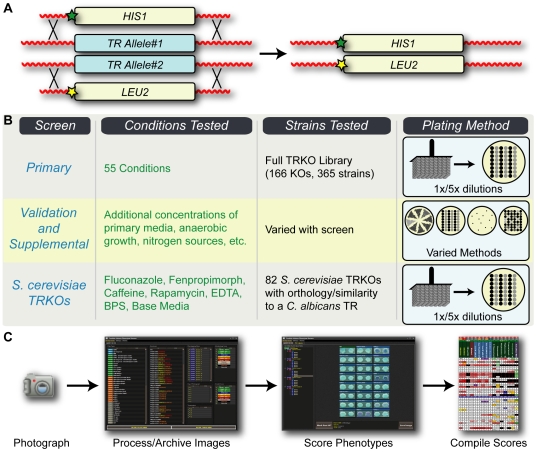
“First, Homann et al. (2009) created a homozygous deletion library of 143 non-essential transcriptional regulators using the parent strain SN152 constructed by Noble and Johnson (2005).”
MethodWakade, R. S., Huang, M. Y., Mitchell, A. P., Wellington, M. A., & Krysan, D. J. (2021) · mSphere · doi:10.1128/msphere.00436-21 · Cited by 31
“Bcr1 has not typically been associated with the regulation of in vitro filamentation (4, 7), although it has been reported to negatively regulate the filamentation of opaque cells in vitro (26).”
BackgroundMethodGervais, N. C., Bella, A. A. L., Wensing, L. F., Sharma, J., Acquaviva, V., Best, M. A., López, R. O. C., Fogal, M., Uthayakumar, D., Chavez, A., et al. (2022) · G3 Genes Genomes Genetics · doi:10.1093/g3journal/jkac301 · Cited by 31
“albicans could enable the development of larger overexpression libraries for functional genomic screens, to complement existing fungal gene deletion and depletion libraries (Roemer et al. 2003; Homann et al. 2009; Blankenship et al. 2010; Noble et al. 2010) that have”
BackgroundSellam, A., Tebbji, F., Whiteway, M. S., & Nantel, A. (2012) · PLoS ONE · doi:10.1371/journal.pone.0043956 · Cited by 30
“Growth inhibition rate was normalized relative to the 0 mM DPTA NONOate condition and was compared to their respective parental strain (SN152 for Homann’s deletion library [8], BWP17 for Sanglard’s insertion library, DAY185 for Mitchell’s insertion library [12] and SN250 for Noble’s deletion library [9]).”
MethodBoric acid destabilizes the hyphal cytoskeleton and inhibits invasive growth of Candida albicans
Pointer, B., Boyer, M. P., & Schmidt, M. (2015) · Yeast · doi:10.1002/yea.3066 · Cited by 33
“albicans deletion strains contained in 96-well plates (Homann et al., 2009; Noble et al., 2010) (Fungal Genetics Stock Center, Kansas City, MO) was determined by transferring 5μl droplets of frozen stocks to fresh 200μl fresh YPD medium, using a 96-pin replicator.”
MethodPentland, D. R., Davis, J., Mühlschlegel, F. A., & Gourlay, C. W. (2021) · npj Biofilms and Microbiomes · doi:10.1038/s41522-021-00238-z · Cited by 28
Wakade, R. S., Ristow, L. C., Wellington, M. A., & Krysan, D. J. (2023) · eLife · doi:10.7554/elife.85114 · Cited by 28
Inglis, D. O., Skrzypek, M. S., Arnaud, M. B., Binkley, J., Shah, P., Wymore, F., & Sherlock, G. (2012) · Eukaryotic Cell · doi:10.1128/ec.00238-12 · Cited by 35
“For example, the genes that are annotated as contributing to biofilm development are largely dominated by regulators of this process, a fact that reflects the strategy of using transcription factor libraries to specifically identify regulators of biofilm formation (8, 13, 31, 32).”
BackgroundRegulatory circuitry governing morphogenesis inSaccharomyces cerevisiaeandCandida albicans
Shapiro, R. S., Ryan, O. W., Boone, C. M., & Cowen, L. E. (2012) · Cell Cycle · doi:10.4161/cc.22608 · Cited by 32
Polarized growth in fungi: Symmetry breaking and hyphal formation
Arkowitz, R. A., & Bassilana, M. (2011) · Seminars in Cell and Developmental Biology · doi:10.1016/j.semcdb.2011.08.010 · Cited by 33
Desai, J., Cheng, S., Ying, T., Nguyen, M., Clancy, C., Lanni, F., & Mitchell, A. (2015) · Pathogens · doi:10.3390/pathogens4030573 · Cited by 27
“albicans transcription factor mutant strains [28].”
BackgroundIdentification and functional characterization of mitochondrial carrier Mrs4 in Candida albicans
Xu, N., Cheng, X., Yu, Q., Zhang, B., Ding, X., Xing, L., & Li, M. (2012) · FEMS Yeast Research · doi:10.1111/j.1567-1364.2012.00835.x · Cited by 26
“Surprisingly, deletion of SKN7 induced the expression of MRS4 even under normal conditions, providing a possibility that there might be other regulators involved in mediating the transcriptional response in a coordinated fashion (Wang et al., 2006; Chen et al., 2009; Homann et al., 2009).”
BackgroundKruzel, E. K., Giles, S. S., & Hull, C. M. (2012) · Genetics · doi:10.1534/genetics.112.138958 · Cited by 29
“…such comparative studies have already elucidated nonpredicted regulatory systems governing processes as varied as environmental stress tolerance, carbon source utilization, and dimorphism (Kadosh and Johnson 2001; Martchenko et al. 2007; Homann et al. 2009; Lavoie et al. 2010; Sahni et al. 2010).”
BackgroundPhysiological adventures in Candida albicans : farnesol and ubiquinones
Nickerson, K. W., Gutzmann, D. J., Boone, C. H. T., Pathirana, R. U., & Atkin, A. L. (2024) · Microbiology and Molecular Biology Reviews · doi:10.1128/mmbr.00081-22 · Cited by 28
“Gutzmann et al. (23) examined transcription regulator knockout mutants in C. albicans (49) for differences in farnesol accumulation and localization and identified 19 mutants that had significant differences in accumulation and 9 mutants that differed in localization.”
BackgroundResultCandida albicans pathways that protect against organic peroxides and lipid peroxidation
Swenson, K. A., Min, K., & Konopka, J. B. (2024) · PLoS Genetics · doi:10.1371/journal.pgen.1011455 · Cited by 30
Thiébaut, A., Delaveau, T., Benchouaia, M., Boeri, J., Garcia, M., Lelandais, G., & Devaux, F. (2017) · Scientific Reports · doi:10.1038/s41598-017-03750-5 · Cited by 29
Aggregate Filamentous Growth Responses in Yeast
Chow, J. L., Dionne, H. M., Prabhakar, A., Mehrotra, A. P., Somboonthum, J., González, B., Edgerton, M., & Cullen, P. J. (2019) · mSphere · doi:10.1128/msphere.00702-18 · Cited by 29
“C. albicans deletions constructed by Noble et al. (107), Mitchell and colleagues (108–112), and Homann et al. (113) were obtained from the FGSC (http://www .fgsc.net/candida/FGSCcandidaresources.htm).”
Ofir, A., Hofmann, K., Weindling, E., Gildor, T., Barker, K. S., Rogers, P. D., & Kornitzer, D. (2012) · Molecular Microbiology · doi:10.1111/j.1365-2958.2012.08056.x · Cited by 26
“We also deleted CaNRM1 in the Caswi4-/- and the Caswi6-/- double-mutant background (Hussein et al., 2011), as well as in the Cambp1-/- background (Homann et al., 2009).”
BackgroundResultInfluentialPost‐transcriptional gene regulation in the biology and virulence ofCandida albicans
Verma‐Gaur, J., & Traven, A. (2016) · Cellular Microbiology · doi:10.1111/cmi.12593 · Cited by 28
Identification of Candida albicans regulatory genes governing mucosal infection
Meir, J., Hartmann, E., Eckstein, M., Guiducci, E., Kirchner, F., Rosenwald, A., LeibundGut‐Landmann, S., & Pérez, J. C. (2018) · Cellular Microbiology · doi:10.1111/cmi.12841 · Cited by 26
“, 2014) but no copper‐related phenotype was observed (Homann et al., 2009).”
BackgroundSong, W., Wang, H., & Chen, J. (2011) · FEMS Yeast Research · doi:10.1111/j.1567-1364.2010.00710.x · Cited by 28
Moreno-Velásquez, S. D., Tint, S. H., del Olmo Toledo, V., Torsin, S., De, S., & Pérez, J. C. (2020) · Cell Reports · doi:10.1016/j.celrep.2019.12.022 · Cited by 25
Identification and characterization of mediators of fluconazole tolerance in Candida albicans
Delarze, E., Brandt, L., Trachsel, E., Patxot, M., Pralong, C., Maranzano, F., Chauvel, M., Legrand, M., Znaidi, S., Bougnoux, M.-E., et al. (2020) · Frontiers in Microbiology · doi:10.3389/fmicb.2020.591140 · Cited by 25
One-step targeted gene deletion in Candida albicans haploids
Zeng, G., Wang, Y., Chan, F. Y., & Wang, Y. (2014) · Nature Protocols · doi:10.1038/nprot.2014.029 · Cited by 26
Li, T., Wang, M., Guan, G., Zhang, Y., Hao, T., Li, C., Li, S., Chen, Y., & Huang, G. (2022) · Virulence · doi:10.1080/21505594.2022.2046952 · Cited by 26
“A deletion mutant library of 165 transcription factors and a mutant library of cell wall-related genes were used to screen essential elements involved in filamentation during interspecies interactions [31,32].”
MethodCandida albicans Filamentation Does Not Require the cAMP-PKA Pathway In Vivo
Wakade, R. S., Kramara, J., Wellington, M. A., & Krysan, D. J. (2022) · mBio · doi:10.1128/mbio.00851-22 · Cited by 26
“(20), obtained from the Fungal Genetics Stock Center, and confirmed by phenotype and genotype.”
MethodpH-Dependant Antifungal Activity of Valproic Acid against the Human Fungal Pathogen Candida albicans
Chaillot, J., Tebbji, F., García, C., Würtele, H., Pelletier, R., & Sellam, A. (2017) · Frontiers in Microbiology · doi:10.3389/fmicb.2017.01956 · Cited by 25
“A total of 2371 mutants from the transcription factors (Homann et al., 2009) (365 strains), transcriptional regulators (Vandeputte et al., 2012) (509 strains), kinases (Blankenship et al., 2010) (165 strains), and generalist collections (Noble et al., 2010) (1,332 strains) were screened for…”
BackgroundGlazier, V. E., Murante, T., Koselny, K., Murante, D., Esqueda, M., Wall, G., Wellington, M. A., Hung, C.-Y., Kumar, A., & Krysan, D. J. (2018) · G3 Genes Genomes Genetics · doi:10.1534/g3.117.300515 · Cited by 25
“These conditions were not as extensive as that performed for the homozygous deletion set but covered a range of biologically distinct physiological states and stresses (Homann et al. 2009).”
BackgroundMethodInfluentialChakravarti, A., Camp, K., McNabb, D. S., & Pinto, I. (2017) · PLOS ONE · doi:10.1371/journal.pone.0170649 · Cited by 24
Xu, N., Cheng, X., Yu, Q., Qian, K., Ding, X., Liu, R., Zhang, B., Xing, L., & Li, M. (2013) · PLoS ONE · doi:10.1371/journal.pone.0062367 · Cited by 24
“metallothioneins, glutaredoxin) defense systems to protect cells against oxidative stress [50,51].”
BackgroundMaciel, E. I., Jiang, C., Barghouth, P. G., Nobile, C. J., & Oviedo, N. J. (2018) · Developmental & Comparative Immunology · doi:10.1016/j.dci.2018.12.005 · Cited by 26
The Pho4 transcription factor mediates the response to arsenate and arsenite in Candida albicans
Urrialde, V., Prieto, D., Plá, J., & Alonso‐Monge, R. (2015) · Frontiers in Microbiology · doi:10.3389/fmicb.2015.00118 · Cited by 28
“Pho4 is required for growth in medium lacking phosphate in C. albicans (Figure 4A) (Homann et al., 2009; Romanowski et al., 2012).”
Background
Metadata
- Authors
- Homann, O. R., Dea, J., Noble, S. M., & Johnson, A. D.
- Affiliations
- University of California, San Francisco (US)
- Corresponding author
- Homann, Oliver R.
- Venue
- PLoS Genetics
- Publisher
- Public Library of Science (PLoS)
- Published
- 2009-12-24
- Volume
- 5
- Issue
- 12
- Pages
- e1000783
- ISSN
- 1553-7390 (ISSN-L)
- 1553-7404
- PMC
- PMC2790342
- OpenAlex
- W2041611856
- Cited by
- 444
- References
- 66
- Citations by year
- 2026: 16 · 2025: 18 · 2024: 30 · 2023: 30 · 2022: 30 · 2021: 30 · 2020: 28 · 2019: 29 · 2018: 26 · 2017: 29 · 2016: 28 · 2015: 28 · 2014: 26 · 2013: 32 · 2012: 33
- FWCI
- 8.60
- Type
- journal article
- Language
- en
- Open access
- gold
- doi.org
- Locations
- PLoS Genetics (publishedVersion, cc-by)
- PubMed Central (publishedVersion, cc-by)
- PubMed (publishedVersion)
- DOAJ (DOAJ: Directory of Open Access Journals) (submittedVersion, cc-by-sa)
- eScholarship (California Digital Library) (submittedVersion)
- eScholarship (California Digital Library) (submittedVersion, cc-by)
- Figshare (submittedVersion, cc-by)
- Funders
- National Institutes of Health
- National Institute of General Medical Sciences (R01GM037049, 5R01GM37049-22)
- National Institute of Allergy and Infectious Diseases (K08AI062800)
- Topics
- Life Sciences › Biochemistry, Genetics and Molecular Biology › Molecular Biology › Fungal and yeast genetics research
- Health Sciences › Medicine › Infectious Diseases › Antifungal resistance and susceptibility
- Life Sciences › Biochemistry, Genetics and Molecular Biology › Molecular Biology › Gene Regulatory Network Analysis
- Keywords
- Candida albicans, transcription factors, transcriptional regulatory networks, deletion mutants, phenotypic profiling, colony morphology, antifungal susceptibility, antifungal resistance, Saccharomyces cerevisiae, fungal pathogenesis
- MeSH terms
- Candida albicans, Homeostasis, Models, Biological, Phenotype, Saccharomyces cerevisiae, Transcription, Genetic, Colony Count, Microbial, Gene Library, Databases, Genetic, Gene Regulatory Networks, Gene Knockout Techniques
About these checks
Registry, retraction, Cites and statistics results are computed, not judged, with one exception: a printed reference that no index lists is read once by a model before it counts as a citation error. Claims are extracted by a model and kept only when their quote appears verbatim in the text; each cited source is then checked, with a model’s help, for whether it says what the claim relies on. Those verdicts can be wrong — read the claim’s quote and the cited source before relying on one.
Statistics and arithmetic are recomputed, not judged.
Confidence bands are shown only for fields calibrated on our annotated test set. None is calibrated yet, so no band is shown.
What counts as a claim ›How we measure confidence ›How we check this ›
Are you an author, or do you see a problem with this page? Request a review
Data sources
Bibliographic data: Semantic Scholar, OpenAlex, Crossref.
Contains information from the Semantic Scholar Academic Graph Datasets, made available under the ODC Attribution License (ODC-BY 1.0).
Semantic Scholar’s data is described in: Kinney, R., et al. (2023). The Semantic Scholar Open Data Platform. arXiv:2301.10140.
