

SREBP Coordinates Iron and Ergosterol Homeostasis to Mediate Triazole Drug and Hypoxia Responses in the Human Fungal Pathogen Aspergillus fumigatus
Open accessThe DOI matches its Crossref record; 62 of the 62 references it cites were found in a registry or an index.
Abstract
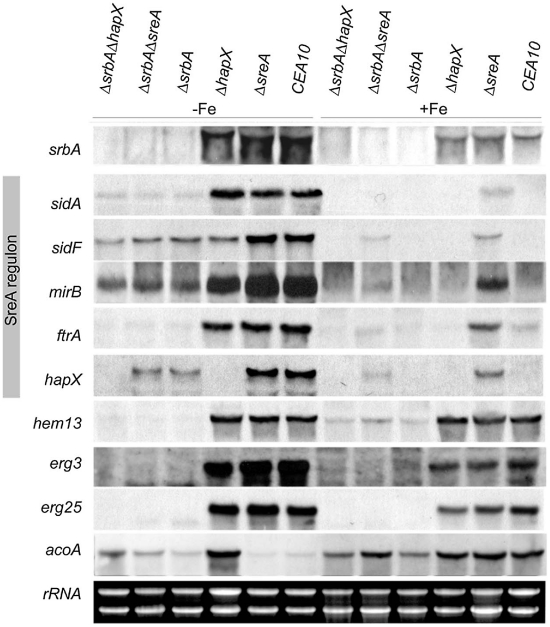
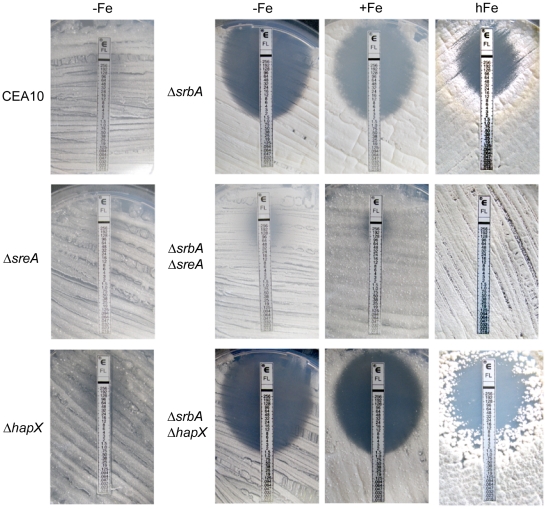
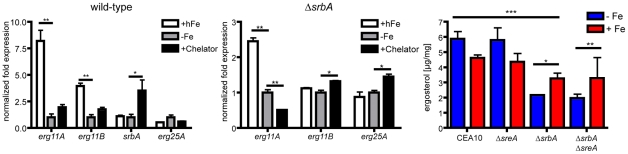
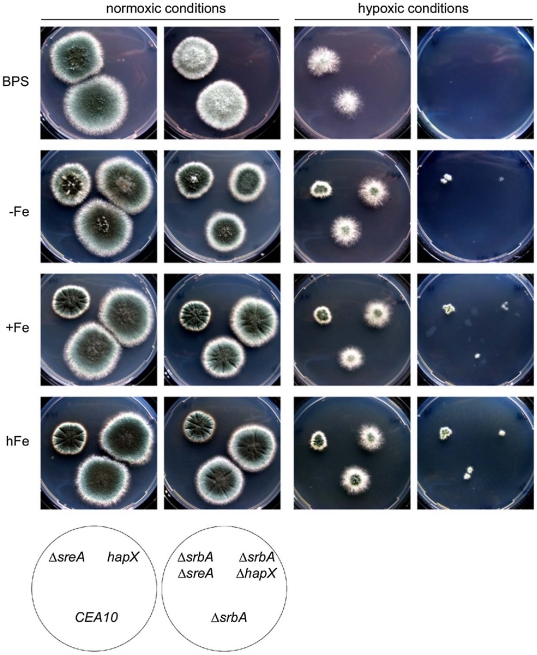
Sterol regulatory element binding proteins (SREBPs) are a class of basic helix-loop-helix transcription factors that regulate diverse cellular responses in eukaryotes. Adding to the recognized importance of SREBPs in human health, SREBPs in the human fungal pathogens Cryptococcus neoformans and Aspergillus fumigatus are required for fungal virulence and susceptibility to triazole antifungal drugs. To date, the exact mechanism(s) behind the role of SREBP in these observed phenotypes is not clear. Here, we report that A. fumigatus SREBP, SrbA, mediates regulation of iron acquisition in response to hypoxia and low iron conditions. To further define SrbA's role in iron acquisition in relation to previously studied fungal regulators of iron metabolism, SreA and HapX, a series of mutants were generated in the ΔsrbA background. These data suggest that SrbA is activated independently of SreA and HapX in response to iron limitation, but that HapX mRNA induction is partially dependent on SrbA. Intriguingly, exogenous addition of high iron or genetic deletion of sreA in the ΔsrbA background was able to partially rescue the hypoxia growth, triazole drug susceptibility, and decrease in ergosterol content phenotypes of ΔsrbA. Thus, we conclude that the fungal SREBP, SrbA, is critical for coordinating genes involved in iron acquisition and ergosterol biosynthesis under hypoxia and low iron conditions found at sites of human fungal infections. These results support a role for SREBP-mediated iron regulation in fungal virulence, and they lay a foundation for further exploration of SREBP's role in iron homeostasis in other eukaryotes.
Overview
The claims and statistics of this paper haven’t been checked yet.
Free: it reads the open-access text and checks the first 5 claims that cite a source we can check. Create a free account to check every claim.
Integrity signals
Registry
Cites
Statistics
Figures
Verification
Claims the paper makes
The claims and statistics of this paper haven’t been checked yet.
Free: it reads the open-access text and checks the first 5 claims that cite a source we can check. Create a free account to check every claim.
Claims other papers make about this one
Each is checked against this paper’s own text: does it say what the citing paper says it does?
In the citing paper
“For example, the TF SrbA also activates siderophore-mediated iron uptake in response to hypoxia and iron starvation (357).”
From Aspergillus fumigatus and Aspergillosis in 2019 (2019) · cites this paper as [357]
In the citing paper
“Hypoxic fungal growth is under the control of the common hypoxia regulator Hif1α (211, 393), but it is also associated with other major cellular pathways, such as sterol and siderophore biosynthesis and mitochondrial respiration (357, 394–396).”
From Aspergillus fumigatus and Aspergillosis in 2019 (2019) · cites this paper as [357]
Self-check
Percentages, sums and reported differences re-computed from the paper’s own numbers.
The self-check needs the paper’s full text.
Citations
Cites
The Genetics of Aspergillus nidulans
Pontecorvo, G., Roper, J. A., Chemmons, L. M., Macdonald, K. D., & Bufton, A. W. J. (1953) · Advances in Genetics · doi:10.1016/s0065-2660(08)60408-3 · Cited by 2,302 · cited 1×
“[54] containing 1% glucose as carbon source and 20 mM glutamine as nitrogen source or glucose minimal medium (GMM) with 1% glucose as carbon source as previously described [19].”
MethodYokoyama, C., Wang, X., Briggs, M. R., Admon, A., Wu, J., Hua, X., Goldstein, J. L., & Brown, M. S. (1993) · Cell · doi:10.1016/0092-8674(93)90690-r · Cited by 981
Lee, P. J., Jiang, B.-H., Chin, B. Y., Iyer, N. V., Alam, J., Semenza, G. L., & Choi, A. K. (1997) · Journal of Biological Chemistry · doi:10.1074/jbc.272.9.5375 · Cited by 782 · cited 1×
“been found to regulate several genes involved in iron metabolism [11,12,13,14].”
BackgroundTontonoz, P., Kim, J. B., Graves, R. A., & Spiegelman, B. M. (1993) · Molecular and Cellular Biology · doi:10.1128/mcb.13.8.4753 · Cited by 611
Schrettl, M., Bignell, E., Kragl, C., Joechl, C., Rogers, T., Arst, H. N., Haynes, K., & Haas, H. (2004) · The Journal of Experimental Medicine · doi:10.1084/jem.20041242 · Cited by 493 · cited 3×
“As production of extra- and intracellular siderophores plays a crucial role in adaptation to iron starvation [4,5], these data explain, at least in part, the observed growth and morphological defects of DsrbA during iron starvation.”
BackgroundSelf-citationDistinct Roles for Intra- and Extracellular Siderophores during Aspergillus fumigatus Infection
Schrettl, M., Bignell, E., Kragl, C., Sabiha, Y., Loss, O., Eisendle, M., Wallner, A., Arst, H. N., Haynes, K., & Haas, H. (2007) · PLoS Pathogens · doi:10.1371/journal.ppat.0030128 · Cited by 405 · cited 3×
“As production of extra- and intracellular siderophores plays a crucial role in adaptation to iron starvation [4,5], these data explain, at least in part, the observed growth and morphological defects of DsrbA during iron starvation.”
BackgroundSelf-citationOxygen-regulated transferrin expression is mediated by hypoxia-inducible factor-1
Rolfs, A., Kvietikova, I., Gassmann, M., & Wenger, R. H. (1997) · Journal of Biological Chemistry · doi:10.1074/jbc.272.32.20055 · Cited by 401 · cited 1×
“transferrin, which increases iron availability to host cells under hypoxic stress [10].”
BackgroundWillger, S. D., Puttikamonkul, S., Kim, K.-H., Burritt, J. B., Grahl, N., Metzler, L. J., Barbuch, R., Bard, M., Lawrence, C. B., & Cramer, R. A. (2008) · PLoS Pathogens · doi:10.1371/journal.ppat.1000200 · Cited by 345 · cited 7×
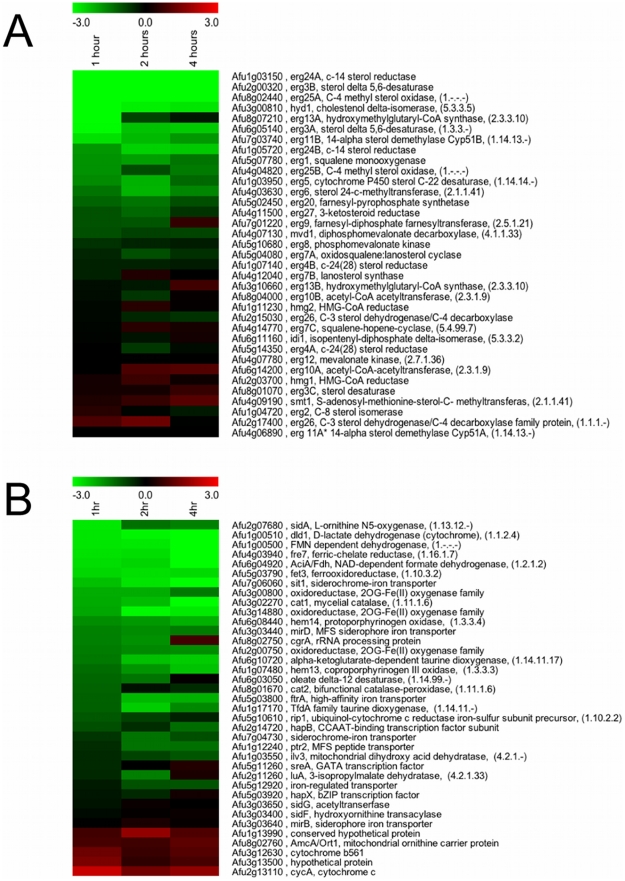
“fumigatus SrbA SREBPs appear to be key regulators of Erg25 and sterol biosynthesis [19,30,47] (Figure 1B, Figure 2, and Figure 5).”
BackgroundMethodInfluentialSelf-citationA High-Affinity Iron Permease Essential for Candida albicans Virulence
Ramanan, N., & Wang, Y. (2000) · Science · doi:10.1126/science.288.5468.1062 · Cited by 336
The SREBP pathway — insights from insigs and insects
Rawson, R. B. (2003) · Nature Reviews Molecular Cell Biology · doi:10.1038/nrm1174 · Cited by 323
SREBP pathway responds to sterols and functions as an oxygen sensor in fission yeast.
Hughes, A. L., Todd, B. L., & Espenshade, P. J. (2005) · Cell · doi:10.1016/j.cell.2005.01.012 · Cited by 320 · cited 2×
“fumigatus SrbA SREBPs appear to be key regulators of Erg25 and sterol biosynthesis [19,30,47] (Figure 1B, Figure 2, and Figure 5).”
BackgroundMellado, E., Diaz-Guerra, T. M., Cuenca-Estrella, M., & Rodriguez-Tudela, J. L. (2001) · Journal of Clinical Microbiology · doi:10.1128/jcm.39.7.2431-2438.2001 · Cited by 307
HapX-Mediated Adaption to Iron Starvation Is Crucial for Virulence of Aspergillus fumigatus
Schrettl, M., Beckmann, N., Varga, J., Heinekamp, T., Jacobsen, I. D., Jöchl, C., Moussa, T. A., Wang, S., Gsaller, F., Blatzer, M., et al. (2010) · PLoS Pathogens · doi:10.1371/journal.ppat.1001124 · Cited by 284 · cited 16×
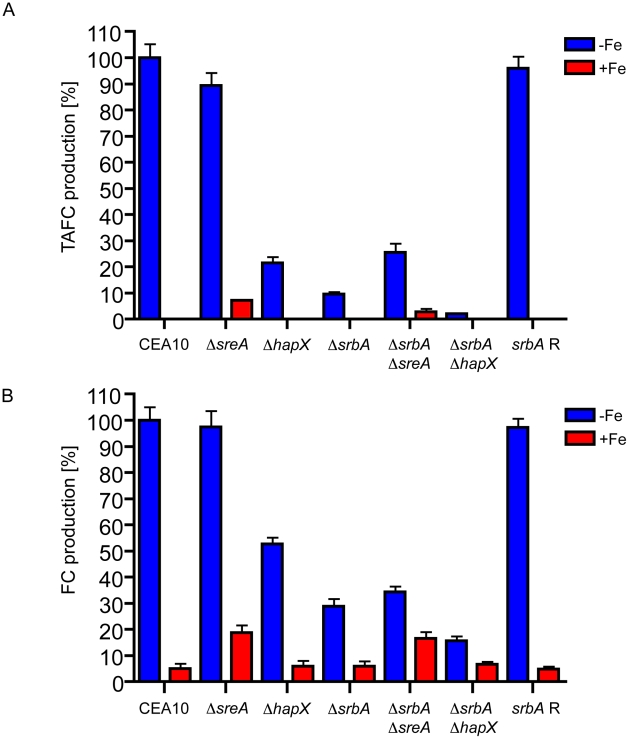
“PLoS Genetics | www.plosgenetics.org 6 December 2011 | Volume 7 | Issue 12 | e1002374 As shown previously for A. fumigatus strain ATCC46445 [4,5], A. fumigatus strain CEA10 accumulates intracellular FC (ferricrocin) in the ferri-form during iron sufficiency and about 20 fold higher amounts in the desferri-form during…”
BackgroundMethodInfluentialSelf-citationRole of hypoxia-inducible factor-1 in transcriptional activation of ceruloplasmin by iron deficiency
Mukhopadhyay, C. K., Mazumder, B., & Fox, P. L. (2000) · Journal of Biological Chemistry · doi:10.1074/jbc.m000636200 · Cited by 274 · cited 1×
“been found to regulate several genes involved in iron metabolism [11,12,13,14].”
BackgroundSreA‐mediated iron regulation in Aspergillus fumigatus
Schrettl, M., Kim, H. S., Eisendle, M., Kragl, C., Nierman, W. C., Heinekamp, T., Werner, E. R., Jacobsen, I., Illmer, P., Yi, H., et al. (2008) · Molecular Microbiology · doi:10.1111/j.1365-2958.2008.06376.x · Cited by 266
Self-citationYoon, D., Pastore, Y. D., Divoky, V., Liu, E., Mlodnicka, A. E., Rainey, K., Ponka, P., Semenza, G. L., Schumacher, A., & Prchal, J. T. (2006) · Journal of Biological Chemistry · doi:10.1074/jbc.m602329200 · Cited by 232
Interaction of HapX with the CCAAT‐binding complex—a novel mechanism of gene regulation by iron
Hortschansky, P., Eisendle, M., Al‐Abdallah, Q., Schmidt, A. D., Bergmann, S., Thön, M., Kniemeyer, O., Abt, B., Seeber, B., Werner, E. R., et al. (2007) · The EMBO Journal · doi:10.1038/sj.emboj.7601752 · Cited by 232
Self-citationHeymann, P., Gerads, M., Schaller, M., Dromer, F., Winkelmann, G., & Ernst, J. F. (2002) · Infection and Immunity · doi:10.1128/iai.70.9.5246-5255.2002 · Cited by 226
Jung, W. H., Sham, A., White, R., & Kronstad, J. W. (2006) · PLoS Biology · doi:10.1371/journal.pbio.0040410 · Cited by 222 · cited 1×
“mechanisms are established fungal virulence attributes [2,3,4,5,6,7,8].”
Grahl, N., Puttikamonkul, S., Macdonald, J. M., Gamcsik, M. P., Ngo, L. Y., Hohl, T. M., & Cramer, R. A. (2011) · PLoS Pathogens · doi:10.1371/journal.ppat.1002145 · Cited by 217
Self-citationRole of the hypoxia inducible factors HIF in iron metabolism
Peyssonnaux, C., Nizet, V., & Johnson, R. S. (2008) · Cell Cycle · doi:10.4161/cc.7.1.5145 · Cited by 217 · cited 1×
“been found to regulate several genes involved in iron metabolism [11,12,13,14].”
BackgroundChang, Y. C., Bien, C. M., Lee, H., Espenshade, P. J., & Kwon‐Chung, K. J. (2007) · Molecular Microbiology · doi:10.1111/j.1365-2958.2007.05676.x · Cited by 212 · cited 5×
“neoformans SREBP null mutant also suggest a potential role for fungal SREBPs in iron acquisition [7,17], here we definitively show that SREBP is required for adaptation to low iron conditions in A.”
BackgroundInfluentialCandida albicans iron acquisition within the host
Almeida, R. S., Wilson, D., & Hube, B. (2009) · FEMS Yeast Research · doi:10.1111/j.1567-1364.2009.00570.x · Cited by 199
Kirkpatrick, C. H., Green, I., Rich, R. R., & Schade, A. L. (1971) · Journal of Infectious Diseases · doi:10.1093/infdis/124.6.539 · Cited by 194
Oberegger, H., Schoeser, M., Zadra, I., Abt, B., & Haas, H. (2001) · Molecular Microbiology · doi:10.1046/j.1365-2958.2001.02586.x · Cited by 186 · cited 1×
“carried out as described previously [58,59].”
Self-citationChun, C. D., Liu, O. W., & Madhani, H. D. (2007) · PLoS Pathogens · doi:10.1371/journal.ppat.0030022 · Cited by 181 · cited 1×
“biosynthesis, and iron uptake in response to hypoxia [17,42,48].”
BackgroundTodd, B. L., Stewart, E. V., Burg, J. S., Hughes, A. L., & Espenshade, P. J. (2006) · Molecular and Cellular Biology · doi:10.1128/mcb.26.7.2817-2831.2006 · Cited by 172 · cited 1×
“biosynthesis, and iron uptake in response to hypoxia [17,42,48].”
BackgroundSREBPs: sterol-regulated transcription factors
Espenshade, P. J. (2006) · Journal of Cell Science · doi:10.1242/jcs.02866 · Cited by 171
Haas, H., Zadra, I., Stöffler, G., & Angermayr, K. (1999) · Journal of Biological Chemistry · doi:10.1074/jbc.274.8.4613 · Cited by 168 · cited 1×
“nidulans has been observed to partially derepress siderophore production and expression of respective genes involved in iron acquisition in iron replete conditions [15,43].”
BackgroundSelf-citationErgosterol biosynthesis pathway in Aspergillus fumigatus
Alcazar-Fuoli, L., Mellado, E., Garcia-Effron, G., Lopez, J. F., Grimalt, J. O., Cuenca-Estrella, J. M., & Rodriguez-Tudela, J. L. (2008) · Steroids · doi:10.1016/j.steroids.2007.11.005 · Cited by 162
Iron Source Preference and Regulation of Iron Uptake in Cryptococcus neoformans
Jung, W. H., Sham, A., Lian, T., Singh, A., Kosman, D. J., & Kronstad, J. W. (2008) · PLoS Pathogens · doi:10.1371/journal.ppat.0040045 · Cited by 159
Jung, W. H., Saikia, S., Hu, G., Wang, J., Fung, C. K.-Y., D'Souza, C., White, R., & Kronstad, J. W. (2010) · PLoS Pathogens · doi:10.1371/journal.ppat.1001209 · Cited by 155
Prasad, T., Chandra, A., Mukhopadhyay, C. K., & Prasad, R. (2006) · Antimicrobial Agents and Chemotherapy · doi:10.1128/aac.00653-06 · Cited by 149 · cited 1×
“, a link between iron availability and fluconazole susceptibility has been suggested”
BackgroundIron-dependent metabolic remodeling in S. cerevisiae
Kaplan, J., Ward, D. M., Crisp, R., & Philpott, C. C. (2006) · Biochimica et Biophysica Acta (BBA) - Molecular Cell Research · doi:10.1016/j.bbamcr.2006.03.008 · Cited by 136
Vödisch, M., Scherlach, K., Winkler, R., Hertweck, C., Braun, H.-P., Roth, M., Haas, H., Werner, E. R., Brakhage, A. A., & Kniemeyer, O. (2011) · Journal of Proteome Research · doi:10.1021/pr1012812 · Cited by 128
Self-citationMellado, E., Garcia-Effron, G., Buitrago, M. J., Alcazar-Fuoli, L., Cuenca-Estrella, M., & Rodriguez-Tudela, J. L. (2005) · Antimicrobial Agents and Chemotherapy · doi:10.1128/aac.49.6.2536-2538.2005 · Cited by 127
Wallner, A., Blatzer, M., Schrettl, M., Sarg, B., Lindner, H., & Haas, H. (2009) · Applied and Environmental Microbiology · doi:10.1128/aem.00479-09 · Cited by 124 · cited 1×
“including the siderophore system and reductive iron assimilation”
BackgroundSelf-citationPuttikamonkul, S., Willger, S. D., Grahl, N., Perfect, J. R., Movahed, N., Bothner, B., Park, S., Paderu, P., Perlin, D. S., & Cramer Jr, R. A. (2010) · Molecular Microbiology · doi:10.1111/j.1365-2958.2010.07254.x · Cited by 119
Self-citationFat accumulation in Caenorhabditis elegans is mediated by SREBP homolog SBP-1
Nomura, T., Horikawa, M., Shimamura, S., Hashimoto, T., & Sakamoto, K. (2009) · Genes & Nutrition · doi:10.1007/s12263-009-0157-y · Cited by 117 · cited 1×
“In mammals, SREBPs have been observed to regulate cholesterol, lipid, and carbohydrate metabolism whereas in cholesterol auxotrophs such as Drosophila melanogaster and Caenorhabditis elegans SREBPs function to regulate fatty acid biosynthesis and development [24,25,26,27,28].”
BackgroundIron‐regulated transcription and capsule formation in the fungal pathogen Cryptococcus neoformans
Lian, T., Simmer, M. I., D’Souza, C. A., Steen, B. R., Zuyderduyn, S. D., Jones, S. J. M., Marra, M. A., & Kronstad, J. W. (2005) · Molecular Microbiology · doi:10.1111/j.1365-2958.2004.04474.x · Cited by 113
Hissen, A. H. T., Chow, J. M. T., Pinto, L. J., & Moore, M. M. (2004) · Infection and Immunity · doi:10.1128/iai.72.3.1402-1408.2004 · Cited by 112 · cited 2×
“mechanisms are established fungal virulence attributes [2,3,4,5,6,7,8].”
BackgroundSREBPs: sterol-regulated transcription factors
Espenshade, P. J. (2006) · Journal of Cell Science · doi:10.1242/jcs02866 · Cited by 108 · cited 1×
“SREBPs are a unique family of membrane bound basic helix-loop-helix (bHLH) transcription factors that mediate a diverse array of biological processes in eukaryotic organisms [23].”
BackgroundIron and fungal pathogenesis: a case study with Cryptococcus neoformans: Iron and cryptococcosi
Jung, W. H., & Kronstad, J. W. (2007) · Cellular Microbiology · doi:10.1111/j.1462-5822.2007.01077.x · Cited by 106 · cited 2×
“neoformans SREBP null mutant also suggest a potential role for fungal SREBPs in iron acquisition [7,17], here we definitively show that SREBP is required for adaptation to low iron conditions in A.”
BackgroundKim, S., Hu, J., Oh, Y., Park, J., Choi, J., Lee, Y., Dean, R. A., & Mitchell, T. K. (2010) · PLoS Pathogens · doi:10.1371/journal.ppat.1000909 · Cited by 96 · cited 1×
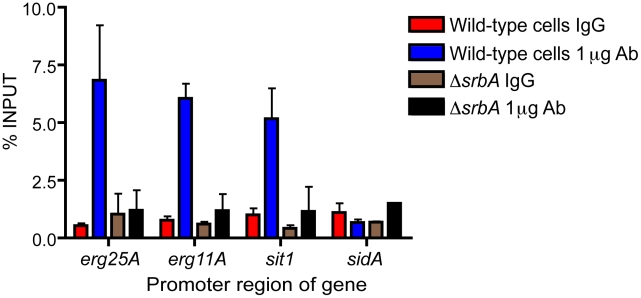
“ChIP was performed after four hours exposure to hypoxia using methods in Kim et al. 2010 [55].”
MethodResponses to hypoxia in fungal pathogens
Ernst, J. F., & Tielker, D. (2009) · Cellular Microbiology · doi:10.1111/j.1462-5822.2008.01259.x · Cited by 94 · cited 2×
“been hypothesized that adaptation to low oxygen microenvironments during fungal infection may also be a critical virulence attribute of human pathogenic fungi [17,18,19,20,22].”
BackgroundBerger, H., Basheer, A., Böck, S., Reyes‐Dominguez, Y., Dalik, T., Altmann, F., & Strauss, J. (2008) · Molecular Microbiology · doi:10.1111/j.1365-2958.2008.06359.x · Cited by 91
Warrilow, A. G. S., Melo, N., Martel, C. M., Parker, J. E., Nes, W. D., Kelly, S. L., & Kelly, D. E. (2010) · Antimicrobial Agents and Chemotherapy · doi:10.1128/aac.00316-10 · Cited by 85
MENDEL, G. A. (1961) · Blood · doi:10.1182/blood.v18.6.727.727 · Cited by 82 · cited 1×
“demonstrating increased iron absorption in response to hypoxia [9].”
BackgroundHigh-performance liquid chromatography of siderophores from fungi
Konetschny-Rapp, S., Huschka, H.-G., Winkelmanne, G., & Jung, G. (1988) · BioMetals · doi:10.1007/bf01128012 · Cited by 80
Esterly, N. B., Brammer, S. R., & Crounse, R. G. (1967) · Journal of Investigative Dermatology · doi:10.1038/jid.1967.162 · Cited by 75
Schrettl, M., Ibrahim-Granet, O., Droin, S., Huerre, M., Latgé, J.-P., & Haas, H. (2010) · Microbes and Infection · doi:10.1016/j.micinf.2010.07.005 · Cited by 67
Self-citationRawson, R. B. (2003) · Biochemical Society Symposia · doi:10.1042/bss0700221 · Cited by 65 · cited 1×
“In mammals, SREBPs have been observed to regulate cholesterol, lipid, and carbohydrate metabolism whereas in cholesterol auxotrophs such as Drosophila melanogaster and Caenorhabditis elegans SREBPs function to regulate fatty acid biosynthesis and development [24,25,26,27,28].”
BackgroundBien, C. M., Chang, Y. C., Nes, W. D., Kwon‐Chung, K. J., & Espenshade, P. J. (2009) · Molecular Microbiology · doi:10.1111/j.1365-2958.2009.06895.x · Cited by 62
Aspergillus fumigatus AcuM regulates both iron acquisition and gluconeogenesis: A. fumigatus AcuM
Liu, H., Gravelat, F. N., Chiang, L. Y., Chen, D., Vanier, G., Ejzykowicz, D. E., Ibrahim, A. S., Nierman, W. C., Sheppard, D. C., & Filler, S. G. (2010) · Molecular Microbiology · doi:10.1111/j.1365-2958.2010.07389.x · Cited by 61 · cited 2×
“Though it is unclear if the effects of AcuM on SreA and HapX are indirect or direct, AcuM null mutants have decreased siderophore production and attenuated virulence [16].”
Background4-Methyl sterols regulate fission yeast SREBP-Scap under low oxygen and cell stress.
Hughes, A. L., Lee, C.-Y. S., Bien, C. M., & Espenshade, P. J. (2007) · Journal of Biological Chemistry · doi:10.1074/jbc.m701326200 · Cited by 60 · cited 1×
“fumigatus SrbA SREBPs appear to be key regulators of Erg25 and sterol biosynthesis [19,30,47] (Figure 1B, Figure 2, and Figure 5).”
BackgroundRegulation of hypoxia adaptation: an overlooked virulence attribute of pathogenic fungi?
Grahl, N., & Cramer, R. A. (2010) · Medical Mycology · doi:10.3109/13693780902947342 · Cited by 59 · cited 2×
“been hypothesized that adaptation to low oxygen microenvironments during fungal infection may also be a critical virulence attribute of human pathogenic fungi [17,18,19,20,22].”
BackgroundSelf-citationStudies on iron absorption: II. Transport mechanism of low molecular iron chelate in rat intestine
Terato, K., Hiramatsu, Y., & Yoshino, Y. (1973) · Digestive Diseases and Sciences · doi:10.1007/bf01073156 · Cited by 59
Fungal mechanisms for host iron acquisition
Kornitzer, D. (2009) · Current Opinion in Microbiology · doi:10.1016/j.mib.2009.05.005 · Cited by 55
Implications of hypoxic microenvironments during invasive aspergillosis
Wezensky, S. J., & Cramer, R. A. (2011) · Medical Mycology · doi:10.3109/13693786.2010.495139 · Cited by 37 · cited 1×
“An appreciation for the involvement of hypoxia in fungal pathogenesis is recent and strongly supported by characterization of fungal sterol regulatory element binding protein (SREBP) null mutants that are incapable of growth in hypoxia, attenuated in fungal virulence, and more susceptible to triazole antifungal drugs…”
BackgroundSelf-citationEffect of iron deprivation on surface composition and virulence determinants of Candida albicans
Sweet, S. P., & Douglas, J. (1991) · Journal of General Microbiology · doi:10.1099/00221287-137-4-859 · Cited by 26
Regulation of hypoxia adaptation: an overlooked virulence attribute of pathogenic fungi?
Grahl, N., & Cramer, R. A. (2009) · Medical Mycology · doi:10.1080/13693780902947342 · Cited by 5
Self-citationIron deficiency and candida infection.
Tattersall, P. (1990) · PubMed · Cited by 1
Research works printed but not linked: 2
- Chun CD Liu OW Madhani HD 2007 A link between virulence and homeostatic responses to hypoxia during infection by the human fungal pathogen Cryptococcus neoformans. PLoS Pathog 3 e22 doi: 10.1371/journal.ppat.0030022 17319742 PMC1803011 · DOI · Paper page
- Todd BL Stewart EV Burg JS Hughes AL Espenshade PJ 2006 Sterol regulatory element binding protein is a principal regulator of anaerobic gene expression in fission yeast. Molecular and cellular biology 26 2817 2831 16537923 PMC1430309 · DOI · Paper page
Cited by
Aspergillus fumigatus and Aspergillosis in 2019
Latgé, J.-P., & Chamilos, G. (2019) · Clinical Microbiology Reviews · doi:10.1128/cmr.00140-18 · Cited by 1,400
Fungal siderophore metabolism with a focus on Aspergillus fumigatus
Haas, H. (2014) · Nat. Prod. Rep. · doi:10.1039/c4np00071d · Cited by 324
Self-citationIron - a key nexus in the virulence of Aspergillus fumigatus
Haas, H. (2012) · Frontiers in Microbiology · doi:10.3389/fmicb.2012.00028 · Cited by 217
Self-citationCamps, S. M. T., Dutilh, B. E., Arendrup, M. C., Rijs, A. J. M. M., Snelders, E., Huynen, M. A., Verweij, P. E., & Melchers, W. J. G. (2012) · PLoS ONE · doi:10.1371/journal.pone.0050034 · Cited by 212
“A subsequent study suggested that the increased fluconazole susceptibility in the absence of SrbA was partially due to loss of iron homeostasis [81].”
BackgroundChung, D., Barker, B. M., Carey, C. C., Merriman, B., Werner, E. R., Lechner, B. E., Dhingra, S., Cheng, C., Xu, W., Blosser, S. J., et al. (2014) · PLoS Pathogens · doi:10.1371/journal.ppat.1004487 · Cited by 193
“Using this motif, we analyzed a previously published DsrbA microarray dataset, which revealed that this SrbA DNA binding motif is overrepresented among the differentially expressed genes when comparing wild type to DsrbA further validating the SRE motif [38].”
BackgroundMethodInfluentialSelf-citation
Metadata
- Authors
- Blatzer, M., Barker, B. M., Willger, S. D., Beckmann, N., Blosser, S. J., Cornish, E. J., Mazurie, A., Grahl, N., Haas, H., & Cramer, R. A.
- Affiliations
- Innsbruck Medical University (AT)
- Montana State University (US)
- Corresponding author
- Haas, Hubertus
- Cramer, Robert A.
- ORCID
- Venue
- PLoS Genetics
- Publisher
- Public Library of Science (PLoS)
- Published
- 2011-12-01
- Volume
- 7
- Issue
- 12
- Pages
- e1002374
- ISSN
- 1553-7390 (ISSN-L)
- 1553-7404
- PMC
- PMC3228822
- OpenAlex
- W2017186637
- Cited by
- 175
- References
- 62
- Citations by year
- 2026: 9 · 2025: 6 · 2024: 8 · 2023: 6 · 2022: 9 · 2021: 10 · 2020: 11 · 2019: 10 · 2018: 10 · 2017: 15 · 2016: 23 · 2015: 11 · 2014: 15 · 2013: 14 · 2012: 16
- FWCI
- 5.97
- Type
- journal article
- Language
- en
- Open access
- gold
- doi.org
- Locations
- PLoS Genetics (publishedVersion, cc-by)
- Europe PMC (PubMed Central) (publishedVersion, cc-by)
- PubMed Central (publishedVersion, cc-by)
- PubMed (publishedVersion)
- Montana State University ScholarWorks (Montana State University) (submittedVersion, cc-by)
- DOAJ (DOAJ: Directory of Open Access Journals) (submittedVersion, cc-by-sa)
- Figshare (submittedVersion, cc-by)
- Funders
- American Heart Association
- Ohio State University
- Montana State University
- Imperial College London
- Austrian Science Fund (P18606)
- National Institutes of Health (project 2, RR 020185)
- National Institute of Allergy and Infectious Diseases (R01 AI81838, L40 AI084526, R01AI081838)
- National Center for Research Resources (P20RR020185, RR 020185)
- Topics
- Life Sciences › Biochemistry, Genetics and Molecular Biology › Molecular Biology › Fungal and yeast genetics research
- Health Sciences › Medicine › Infectious Diseases › Antifungal resistance and susceptibility
- Health Sciences › Medicine › Infectious Diseases › Fungal Infections and Studies
- Keywords
- SREBP, Aspergillus fumigatus, iron homeostasis, ergosterol biosynthesis, hypoxia, iron acquisition, fungal virulence, fungal pathogens, transcriptional regulation
- MeSH terms
- Animals, Antifungal Agents, Aspergillus fumigatus, Ergosterol, Homeostasis, Humans, Iron, Lung Diseases, Fungal, Triazoles, Gene Expression Regulation, Fungal, Siderophores, Oligonucleotide Array Sequence Analysis, Drug Resistance, Fungal, Mice, Sterol Regulatory Element Binding Proteins
About these checks
Registry, retraction, Cites and statistics results are computed, not judged, with one exception: a printed reference that no index lists is read once by a model before it counts as a citation error. Claims are extracted by a model and kept only when their quote appears verbatim in the text; each cited source is then checked, with a model’s help, for whether it says what the claim relies on. Those verdicts can be wrong — read the claim’s quote and the cited source before relying on one.
Statistics and arithmetic are recomputed, not judged.
Confidence bands are shown only for fields calibrated on our annotated test set. None is calibrated yet, so no band is shown.
What counts as a claim ›How we measure confidence ›How we check this ›
Are you an author, or do you see a problem with this page? Request a review
Data sources
Bibliographic data: Semantic Scholar, OpenAlex, Crossref.
Contains information from the Semantic Scholar Academic Graph Datasets, made available under the ODC Attribution License (ODC-BY 1.0).
Semantic Scholar’s data is described in: Kinney, R., et al. (2023). The Semantic Scholar Open Data Platform. arXiv:2301.10140.
