

Genetic and Functional Analyses of SHANK2 Mutations Suggest a Multiple Hit Model of Autism Spectrum Disorders
Open accessThe DOI matches its Crossref record; 87 of the 91 references it cites were found in a registry or an index; 17 of the 43 sources its claims cite were checked for support.
Abstract
Autism spectrum disorders (ASD) are a heterogeneous group of neurodevelopmental disorders with a complex inheritance pattern. While many rare variants in synaptic proteins have been identified in patients with ASD, little is known about their effects at the synapse and their interactions with other genetic variations. Here, following the discovery of two de novo SHANK2 deletions by the Autism Genome Project, we identified a novel 421 kb de novo SHANK2 deletion in a patient with autism. We then sequenced SHANK2 in 455 patients with ASD and 431 controls and integrated these results with those reported by Berkel et al. 2010 (n = 396 patients and n = 659 controls). We observed a significant enrichment of variants affecting conserved amino acids in 29 of 851 (3.4%) patients and in 16 of 1,090 (1.5%) controls (P = 0.004, OR = 2.37, 95% CI = 1.23-4.70). In neuronal cell cultures, the variants identified in patients were associated with a reduced synaptic density at dendrites compared to the variants only detected in controls (P = 0.0013). Interestingly, the three patients with de novo SHANK2 deletions also carried inherited CNVs at 15q11-q13 previously associated with neuropsychiatric disorders. In two cases, the nicotinic receptor CHRNA7 was duplicated and in one case the synaptic translation repressor CYFIP1 was deleted. These results strengthen the role of synaptic gene dysfunction in ASD but also highlight the presence of putative modifier genes, which is in keeping with the "multiple hit model" for ASD. A better knowledge of these genetic interactions will be necessary to understand the complex inheritance pattern of ASD.
Overview
CoChat Summary
TL;DR
This study identifies a novel de novo SHANK2 deletion and finds enrichment of conserved SHANK2 variants in ASD, with patient variants reducing synaptic density in vitro. It also reports inherited 15q11–q13 CNVs in all three patients with de novo SHANK2 deletions, supporting a multiple-hit model.
Key findings
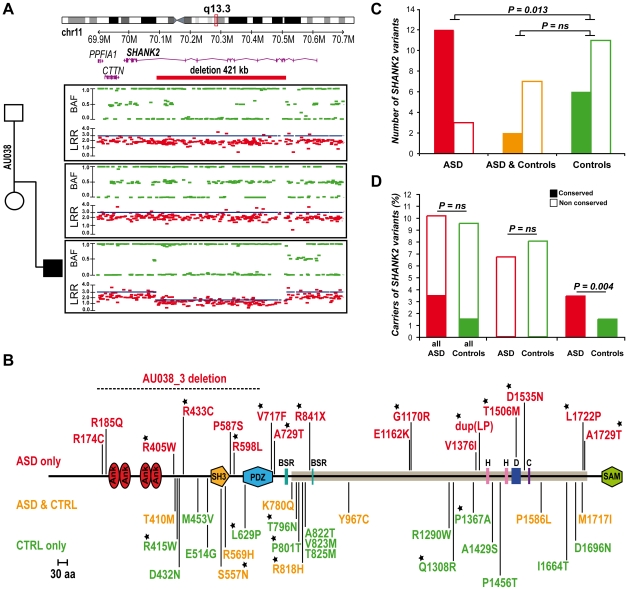
- A novel 421.2 kb de novo SHANK2 deletion was found in patient AU038_3 with autism and moderate ID; it covered 12 exons (E5–E16), altered all SHANK2 isoforms, was absent from parents, originated on the maternal chromosome, and was absent in more than 5000 controls and the Database of Genomic Variants.
- SHANK2 variants affecting conserved amino acids were enriched in ASD: 29 of 851 (3.4%) patients versus 16 of 1090 (1.5%) controls (Fisher’s exact test 1-sided, P = 0.004, OR = 2.37, 95% CI = 1.23–4.70).
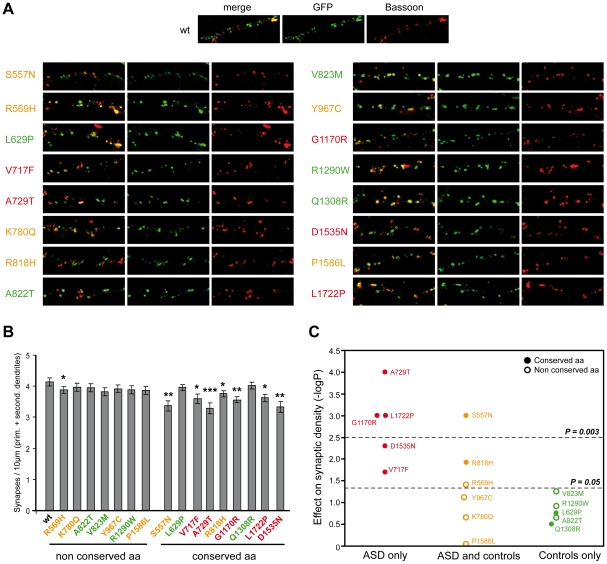
- In cultured neurons, 8 variants reduced Shank2-positive synapse density; after Bonferroni correction, 4 remained significant (A729T, G1170R, L1722P identified only in patients; S557N observed more frequently in patients). Patient variants were associated with lower synaptic density than variants shared by patients and controls (P = 0.022) or detected only in controls (P = 0.0013).
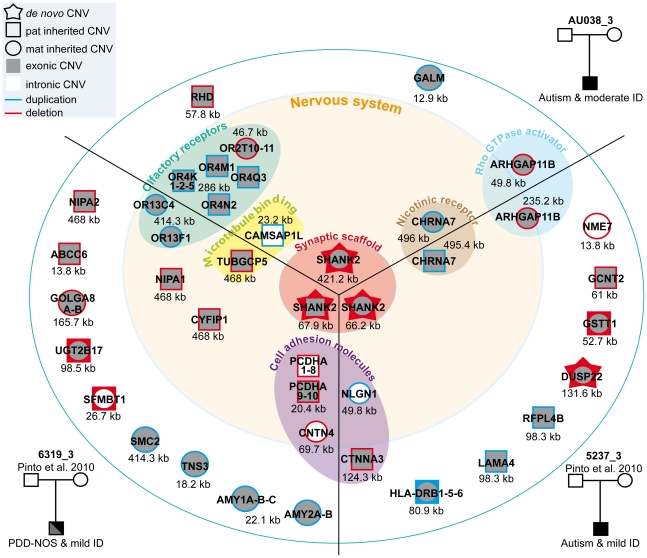
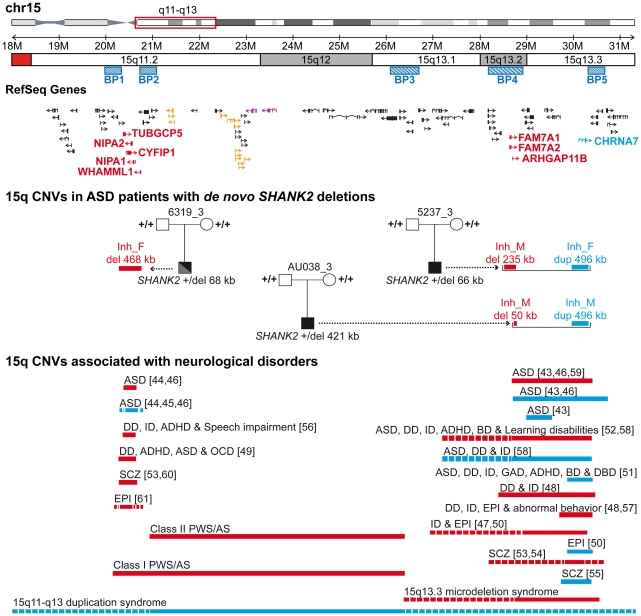
- All three patients with de novo SHANK2 deletions also carried inherited 15q11–q13 CNVs: two had a 496 kb CHRNA7 duplication, and one had a 468 kb BP1–BP2 deletion removing NIPA1, NIPA2, CYFIP1, and TUBGCP5.
Methods
- CNV analysis used Illumina 1M Duo SNP arrays in 260 patients with ASD; mutation screening sequenced SHANK2E in 230 patients and 230 controls and ProSAP1A in an additional 225 patients and 201 controls, integrated with Berkel et al. 2010 (396 patients and 659 controls); enrichment was tested with 1-sided Fisher’s exact tests.
- Functional assays introduced 16 variants from the first screen into rat GFP-ProSAP1A/Shank2A cDNA, transfected primary rat hippocampal neurons, and quantified Shank2-positive synapses per 10 µm dendrite using Mann-Whitney U tests and Student’s t tests.
- CNV burden was analyzed in the three patients with de novo SHANK2 deletions and in the control carrying the SHANK2 splice mutation, using the study’s 260 patients/290 controls and the Autism Genome Project dataset of 996 patients/1287 controls, with 2-sided Fisher’s exact tests.
Limitations
- The paper states that the in vitro assays show variants can potentially impact protein function but do not confirm deleterious effects on neuronal function in vivo in people carrying them; parents were apparently asymptomatic, so the causative role of inherited variants remains difficult to ascertain.
- The paper states that the epistasis findings are based on small numbers and that, from a single control subject, it cannot formally prove that additional hits at SNTG2 and/or MYT1L acted as suppressor mutations.
- Evident from the text: the functional work relies on overexpression in cultured neurons rather than endogenous or in vivo models, and several co-occurring CNV comparisons were not statistically significant (e.g., CHRNA7 duplication P = 0.19; ARHGAP11B deletion P = 0.15; BP1–BP2 deletion P = 0.74), so the multiple-hit interpretation rests on small patient counts.
Model-written summary. Check it against the paper before relying on it.
Integrity signals
Registry
Cites
Statistics
Figures
Verification
Claims the paper makes
7 Valid · 2 Not valid · 17 Not checked · 98 Own results and interpretations
The cited sources support only part of this claim — read each source’s verdict below.
In the paper
“These duplications are considered of uncertain clinical significance since they were previously detected at similar frequencies in patients with epilepsy (6 of 647, 0.93%), in controls (19 of 3699, 0.51%) [50], and in subjects referred for chromosomal microarray analysis (55 of 8832, 0.62%) [51].”
§ Genetic and Functional Analyses of SHANK2 Mutations Suggest a Multiple Hit Model of Autism Spectrum Disorders > Results > Additional CNVs affect neuronal genes in patients with de novo SHANK2 deletions and in the control carrying the SHANK2 splice mutation
What the sources say
- Partly supportedcites [50] Helbig I Mefford HC Sharp AJ Guipponi M Fichera M 2009 15q13.3 microdeletions increase risk of idiopathic generalized epilepsy. Nat Genet 41 160 162 19136953 PMC3026630 sourceExperimental — accuracy not yet measured
The passage on CHRNA7 duplications (section labeled Abstract; no page given) reports similar frequencies in epilepsy cases and controls (P = 0.27) and concludes that the duplication is not a major risk factor for idiopathic generalized epilepsy. It reports 12 of 1,223 cases and 23 of 3,699 controls, however, not the 6 of 647 and 19 of 3,699 attributed to this source. The chromosomal-microarray referral figure is attached to a different citation in the citing sentence. (LLM, conf=0.88)
- Supportedcites [51] Szafranski P Schaaf CP Person RE Gibson IB Xia Z 2010 Structures and molecular mechanisms for common 15q13.3 microduplications involving CHRNA7: benign or pathological? Hum Mutat 31 840 850 20506139 PMC3162316 source
The Subjects and Methods section reports 55 small CHRNA7 microduplications among 8,832 people referred for chromosomal microarray analysis, matching the figure attached to this citation. The abstract calls their clinical significance uncertain, and the Discussion says the limited control frequency data were not significantly different from those in patients. The epilepsy and control counts in the citing sentence are attached to a different citation. (LLM, conf=0.92)
plain- Asserted: passes — The authors put it forward as true.
- Checkable: passes — It can be checked against evidence.
- Load-bearing: unclear — It is unclear whether the paper’s conclusions depend on it.
- Based: passes — The paper gives a reason why it holds.
- Partly supported
The cited sources that could be checked couldn’t confirm or dispute this claim.
In the paper
“As reported for SHANK3 [7], no other coding variations were detected in the remaining SHANK2 allele of the deletion carriers”
§ Genetic and Functional Analyses of SHANK2 Mutations Suggest a Multiple Hit Model of Autism Spectrum Disorders > Discussion > Deleterious SHANK2 variations are enriched in patients with ASD, but also observed in controls
What the sources say
- Could not verifycites [7] Durand CM Betancur C Boeckers TM Bockmann J Chaste P 2007 Mutations in the gene encoding the synaptic scaffolding protein SHANK3 are associated with autism spectrum disorders. Nat Genet 39 25 27 17173049 PMC2082049 sourceExperimental — accuracy not yet measured
Our copy of Durand et al. (2007) describes the deletion carriers (family ASD 1 proband with a de novo 22q13 deletion breaking in SHANK3 intron 8, Results p. 2 and Fig. 1 legend p. 6; family ASD 3 girl with a 22qter deletion, Results p. 3) and reports rare nonsynonymous SHANK3 variations only in 'the remaining individuals with ASD' (Results p. 3), but no passage states that the retained (non-deleted) SHANK3 allele of the deletion carriers was sequenced and found free of coding variations. The nearest sentence, 'No other SHANK3 deletions or duplications were observed after screening 155 individuals by quantitative PCR' (Results p. 3), concerns copy-number changes across the cohort, not coding variants on the remaining allele. Searches on 'remaining/second/wild-type allele', 'hemizygous deletion carriers', and 'coding variations in deletion patients' returned no passage addressing the attributed point, so the parallel the citing authors draw cannot be checked against this paper. (LLM, conf=0.70)
plain- Asserted: passes — The authors put it forward as true.
- Checkable: passes — It can be checked against evidence.
- Load-bearing: passes — The paper’s conclusions depend on it.
- Based: passes — The paper gives a reason why it holds.
- Could not verify
The sources with a verdict support this claim; the rest weren’t checked yet, have no full text we could read, or their verdicts aren’t rated yet.
In the paper
“Notably, the three ASD patients with de novo SHANK2 deletions also carried CNVs on chromosome 15q11–q13, a region associated with ASD [43], [47], [48], [50]–[52], [72].”
§ Genetic and Functional Analyses of SHANK2 Mutations Suggest a Multiple Hit Model of Autism Spectrum Disorders > Discussion > Additional CNVs in subjects with SHANK2 mutations may modulate the risk for ASD
What the sources say
- Supportedcites [43] Miller DT Shen Y Weiss LA Korn J Anselm I 2009 Microdeletion/duplication at 15q13.2q13.3 among individuals with features of autism and other neuropsychiatric disorders. J Med Genet 46 242 248 18805830 PMC4090085 source
The Introduction (page unavailable) states that genomic imbalance in proximal chromosome 15q, including duplications at 15q11–q13, has been associated with autism. This supports the regional association for which this citation is offered; the sentence’s identification of three patients with SHANK2 deletions is not attributed specifically to this source. (LLM, conf=0.90)
- Could not verifycites [47] Sharp AJ Mefford HC Li K Baker C Skinner C 2008 A recurrent 15q13.3 microdeletion syndrome associated with mental retardation and seizures. Nat Genet 40 322 328 18278044 PMC2365467 sourceExperimental — accuracy not yet measured
The paper’s Abstract describes 15q13.3 deletions in patients with intellectual disability and seizures, not the three ASD patients with de novo SHANK2 deletions. Searches for ASD, autism, and 15q11–q13 did not find a passage in our copy establishing the claimed ASD association or those patients’ additional CNVs. (LLM, conf=0.76)
- Not checked yetcites [48] Masurel-Paulet A Andrieux J Callier P Cuisset JM Le Caignec C 2010 Delineation of 15q13.3 microdeletions. Clin Genet 78 149 161 20236110 source
plainstates an associationn = 3- Asserted: passes — The authors put it forward as true.
- Checkable: passes — It can be checked against evidence.
- Load-bearing: passes — The paper’s conclusions depend on it.
- Based: passes — The paper gives a reason why it holds.
- Supported
The cited sources support only part of this claim — read each source’s verdict below.
In the paper
“However, the most compelling candidate in the deleted region is CYFIP1 [45], [53], which codes for a binding partner of FMRP, the protein responsible for fragile X syndrome.”
§ Genetic and Functional Analyses of SHANK2 Mutations Suggest a Multiple Hit Model of Autism Spectrum Disorders > Discussion > Additional CNVs in subjects with SHANK2 mutations may modulate the risk for ASD
What the sources say
- Partly supportedcites [45] van der Zwaag B Staal WG Hochstenbach R Poot M Spierenburg HA 2010 A co-segregating microduplication of chromosome 15q11.2 pinpoints two risk genes for autism spectrum disorder. Am J Med Genet B Neuropsychiatr Genet 153B 960 966 20029941 PMC2933514 sourceExperimental — accuracy not yet measured
The paper identifies CYFIP1 as the best candidate gene in the 15q11.2 region and says it directly interacts with FMRP (passages labeled Abstract; page unavailable). Its own ASD findings concern a duplication, not a deletion, so it does not establish CYFIP1 as the leading candidate specifically for the citing sentence’s deleted region. (LLM, conf=0.84)
- Supportedcites [53] Stefansson H Rujescu D Cichon S Pietilainen OP Ingason A 2008 Large recurrent microdeletions associated with schizophrenia. Nature 455 232 236 18668039 PMC2687075 source
The Abstract passage on the 15q11.2 deletion (passages 8 and 1) identifies CYFIP1 as the gene most likely to explain the associated phenotype. It says CYFIP1 interacts with FMRP and that fragile X syndrome is caused by loss of FMRP function. (LLM, conf=0.93)
boosted- Asserted: passes — The authors put it forward as true.
- Checkable: passes — It can be checked against evidence.
- Load-bearing: passes — The paper’s conclusions depend on it.
- Based: passes — The paper gives a reason why it holds.
- Partly supported
A result the paper reports from its own data — it cites no other source for it, so there is none to check. The quote shows it is in the paper.
In the paper
“In the patient sample, 5/5 variants affected conserved amino acids in the SHANK proteins compared with only 2/6 in the group of variants identified in patients and controls, and 2/5 in the control group.”
§ Genetic and Functional Analyses of SHANK2 Mutations Suggest a Multiple Hit Model of Autism Spectrum Disorders > Results > Several SHANK2 variants identified in patients alter synapse density in cultured neurons
plainstates an associationn = 5- Asserted: passes — The authors put it forward as true.
- Checkable: passes — It can be checked against evidence.
- Load-bearing: passes — The paper’s conclusions depend on it.
- Based: passes — The paper gives a reason why it holds.
- Rests on an assumption not shown here.
61 more claims
Create a free account to see all 124 claims and to verify the 26 references still open.
- It may state two separate claims as one. 34
- Probably not a substantial claim. 35
Claims other papers make about this one
Each is checked against this paper’s own text: does it say what the citing paper says it does?
The source backs part of the claim, not all of it — or backs it for a different population, condition or comparison.
In the citing paper
“SHANK genes display a complex transcriptional regulation with multiple intragenic promoters and extensive alternatively spliced exons both in humans and mice (Leblond et al., 2012; Lim et al., 1999; Maunakea et al., 2010; McWilliams et al., 2004; Redecker et al., 2006; Wang et al., 2011; Wilson et al., 2003).”
From Modeling Autism by SHANK Gene Mutations in Mice (2013) · cites this paper as Leblond et al., 2012
Experimental — accuracy not yet measuredThe source backs part of the claim, not all of it — or backs it for a different population, condition or comparison.
In the citing paper
“Recent evidence indicates that dysregulation and or mutations of FMRP-interacting proteins, such as the cytoplasmic FMRP-interacting protein 1 (CYFIP1) (52-55), eukaryotic initiation factor 4 (eIF4E) (56,57), and a subset of FMRP mRNA targets (58), may contribute to the ASD phenotype observed in FXS.”
From Fragile X syndrome: causes, diagnosis, mechanisms, and therapeutics (2012) · cites this paper as [55]
Experimental — accuracy not yet measuredThe source backs part of the claim, not all of it — or backs it for a different population, condition or comparison.
In the citing paper
“Deletions and duplications of a chromosomal region including CYFIP1 have been linked to ID, ASD, and schizophrenia (Cooper et al., 2011, Doornbos et al., 2009, Leblond et al., 2012, Murthy et al., 2007, Nowicki et al., 2007, Tam et al., 2010, van der Zwaag et al., 2010, von der Lippe et al., 2010, Zhao et al., 2012).”
From CYFIP1 Coordinates mRNA Translation and Cytoskeleton Remodeling to Ensure Proper Dendritic Spine Formation (2013) · cites this paper as Leblond et al., 2012
Experimental — accuracy not yet measuredThe cited source says what the claim attributes to it.
In the citing paper
“SHANK2 exhibits transcriptional regulation similar to SHANK3 (Leblond et al., 2012).”
From Modeling Autism by SHANK Gene Mutations in Mice (2013) · cites this paper as Leblond et al., 2012
The cited source says what the claim attributes to it.
In the citing paper
“However, a recent report indicates that SHANK2E is also expressed in brain tissues in humans (Leblond et al., 2012).”
From Modeling Autism by SHANK Gene Mutations in Mice (2013) · cites this paper as Leblond et al., 2012
8 more claims about this paper
Create a free account to see every claim other papers make about this one.
Self-check
Percentages, sums and reported differences re-computed from the paper’s own numbers.
Each contradiction between two passages listed here was confirmed by an independent check.
Rated minor: it would not touch a result — a value no result rests on, a p-value that stays on the same side of the significance level, or a conflict that is clerical, resolved elsewhere in the paper, or outside its own findings.
In the paper
§ Genetic and Functional Analyses of SHANK2 Mutations Suggest a Multiple Hit Model of Autism Spectrum Disorders > Results > SHANK2 coding variants affecting conserved amino acids are enriched in patients with ASD
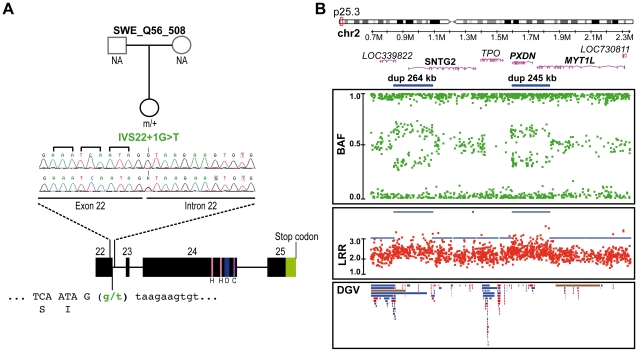
“The two close duplications span 264 kb and 245 kb on chromosome 2 and altered LOC339822 and SNTG2, and PXDN and MYT1L, respectively.”
§ Genetic and Functional Analyses of SHANK2 Mutations Suggest a Multiple Hit Model of Autism Spectrum Disorders > Results > Additional CNVs affect neuronal genes in patients with de novo SHANK2 deletions and in the control carrying the SHANK2 splice mutation
“Two close duplications on 2p25.3 were detected, altering four genes, LOC391343, SNTG2, PXDN and MYT1L.”
Rated minor: it would not touch a result — a value no result rests on, a p-value that stays on the same side of the significance level, or a conflict that is clerical, resolved elsewhere in the paper, or outside its own findings.
In the paper
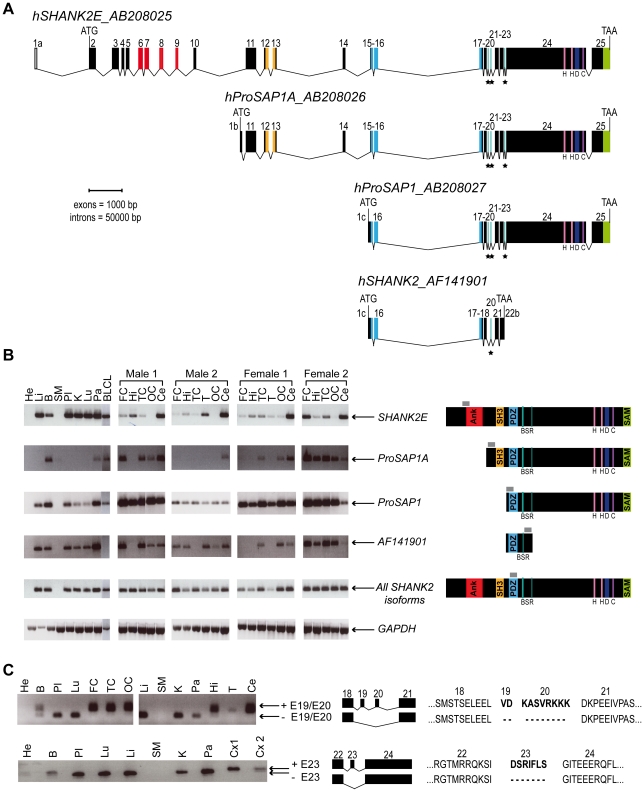
§ Genetic and Functional Analyses of SHANK2 Mutations Suggest a Multiple Hit Model of Autism Spectrum Disorders > Results > SHANK2 isoforms are differentially expressed in human tissues
“Finally, the shortest isoform (AF141901), also originally described in the rat”
§ Genetic and Functional Analyses of SHANK2 Mutations Suggest a Multiple Hit Model of Autism Spectrum Disorders > Results > SHANK2 coding variants affecting conserved amino acids are enriched in patients with ASD
“except for the AF1411901 isoform, where it altered the protein sequence (G263V).”
Citations
Cites
Diagnostic and Statistical Manual of Mental Disorders
Williams, J. B. W., & First, M. (2013) · Encyclopedia of Social Work · doi:10.1093/acrefore/9780199975839.013.104 · Cited by 109,519
A method and server for predicting damaging missense mutations.
Adzhubei, I. A., Schmidt, S., Peshkin, L., Ramensky, V. E., Gerasimova, A., Bork, P., Kondrashov, A. S., & Sunyaev, S. R. (2010) · Nature Methods · doi:10.1038/nmeth0410-248 · Cited by 13,194 · cited 2×
“All variants were evaluated for potential pathogenicity using the HumDIV method for rare alleles of PolyPhen2 [41].”
A map of human genome variation from population-scale sequencing.
The 1000 Genomes Project Consortium (2010) · Nature · doi:10.1038/nature09534 · Cited by 7,877 · cited 2×
“Initial results from the 1000 genomes project has estimated that, on average, each person carries approximately 250 to 300 loss-of-function variants in annotated genes and 50 to 100 variants previously implicated in inherited disorders [71].”
A psychobiological model of temperament and character
Cloninger, C. R. (1993) · Archives of General Psychiatry · doi:10.1001/archpsyc.1993.01820240059008 · Cited by 5,458 · cited 4×
“Regarding personality traits, none of her scores for TCI items were different from those found in the general population.”
InfluentialDirect conversion of fibroblasts to functional neurons by defined factors
Vierbuchen, T., Ostermeier, A., Pang, Z. P., Kokubu, Y., Südhof, T. C., & Wernig, M. (2010) · Nature · doi:10.1038/nature08797 · Cited by 3,017 · cited 1×
“embryonic and postnatal fibroblasts into functional neurons [68].”
Functional impact of global rare copy number variation in autism spectrum disorders
Pinto, D., Pagnamenta, A. T., Klei, L., Anney, R., Merico, D., Regan, R., Conroy, J., Magalhaes, T. R., Correia, C., Abrahams, B. S., et al. (2010) · Nature · doi:10.1038/nature09146 · Cited by 2,013 · cited 7×
“The 6319_3 and 5237_3 patients were described by the AGP [9].”
InfluentialSelf-citationGenetic Heritability and Shared Environmental Factors Among Twin Pairs With Autism
Hallmayer, J. (2011) · Archives of General Psychiatry · doi:10.1001/archgenpsychiatry.2011.76 · Cited by 1,970 · cited 1×
“Previously, twin and family studies have conclusively described ASD as the most ‘‘genetic’’ of neuropsychiatric disorders, with concordance rates of 82–92% in monozygotic twins versus 1–10% in dizygotic twins [3], but a recent study finds evidence for a more substantial environmental component [4].”
Mutations of the X-linked genes encoding neuroligins NLGN3 and NLGN4 are associated with autism
Study, P. A. R. I. S., Jamain, S., Quach, H., Betancur, C., Råstam, M., Colineaux, C., Gillberg, I. C., Soderstrom, H., Giros, B., Leboyer, M., et al. (2003) · Nature Genetics · doi:10.1038/ng1136 · Cited by 1,851 · cited 6×
“ABCC6, ATP-binding cassette, sub-family C, member 6 pseudogene 2; ADAM, ADAM metallopeptidase; AMY1, amylase (salivary); AMY2A, amylase (pancreatic); ARHGAP11B, Rho GTPase activating protein 11B; CAMSAP1L1, calmodulin regulated spectrin-associated protein 1-like 1; CHRNA7, cholinergic receptor, nicotinic, alpha 7; CNT…”
InfluentialSelf-citationNeuroligins and neurexins link synaptic function to cognitive disease
Südhof, T. C. (2008) · Nature · doi:10.1038/nature07456 · Cited by 1,849 · cited 1×
“These proteins play a crucial role in the formation and stabilization of synapses [21], as well as in synaptic homeostasis [22].”
Structural Variation of Chromosomes in Autism Spectrum Disorder
Marshall, C. R., Noor, A., Vincent, J. B., Lionel, A. C., Feuk, L., Skaug, J., Shago, M., Moessner, R., Pinto, D., Ren, Y., et al. (2008) · The American Journal of Human Genetics · doi:10.1016/j.ajhg.2007.12.009 · Cited by 1,815 · cited 1×
“Remarkably, all three patients with SHANK2 de novo deletions also carried rare inherited genetic imbalances at chromosome 15q11– q13 (Figure 6), a region associated with Angelman syndrome, Prader-Willi syndrome and other neuropsychiatric disorders, including ASD [42–61].”
Self-citation
Research works printed but not linked: 1
- The international schizophrenia consortium 2008 Rare chromosomal deletions and duplications increase risk of schizophrenia. Nature 455 237 241 18668038 PMC3912847 · DOI · Paper page
Cited by
From the genetic architecture to synaptic plasticity in autism spectrum disorder
Bourgeron, T. (2015) · Nature Reviews Neuroscience · doi:10.1038/nrn3992 · Cited by 975
Self-citationThe Cerebellum, Sensitive Periods, and Autism
Wang, S. S.-H., Kloth, A. D., & Badura, A. (2014) · Neuron · doi:10.1016/j.neuron.2014.07.016 · Cited by 838
“In most cases, each allele is a variant of an essential gene, and its presence most often leads to normal-range function (Leblond et al., 2012; O’Roak et al., 2011).”
BackgroundWhole genome sequencing resource identifies 18 new candidate genes for autism spectrum disorder
C Yuen, R. K., Merico, D., Bookman, M., L Howe, J., Thiruvahindrapuram, B., Patel, R. V., Whitney, J., Deflaux, N., Bingham, J., Wang, Z., et al. (2017) · Nature Neuroscience · doi:10.1038/nn.4524 · Cited by 844
“Risk variants that remain undiscovered to this point are expected to be individually rare 9,18,22 , possibly involved in complex combinations 18,25 and include single nucleotide variants (SNVs), small insertions and deletions (indels), more complex CNVs 14,18,20 and other structural alterations…”
Self-citationAutism risk factors: genes, environment, and gene-environment interactions
Chaste, P., & Leboyer, M. (2012) · Dialogues in Clinical Neuroscience · doi:10.31887/dcns.2012.14.3/pchaste · Cited by 807
“Several studies recently supported the existence of such a combination of rare variants in some cases.(39,49,50) Another hypothesis is the contribution of both rare and frequent variants.”
BackgroundSelf-citationAutistic-like social behaviour in Shank2-mutant mice improved by restoring NMDA receptor function
Won, H., Lee, H.-R., Gee, H. Y., Mah, W., Kim, J.-I., Lee, J., Ha, S., Chung, C., Jung, E. S., Cho, Y. S., et al. (2012) · Nature · doi:10.1038/nature11208 · Cited by 695
SHANK proteins: roles at the synapse and in autism spectrum disorder
Monteiro, P., & Feng, G. (2017) · Nature Reviews Neuroscience · doi:10.1038/nrn.2016.183 · Cited by 681
Neurodevelopmental Disorders: From Genetics to Functional Pathways
Parenti, I., Rabaneda, L. G., Schoen, H., & Novarino, G. (2020) · Trends in Neurosciences · doi:10.1016/j.tins.2020.05.004 · Cited by 618
“In addition, patient studies revealed that mutations in SHANK2 can coexist with variants in other NDD genes and suggested that these alterations act as phenotypic modifiers [94].”
BackgroundAutistic-like behaviours and hyperactivity in mice lacking ProSAP1/Shank2
Schmeisser, M. J., Ey, E., Wegener, S., Bockmann, J., Stempel, A. V., Kuebler, A., Janssen, A.-L., Udvardi, P. T., Shiban, E., Spilker, C., et al. (2012) · Nature · doi:10.1038/nature11015 · Cited by 638
Self-citationLeblond, C. S., Nava, C., Polge, A., Gauthier, J., Huguet, G., Lumbroso, S., Giuliano, F., Stordeur, C., Depienne, C., Mouzat, K., et al. (2014) · PLoS Genetics · doi:10.1371/journal.pgen.1004580 · Cited by 630
“For SHANK1 and SHANK2 , the sequencing protocol was adapted from Leblond et al. (2012) [18] and Sato et al. (2012) [19] (Table S8).”
BackgroundMethodResultInfluentialSelf-citationGenetic Causes and Modifiers of Autism Spectrum Disorder
Rylaarsdam, L., & Guemez-Gamboa, A. (2019) · Frontiers in Cellular Neuroscience · doi:10.3389/fncel.2019.00385 · Cited by 560
“Three of the patients with de novo SHANK2 mutations were also found to have deletions of CHRNA7 and cytoplasmic FMR1 interacting protein 1 (CYFIP1) – both previously implicated in ASD – supporting a “multiple-hit” model of autism (Leblond et al., 2012).”
BackgroundGenetic architecture in autism spectrum disorder
Devlin, B., & Scherer, S. W. (2012) · Current Opinion in Genetics & Development · doi:10.1016/j.gde.2012.03.002 · Cited by 545
Self-citationModeling Autism by SHANK Gene Mutations in Mice
Jiang, Y.-H., & Ehlers, M. D. (2013) · Neuron · doi:10.1016/j.neuron.2013.03.016 · Cited by 488
“However, a recent report indicates that SHANK2E is also expressed in brain tissues in humans (Leblond et al., 2012).”
InfluentialThe Genetic Landscapes of Autism Spectrum Disorders
Huguet, G., Ey, E., & Bourgeron, T. (2013) · Annual Review of Genomics and Human Genetics · doi:10.1146/annurev-genom-091212-153431 · Cited by 450
Self-citationJiang, Y.-H., Yuen, R. K. C., Jin, X., Wang, M., Chen, N., Wu, X., Ju, J., Mei, J., Shi, Y., He, M., et al. (2013) · The American Journal of Human Genetics · doi:10.1016/j.ajhg.2013.06.012 · Cited by 474
“We evaluated the approach by using the validation results of (1) all genomic de novo SNVs in one family (2-1266) and (2) Sanger”
MethodSelf-citationMMP‐9 in translation: from molecule to brain physiology, pathology, and therapy
Vafadari, B., Salamian, A., & Kaczmarek, L. (2016) · Journal of Neurochemistry · doi:10.1111/jnc.13415 · Cited by 382
Fragile X syndrome: causes, diagnosis, mechanisms, and therapeutics
Bagni, C., Tassone, F., Neri, G., & Hagerman, R. (2012) · Journal of Clinical Investigation · doi:10.1172/jci63141 · Cited by 321
“…evidence indicates that dysregulation and or mutations of FMRP-interacting proteins, such as the cytoplasmic FMRP-inter-acting protein 1 (CYFIP1) (52–55), eukaryotic initiation factor 4 (eIF4E) (56, 57), and a subset of FMRP mRNA targets (58), may contribute to the ASD phenotype observed in FXS.”
SHANK1 Deletions in Males with Autism Spectrum Disorder
Sato, D., Lionel, A. C., Leblond, C. S., Prasad, A., Pinto, D., Walker, S., O'Connor, I., Russell, C., Drmic, I. E., Hamdan, F. F., et al. (2012) · The American Journal of Human Genetics · doi:10.1016/j.ajhg.2012.03.017 · Cited by 318
Self-citationDe Rubeis, S., Pasciuto, E., Li, K. W., Fernández, E., Di Marino, D., Buzzi, A., Ostroff, L. E., Klann, E., Zwartkruis, F. J. T., Komiyama, N. H., et al. (2013) · Neuron · doi:10.1016/j.neuron.2013.06.039 · Cited by 296
“…duplications of a chromosomal region including CYFIP1 have been linked to ID, ASD, and schizophrenia (Cooper et al., 2011; Doornbos et al., 2009; Leblond et al., 2012; Murthy et al., 2007; Nowicki et al., 2007; Tam et al., 2010; van der Zwaag et al., 2010; von der Lippe et al., 2010; Zhao et…”
InfluentialCurrent Enlightenment About Etiology and Pharmacological Treatment of Autism Spectrum Disorder
Eissa, N., Al-Houqani, M., Sadeq, A., Ojha, S. K., Sasse, A., & Sadek, B. (2018) · Frontiers in Neuroscience · doi:10.3389/fnins.2018.00304 · Cited by 260
“Genetically, studies reported duplications and mutations in CHRNA7, the gene encoding the α7nAChR subunit, in ASD patients (Mikhail et al., 2011; Leblond et al., 2012), whereas deletion of the CHRNB2 gene, encoding the β2-subunit of nAChR was observed in other cases (Granon et al., 2003).”
BackgroundRedin, C., Gérard, B., Lauer, J., Herenger, Y., Muller, J., Quartier, A., Masurel-Paulet, A., Willems, M., Lesca, G., El-Chehadeh, S., et al. (2014) · Journal of Medical Genetics · doi:10.1136/jmedgenet-2014-102554 · Cited by 262
Self-citationPersico, A. M., & Napolioni, V. (2013) · Behavioural Brain Research · doi:10.1016/j.bbr.2013.06.012 · Cited by 238
“[83] dentified a de novo loss of one SHANK2 allele and several mutaions observed in autistic patients, shown to reduce neuronal cell ontacts in vitro.”
Backgroundde Chaumont, F., Ey, E., Torquet, N., Lagache, T., Dallongeville, S., Imbert, A., Legou, T., Le Sourd, A.-M., Faure, P., Bourgeron, T., et al. (2019) · Nature Biomedical Engineering · doi:10.1038/s41551-019-0396-1 · Cited by 240
Self-citationEyeing up the Future of the Pupillary Light Reflex in Neurodiagnostics
Hall, C., & Chilcott, R. (2018) · Diagnostics · doi:10.3390/diagnostics8010019 · Cited by 230
“The cholinergic system is key to normal pre- and postnatal neurodevelopment, and numerous studies, ranging from neuroimaging data [92], to post mortem histopathological analysis of brain tissue [93,94], animal models [95,96] and molecular genetic studies [97], have suggested that alterations in the cholinergic system…”
BackgroundFilice, F., Vörckel, K. J., Sungur, A. Ö., Wöhr, M., & Schwaller, B. (2016) · Molecular Brain · doi:10.1186/s13041-016-0192-8 · Cited by 240
“In individuals with ASD or schizophrenia patients with ASD traits, mutations were repeatedly reported for all SHANK gene family members [4, 9, 11, 12], namely SHANK1 [13], SHANK2 [14–16] and SHANK3 [17–21].”
BackgroundThe emerging role of SHANK genes in neuropsychiatric disorders
Guilmatre, A., Huguet, G., Delorme, R., & Bourgeron, T. (2014) · Developmental Neurobiology · doi:10.1002/dneu.22128 · Cited by 237
“Five independent studies then reported additional de novo heterozygous SHANK2 deletions in patients with ASD, speech, and developmental delay, and moderate ID (Pinto et al., 2010; Wischmeijer et al., 2011; Leblond et al., 2012; Schluth-Bolard et al., 2013; Chilian et al., 2013).”
BackgroundSelf-citationModeling non-syndromic autism and the impact of TRPC6 disruption in human neurons
Griesi-Oliveira, K., Acab, A., Gupta, A. R., Sunaga, D. Y., Chailangkarn, T., Nicol, X., Nunez, Y., Walker, M. F., Murdoch, J. D., Sanders, S. J., et al. (2015) · Molecular Psychiatry · doi:10.1038/mp.2014.141 · Cited by 236
Dysfunctional cerebellar Purkinje cells contribute to autism-like behaviour in Shank2-deficient mice
Peter, S., ten Brinke, M. M., Stedehouder, J., Reinelt, C. M., Wu, B., Zhou, H., Zhou, K., Boele, H.-J., Kushner, S. A., Lee, M. G., et al. (2016) · Nature Communications · doi:10.1038/ncomms12627 · Cited by 224
Self-citationProgress toward treatments for synaptic defects in autism
Delorme, R., Ey, E., Toro, R., Leboyer, M., Gillberg, C., & Bourgeron, T. (2013) · Nature Medicine · doi:10.1038/nm.3193 · Cited by 218
Self-citationAutism spectrum disorder causes, mechanisms, and treatments: focus on neuronal synapses
Won, H., Mah, W., & Kim, E. (2013) · Frontiers in Molecular Neuroscience · doi:10.3389/fnmol.2013.00019 · Cited by 206
“stop, R26W, P208S, R462X, T1127M, A1350T, L1008_P1009dup 396 ASD cases, 184 MR cases, 659 controls Case/control Canadian for ASD, German for MR Berkel et al., 2010 R443C, R598L, V717F, A729T, E1162K, G1170R, V1376I, D1535N, L1722P 851 ASD cases, 1090 controls Case/control Paris Autism Research International Sibpair (P…”
BackgroundAcetylcholine Elevation Relieves Cognitive Rigidity and Social Deficiency in a Mouse Model of Autism
Karvat, G., & Kimchi, T. (2014) · Neuropsychopharmacology · doi:10.1038/npp.2013.274 · Cited by 204
“…(Deutsch et al , 2010; Mukaetova-Ladinska et al , 2010). nAChR abnormalities were correlated with ASD also in the genetic level, as CHRNA7 , the gene encoding the a 7 nAChR subunit, was found mutated in one ASD patient (Mikhail et al , 2011) and duplicated in 13 others (Leblond et al , 2012).”
Sex differences in DNA methylation assessed by 450 K BeadChip in newborns
Yousefi, P., Huen, K., Davé, V., Barcellos, L., Eskenazi, B., & Holland, N. (2015) · BMC Genomics · doi:10.1186/s12864-015-2034-y · Cited by 205
“Similarly, we observed novel sex differences in the SHANK2 and SHANK3 scaffolding protein genes that have been associated with autism spectrum disorders (Tables 3 and 6, Additional file 1) [45, 46].”
BackgroundStructures and target recognition modes of PDZ domains: recurring themes and emerging pictures
Ye, F., & Zhang, M. (2013) · Biochemical Journal · doi:10.1042/bj20130783 · Cited by 182
Autism genetics: searching for specificity and convergence
Berg, J. M., & Geschwind, D. H. (2012) · Genome Biology · doi:10.1186/gb-2012-13-7-247 · Cited by 192
“Some examples of this model have been presented [27,79], and the model is consistent with inherited RVs being present in the transmitting parent (discussed above), de novo CNVs being found in unaffected controls, and relatives manifesting subthreshold ASD traits.”
BackgroundInfluentialUrinary p-cresol in autism spectrum disorder
Persico, A. M., & Napolioni, V. (2013) · Neurotoxicology and Teratology · doi:10.1016/j.ntt.2012.09.002 · Cited by 189
Pathania, M., Davenport, E. C., Muir, J., Sheehan, D. F., López-Doménech, G., & Kittler, J. T. (2014) · Translational Psychiatry · doi:10.1038/tp.2014.16 · Cited by 189
Sala, C., Vicidomini, C., Bigi, I., Mossa, A., & Verpelli, C. (2015) · Journal of Neurochemistry · doi:10.1111/jnc.13232 · Cited by 175
Synaptic proteins and receptors defects in autism spectrum disorders
Chen, J., Yu, S., Fu, Y., & Li, X. (2014) · Frontiers in Cellular Neuroscience · doi:10.3389/fncel.2014.00276 · Cited by 167
“In neuronal cell cultures, the variants identified in patients were associated with reduced synaptic density at dendrites compared with the variants only detected in controls (Leblond et al., 2012).”
BackgroundResultGrabrucker, S., Jannetti, L., Eckert, M., Gaub, S., Chhabra, R., Pfaender, S., Mangus, K., Reddy, P. P., Rankovic, V., Schmeisser, M. J., et al. (2014) · Brain · doi:10.1093/brain/awt303 · Cited by 175
Self-citationSHANK2 mutations associated with autism spectrum disorder cause hyperconnectivity of human neurons
Zaslavsky, K., Zhang, W.-B., McCready, F. P., Rodrigues, D. C., Deneault, E., Loo, C., Zhao, M., Ross, P. J., El Hajjar, J., Romm, A., et al. (2019) · Nature Neuroscience · doi:10.1038/s41593-019-0365-8 · Cited by 174
Self-citationWang, X., Xu, Q., Bey, A. L., Lee, Y., & Jiang, Y.-H. (2014) · Molecular Autism · doi:10.1186/2040-2392-5-30 · Cited by 169
“SHANK3 undergoes complex transcriptional regulation [8,21-24].”
Kim, I. H., Racz, B., Wang, H., Burianek, L., Weinberg, R., Yasuda, R., Wetsel, W. C., & Soderling, S. H. (2013) · The Journal of Neuroscience · doi:10.1523/jneurosci.0035-13.2013 · Cited by 172
“…dysfunction (Walsh et al., 2008; International Schizophrenia Consortium et al., 2009; Gilman et al., 2011; Sakai et al., 2011; Voineagu et al., 2011; Casey et al., 2012; Durand et al., 2012; Leblond et al., 2012; Sullivan, 2012); one candidate pathway is the regulation of the synaptic cytoskeleton.”
BackgroundBehavioral neuroscience of autism
Takumi, T., Tamada, K., Hatanaka, F., Nakai, N., & Bolton, P. F. (2020) · Neuroscience & Biobehavioral Reviews · doi:10.1016/j.neubiorev.2019.04.012 · Cited by 158
Self-citationDiogo, D., Bastarache, L., Liao, K. P., Graham, R. R., Fulton, R. S., Greenberg, J. D., Eyre, S., Bowes, J., Cui, J., Lee, A., et al. (2015) · PLOS ONE · doi:10.1371/journal.pone.0122271 · Cited by 150
“Several studies have described genes in GWAS loci that harbour multiple independent functional mutations associated with a disease, providing genetic evidence for causality and, by extension, insight into disease pathogenesis [5–18].”
BackgroundLee, J., Chung, C., Ha, S., Lee, D., Kim, D.-Y., Kim, H., & Kim, E. (2015) · Frontiers in Cellular Neuroscience · doi:10.3389/fncel.2015.00094 · Cited by 147
“…(ASDs), Phelan-McDermid syndrome, schizophrenia, and intellectual disability (Bonaglia et al., 2001, 2011; Durand et al., 2007; Moessner et al., 2007; Berkel et al., 2010; Gauthier et al., 2010; Hamdan et al., 2011; Leblond et al., 2012, 2014; Boccuto et al., 2013; Guilmatre et al., 2014).”
BackgroundEpigenetic dysregulation of SHANK3 in brain tissues from individuals with autism spectrum disorders
Zhu, L., Wang, X., Li, X.-L., Towers, A., Cao, X., Wang, P., Bowman, R., Yang, H., Goldstein, J., Li, Y.-J., et al. (2014) · Human Molecular Genetics · doi:10.1093/hmg/ddt547 · Cited by 147
“2 in ASD, and other CNVs in other neurodevelopmental disorders (65,66).”
Ey, E., Torquet, N., Le Sourd, A.-M., Leblond, C. S., Boeckers, T. M., Faure, P., & Bourgeron, T. (2013) · Behavioural Brain Research · doi:10.1016/j.bbr.2013.08.031 · Cited by 140
Self-citationStamou, M., Streifel, K. M., Goines, P. E., & Lein, P. J. (2013) · Neurotoxicology and Teratology · doi:10.1016/j.ntt.2012.12.001 · Cited by 128
“, 2007); however, protein expression is not changed (Lappalainen et al., 1996; Leblond et al., 2012; Riikonen, 2003; Riikonen and Vanhala, 1999; Vanhala et al., 1998).”
BackgroundGabriele, S., Sacco, R., Cerullo, S., Neri, C., Urbani, A., Tripi, G., Malvy, J., Barthelemy, C., Bonnet-Brihault, F., & Persico, A. M. (2014) · Biomarkers · doi:10.3109/1354750x.2014.936911 · Cited by 125
“Most ASD cases are compatible with a ‘‘multiple hit’’ model, whereby several inherited and/or de novo genetic variants, in combination with environmental factors especially active during prenatal life, yield abnormal neurodevelopment through ‘‘personalized’’ gene–gene and gene–environment interactions (Leblond et al.,…”
BackgroundTorres, F., Barbosa, M., & Maciel, P. (2015) · Journal of Medical Genetics · doi:10.1136/jmedgenet-2015-103366 · Cited by 132
The human clinical phenotypes of altered CHRNA7 copy number
Gillentine, M. A., & Schaaf, C. P. (2015) · Biochemical Pharmacology · doi:10.1016/j.bcp.2015.06.012 · Cited by 124
Davenport, E. C., Szulc, B. R., Drew, J., Taylor, J., Morgan, T., Higgs, N. F., López-Doménech, G., & Kittler, J. T. (2019) · Cell Reports · doi:10.1016/j.celrep.2019.01.092 · Cited by 125
“, 2014) with a direct deletion of CYFIP1 identified in an autistic patient with a SHANK2 deletion (Leblond et al., 2012).”
BackgroundSchluth-Bolard, C., Labalme, A., Cordier, M.-P., Till, M., Nadeau, G., Tevissen, H., Lesca, G., Boutry-Kryza, N., Rossignol, S., Rocas, D., et al. (2013) · Journal of Medical Genetics · doi:10.1136/jmedgenet-2012-101351 · Cited by 113
Connecting the CNTNAP2 Networks with Neurodevelopmental Disorders
Poot, M. (2015) · Molecular Syndromology · doi:10.1159/000371594 · Cited by 126
“Such a polygenic model has been proposed to explain the phenotypic variability of patients with ID [Girirajan and Eichler, 2010; Girirajan et al., 2012] and autism [Poot et al., 2011; Leblond et al., 2012; Poot Mol Syndromol 2015;6:7–22 DOI: 10.1159/000371594 18 Poot, 2013].”
BackgroundSelf-citationAralar Sequesters GABA into Hyperactive Mitochondria, Causing Social Behavior Deficits
Kanellopoulos, A. K., Mariano, V., Spinazzi, M., Woo, Y. J., McLean, C., Pech, U., Li, K. W., Armstrong, J. D., Giangrande, A., Callaerts, P., et al. (2020) · Cell · doi:10.1016/j.cell.2020.02.044 · Cited by 113
“Mitochondrial dysfunction has been observed in ASD with a prevalence of approximately 5%–8% (Ghanizadeh et al., 2013; Griffiths and Levy, 2017; Legido et al., 2013; Patowary et al., 2017; Rossignol and Frye, 2012; Toker and Agam, 2015; Valenti et al., 2014) and in SCZ (Akarsu et al., 2014; Taurines et al., 2010).”
BackgroundInfluentialIncreased CYFIP1 dosage alters cellular and dendritic morphology and dysregulates mTor
Oguro-Ando, A., Rosensweig, C., Herman, E., Nishimura, Y., Werling, D., Bill, B. R., Berg, J. M., Gao, F., Coppola, G., Abrahams, B. S., et al. (2015) · Molecular Psychiatry · doi:10.1038/mp.2014.124 · Cited by 117
Nava, C., Lamari, F., Héron, D., Mignot, C., Rastetter, A., Keren, B., Cohen, D., Faudet, A., Bouteiller, D., Gilleron, M., et al. (2012) · Translational Psychiatry · doi:10.1038/tp.2012.102 · Cited by 111
Self-citationPoot, M., & Haaf, T. (2015) · Molecular Syndromology · doi:10.1159/000438812 · Cited by 119
“In addition, genegene interactions and novel treatment modalities can be studied in these models [Leblond et al., 2012; Schmeisser et al., 2012; Poot, 2013; Shcheglovitov et al., 2013].”
BackgroundSelf-citationFunctional significance of rare neuroligin 1 variants found in autism
Nakanishi, M., Nomura, J., Ji, X., Tamada, K., Arai, T., Takahashi, E., Bućan, M., & Takumi, T. (2017) · PLoS Genetics · doi:10.1371/journal.pgen.1006940 · Cited by 127
Toma, C., Torrico, B., Hervás, A., Valdés-Mas, R., Tristán-Noguero, A., Padillo, V, Maristany, M., Salgado, M., Arenas, C., Puente, X. S., et al. (2014) · Molecular Psychiatry · doi:10.1038/mp.2013.106 · Cited by 114
CYFIP family proteins between autism and intellectual disability: links with Fragile X syndrome
Abekhoukh, S., & Bardoni, B. (2014) · Frontiers in Cellular Neuroscience · doi:10.3389/fncel.2014.00081 · Cited by 110
“Many different deletions/duplications have been reported to cause these syndromes: class I abnormalities are larger than those of class II since they include four genes (NIPA1, NIPA2, CYFIP1, and TUBGCP5) and the non-coding mRNA WHAMML1 (Leblond et al., 2012; Figure 2).”
BackgroundLee, E.-J., Lee, H., Huang, T.-N., Chung, C., Shin, W., Kim, K., Koh, J.-Y., Hsueh, Y.-P., & Kim, E. (2015) · Nature Communications · doi:10.1038/ncomms8168 · Cited by 110
Ha, S., Lee, D., Cho, Y. S., Chung, C., Yoo, Y.-E., Kim, J., Lee, J., Kim, W., Kim, H., Bae, Y. C., et al. (2016) · Journal of Neuroscience · doi:10.1523/jneurosci.1849-16.2016 · Cited by 120
“…(ASDs), intellectual disability, developmental delay, and schizophrenia (Pinto et al., 2010; Wischmeijer et al., 2011; Berkel et al., 2012; Leblond et al., 2012, 2014; Prasad et al., 2012; Rauch et al., 2012; Sanders et al., 2012; Chilian et al., 2013; Schluth-Bolard et al., 2013; Costas,…”
BackgroundWöhr, M. (2014) · Neuroscience & Biobehavioral Reviews · doi:10.1016/j.neubiorev.2014.03.021 · Cited by 107
AMPA Receptors as Therapeutic Targets for Neurological Disorders
Lee, K., Goodman, L., Fourie, C., Schenk, S., Leitch, B., & Montgomery, J. M. (2015) · Advances in protein chemistry and structural biology · doi:10.1016/bs.apcsb.2015.10.004 · Cited by 122
Revisiting the Relationship Between Autism and Schizophrenia: Toward an Integrated Neurobiology
de Lacy, N., & King, B. H. (2013) · Annual Review of Clinical Psychology · doi:10.1146/annurev-clinpsy-050212-185627 · Cited by 102
Homann, O. R., Misura, K., Lamas, E., Sandrock, R. W., Nelson, P., McDonough, S. I., & DeLisi, L. E. (2016) · Molecular Psychiatry · doi:10.1038/mp.2016.24 · Cited by 104
The Genetics of Autism Spectrum Disorders
Huguet, G., Benabou, M., & Bourgeron, T. (2016) · Research and perspectives in endocrine interactions · doi:10.1007/978-3-319-27069-2_11 · Cited by 125
Self-citationUnderstanding relationships between autism, intelligence, and epilepsy: a cross‐disorder approach
van EEGHEN, A. M., PULSIFER, M. B., MERKER, V. L., NEUMEYER, A. M., van EEGHEN, E. E., THIBERT, R. L., COLE, A. J., LEIGH, F. A., PLOTKIN, S. R., & THIELE, E. A. (2013) · Developmental Medicine & Child Neurology · doi:10.1111/dmcn.12044 · Cited by 103
Delling, J. P., & Boeckers, T. M. (2021) · Journal of Neurodevelopmental Disorders · doi:10.1186/s11689-021-09397-8 · Cited by 109
Self-citationAutism spectrum disorders and coexisting disorders in a nationwide Swedish twin study
Lundström, S., Reichenberg, A., Melke, J., Råstam, M., Kerekes, N., Lichtenstein, P., Gillberg, C., & Anckarsäter, H. (2015) · Journal of Child Psychology and Psychiatry · doi:10.1111/jcpp.12329 · Cited by 90
“Indeed this notion is supported by studies of rare mutations and Copy Number Variants (CNVs) that have reported associations across ASDs and LDs (Betancur, 2011) and ADHD (Leblond et al., 2012).”
BackgroundSelf-citationIdentification and functional characterization of rare SHANK2 variants in schizophrenia
Peykov, S., Berkel, S., Schoen, M., Weiss, K., Degenhardt, F., Strohmaier, J., Weiss, B., Proepper, C., Schratt, G., Nöthen, M. M., et al. (2015) · Molecular Psychiatry · doi:10.1038/mp.2014.172 · Cited by 93
Self-citationEissa, N., Sadeq, A. S., Sasse, A., & Sadek, B. S. (2020) · Frontiers in Pharmacology · doi:10.3389/fphar.2020.00886 · Cited by 110
“2 (Guilmatre et al., 2009; Vassos et al., 2010), 1q21 (Brunetti-Pierri et al., 2008; Stefansson et al., 2008; Ikeda et al., 2010; Mefford et al., 2010), and the gene neurexin (NRXN) and SHANK (Leblond et al., 2012; Sato et al., 2012).”
BackgroundDecoding the contribution of dopaminergic genes and pathways to autism spectrum disorder (ASD)
Nguyen, M., Roth, A., Kyzar, E. J., Poudel, M. K., Wong, K., Stewart, A., & Kalueff, A. V. (2014) · Neurochemistry International · doi:10.1016/j.neuint.2014.01.002 · Cited by 104
Haploinsufficiency of Cyfip1 Produces Fragile X-Like Phenotypes in Mice
Bozdagi, O., Sakurai, T., Dorr, N., Pilorge, M., Takahashi, N., & Buxbaum, J. D. (2012) · PLoS ONE · doi:10.1371/journal.pone.0042422 · Cited by 97
“Several studies indicate that this same region increases risk for developmental disorders including ASD, likely in the presence of other genetic risk factors [14,15,16,17].”
A Subset of Autism-Associated Genes Regulate the Structural Stability of Neurons
Lin, Y., Frei, J. A., Kilander, M. B. C., Shen, W., & Blatt, G. J. (2016) · Frontiers in Cellular Neuroscience · doi:10.3389/fncel.2016.00263 · Cited by 110
“…et al., 2008; Morrow et al., 2008; Glessner et al., 2009; Roohi et al., 2009; Cottrell et al., 2011; Hussman et al., 2011; van Daalen et al., 2011; Leblond et al., 2012; Prasad et al., 2012; Vaags et al., 2012; Cukier et al., 2014; Kashevarova et al., 2014; Nava et al., 2014; Poot, 2014; Hu et…”
BackgroundWhole-exome sequencing supports genetic heterogeneity in childhood apraxia of speech
Worthey, E. A., Raca, G., Laffin, J. J. S., Wilk, B. M., Harris, J. M., Jakielski, K. J., Dimmock, D., Strand, E. A., & Shriberg, L. D. (2013) · Journal of Neurodevelopmental Disorders · doi:10.1186/1866-1955-5-29 · Cited by 100
“Multiple-hit mechanisms have been posited in studies of autism and other neurodevelopmental syndromes [110,111].”
BackgroundDiogo, D., Kurreeman, F. A. S., Stahl, E. A., Liao, K. P., Gupta, N., Greenberg, J. D., Rivas, M. A., Hickey, B., Flannick, J. A., Thomson, B. P., et al. (2012) · The American Journal of Human Genetics · doi:10.1016/j.ajhg.2012.11.012 · Cited by 105
Kozol, R. A., Cukier, H. N., Zou, B., Mayo, V., De Rubeis, S., Cai, G., Griswold, A. J., Whitehead, P. L., Haines, J. L., Gilbert, J. R., et al. (2015) · Human Molecular Genetics · doi:10.1093/hmg/ddv138 · Cited by 86
“Moreover many ASDassociated genes have been linked to multiple, often comorbid, neurological disorders including epilepsy and intellectual disability (12–15), indicating that specific combinations of genetic mutations (16,17), polygenic background (18), genetic-environmental interactions (19–21) or other factors deter…”
BackgroundRecording Mouse Ultrasonic Vocalizations to Evaluate Social Communication
Ferhat, A.-T. L. S., Torquet, N., Sourd, A. L., de Chaumont, F., Olivo‐Marín, J., Fauré, P., Bourgeron, T., & Ey, E. (2016) · Journal of Visualized Experiments · doi:10.3791/53871 · Cited by 98
Self-citationA framework to identify contributing genes in patients with Phelan-McDermid syndrome
Tabet, A., Rolland, T., Ducloy, M., Lévy, J., Buratti, J., Mathieu, A., Haye, D., Perrin, L., Dupont, C., Passemard, S., et al. (2017) · npj Genomic Medicine · doi:10.1038/s41525-017-0035-2 · Cited by 96
“In addition, none of these studies explored the role of additional genetic variants (“multiple-hits”) in the diversity and severity of the symptoms reported in patients.(22,23) In the present study, we collected clinical and genomic data from 85 patients carrying an unbalanced genomic rearrangement involving SHANK3 (7…”
Self-citationChilian, B., Abdollahpour, H., Bierhals, T., Haltrich, I., Fekete, G., Nagel, I., Rosenberger, G., & Kutsche, K. (2013) · Clinical Genetics · doi:10.1111/cge.12105 · Cited by 85
“De novo loss-of-function SHANK2 alleles have been associated with ASD, mild to moderate ID, and/or language impairment (3, 4, 6).”
BackgroundMottron, L., Belleville, S., Rouleau, G. A., & Collignon, O. (2014) · Neuroscience & Biobehavioral Reviews · doi:10.1016/j.neubiorev.2014.07.012 · Cited by 75
Garbarino, V. R., Gilman, T. L., Daws, L. C., & Gould, G. G. (2019) · Pharmacological Research · doi:10.1016/j.phrs.2018.07.010 · Cited by 85
“These studies suggest that “uptake 2” mechanisms, putatively OCT3, may play a significant role in 5-HT signaling and homeostasis, particularly when SERT function is reduced [147,152,153].”
Phelan McDermid Syndrome: From Genetic Discoveries to Animal Models and Treatment
Harony-Nicolas, H., De Rubeis, S., Kolevzon, A., & Buxbaum, J. D. (2015) · Journal of Child Neurology · doi:10.1177/0883073815600872 · Cited by 81
Genetic causes of developmental disorders
Vorstman, J. A. S., & Ophoff, R. A. (2013) · Current Opinion in Neurology · doi:10.1097/wco.0b013e32835f1a30 · Cited by 80
Genomic imbalances in pediatric patients with chronic kidney disease
Verbitsky, M., Sanna‐Cherchi, S., Fasel, D. A., Levy, B., Kiryluk, K., Wuttke, M., Abraham, A. G., Kaskel, F. J., Köttgen, A., Warady, B. A., et al. (2015) · Journal of Clinical Investigation · doi:10.1172/jci80877 · Cited by 85
Assessment of a Targeted Gene Panel for Identification of Genes Associated With Movement Disorders
Montaut, S., Tranchant, C., Drouot, N., Rudolf, G., Guissart, C., Tarabeux, J., Stemmelen, T., Velt, A., Fourrage, C., Nitschké, P., et al. (2018) · JAMA Neurology · doi:10.1001/jamaneurol.2018.1478 · Cited by 88
Cell-Type-SpecificShank2Deletion in Mice Leads to Differential Synaptic and Behavioral Phenotypes
Kim, R., Kim, J., Chung, C., Ha, S., Lee, S., Lee, E., Yoo, Y.-E., Kim, W., Shin, W., & Kim, E. (2018) · Journal of Neuroscience · doi:10.1523/jneurosci.2684-17.2018 · Cited by 87
“…behavioral abnormalities in social, repetitive, locomotor, and anxiety-like domains. al., 2010; Wischmeijer et al., 2011; Berkel et al., 2012; Leblond et al., 2012; Prasad et al., 2012; Rauch et al., 2012; Sanders et al., 2012; Chilian et al., 2013; Schluth-Bolard et al., 2013; Leblond et…”
BackgroundHypersensitive pupillary light reflex in infants at risk for autism
Nyström, P., Gredebäck, G., Bölte, S., Falck-Ytter, T., & EASE team (2015) · Molecular Autism · doi:10.1186/s13229-015-0011-6 · Cited by 79
“[13-15], rodent models [16,17], and molecular genetic studies [18] suggest that alterations of the cholinergic system are involved in the etiology of autism.”
BackgroundNeurobiology of autism gene products: towards pathogenesis and drug targets
Kleijer, K. T. E., Schmeisser, M. J., Krueger, D. D., Boeckers, T. M., Scheiffele, P., Bourgeron, T., Brose, N., & Burbach, J. P. H. (2014) · Psychopharmacology · doi:10.1007/s00213-013-3403-3 · Cited by 75
“The association of SHANK2 with ASD could be re-confirmed by following investigations identifying further SHANK2 mutations in more patients diagnosed with autism (Pinto et al. 2010; Leblond et al. 2012; Sanders et al. 2012; Chilian et al. 2013).”
BackgroundSelf-citationSungur, A. Ö., Schwarting, R. K. W., & Wöhr, M. (2016) · Autism Research · doi:10.1002/aur.1564 · Cited by 72
“…[2007] first described mutations in SHANK3, with subsequent studies reporting mutations in SHANK1 [Sato et al., 2012], SHANK2 [Berkel et al., 2010; Leblond et al., 2012; Pinto et al., 2010], and SHANK3 [Gauthier et al., 2009; Moessner et al., 2007] in cases of ASD and From the Behavioral…”
BackgroundSungur, A. Ö., Vörckel, K. J., Schwarting, R. K. W., & Wöhr, M. (2014) · Journal of Neuroscience Methods · doi:10.1016/j.jneumeth.2014.05.003 · Cited by 81
Application of LC-MS/MS analysis of plasma amino acids profiles in children with autism
Tu, W.-J., Chen, H., & He, J. (2012) · Journal of Clinical Biochemistry and Nutrition · doi:10.3164/jcbn.12-45 · Cited by 74
Deficiency of Shank2 causes mania-like behavior that responds to mood stabilizers
Pappas, A. L., Bey, A. L., Wang, X., Rossi, M., Kim, Y. H., Yan, H., Porkka, F., Duffney, L. J., Phillips, S. M., Cao, X., et al. (2017) · JCI Insight · doi:10.1172/jci.insight.92052 · Cited by 67
Chung, C., Ha, S., Kang, H., Lee, J., Um, S. M., Yan, H., Yoo, Y.-E., Yoo, T., Jung, H., Lee, D., et al. (2019) · Biological Psychiatry · doi:10.1016/j.biopsych.2018.09.025 · Cited by 73
Self-citationNava, C., Keren, B., Mignot, C., Rastetter, A., Chantot‐Bastaraud, S., Faudet, A., Fonteneau, E., Amiet, C., Laurent‐Levinson, C., Jacquette, A., et al. (2013) · European Journal of Human Genetics · doi:10.1038/ejhg.2013.88 · Cited by 78
Self-citationGuo, D., Yang, X., & Shi, L. (2020) · Cells · doi:10.3390/cells9040835 · Cited by 73
Shulha, H. P., Cheung, I., Guo, Y., Akbarian, S., & Weng, Z. (2013) · PLoS Genetics · doi:10.1371/journal.pgen.1003433 · Cited by 72
“mental disease [23,24]; LFC/ARHGEF2, encoding a Rho-specific guanine nucleotide exchange factor important for neurogenesis and dendrite spine morphology [25,26]; and PLEKHG5, a Pleckstrin homology domain-containing gene that is responsible for an autosomal recessive form of motor neuron disease [27] (Table S3).”
BackgroundUnmet needs in paediatric psychopharmacology: Present scenario and future perspectives
Persico, A. M., Arango, C., Buitelaar, J. K., Correll, C. U., Glennon, J. C., Hoekstra, P. J., Moreno, C., Vitiello, B., Vorstman, J. A. S., & Zuddas, A. (2015) · European Neuropsychopharmacology · doi:10.1016/j.euroneuro.2015.06.009 · Cited by 77
“…the vast majority of currently identified genetic risk variants, penetrance is far from complete and probably modulated by other genetic variants (Leblond et al., 2012; Steinberg and Webber, 2013), as well as by epigenetic dysregulation dependent on parental age at conception and/or…”
Enhancing inhibitory synaptic function reverses spatial memory deficits in Shank2 mutant mice
Lim, C., Kim, H., Yu, N., Kang, S. J., Kim, T., Ko, H., Lee, J., Yang, J.-E., Ryu, H.-H., Park, T., et al. (2016) · Neuropharmacology · doi:10.1016/j.neuropharm.2016.08.016 · Cited by 79
“SHANK2 mutations are associated with ASD and intellectual disability and Shank2 knockout (KO) mice showed deficits in social behaviors and learning, albeit with different cellular phenotypes (Berkel et al., 2010; Leblond et al., 2012; Schmeisser et al., 2012; Won et al., 2012).”
Self-citation
Metadata
- Authors
- Leblond, C. S., Heinrich, J., Delorme, R., Proepper, C., Betancur, C., Huguet, G., Konyukh, M., Chaste, P., Ey, E., Rastam, M., Anckarsäter, H., Nygren, G., Gillberg, I. C., Melke, J., Toro, R., Regnault, B., Fauchereau, F., Mercati, O., Lemière, N., Skuse, D., Poot, M., Holt, R., Monaco, A. P., Järvelä, I., Kantojärvi, K., Vanhala, R., Curran, S., Collier, D. A., Bolton, P., Chiocchetti, A., Klauck, S. M., Poustka, F., Freitag, C. M., Waltes, R., Kopp, M., Duketis, E., Bacchelli, E., Minopoli, F., Ruta, L., Battaglia, A., Mazzone, L., Maestrini, E., Sequeira, A. F., Oliveira, B., Vicente, A., Oliveira, G., Pinto, D., Scherer, S. W., Zelenika, D., Delepine, M., Lathrop, M., Bonneau, D., Guinchat, V., Devillard, F., Assouline, B., Mouren, M.-C., Leboyer, M., Gillberg, C., Boeckers, T. M., & Bourgeron, T.
- Affiliations
- Centre National de la Recherche Scientifique (FR)
- Universität Ulm (DE)
- Lund University (SE)
- University of Gothenburg (SE)
- University College London (GB)
- University Medical Center Utrecht (NL)
- Centre for Human Genetics (GB)
- University of Helsinki (FI)
- King's College London (GB)
- German Cancer Research Center (DE)
- Goethe University Frankfurt (DE)
- University of Bologna (IT)
- University of Catania (IT)
- University of Lisbon (PT)
- University of Coimbra (PT)
- Hospital for Sick Children (CA)
- Hôpital Couple Enfant (FR)
- Assistance Publique – Hôpitaux de Paris (FR)
- Inserm (FR)
- Corresponding author
- Bourgeron, Thomas
- ORCID
- Leblond, Claire S.
- Delorme, Richard
- Betancur, Catalina
- Huguet, Guillaume
- Konyukh, Marina
- Chaste, Pauline
- Ey, Elodie
- Nygren, Gudrun
- Melke, Jonas
- Toro, Roberto
- Skuse, David
- Poot, Martin
- Monaco, Anthony P.
- Järvelä, Irma
- Kantojärvi, Katri
- Vanhala, Raija
- Curran, Sarah
- Collier, David A.
- Bolton, Patrick
- Chiocchetti, Andreas
- Freitag, Christine M.
- Waltes, Regina
- Bacchelli, Elena
- Ruta, Liliana
- Battaglia, Agatino
- Mazzone, Luigi
- Maestrini, Elena
- Sequeira, Ana F.
- Vicente, Astrid
- Oliveira, Guiomar
- Pinto, Dalila
- Scherer, Stephen W.
- Lathrop, Mark
- Bonneau, Dominique
- Guinchat, Vincent
- Leboyer, Marion
- Gillberg, Christopher
- Boeckers, Tobias M.
- Bourgeron, Thomas
- Venue
- PLoS Genetics
- Publisher
- Public Library of Science (PLoS)
- Published
- 2012-02-09
- Volume
- 8
- Issue
- 2
- Pages
- e1002521
- ISSN
- 1553-7390 (ISSN-L)
- 1553-7404
- PMC
- PMC3276563
- OpenAlex
- W2123194540
- Semantic Scholar
- a654d30603c2e12b9d4b7339f3fb4721cc260885
- Cited by
- 429
- References
- 91
- Citations by year
- 2026: 8 · 2025: 9 · 2024: 31 · 2023: 16 · 2022: 19 · 2021: 28 · 2020: 25 · 2019: 16 · 2018: 28 · 2017: 32 · 2016: 30 · 2015: 52 · 2014: 54 · 2013: 56 · 2012: 24
- FWCI
- 35.74
- Type
- journal article
- Language
- en
- Open access
- gold
- doi.org
- Locations
- PLoS Genetics (publishedVersion, cc-by)
- PubMed Central (publishedVersion, cc-by)
- PubMed (publishedVersion)
- ENLIGHTEN (Jurnal Bimbingan dan Konseling Islam) (acceptedVersion)
- HAL (submittedVersion, other-oa)
- Research Portal (King's College London) (submittedVersion, other-oa)
- Cineca Institutional Research Information System (Tor Vergata University) (submittedVersion, other-oa)
- Archivio istituzionale della ricerca (Alma Mater Studiorum Università di Bologna) (submittedVersion)
- DOAJ (DOAJ: Directory of Open Access Journals) (submittedVersion, cc-by-sa)
- UCL Discovery (University College London) (submittedVersion)
- Portuguese National Funding Agency for Science, Research and Technology (RCAAP Project by FCT) (submittedVersion, cc-by)
- Figshare (submittedVersion, cc-by)
- Työväentutkimus Vuosikirja (submittedVersion)
- Lund University Publications (Lund University) (submittedVersion, other-oa)
- Publication Server of Goethe University Frankfurt am Main (Goethe University Frankfurt) (submittedVersion)
- Portuguese National Funding Agency for Science, Research and Technology (RCAAP Project by FCT) (submittedVersion, other-oa)
- Funders
- GlaxoSmithKline
- Wellcome Trust (075491, 075491/Z/04,, 090532)
- Fondation Orange
- National Institute for Health and Care Research (NF-SI-0510-10268)
- Deutsche Forschungsgemeinschaft
- Agence Nationale de la Recherche (ANR-08-MNPS-0037)
- Institut National de la Santé et de la Recherche Médicale
- University of Toronto
- Hospital for Sick Children
- Hersenstichting
- Assistance publique-Hôpitaux de Paris
- Canadian Institutes of Health Research (213997)
- NIH Clinical Center
- Topics
- Life Sciences › Biochemistry, Genetics and Molecular Biology › Genetics › Genetics and Neurodevelopmental Disorders
- Life Sciences › Neuroscience › Cognitive Neuroscience › Autism Spectrum Disorder Research
- Life Sciences › Biochemistry, Genetics and Molecular Biology › Genetics › Genomic variations and chromosomal abnormalities
- Keywords
- autism spectrum disorder, Shank2, de novo deletion, multiple-hit model, synaptic dysfunction, synaptic density, copy number variation, 15q11-q13, genetic modifiers, rare variants, conserved residues, neurodevelopmental disorders
- MeSH terms
- Adult, Cell Line, Child, Child Development Disorders, Pervasive, Child, Preschool, Female, Gene Expression Regulation, Humans, Male, Nerve Tissue Proteins, Neurons, Receptors, Nicotinic, Synapses, Tissue Distribution, Sequence Deletion, Alternative Splicing, Gene Dosage, Protein Isoforms, RNA Splice Sites, Adaptor Proteins, Signal Transducing, alpha7 Nicotinic Acetylcholine Receptor
About these checks
Registry, retraction, Cites and statistics results are computed, not judged, with one exception: a printed reference that no index lists is read once by a model before it counts as a citation error. Claims are extracted by a model and kept only when their quote appears verbatim in the text; each cited source is then checked, with a model’s help, for whether it says what the claim relies on. Those verdicts can be wrong — read the claim’s quote and the cited source before relying on one.
The claim verdicts this report counts are experimental: their accuracy is not yet measured.
A language model drew the claims from the paper on 2026-10-05, under version 3 of the claim definition (model deepseek-v4.1-flash, prompt extract-v3).
A second model labelled each claim on 2026-10-05 (model jev-1.13-20260917, definition revision gold-guideline-v0.2).
Cited sources are checked with a language model’s help (gpt-6-sol and qwen3.8-omni-flash).
Statistics and arithmetic are recomputed, not judged.
Confidence bands are shown only for fields calibrated on our annotated test set. None is calibrated yet, so no band is shown.
What counts as a claim ›How we measure confidence ›How we check this ›
Are you an author, or do you see a problem with this page? Request a review
Data sources
Bibliographic data: Semantic Scholar, OpenAlex, Crossref.
Contains information from the Semantic Scholar Academic Graph Datasets, made available under the ODC Attribution License (ODC-BY 1.0).
Semantic Scholar’s data is described in: Kinney, R., et al. (2023). The Semantic Scholar Open Data Platform. arXiv:2301.10140.
