

Genetic and Functional Analyses of SHANK2 Mutations Suggest a Multiple Hit Model of Autism Spectrum Disorders
Open accessThe DOI matches its Crossref record; 87 of the 91 references it cites were found in a registry or an index; 17 of the 43 sources its claims cite were checked for support.
Abstract
Autism spectrum disorders (ASD) are a heterogeneous group of neurodevelopmental disorders with a complex inheritance pattern. While many rare variants in synaptic proteins have been identified in patients with ASD, little is known about their effects at the synapse and their interactions with other genetic variations. Here, following the discovery of two de novo SHANK2 deletions by the Autism Genome Project, we identified a novel 421 kb de novo SHANK2 deletion in a patient with autism. We then sequenced SHANK2 in 455 patients with ASD and 431 controls and integrated these results with those reported by Berkel et al. 2010 (n = 396 patients and n = 659 controls). We observed a significant enrichment of variants affecting conserved amino acids in 29 of 851 (3.4%) patients and in 16 of 1,090 (1.5%) controls (P = 0.004, OR = 2.37, 95% CI = 1.23-4.70). In neuronal cell cultures, the variants identified in patients were associated with a reduced synaptic density at dendrites compared to the variants only detected in controls (P = 0.0013). Interestingly, the three patients with de novo SHANK2 deletions also carried inherited CNVs at 15q11-q13 previously associated with neuropsychiatric disorders. In two cases, the nicotinic receptor CHRNA7 was duplicated and in one case the synaptic translation repressor CYFIP1 was deleted. These results strengthen the role of synaptic gene dysfunction in ASD but also highlight the presence of putative modifier genes, which is in keeping with the "multiple hit model" for ASD. A better knowledge of these genetic interactions will be necessary to understand the complex inheritance pattern of ASD.
Overview
CoChat Summary
TL;DR
This study identifies a novel de novo SHANK2 deletion and finds enrichment of conserved SHANK2 variants in ASD, with patient variants reducing synaptic density in vitro. It also reports inherited 15q11–q13 CNVs in all three patients with de novo SHANK2 deletions, supporting a multiple-hit model.
Key findings
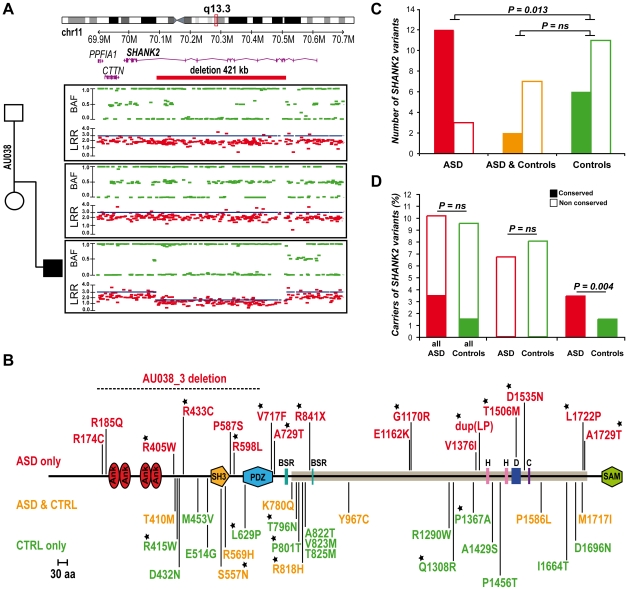
- A novel 421.2 kb de novo SHANK2 deletion was found in patient AU038_3 with autism and moderate ID; it covered 12 exons (E5–E16), altered all SHANK2 isoforms, was absent from parents, originated on the maternal chromosome, and was absent in more than 5000 controls and the Database of Genomic Variants.
- SHANK2 variants affecting conserved amino acids were enriched in ASD: 29 of 851 (3.4%) patients versus 16 of 1090 (1.5%) controls (Fisher’s exact test 1-sided, P = 0.004, OR = 2.37, 95% CI = 1.23–4.70).
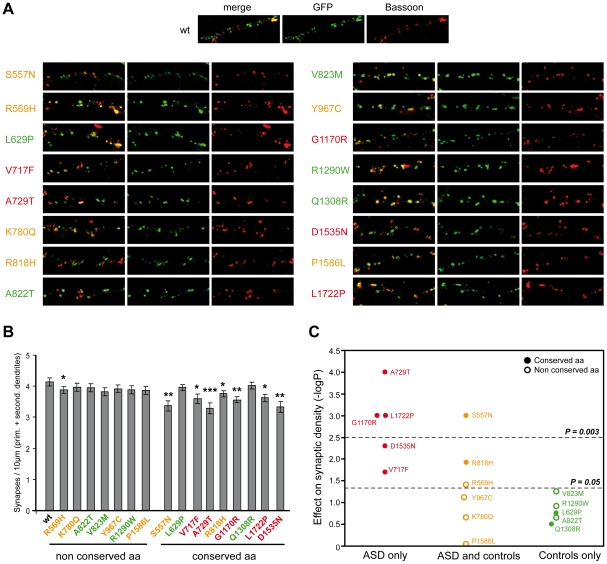
- In cultured neurons, 8 variants reduced Shank2-positive synapse density; after Bonferroni correction, 4 remained significant (A729T, G1170R, L1722P identified only in patients; S557N observed more frequently in patients). Patient variants were associated with lower synaptic density than variants shared by patients and controls (P = 0.022) or detected only in controls (P = 0.0013).
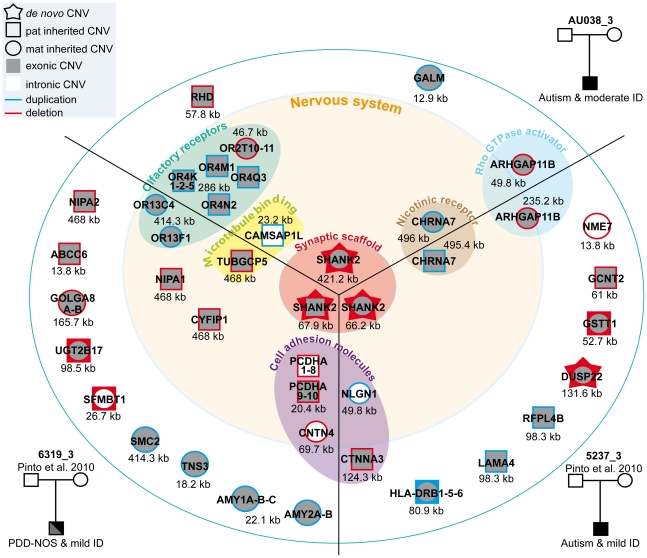
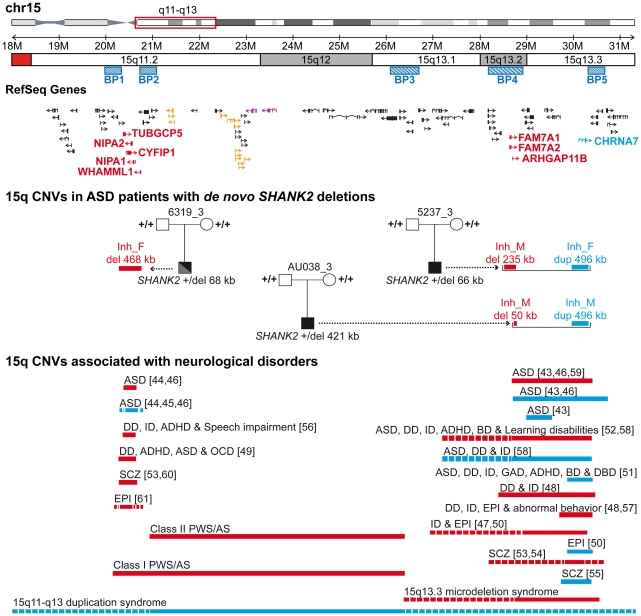
- All three patients with de novo SHANK2 deletions also carried inherited 15q11–q13 CNVs: two had a 496 kb CHRNA7 duplication, and one had a 468 kb BP1–BP2 deletion removing NIPA1, NIPA2, CYFIP1, and TUBGCP5.
Methods
- CNV analysis used Illumina 1M Duo SNP arrays in 260 patients with ASD; mutation screening sequenced SHANK2E in 230 patients and 230 controls and ProSAP1A in an additional 225 patients and 201 controls, integrated with Berkel et al. 2010 (396 patients and 659 controls); enrichment was tested with 1-sided Fisher’s exact tests.
- Functional assays introduced 16 variants from the first screen into rat GFP-ProSAP1A/Shank2A cDNA, transfected primary rat hippocampal neurons, and quantified Shank2-positive synapses per 10 µm dendrite using Mann-Whitney U tests and Student’s t tests.
- CNV burden was analyzed in the three patients with de novo SHANK2 deletions and in the control carrying the SHANK2 splice mutation, using the study’s 260 patients/290 controls and the Autism Genome Project dataset of 996 patients/1287 controls, with 2-sided Fisher’s exact tests.
Limitations
- The paper states that the in vitro assays show variants can potentially impact protein function but do not confirm deleterious effects on neuronal function in vivo in people carrying them; parents were apparently asymptomatic, so the causative role of inherited variants remains difficult to ascertain.
- The paper states that the epistasis findings are based on small numbers and that, from a single control subject, it cannot formally prove that additional hits at SNTG2 and/or MYT1L acted as suppressor mutations.
- Evident from the text: the functional work relies on overexpression in cultured neurons rather than endogenous or in vivo models, and several co-occurring CNV comparisons were not statistically significant (e.g., CHRNA7 duplication P = 0.19; ARHGAP11B deletion P = 0.15; BP1–BP2 deletion P = 0.74), so the multiple-hit interpretation rests on small patient counts.
Model-written summary. Check it against the paper before relying on it.
Integrity signals
Registry
Cites
Statistics
Figures
Verification
Claims the paper makes
7 Valid · 2 Not valid · 17 Not checked · 98 Own results and interpretations
The cited sources support only part of this claim — read each source’s verdict below.
In the paper
“These duplications are considered of uncertain clinical significance since they were previously detected at similar frequencies in patients with epilepsy (6 of 647, 0.93%), in controls (19 of 3699, 0.51%) [50], and in subjects referred for chromosomal microarray analysis (55 of 8832, 0.62%) [51].”
§ Genetic and Functional Analyses of SHANK2 Mutations Suggest a Multiple Hit Model of Autism Spectrum Disorders > Results > Additional CNVs affect neuronal genes in patients with de novo SHANK2 deletions and in the control carrying the SHANK2 splice mutation
What the sources say
- Partly supportedcites [50] Helbig I Mefford HC Sharp AJ Guipponi M Fichera M 2009 15q13.3 microdeletions increase risk of idiopathic generalized epilepsy. Nat Genet 41 160 162 19136953 PMC3026630 sourceExperimental — accuracy not yet measured
The passage on CHRNA7 duplications (section labeled Abstract; no page given) reports similar frequencies in epilepsy cases and controls (P = 0.27) and concludes that the duplication is not a major risk factor for idiopathic generalized epilepsy. It reports 12 of 1,223 cases and 23 of 3,699 controls, however, not the 6 of 647 and 19 of 3,699 attributed to this source. The chromosomal-microarray referral figure is attached to a different citation in the citing sentence. (LLM, conf=0.88)
- Supportedcites [51] Szafranski P Schaaf CP Person RE Gibson IB Xia Z 2010 Structures and molecular mechanisms for common 15q13.3 microduplications involving CHRNA7: benign or pathological? Hum Mutat 31 840 850 20506139 PMC3162316 source
The Subjects and Methods section reports 55 small CHRNA7 microduplications among 8,832 people referred for chromosomal microarray analysis, matching the figure attached to this citation. The abstract calls their clinical significance uncertain, and the Discussion says the limited control frequency data were not significantly different from those in patients. The epilepsy and control counts in the citing sentence are attached to a different citation. (LLM, conf=0.92)
plain- Asserted: passes — The authors put it forward as true.
- Checkable: passes — It can be checked against evidence.
- Load-bearing: unclear — It is unclear whether the paper’s conclusions depend on it.
- Based: passes — The paper gives a reason why it holds.
- Partly supported
The cited sources that could be checked couldn’t confirm or dispute this claim.
In the paper
“As reported for SHANK3 [7], no other coding variations were detected in the remaining SHANK2 allele of the deletion carriers”
§ Genetic and Functional Analyses of SHANK2 Mutations Suggest a Multiple Hit Model of Autism Spectrum Disorders > Discussion > Deleterious SHANK2 variations are enriched in patients with ASD, but also observed in controls
What the sources say
- Could not verifycites [7] Durand CM Betancur C Boeckers TM Bockmann J Chaste P 2007 Mutations in the gene encoding the synaptic scaffolding protein SHANK3 are associated with autism spectrum disorders. Nat Genet 39 25 27 17173049 PMC2082049 sourceExperimental — accuracy not yet measured
Our copy of Durand et al. (2007) describes the deletion carriers (family ASD 1 proband with a de novo 22q13 deletion breaking in SHANK3 intron 8, Results p. 2 and Fig. 1 legend p. 6; family ASD 3 girl with a 22qter deletion, Results p. 3) and reports rare nonsynonymous SHANK3 variations only in 'the remaining individuals with ASD' (Results p. 3), but no passage states that the retained (non-deleted) SHANK3 allele of the deletion carriers was sequenced and found free of coding variations. The nearest sentence, 'No other SHANK3 deletions or duplications were observed after screening 155 individuals by quantitative PCR' (Results p. 3), concerns copy-number changes across the cohort, not coding variants on the remaining allele. Searches on 'remaining/second/wild-type allele', 'hemizygous deletion carriers', and 'coding variations in deletion patients' returned no passage addressing the attributed point, so the parallel the citing authors draw cannot be checked against this paper. (LLM, conf=0.70)
plain- Asserted: passes — The authors put it forward as true.
- Checkable: passes — It can be checked against evidence.
- Load-bearing: passes — The paper’s conclusions depend on it.
- Based: passes — The paper gives a reason why it holds.
- Could not verify
The sources with a verdict support this claim; the rest weren’t checked yet, have no full text we could read, or their verdicts aren’t rated yet.
In the paper
“Notably, the three ASD patients with de novo SHANK2 deletions also carried CNVs on chromosome 15q11–q13, a region associated with ASD [43], [47], [48], [50]–[52], [72].”
§ Genetic and Functional Analyses of SHANK2 Mutations Suggest a Multiple Hit Model of Autism Spectrum Disorders > Discussion > Additional CNVs in subjects with SHANK2 mutations may modulate the risk for ASD
What the sources say
- Supportedcites [43] Miller DT Shen Y Weiss LA Korn J Anselm I 2009 Microdeletion/duplication at 15q13.2q13.3 among individuals with features of autism and other neuropsychiatric disorders. J Med Genet 46 242 248 18805830 PMC4090085 source
The Introduction (page unavailable) states that genomic imbalance in proximal chromosome 15q, including duplications at 15q11–q13, has been associated with autism. This supports the regional association for which this citation is offered; the sentence’s identification of three patients with SHANK2 deletions is not attributed specifically to this source. (LLM, conf=0.90)
- Could not verifycites [47] Sharp AJ Mefford HC Li K Baker C Skinner C 2008 A recurrent 15q13.3 microdeletion syndrome associated with mental retardation and seizures. Nat Genet 40 322 328 18278044 PMC2365467 sourceExperimental — accuracy not yet measured
The paper’s Abstract describes 15q13.3 deletions in patients with intellectual disability and seizures, not the three ASD patients with de novo SHANK2 deletions. Searches for ASD, autism, and 15q11–q13 did not find a passage in our copy establishing the claimed ASD association or those patients’ additional CNVs. (LLM, conf=0.76)
- Not checked yetcites [48] Masurel-Paulet A Andrieux J Callier P Cuisset JM Le Caignec C 2010 Delineation of 15q13.3 microdeletions. Clin Genet 78 149 161 20236110 source
plainstates an associationn = 3- Asserted: passes — The authors put it forward as true.
- Checkable: passes — It can be checked against evidence.
- Load-bearing: passes — The paper’s conclusions depend on it.
- Based: passes — The paper gives a reason why it holds.
- Supported
The cited sources support only part of this claim — read each source’s verdict below.
In the paper
“However, the most compelling candidate in the deleted region is CYFIP1 [45], [53], which codes for a binding partner of FMRP, the protein responsible for fragile X syndrome.”
§ Genetic and Functional Analyses of SHANK2 Mutations Suggest a Multiple Hit Model of Autism Spectrum Disorders > Discussion > Additional CNVs in subjects with SHANK2 mutations may modulate the risk for ASD
What the sources say
- Partly supportedcites [45] van der Zwaag B Staal WG Hochstenbach R Poot M Spierenburg HA 2010 A co-segregating microduplication of chromosome 15q11.2 pinpoints two risk genes for autism spectrum disorder. Am J Med Genet B Neuropsychiatr Genet 153B 960 966 20029941 PMC2933514 sourceExperimental — accuracy not yet measured
The paper identifies CYFIP1 as the best candidate gene in the 15q11.2 region and says it directly interacts with FMRP (passages labeled Abstract; page unavailable). Its own ASD findings concern a duplication, not a deletion, so it does not establish CYFIP1 as the leading candidate specifically for the citing sentence’s deleted region. (LLM, conf=0.84)
- Supportedcites [53] Stefansson H Rujescu D Cichon S Pietilainen OP Ingason A 2008 Large recurrent microdeletions associated with schizophrenia. Nature 455 232 236 18668039 PMC2687075 source
The Abstract passage on the 15q11.2 deletion (passages 8 and 1) identifies CYFIP1 as the gene most likely to explain the associated phenotype. It says CYFIP1 interacts with FMRP and that fragile X syndrome is caused by loss of FMRP function. (LLM, conf=0.93)
boosted- Asserted: passes — The authors put it forward as true.
- Checkable: passes — It can be checked against evidence.
- Load-bearing: passes — The paper’s conclusions depend on it.
- Based: passes — The paper gives a reason why it holds.
- Partly supported
A result the paper reports from its own data — it cites no other source for it, so there is none to check. The quote shows it is in the paper.
In the paper
“In the patient sample, 5/5 variants affected conserved amino acids in the SHANK proteins compared with only 2/6 in the group of variants identified in patients and controls, and 2/5 in the control group.”
§ Genetic and Functional Analyses of SHANK2 Mutations Suggest a Multiple Hit Model of Autism Spectrum Disorders > Results > Several SHANK2 variants identified in patients alter synapse density in cultured neurons
plainstates an associationn = 5- Asserted: passes — The authors put it forward as true.
- Checkable: passes — It can be checked against evidence.
- Load-bearing: passes — The paper’s conclusions depend on it.
- Based: passes — The paper gives a reason why it holds.
- Rests on an assumption not shown here.
61 more claims
Create a free account to see all 124 claims and to verify the 26 references still open.
- It may state two separate claims as one. 34
- Probably not a substantial claim. 35
Claims other papers make about this one
Each is checked against this paper’s own text: does it say what the citing paper says it does?
The source backs part of the claim, not all of it — or backs it for a different population, condition or comparison.
In the citing paper
“SHANK genes display a complex transcriptional regulation with multiple intragenic promoters and extensive alternatively spliced exons both in humans and mice (Leblond et al., 2012; Lim et al., 1999; Maunakea et al., 2010; McWilliams et al., 2004; Redecker et al., 2006; Wang et al., 2011; Wilson et al., 2003).”
From Modeling Autism by SHANK Gene Mutations in Mice (2013) · cites this paper as Leblond et al., 2012
Experimental — accuracy not yet measuredThe source backs part of the claim, not all of it — or backs it for a different population, condition or comparison.
In the citing paper
“Recent evidence indicates that dysregulation and or mutations of FMRP-interacting proteins, such as the cytoplasmic FMRP-interacting protein 1 (CYFIP1) (52-55), eukaryotic initiation factor 4 (eIF4E) (56,57), and a subset of FMRP mRNA targets (58), may contribute to the ASD phenotype observed in FXS.”
From Fragile X syndrome: causes, diagnosis, mechanisms, and therapeutics (2012) · cites this paper as [55]
Experimental — accuracy not yet measuredThe source backs part of the claim, not all of it — or backs it for a different population, condition or comparison.
In the citing paper
“Deletions and duplications of a chromosomal region including CYFIP1 have been linked to ID, ASD, and schizophrenia (Cooper et al., 2011, Doornbos et al., 2009, Leblond et al., 2012, Murthy et al., 2007, Nowicki et al., 2007, Tam et al., 2010, van der Zwaag et al., 2010, von der Lippe et al., 2010, Zhao et al., 2012).”
From CYFIP1 Coordinates mRNA Translation and Cytoskeleton Remodeling to Ensure Proper Dendritic Spine Formation (2013) · cites this paper as Leblond et al., 2012
Experimental — accuracy not yet measuredThe cited source says what the claim attributes to it.
In the citing paper
“SHANK2 exhibits transcriptional regulation similar to SHANK3 (Leblond et al., 2012).”
From Modeling Autism by SHANK Gene Mutations in Mice (2013) · cites this paper as Leblond et al., 2012
The cited source says what the claim attributes to it.
In the citing paper
“However, a recent report indicates that SHANK2E is also expressed in brain tissues in humans (Leblond et al., 2012).”
From Modeling Autism by SHANK Gene Mutations in Mice (2013) · cites this paper as Leblond et al., 2012
8 more claims about this paper
Create a free account to see every claim other papers make about this one.
Self-check
Percentages, sums and reported differences re-computed from the paper’s own numbers.
Each contradiction between two passages listed here was confirmed by an independent check.
Rated minor: it would not touch a result — a value no result rests on, a p-value that stays on the same side of the significance level, or a conflict that is clerical, resolved elsewhere in the paper, or outside its own findings.
In the paper
§ Genetic and Functional Analyses of SHANK2 Mutations Suggest a Multiple Hit Model of Autism Spectrum Disorders > Results > SHANK2 coding variants affecting conserved amino acids are enriched in patients with ASD
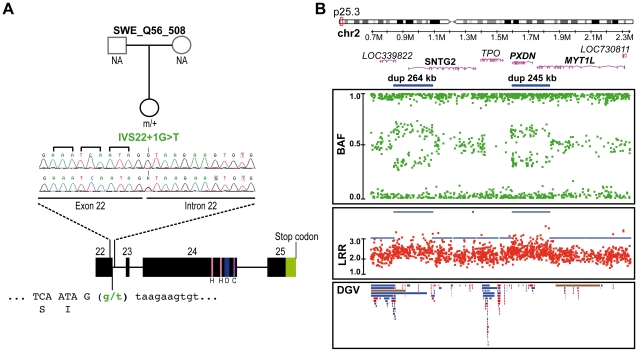
“The two close duplications span 264 kb and 245 kb on chromosome 2 and altered LOC339822 and SNTG2, and PXDN and MYT1L, respectively.”
§ Genetic and Functional Analyses of SHANK2 Mutations Suggest a Multiple Hit Model of Autism Spectrum Disorders > Results > Additional CNVs affect neuronal genes in patients with de novo SHANK2 deletions and in the control carrying the SHANK2 splice mutation
“Two close duplications on 2p25.3 were detected, altering four genes, LOC391343, SNTG2, PXDN and MYT1L.”
Rated minor: it would not touch a result — a value no result rests on, a p-value that stays on the same side of the significance level, or a conflict that is clerical, resolved elsewhere in the paper, or outside its own findings.
In the paper
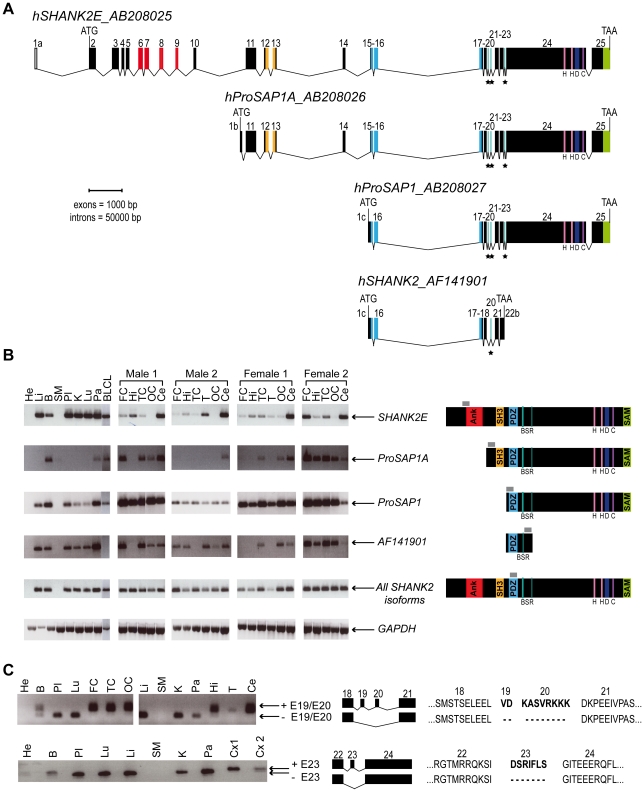
§ Genetic and Functional Analyses of SHANK2 Mutations Suggest a Multiple Hit Model of Autism Spectrum Disorders > Results > SHANK2 isoforms are differentially expressed in human tissues
“Finally, the shortest isoform (AF141901), also originally described in the rat”
§ Genetic and Functional Analyses of SHANK2 Mutations Suggest a Multiple Hit Model of Autism Spectrum Disorders > Results > SHANK2 coding variants affecting conserved amino acids are enriched in patients with ASD
“except for the AF1411901 isoform, where it altered the protein sequence (G263V).”
Citations
Cites
Diagnostic and Statistical Manual of Mental Disorders
Williams, J. B. W., & First, M. (2013) · Encyclopedia of Social Work · doi:10.1093/acrefore/9780199975839.013.104 · Cited by 109,519
A method and server for predicting damaging missense mutations.
Adzhubei, I. A., Schmidt, S., Peshkin, L., Ramensky, V. E., Gerasimova, A., Bork, P., Kondrashov, A. S., & Sunyaev, S. R. (2010) · Nature Methods · doi:10.1038/nmeth0410-248 · Cited by 13,194 · cited 2×
“All variants were evaluated for potential pathogenicity using the HumDIV method for rare alleles of PolyPhen2 [41].”
A map of human genome variation from population-scale sequencing.
The 1000 Genomes Project Consortium (2010) · Nature · doi:10.1038/nature09534 · Cited by 7,877 · cited 2×
“Initial results from the 1000 genomes project has estimated that, on average, each person carries approximately 250 to 300 loss-of-function variants in annotated genes and 50 to 100 variants previously implicated in inherited disorders [71].”
A psychobiological model of temperament and character
Cloninger, C. R. (1993) · Archives of General Psychiatry · doi:10.1001/archpsyc.1993.01820240059008 · Cited by 5,458 · cited 4×
“Regarding personality traits, none of her scores for TCI items were different from those found in the general population.”
InfluentialDirect conversion of fibroblasts to functional neurons by defined factors
Vierbuchen, T., Ostermeier, A., Pang, Z. P., Kokubu, Y., Südhof, T. C., & Wernig, M. (2010) · Nature · doi:10.1038/nature08797 · Cited by 3,017 · cited 1×
“embryonic and postnatal fibroblasts into functional neurons [68].”
Functional impact of global rare copy number variation in autism spectrum disorders
Pinto, D., Pagnamenta, A. T., Klei, L., Anney, R., Merico, D., Regan, R., Conroy, J., Magalhaes, T. R., Correia, C., Abrahams, B. S., et al. (2010) · Nature · doi:10.1038/nature09146 · Cited by 2,013 · cited 7×
“The 6319_3 and 5237_3 patients were described by the AGP [9].”
InfluentialSelf-citationGenetic Heritability and Shared Environmental Factors Among Twin Pairs With Autism
Hallmayer, J. (2011) · Archives of General Psychiatry · doi:10.1001/archgenpsychiatry.2011.76 · Cited by 1,970 · cited 1×
“Previously, twin and family studies have conclusively described ASD as the most ‘‘genetic’’ of neuropsychiatric disorders, with concordance rates of 82–92% in monozygotic twins versus 1–10% in dizygotic twins [3], but a recent study finds evidence for a more substantial environmental component [4].”
Mutations of the X-linked genes encoding neuroligins NLGN3 and NLGN4 are associated with autism
Study, P. A. R. I. S., Jamain, S., Quach, H., Betancur, C., Råstam, M., Colineaux, C., Gillberg, I. C., Soderstrom, H., Giros, B., Leboyer, M., et al. (2003) · Nature Genetics · doi:10.1038/ng1136 · Cited by 1,851 · cited 6×
“ABCC6, ATP-binding cassette, sub-family C, member 6 pseudogene 2; ADAM, ADAM metallopeptidase; AMY1, amylase (salivary); AMY2A, amylase (pancreatic); ARHGAP11B, Rho GTPase activating protein 11B; CAMSAP1L1, calmodulin regulated spectrin-associated protein 1-like 1; CHRNA7, cholinergic receptor, nicotinic, alpha 7; CNT…”
InfluentialSelf-citationNeuroligins and neurexins link synaptic function to cognitive disease
Südhof, T. C. (2008) · Nature · doi:10.1038/nature07456 · Cited by 1,849 · cited 1×
“These proteins play a crucial role in the formation and stabilization of synapses [21], as well as in synaptic homeostasis [22].”
Structural Variation of Chromosomes in Autism Spectrum Disorder
Marshall, C. R., Noor, A., Vincent, J. B., Lionel, A. C., Feuk, L., Skaug, J., Shago, M., Moessner, R., Pinto, D., Ren, Y., et al. (2008) · The American Journal of Human Genetics · doi:10.1016/j.ajhg.2007.12.009 · Cited by 1,815 · cited 1×
“Remarkably, all three patients with SHANK2 de novo deletions also carried rare inherited genetic imbalances at chromosome 15q11– q13 (Figure 6), a region associated with Angelman syndrome, Prader-Willi syndrome and other neuropsychiatric disorders, including ASD [42–61].”
Self-citation
Research works printed but not linked: 1
- The international schizophrenia consortium 2008 Rare chromosomal deletions and duplications increase risk of schizophrenia. Nature 455 237 241 18668038 PMC3912847 · DOI · Paper page
Cited by
Items 201–300 of 449
A recurrent SHANK3 frameshift variant in Autism Spectrum Disorder
Loureiro, L. O., Howe, J., Reuter, M. S., Iaboni, A., Calli, K., Roshandel, D., Pritišanac, I., Moses, A. M., Forman-Kay, J. D., Trost, B., et al. (2021) · npj Genomic Medicine · doi:10.1038/s41525-021-00254-0 · Cited by 33
Self-citationFunctional genomics of human brain development and implications for autism spectrum disorders
Ziats, M. N., Grosvenor, L. P., & Rennert, O. M. (2015) · Translational Psychiatry · doi:10.1038/tp.2015.153 · Cited by 32
Homozygous microdeletion of exon 5 in ZNF277 in a girl with specific language impairment
IMGSAC, Ceroni, F., Simpson, N. H., Francks, C., Baird, G., Conti‐Ramsden, G., Clark, A., Bolton, P., Hennessy, E. R., Donnelly, P., et al. (2014) · European Journal of Human Genetics · doi:10.1038/ejhg.2014.4 · Cited by 34
Self-citationWang, L., Li, J., Shuang, M., Lu, T., Wang, Z., Zhang, T., Yue, W., Jia, M., Ruan, Y., Liu, J., et al. (2018) · Translational Psychiatry · doi:10.1038/s41398-018-0197-4 · Cited by 31
Shea, L., Newschaffer, C. J., Xie, M., Myers, S. M., & Mandell, D. S. (2014) · Human Genetics · doi:10.1007/s00439-013-1362-8 · Cited by 26
“…should incentivize further investigation of the impact of genetic testing and counseling on children with ASD and their families, and should drive efforts to explore and confront disparities in the delivery of these services, particularly with the advancing scientific research on this topic.”
BackgroundFilippis, B. D., Romano, E., & Laviola, G. (2014) · Neuroscience & Biobehavioral Reviews · doi:10.1016/j.neubiorev.2014.06.007 · Cited by 29
Hager, T., Maroteaux, G., du Pont, P., Julsing, J. R., van der Vliet, R., & Stiedl, O. (2013) · Behavioural Brain Research · doi:10.1016/j.bbr.2013.11.033 · Cited by 29
Peter, B., Dinu, V., Liu, L., Huentelman, M. J., Naymik, M., Lancaster, H. S., Vose, C., & Schrauwen, I. (2019) · Behavior Genetics · doi:10.1007/s10519-019-09957-8 · Cited by 28
Jia, B., Shen, Z., Zhu, S., Huang, J., Liao, Z., Zhao, S., Li, H., Chen, S., Xu, Y., Wang, Y., et al. (2025) · Cell · doi:10.1016/j.cell.2025.07.047 · Cited by 25
Chung, L., Wang, X., Zhu, L., Towers, A. J., Cao, X., Kim, I. H., & Jiang, Y.-H. (2015) · Brain Research · doi:10.1016/j.brainres.2015.10.015 · Cited by 25
“There are also reports indicating a minimal or no pathogenic association of these CNVs in human disease phenotype because the same CNV is also frequently identified in individuals without apparent health problems (Burnside et al., 2011; Chaste et al., 2014; Leblond et al., 2012).”
InfluentialMolas, S., & Dierssen, M. (2014) · Neuroscience & Biobehavioral Reviews · doi:10.1016/j.neubiorev.2014.05.012 · Cited by 29
Aigner, S., Heckel, T., Zhang, J. D., Andreae, L. C., & Jagasia, R. (2013) · Psychopharmacology · doi:10.1007/s00213-013-3332-1 · Cited by 26
Wang, L., Almeida, L. E. F., Nettleton, M. Y., Khaibullina, A., Albani, S. H., Kamimura, S., Nouraie, M. S., & Quezado, Z. (2016) · Neuropharmacology · doi:10.1016/j.neuropharm.2016.09.013 · Cited by 30
Common Ribs of Inhibitory Synaptic Dysfunction in the Umbrella of Neurodevelopmental Disorders
Rodriguez, R. A., Joya, C., & Hines, R. M. (2018) · Frontiers in Molecular Neuroscience · doi:10.3389/fnmol.2018.00132 · Cited by 35
“Scaffolding Proteins: SHANK Family of Proteins Mutations in genes encoding scaffolding proteins, such as the SHANK family of proteins have also shown connection to the development of ASD (Table 2; Leblond et al., 2012; Sato et al., 2012; Monteiro and Feng, 2017).”
BackgroundInfluentialDefective Synapse Maturation and Enhanced Synaptic Plasticity in Shank2 Δex7 –/– Mice
Wegener, S., Buschler, A., Stempel, A. V., Kang, S. J., Lim, C., Kaang, B., Shoichet, S. A., Manahan‐Vaughan, D., & Schmitz, D. (2018) · eNeuro · doi:10.1523/eneuro.0398-17.2018 · Cited by 28
“Resultant genetic interactions could be partly responsible for phenotypic variations and are in line with the supposed existence of “modifier genes” in the pathophysiology and etiology of ASDs (Leblond et al., 2012).”
BackgroundHypomorphic variants of cationic amino acid transporter 3 in males with autism spectrum disorders
Nava, C., Rupp, J., Boissel, J., Mignot, C., Rastetter, A., Amiet, C., Jacquette, A., Dupuits, C., Bouteiller, D., Keren, B., et al. (2015) · Amino Acids · doi:10.1007/s00726-015-2057-3 · Cited by 29
Sungur, A. Ö., Schwarting, R. K. W., & Wöhr, M. (2017) · Behavioural Brain Research · doi:10.1016/j.bbr.2017.09.038 · Cited by 26
Synaptopathology in autism spectrum disorders: Complex effects of synaptic genes on neural circuits
Wang, X., Kéry, R., & Xiong, Q. (2017) · Progress in Neuro-Psychopharmacology and Biological Psychiatry · doi:10.1016/j.pnpbp.2017.09.026 · Cited by 24
A general framework for identifying oligogenic combinations of rare variants in complex disorders
Pounraja, V. K., & Girirajan, S. (2022) · Genome Research · doi:10.1101/gr.276348.121 · Cited by 29
“…have been used to provide post hoc explanations for an observed phenomenon, they are not equipped to serve as a framework to actively search for and identify rare variant combinations that fit oligogenic models for specific phenotypes (Badano et al. 2006; Leblond et al. 2012; Gifford et al. 2019).”
Emerging Role of Non-coding RNAs in Autism Spectrum Disorder
Ghafouri‐Fard, S., Noroozi, R., Brand, S., Hussen, B. M., Eghtedarian, R., Taheri, M. N., & Ebrahimzadeh, K. (2021) · Journal of Molecular Neuroscience · doi:10.1007/s12031-021-01934-3 · Cited by 24
Bridging the translational gap: what can synaptopathies tell us about autism?
Molloy, C. J., Cooke, J., Gatford, N. J. F., Rivera-Olvera, A., Avazzadeh, S., Homberg, J. R., Grandjean, J., Fernandes, C., Shen, S., Loth, E., et al. (2023) · Frontiers in Molecular Neuroscience · doi:10.3389/fnmol.2023.1191323 · Cited by 26
“, Shank2a is missing the Ankyrin domain, Shank2b is missing the Ankyrin and SH3 domains, and Shank3b is missing the SAM domain (Wang et al., 2011; Leblond et al., 2012).”
BackgroundGanguly, K., Adhikary, K., Acharjee, A., Acharjee, P., Trigun, S. K., Mutlaq, A. S., Ashique, S., Yasmin, S., Alshahrani, A. M., & Ansari, M. Y. (2024) · International Journal of Biological Macromolecules · doi:10.1016/j.ijbiomac.2024.135967 · Cited by 26
Sasaki, K., Kojitani, N., Hirose, H., Yoshihama, Y., Suzuki, H., Shimada, M., Takayanagi, A., Yamashita, A., Nakaya, M., Hirano, H., et al. (2020) · Cell Reports · doi:10.1016/j.celrep.2020.02.088 · Cited by 27
Therapeutic approaches for shankopathies
Wang, X., Bey, A. L., Chung, L., Krystal, A. D., & Jiang, Y. (2013) · Developmental Neurobiology · doi:10.1002/dneu.22084 · Cited by 27
“For instance, Shank proteins have different expression patterns in different brain regions or synapses (Bockers et al., 2004; Leblond et al., 2012).”
BackgroundInfluentialPoot, M. (2013) · Molecular Syndromology · doi:10.1159/000350041 · Cited by 23
“Such a polygenic model, in which multiple CNVs and SNVs function together in an additive or an epistatic manner [Cook and Scherer, 2008; Girirajan and Eichler, 2010; Poot et al., 2011; Leblond et al., 2012], appears at this stage the most plausible for the majority of ASD cases.”
BackgroundSelf-citationShanks — multidomain molecular scaffolds of the postsynaptic density
Kursula, P. (2019) · Current Opinion in Structural Biology · doi:10.1016/j.sbi.2019.01.007 · Cited by 24
SHANK1 and autism spectrum disorders
Gong, X., & Wang, H. (2015) · Science China Life Sciences · doi:10.1007/s11427-015-4892-6 · Cited by 26
POSH regulates assembly of the NMDAR/PSD-95/Shank complex and synaptic function
Yao, M., Meng, M., Yang, X., Wang, S., Zhang, H., Zhang, F., Shi, L., Zhang, Y., Zhang, X., & Xu, Z. (2022) · Cell Reports · doi:10.1016/j.celrep.2022.110642 · Cited by 26
Fakhoury, M. (2017) · Progress in Neuro-Psychopharmacology and Biological Psychiatry · doi:10.1016/j.pnpbp.2017.02.026 · Cited by 25
Unsicker, C., Cristian, F.-B., von Hahn, M., Eckstein, V., Rappold, G., & Berkel, S. (2021) · Scientific Reports · doi:10.1038/s41598-021-81241-4 · Cited by 22
Rare SHANK2 variants in schizophrenia
Peykov, S., Berkel, S., Degenhardt, F., Rietschel, M., Nöthen, M. M., & Rappold, G. (2015) · Molecular Psychiatry · doi:10.1038/mp.2015.122 · Cited by 21
The genetics and neurobiology of ESSENCE: The third Birgit Olsson lecture
Bourgeron, T. (2015) · Nordic Journal of Psychiatry · doi:10.3109/08039488.2015.1042519 · Cited by 21
Self-citationWan, L., Liu, D., Xiao, W., Zhang, B., Yan, X., Luo, Z., & Xiao, B. (2021) · Cellular and Molecular Neurobiology · doi:10.1007/s10571-021-01054-x · Cited by 23
The Genetic Architecture of Neurodevelopmental Disorders
Mitchell, K. J. (2015) · Wiley eBooks · doi:10.1002/9781118524947.ch1 · Cited by 22
“Similar events have been observed for known pathogenic single-‐gene mutations with incomplete penetrance alone (Chilian et al., 2013; Leblond et al., 2012; Schaaf et al., 2011).”
BackgroundThe Genetics of Autism Spectrum Disorders
Yuen, R. K. C., Szatmari, P., & Vorstman, J. A. S. (2019) · Autism and Pervasive Developmental Disorders · doi:10.1017/9781108297769.006 · Cited by 19
Dhaliwal, J., Qiao, Y., Calli, K., Martell, S., Race, S., Chijiwa, C., Glodjo, A., Jones, S. J. M., Rajcan‐Separovic, E., Scherer, S. W., et al. (2021) · Genes · doi:10.3390/genes12071053 · Cited by 21
“In humans, inherited variants in SHANK2 were found to be shared by multiple affected siblings and their slightly affected or unaffected parents [26,29,30], suggesting that additional genetic/epigenetic factors, together with inherited SHANK2 mutations, might be necessary to develop ASD [30,31].”
BackgroundSelf-citationDaini, E., Hagmeyer, S., Benedictis, C. A. D., Cristóvão, J. S., Bodria, M., Ross, A. M., Raab, A., Boeckers, T. M., Feldmann, J., Gomes, C. M., et al. (2021) · Translational Psychiatry · doi:10.1038/s41398-021-01694-z · Cited by 22
Self-citationNia, F. H., Woike, D., Bento, I., Niebling, S., Tibbe, D., Schulz, K., Hirnet, D., Skiba, M., Hönck, H., Veith, K., et al. (2022) · Molecular Psychiatry · doi:10.1038/s41380-022-01882-3 · Cited by 20
A critical review of the impact of candidate copy number variants on autism spectrum disorder
Abedini, S. S., Akhavantabasi, S., Liang, Y., Heng, J. I., Alizadehsani, R., Dehzangi, A., Bauer, D. C., & Alinejad‐Rokny, H. (2024) · Mutation Research/Reviews in Mutation Research · doi:10.1016/j.mrrev.2024.108509 · Cited by 26
The use of stem cells to study autism spectrum disorder.
Ardhanareeswaran, K., Coppola, G., & Vaccarino, F. M. (2015) · PubMed Central · Cited by 22
Genetic etiology of autism spectrum disorder in the African population: a scoping review
Hakizimana, O., Hitayezu, J., Uyisenga, J. P., Onohuean, H., Palmeira, L., Bours, V., Alagbonsi, A. I., & Uwineza, A. (2024) · Frontiers in Genetics · doi:10.3389/fgene.2024.1431093 · Cited by 21
Contemplating syndromic autism
Vorstman, J. A. S., & Scherer, S. W. (2023) · Genetics in Medicine · doi:10.1016/j.gim.2023.100919 · Cited by 21
Self-citationSánchez, R. M., Losada, J. F. B., & Martínez, J. A. M. (2024) · Frontiers in Neuroendocrinology · doi:10.1016/j.yfrne.2024.101132 · Cited by 19
“…have been observed in autism and neuro-developmental disorders (O ’ Roak et al., 2011; Sanders et al., 2011; Levi et al., 2011; Julie et al., 2011; Leblond et al., 2012; Ben-David and Shifman, 2012; Sanders et al., 2012; Iossifov et al., 2012; Ku et al., 2013; Yuen et al., 2015; Short et al.,…”
AL-Ayadhi, L. Y., Hashmi, J. A., Iqbal, M., Albalawi, A. M., Samman, M. I., Elamin, N. E., Bashir, S., & Basit, S. (2016) · Neuroscience · doi:10.1016/j.neuroscience.2016.10.030 · Cited by 18
Benítez‐Burraco, A., Barcos, M., Espejo-Portero, I., & Jiménez-Romero, M. S. (2017) · Molecular Syndromology · doi:10.1159/000468192 · Cited by 19
“The DECIPHER database shows that duplications of the whole DUSP22 gene are less frequently found than deletions, which usually entail more severe developmental problems, including autism [Leblond et al., 2012].”
MethodGenetic Causes of Autism Spectrum Disorders
Huguet, G., & Bourgeron, T. (2016) · Elsevier eBooks · doi:10.1016/b978-0-12-800109-7.00002-9 · Cited by 20
Self-citationGenetic association between SHANK2 polymorphisms and susceptibility to autism spectrum disorder
Bai, Y., Qiu, S., Li, Y., Li, Y., Zhong, W., Shi, M., Zhu, X., Jiang, H., Yu, Y., Cheng, Y., et al. (2018) · IUBMB Life · doi:10.1002/iub.1876 · Cited by 20
“2 kb deletion within SHANK2 which covers twelve exons (E5–E16) reflects CNVs of SHANK2 (18,19).”
BackgroundThe role of SHANK2 rare variants in schizophrenia susceptibility
Costas, J. (2015) · Molecular Psychiatry · doi:10.1038/mp.2015.119 · Cited by 20
Lin, C., Chang, K., Lin, C.-Y., Wu, J.-Y., Coon, H. H., Huang, P., Ho, H., Akbarian, S., Gau, S. S., & Huang, H. (2018) · Scientific Reports · doi:10.1038/s41598-018-22753-4 · Cited by 18
Genome-wide association study identifies quantitative trait loci affecting cattle temperament
Shen, J., 西北农林科技大学动物科技学院, 陕. 杨. 7., Chen, Q.-M., Zhang, F., Hanif, Q., Huang, B., Chen, N., Qu, K., Zhan, J., Chen, H., et al. (2021) · 动物学研究 · doi:10.24272/j.issn.2095-8137.2021.176 · Cited by 22
Vyas, Y., Jung, Y., Lee, K., Garner, C. C., & Montgomery, J. M. (2021) · Molecular Brain · doi:10.1186/s13041-021-00809-3 · Cited by 16
“, [11] showing decreased synaptic density in ASD-Shank2 transfected neurons compared to wildtype Shank2.”
BackgroundMethodBains, W., & Schulze‐Makuch, D. (2015) · Journal of Molecular Evolution · doi:10.1007/s00239-015-9688-6 · Cited by 16
“…self-esteem Bains and Schulze-Makuch 7 has been mitigated in the last decade by the realization that a lot of the DNA in complex organisms is related to gene control rather than to protein coding (Washietl et al. 2007), , and that much of the ‘junk’ DNA is actually functional (as suggested 30…”
BackgroundQiu, S., Li, Y., Bai, Y., Shi, J., Cui, H., Gu, Y., Ren, Y., Zhao, Q., Zhang, K., Lu, M., et al. (2019) · Autism Research · doi:10.1002/aur.2065 · Cited by 17
Expression profiles of the autism-related SHANK proteins in the human brain
Woelfle, S., Pedro, M. T., Wagner, J., Schön, M., & Boeckers, T. M. (2023) · BMC Biology · doi:10.1186/s12915-023-01712-0 · Cited by 17
“Shank2 is enriched in the brain and moderately expressed in extra-neuronal tissues such as the human and rodent liver and kidney [8, 9].”
BackgroundResultInfluentialSelf-citationLu, Z. A., Mu, W., Osborne, L. M., & Cordner, Z. A. (2018) · BMJ Case Reports · doi:10.1136/bcr-2018-225119 · Cited by 17
Recurrent duplications of the annexin A1 gene (ANXA1) in autism spectrum disorders
Correia, C., Conceição, I. C., Oliveira, B., Coelho, J., Sousa, I., Sequeira, A. F., Almeida, J., Café, C., Duque, F., Mouga, S., et al. (2014) · Molecular Autism · doi:10.1186/2040-2392-5-28 · Cited by 17
“Taking into consideration the multiple hit model proposed for ASD [53,54], we searched for modulating risk or protective genetic factors that might regulate the clinical expression of the ANXA1 duplication.”
MethodSelf-citationHoxha, E., Lippiello, P., Scelfo, B., Tempia, F., Ghirardi, M., & Miniaci, M. C. (2017) · Neural Plasticity · doi:10.1155/2017/6595740 · Cited by 18
“Mutations of SHANK2 are associated with ASD, and SHANK2 variants in conserved amino acids are enriched in individuals with ASD [166].”
BackgroundPonna, S. K., Myllykoski, M., Boeckers, T. M., & Kursula, P. (2017) · Biochemical and Biophysical Research Communications · doi:10.1016/j.bbrc.2017.06.121 · Cited by 14
“In cultured neurons, S557N significantly affected Shank2 function in PSD, while R569H had milder effects [35].”
BackgroundSelf-citationA blueprint for research on Shankopathies: A view from research on autism spectrum disorder
Carbonetto, S. (2013) · Developmental Neurobiology · doi:10.1002/dneu.22150 · Cited by 16
“While CNVs most commonly are associated with Shankopathies, frame shift, missense, splice site, and other sequence changes in SHANK3 have also been identified in patients Jiang and Ehlers, (2013) nicely describe the reported repertoire of these mutations, their location in the SHANK3 sequence, and the heterogeneity in…”
BackgroundInfluentialGalaxy CLIP-Explorer: a web server for CLIP-Seq data analysis
Heyl, F., Maticzka, D., Uhl, M., & Backofen, R. (2020) · GigaScience · doi:10.1093/gigascience/giaa108 · Cited by 16
“Shank2 and Shank3 might hereby be regulated by alternative splicing [47, 48].”
Enhanced fear limits behavioral flexibility in Shank2-deficient mice
Yun, M., Kim, E., & Jung, M. W. (2022) · Molecular Autism · doi:10.1186/s13229-022-00518-1 · Cited by 13
Huang, Y. (2015) · International Journal of Neuroscience · doi:10.3109/00207454.2015.1038711 · Cited by 13
Anatomy and Cell Biology of Autism Spectrum Disorder: Lessons from Human Genetics
Kleijer, K. T. E., Huguet, G., Tastet, J., Bourgeron, T., & Burbach, J. P. H. (2017) · Advances in anatomy, embryology and cell biology · doi:10.1007/978-3-319-52498-6_1 · Cited by 13
Self-citationnArgBP2-SAPAP-SHANK, the core postsynaptic triad associated with psychiatric disorders
Lee, S., Kim, J. A., & Chang, S. (2018) · Experimental & Molecular Medicine · doi:10.1038/s12276-017-0018-5 · Cited by 20
Ackerman, S., Schoenbrun, S., Hudac, C., & Bernier, R. (2017) · Journal of Autism and Developmental Disorders · doi:10.1007/s10803-017-3246-6 · Cited by 12
Novel STXBP1 Mutations in 2 Patients With Early Infantile Epileptic Encephalopathy
Sampaio, M., Rocha, R. F., Biskup, S., & Leão, M. (2013) · Journal of Child Neurology · doi:10.1177/0883073813479169 · Cited by 13
The autism risk gene CNTN4 modulates dendritic spine formation
Zhao, R., Zhu, T., Liu, Q., Tian, Q., Wang, M., Chen, J., Tong, D., Yu, B., Guo, H., Xia, K., et al. (2021) · Human Molecular Genetics · doi:10.1093/hmg/ddab233 · Cited by 12
Early Chronic Memantine Treatment-Induced Transcriptomic Changes in Wild-Type and Shank2-Mutant Mice
Yoo, Y.-E., Lee, S., Kim, W., Kim, H., Chung, C., Ha, S., Park, J., Chung, Y., Kang, H., & Kim, E. (2021) · Frontiers in Molecular Neuroscience · doi:10.3389/fnmol.2021.712576 · Cited by 16
Multiple Small Supernumerary Marker Chromosomes Resulting from Maternal Meiosis I or II Errors
Hochstenbach, R., Nowakowska, B., Volleth, M., Ummels, A., Kutkowska‐Kaźmierczak, A., Obersztyn, E., Ziemkiewicz, K., Gerloff, C., Schanze, D., Zenker, M., et al. (2015) · Molecular Syndromology · doi:10.1159/000441408 · Cited by 12
“…for patients with either intellectual delay or autism and may explain the clinical variability of patients and healthy individuals with recurrent and unique deletions, duplications and sSMCs [Girirajan and Eichler, 2010; Girirajan et al., 2010, 2012; Poot et al., 2011; Leblond et al., 2012].”
BackgroundSelf-citationHeterogeneous genomic aberrations in esophageal squamous cell carcinoma: a review.
Li, R., Li, P., Xing, W., & Qiu, H. (2020) · PubMed Central · Cited by 15
Rafi, S. K., & Butler, M. G. (2020) · Vide Leaf, Hyderabad eBooks · doi:10.37247/pamolscs.1.2020.17 · Cited by 13
Silva, A. L. T. E., Glaser, T., Griesi‐Oliveira, K., Corrêa-Velloso, J. C., Wang, J. Y. T., Campos, G. D. S., Ulrich, H., Balan, A., Zarrei, M., Higginbotham, E. J., et al. (2022) · Translational Psychiatry · doi:10.1038/s41398-022-01997-9 · Cited by 13
Self-citationHui, K. K., Chen, Y., Endo, R., & Tanaka, M. (2019) · Biomolecules · doi:10.3390/biom9110680 · Cited by 12
“CYFIP2, a lesser known paralogue of CYFIP1 located on chromosome 5, was identified as a major genetic determinant for binge eating behaviour, a form of obsessive-compulsive behaviour [28].”
BackgroundJagadeeswaran, I., Pruitt, A., Gautier, N. M., Crane, K., & Glasscock, E. (2021) · Brain and Behavior · doi:10.1002/brb3.2041 · Cited by 13
“Indeed, in both ASD and epilepsy, beneficial suppressor mutations have been identified that are capable of ameliorating the harmful effects of known disease-causing variants (Glasscock et al., 2007; Leblond et al., 2012).”
BackgroundIdentification of a Novel SHANK2 Pathogenic Variant in a Patient with a Neurodevelopmental Disorder
Doddato, G., Fabbiani, A., Scandurra, V., Canitano, R., Mencarelli, M. A., Renieri, A., & Ariani, F. (2022) · Genes · doi:10.3390/genes13040688 · Cited by 11
“Leblond and colleagues recently identified CNVs as putative modifiers of the phenotype in accordance with a “multiple-hit model” [18].”
BackgroundA complex chromosomal rearrangement involving chromosomes 2, 5, and X in autism spectrum disorder
Griesi‐Oliveira, K., Moreira, D. D. P., Davis‐Wright, N., Sanders, S., Mason, C. E., Orabona, G. M., Vadasz, E., Bertola, D. R., State, M. W., & Passos‐Bueno, M. R. (2012) · American Journal of Medical Genetics Part B Neuropsychiatric Genetics · doi:10.1002/ajmg.b.32059 · Cited by 11
“In this regard, some examples of apparently oligogenic model of inheritance in ASD have been listed in the literature [Bakkaloglu et al., 2008; Poot et al., 2010; Leblond et al., 2012], and adeeper discussion on this theme can be found elsewhere [Jones and Szatmari, 2002; Cook and Scherer, 2008; Girirajan and Eichler,…”
BackgroundGenetic influences of autism candidate genes on circuit wiring and olfactory decoding
Hartig, R., Wolf, D., Schmeißer, M. J., & Kelsch, W. (2021) · Cell and Tissue Research · doi:10.1007/s00441-020-03390-8 · Cited by 13
The complex genetics in autism spectrum disorders
Hua, R., Wei, M., & Zhang, C. (2015) · Science China Life Sciences · doi:10.1007/s11427-015-4893-5 · Cited by 12
Impairment of translation in neurons as a putative causative factor for autism
Poliakov, E., Koonin, E. V., & Rogozin, I. B. (2014) · Biology Direct · doi:10.1186/1745-6150-9-16 · Cited by 11
“ASD is known to be a complex multifactorial disease [95-98,123] although several rare single-gene disorders with a high prevalence of ASD are known [38,113].”
BackgroundNaPi-IIa interacting partners and their (un)known functional roles
Hernando, N. (2018) · Pflügers Archiv - European Journal of Physiology · doi:10.1007/s00424-018-2176-2 · Cited by 11
Molecular Handoffs in Nitrergic Neurotransmission
Chaudhury, A. (2014) · Frontiers in Medicine · doi:10.3389/fmed.2014.00008 · Cited by 11
Brain region and gene dosage-differential transcriptomic changes in Shank2-mutant mice
Yoo, Y.-E., Yoo, T., Kang, H., & Kim, E. (2022) · Frontiers in Molecular Neuroscience · doi:10.3389/fnmol.2022.977305 · Cited by 11
Lee, K. C., Jung, Y., Vyas, Y., Mills, Z., McNamara, L., & Montgomery, J. M. (2024) · Philosophical Transactions of the Royal Society B Biological Sciences · doi:10.1098/rstb.2023.0230 · Cited by 11
“SHANK2 single nucleotide variants (SNVs) affecting highly conserved amino acid sites found in ASD patients cause a significant reduction in synapse density as well as miniature excitatory post-synaptic current (mEPSC) frequency when expressed in rodent-dissociated hippocampal neurons [3,6].”
BackgroundCamasio, A., Panzeri, E., Mancuso, L., Costa, T., Manuello, J., Ferraro, M., Duca, S., Cauda, F., & Liloia, D. (2022) · PLoS ONE · doi:10.1371/journal.pone.0277466 · Cited by 13
“We did not find any significant correlations between SHANK2 and neuroanatomical data, even though it is known to be associated with ASD phenotypes [10].”
BackgroundLintas, C., Picinelli, C., Piras, I. S., Sacco, R., Brogna, C., & Persico, A. M. (2017) · American Journal of Medical Genetics Part B Neuropsychiatric Genetics · doi:10.1002/ajmg.b.32537 · Cited by 13
“These results are in keepingwith the “multiple hit”model of ASD, whereby the convergence ofmaternally- and paternally inherited gene variants, the addition of de novo genetic variants and possible epigenetic influences, may act in concert to derange neurodevelopment and ultimately lead to ASD (Leblond et al., 2012; Le…”
Görker, İ., Gürkan, H., Ulusal, S., Atlı, E., Ayaz, G., Ceylan, C. M., Tozkır, H., Altay, M. A., Erol, A., Yıldız, N., et al. (2017) · Nöro Psikiyatri Arşivi · doi:10.5152/npa.2017.21611 · Cited by 11
Wang, Y., Liu, C., Deng, J., Xu, Q., Lin, J., Li, H., Hu, M., Hu, C., Li, Q., & Xu, X. (2023) · International Journal of Molecular Sciences · doi:10.3390/ijms24032208 · Cited by 12
Jiang, X.-L., Liang, B., Zhao, W., Lin, N., Huang, H., Cai, M., & Xu, L. (2023) · The Journal of Maternal-Fetal & Neonatal Medicine · doi:10.1080/14767058.2023.2262700 · Cited by 11
De novo 11q deletion including SHANK2 in a patient with global developmental delay
Marcou, C. A., Jones, A. L. S., Murphree, M. I., Kirmani, S., & Hoppman, N. L. (2017) · American Journal of Medical Genetics Part A · doi:10.1002/ajmg.a.38075 · Cited by 9
“The SHANK2 gene encodes a postsynaptic scaffolding protein important for postsynaptic density (PSD) assembly of excitatory synapses in the brain [Berkel et al., 2012; Leblond et al., 2012; Sala et al., 2015].”
BackgroundLee, S., Kang, H., Jung, H., Kim, E., & Lee, E. (2021) · Frontiers in Molecular Neuroscience · doi:10.3389/fnmol.2021.683196 · Cited by 11
Genome-wide DNA methylation profiles of autism spectrum disorder
Sun, L., Wang, X., Wang, X., Cui, X., Li, G., Wang, L., Wang, L., Song, M., & Yu, L. (2022) · Psychiatric Genetics · doi:10.1097/ypg.0000000000000314 · Cited by 12
Environmental Factors and Autism Spectrum Disorder
Persico, A. M., & Merelli, S. (2015) · Key issues in mental health (Online)/Key issues in mental health (Print) · doi:10.1159/000363611 · Cited by 12
Özer, P. A., Kabataş, E. U., Biçer, B. K., Bodur, Ş., & Kurtul, B. E. (2016) · Seminars in Ophthalmology · doi:10.1080/08820538.2016.1182559 · Cited by 9
From heterogeneity to idiosyncrasy in the autistic brain
Lin, H., Breakspear, M. J., & Mottron, L. (2026) · Nature Mental Health · doi:10.1038/s44220-026-00601-z · Cited by 10
Functional Classification and Interaction Selectivity Landscape of the Human SH3 Domain Superfamily
Jasemi, N. S. K., Mehrabipour, M., Estirado, E. M., Brunsveld, L., Dvorský, R., & Ahmadian, M. R. (2024) · Cells · doi:10.3390/cells13020195 · Cited by 8
“…leading to a substantial influence on a spectrum of diseases, Cells 2024 , 13 , 195 2 of 18 such as cancers [6], neurological disorders [7], kidney and urinary disorders [8,9], muscle and myopathy disorders [10,11], immune disorders [12,13], and genetic and developmental disorders [4,14,15].”
BackgroundAfzal, S., Dürrast, N., Hassan, I., Soleimanpour, E., Tsai, P.-L., Dieterich, D. C., & Fendt, M. (2024) · Progress in Neuro-Psychopharmacology and Biological Psychiatry · doi:10.1016/j.pnpbp.2024.111051 · Cited by 10
Autism spectrum disorder: An omics perspective
Woods, A. G., Wormwood, K. L., Wetie, A. G. N., Aslebagh, R., Crimmins, B. S., Holsen, T. M., & Darie, C. C. (2014) · PROTEOMICS - CLINICAL APPLICATIONS · doi:10.1002/prca.201400116 · Cited by 9
“Numerous genetic studies of ASD have been conducted [11], supporting not only a strong genetic link in many cases, but also a high likely degree of heterogeneity of cause [12].”
BackgroundChow, F. E., Gong, Y., & Lippa, C. F. (2014) · American Journal of Alzheimer s Disease & Other Dementias® · doi:10.1177/1533317513518645 · Cited by 8
Rare Functional Variants Associated with Antidepressant Remission in Mexican-Americans
Wong, M., Arcos‐Burgos, M., Liu, S., Licinio, A. W., Yu, C., Chin, E., Yao, W.-D., Lu, X., Bornstein, S. R., & Licinio, J. (2020) · Journal of Affective Disorders · doi:10.1016/j.jad.2020.10.027 · Cited by 8
Heterozygous FA2H mutations in autism spectrum disorders
Scheid, I., Maruani, A., Huguet, G., Leblond, C. S., Nygren, G., Anckarsäter, H. S., Beggiato, A., Råstam, M., Amsellem, F., Gillberg, I. C., et al. (2013) · BMC Medical Genetics · doi:10.1186/1471-2350-14-124 · Cited by 9
Self-citation
Metadata
- Authors
- Leblond, C. S., Heinrich, J., Delorme, R., Proepper, C., Betancur, C., Huguet, G., Konyukh, M., Chaste, P., Ey, E., Rastam, M., Anckarsäter, H., Nygren, G., Gillberg, I. C., Melke, J., Toro, R., Regnault, B., Fauchereau, F., Mercati, O., Lemière, N., Skuse, D., Poot, M., Holt, R., Monaco, A. P., Järvelä, I., Kantojärvi, K., Vanhala, R., Curran, S., Collier, D. A., Bolton, P., Chiocchetti, A., Klauck, S. M., Poustka, F., Freitag, C. M., Waltes, R., Kopp, M., Duketis, E., Bacchelli, E., Minopoli, F., Ruta, L., Battaglia, A., Mazzone, L., Maestrini, E., Sequeira, A. F., Oliveira, B., Vicente, A., Oliveira, G., Pinto, D., Scherer, S. W., Zelenika, D., Delepine, M., Lathrop, M., Bonneau, D., Guinchat, V., Devillard, F., Assouline, B., Mouren, M.-C., Leboyer, M., Gillberg, C., Boeckers, T. M., & Bourgeron, T.
- Affiliations
- Centre National de la Recherche Scientifique (FR)
- Universität Ulm (DE)
- Lund University (SE)
- University of Gothenburg (SE)
- University College London (GB)
- University Medical Center Utrecht (NL)
- Centre for Human Genetics (GB)
- University of Helsinki (FI)
- King's College London (GB)
- German Cancer Research Center (DE)
- Goethe University Frankfurt (DE)
- University of Bologna (IT)
- University of Catania (IT)
- University of Lisbon (PT)
- University of Coimbra (PT)
- Hospital for Sick Children (CA)
- Hôpital Couple Enfant (FR)
- Assistance Publique – Hôpitaux de Paris (FR)
- Inserm (FR)
- Corresponding author
- Bourgeron, Thomas
- ORCID
- Leblond, Claire S.
- Delorme, Richard
- Betancur, Catalina
- Huguet, Guillaume
- Konyukh, Marina
- Chaste, Pauline
- Ey, Elodie
- Nygren, Gudrun
- Melke, Jonas
- Toro, Roberto
- Skuse, David
- Poot, Martin
- Monaco, Anthony P.
- Järvelä, Irma
- Kantojärvi, Katri
- Vanhala, Raija
- Curran, Sarah
- Collier, David A.
- Bolton, Patrick
- Chiocchetti, Andreas
- Freitag, Christine M.
- Waltes, Regina
- Bacchelli, Elena
- Ruta, Liliana
- Battaglia, Agatino
- Mazzone, Luigi
- Maestrini, Elena
- Sequeira, Ana F.
- Vicente, Astrid
- Oliveira, Guiomar
- Pinto, Dalila
- Scherer, Stephen W.
- Lathrop, Mark
- Bonneau, Dominique
- Guinchat, Vincent
- Leboyer, Marion
- Gillberg, Christopher
- Boeckers, Tobias M.
- Bourgeron, Thomas
- Venue
- PLoS Genetics
- Publisher
- Public Library of Science (PLoS)
- Published
- 2012-02-09
- Volume
- 8
- Issue
- 2
- Pages
- e1002521
- ISSN
- 1553-7390 (ISSN-L)
- 1553-7404
- PMC
- PMC3276563
- OpenAlex
- W2123194540
- Semantic Scholar
- a654d30603c2e12b9d4b7339f3fb4721cc260885
- Cited by
- 429
- References
- 91
- Citations by year
- 2026: 8 · 2025: 9 · 2024: 31 · 2023: 16 · 2022: 19 · 2021: 28 · 2020: 25 · 2019: 16 · 2018: 28 · 2017: 32 · 2016: 30 · 2015: 52 · 2014: 54 · 2013: 56 · 2012: 24
- FWCI
- 35.74
- Type
- journal article
- Language
- en
- Open access
- gold
- doi.org
- Locations
- PLoS Genetics (publishedVersion, cc-by)
- PubMed Central (publishedVersion, cc-by)
- PubMed (publishedVersion)
- ENLIGHTEN (Jurnal Bimbingan dan Konseling Islam) (acceptedVersion)
- HAL (submittedVersion, other-oa)
- Research Portal (King's College London) (submittedVersion, other-oa)
- Cineca Institutional Research Information System (Tor Vergata University) (submittedVersion, other-oa)
- Archivio istituzionale della ricerca (Alma Mater Studiorum Università di Bologna) (submittedVersion)
- DOAJ (DOAJ: Directory of Open Access Journals) (submittedVersion, cc-by-sa)
- UCL Discovery (University College London) (submittedVersion)
- Portuguese National Funding Agency for Science, Research and Technology (RCAAP Project by FCT) (submittedVersion, cc-by)
- Figshare (submittedVersion, cc-by)
- Työväentutkimus Vuosikirja (submittedVersion)
- Lund University Publications (Lund University) (submittedVersion, other-oa)
- Publication Server of Goethe University Frankfurt am Main (Goethe University Frankfurt) (submittedVersion)
- Portuguese National Funding Agency for Science, Research and Technology (RCAAP Project by FCT) (submittedVersion, other-oa)
- Funders
- GlaxoSmithKline
- Wellcome Trust (075491, 075491/Z/04,, 090532)
- Fondation Orange
- National Institute for Health and Care Research (NF-SI-0510-10268)
- Deutsche Forschungsgemeinschaft
- Agence Nationale de la Recherche (ANR-08-MNPS-0037)
- Institut National de la Santé et de la Recherche Médicale
- University of Toronto
- Hospital for Sick Children
- Hersenstichting
- Assistance publique-Hôpitaux de Paris
- Canadian Institutes of Health Research (213997)
- NIH Clinical Center
- Topics
- Life Sciences › Biochemistry, Genetics and Molecular Biology › Genetics › Genetics and Neurodevelopmental Disorders
- Life Sciences › Neuroscience › Cognitive Neuroscience › Autism Spectrum Disorder Research
- Life Sciences › Biochemistry, Genetics and Molecular Biology › Genetics › Genomic variations and chromosomal abnormalities
- Keywords
- autism spectrum disorder, Shank2, de novo deletion, multiple-hit model, synaptic dysfunction, synaptic density, copy number variation, 15q11-q13, genetic modifiers, rare variants, conserved residues, neurodevelopmental disorders
- MeSH terms
- Adult, Cell Line, Child, Child Development Disorders, Pervasive, Child, Preschool, Female, Gene Expression Regulation, Humans, Male, Nerve Tissue Proteins, Neurons, Receptors, Nicotinic, Synapses, Tissue Distribution, Sequence Deletion, Alternative Splicing, Gene Dosage, Protein Isoforms, RNA Splice Sites, Adaptor Proteins, Signal Transducing, alpha7 Nicotinic Acetylcholine Receptor
About these checks
Registry, retraction, Cites and statistics results are computed, not judged, with one exception: a printed reference that no index lists is read once by a model before it counts as a citation error. Claims are extracted by a model and kept only when their quote appears verbatim in the text; each cited source is then checked, with a model’s help, for whether it says what the claim relies on. Those verdicts can be wrong — read the claim’s quote and the cited source before relying on one.
The claim verdicts this report counts are experimental: their accuracy is not yet measured.
A language model drew the claims from the paper on 2026-10-05, under version 3 of the claim definition (model deepseek-v4.1-flash, prompt extract-v3).
A second model labelled each claim on 2026-10-05 (model jev-1.13-20260917, definition revision gold-guideline-v0.2).
Cited sources are checked with a language model’s help (gpt-6-sol and qwen3.8-omni-flash).
Statistics and arithmetic are recomputed, not judged.
Confidence bands are shown only for fields calibrated on our annotated test set. None is calibrated yet, so no band is shown.
What counts as a claim ›How we measure confidence ›How we check this ›
Are you an author, or do you see a problem with this page? Request a review
Data sources
Bibliographic data: Semantic Scholar, OpenAlex, Crossref.
Contains information from the Semantic Scholar Academic Graph Datasets, made available under the ODC Attribution License (ODC-BY 1.0).
Semantic Scholar’s data is described in: Kinney, R., et al. (2023). The Semantic Scholar Open Data Platform. arXiv:2301.10140.
