

Critical Evaluation of Imprinted Gene Expression by RNA–Seq: A New Perspective
Open accessThe DOI matches its Crossref record; 52 of the 52 references it cites were found in a registry or an index.
Abstract
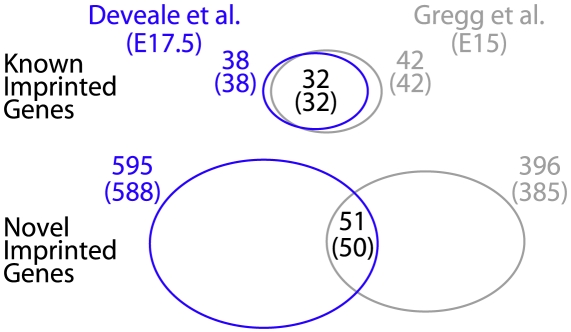
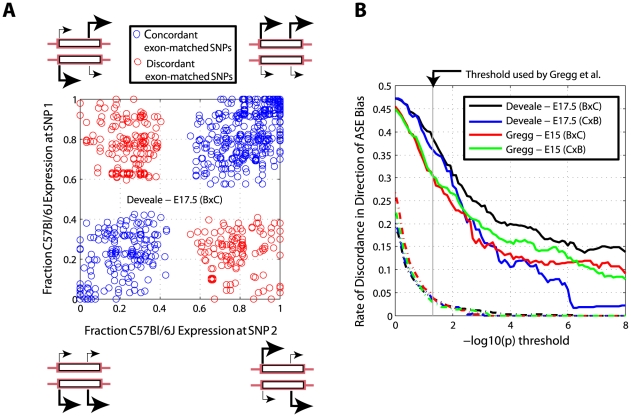
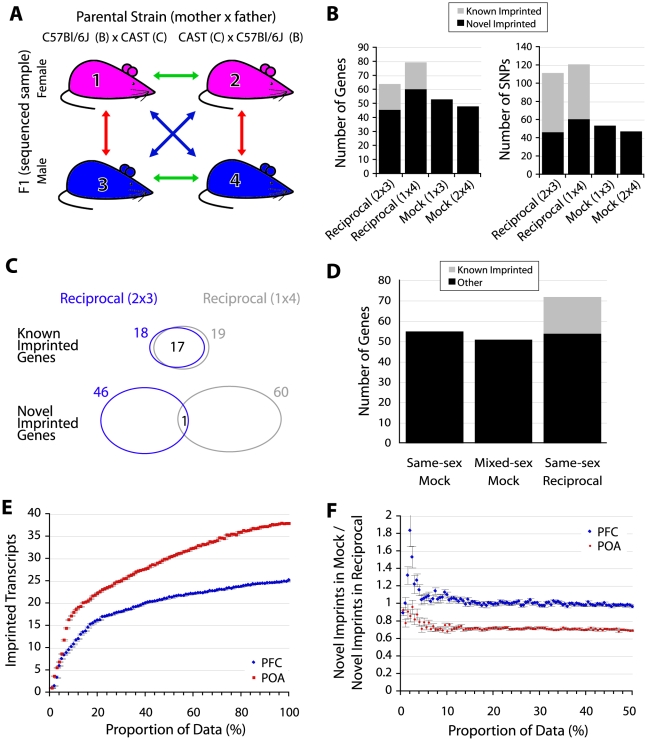
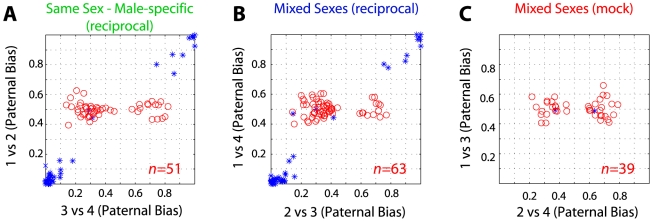
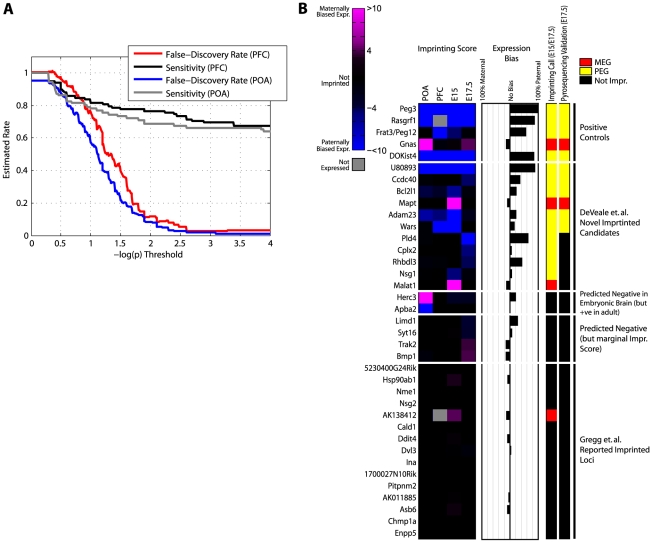
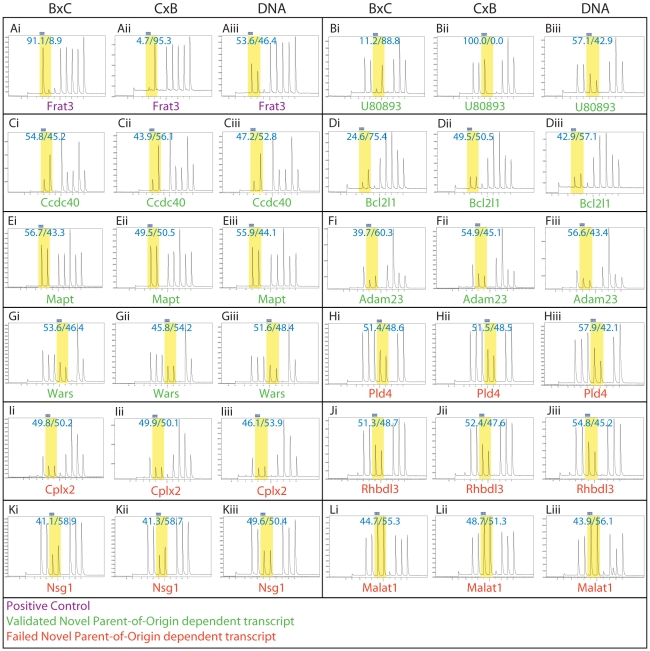
In contrast to existing estimates of approximately 200 murine imprinted genes, recent work based on transcriptome sequencing uncovered parent-of-origin allelic effects at more than 1,300 loci in the developing brain and two adult brain regions, including hundreds present in only males or females. Our independent replication of the embryonic brain stage, where the majority of novel imprinted genes were discovered and the majority of previously known imprinted genes confirmed, resulted in only 12.9% concordance among the novel imprinted loci. Further analysis and pyrosequencing-based validation revealed that the vast majority of the novel reported imprinted loci are false-positives explained by technical and biological variation of the experimental approach. We show that allele-specific expression (ASE) measured with RNA-Seq is not accurately modeled with statistical methods that assume random independent sampling and that systematic error must be accounted for to enable accurate identification of imprinted expression. Application of a robust approach that accounts for these effects revealed 50 candidate genes where allelic bias was predicted to be parent-of-origin-dependent. However, 11 independent validation attempts through a range of allelic expression biases confirmed only 6 of these novel cases. The results emphasize the importance of independent validation and suggest that the number of imprinted genes is much closer to the initial estimates.
Overview
The claims and statistics of this paper haven’t been checked yet.
Free: it reads the open-access text and checks the first 5 claims that cite a source we can check. Create a free account to check every claim.
Integrity signals
Registry
Cites
Statistics
Figures
Verification
Claims the paper makes
The claims and statistics of this paper haven’t been checked yet.
Free: it reads the open-access text and checks the first 5 claims that cite a source we can check. Create a free account to check every claim.
Claims other papers make about this one
Each is checked against this paper’s own text: does it say what the citing paper says it does?
The cited source says what the claim attributes to it.
In the citing paper
“Measures of allele-specific expression (ASE) are particularly important for studying the regulation of gene expression because they can be used to distinguish cis- and trans-regulatory changes [6,7] and to detect genomic imprinting [8,9].”
From Sources of bias in measures of allele-specific expression derived from RNA-seq data aligned to a single reference genome (2013) · cites this paper as [9]
The cited source says what the claim attributes to it.
In the citing paper
“Mapping reads to specific genes is relatively straightforward with the bioinformatics tools available today [10-13], but using these tools to distinguish between reads derived from alternative alleles of the same gene remains challenging [9].”
From Sources of bias in measures of allele-specific expression derived from RNA-seq data aligned to a single reference genome (2013) · cites this paper as [9]
Self-check
Percentages, sums and reported differences re-computed from the paper’s own numbers.
The self-check needs the paper’s full text.
Citations
Cites
Gene Expression Omnibus: NCBI gene expression and hybridization array data repository
Edgar, R. (2002) · Nucleic Acids Research · doi:10.1093/nar/30.1.207 · Cited by 13,288 · cited 4×
“Raw data and alignments are available at GEO under accession GSE27016.”
BackgroundInfluentialA scaling normalization method for differential expression analysis of RNA-seq data
Robinson, M. D., & Oshlack, A. (2010) · Genome Biology · doi:10.1186/gb-2010-11-3-r25 · Cited by 7,876
Targeted capture and massively parallel sequencing of 12 human exomes
Ng, S. B., Turner, E. H., Robertson, P. D., Flygare, S. D., Bigham, A. W., Lee, C., Shaffer, T., Wong, M., Bhattacharjee, A., Eichler, E. E., et al. (2009) · Nature · doi:10.1038/nature08250 · Cited by 2,030 · cited 1×
“Furthermore, premature termination codons are relatively infrequent [39] and those introduced by alternative splicing lead to immediate degradation by nonsense-mediated decay [40].”
BackgroundThe UCSC Genome Browser database: update 2011
Fujita, P. A., Rhead, B., Zweig, A. S., Hinrichs, A. S., Karolchik, D., Cline, M. S., Goldman, M., Barber, G. P., Clawson, H., Coelho, A., et al. (2011) · Nucleic Acids Research · doi:10.1093/nar/gkq963 · Cited by 1,811
Parental imprinting of the mouse insulin-like growth factor II gene
DeChiara, T. M., Robertson, E. J., & Efstratiadis, A. (1991) · Cell · doi:10.1016/0092-8674(91)90513-x · Cited by 1,783
Mouse genomic variation and its effect on phenotypes and gene regulation.
Keane, T. M., Goodstadt, L., Danecek, P., White, M. A., Wong, K., Yalcin, B., Heger, A., Agam, A., Slater, G., Goodson, M., et al. (2011) · Nature · doi:10.1038/nature10413 · Cited by 1,580 · cited 6×
“We also took advantage of all publicly available SNPs [17,26,27] and expanded our alignment reference to include the whole genome (see Materials and Methods).”
BackgroundMethodInfluentialDevelopment of reconstituted mouse eggs suggests imprinting of the genome during gametogenesis
Surani, M. A. H., Barton, S. C., & Norris, M. L. (1984) · Nature · doi:10.1038/308548a0 · Cited by 1,430
Parental imprinting of the mouse H19 gene
Bartolomei, M. S., Zemel, S., & Tilghman, S. M. (1991) · Nature · doi:10.1038/351153a0 · Cited by 1,224
Massive Cell Death of Immature Hematopoietic Cells and Neurons in Bcl-x-Deficient Mice
Motoyama, N., Wang, F., Roth, K. A., Sawa, H., Nakayama, K.-I., Nakayama, K., Negishi, I., Senju, S., Zhang, Q., Fujii, S., et al. (1995) · Science · doi:10.1126/science.7878471 · Cited by 1,163
Dynamic repertoire of a eukaryotic transcriptome surveyed at single-nucleotide resolution
Wilhelm, B. T., Marguerat, S., Watt, S., Schubert, F., Wood, V., Goodhead, I., Penkett, C. J., Rogers, J., & Bähler, J. (2008) · Nature · doi:10.1038/nature07002 · Cited by 974
Research works printed but not linked: 1
- Beechey CVaC B.M. 1993 Mouse' Genome 102
Cited by
Items 101–200 of 244
Zou, F., Sun, W., Crowley, J. J., Zhabotynsky, V., Sullivan, P. F., & de Villena, F. P. (2014) · Genetics · doi:10.1534/genetics.113.160119 · Cited by 32
Genome-Wide Gene Expression Effects of Sex Chromosome Imprinting inDrosophila
Lemos, B., Branco, A. T., Jiang, P.-P., Hartl, D. L., & Meiklejohn, C. D. (2013) · G3 Genes Genomes Genetics · doi:10.1534/g3.113.008029 · Cited by 31
The evolution of genomic imprinting: costs, benefits and long‐term consequences
Holman, L., & Kokko, H. (2013) · Biological reviews/Biological reviews of the Cambridge Philosophical Society · doi:10.1111/brv.12069 · Cited by 31
Mi, W., Uebbing, S., & Ellegren, H. (2017) · Genome Biology and Evolution · doi:10.1093/gbe/evx080 · Cited by 32
Genetics of Gene Expression in CNS
Pandey, A. K., & Williams, R. W. (2014) · International review of neurobiology · doi:10.1016/b978-0-12-801105-8.00008-4 · Cited by 29
Magee, D. A., Spillane, C., Berkowicz, E. W., Sikora, K. M., & MacHugh, D. E. (2014) · Animal Genetics · doi:10.1111/age.12168 · Cited by 28
Bouschet, T., Dubois, E., Reynès, C., Kota, S. K., Rialle, S., Maupetit‐Mehouas, S., Pezet, M. G., Digarcher, A. L., Nidelet, S., Demolombe, V., et al. (2016) · Cerebral Cortex · doi:10.1093/cercor/bhw102 · Cited by 29
Wood, D., Nones, K., Steptoe, A. L., Christ, A. N., Harliwong, I., Newell, F., Bruxner, T. J. C., Miller, D. K., Cloonan, N., & Grimmond, S. M. (2015) · PLoS ONE · doi:10.1371/journal.pone.0126911 · Cited by 28
Genomic Imprinting Is a Parental Effect Established in Mammalian Germ Cells
Li, X. (2012) · Current topics in developmental biology/Current Topics in Developmental Biology · doi:10.1016/b978-0-12-416024-8.00002-7 · Cited by 28
Epigenetic and Cellular Diversity in the Brain through Allele-Specific Effects
Huang, W.-C., Bennett, K., & Gregg, C. J. (2018) · Trends in Neurosciences · doi:10.1016/j.tins.2018.07.005 · Cited by 28
The Role of Stochasticity in the Origin of Epigenetic Variation in Animal Populations
Biwer, C., Kawam, B., Chapelle, V., & Silvestre, F. (2020) · Integrative and Comparative Biology · doi:10.1093/icb/icaa047 · Cited by 28
Dosage-sensitivity of imprinted genes expressed in the brain: 15q11–q13 and neuropsychiatric illness
McNamara, G. I., & Isles, A. R. (2013) · Biochemical Society Transactions · doi:10.1042/bst20130008 · Cited by 26
Wang, Q., Li, K., Zhang, D., Li, J., Xu, G., Zheng, J., Yang, N., & Qu, L. (2015) · PLoS ONE · doi:10.1371/journal.pone.0132345 · Cited by 26
Rutledge, C. E., Thakur, A., O’Neill, K. M., Irwin, R. E., Sato, S., Hata, K., & Walsh, C. P. (2014) · Development · doi:10.1242/dev.104646 · Cited by 24
Wang, Q., Mank, J. E., Li, J., Yang, N., & Qu, L. (2017) · Genome Biology and Evolution · doi:10.1093/gbe/evx031 · Cited by 24
Genomic imprinting: A missing piece of the Multiple Sclerosis puzzle?
Ruhrmann, S., Stridh, P., Kular, L., & Jagodic, M. (2015) · The International Journal of Biochemistry & Cell Biology · doi:10.1016/j.biocel.2015.05.010 · Cited by 24
Cuéllar-Partida, G., Laurin, C., Ring, S. M., Gaunt, T. R., McRae, A. F., Visscher, P. M., Montgomery, G. W., Martin, N. G., Hemani, G., Suderman, M. J., et al. (2018) · Human Molecular Genetics · doi:10.1093/hmg/ddy206 · Cited by 24
Genome wide analyses uncover allele-specific RNA editing in human and mouse
Zhou, Z., Hu, Y., Li, A., Li, Y., Zhao, H., Wang, S., Otecko, N. O., Zhang, D., Wang, J., Liu, Y., et al. (2018) · Nucleic Acids Research · doi:10.1093/nar/gky613 · Cited by 23
Higgs, M. J., Hill, M., John, R. M., & Isles, A. R. (2022) · BMC Genomics · doi:10.1186/s12864-022-08986-8 · Cited by 23
Ben‐David, E., Shohat, S., & Shifman, S. (2014) · Human Molecular Genetics · doi:10.1093/hmg/ddu128 · Cited by 23
What does genetics tell us about imprinting and the placenta connection?
Varmuza, S., & Miri, K. (2015) · Cellular and Molecular Life Sciences · doi:10.1007/s00018-014-1714-0 · Cited by 22
Gu, H., Qi, X., Jia, Y., Zhang, Z., Nie, C., Li, X., Li, J., Jiang, Z., Wang, Q., & Qu, L. (2019) · Scientific Reports · doi:10.1038/s41598-019-42019-x · Cited by 22
Edwards, C. A., Watkinson, W. M., Telerman, S. B., Hülsmann, L. C., Hamilton, R. S., & Ferguson‐Smith, A. C. (2023) · eLife · doi:10.7554/elife.83364 · Cited by 21
Lorenc, A., Linnenbrink, M., Montero, I., Schilhabel, M. B., & Tautz, D. (2014) · Molecular Biology and Evolution · doi:10.1093/molbev/msu257 · Cited by 21
Oczkowicz, M., Szmatoła, T., Piórkowska, K., & Ropka‐Molik, K. (2017) · Gene · doi:10.1016/j.gene.2017.10.076 · Cited by 20
Known unknowns for allele-specific expression and genomic imprinting effects
Gregg, C. J. (2014) · F1000Prime Reports · doi:10.12703/p6-75 · Cited by 21
Wyder, S., Raissig, M. T., & Grossniklaus, U. (2019) · Scientific Reports · doi:10.1038/s41598-018-36768-4 · Cited by 18
Analyzing allele specific RNA expression using mixture models
Lü, R., Smith, R. M., Seweryn, M. T., Wang, D., Hartmann, K., Webb, A., Sadée, W., & Rempała, G. A. (2015) · BMC Genomics · doi:10.1186/s12864-015-1749-0 · Cited by 17
Imprinted Gene Expression and Function of the Dopa Decarboxylase Gene in the Developing Heart
Prickett, A. R., Montibus, B., Barkas, N., Amante, S. M., Franco, M. M., Cowley, M., Puszyk, W. M., Shannon, M. F., Irving, M. D., Madon-Simon, M., et al. (2021) · Frontiers in Cell and Developmental Biology · doi:10.3389/fcell.2021.676543 · Cited by 17
Acurzio, B., Verma, A., Polito, A., Giaccari, C., Cecere, F., Fioriniello, S., Ragione, F. D., Fico, A., Cerrato, F., Angelini, C., et al. (2021) · Scientific Reports · doi:10.1038/s41598-021-93297-3 · Cited by 17
Imprinting meets genomics: new insights and new challenges
Pignatta, D., & Gehring, M. A. (2012) · Current Opinion in Plant Biology · doi:10.1016/j.pbi.2012.09.004 · Cited by 17
cis‐ and trans ‐Regulation in Drosophila Interspecific Hybrids
Coolon, J. D., & Wittkopp, P. J. (2013) · Wiley eBooks · doi:10.1002/9781118552872.ch3 · Cited by 17
Long-read RNA sequencing reveals allele-specific N 6 -methyladenosine modifications
Park, D., & Cenik, C. (2024) · Genome Research · doi:10.1101/gr.279270.124 · Cited by 17
Pervasive Inter-Individual Variation in Allele-Specific Expression in Monozygotic Twins
Francisco, R. D. S., Ferreira, C. D. S., Silva, J. C. S. E., Machado, D. T., Martins, Y., Ramos, V., Carnivali, G. S., Garcia, A. B., & Medina‐Acosta, E. (2019) · Frontiers in Genetics · doi:10.3389/fgene.2019.01178 · Cited by 17
Transforming Genomes Using MOD Files with Applications
Huang, S., Kao, C.-Y., McMillan, L., & Wang, W. W. (2013) · ACM International Conference on Bioinformatics, Computational Biology, and Health Informatics (ACM-BCB) · doi:10.1145/2506583.2506643 · Cited by 16
Characterization of the imprinting signature of mouse embryo fibroblasts by RNA deep sequencing
Tran, D. A., Bai, A. Y., Singh, P., Wu, X., & Szabó, P. E. (2013) · Nucleic Acids Research · doi:10.1093/nar/gkt1042 · Cited by 16
Lin, C., Huang, S.-C., Tung, C.-C., Chou, C., Gau, S. S., & Huang, H. (2016) · PLoS ONE · doi:10.1371/journal.pone.0163663 · Cited by 15
Takada, Y., Miyagi, R., Takahashi, A., Endo, T., & Osada, N. (2017) · G3 Genes Genomes Genetics · doi:10.1534/g3.117.042895 · Cited by 15
Effects of maternal nutrition on the expression of genomic imprinted genes in ovine fetuses
Duan, J. E., Zhang, M., Flock, K., Seesi, S. A., Măndoiu, I., Jones, A. K., Johnson, E., Pillai, S. M., Hoffman, M. L., McFadden, K. K., et al. (2018) · Epigenetics · doi:10.1080/15592294.2018.1503489 · Cited by 15
Oggiano, M., Buccheri, C., Alleva, E., & Adriani, W. (2021) · Behavioural Brain Research · doi:10.1016/j.bbr.2021.113623 · Cited by 14
Chuang, T., Tseng, Y.-H., Chen, C.-Y., & Wang, Y.-D. (2017) · Scientific Reports · doi:10.1038/s41598-017-07514-z · Cited by 14
Unperturbed expression bias of imprinted genes in schizophrenia
Gulyás-Kovács, A., Keydar, I., Xia, E., Fromer, M., Hoffman, G. E., Ruderfer, D. M., Lipska, B. K., Devlin, B., Hahn, C.-G., Lewis, D. A., et al. (2018) · Nature Communications · doi:10.1038/s41467-018-04960-9 · Cited by 14
Allele-specific RNA-seq expression profiling of imprinted genes in mouse isogenic pluripotent states
Dirks, R. A. M., van Mierlo, G., Kerstens, H. H. D., Bernardo, A. S., Kobolák, J., Bock, I., Maruotti, J., Pedersen, R. A., Dinnyés, A., Huynen, M. A., et al. (2019) · Epigenetics & Chromatin · doi:10.1186/s13072-019-0259-8 · Cited by 13
Allele specific expression in worker reproduction genes in the bumblebee Bombus terrestris
Amarasinghe, H. E., Toghill, B. J., Nathanael, D., & Mallon, E. B. (2015) · PeerJ · doi:10.7717/peerj.1079 · Cited by 13
Hayden, E. C. (2012) · Nature · doi:10.1038/484428a · Cited by 13
Conservation of Imprinting and Methylation of MKRN3, MAGEL2 and NDN Genes in Cattle
Li, J., Chen, W., Li, D., Gu, S., Liu, X., Dong, Y., Jin, L., Zhang, C., & Li, S. (2021) · Animals · doi:10.3390/ani11071985 · Cited by 12
Russo, F., Righelli, D., & Angelini, C. (2016) · Lecture notes in computer science · doi:10.1007/978-3-319-44332-4_19 · Cited by 12
Zhang, Y., Castillo-Morales, A., Jiang, M., Zhu, Y., Hu, L., Urrutia, A. O., Kong, X., & Hurst, L. D. (2015) · Molecular Biology and Evolution · doi:10.1093/molbev/msv180 · Cited by 12
Yeo, S., Hodgkinson, C. A., Zhou, Z., Jung, J., Leung, M., Yuan, Q., & Goldman, D. A. (2016) · BMC Genomics · doi:10.1186/s12864-016-2922-9 · Cited by 12
Reynès, C., Kister, G., Rohmer, M., Bouschet, T., Varrault, A., Dubois, E., Rialle, S., Journot, L., & Sabatier, R. (2019) · Bioinformatics · doi:10.1093/bioinformatics/btz564 · Cited by 12
DNA sequencing methods in human genetics and disease research
Lehrach, H. (2013) · F1000Prime Reports · doi:10.12703/p5-34 · Cited by 12
The Social Evolution of Human Nature: From Biology to Language
Smit, H. (2014) · doi:10.1017/cbo9781107295179 · Cited by 11
Imprinted silencing is extended over broad chromosomal domains in mouse extra-embryonic lineages
Kuliński, T. M., Barlow, D. P., & Hudson, Q. J. (2013) · Current Opinion in Cell Biology · doi:10.1016/j.ceb.2013.02.012 · Cited by 11
Wolber, W., Ahmad, R., Choi, S. W., Eckardt, S., McLaughlin, K. J., Schmitt, J., Geis, C., Heckmann, M., Sirén, A., & Müller, A. M. (2013) · Cell Medicine · doi:10.3727/215517913x666468 · Cited by 11
Assessing the validity and reproducibility of genome-scale predictions
Sugden, L. A., Tackett, M., Savva, Y. A., Thompson, W. A., & Lawrence, C. E. (2013) · Bioinformatics · doi:10.1093/bioinformatics/btt508 · Cited by 11
Quantifying Genomic Imprinting at Tissue and Cell Resolution in the Brain
Varrault, A., Dubois, E., Digarcher, A. L., & Bouschet, T. (2020) · Epigenomes · doi:10.3390/epigenomes4030021 · Cited by 10
Intersection of genetics and epigenetics in monozygotic twin genomes
Kim, K., Lee, K., Bang, H., Kim, J. Y., & Choi, J. K. (2015) · Methods · doi:10.1016/j.ymeth.2015.10.020 · Cited by 10
Elevated Expression of H19 and Igf2 in the Female Mouse Eye
Reinius, B., & Kanduri, C. (2013) · PLoS ONE · doi:10.1371/journal.pone.0056611 · Cited by 10
The emerging landscape of in vitro and in vivo epigenetic allelic effects
Gregg, C. J. (2017) · F1000Research · doi:10.12688/f1000research.11491.1 · Cited by 10
Feasibility of predicting allele specific expression from DNA sequencing using machine learning
Zhang, Z., van Dijk, F., de Klein, N., van Gijn, M. E., Franke, L., Sinke, R. J., Swertz, M. A., & van der Velde, K. J. (2021) · Scientific Reports · doi:10.1038/s41598-021-89904-y · Cited by 10
Parental allele-specific protein expression in single cells In vivo
Lo, C.-A., & Chen, B. E. (2019) · Developmental Biology · doi:10.1016/j.ydbio.2019.06.004 · Cited by 9
HITZEMANN, R. J., Bottomly, D., Iancu, O. D., Buck, K. J., Wilmot, B., Mooney, M. A., Searles, R. P., ZHENG, C. L., Belknap, J. K., Crabbe, J. C., et al. (2013) · Mammalian Genome · doi:10.1007/s00335-013-9495-6 · Cited by 10
Pyrosequencing for Accurate Imprinted Allele Expression Analysis
Yang, B., Damaschke, N., Yao, T., McCormick, J. R., Wagner, J. L., & Jarrard, D. F. (2015) · Journal of Cellular Biochemistry · doi:10.1002/jcb.25081 · Cited by 9
Roles and Regulation of DNA Methylation in Early Mammalian Development
Ivanova, E., & Kelsey, G. (2025) · Annual Review of Animal Biosciences · doi:10.1146/annurev-animal-030424-085652 · Cited by 8
Detection Theory in Identification of RNA-DNA Sequence Differences Using RNA-Sequencing
Toung, J. M., Lahens, N. F., Hogenesch, J. B., & Grant, G. R. (2014) · PLoS ONE · doi:10.1371/journal.pone.0112040 · Cited by 9
Latchney, S. E., Cadney, M. D., Hopkins, A., & Garland, T. (2022) · Behavior Genetics · doi:10.1007/s10519-022-10112-z · Cited by 8
Mangul, S., Yang, H. T., Hormozdiari, F., Dainis, A., Tseng, E., Ashley, E. A., Zelikovsky, A., & Eskin, E. (2017) · IEEE Transactions on NanoBioscience · doi:10.1109/tnb.2017.2675981 · Cited by 8
Wu, W.-S., Lovett, J. L., Shedden, K., Strassmann, B. I., & Vincenz, C. (2021) · G3 Genes Genomes Genetics · doi:10.1093/g3journal/jkab176 · Cited by 7
Martini, P. G. V., Sales, G., Diamante, L., Perrera, V., Colantuono, C., Riccardo, S., Cacchiarelli, D., Romualdi, C., & Martello, G. (2022) · Communications Biology · doi:10.1038/s42003-022-03087-4 · Cited by 8
Quality control method for RNA ‐seq using single nucleotide polymorphism allele frequency
Endo, T. A. (2014) · Genes to Cells · doi:10.1111/gtc.12178 · Cited by 6
The Defects of Epigenetic Reprogramming in Dox-Dependent Porcine-iPSCs
Jiang, A., Ma, Y., Zhang, X., Pan, Q., Luo, P., Guo, H., Wu, W., Li, J., Yu, T., & Liu, H. (2022) · International Journal of Molecular Sciences · doi:10.3390/ijms231911941 · Cited by 6
Role of epigenetics in shaping sex differences in brain development and behavior
Cortes, L. R., & Forger, N. G. (2023) · Elsevier eBooks · doi:10.1016/b978-0-12-821785-6.00009-8 · Cited by 6
Pauler, F. M., Hudson, Q. J., Laukoter, S., & Hippenmeyer, S. (2021) · Neurochemistry International · doi:10.1016/j.neuint.2021.104986 · Cited by 6
Cuéllar-Partida, G., Laurin, C., Ring, S. M., Gaunt, T. R., Relton, C. L., Smith, G. D., & Evans, D. M. (2017) · bioRxiv (Cold Spring Harbor Laboratory) · doi:10.1101/161471 · Cited by 6
Carrion, S. A., Michal, J. J., & Jiang, Z. (2023) · International Journal of Biological Sciences · doi:10.7150/ijbs.83712 · Cited by 5
Wasson, J. A., Birol, O., & Katz, D. J. (2018) · G3 Genes Genomes Genetics · doi:10.1534/g3.117.300417 · Cited by 5
Kondo, S., Kato, H., Suzuki, Y., Takada, T., Eitoku, M., Shiroishi, T., Suganuma, N., Sugano, S., & Kiyosawa, H. (2019) · Journal of Cell Science · doi:10.1242/jcs.228973 · Cited by 5
The superpowers of imprinting control regions
Montibus, B., Court, F., & Arnaúd, P. (2025) · Genome Research · doi:10.1101/gr.281215.125 · Cited by 4
Mangul, S., Yang, H. T., Hormozdiari, F., Tseng, E., Zelikovsky, A., & Eskin, E. (2016) · Lecture notes in computer science · doi:10.1007/978-3-319-38782-6_7 · Cited by 4
Genomic Imprinting: A Paradigm for Epigenetics of Human Diseases
John, R. M., Lefebvre, L., & Surani, M. A. (2022) · Springer eBooks · doi:10.1007/978-3-030-94475-9_8 · Cited by 4
Genomic imprinting: theories and data
Spencer, H. G., & Wolf, J. B. (2014) · Heredity · doi:10.1038/hdy.2014.52 · Cited by 4
Crowley, J. J., Zhabotynsky, V., Sun, W., Huang, S., Pakatci, I. K., Kim, Y., Wang, J., Morgan, A. P., Calaway, J. D., Aylor, D. L., et al. (2015) · Nature Genetics · doi:10.1038/ng0615-690a · Cited by 4
RNA sequencing for the study of gene expression regulation
Gonçalves, Â. (2012) · Apollo (University of Cambridge) · doi:10.17863/cam.11726 · Cited by 4
Bina, M., & Wyss, P. J. (2019) · bioRxiv (Cold Spring Harbor Laboratory) · doi:10.1101/780551 · Cited by 4
Long-read sequencing disentangles isoform complexity at allele-specific loci
Lemoine, L., Hoelzl, S., Hasenbein, T. P., Graf, E., & Andergassen, D. (2025) · Scientific Reports · doi:10.1038/s41598-025-97362-z · Cited by 3
Sittig, L. J., & Redei, E. E. (2012) · Frontiers in Genetics · doi:10.3389/fgene.2012.00296 · Cited by 3
Genomic analysis of allele-specific expression in the mouse liverPreprint
Pandey, A. K., & Williams, R. W. (2015) · bioRxiv (Cold Spring Harbor Laboratory) · doi:10.1101/024588 · Cited by 3
Evolution of parent-of-origin effects on placental gene expression in house micePreprint
Rodriguez-Caro, F., Moore, E. C., & Good, J. M. (2023) · bioRxiv (Cold Spring Harbor Laboratory) · doi:10.1101/2023.08.24.554674 · Cited by 3
Li, Y., Liu, H., Zhang, Y., Li, A., Pu, L.-X., Gao, Y., Zhang, S.-R., Otecko, N. O., Liu, Y., Liu, Y.-Y., et al. (2025) · Gene · doi:10.1016/j.gene.2025.149317 · Cited by 2
Joldersma, D., Guo, L., Alger, E. I., Ippoliti, C., Luo, X., Platts, A. E., Edger, P. P., & Liu, Z. (2024) · PLANT PHYSIOLOGY · doi:10.1093/plphys/kiae496 · Cited by 2
Regulatory Divergence of Transcript Isoforms in a Mammalian Model System
Leigh-Brown, S., Gonçalves, Â., Thybert, D., Stefflova, K., Watt, S., Flicek, P., Brāzma, A., Marioni, J. C., & Odom, D. T. (2015) · PLoS ONE · doi:10.1371/journal.pone.0137367 · Cited by 2
Reddy, T. E. (2016) · Elsevier eBooks · doi:10.1016/b978-0-12-800681-8.00002-5 · Cited by 2
Epigenetic Mechanisms in Developmental and Seasonal Programs
Stevenson, T. J. (2020) · Masterclass in neuroendocrinology · doi:10.1007/978-3-030-55643-3_4 · Cited by 2
Allele Specific Expression in Human – Genomic Makeup and Phenotypic ImplicationsPreprint
Wainer-Katsir, K., & Linial, M. (2019) · bioRxiv (Cold Spring Harbor Laboratory) · doi:10.1101/757997 · Cited by 2
Genetic modifiers of Cep290 -mediated retinal degenerationPreprint
Meyer, K. J., Whitmore, S. S., Burnight, E. R., Riker, M. J., Mercer, H. E., Ajose, A., Howell, G. R., Stone, E. M., Mullins, R. F., Tucker, B. A., et al. (2022) · bioRxiv (Cold Spring Harbor Laboratory) · doi:10.1101/2022.01.26.477596 · Cited by 2
Neurogenetics in the Genome Era
Chen, W.-L., Gropman, A. L., & Dobyns, W. B. (2025) · Elsevier eBooks · doi:10.1016/b978-0-443-10944-7.00048-2 · Cited by 1
Arévalo, L., & Campbell, P. (2026) · Proceedings of the Royal Society B Biological Sciences · doi:10.1098/rspb.2025.3060 · Cited by 1
Lorenc, A., Linnenbrink, M., Montero, I., Schilhabel, M. B., & Tautz, D. (2015) · Molecular Biology and Evolution · doi:10.1093/molbev/msv108 · Cited by 1
Imprinted genes, impulsivity and risk-taking
Dent, C. L. (2014) · ORCA Online Research @Cardiff (Cardiff University) · Cited by 1
A bioinformatic analysis of genetic factors affecting primary root growth in Zea mays
Meyer, A. (2015) · The Atrium (University of Guelph) · Cited by 1
Metadata
- Authors
- DeVeale, B., van der Kooy, D., & Babak, T.
- Affiliations
- University of Toronto (CA)
- Stanford University (US)
- Corresponding author
- Babak, Tomas
- Venue
- PLoS Genetics
- Publisher
- Public Library of Science (PLoS)
- Published
- 2012-03-29
- Volume
- 8
- Issue
- 3
- Pages
- e1002600
- ISSN
- 1553-7390 (ISSN-L)
- 1553-7404
- PMC
- PMC3315459
- OpenAlex
- W1990626904
- Semantic Scholar
- 29dbd4206eb39402690be454cc7dc70259cd85bb
- Cited by
- 223
- References
- 52
- Citations by year
- 2026: 1 · 2025: 5 · 2024: 2 · 2023: 6 · 2022: 7 · 2021: 9 · 2020: 5 · 2019: 16 · 2018: 12 · 2017: 18 · 2016: 13 · 2015: 31 · 2014: 36 · 2013: 38 · 2012: 24
- FWCI
- 24.86
- Type
- journal article
- Language
- en
- Open access
- gold
- doi.org
- Locations
- PLoS Genetics (publishedVersion, cc-by)
- Europe PMC (PubMed Central) (publishedVersion, cc-by)
- PubMed Central (publishedVersion, cc-by)
- PubMed (publishedVersion)
- DOAJ (DOAJ: Directory of Open Access Journals) (submittedVersion)
- Figshare (submittedVersion, cc-by)
- Funders
- Canadian Institutes of Health Research
- Topics
- Life Sciences › Biochemistry, Genetics and Molecular Biology › Genetics › Genetic Syndromes and Imprinting
- Life Sciences › Biochemistry, Genetics and Molecular Biology › Molecular Biology › Genomics and Phylogenetic Studies
- Life Sciences › Biochemistry, Genetics and Molecular Biology › Genetics › Chromosomal and Genetic Variations
- Keywords
- genomic imprinting, imprinted genes, allele-specific expression, parent-of-origin effects, brain development, embryonic brain
- MeSH terms
- Alleles, Animals, Base Sequence, Brain, Female, Male, Mice, Inbred C57BL, Gene Expression, Genomic Imprinting, Polymorphism, Single Nucleotide, Embryonic Development, Mice, Transcriptome
About these checks
Registry, retraction, Cites and statistics results are computed, not judged, with one exception: a printed reference that no index lists is read once by a model before it counts as a citation error. Claims are extracted by a model and kept only when their quote appears verbatim in the text; each cited source is then checked, with a model’s help, for whether it says what the claim relies on. Those verdicts can be wrong — read the claim’s quote and the cited source before relying on one.
Statistics and arithmetic are recomputed, not judged.
Confidence bands are shown only for fields calibrated on our annotated test set. None is calibrated yet, so no band is shown.
What counts as a claim ›How we measure confidence ›How we check this ›
Are you an author, or do you see a problem with this page? Request a review
Data sources
Bibliographic data: Semantic Scholar, OpenAlex, Crossref.
Contains information from the Semantic Scholar Academic Graph Datasets, made available under the ODC Attribution License (ODC-BY 1.0).
Semantic Scholar’s data is described in: Kinney, R., et al. (2023). The Semantic Scholar Open Data Platform. arXiv:2301.10140.
